Upgrade to Pro — share decks privately, control downloads, hide ads and more …

How to Choose the Right Reverse Osmosis System ...

Avatar for tanimax tanimax
October 12, 2026

How to Choose the Right Reverse Osmosis System for Your Home

Thinking about a reverse osmosis system for your home? This simple visual guide explains how RO filtration works stage by stage, what it removes from your tap water, the difference between tankless and tank systems, and exactly what to compare before you buy daily output, filter life, pure to drain ratio, certifications, and sizing for your household. Perfect for homeowners who want cleaner, better tasting drinking water. For more info: https://www.illiwater.com/collections/reverse-osmosis-systems

Avatar for tanimax

tanimax

October 12, 2026

Other Decks in Business

Transcript

  1. How to Choose the Right Reverse Osmosis System for Your

    Home illi water A simple guide for homeowners 1 / 10
  2. illi water What reverse osmosis actually is Reverse osmosis, usually

    just called RO, is one of the most trusted ways to get truly clean drinking water at home. It is the same technology used in bottled water plants, now sized to fit under your kitchen sink. If you have ever wondered whether your tap water could taste better and be safer for your family, this short guide walks you through how RO works and how to pick the right system for your home. You do not need any technical background. By the end of these ten slides you will know what matters, what to compare, and how to choose with confidence. 2 / 10
  3. How it works, in plain words 1 Pre filtration first

    2 The RO membrane does the heavy lifting 3 A final polish Tap water passes through sediment and carbon pre filters. These catch sand, rust and larger particles, and remove chlorine that would otherwise wear out the sensitive membrane downstream. Water is pushed through a special semi permeable membrane with pores so tiny that mostly water molecules pass through. Dissolved contaminants are left behind and flushed to the drain. A post carbon filter gives the water a final polish for taste, so every glass is clean, fresh and ready to drink. 3 / 10
  4. What RO removes Lead and heavy metals. Among the most

    important things to keep out of drinking water, especially for children. Fluoride and nitrates. Dissolved substances that basic pitcher filters barely touch. Sodium and dissolved salts. Helpful if your supply runs salty or mineral heavy. Chlorine taste and odor. The carbon stages clear the chemical tang of city disinfection. Many dissolved solids overall. No single filter handles everything, but for drinking and cooking water, RO covers more ground than any other home technology. 4 / 10
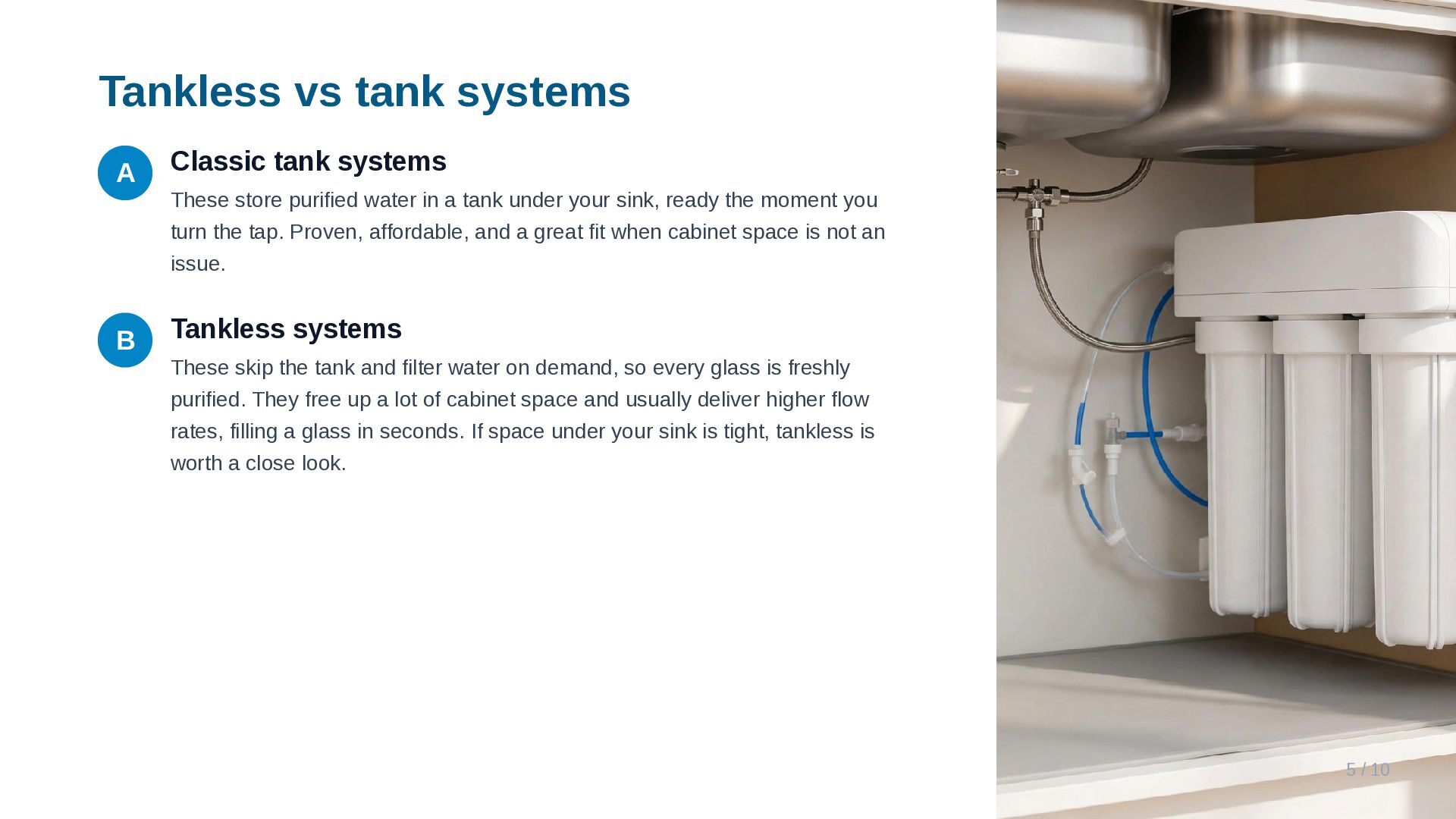
  5. Tankless vs tank systems A Classic tank systems B Tankless

    systems These store purified water in a tank under your sink, ready the moment you turn the tap. Proven, affordable, and a great fit when cabinet space is not an issue. These skip the tank and filter water on demand, so every glass is freshly purified. They free up a lot of cabinet space and usually deliver higher flow rates, filling a glass in seconds. If space under your sink is tight, tankless is worth a close look. 5 / 10
  6. What to compare before you buy 1 Daily output (GPD)

    2 Filter life and replacement cost 3 Pure to drain ratio 4 Certifications and size Gallons per day tells you how much purified water the system can make. A family of four is comfortable around 600 to 800 GPD, so nobody ever waits for the tank to refill. Check how long each stage lasts and what replacements cost. Long life membranes and easy swap cartridges keep yearly upkeep low and simple. This tells you how much water goes to drain for each glass of pure water. Modern systems waste far less than older ones, which matters for both bills and conscience. Look for independent testing that confirms the system removes what it claims. Then measure your under sink space, including height, so filter changes stay easy. 6 / 10
  7. illi water Size it for your home Start with your

    household. Two people use far less drinking water than a family of five, and your system should match real daily use. Think about cooking too, since RO water makes coffee, tea and meals taste noticeably better, and you will use more of it than you expect. Then measure the cabinet under your sink. Note the height, width and depth, and leave room to swap filters later. A quick measurement now avoids surprises on installation day, and it tells you at a glance whether a compact tankless model is the smarter pick. 7 / 10
  8. Installation and upkeep Most under sink RO systems install in

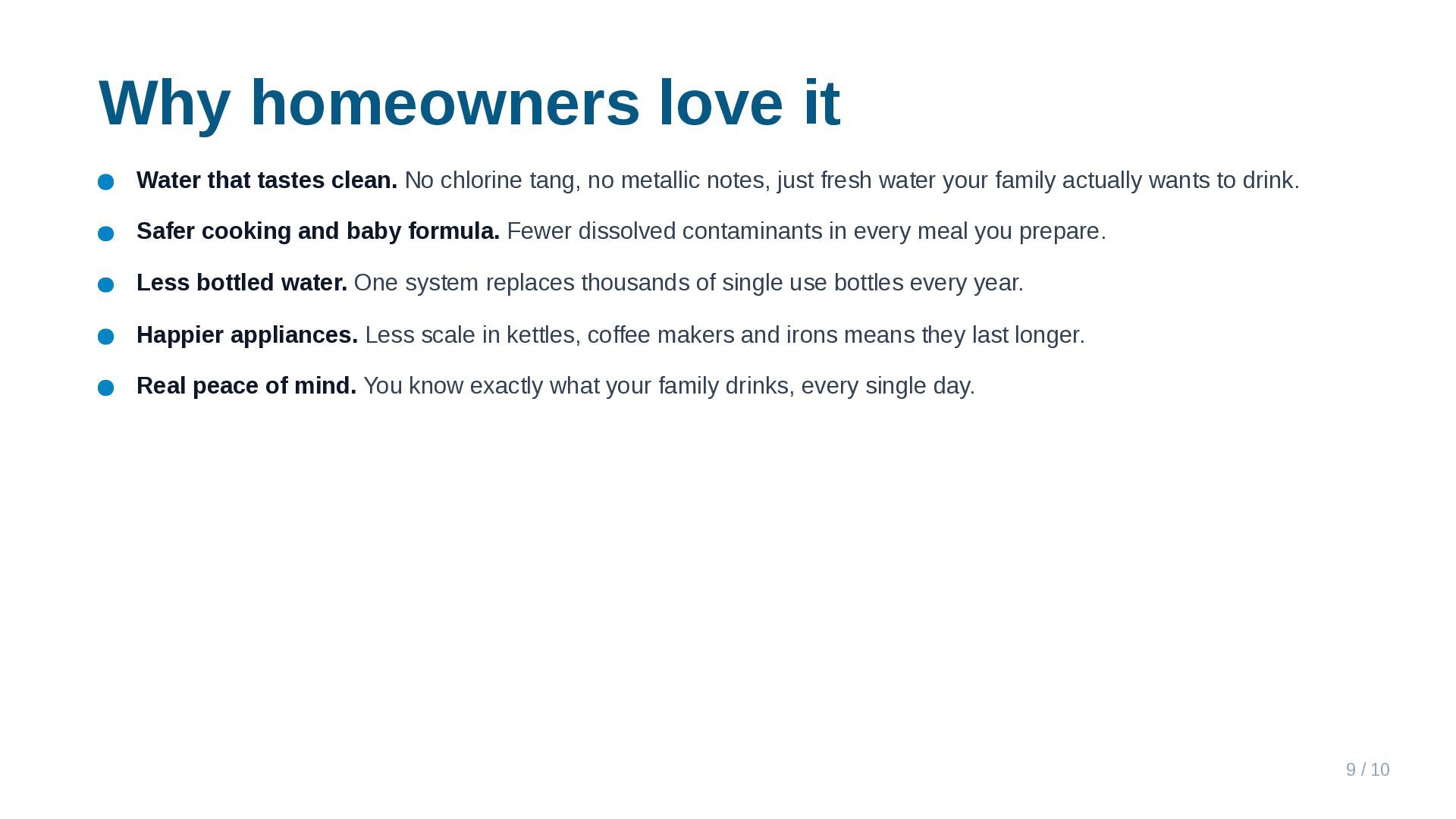
    an afternoon with basic tools, and many homeowners do it themselves with the included guide. Filter changes are simple: sediment and carbon stages usually last six to twelve months, while the RO membrane often runs two years or more. A quick look at the manual keeps everything on schedule. When you are comparing models, browse real lineups to see what fits your home. Quality reverse osmosis systems come in tankless and classic tank designs, with options for different household sizes and budgets. Pick the one that matches your water test results and the space under your sink. 8 / 10
  9. Why homeowners love it Water that tastes clean. No chlorine

    tang, no metallic notes, just fresh water your family actually wants to drink. Safer cooking and baby formula. Fewer dissolved contaminants in every meal you prepare. Less bottled water. One system replaces thousands of single use bottles every year. Happier appliances. Less scale in kettles, coffee makers and irons means they last longer. Real peace of mind. You know exactly what your family drinks, every single day. 9 / 10