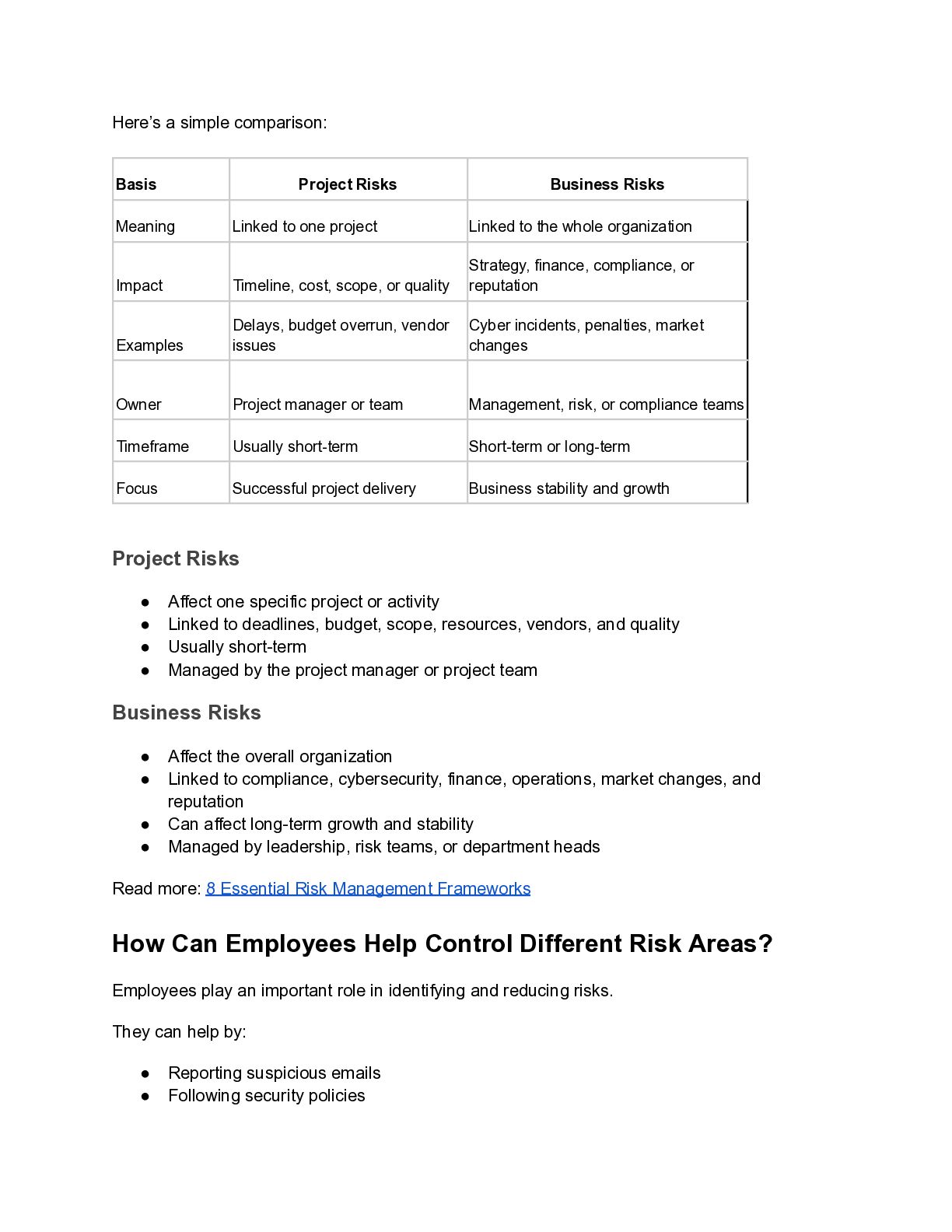
Meta Description: Learn what risk classification is, why it matters, key risk types, examples, and how training helps employees identify, report, and manage risks better. Full URL: https://securetain.com/blog/what-is-risk-classification What Is the Classification of Risk Management? Types, Examples, and Training Guide Risk classification is the process of grouping risks into clear categories so organizations can identify, prioritize, assign ownership, and control them better. This guide highlights the meaning of risk classification, major risk types, simple examples, and how training helps employees understand, report, and manage risks more effectively across business functions. Overview Risk classification helps organizations arrange different risks into simple, manageable groups. Instead of treating every risk as separate or confusing, teams can classify risks by type, impact, likelihood, function, owner, or control status. This makes it easier to understand where risks come from, how serious they are, who should manage them, and what action is needed. Key Findings • Risk classification makes risk management clearer. • Common risk types include strategic, operational, financial, compliance, cyber, reputational, third-party, and project risks. • Grouping risks helps assign owners, reduce duplication, and plan controls. • Project risks affect one initiative; business risks affect the organization. • Strategic risks affect long-term direction; operational risks affect daily work. What is Risk Classification? Risk classification means grouping risks into categories based on their nature, source, impact, or business function. Risk classification helps teams answer simple but important questions: What type of risk is this? Which team owns it? How serious is the impact? What control is needed? How should it be reported?. Javier Perez and Rick Vanover, in “Risk Management Framework: How Veeam Strengthens Cyber Resilience,” Veeam Blog, October 17, 2025, updated June 17, 2026, explain that a risk management framework gives organizations a


 juanmartin2026
 spring_aki
 fmarot
 hiragahh
 yoshimura_datam
 robintux
 jdbedics
 akiraasano
 suisan
 hiola
 frievea
 nmsamuel
 maltzj
 danielanewman
 mayunak
 zakiyama
 jnunemaker
 inesmontani
 nwiizo
 thirion
 codingconduct
 wayneb77
 palkan