Upgrade to Pro — share decks privately, control downloads, hide ads and more …

From 20s to sub-second: Speeding up CloudNative...

Sponsored · Your Podcast. Everywhere. Effortlessly. Share. Educate. Inspire. Entertain. You do you. We'll handle the rest.
Avatar for Tudor Golubenco Tudor Golubenco
March 05, 2026
3

From 20s to sub-second: Speeding up CloudNativePG wake-up times

CloudNativePG (CNPG) is a popular and battle-tested operator for running Postgres on top of Kubernetes. At Xata, we’ve been using CNPG and extending it in several different directions. One of them is implementing a scale-to-zero plugin: clusters hibernate when inactive and they wake up automatically when new connections are created.
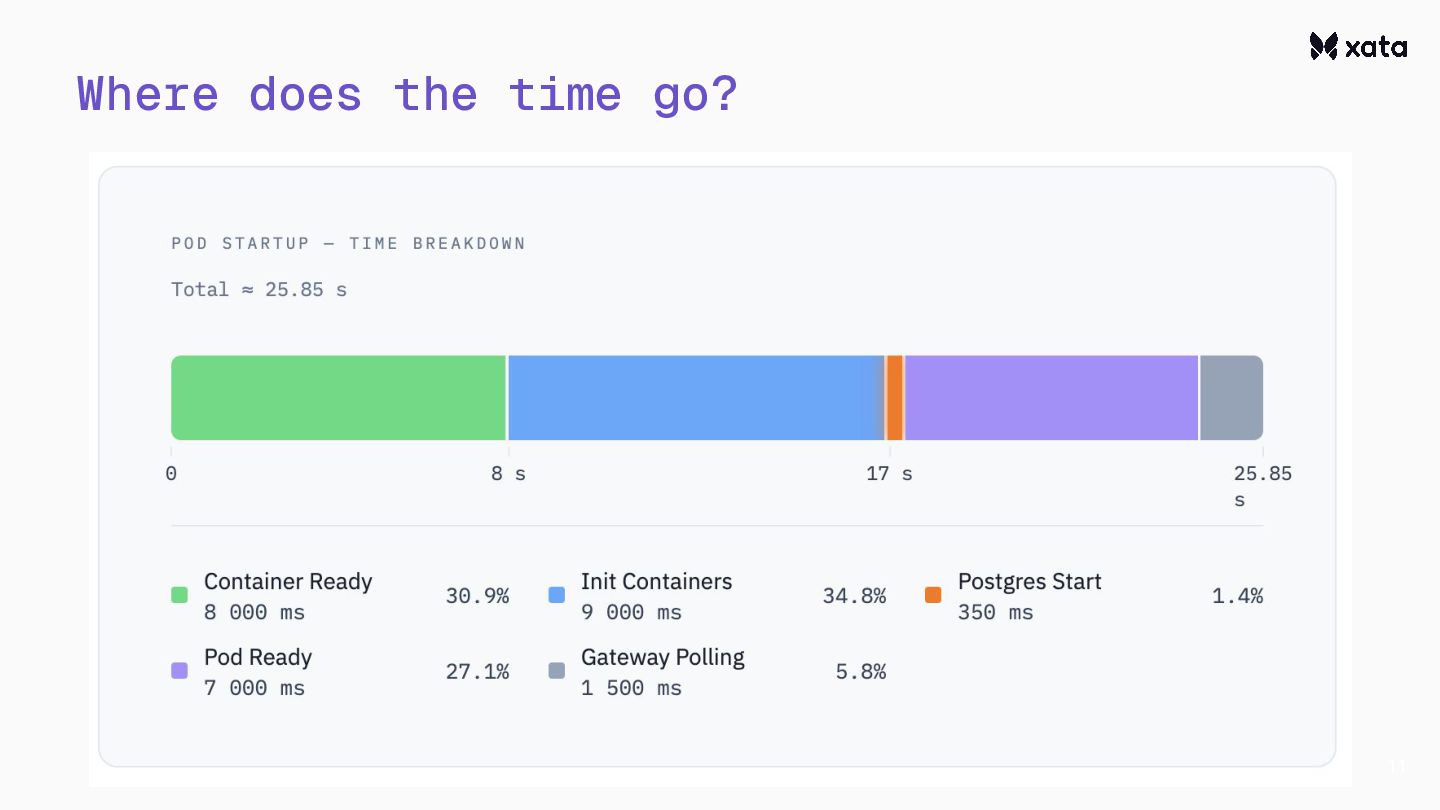
After adding scale-to-zero, we’ve faced the challenge that the CNPG wake-up from hibernation is rather slow.This is an optimization story about how we reduced the wake-up times from 20+ seconds to under one second.

Avatar for Tudor Golubenco

Tudor Golubenco

March 05, 2026
Tweet

Transcript

  1. Xata - Postgres by the thousands Spin up tens of

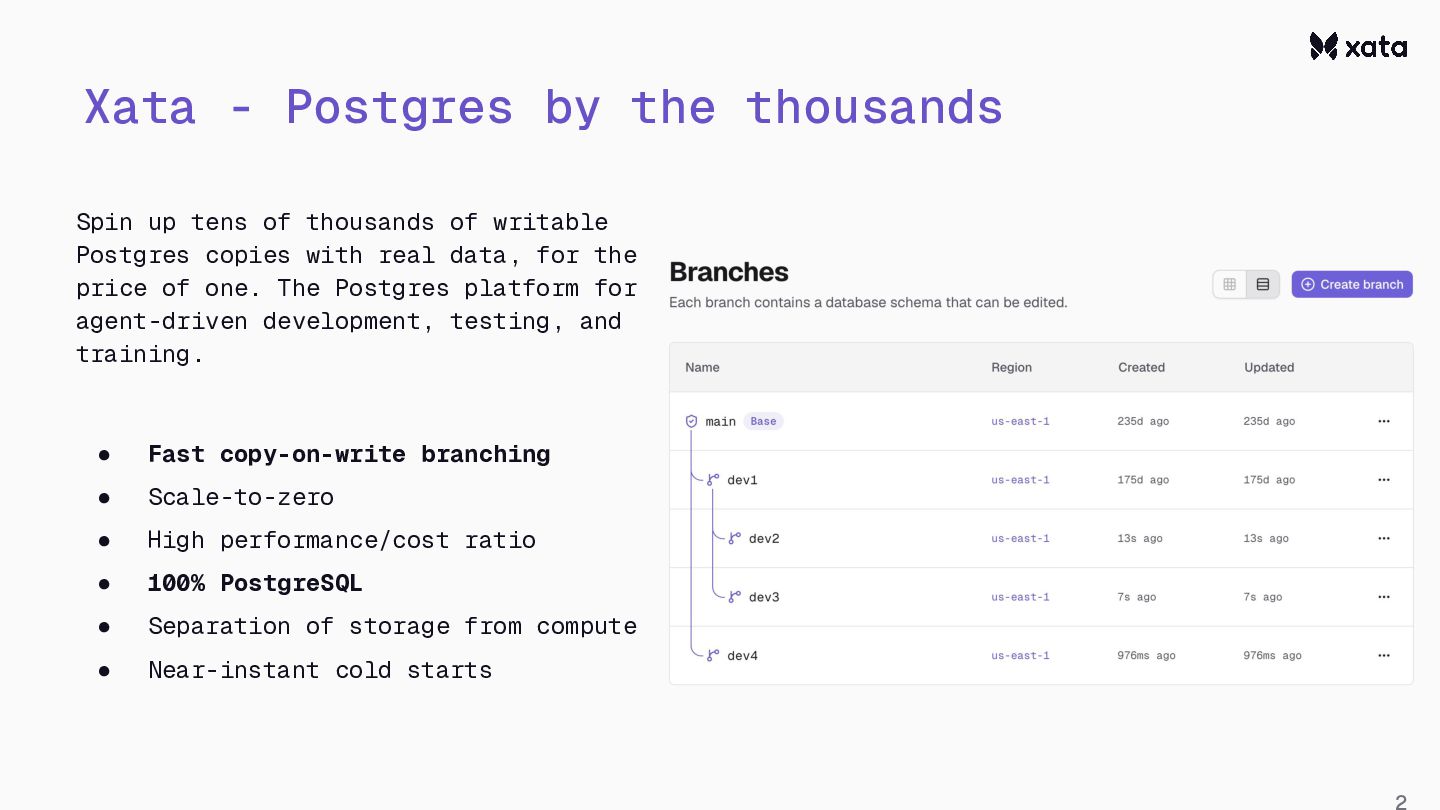
    thousands of writable Postgres copies with real data, for the price of one. The Postgres platform for agent-driven development, testing, and training. • Fast copy-on-write branching • Scale-to-zero • High performance/cost ratio • 100% PostgreSQL • Separation of storage from compute • Near-instant cold starts
  2. Xata - for staging/dev/agents Keep production where it is: •

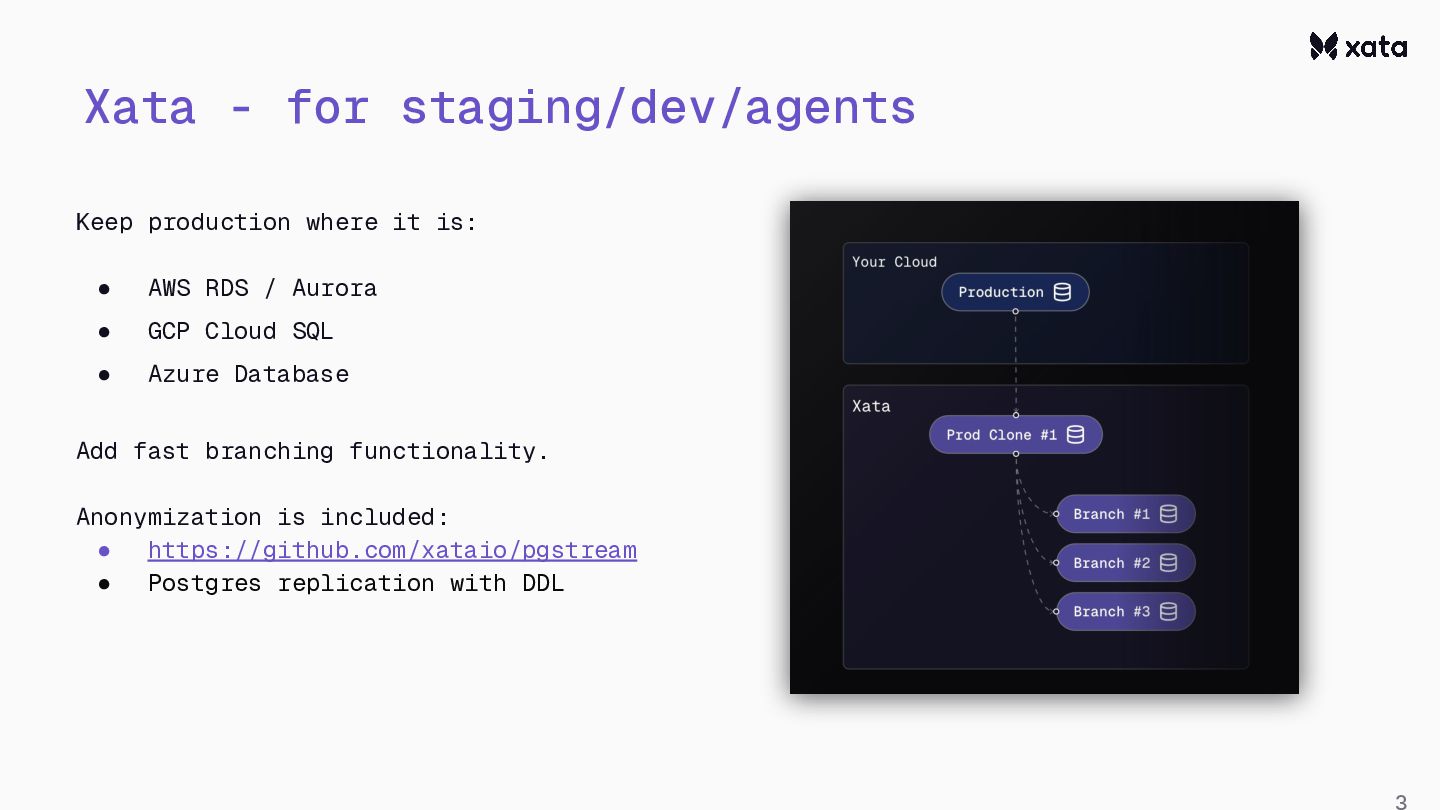
    AWS RDS / Aurora • GCP Cloud SQL • Azure Database Add fast branching functionality. Anonymization is included: • https://github.com/xataio/pgstream • Postgres replication with DDL
  3. Xata - for production workloads You can run both production

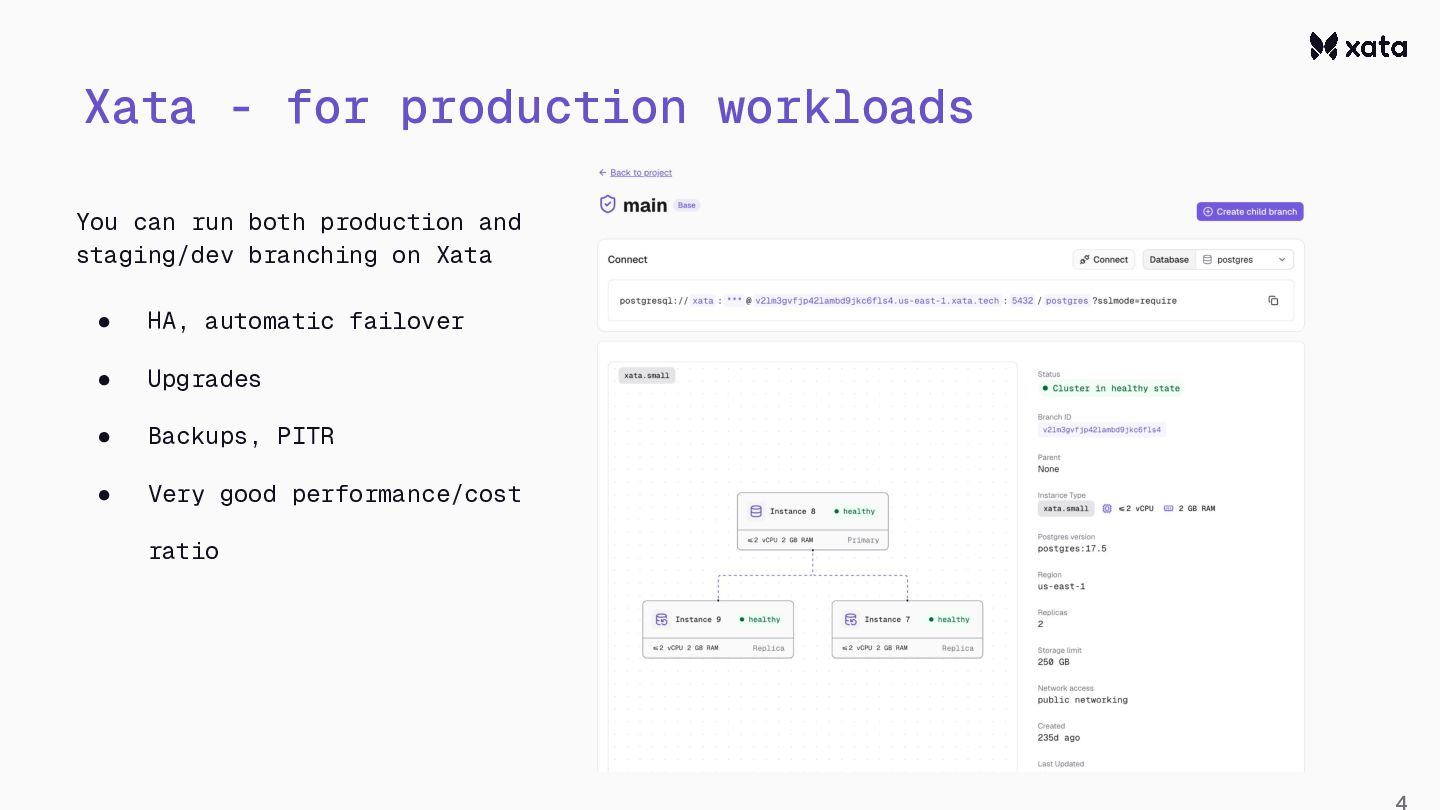
    and staging/dev branching on Xata • HA, automatic failover • Upgrades • Backups, PITR • Very good performance/cost ratio
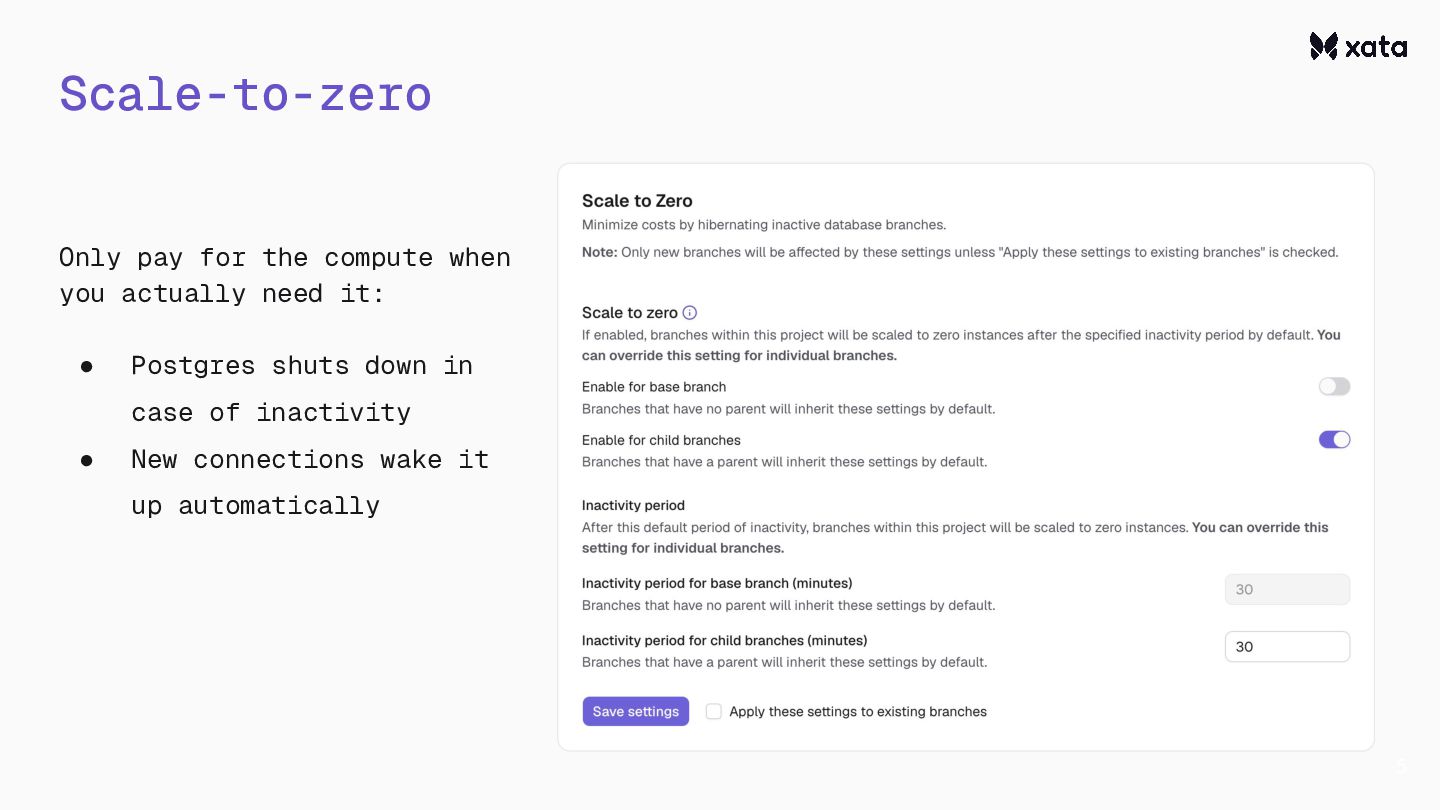
  4. 5 Scale-to-zero Only pay for the compute when you actually

    need it: • Postgres shuts down in case of inactivity • New connections wake it up automatically
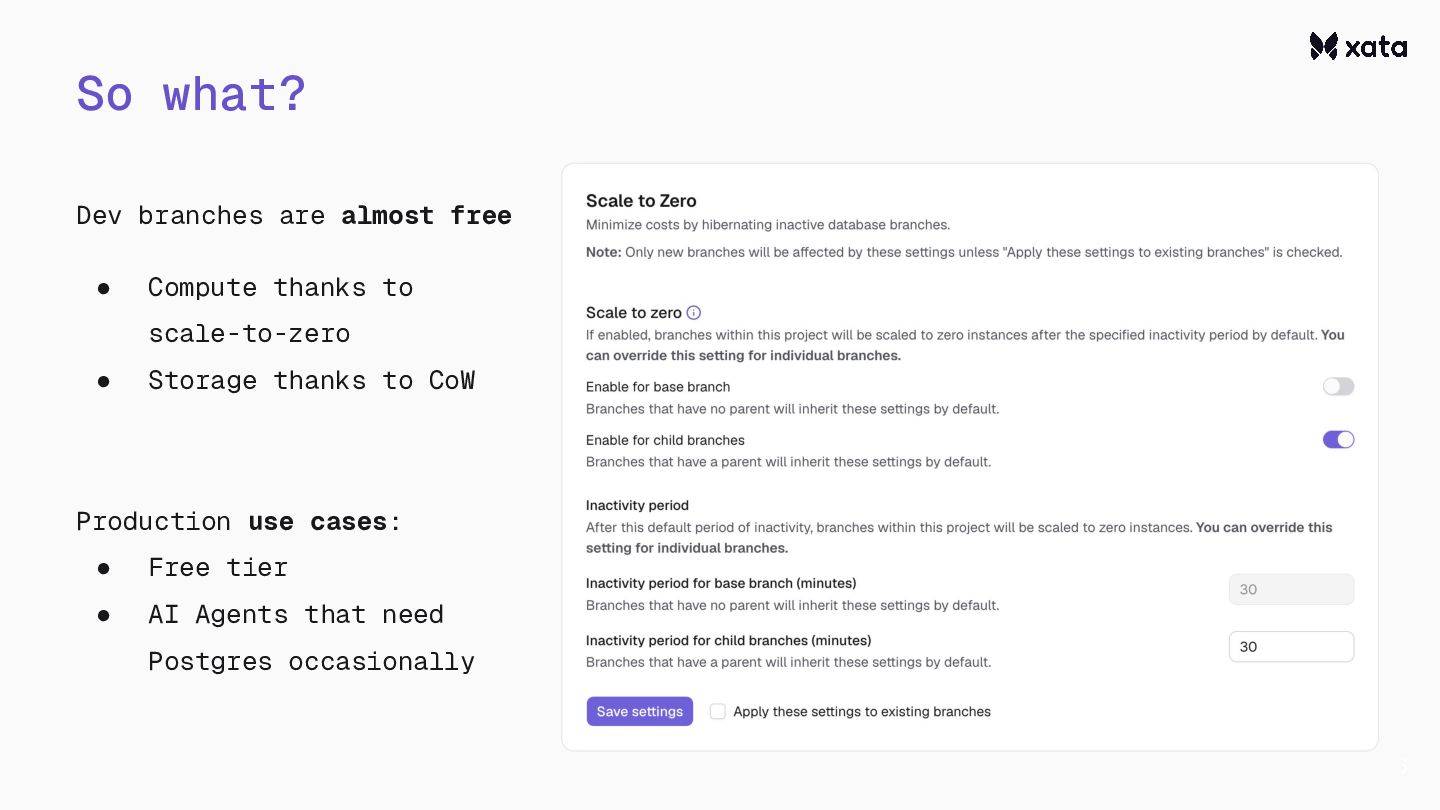
  5. 6 So what? Dev branches are almost free • Compute

    thanks to scale-to-zero • Storage thanks to CoW Production use cases: • Free tier • AI Agents that need Postgres occasionally
  6. CloudNativePG operator (CNPG) • Open source Postgres operator for K8s

    • Originally created by EDB • CNCF project “Sandbox” • Handles (level 5): ◦ Read replicas ◦ Switchover / failover ◦ Upgrades ◦ Connection pooling ◦ Backups / PITR ◦ etc.
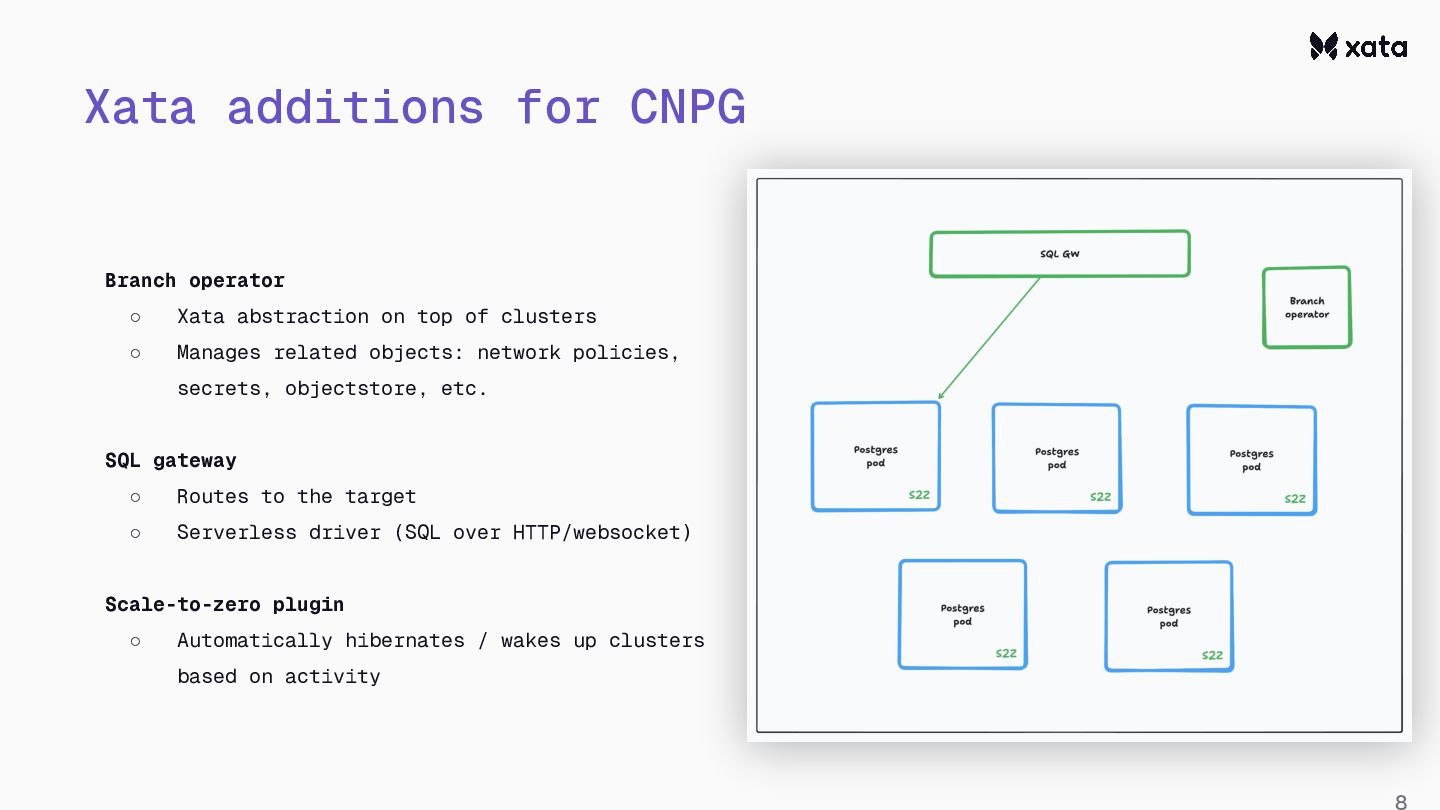
  7. Xata additions for CNPG Branch operator ◦ Xata abstraction on

    top of clusters ◦ Manages related objects: network policies, secrets, objectstore, etc. SQL gateway ◦ Routes to the target ◦ Serverless driver (SQL over HTTP/websocket) Scale-to-zero plugin ◦ Automatically hibernates / wakes up clusters based on activity
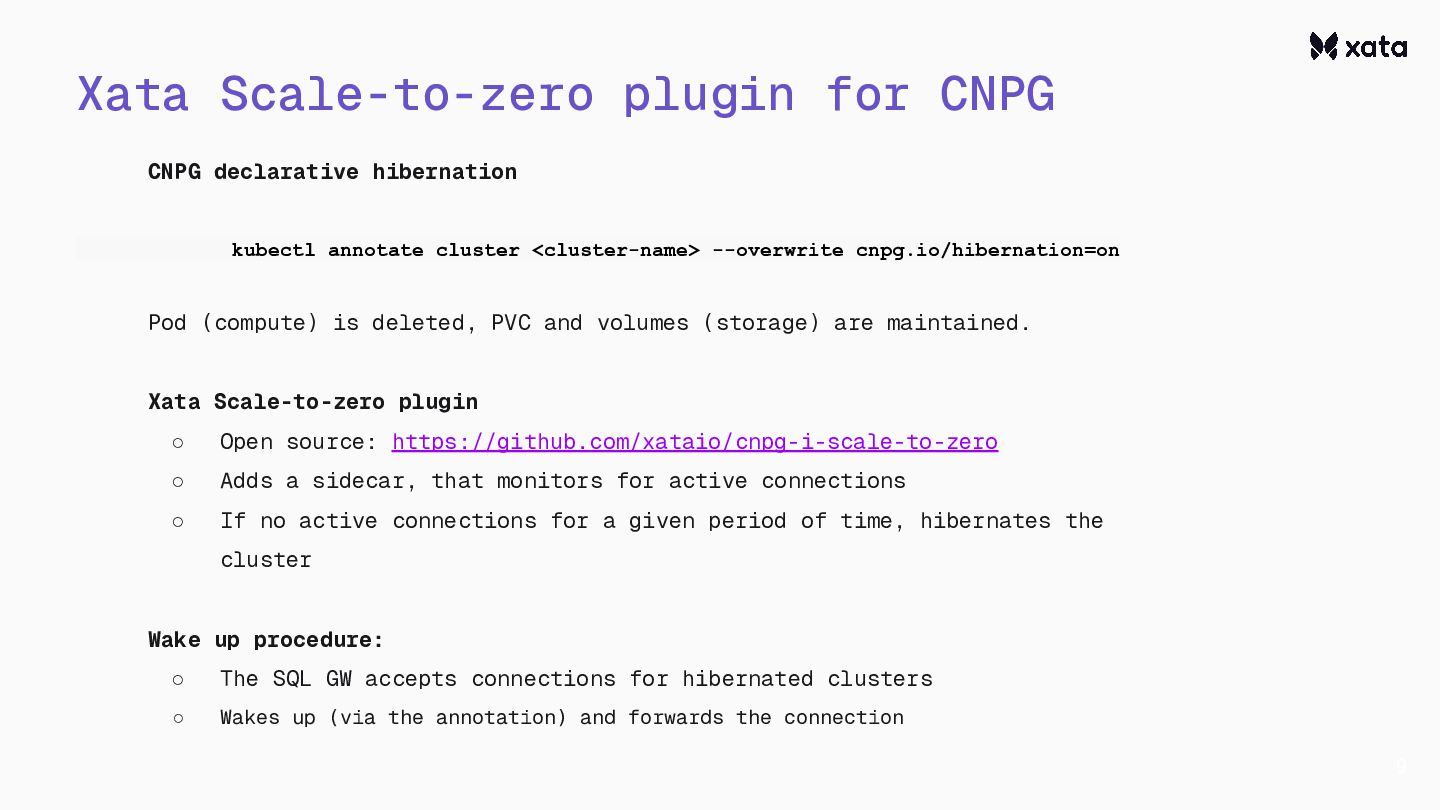
  8. 9 Xata Scale-to-zero plugin for CNPG CNPG declarative hibernation kubectl

    annotate cluster <cluster-name> --overwrite cnpg.io/hibernation=on Pod (compute) is deleted, PVC and volumes (storage) are maintained. Xata Scale-to-zero plugin ◦ Open source: https://github.com/xataio/cnpg-i-scale-to-zero ◦ Adds a sidecar, that monitors for active connections ◦ If no active connections for a given period of time, hibernates the cluster Wake up procedure: ◦ The SQL GW accepts connections for hibernated clusters ◦ Wakes up (via the annotation) and forwards the connection
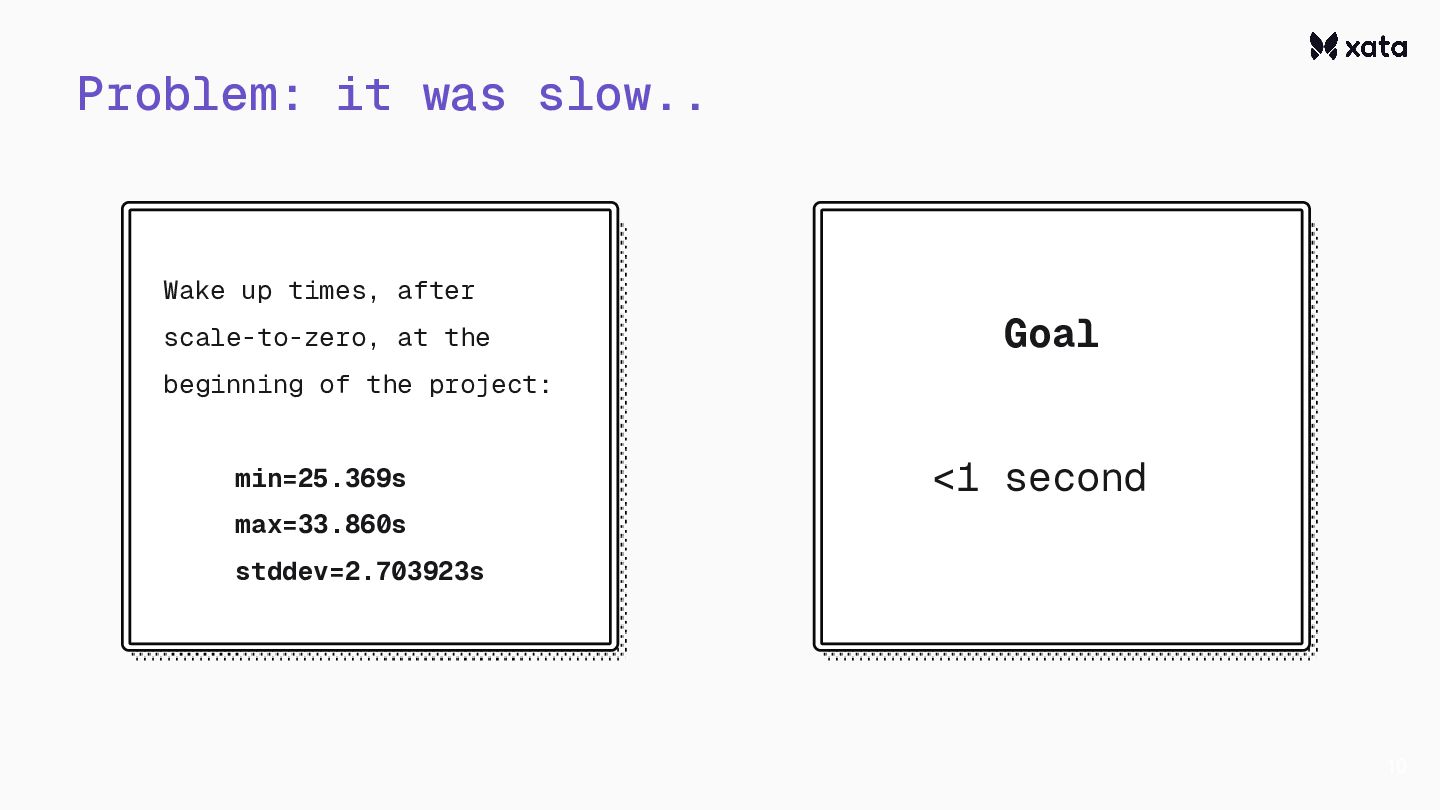
  9. 10 Problem: it was slow.. Goal <1 second Wake up

    times, after scale-to-zero, at the beginning of the project: min=25.369s max=33.860s stddev=2.703923s
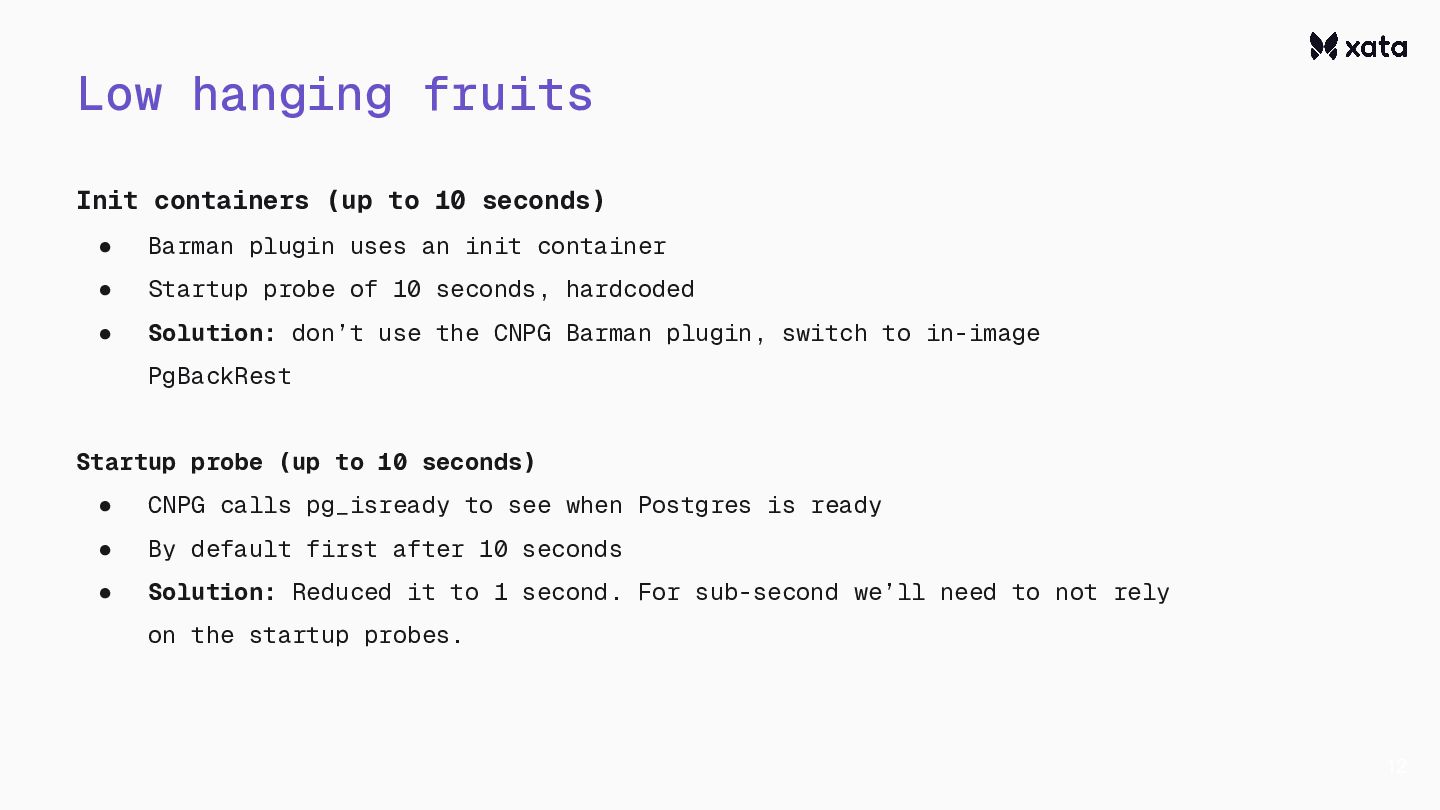
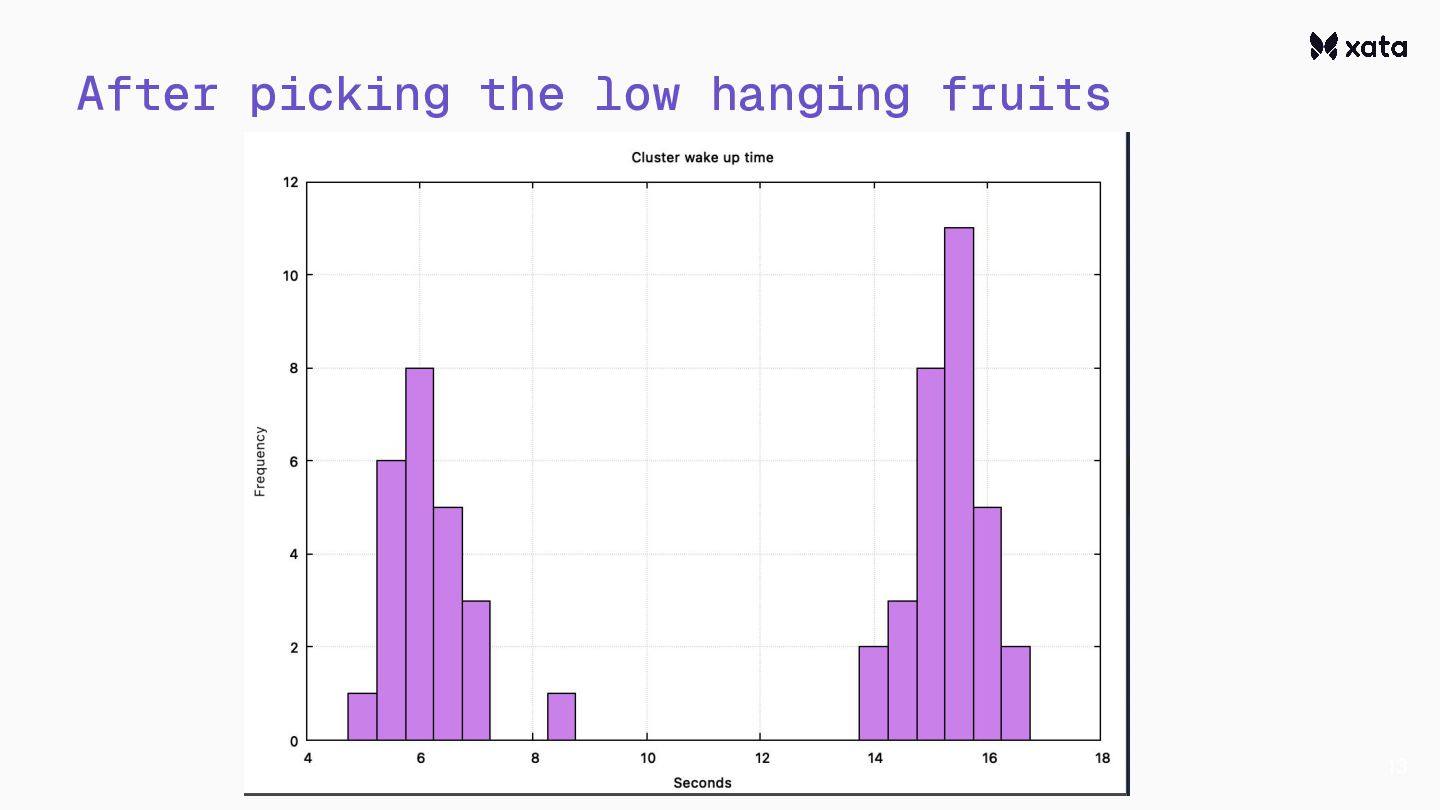
  10. 12 Low hanging fruits Init containers (up to 10 seconds)

    • Barman plugin uses an init container • Startup probe of 10 seconds, hardcoded • Solution: don’t use the CNPG Barman plugin, switch to in-image PgBackRest Startup probe (up to 10 seconds) • CNPG calls pg_isready to see when Postgres is ready • By default first after 10 seconds • Solution: Reduced it to 1 second. For sub-second we’ll need to not rely on the startup probes.
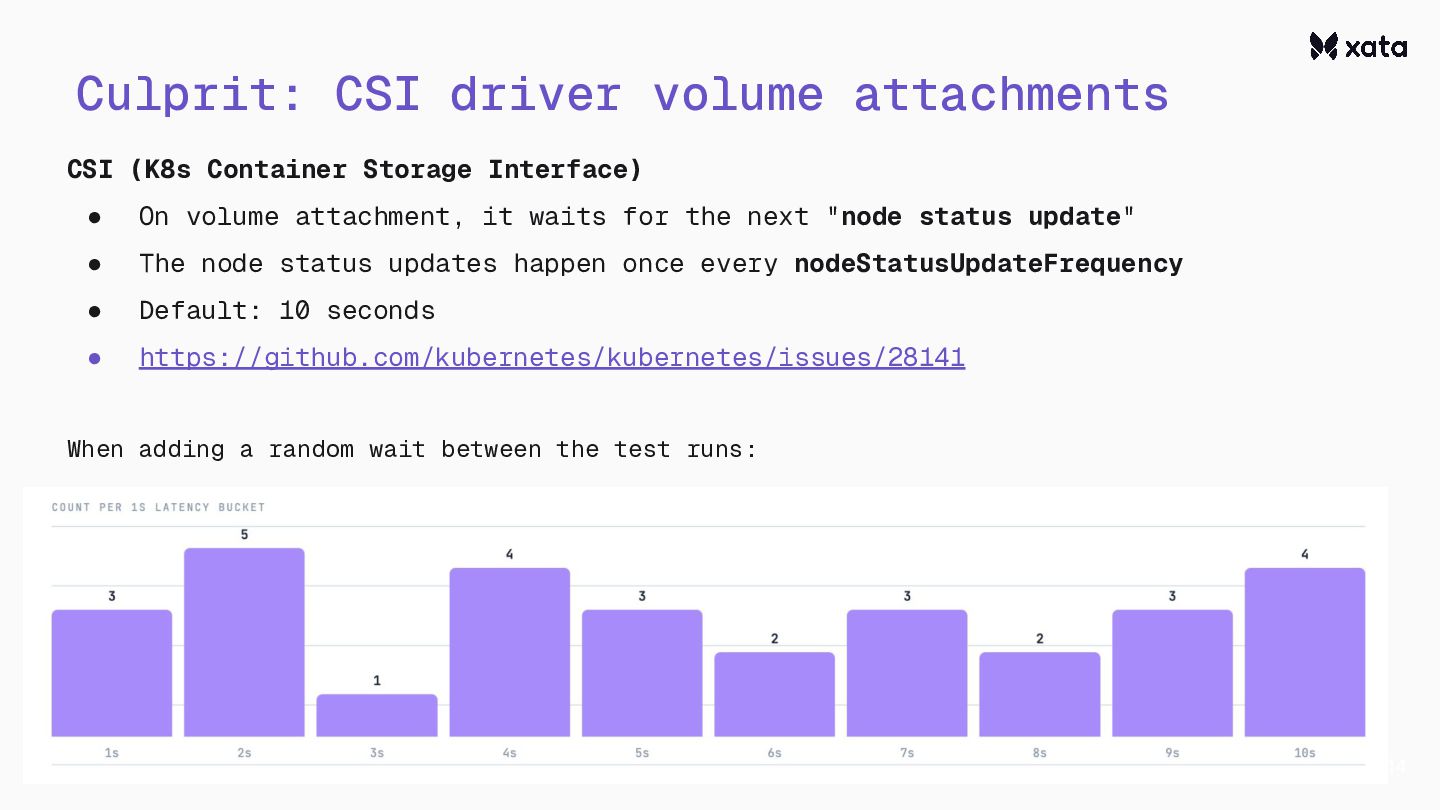
  11. 14 Culprit: CSI driver volume attachments CSI (K8s Container Storage

    Interface) • On volume attachment, it waits for the next "node status update" • The node status updates happen once every nodeStatusUpdateFrequency • Default: 10 seconds • https://github.com/kubernetes/kubernetes/issues/28141 When adding a random wait between the test runs:
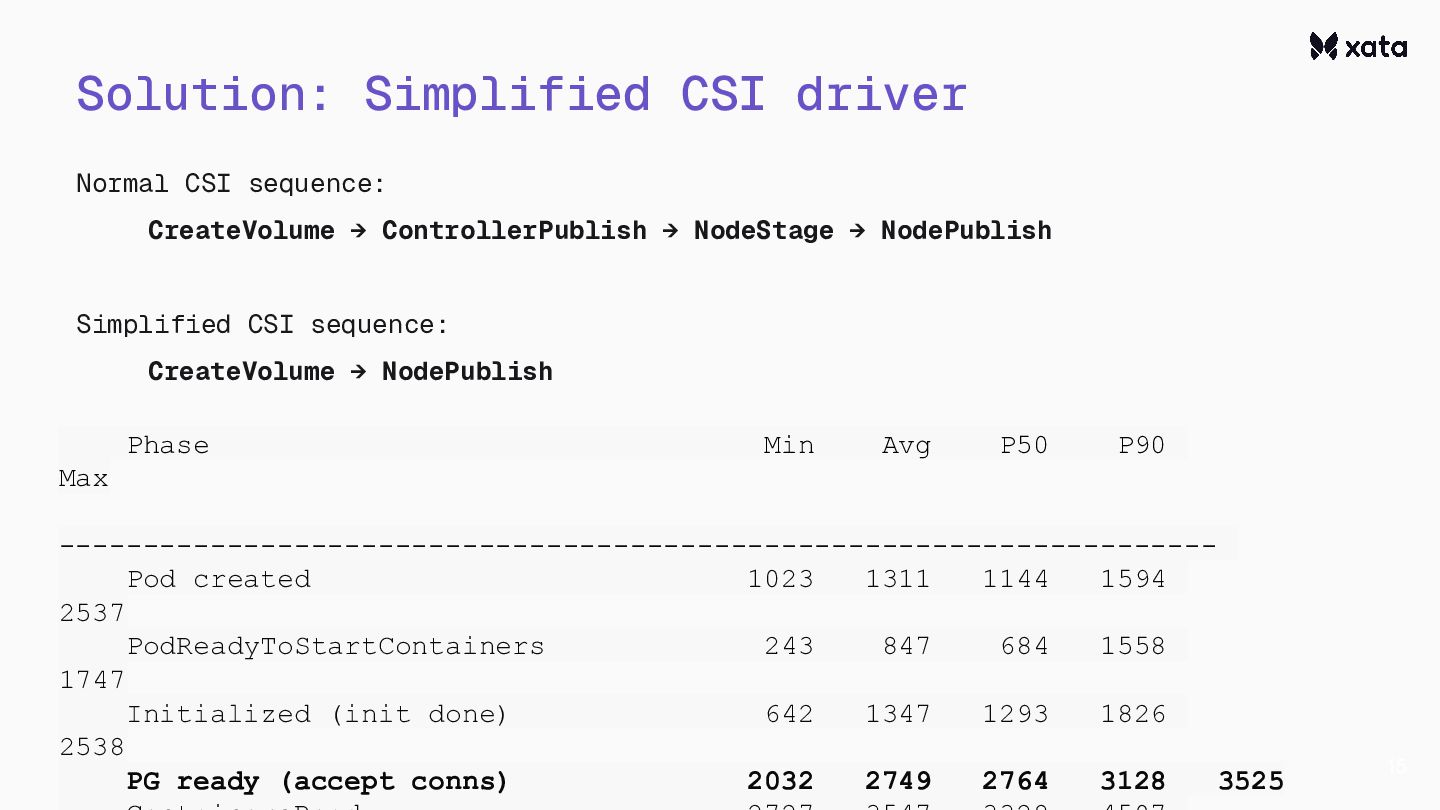
  12. 15 Solution: Simplified CSI driver Normal CSI sequence: CreateVolume →

    ControllerPublish → NodeStage → NodePublish Simplified CSI sequence: CreateVolume → NodePublish Phase Min Avg P50 P90 Max --------------------------------------------------------------------- Pod created 1023 1311 1144 1594 2537 PodReadyToStartContainers 243 847 684 1558 1747 Initialized (init done) 642 1347 1293 1826 2538 PG ready (accept conns) 2032 2749 2764 3128 3525
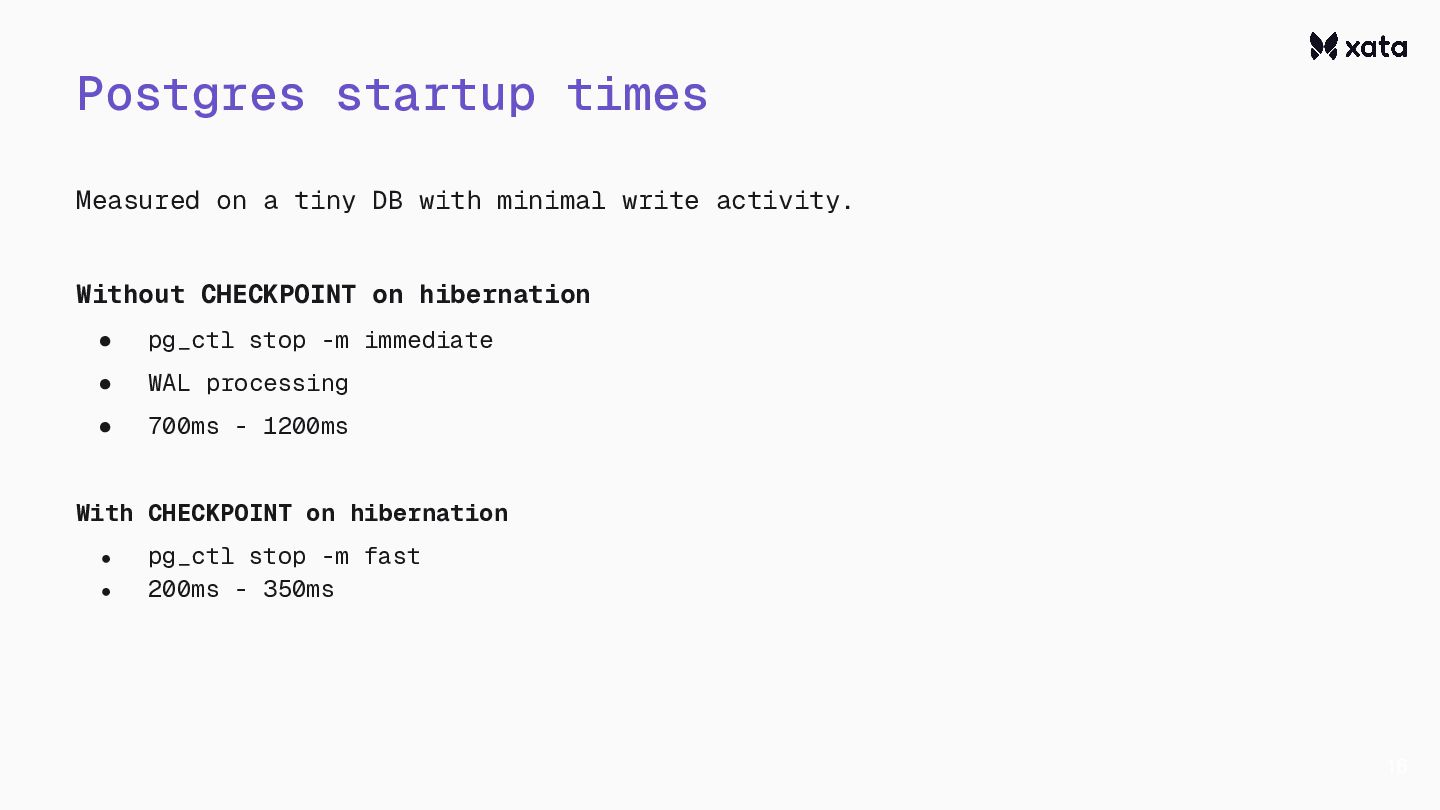
  13. 16 Postgres startup times Measured on a tiny DB with

    minimal write activity. Without CHECKPOINT on hibernation • pg_ctl stop -m immediate • WAL processing • 700ms - 1200ms With CHECKPOINT on hibernation • pg_ctl stop -m fast • 200ms - 350ms
  14. 17 Summary so far Wake-up times went down from ~25s

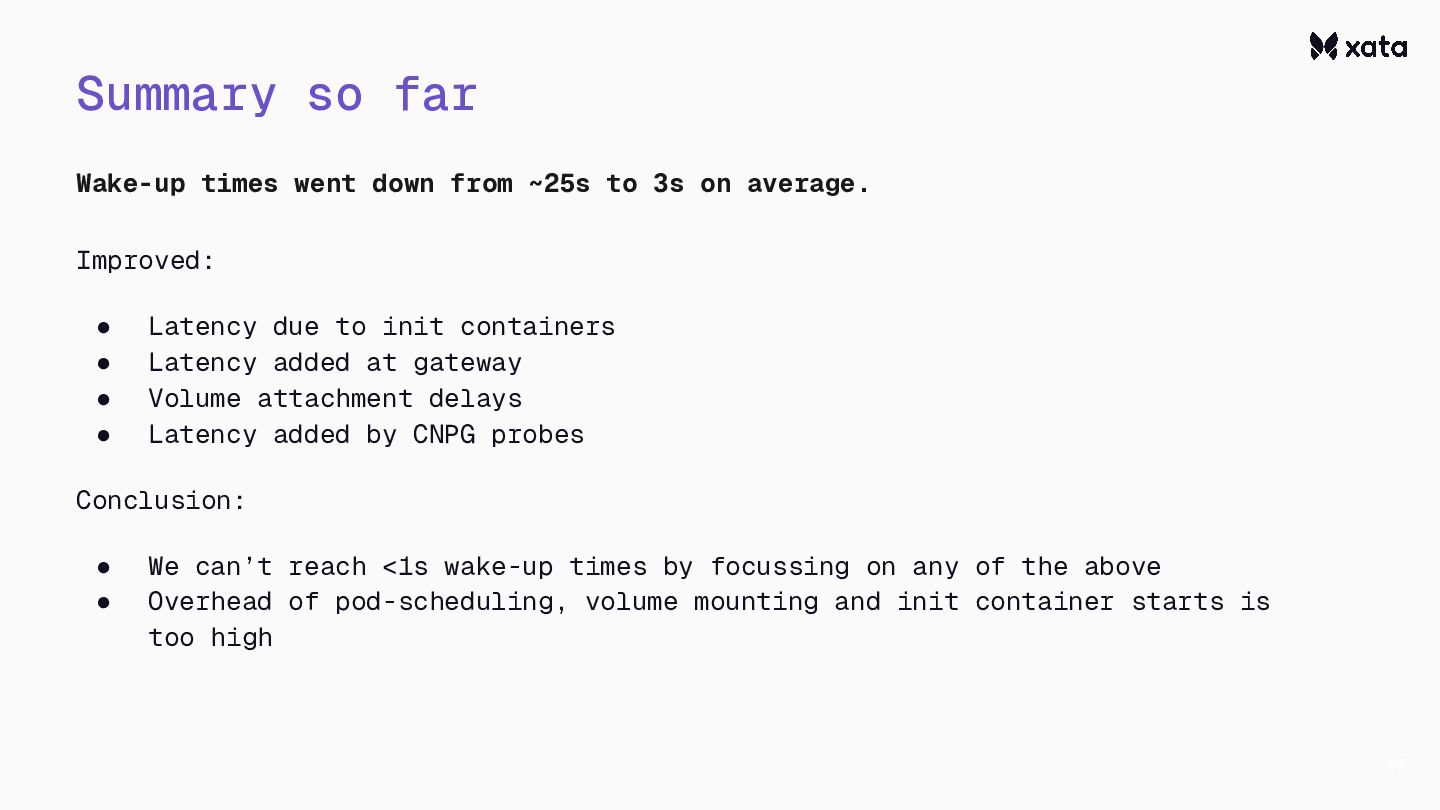
    to 3s on average. Improved: • Latency due to init containers • Latency added at gateway • Volume attachment delays • Latency added by CNPG probes Conclusion: • We can’t reach <1s wake-up times by focussing on any of the above • Overhead of pod-scheduling, volume mounting and init container starts is too high
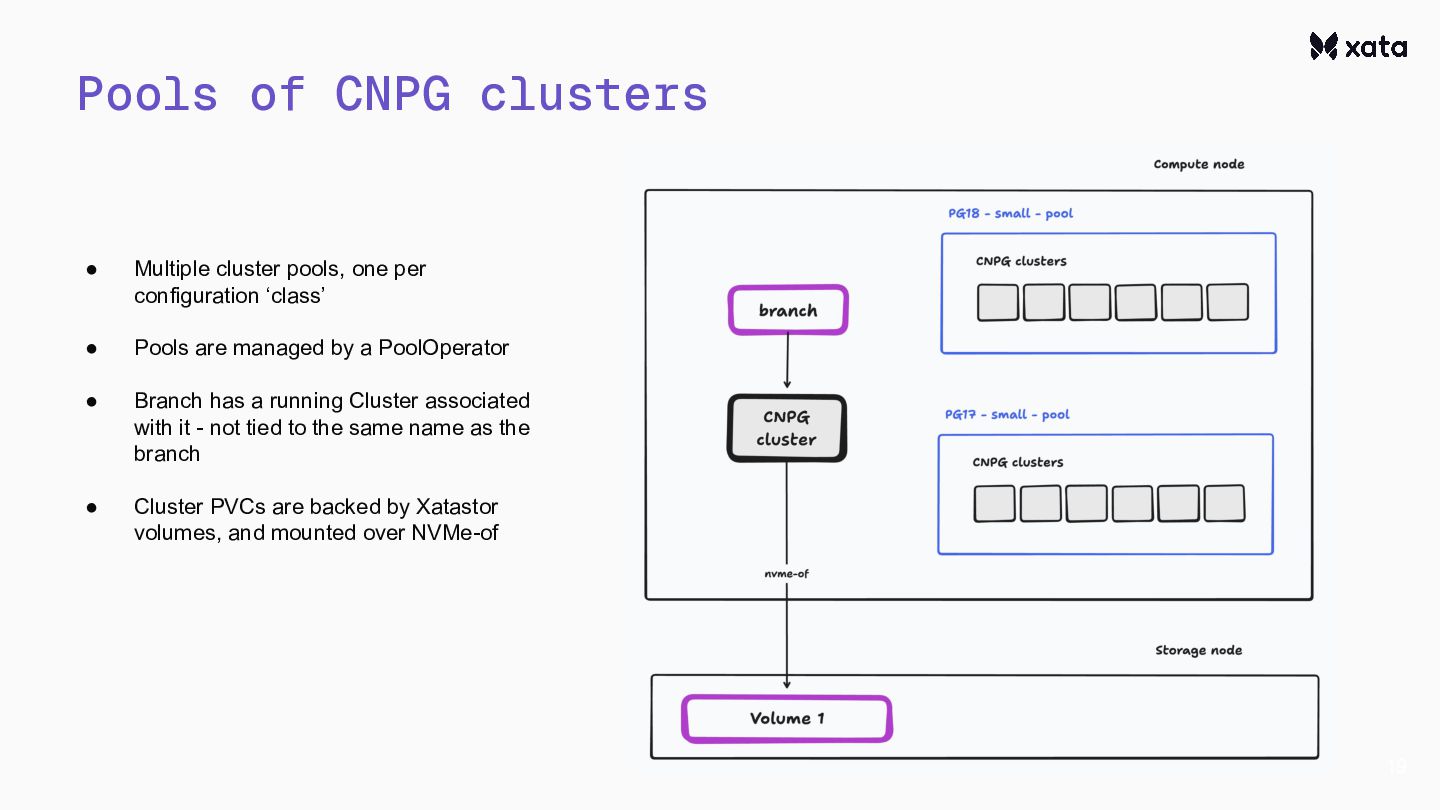
  15. 19 Pools of CNPG clusters • Multiple cluster pools, one

    per configuration ‘class’ • Pools are managed by a PoolOperator • Branch has a running Cluster associated with it - not tied to the same name as the branch • Cluster PVCs are backed by Xatastor volumes, and mounted over NVMe-of
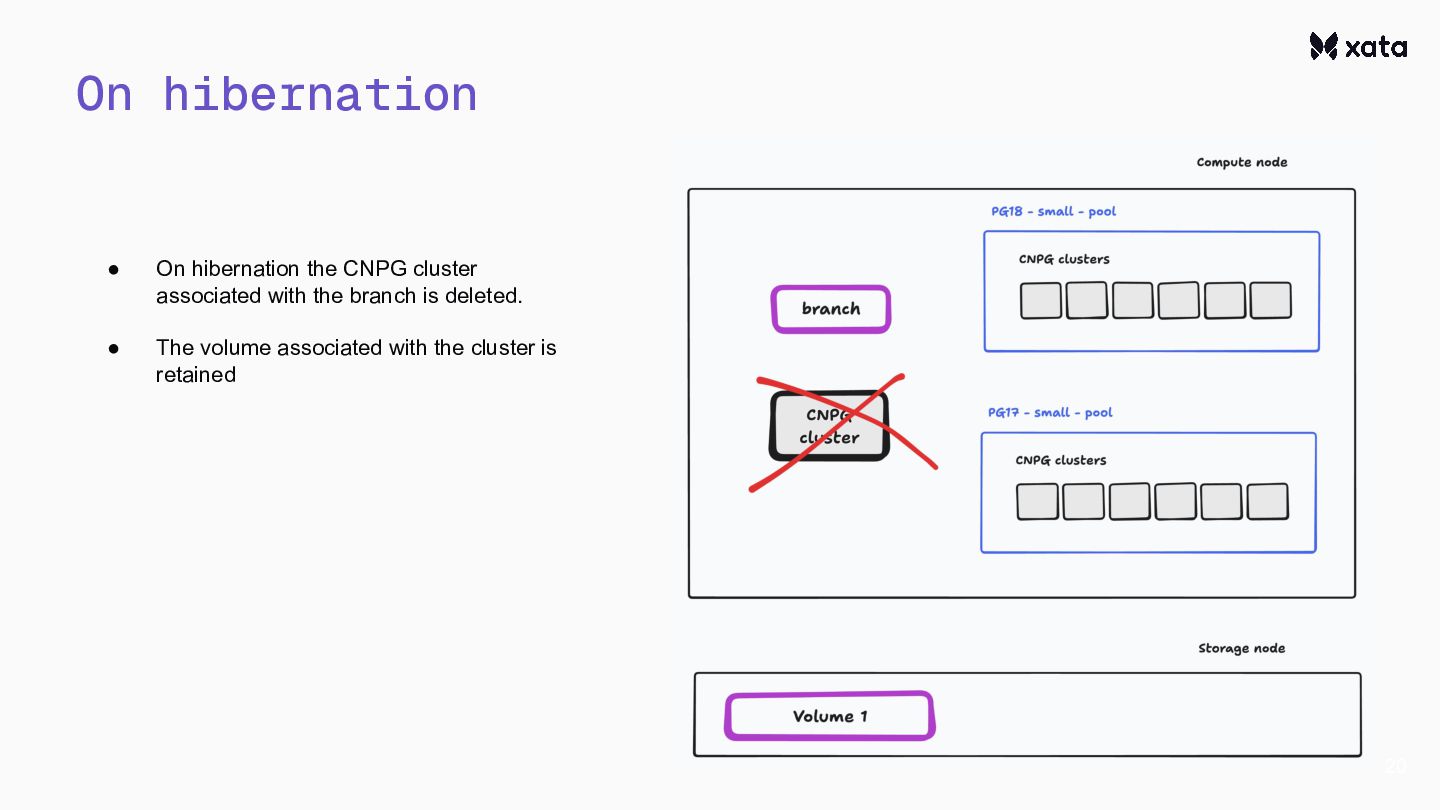
  16. 20 On hibernation • On hibernation the CNPG cluster associated

    with the branch is deleted. • The volume associated with the cluster is retained
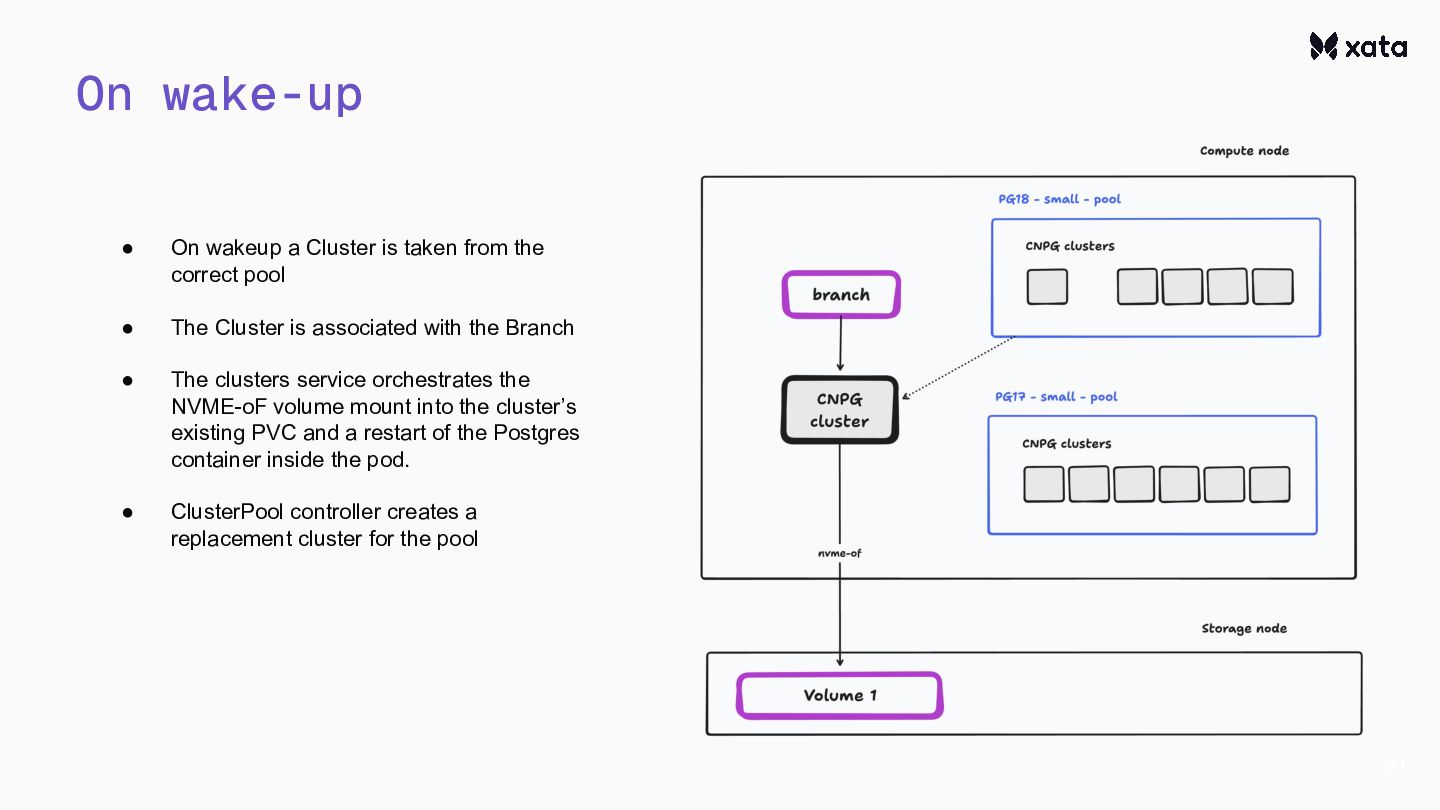
  17. 21 On wake-up • On wakeup a Cluster is taken

    from the correct pool • The Cluster is associated with the Branch • The clusters service orchestrates the NVME-oF volume mount into the cluster’s existing PVC and a restart of the Postgres container inside the pod. • ClusterPool controller creates a replacement cluster for the pool
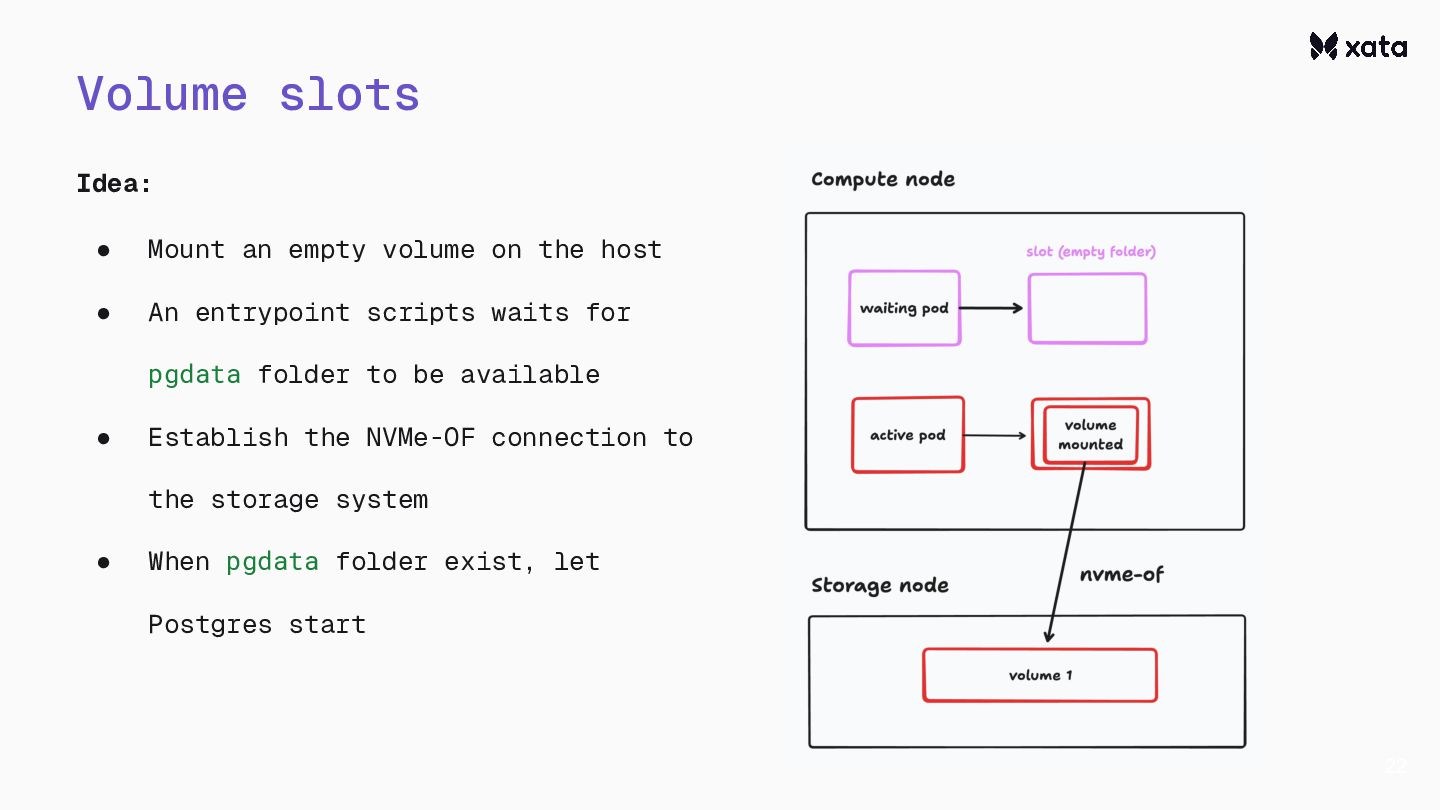
  18. 22 Volume slots Idea: • Mount an empty volume on

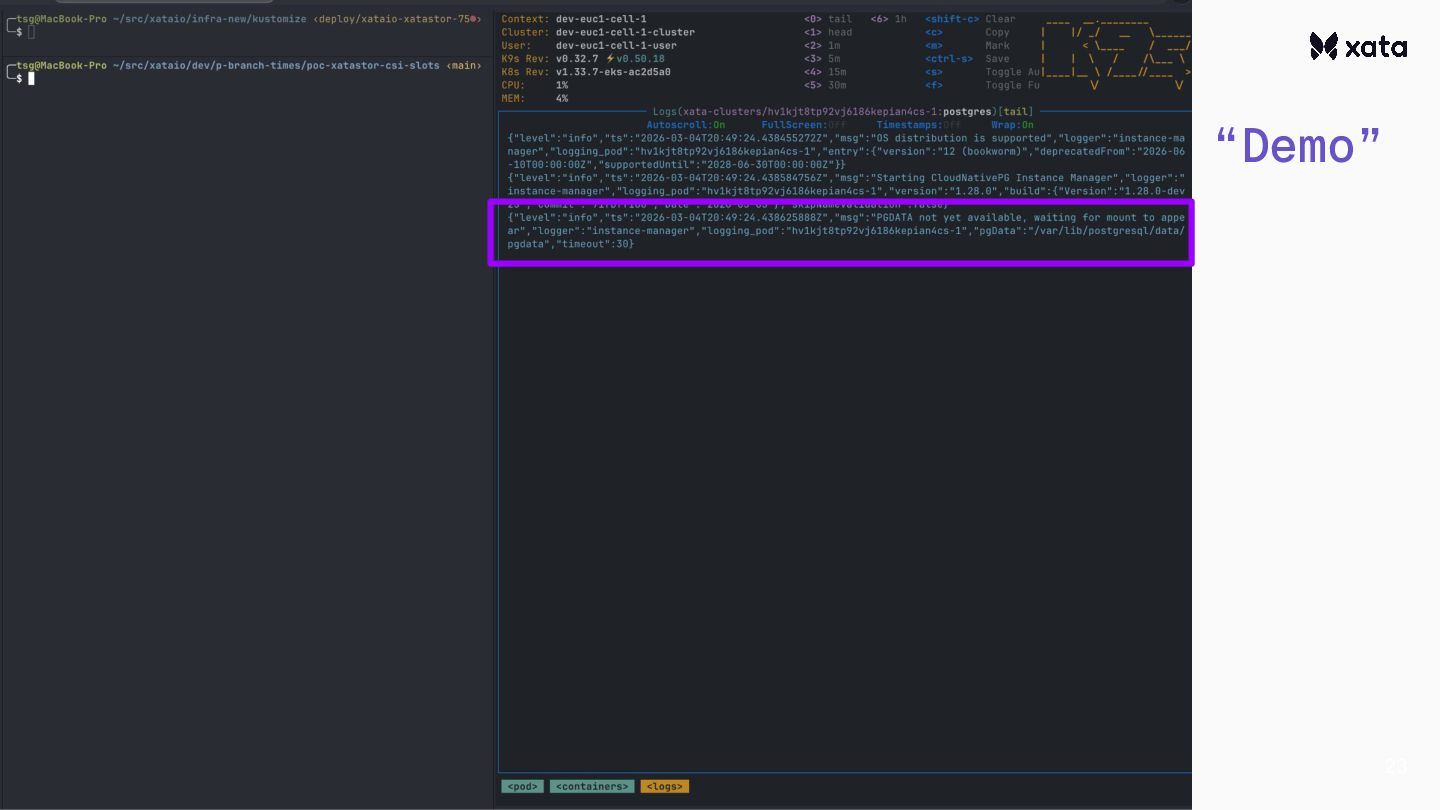
    the host • An entrypoint scripts waits for pgdata folder to be available • Establish the NVMe-OF connection to the storage system • When pgdata folder exist, let Postgres start
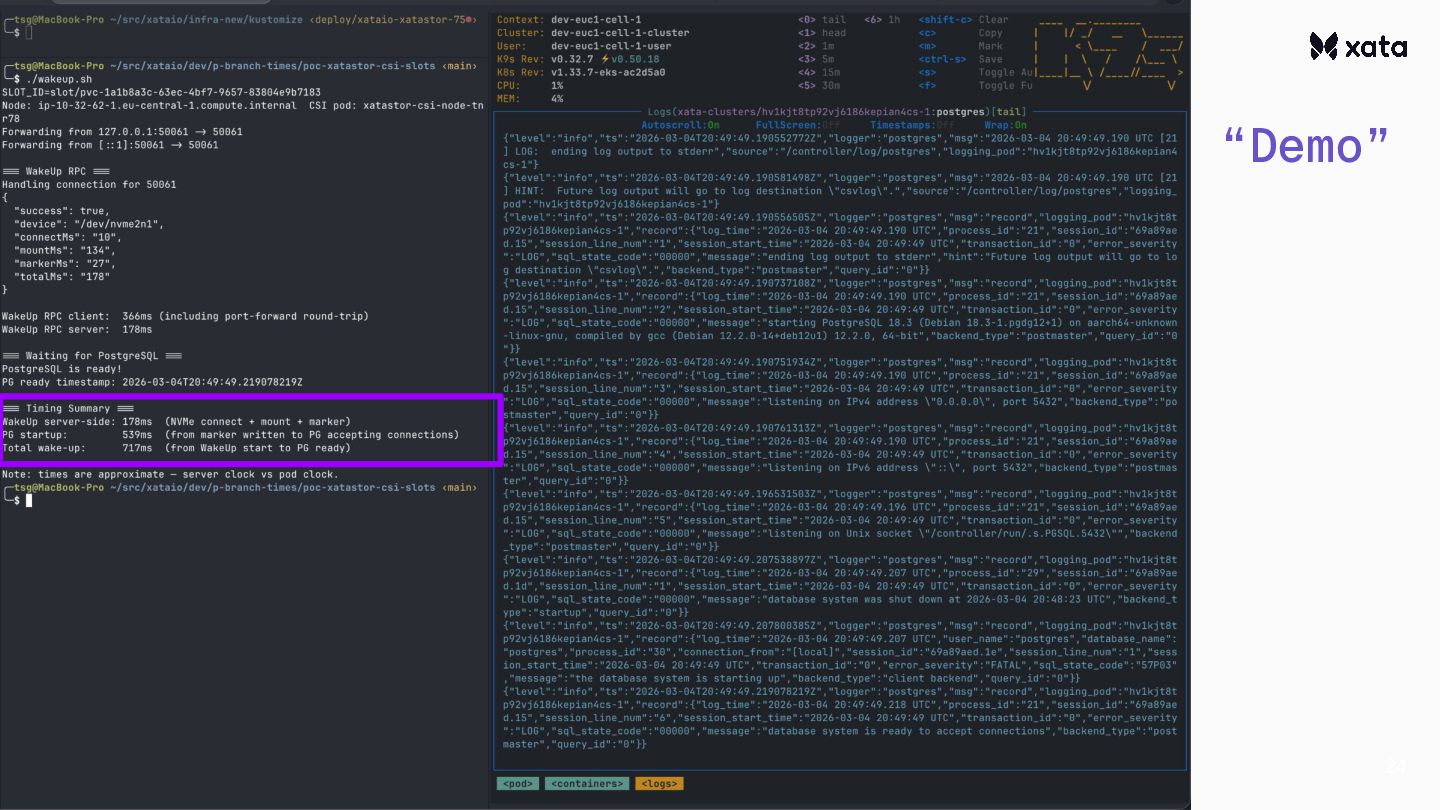
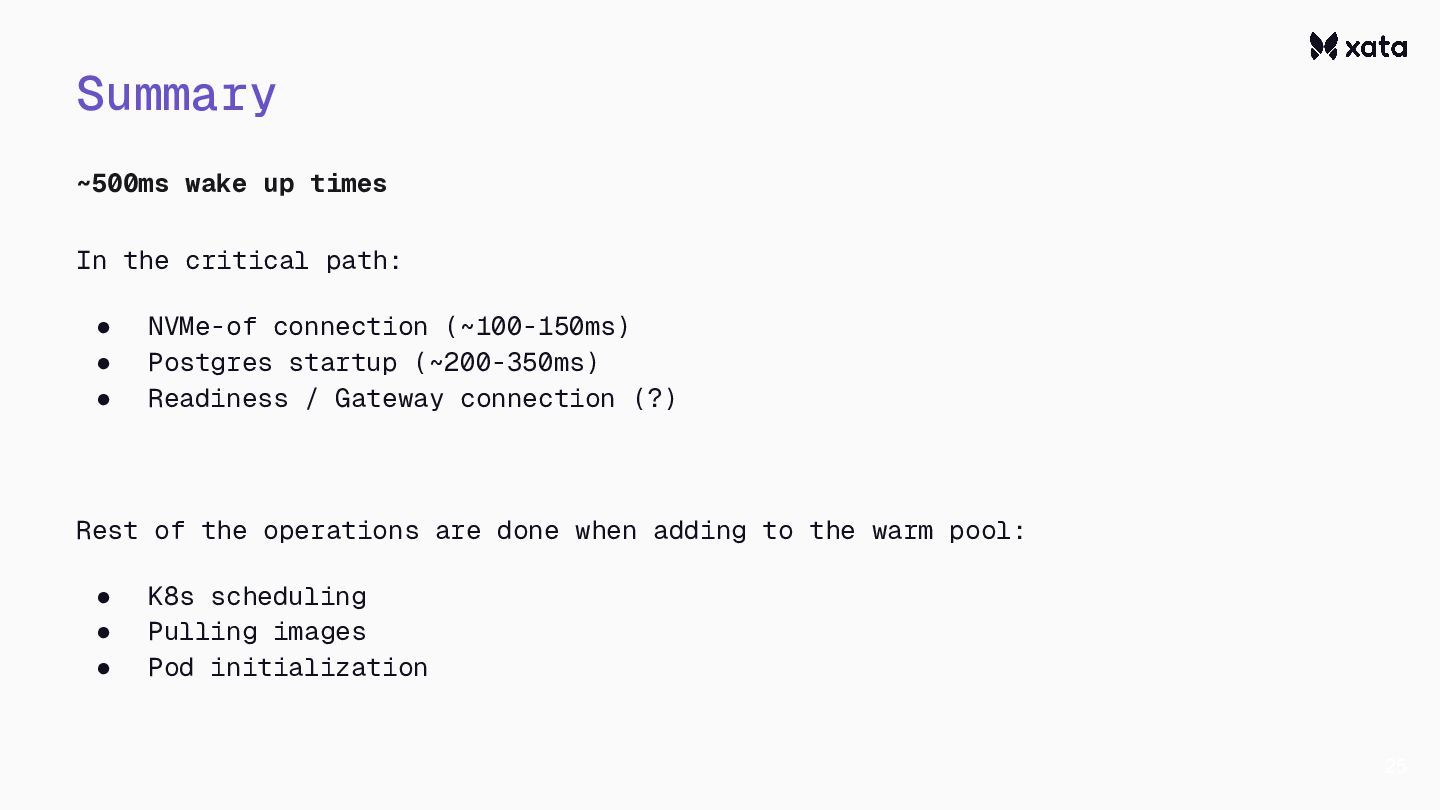
  19. 25 Summary ~500ms wake up times In the critical path:

    • NVMe-of connection (~100-150ms) • Postgres startup (~200-350ms) • Readiness / Gateway connection (?) Rest of the operations are done when adding to the warm pool: • K8s scheduling • Pulling images • Pod initialization