Upgrade to Pro — share decks privately, control downloads, hide ads and more …

A Dingo Ate My Framework: Succeeding with Serve...

Sponsored · SiteGround - Reliable hosting with speed, security, and support you can count on. →

A Dingo Ate My Framework: Succeeding with Serverless

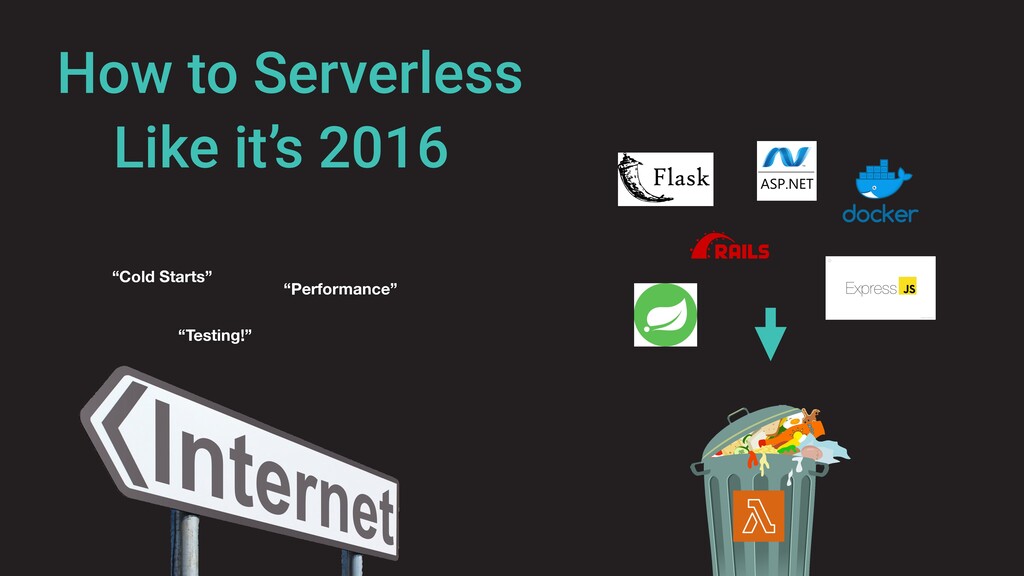
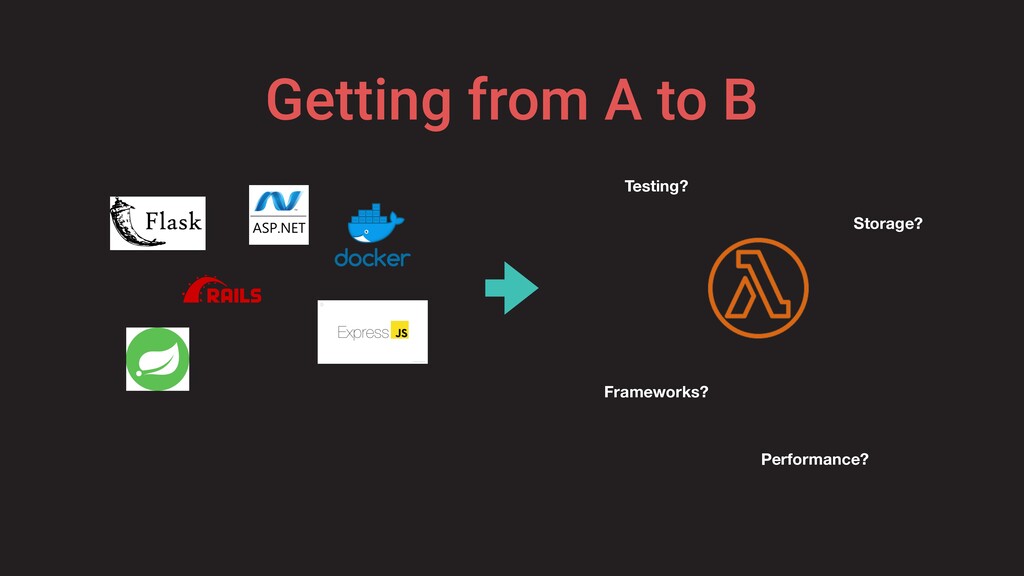
Serverless is a computing paradigm that changes the way in which we build and run applications. Pay-per-use managed services make it easier than ever to focus on creating compelling experiences for our users, but this comes at a cost. Sure, some problems are easier to solve with serverless, but others are harder. It can be a rough experience coming from popular web frameworks like Ruby-on-Rails, Express and .NET MVC.

I’ll go over what is driving my approach with serverless on AWS with some practical examples, and offer my thoughts on how to start succeeding with serverless.

Avatar for Matt Tyler

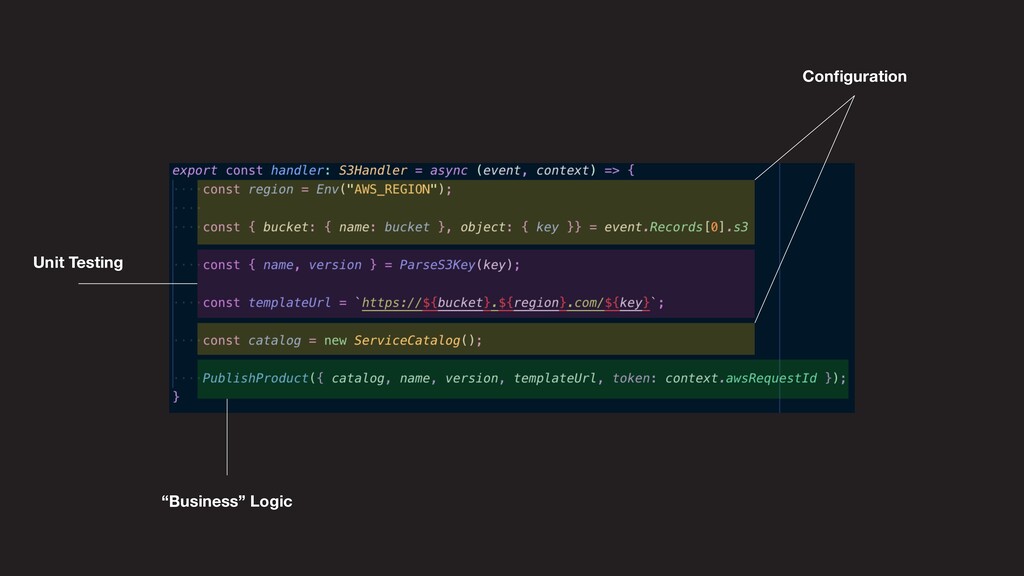
Matt Tyler

August 10, 2019

More Decks by Matt Tyler

Other Decks in Programming

Transcript

  1. Better Software, Faster Infrastructure Modernisation | Data Platforms | Cloud

    Native Applications | Enterprise DevOps Infrastructure Modernisation | Data Platforms | Cloud Native Applications | Enterprise DevOps @mechanicalrock_ mechanicalrock.io mechanical-rock
  2. • Prefer managed services over rolling your own • Explore

    alternatives to writing code (functions) if possible (e.g. service integrations, VTL etc) • Identify functionality that is likely to be offered as a managed service in future and prepare to deprecate
  3. - Corey Quinn “Something that gets lost a lot in

    cloud discussions: if you build an app and let it sit in a cloud provider for a decade, it gets better. 
 
 Reliability improves, hardware gets faster. 
 
 Do that on-premise (sic) and the raccoons take your site down by year 3.”
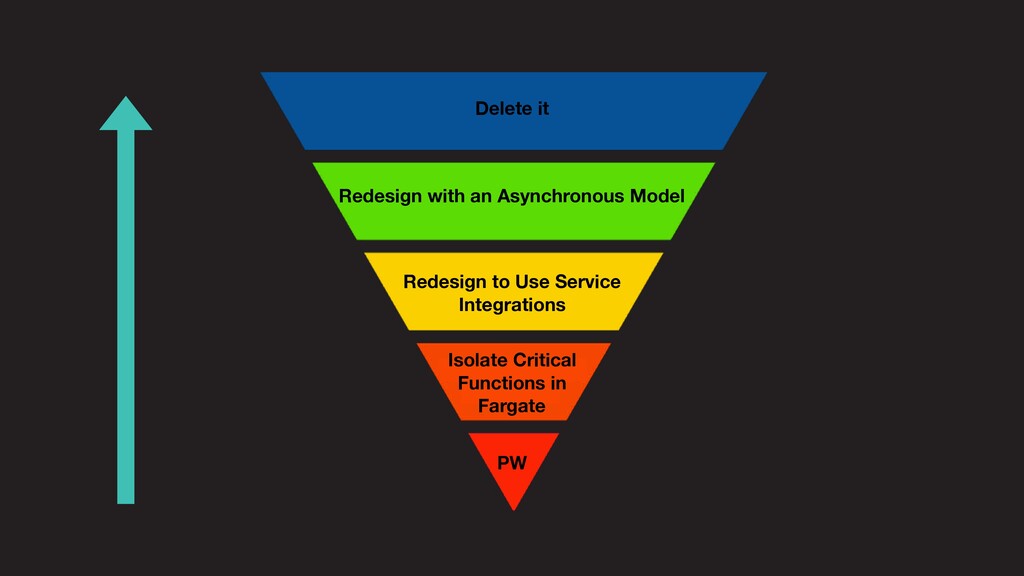
  4. PW Isolate Critical Functions in 
 Fargate Redesign to Use

    Service Integrations Redesign with an Asynchronous Model Delete it
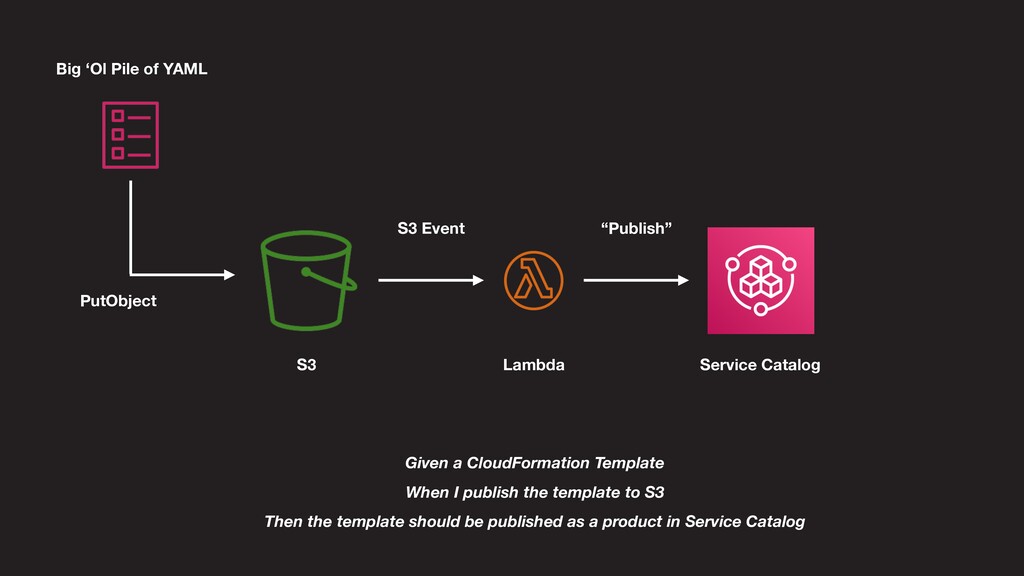
  5. S3 Service Catalog Big ‘Ol Pile of YAML PutObject Lambda

    S3 Event “Publish” Given a CloudFormation Template
 When I publish the template to S3
 Then the template should be published as a product in Service Catalog
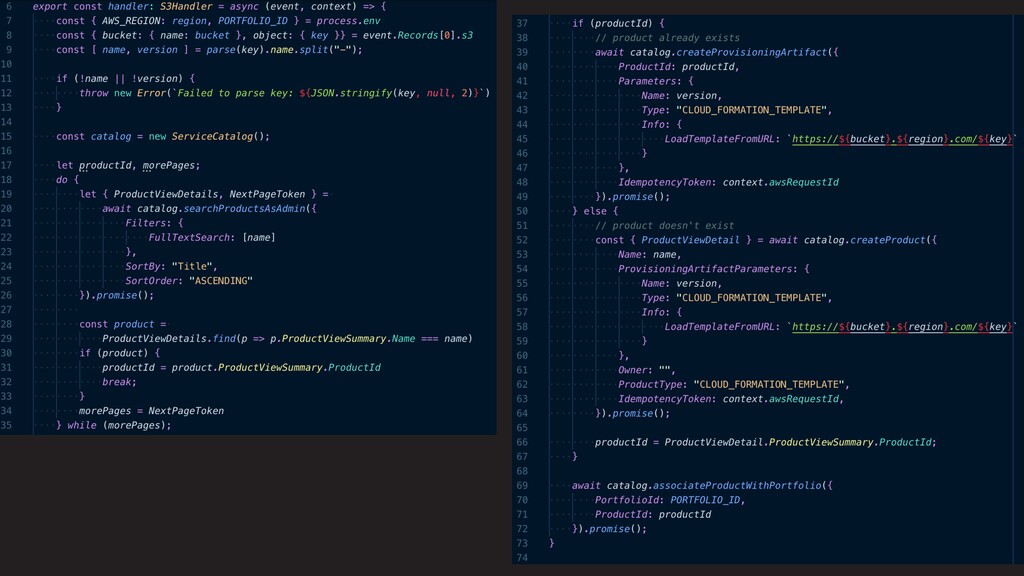
  6. A failure to associate the product will cause the function

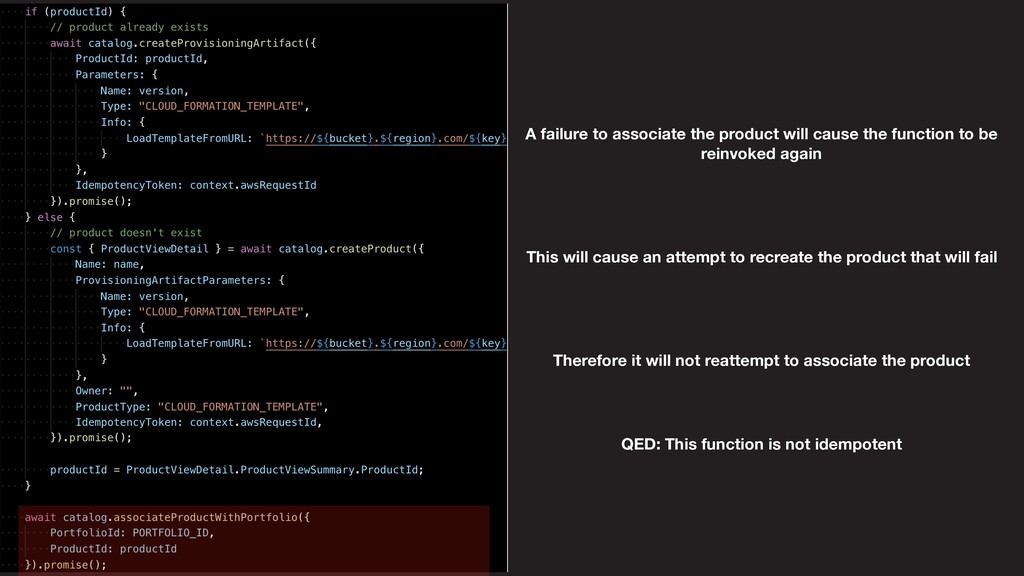
    to be reinvoked again This will cause an attempt to recreate the product that will fail Therefore it will not reattempt to associate the product QED: This function is not idempotent
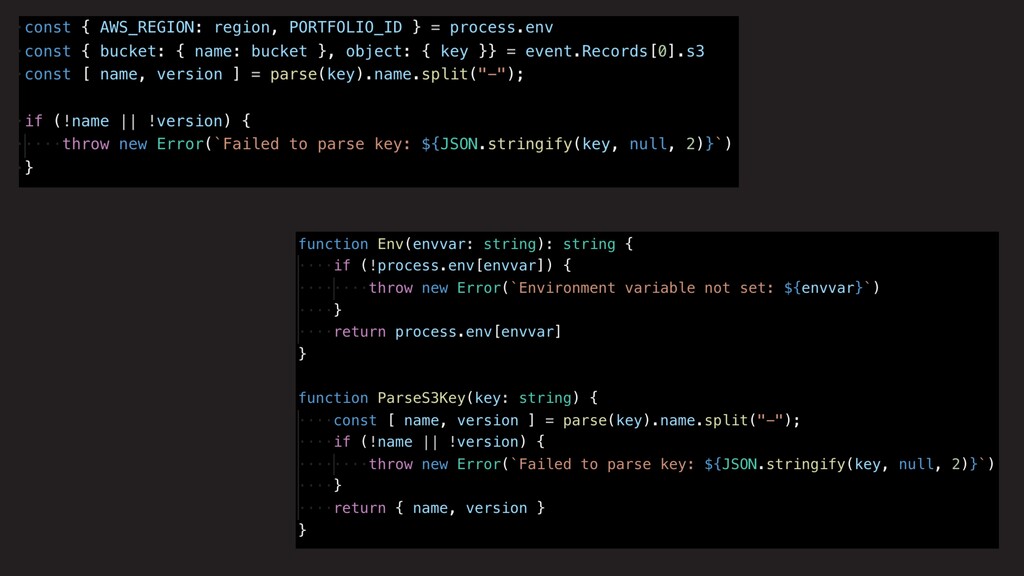
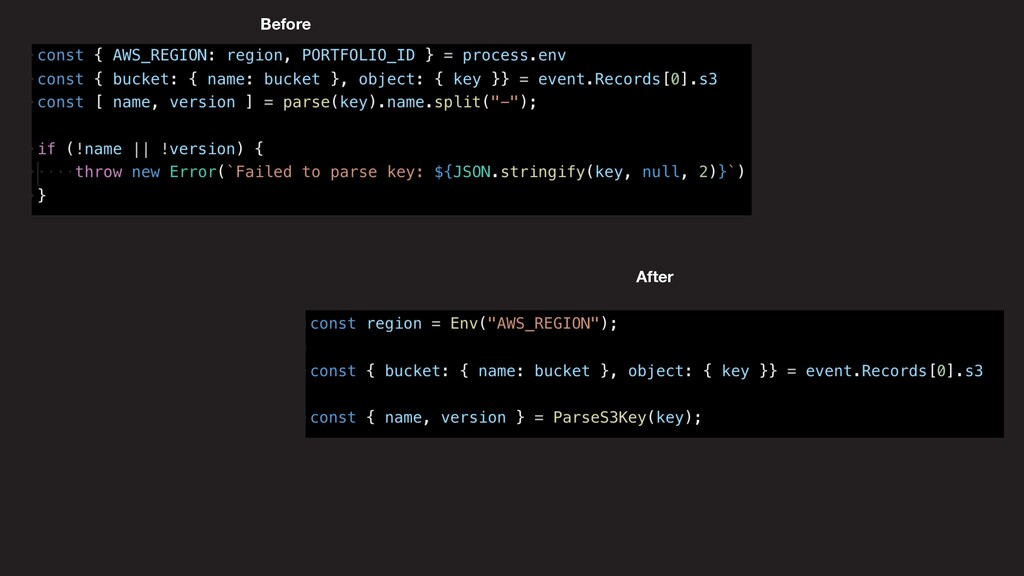
  7. • Keep conditional branching to a minimum; don’t try to

    do too much! • Separate business logic; Apply hexagonal/onion/port & adaptor architecture! • Validate inputs early; try to fail fast! • Load configuration (environment variables, secrets, etc) early; try to fail fast! • Understand how your function is invoked
  8. • I would not be comfortable with a test suite

    consisting *only* of locally run unit tests. • I would be more comfortable with a test suite consisting entirely of integration tests • Service integrations, VTL, API transformations - all of these are very difficult to test locally.
  9. What prevented me relying mainly on integration tests pre-cloud? •

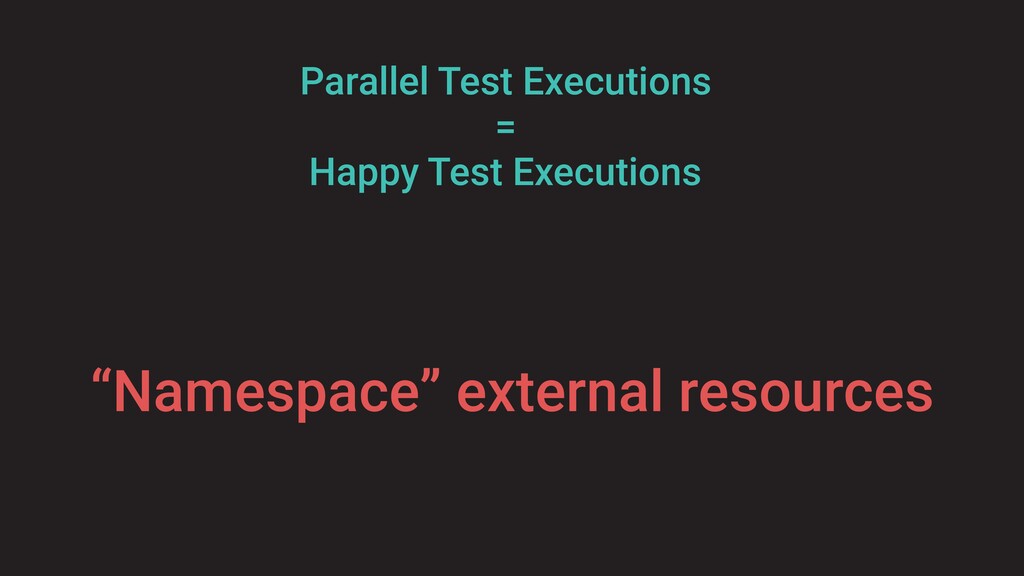
    Because they are are slow to run • Because they are executed sequentially • Because the tests might interfere with each other • Because they make external calls to an external environment • Because it is expensive (time + money) to create additional environments
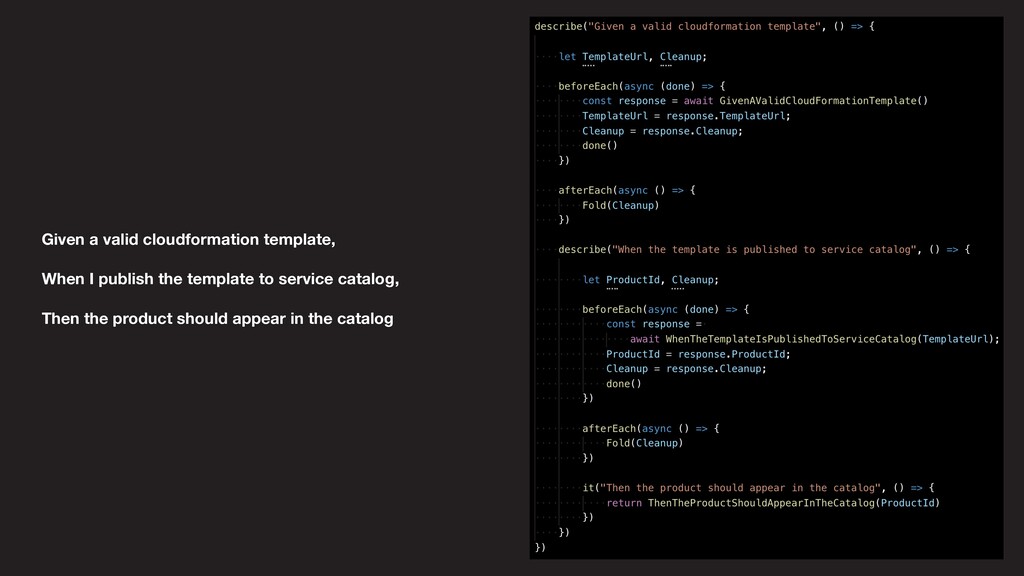
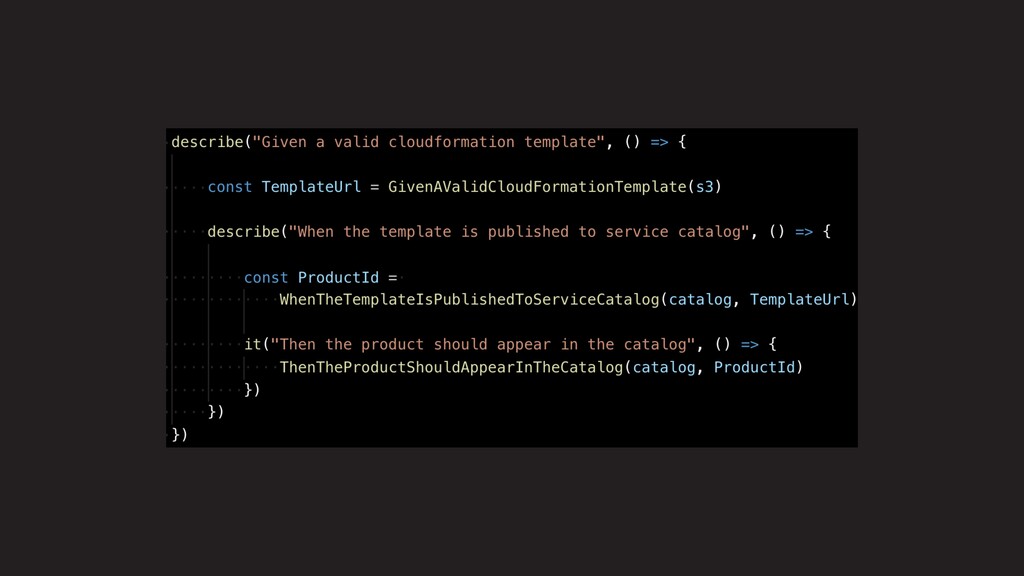
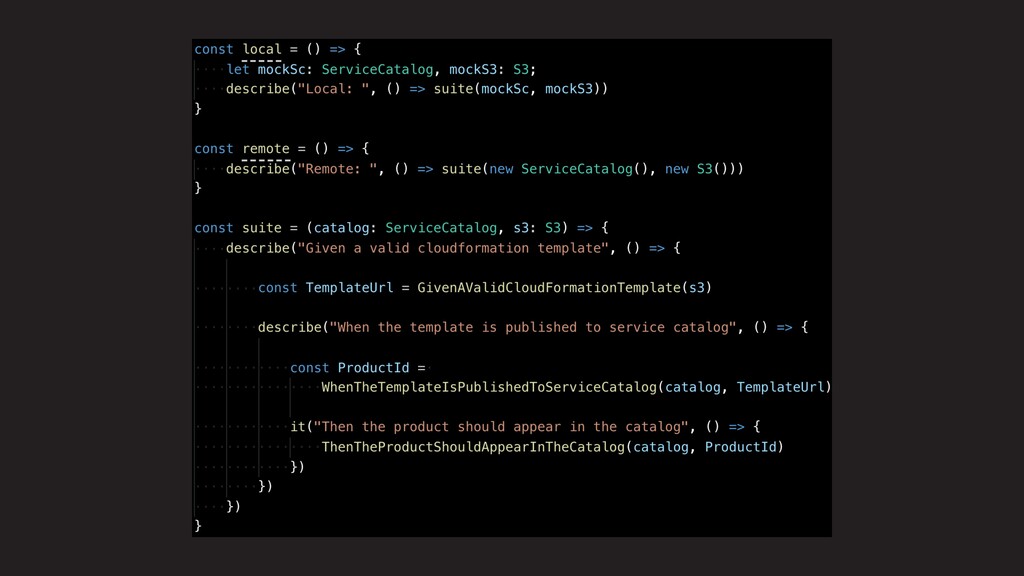
  10. Given a valid cloudformation template, When I publish the template

    to service catalog,
 
 Then the product should appear in the catalog

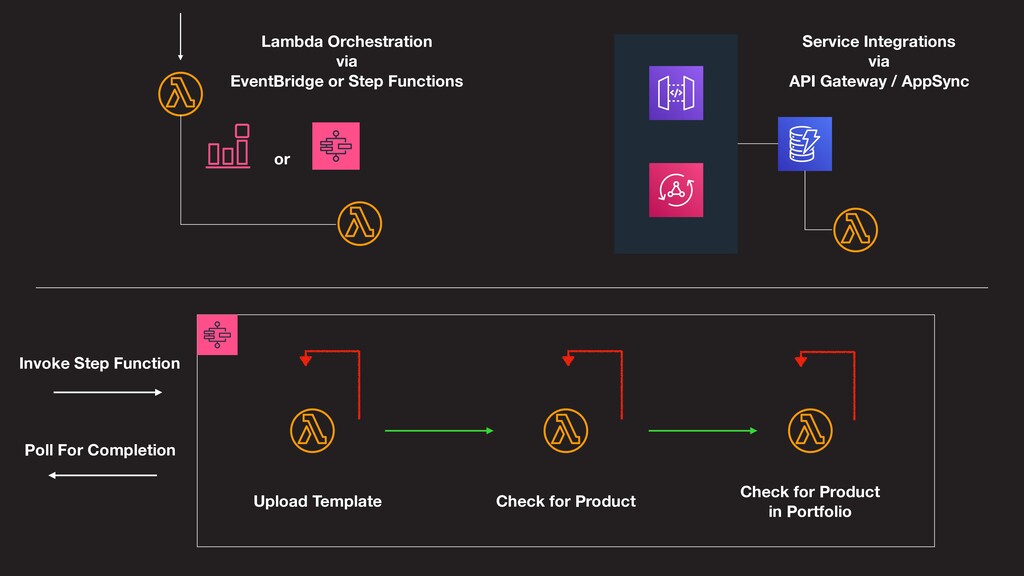
  11. Service Integrations via
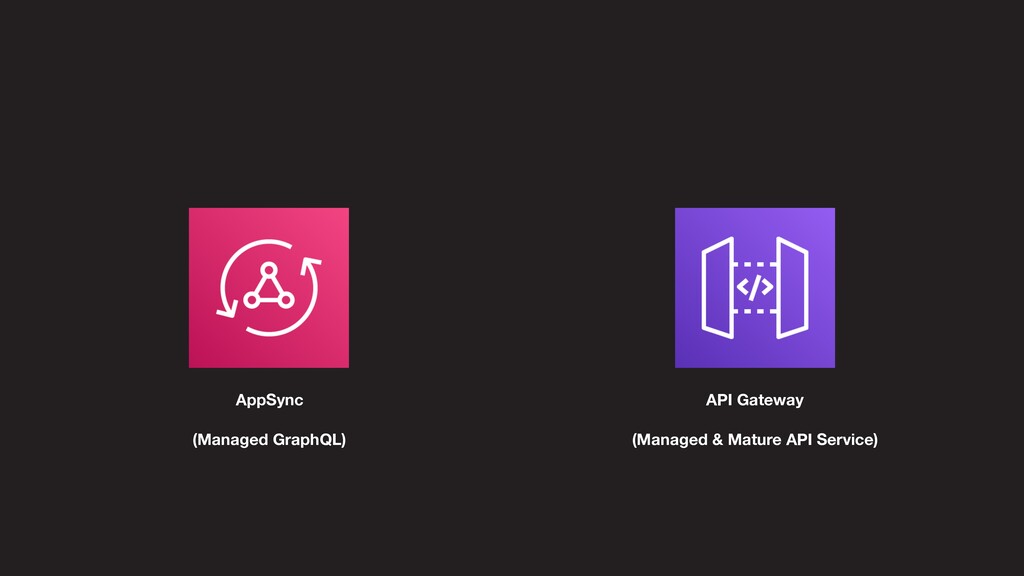
 API Gateway / AppSync or Lambda Orchestration
    via
 EventBridge or Step Functions Invoke Step Function Poll For Completion Upload Template Check for Product Check for Product
 in Portfolio
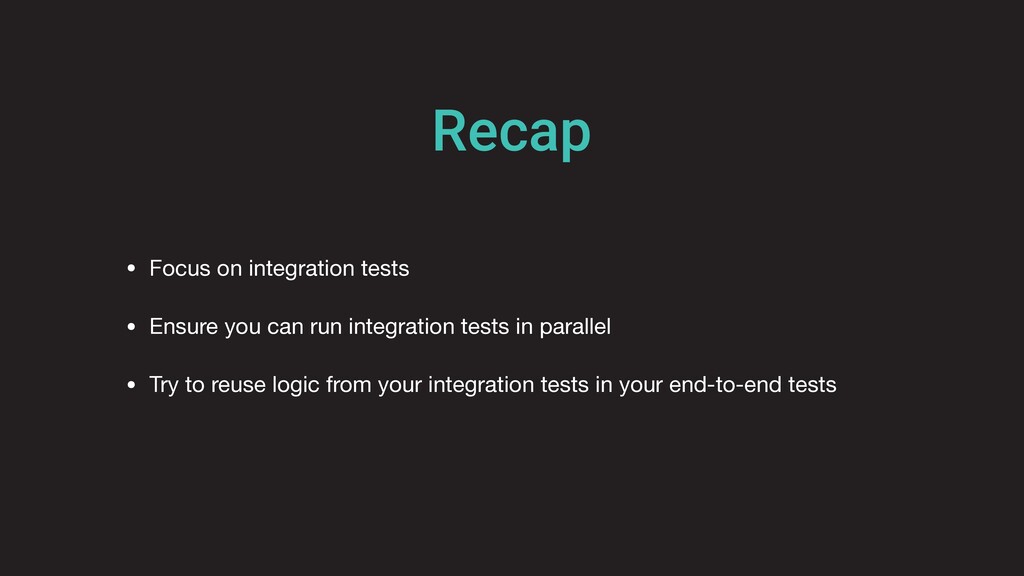
  12. Recap • Focus on integration tests • Ensure you can

    run integration tests in parallel • Try to reuse logic from your integration tests in your end-to-end tests
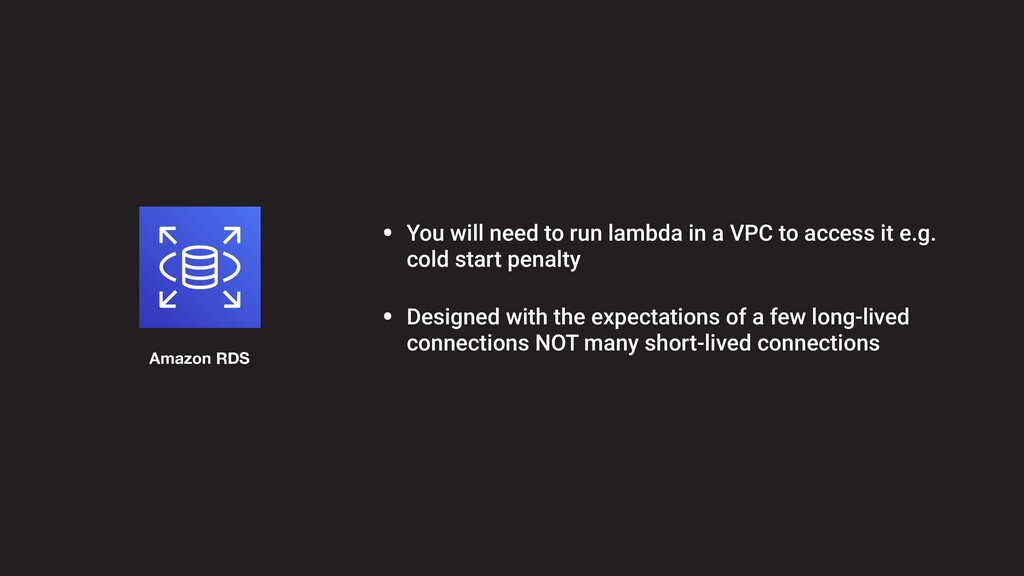
  13. Amazon RDS • You will need to run lambda in

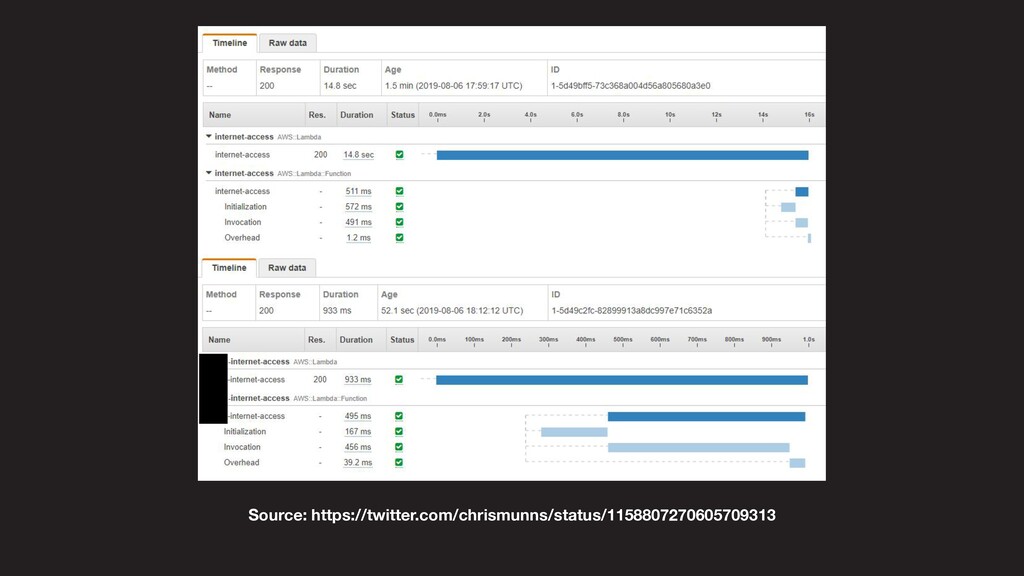
    a VPC to access it e.g. cold start penalty • Designed with the expectations of a few long-lived connections NOT many short-lived connections
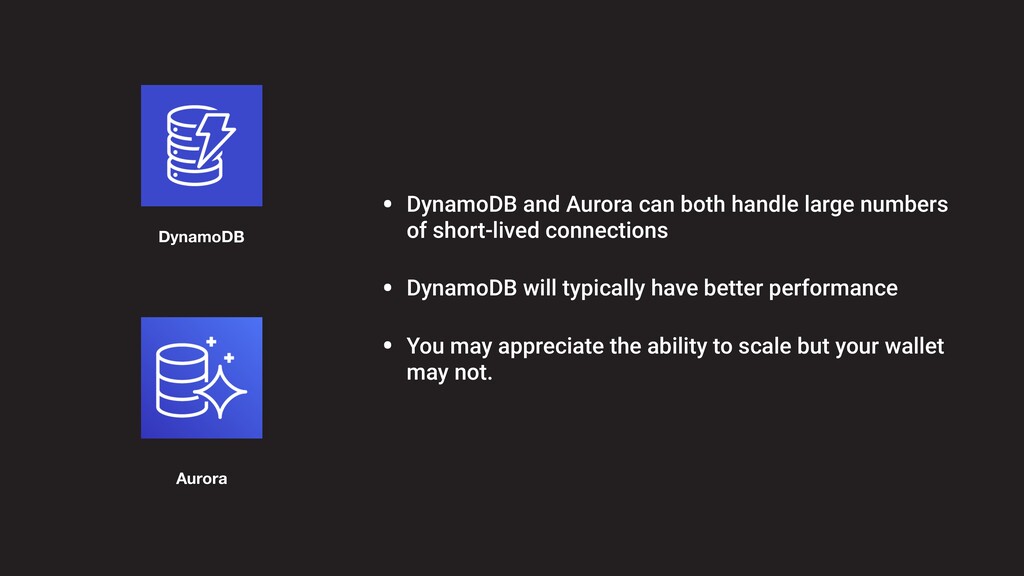
  14. DynamoDB Aurora • DynamoDB and Aurora can both handle large

    numbers of short-lived connections • DynamoDB will typically have better performance • You may appreciate the ability to scale but your wallet may not.
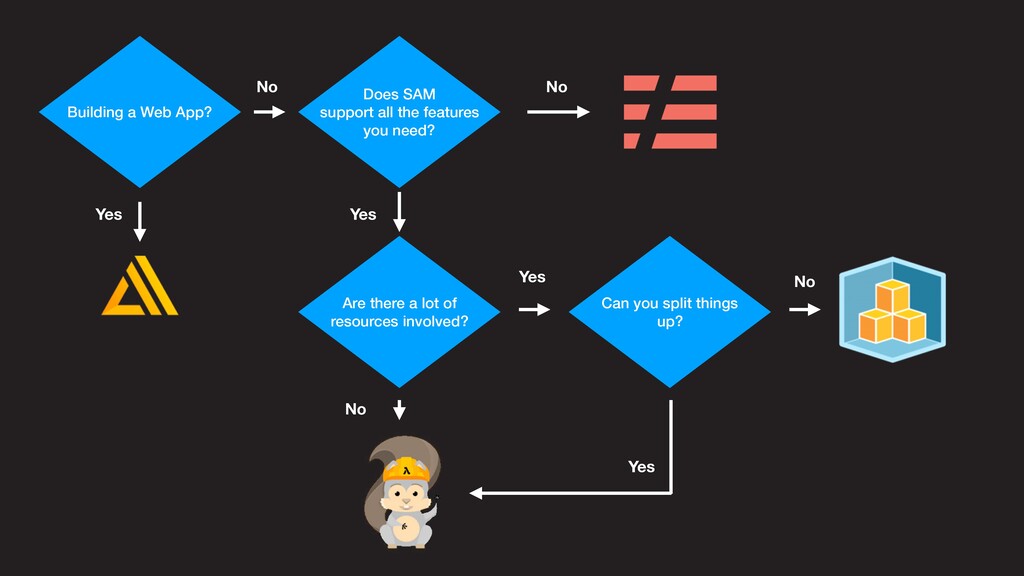
  15. Are there a lot of resources involved? Building a Web

    App? Does SAM support all the features you need? Can you split things up? No Yes No Yes No No Yes Yes
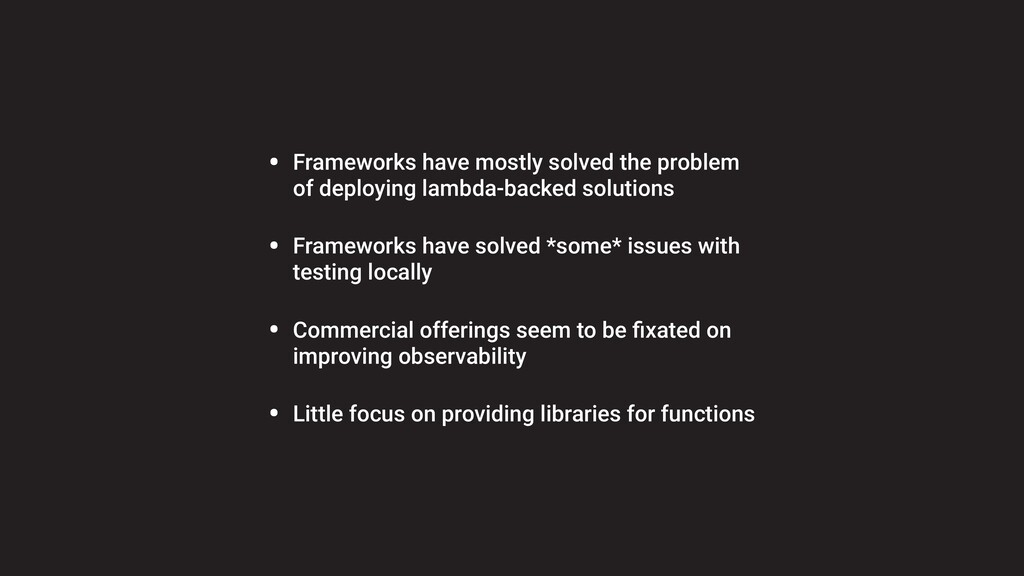
  16. • Frameworks have mostly solved the problem of deploying lambda-backed

    solutions • Frameworks have solved *some* issues with testing locally • Commercial offerings seem to be fixated on improving observability • Little focus on providing libraries for functions