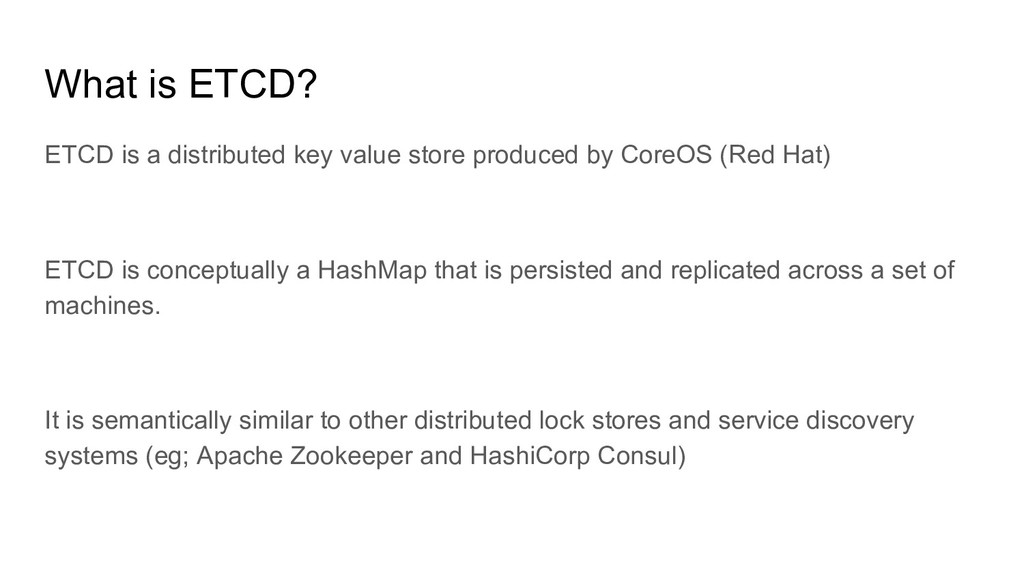
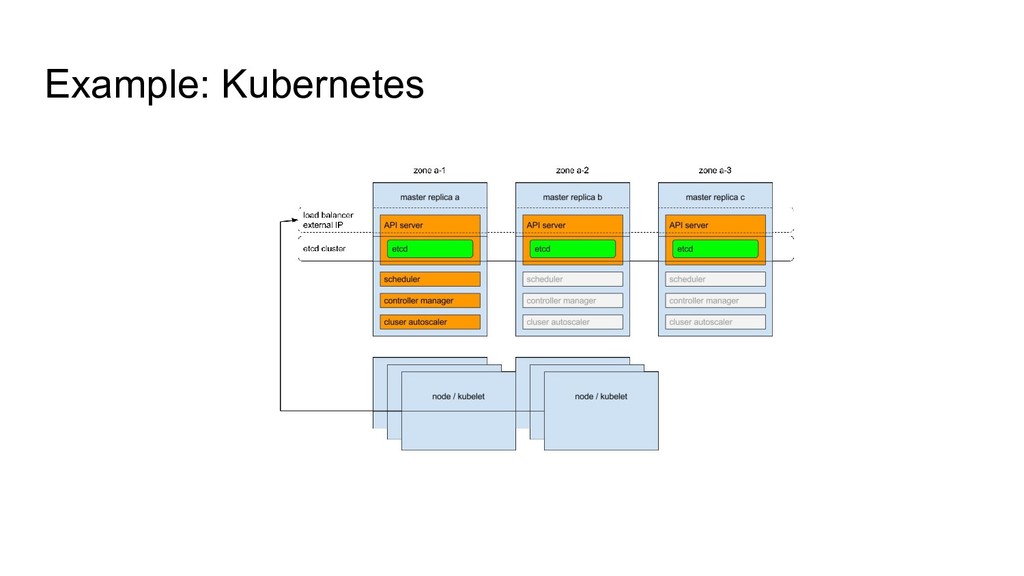
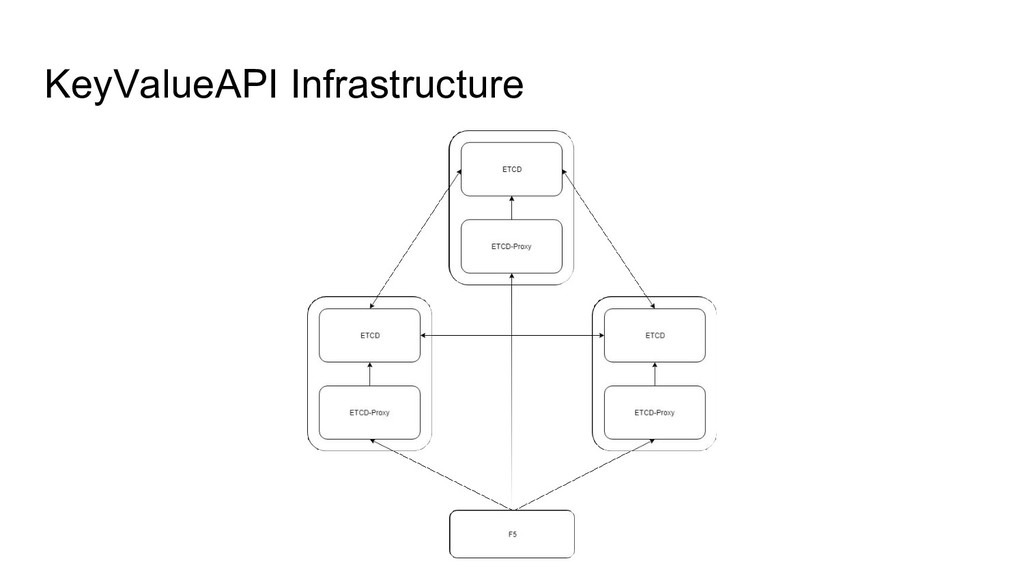
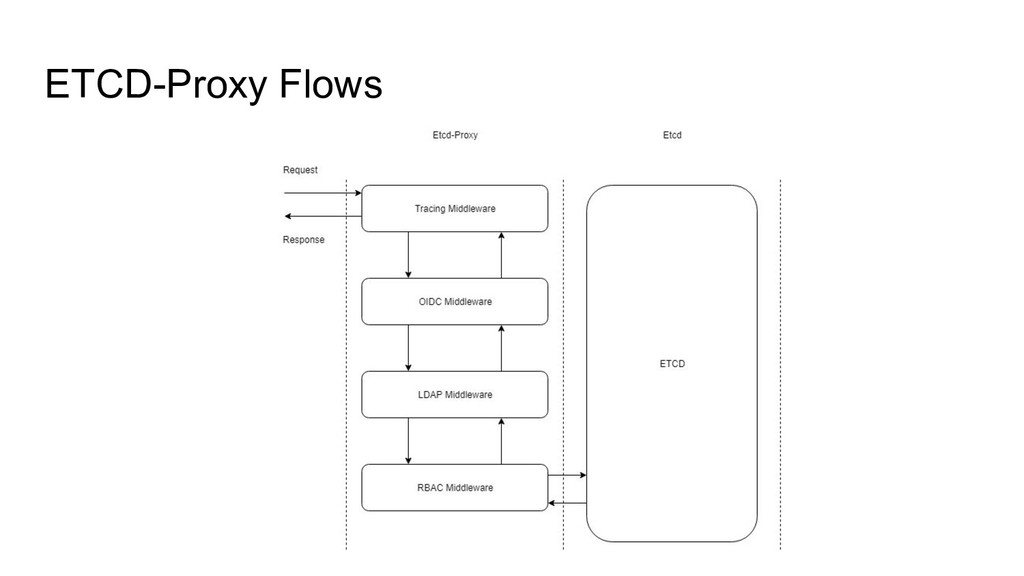
produced by CoreOS (Red Hat) ETCD is conceptually a HashMap that is persisted and replicated across a set of machines. It is semantically similar to other distributed lock stores and service discovery systems (eg; Apache Zookeeper and HashiCorp Consul)
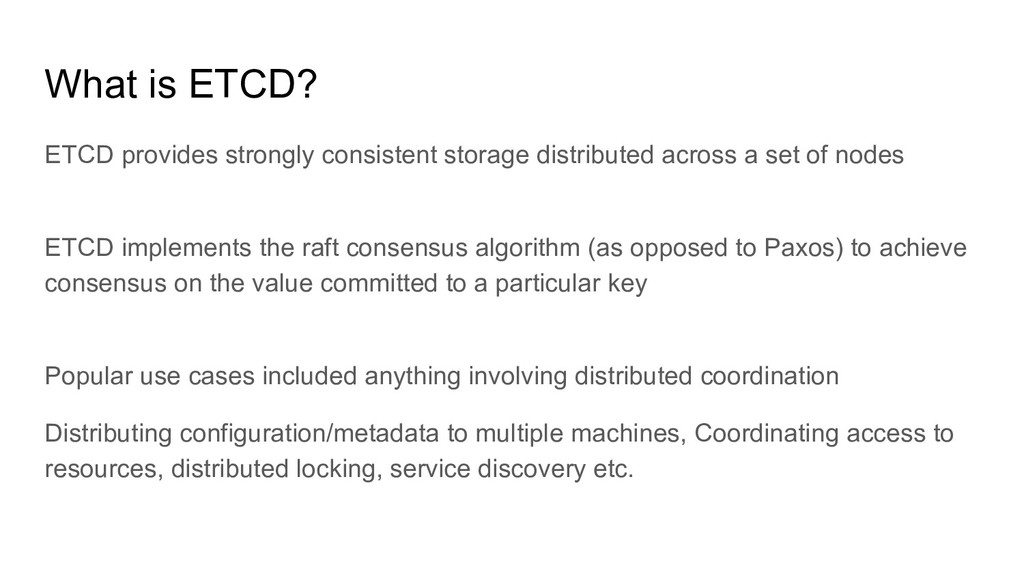
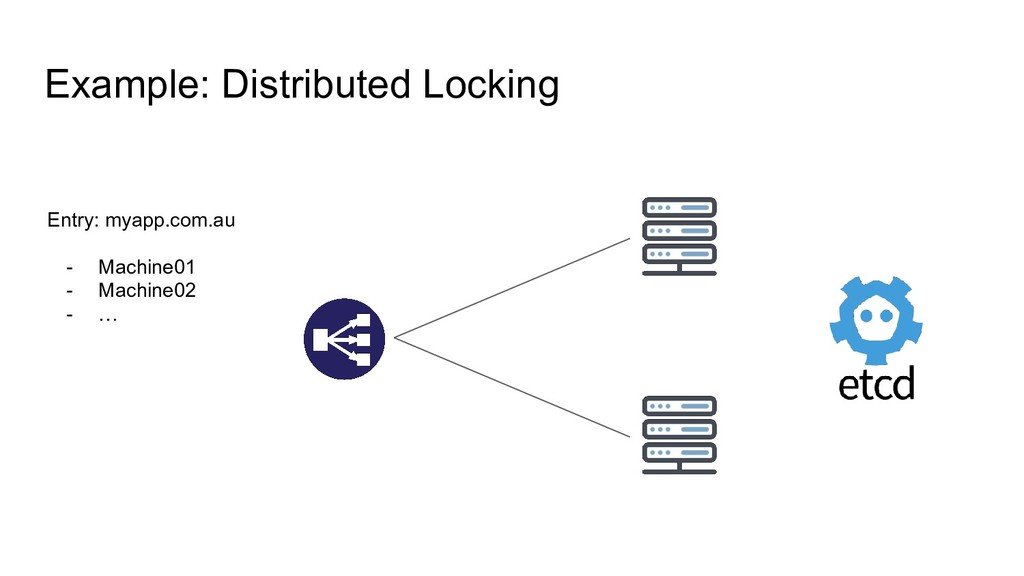
a set of nodes ETCD implements the raft consensus algorithm (as opposed to Paxos) to achieve consensus on the value committed to a particular key Popular use cases included anything involving distributed coordination Distributing configuration/metadata to multiple machines, Coordinating access to resources, distributed locking, service discovery etc.
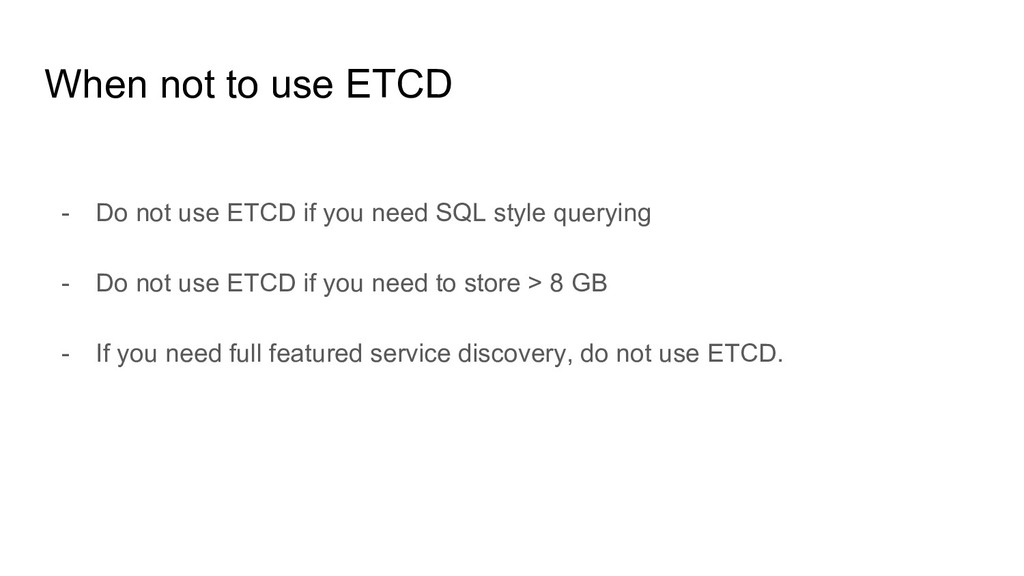
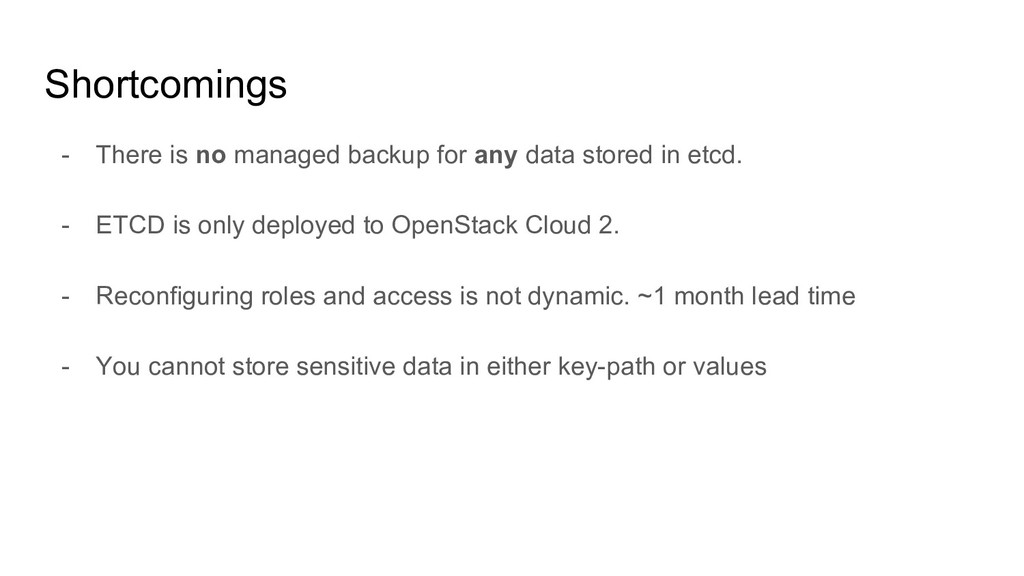
stored in etcd. - ETCD is only deployed to OpenStack Cloud 2. - Reconfiguring roles and access is not dynamic. ~1 month lead time - You cannot store sensitive data in either key-path or values
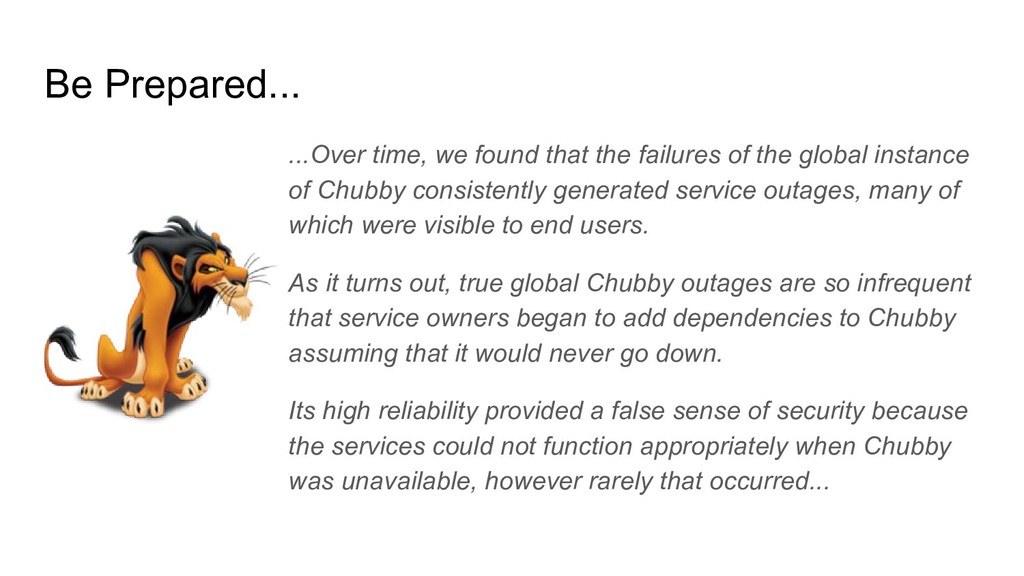
the global instance of Chubby consistently generated service outages, many of which were visible to end users. As it turns out, true global Chubby outages are so infrequent that service owners began to add dependencies to Chubby assuming that it would never go down. Its high reliability provided a false sense of security because the services could not function appropriately when Chubby was unavailable, however rarely that occurred...
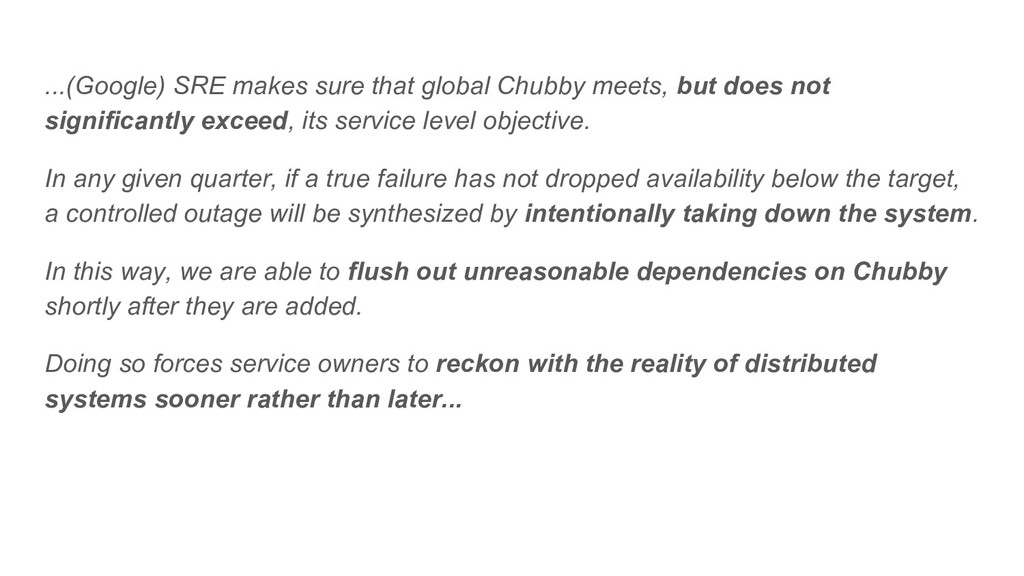
not significantly exceed, its service level objective. In any given quarter, if a true failure has not dropped availability below the target, a controlled outage will be synthesized by intentionally taking down the system. In this way, we are able to flush out unreasonable dependencies on Chubby shortly after they are added. Doing so forces service owners to reckon with the reality of distributed systems sooner rather than later...


 tylerm
 satoshi7
 shumei_ito
 odashi
 codatum
 puhitaku
 nttcom
 kaminashi
 kentapapa
 akhino
 ezaki
 recruitengineers
 camiha
 baasie
 nonsquared
 lcolladotor
 apolaine
 minecr
 helenjbeal
 marktimemedia
 notwaldorf
 reverentgeek
 mza
 wjessup