Unfazed is a mental health platform focused on providing personalized therapy to improve emotional well-being. We offer a range of services, including individual, children, and couple therapy, with a team of young, experienced therapists.
personal growth. It helps individuals address challenges like stress, anxiety, depression, or trauma while promoting self-awareness, emotional regulation, and resilience. Tailored to individual needs, it empowers clients to lead healthier, more fulfilling lives.
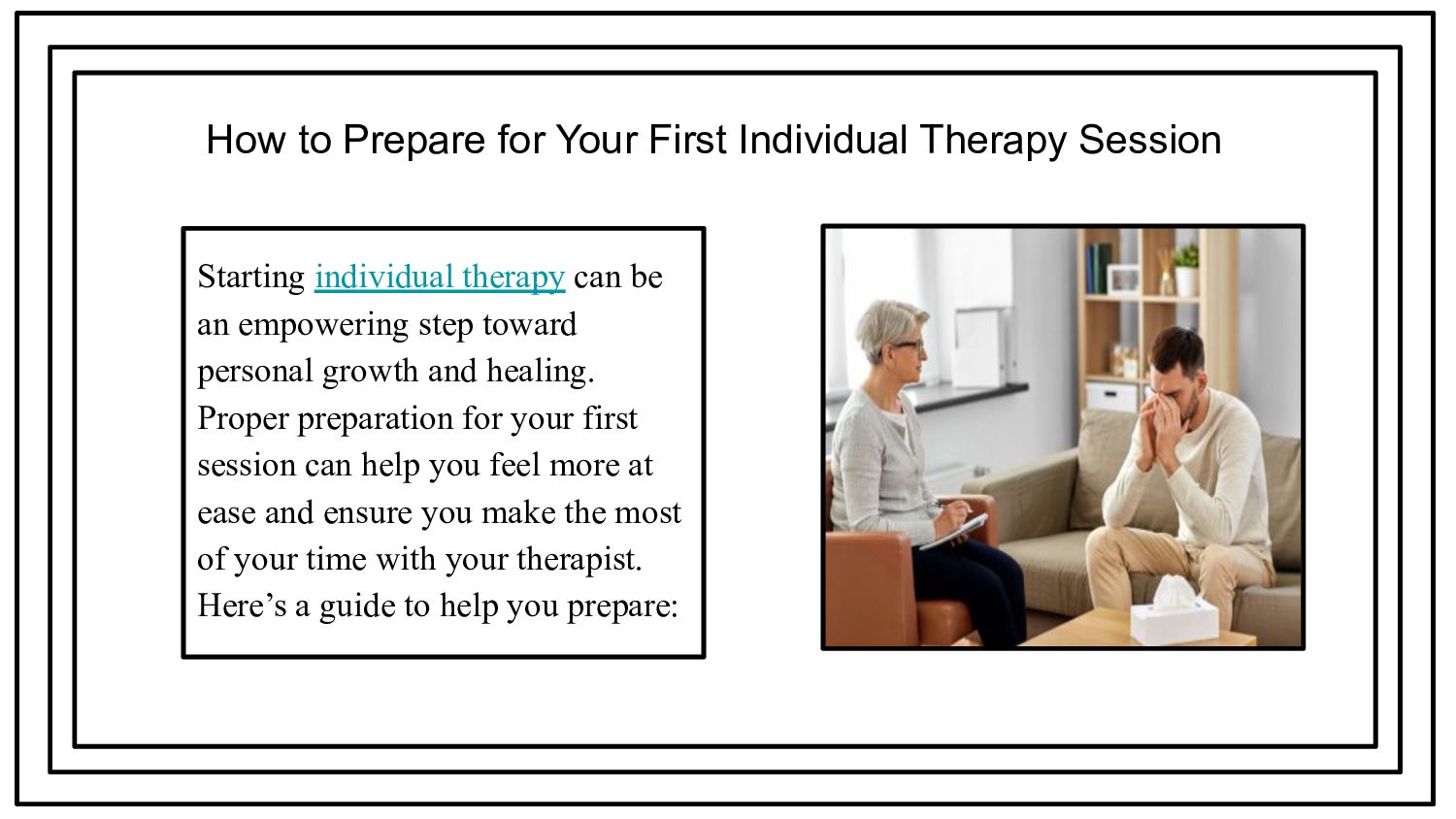
individual therapy can be an empowering step toward personal growth and healing. Proper preparation for your first session can help you feel more at ease and ensure you make the most of your time with your therapist. Here’s a guide to help you prepare:
seek therapy. What are the specific challenges you’re facing? What outcomes are you hoping to achieve? Having a clear idea of your goals will provide a foundation for your sessions and help your therapist tailor their approach.
takes time. The first session is typically an introduction—you’ll share your background, discuss your concerns, and begin setting goals. It’s okay if you don’t cover everything in one session.
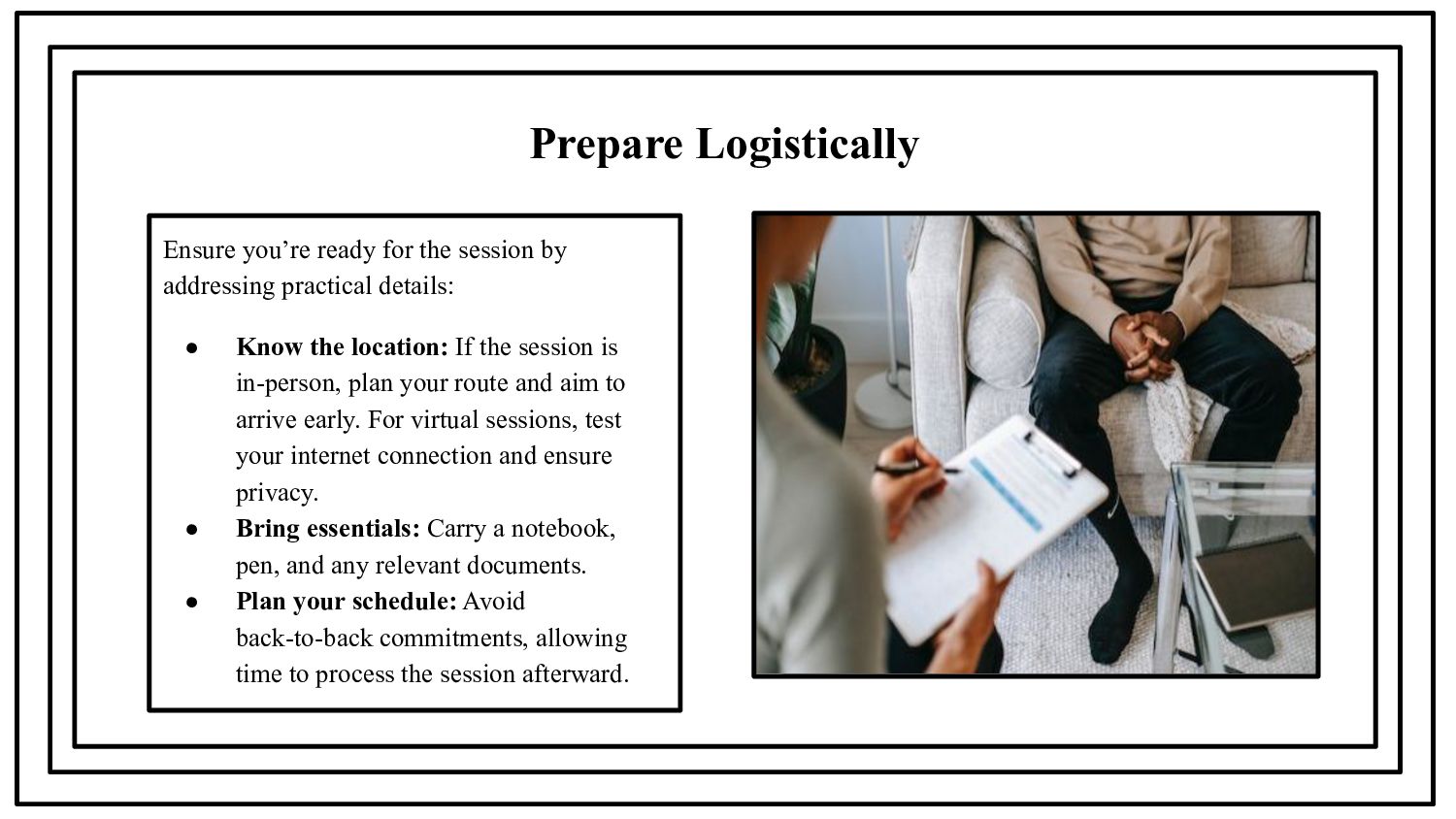
practical details: • Know the location: If the session is in-person, plan your route and aim to arrive early. For virtual sessions, test your internet connection and ensure privacy. • Bring essentials: Carry a notebook, pen, and any relevant documents. • Plan your schedule: Avoid back-to-back commitments, allowing time to process the session afterward.
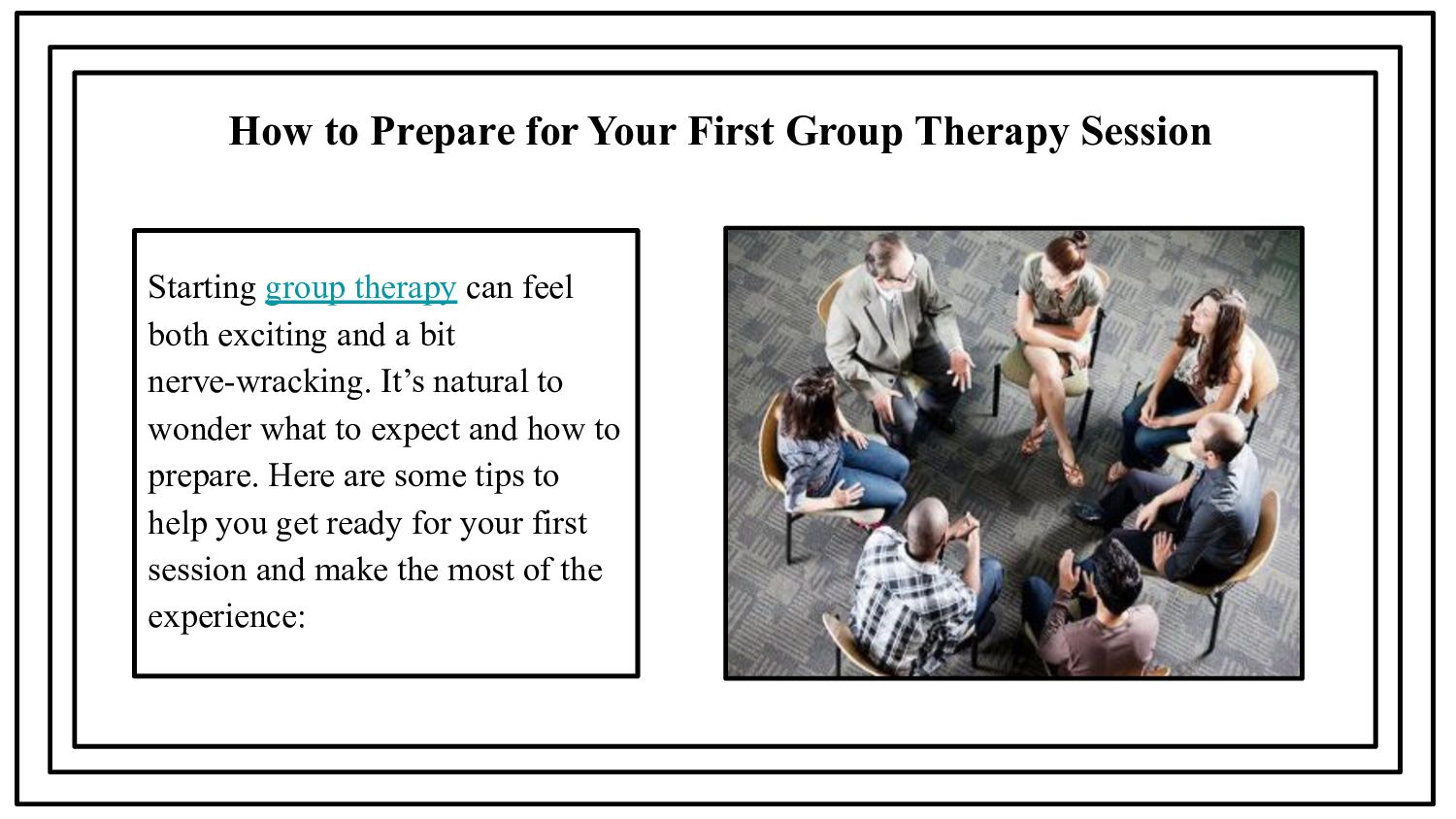
group therapy can feel both exciting and a bit nerve-wracking. It’s natural to wonder what to expect and how to prepare. Here are some tips to help you get ready for your first session and make the most of the experience:
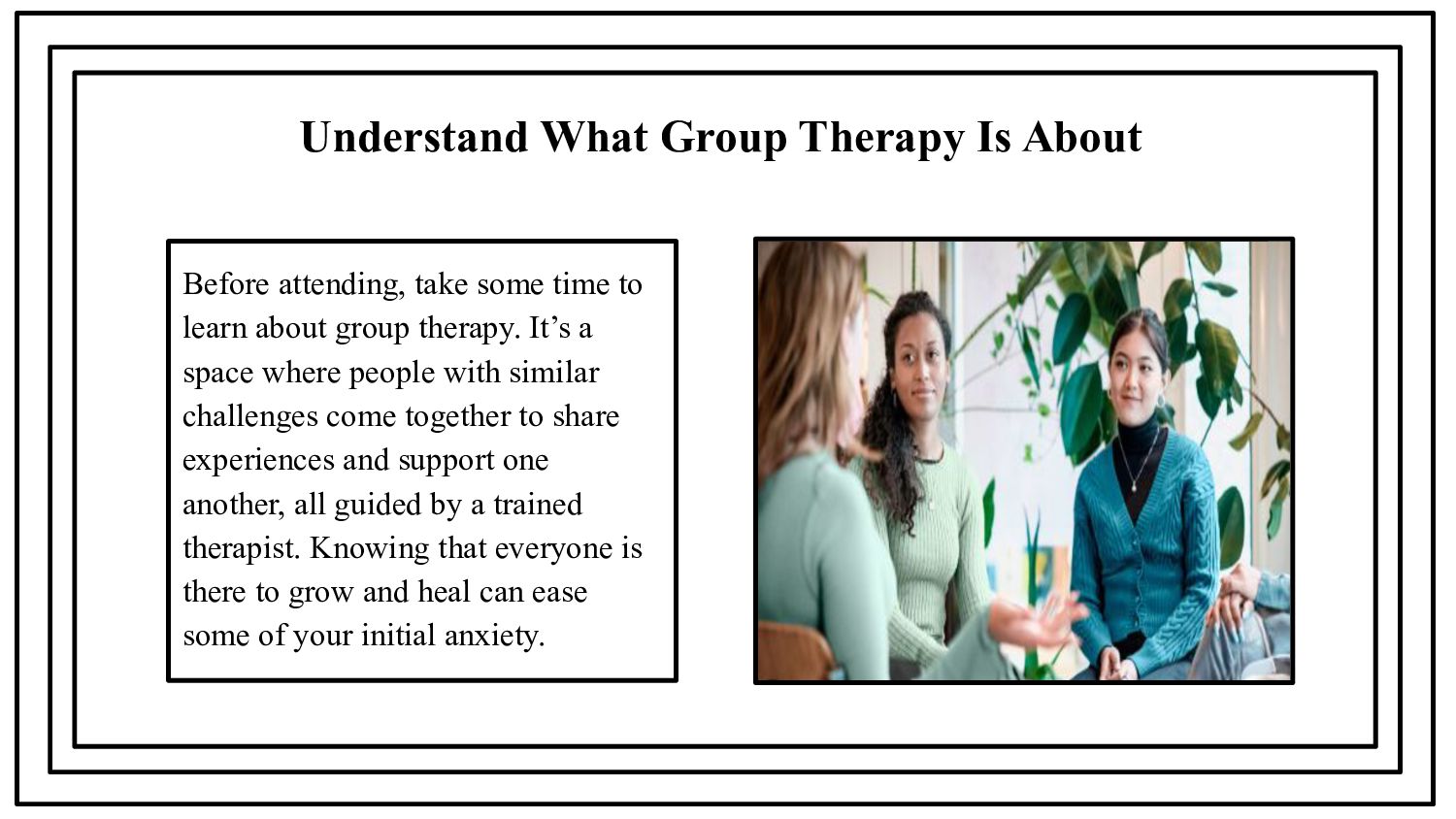
time to learn about group therapy. It’s a space where people with similar challenges come together to share experiences and support one another, all guided by a trained therapist. Knowing that everyone is there to grow and heal can ease some of your initial anxiety.
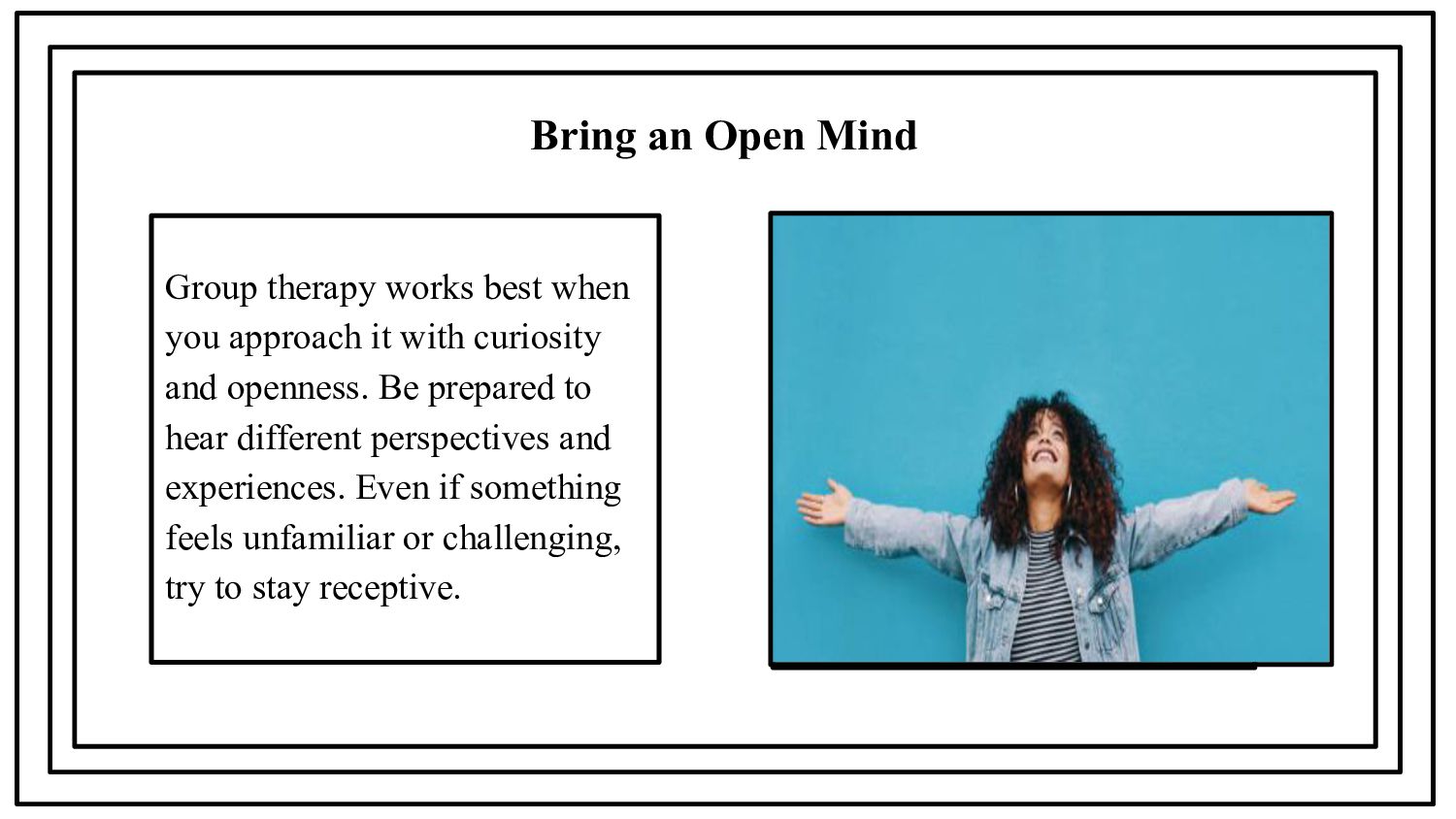
approach it with curiosity and openness. Be prepared to hear different perspectives and experiences. Even if something feels unfamiliar or challenging, try to stay receptive.
completely at ease right away. Building trust and connection takes time. Celebrate small steps, like introducing yourself or sharing something minor, as important progress.
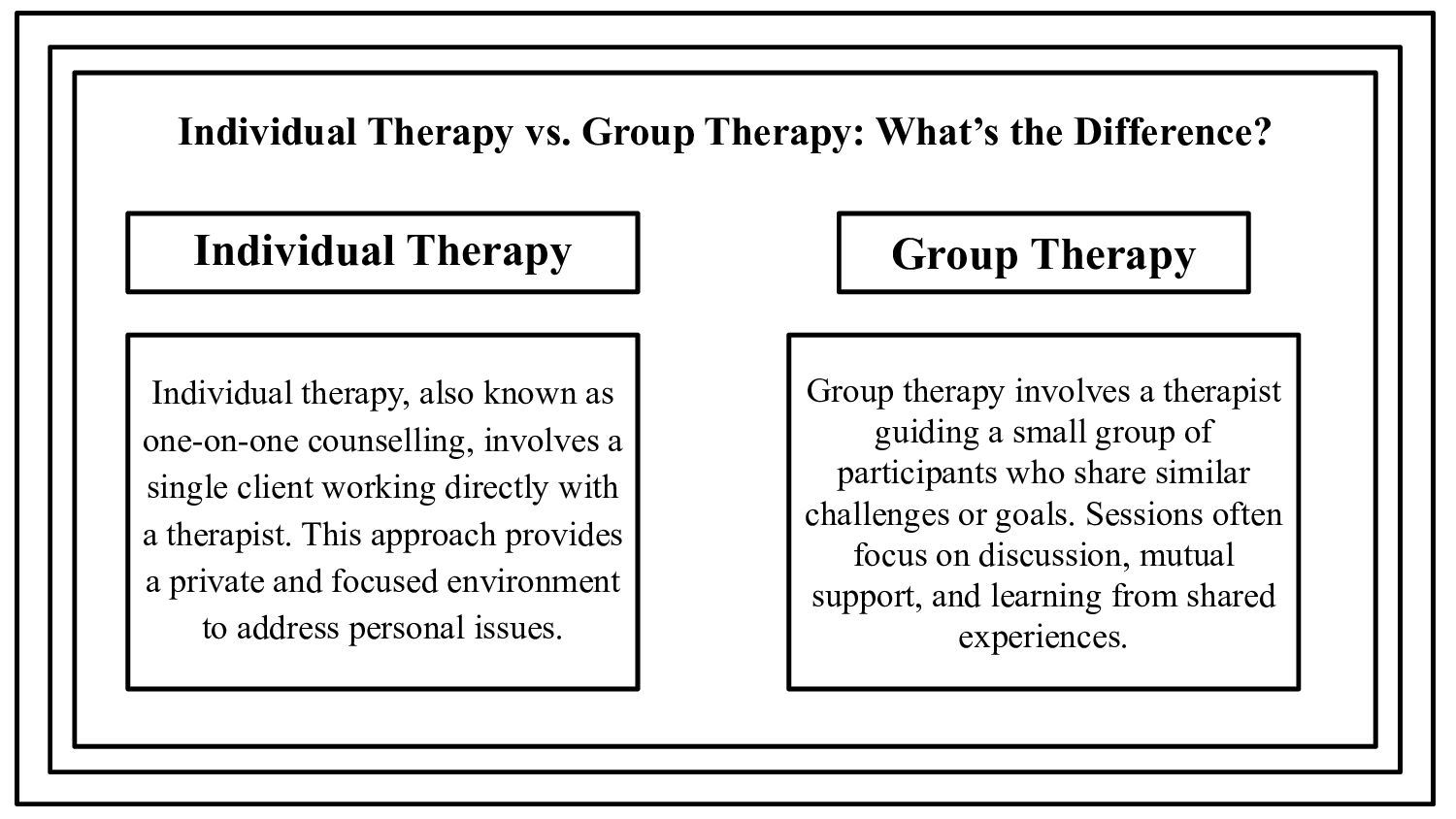
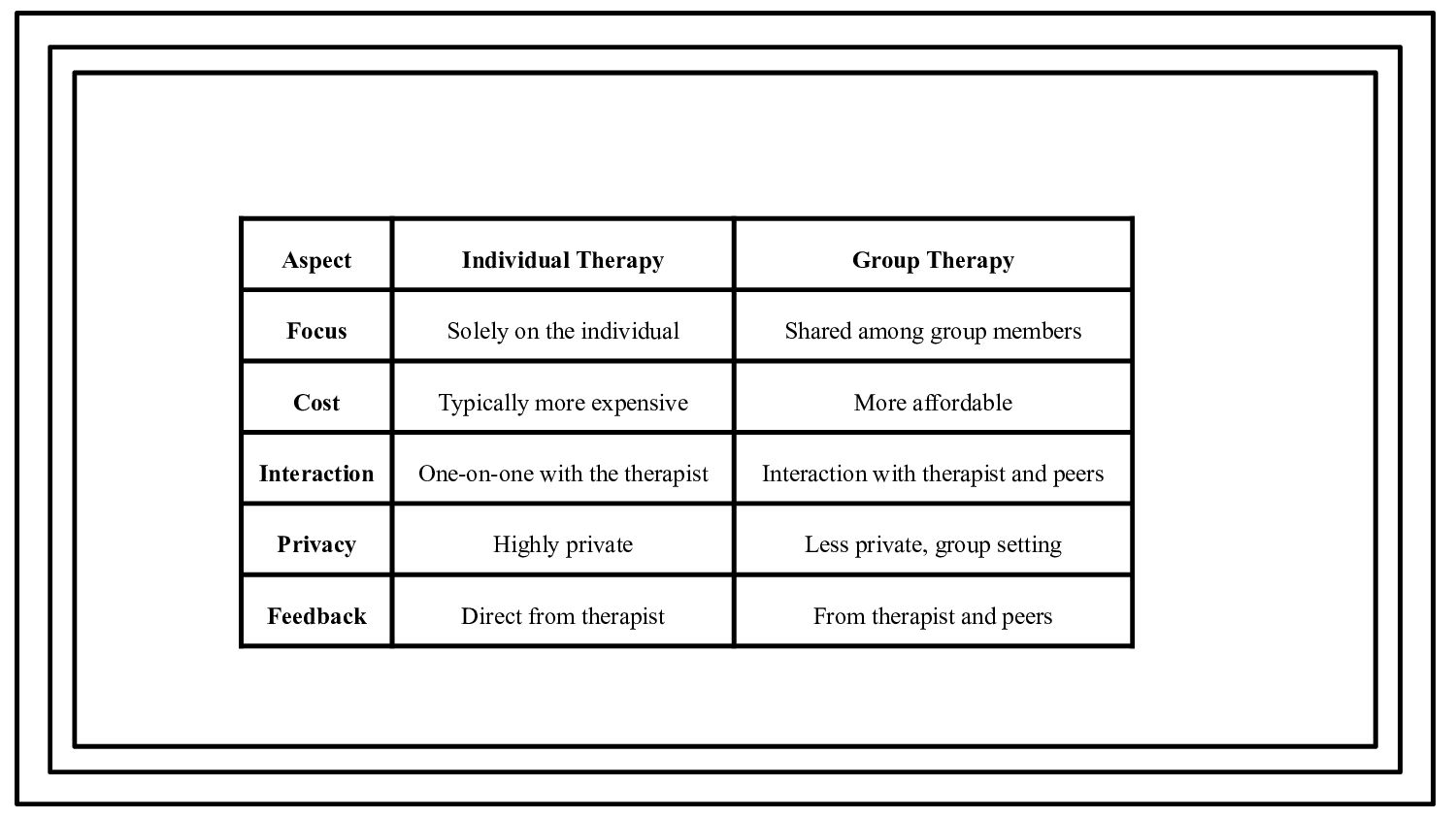
Group Therapy Individual therapy, also known as one-on-one counselling, involves a single client working directly with a therapist. This approach provides a private and focused environment to address personal issues. Group therapy involves a therapist guiding a small group of participants who share similar challenges or goals. Sessions often focus on discussion, mutual support, and learning from shared experiences.
Shared among group members Cost Typically more expensive More affordable Interaction One-on-one with the therapist Interaction with therapist and peers Privacy Highly private Less private, group setting Feedback Direct from therapist From therapist and peers
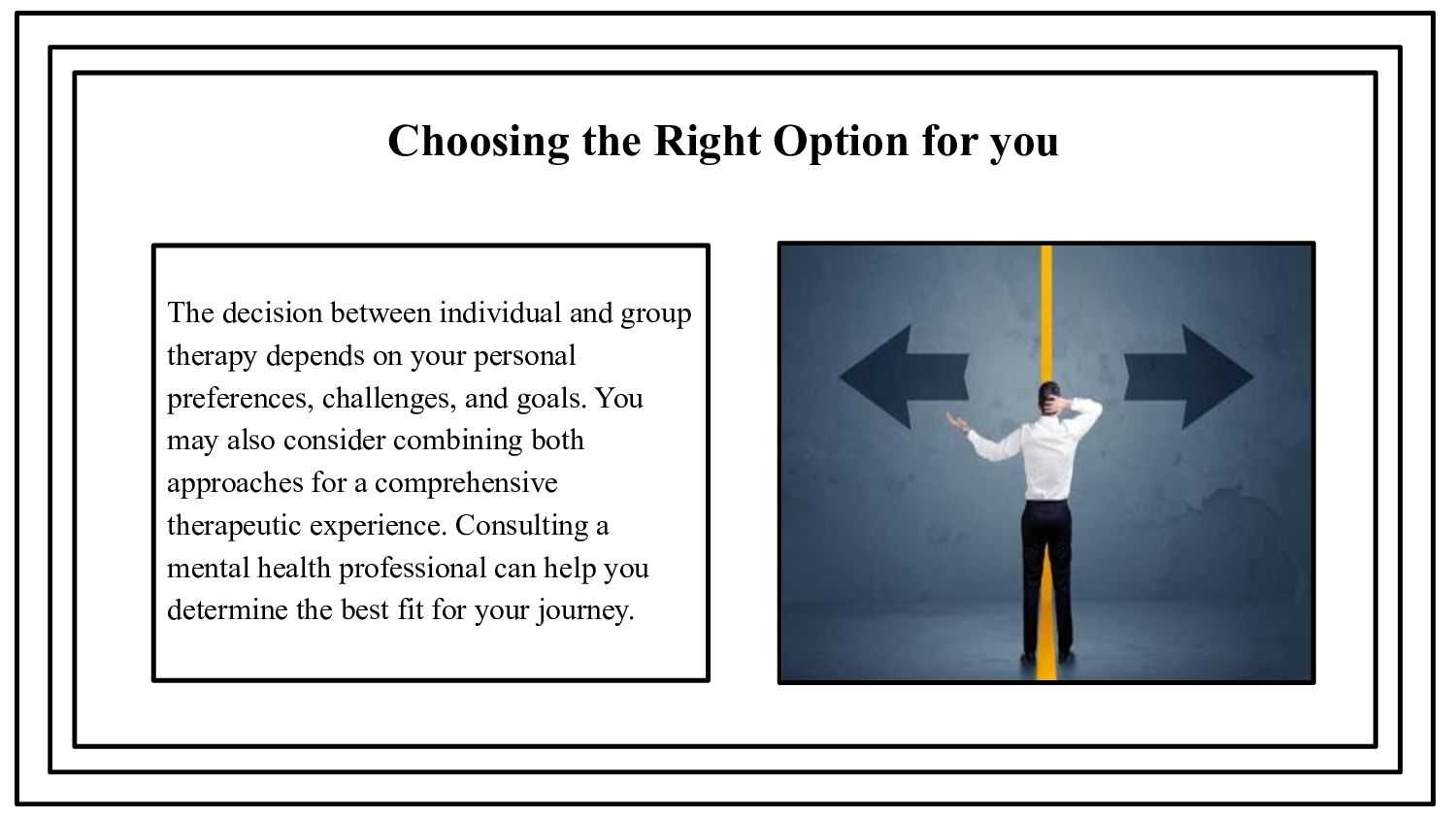
and group therapy depends on your personal preferences, challenges, and goals. You may also consider combining both approaches for a comprehensive therapeutic experience. Consulting a mental health professional can help you determine the best fit for your journey.


 unfazedtherapy
 kazuyama88
 mj6237
 reiwatravel_0405
 hirohasuyoutube
 sasukefinanciallab
 yoshikikonishi_
 maruishi
 ggfs
 neuroenergia
 forest8810
 layerx
 kimpachi_d
 letsgokoyo
 akosma
 schlessera
 livdayseo
 sergeychernyshev
 chriscoyier
 mfonobong
 katarinadahlin
 axbom
 aleyda
 ianozsvald
 nwiizo