Share
Embed
Managing Dependencies at Build Time
Libraries, service definitions, and sub-projects – oh my! Most projects of any size depend on things from third party or internally built projects. How do we keep track of what's in our builds? When should we rebuild our project? When is source control and Maven/NuGet not enough?
UrbanCode
January 08, 2013
Transcript
38 slides
-
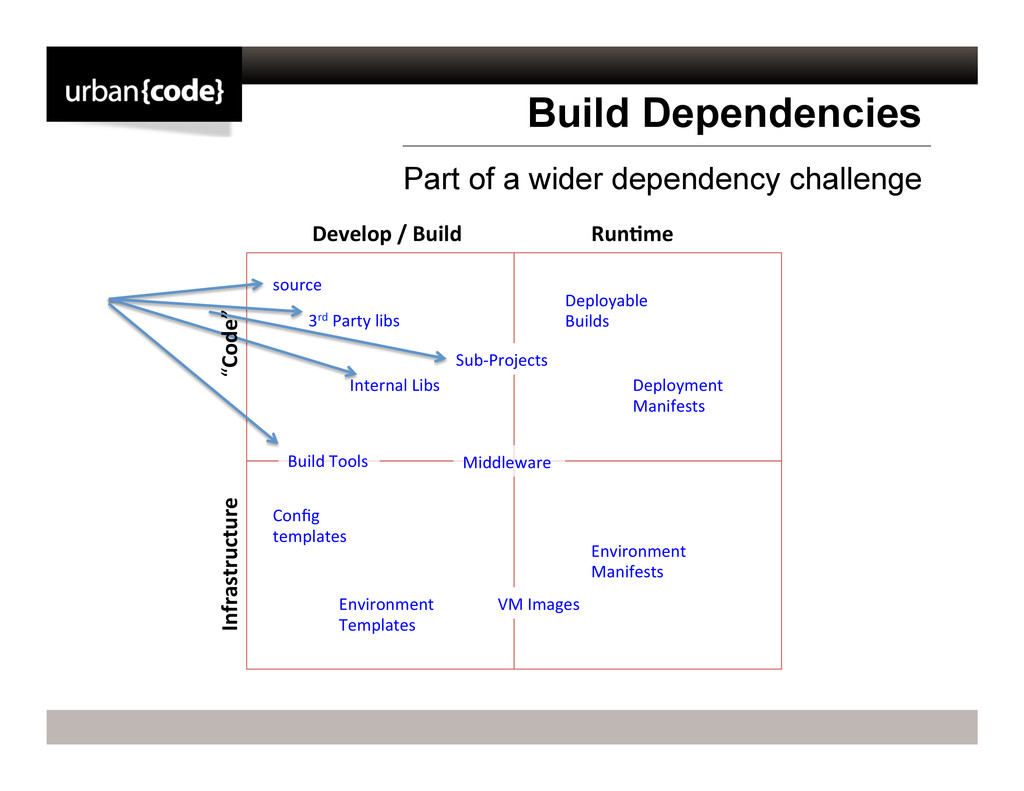
Build Dependencies Part of a wider dependency challenge Develop /
Build Run/me Infrastructure source 3rd Party libs Internal Libs Config templates VM Images Environment Templates Deployment Manifests Deployable Builds Environment Manifests Sub-‐Projects Middleware “Code” Build Tools -
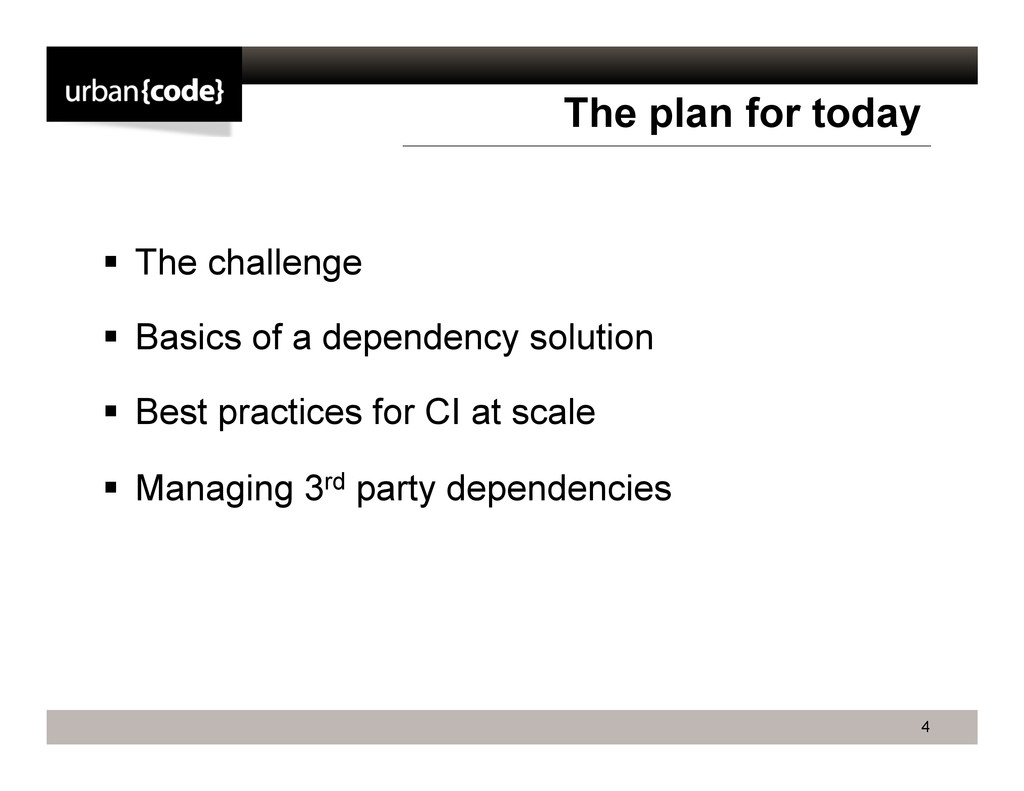
The plan for today § The challenge § Basics of
a dependency solution § Best practices for CI at scale § Managing 3rd party dependencies 4 -
The plan for today § The challenge § Basics of
a dependency solution § Best practices for CI at scale § Managing 3rd party dependencies 5 -
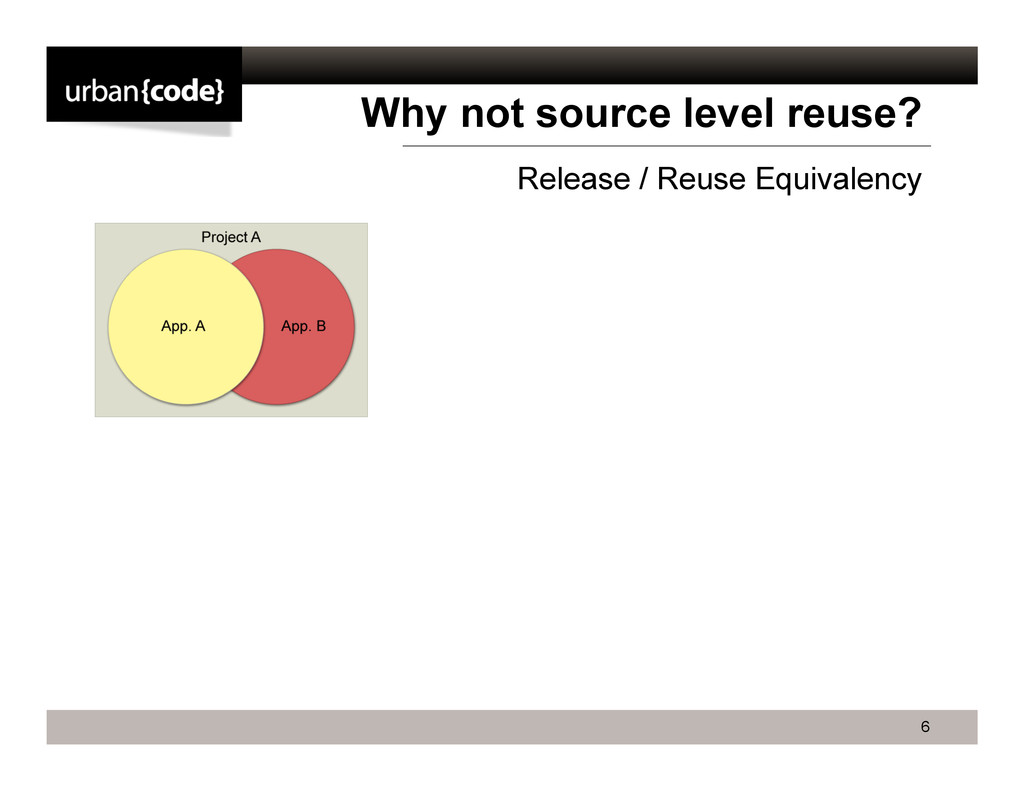
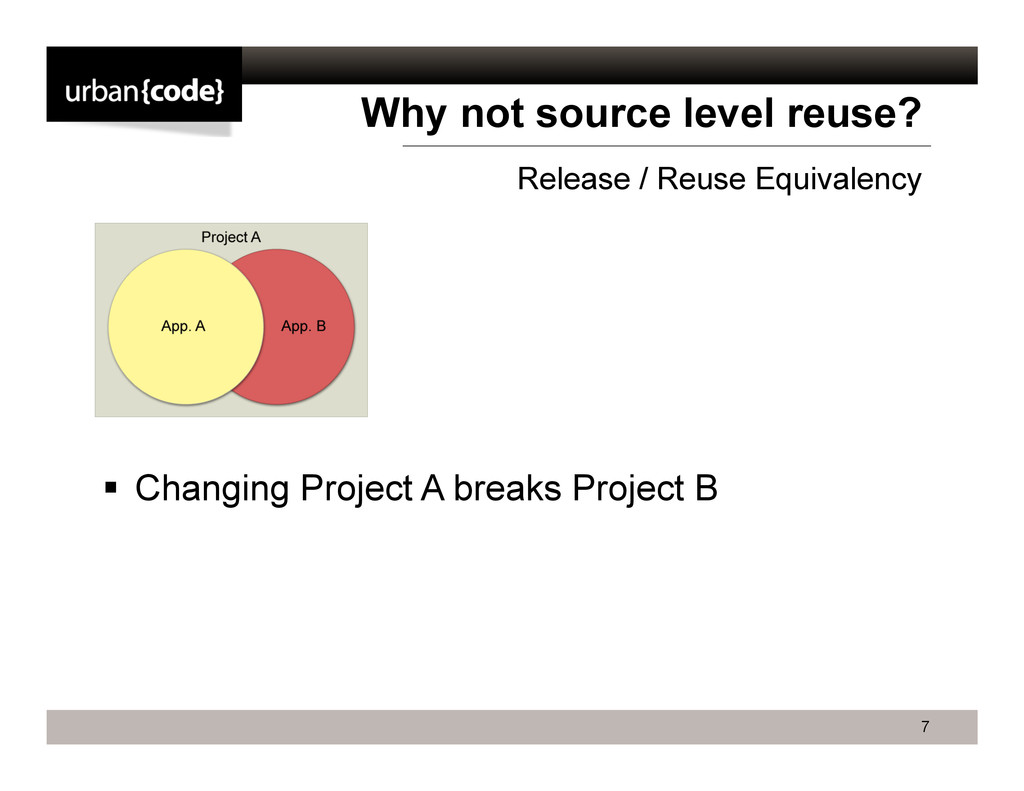
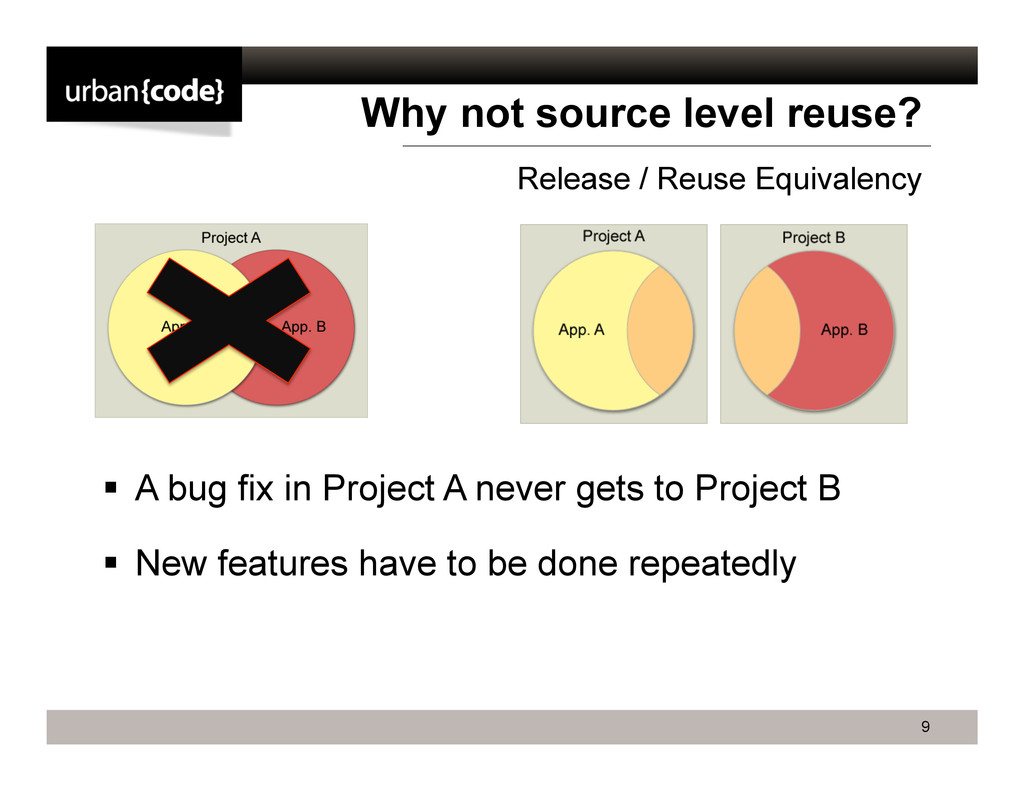
Why not source level reuse? § Changing Project A breaks
Project B 7 Release / Reuse Equivalency -
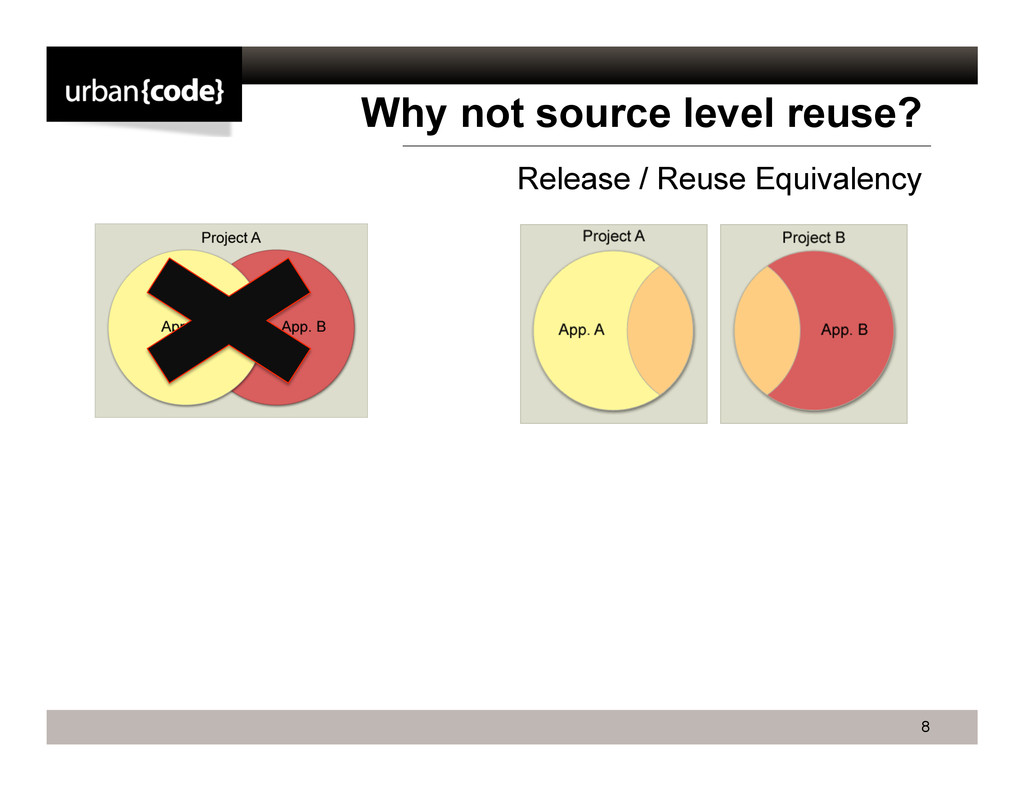
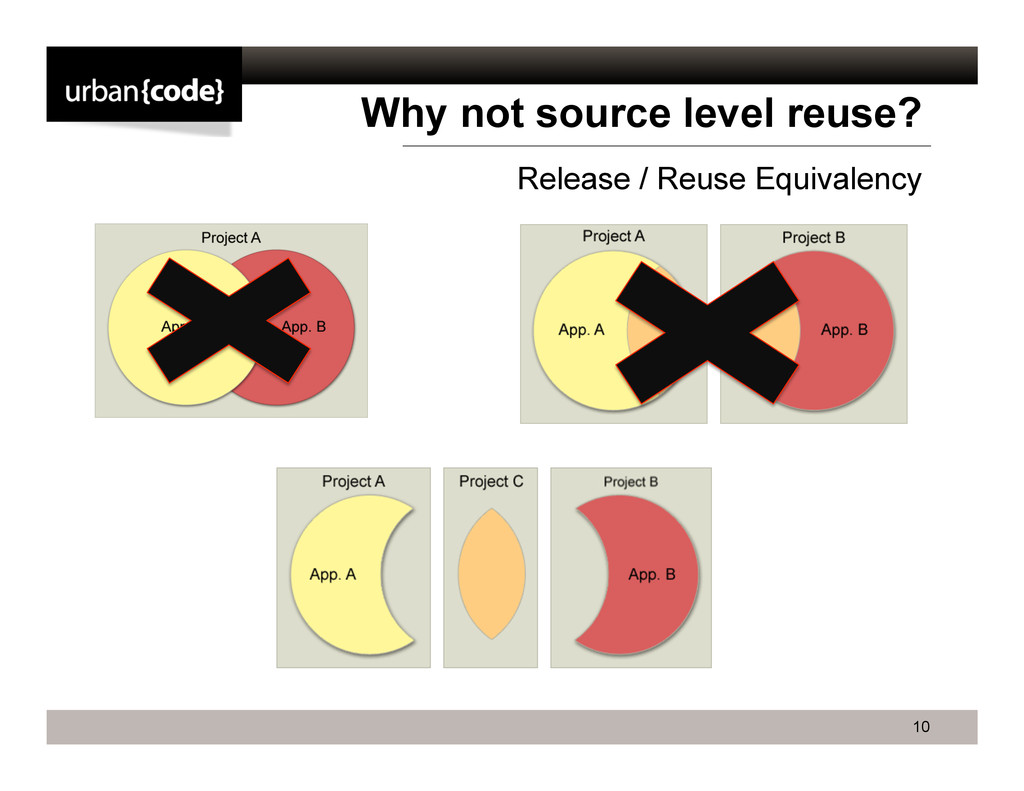
Why not source level reuse? 9 Release / Reuse Equivalency
§ A bug fix in Project A never gets to Project B § New features have to be done repeatedly -
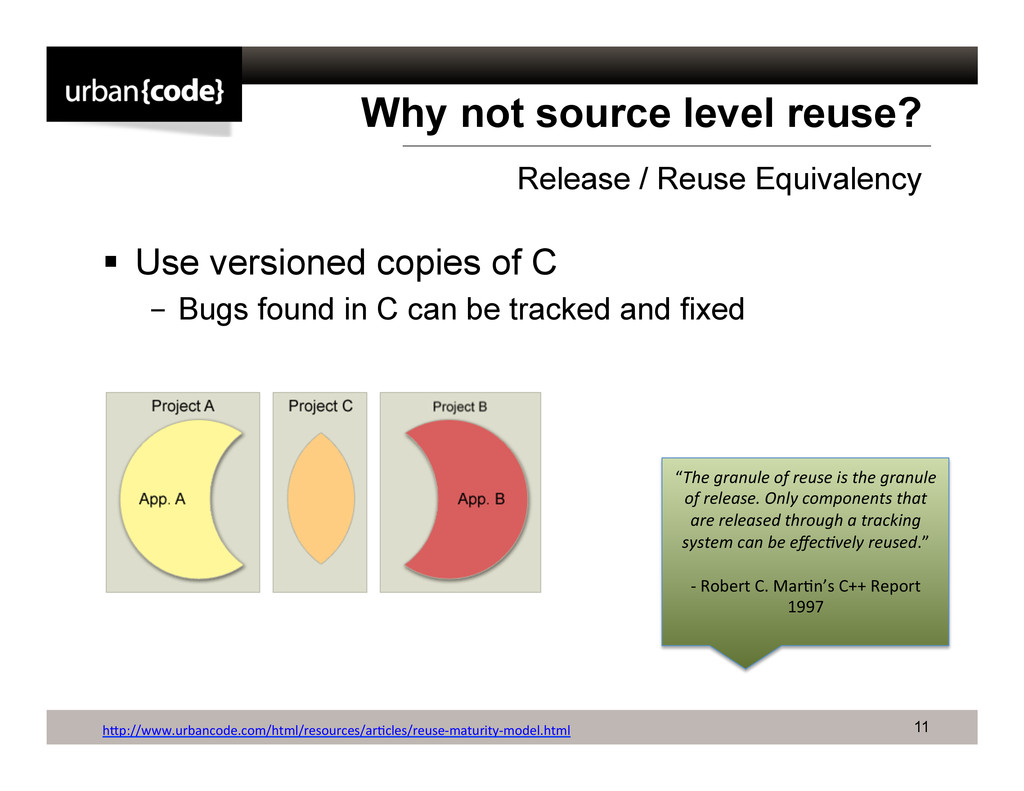
Why not source level reuse? § Use versioned copies of
C - Bugs found in C can be tracked and fixed 11 Release / Reuse Equivalency hHp://www.urbancode.com/html/resources/arLcles/reuse-‐maturity-‐model.html “The granule of reuse is the granule of release. Only components that are released through a tracking system can be effec:vely reused.” -‐ Robert C. MarLn’s C++ Report 1997 -
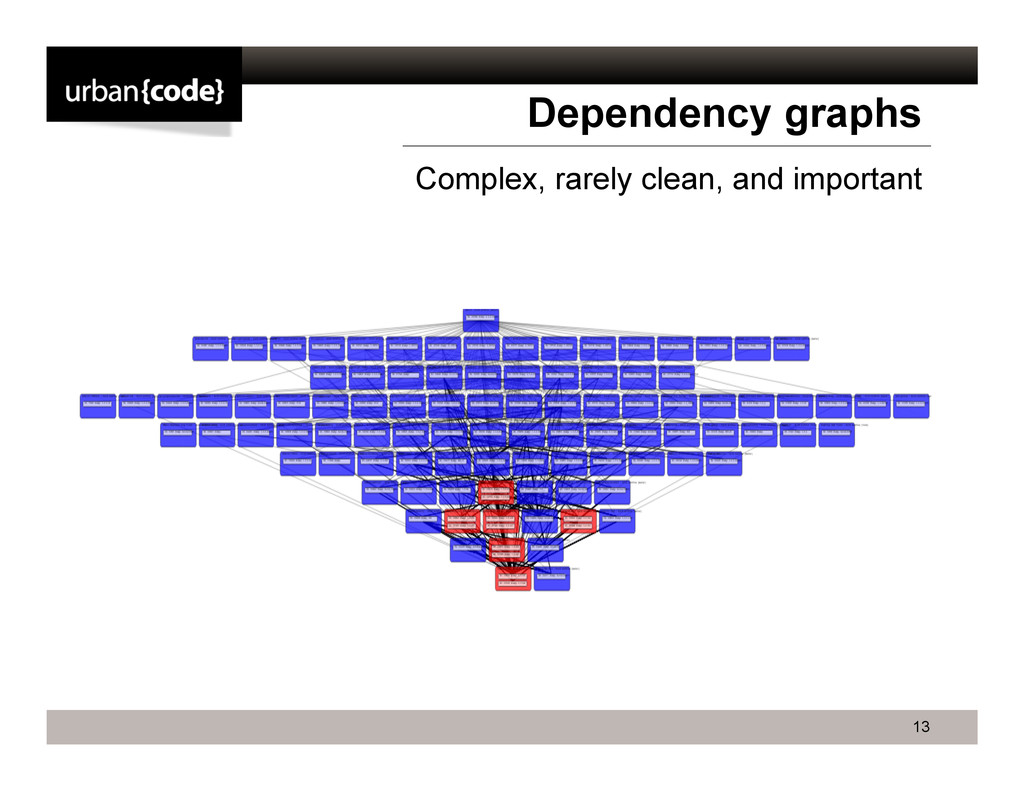
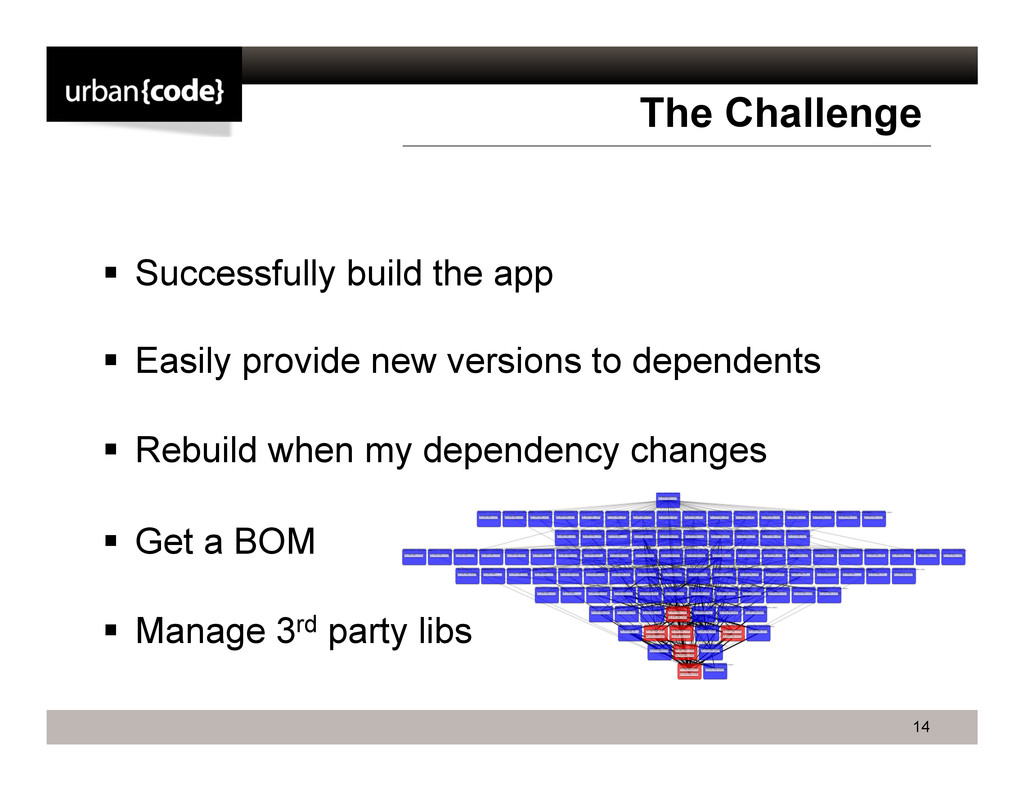
The Challenge § Successfully build the app § Easily provide
new versions to dependents § Rebuild when my dependency changes § Get a BOM § Manage 3rd party libs 14 -
The plan for today 15 § The challenge § Basics
of a dependency solution § Best practices for CI at scale § Managing 3rd party dependencies -
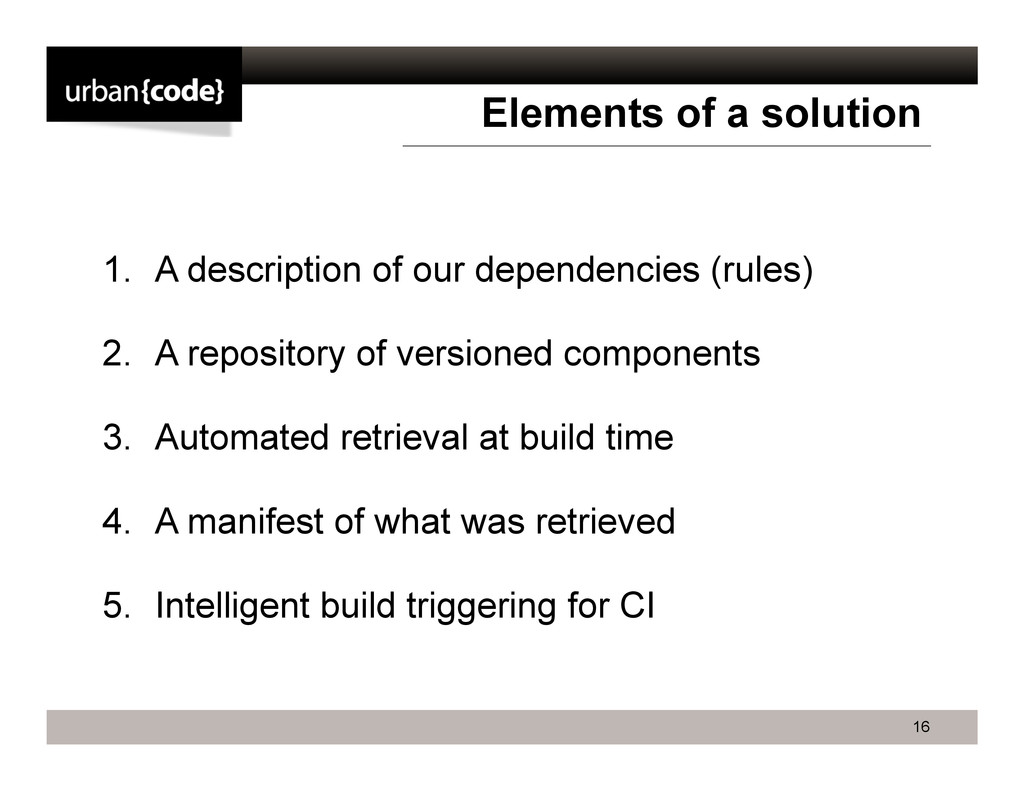
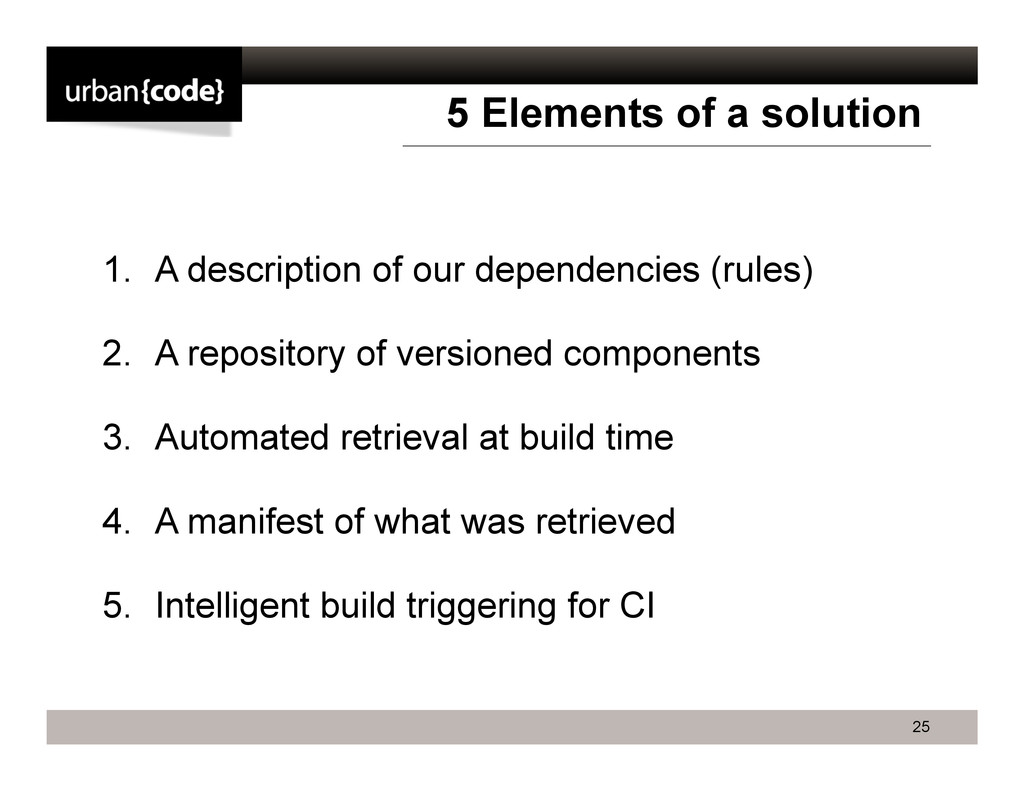
Elements of a solution 1. A description of our dependencies
(rules) 2. A repository of versioned components 3. Automated retrieval at build time 4. A manifest of what was retrieved 5. Intelligent build triggering for CI 16 -
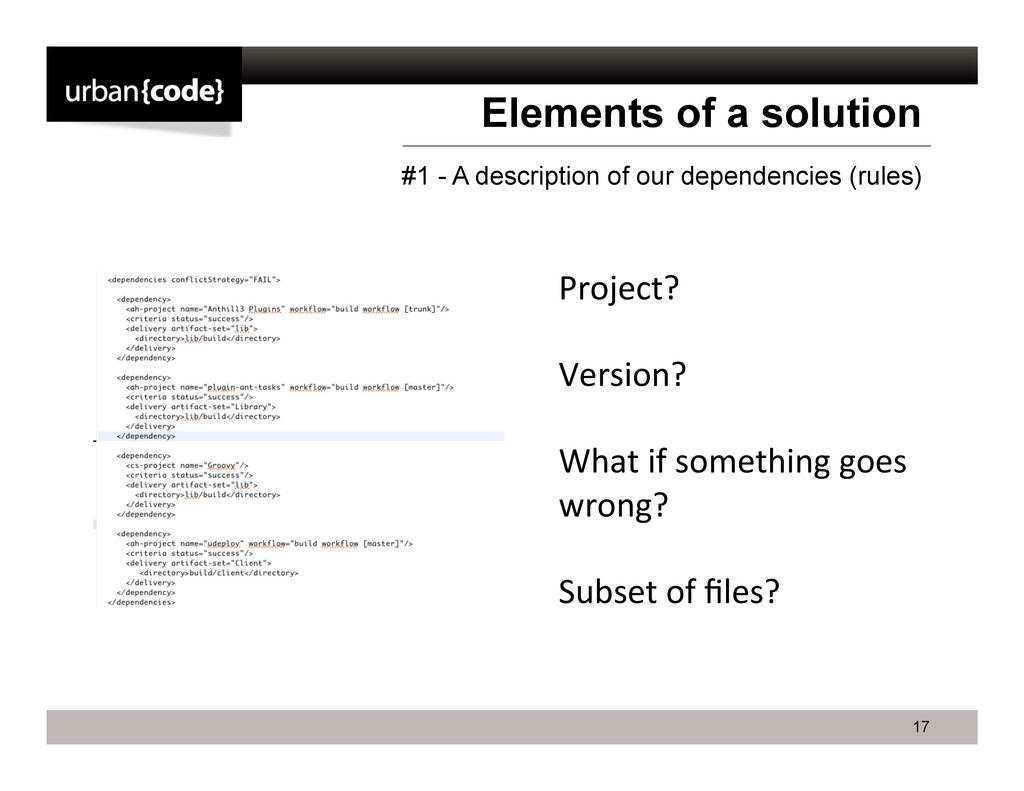
Elements of a solution 17 #1 - A description of
our dependencies (rules) Project? Version? What if something goes wrong? Subset of files? -
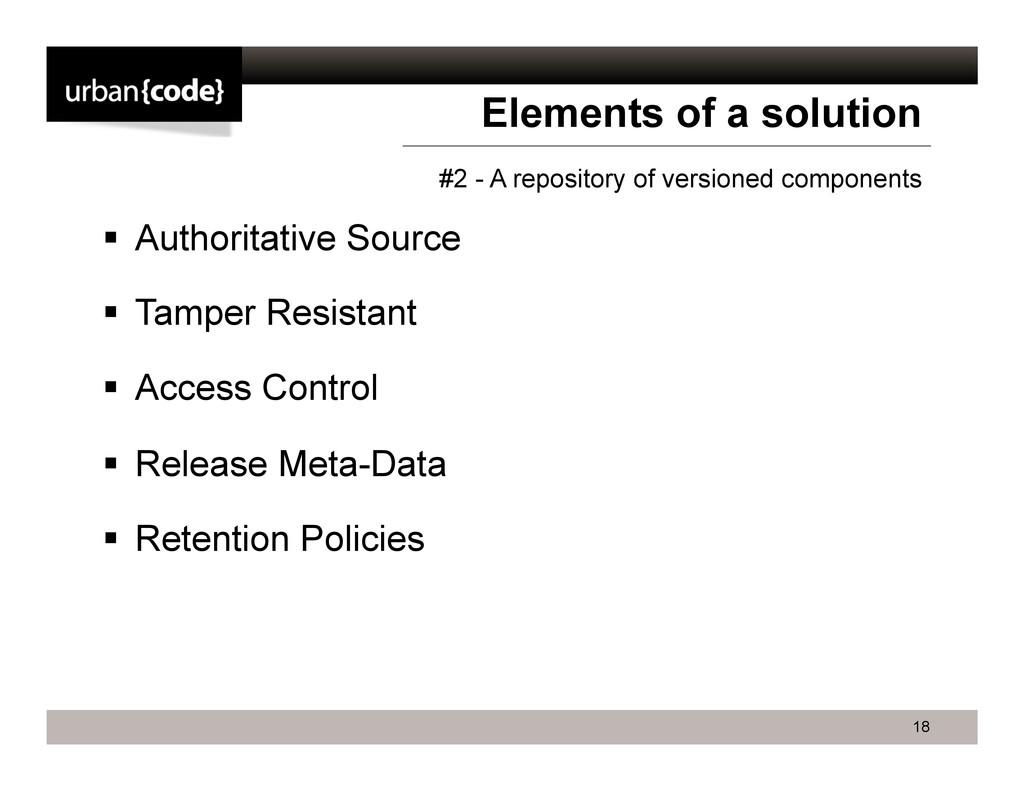
Elements of a solution § Authoritative Source § Tamper Resistant
§ Access Control § Release Meta-Data § Retention Policies 18 #2 - A repository of versioned components -
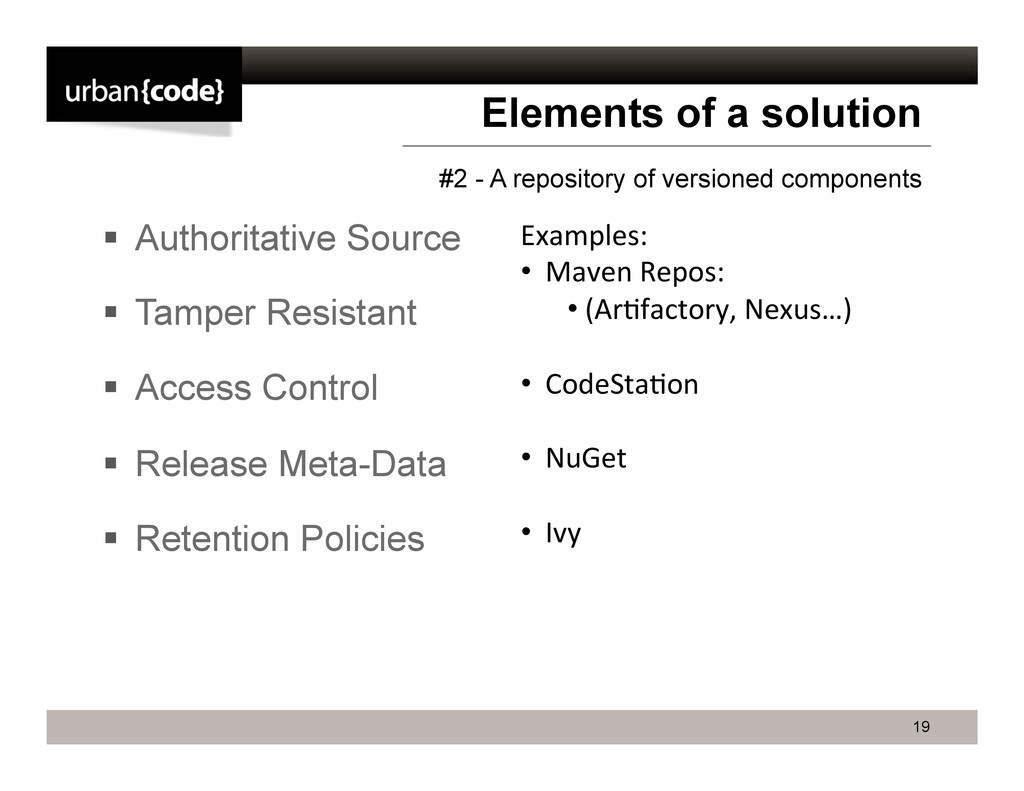
Elements of a solution § Authoritative Source § Tamper Resistant
§ Access Control § Release Meta-Data § Retention Policies 19 #2 - A repository of versioned components Examples: • Maven Repos: • (ArLfactory, Nexus…) • CodeStaLon • NuGet • Ivy -
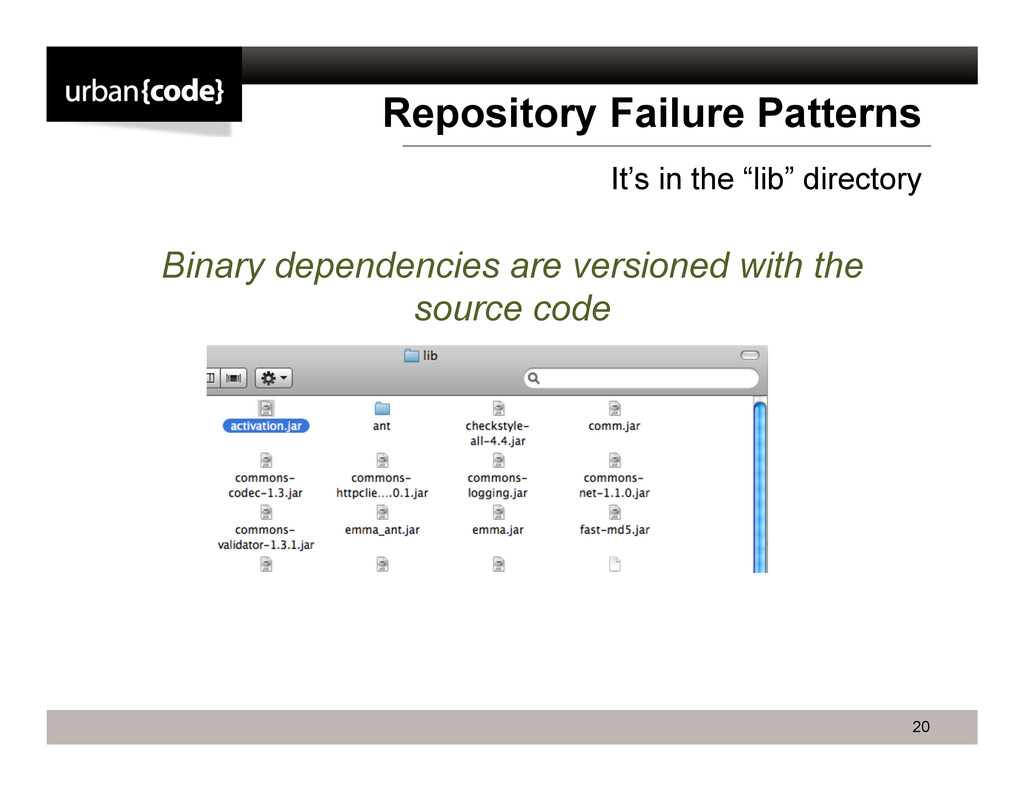
Repository Failure Patterns Binary dependencies are versioned with the source
code 20 It’s in the “lib” directory -
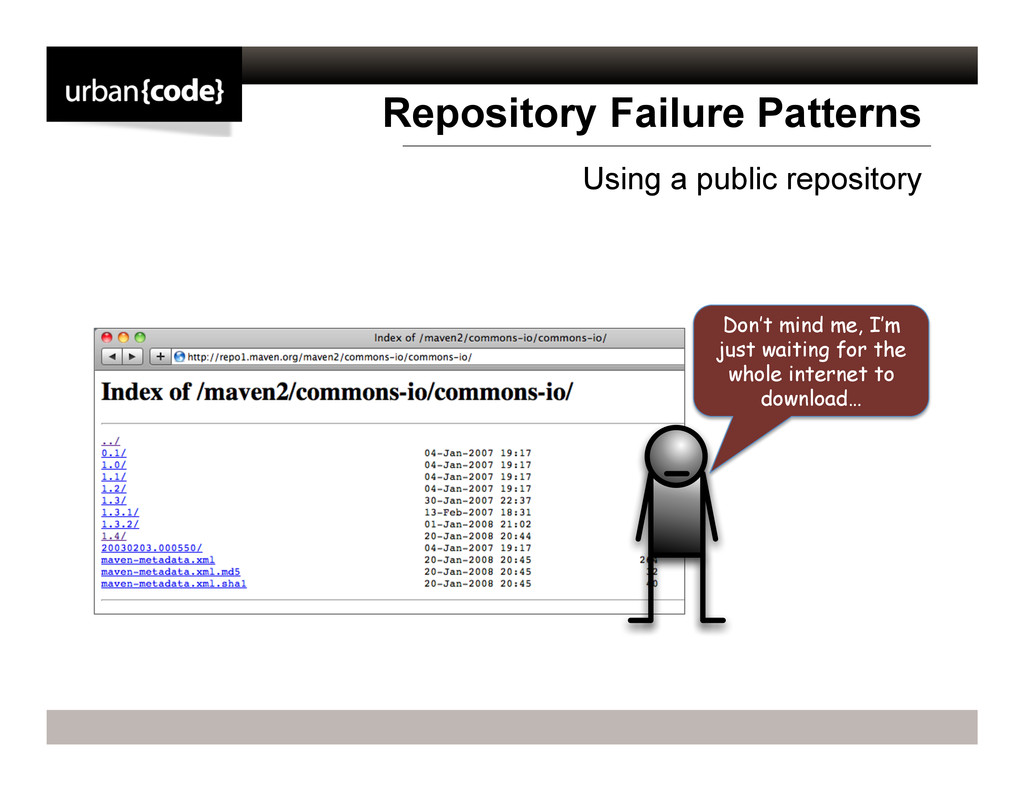
Repository Failure Patterns Using a public repository Don’t mind me,
I’m just waiting for the whole internet to download… -
Elements of a solution § Pulling the files down §
Support various build types - On the developer’s desktop - In the authoritative build environment 7/30/13 UrbanCode Inc. Proprietary and ConfidenLal ©2012 22 #3 - Automated retrieval at build time -
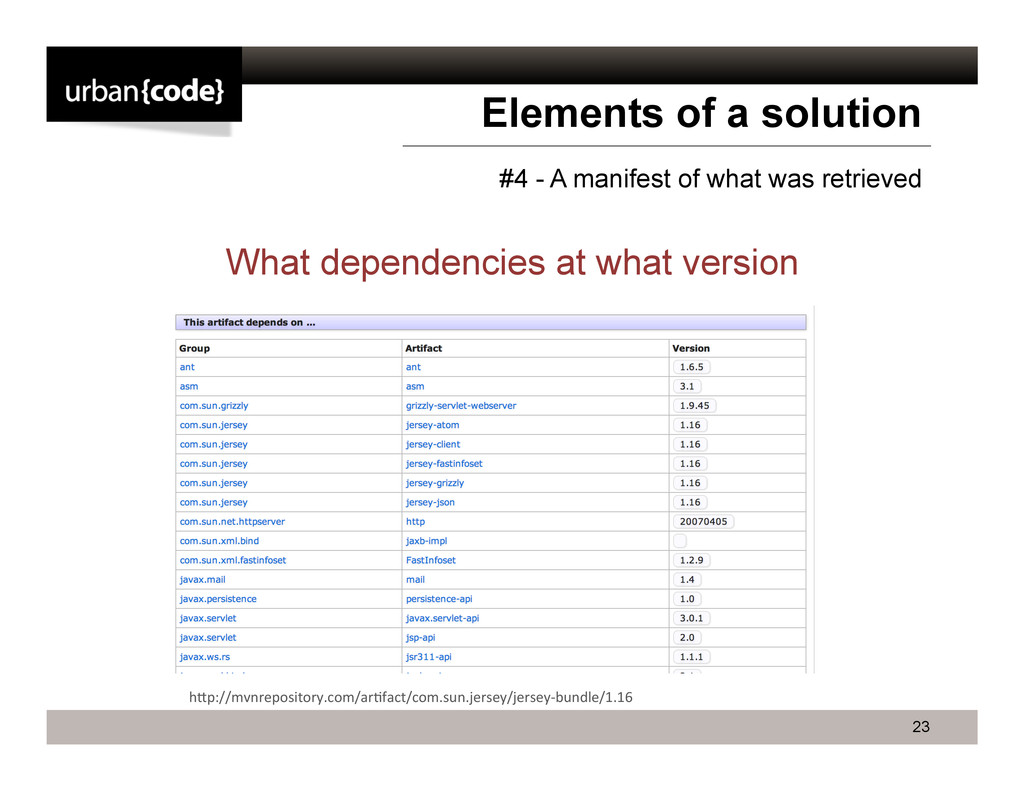
Elements of a solution What dependencies at what version 23
#4 - A manifest of what was retrieved hHp://mvnrepository.com/arLfact/com.sun.jersey/jersey-‐bundle/1.16 -
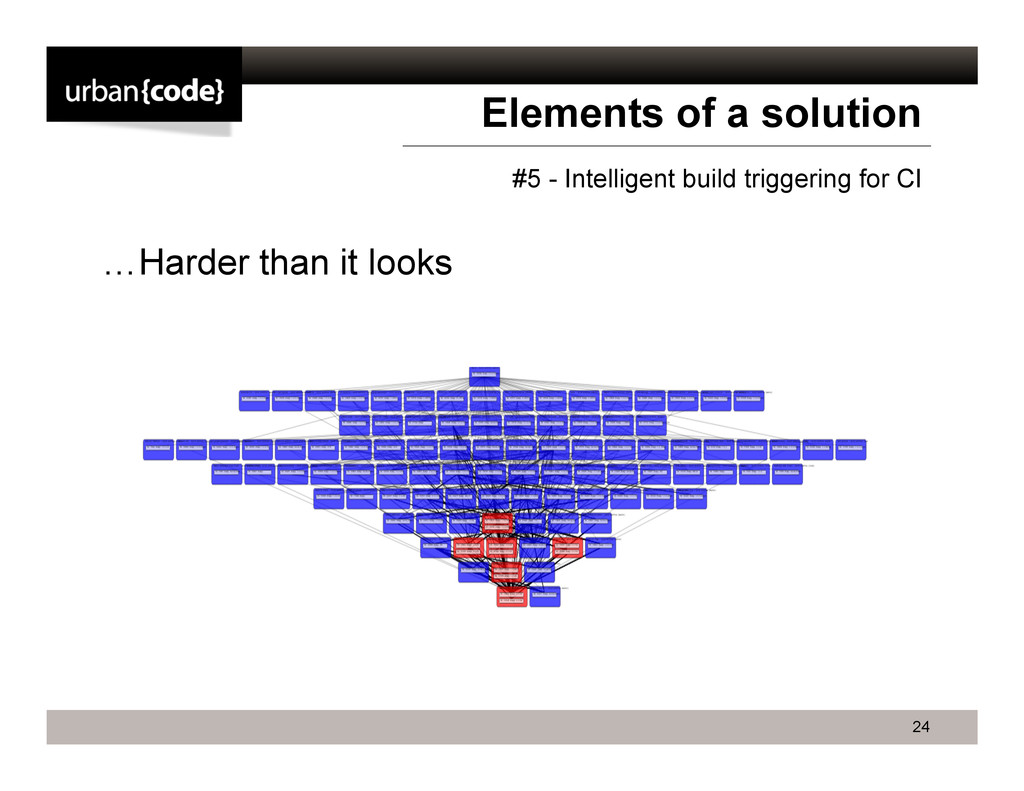
Elements of a solution …Harder than it looks 24 #5
- Intelligent build triggering for CI -
5 Elements of a solution 1. A description of our
dependencies (rules) 2. A repository of versioned components 3. Automated retrieval at build time 4. A manifest of what was retrieved 5. Intelligent build triggering for CI 25 -
The plan for today 26 § The challenge § Basics
of a dependency solution § Best practices for CI at scale § Managing 3rd party dependencies -
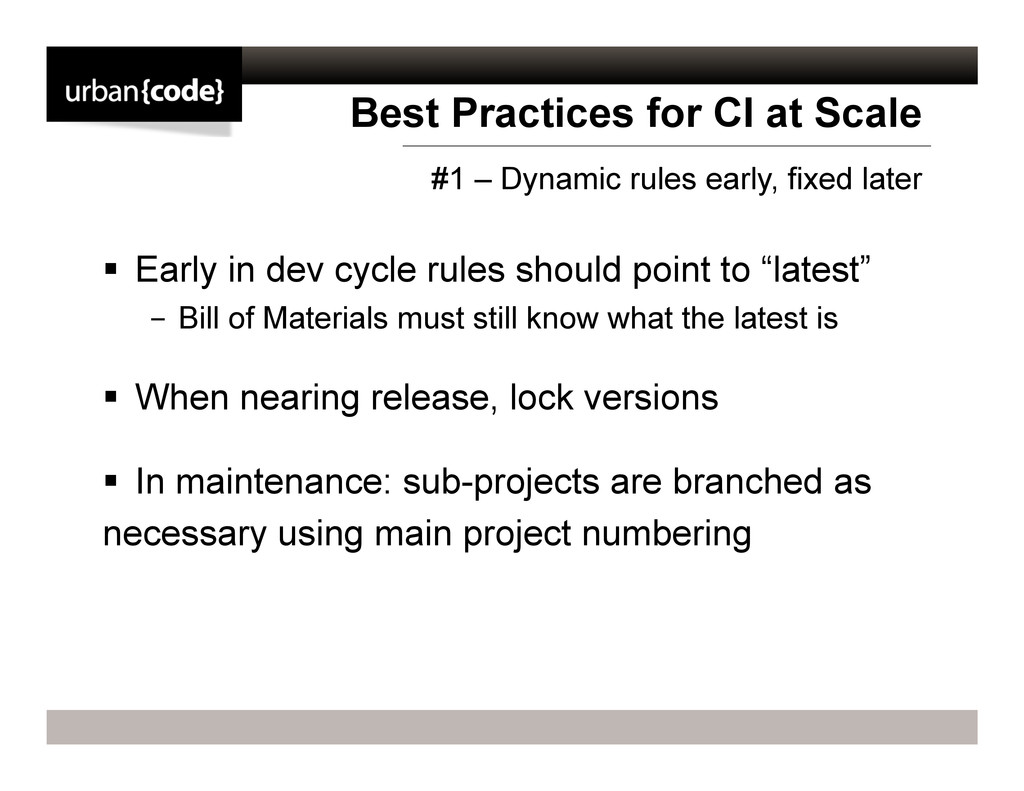
Best Practices for CI at Scale § Early in dev
cycle rules should point to “latest” - Bill of Materials must still know what the latest is § When nearing release, lock versions § In maintenance: sub-projects are branched as necessary using main project numbering #1 – Dynamic rules early, fixed later -
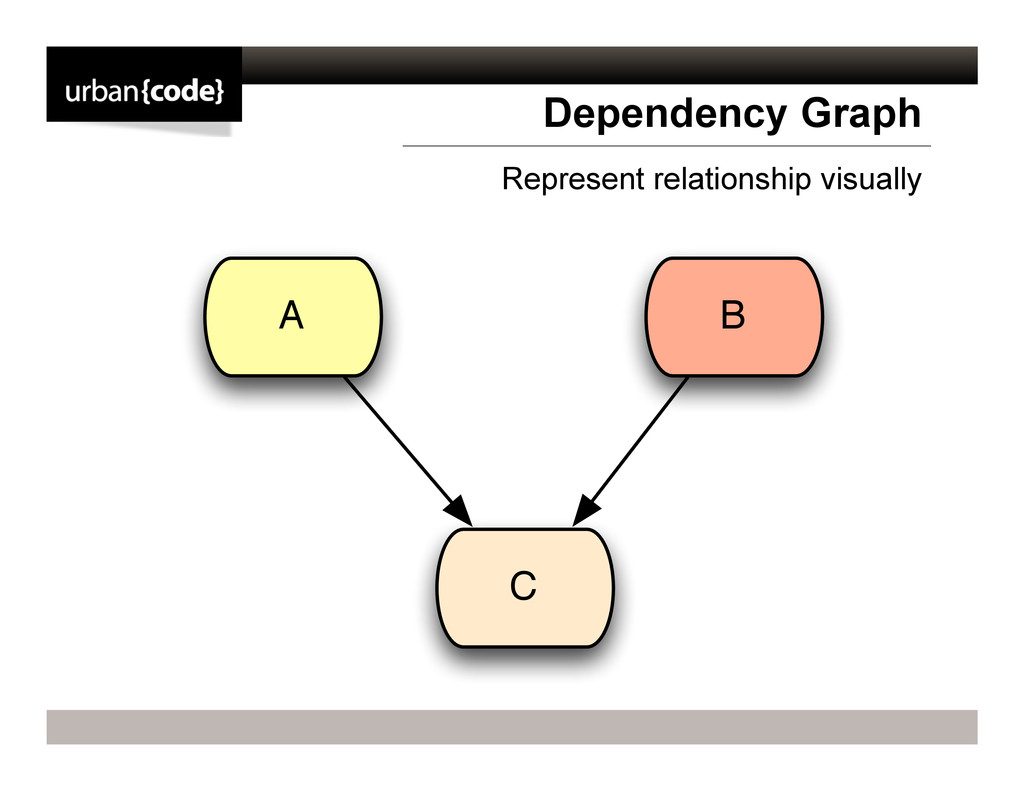
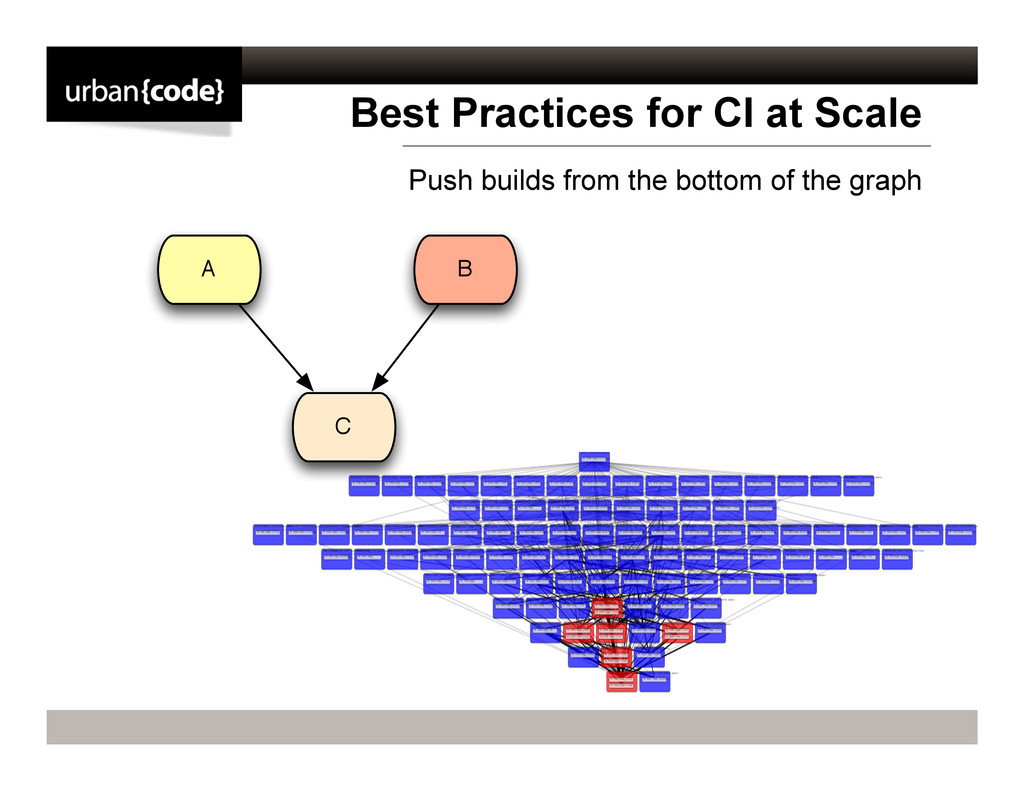
Best Practices for CI at Scale Push builds from the
bottom of the graph A B C -
Best Practices for CI at Scale § Use multiple build
machines § Independent builds run in parallel Distribute the work -
Best Practices for CI at Scale § Big graphs can
take a while to build - Introduce race conditions as new changes come in § Consistent sets: - Fetch code from same date / time - Fetch from a snapshot / label / baseline Use a consistent set of code -
The plan for today § The challenge § Basics of
a dependency solution § Best practices for CI at scale § Managing 3rd party dependencies 31 -
Managing 3rd party libraries § Do we really need another
XML parser? - Be suspicious of new libraries § Don’t reference external repositories § Is that the real version? - Require some seniority to load a new versions § Lifecycle libraries - Flag them as under test, approved, or deprecated as your repo allows General concerns -
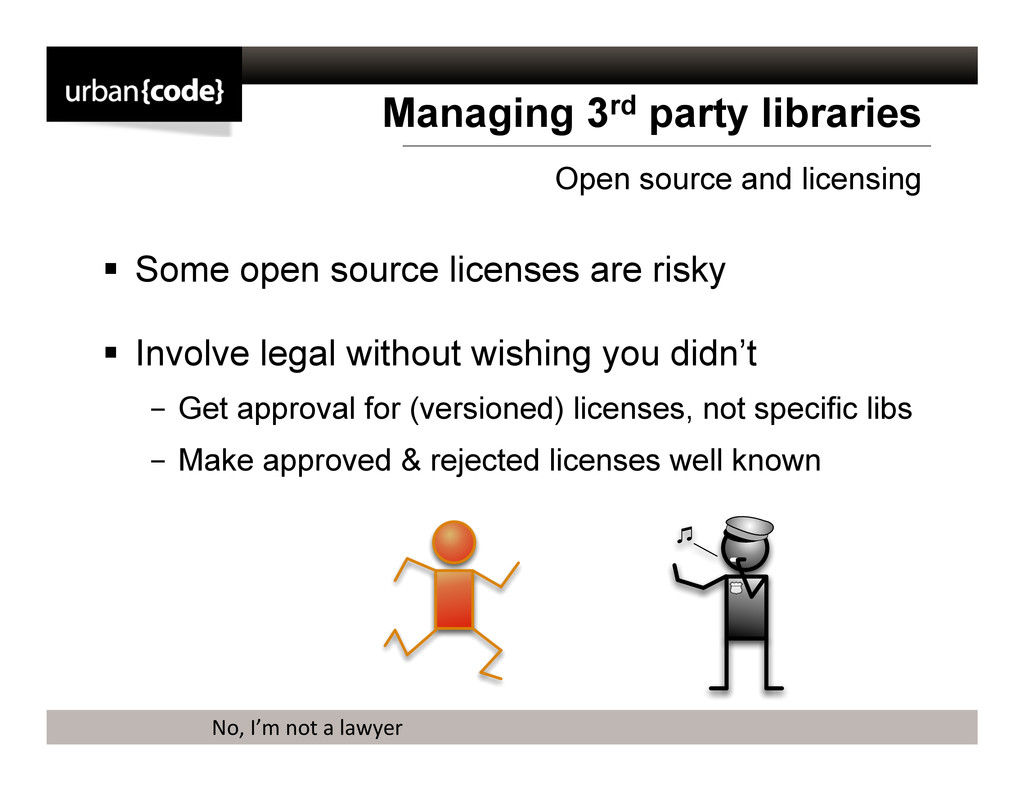
Managing 3rd party libraries § Some open source licenses are
risky § Involve legal without wishing you didn’t - Get approval for (versioned) licenses, not specific libs - Make approved & rejected licenses well known Open source and licensing No, I’m not a lawyer 㽈 -
Managing 3rd party libraries § Compliance with licensing agreements: tricky
§ Build a reverse BOM - What is this library used by? - Consider restricting permissions to it Commercial licensing No, I’m not a lawyer -
Key take-aways § Build time dependencies require - Having the
files - Knowing the dependency rules - Resolving those dependency rules - Recording a bill of materials § CI exposes subtle challenges with dependencies § 3rd Party libraries require special care -
Reference Material Urbancode.com/resources § White Papers - Enterprise CD Maturity Model
- Lean Build & Deployment Automation - Continuous Integration vs Build Management § Stay in touch: Blogs.urbancode.com Twitter.com/UrbanCodeSoft Twitter.com/EricMinick Slideshare.net/Urbancode -
Yes, we’re a products company § uBuild - Build automation and
CI that scales - Integrated dependency repository - Integrated dependency definitions § uDeploy - Deployment and release management § uRelease - Release & Environment management / planning