Upgrade to Pro — share decks privately, control downloads, hide ads and more …

DevOps Inferno: A Journey through the 9 circles...

DevOps Inferno: A Journey through the 9 circles of AppSec

This talk describes specific practices, examples and steps that can be taken by operations, development and security teams to reinforce their improvement and learning cycles. By encouraging the growth of the cross-team collaboration embed in the DevOps sentiment and reflecting upon the benefits the audience will be able to reflect how to mature and continue improving practices beyond what is standard towards more specific and robust practices that enhance the security stances our products, workplaces, and communities. At the end of the slides you can find some resources that can assist you to build and achieve that awareness and context.

Avatar for Luis José Villalobos

Luis José Villalobos

March 07, 2020

Other Decks in Technology

Transcript

  1. DevOps Inferno A Journey through the 9 circles of AppSec

    BSides San Diego 2020 Luis Villalobos @Villaworld Photo by JR Korpa on Unsplash
  2. Beware! This is not a Rant! This is a collection

    of developer perspectives and suggestions to overcome the bridges that prevent or hinder our collaboration regarding security efforts under a DevOps mindset. With a little pinch of drama to make it fun.
  3. The Landscape • An organization where security teams are separate

    with almost no interaction with development teams • Teams that are being built up, and maturing as time passes
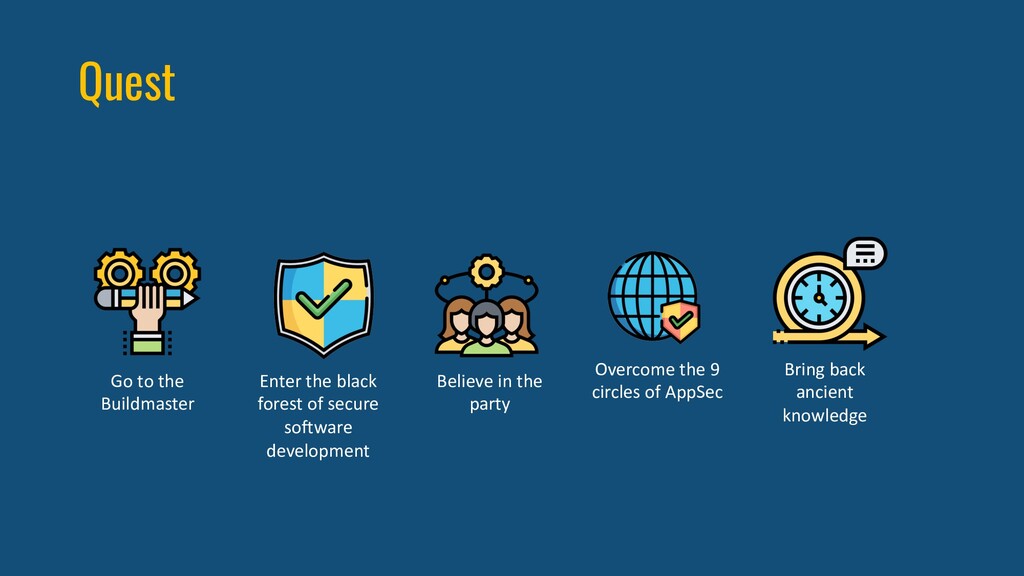
  4. Quest Go to the Buildmaster Enter the black forest of

    secure software development Believe in the party Overcome the 9 circles of AppSec Bring back ancient knowledge
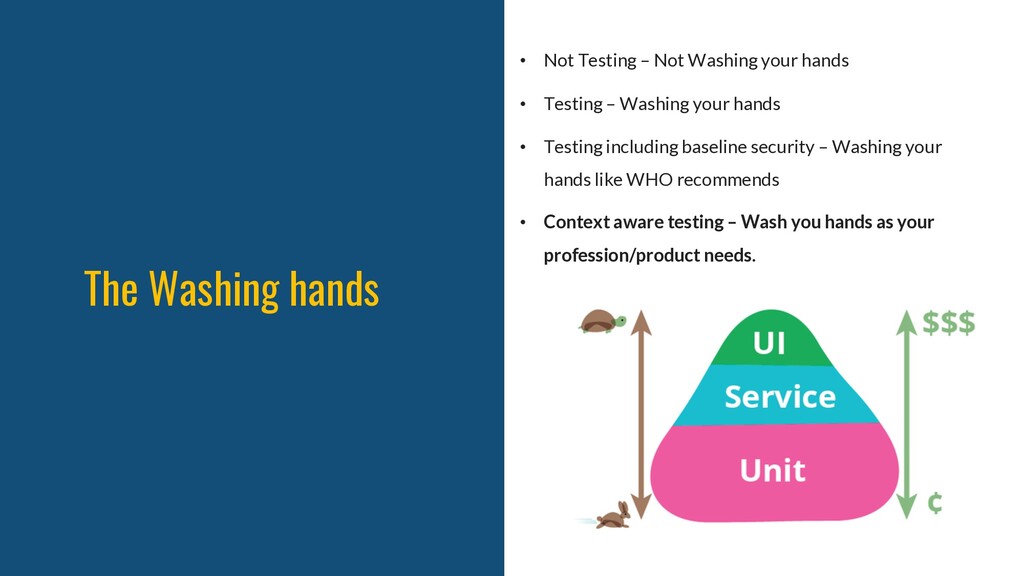
  5. The Washing hands • Not Testing – Not Washing your

    hands • Testing – Washing your hands • Testing including baseline security – Washing your hands like WHO recommends • Context aware testing – Wash you hands as your profession/product needs.
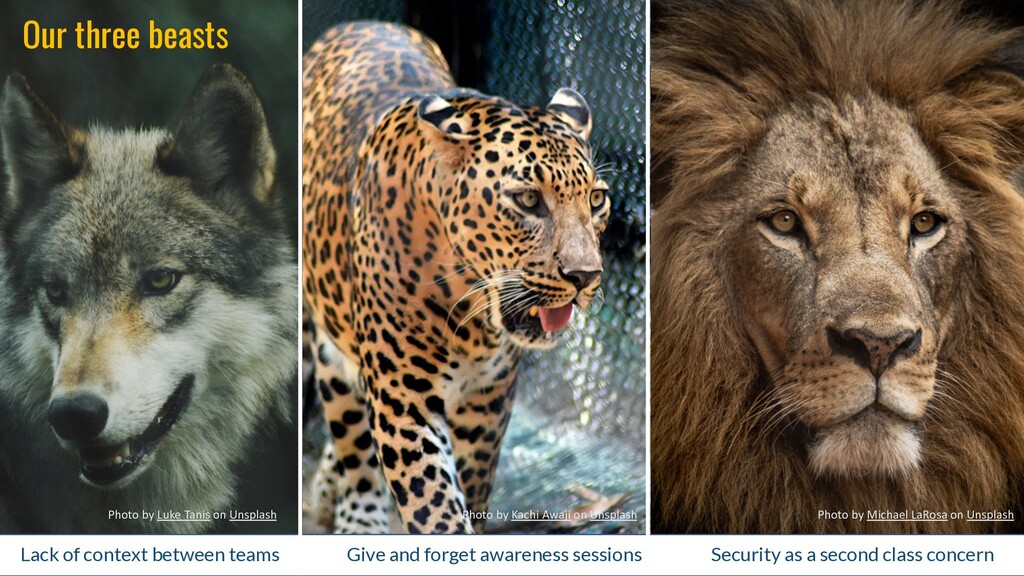
  6. Our three beasts Security as a second class concern Give

    and forget awareness sessions Lack of context between teams Photo by Luke Tanis on Unsplash Photo by Kachi Awaji on Unsplash Photo by Michael LaRosa on Unsplash
  7. The Black gate of Security reviews Photo by Edan Cohen

    on Unsplash • You deliver your first candidate to the assessment • Multiple findings
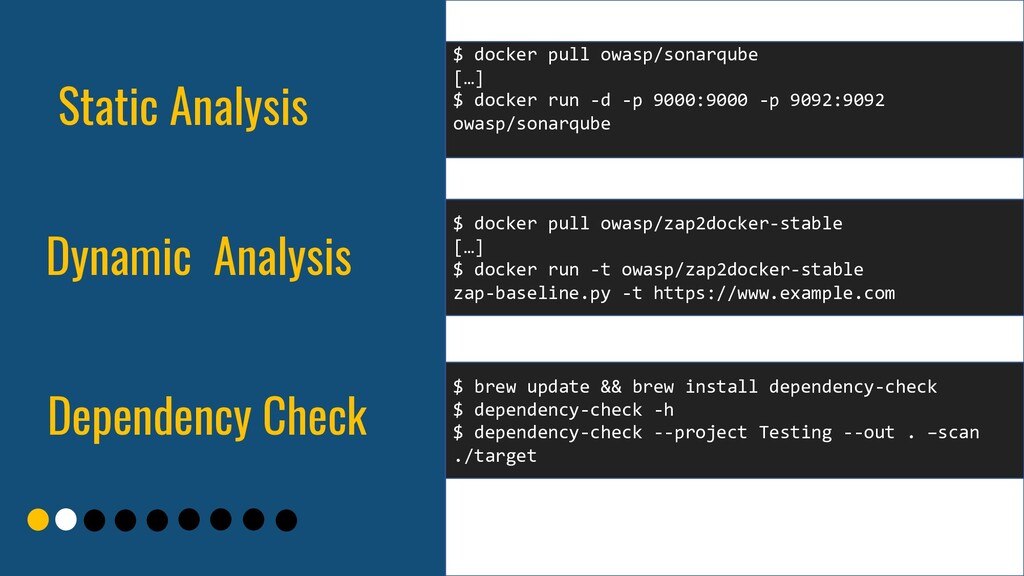
  8. Static Analysis $ docker pull owasp/sonarqube […] $ docker run

    -d -p 9000:9000 -p 9092:9092 owasp/sonarqube Dynamic Analysis $ docker pull owasp/zap2docker-stable […] $ docker run -t owasp/zap2docker-stable zap-baseline.py -t https://www.example.com $ brew update && brew install dependency-check $ dependency-check -h $ dependency-check --project Testing --out . –scan ./target Dependency Check
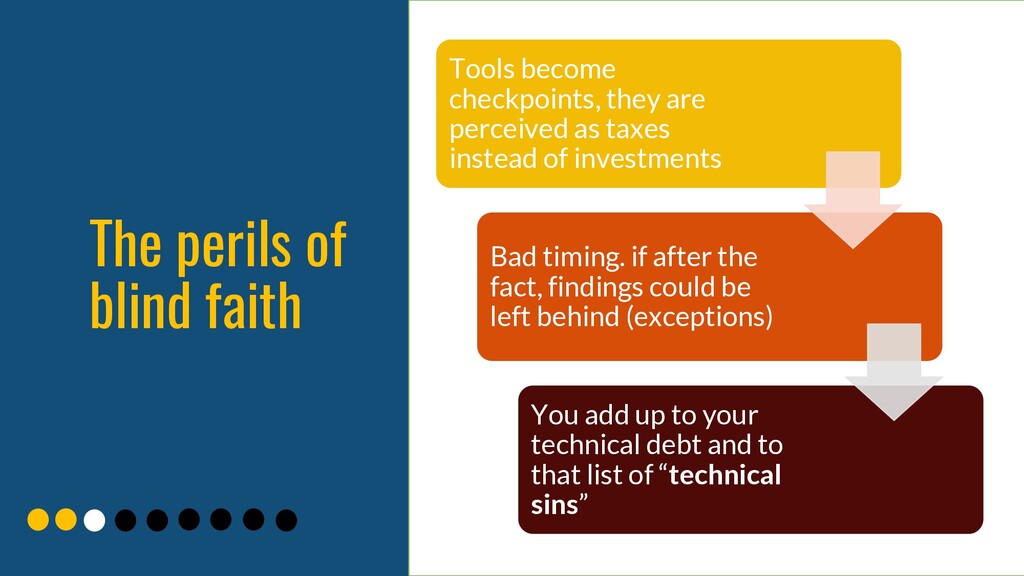
  9. The perils of blind faith Tools become checkpoints, they are

    perceived as taxes instead of investments Bad timing. if after the fact, findings could be left behind (exceptions) You add up to your technical debt and to that list of “technical sins”
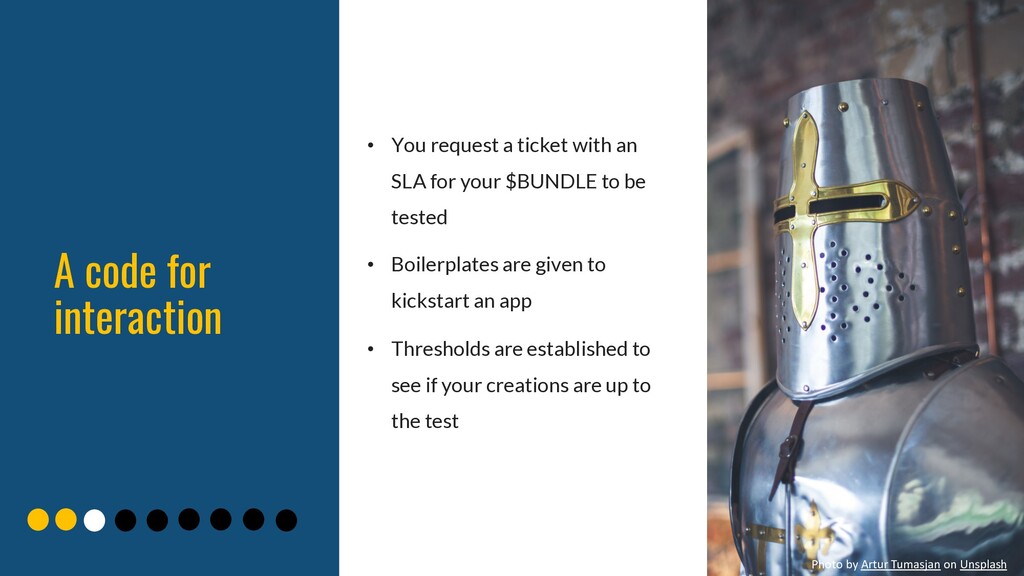
  10. A code for interaction • You request a ticket with

    an SLA for your $BUNDLE to be tested • Boilerplates are given to kickstart an app • Thresholds are established to see if your creations are up to the test Photo by Artur Tumasjan on Unsplash
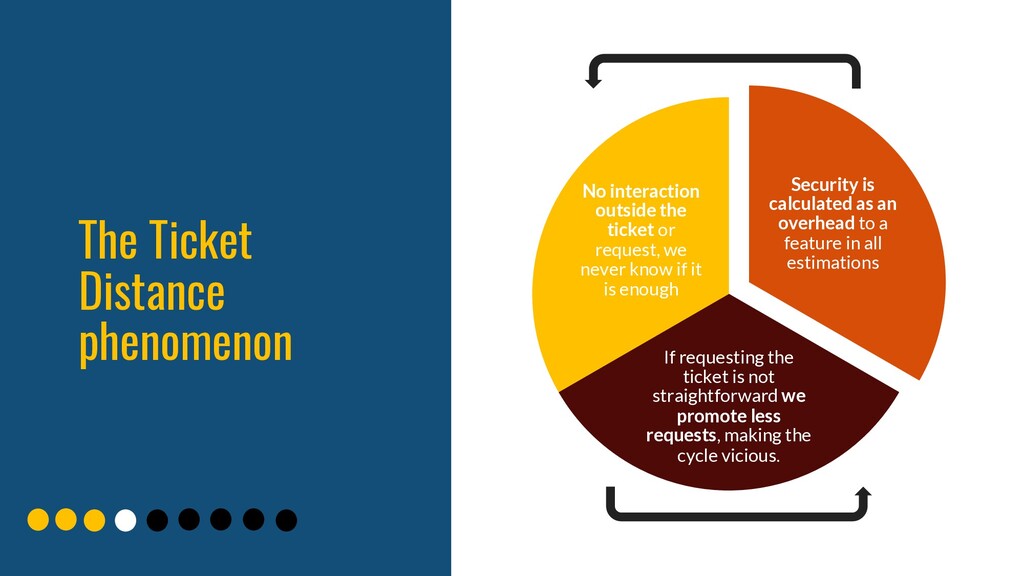
  11. The Ticket Distance phenomenon Security is calculated as an overhead

    to a feature in all estimations If requesting the ticket is not straightforward we promote less requests, making the cycle vicious. No interaction outside the ticket or request, we never know if it is enough
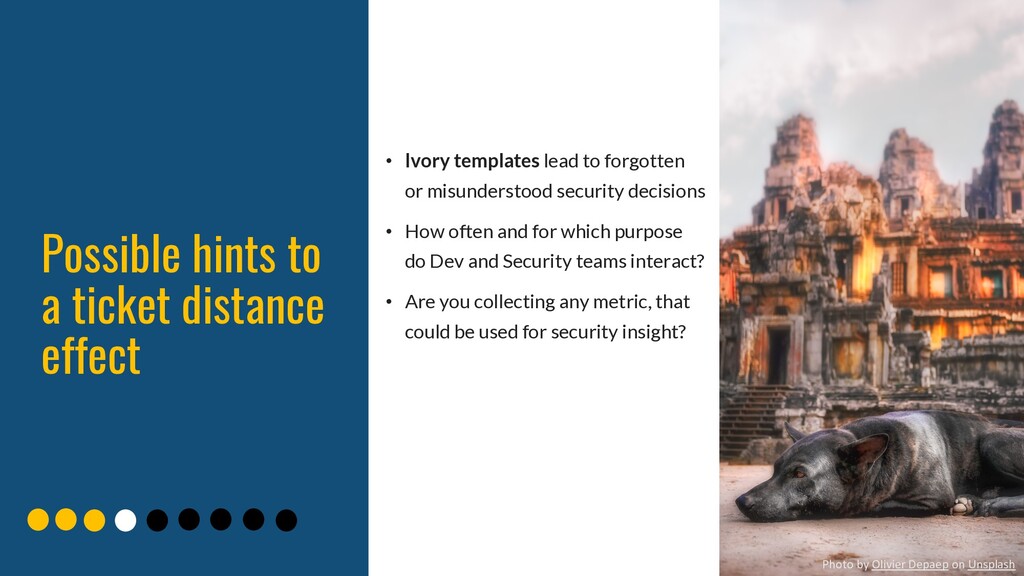
  12. Possible hints to a ticket distance effect • Ivory templates
    lead to forgotten or misunderstood security decisions • How often and for which purpose do Dev and Security teams interact? • Are you collecting any metric, that could be used for security insight? Photo by Olivier Depaep on Unsplash
  13. Embedding security into our lifecycle cannot be reduced to a

    checkpoint, it must be the consequence of conscious acts of risk evaluation.
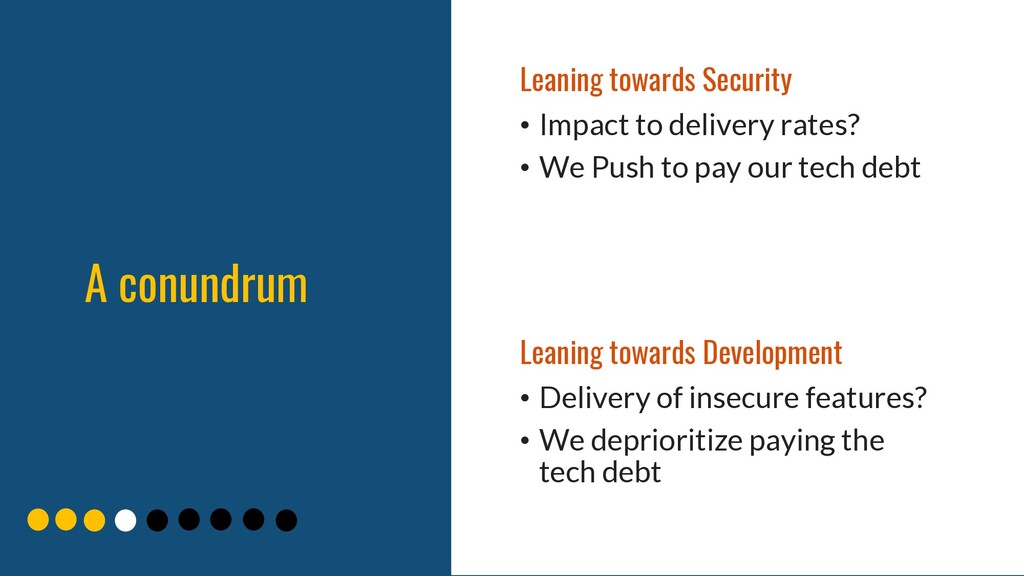
  14. A conundrum Leaning towards Security • Impact to delivery rates?

    • We Push to pay our tech debt Leaning towards Development • Delivery of insecure features? • We deprioritize paying the tech debt
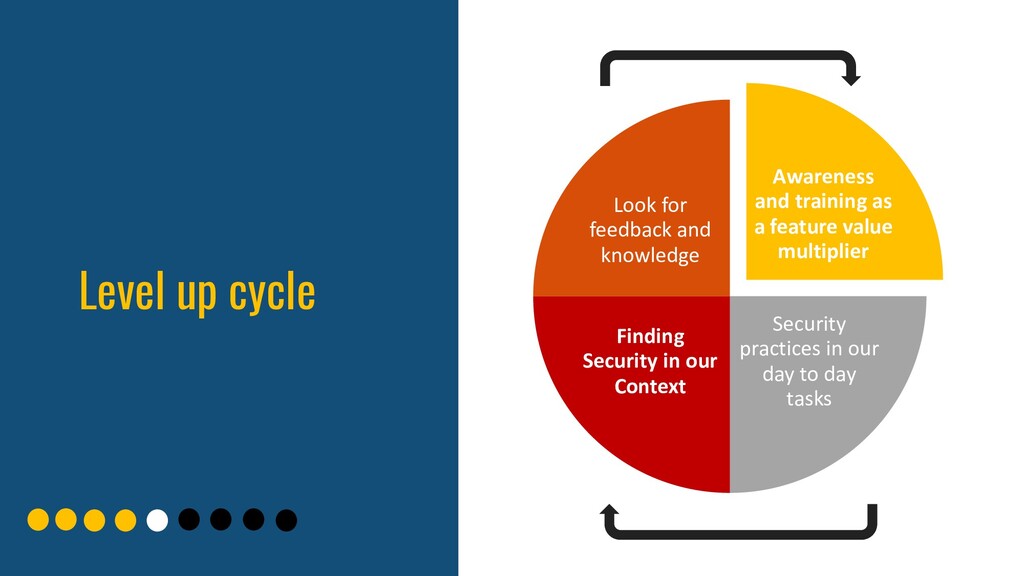
  15. Level up cycle Awareness and training as a feature value

    multiplier Security practices in our day to day tasks Finding Security in our Context Look for feedback and knowledge
  16. Interest is also a limited resource • Not all party

    members believe the same • The Project related peers might not understand • The business contact might not have sufficient information • Management might believe another metric is more important • The priority might not be what you think.
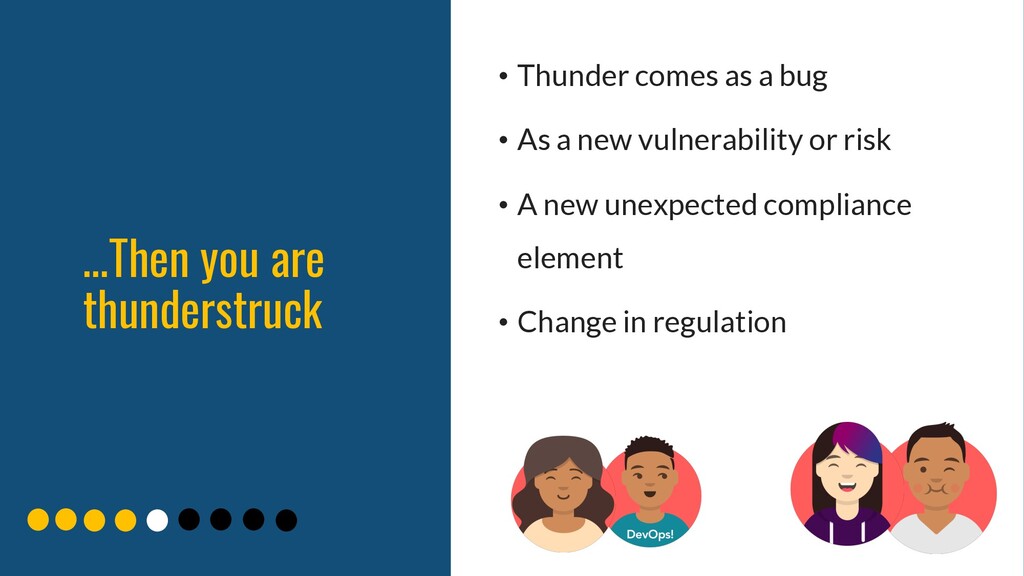
  17. …Then you are thunderstruck • Thunder comes as a bug

    • As a new vulnerability or risk • A new unexpected compliance element • Change in regulation
  18. Rehearsing Chaos • Certainty and understanding for supporting roles •

    Like a Kata, but for a synchronized team of artists • Record your findings even if they are just for yourself
  19. Communicating Chaos • Timely, certain, profesional and proportionate communications: Due

    diligence and due care. • PR skills are indeed required: Even if your audience is just in- company.
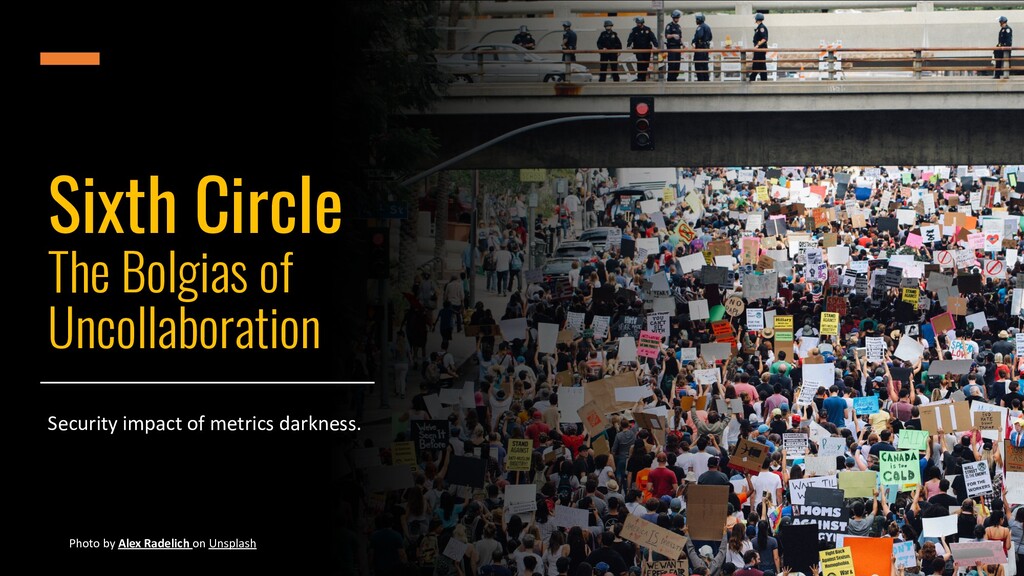
  20. Sixth Circle The Bolgias of Uncollaboration Security impact of metrics

    darkness. Photo by Alex Radelich on Unsplash
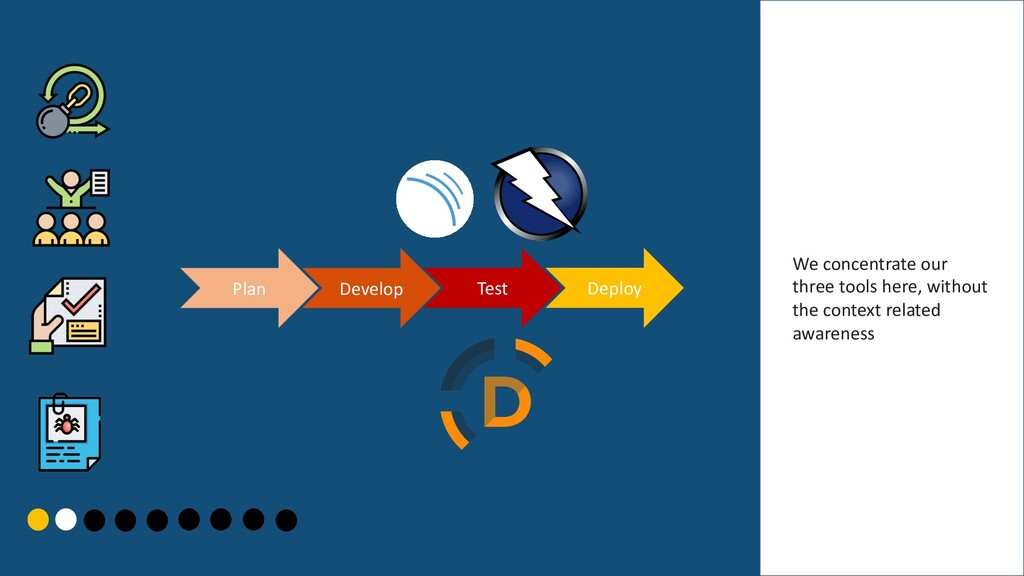
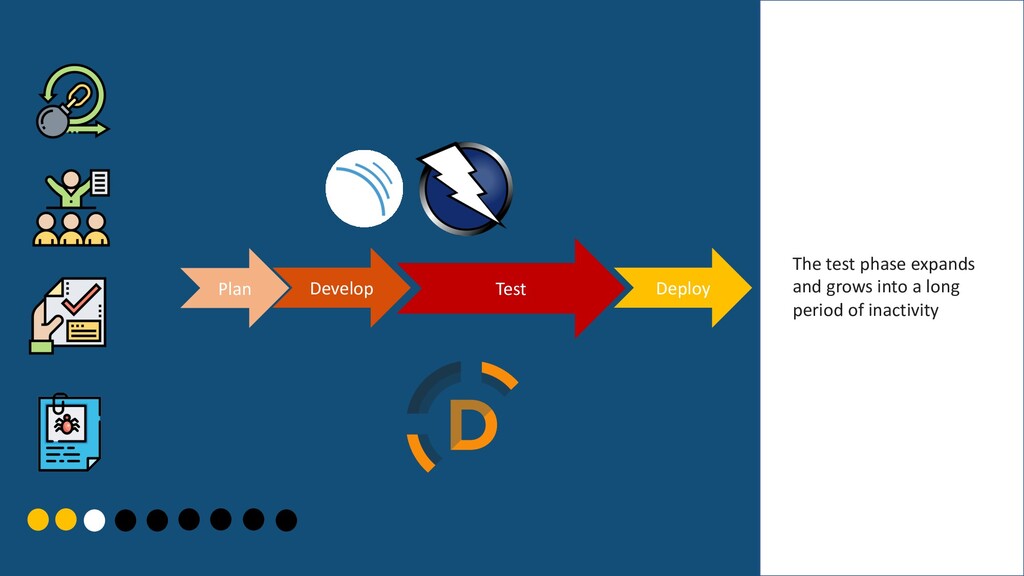
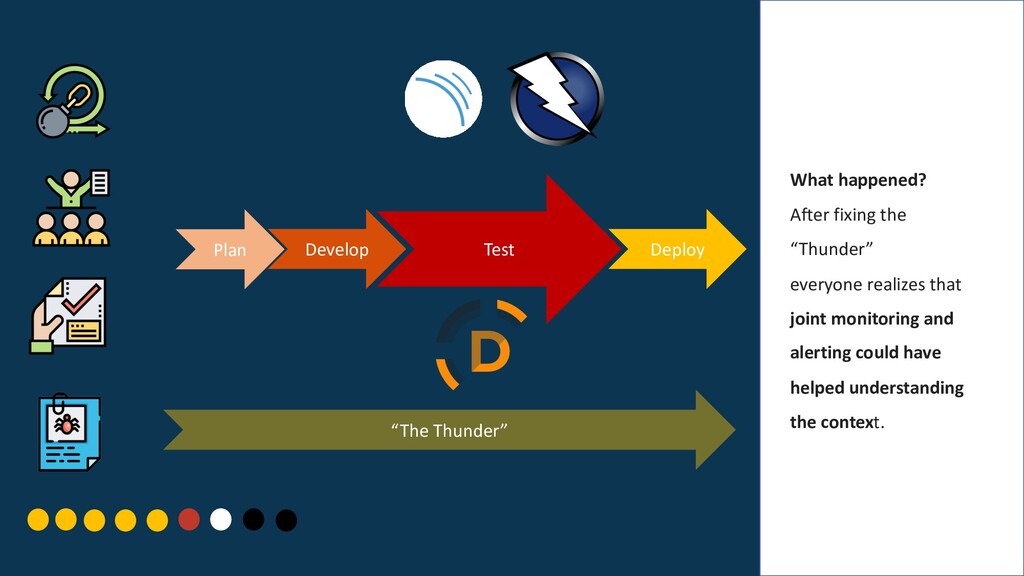
  21. Plan Develop Test Deploy What happened? After fixing the “Thunder”

    everyone realizes that joint monitoring and alerting could have helped understanding the context. “The Thunder”
  22. Attone for the sin of having telemetry, but not using

    it. Awareness, Good monitoring and a rehearsed recovery plan decrease data breach cost impact
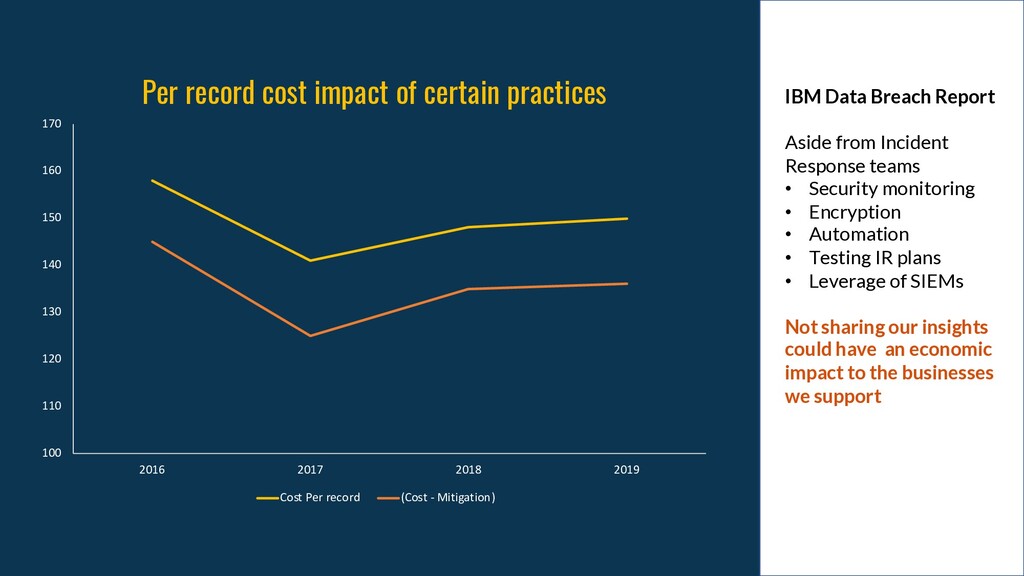
  23. IBM Data Breach Report Aside from Incident Response teams •

    Security monitoring • Encryption • Automation • Testing IR plans • Leverage of SIEMs Not sharing our insights could have an economic impact to the businesses we support 100 110 120 130 140 150 160 170 2016 2017 2018 2019 Per record cost impact of certain practices Cost Per record (Cost - Mitigation)
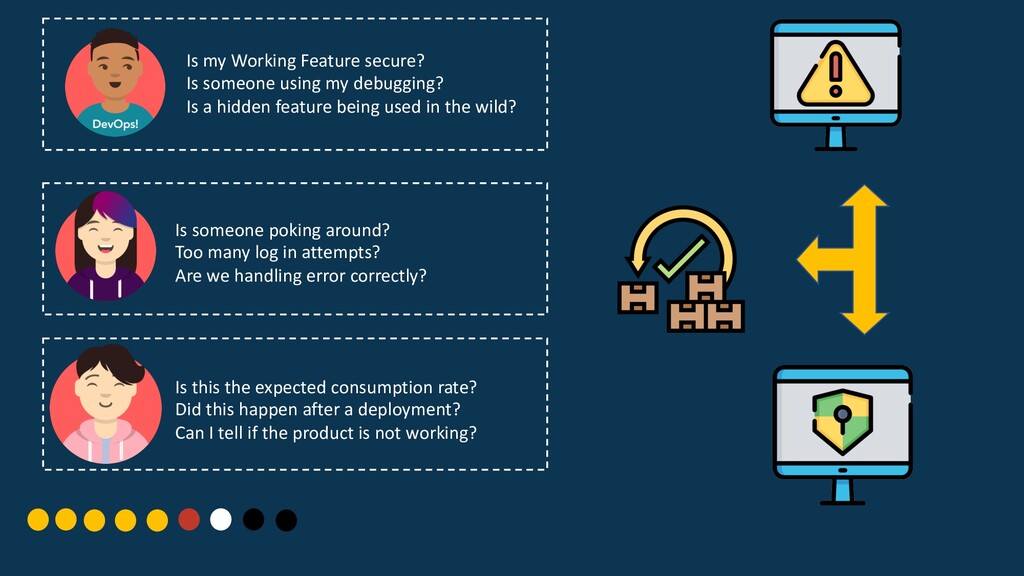
  24. Is my Working Feature secure? Is someone using my debugging?

    Is a hidden feature being used in the wild? Is someone poking around? Too many log in attempts? Are we handling error correctly? Is this the expected consumption rate? Did this happen after a deployment? Can I tell if the product is not working?
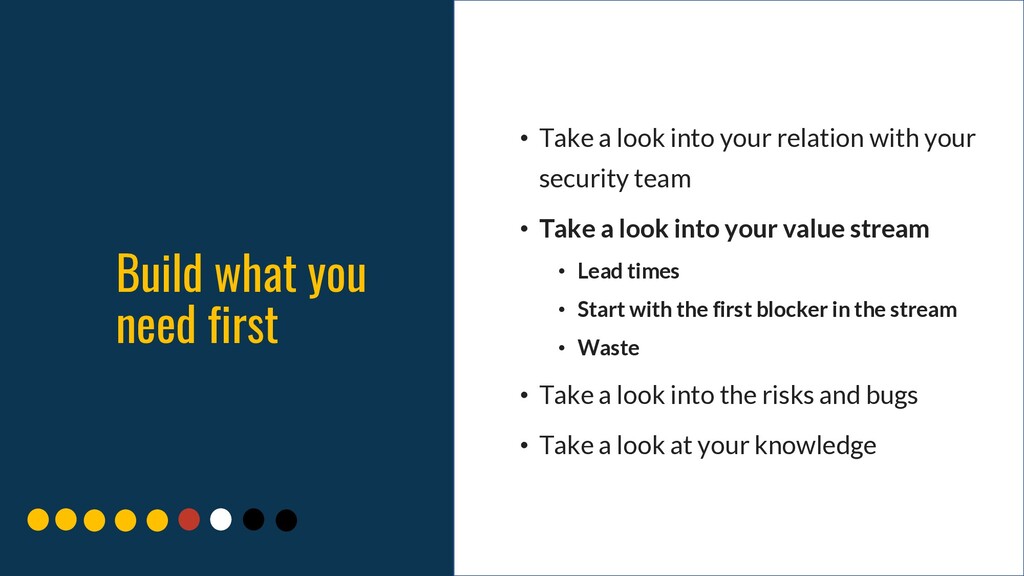
  25. Build what you need first • Take a look into

    your relation with your security team • Take a look into your value stream • Lead times • Start with the first blocker in the stream • Waste • Take a look into the risks and bugs • Take a look at your knowledge
  26. Seventh Circle The implementation stone ditch We will take the

    matter into our own hands Photo by Mariana Proença on Unsplash
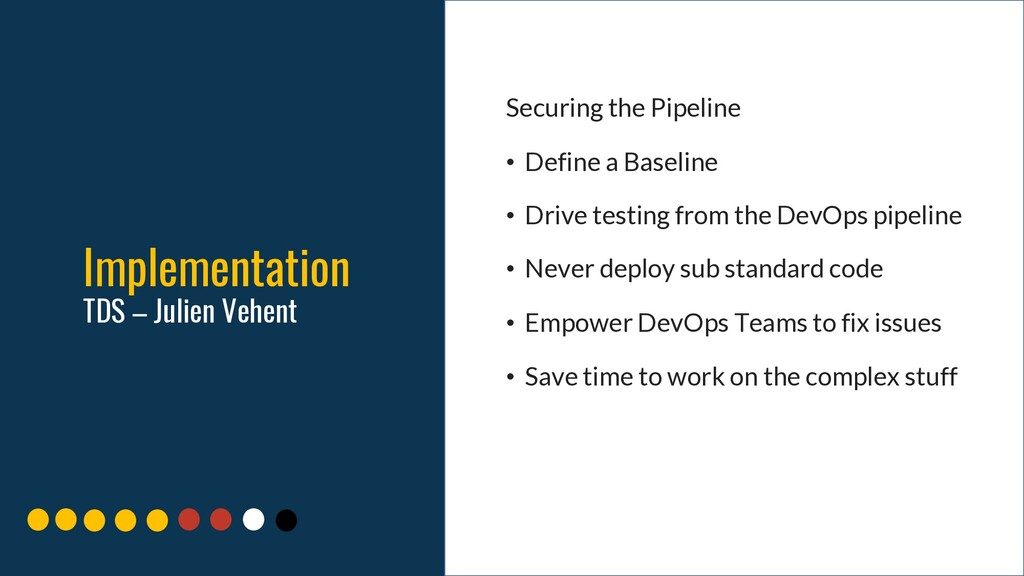
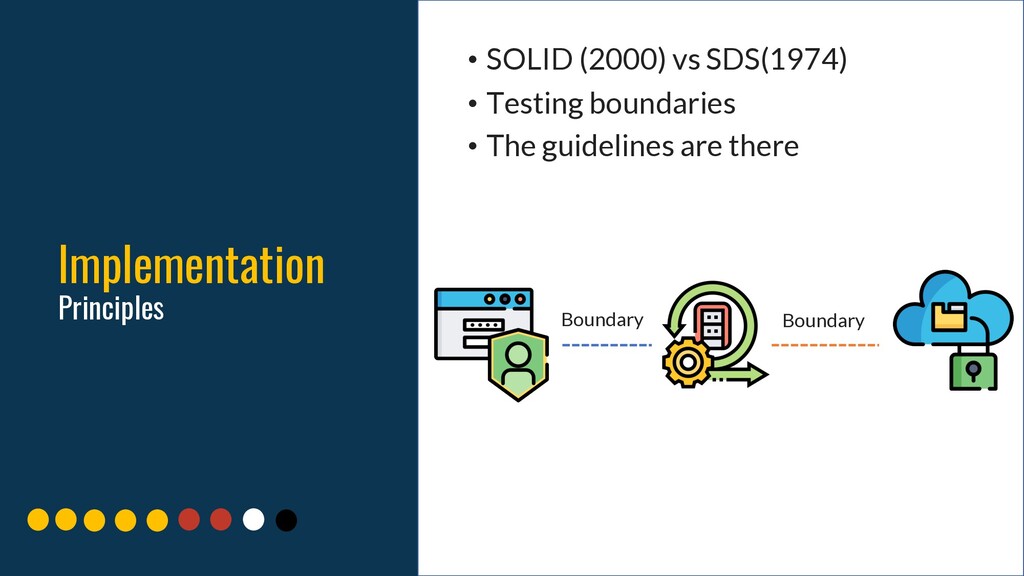
  27. Implementation TDS – Julien Vehent Securing the Pipeline • Define

    a Baseline • Drive testing from the DevOps pipeline • Never deploy sub standard code • Empower DevOps Teams to fix issues • Save time to work on the complex stuff
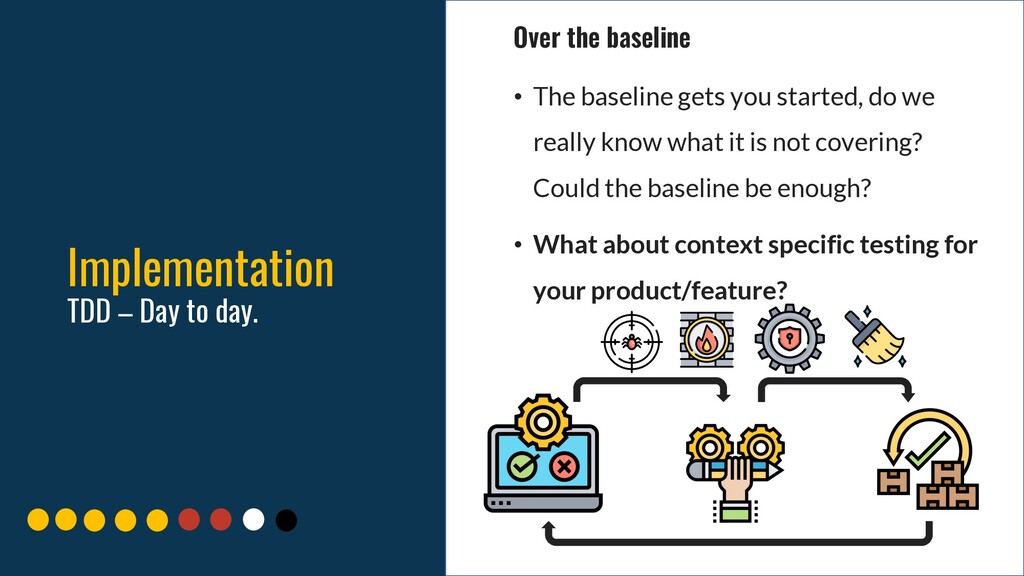
  28. Implementation TDD – Day to day. Over the baseline •

    The baseline gets you started, do we really know what it is not covering? Could the baseline be enough? • What about context specific testing for your product/feature?
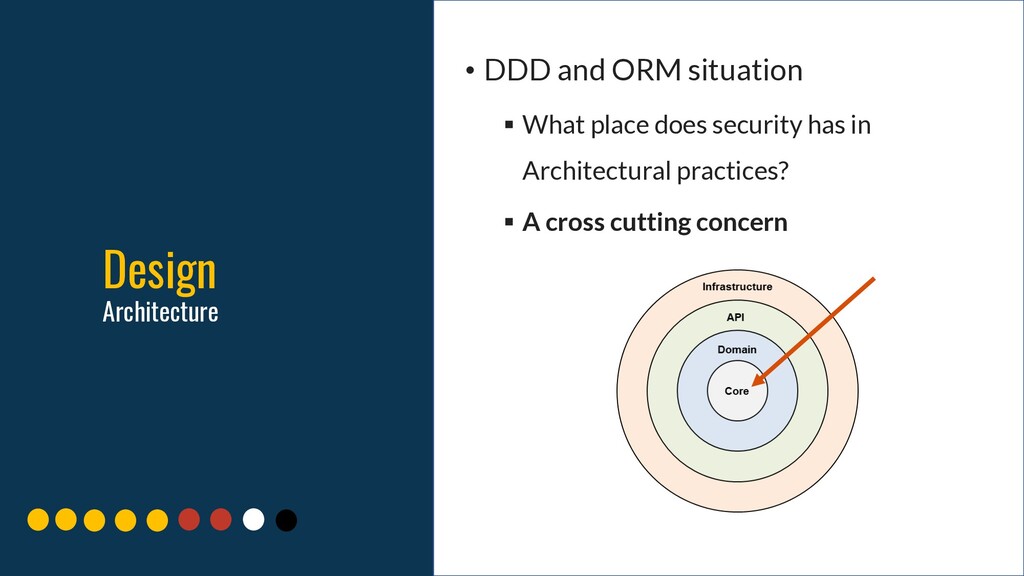
  29. Design Architecture • DDD and ORM situation § What place

    does security has in Architectural practices? § A cross cutting concern
  30. Trust and Interest • Time allocation for maintenance and focused

    improvement becomes increasingly important • The effect of having at least a liasion for security concerns • Secure Code reviews
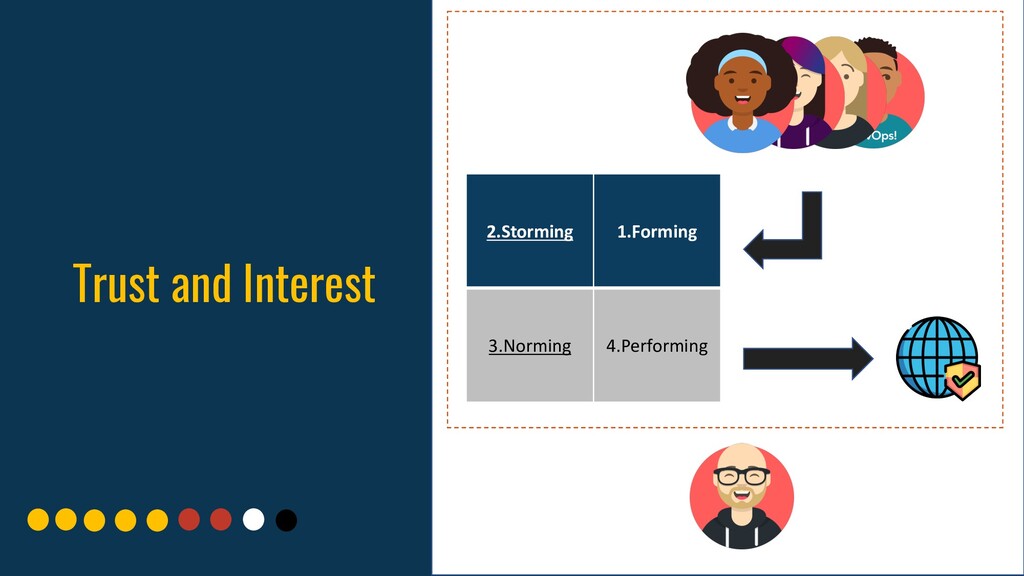
  31. Trust and Interest • Share and be sure your sec-dev

    counterpart knows the value stream and context of the product: They understand your hurdles, practices and habits • Build the team awareness-knowledge cycle, Look for someone who wants to know § Managers we are looking at you
  32. Eight Circle The release of all evil The encounter between

    two worlds Photo by Mazhar Zandsalimi on Unsplash
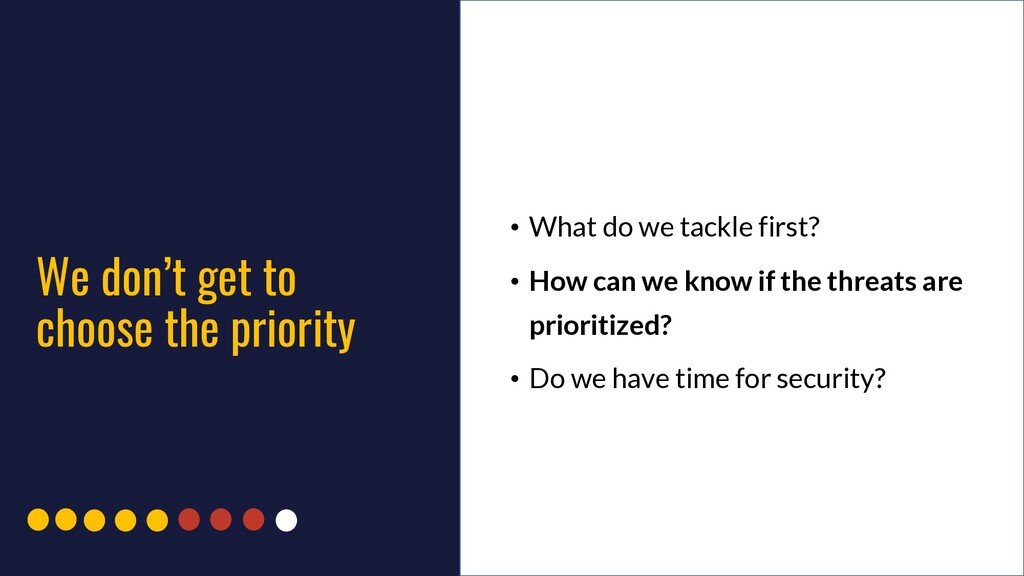
  33. We don’t get to choose the priority • What do

    we tackle first? • How can we know if the threats are prioritized? • Do we have time for security?
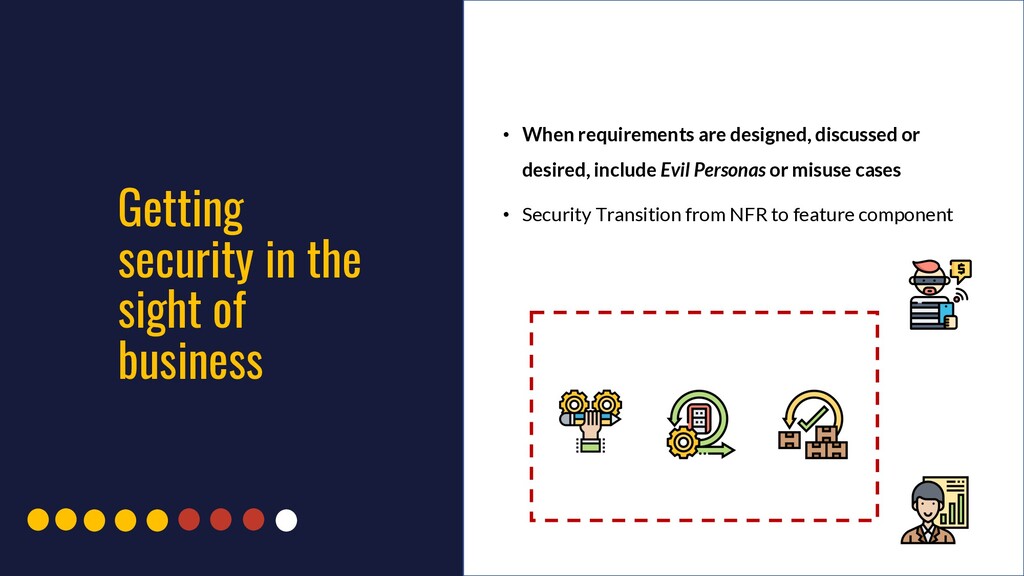
  34. 006-analyst.png Getting security in the sight of business • When

    requirements are designed, discussed or desired, include Evil Personas or misuse cases • Security Transition from NFR to feature component
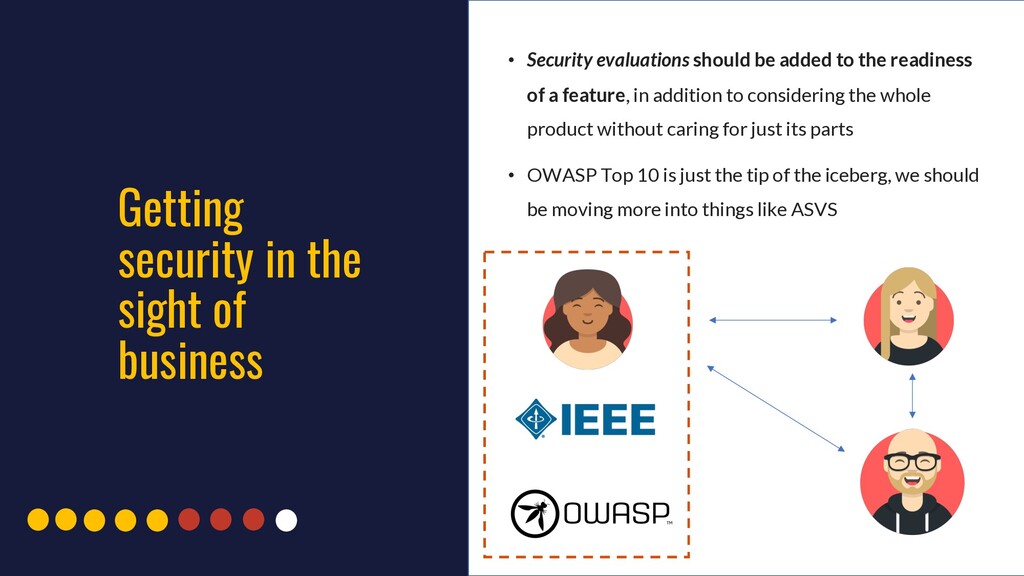
  35. • Security evaluations should be added to the readiness of

    a feature, in addition to considering the whole product without caring for just its parts • OWASP Top 10 is just the tip of the iceberg, we should be moving more into things like ASVS Getting security in the sight of business
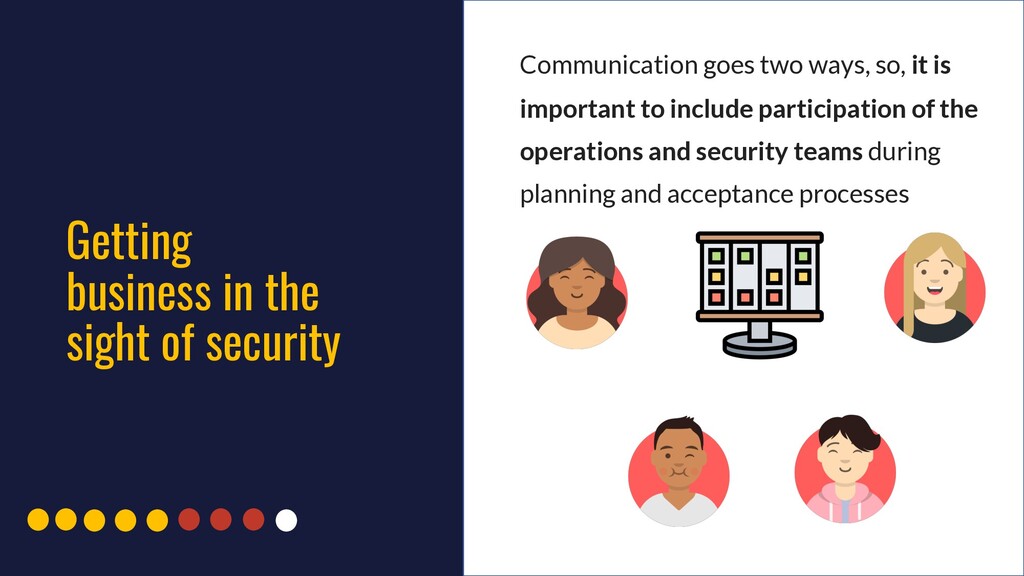
  36. 021-planning.png Getting business in the sight of security Communication goes

    two ways, so, it is important to include participation of the operations and security teams during planning and acceptance processes
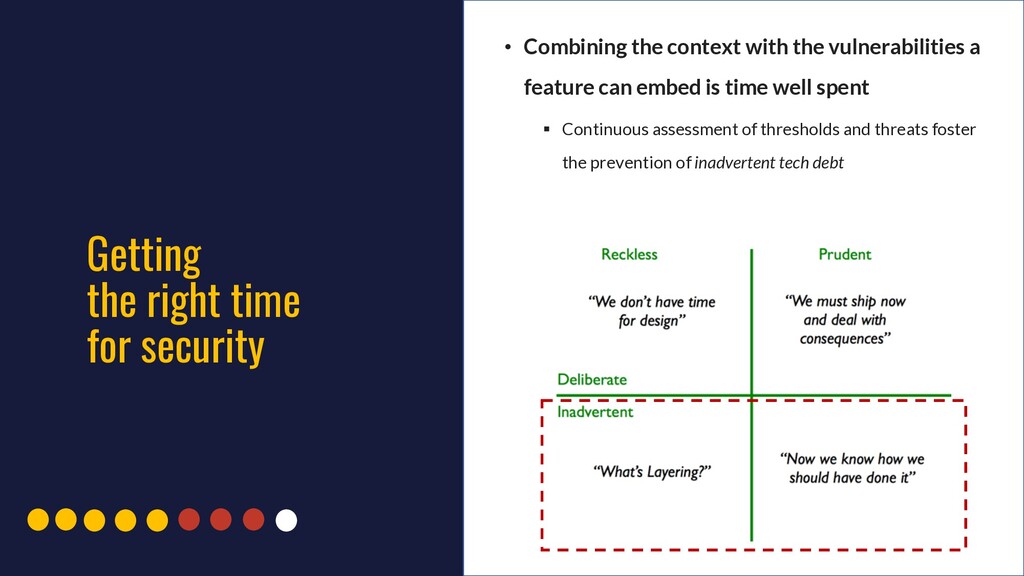
  37. Getting the right time for security • Combining the context

    with the vulnerabilities a feature can embed is time well spent § Continuous assessment of thresholds and threats foster the prevention of inadvertent tech debt
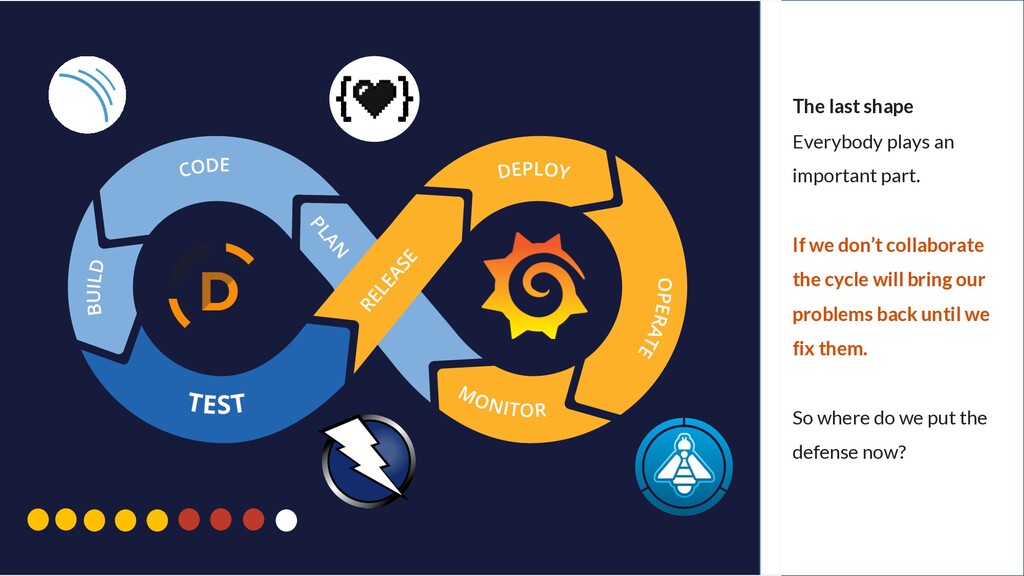
  38. The last shape Everybody plays an important part. If we

    don’t collaborate the cycle will bring our problems back until we fix them. So where do we put the defense now?
  39. The whole party should acknowledge priorities based on an active

    collaboration Awareness is not just for Devs
  40. Ninth Circle Oblivion of peer and community needs The forgotten

    ones Photo by Dominik Dancs on Unsplash
  41. The forgotten ones • 27 Job Descriptions, 30 min search,

    6 prominent software companies • Jobs span over multiple targets: Web, Mobile, OS, DB engs, SRE’s • From entry to senior level • 5 mention security tangentially • Less than 50% have the word security or secure
  42. • No security relationship, expectation, path or evolution • No

    mention in the screening questions • Absence of Compliance and regulation impact on the job The forgotten ones
  43. • If we are not faced with such questions we

    should ask them • It is not a gate The forgotten ones
  44. Where do we find it? • It is built. Its

    awareness also affects managers and human resources • In proactive engagement, not after the fact • In automating after collaborating • In every day practices, not in gates • In all roles, not for the privileged few
  45. What do we gain? • Improved awareness regarding what our

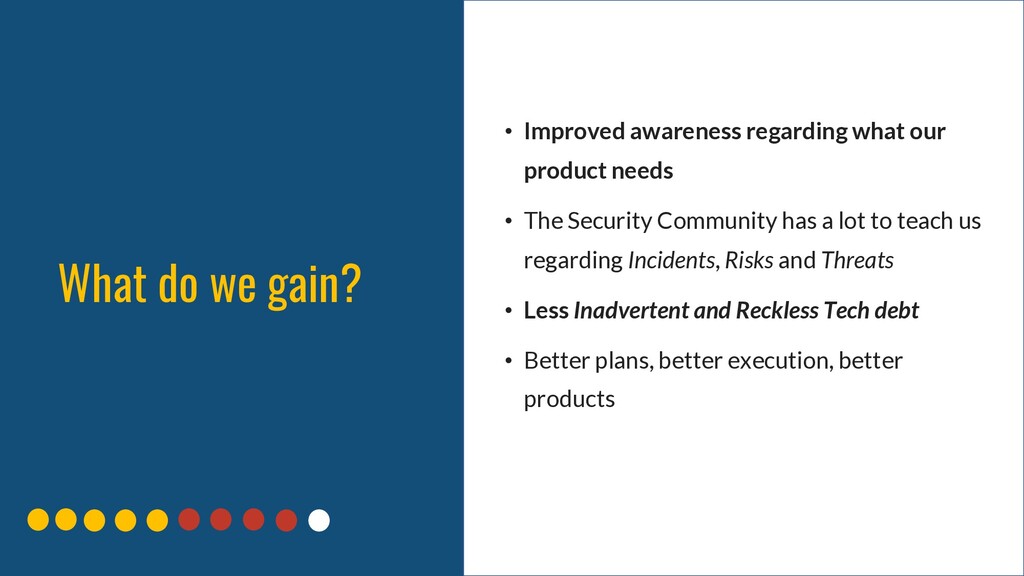
    product needs • The Security Community has a lot to teach us regarding Incidents, Risks and Threats • Less Inadvertent and Reckless Tech debt • Better plans, better execution, better products
  46. Building collective knowledge • Its power comes from the process

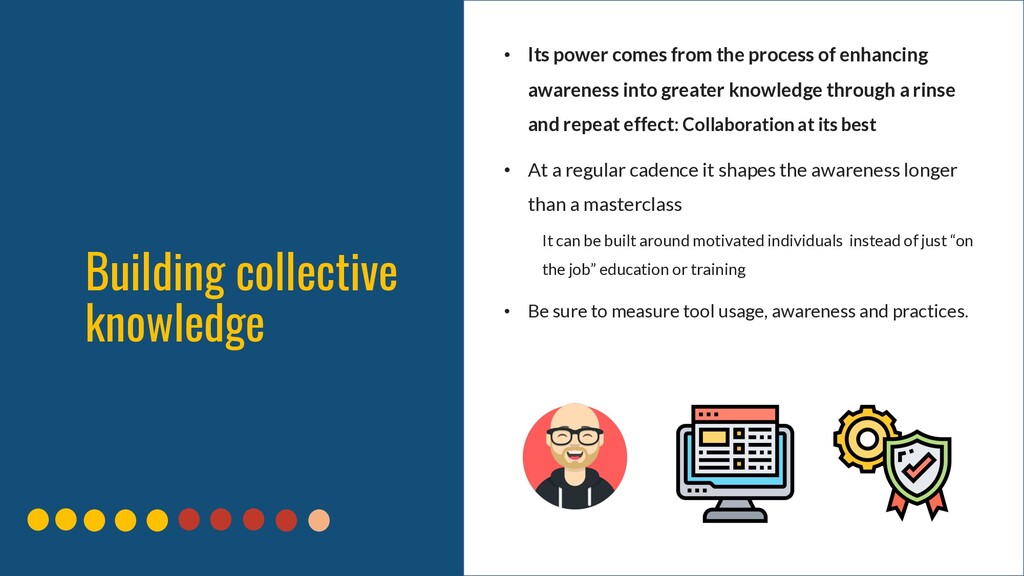
    of enhancing awareness into greater knowledge through a rinse and repeat effect: Collaboration at its best • At a regular cadence it shapes the awareness longer than a masterclass It can be built around motivated individuals instead of just “on the job” education or training • Be sure to measure tool usage, awareness and practices.
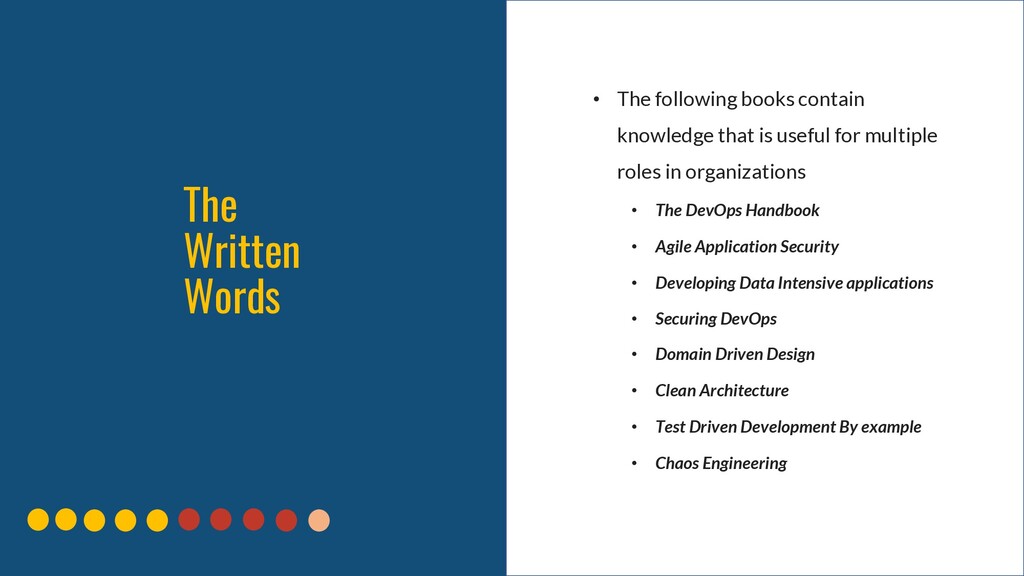
  47. The Written Words • The following books contain knowledge that

    is useful for multiple roles in organizations • The DevOps Handbook • Agile Application Security • Developing Data Intensive applications • Securing DevOps • Domain Driven Design • Clean Architecture • Test Driven Development By example • Chaos Engineering
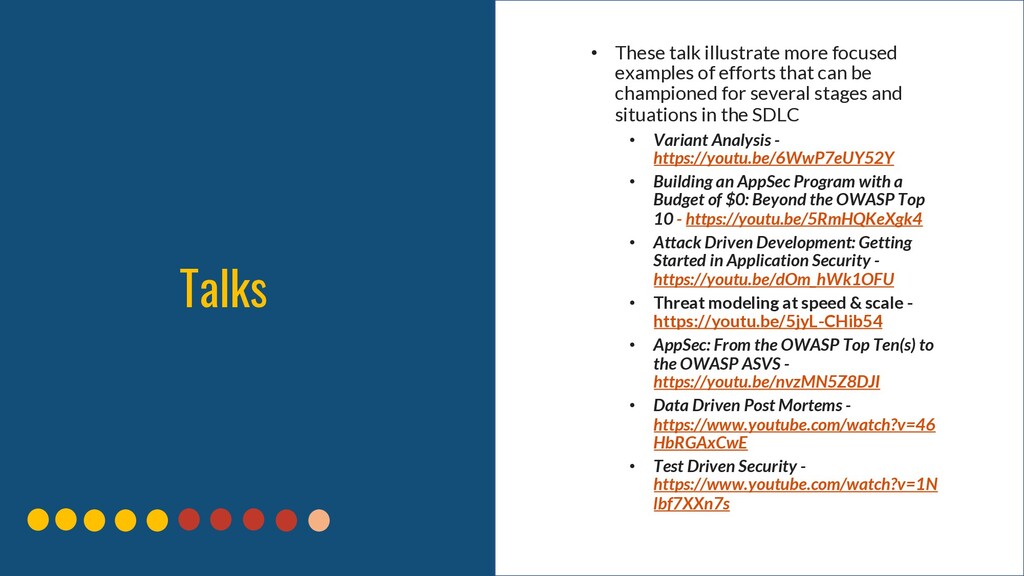
  48. Talks • These talk illustrate more focused examples of efforts

    that can be championed for several stages and situations in the SDLC • Variant Analysis - https://youtu.be/6WwP7eUY52Y • Building an AppSec Program with a Budget of $0: Beyond the OWASP Top 10 - https://youtu.be/5RmHQKeXgk4 • Attack Driven Development: Getting Started in Application Security - https://youtu.be/dOm_hWk1OFU • Threat modeling at speed & scale - https://youtu.be/5jyL-CHib54 • AppSec: From the OWASP Top Ten(s) to the OWASP ASVS - https://youtu.be/nvzMN5Z8DJI • Data Driven Post Mortems - https://www.youtube.com/watch?v=46 HbRGAxCwE • Test Driven Security - https://www.youtube.com/watch?v=1N lbf7XXn7s
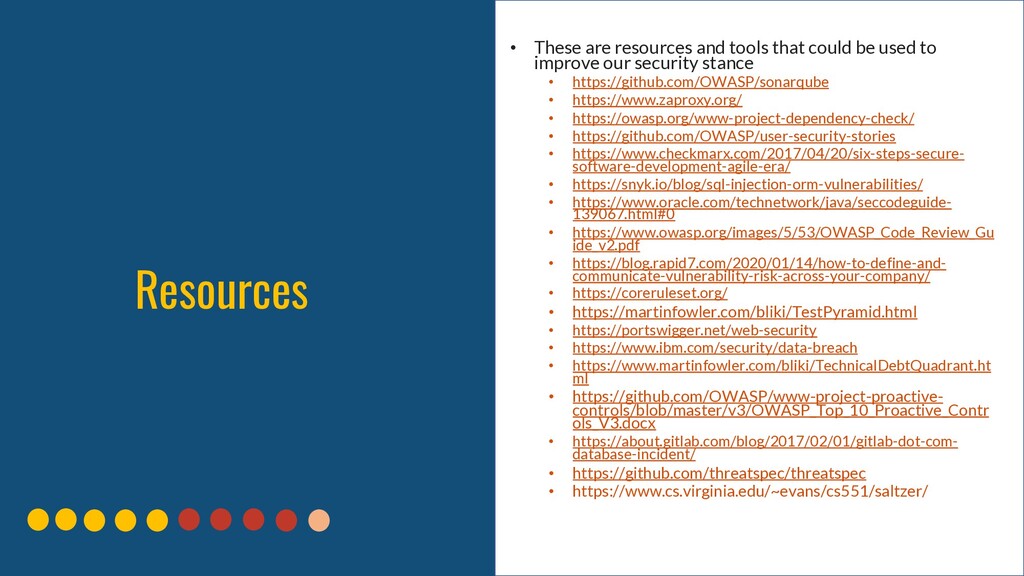
  49. Resources • These are resources and tools that could be

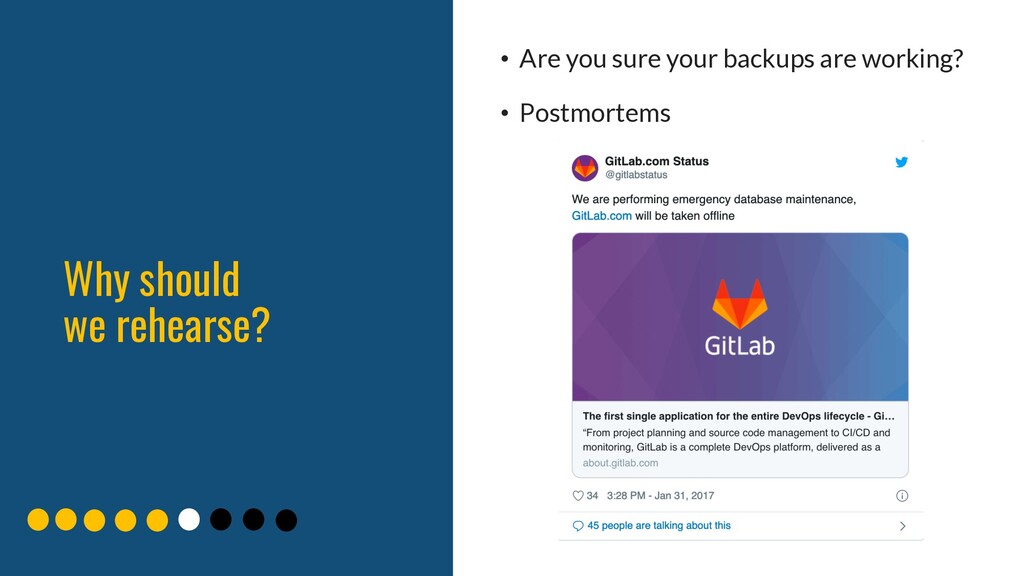
    used to improve our security stance • https://github.com/OWASP/sonarqube • https://www.zaproxy.org/ • https://owasp.org/www-project-dependency-check/- • https://github.com/OWASP/user-security-stories • https://www.checkmarx.com/2017/04/20/six-steps-secure- software-development-agile-era/ • https://snyk.io/blog/sql-injection-orm-vulnerabilities/ • https://www.oracle.com/technetwork/java/seccodeguide- 139067.html#0 • https://www.owasp.org/images/5/53/OWASP_Code_Review_Gu ide_v2.pdf • https://blog.rapid7.com/2020/01/14/how-to-define-and- communicate-vulnerability-risk-across-your-company/ • https://coreruleset.org/ • https://martinfowler.com/bliki/TestPyramid.html • https://portswigger.net/web-security • https://www.ibm.com/security/data-breach • https://www.martinfowler.com/bliki/TechnicalDebtQuadrant.ht ml • https://github.com/OWASP/www-project-proactive- controls/blob/master/v3/OWASP_Top_10_Proactive_Contr ols_V3.docx • https://about.gitlab.com/blog/2017/02/01/gitlab-dot-com- database-incident/ • https://github.com/threatspec/threatspec • https://www.cs.virginia.edu/~evans/cs551/saltzer/
  50. Special Thanks • For the icons: • Internet Security Icon

    pack made by Freepik from Flaticon https://www.flaticon.com/packs/internet-security-2 • Agile Methodology Icon pack made by Eucalyp from Flaticon https://www.flaticon.com/packs/agile-methodology