Upgrade to Pro — share decks privately, control downloads, hide ads and more …

Becoming Giants Workshop by Zol and Zola

Sponsored · Your Podcast. Everywhere. Effortlessly. Share. Educate. Inspire. Entertain. You do you. We'll handle the rest.
Avatar for Wafa Elamin Wafa Elamin
January 11, 2020

Becoming Giants Workshop by Zol and Zola

This workshop gives you a step by step guide to organising your life and goals.

This workshop was a key workshop at the Zol and Zola club

Avatar for Wafa Elamin

Wafa Elamin

January 11, 2020
Tweet

Other Decks in Education

Transcript

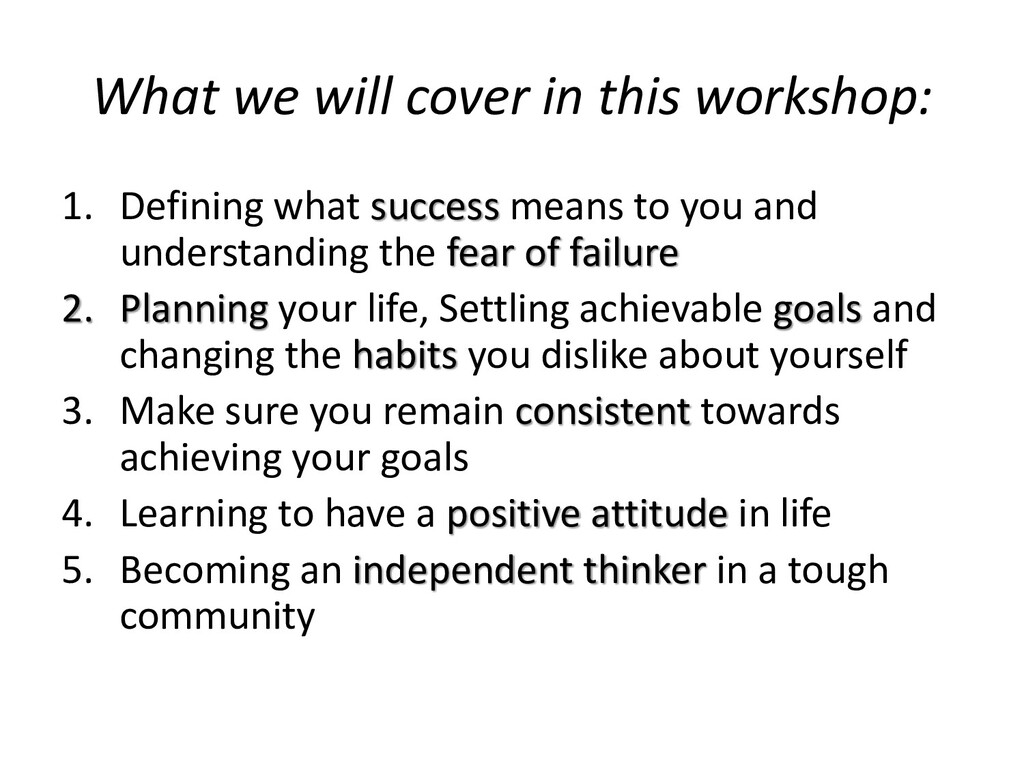
  1. What we will cover in this workshop: 1. Defining what

    success means to you and understanding the fear of failure 2. Planning your life, Settling achievable goals and changing the habits you dislike about yourself 3. Make sure you remain consistent towards achieving your goals 4. Learning to have a positive attitude in life 5. Becoming an independent thinker in a tough community
  2. All great change BEGINS with you!... But in order to

    be great, you need to know where you are going in life.
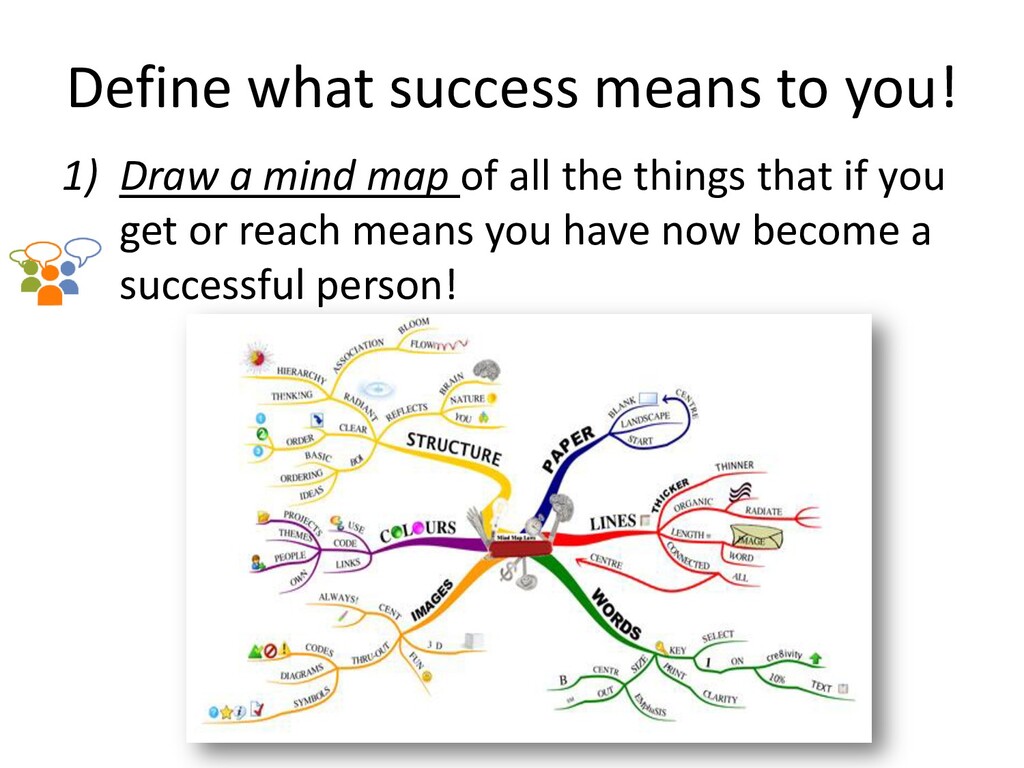
  3. Define what success means to you! 1) Draw a mind

    map of all the things that if you get or reach means you have now become a successful person!
  4. 2) Ask yourself…If you achieve those things will your life

    be complete? 3) Also, are these things what you want to be remembered by in 50 years time?
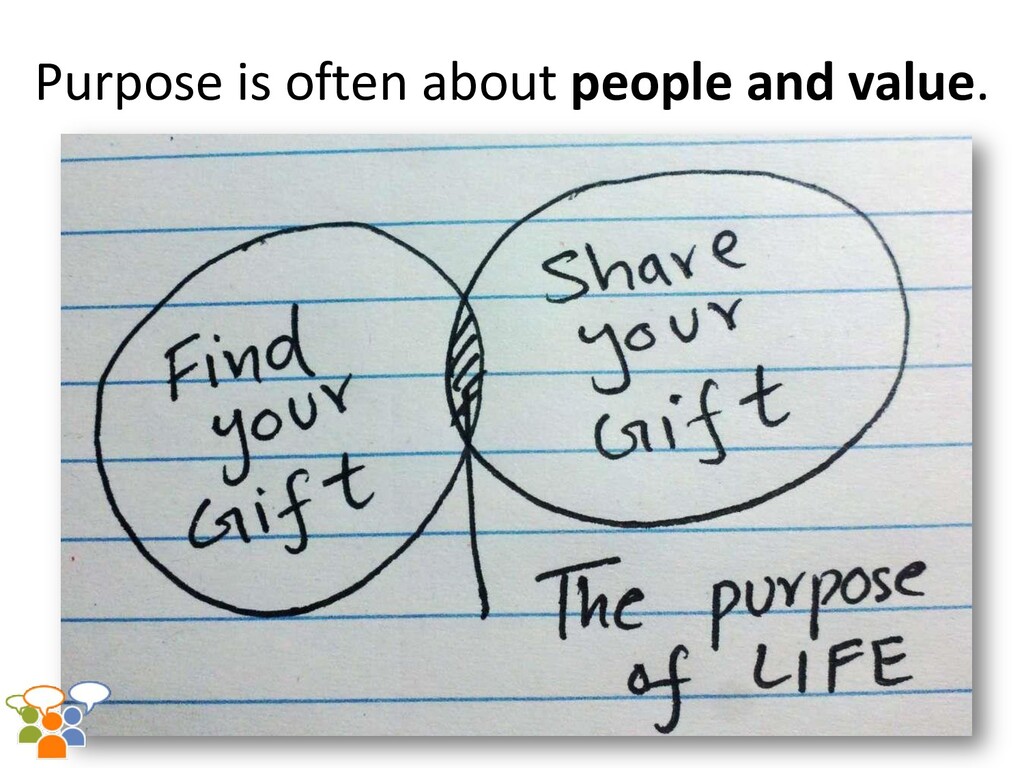
  5. All those things are good. But for you to continue

    to work on it, at least one part of your definition of success must be connected to your purpose in life.
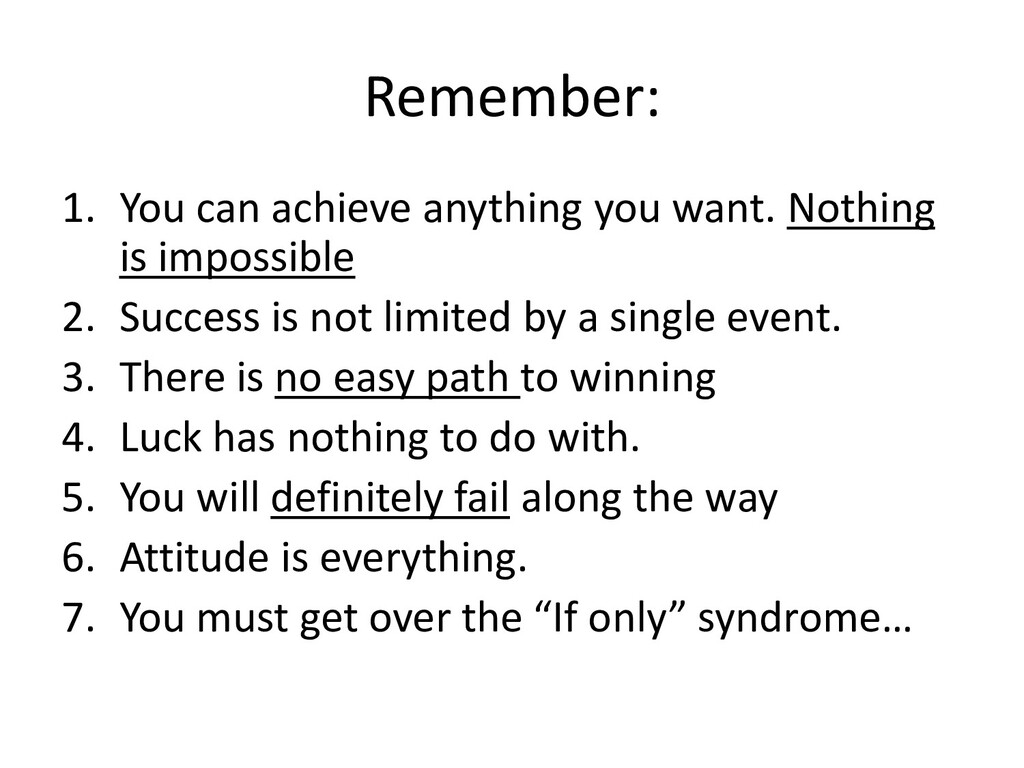
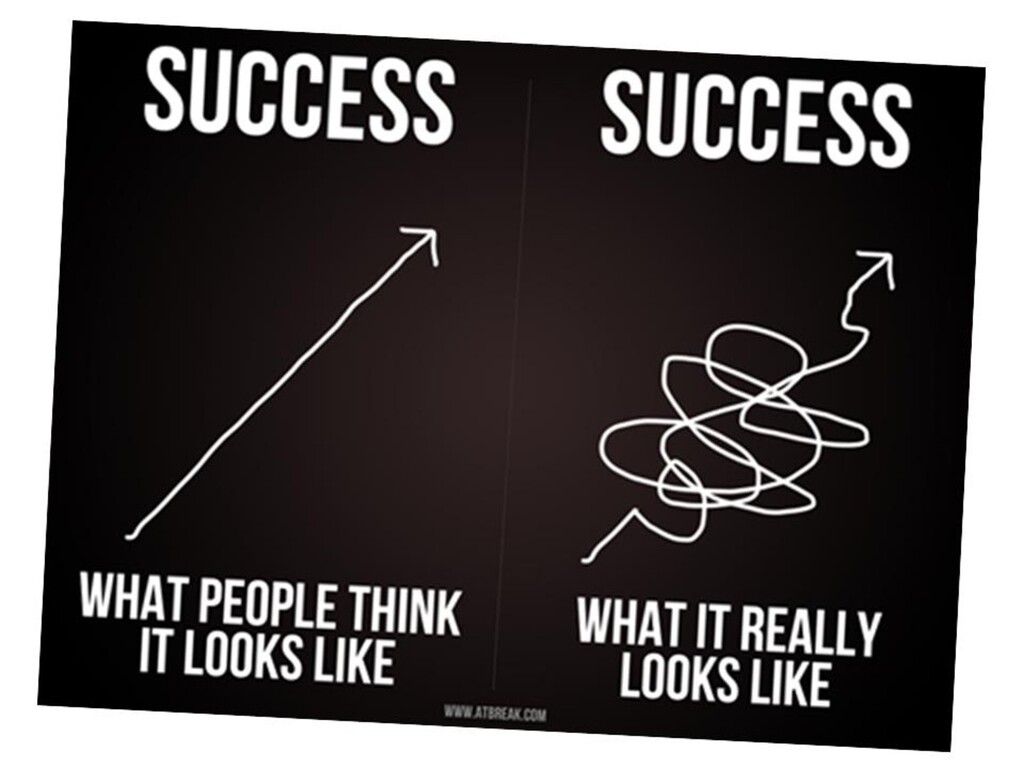
  6. Remember: 1. You can achieve anything you want. Nothing is

    impossible 2. Success is not limited by a single event. 3. There is no easy path to winning 4. Luck has nothing to do with. 5. You will definitely fail along the way 6. Attitude is everything. 7. You must get over the “If only” syndrome…
  7. …I lived outside of Sudan …I was born into a

    rich family …I knew how to speak better English …I was not…. Syndrome!
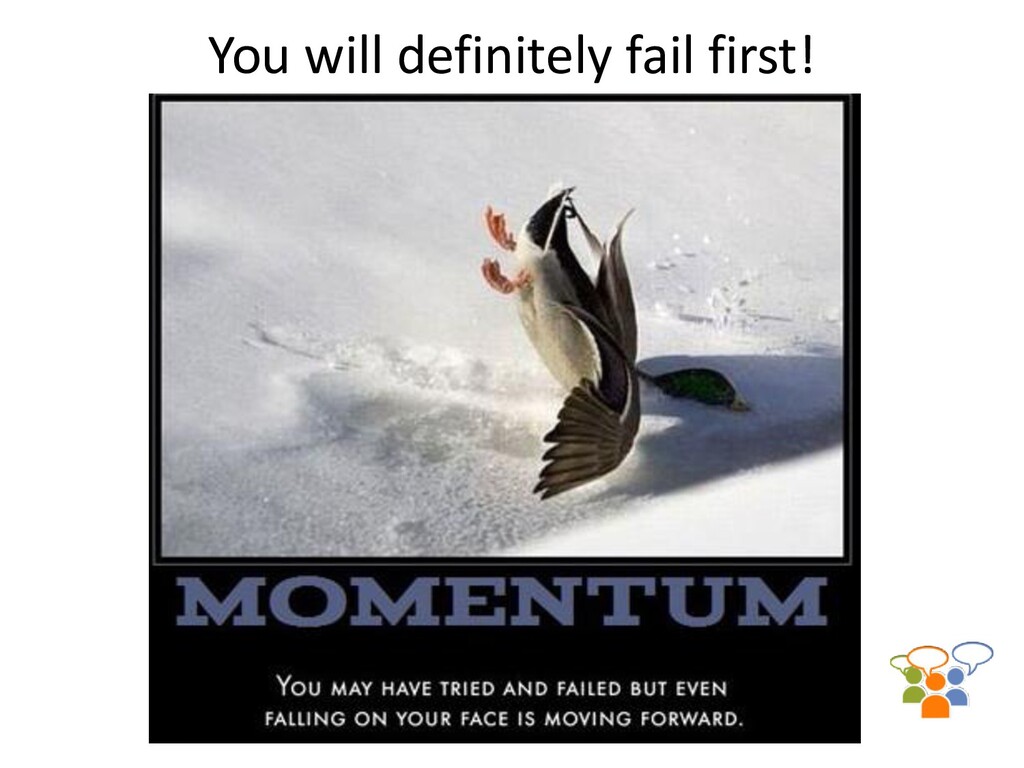
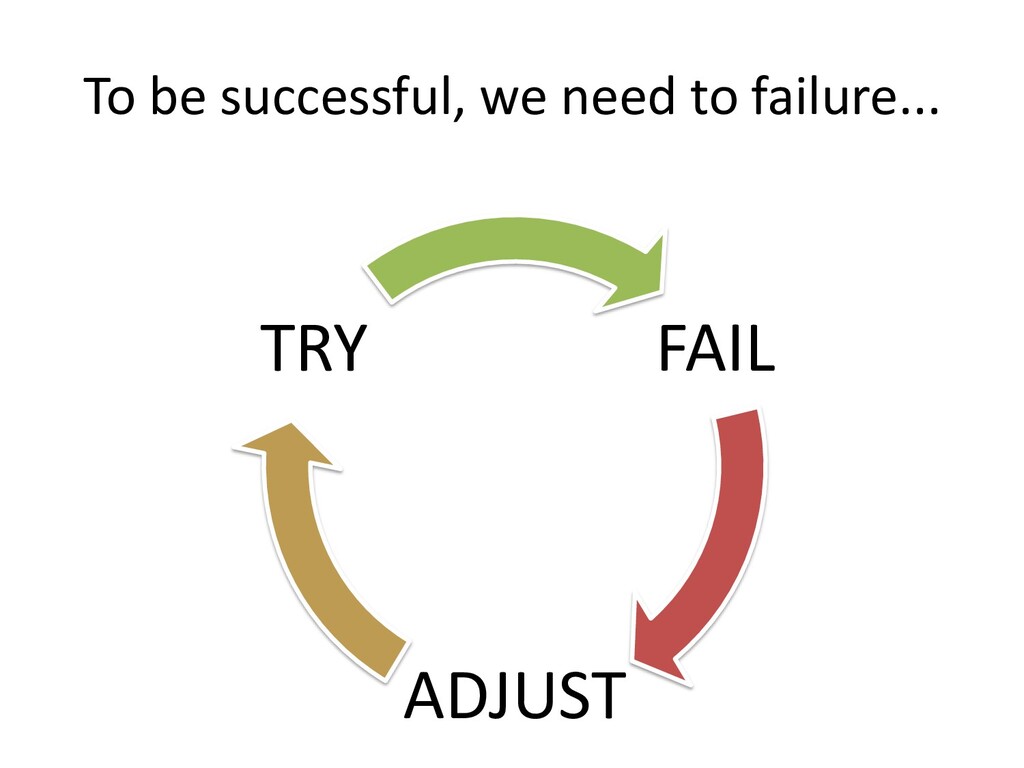
  8. [Failure is NOT opposite to success] 85% will allow their

    fear of failure stop them from TRYING….Mistakes are part of the learning process
  9. Fail forward... ...means learning from each mistake and adjusting your

    attitude towards failure. Everyone fails but not everyone fails forward!!! -John Maxwell
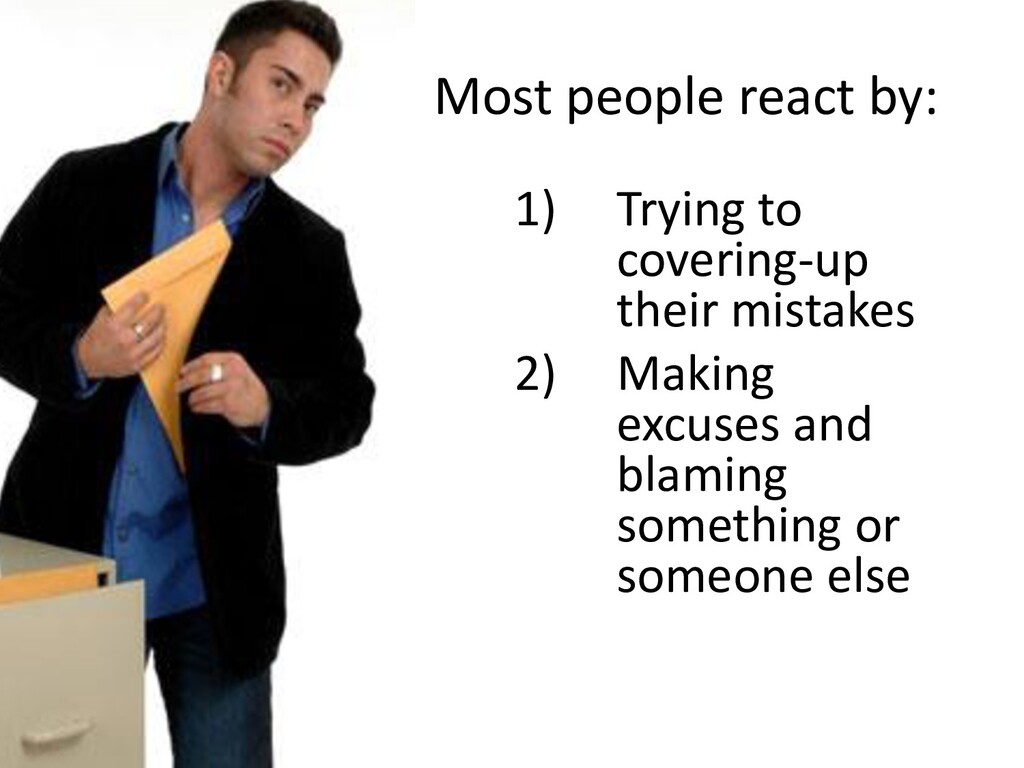
  10. Most people react by: 1) Trying to covering-up their mistakes

    2) Making excuses and blaming something or someone else
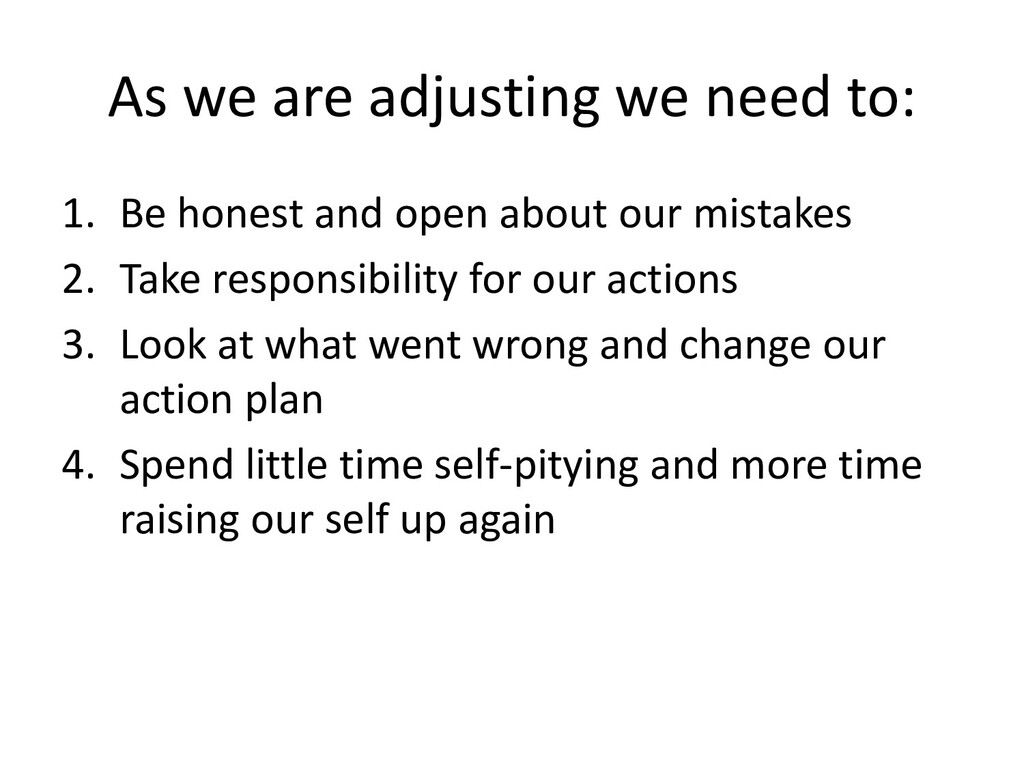
  11. As we are adjusting we need to: 1. Be honest

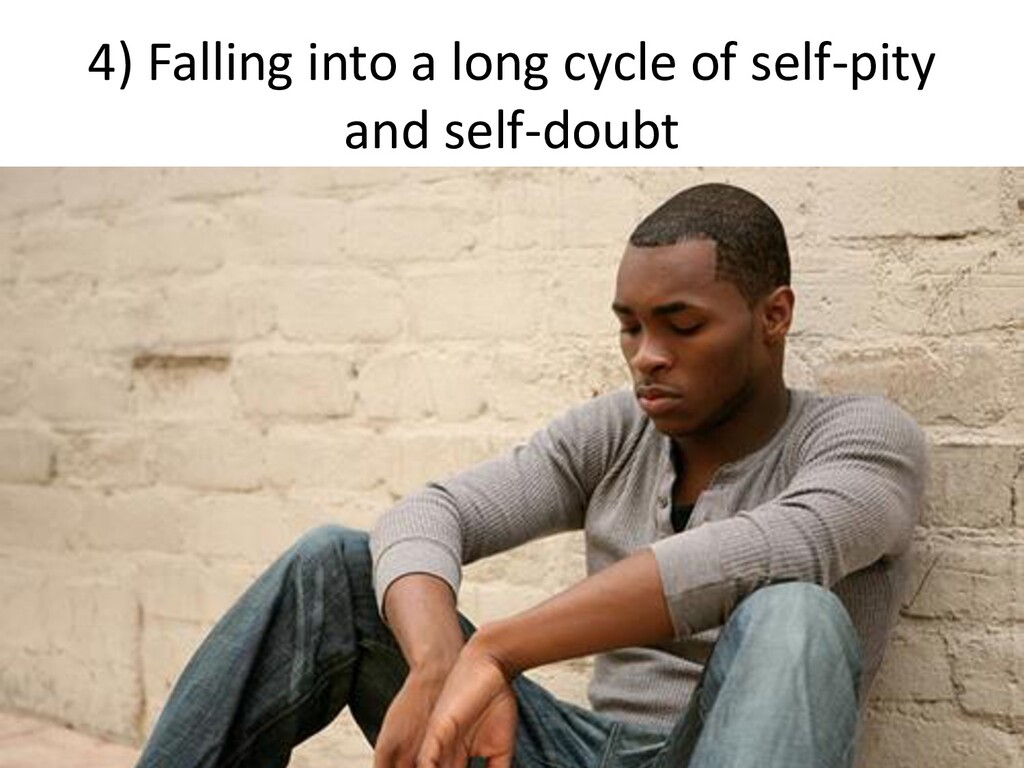
    and open about our mistakes 2. Take responsibility for our actions 3. Look at what went wrong and change our action plan 4. Spend little time self-pitying and more time raising our self up again
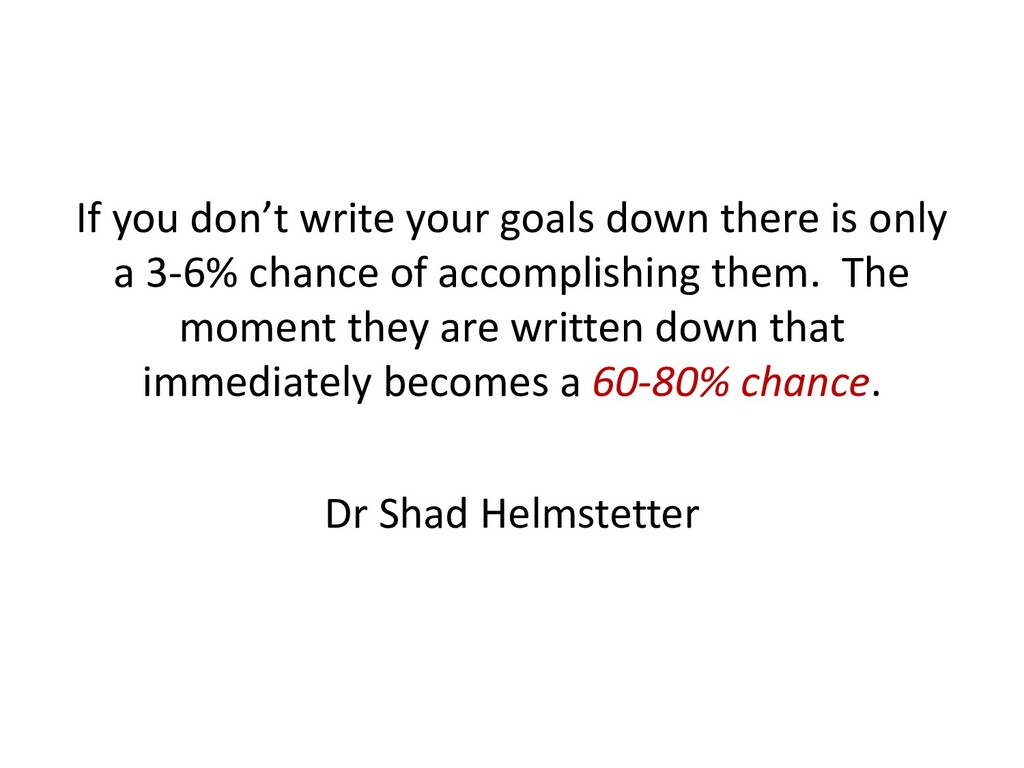
  12. If you don’t write your goals down there is only

    a 3-6% chance of accomplishing them. The moment they are written down that immediately becomes a 60-80% chance. Dr Shad Helmstetter
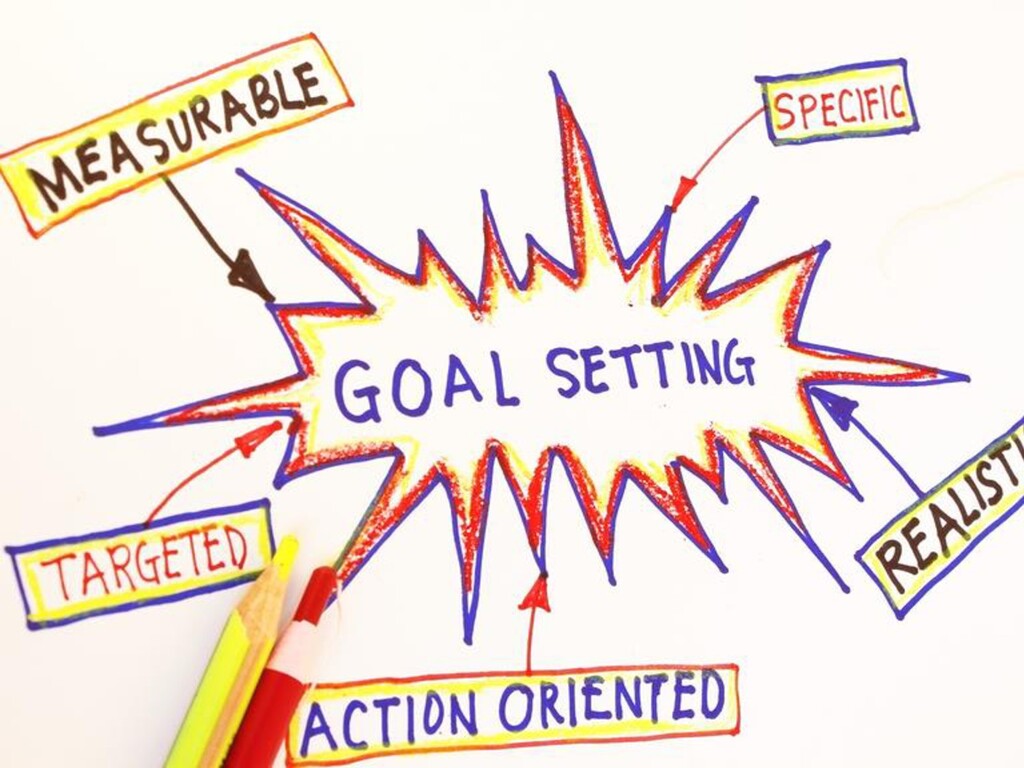
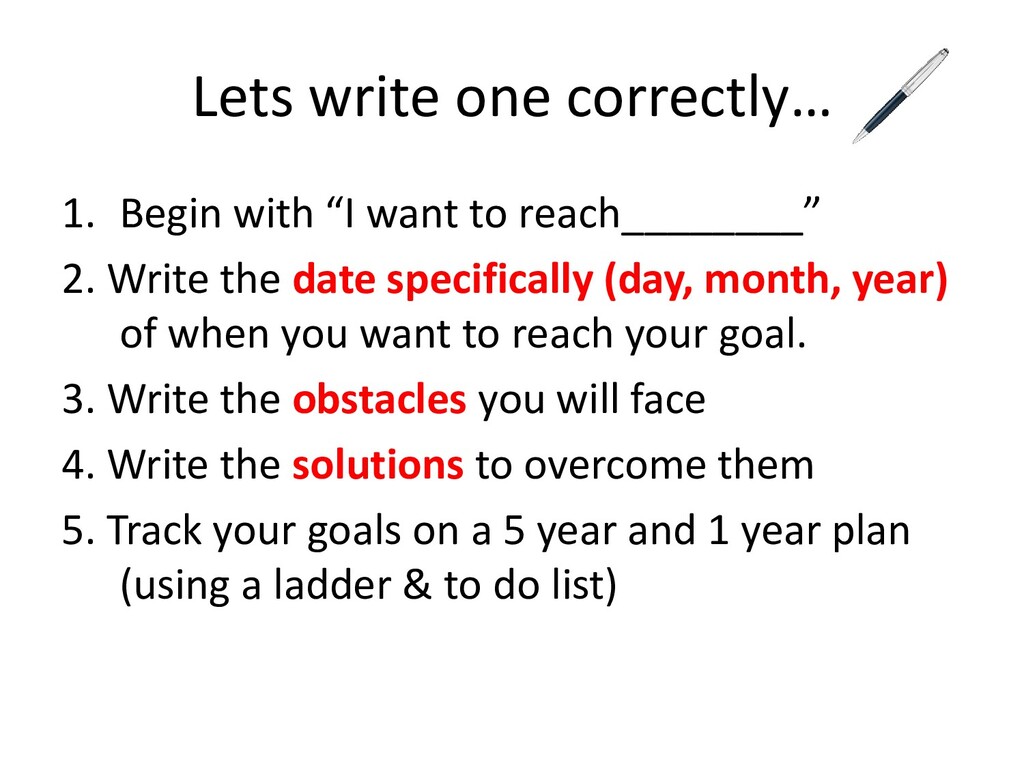
  13. 1. Begin with “I want to reach________” 2. Write the

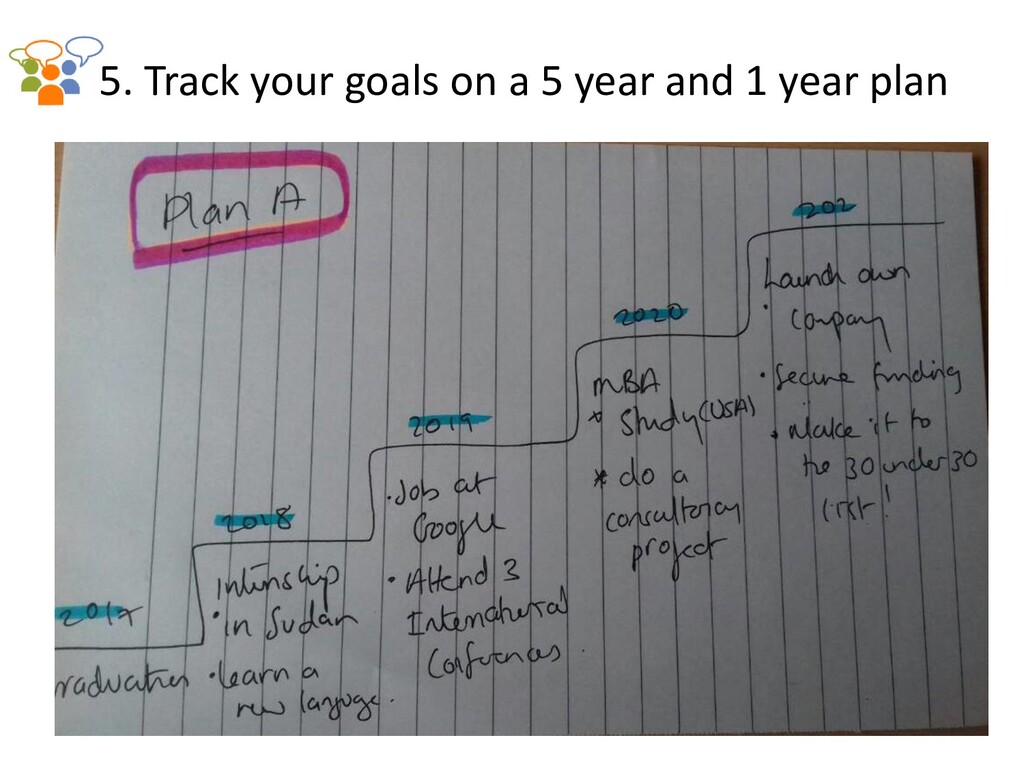
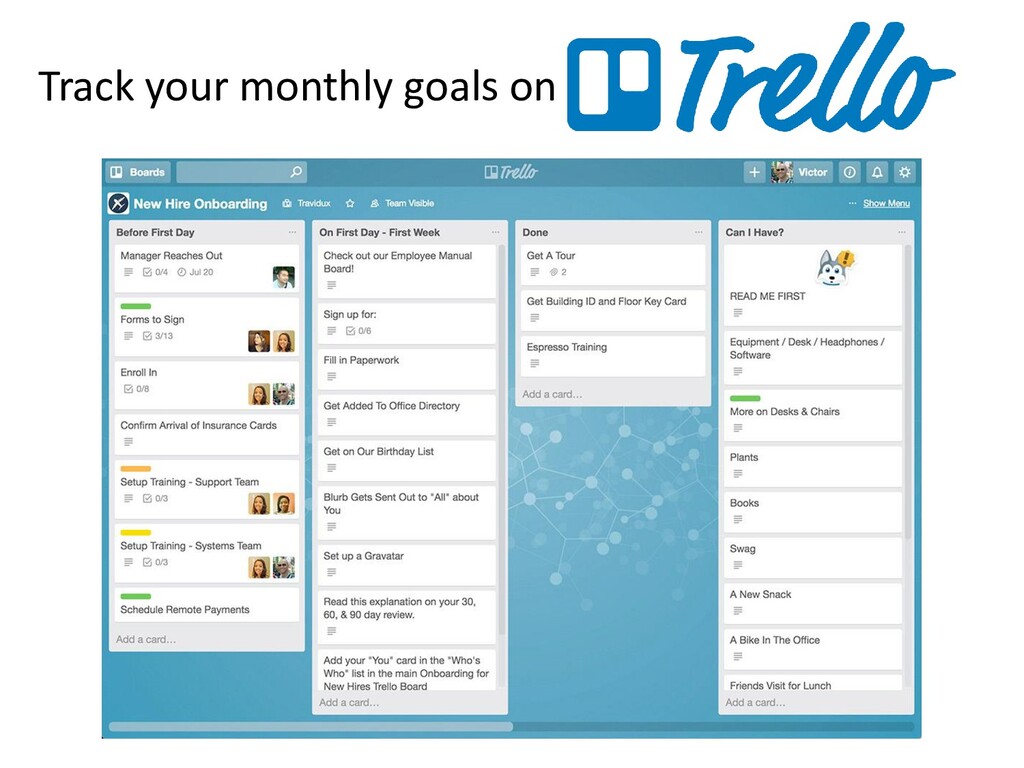
    date specifically (day, month, year) of when you want to reach your goal. 3. Write the obstacles you will face 4. Write the solutions to overcome them 5. Track your goals on a 5 year and 1 year plan (using a ladder & to do list) Lets write one correctly…
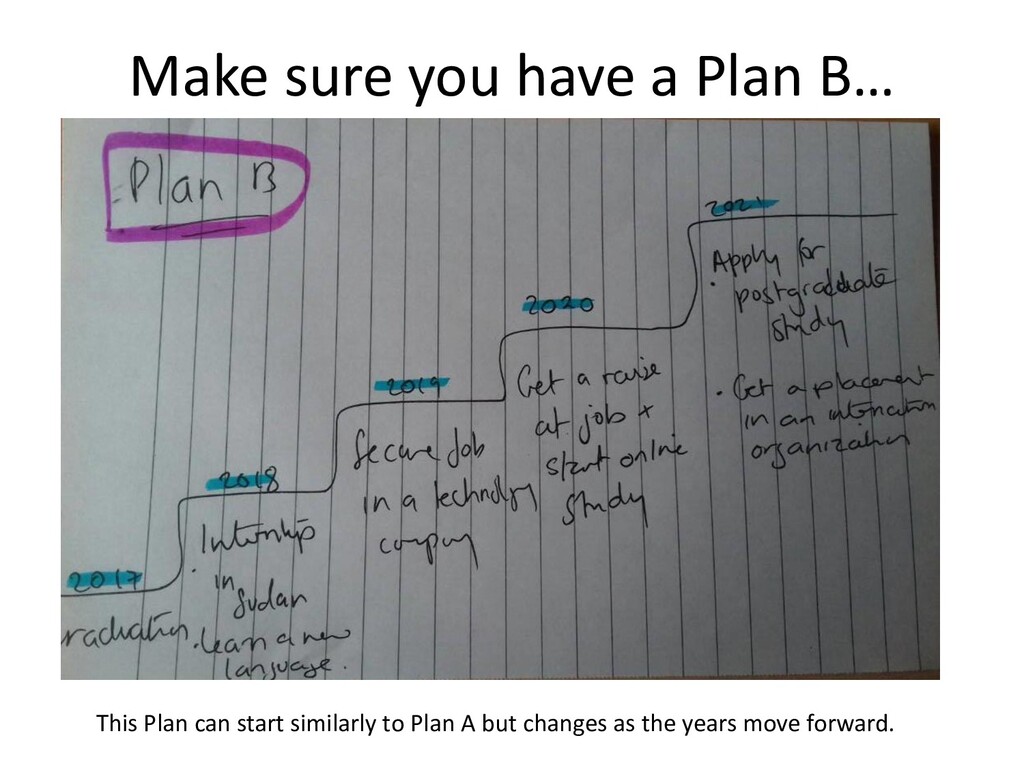
  14. Make sure you have a Plan B… This Plan can

    start similarly to Plan A but changes as the years move forward.
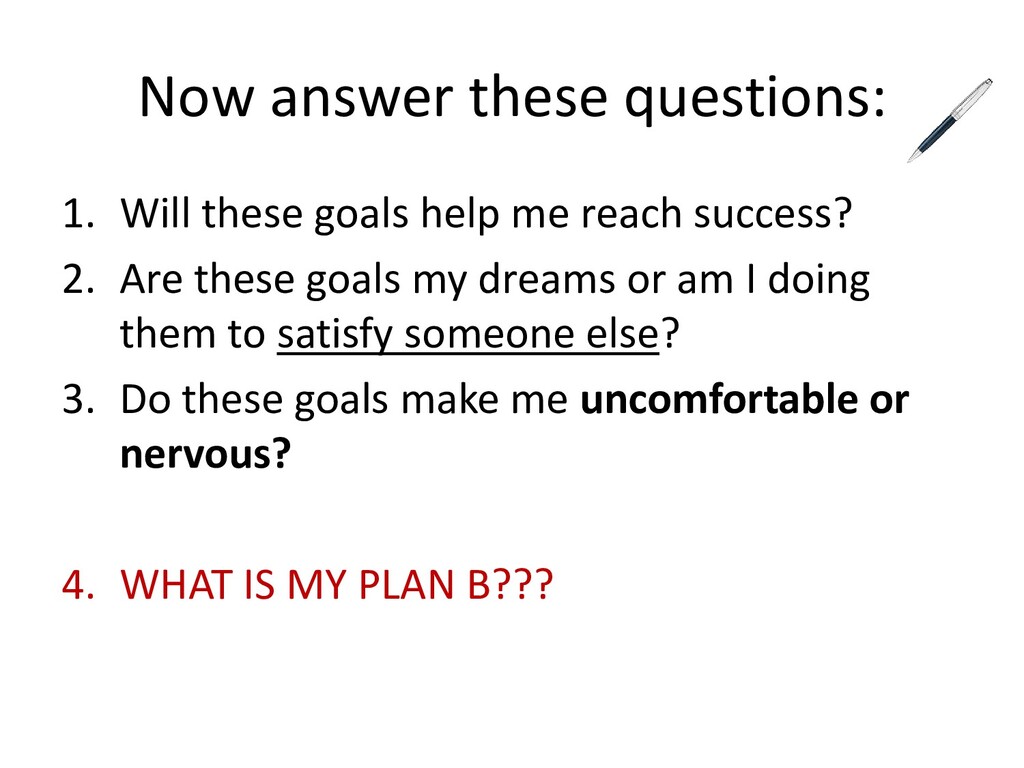
  15. Now answer these questions: 1. Will these goals help me

    reach success? 2. Are these goals my dreams or am I doing them to satisfy someone else? 3. Do these goals make me uncomfortable or nervous? 4. WHAT IS MY PLAN B???
  16. Law of consistency! What you do daily is more important

    than what you do once a year or once a month. It is the small HABITS that bring success.
  17. “If you always do what you’ve always done Then you’ll

    always get what you’ve always got” - John Maxwell So he suggests instead that we follow “The Rule of 5”
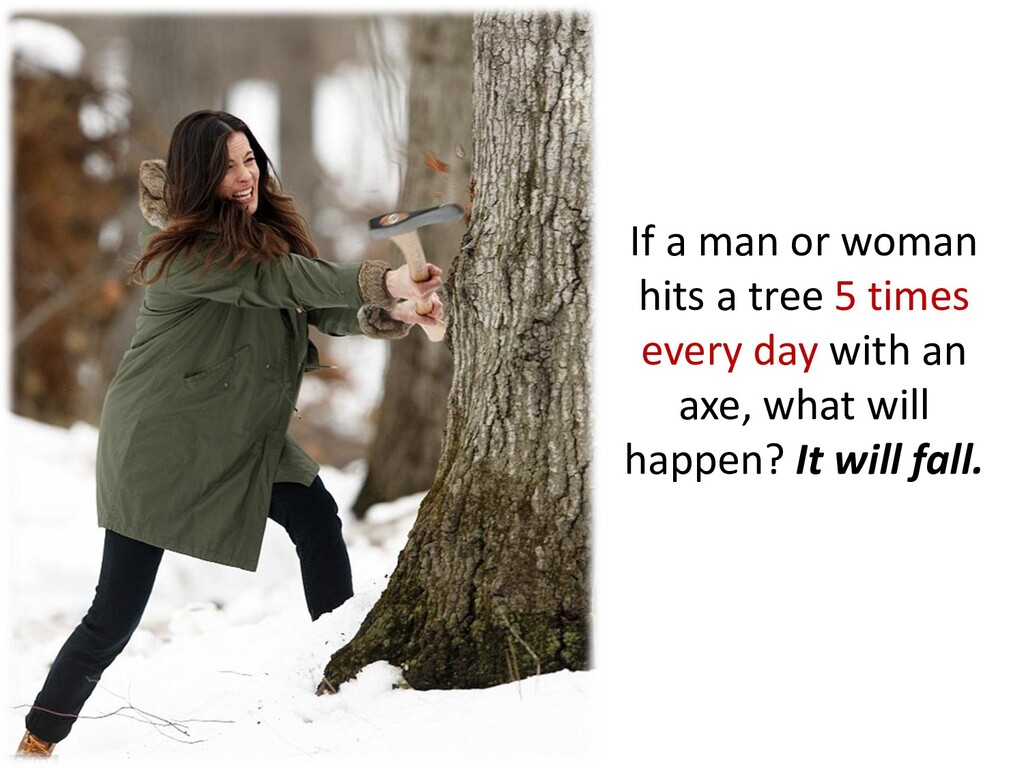
  18. If a man or woman hits a tree 5 times

    every day with an axe, what will happen? It will fall.
  19. The Rule of 5 says: Your goals are a tree.

    The axe in your hand is the small actions you do daily to reach that goal. To reach your goal, you must do 5 small actions (which will become habit after a while) to help you reach your goal.
  20. What are these habits? They vary from person to person

    and goal to goal but it could be: 1) Read for 10 minutes a day 2) Talk to professionals in my field 3) Write 500 words daily 4) Learn 10 new words of a new language 5) Practise talking in front of a crowd for 3 minutes…
  21. Now write your Rule of 5? Every day I: 1.

    2. 3. 4. 5. Make sure they are realistic and achieveable!
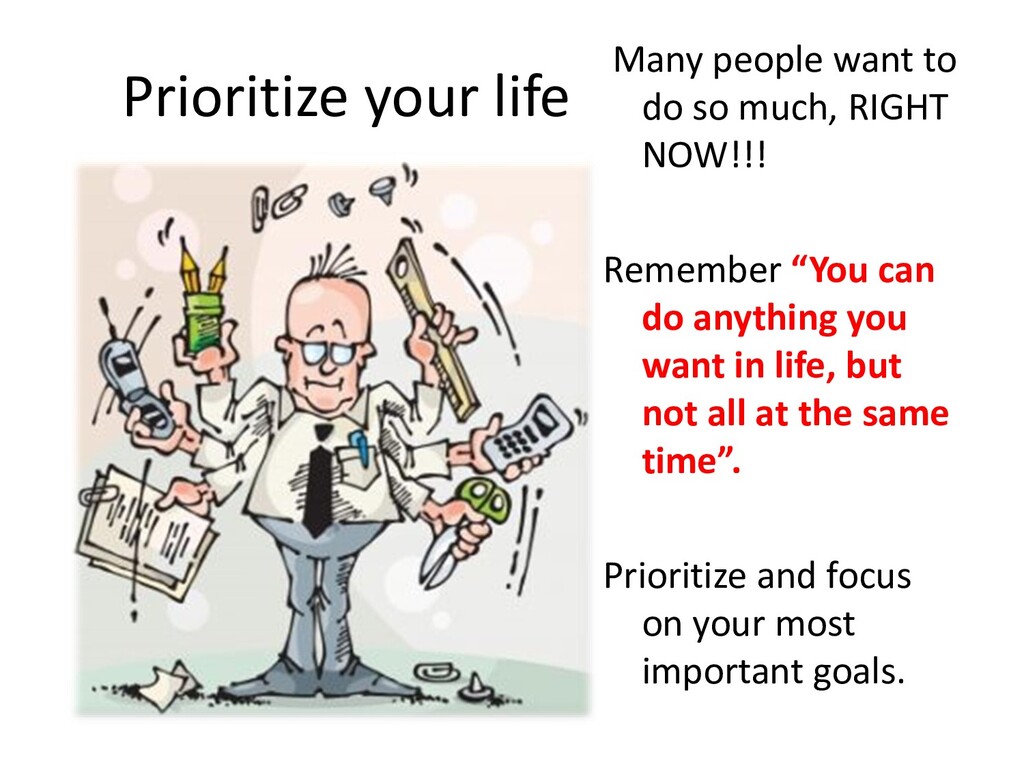
  22. Prioritize your life Many people want to do so much,

    RIGHT NOW!!! Remember “You can do anything you want in life, but not all at the same time”. Prioritize and focus on your most important goals.
  23. Have a strong Power Circle! “You are the average of

    the five people you spend the most time with.”- Jim Rohn Who are the 5 people you spend most time with?
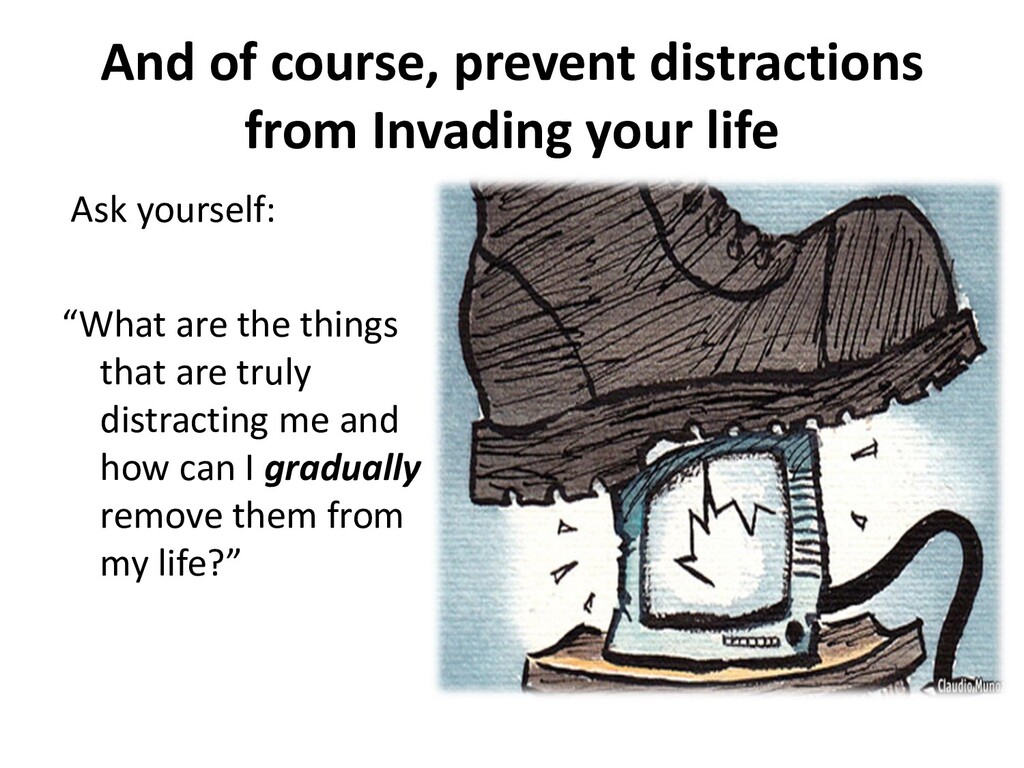
  24. And of course, prevent distractions from Invading your life Ask

    yourself: “What are the things that are truly distracting me and how can I gradually remove them from my life?”
  25. Everybody has a positive attitude when their life is going

    well…. Your true attitude only shows when things go BAD!
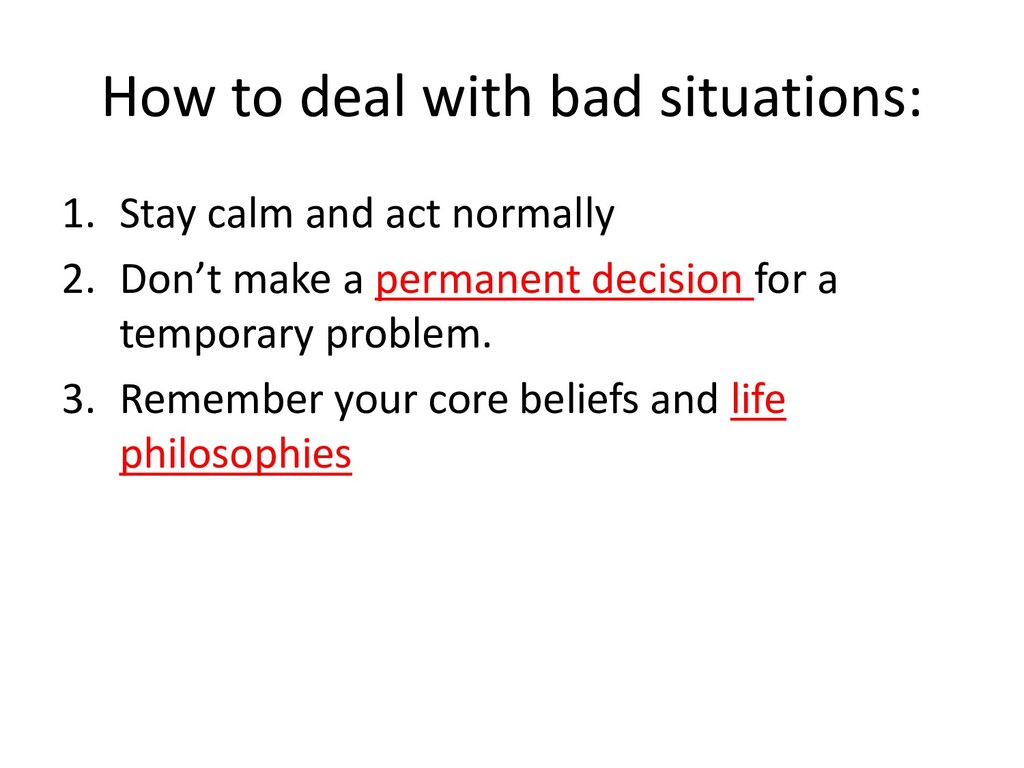
  26. How to deal with bad situations: 1. Stay calm and

    act normally 2. Don’t make a permanent decision for a temporary problem. 3. Remember your core beliefs and life philosophies
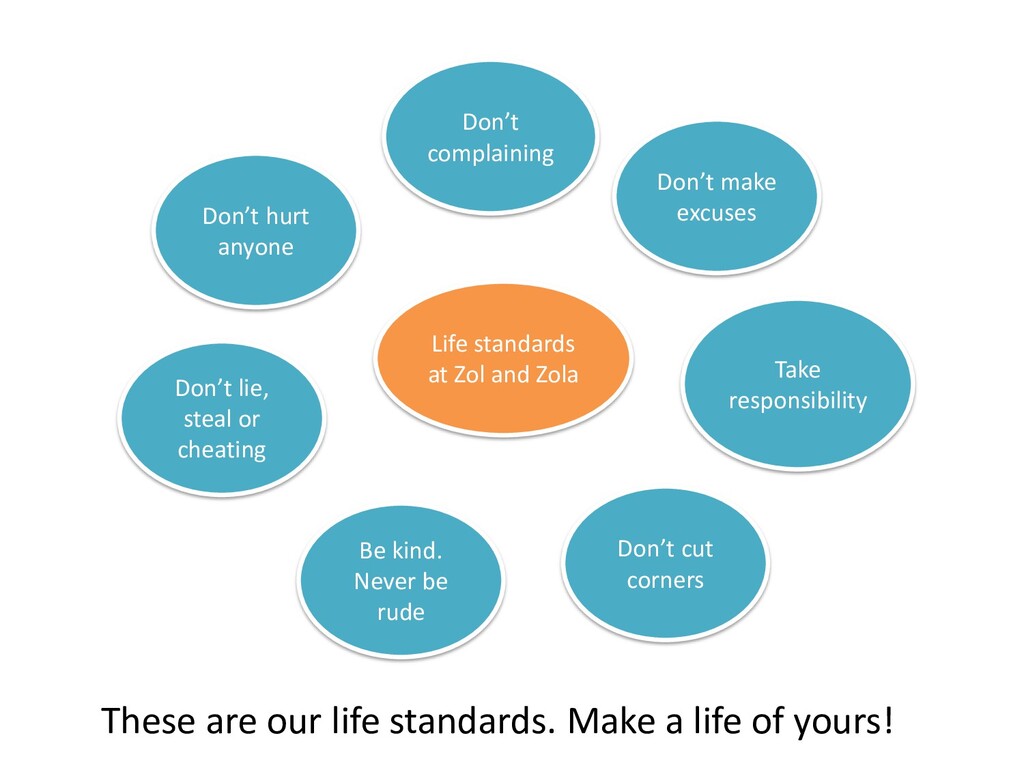
  27. Life standards at Zol and Zola Don’t hurt anyone Don’t

    lie, steal or cheating Be kind. Never be rude Don’t cut corners Take responsibility Don’t complaining Don’t make excuses These are our life standards. Make a life of yours!
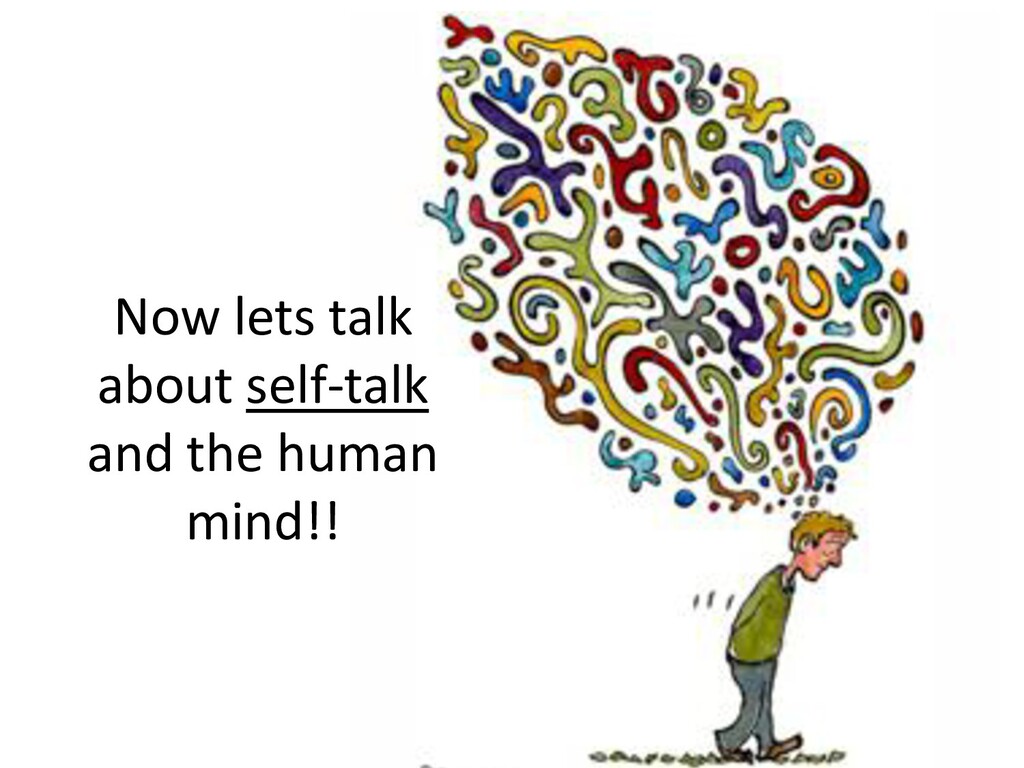
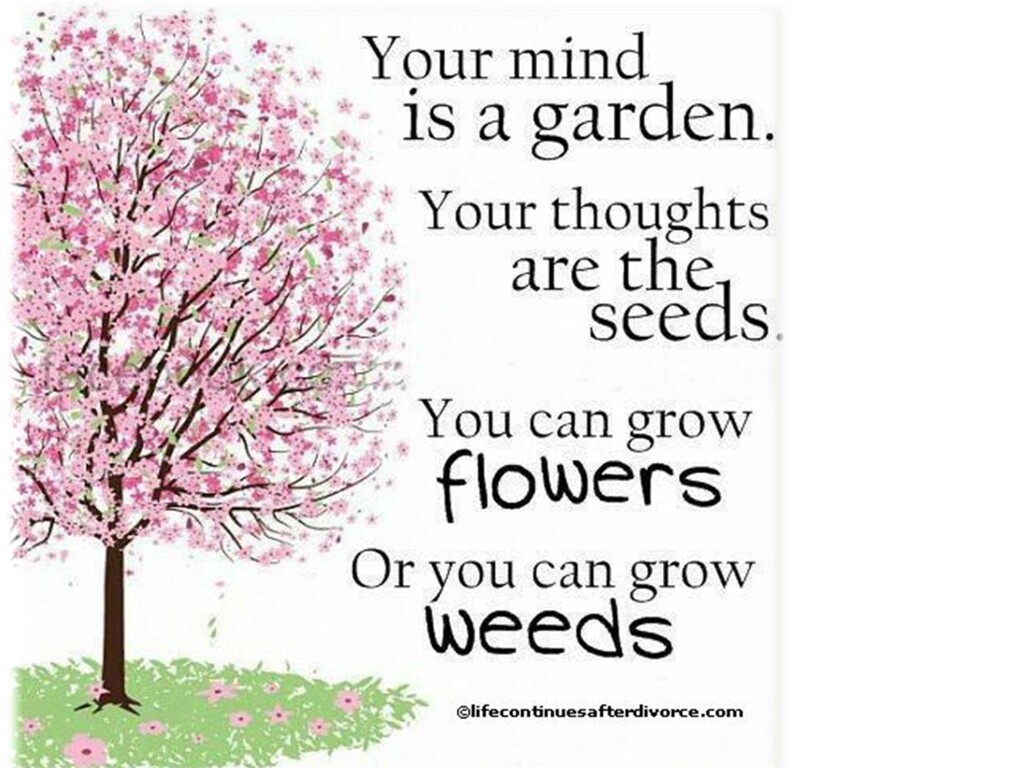
  28. Dr. Shad Helmstetter explained how our mind is affected by

    the (Positive or Negative) messages we receive daily.
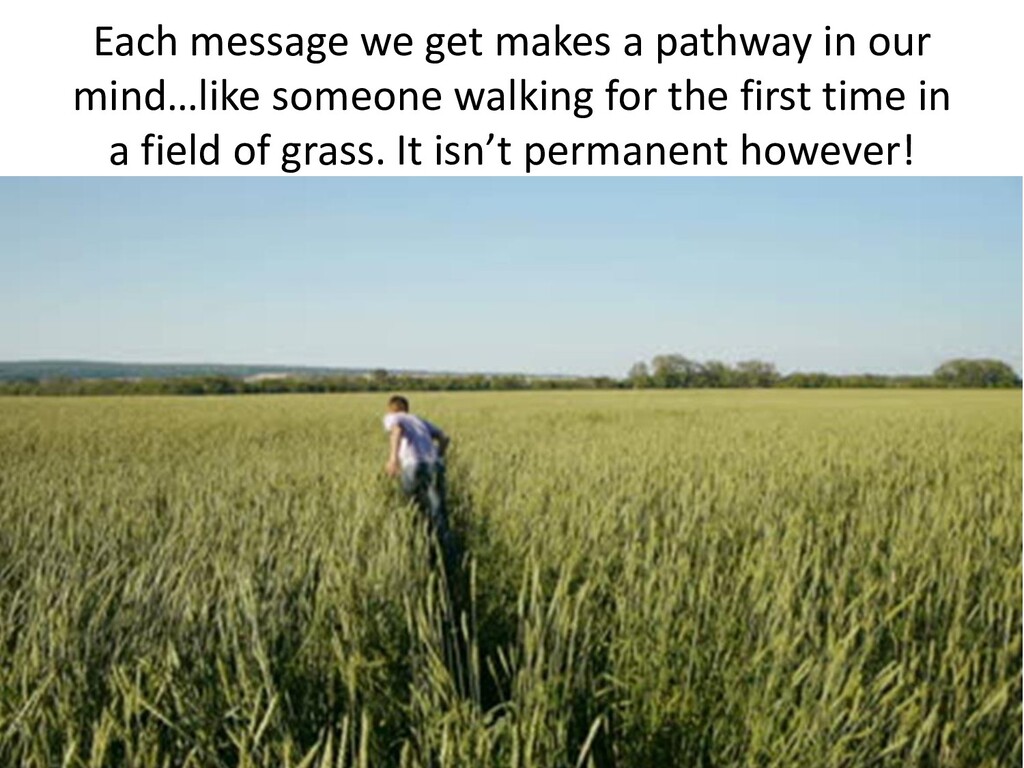
  29. Each message we get makes a pathway in our mind…like

    someone walking for the first time in a field of grass. It isn’t permanent however!
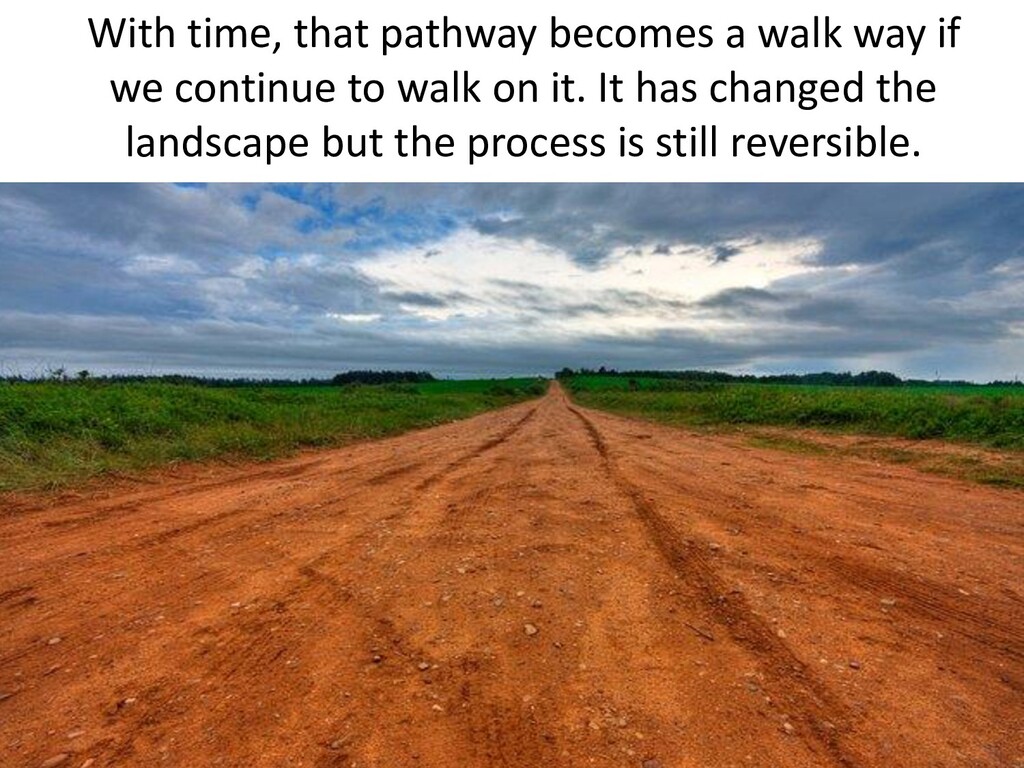
  30. With time, that pathway becomes a walk way if we

    continue to walk on it. It has changed the landscape but the process is still reversible.
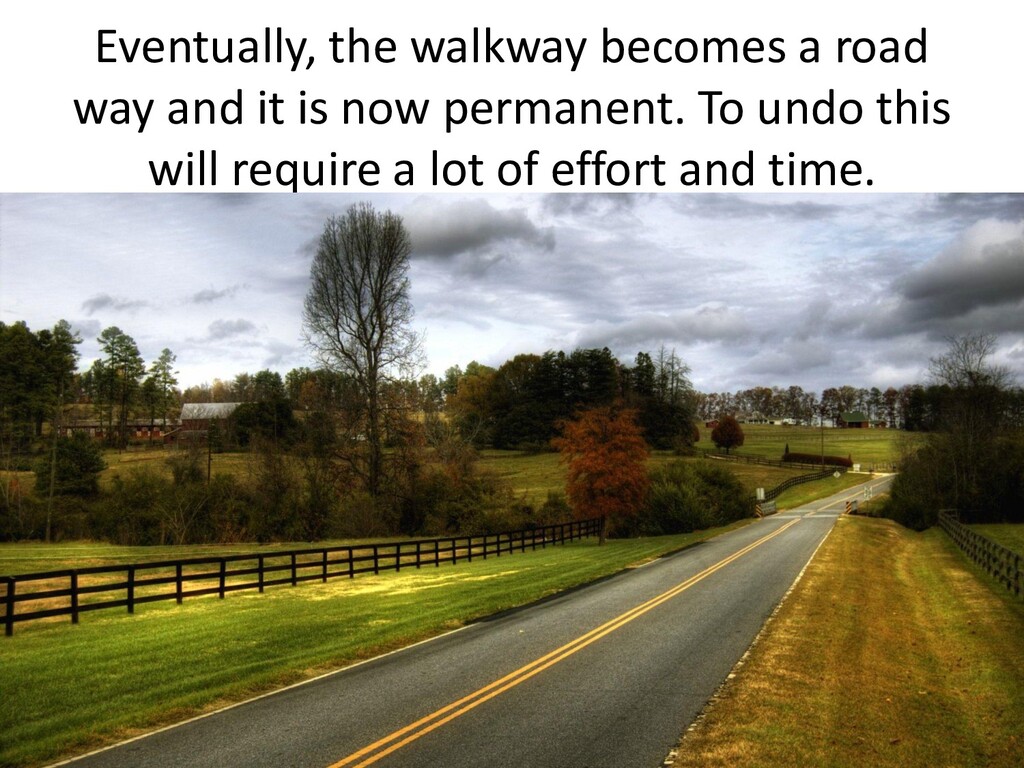
  31. Eventually, the walkway becomes a road way and it is

    now permanent. To undo this will require a lot of effort and time.
  32. The roadway becomes a highway and it has drastically changed

    the landscape. It is now almost impossible reverse it.
  33. When we receive messages we go through a similar process

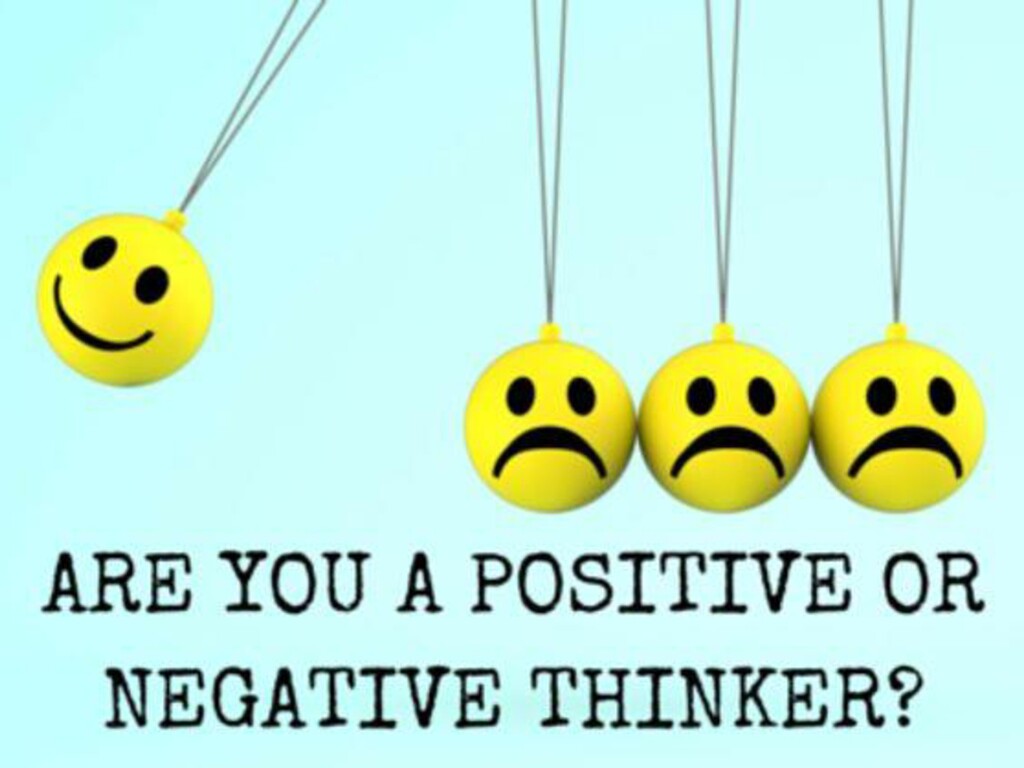
    in our minds. If the positive message continue, we become positive thinkers and if the negative ones continue we become negative thinkers.
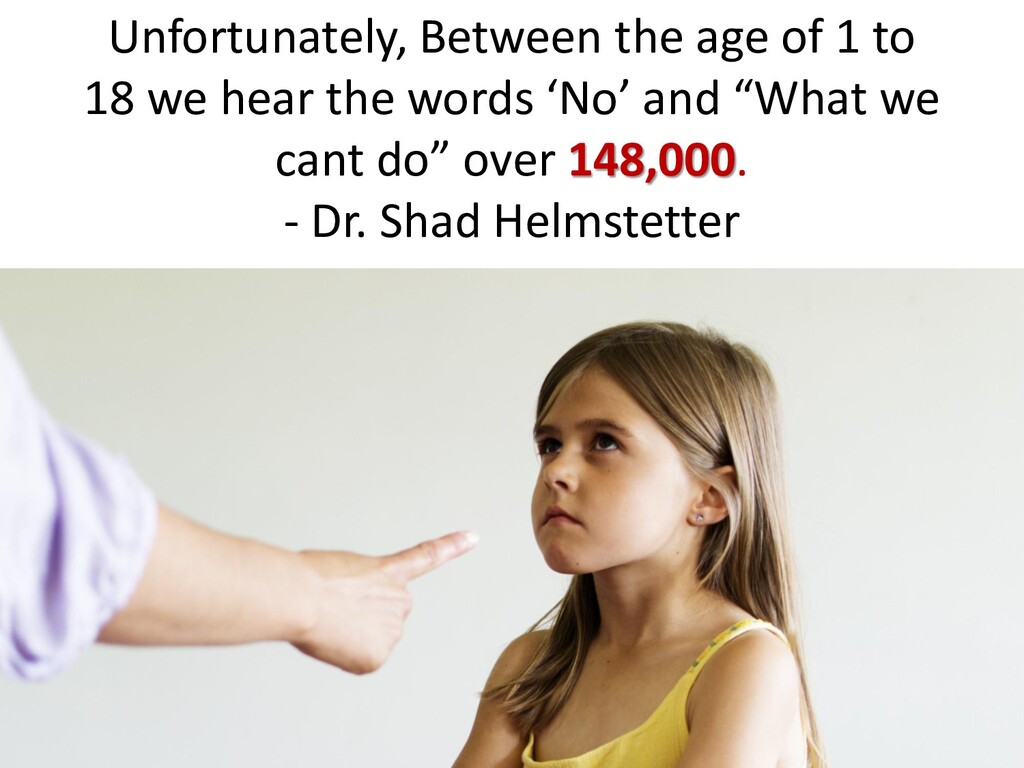
  34. Unfortunately, Between the age of 1 to 18 we hear

    the words ‘No’ and “What we cant do” over 148,000. - Dr. Shad Helmstetter
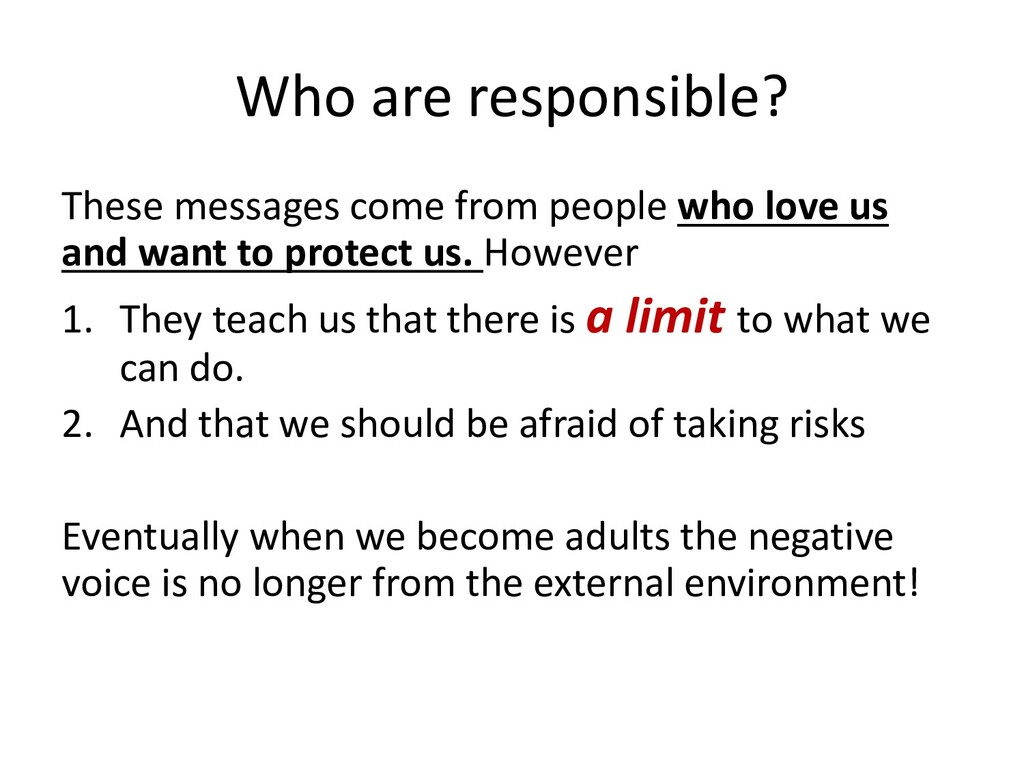
  35. Who are responsible? These messages come from people who love

    us and want to protect us. However 1. They teach us that there is a limit to what we can do. 2. And that we should be afraid of taking risks Eventually when we become adults the negative voice is no longer from the external environment!
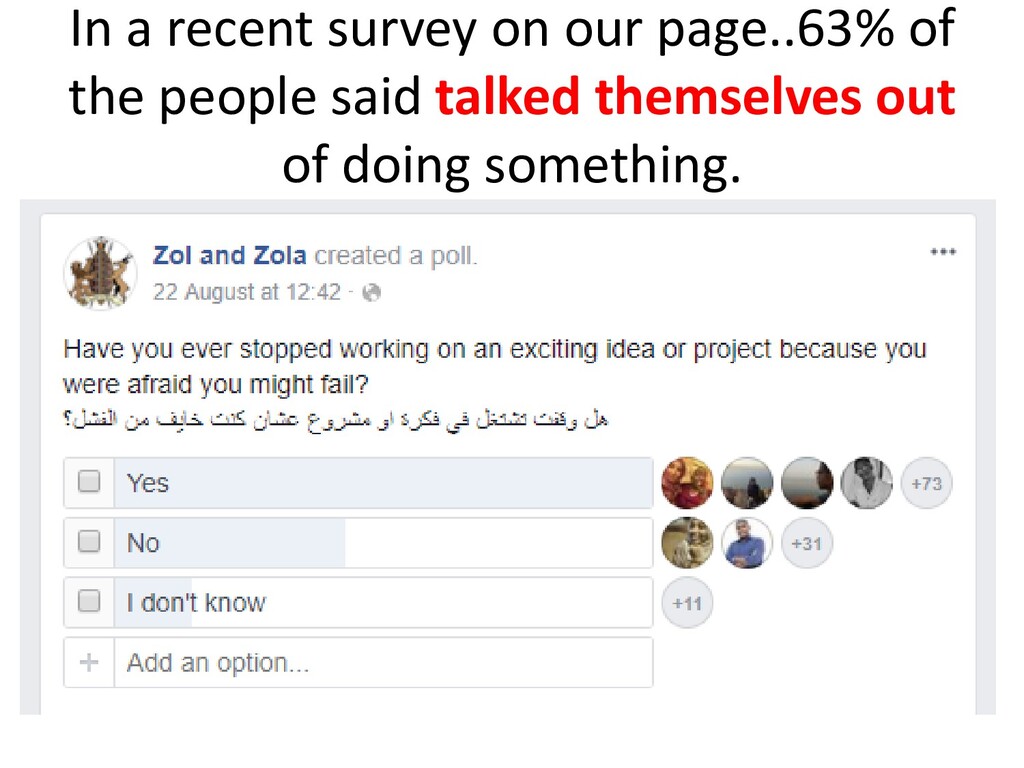
  36. In a recent survey on our page..63% of the people

    said talked themselves out of doing something.
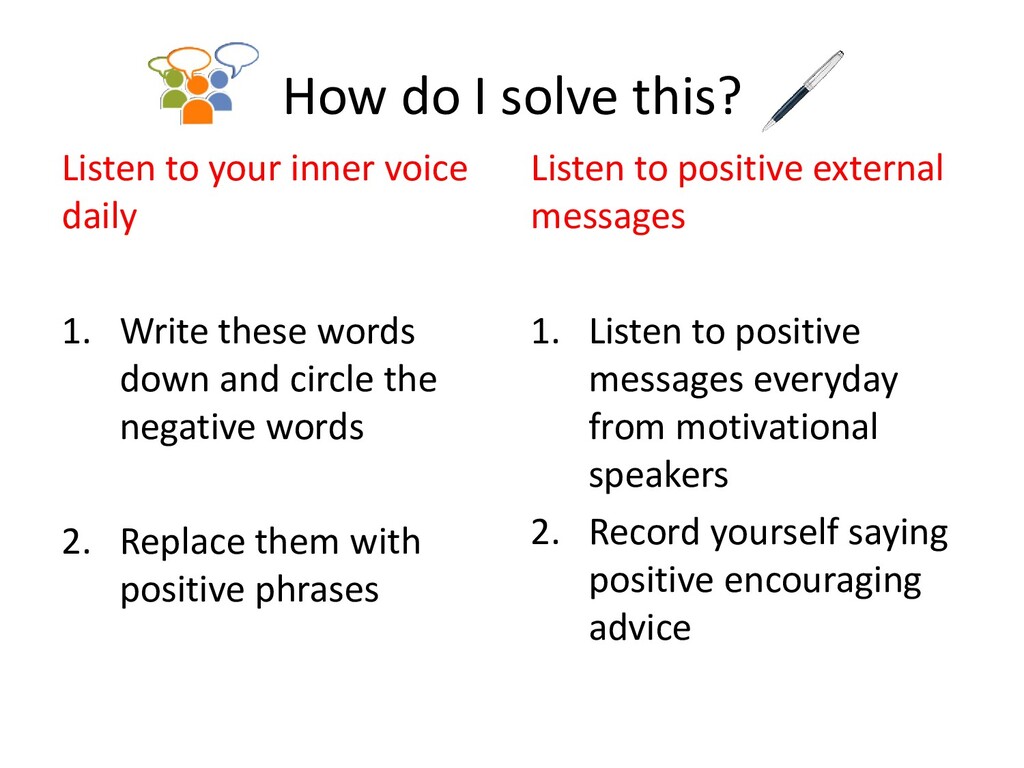
  37. How do I solve this? Listen to your inner voice

    daily 1. Write these words down and circle the negative words 2. Replace them with positive phrases Listen to positive external messages 1. Listen to positive messages everyday from motivational speakers 2. Record yourself saying positive encouraging advice
  38. Independence is affected by: 1. The environment around you 2.

    Your personality (what value you place on yourself)
  39. Lets talk about responsibility?... 1) Who here is fully responsible

    for his or her self? 2) Who relies on someone else? What do you rely on them for?
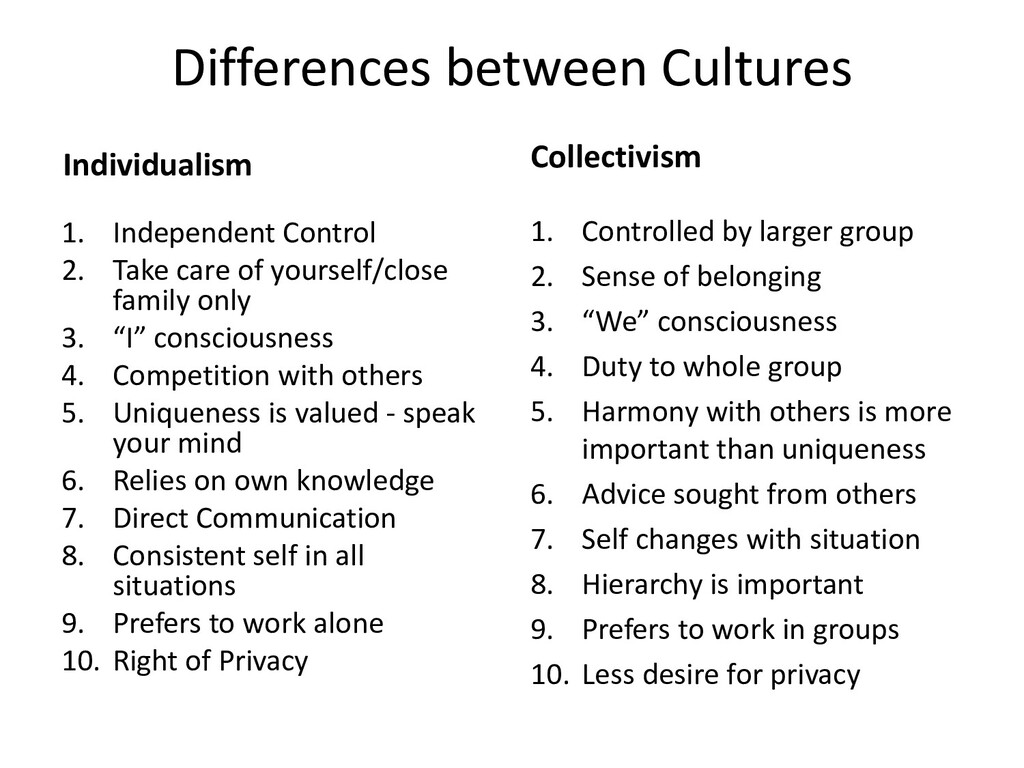
  40. Differences between Cultures Individualism 1. Independent Control 2. Take care

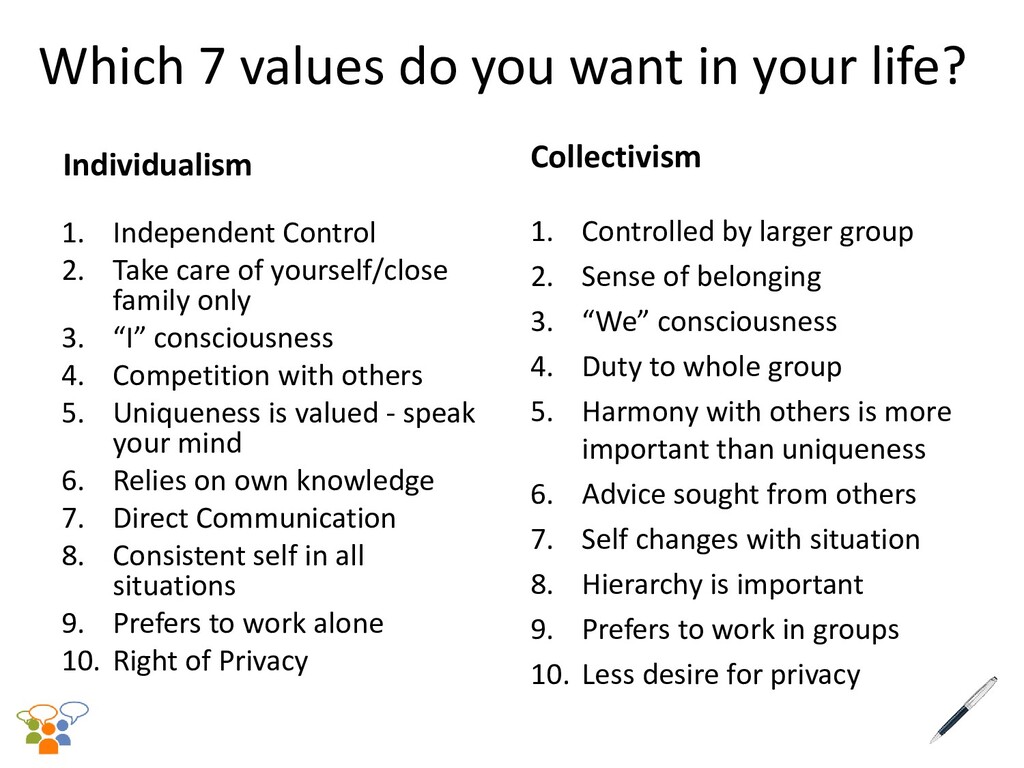
    of yourself/close family only 3. “I” consciousness 4. Competition with others 5. Uniqueness is valued - speak your mind 6. Relies on own knowledge 7. Direct Communication 8. Consistent self in all situations 9. Prefers to work alone 10. Right of Privacy Collectivism 1. Controlled by larger group 2. Sense of belonging 3. “We” consciousness 4. Duty to whole group 5. Harmony with others is more important than uniqueness 6. Advice sought from others 7. Self changes with situation 8. Hierarchy is important 9. Prefers to work in groups 10. Less desire for privacy
  41. Which 7 values do you want in your life? Individualism

    1. Independent Control 2. Take care of yourself/close family only 3. “I” consciousness 4. Competition with others 5. Uniqueness is valued - speak your mind 6. Relies on own knowledge 7. Direct Communication 8. Consistent self in all situations 9. Prefers to work alone 10. Right of Privacy Collectivism 1. Controlled by larger group 2. Sense of belonging 3. “We” consciousness 4. Duty to whole group 5. Harmony with others is more important than uniqueness 6. Advice sought from others 7. Self changes with situation 8. Hierarchy is important 9. Prefers to work in groups 10. Less desire for privacy
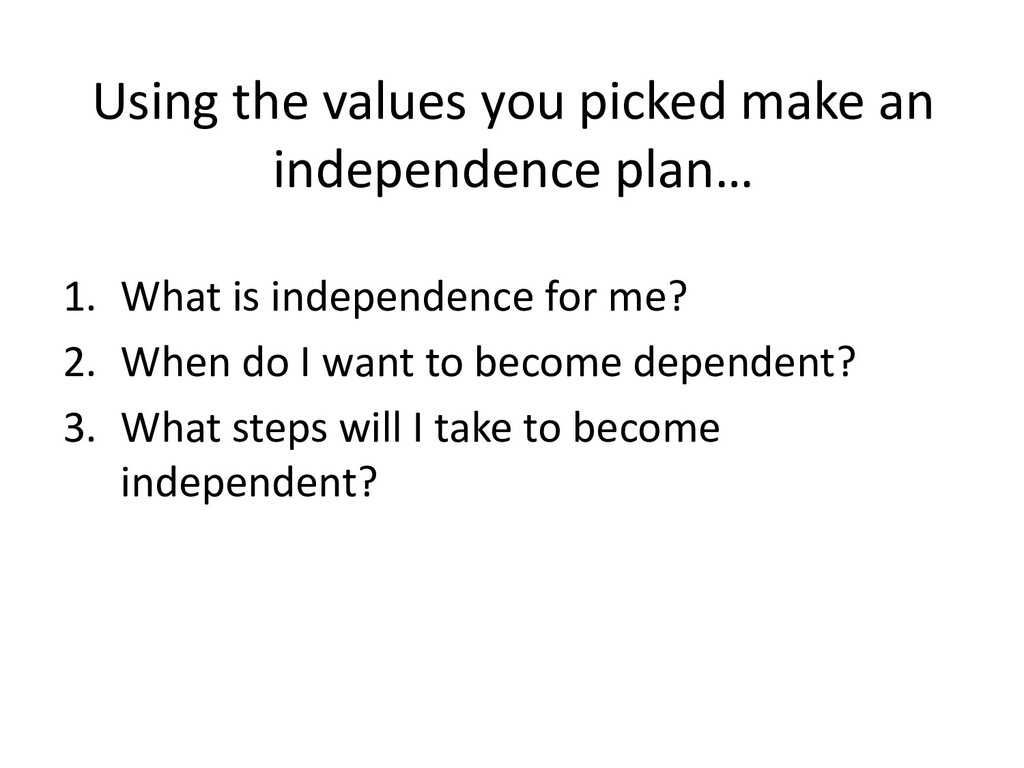
  42. Using the values you picked make an independence plan… 1.

    What is independence for me? 2. When do I want to become dependent? 3. What steps will I take to become independent?
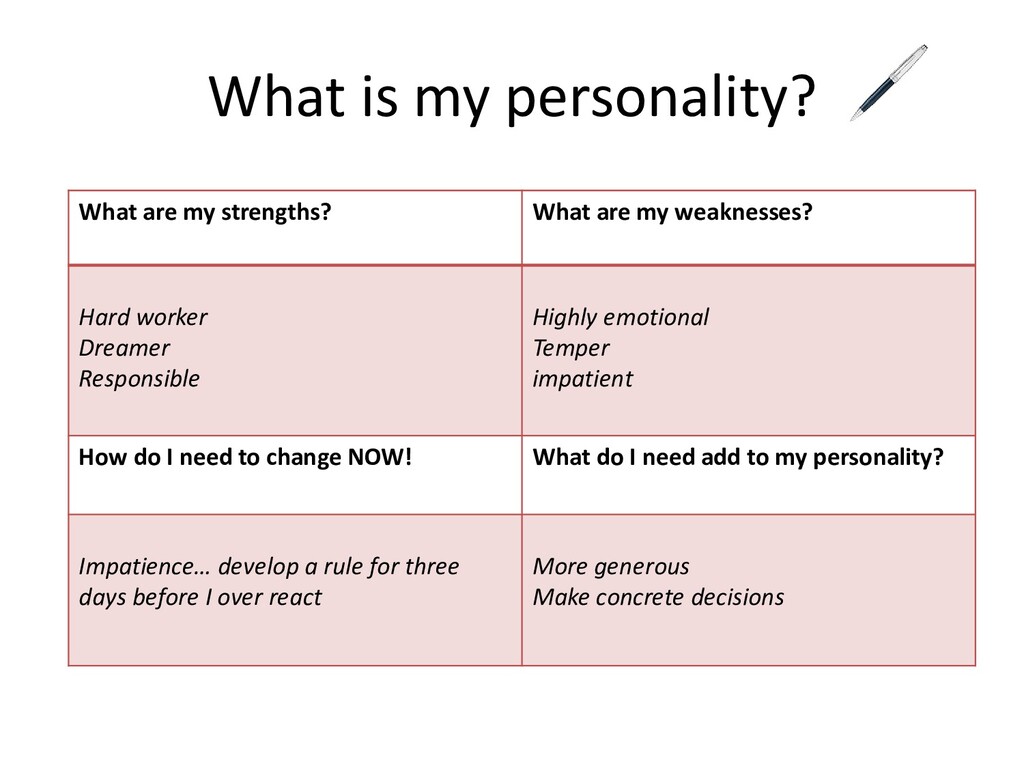
  43. What is my personality? What are my strengths? What are

    my weaknesses? Hard worker Dreamer Responsible Highly emotional Temper impatient How do I need to change NOW! What do I need add to my personality? Impatience… develop a rule for three days before I over react More generous Make concrete decisions
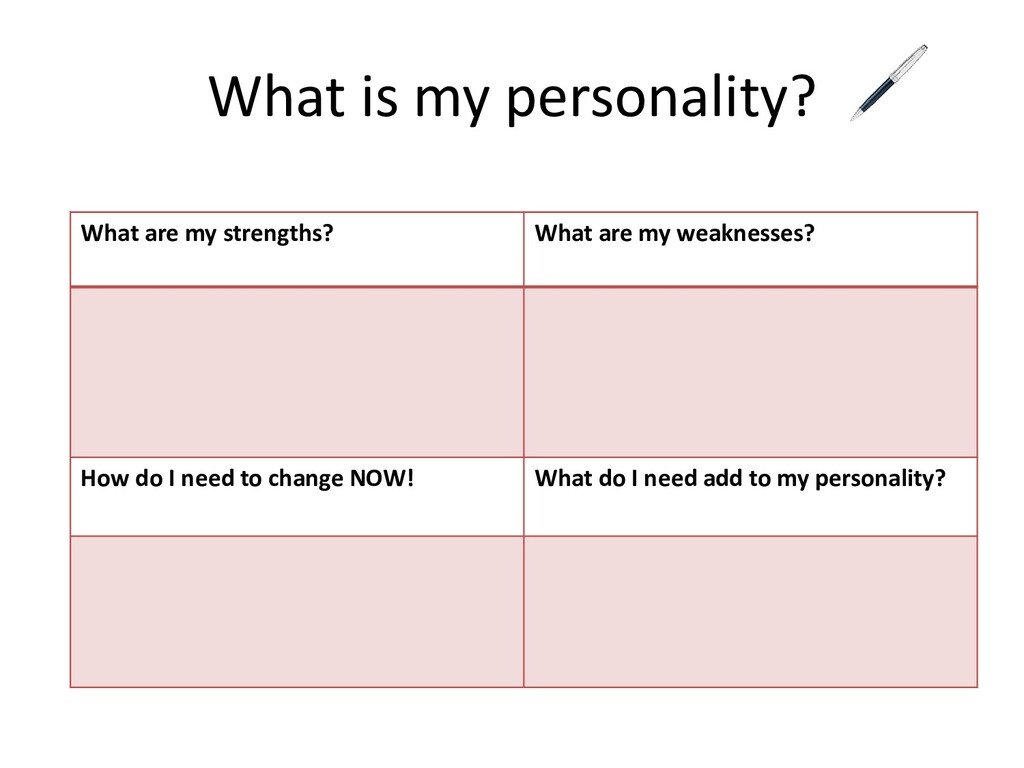
  44. What is my personality? What are my strengths? What are

    my weaknesses? How do I need to change NOW! What do I need add to my personality?
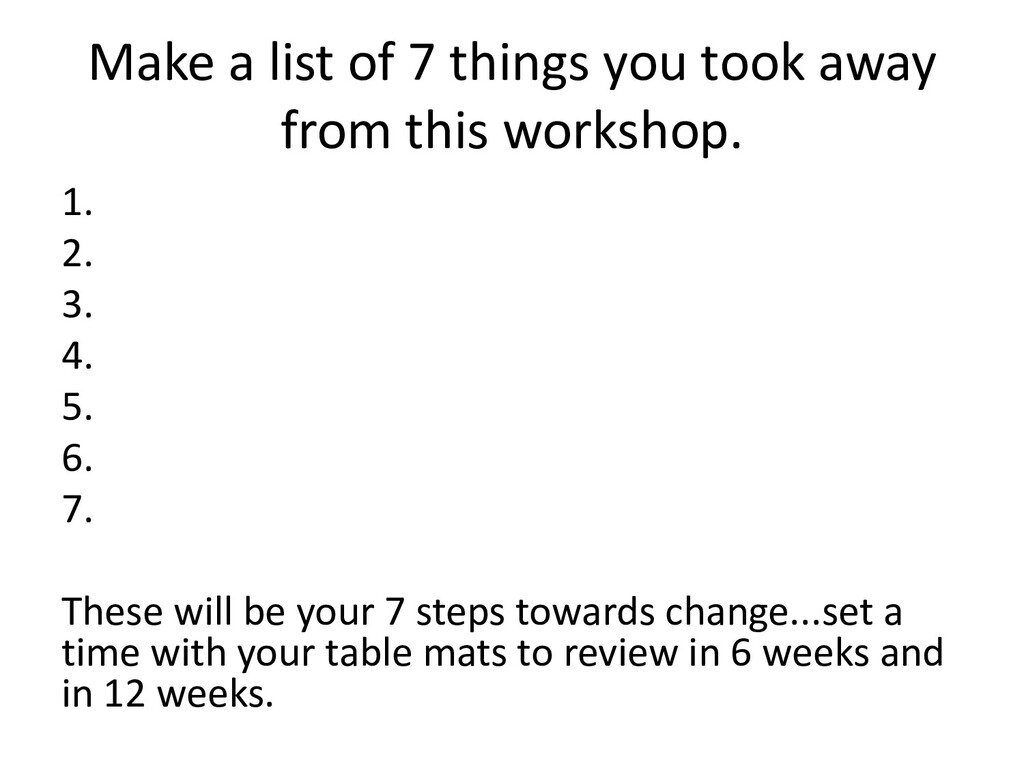
  45. Make a list of 7 things you took away from

    this workshop. 1. 2. 3. 4. 5. 6. 7. These will be your 7 steps towards change...set a time with your table mats to review in 6 weeks and in 12 weeks.
  46. “At the end of your entire life, you will have

    traded your entire life, for no dream, a small dream or a big dream” - Anonymous