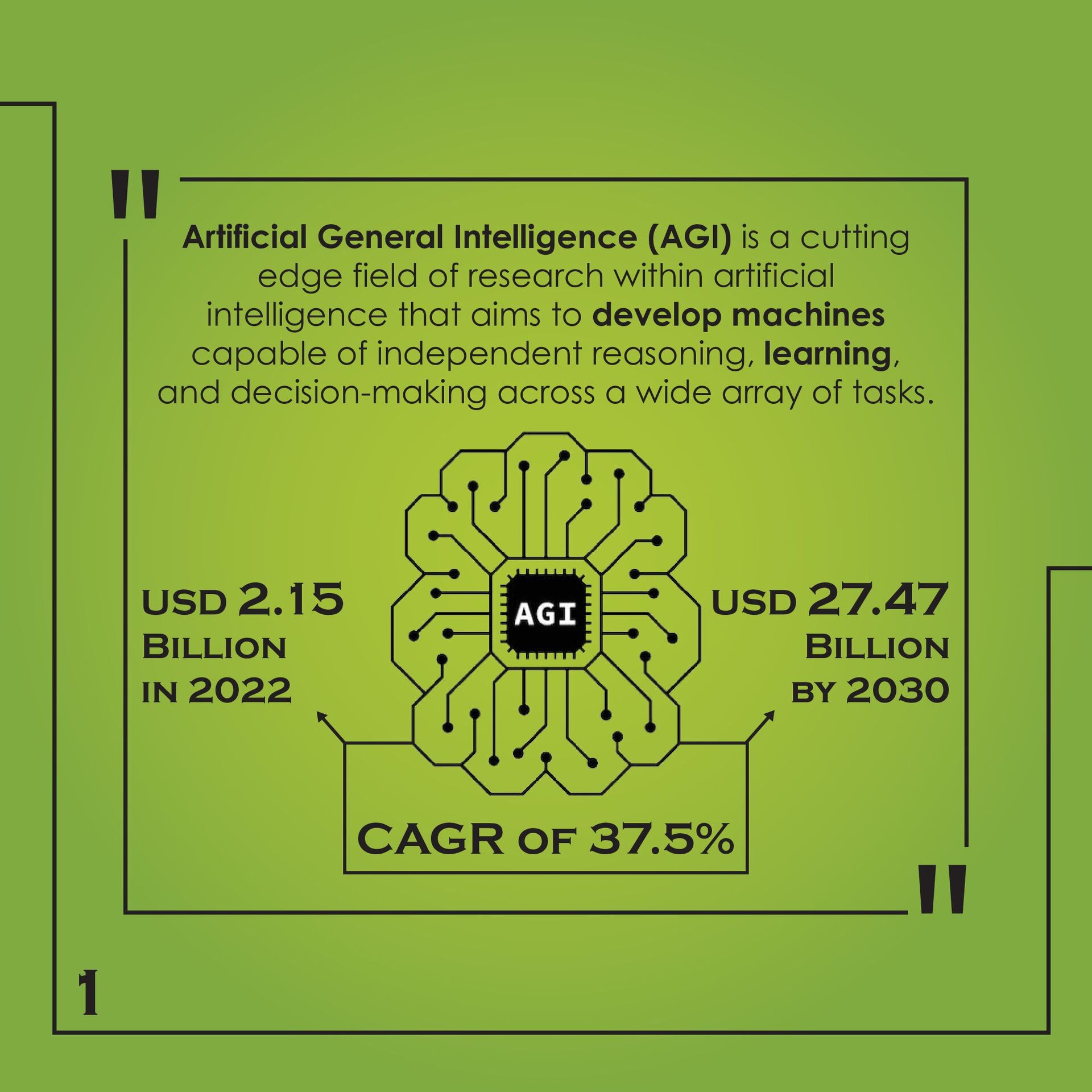
Artificial General Intelligence (AGI) represents a significant leap beyond current AI systems, aiming to create machines with the ability to understand, learn, and apply knowledge across a wide range of tasks—much like the human brain. Unlike narrow AI, which excels at specific tasks (e.g., voice recognition or playing chess), AGI would possess generalized cognitive abilities, enabling it to perform any intellectual task that a human can.
The development of AGI has long been a goal in the field of artificial intelligence, but it remains highly theoretical and elusive. Current AI models, while impressive, rely on vast amounts of data and are confined to particular domains of expertise. AGI, however, would be capable of independent reasoning, problem-solving, and learning from minimal instruction or experience, demonstrating true cognitive flexibility.
Challenges to AGI Development
Building AGI poses enormous challenges. It requires a deep understanding of human cognition, advances in machine learning, and breakthroughs in computational power and neuroscience. Additionally, ethical and societal concerns about AGI—such as its potential impact on the job market, decision-making, and control—are prominent.
Current Progress and Future Prospects
While true AGI has yet to be realized, strides are being made in deep learning, reinforcement learning, and neuromorphic computing—areas that may pave the way for AGI. Leading research organizations and companies, such as OpenAI and DeepMind, are working toward AGI by developing more versatile and autonomous systems.
The future of AGI remains uncertain, but its potential to revolutionize industries, solve complex global problems, and transform human-machine interaction continues to drive scientific exploration. The path to AGI is long and complex, but its realization could redefine the boundaries of intelligence itself.
Read More@ https://www.snsinsider.com/reports/artificial-general-intelligence-market-4174


 gogutan
 bgpat
 ymotongpoo
 yahonda
 techtekt
 tokuty
 carta_engineering
 willnet
 glaforge
 kenichiodo
 daidaidai
 sh_fk2
 uxyall
 chriscoyier
 jacobian
 kimpetersen
 vanstee
 reverentgeek
 takai
 portentint
 elsirapls
 codingconduct
 eileencodes
 shlominoach