Upgrade to Pro — share decks privately, control downloads, hide ads and more …

(2026 FlowCon Keynote) Sociotechnical Architect...

Avatar for xinyao xinyao
March 31, 2026

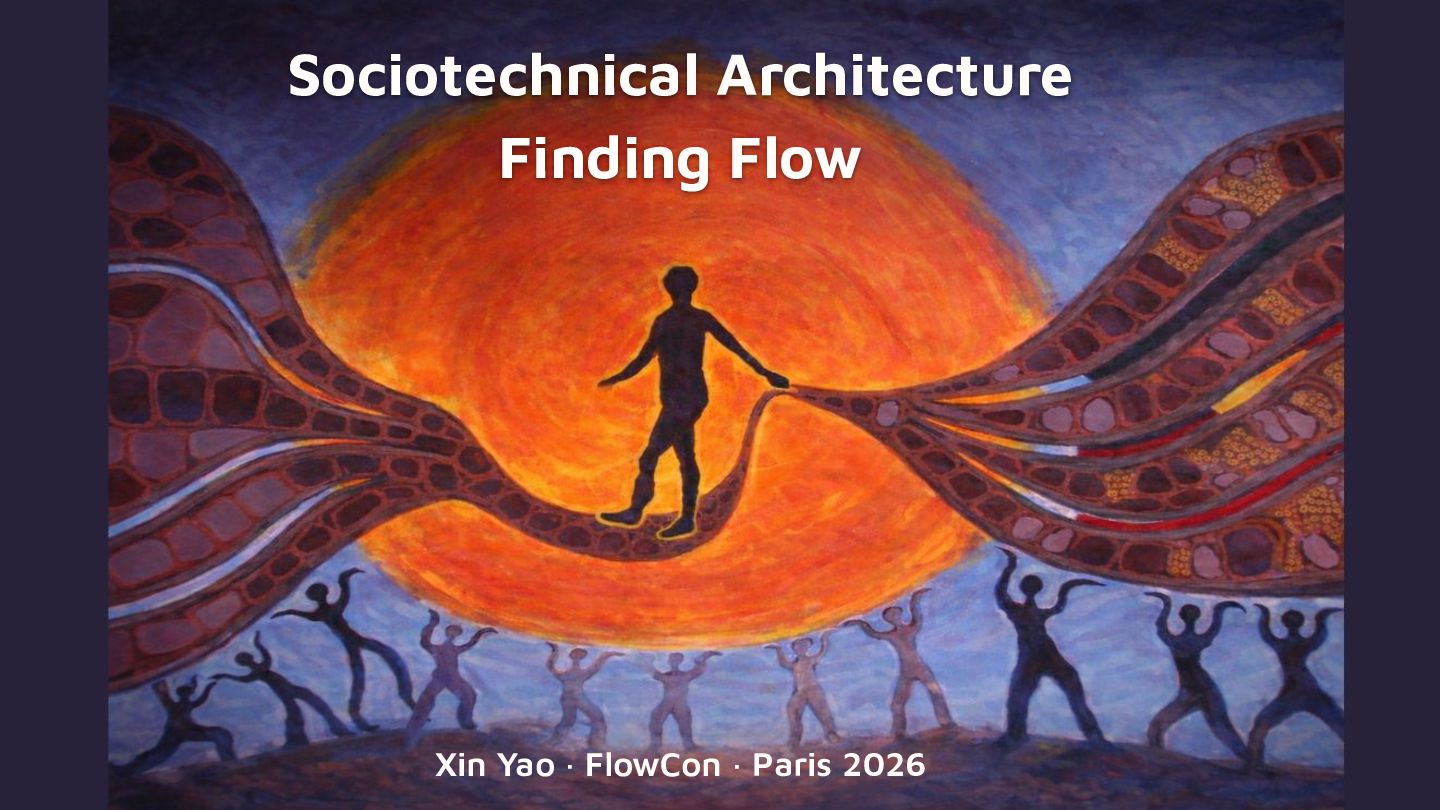
(2026 FlowCon Keynote) Sociotechnical Architecture Finding Flow

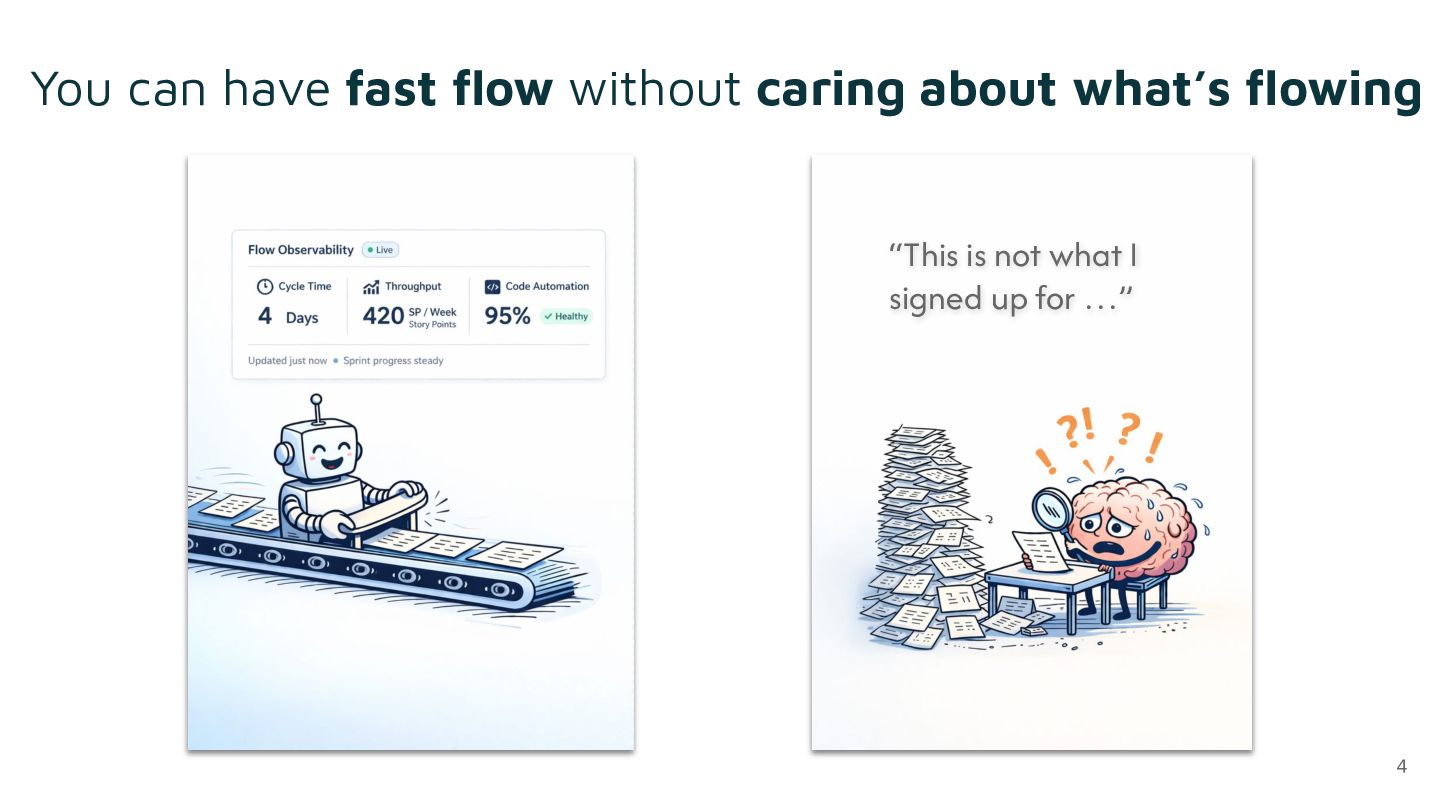
You can measure the flow of work through your pipelines. You cannot measure whether anyone in the room still cares about what is flowing.

Most of us have been in organizations where the processes were right and the people were tired. Where retrospectives happened and nothing changed. Where the architecture was sound and the team was stuck. Where Agile was adopted. And agility kept drifting further away.

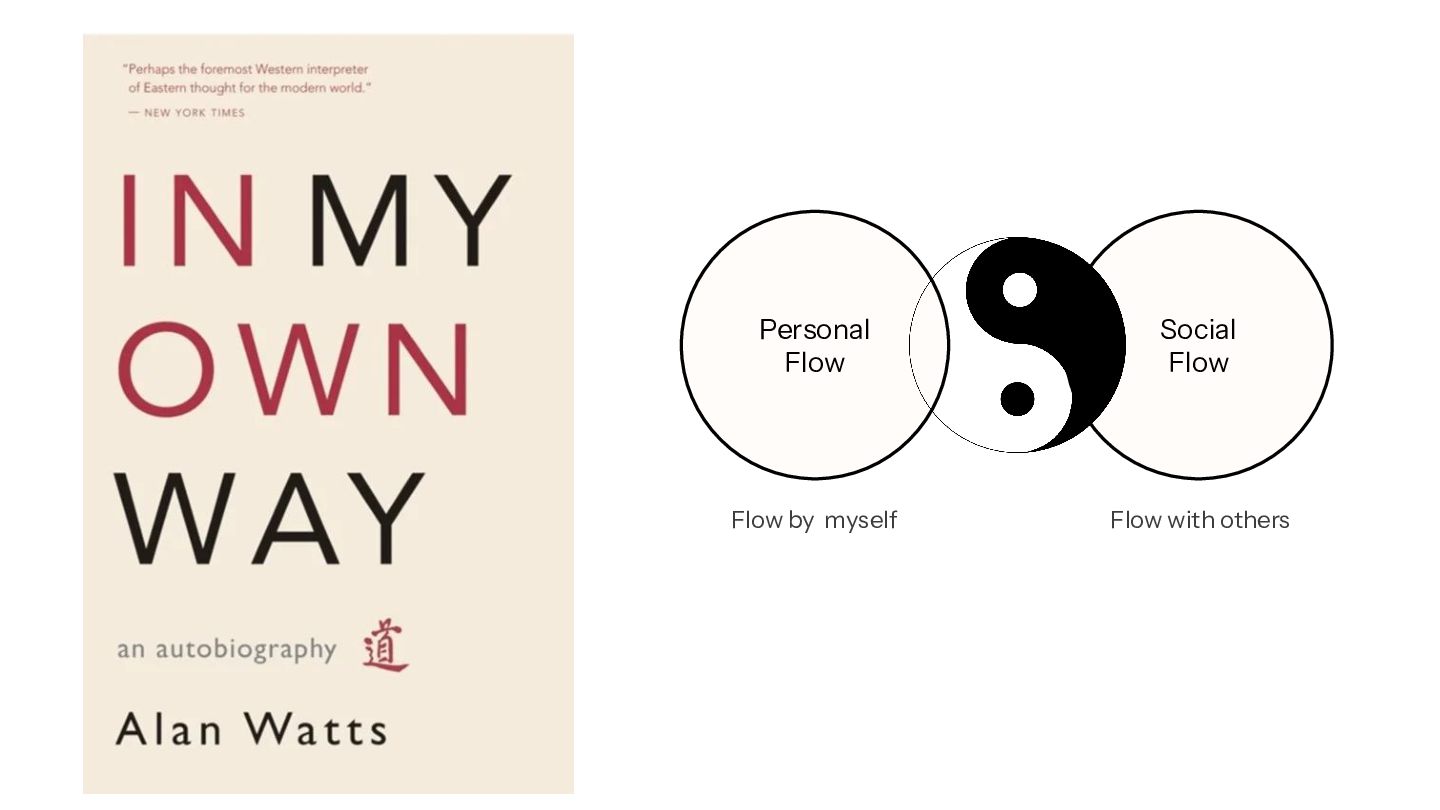
There is more than one kind of flow. One shows up as cycle times, feature throughput, WIP limits. The other moves through people: the energy in a room when genuine thinking is happening, the question nobody planned for that opens a better direction, the feeling of pulling weight toward something that matters. These two flows need each other. Optimize one while starving the other, and something breaks, even when all the metrics look fine.

Sociotechnical architecture is the practice of designing for both. Decouple the software. Connect the people. And attend to what falls through the cracks of every dashboard. In the age of AI, this tension sharpens: the conversations that sustain shared understanding and ownership risk getting squeezed out by the pressure to move faster.

The uncomfortable question is this: are you designing for the flow you can track, or for the flow that makes the work worth doing?

Drawing on field stories from complex environments, this keynote explores sociotechnical architecture as a complexity-informed practice for designing flow at every level: in our software systems, our teams, our organizations, and ourselves. Not as a balance to strike, but as a living tension to hold. The way a tightrope walker holds the tension in the rope: not to resolve it, but to move.

Key Takeaways
- Why optimizing delivery flow without generative flow produces throughput without coherence, and what the difference looks like in practice
- How emotions, questions, and conversations function as architecture material, not soft add-ons
- What it means to design for flow at every level: software, teams, organizations, and yourself

Behind the scene by flowcon:
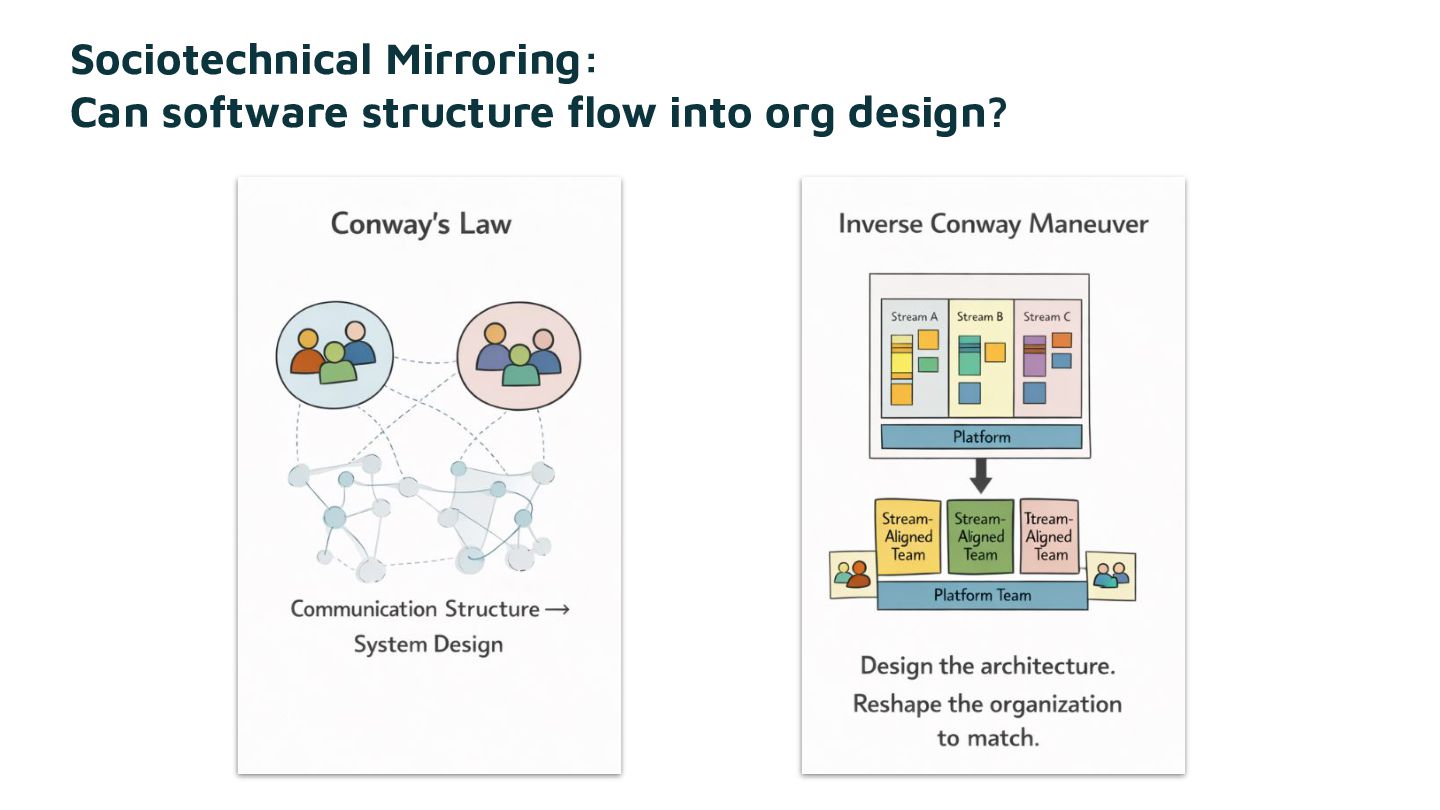
We've been looking for a while to bring Xin Yao to speak on one of our favorite topics: Sociotechnical Architecture, or how humans and technology are intrinsically linked. Don't worry, you won't get another round of Conway's Law, but rather a dive into the organizational runtime — the behavioral side of sociotechnical work. The messy, everyday human interactions that make or break software architecture, org design, agile alignment, and complex collaboration. What does it mean to architect for coherence and flow in the midst of all this? We therefore asked Xin to open the conference with the opening keynote, and she said yes—much to our delight. If you're already curious to learn more, feel free to search for Xin Yao and check out her previous videos; you'll find them worthwhile. We're doing your organizational intelligence homework for you in advance. But don't worry about having seen everything before the conference—this will be a brand new talk just for us.

Cela fait quelques temps que nous cherchions à faire venir Xin pour un de nos sujets fétiches à savoir l'architecture sociotechnique ou comment l'humain et la technique sont liés. Ne vous inquiétez pas, vous n'allez pas prendre une nouvelle dose de la loi de Conway, mais bien des exemples pratiques de comment faire des choix conscients d'organisation au regard de vos défis. Nous avons donc demandé à Xin d'ouvrir la conférence avec la keynote d'ouverture et elle a dit oui pour notre plus grand plaisir. Si vous êtes déjà curieux d'en savoir plus, n'hésitez pas à taper Xin Yao et regarder ses précédentes vidéos, vous allez y trouver de l'intérêt. Nous vous faisons votre veille organisationnelle à l'avance. Mais ne vous inquiétez pas d'avoir tout vu avant la conférence, ça sera un nouveau talk rien que pour nous.

Avatar for xinyao

xinyao

March 31, 2026
Tweet

More Decks by xinyao

Other Decks in Design

Transcript

  1. Xin Yao · FlowCon Paris 2026 Sociotechnical Architecture Finding Flow

    Sociotechnical Architecture Finding Flow Xin Yao · FlowCon · Paris 2026
  2. 4 You can have fast flow without caring about what’s

    flowing “This is not what I signed up for …”
  3. Xin Yao · FlowCon Paris 2026 Sociotechnical Architecture Finding Flow

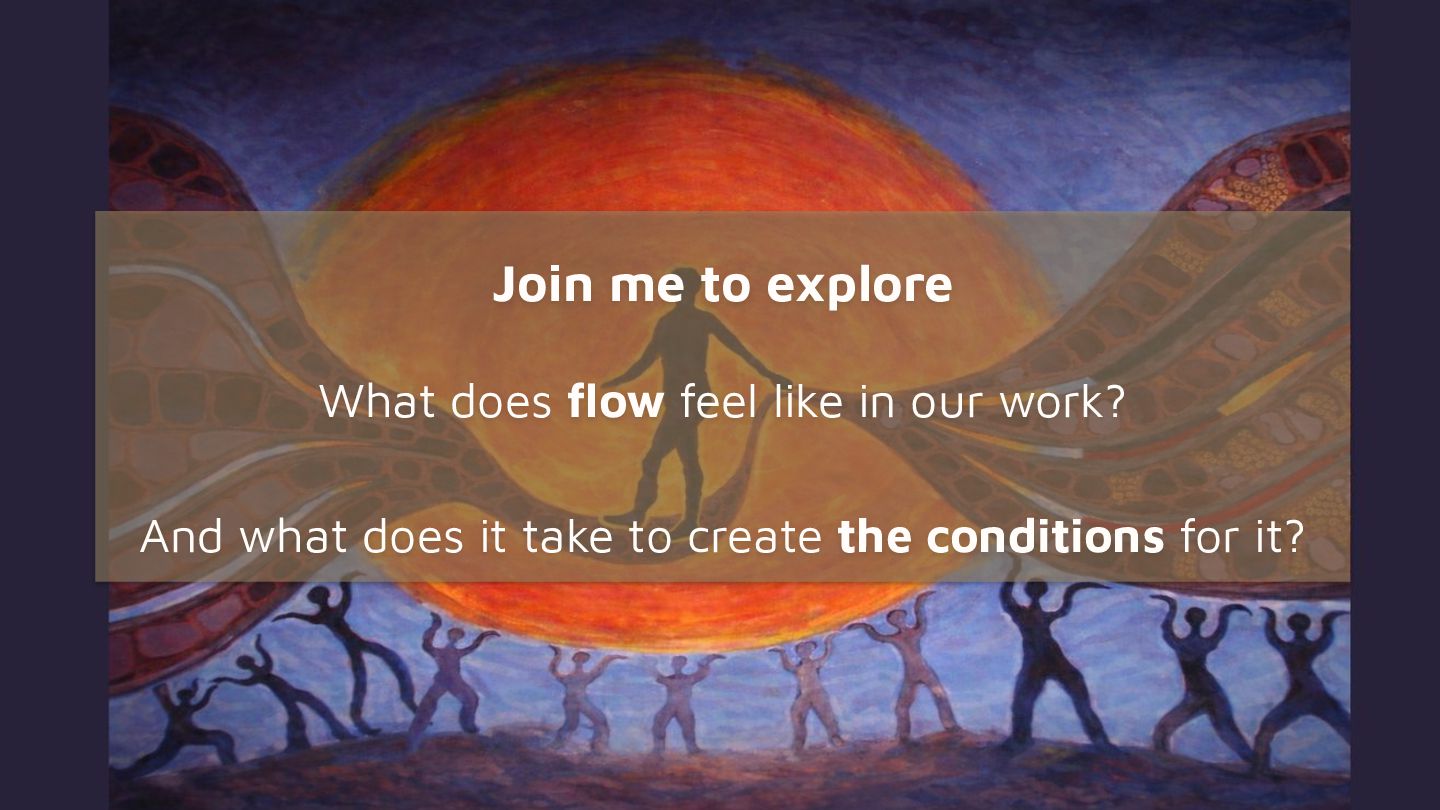
    Join me to explore What does flow feel like in our work? And what does it take to create the conditions for it?
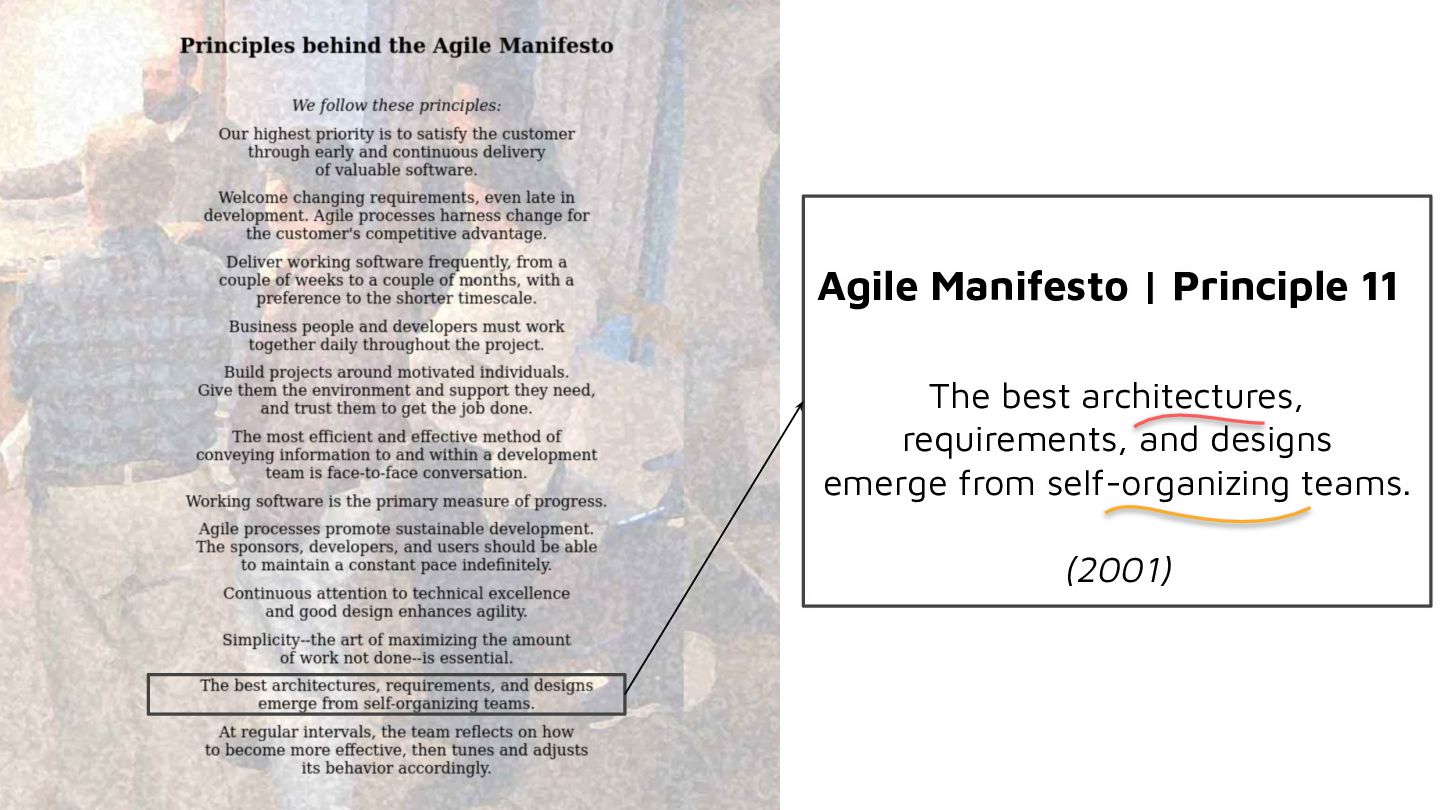
  4. Agile Manifesto | Principle 11 The best architectures, requirements, and

    designs emerge from self-organizing teams. (2001)
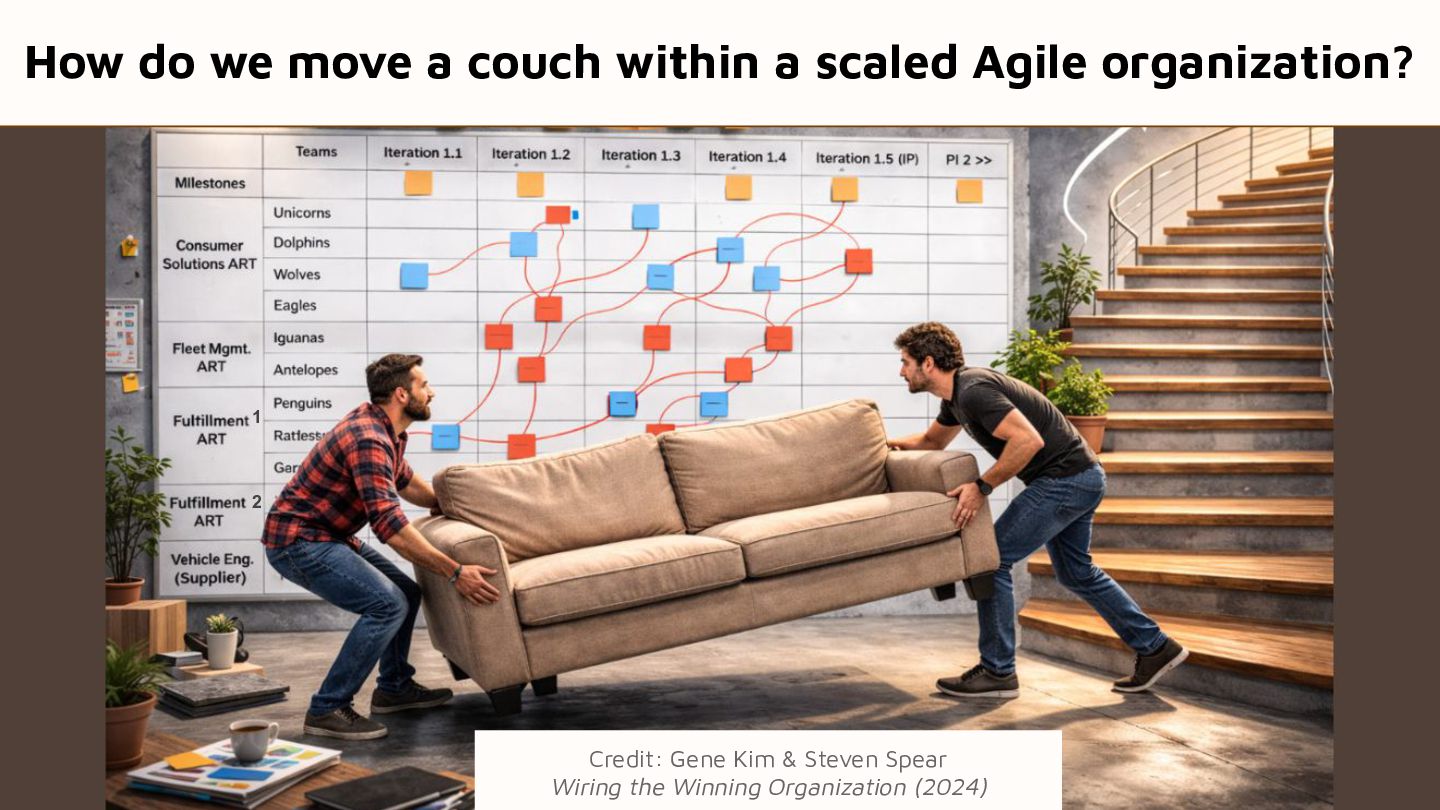
  5. How do we move a couch within a scaled Agile

    organization? Credit: Gene Kim & Steven Spear Wiring the Winning Organization (2024) 1 2
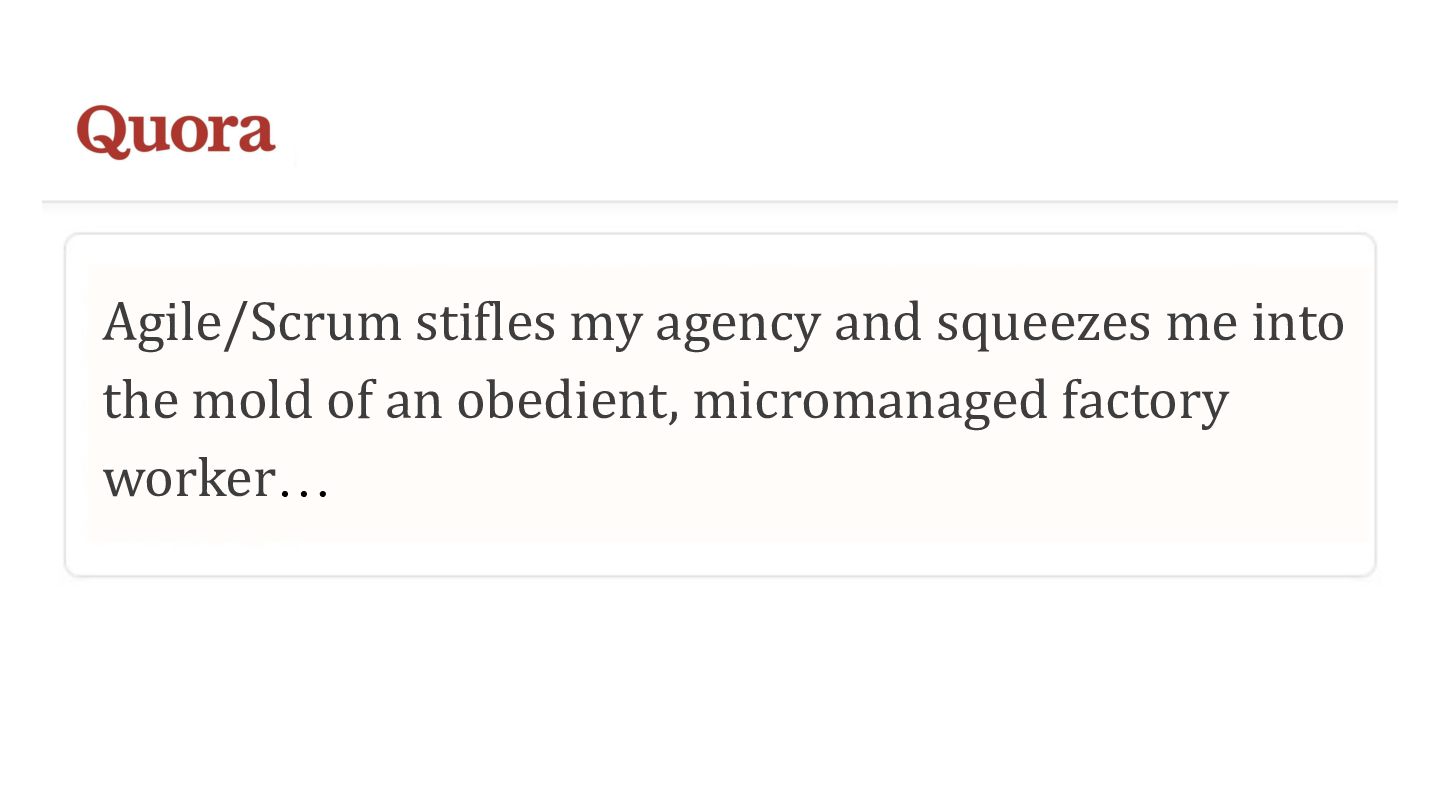
  6. Agile/Scrum stifles my agency and squeezes me into the mold

    of an obedient, micromanaged factory worker…
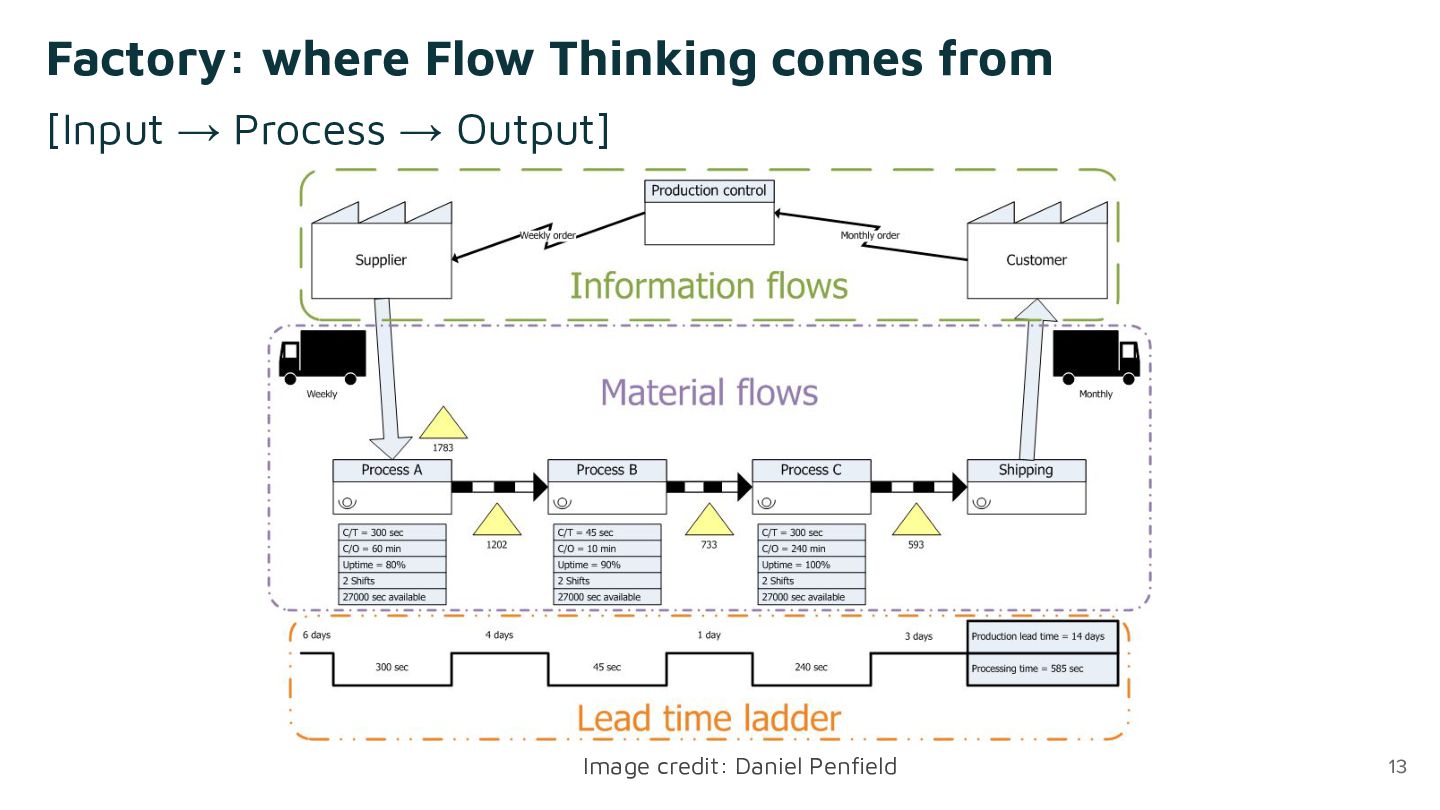
  7. 13 Factory: where Flow Thinking comes from [Input → Process

    → Output] Image credit: Daniel Penfield
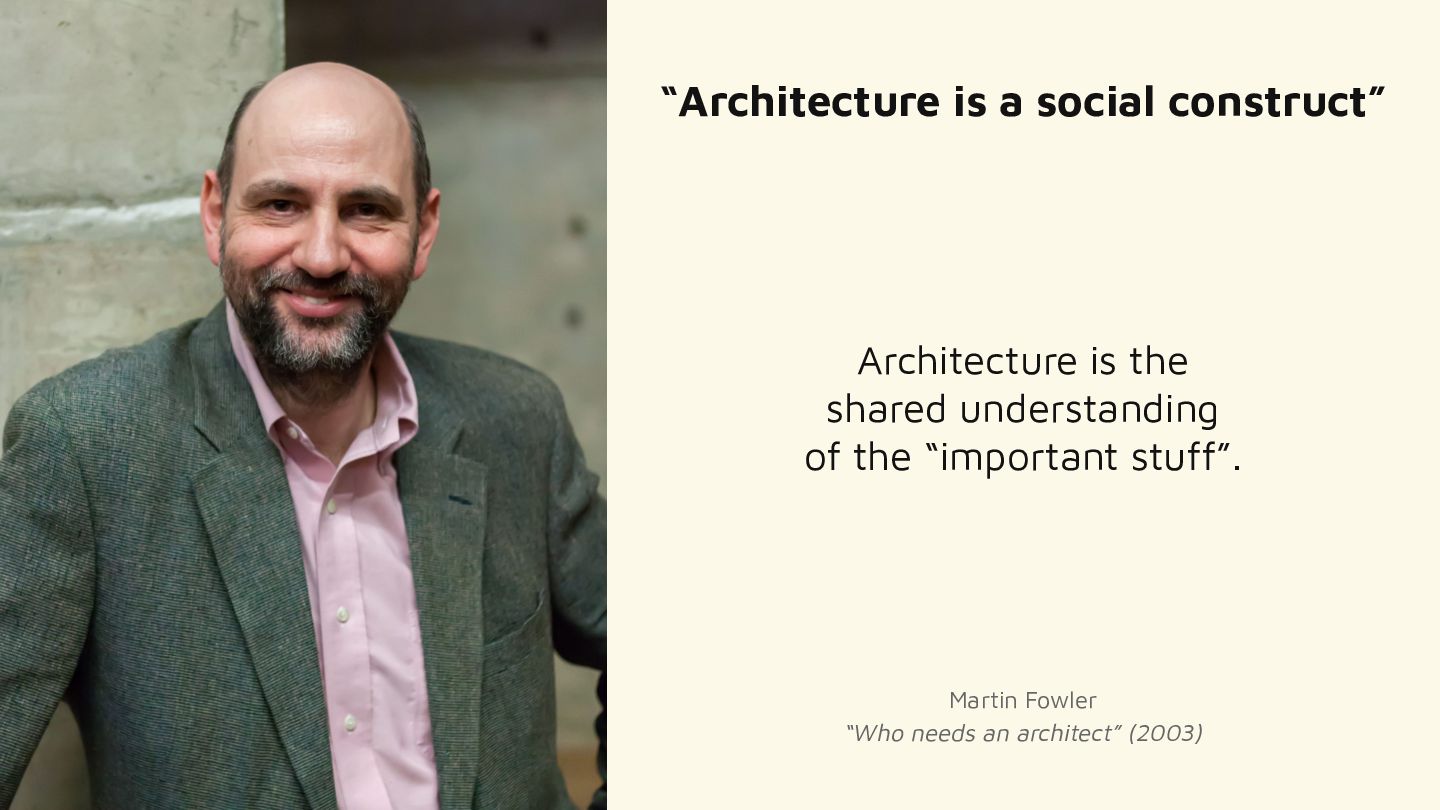
  8. Architecture is the shared understanding of the “important stuff”. Martin

    Fowler “Who needs an architect” (2003) “Architecture is a social construct”
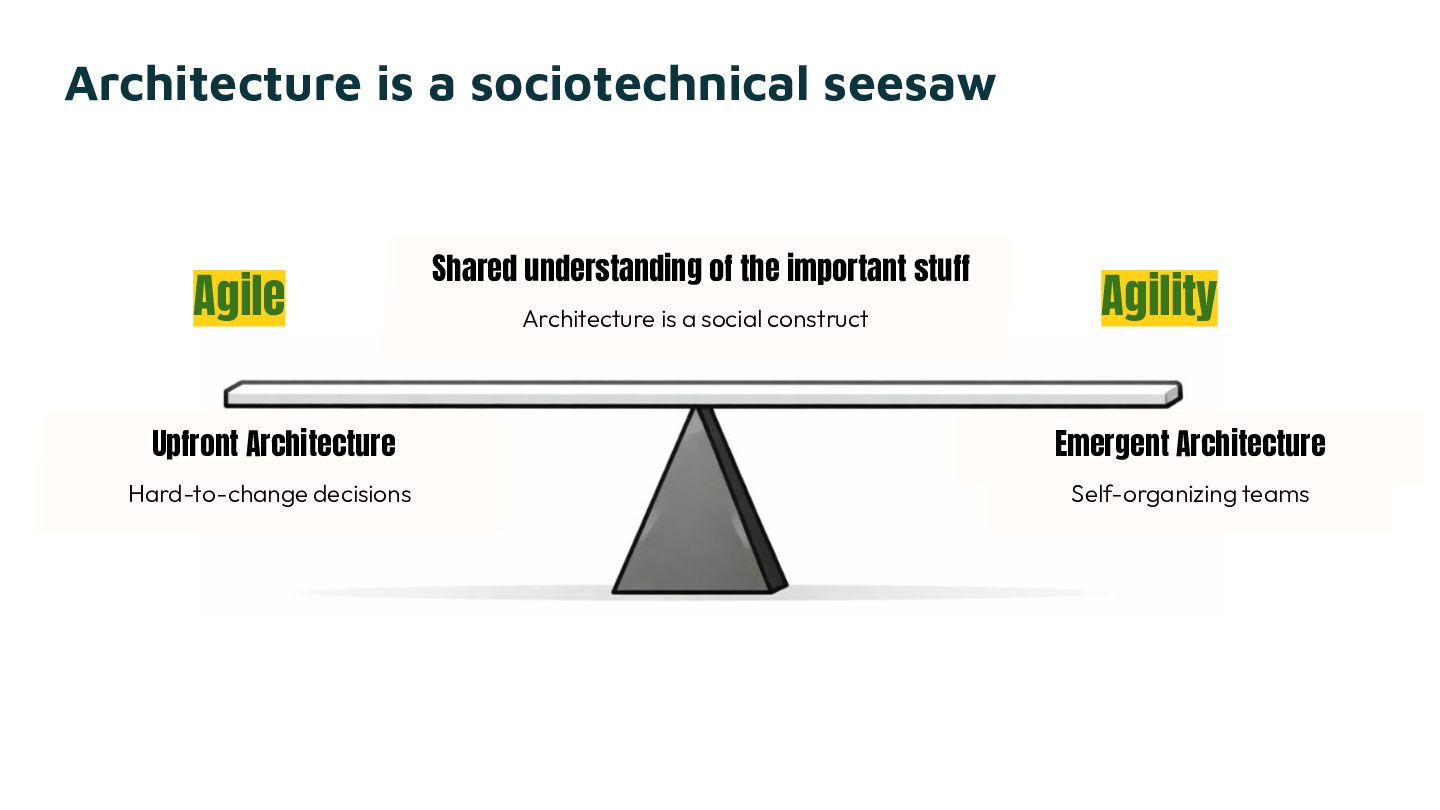
  9. Architecture is a sociotechnical seesaw Upfront Architecture Hard-to-change decisions Emergent

    Architecture Self-organizing teams Architecture is a social construct Agile Agility Shared understanding of the important stuff
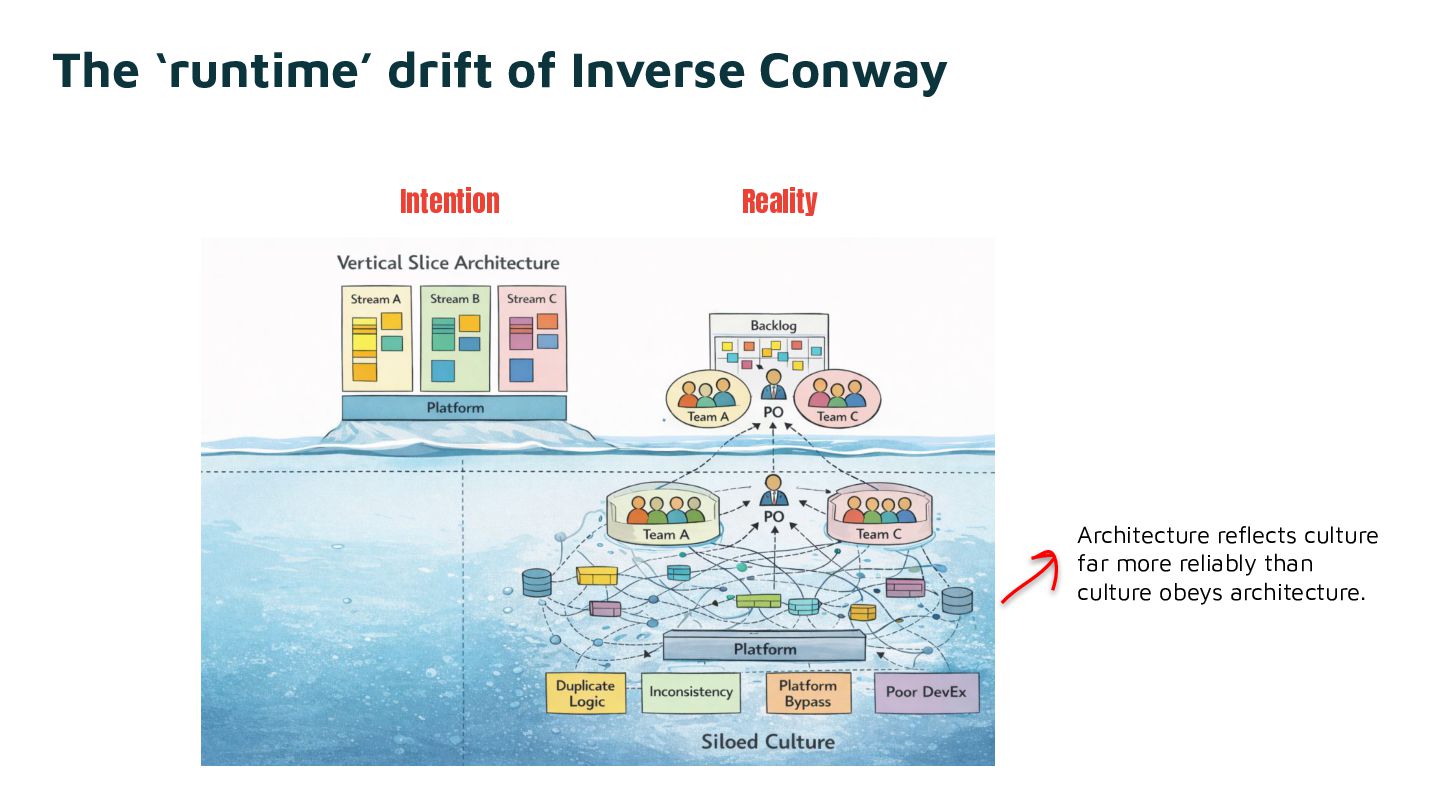
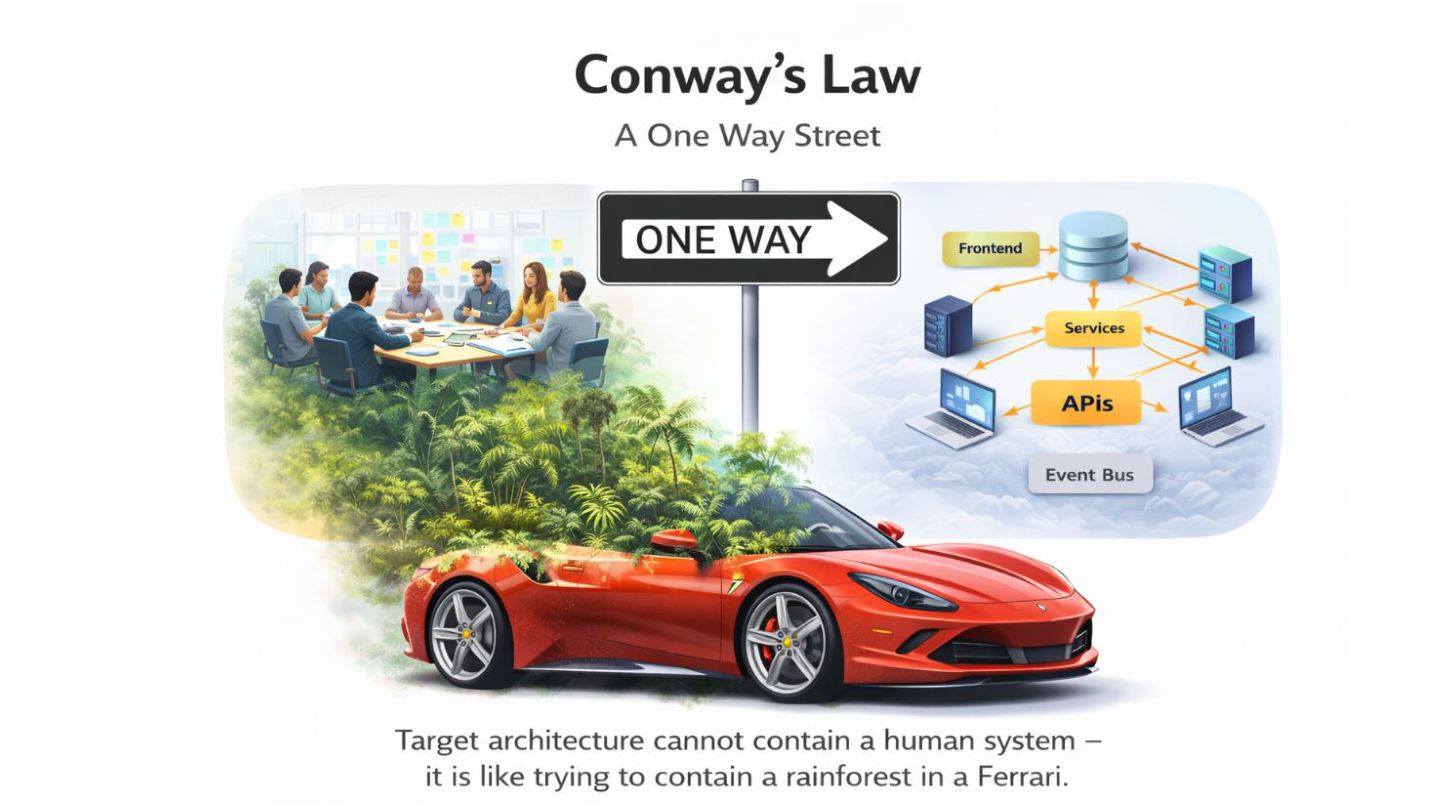
  10. Intention Reality The ‘runtime’ drift of Inverse Conway Architecture reflects

    culture far more reliably than culture obeys architecture.
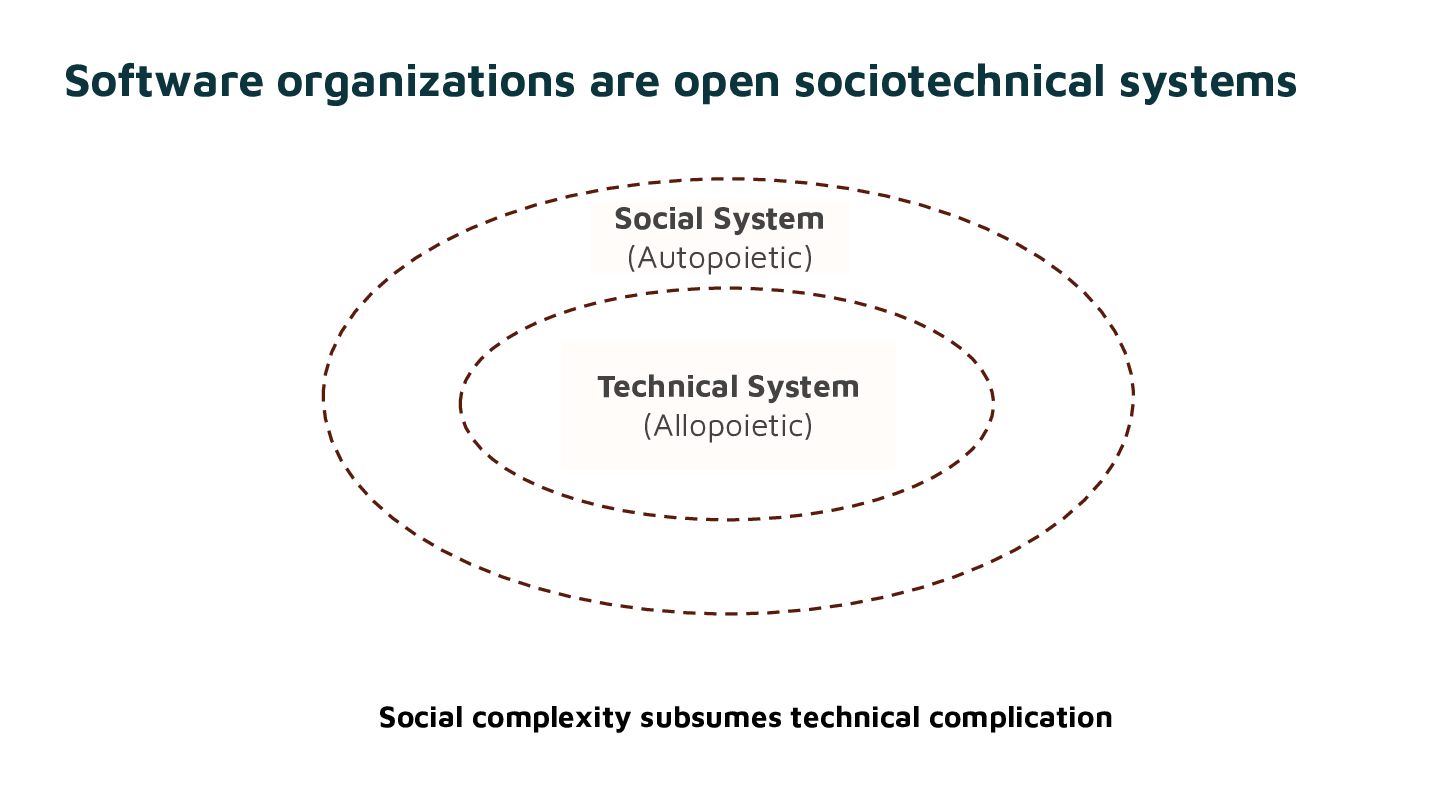
  11. Software organizations are open sociotechnical systems Social complexity subsumes technical

    complication Technical System (Allopoietic) Social System (Autopoietic)
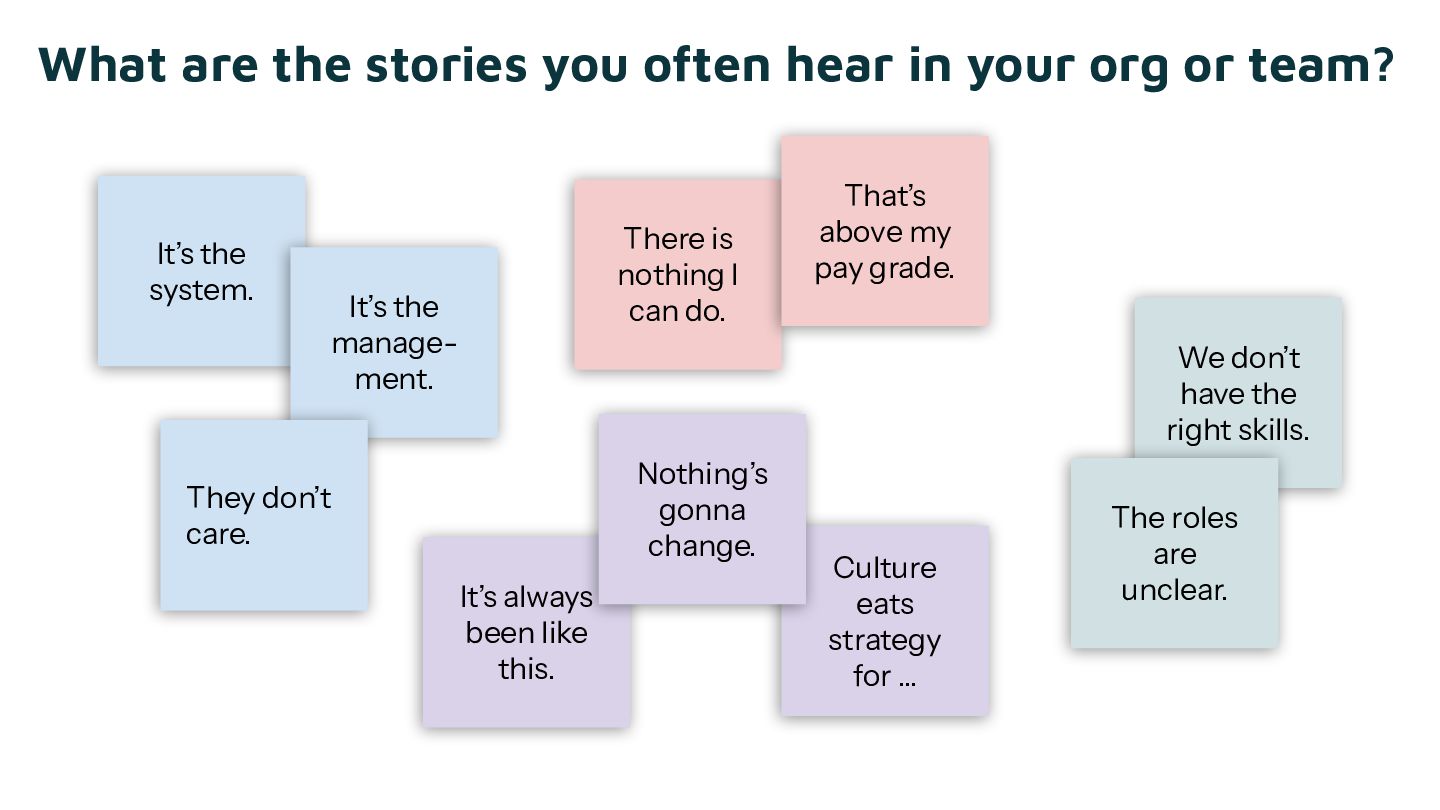
  12. It’s the system. There is nothing I can do. It’s

    the manage- ment. We don’t have the right skills. Culture eats strategy for … They don’t care. The roles are unclear. That’s above my pay grade. It’s always been like this. Nothing’s gonna change. What are the stories you often hear in your org or team?
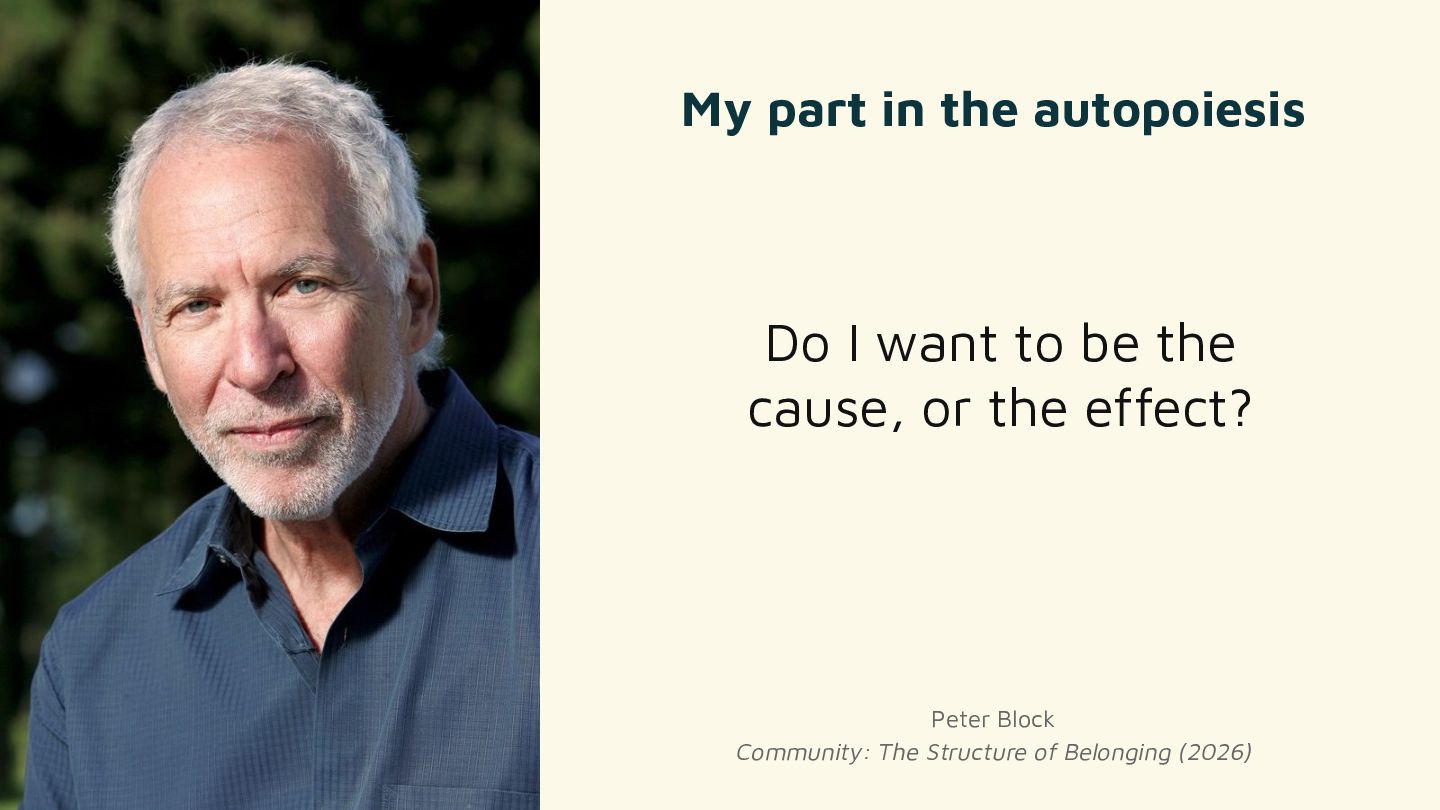
  13. Do I want to be the cause, or the effect?

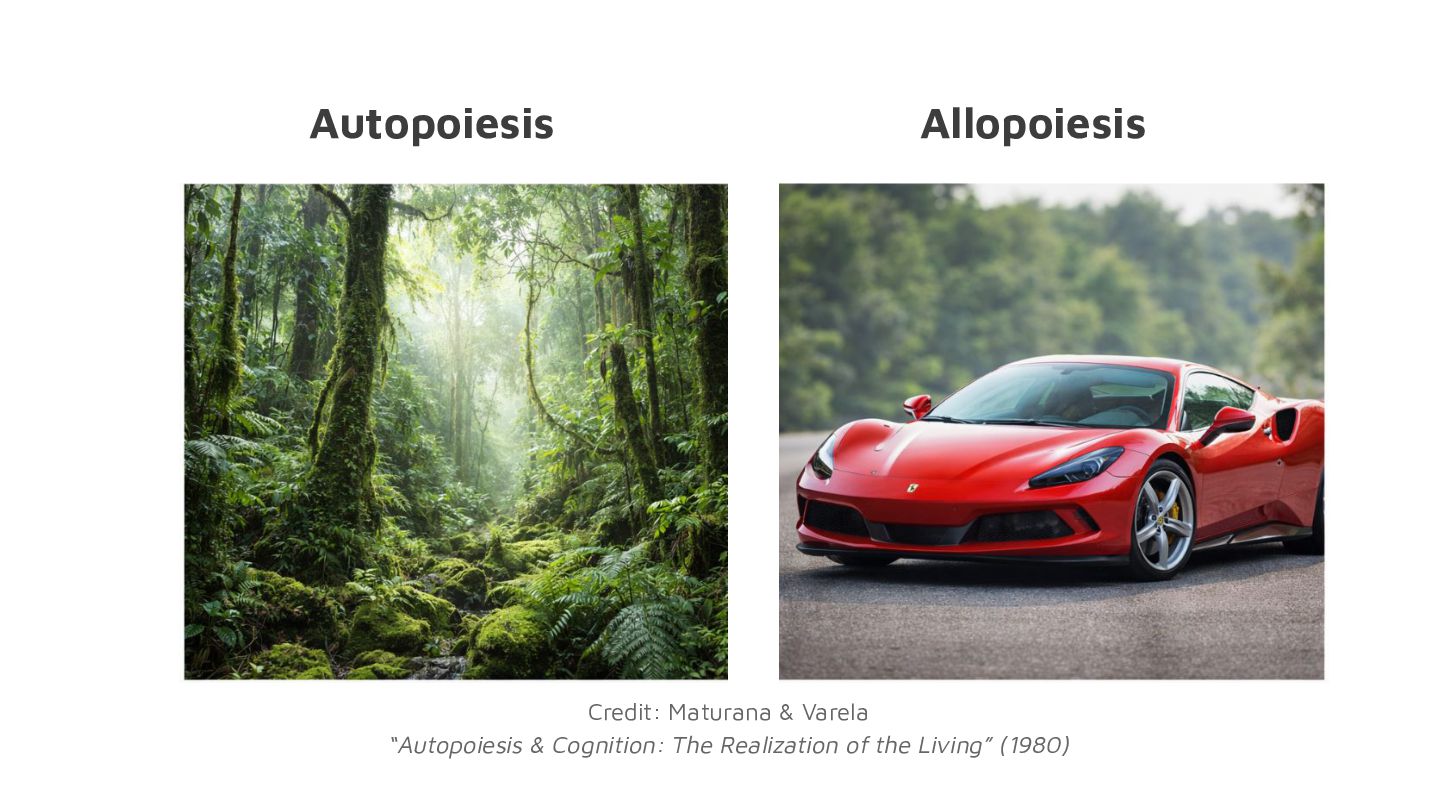
    Peter Block Community: The Structure of Belonging (2026) My part in the autopoiesis
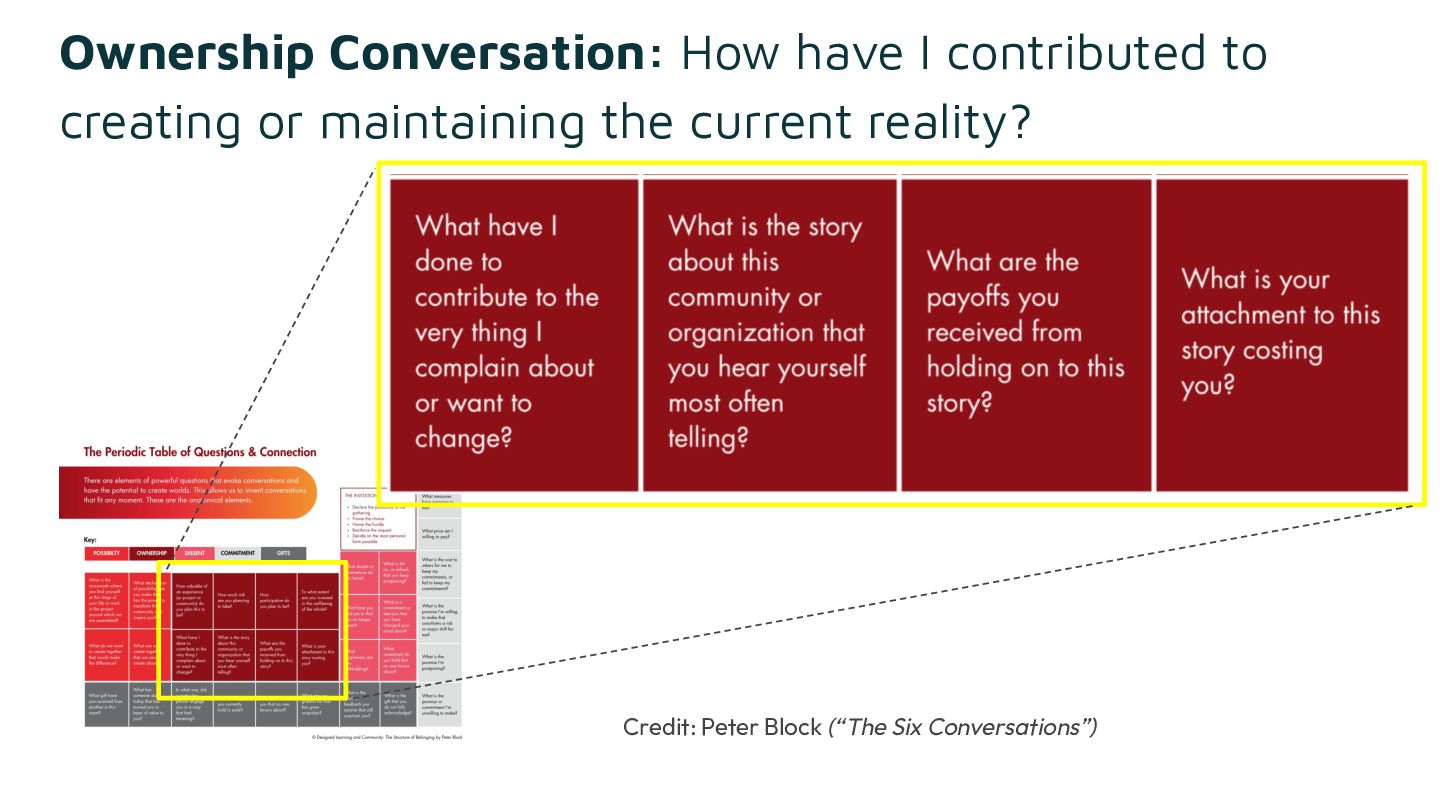
  14. Credit: Peter Block (“The Six Conversations”) Ownership Conversation: How have

    I contributed to creating or maintaining the current reality?
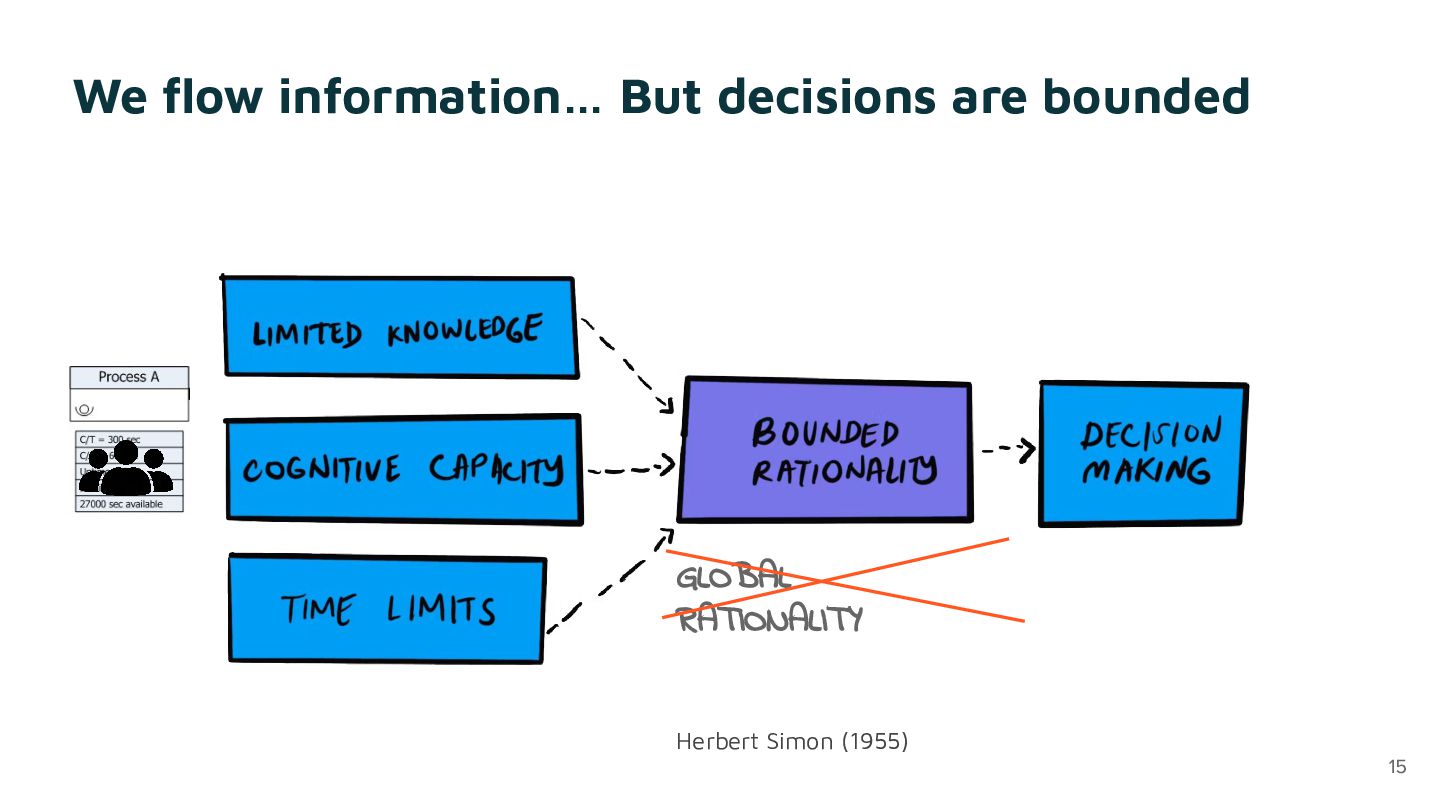
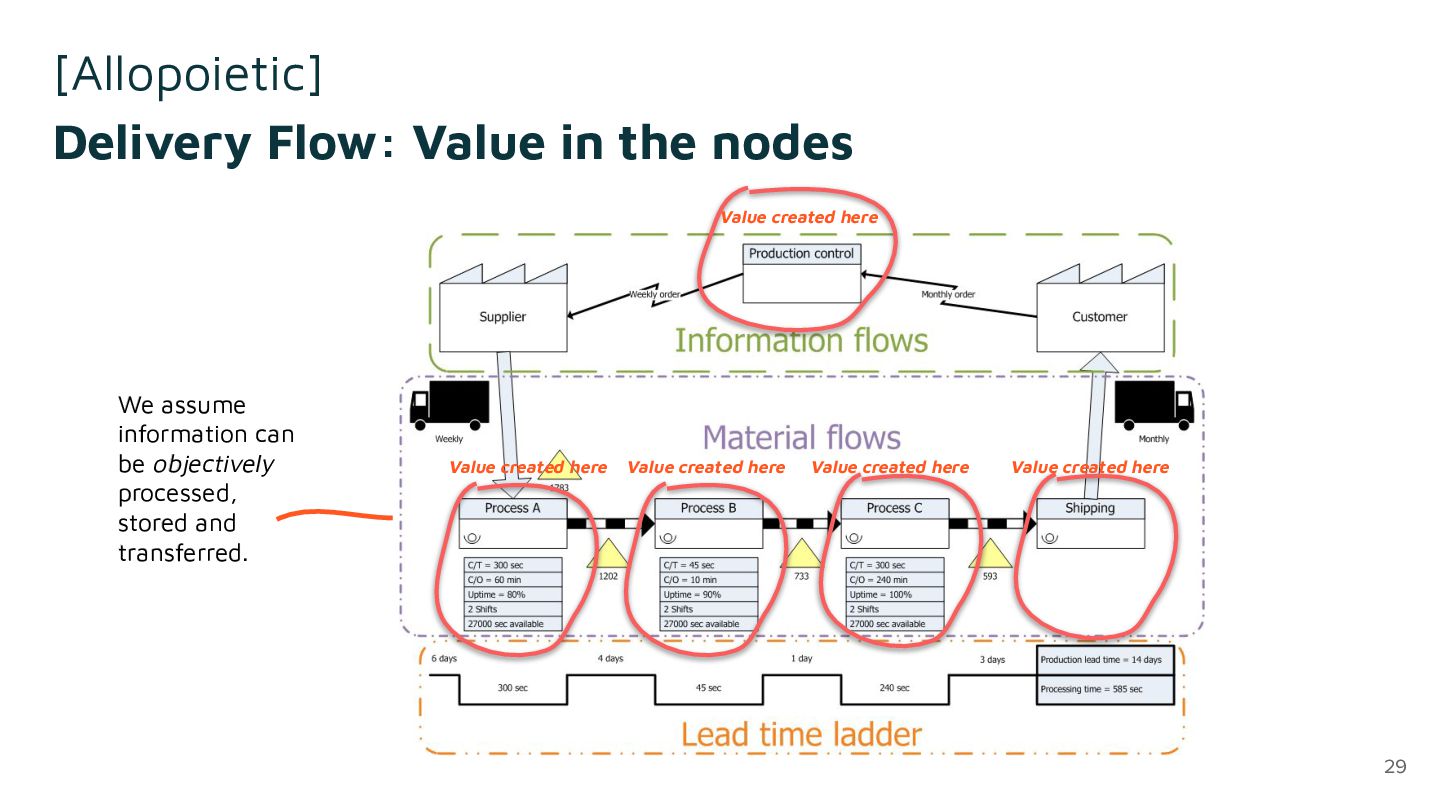
  15. 29 We assume information can be objectively processed, stored and

    transferred. Value created here Value created here Value created here Value created here Value created here [Allopoietic] Delivery Flow: Value in the nodes
  16. 30 [Autopoietic] Generative Flow: Value in the connections It’s not

    that I add value during my process to the system by creating information and then handing it downstream to someone else. It is the handing of my thing to someone else that creates information. ~ Jabe Bloom
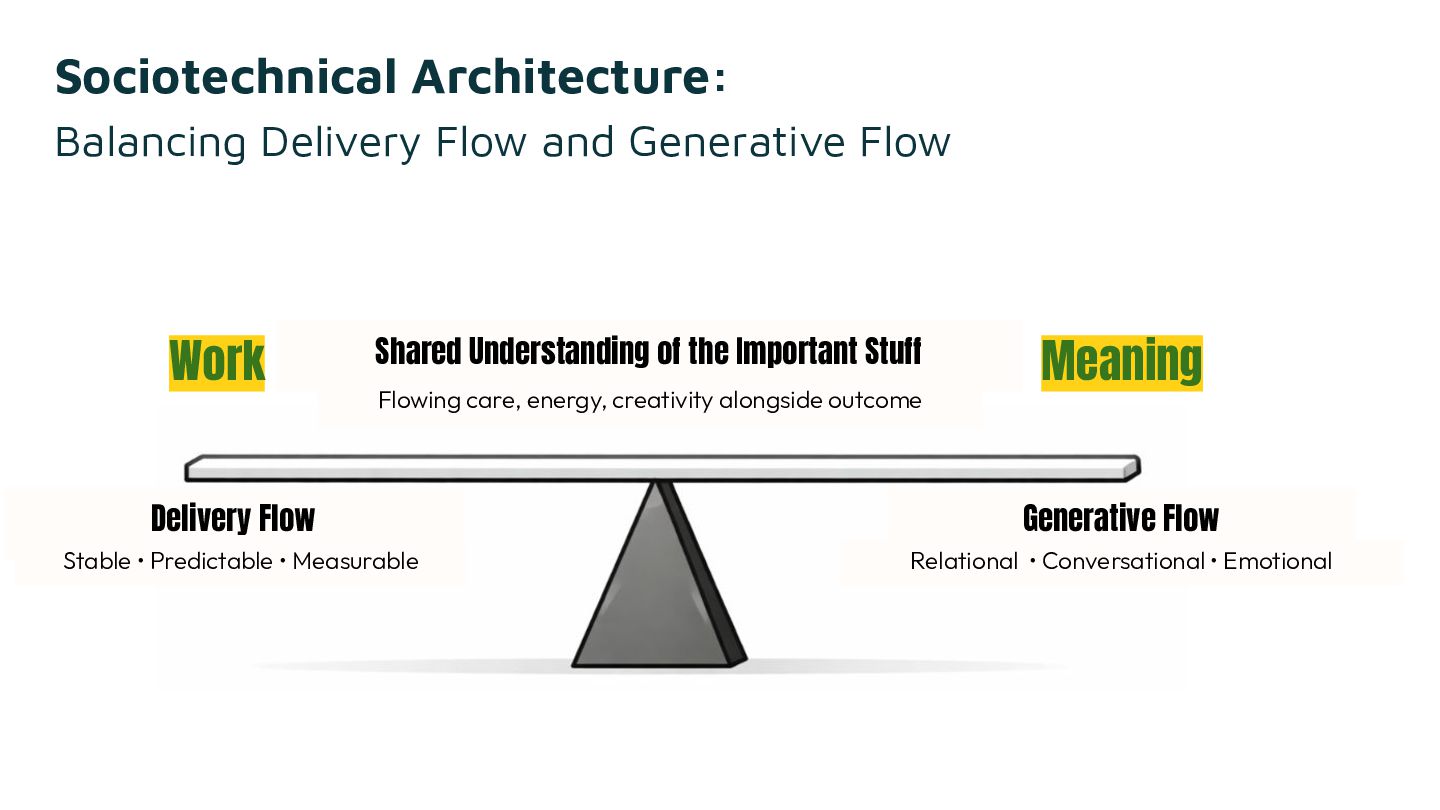
  17. Delivery Flow Generative Flow Relational • Conversational • Emotional Work

    Meaning Shared Understanding of the Important Stuff Flowing care, energy, creativity alongside outcome Sociotechnical Architecture: Balancing Delivery Flow and Generative Flow Stable • Predictable • Measurable
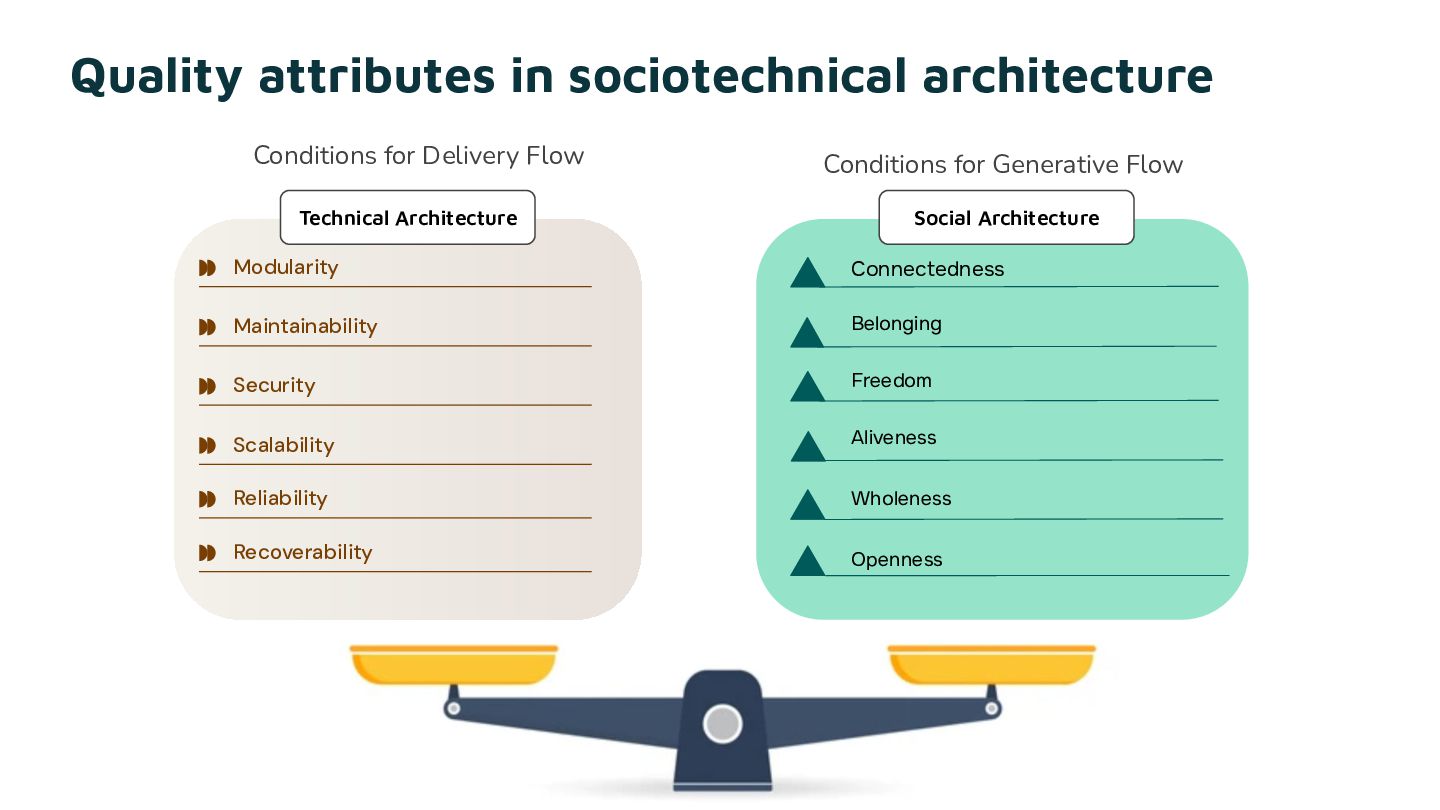
  18. Quality attributes in sociotechnical architecture Connectedness Aliveness Belonging Freedom Wholeness

    Modularity Scalability Security Maintainability Reliability Social Architecture Technical Architecture Openness Recoverability Conditions for Delivery Flow Conditions for Generative Flow
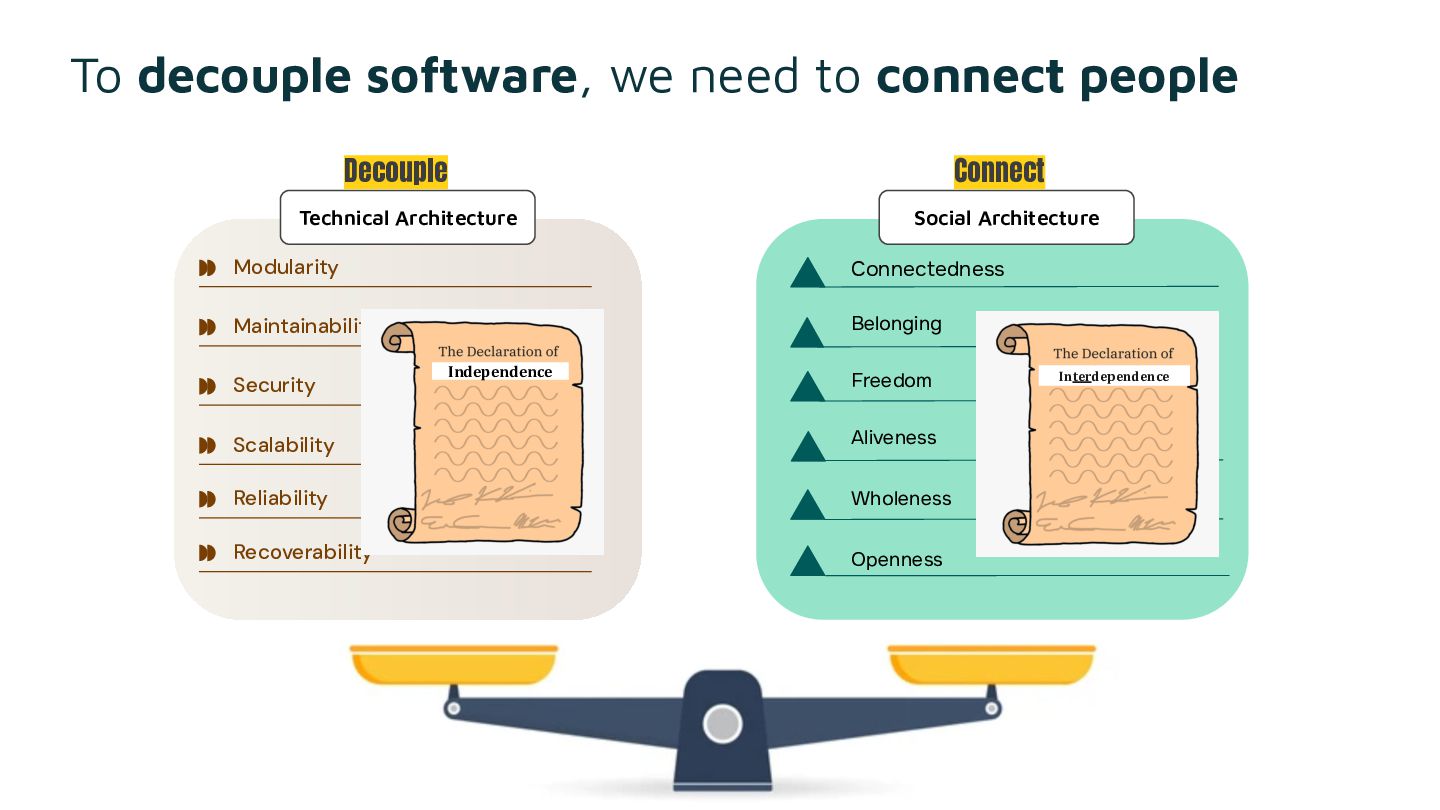
  19. Connectedness Aliveness Belonging Freedom Wholeness Modularity Scalability Security Maintainability Reliability

    Social Architecture Technical Architecture Openness Recoverability Decouple Connect To decouple software, we need to connect people Independence Interdependence
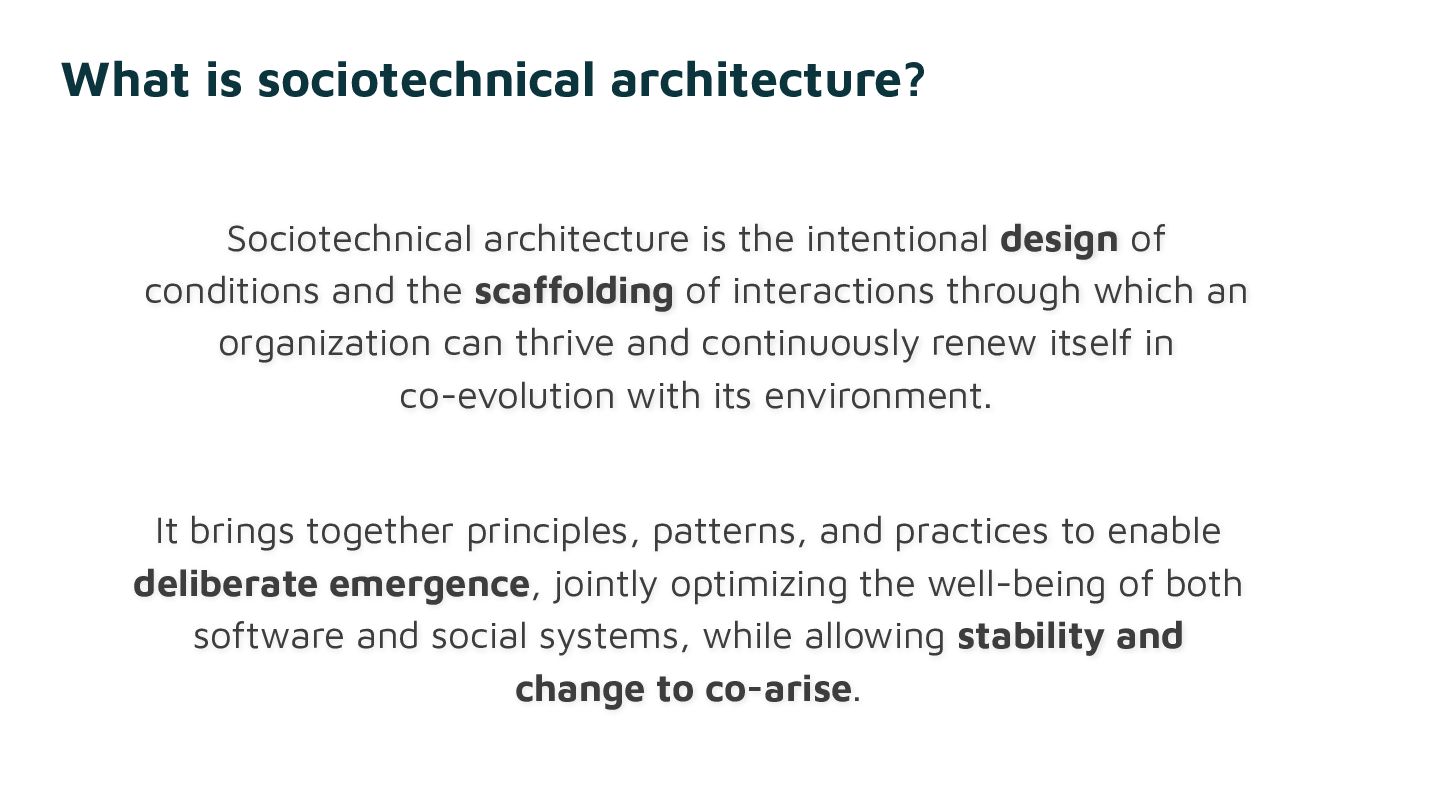
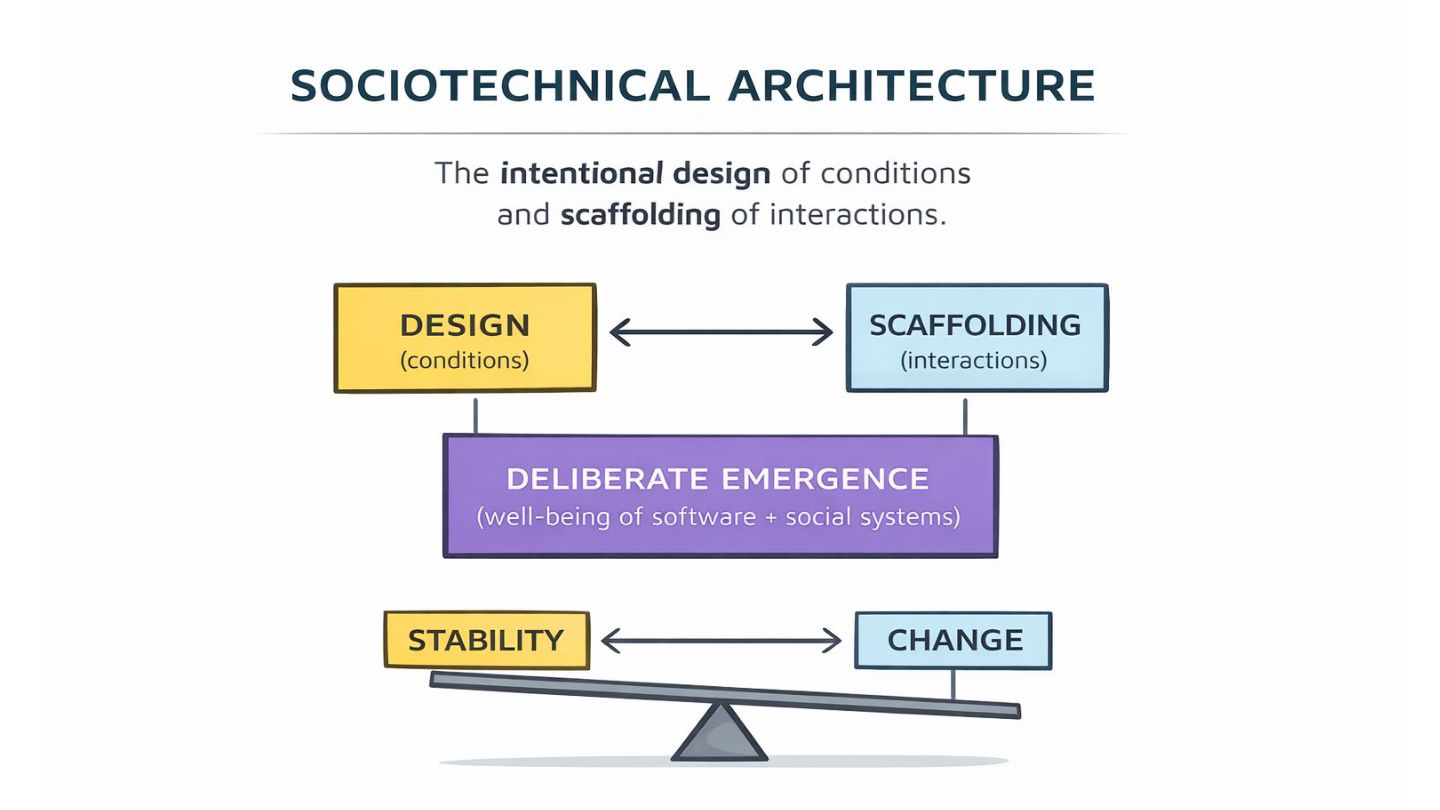
  20. What is sociotechnical architecture? Sociotechnical architecture is the intentional design

    of conditions and the scaffolding of interactions through which an organization can thrive and continuously renew itself in co-evolution with its environment. It brings together principles, patterns, and practices to enable deliberate emergence, jointly optimizing the well-being of both software and social systems, while allowing stability and change to co-arise.
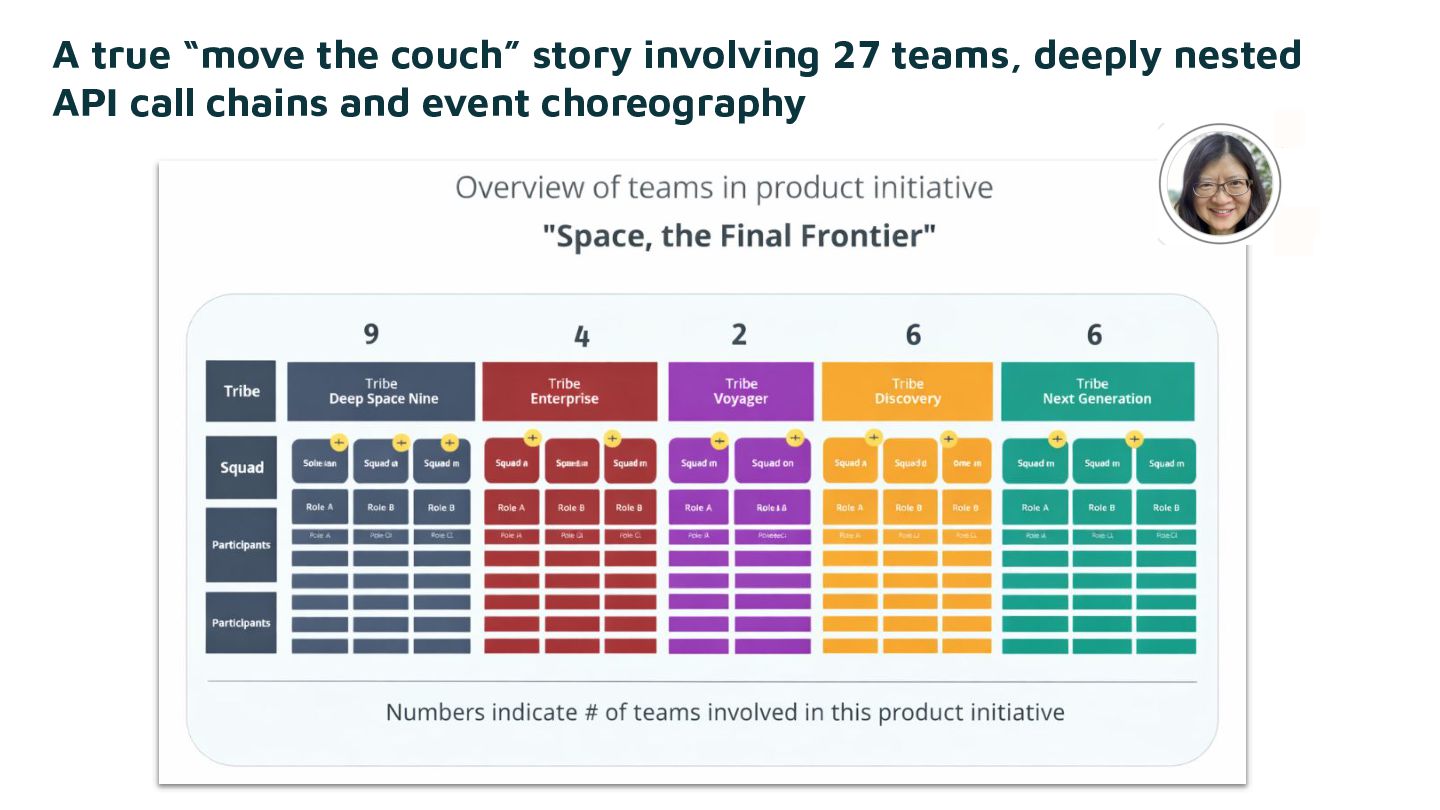
  21. A true “move the couch” story involving 27 teams, deeply

    nested API call chains and event choreography
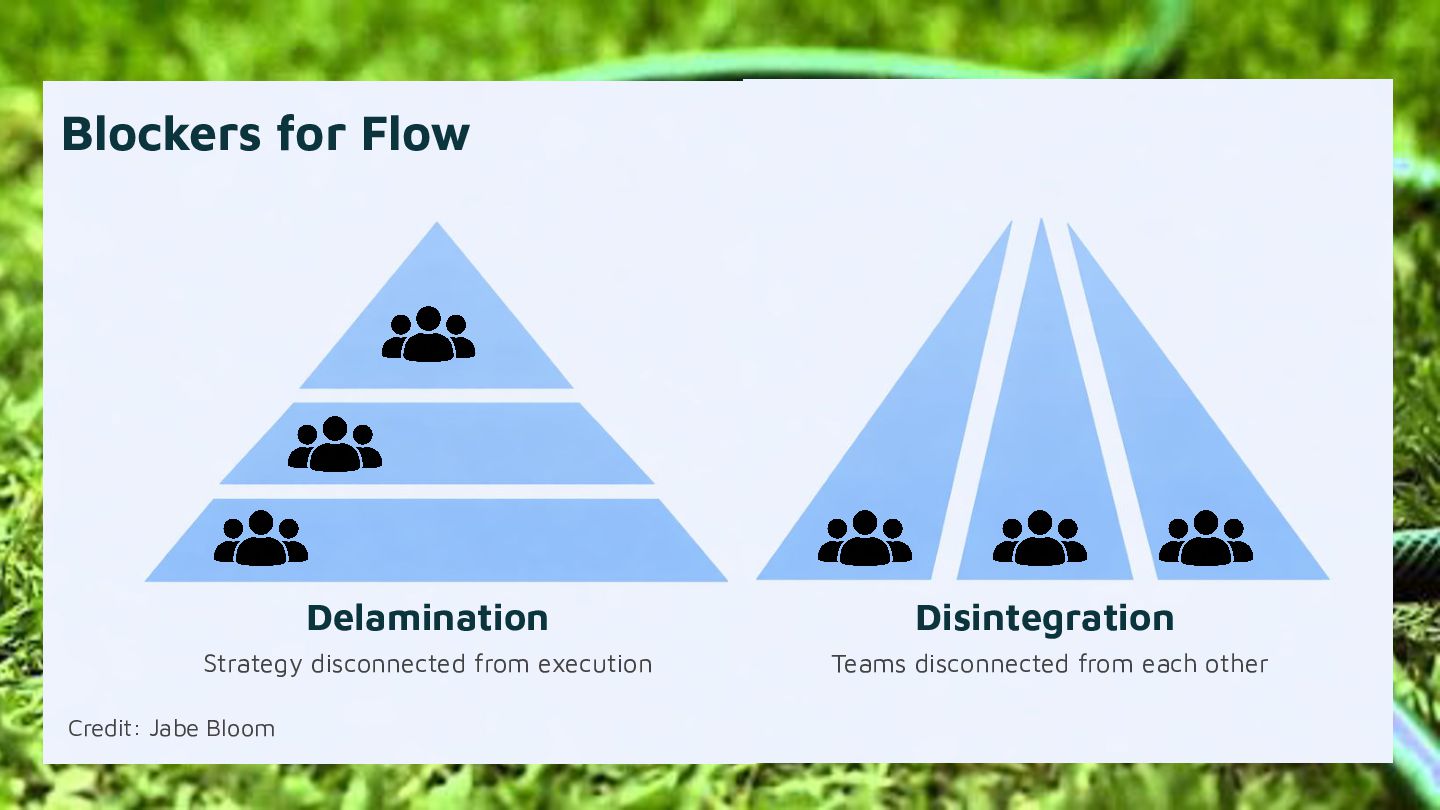
  22. [Antidote to delamination] Pop “the Why Stack” Delamination Task Experiment

    Hypothesis Strategy User needs completes validates supports realizes Credit: Jabe Bloom
  23. [Antidote to disintegration] Recommoning - “Joy of the Commons” How

    can we standardize? How can we differentiate? Delivery Flow Delivery Flow How can we standardize to differentiate? Generative Flow Credit: Jabe Bloom Speed Scale Scope
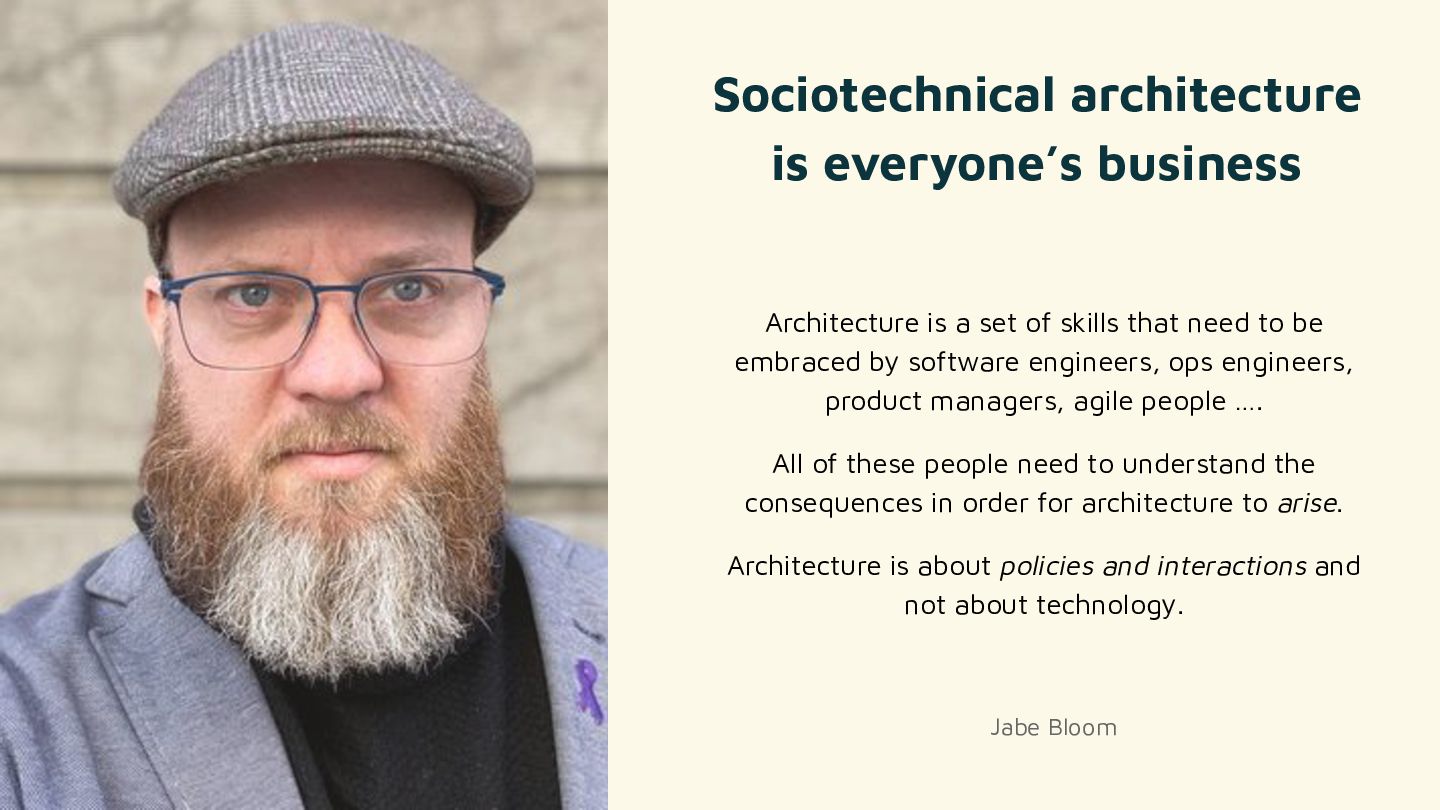
  24. Architecture is a set of skills that need to be

    embraced by software engineers, ops engineers, product managers, agile people …. All of these people need to understand the consequences in order for architecture to arise. Architecture is about policies and interactions and not about technology. Jabe Bloom Sociotechnical architecture is everyone’s business
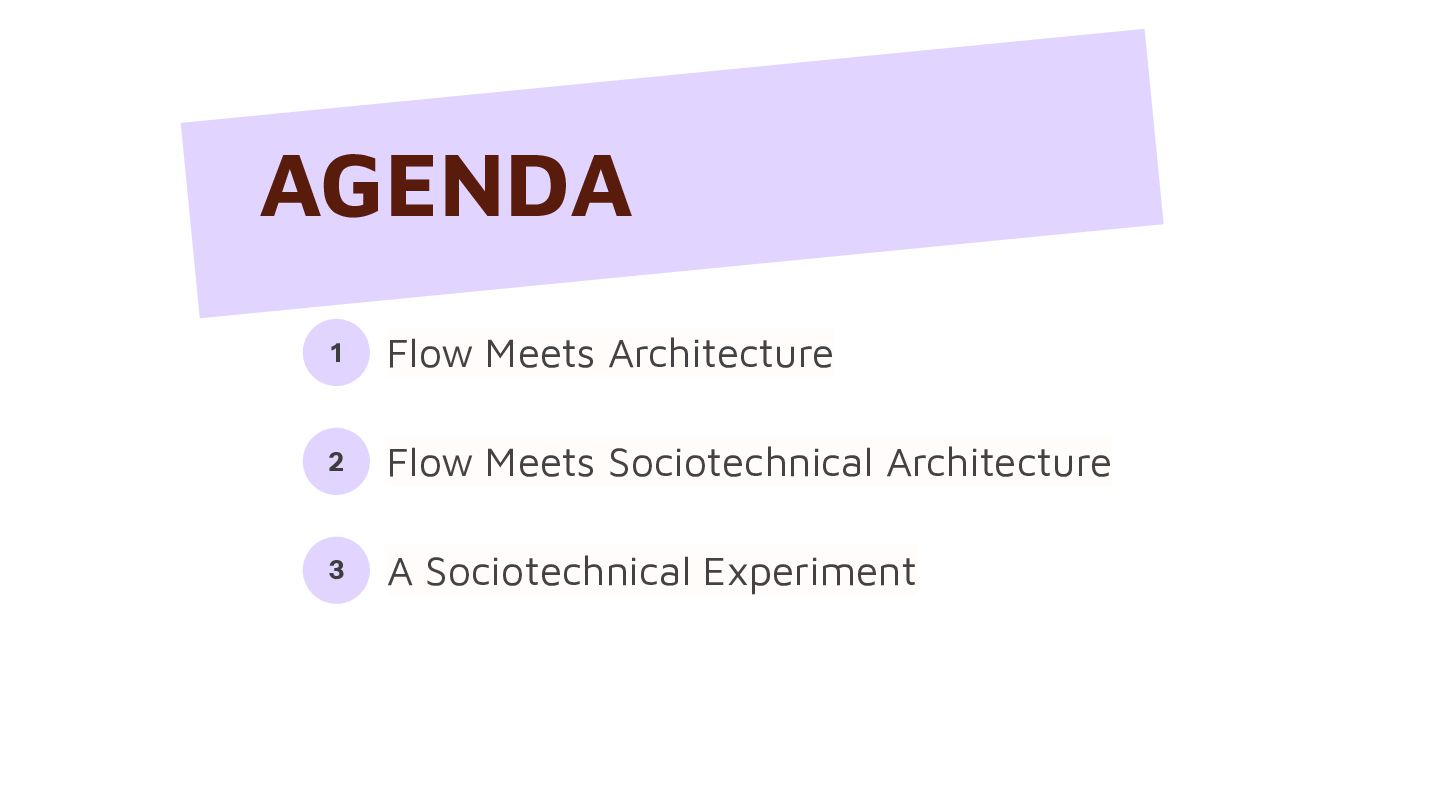
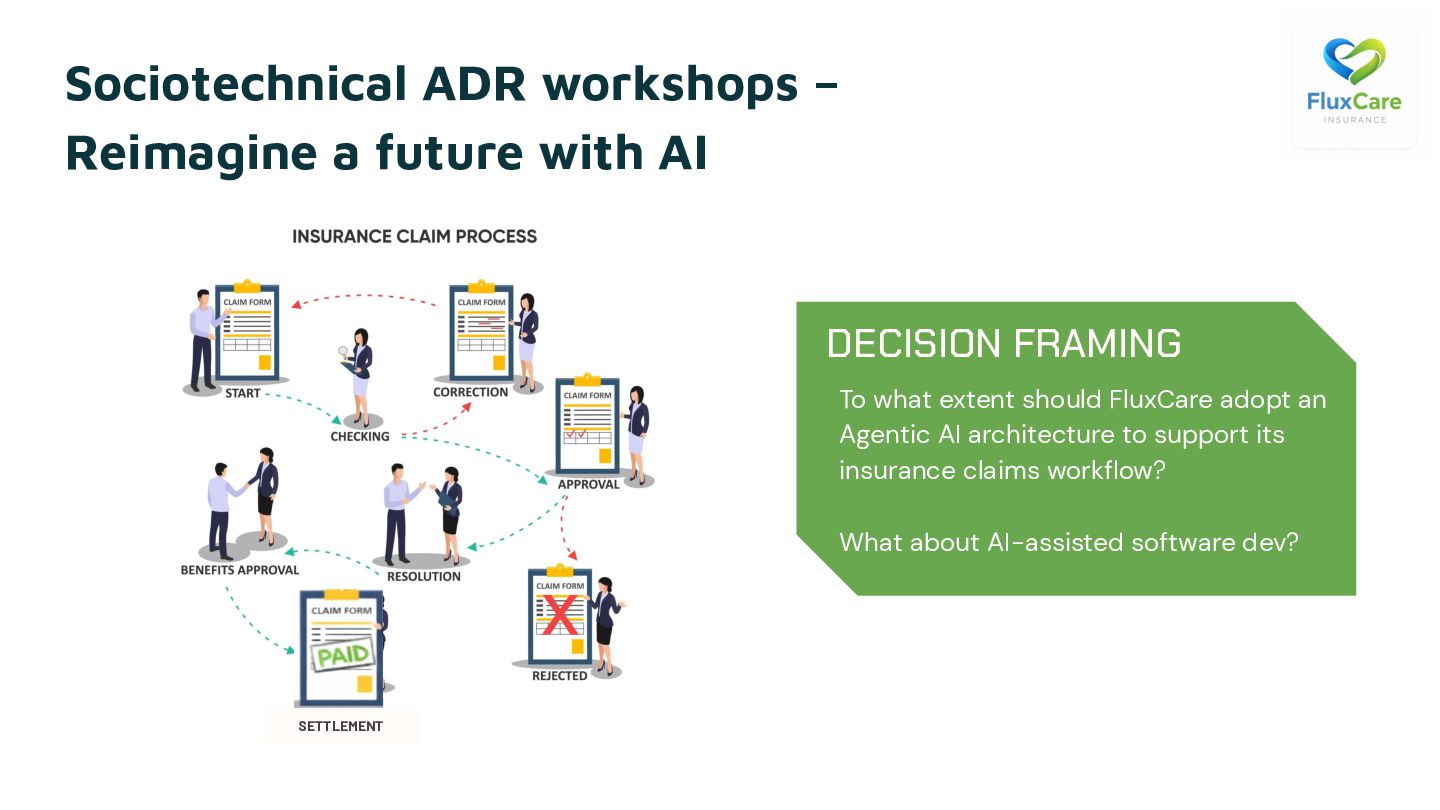
  25. A Sociotechnical Experiment A story in progress @ an insurance

    company Any similarity to real companies is purely coincidental.
  26. DECISION FRAMING To what extent should FluxCare adopt an Agentic

    AI architecture to support its insurance claims workflow? What about AI-assisted software dev? SETTLEMENT Sociotechnical ADR workshops – Reimagine a future with AI
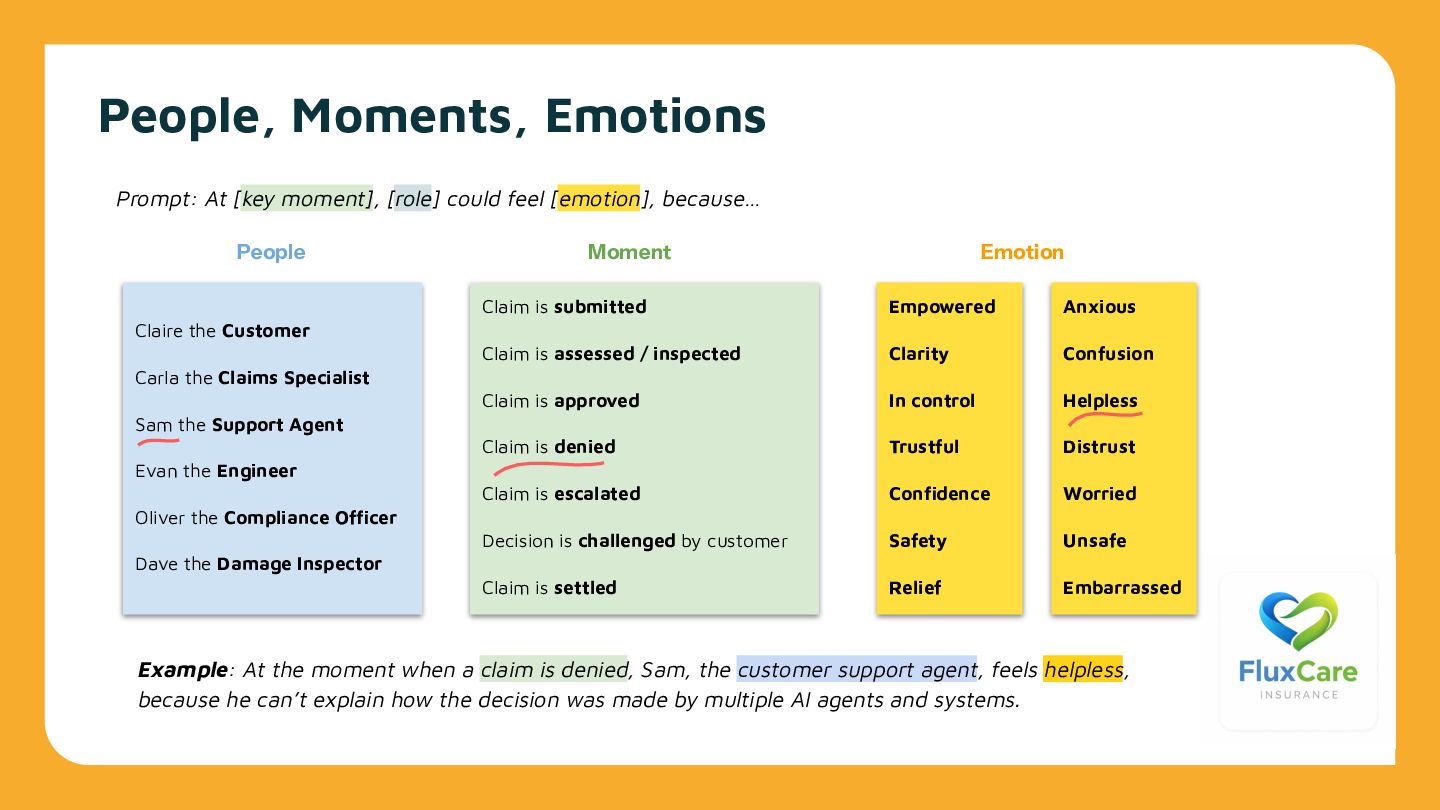
  27. People, Moments, Emotions Claim is submitted Claim is assessed /

    inspected Claim is approved Claim is denied Claim is escalated Decision is challenged by customer Claim is settled Prompt: At [key moment], [role] could feel [emotion], because… Claire the Customer Carla the Claims Specialist Sam the Support Agent Evan the Engineer Oliver the Compliance Officer Dave the Damage Inspector People Moment Empowered Clarity In control Trustful Confidence Safety Relief Emotion Example: At the moment when a claim is denied, Sam, the customer support agent, feels helpless, because he can’t explain how the decision was made by multiple AI agents and systems. Anxious Confusion Helpless Distrust Worried Unsafe Embarrassed
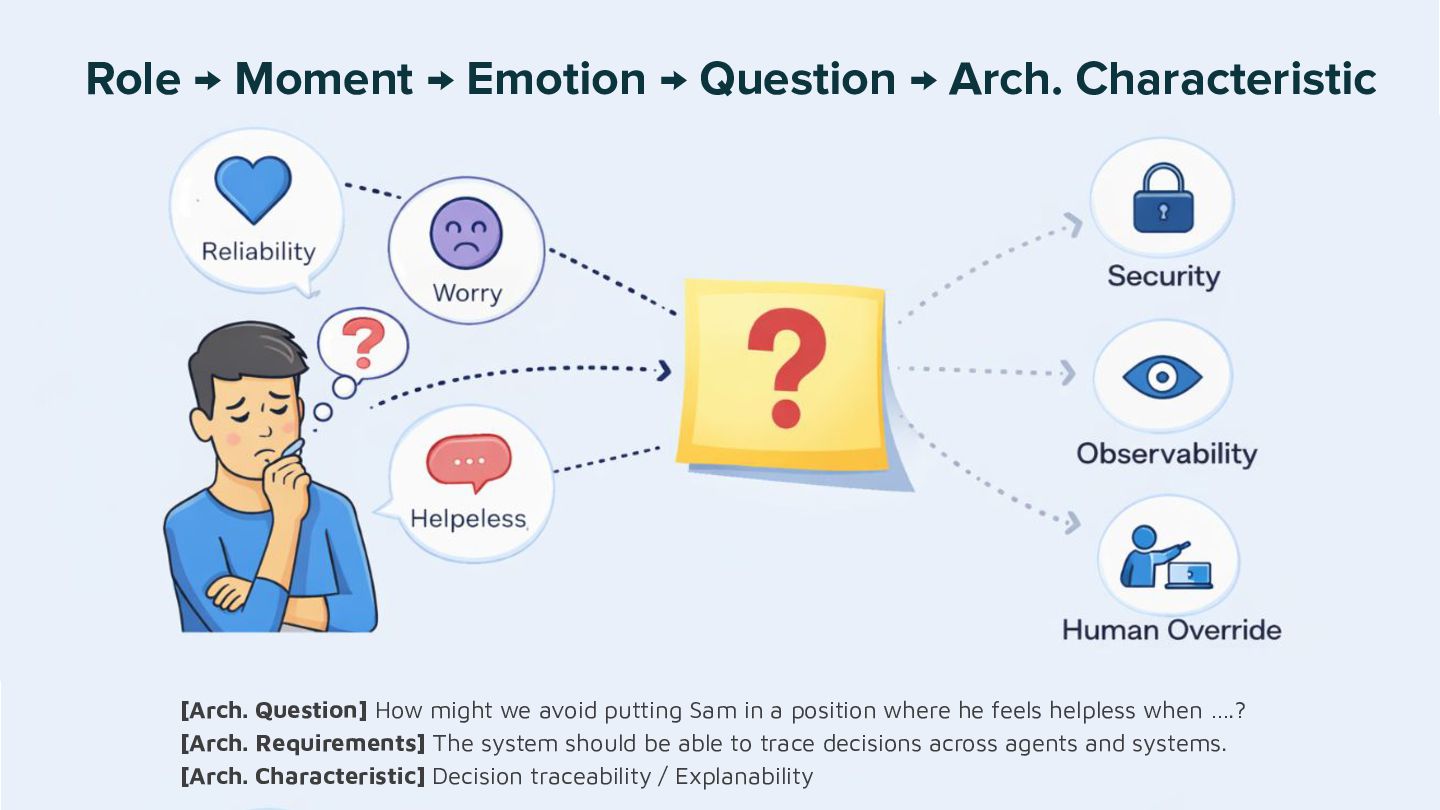
  28. Role → Moment → Emotion → Question → Arch. Characteristic

    [Arch. Question] How might we avoid putting Sam in a position where he feels helpless when ….? [Arch. Requirements] The system should be able to trace decisions across agents and systems. [Arch. Characteristic] Decision traceability / Explanability
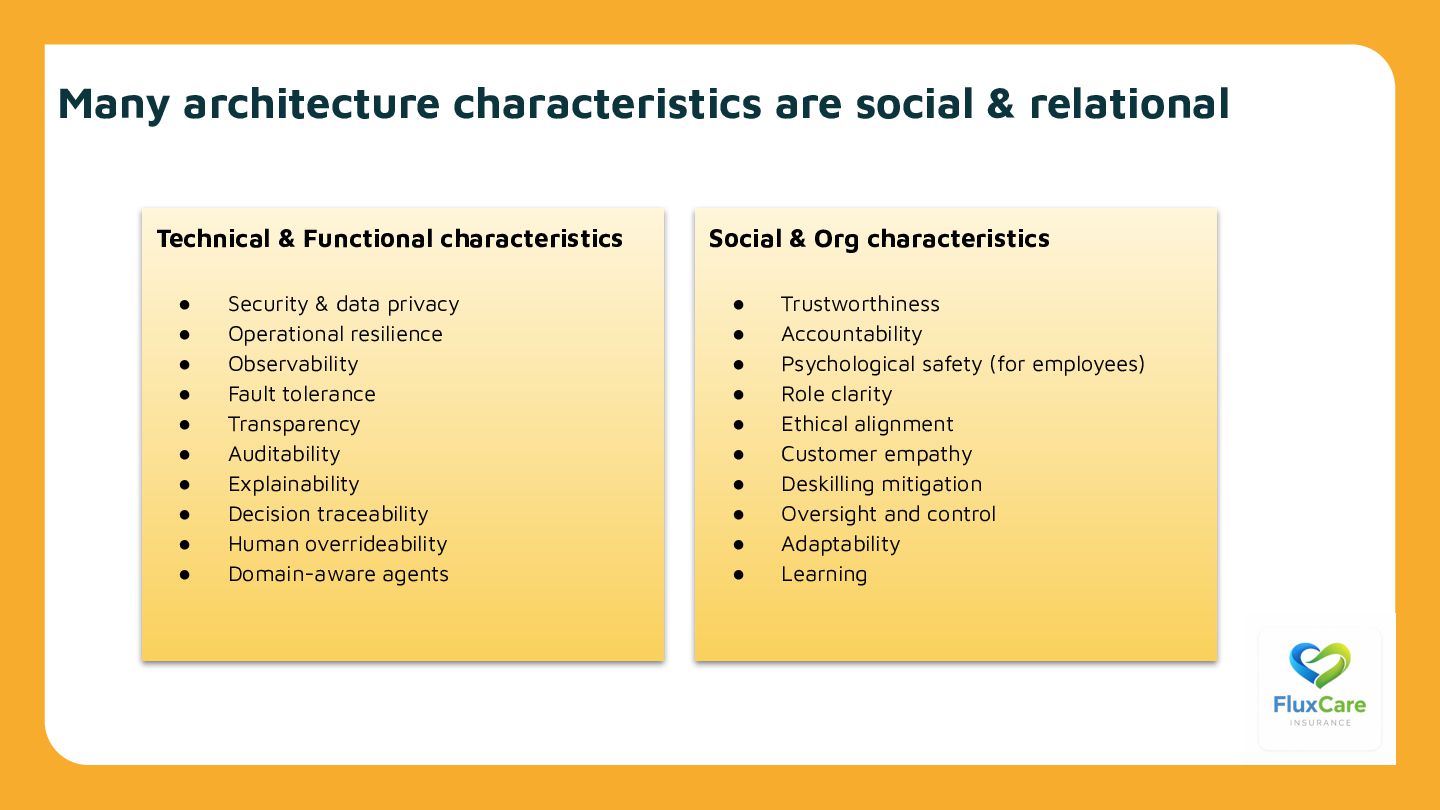
  29. Technical & Functional characteristics • Security & data privacy •

    Operational resilience • Observability • Fault tolerance • Transparency • Auditability • Explainability • Decision traceability • Human overrideability • Domain-aware agents Social & Org characteristics • Trustworthiness • Accountability • Psychological safety (for employees) • Role clarity • Ethical alignment • Customer empathy • Deskilling mitigation • Oversight and control • Adaptability • Learning Many architecture characteristics are social & relational
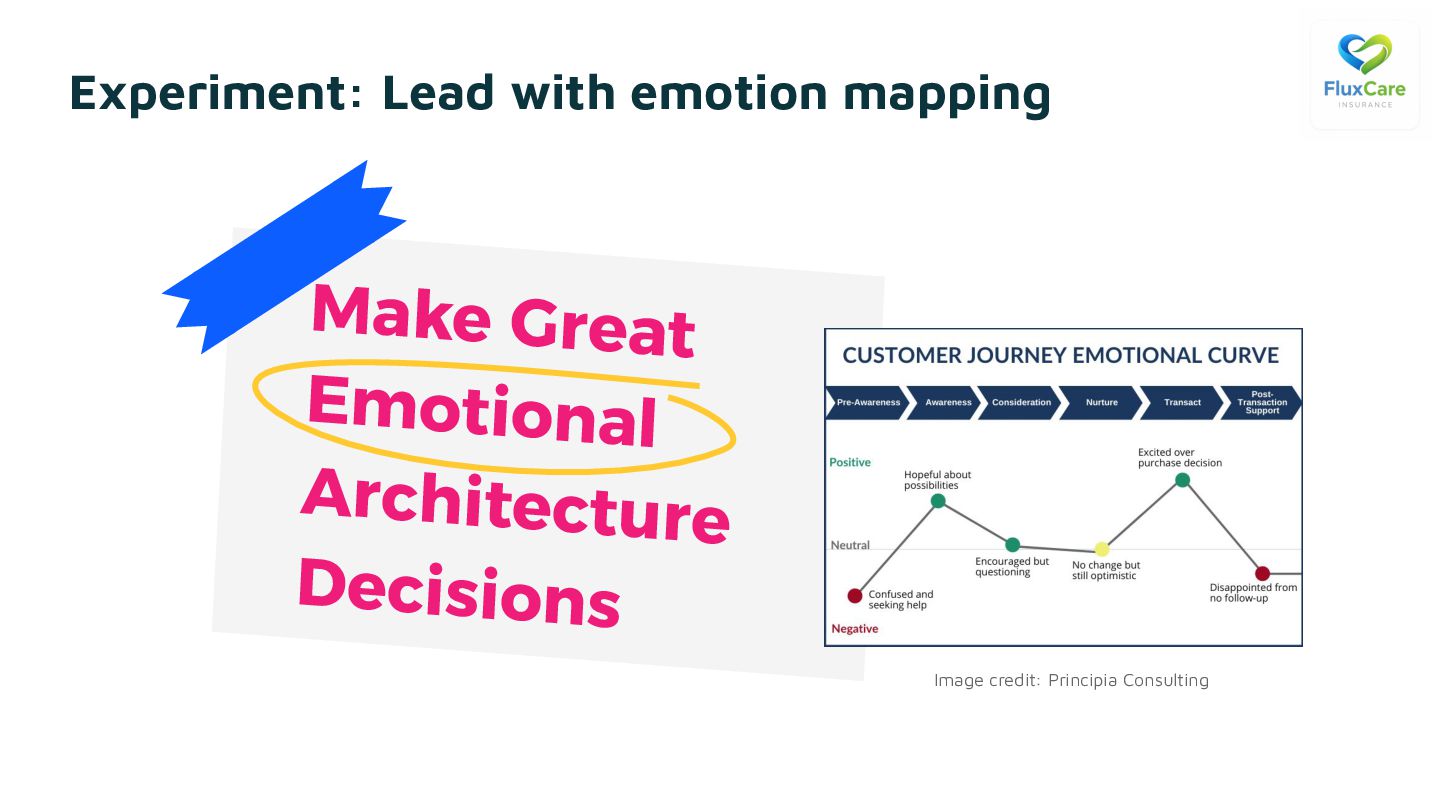
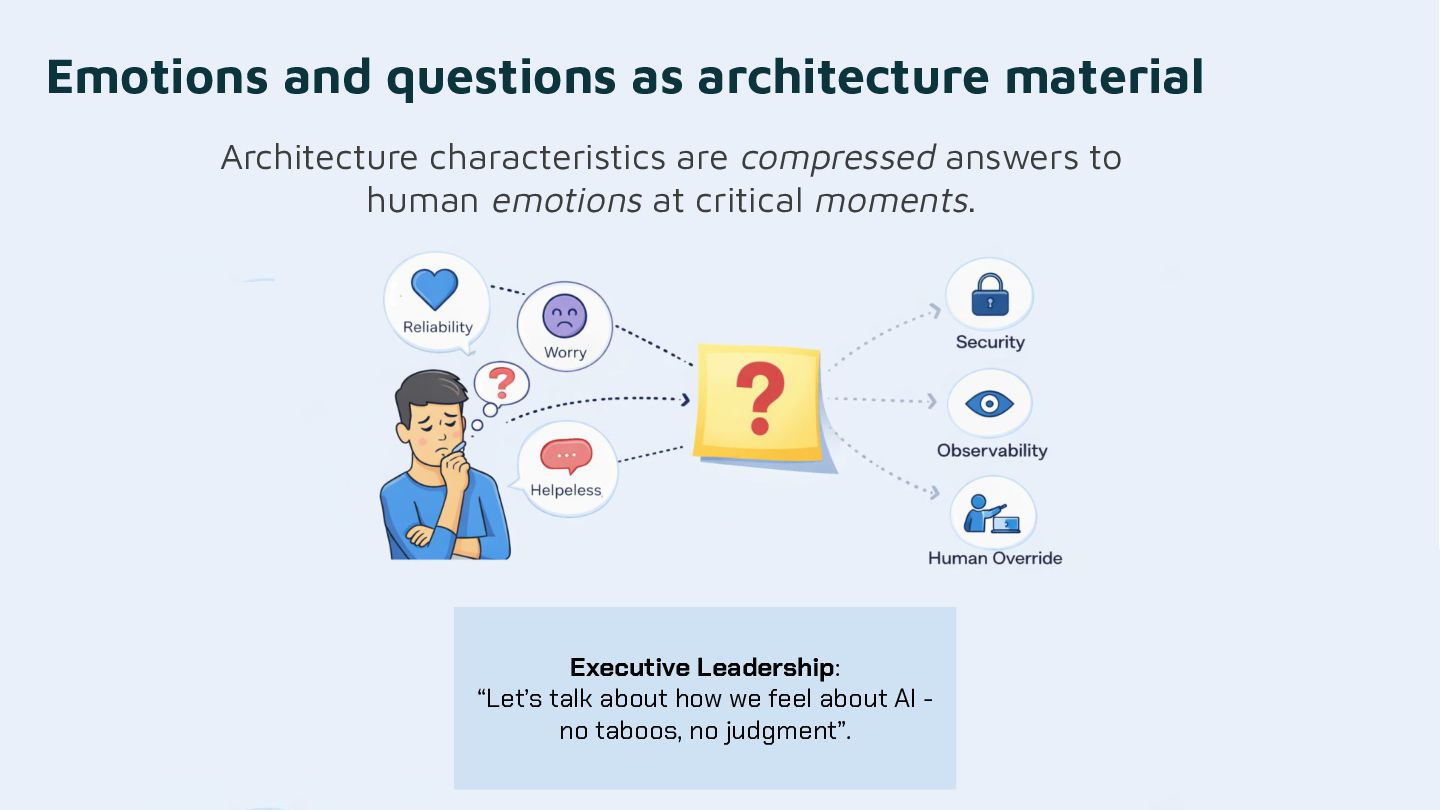
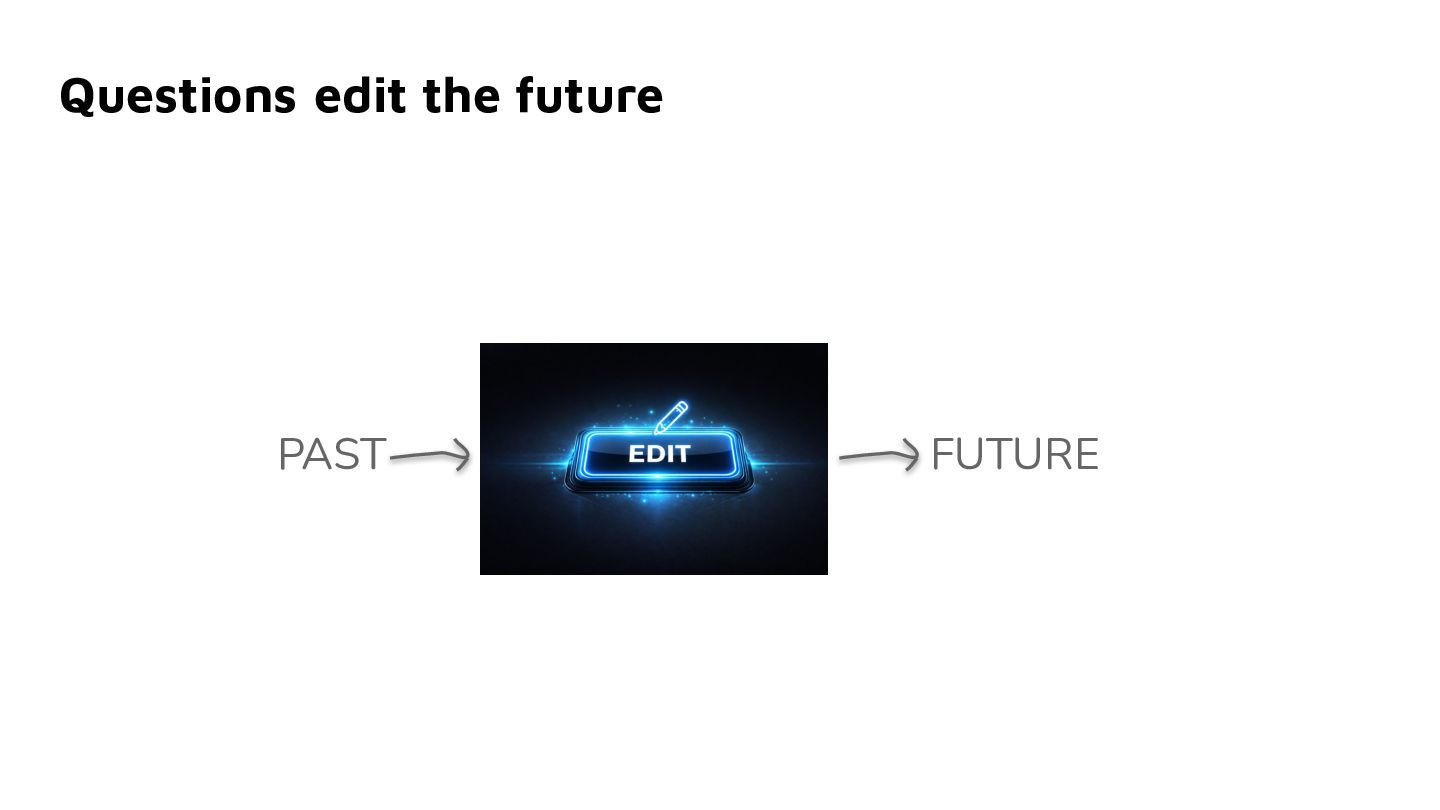
  30. Emotions and questions as architecture material Architecture characteristics are compressed

    answers to human emotions at critical moments. Executive Leadership: “Let’s talk about how we feel about AI - no taboos, no judgment”.
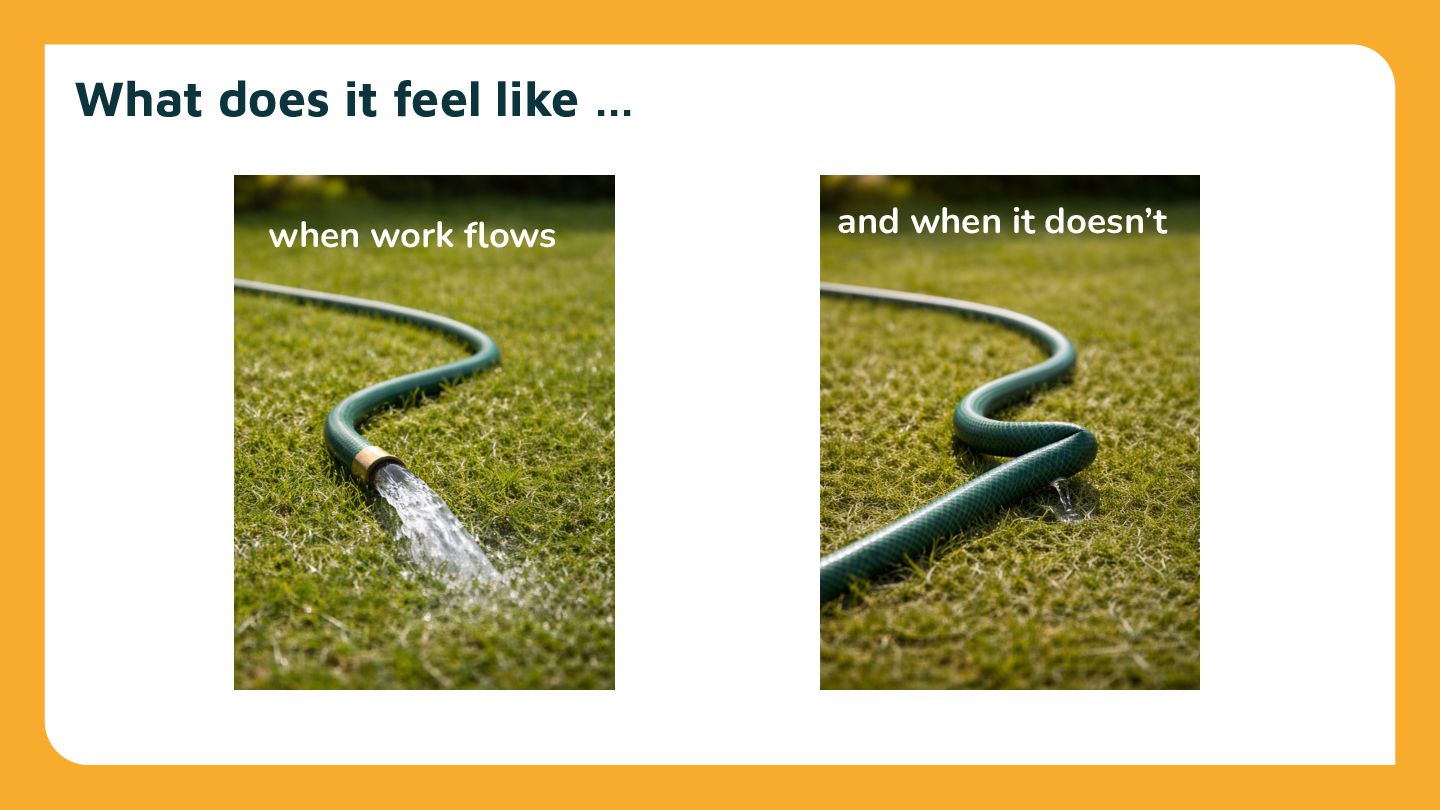
  31. when work flows and when it doesn’t Let’s rehearse the

    future What’s one question that would bring more flow to your work?
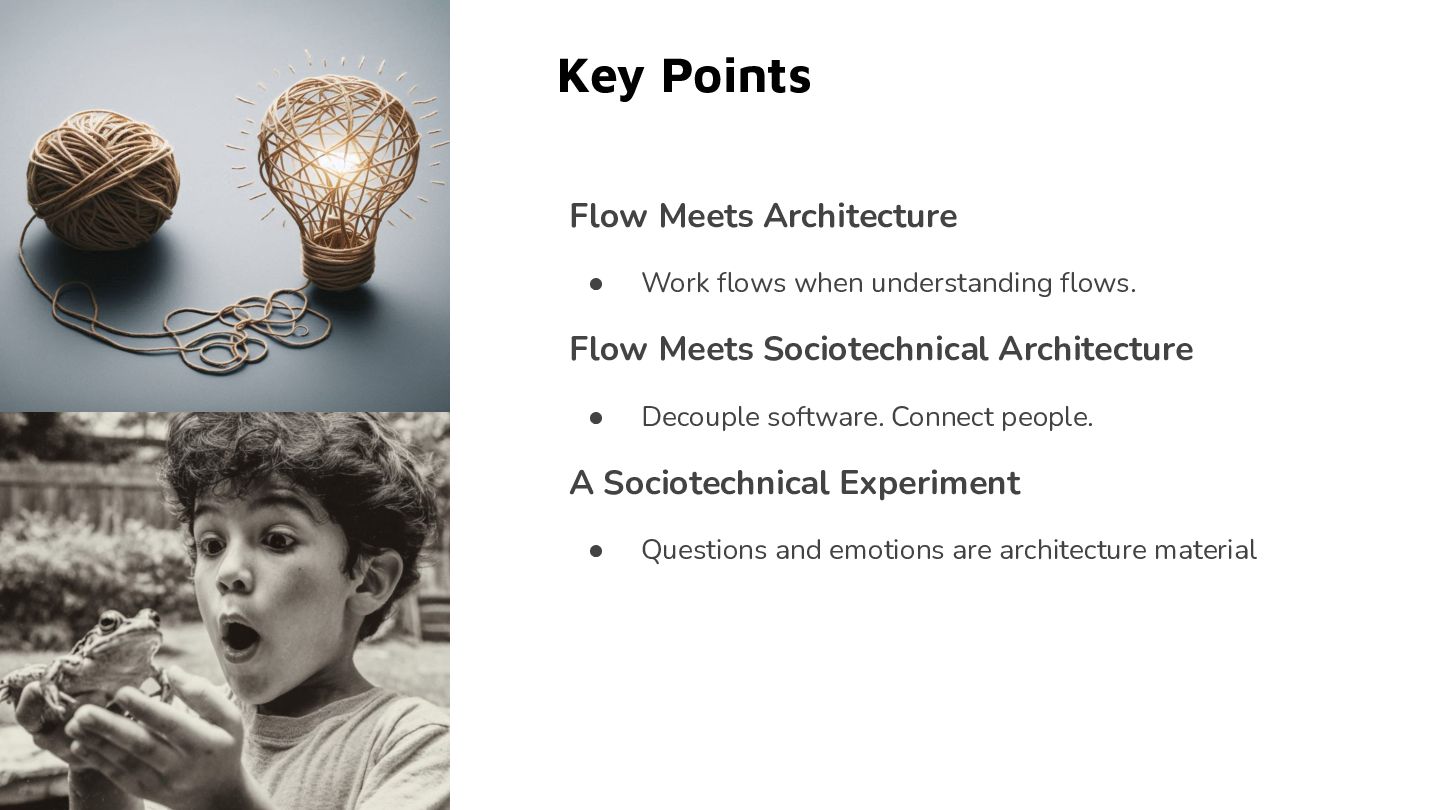
  32. Key Points Flow Meets Architecture • Work flows when understanding

    flows. Flow Meets Sociotechnical Architecture • Decouple software. Connect people. A Sociotechnical Experiment • Questions and emotions are architecture material
  33. Xin Yao · FlowCon Paris 2026 Sociotechnical Architecture Finding Flow

    Sociotechnical Architecture Finding Flow Xin Yao · FlowCon · Paris 2026 @settling-mud.bsky.social @[email protected] https://www.linkedin.com/in/xinxin Thank you!