Lock in $30 Savings on PRO—Offer Ends Soon! ⏳

計算機科学をRubyと歩む 〜DFA型正規表現エンジンをつくる~

Avatar for ydah ydah
December 05, 2025

計算機科学をRubyと歩む 〜DFA型正規表現エンジンをつくる~

北陸Ruby会議01「計算機科学をRubyと歩む 〜DFA型正規表現エンジンをつくる~」の発表スライド。
https://regional.rubykaigi.org/hokuriku01/#SESSION-4 #hokurikurk01

Avatar for ydah

ydah

December 05, 2025
Tweet

More Decks by ydah

Other Decks in Technology

Transcript

  1. 髙田 雄大 ID: @ydah プロダクトエンジニア @ 株式会社SmartHR (CRuby | Lrama)コミッター

    Kyobashi.rb 創設メンバー (関西 | 大阪 )Ruby会議チーフオーガナイザー
  2. Unsolicited Ads 関西Ruby会議08 Otsu Traditional Performing Arts Center 2026-07-18(Sat) RubyKansai,

    Kyoto.rb, KOBE.rb, AKASHI.rb, RubyMaizuru Kyobashi.rb, Ruby Tuesday, Shinosaka.rb, naniwa.rb, Wakayama.rb
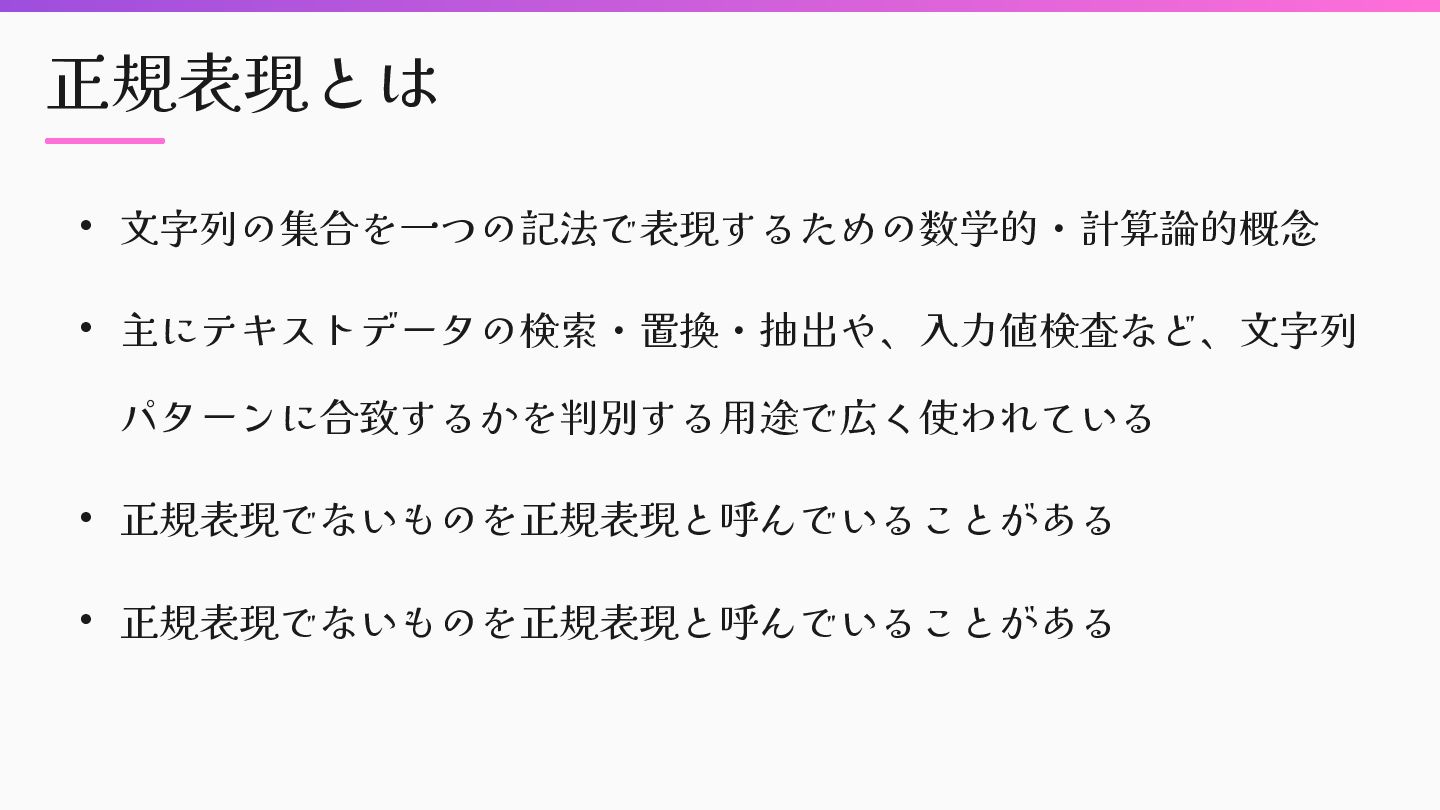
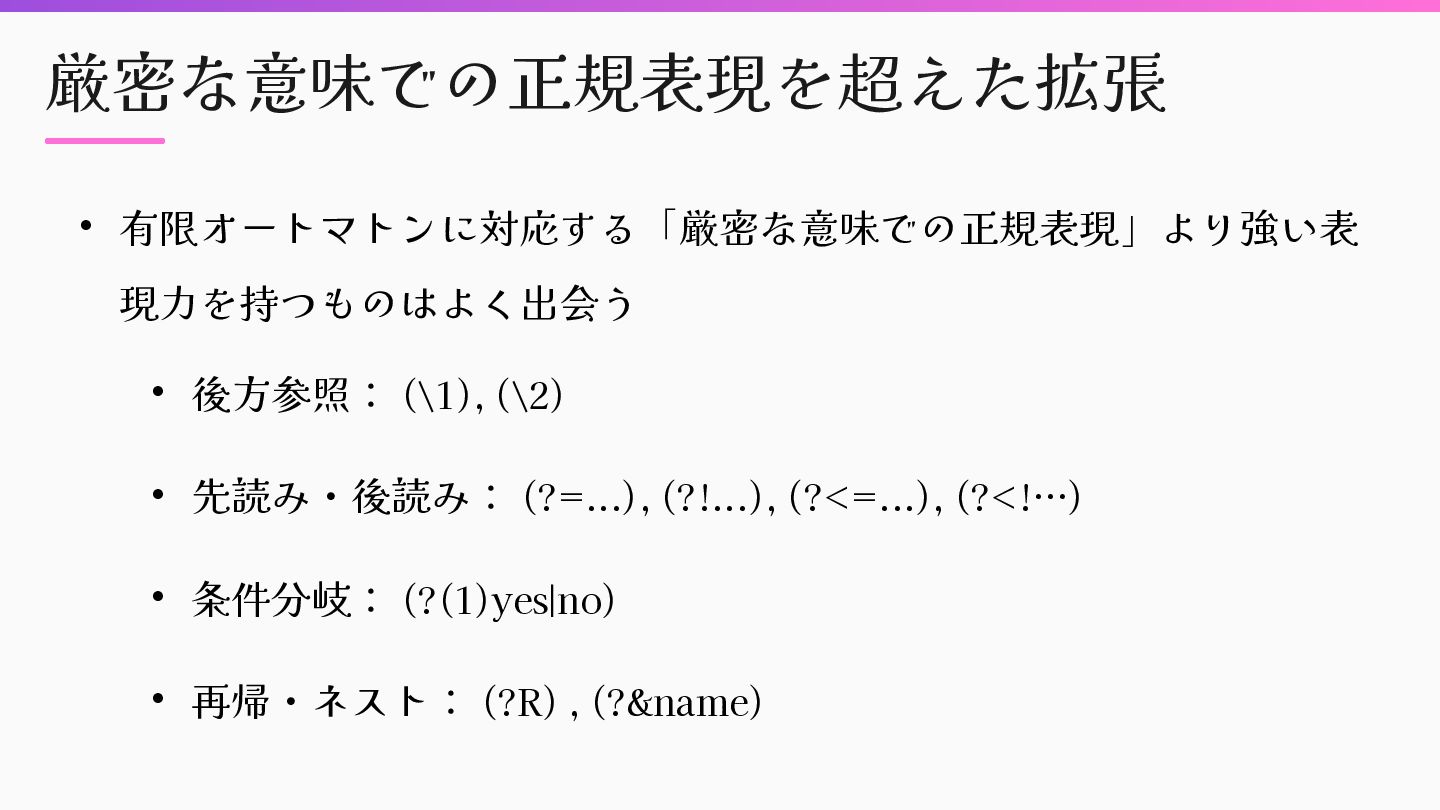
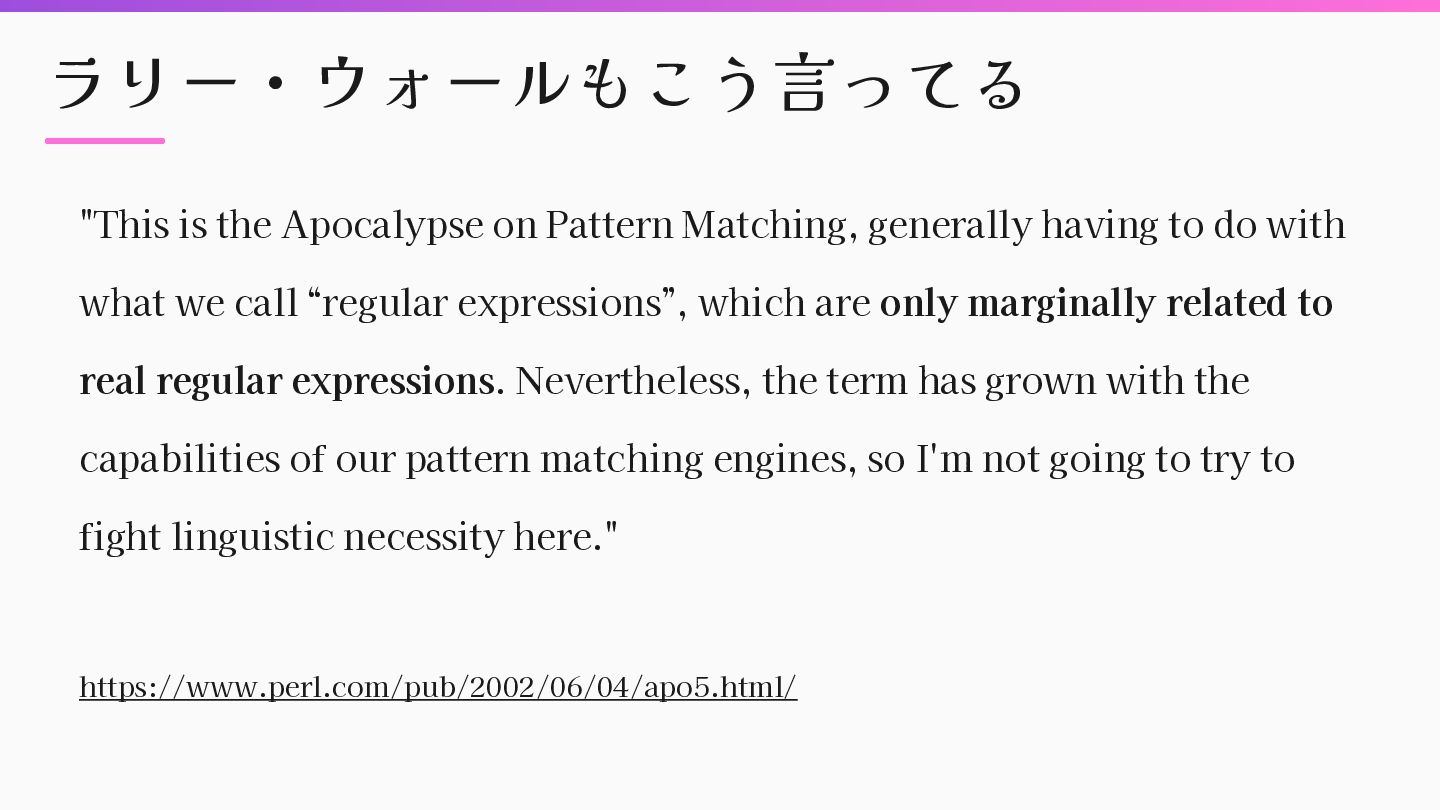
  3. ラリー・ウォールもこう言ってる "This is the Apocalypse on Pattern Matching, generally having

    to do with what we call “regular expressions”, which are only marginally related to real regular expressions. Nevertheless, the term has grown with the capabilities of our pattern matching engines, so I'm not going to try to fight linguistic necessity here." https://www.perl.com/pub/2002/06/04/apo5.html/
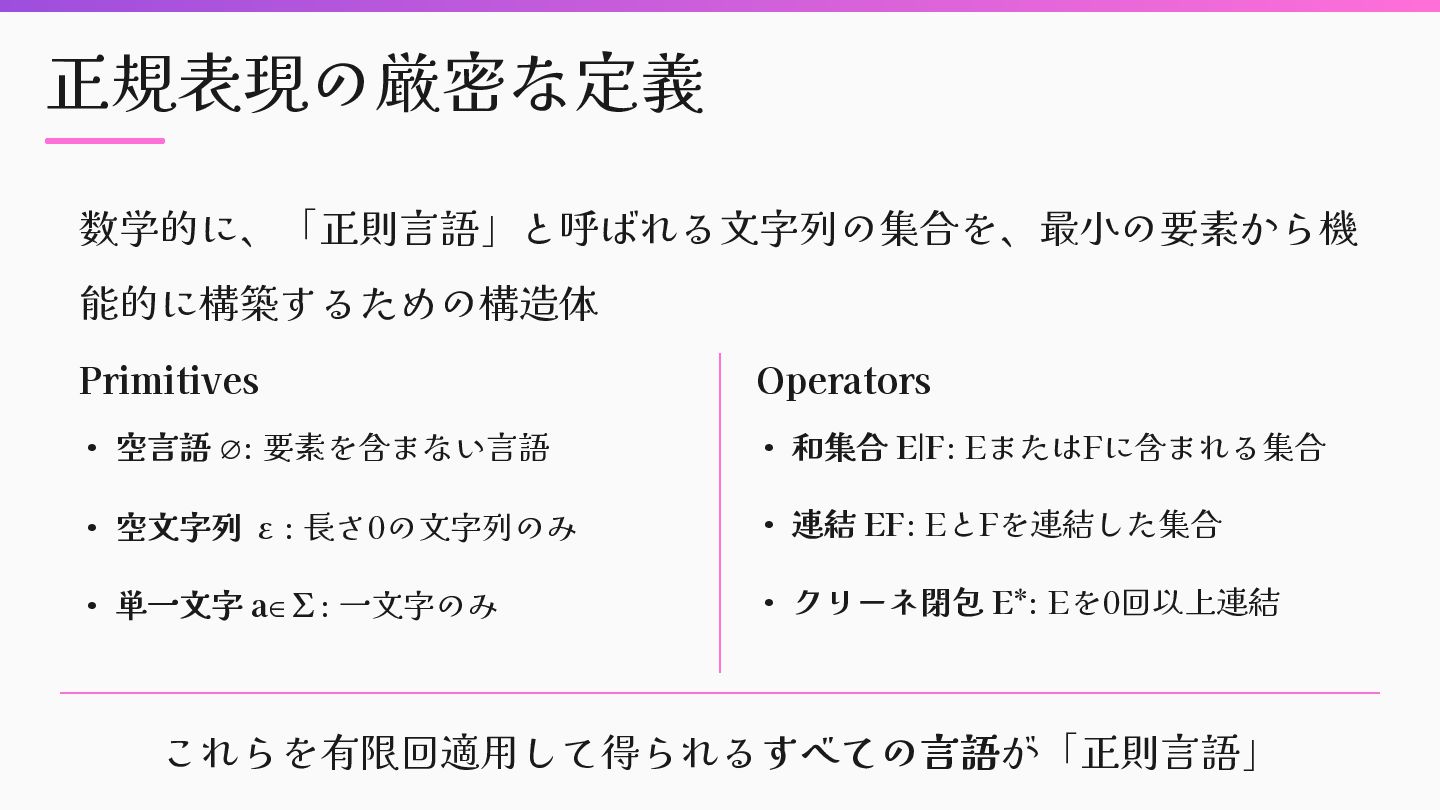
  4. 正規表現の厳密な定義 数学的に、「正則言語」と呼ばれる文字列の集合を、最小の要素から機 能的に構築するための構造体 Primitives Operators • 空言語 ∅: 要素を含まない言語 •

    空文字列 ε: 長さ0の文字列のみ • 単一文字 a∈Σ: 一文字のみ • 和集合 E|F: EまたはFに含まれる集合 • 連結 EF: EとFを連結した集合 • クリーネ閉包 E*: Eを0回以上連結 これらを有限回適用して得られるすべての言語が「正則言語」
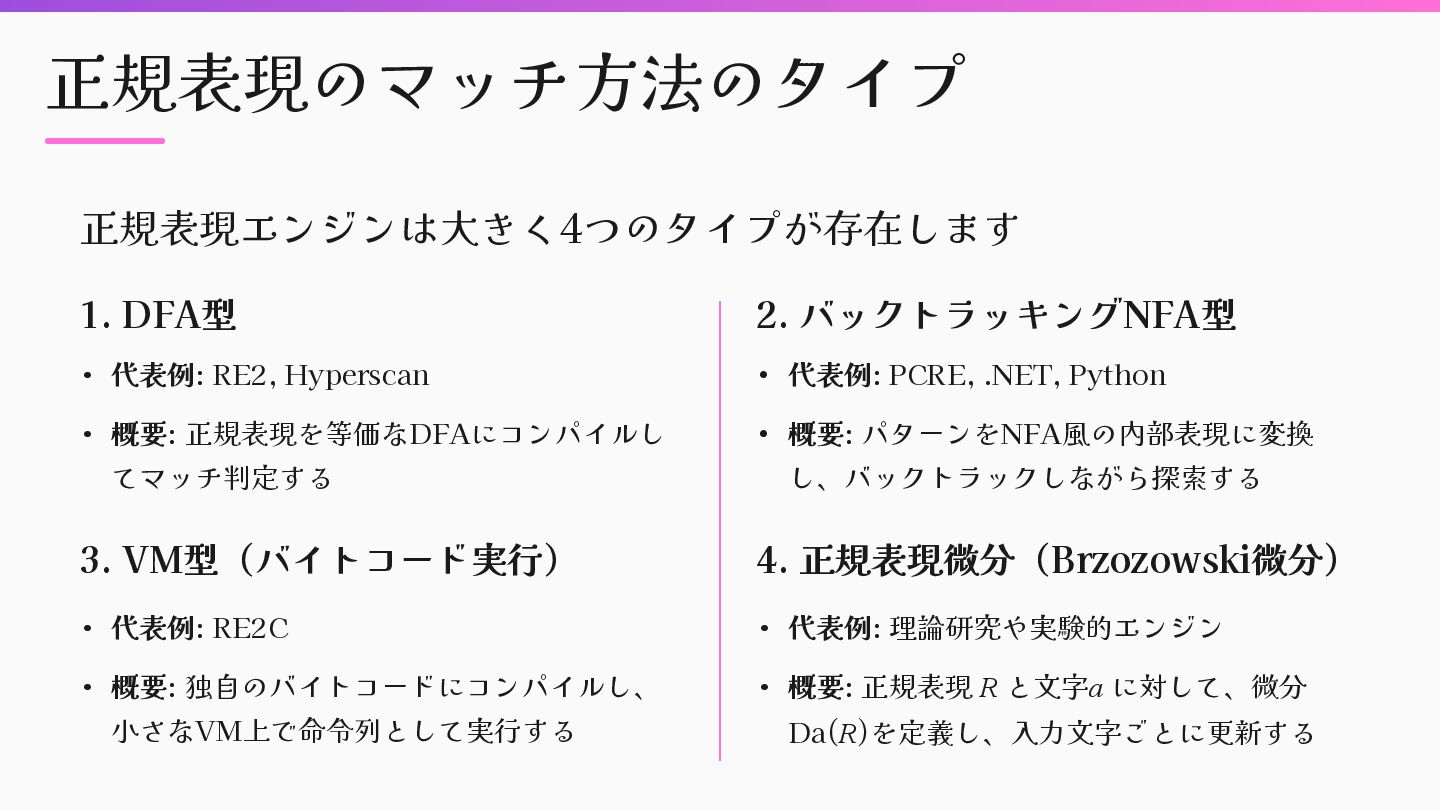
  5. 正規表現のマッチ方法のタイプ 正規表現エンジンは大きく4つのタイプが存在します 1. DFA型 2. バックトラッキングNFA型 3. VM型(バイトコード実行) 4. 正規表現微分(Brzozowski微分)

    • 代表例: RE2, Hyperscan • 概要: 正規表現を等価なDFAにコンパイルし てマッチ判定する • 代表例: RE2C • 概要: 独自のバイトコードにコンパイルし、 小さなVM上で命令列として実行する • 代表例: PCRE, .NET, Python • 概要: パターンをNFA風の内部表現に変換 し、バックトラックしながら探索する • 代表例: 理論研究や実験的エンジン • 概要: 正規表現 R と文字a に対して、微分 Da(R)を定義し、入力文字ごとに更新する
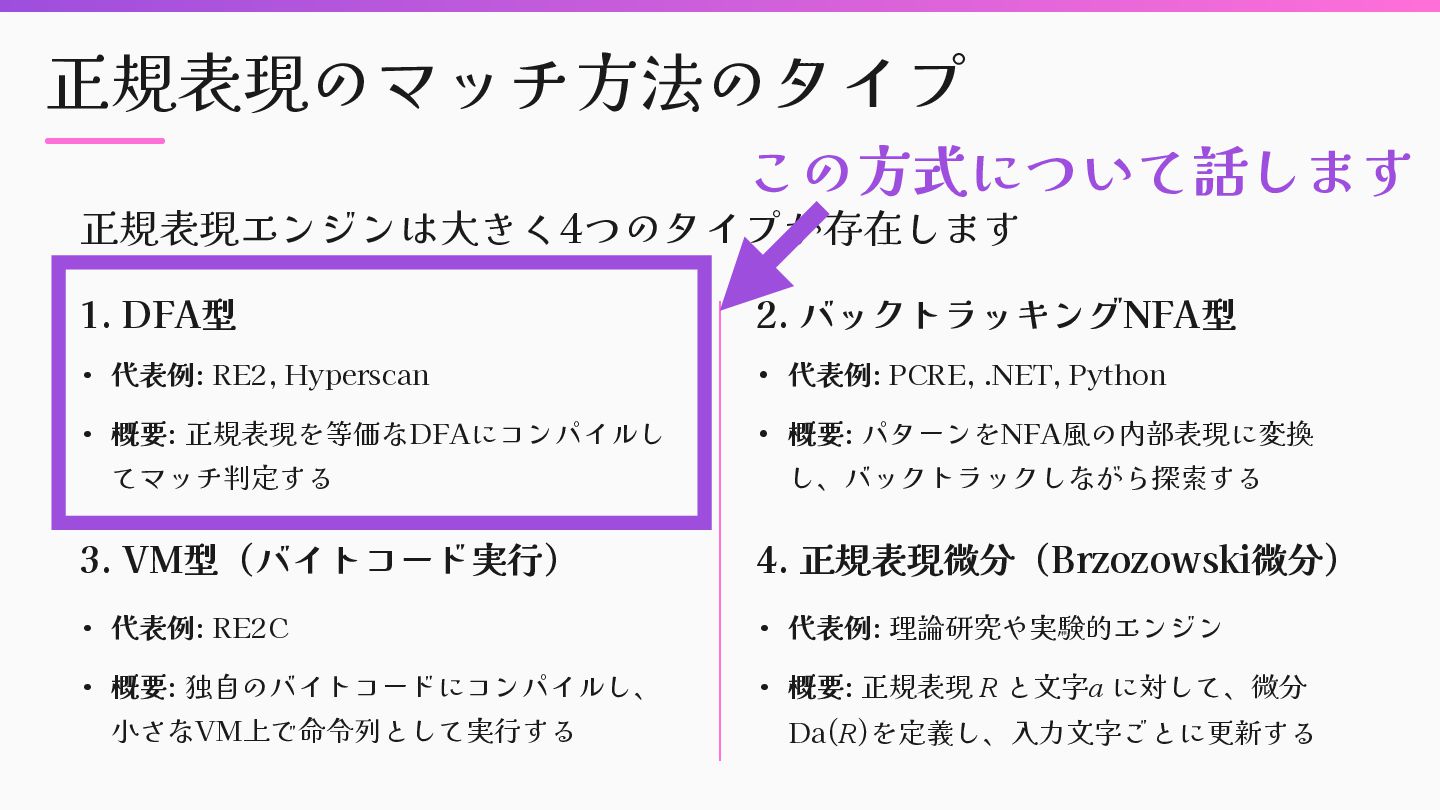
  6. 正規表現のマッチ方法のタイプ 正規表現エンジンは大きく4つのタイプが存在します 1. DFA型 2. バックトラッキングNFA型 3. VM型(バイトコード実行) 4. 正規表現微分(Brzozowski微分)

    • 代表例: RE2, Hyperscan • 概要: 正規表現を等価なDFAにコンパイルし てマッチ判定する • 代表例: RE2C • 概要: 独自のバイトコードにコンパイルし、 小さなVM上で命令列として実行する • 代表例: PCRE, .NET, Python • 概要: パターンをNFA風の内部表現に変換 し、バックトラックしながら探索する • 代表例: 理論研究や実験的エンジン • 概要: 正規表現 R と文字a に対して、微分 Da(R)を定義し、入力文字ごとに更新する この方式について話します
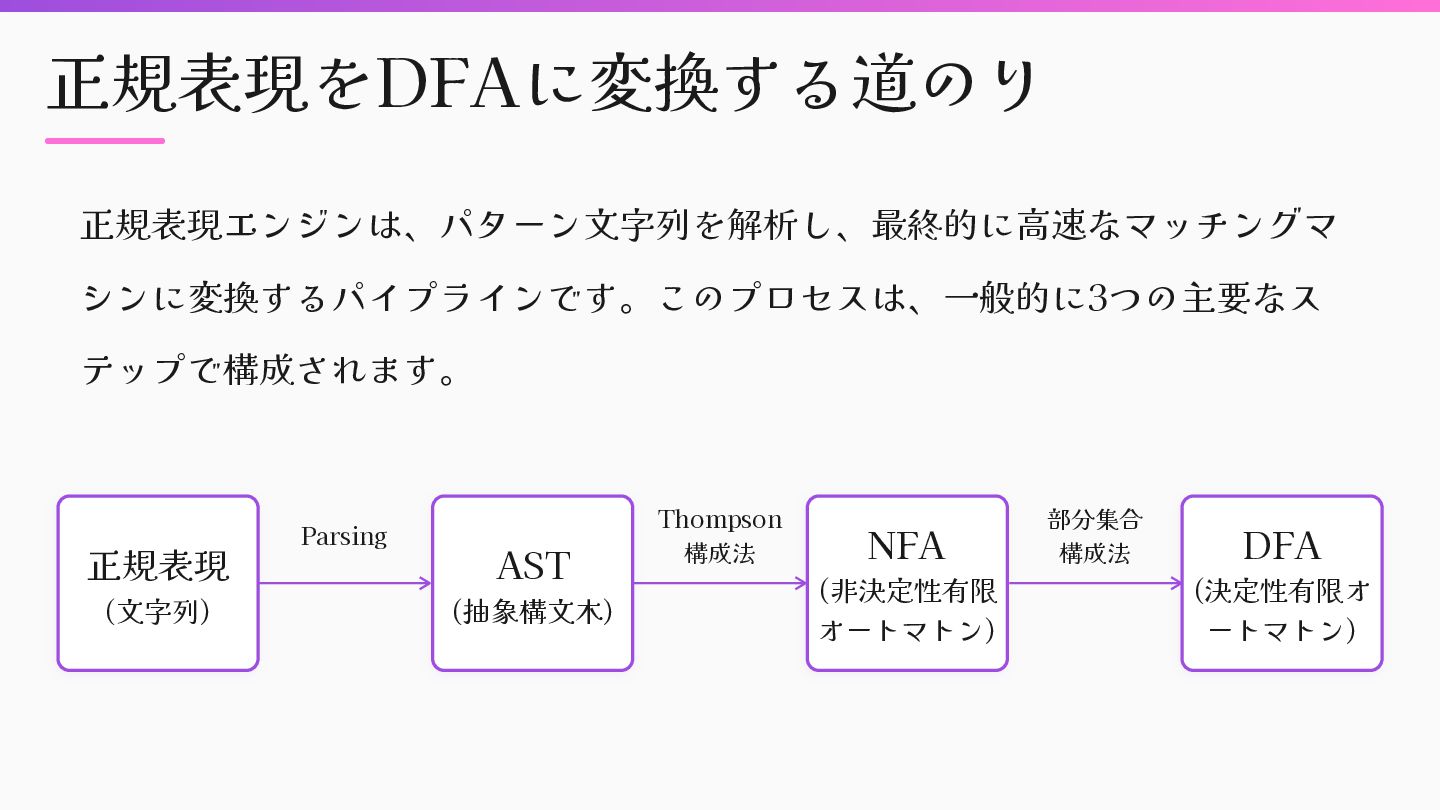
  7. 正規表現をDFAに変換する道のり 正規表現 (文字列) AST (抽象構文木) NFA (非決定性有限 オートマトン) DFA (決定性有限オ

    ートマトン) Parsing Thompson 構成法 部分集合 構成法 正規表現エンジンは、パターン文字列を解析し、最終的に高速なマッチングマ シンに変換するパイプラインです。このプロセスは、一般的に3つの主要なス テップで構成されます。
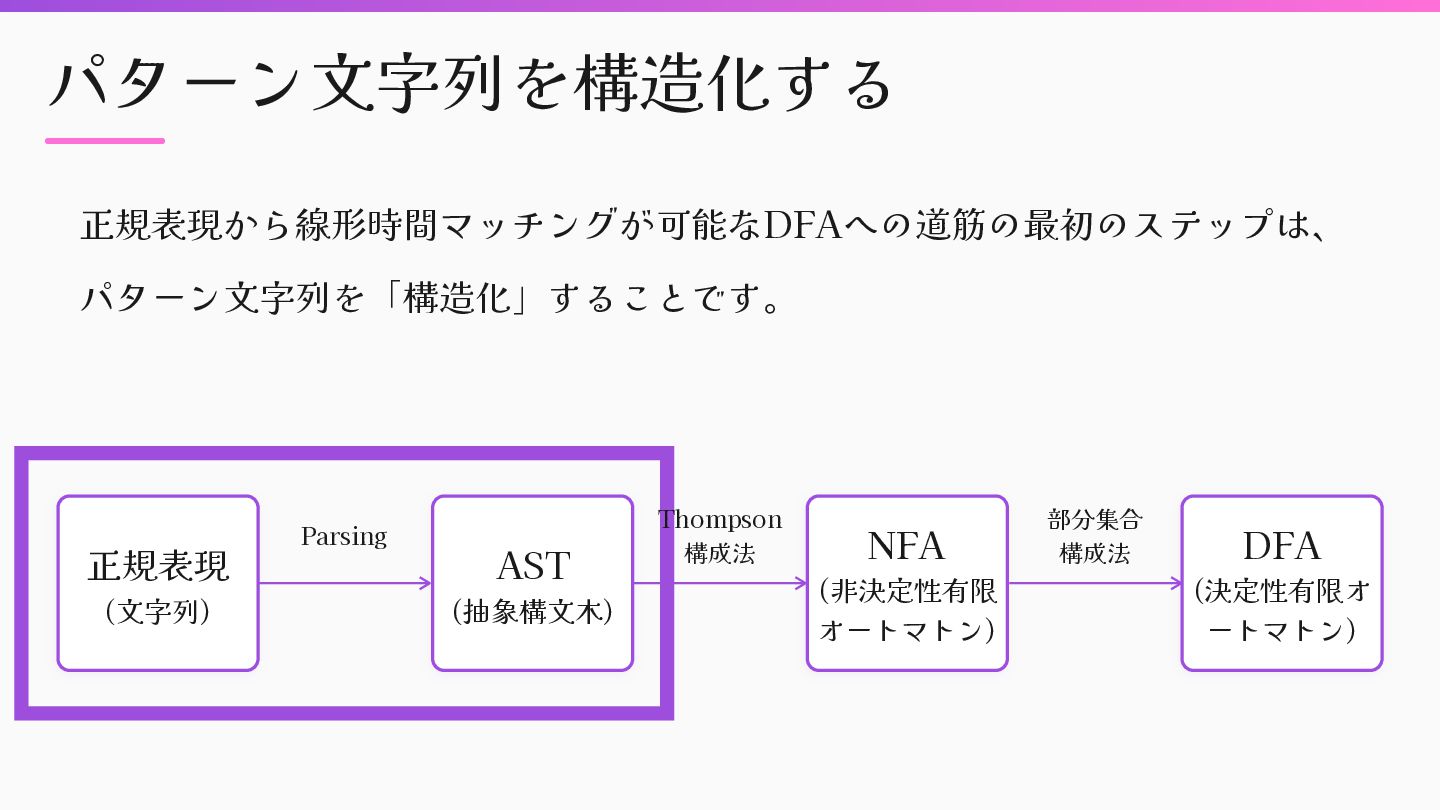
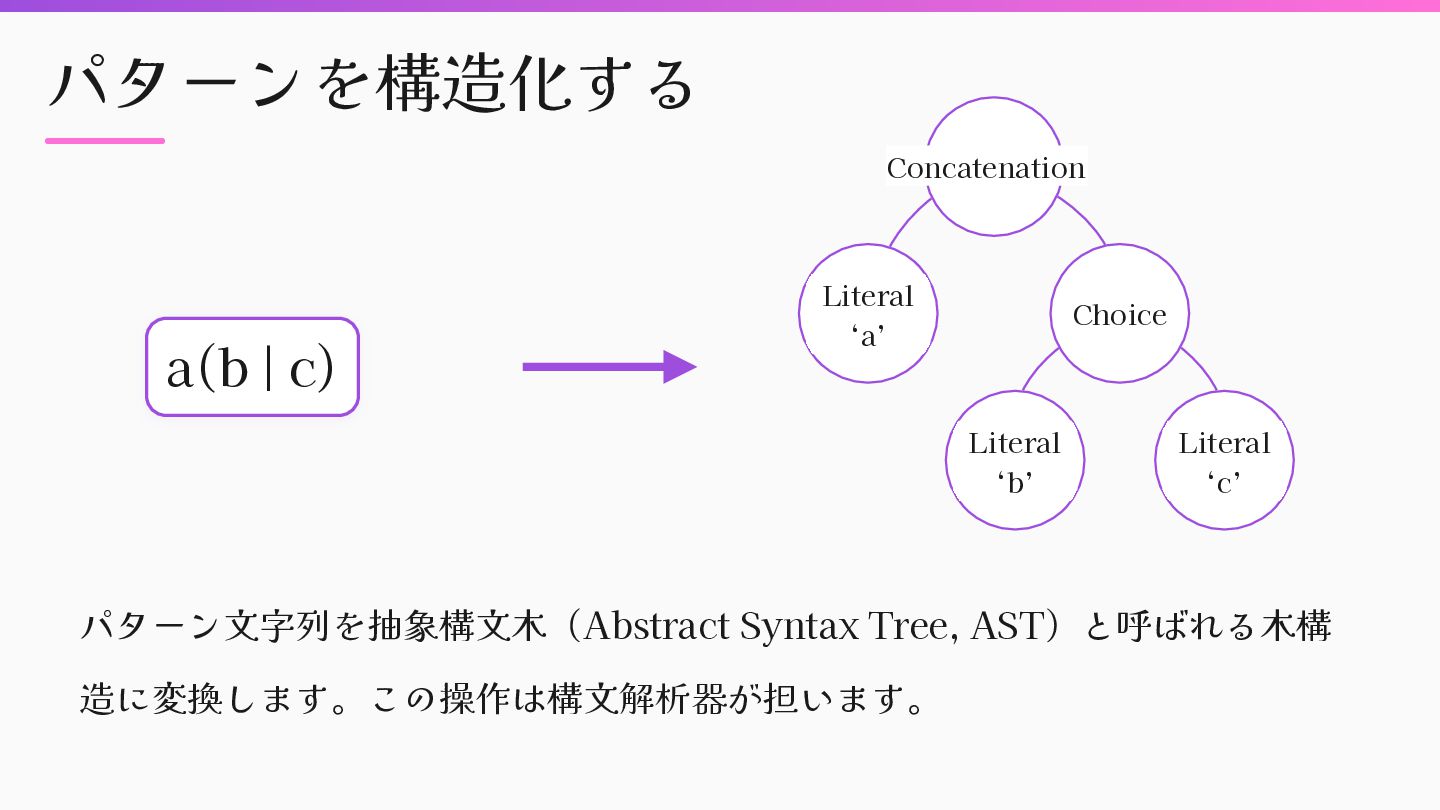
  8. パターン文字列を構造化する 正規表現 (文字列) AST (抽象構文木) NFA (非決定性有限 オートマトン) DFA (決定性有限オ

    ートマトン) Parsing Thompson 構成法 部分集合 構成法 正規表現から線形時間マッチングが可能なDFAへの道筋の最初のステップは、 パターン文字列を「構造化」することです。
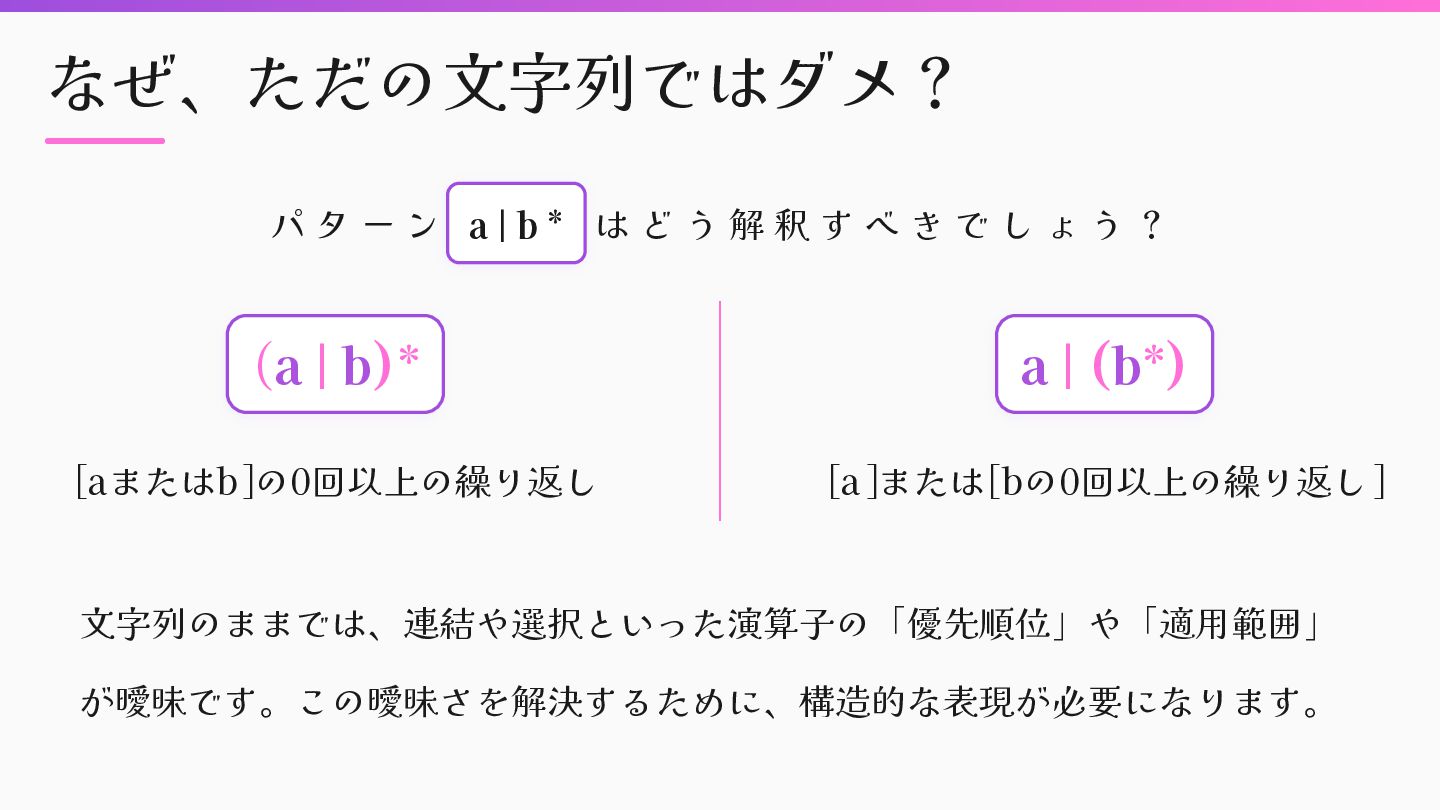
  9. なぜ、ただの文字列ではダメ? パ タ ー ン は ど う 解 釈

    す べ き で し ょ う ? a | b * (a | b)* a | (b*) [aまたはb]の0回以上の繰り返し [a]または[bの0回以上の繰り返し] 文字列のままでは、連結や選択といった演算子の「優先順位」や「適用範囲」 が曖昧です。この曖昧さを解決するために、構造的な表現が必要になります。
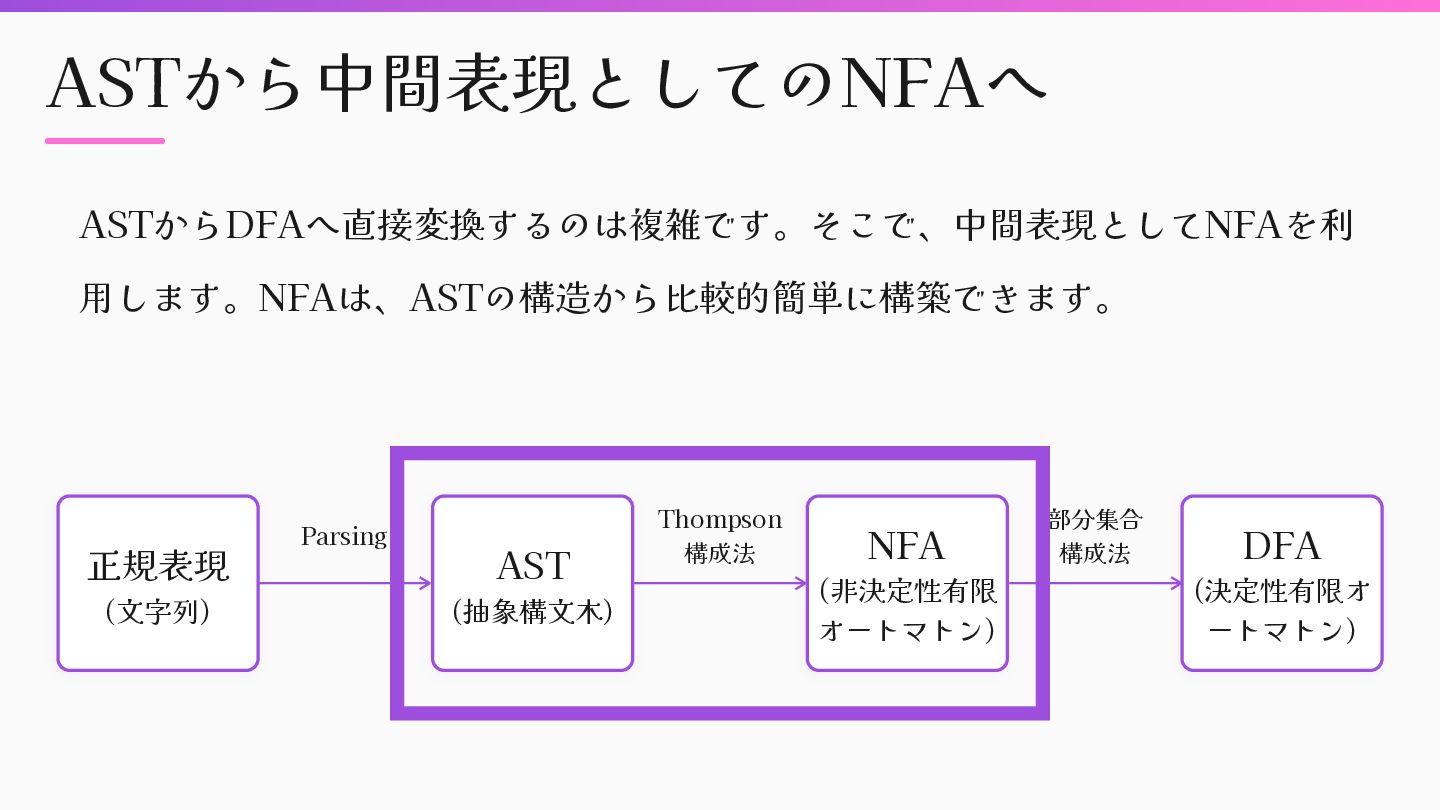
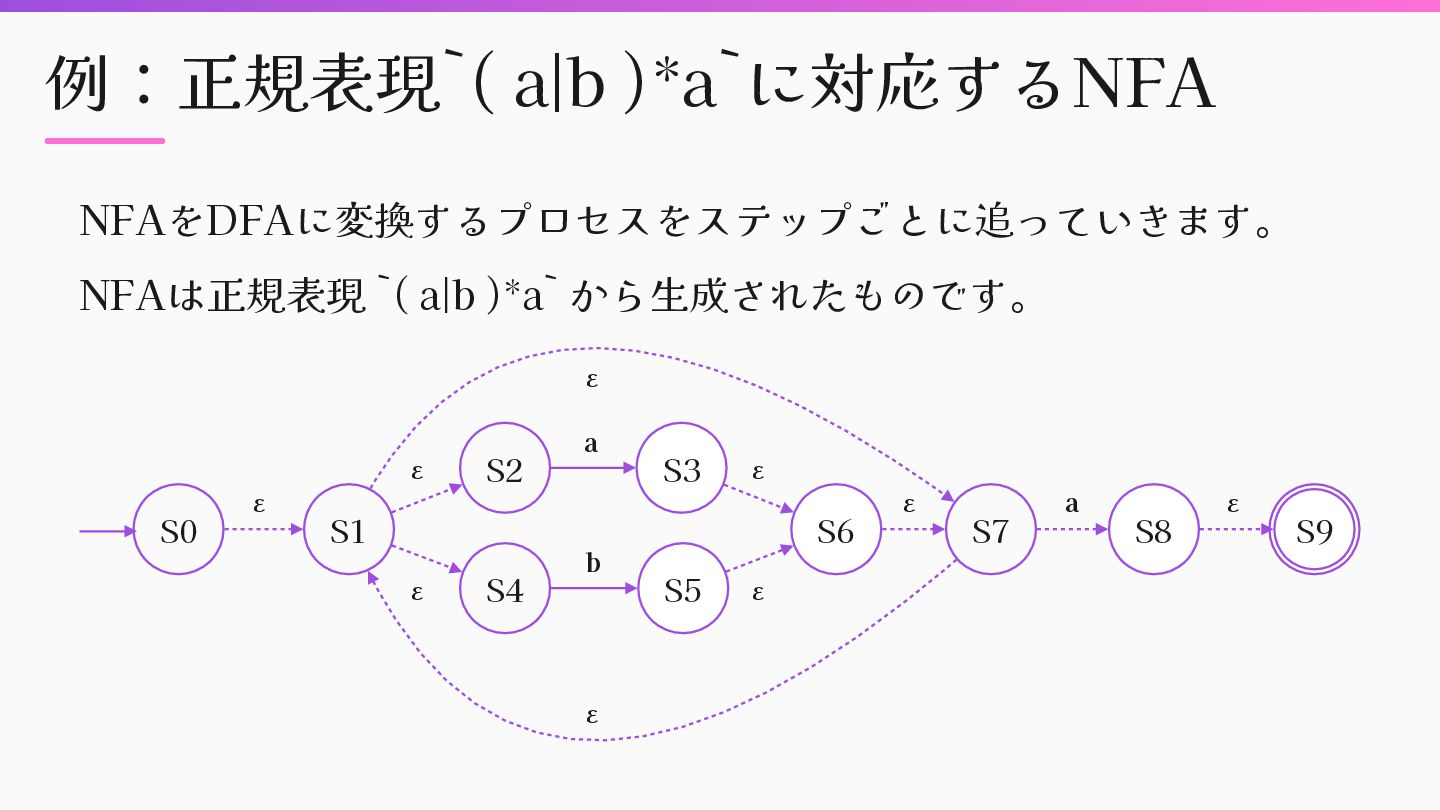
  10. ASTから中間表現としてのNFAへ 正規表現 (文字列) AST (抽象構文木) NFA (非決定性有限 オートマトン) DFA (決定性有限オ

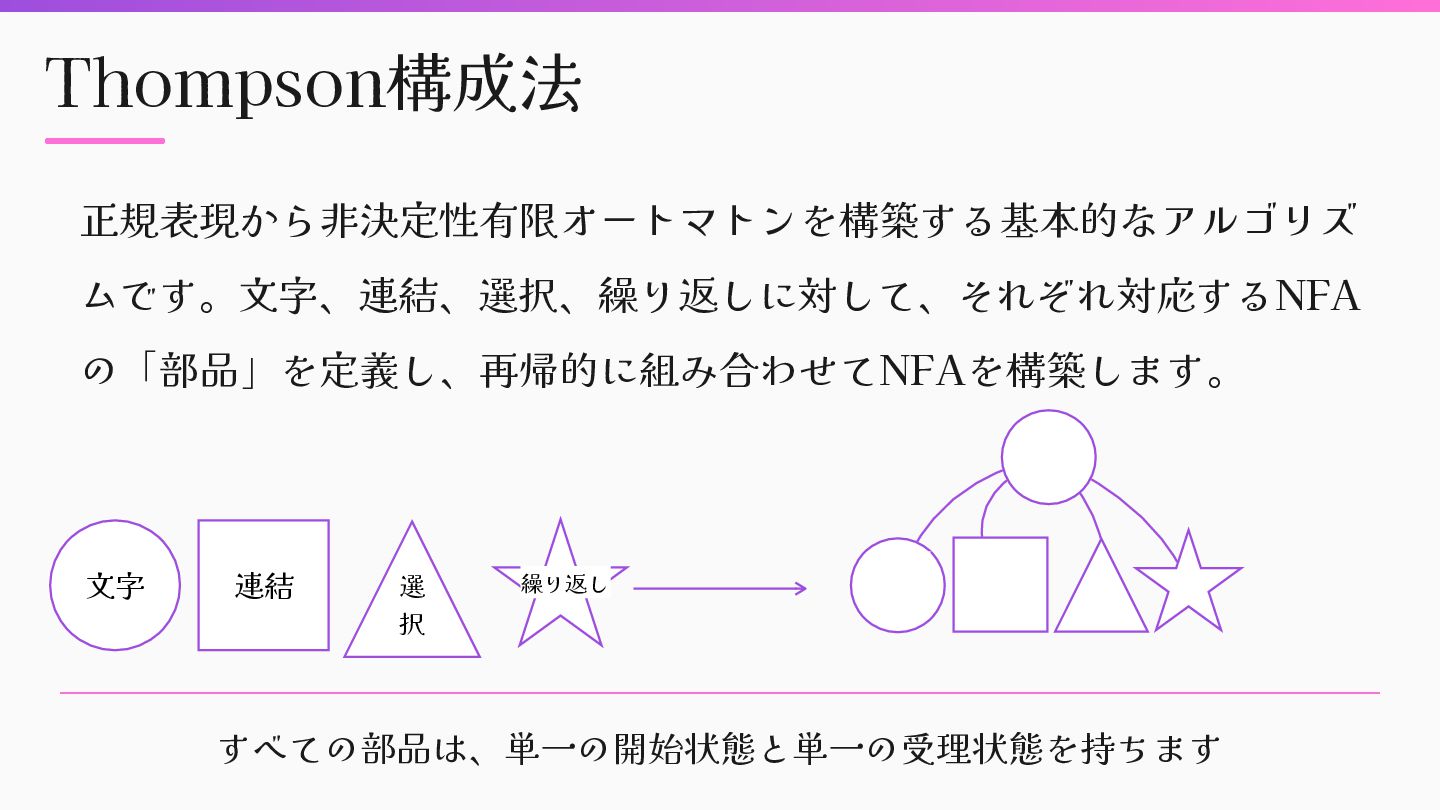
    ートマトン) Parsing Thompson 構成法 部分集合 構成法 ASTからDFAへ直接変換するのは複雑です。そこで、中間表現としてNFAを利 用します。NFAは、ASTの構造から比較的簡単に構築できます。
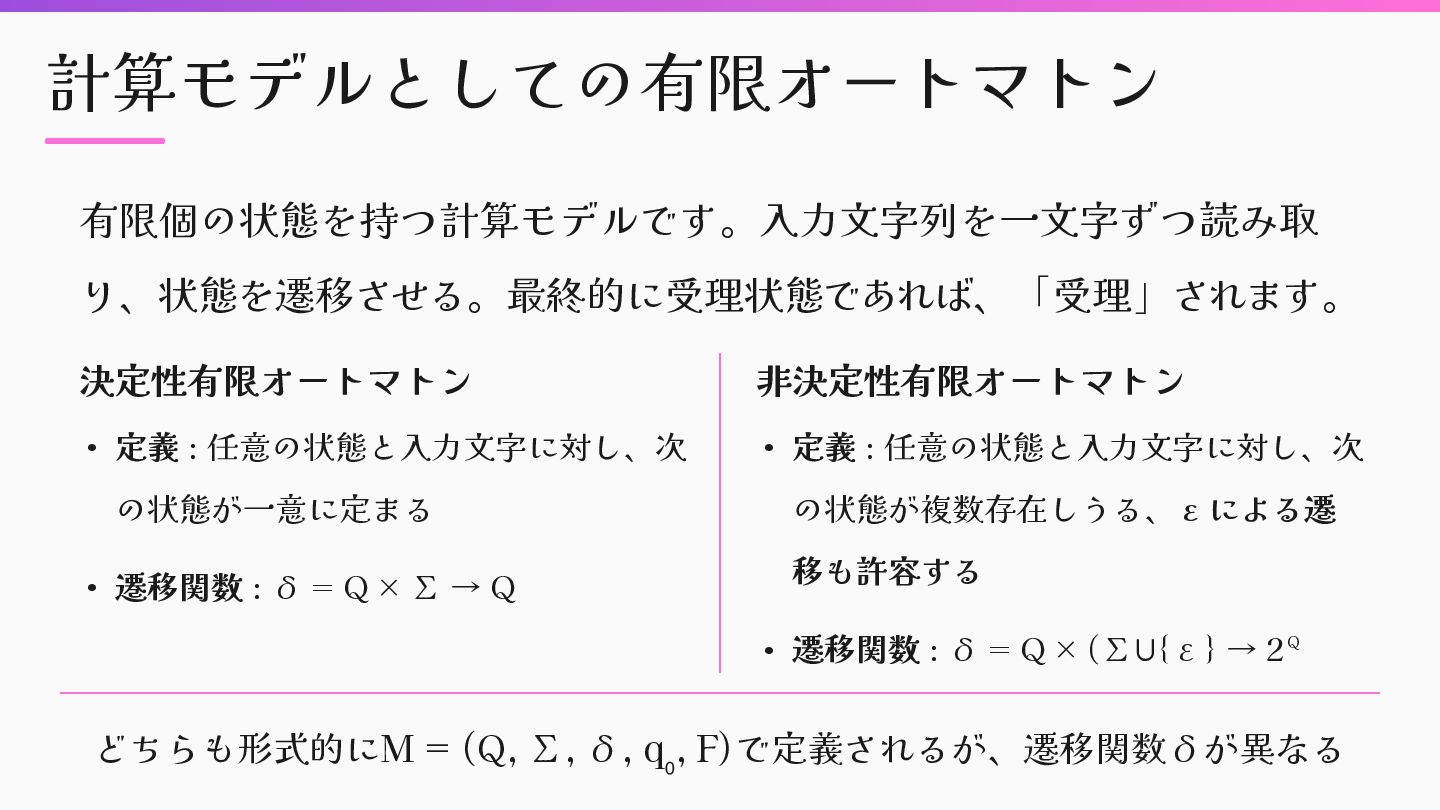
  11. 計算モデルとしての有限オートマトン 有限個の状態を持つ計算モデルです。入力文字列を一文字ずつ読み取 り、状態を遷移させる。最終的に受理状態であれば、「受理」されます。 決定性有限オートマトン 非決定性有限オートマトン • 定義 : 任意の状態と入力文字に対し、次 の状態が一意に定まる

    • 遷移関数 : δ = Q × Σ → Q • 定義 : 任意の状態と入力文字に対し、次 の状態が複数存在しうる、εによる遷 移も許容する • 遷移関数 : δ = Q × (Σ∪{ε} → 2 どちらも形式的にM = (Q, Σ, δ, q₀, F)で定義されるが、遷移関数δが異なる Q
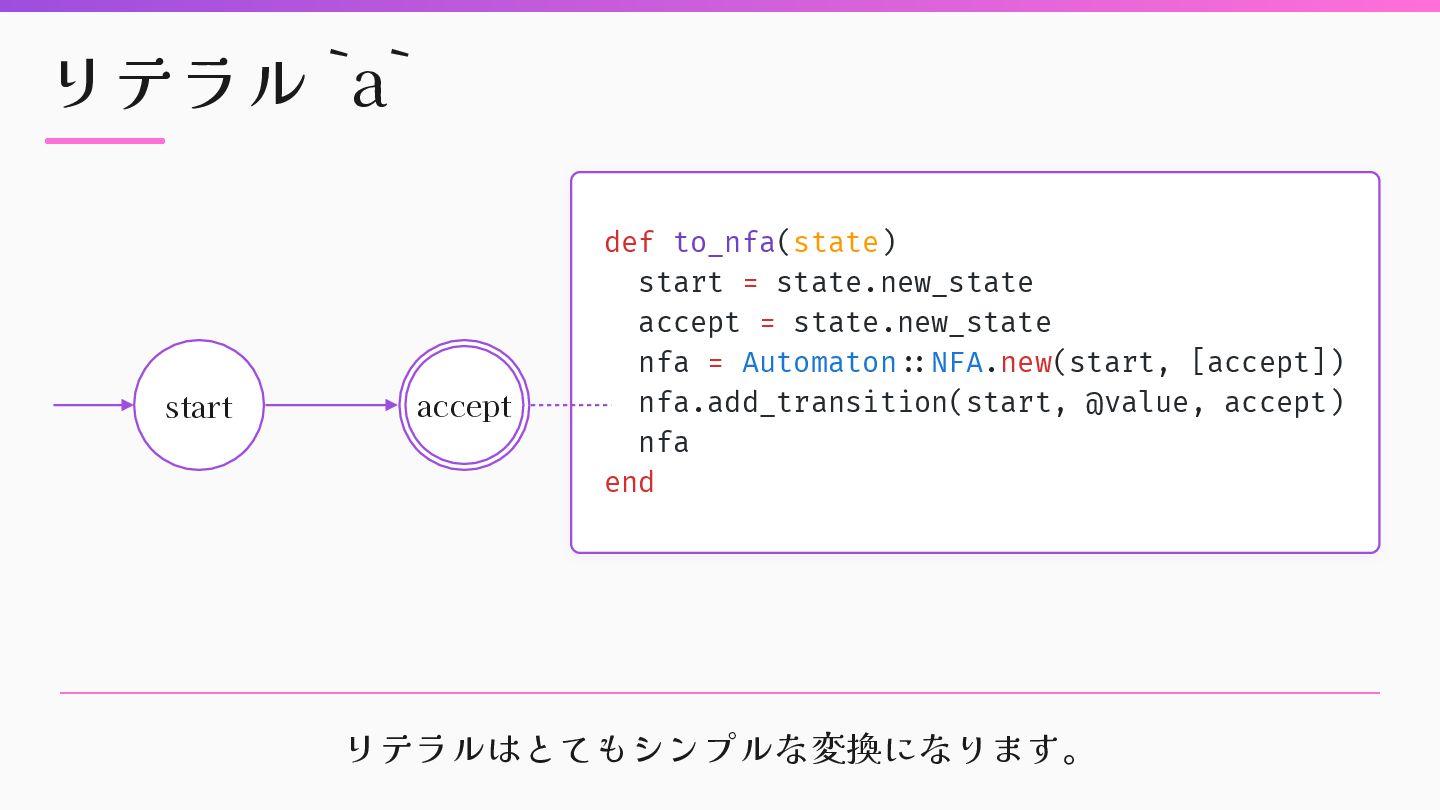
  12. リテラル `a` リテラルはとてもシンプルな変換になります。 start accept def to_nfa(state) start = state.new_state

    accept = state.new_state nfa = Automaton : : NFA.new(start, [accept]) nfa.add_transition(start, @value, accept) nfa end
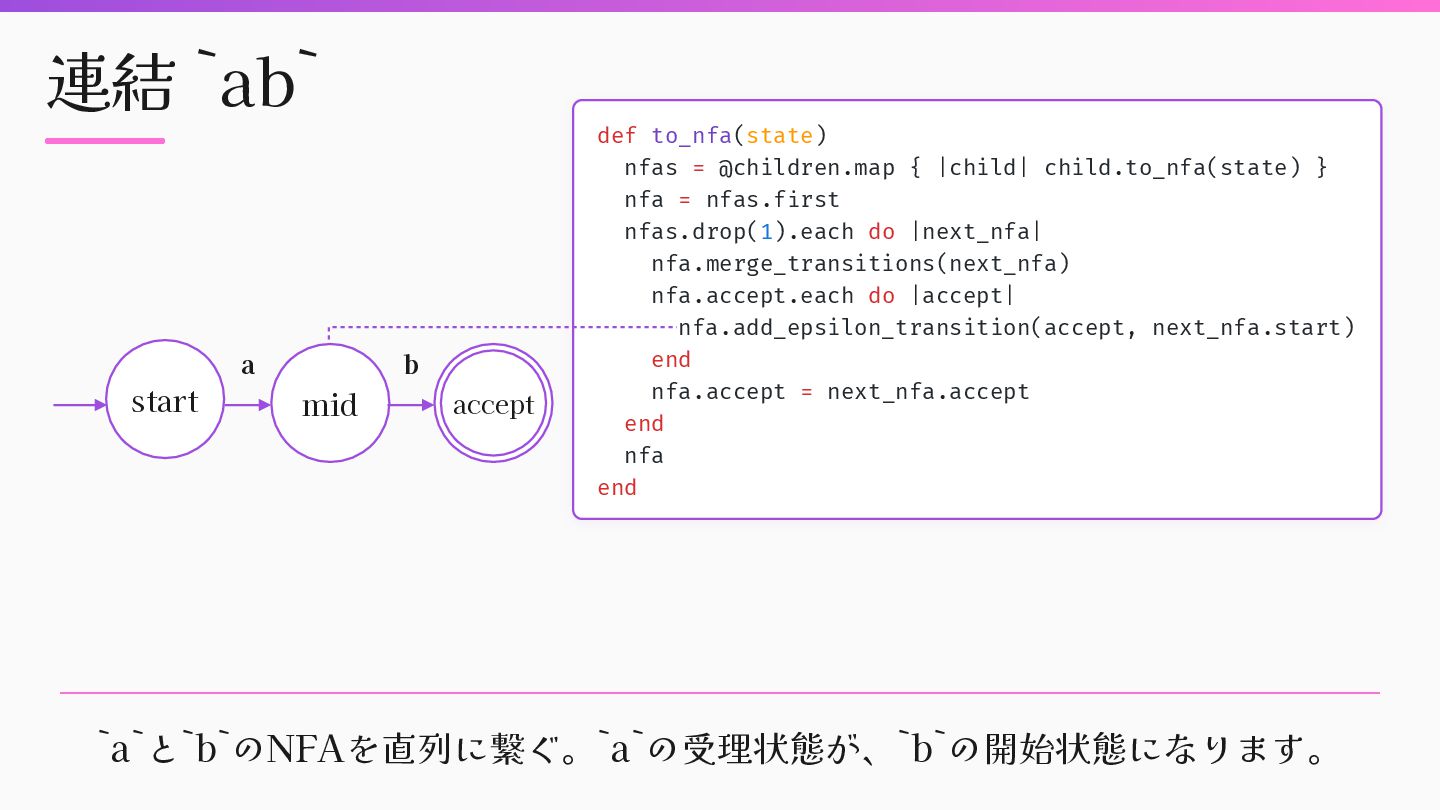
  13. 連結 `ab` `a`と`b`のNFAを直列に繋ぐ。`a`の受理状態が、`b`の開始状態になります。 start accept def to_nfa(state) nfas = @children.map

    { |child| child.to_nfa(state) } nfa = nfas.f i rst nfas.drop(1).each do |next_nfa| nfa.merge_transitions(next_nfa) nfa.accept.each do |accept| nfa.add_epsilon_transition(accept, next_nfa.start) end nfa.accept = next_nfa.accept end nfa end mid a b
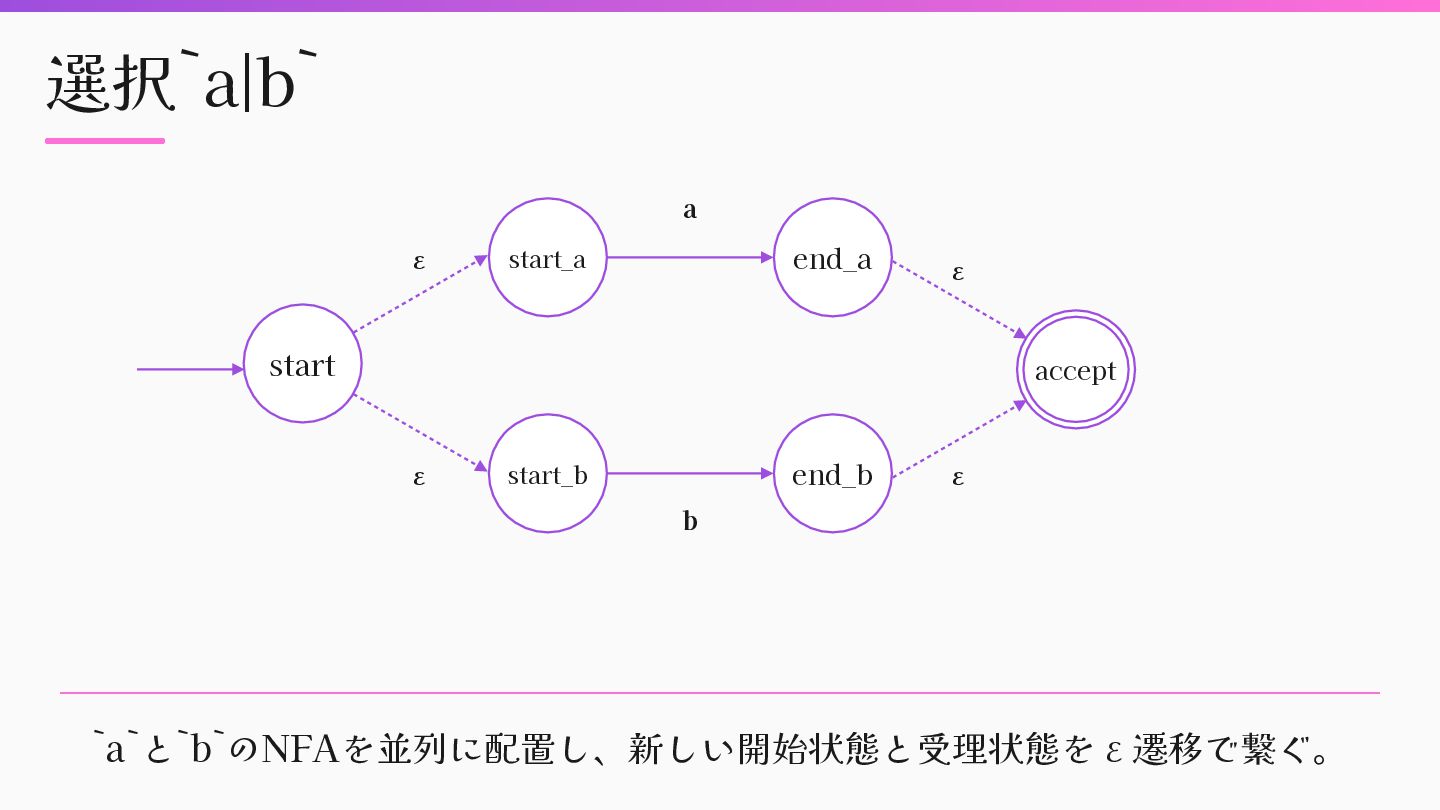
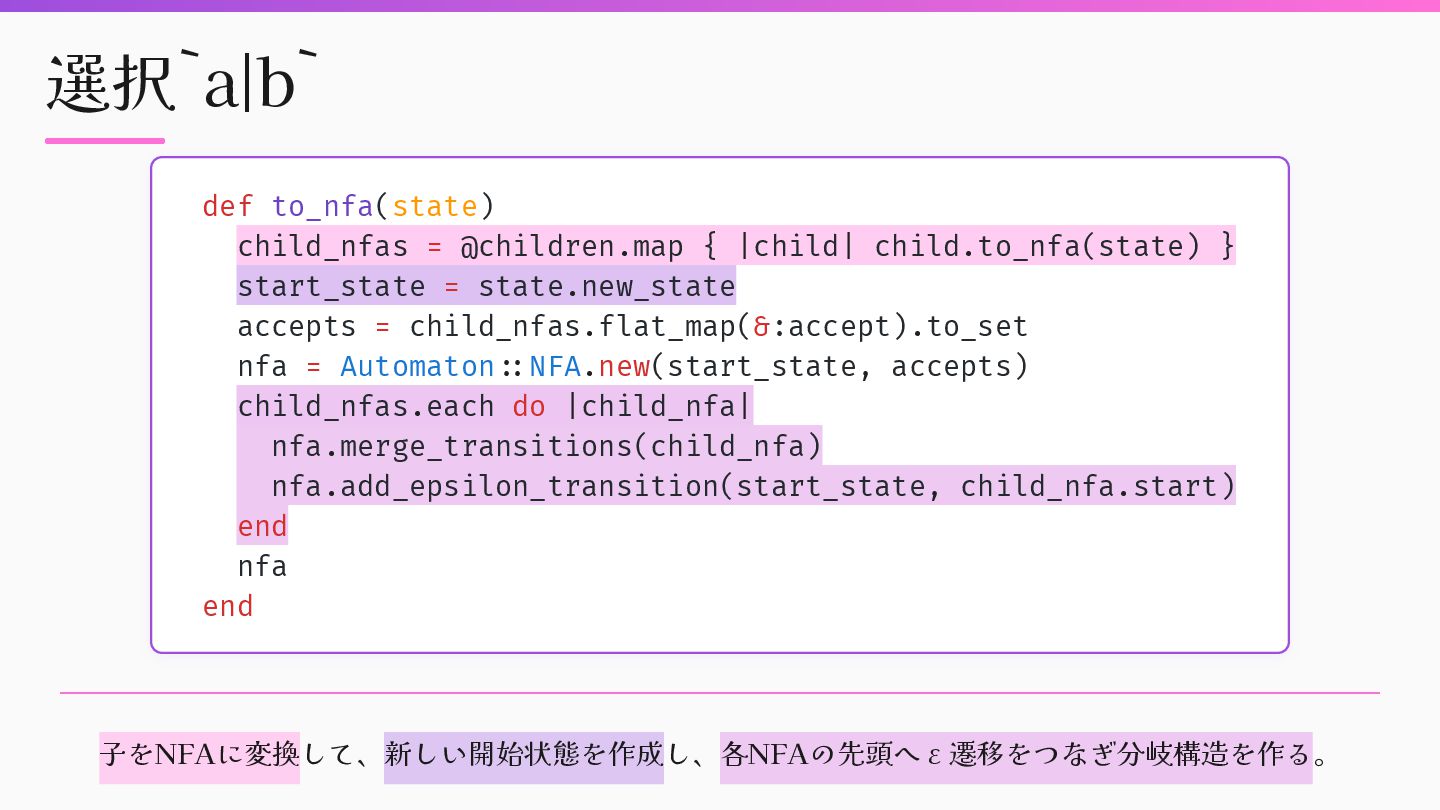
  14. 選択`a|b` 子をNFAに変換して、新しい開始状態を作成し、各NFAの先頭へε遷移をつなぎ分岐構造を作る。 def to_nfa(state) child_nfas = @children.map { |child| child.to_nfa(state)

    } start_state = state.new_state accepts = child_nfas.flat_map(&:accept).to_set nfa = Automaton : : NFA.new(start_state, accepts) child_nfas.each do |child_nfa| nfa.merge_transitions(child_nfa) nfa.add_epsilon_transition(start_state, child_nfa.start) end nfa end
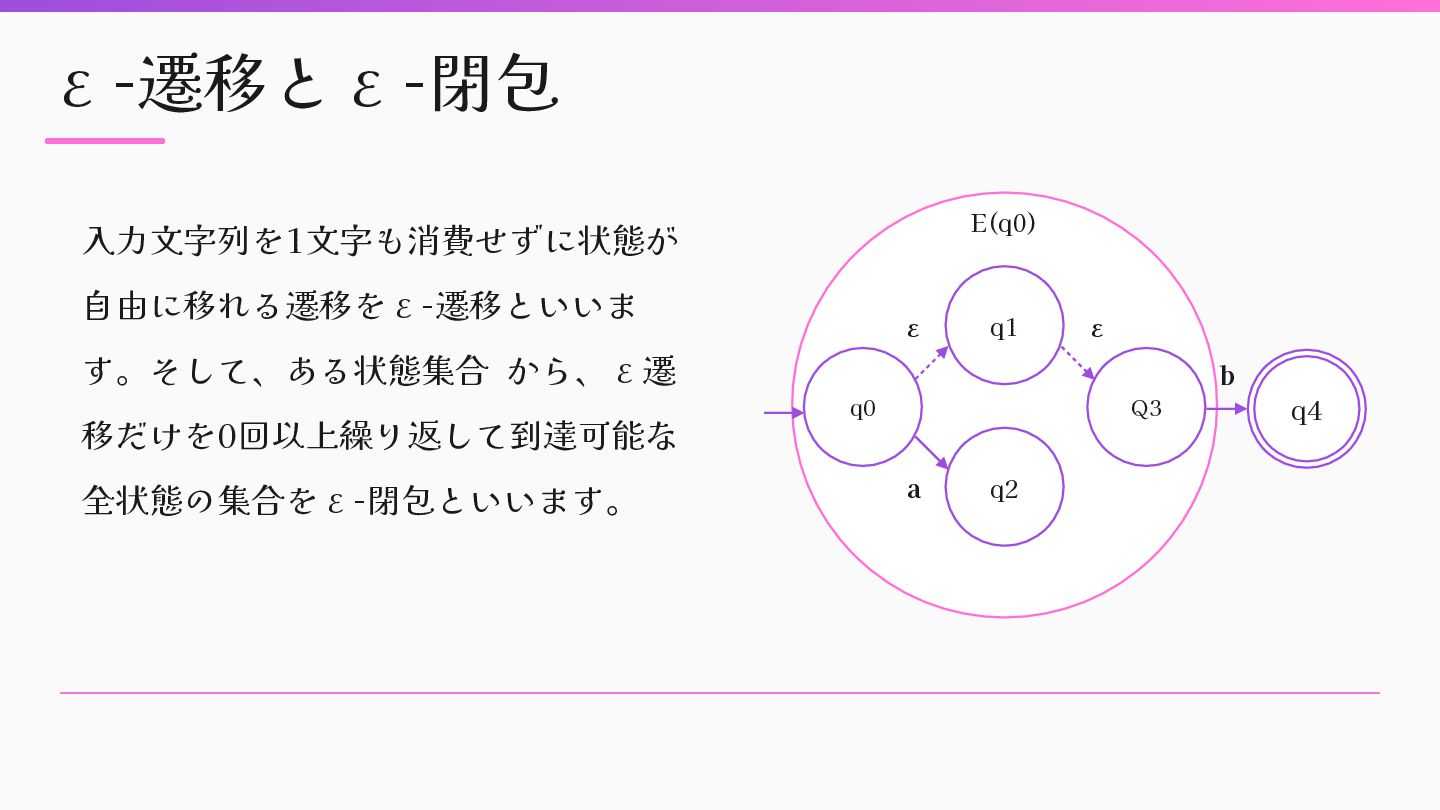
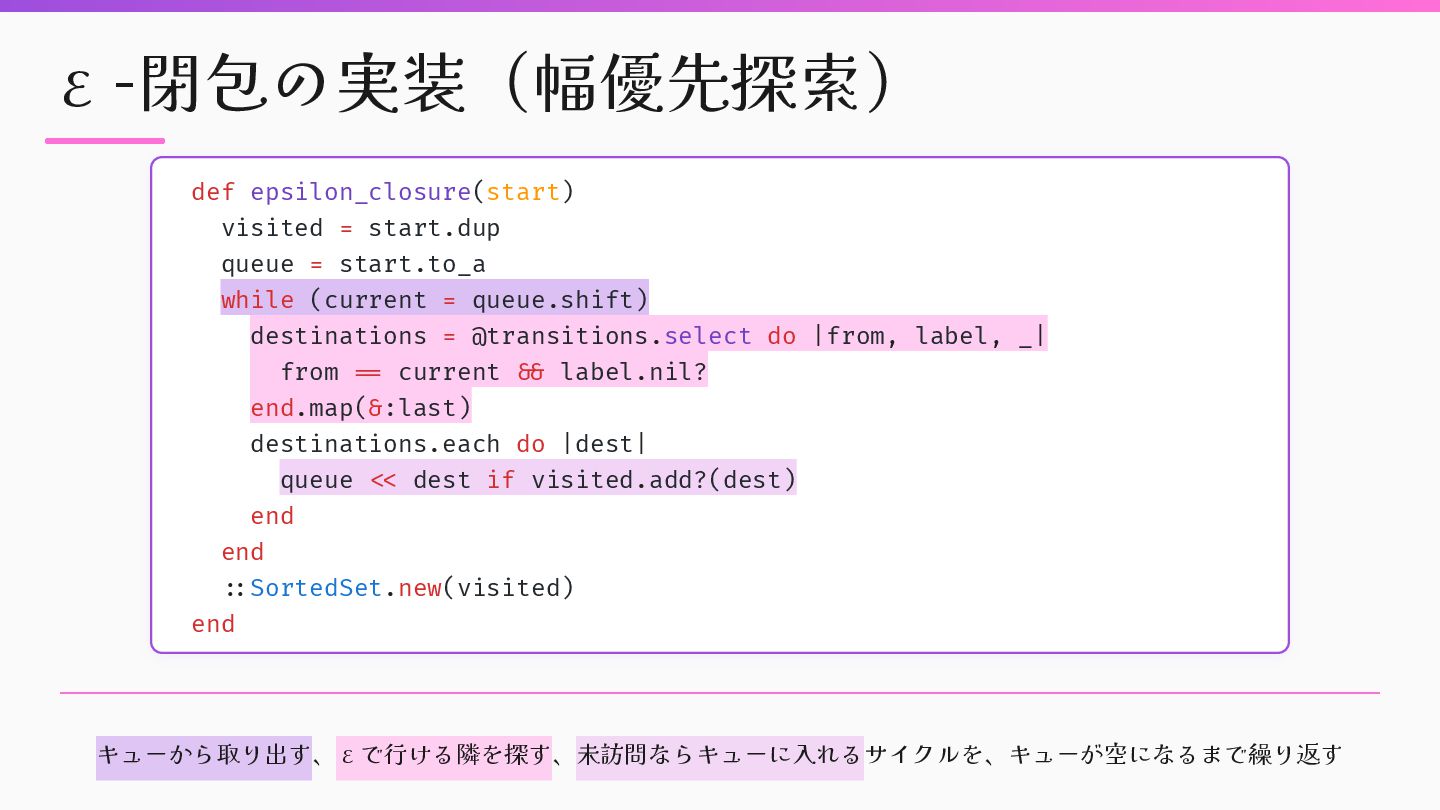
  15. ε-閉包の実装(幅優先探索) キューから取り出す、εで行ける隣を探す、未訪問ならキューに入れるサイクルを、キューが空になるまで繰り返す def epsilon_closure(start) visited = start.dup queue = start.to_a

    while (current = queue.shift) destinations = @transitions.select do |from, label, _| from = = current & & label.nil? end.map(&:last) destinations.each do |dest| queue < < dest if visited.add?(dest) end end : : SortedSet.new(visited) end
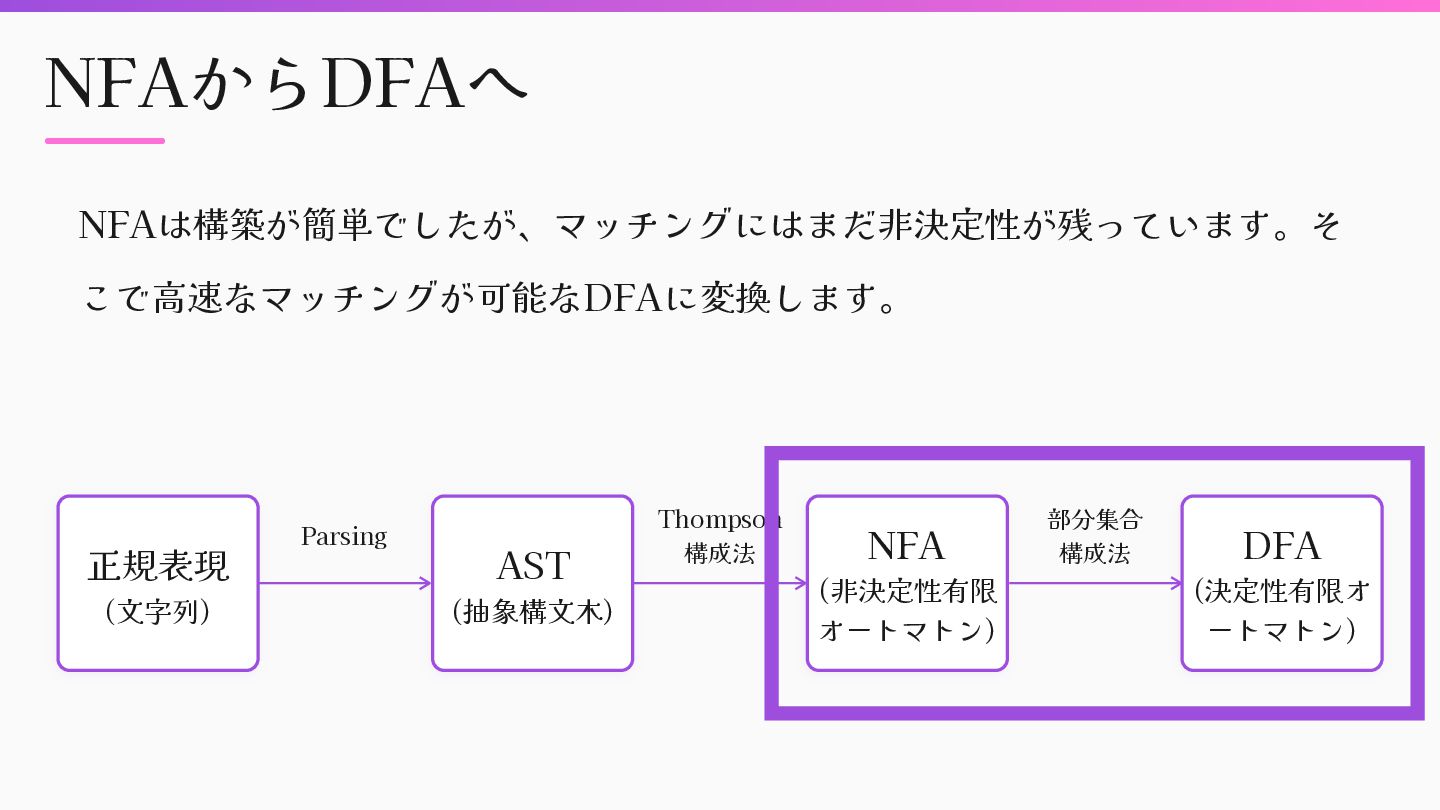
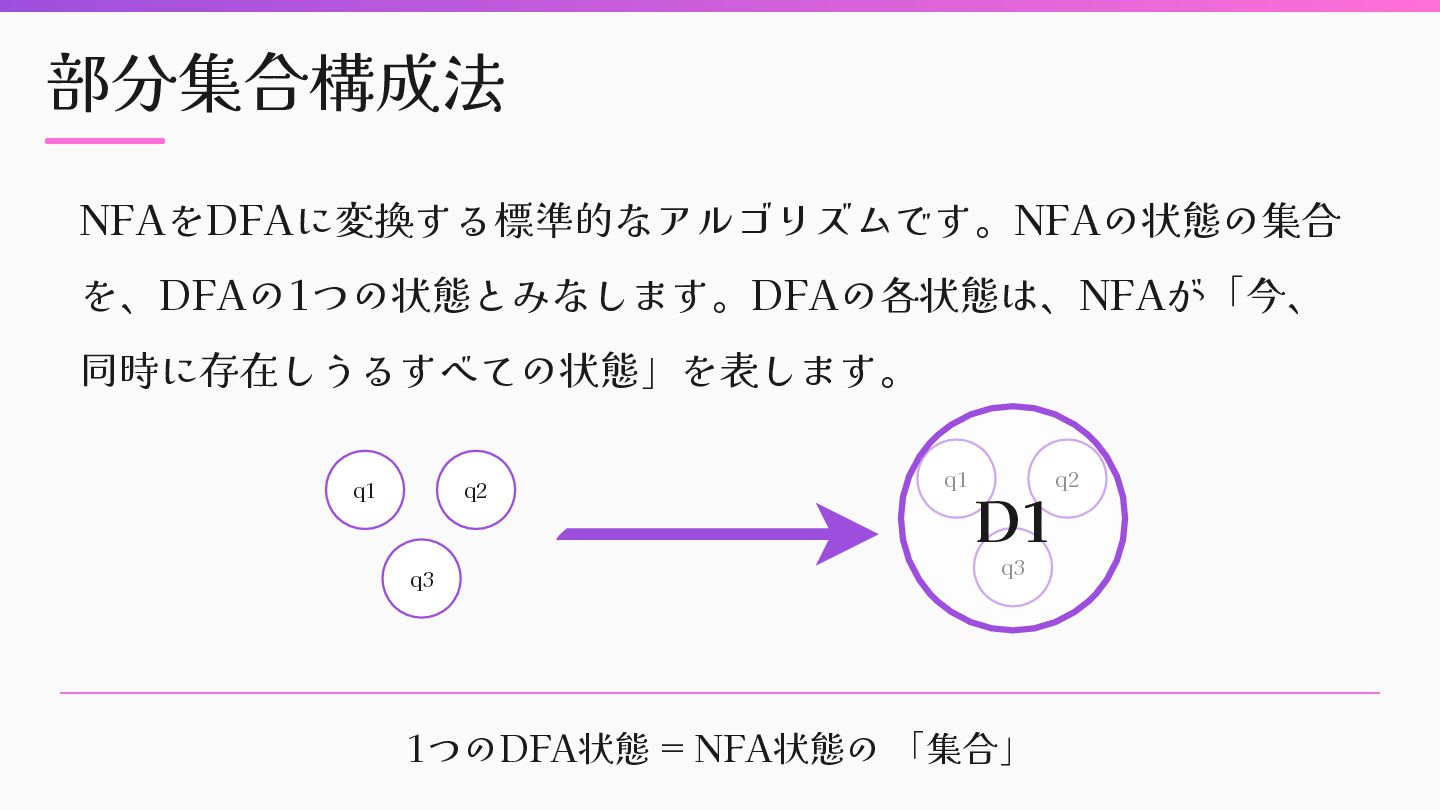
  16. NFAからDFAへ 正規表現 (文字列) AST (抽象構文木) NFA (非決定性有限 オートマトン) DFA (決定性有限オ

    ートマトン) Parsing Thompson 構成法 部分集合 構成法 NFAは構築が簡単でしたが、マッチングにはまだ非決定性が残っています。そ こで高速なマッチングが可能なDFAに変換します。
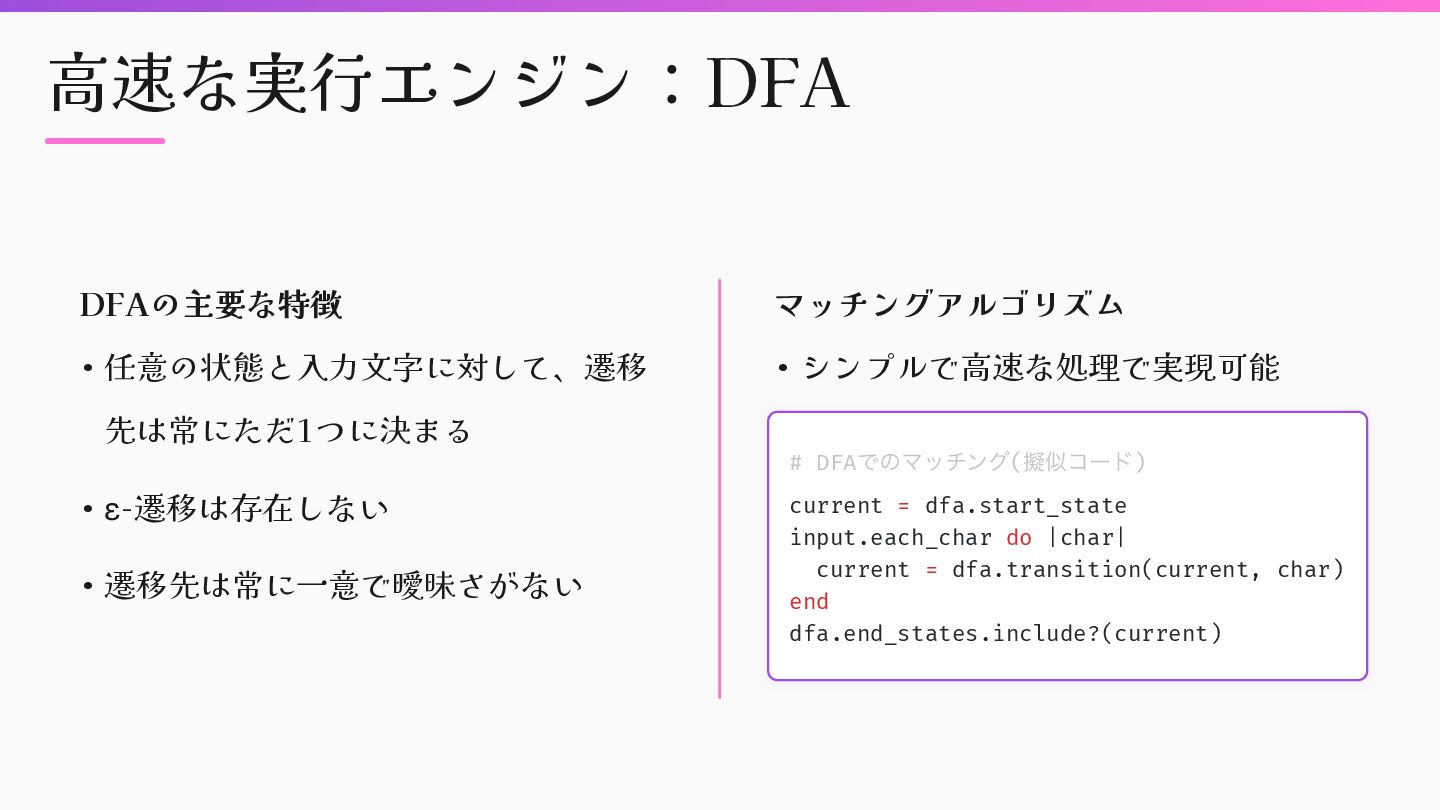
  17. 高速な実行エンジン:DFA DFAの主要な特徴 • 任意の状態と入力文字に対して、遷移 先は常にただ1つに決まる • ɛ-遷移は存在しない • 遷移先は常に一意で曖昧さがない マッチングアルゴリズム

    • シンプルで高速な処理で実現可能 # DFAͰͷϚονϯά(ٖࣅίʔυ) current = dfa.start_state input.each_char do |char| current = dfa.transition(current, char) end dfa.end_states.include?(current)
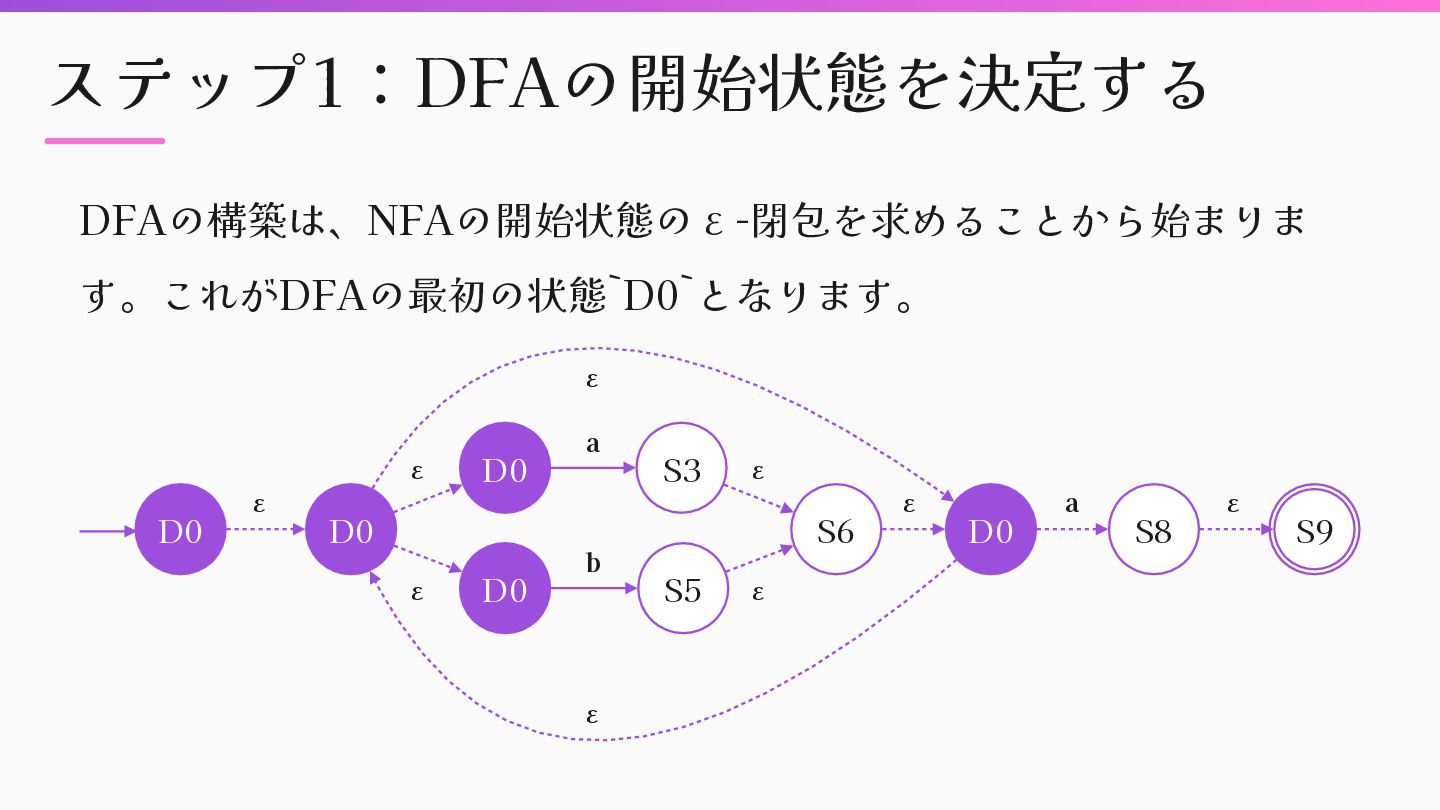
  18. ステップ1:DFAの開始状態を決定する def initialize_dfa start = @nfa.epsilon_closure(Set.new([@nfa.start])) start_id = 0 @dfa_states[start]

    = start_id @queue < < start @dfa = DFA.new(start_id, Set.new) end 開始状態のε-closureを計算 NFA状態集合→DFA状態IDのマッピング
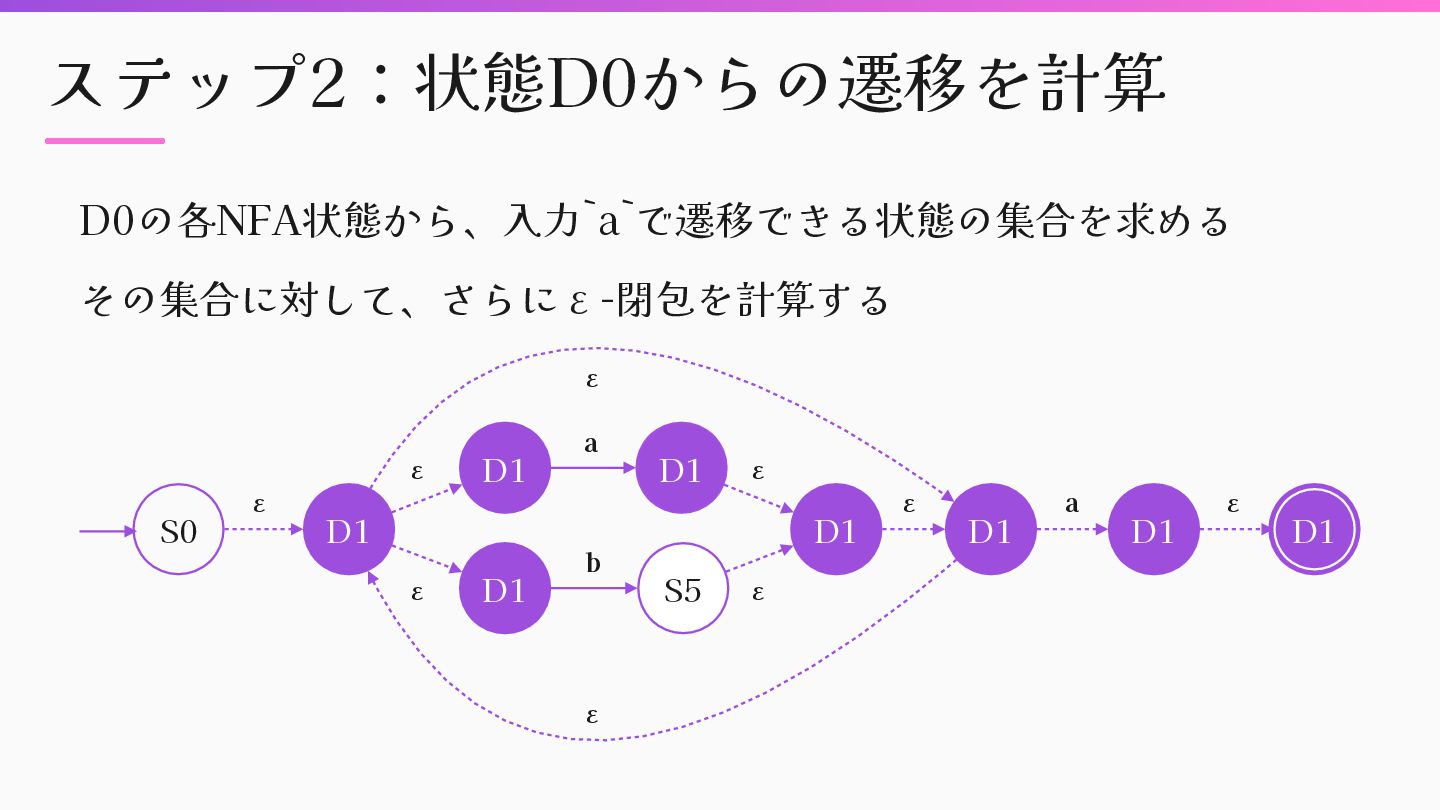
  19. ステップ2:状態D0からの遷移を計算 def build_transitions(nfa_states) transitions = Hash.new { |h, k| h[k]

    = Set.new } nfa_states.each do |state| @nfa.transitions.each do |from, label, to| next unless from = = state & & !label.nil? transitions[label].merge(@nfa.epsilon_closure(Set[to])) end end transitions end D0の各NFA状態を処理、NFAの全遷移をチェック、D0からの遷移を計算する
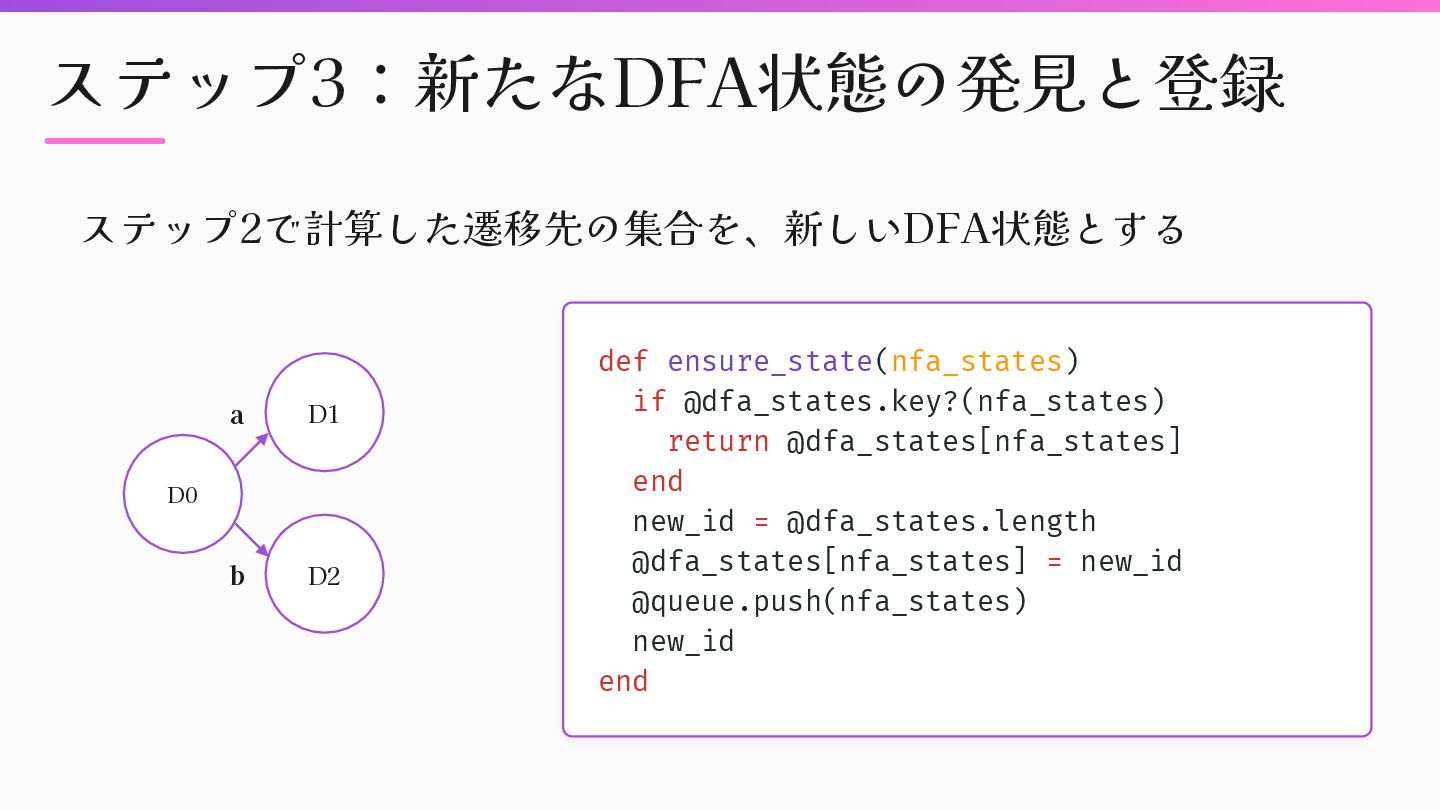
  20. ステップ3:新たなDFA状態の発見と登録 ステップ2で計算した遷移先の集合を、新しいDFA状態とする D0 D1 D2 a b def ensure_state(nfa_states) if

    @dfa_states.key?(nfa_states) return @dfa_states[nfa_states] end new_id = @dfa_states.length @dfa_states[nfa_states] = new_id @queue.push(nfa_states) new_id end
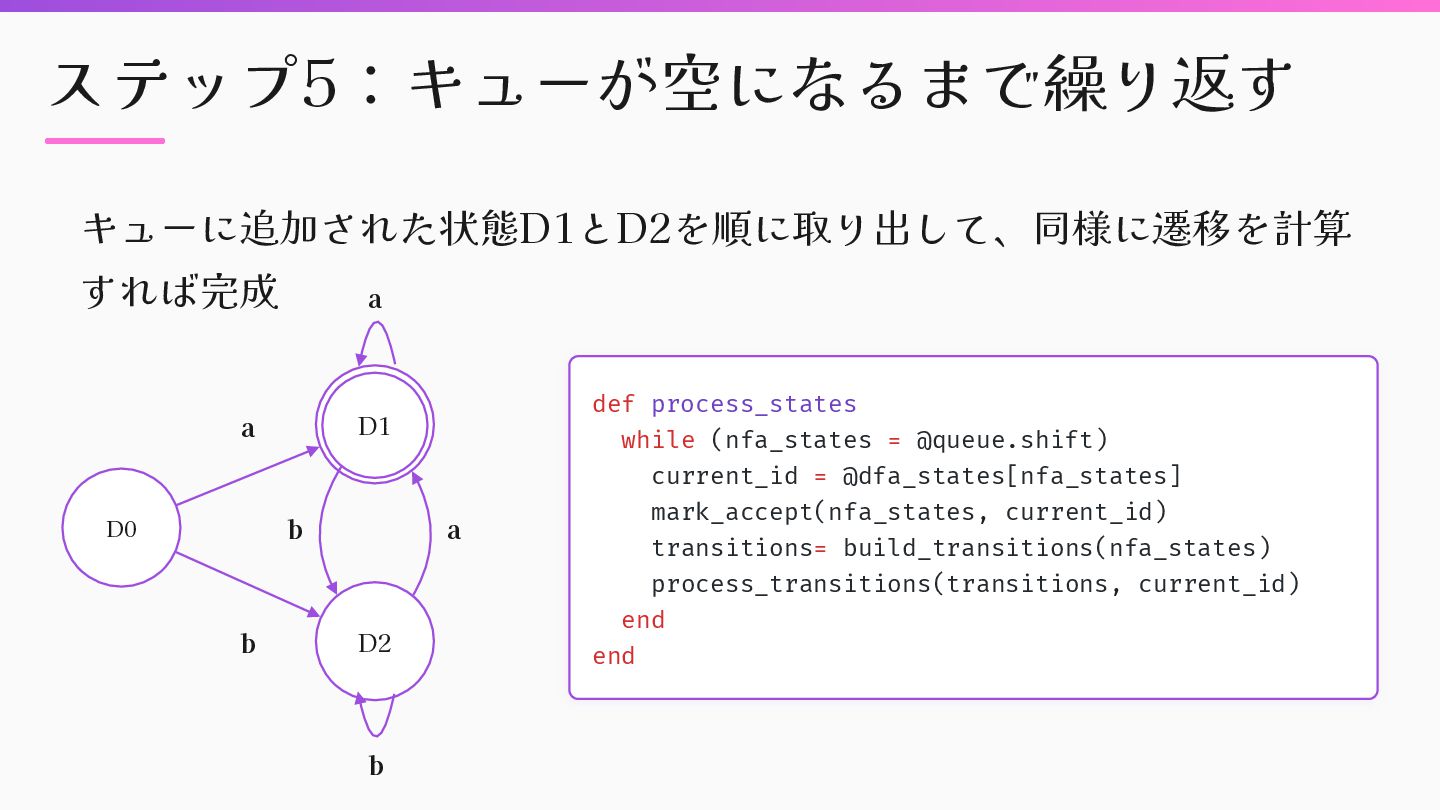
  21. ステップ5:キューが空になるまで繰り返す キューに追加された状態D1とD2を順に取り出して、同様に遷移を計算 すれば完成 D0 D1 D2 a b def process_states

    while (nfa_states = @queue.shift) current_id = @dfa_states[nfa_states] mark_accept(nfa_states, current_id) transitions= build_transitions(nfa_states) process_transitions(transitions, current_id) end end a b a b
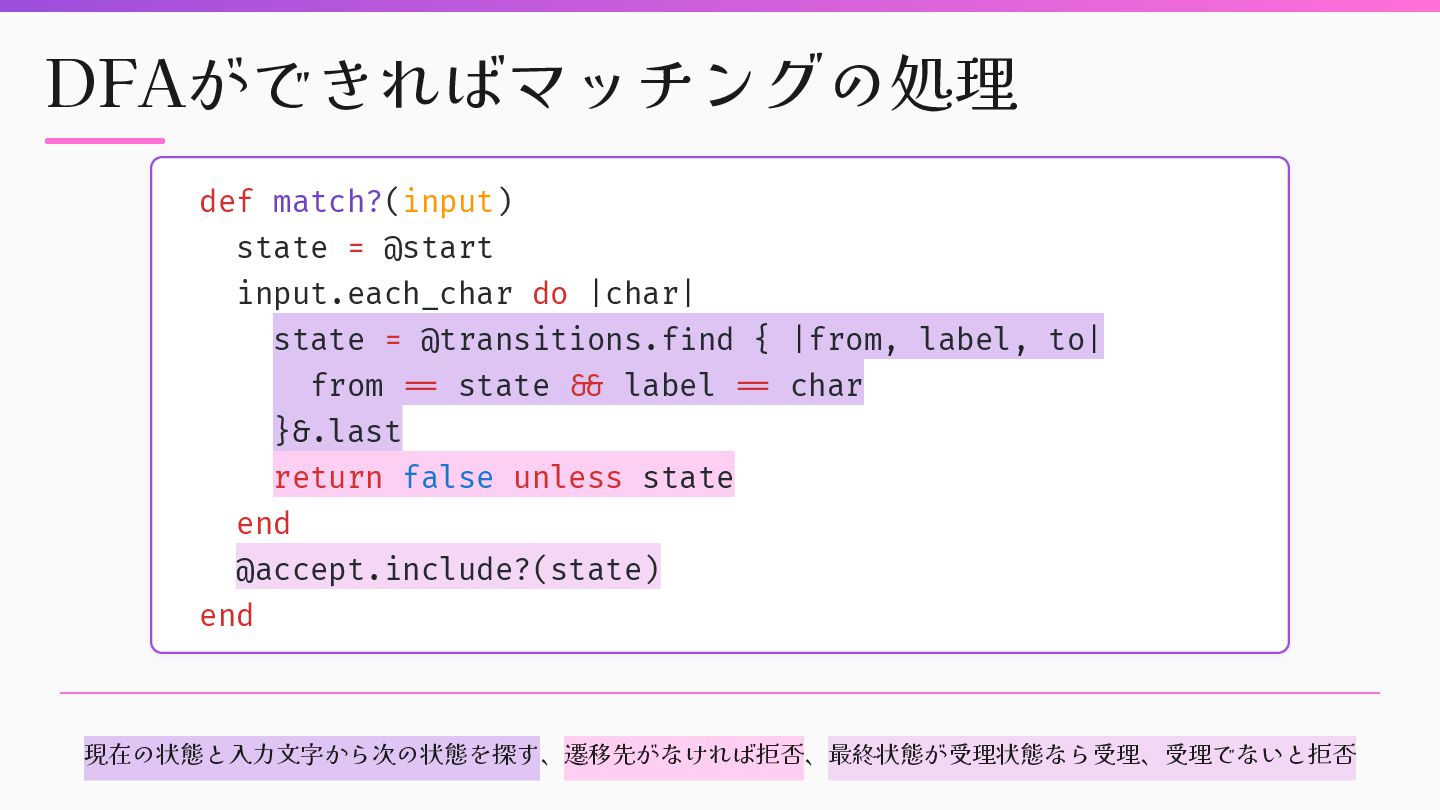
  22. DFAができればマッチングの処理 def match?(input) state = @start input.each_char do |char| state

    = @transitions.f i nd { |from, label, to| from = = state & & label = = char }&.last return false unless state end @accept.include?(state) end 現在の状態と入力文字から次の状態を探す、遷移先がなければ拒否、最終状態が受理状態なら受理、受理でないと拒否
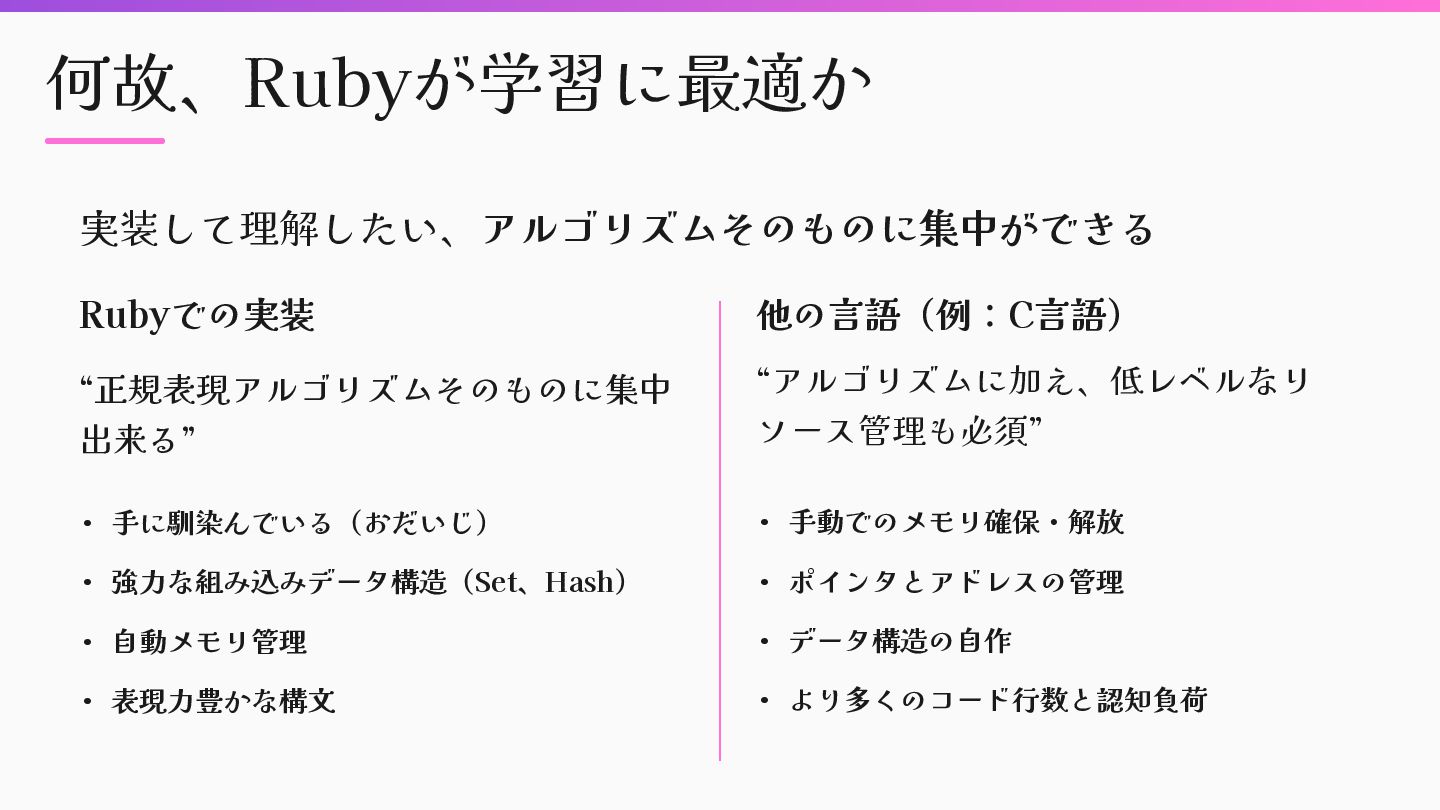
  23. 何故、Rubyが学習に最適か 実装して理解したい、アルゴリズムそのものに集中ができる Rubyでの実装 他の言語(例:C言語) “正規表現アルゴリズムそのものに集中 出来る” • 手に馴染んでいる(おだいじ) • 強力な組み込みデータ構造(Set、Hash)

    • 自動メモリ管理 • 表現力豊かな構文 “アルゴリズムに加え、低レベルなリ ソース管理も必須” • 手動でのメモリ確保・解放 • ポインタとアドレスの管理 • データ構造の自作 • より多くのコード行数と認知負荷