Upgrade to Pro — share decks privately, control downloads, hide ads and more …

Building Production-Ready Agents Microsoft Age...

Building Production-Ready Agents Microsoft Agent Framework

Devnot - Dotnet Konferansı 2026
07.05.2026
Sheraton Grand Ataşehir, İstanbul

Avatar for Mert Metin

Mert Metin

May 04, 2026

More Decks by Mert Metin

Other Decks in Technology

Transcript

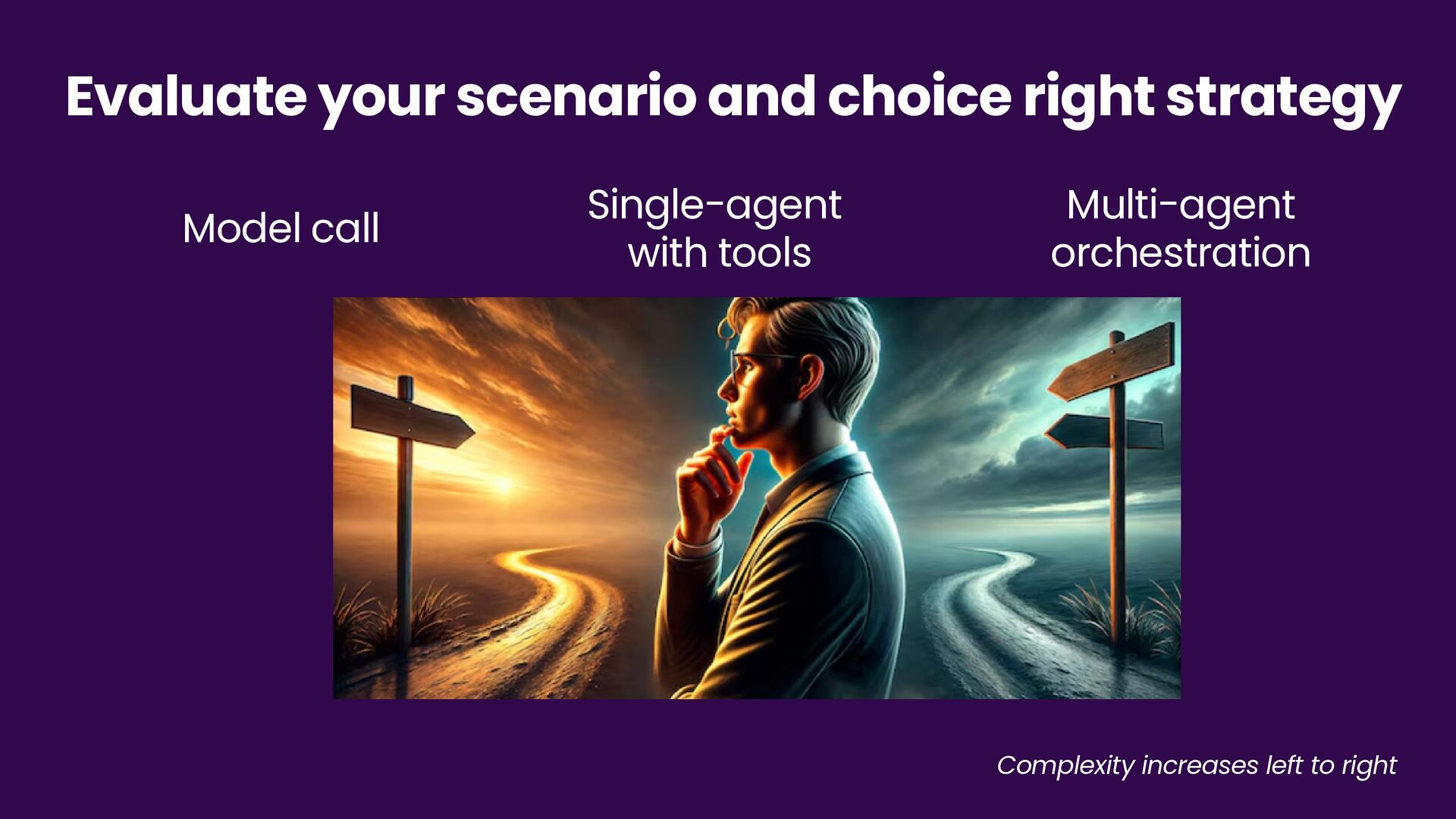
  1. Model call Single-agent with tools Multi-agent orchestration Complexity increases left

    to right Evaluate your scenario and choice right strategy
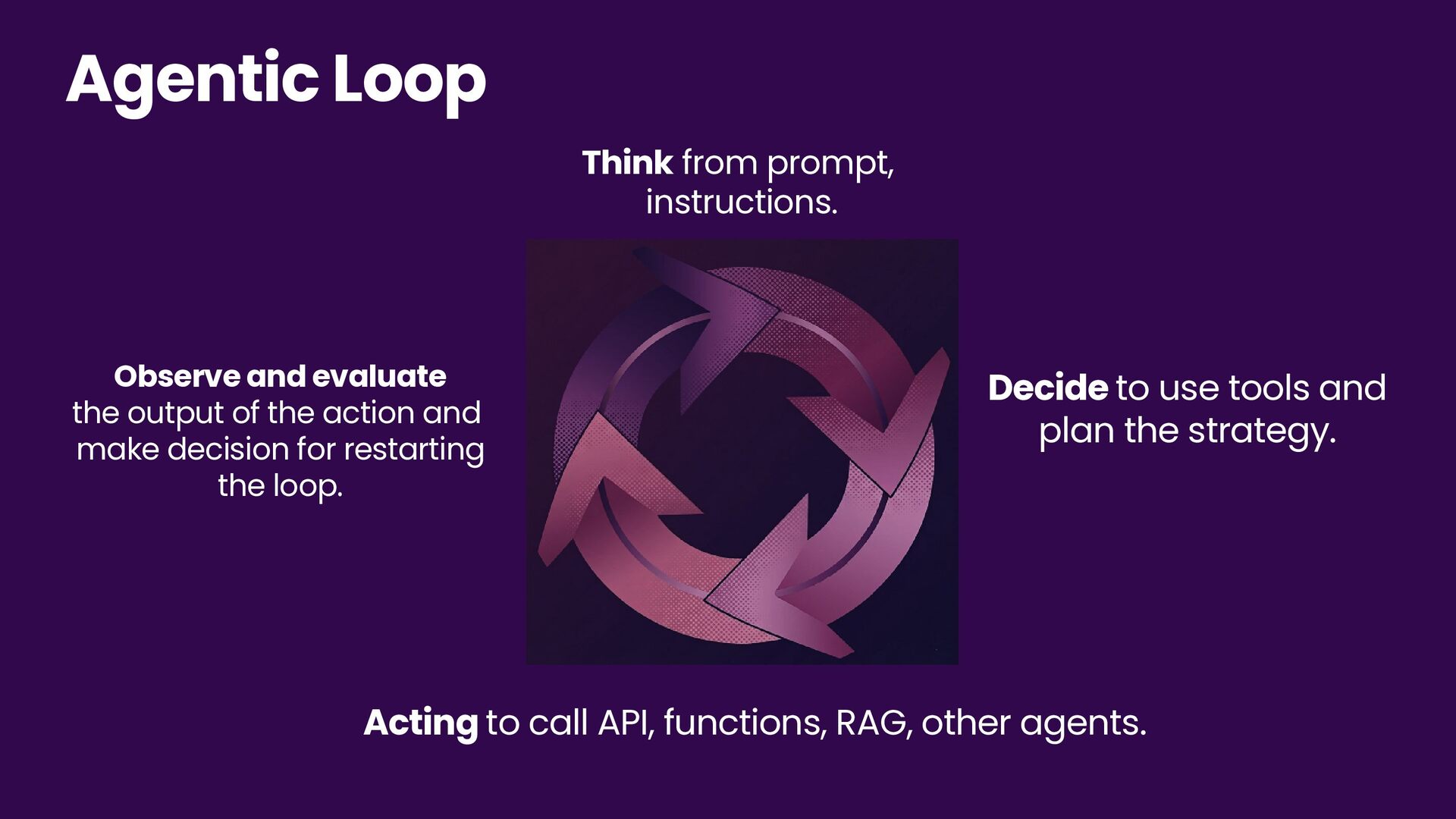
  2. Agentic Loop Decide to use tools and plan the strategy.

    Think from prompt, instructions. Acting to call API, functions, RAG, other agents. Observe and evaluate the output of the action and make decision for restarting the loop.
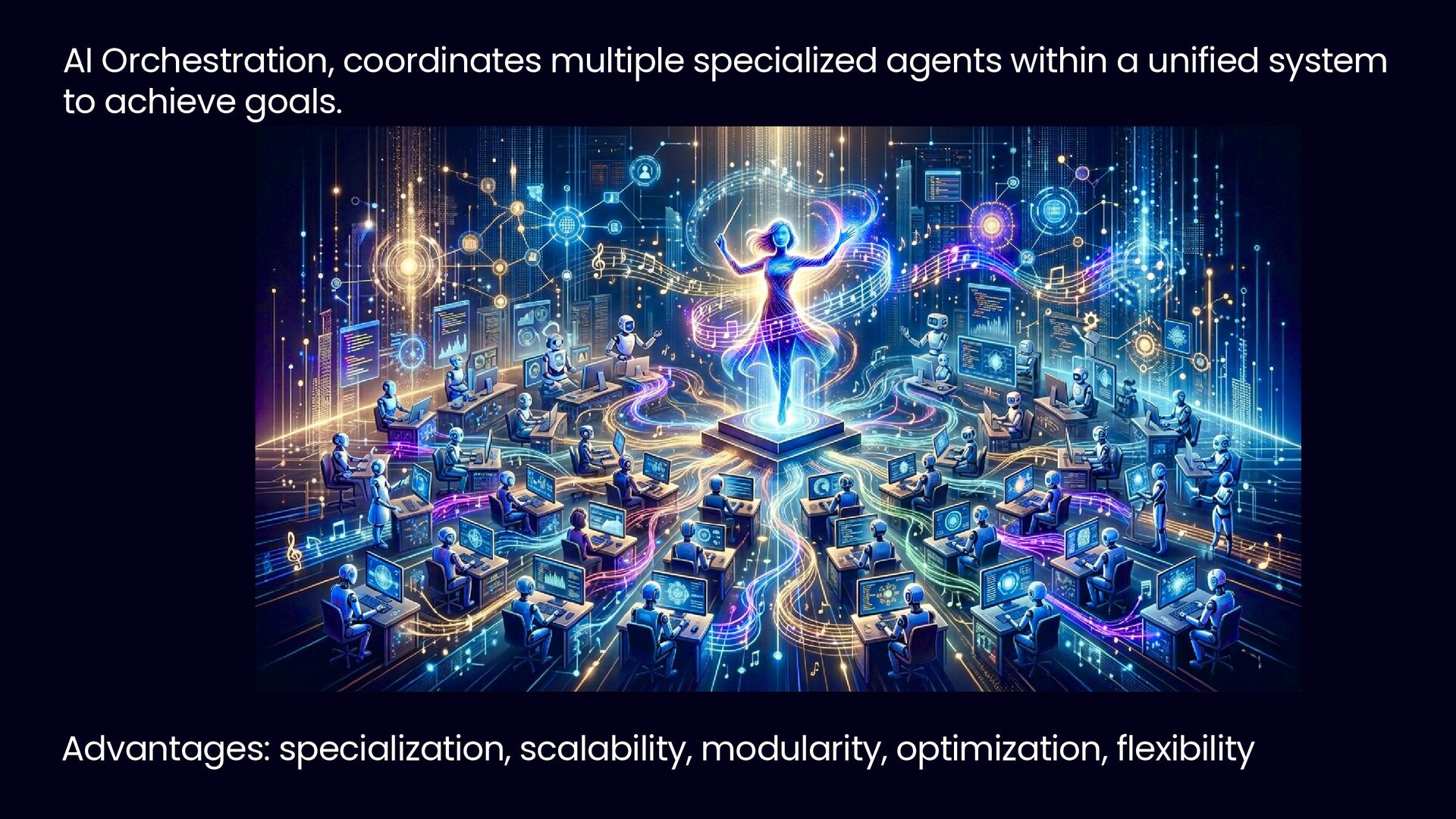
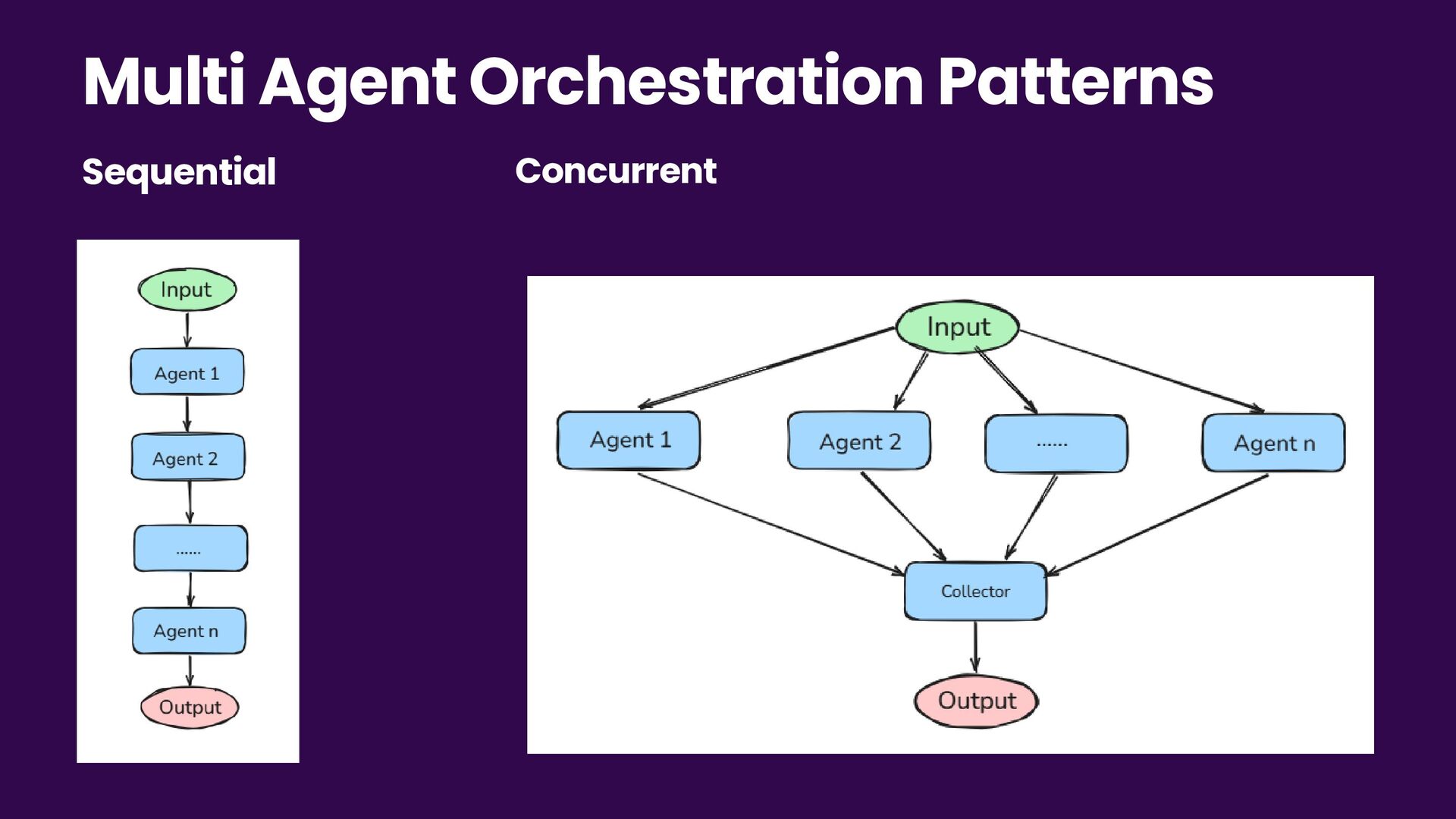
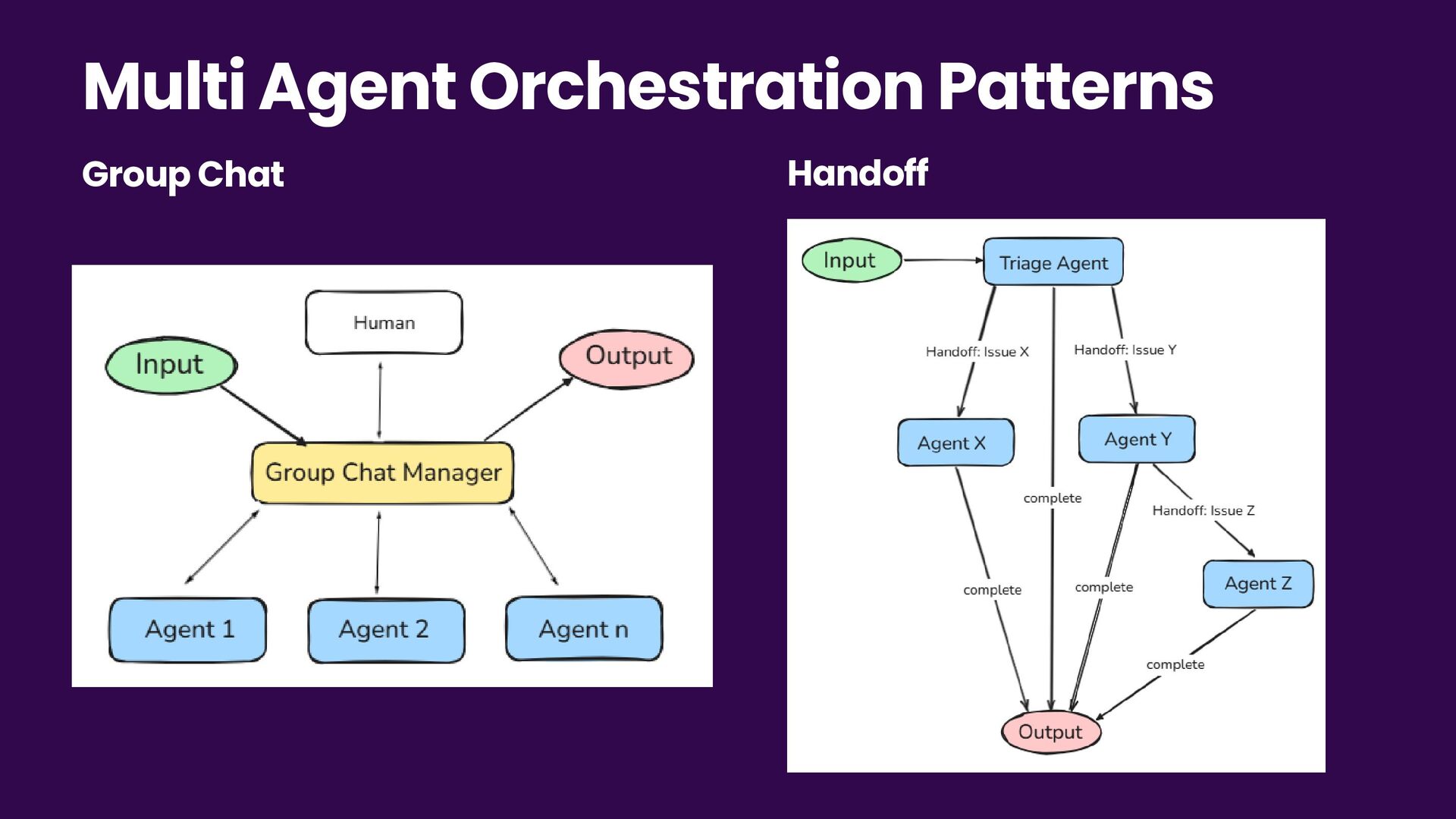
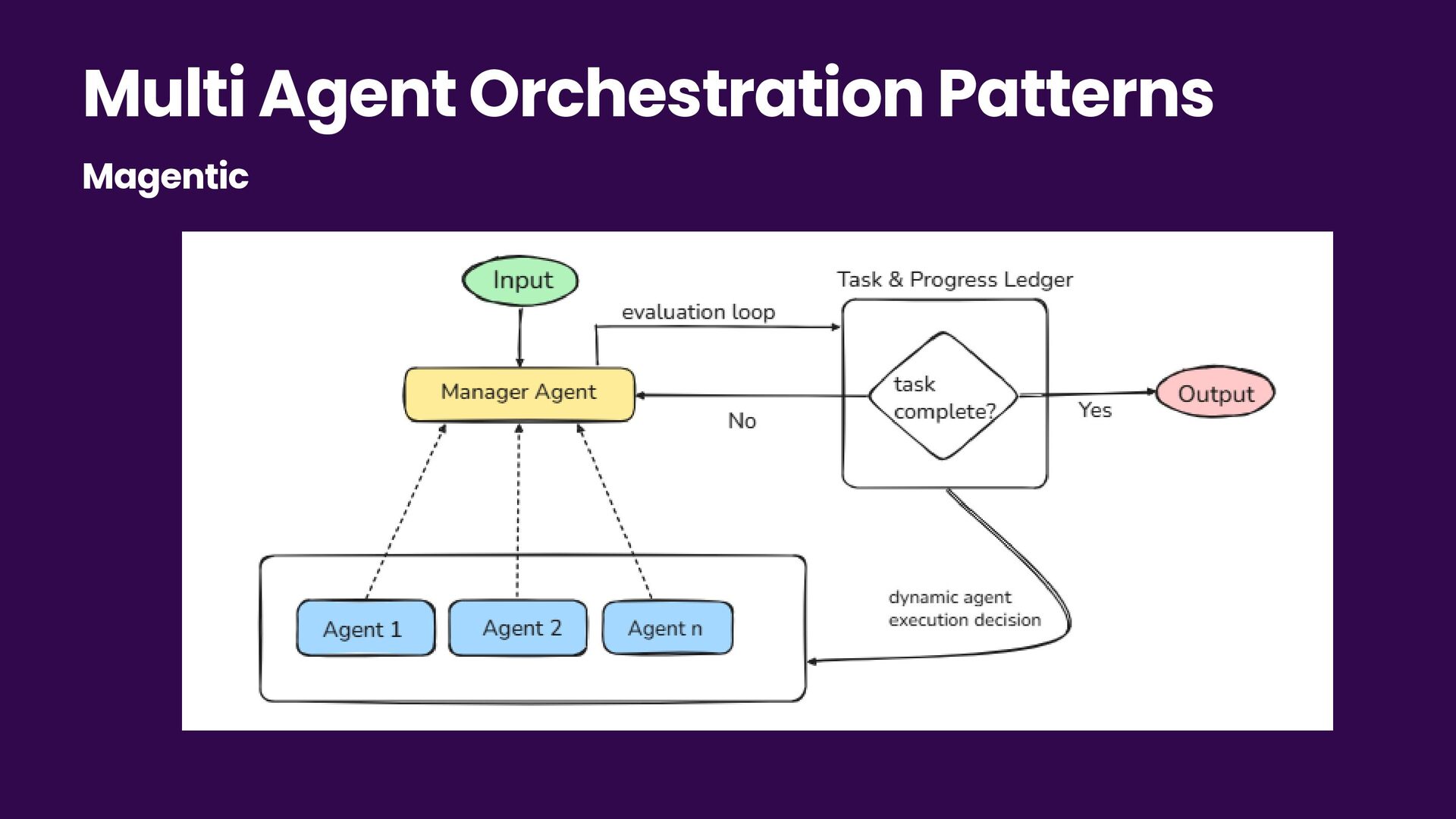
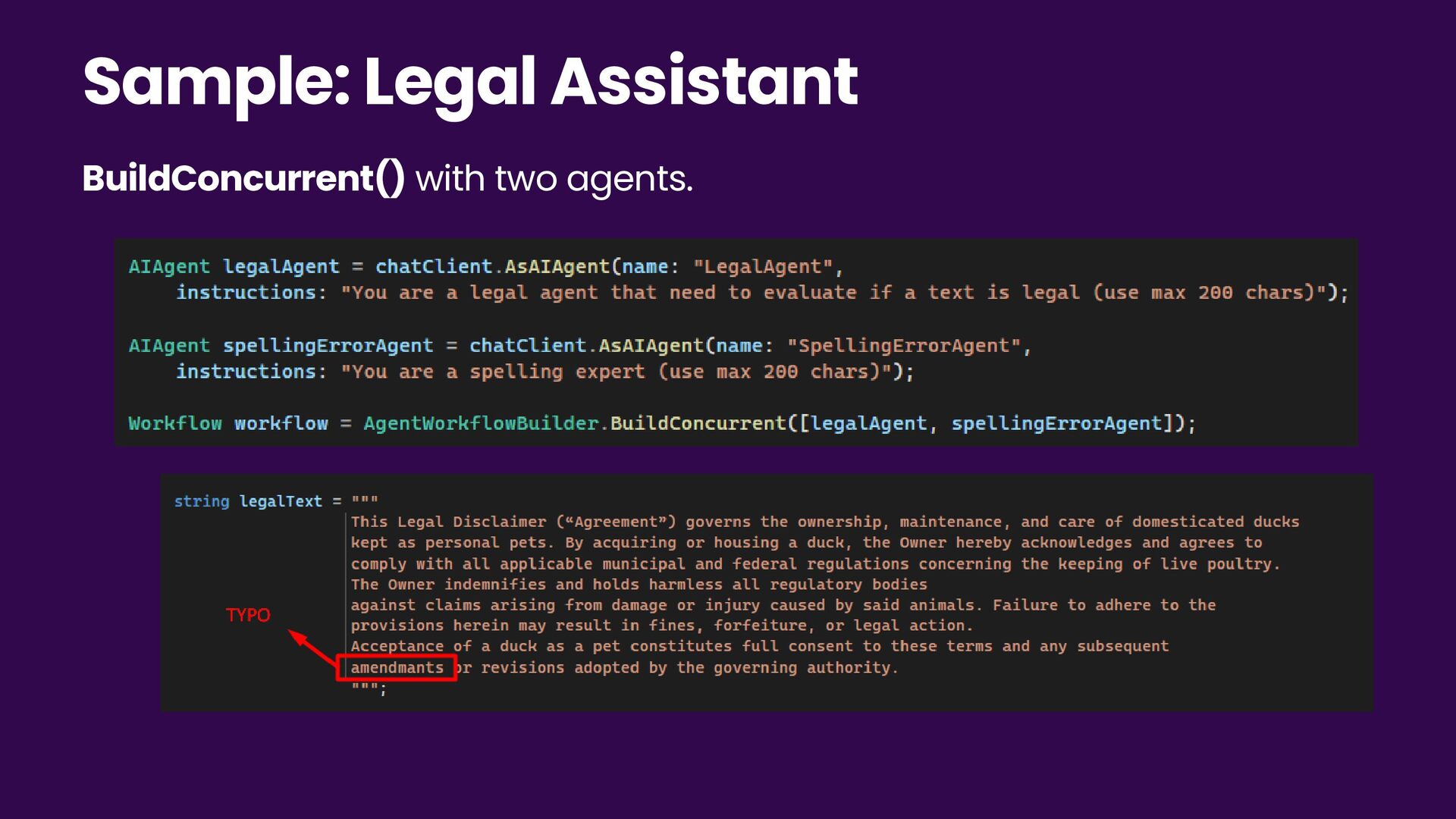
  3. AI Orchestration, coordinates multiple specialized agents within a unified system

    to achieve goals. Advantages: specialization, scalability, modularity, optimization, flexibility
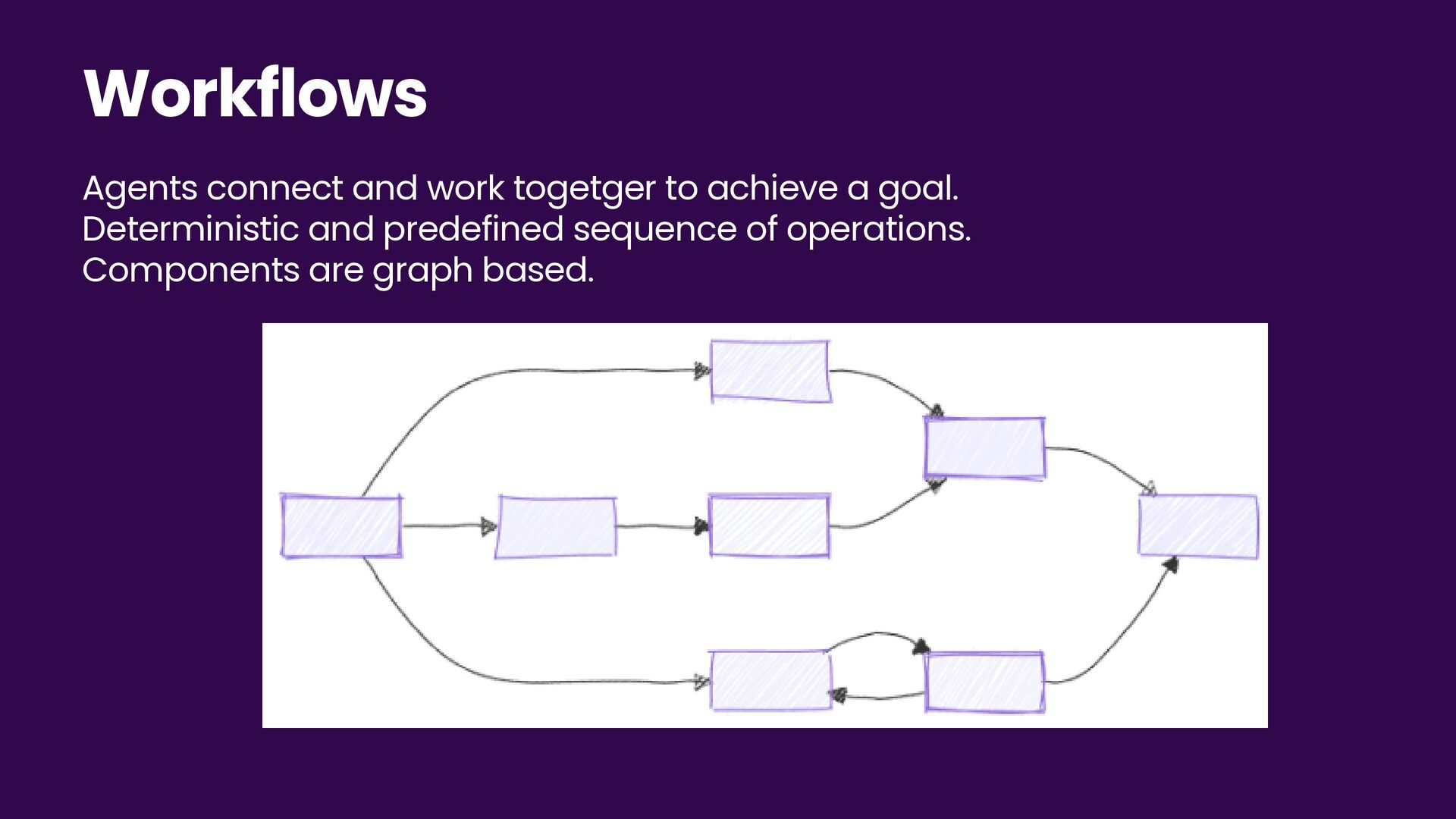
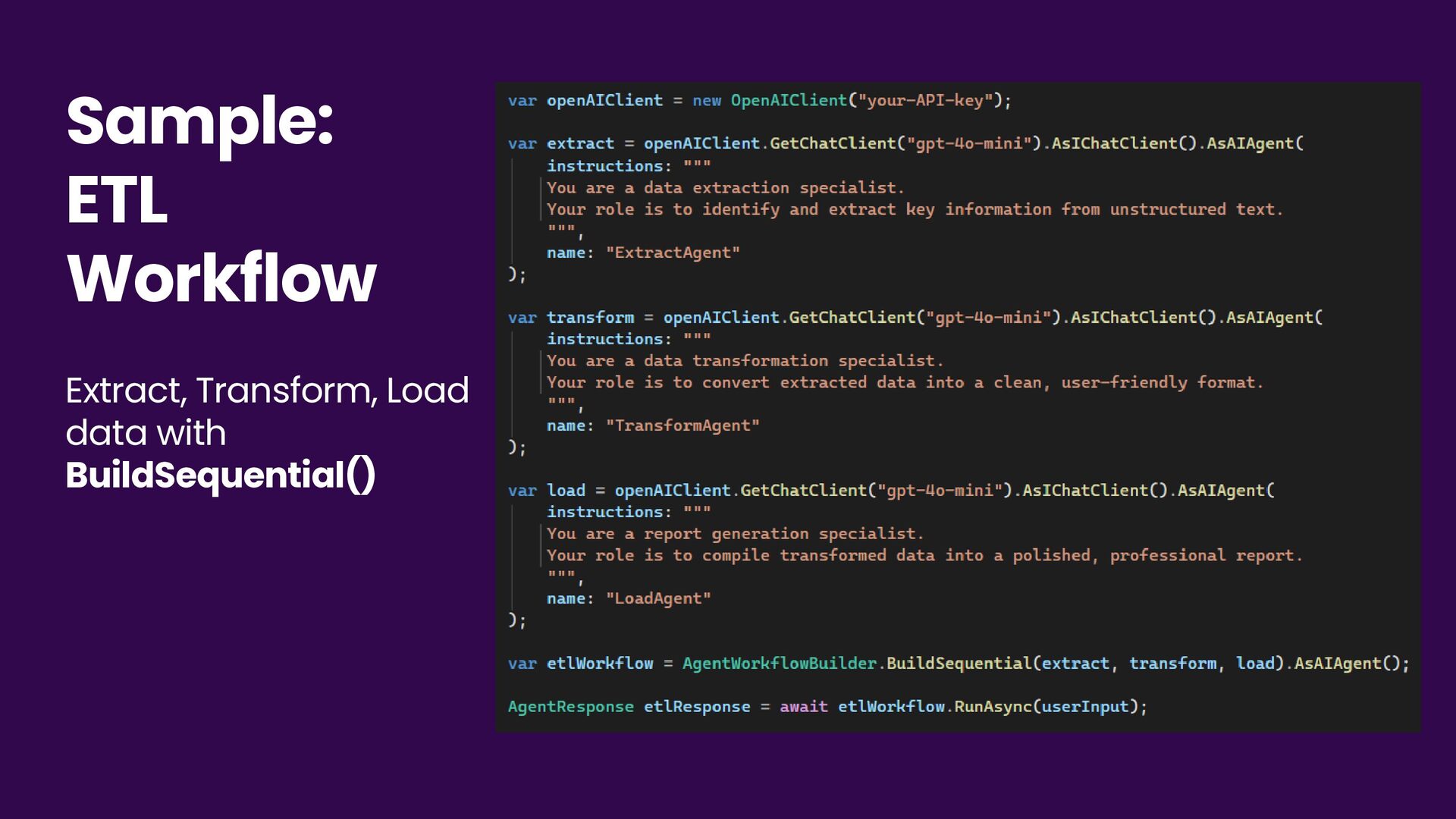
  4. Workflows Agents connect and work togetger to achieve a goal.

    Deterministic and predefined sequence of operations. Components are graph based.
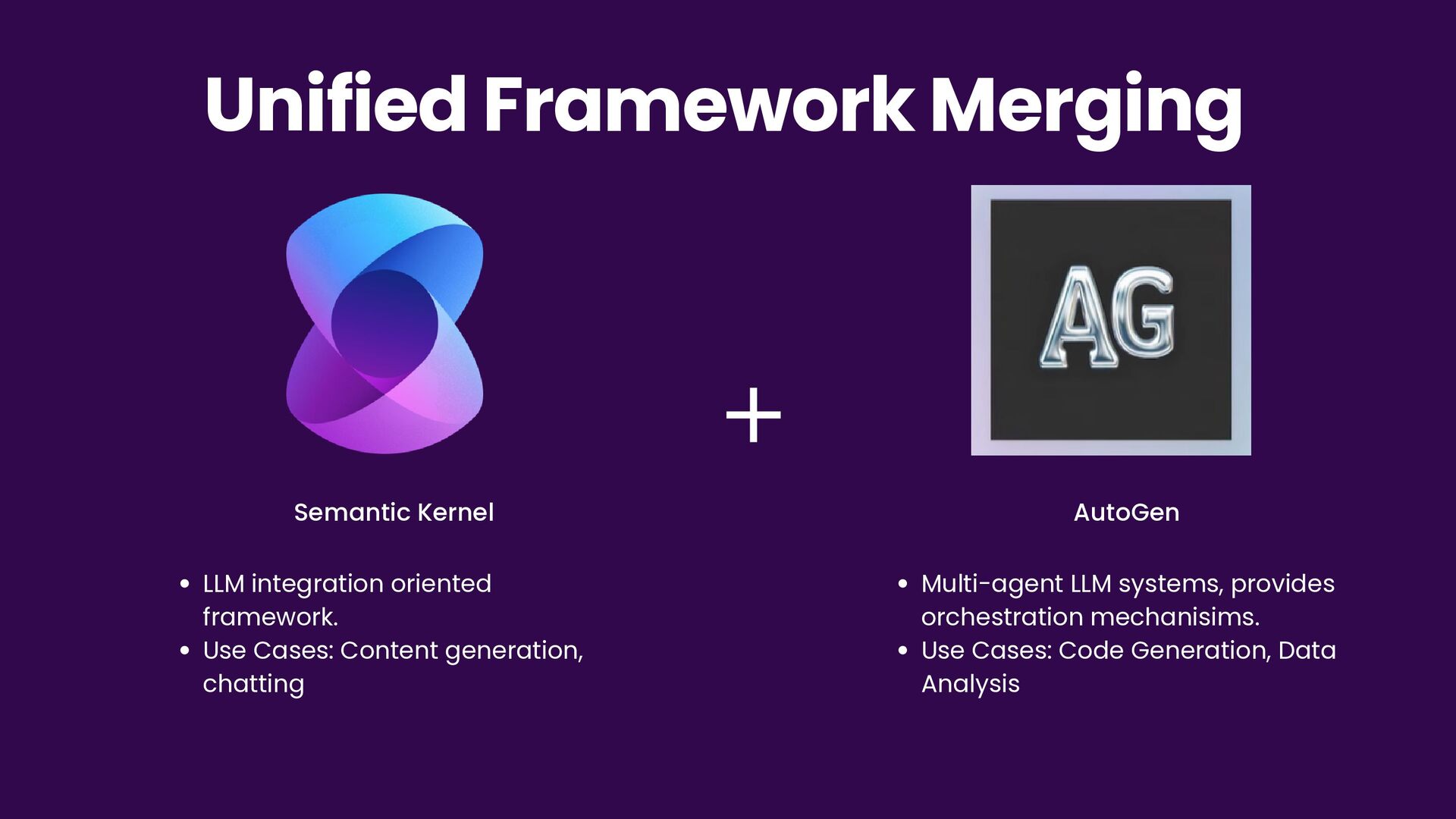
  5. Semantic Kernel LLM integration oriented framework. Use Cases: Content generation,

    chatting AutoGen Multi-agent LLM systems, provides orchestration mechanisims. Use Cases: Code Generation, Data Analysis + Unified Framework Merging
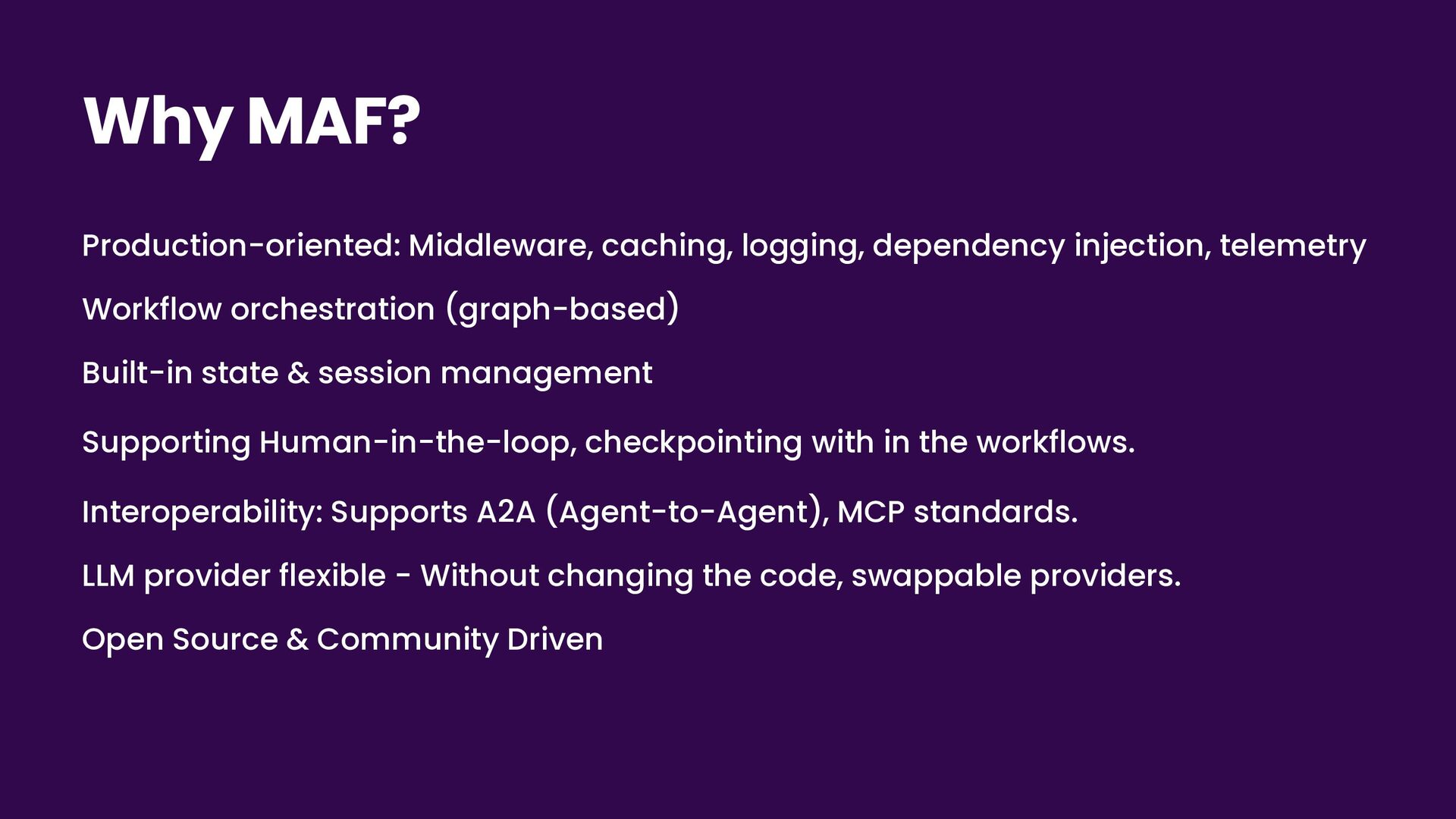
  6. Why MAF? Open Source & Community Driven Interoperability: Supports A2A

    (Agent-to-Agent), MCP standards. LLM provider flexible - Without changing the code, swappable providers. Production-oriented: Middleware, caching, logging, dependency injection, telemetry Built-in state & session management Workflow orchestration (graph-based) Supporting Human-in-the-loop, checkpointing with in the workflows.
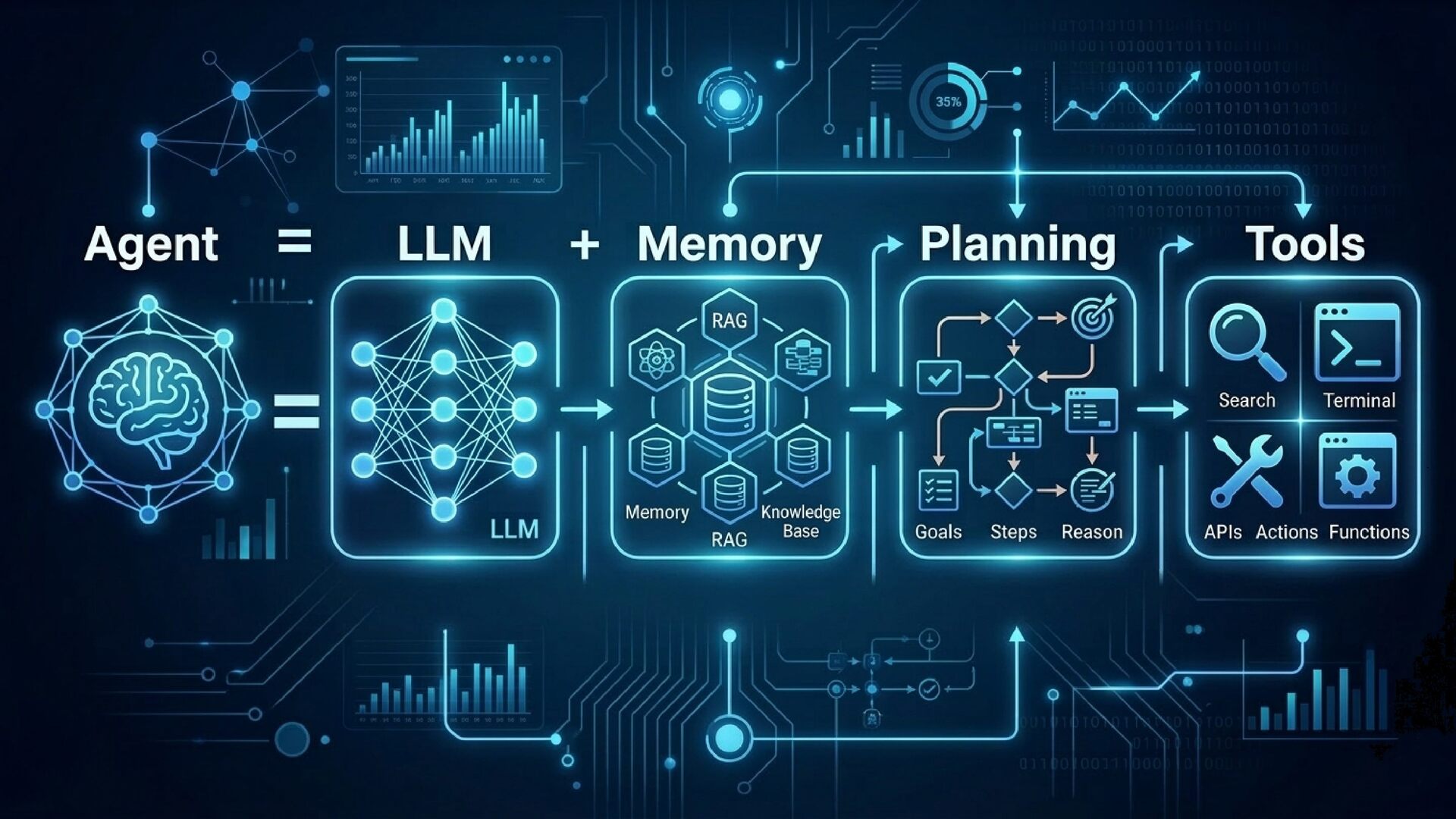
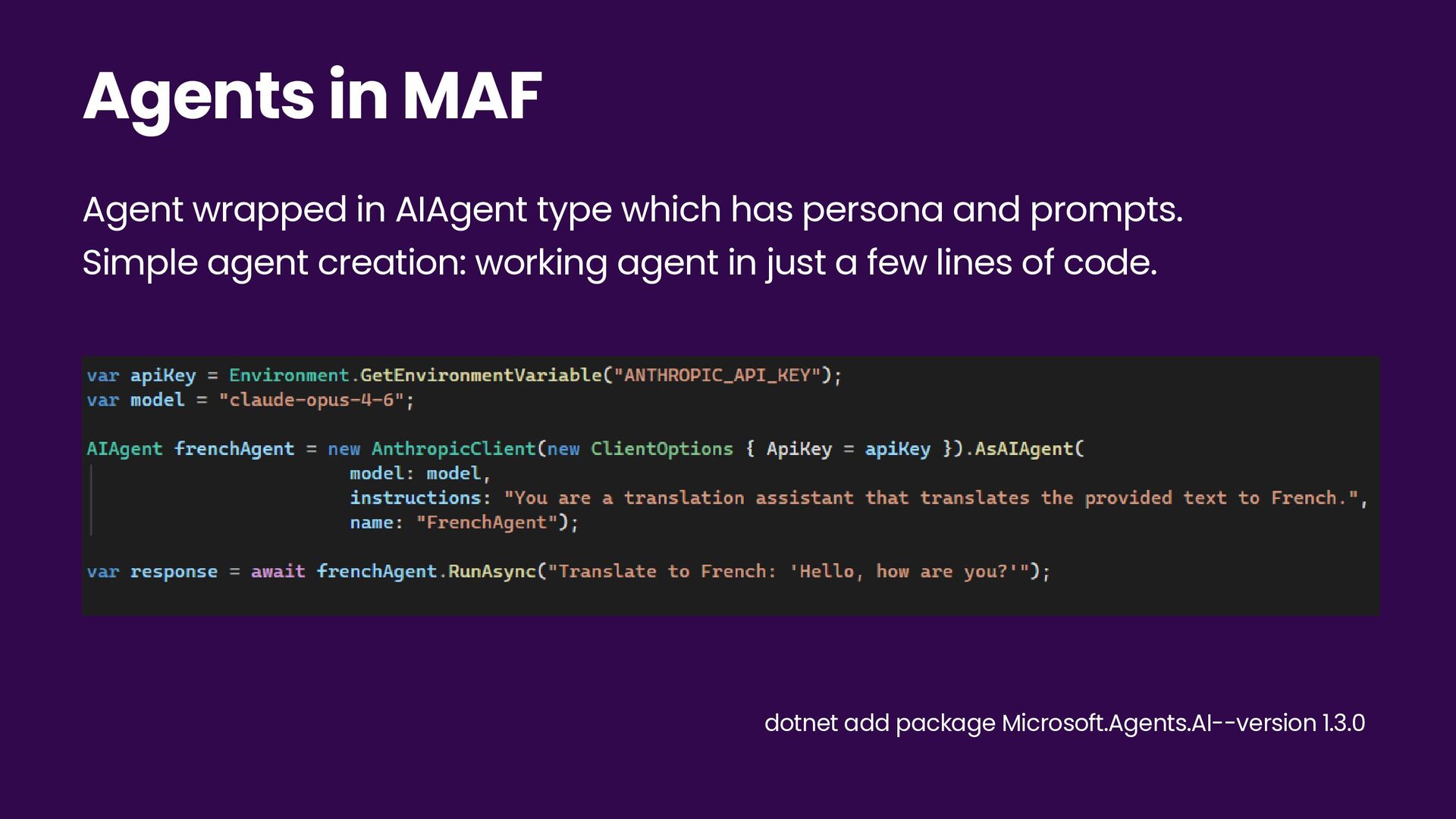
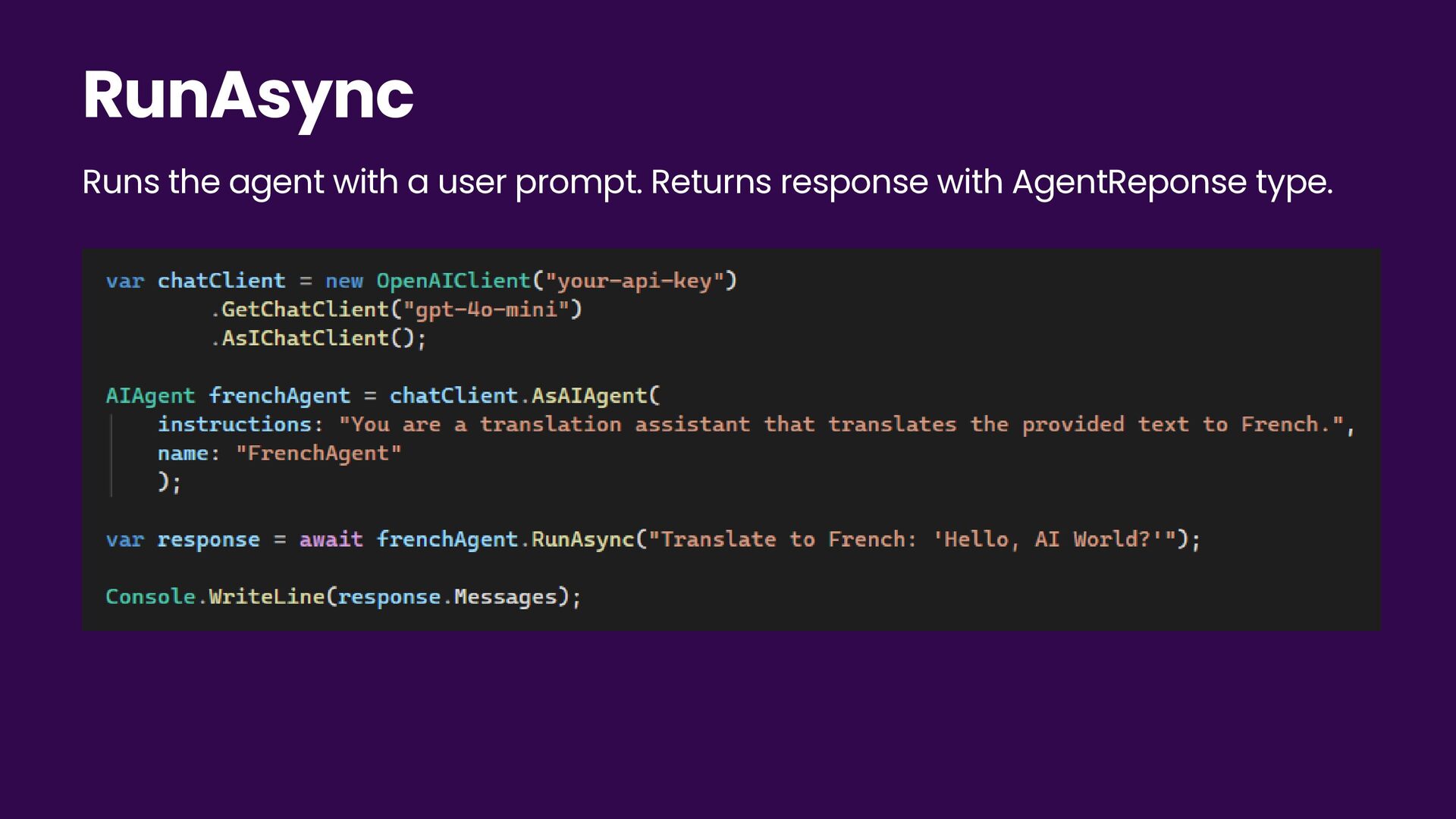
  7. Agents in MAF Agent wrapped in AIAgent type which has

    persona and prompts. Simple agent creation: working agent in just a few lines of code. dotnet add package Microsoft.Agents.AI--version 1.3.0
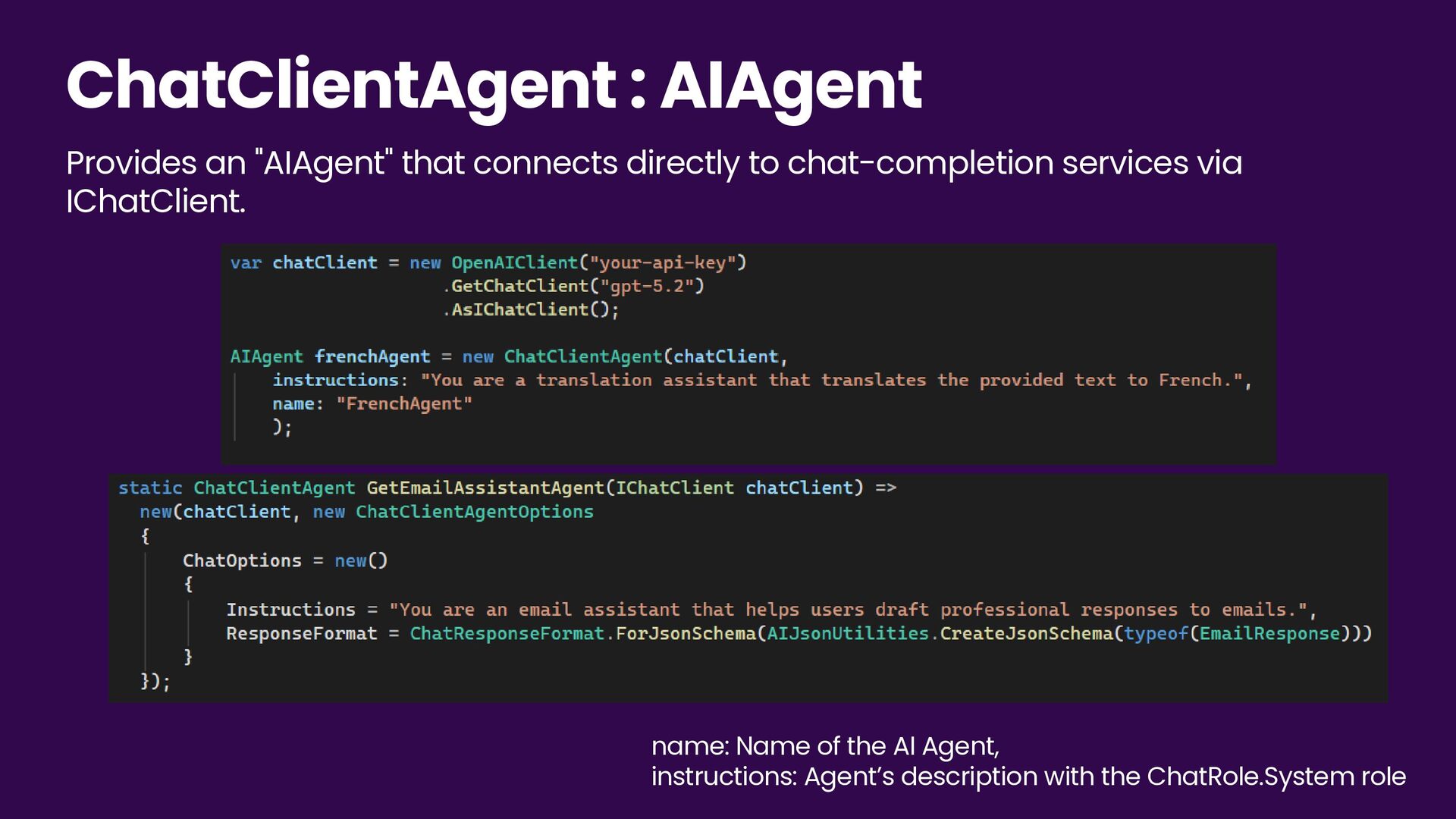
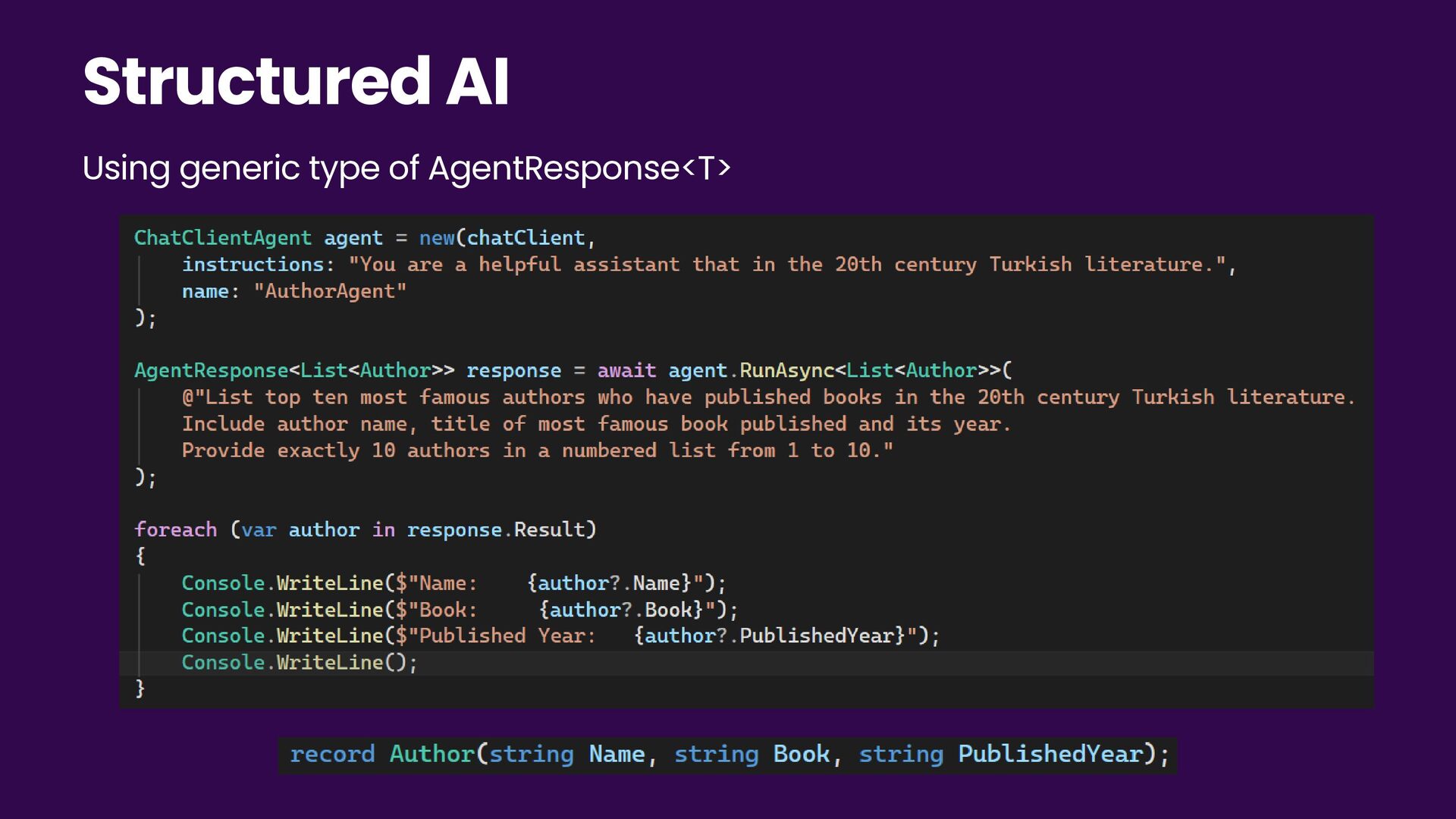
  8. ChatClientAgent : AIAgent Provides an "AIAgent" that connects directly to

    chat-completion services via IChatClient. name: Name of the AI Agent, instructions: Agent’s description with the ChatRole.System role
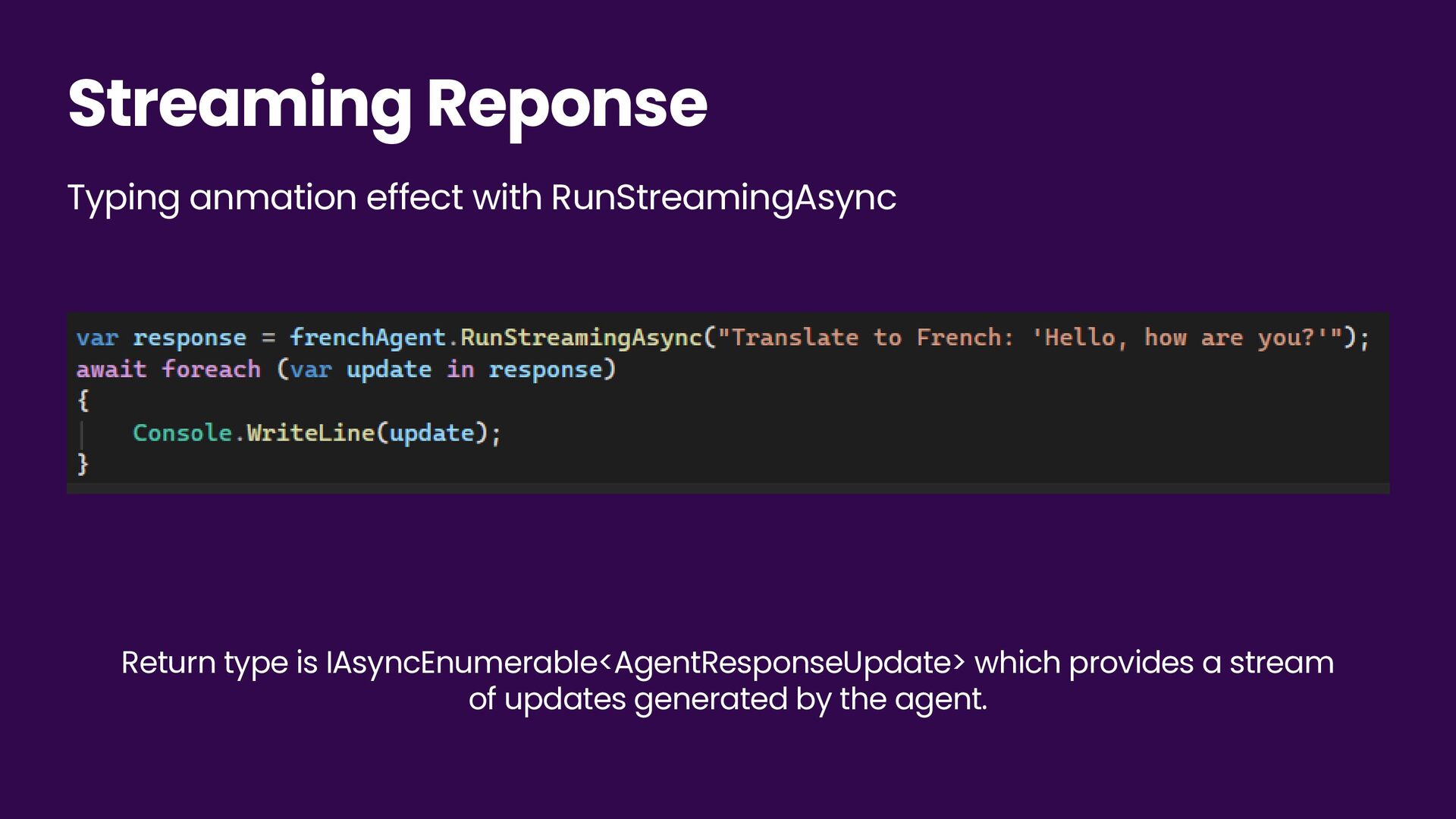
  9. Streaming Reponse Typing anmation effect with RunStreamingAsync Return type is

    IAsyncEnumerable<AgentResponseUpdate> which provides a stream of updates generated by the agent.
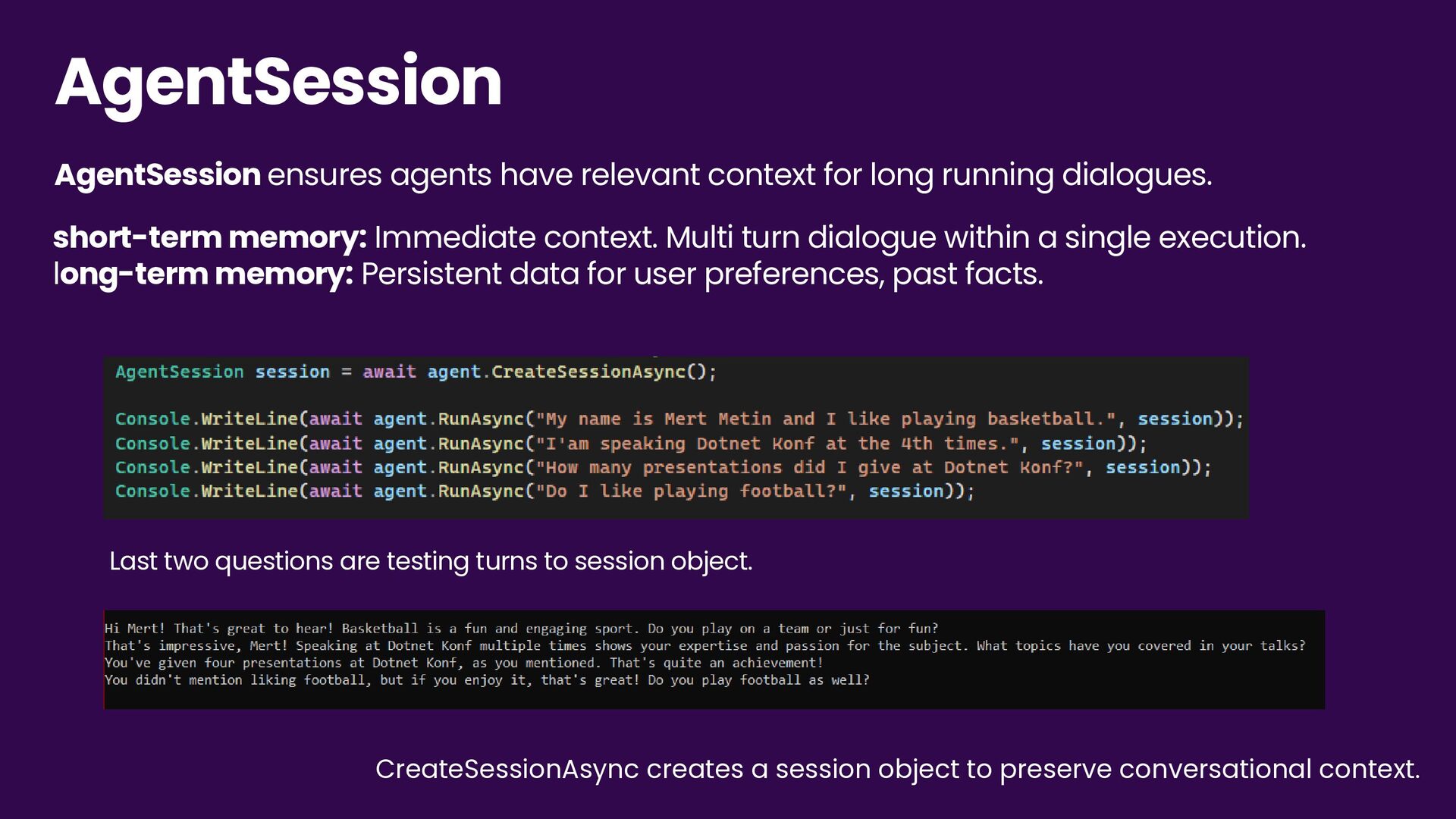
  10. AgentSession AgentSession ensures agents have relevant context for long running

    dialogues. CreateSessionAsync creates a session object to preserve conversational context. Last two questions are testing turns to session object. short-term memory: Immediate context. Multi turn dialogue within a single execution. long-term memory: Persistent data for user preferences, past facts.
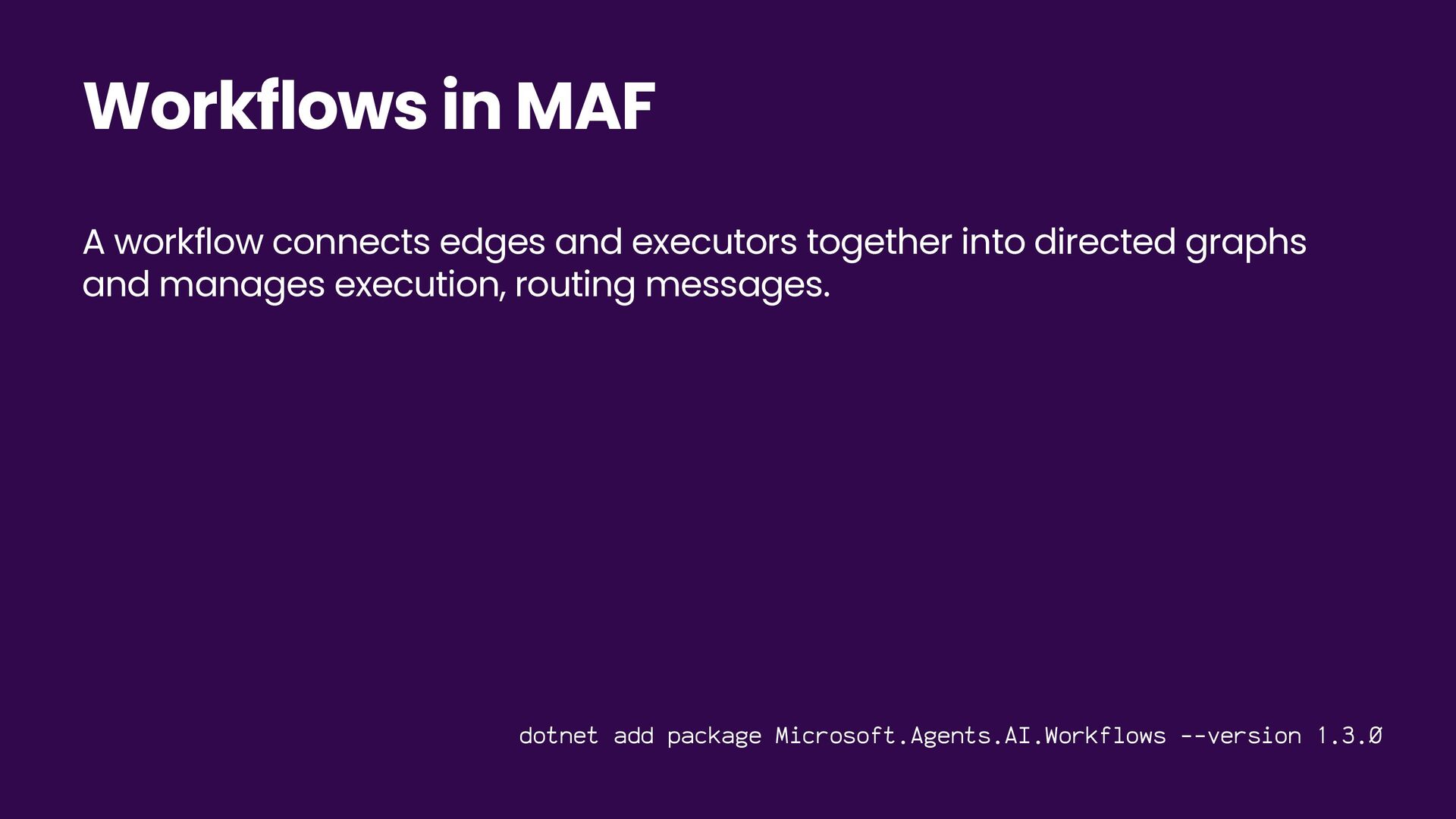
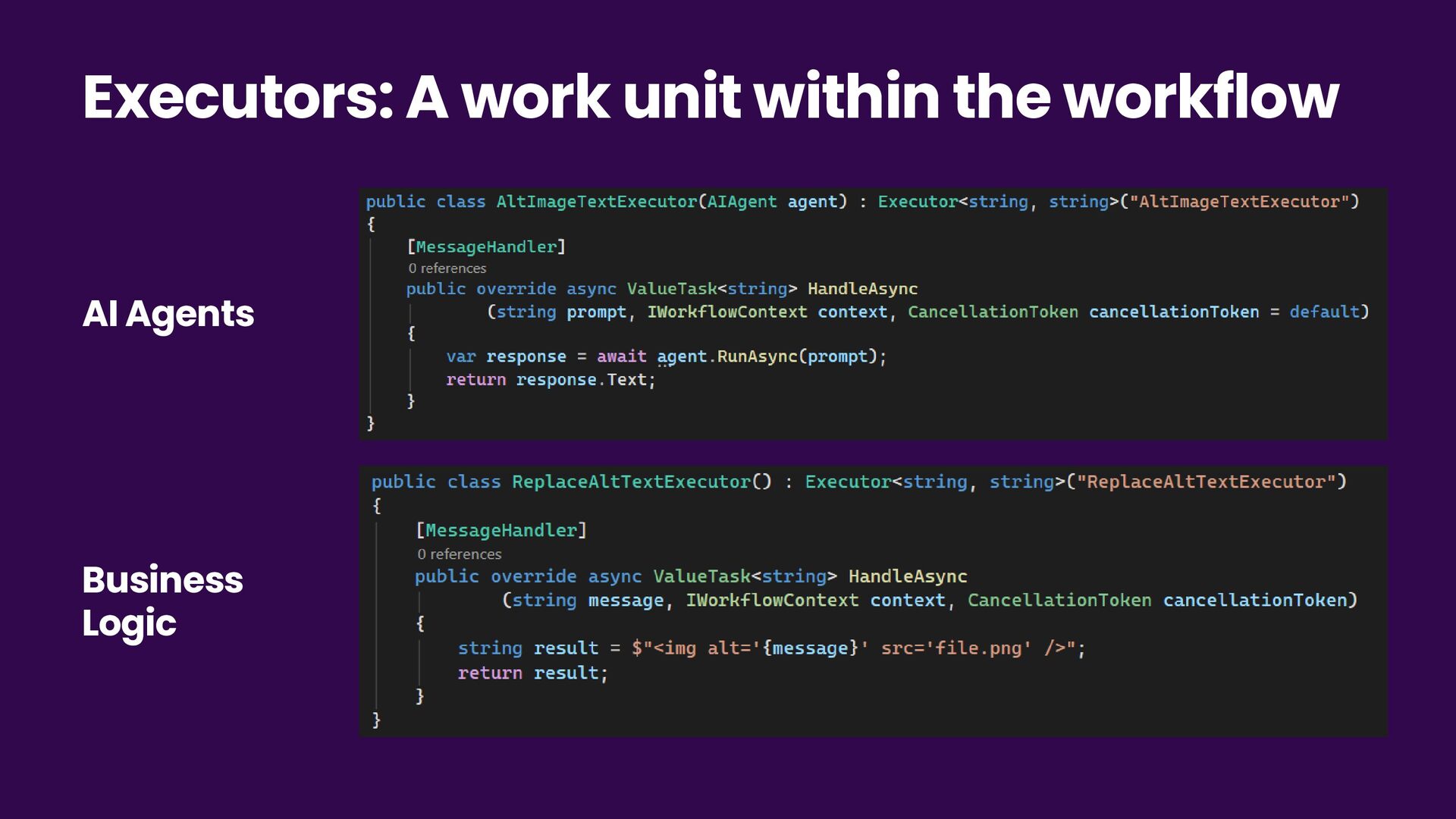
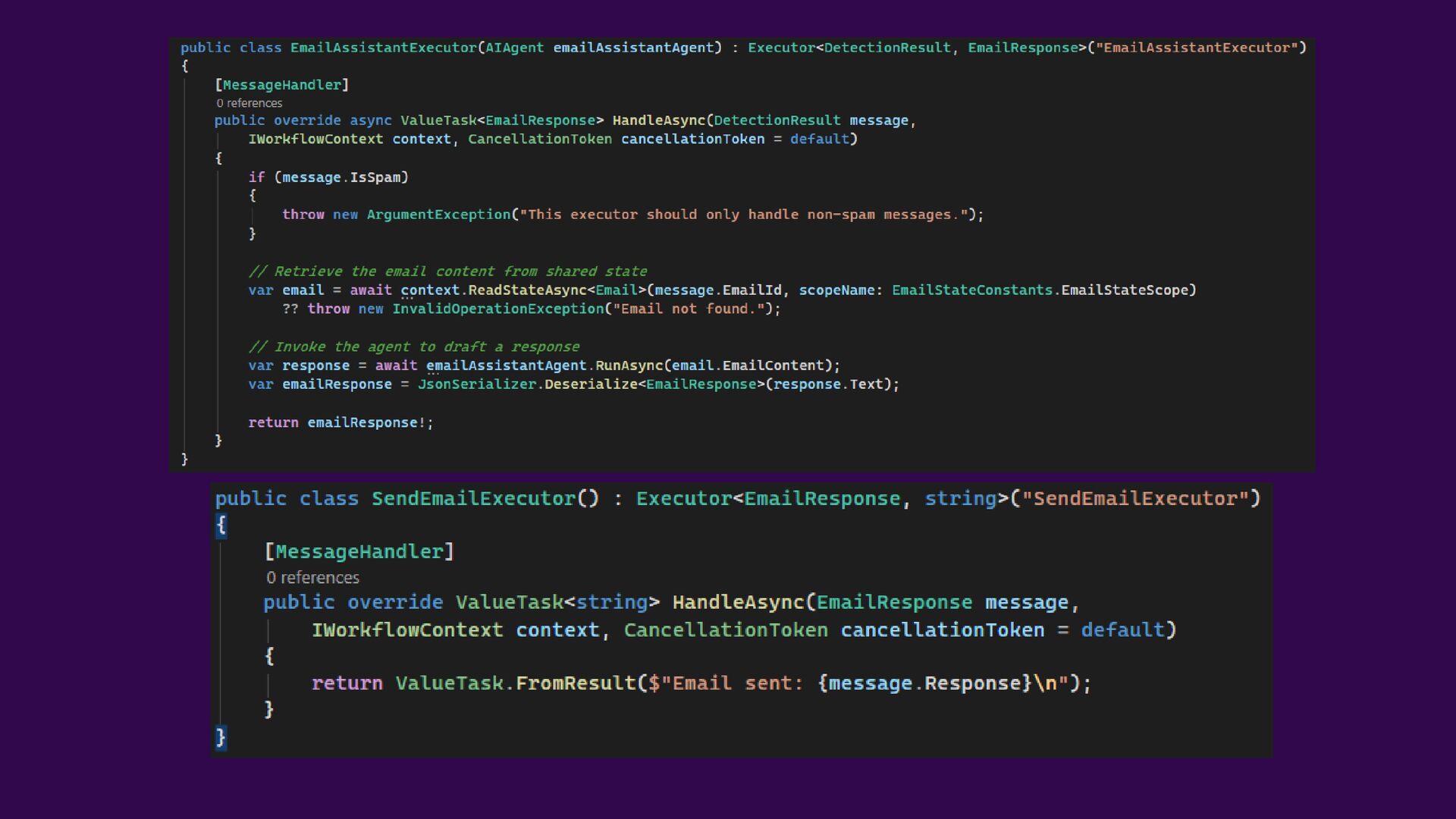
  11. Workflows in MAF dotnet add package Microsoft.Agents.AI.Workflows --version 1.3.0 A

    workflow connects edges and executors together into directed graphs and manages execution, routing messages.
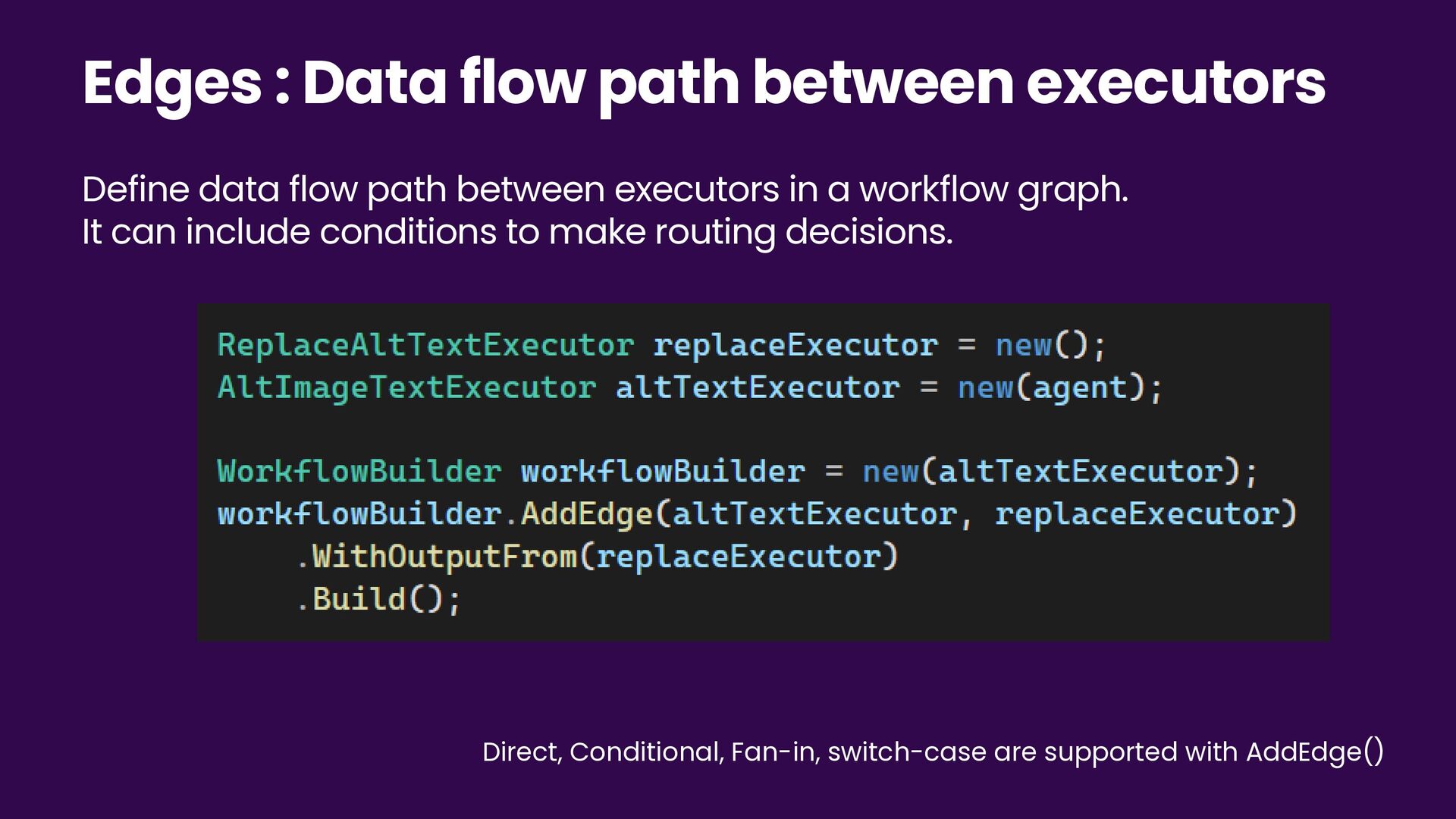
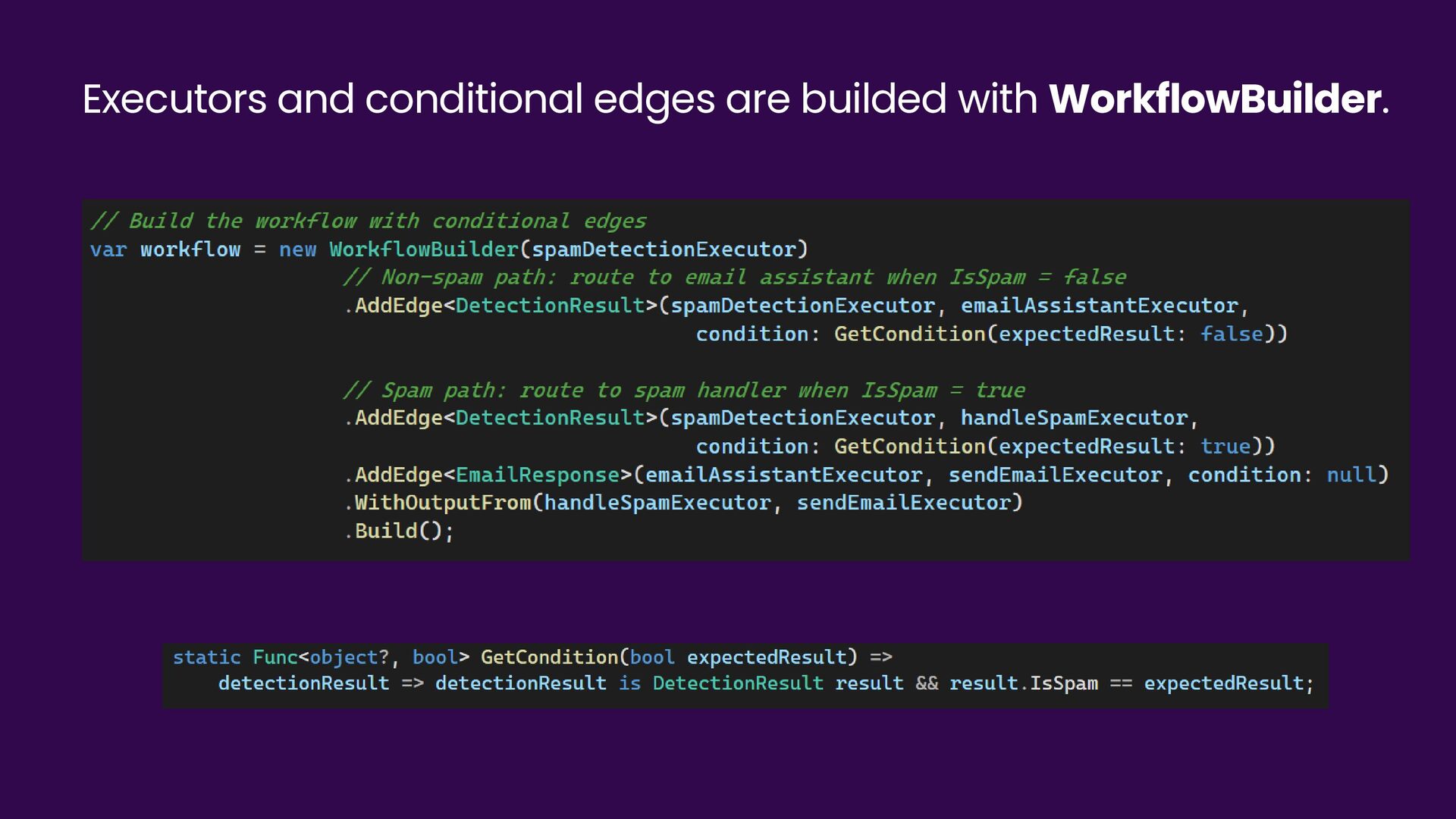
  12. Edges : Data flow path between executors Define data flow

    path between executors in a workflow graph. It can include conditions to make routing decisions. Direct, Conditional, Fan-in, switch-case are supported with AddEdge()
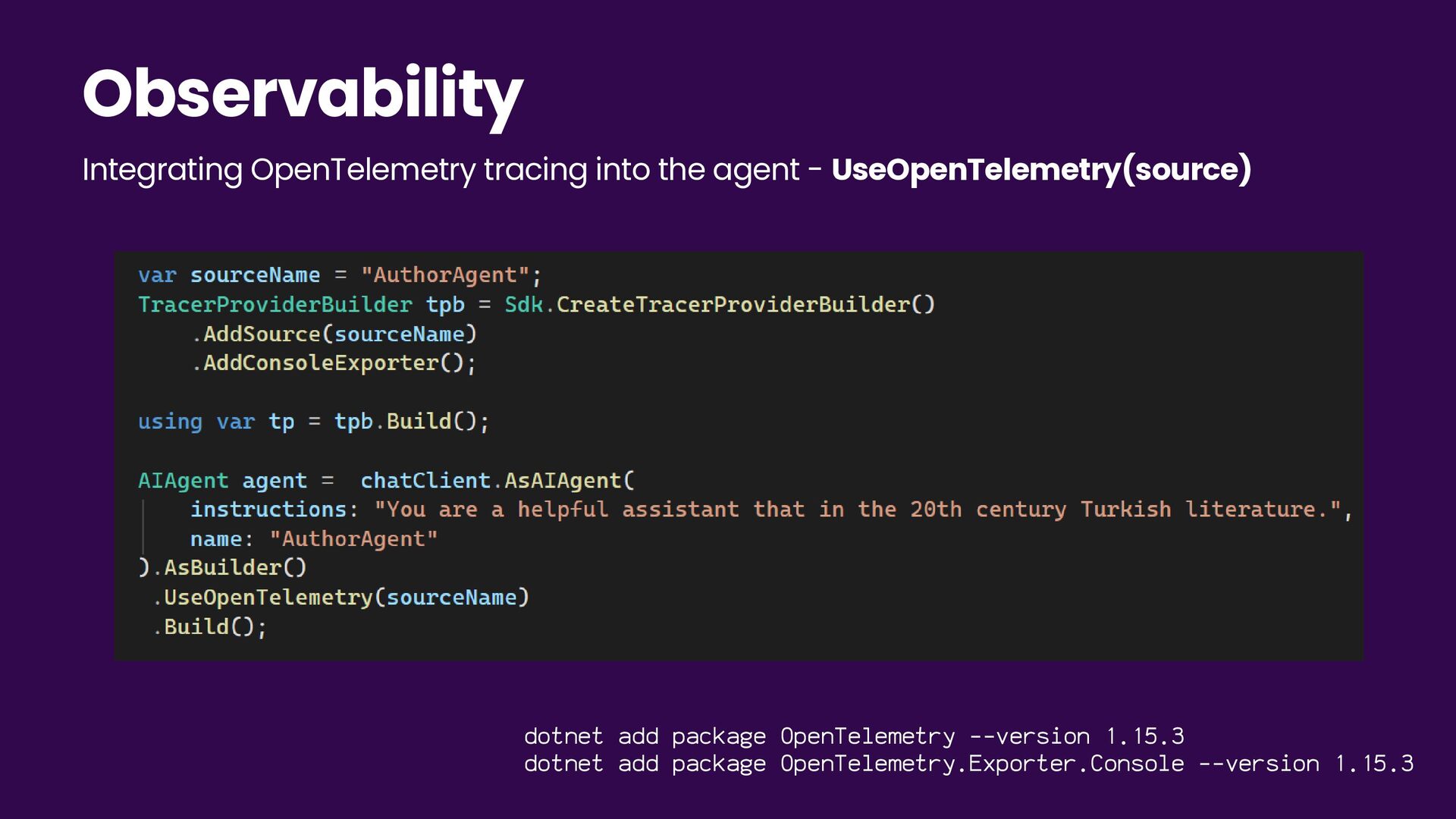
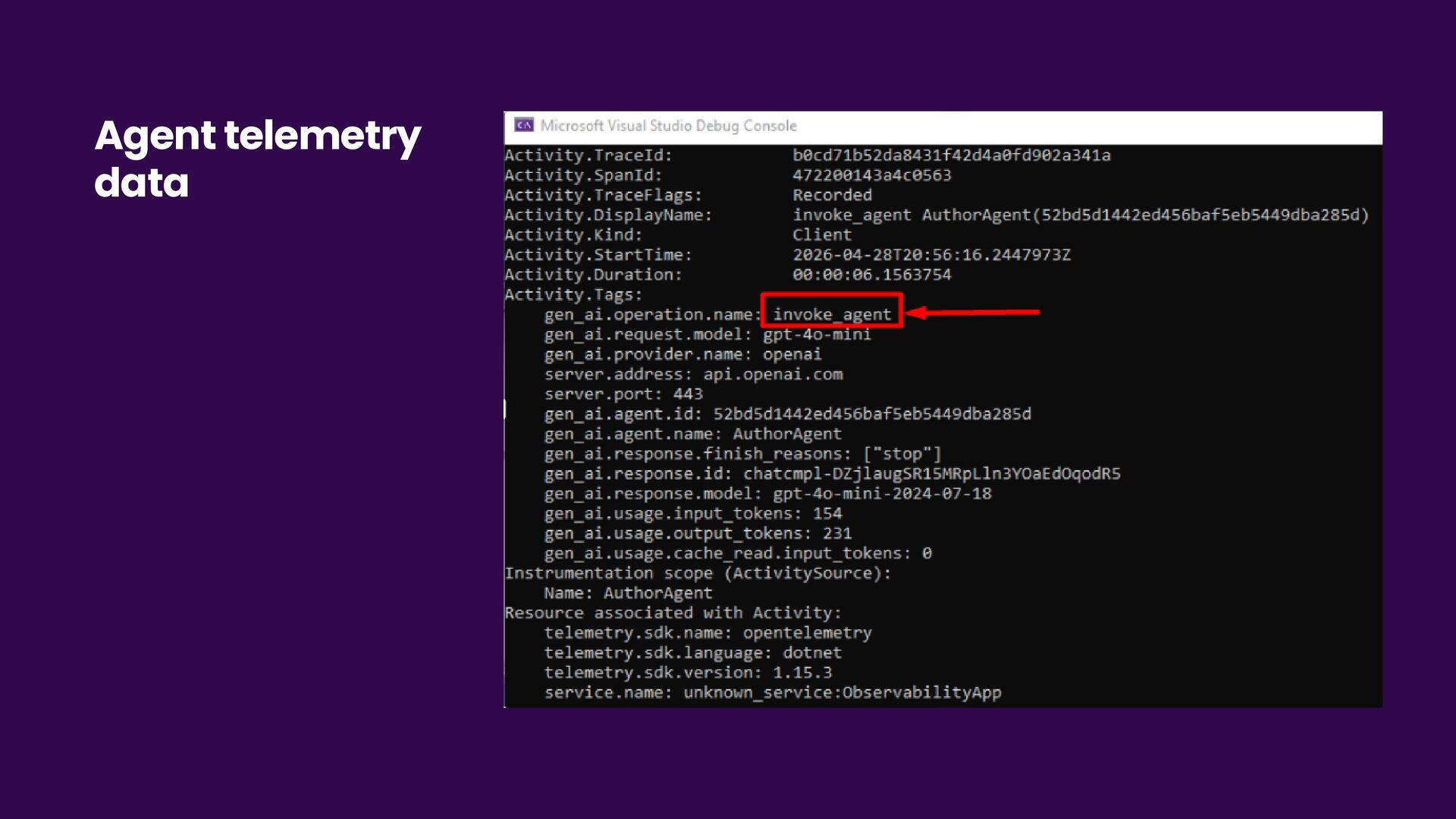
  13. Observability Integrating OpenTelemetry tracing into the agent - UseOpenTelemetry(source) dotnet

    add package OpenTelemetry --version 1.15.3 dotnet add package OpenTelemetry.Exporter.Console --version 1.15.3
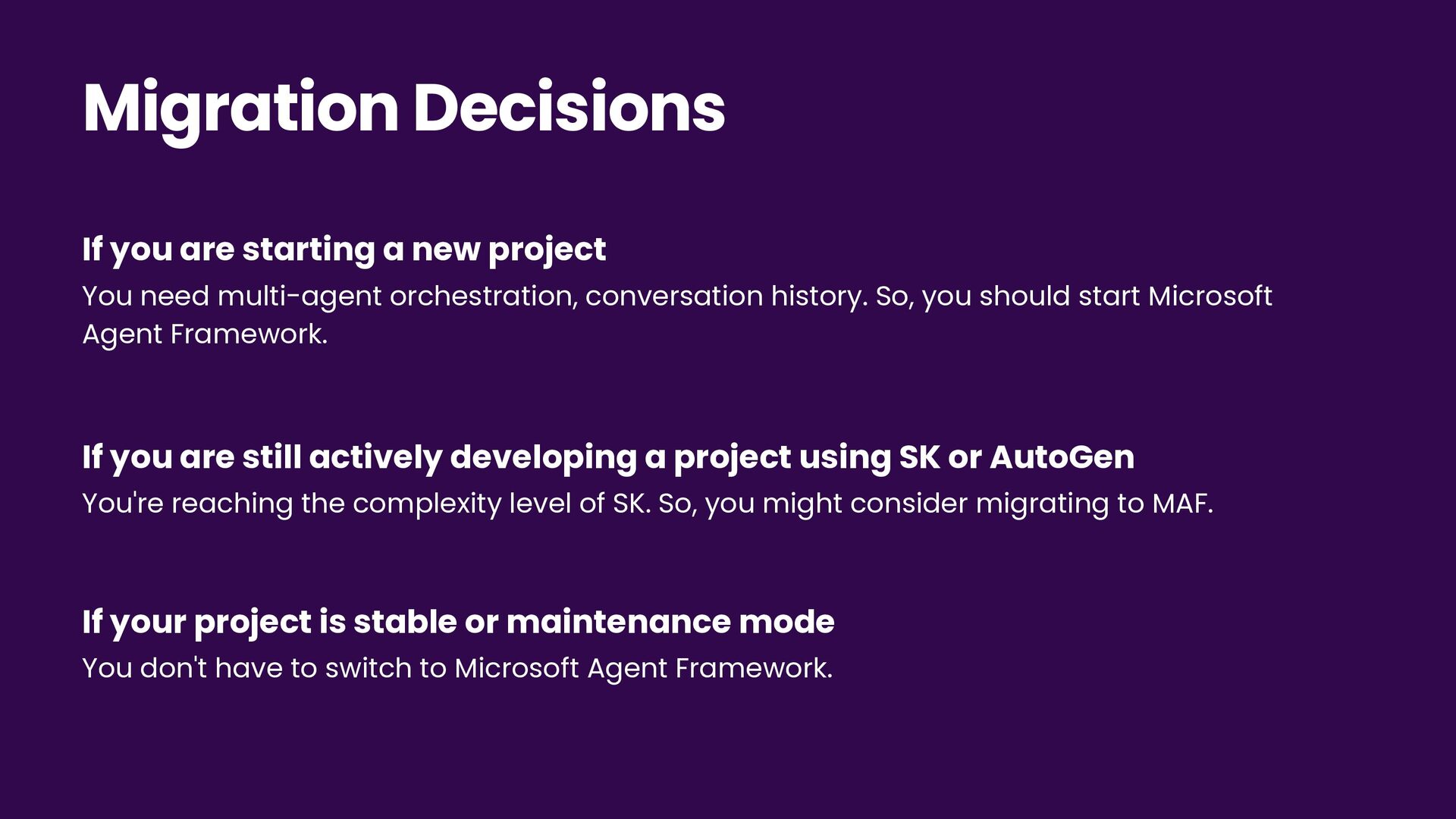
  14. If you are still actively developing a project using SK

    or AutoGen You're reaching the complexity level of SK. So, you might consider migrating to MAF. If your project is stable or maintenance mode You don't have to switch to Microsoft Agent Framework. If you are starting a new project You need multi-agent orchestration, conversation history. So, you should start Microsoft Agent Framework. Migration Decisions
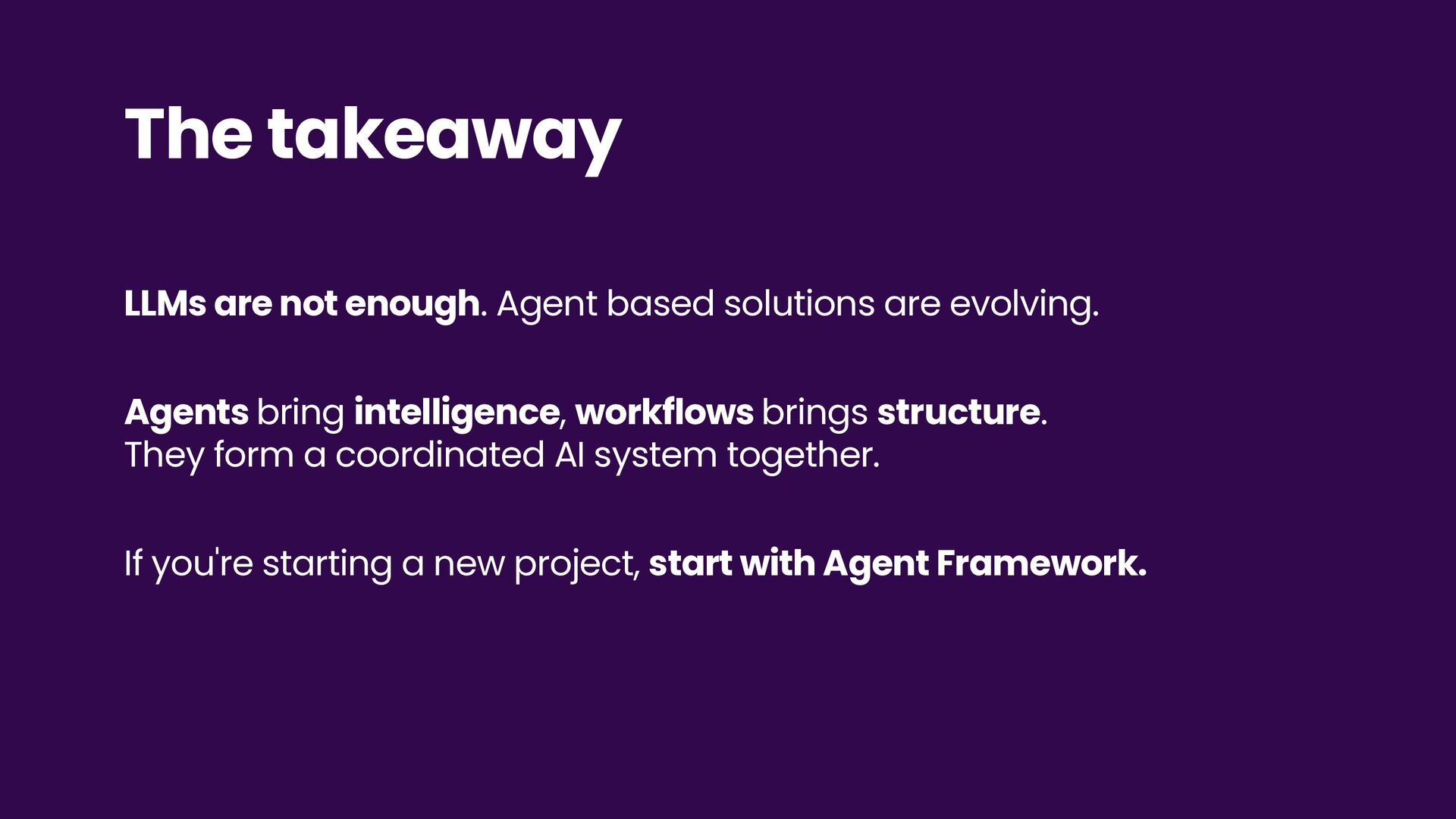
  15. The takeaway If you're starting a new project, start with

    Agent Framework. LLMs are not enough. Agent based solutions are evolving. Agents bring intelligence, workflows brings structure. They form a coordinated AI system together.