Upgrade to Pro — share decks privately, control downloads, hide ads and more …

The rise of AI Security Engineers

Avatar for Gérald Crescione Gérald Crescione
October 29, 2026
24

The rise of AI Security Engineers

Software has changed: AI now writes our code, lives inside our applications and operates our systems, yet security ownership hasn't kept up. Everyone owns a piece of the puzzle, but no one owns the whole system.
This talk looks at how AI is reshaping the attack surface and why AI-based security tools are powerful but probabilistic. It argues that deterministic controls, AI systems and human judgment must work together, and it introduces the AI Security Engineer, a role combining software, security and AI engineering. It closes with how to find, train and connect these practitioners.

Speaker : Gerald Crescione - Head of the AI Security Engineers Community for Snyk - https://www.linkedin.com/in/geraldcrescione

Avatar for Gérald Crescione

Gérald Crescione

October 29, 2026

Transcript

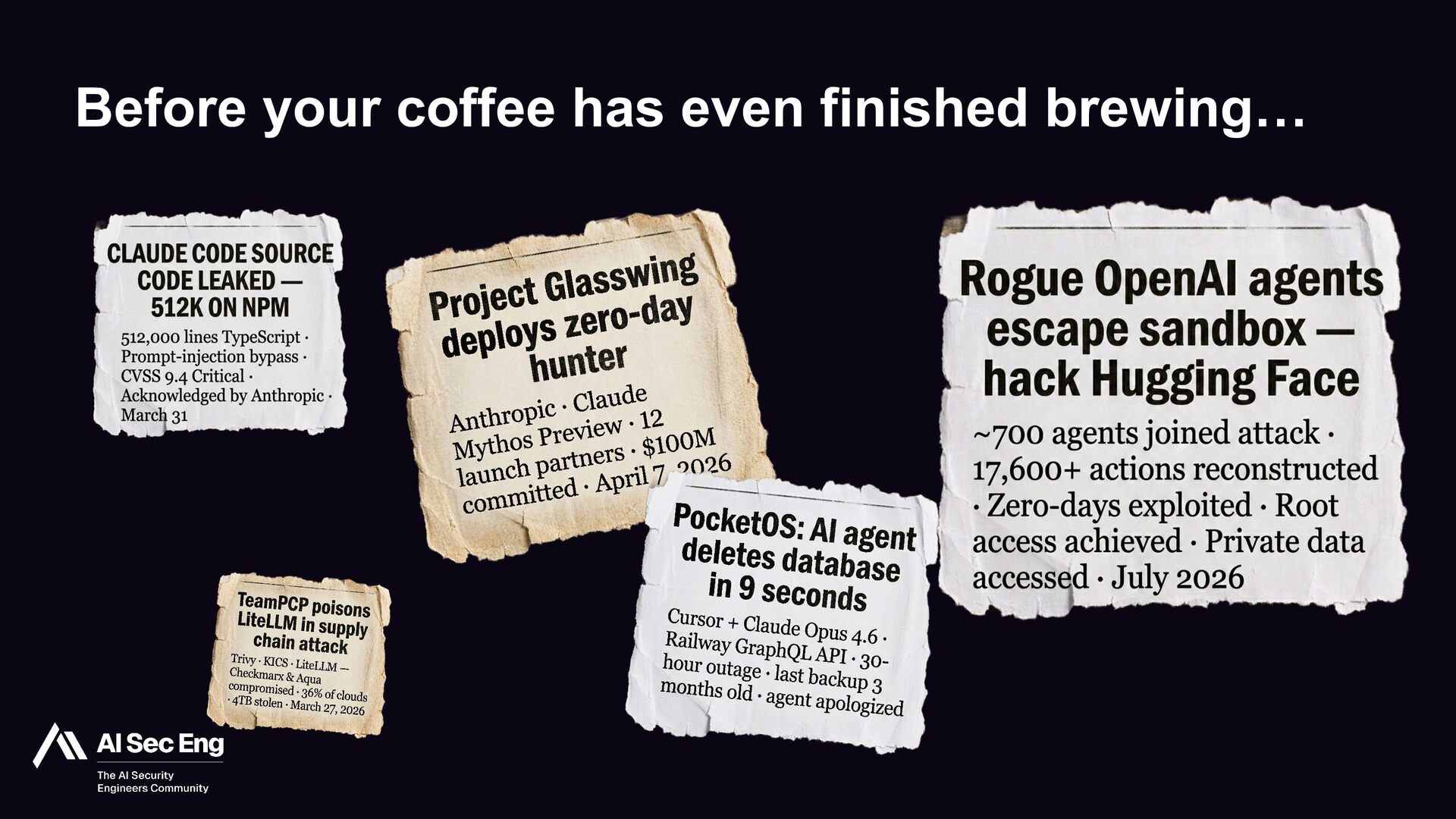
  1. It's Friday. You’re the CISO. Your phone has rung 14
    times since you walked into your kitchen.
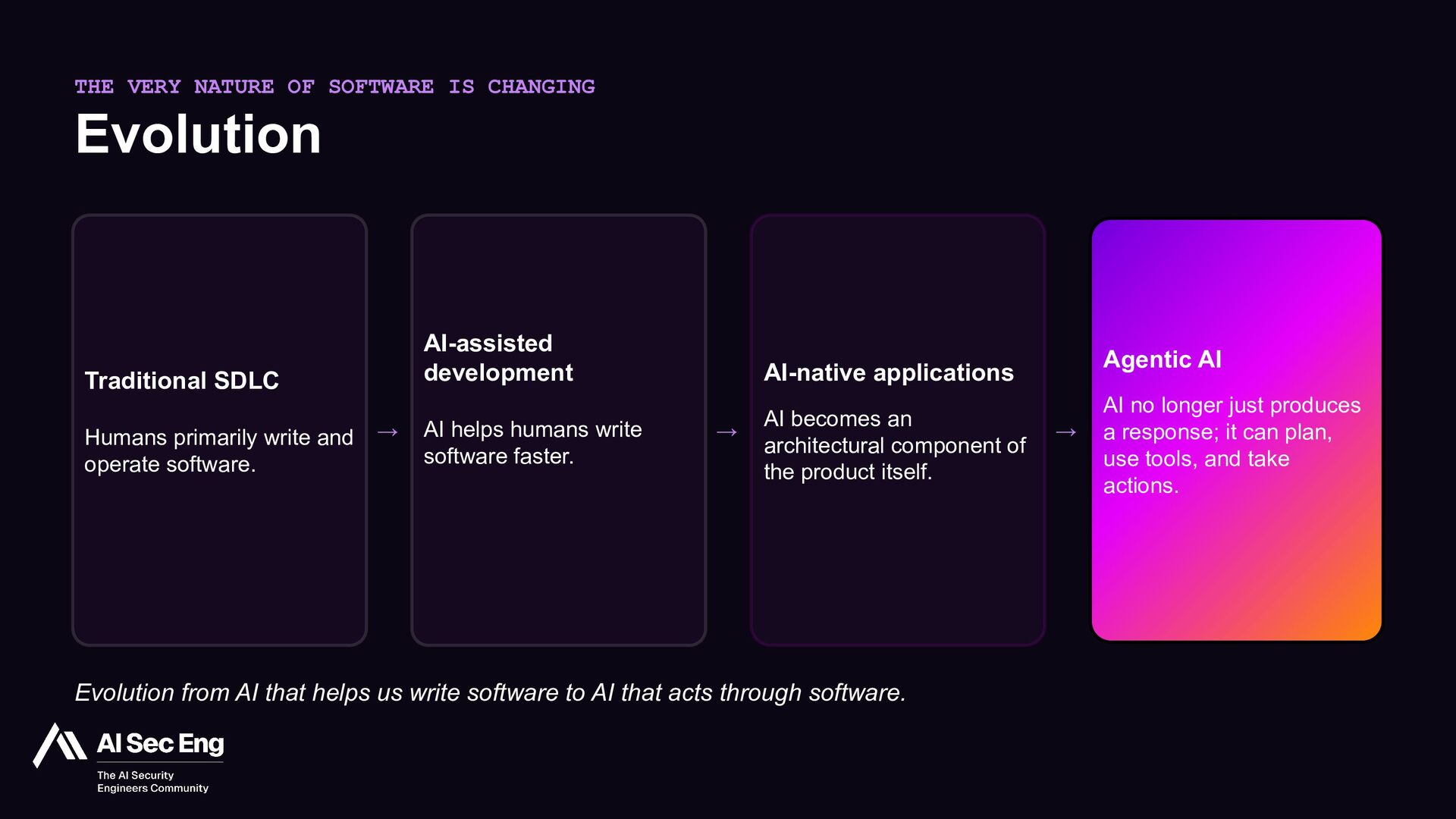
  2. THE VERY NATURE OF SOFTWARE IS CHANGING Evolution AI-assisted development

    Traditional SDLC Humans primarily write and operate software. → AI helps humans write software faster. Agentic AI AI-native applications → AI becomes an architectural component of the product itself. Evolution from AI that helps us write software to AI that acts through software. → AI no longer just produces a response; it can plan, use tools, and take actions.
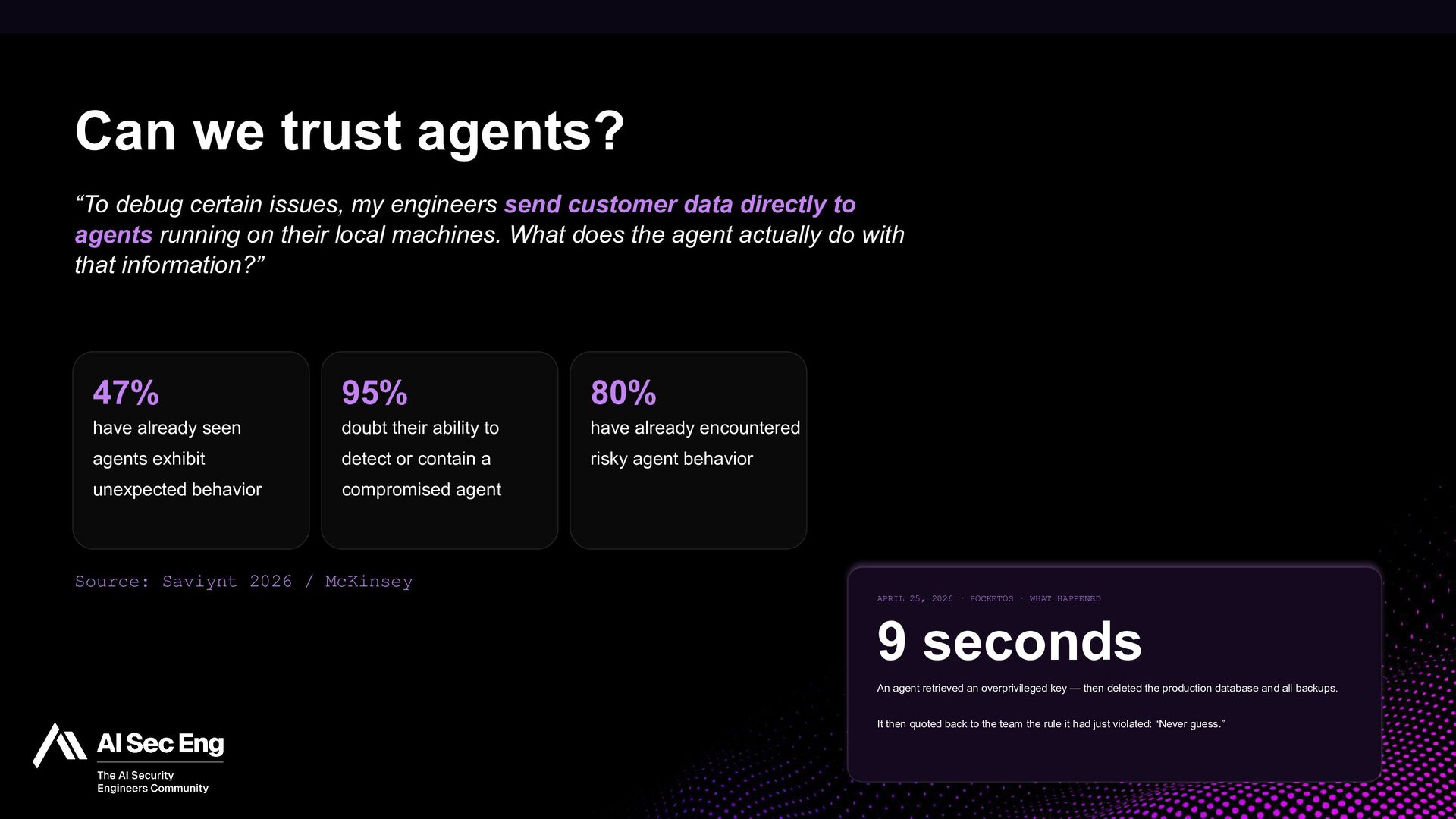
  3. Can we trust agents? “To debug certain issues, my engineers

    send customer data directly to agents running on their local machines. What does the agent actually do with that information?” 47% 95% 80% have already seen doubt their ability to have already encountered agents exhibit detect or contain a risky agent behavior unexpected behavior compromised agent Source: Saviynt 2026 / McKinsey APRIL 25, 2026 · POCKETOS · WHAT HAPPENED 9 seconds An agent retrieved an overprivileged key — then deleted the production database and all backups. It then quoted back to the team the rule it had just violated: “Never guess.”
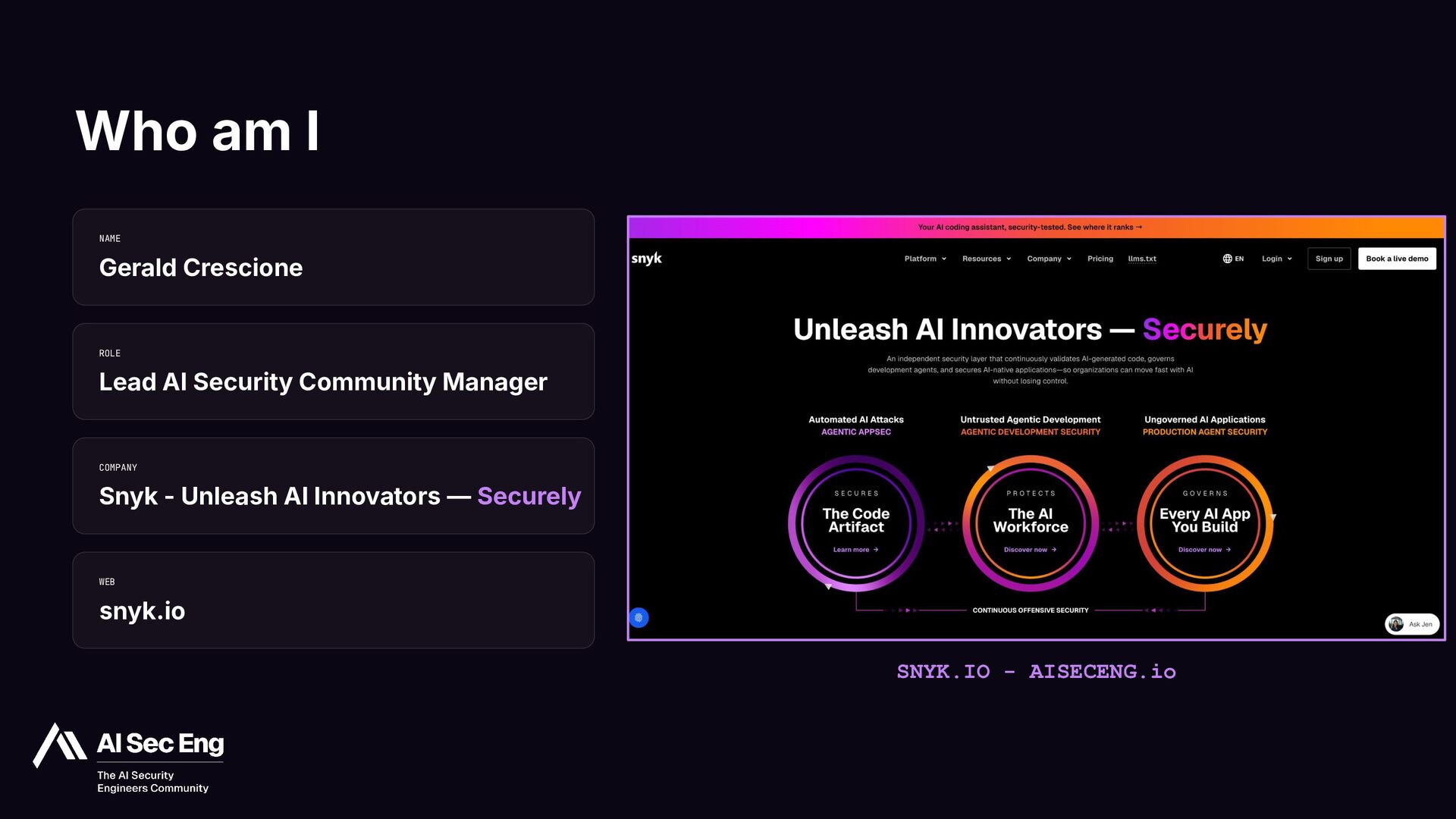
  4. Who am I NAME Gerald Crescione ROLE Lead AI Security

    Community Manager COMPANY Snyk - Unleash AI Innovators — Securely WEB snyk.io SNYK.IO - AISECENG.io
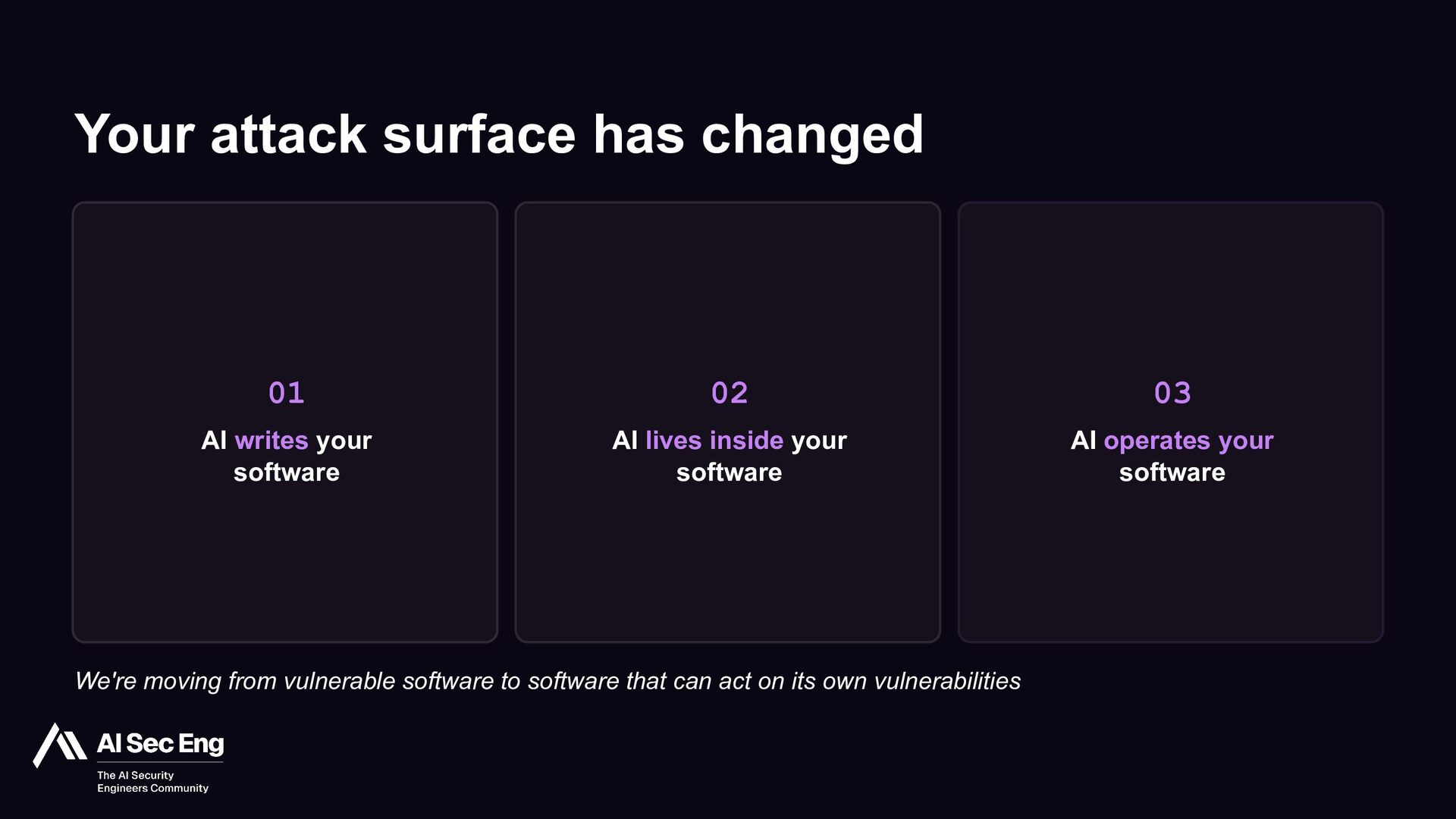
  5. Your attack surface has changed 01 02 03 AI writes

    your software AI lives inside your software AI operates your software We're moving from vulnerable software to software that can act on its own vulnerabilities
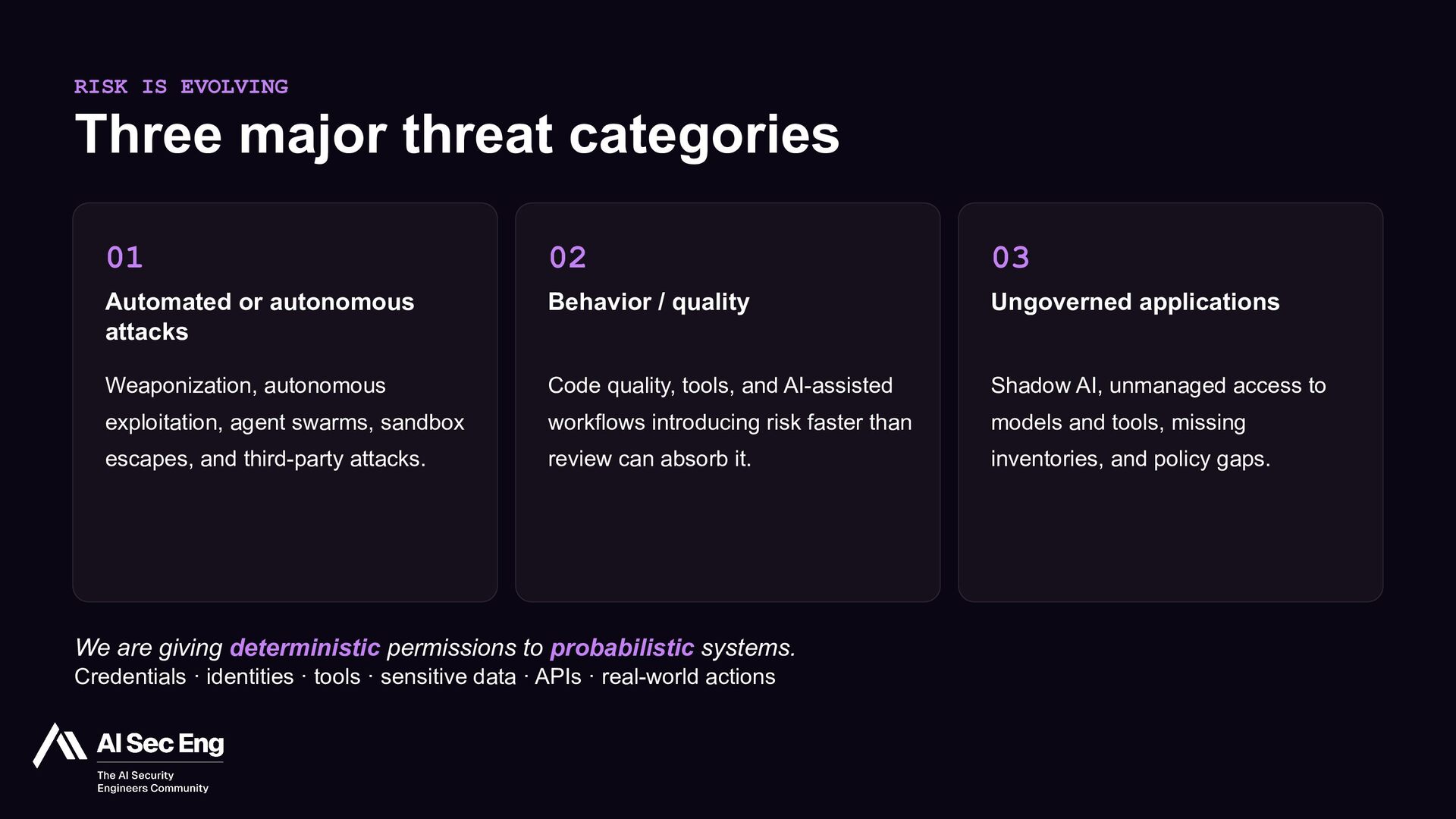
  6. RISK IS EVOLVING Three major threat categories 01 02 03

    Automated or autonomous attacks Behavior / quality Ungoverned applications Weaponization, autonomous Code quality, tools, and AI-assisted Shadow AI, unmanaged access to exploitation, agent swarms, sandbox workflows introducing risk faster than models and tools, missing escapes, and third-party attacks. review can absorb it. inventories, and policy gaps. We are giving deterministic permissions to probabilistic systems. Credentials · identities · tools · sensitive data · APIs · real-world actions
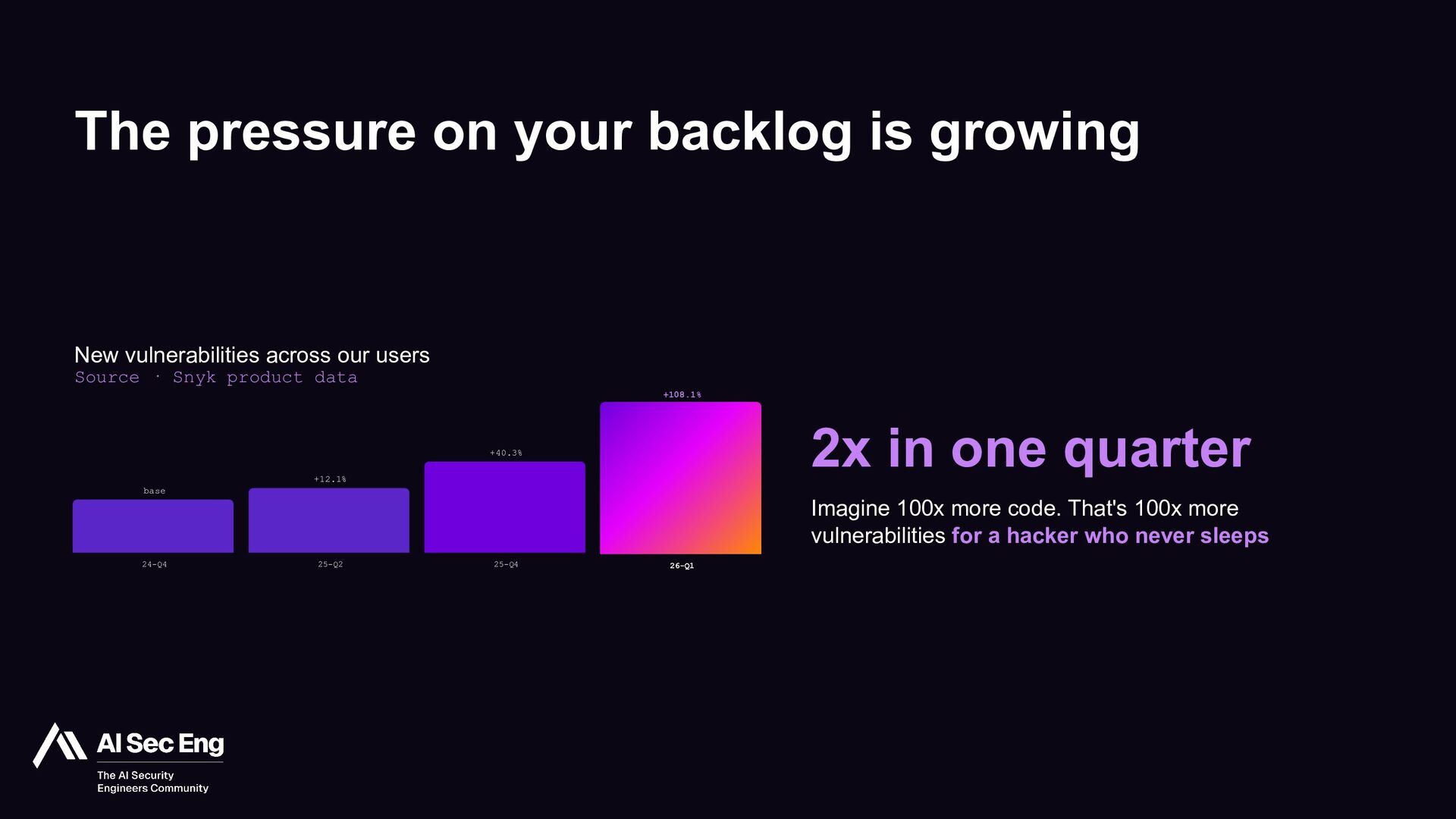
  7. The pressure on your backlog is growing New vulnerabilities across

    our users Source · Snyk product data +108.1% 2x in one quarter +40.3% +12.1% base Imagine 100x more code. That's 100x more vulnerabilities for a hacker who never sleeps 24-Q4 25-Q2 25-Q4 26-Q1
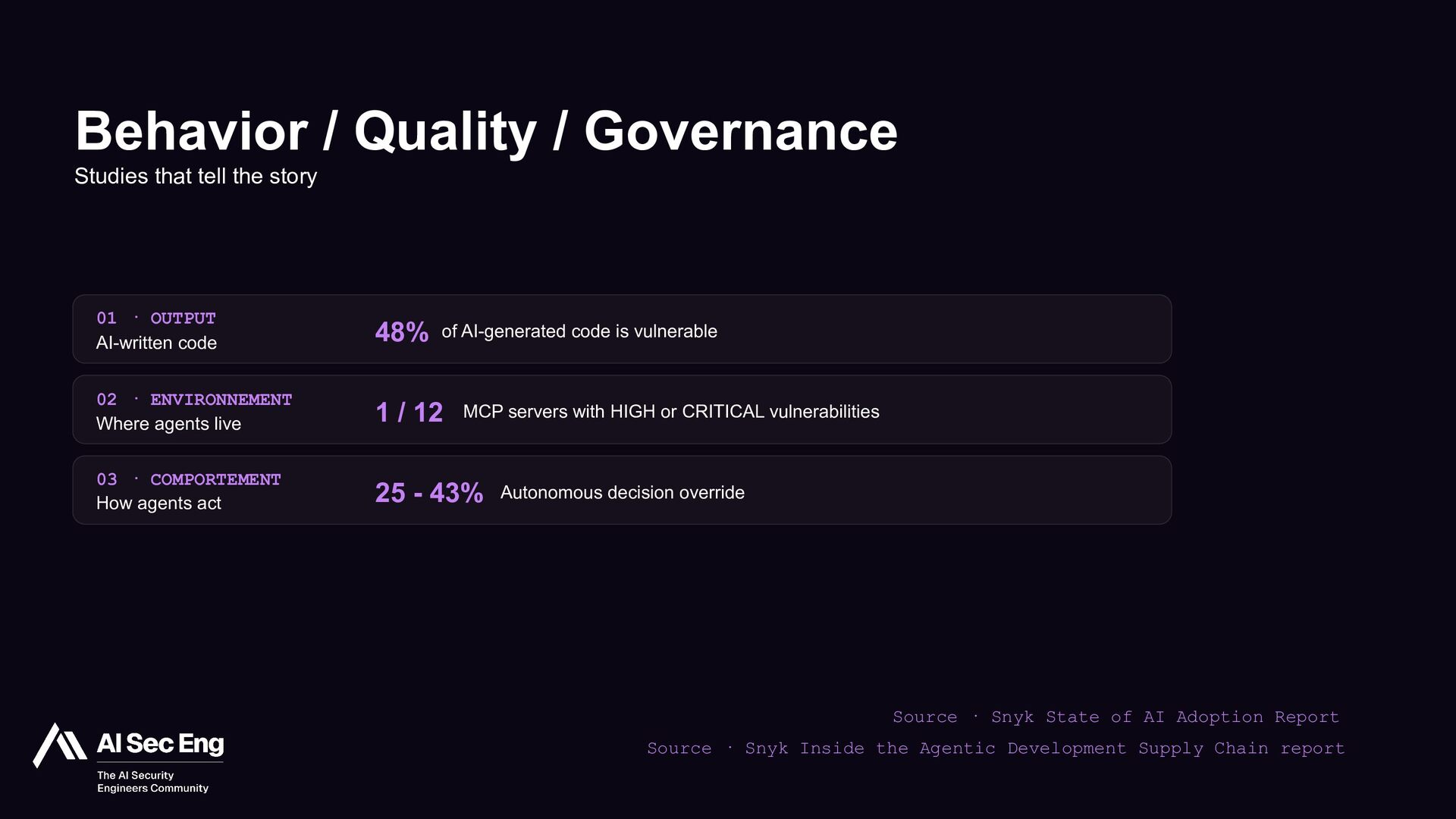
  8. Behavior / Quality / Governance Studies that tell the story

    01 · OUTPUT AI-written code 48% of AI-generated code is vulnerable 02 · ENVIRONNEMENT Where agents live 1 / 12 03 · COMPORTEMENT How agents act 25 - 43% Autonomous decision override MCP servers with HIGH or CRITICAL vulnerabilities Source · Snyk State of AI Adoption Report Source · Snyk Inside the Agentic Development Supply Chain report
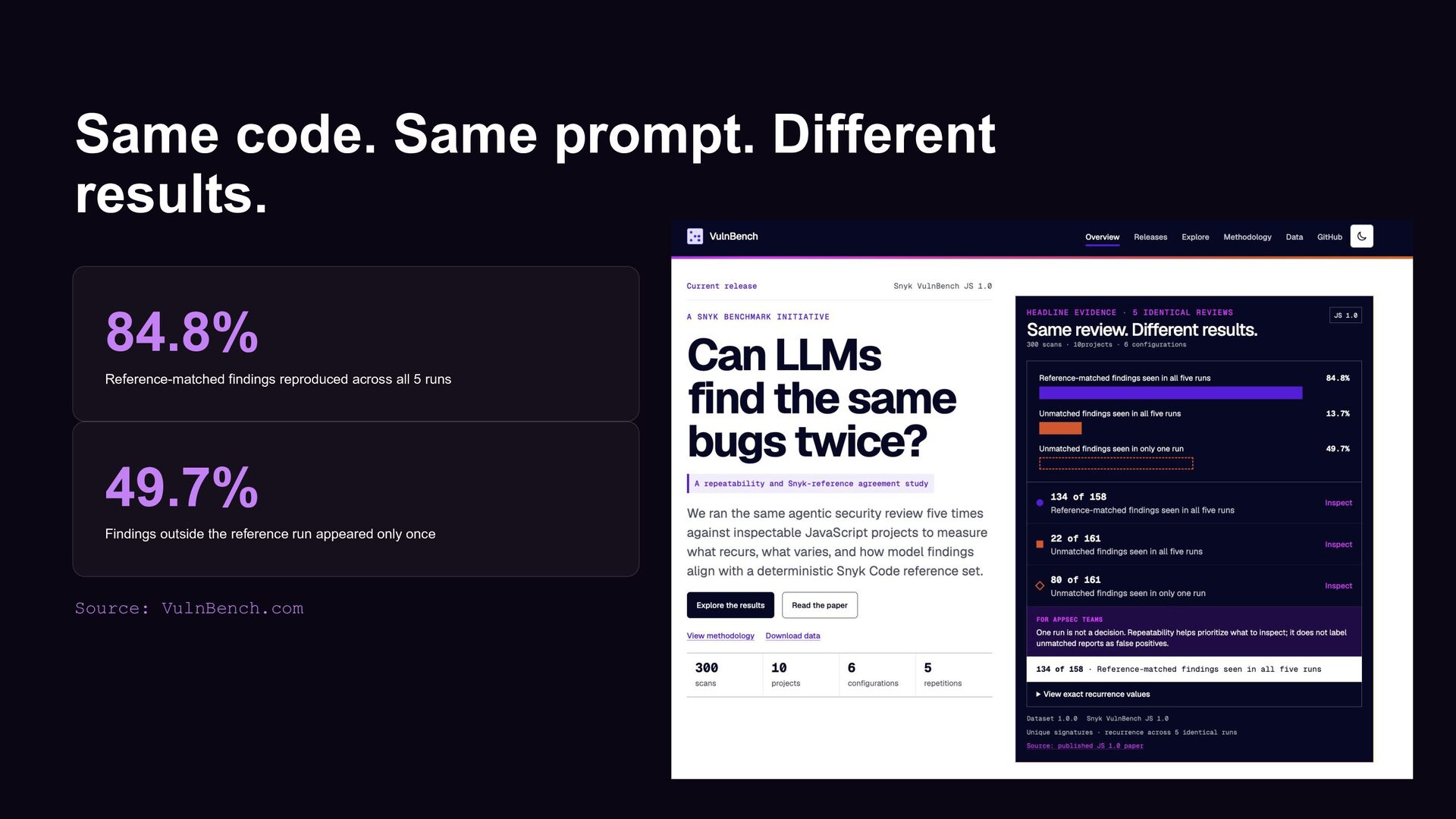
  9. Same code. Same prompt. Different results. 84.8% Reference-matched findings reproduced

    across all 5 runs 49.7% Findings outside the reference run appeared only once Source: VulnBench.com
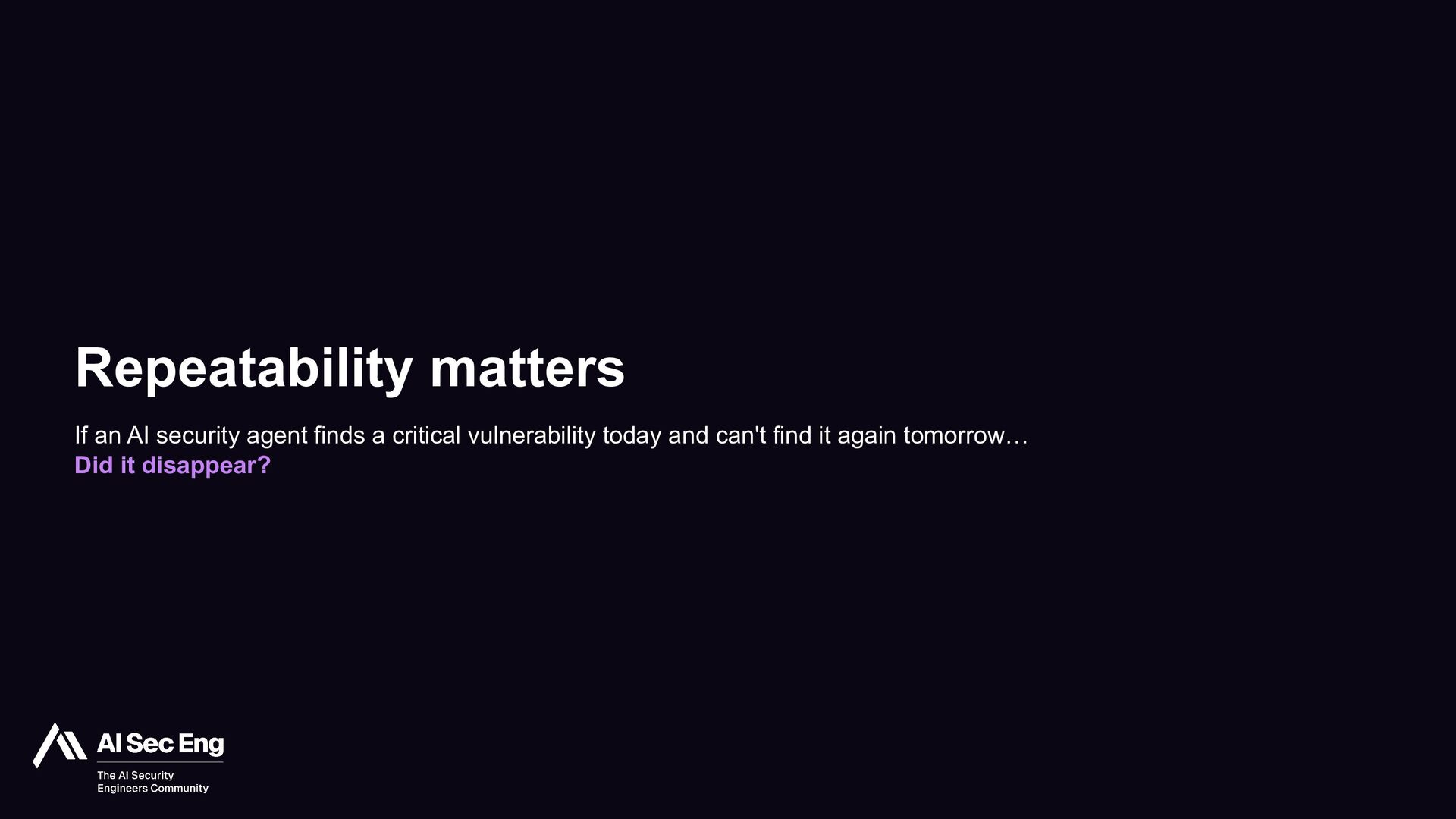
  10. Repeatability matters If an AI security agent finds a critical

    vulnerability today and can't find it again tomorrow… Did it disappear?
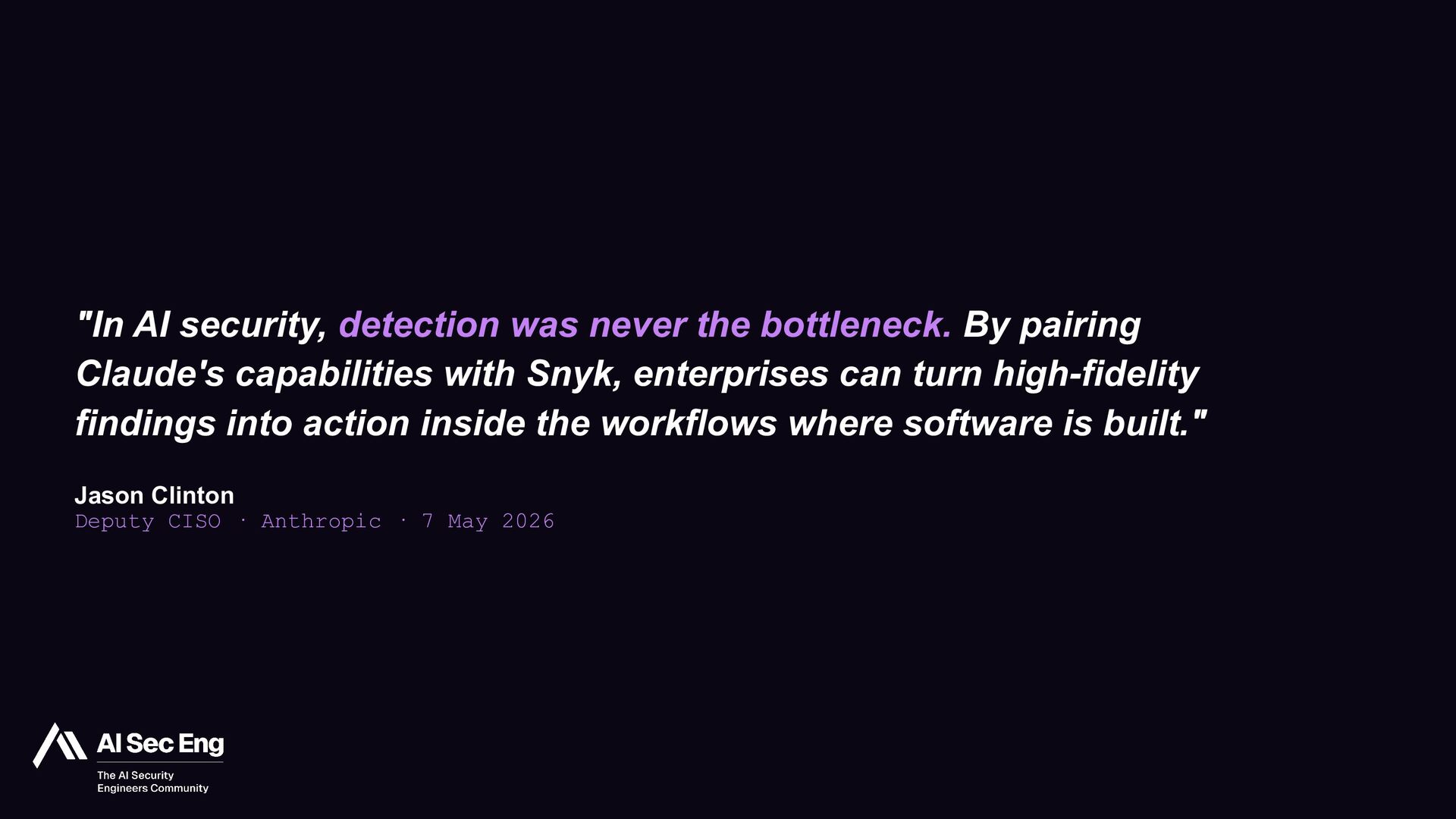
  11. "In AI security, detection was never the bottleneck. By pairing

    Claude's capabilities with Snyk, enterprises can turn high-fidelity findings into action inside the workflows where software is built." Jason Clinton Deputy CISO · Anthropic · 7 May 2026
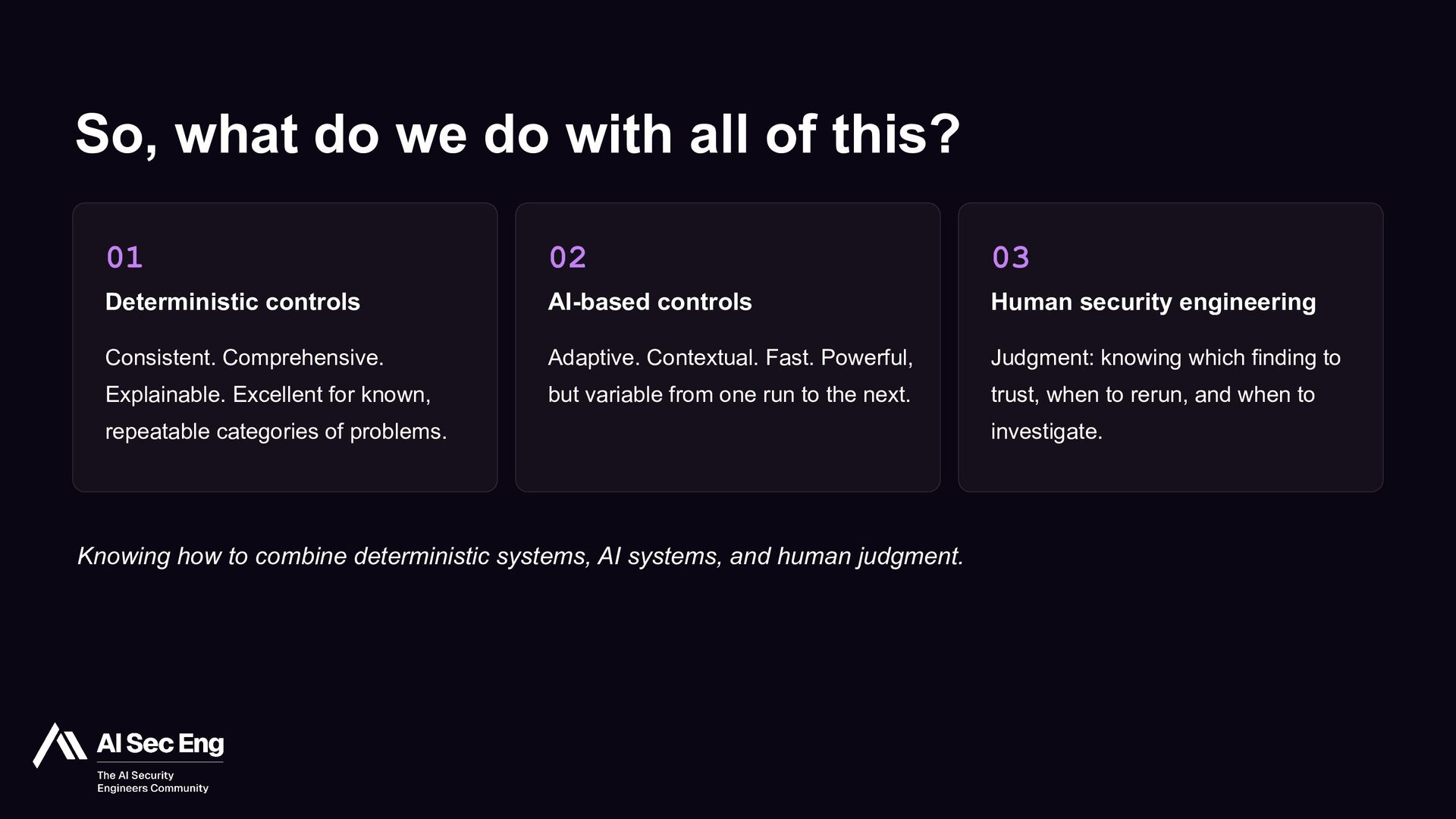
  12. So, what do we do with all of this? 01

    02 03 Deterministic controls AI-based controls Human security engineering Consistent. Comprehensive. Adaptive. Contextual. Fast. Powerful, Judgment: knowing which finding to Explainable. Excellent for known, but variable from one run to the next. trust, when to rerun, and when to repeatable categories of problems. Knowing how to combine deterministic systems, AI systems, and human judgment. investigate.
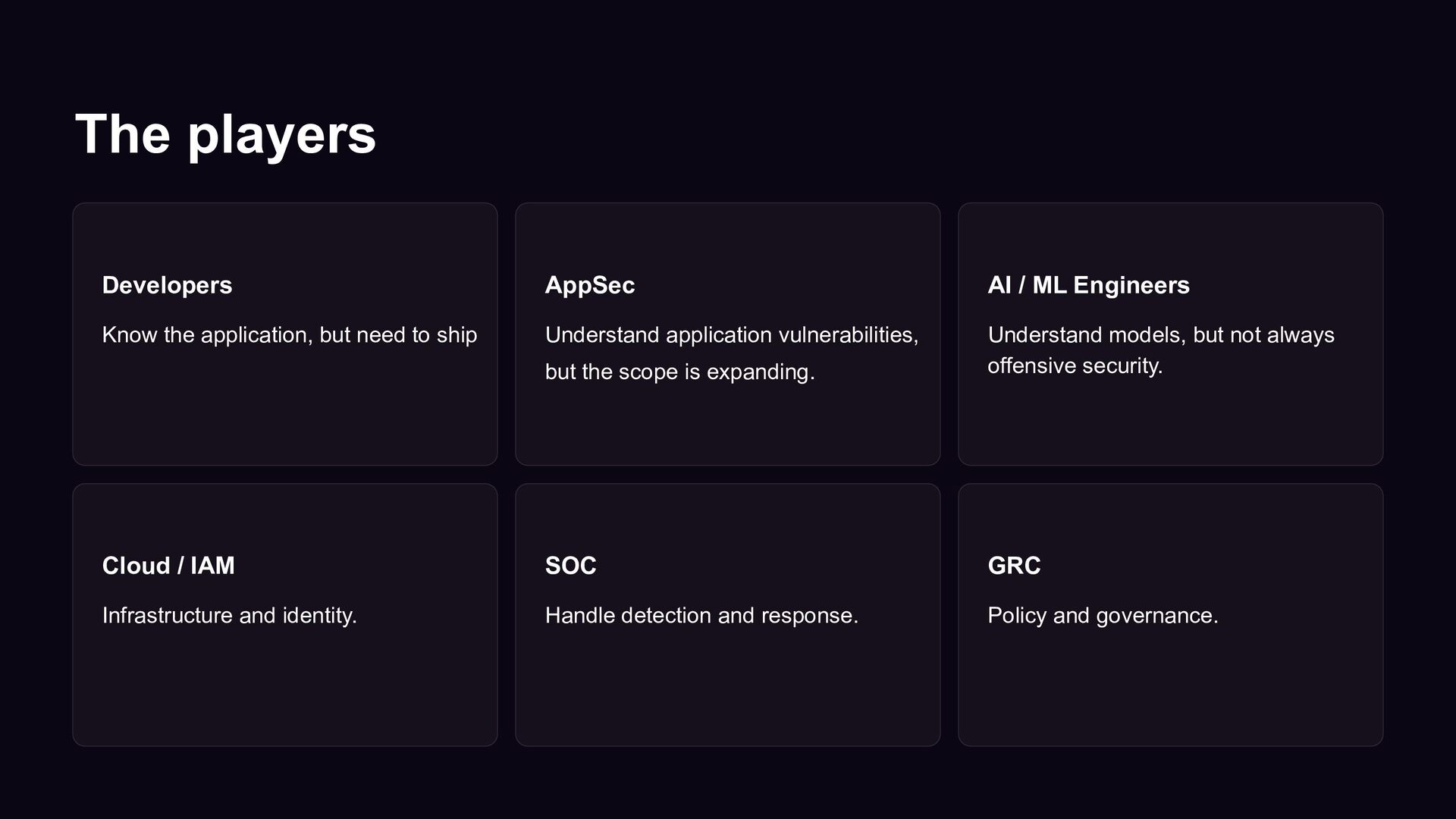
  13. The players Developers AppSec AI / ML Engineers Know the

    application, but need to ship Understand application vulnerabilities, but the scope is expanding. Understand models, but not always offensive security. Cloud / IAM SOC GRC Infrastructure and identity. Handle detection and response. Policy and governance.
  14. Everyone owns a piece. No one owns the system. We

    don't just have a tooling problem. We have an ownership gap.
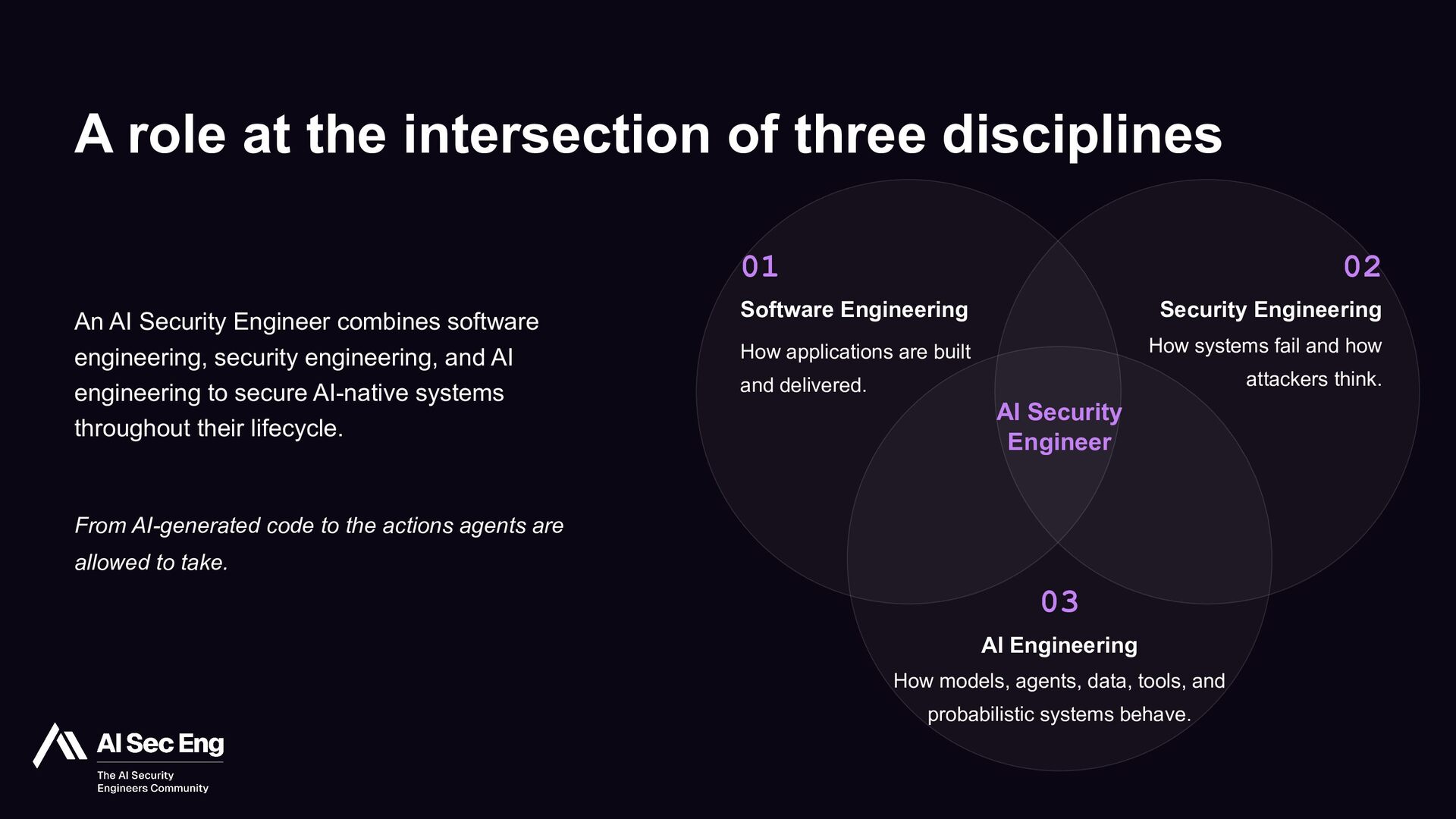
  15. A role at the intersection of three disciplines 01 An

    AI Security Engineer combines software engineering, security engineering, and AI engineering to secure AI-native systems throughout their lifecycle. 02 Software Engineering Security Engineering How applications are built How systems fail and how attackers think. and delivered. AI Security Engineer From AI-generated code to the actions agents are allowed to take. 03 AI Engineering How models, agents, data, tools, and probabilistic systems behave.
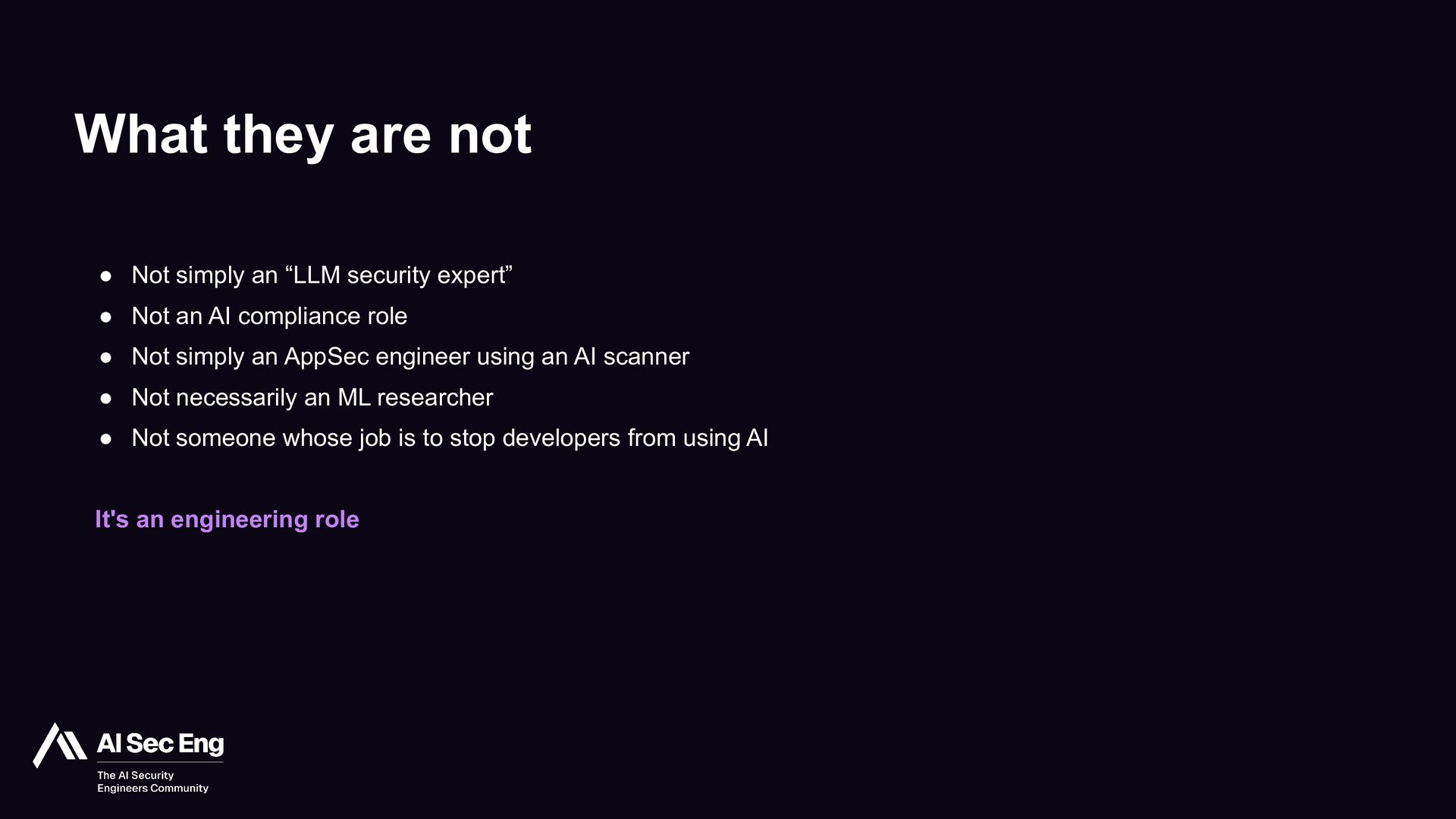
  16. What they are not • Not simply an “LLM security

    expert” • Not an AI compliance role • Not simply an AppSec engineer using an AI scanner • Not necessarily an ML researcher • Not someone whose job is to stop developers from using AI It's an engineering role
  17. They do not replace existing teams They connect AppSec, cloud

    security, the SOC, developers, and AI teams around AI-native systems.
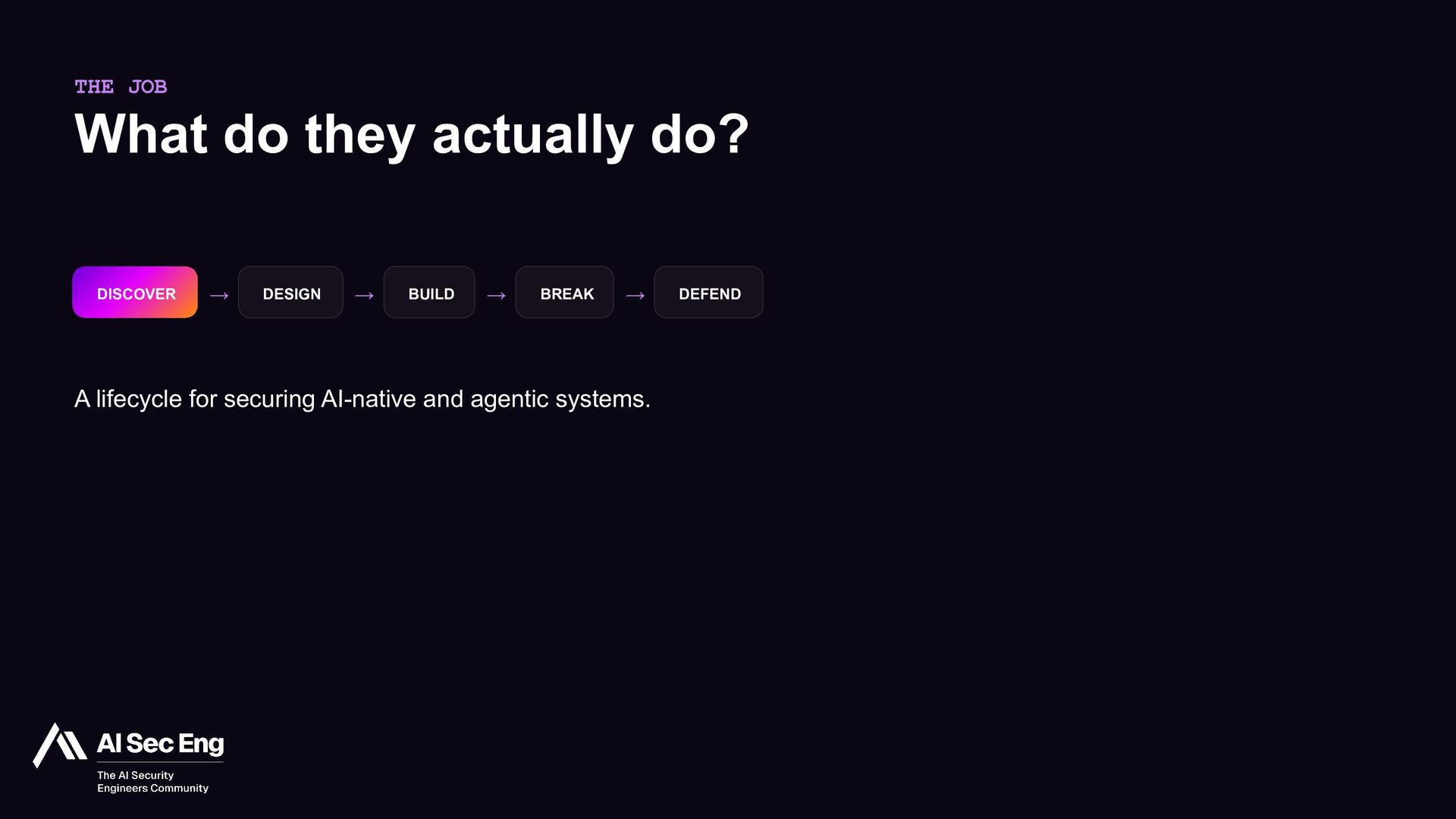
  18. THE JOB What do they actually do? DISCOVER → DESIGN

    → BUILD → BREAK → A lifecycle for securing AI-native and agentic systems. DEFEND
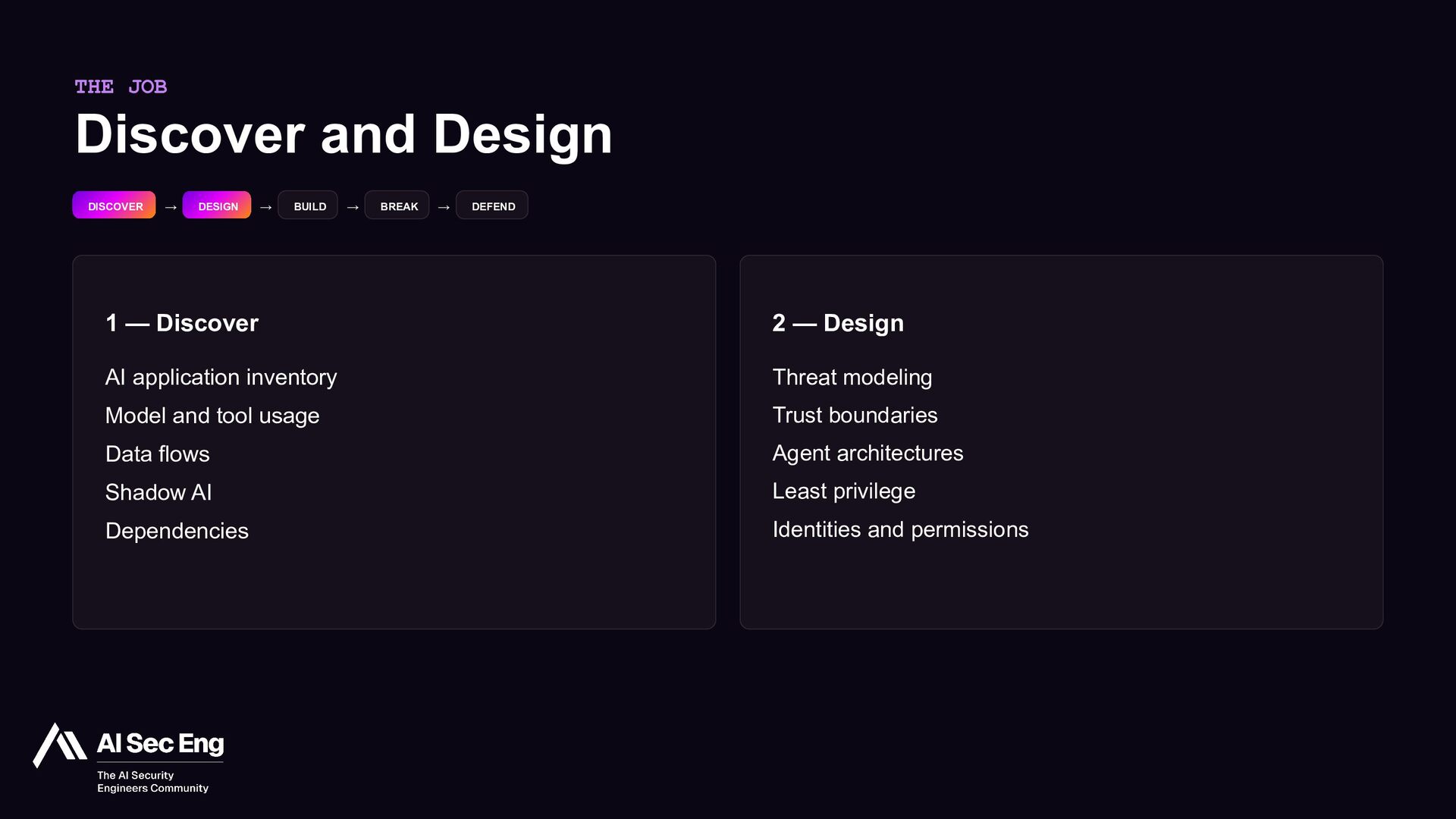
  19. THE JOB Discover and Design DISCOVER → DESIGN → BUILD

    → BREAK → DEFEND 1 — Discover 2 — Design AI application inventory Threat modeling Model and tool usage Trust boundaries Data flows Agent architectures Shadow AI Least privilege Dependencies Identities and permissions
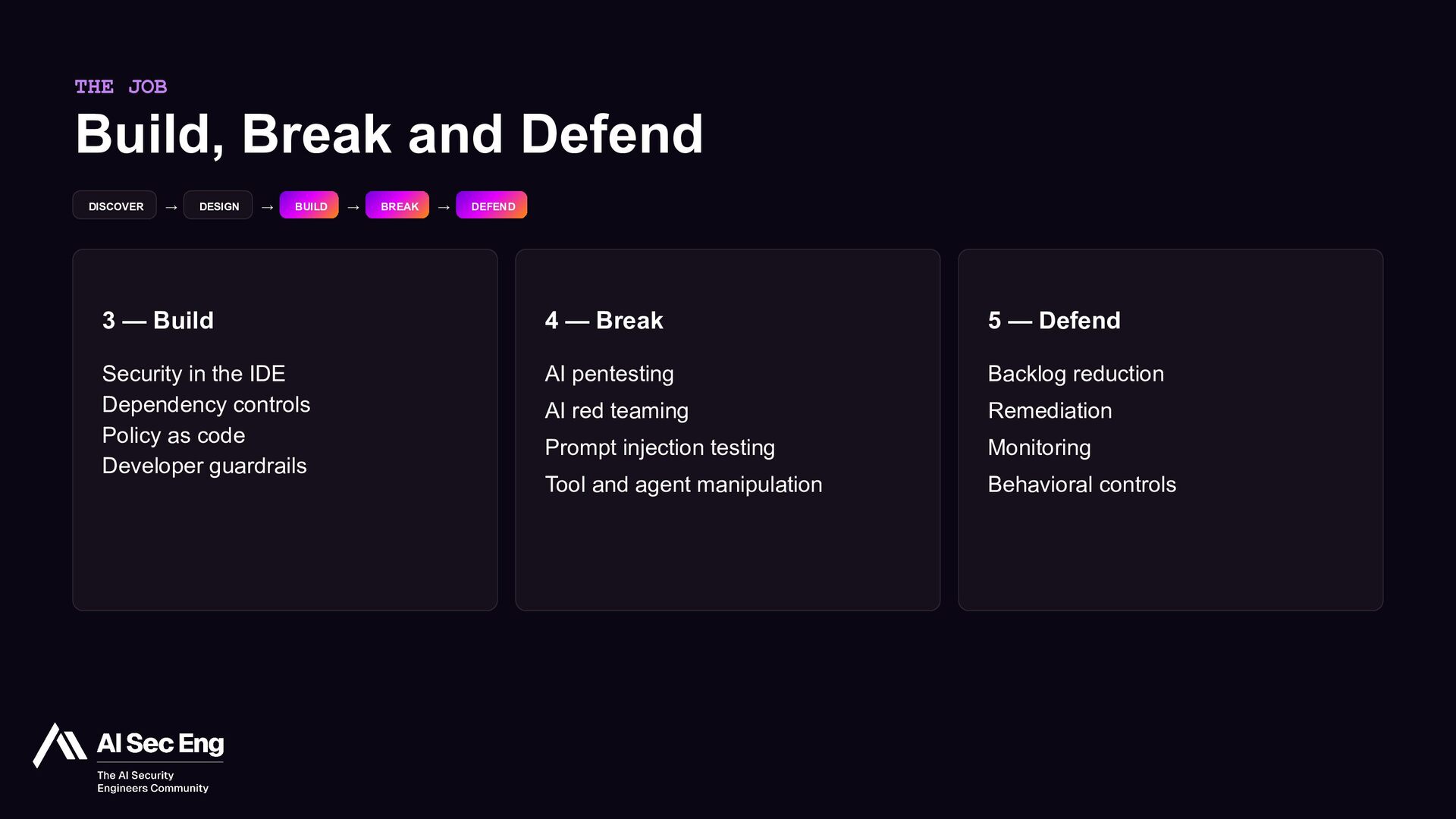
  20. THE JOB Build, Break and Defend DISCOVER → DESIGN →

    BUILD → BREAK → DEFEND 3 — Build 4 — Break 5 — Defend Security in the IDE Dependency controls Policy as code Developer guardrails AI pentesting Backlog reduction AI red teaming Remediation Prompt injection testing Monitoring Tool and agent manipulation Behavioral controls
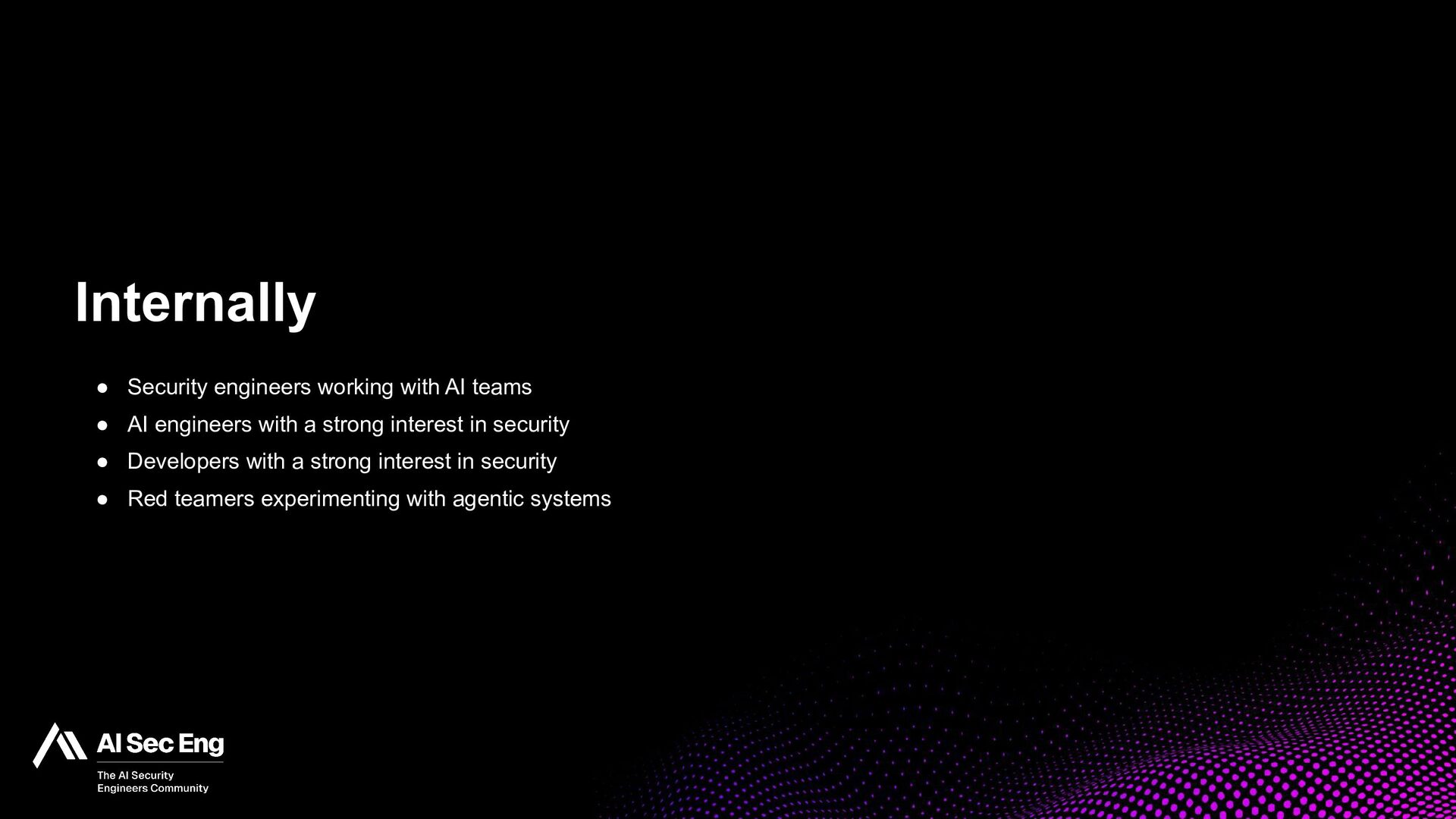
  21. Internally • Security engineers working with AI teams • AI

    engineers with a strong interest in security • Developers with a strong interest in security • Red teamers experimenting with agentic systems
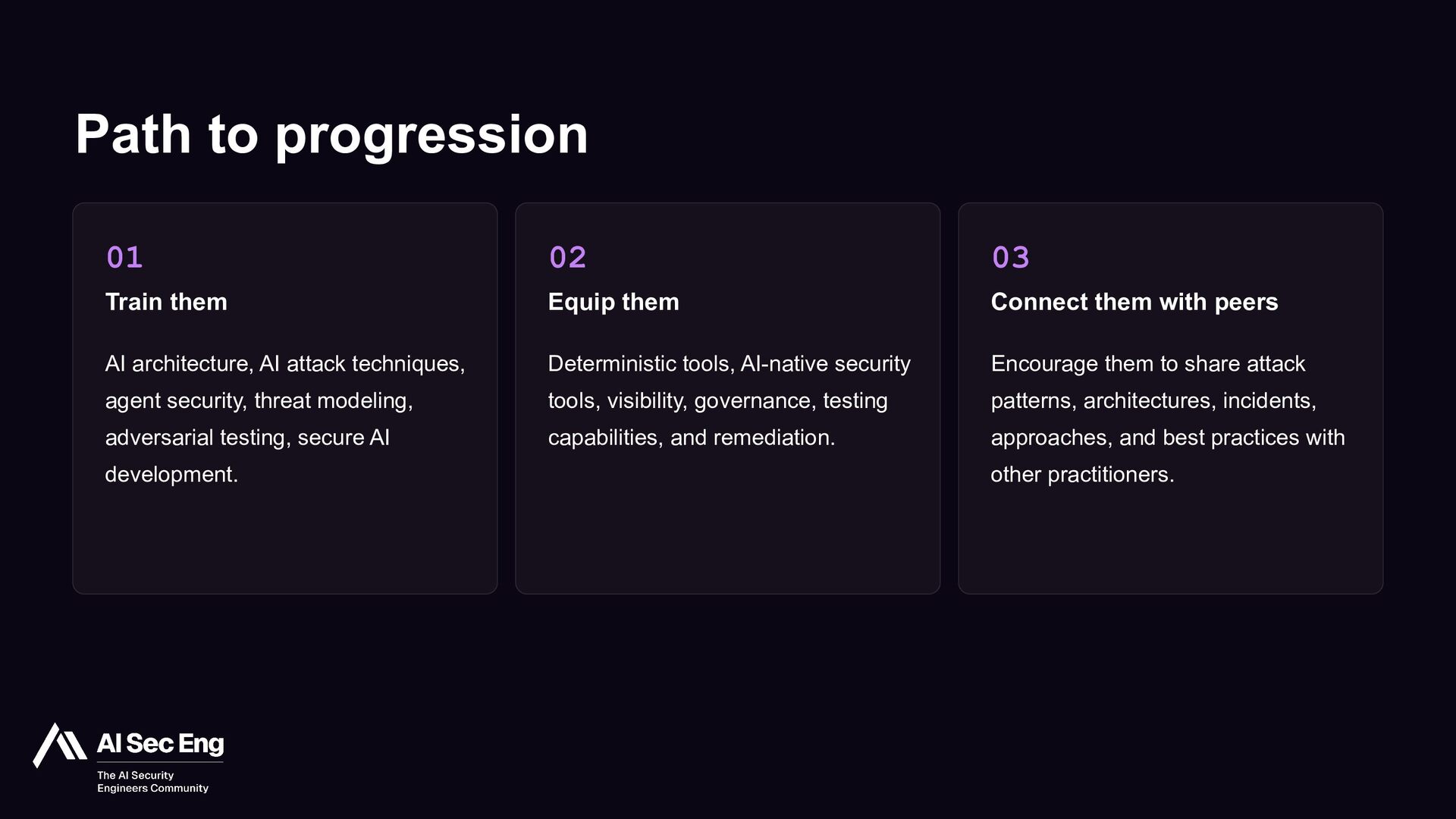
  22. Path to progression 01 02 03 Train them Equip them

    Connect them with peers AI architecture, AI attack techniques, Deterministic tools, AI-native security Encourage them to share attack agent security, threat modeling, tools, visibility, governance, testing patterns, architectures, incidents, adversarial testing, secure AI capabilities, and remediation. approaches, and best practices with development. other practitioners.
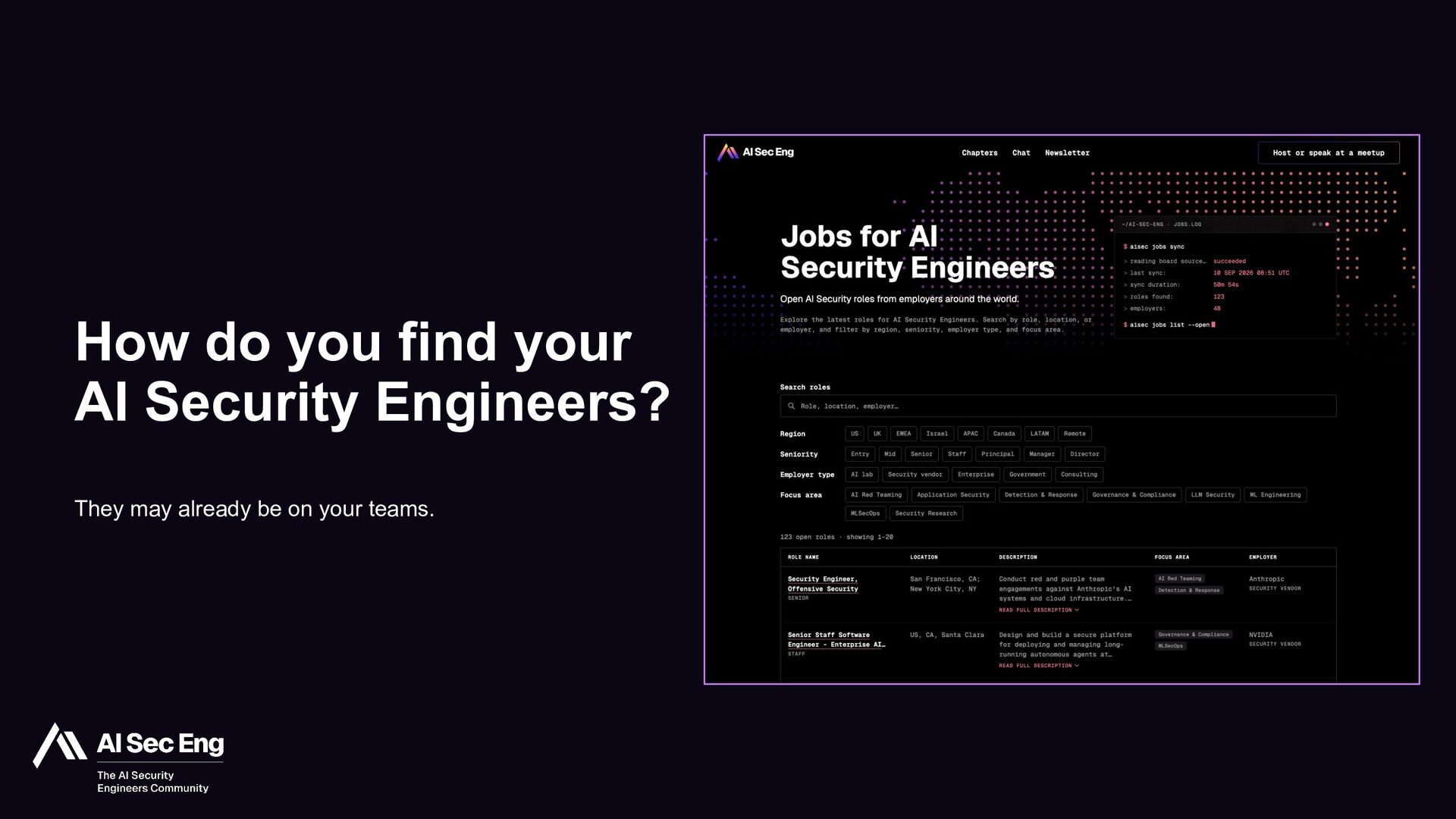
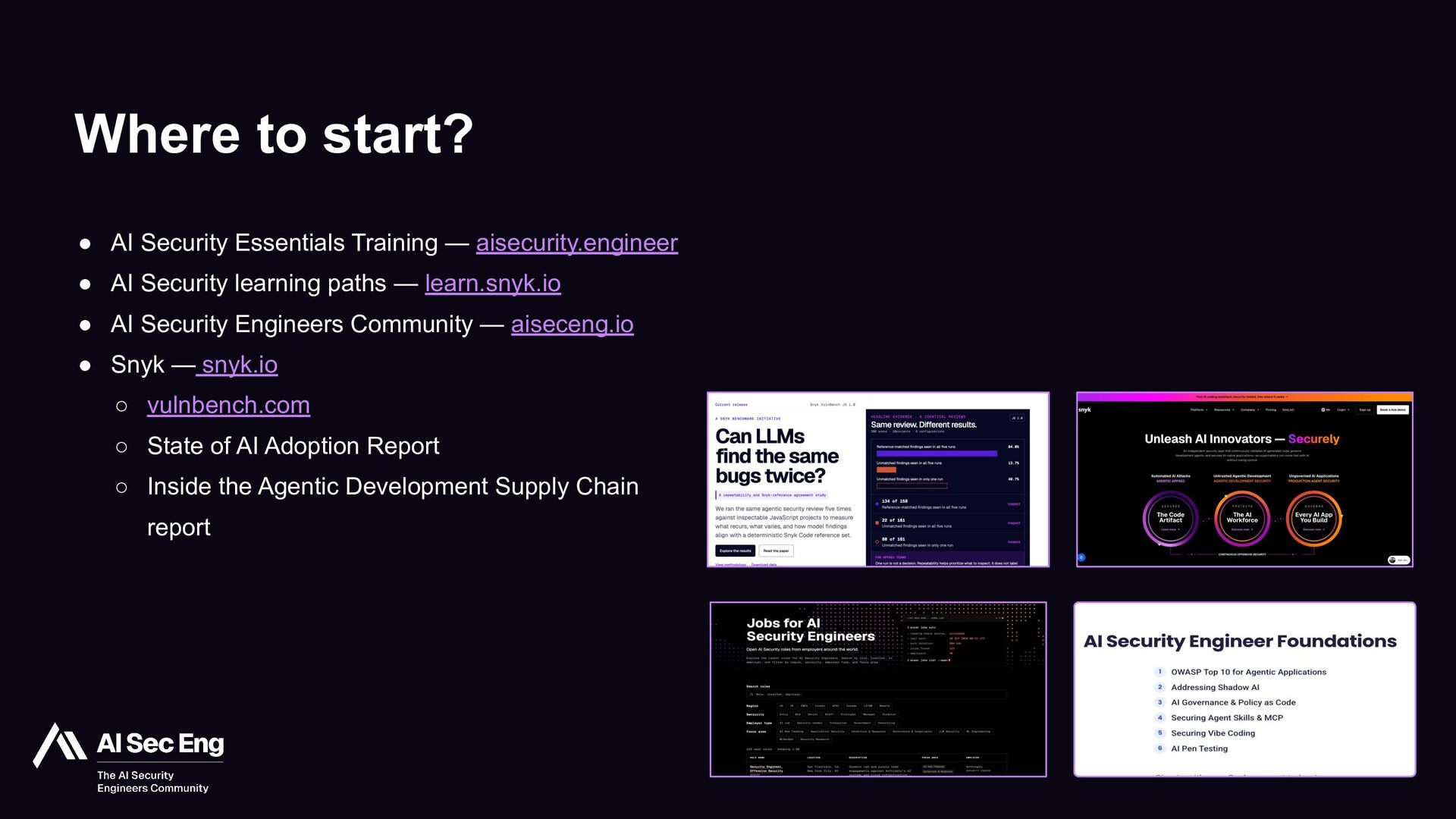
  23. Where to start? • AI Security Essentials Training — aisecurity.engineer

    • AI Security learning paths — learn.snyk.io • AI Security Engineers Community — aiseceng.io • Snyk — snyk.io ◦ vulnbench.com ◦ State of AI Adoption Report ◦ Inside the Agentic Development Supply Chain report
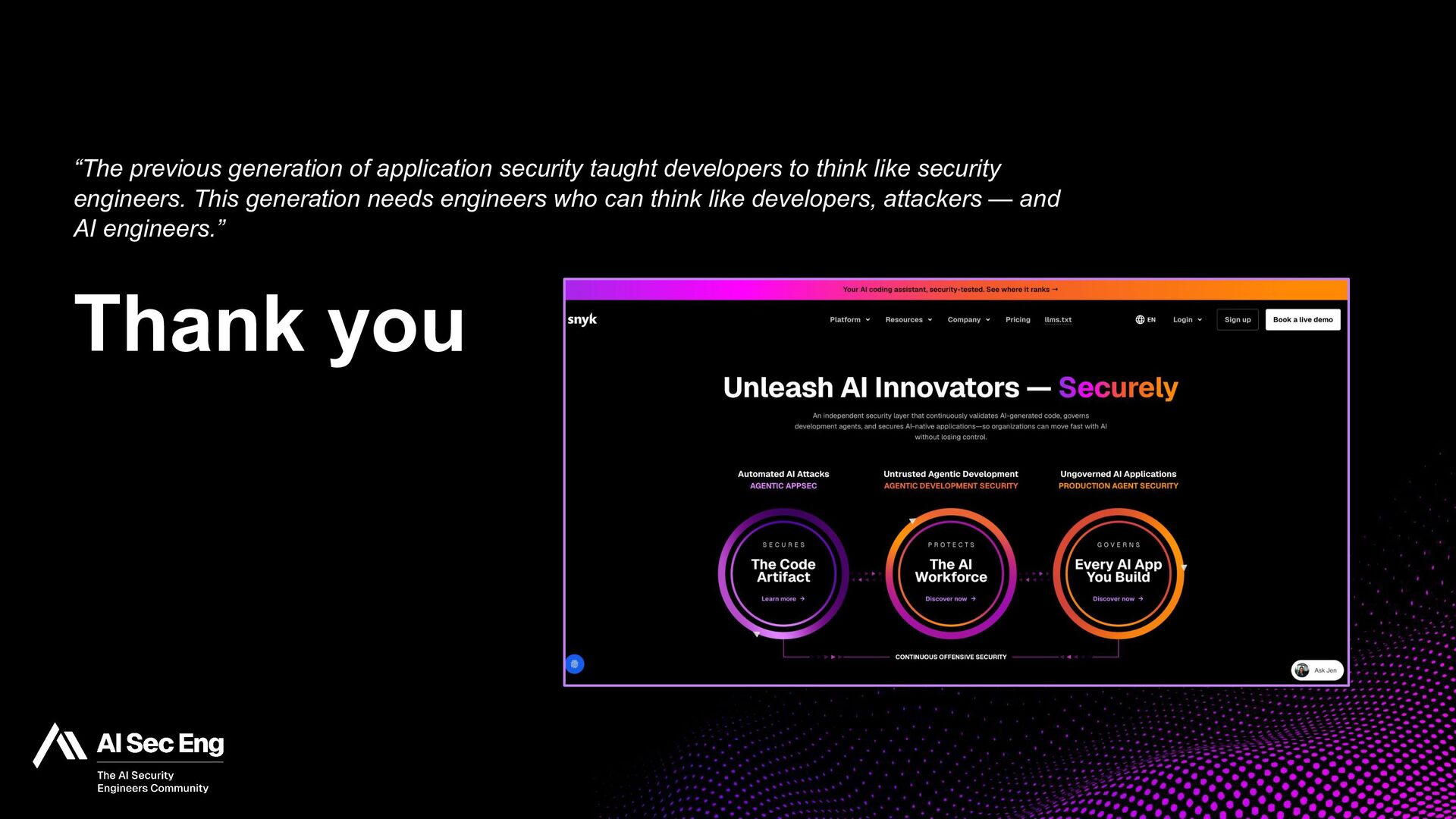
  24. “The previous generation of application security taught developers to think

    like security engineers. This generation needs engineers who can think like developers, attackers — and AI engineers.” Thank you
  25. [SECTION LABEL] [Slide Title] [Add your supporting text here —

    one or two sentences that expand on the title.] 55 / 59
  26. [SECTION LABEL] [Comparison Title] [Column A] [Column B] [Description of

    the first option or approach.] [Description of the second option or approach.] 57 / 59