Upgrade to Pro — share decks privately, control downloads, hide ads and more …

The Three Levers of Civic Engagement

The Three Levers of Civic Engagement

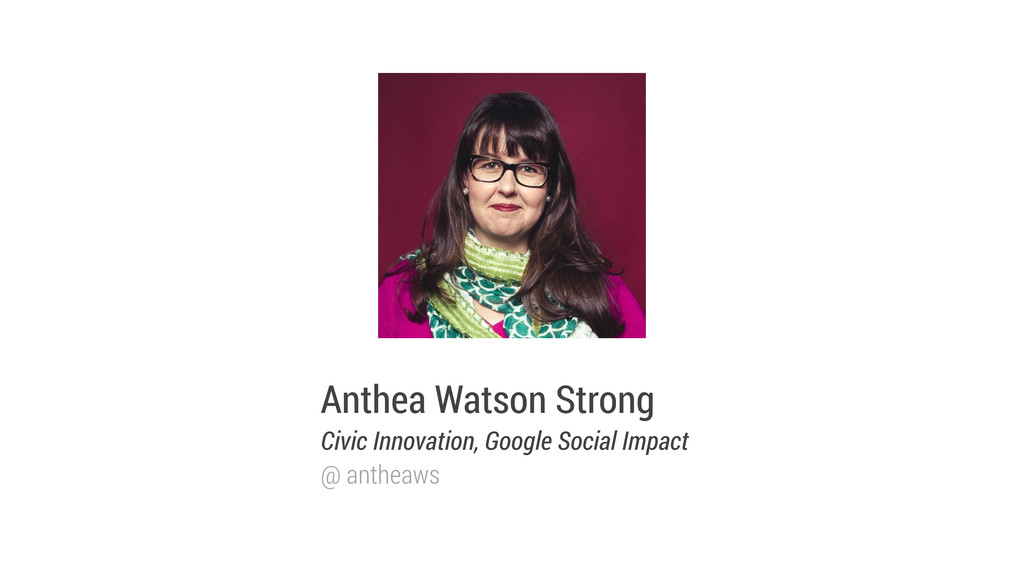
Anthea Watson Strong at the Personal Democracy Forum in 2014. Full text of speech and slides at antheawatsonstrong.com/writing

Avatar for Anthea Watson Strong

Anthea Watson Strong

June 06, 2014

Other Decks in Technology

Transcript

  1. As creators of campaigns and civic engagement tools, we need

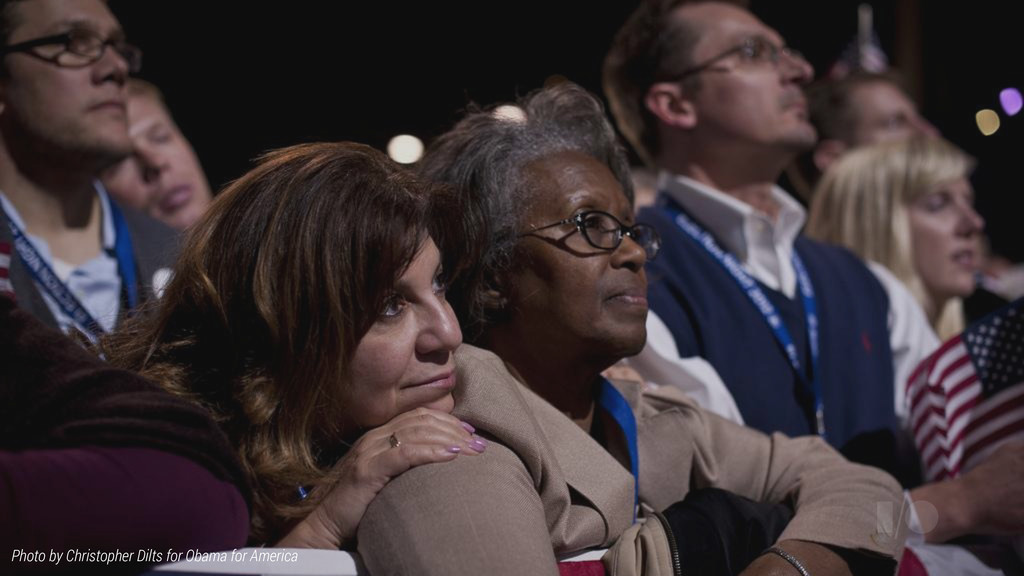
    to be much more honest with ourselves, and each other, about the motivations and interests of “real people.” Just to be clear, for the purposes of civic action, none of you are real people.
  2. When designing tools to help people take civic action online,

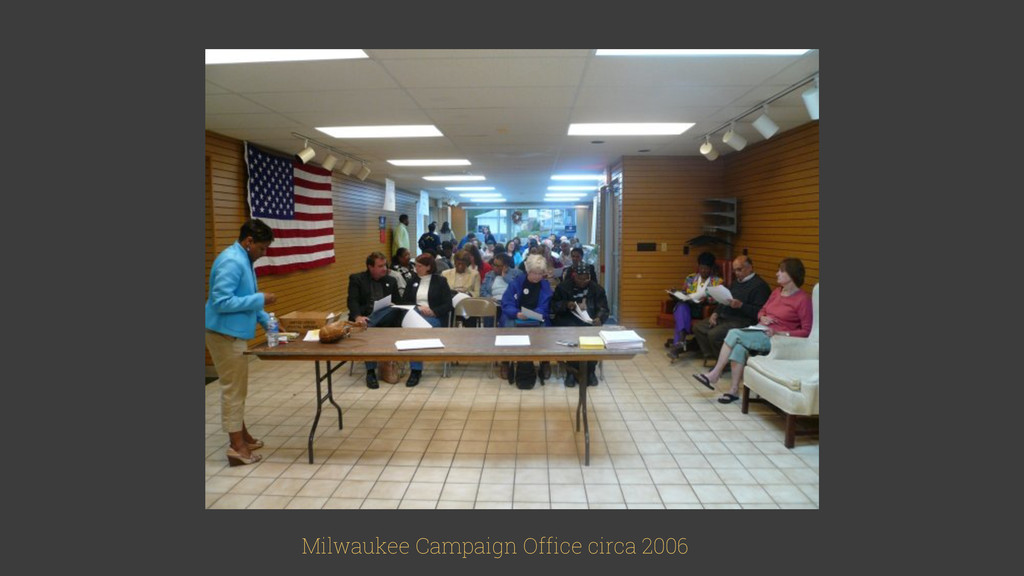
    I never forget how hard it was for my friends in Milwaukee to find time to work on community issues.
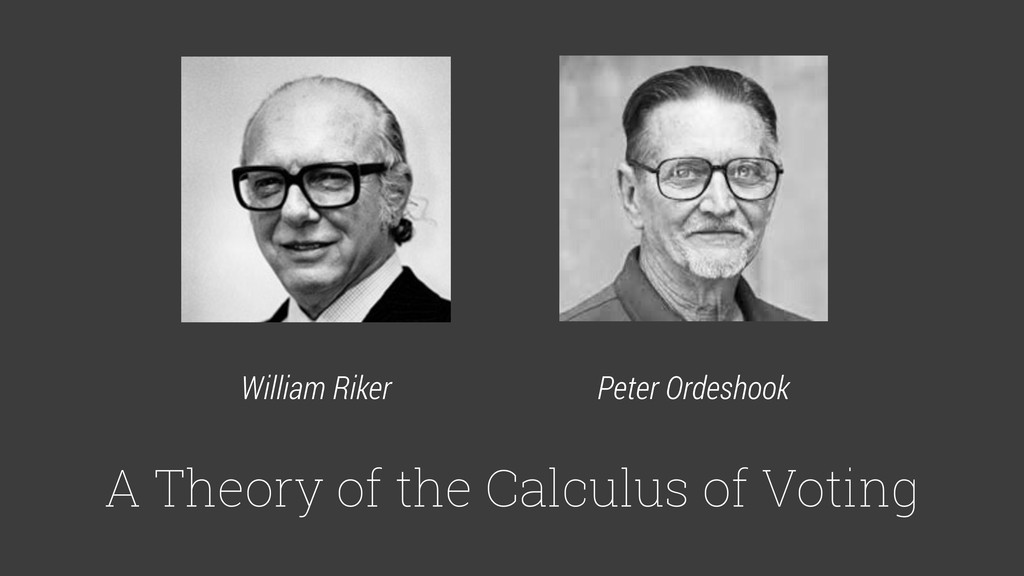
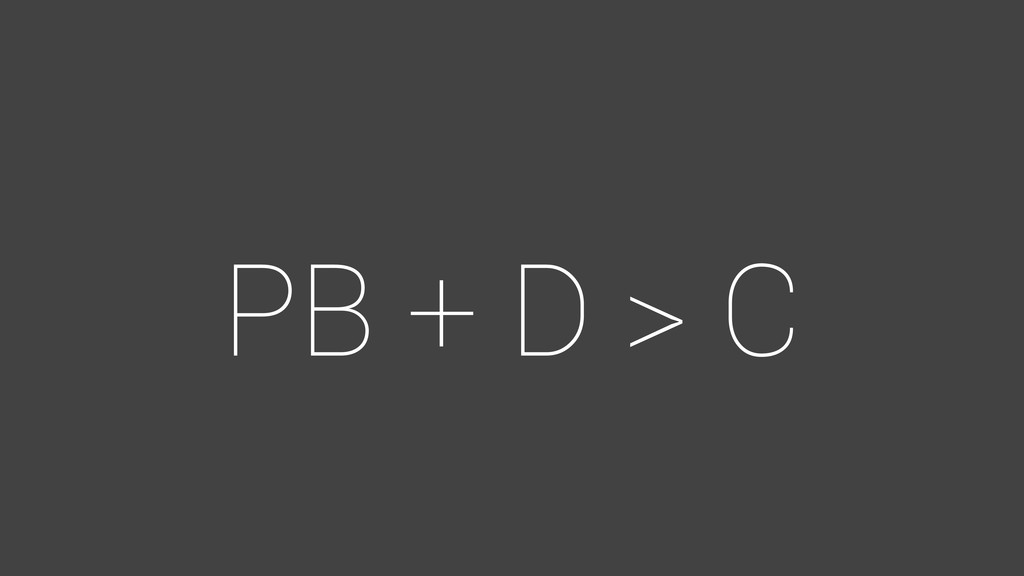
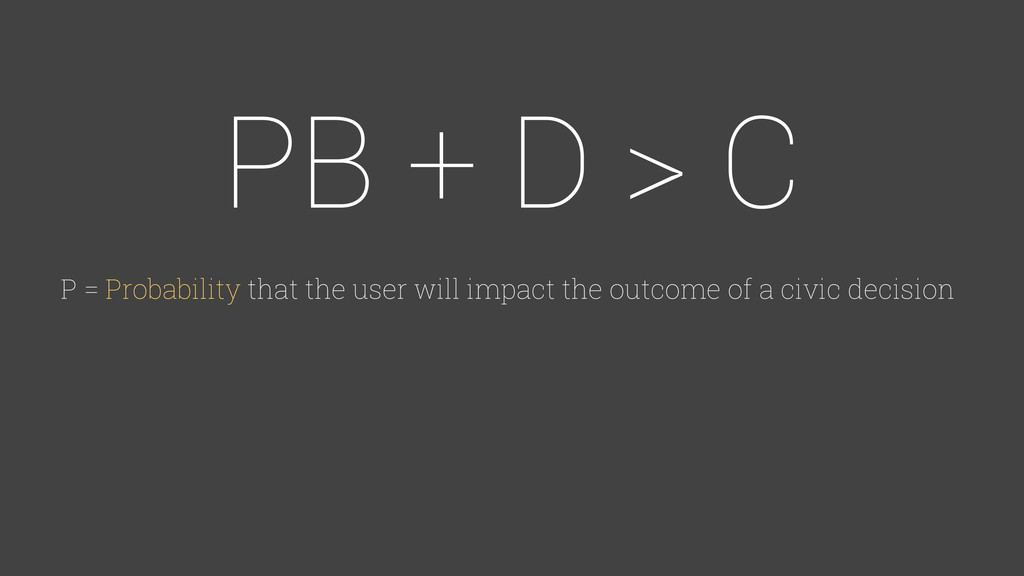
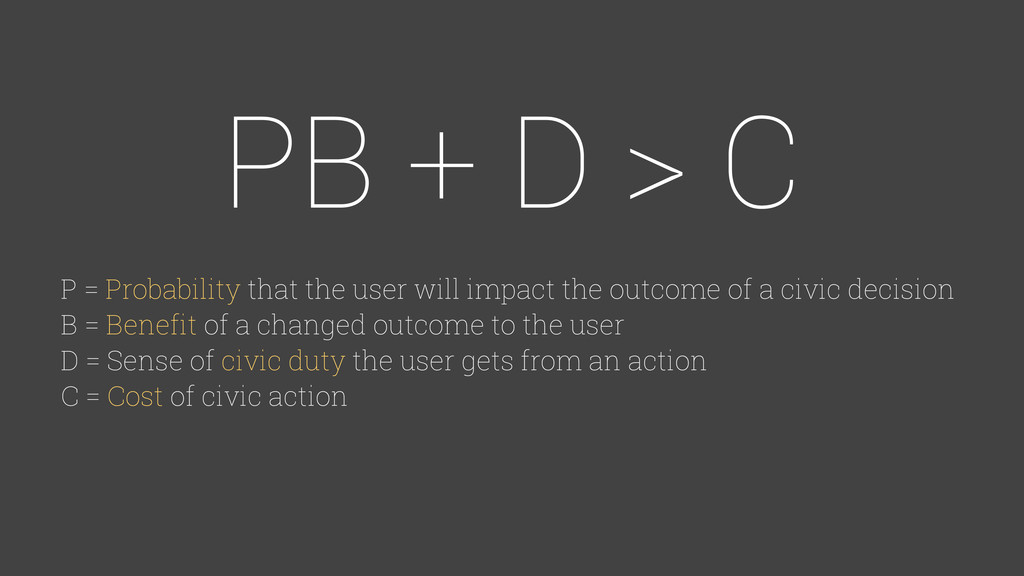
  3. PB + D > C P = Probability that the

    user will impact the outcome of a civic decision
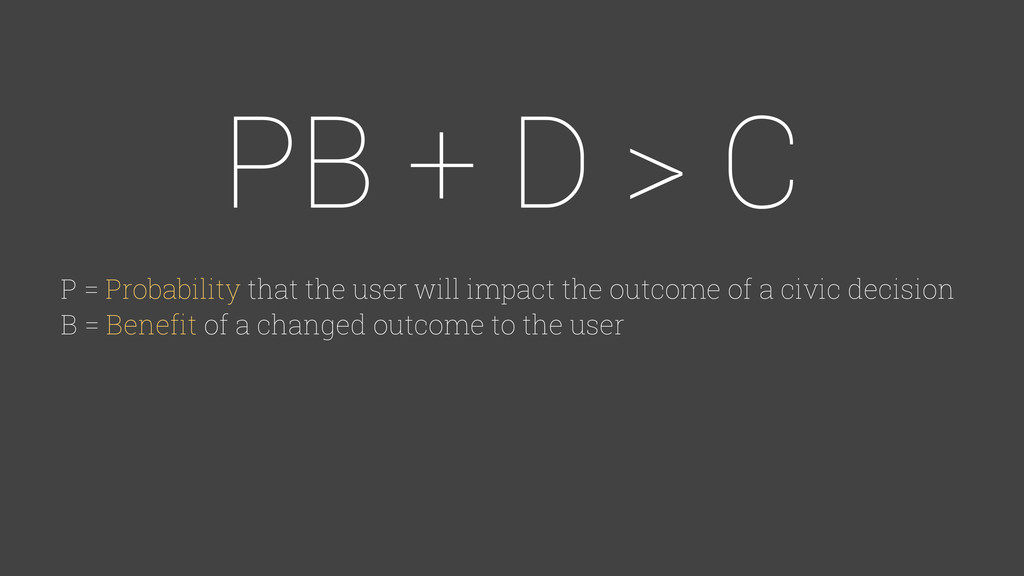
  4. PB + D > C P = Probability that the

    user will impact the outcome of a civic decision B = Benefit of a changed outcome to the user
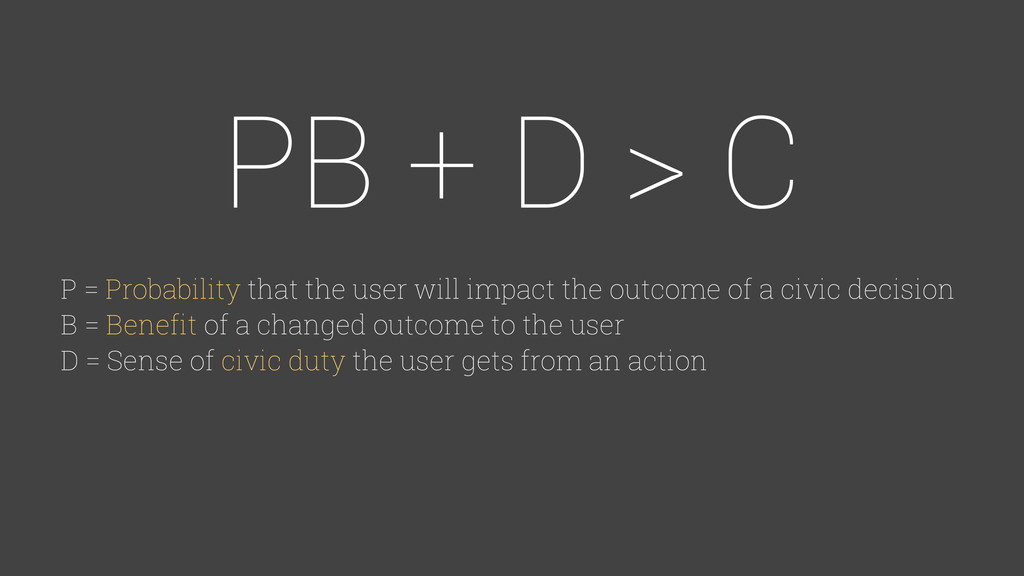
  5. PB + D > C P = Probability that the

    user will impact the outcome of a civic decision B = Benefit of a changed outcome to the user D = Sense of civic duty the user gets from an action
  6. PB + D > C P = Probability that the

    user will impact the outcome of a civic decision B = Benefit of a changed outcome to the user D = Sense of civic duty the user gets from an action C = Cost of civic action
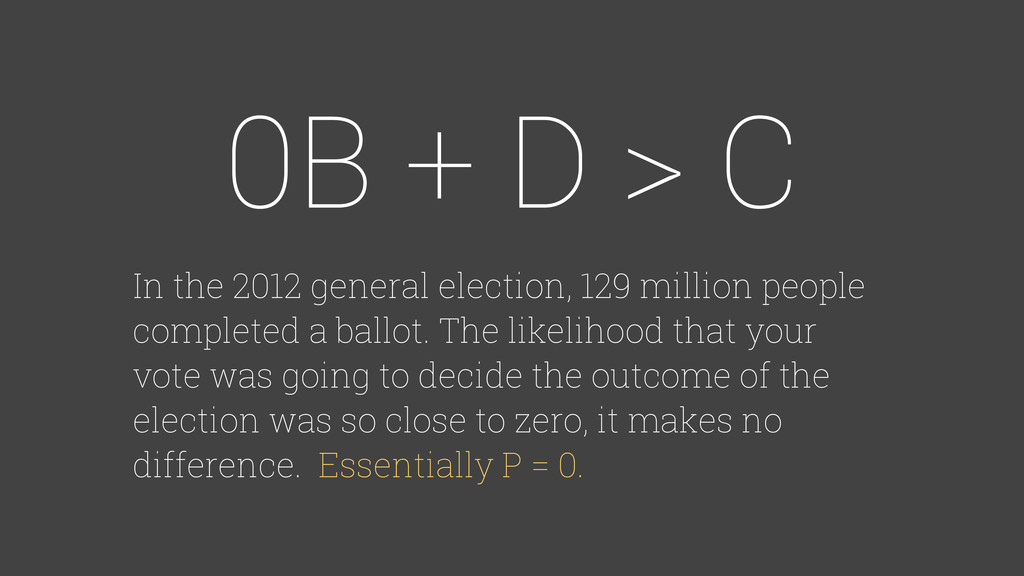
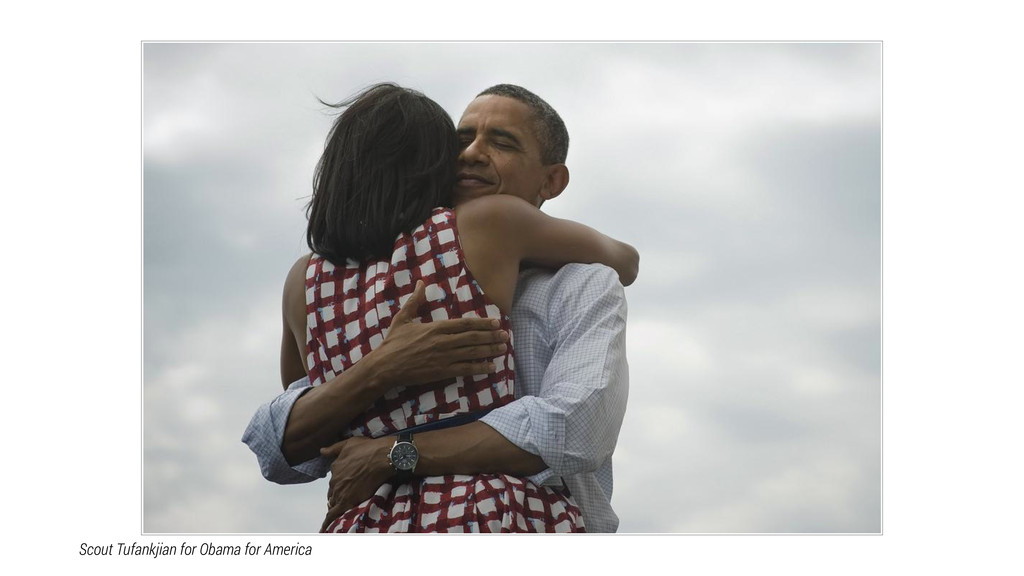
  7. 0B + D > C In the 2012 general election,

    129 million people completed a ballot. The likelihood that your vote was going to decide the outcome of the election was so close to zero, it makes no difference. Essentially P = 0.
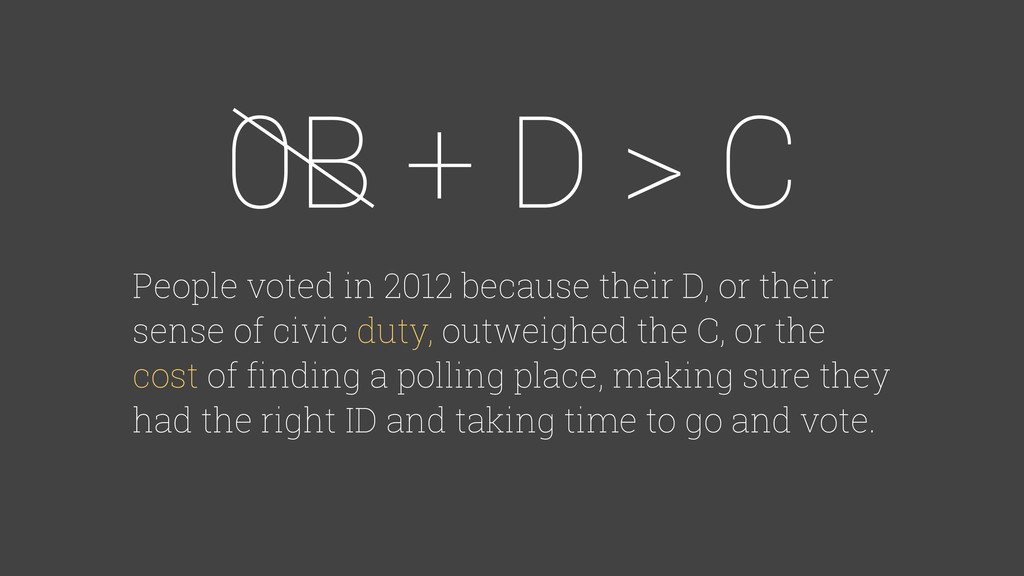
  8. 0B + D > C People voted in 2012 because

    their D, or their sense of civic duty, outweighed the C, or the cost of finding a polling place, making sure they had the right ID and taking time to go and vote.
  9. Users have acted, and will continue to act, in a

    mostly rational way online, just as they did offline.
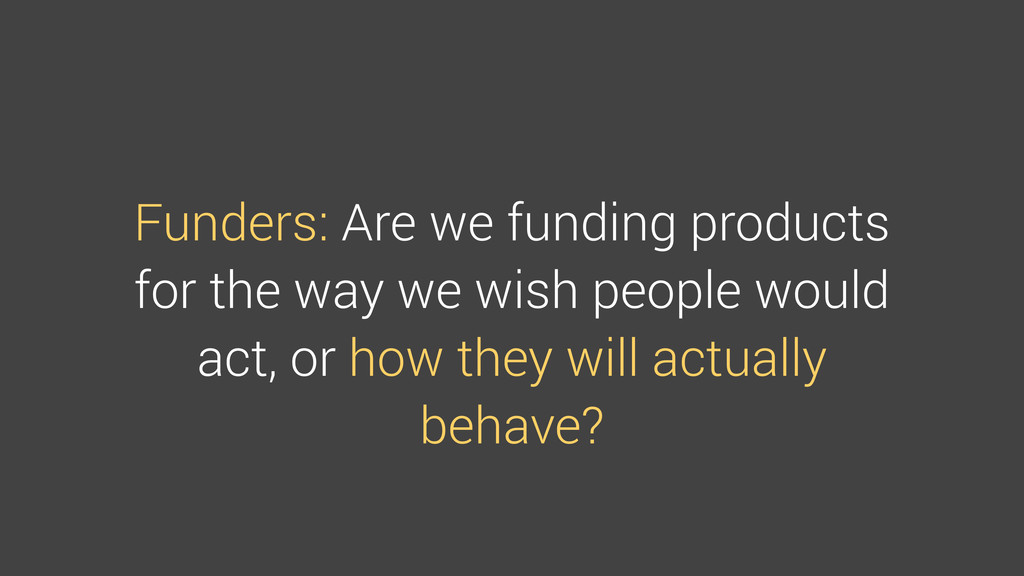
  10. Funders: Are we funding products for the way we wish

    people would act, or how they will actually behave?
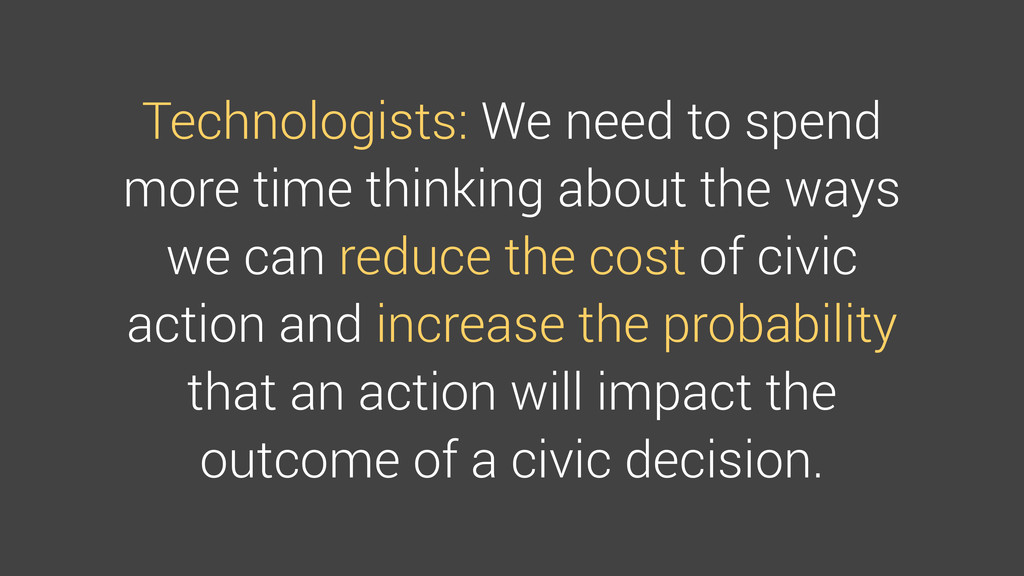
  11. Technologists: We need to spend more time thinking about the

    ways we can reduce the cost of civic action and increase the probability that an action will impact the outcome of a civic decision.
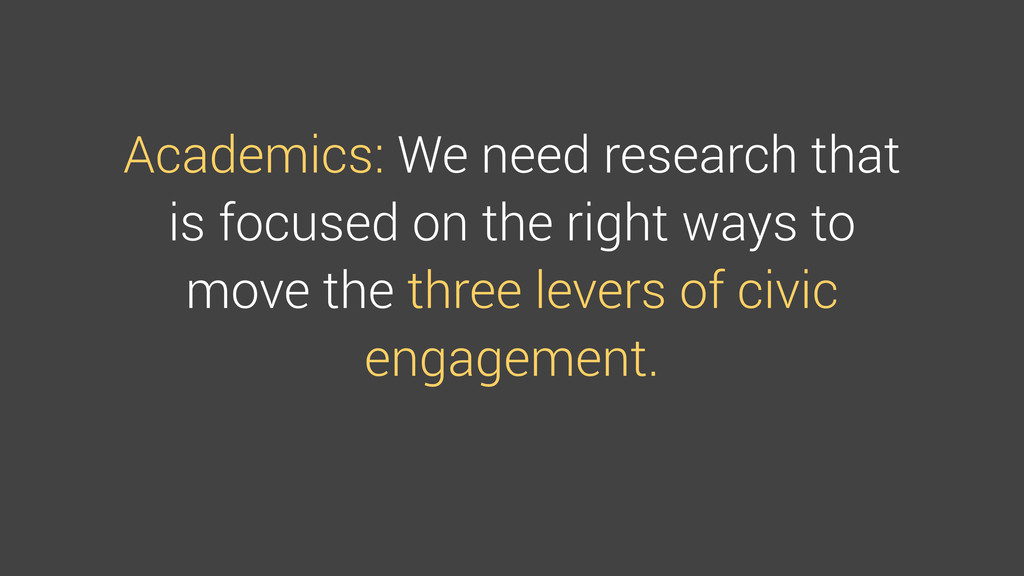
  12. Academics: We need research that is focused on the right

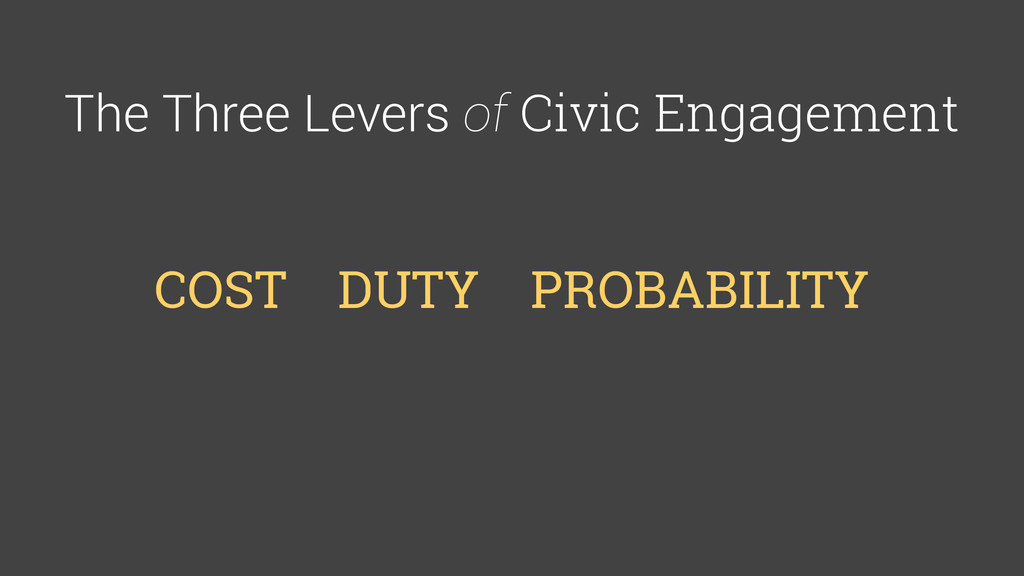
    ways to move the three levers of civic engagement.
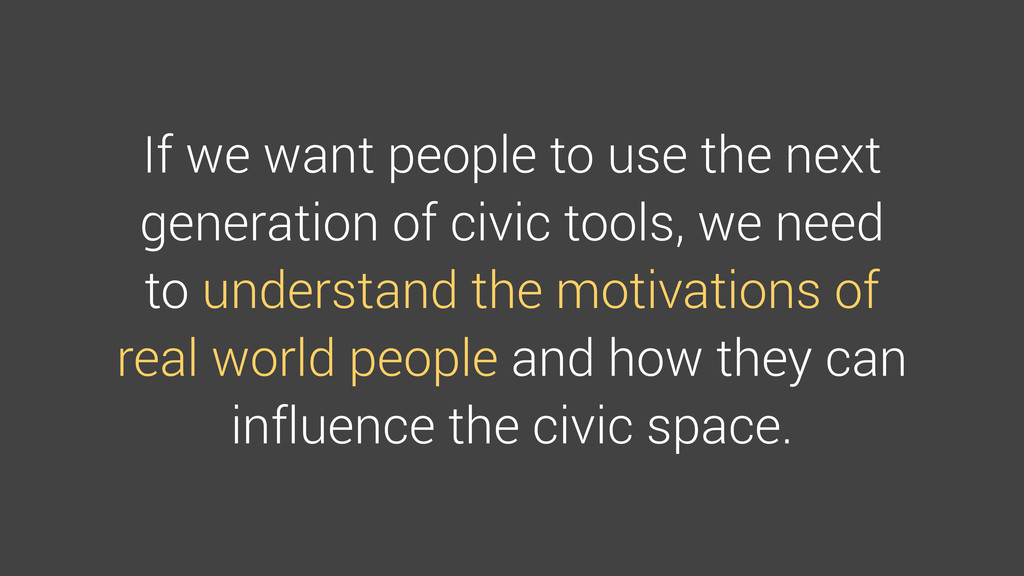
  13. If we want people to use the next generation of

    civic tools, we need to understand the motivations of real world people and how they can influence the civic space.