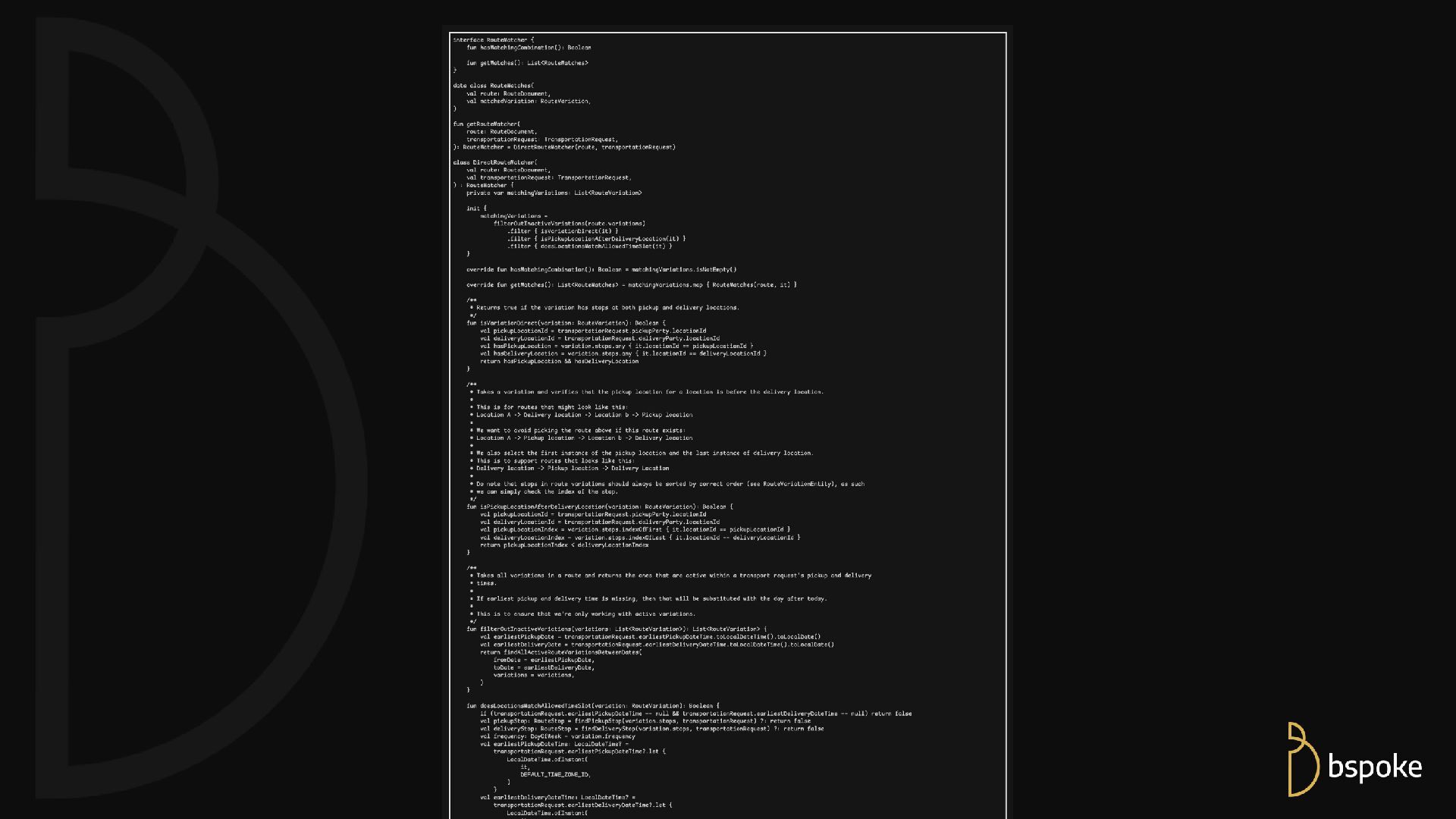
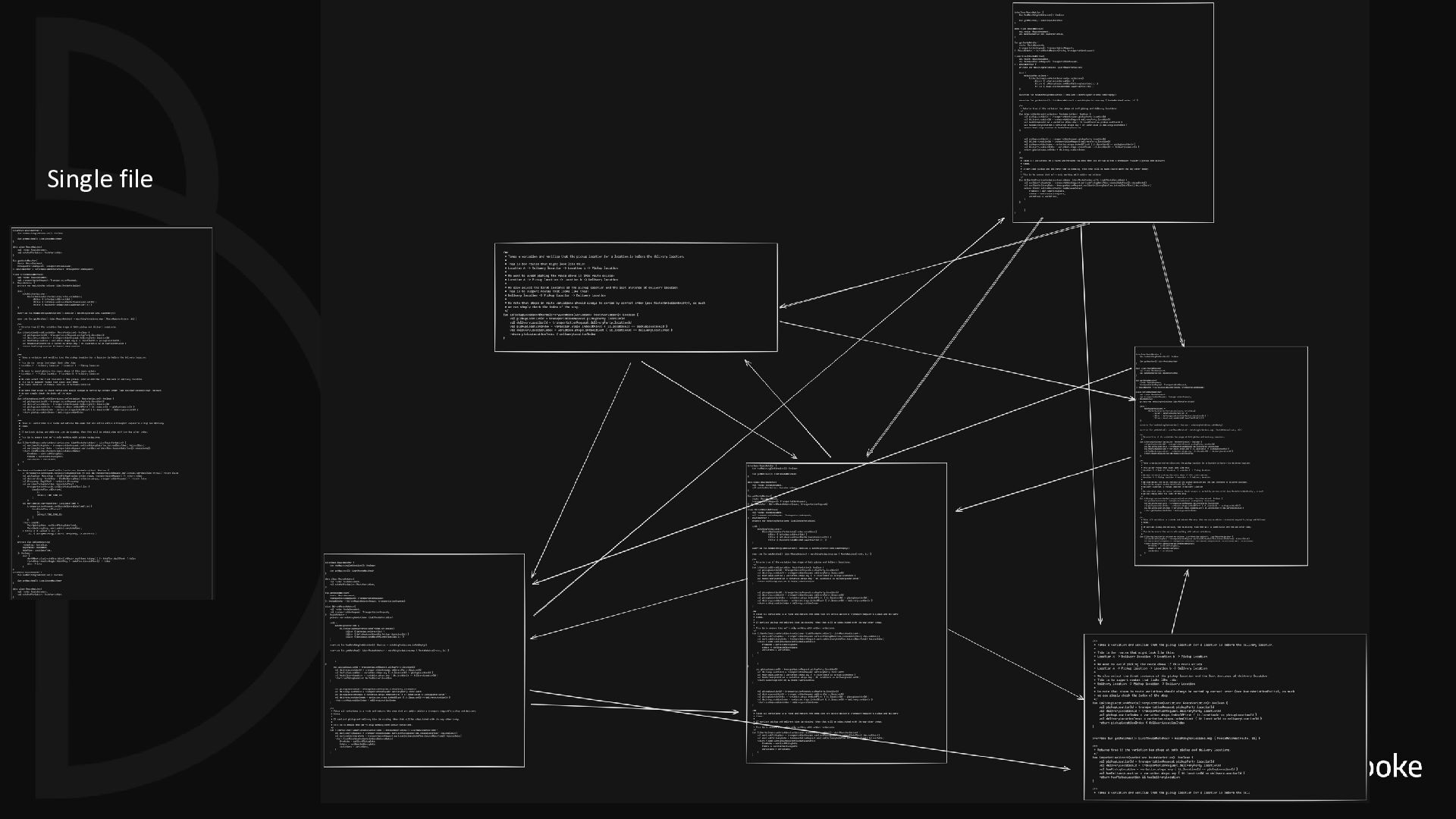
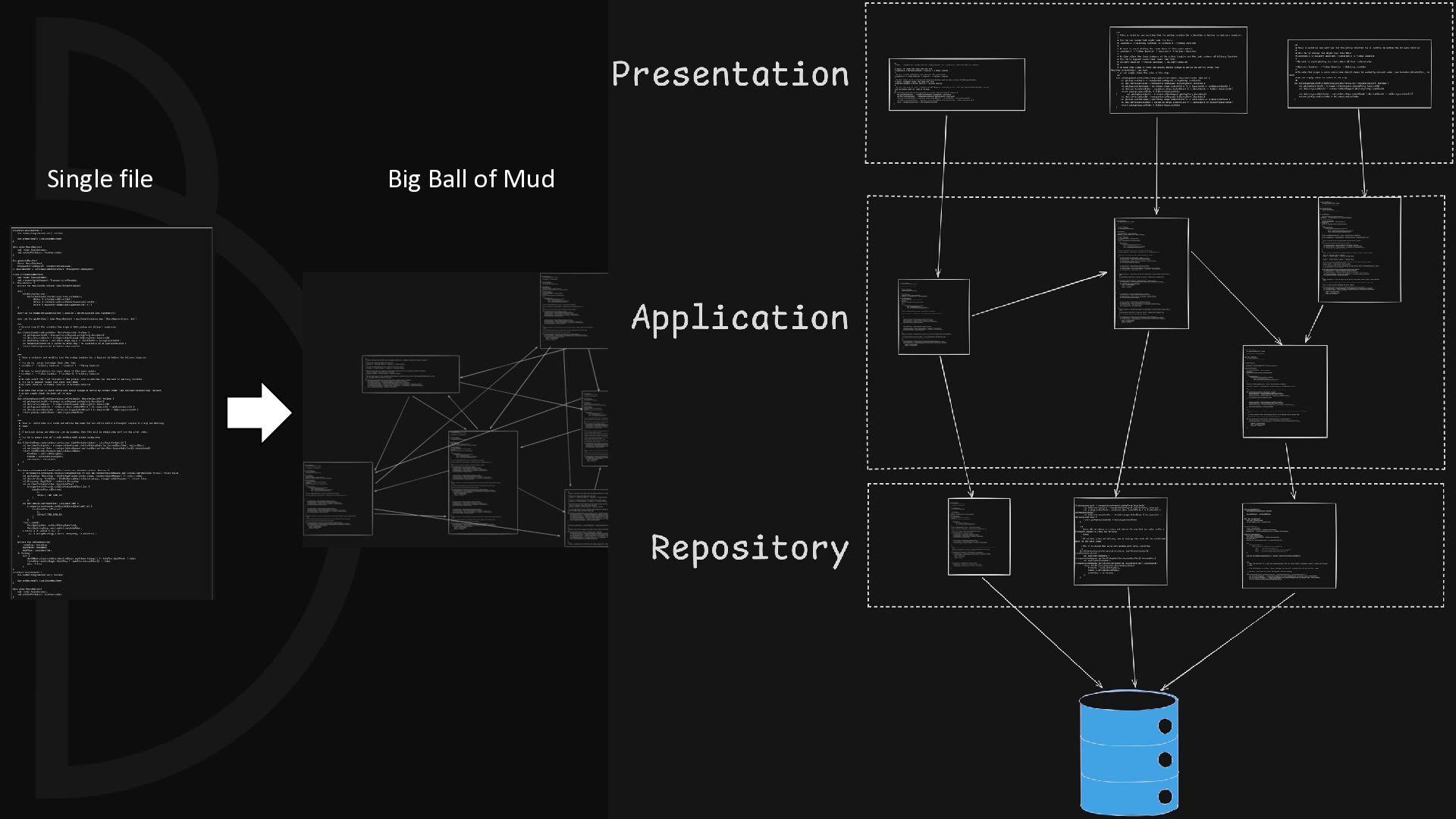
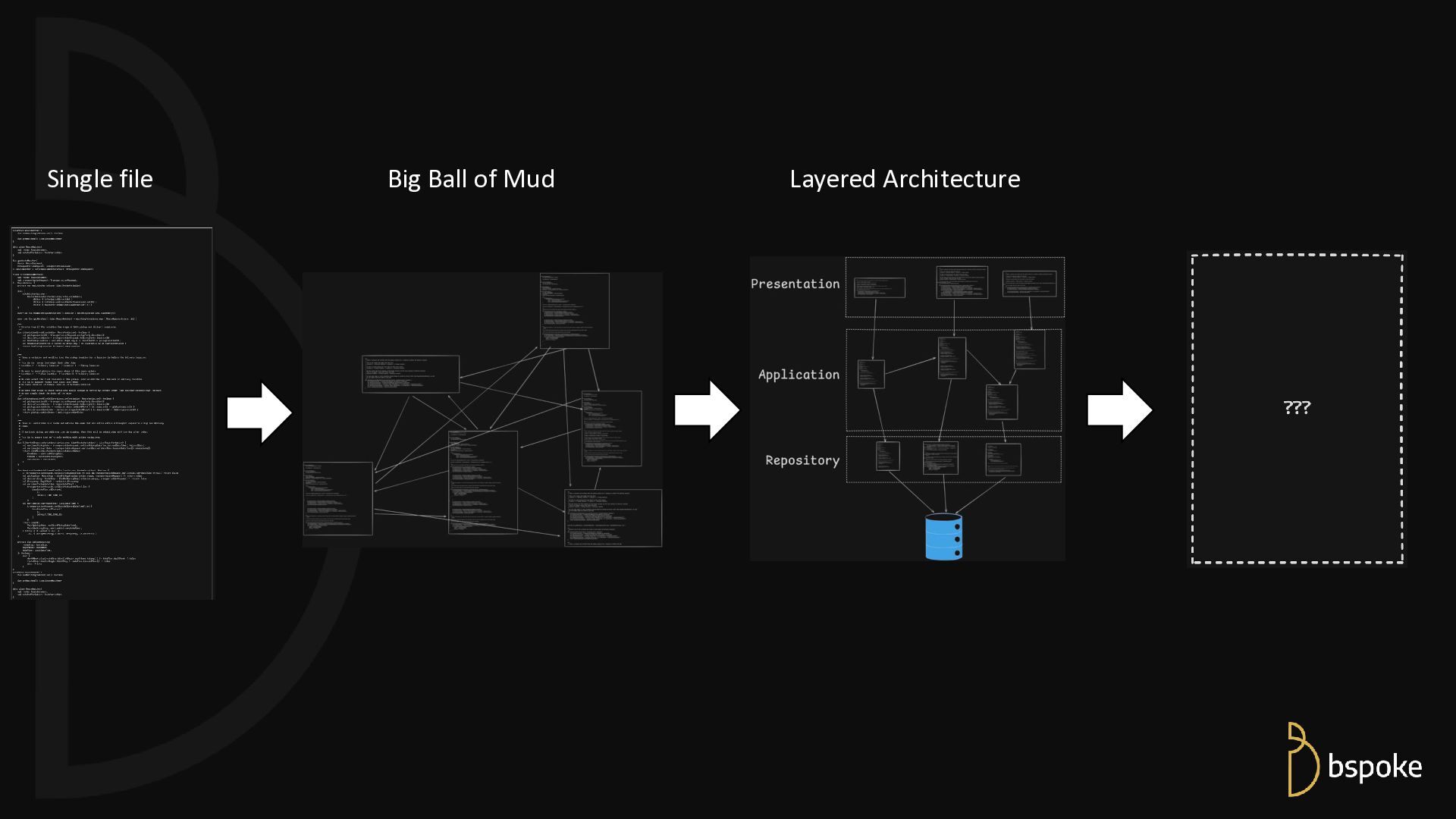
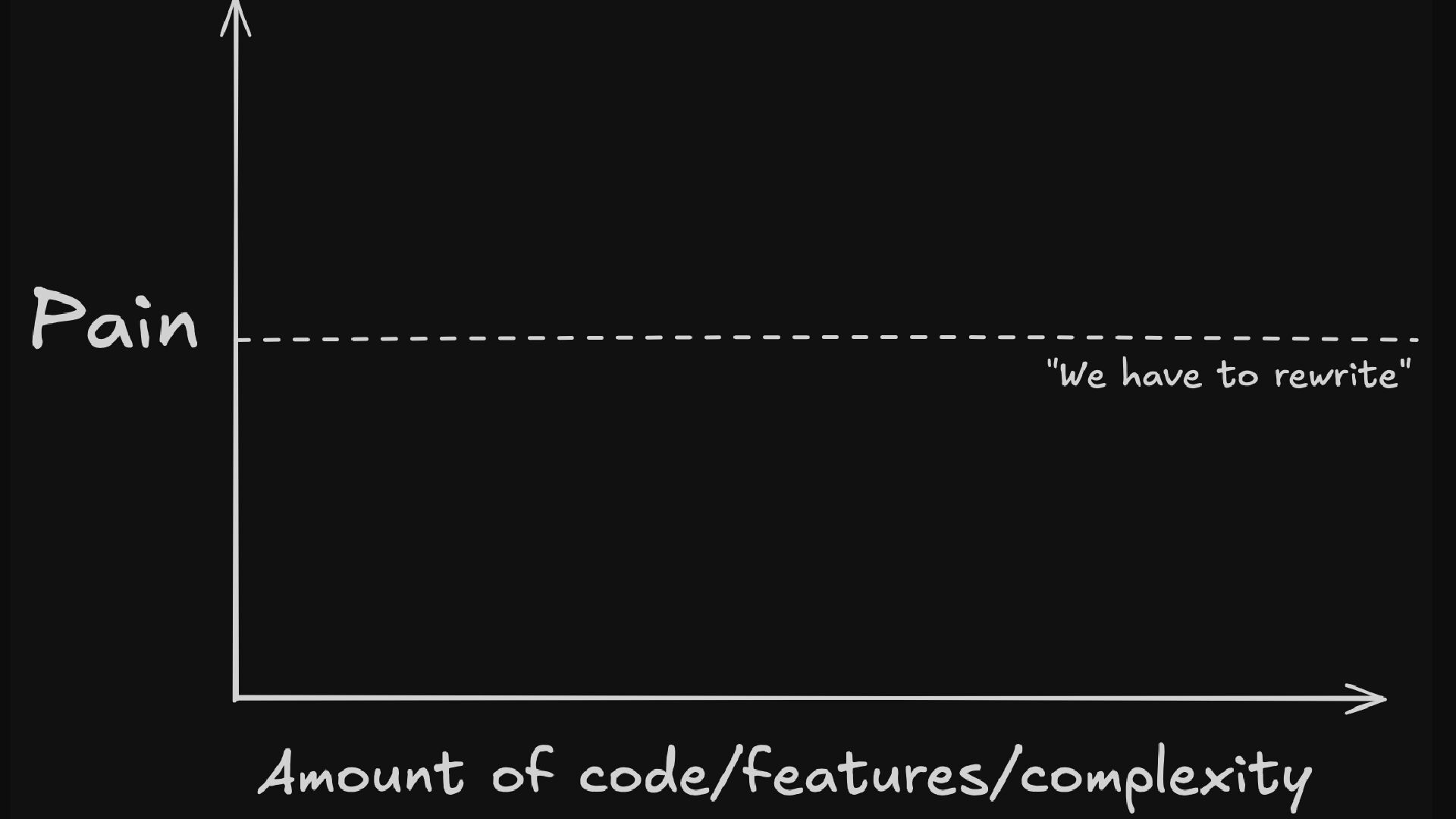
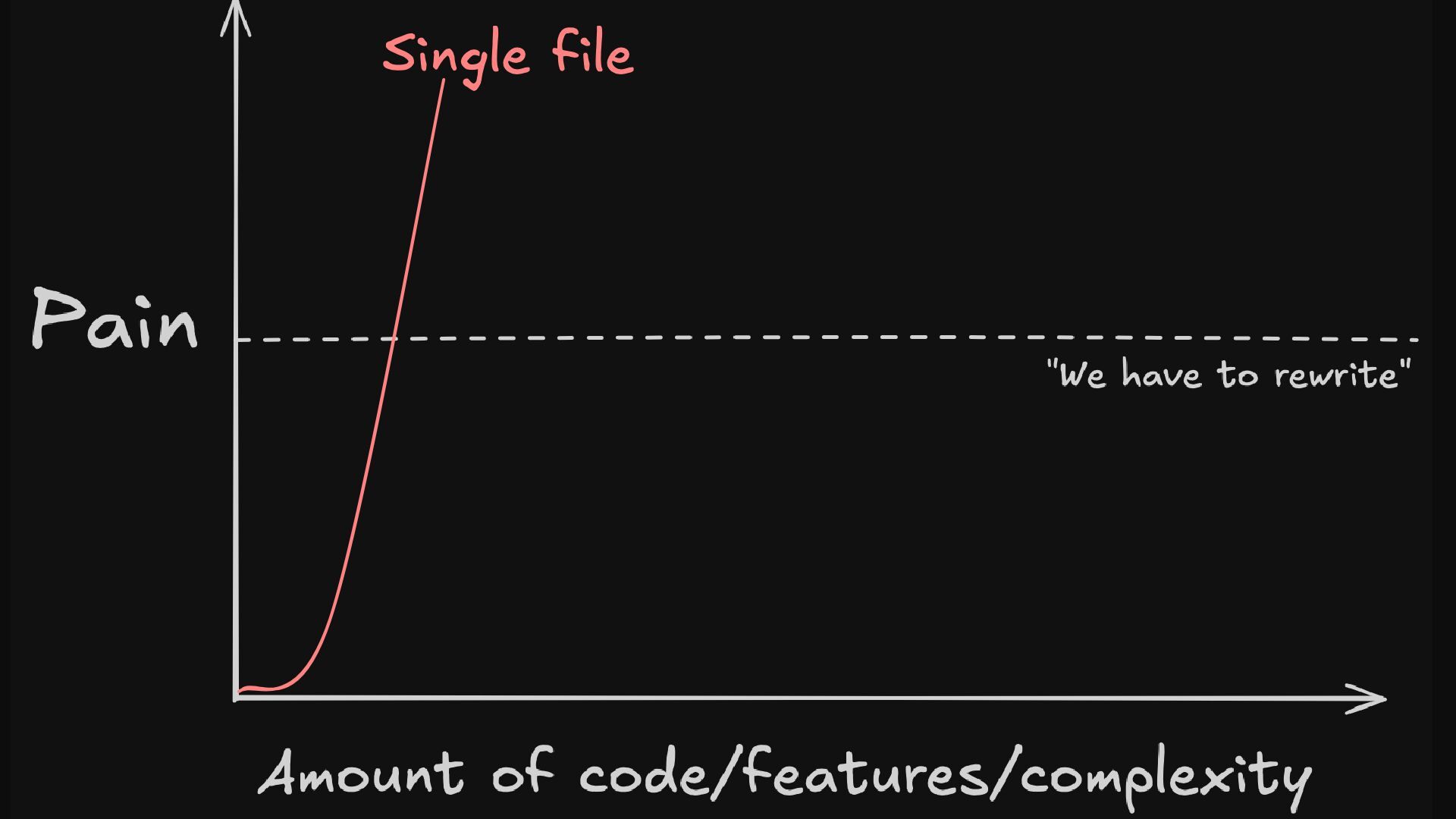
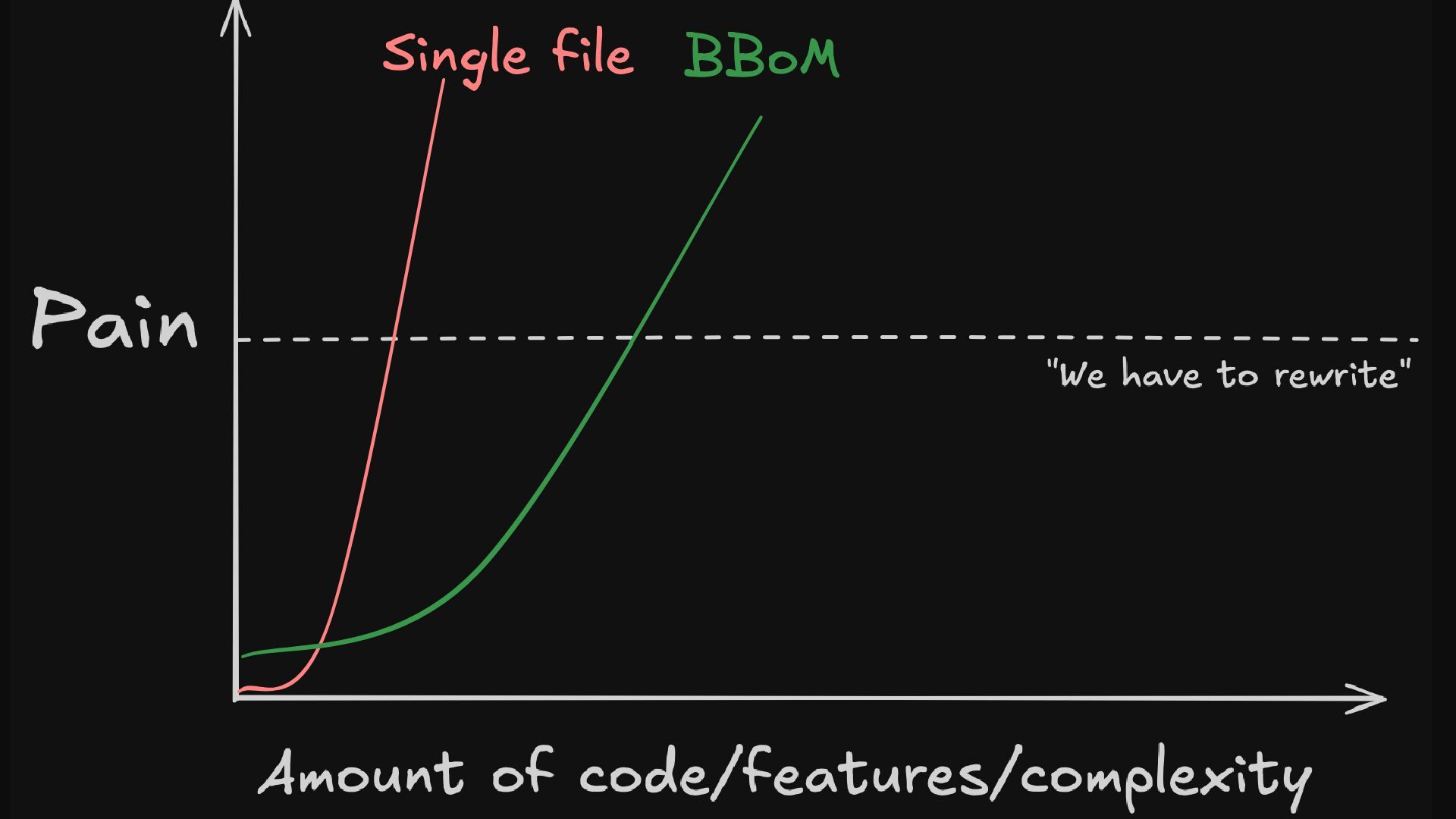
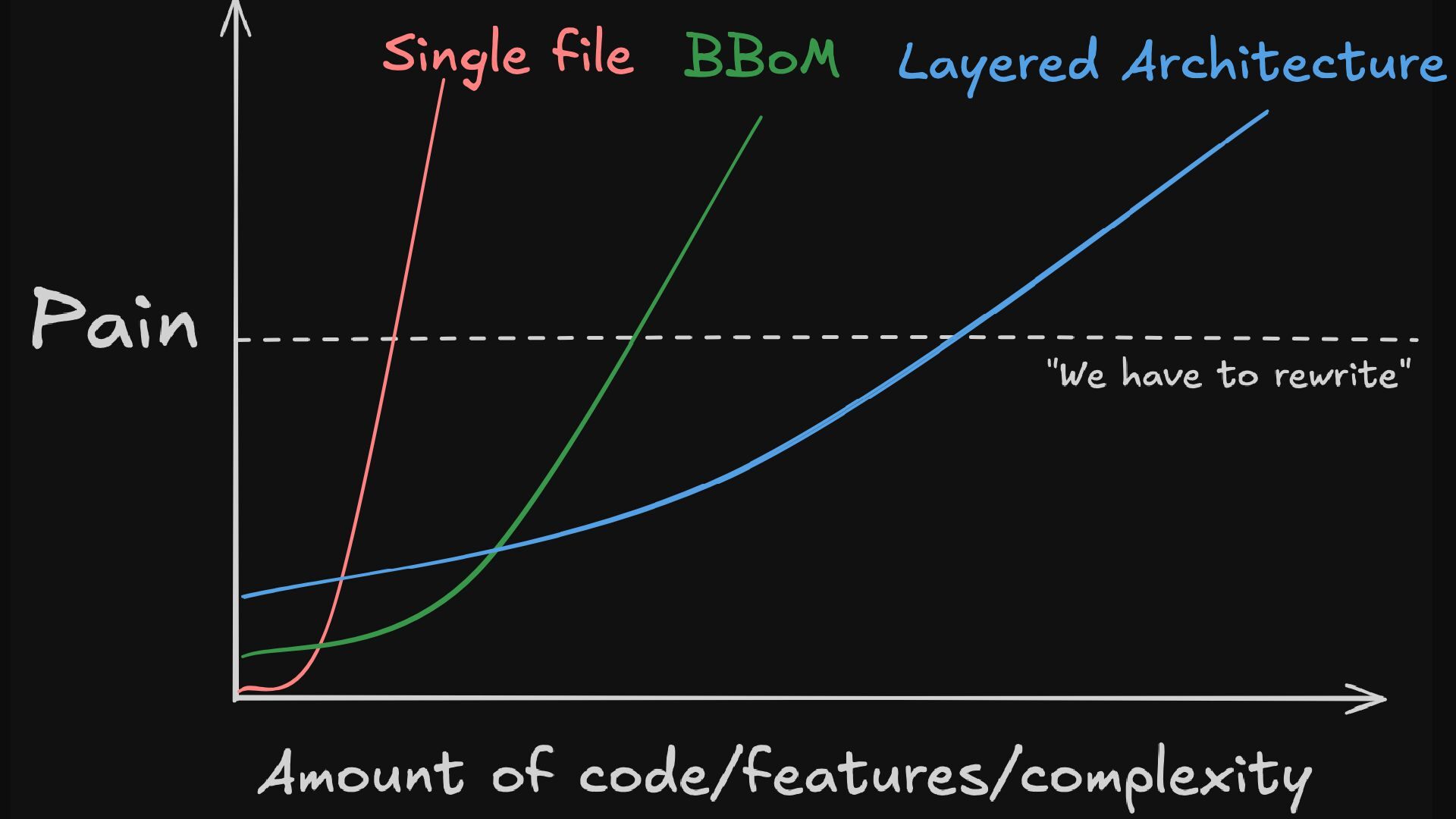
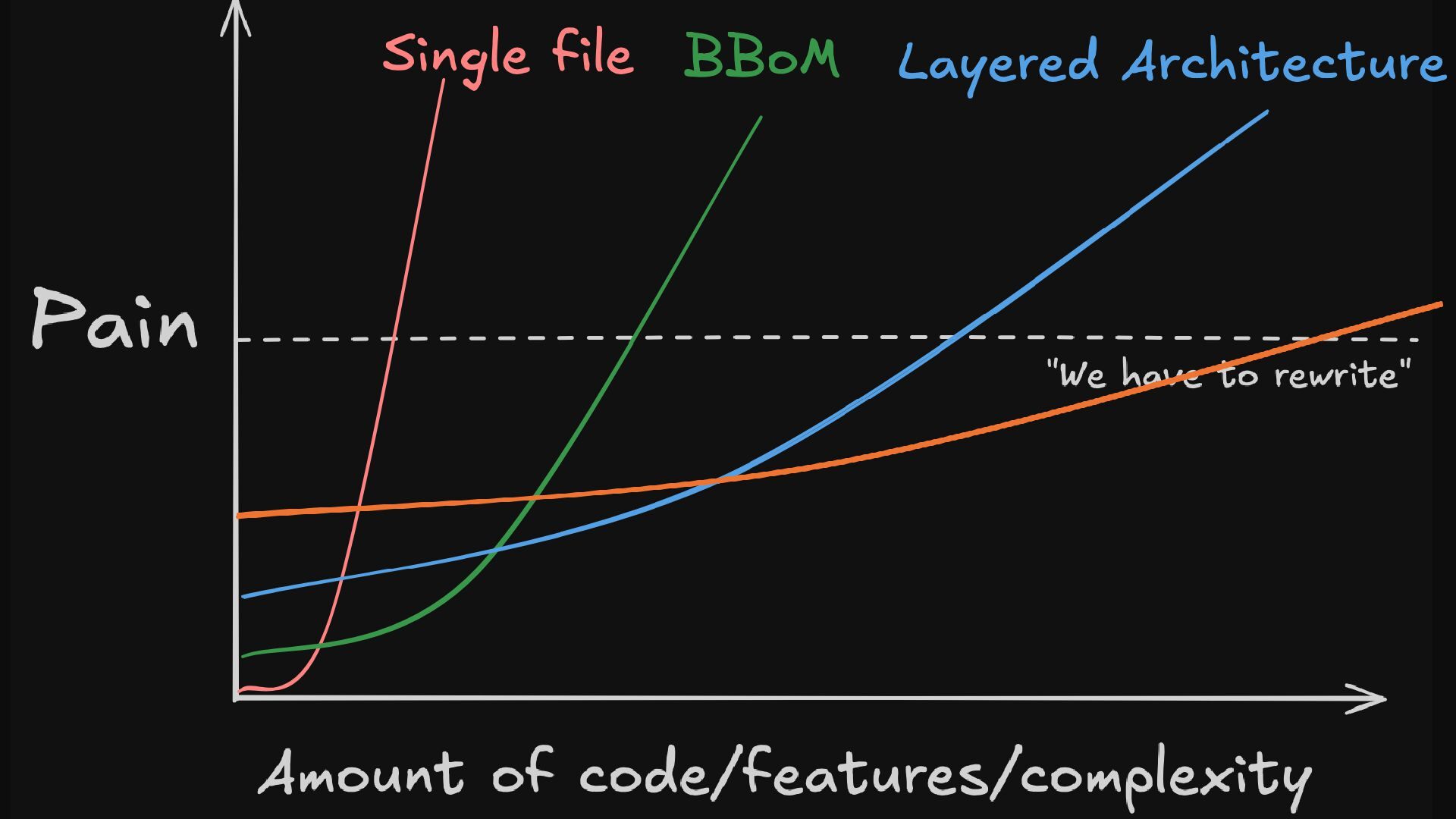
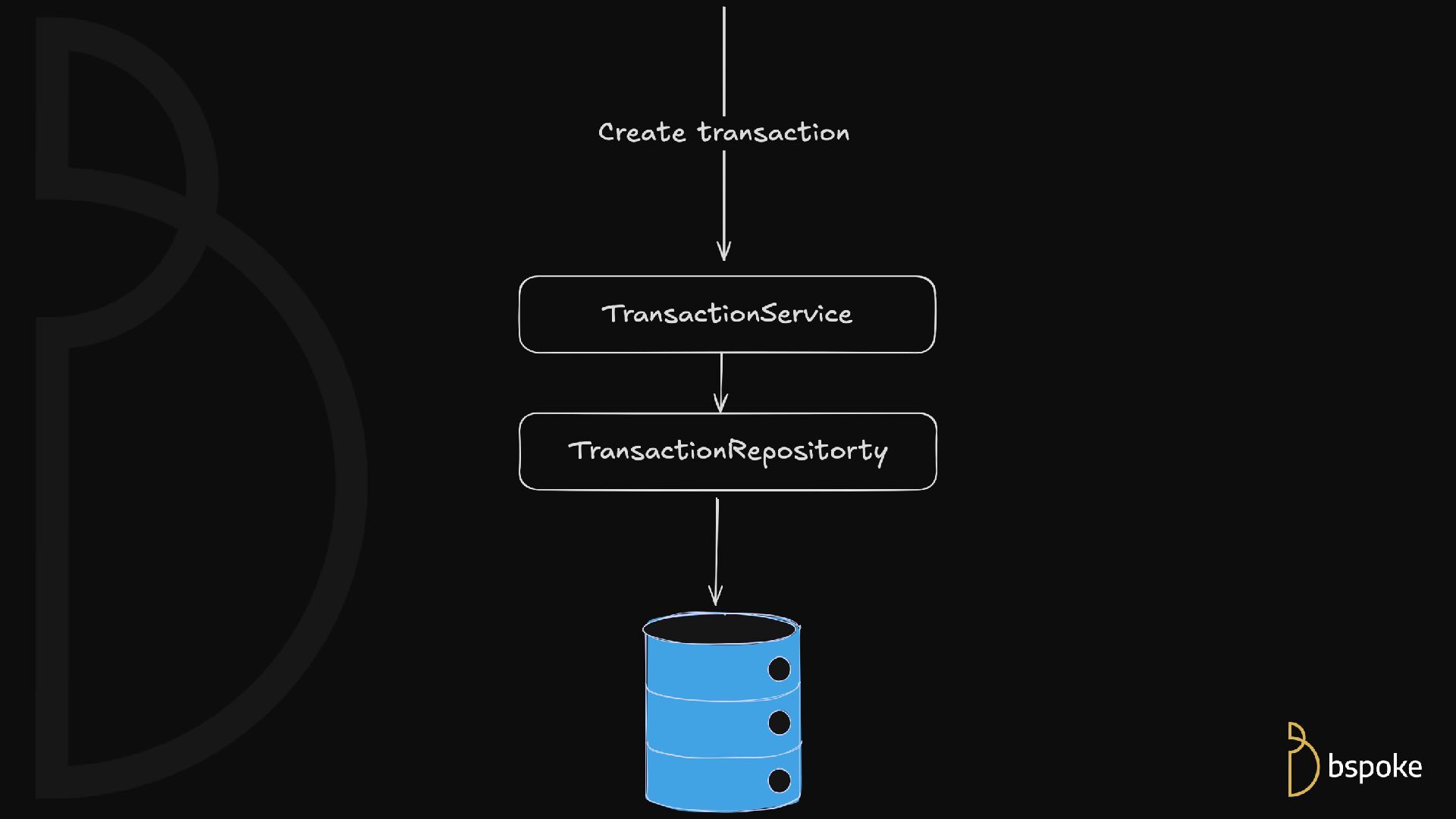
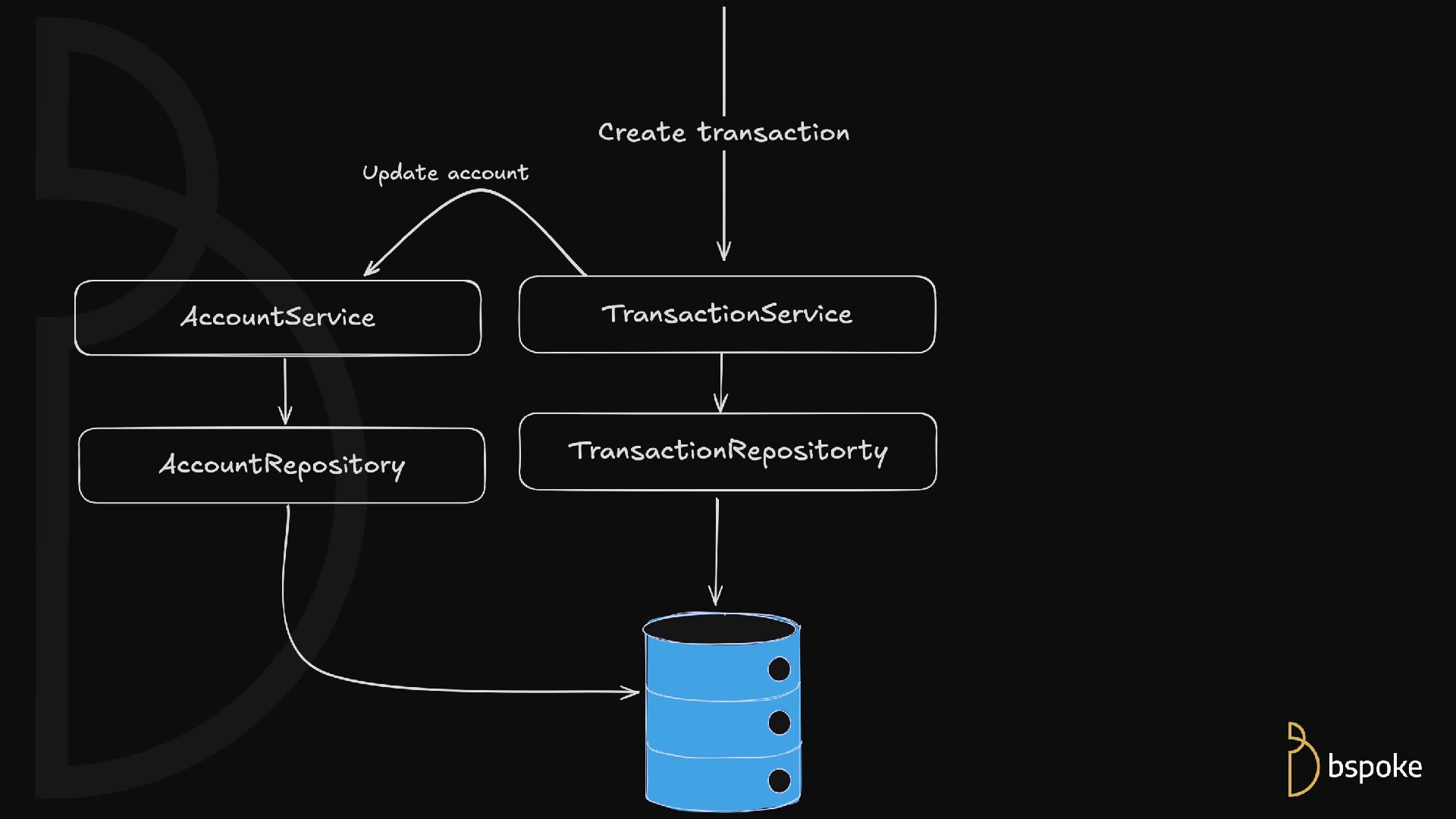
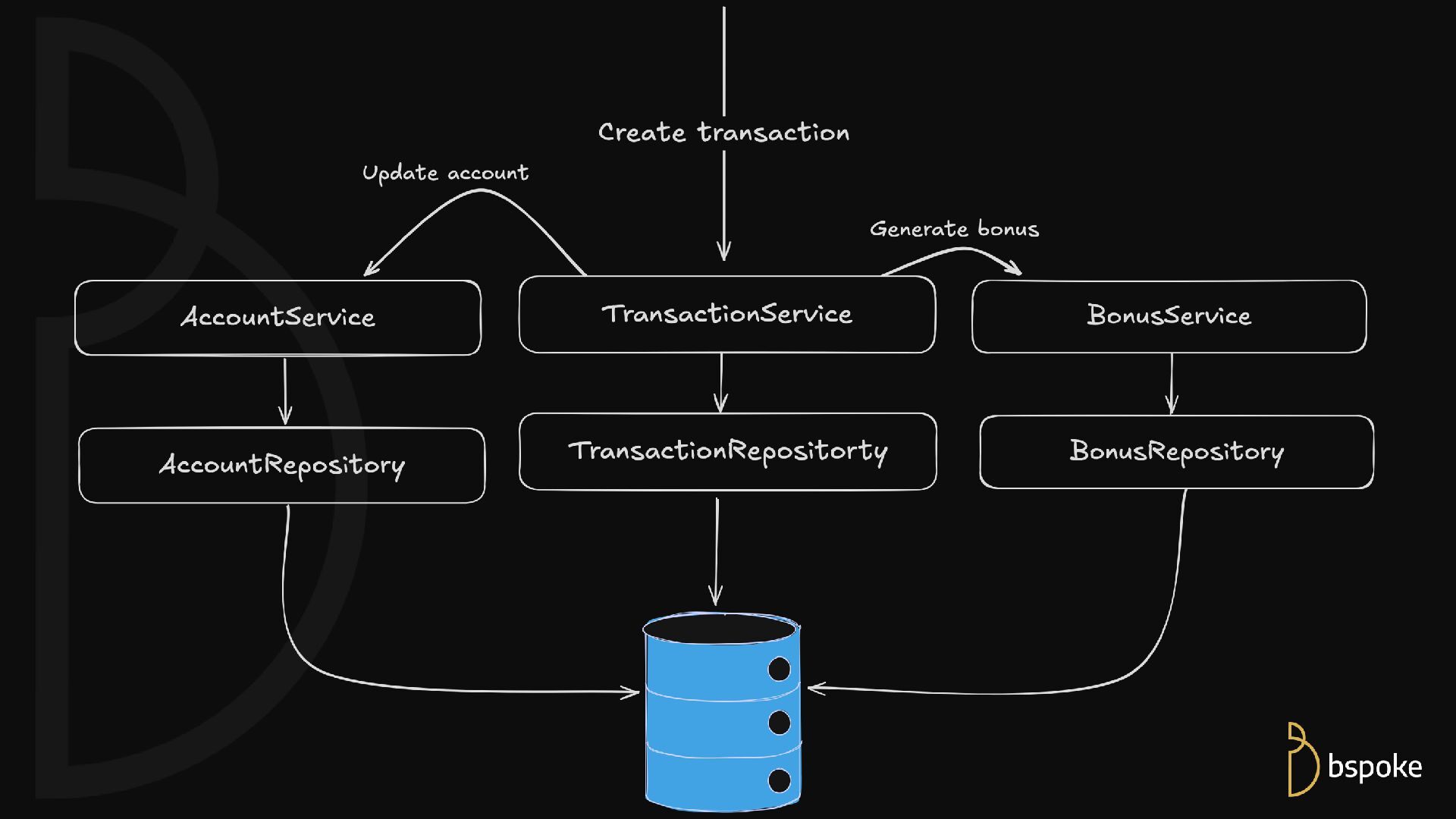
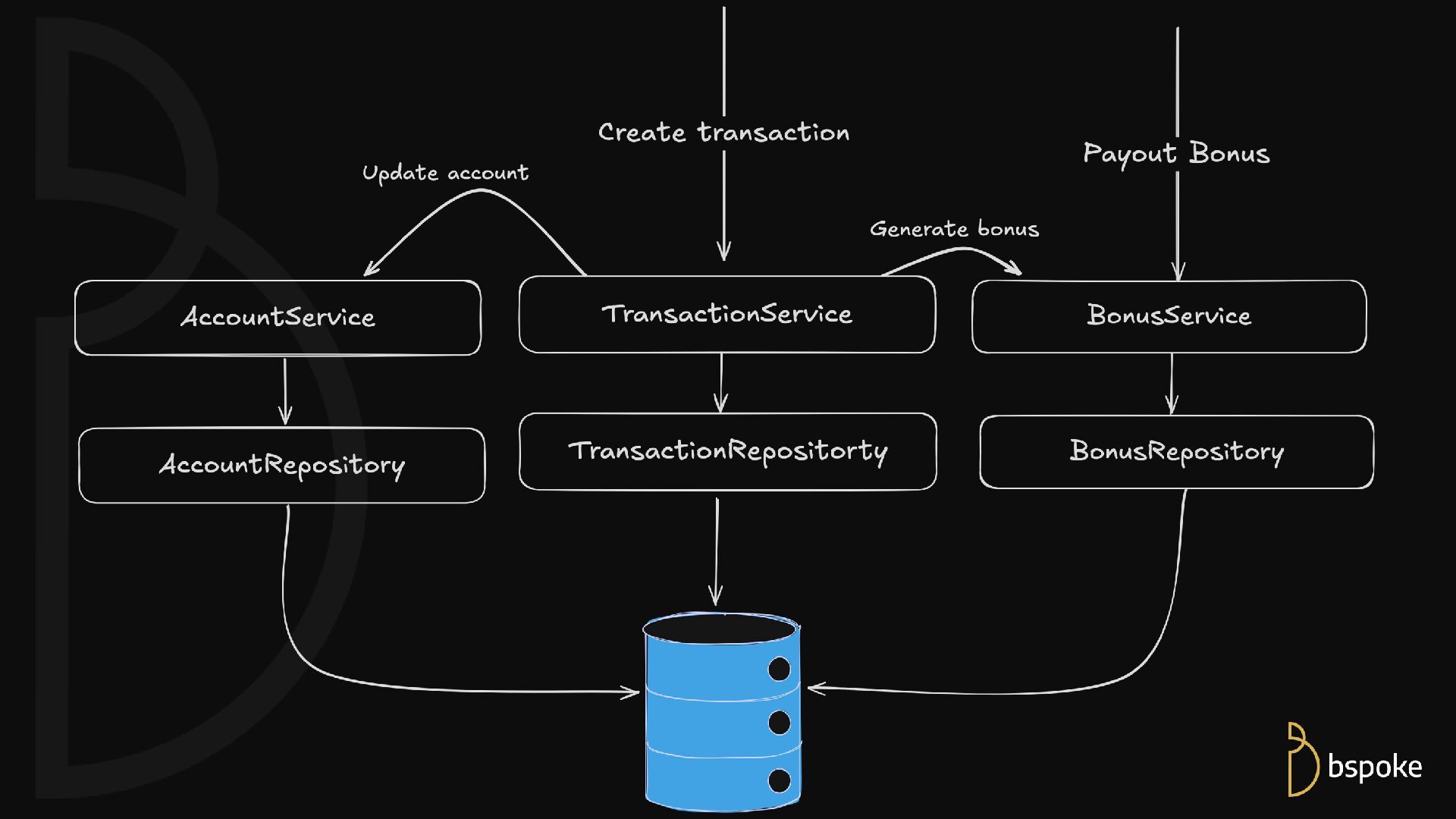
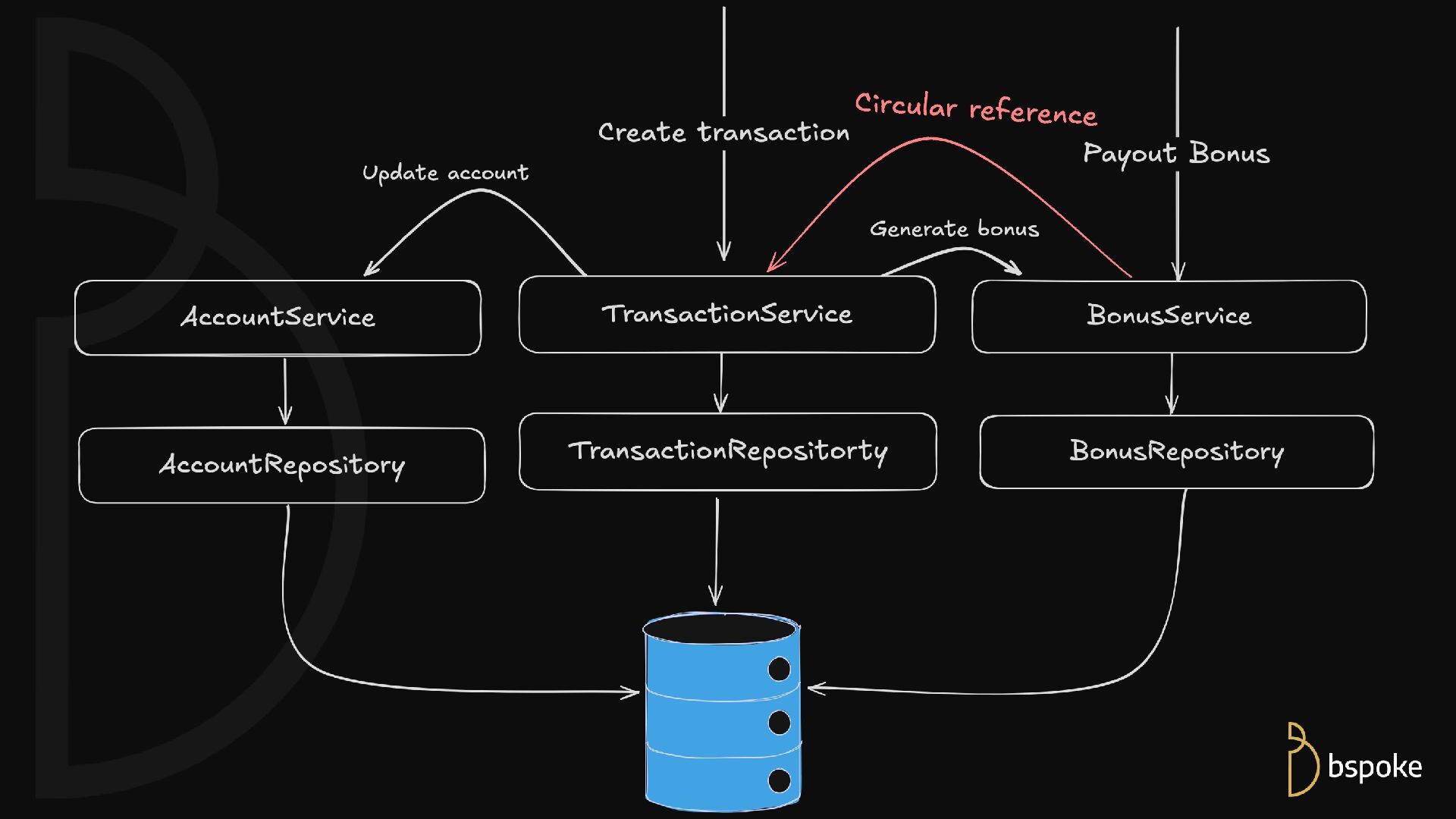
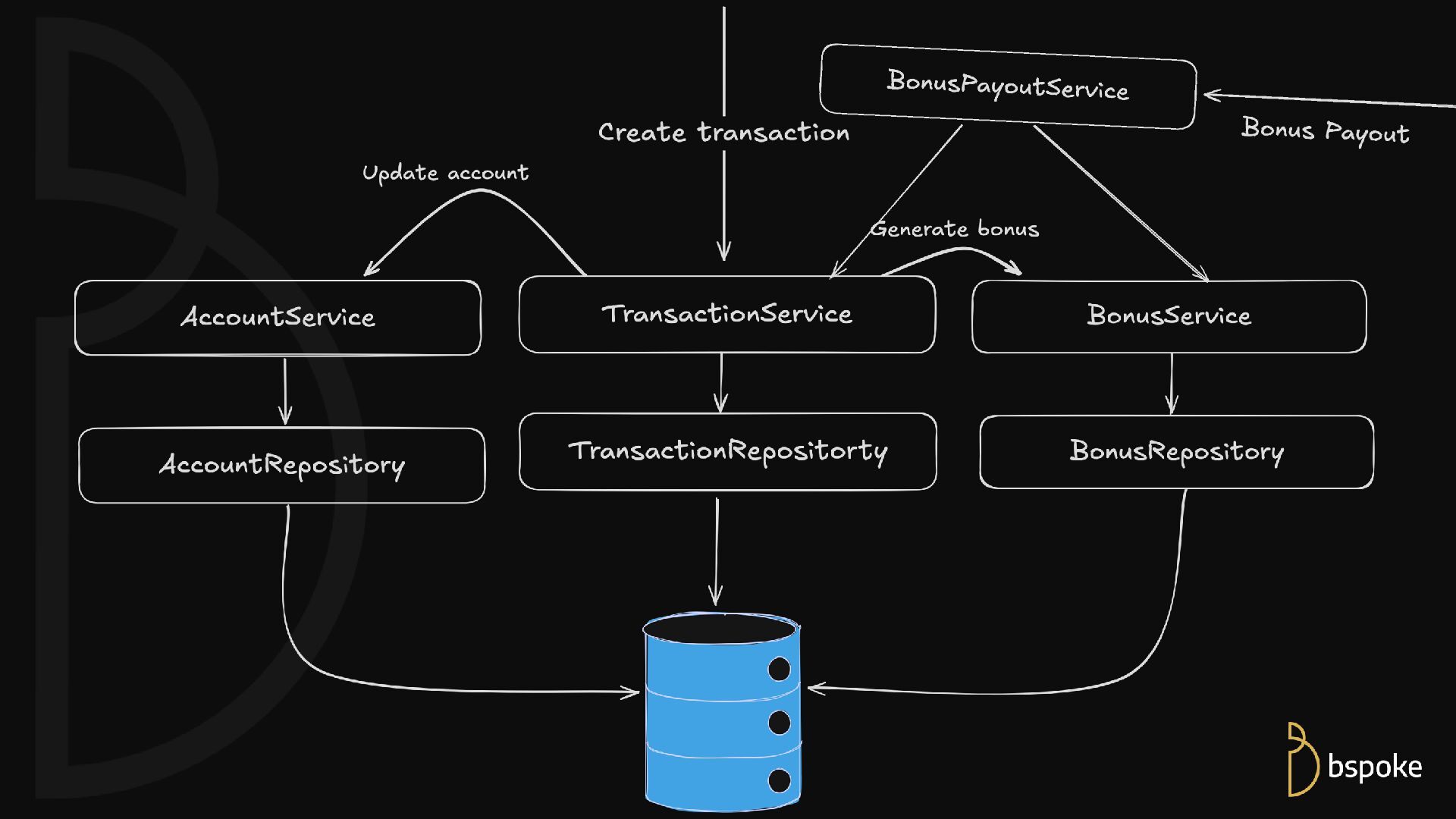
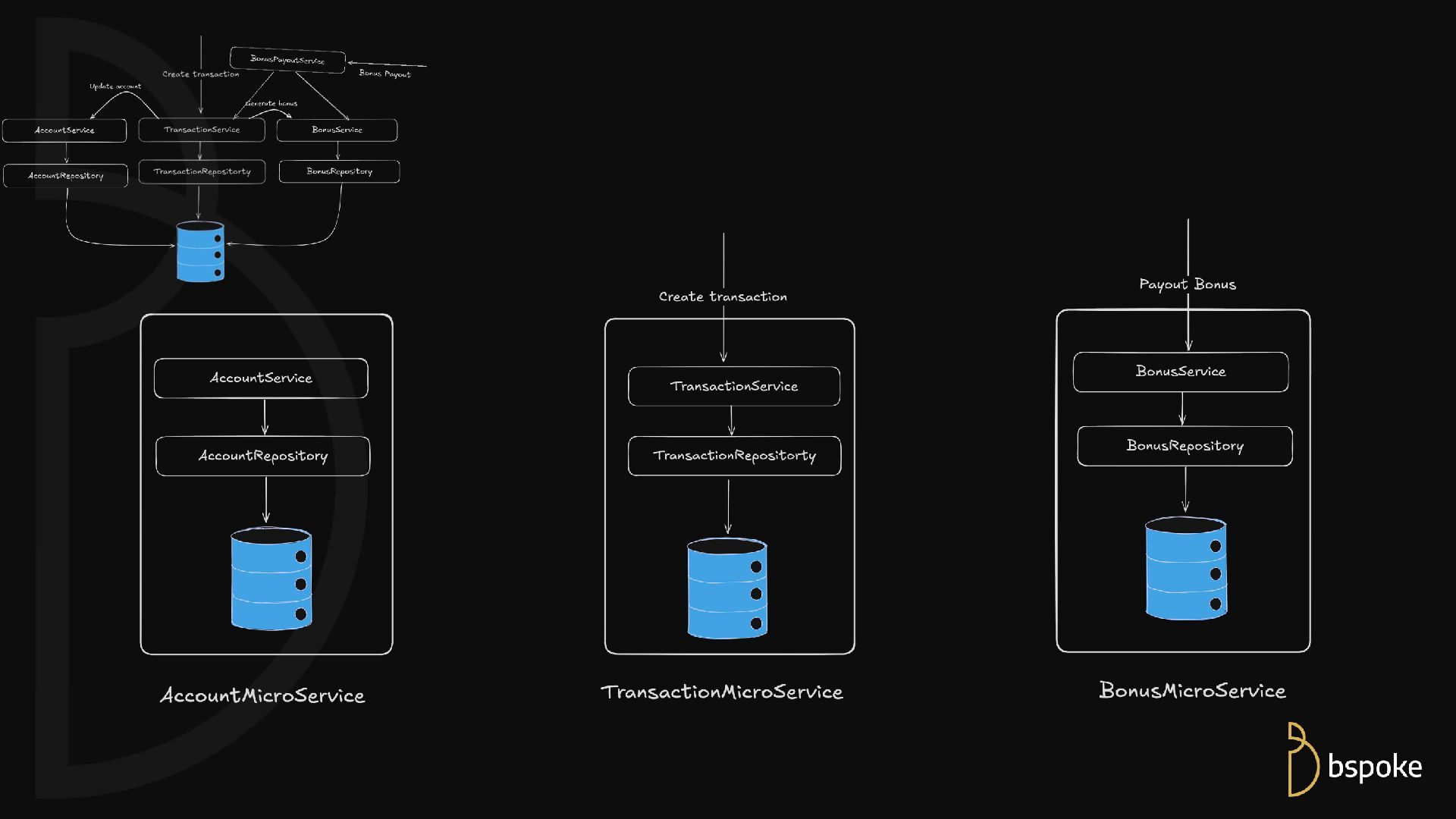
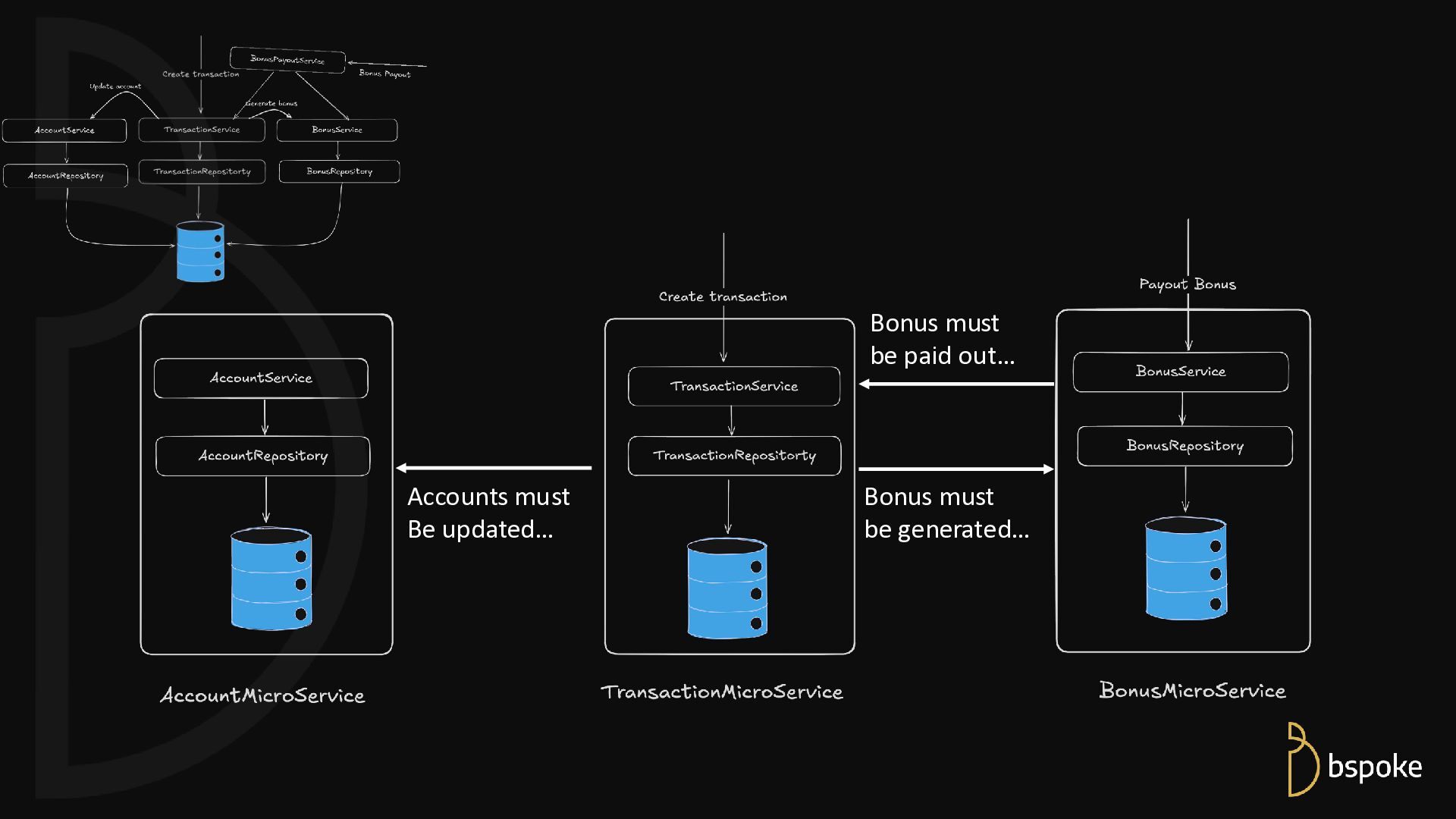
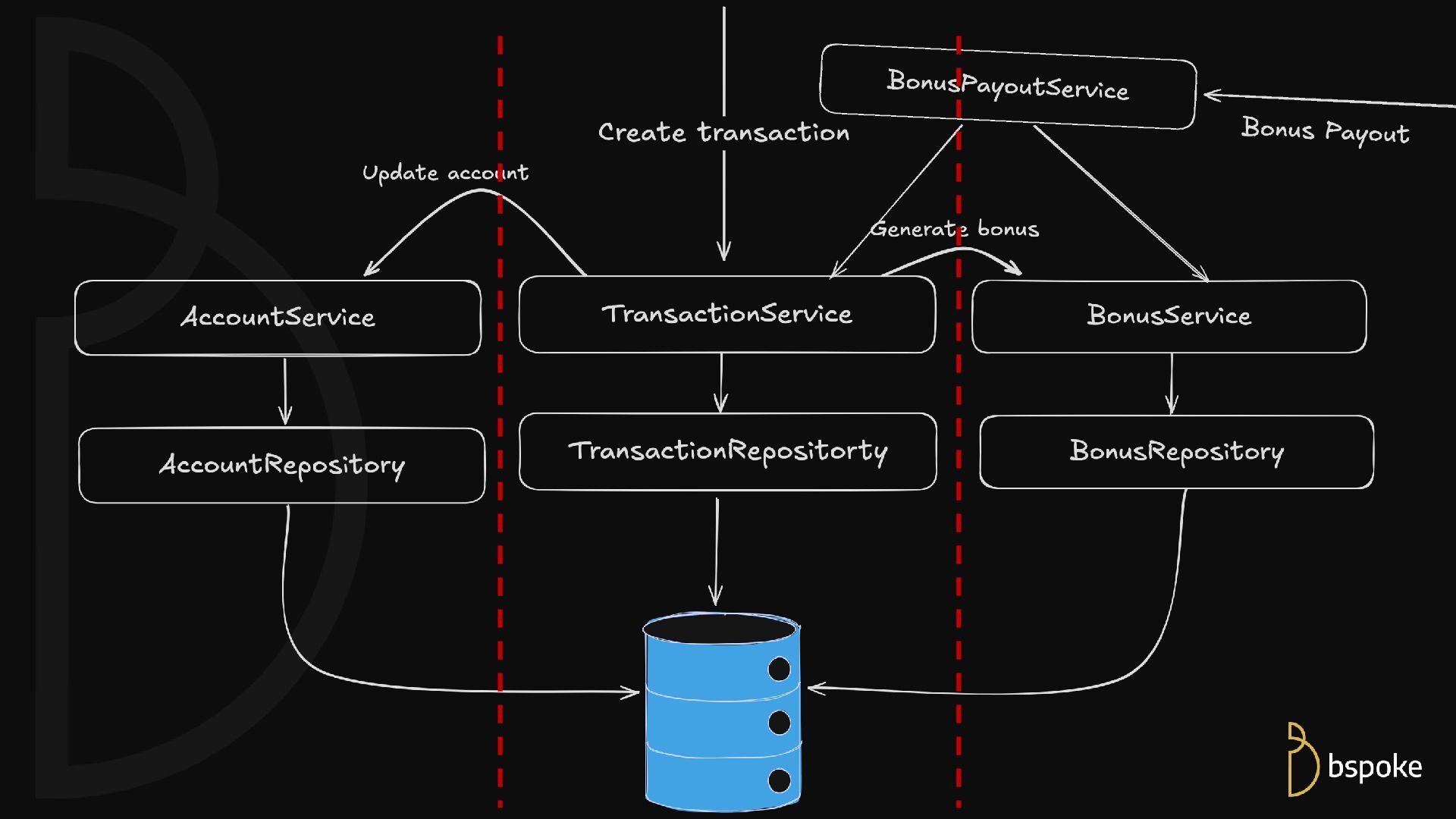
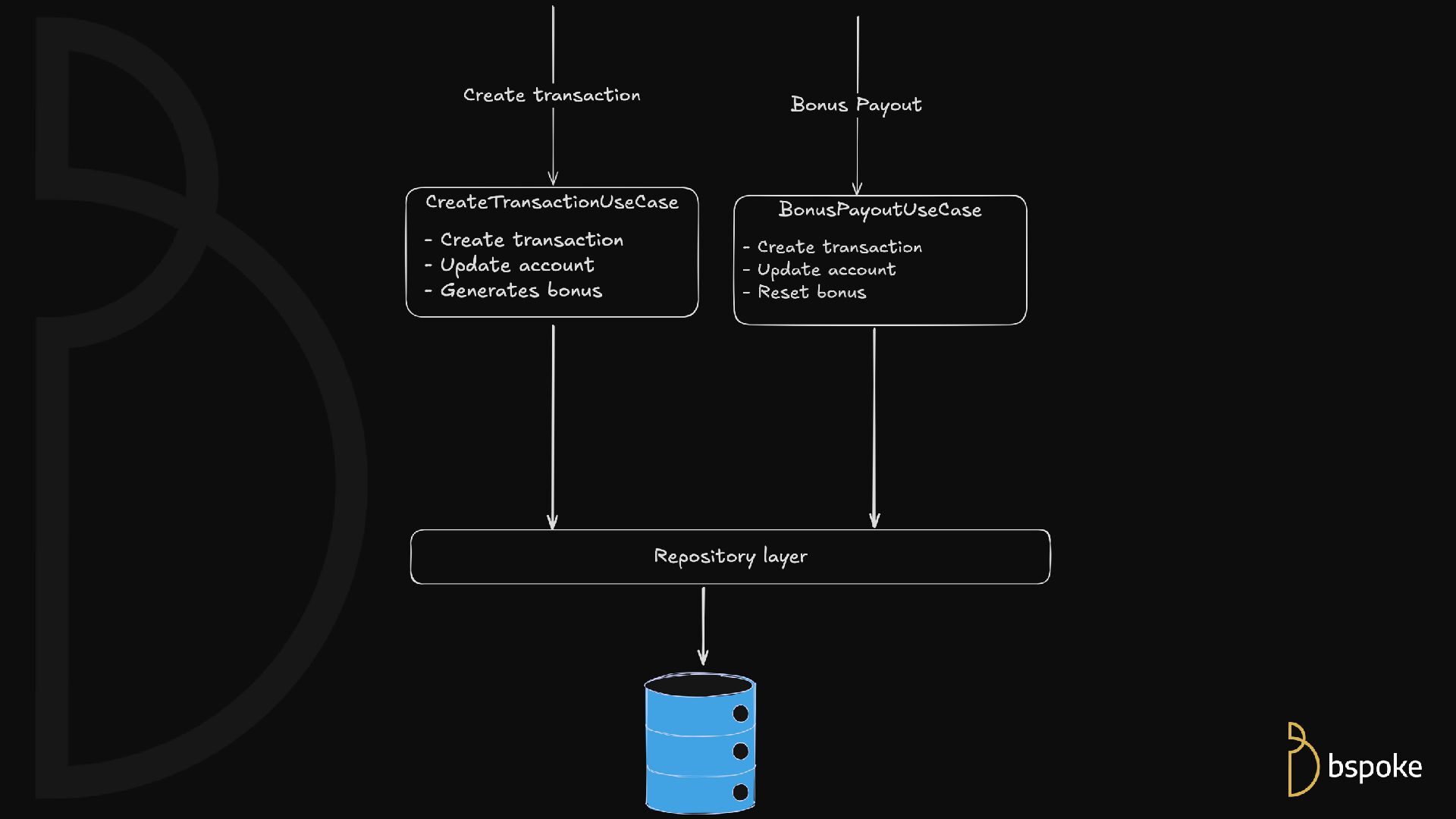
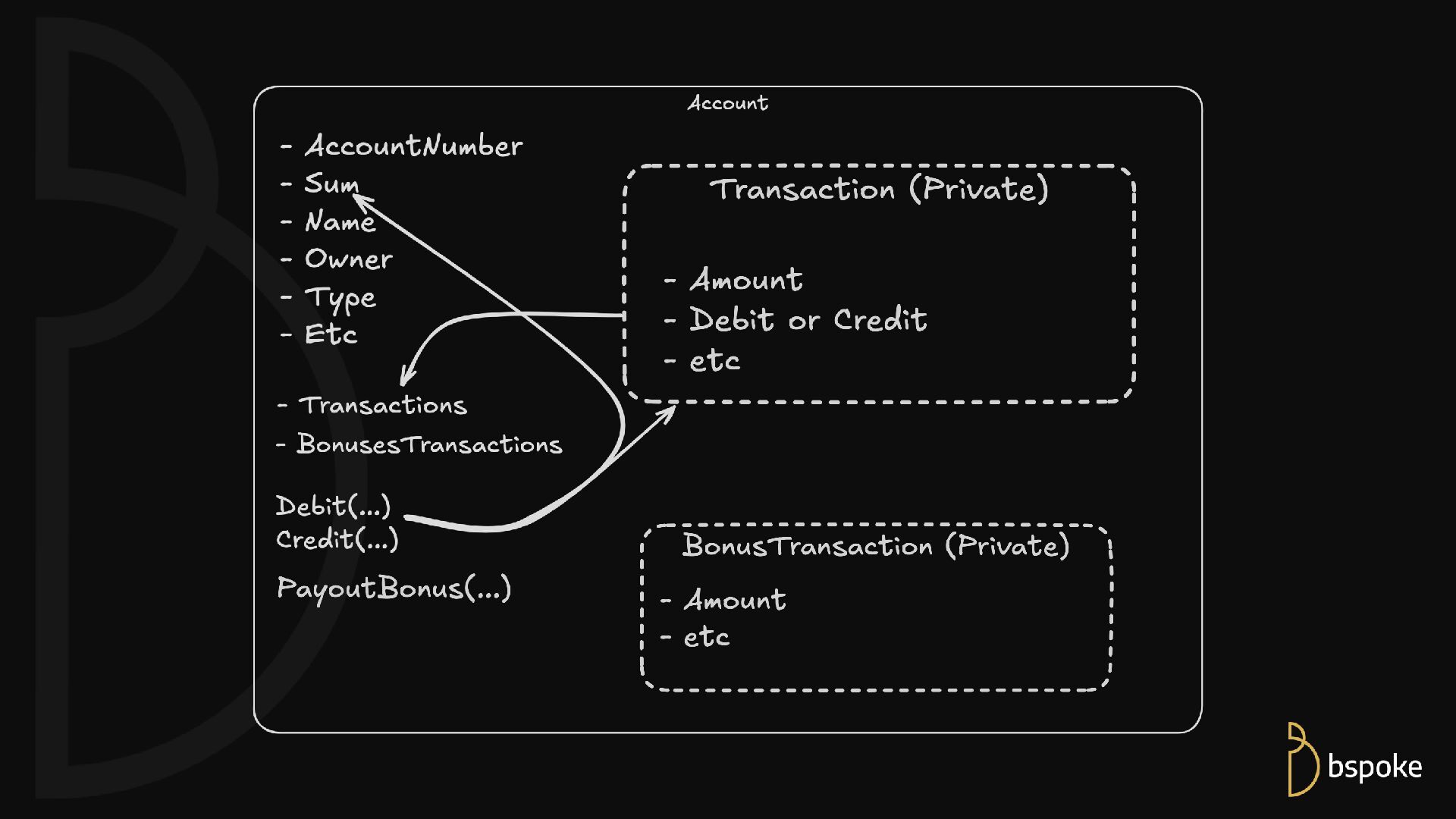
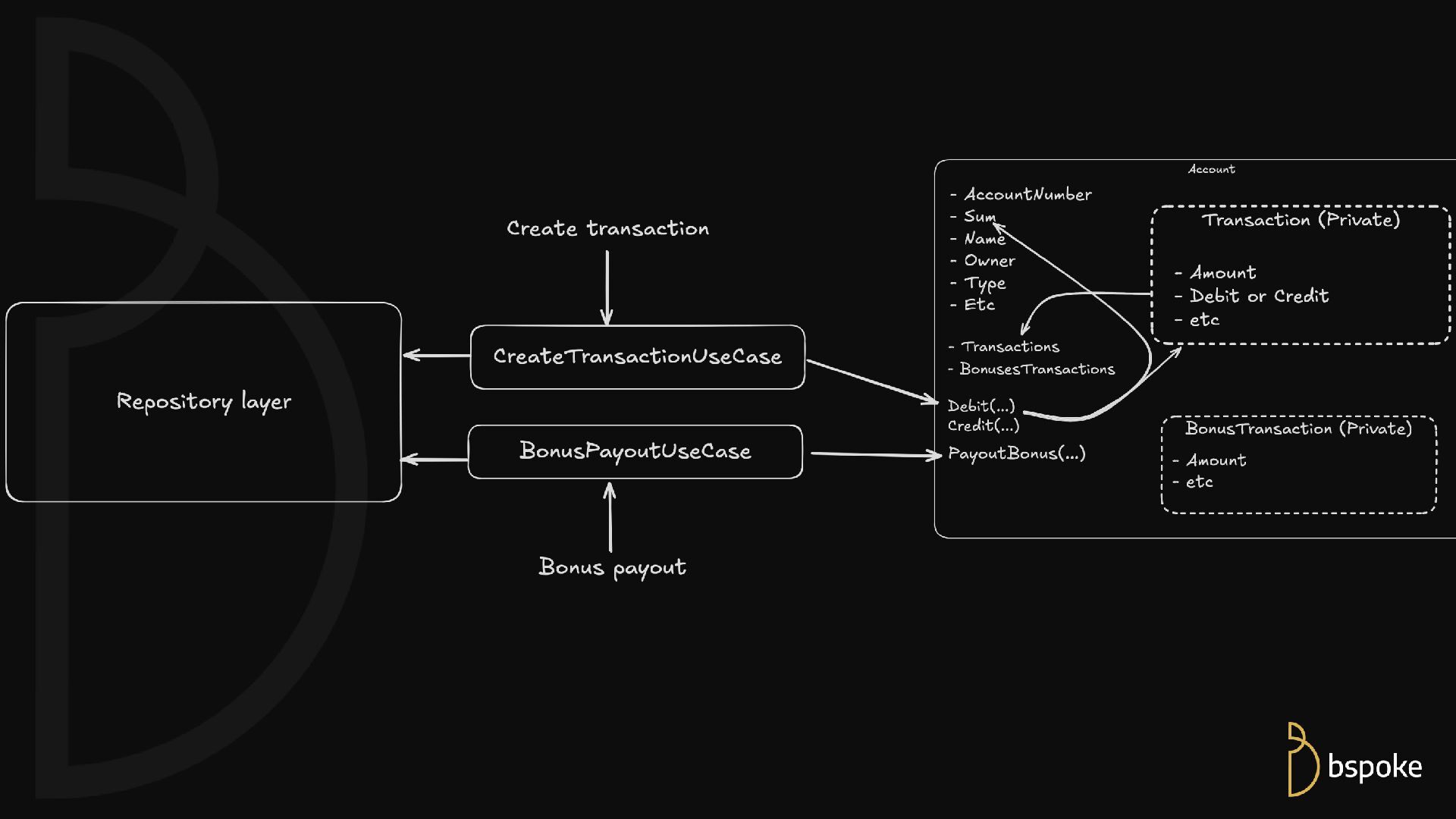
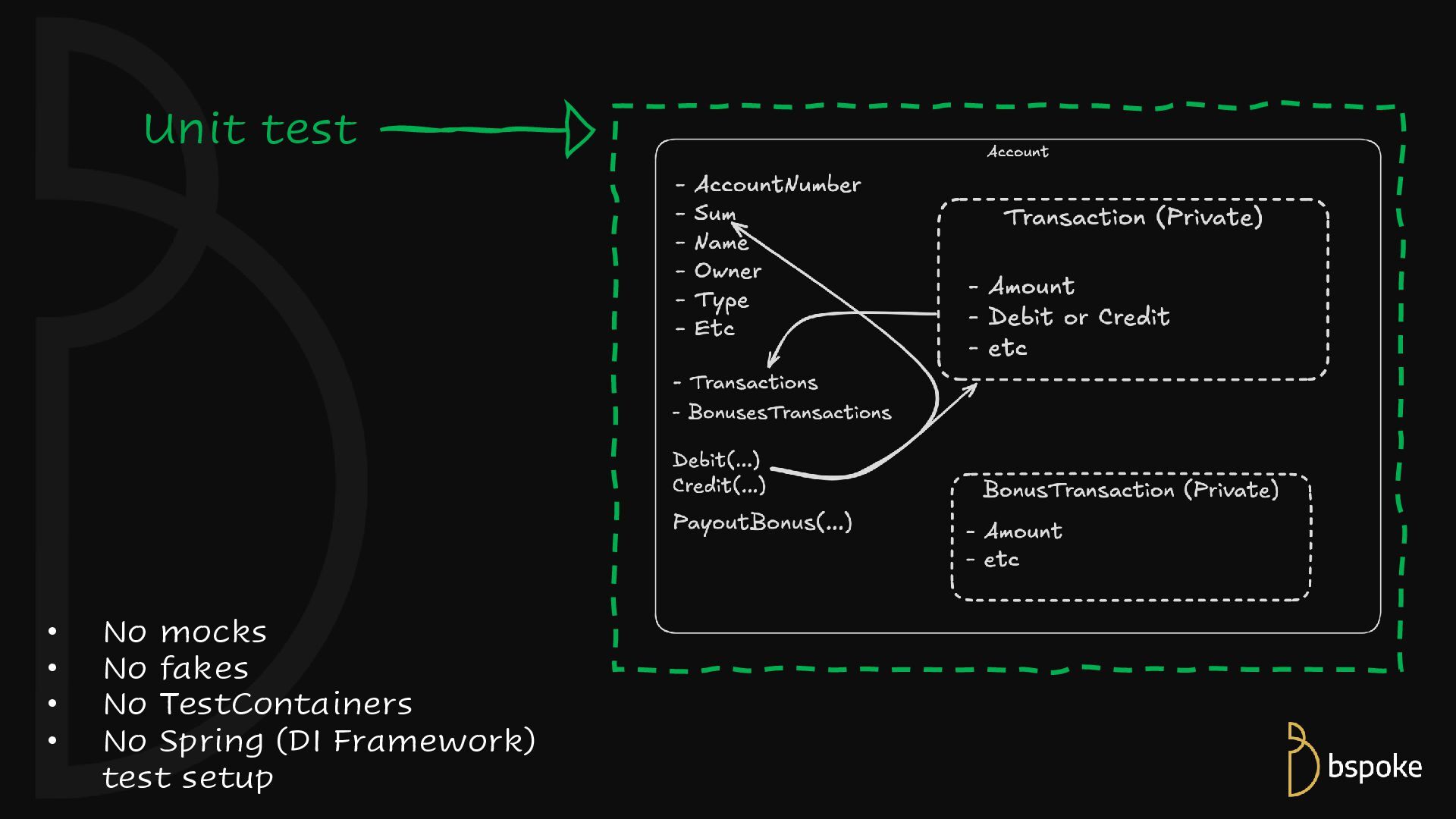
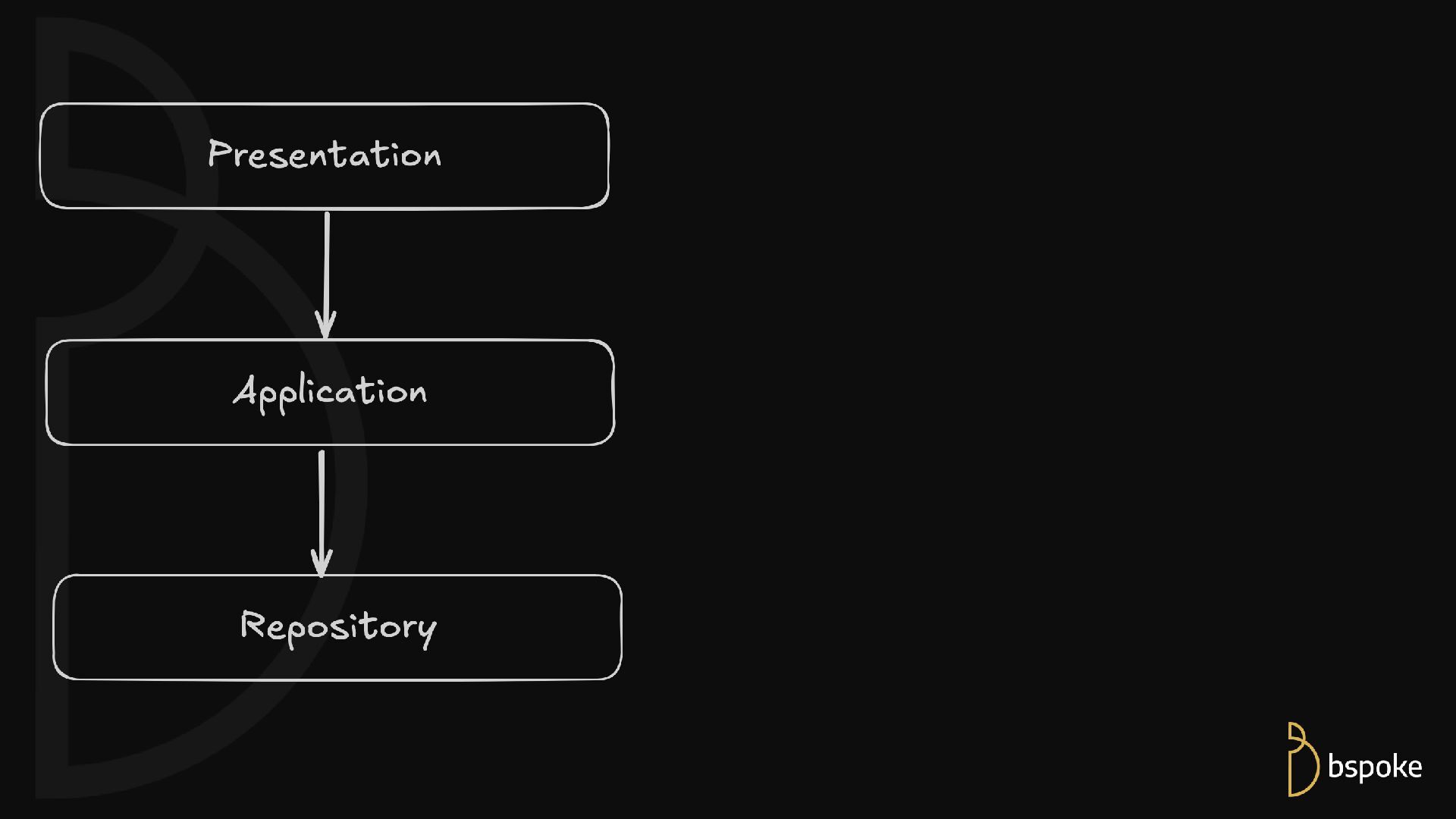
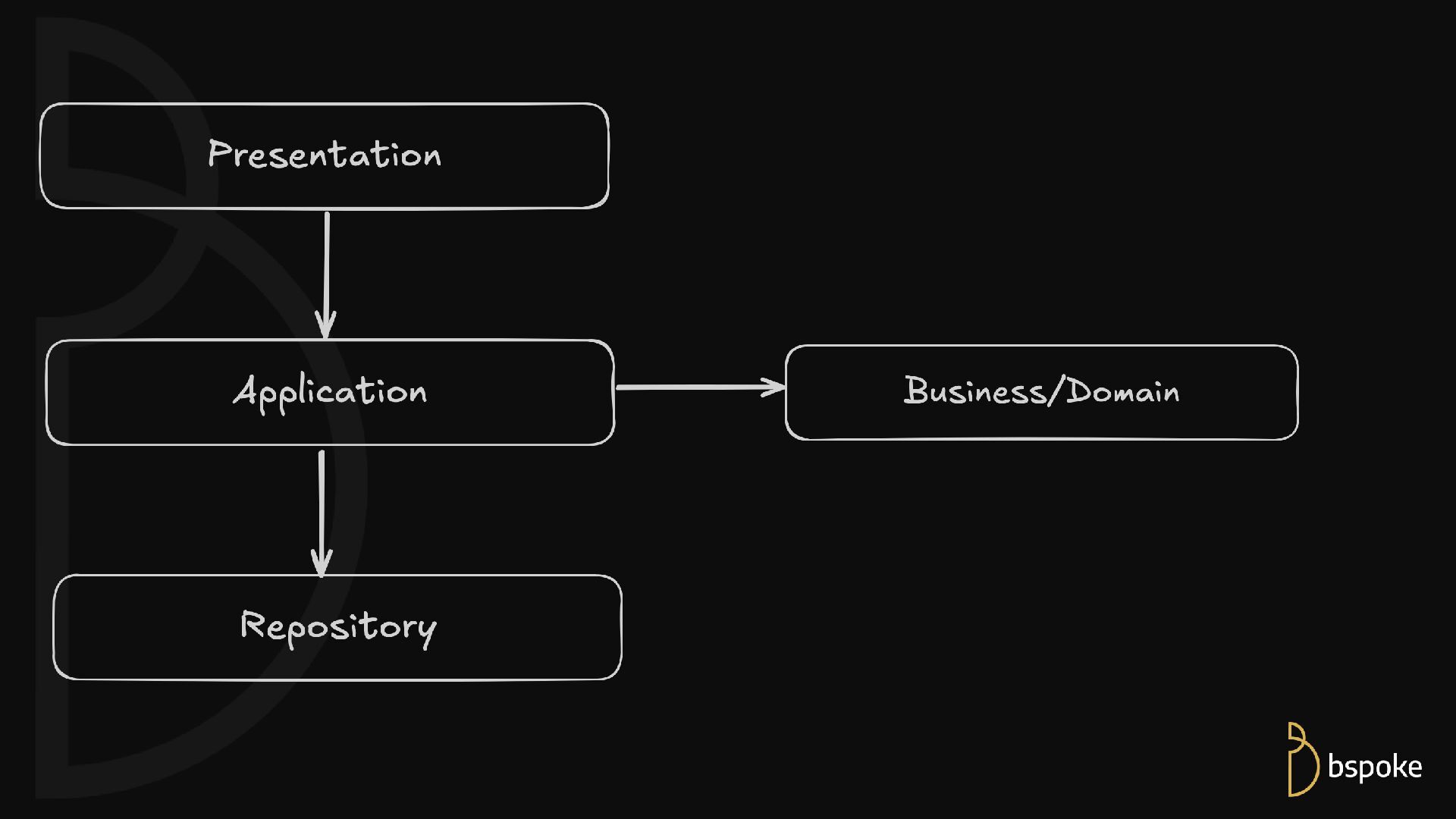
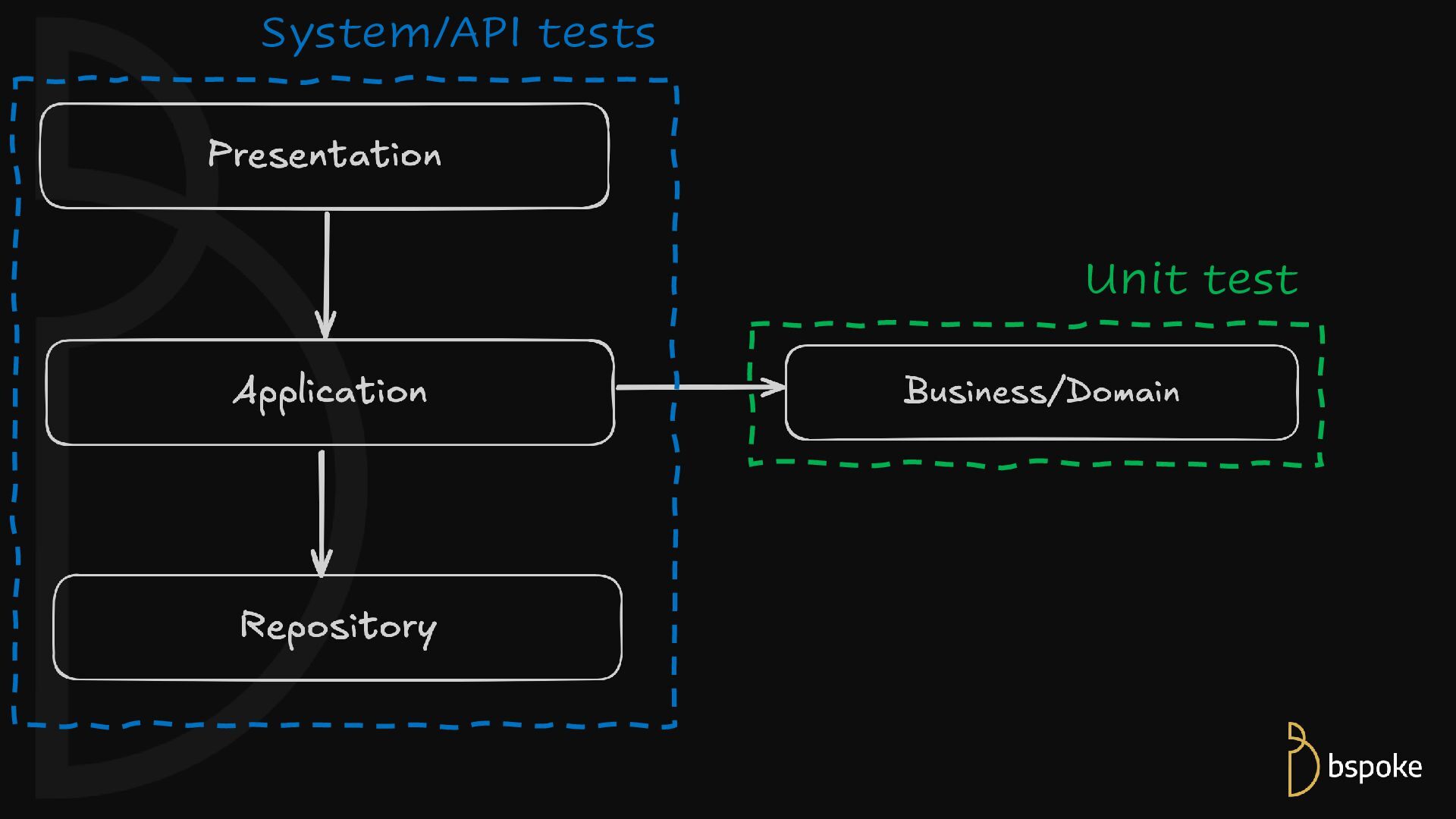
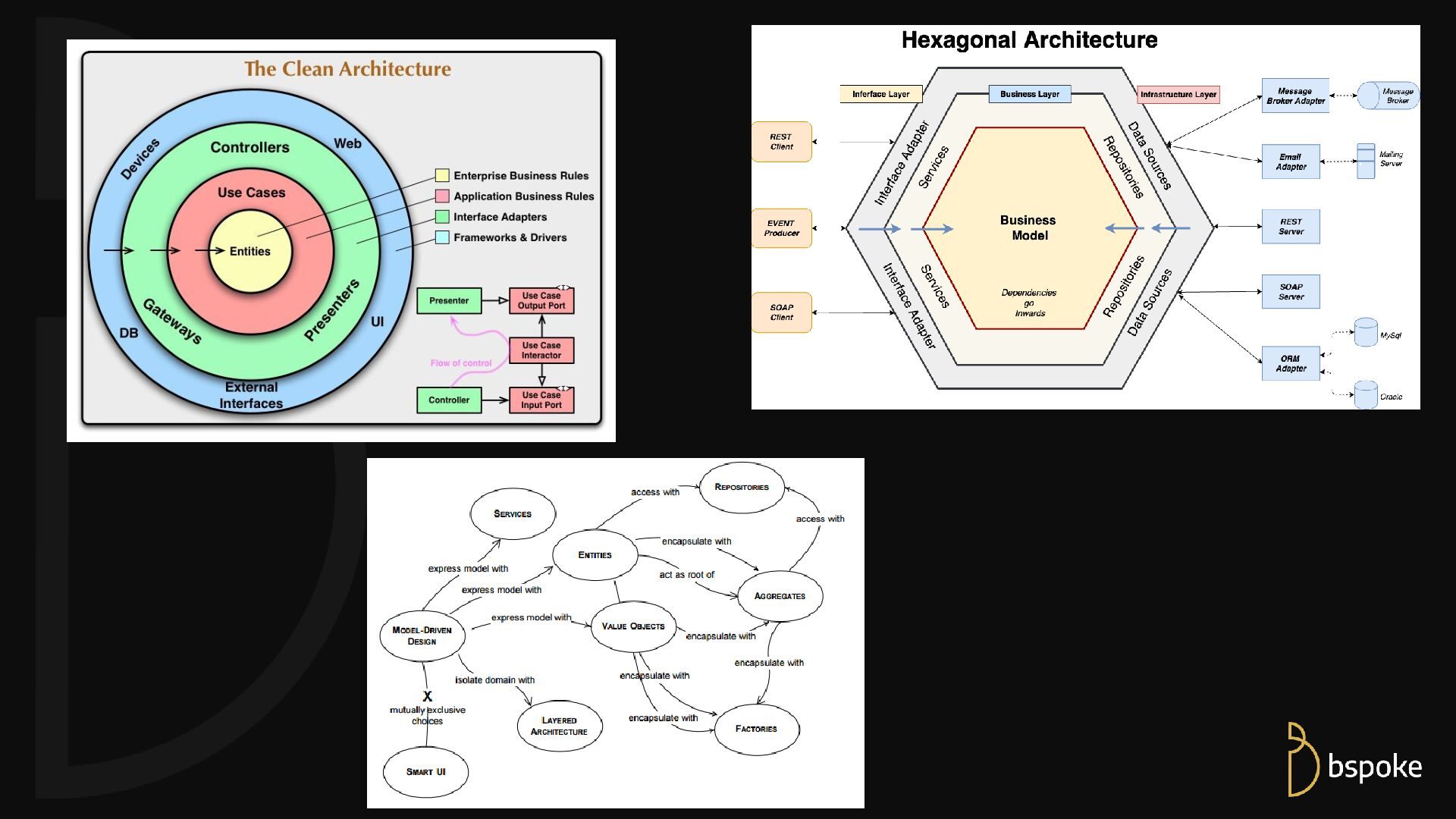
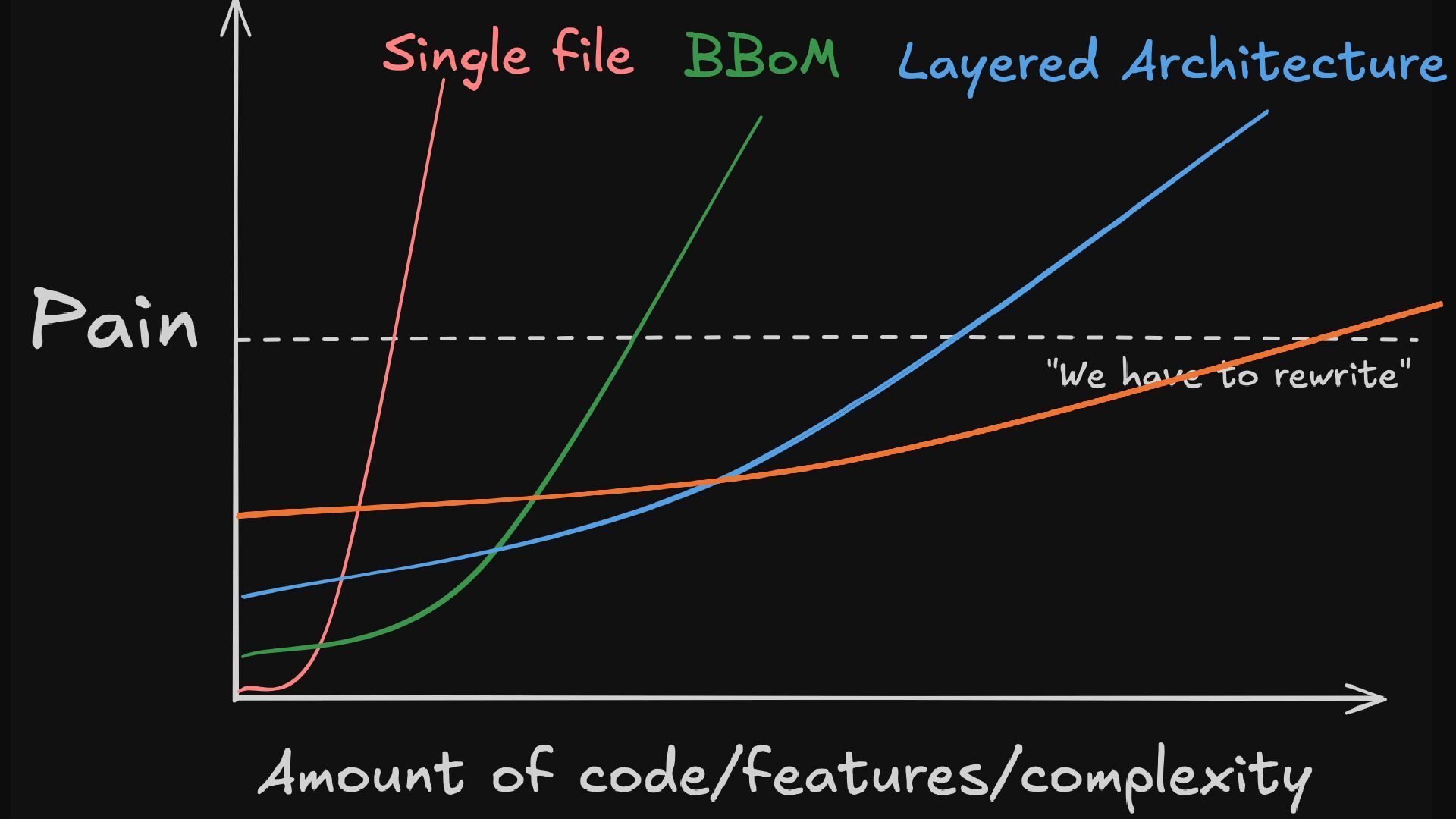
A talk all about thinking about architecture in terms of dependencies, and how these dependencies connect, but also how the size and complexity of the codebase impacts architecture.
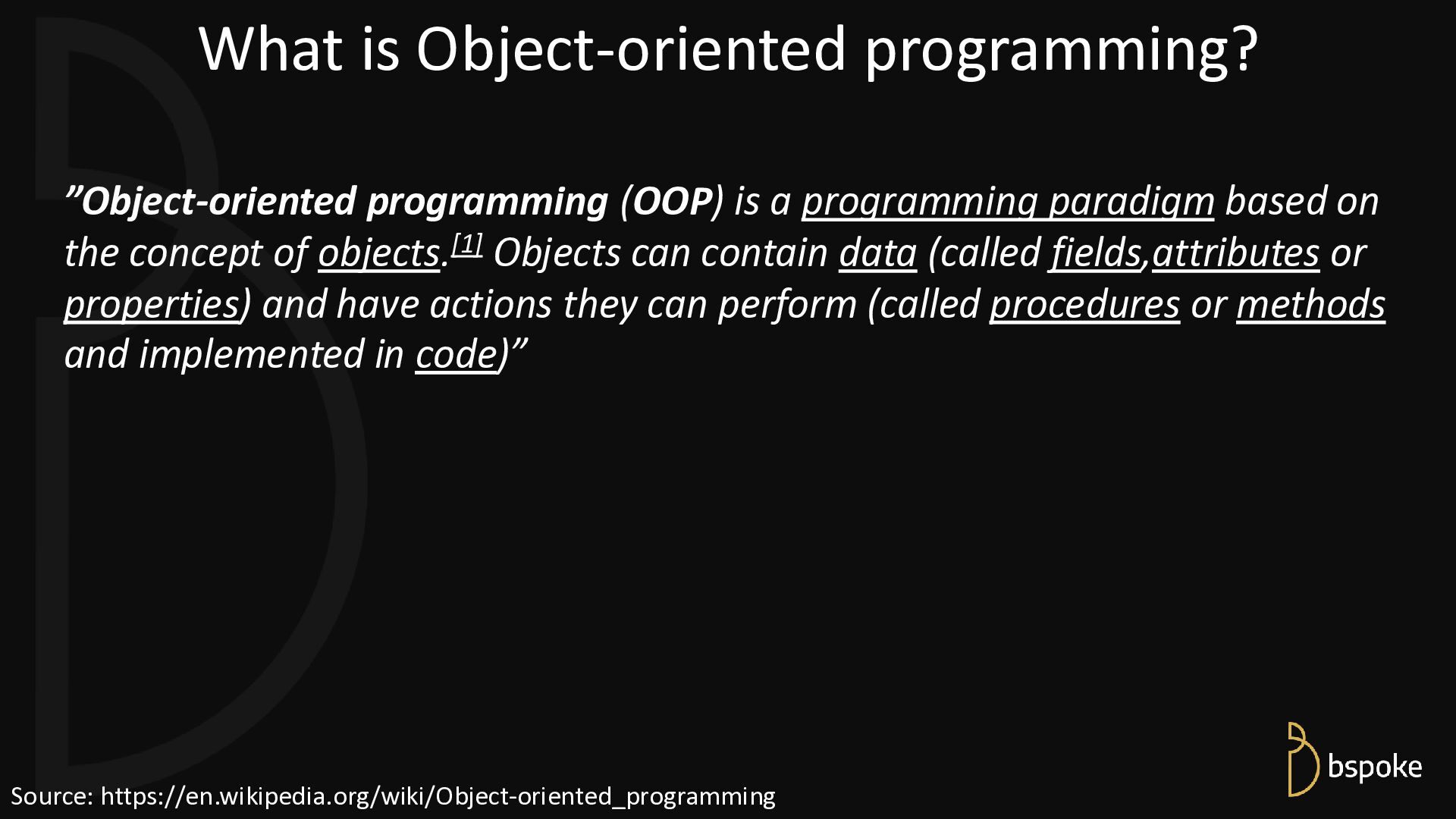
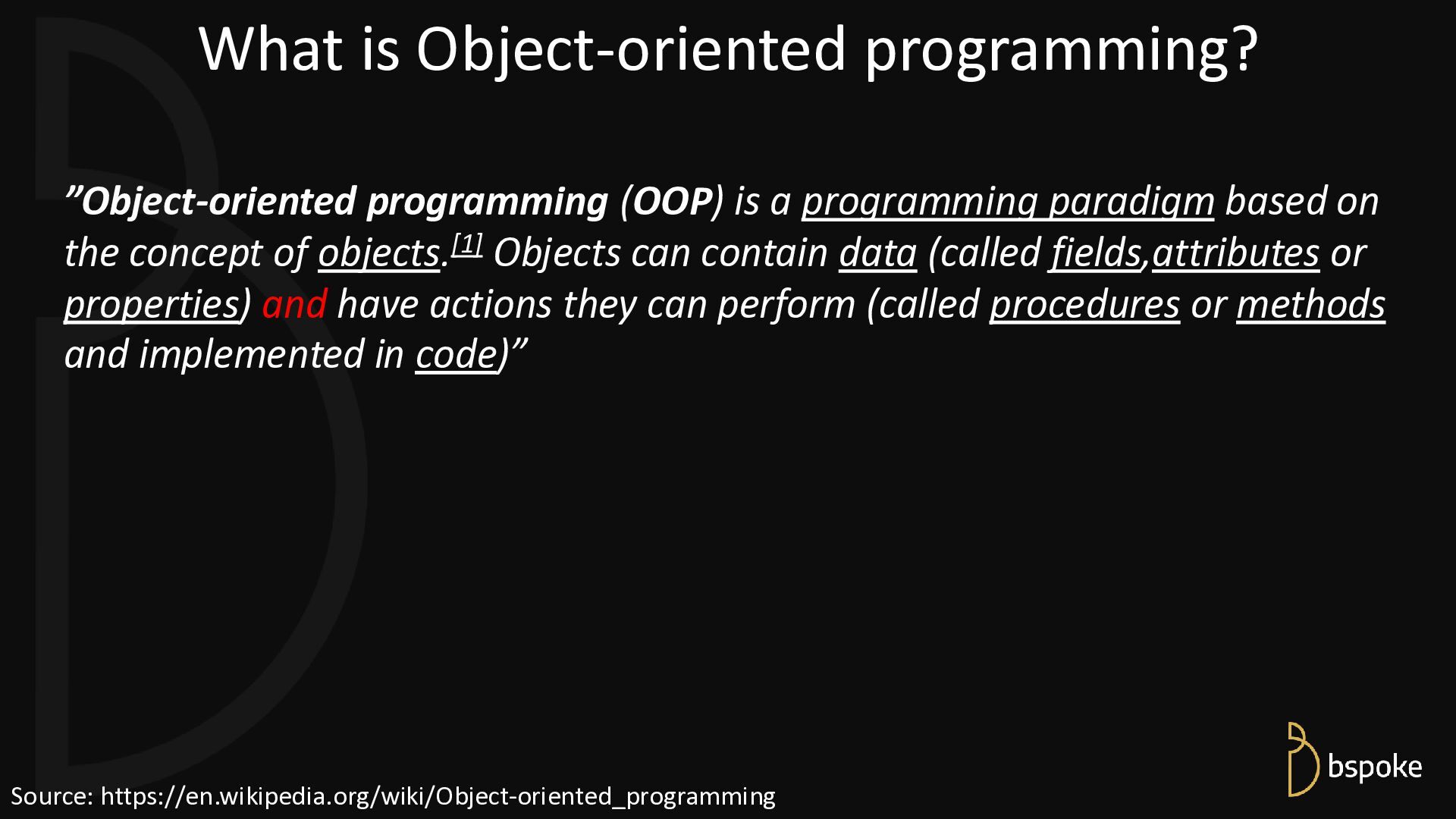
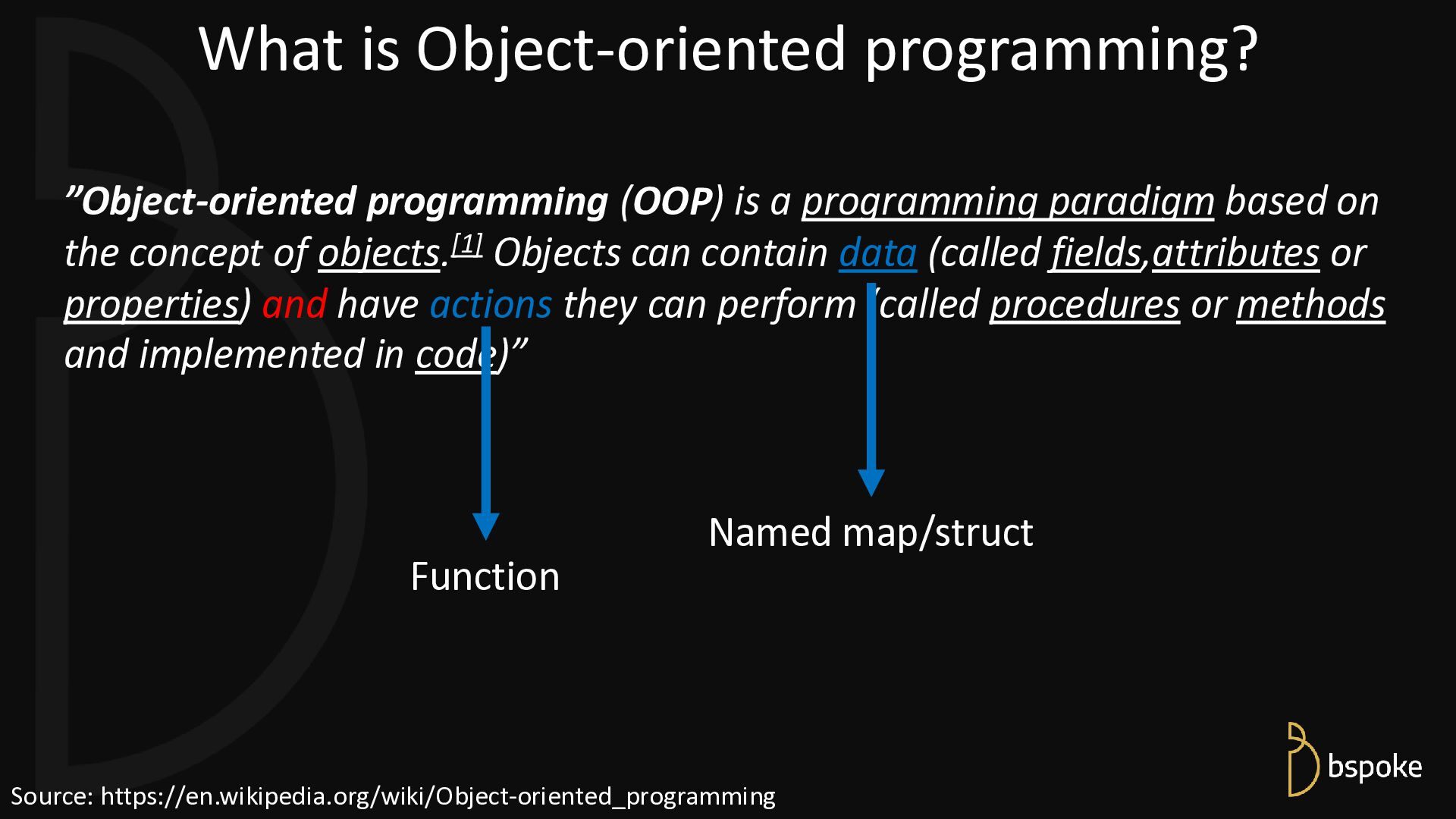
paradigm based on the concept of objects.[1] Objects can contain data (called fields,attributes or properties) and have actions they can perform (called procedures or methods and implemented in code)” Source: https://en.wikipedia.org/wiki/Object-oriented_programming
paradigm based on the concept of objects.[1] Objects can contain data (called fields,attributes or properties) and have actions they can perform (called procedures or methods and implemented in code)” Source: https://en.wikipedia.org/wiki/Object-oriented_programming
paradigm based on the concept of objects.[1] Objects can contain data (called fields,attributes or properties) and have actions they can perform (called procedures or methods and implemented in code)” Source: https://en.wikipedia.org/wiki/Object-oriented_programming Named map/struct Function
• Try to determine whether systems are complicated due to architectural constraints or because they’re doing something complex (The former is more common). • More advanced architectures will feel more complex because they are, but they can handle more complexity. • When writing APIs, start by being specific and only become generic when needed. • Keep in mind what the product is. Everything else should support the product – API design, architecture, etc.


 atomfinger
 ivargrimstad
 naokihaba
 dske104
 akase244
 andpad
 rkaga
rkaga
 satoshi256kbyte
 mofurune
 tomokon
 palkan
 steliosf
.jpg) yumnumm
yumnumm
 ianozsvald
 techseoconnect
 akademiya2063
 tamaranovitovic
 ipullrank
 honzajavorek
 davidcarrasco
 yeseniaperezcruz
 axbom
axbom
 orderedlist
 soysaucechin
 seathinner