How to choose the right masking tape for interior painting
Choose the right masking tape for painting with expert tips. Buy quality products from a trusted Packaging Materials Manufacturer in UAE, Barbhaya Industries.
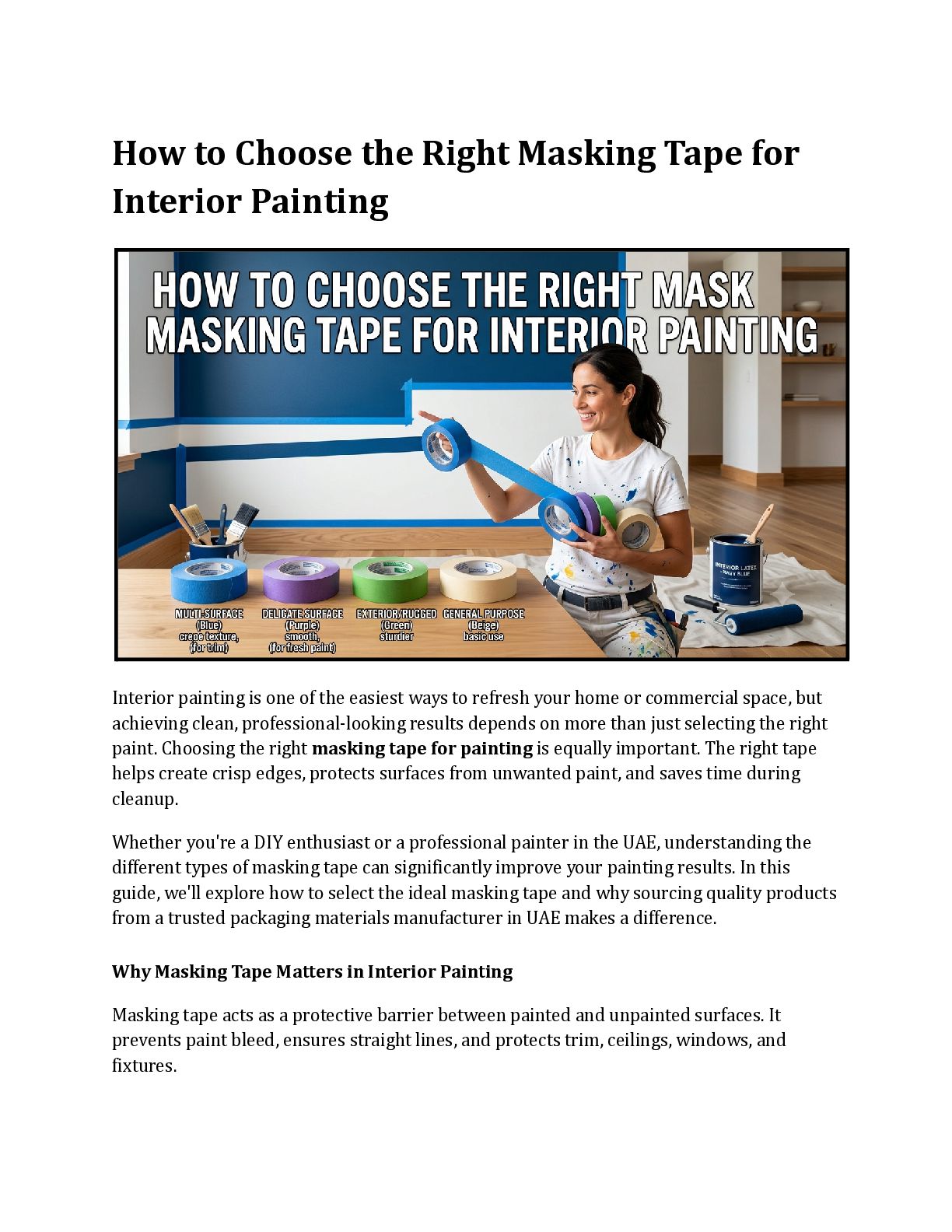
Interior painting is one of the easiest ways to refresh your home or commercial space, but achieving clean, professional-looking results depends on more than just selecting the right paint. Choosing the right masking tape for painting is equally important. The right tape helps create crisp edges, protects surfaces from unwanted paint, and saves time during cleanup. Whether you're a DIY enthusiast or a professional painter in the UAE, understanding the different types of masking tape can significantly improve your painting results. In this guide, we'll explore how to select the ideal masking tape and why sourcing quality products from a trusted packaging materials manufacturer in UAE makes a difference. Why Masking Tape Matters in Interior Painting Masking tape acts as a protective barrier between painted and unpainted surfaces. It prevents paint bleed, ensures straight lines, and protects trim, ceilings, windows, and fixtures.
of masking tape—can reduce paint touch-ups by up to 30%, saving both time and material costs. Professional painters consistently recommend using painter-specific masking tape rather than standard adhesive tape for the best finish. Key Factors to Consider When Choosing Masking Tape 1. Surface Type Different surfaces require different adhesive strengths. Before purchasing masking tape for painting, identify where it will be used. • Painted walls • Wood trim • Glass windows • Metal fixtures • Tiles Delicate surfaces benefit from low-tack tape, while rougher surfaces may require stronger adhesion to prevent paint seepage. 2. Adhesive Strength Not all masking tapes are created equal. Selecting the right adhesive prevents damage when removing the tape. Consider: • Low tack for freshly painted or delicate surfaces • Medium tack for standard interior walls • High tack for textured or rough surfaces Using overly aggressive adhesive can peel existing paint, while weak adhesive may allow paint to bleed underneath. 3. Width of the Tape Tape width affects both protection and ease of application. Common sizes include: • 18 mm for detailed work • 24 mm for general interior painting
offers better coverage when painting around baseboards and window frames. 4. Duration Before Removal Quality masking tapes indicate how long they can remain applied without leaving adhesive residue. Premium painter's tapes typically remain effective for 7–14 days, allowing flexibility for larger painting projects. Removing tape at the recommended time also helps maintain sharp paint lines. Why Quality Makes a Difference Low-quality tape often causes the following: • Paint bleeding • Adhesive residue • Torn edges • Surface damage • Frequent rework Although cheaper products may seem cost-effective initially, poor performance often leads to additional labor and material expenses. Investing in premium masking tape for painting ensures cleaner results and greater efficiency. Choosing the Right Supplier in the UAE The UAE construction and renovation market continues to grow rapidly, increasing demand for reliable painting supplies and packaging products. Working with an experienced packaging materials manufacturer in UAE offers several advantages: • Consistent product quality • Durable adhesive technology • Multiple tape sizes • Bulk purchasing options
quality standards provide tapes capable of withstanding the UAE's varying indoor temperatures and humidity conditions. Tips for Best Painting Results Even the highest-quality masking tape performs best when applied correctly. Follow these simple practices: • Clean surfaces before applying tape. • Press tape firmly along edges. • Avoid stretching the tape during application. • Paint away from the tape edge whenever possible. • Remove the tape while the paint is slightly dry for cleaner lines. Professional painters also recommend using a putty knife or similar tool to firmly seal the tape edge, reducing the chance of paint seepage. Common Mistakes to Avoid Many painting issues stem from improper tape selection or application. Avoid these common mistakes: • Using regular household tape instead of painter's masking tape • Leaving tape on for too long • Applying tape to dusty surfaces • Pulling tape off too quickly • Choosing the wrong adhesive strength A little preparation goes a long way toward achieving a flawless finish. Conclusion Selecting the right masking tape for painting is an essential step in achieving neat, professional-quality interior painting results. From choosing the appropriate adhesive strength to selecting the right width and sourcing from a trusted packaging materials manufacturer in UAE, every decision contributes to a smoother painting experience.
commercial project, investing in quality masking tape helps save time, reduce waste, and deliver superior results. For dependable masking tapes and high-quality packaging solutions in the UAE, Barbhaya Industries offers reliable products designed to meet the needs of professionals and businesses alike. Contact us today to find the right solution for your next painting project.


 barbhayaindustries
 tsogo817421
 yoshikikonishi_
 pokotyamu
 m3c
 attelu
 thomaspeham
 reiwatravel_0405
 fullkaiten
 gpol
 behealthy
 mediphone
 ikuodanaka
 soudai
 livdayseo
 garrettdimon
 dougneiner
 malarkey
 deanohume
 codingconduct
 frankvandijk
 lara
 inesmontani
 davidcarrasco