Explore the evolution of packaging materials from ancient clay pots to modern sustainable innovations. Discover how packaging shapes industries in the UAE and drives future-read
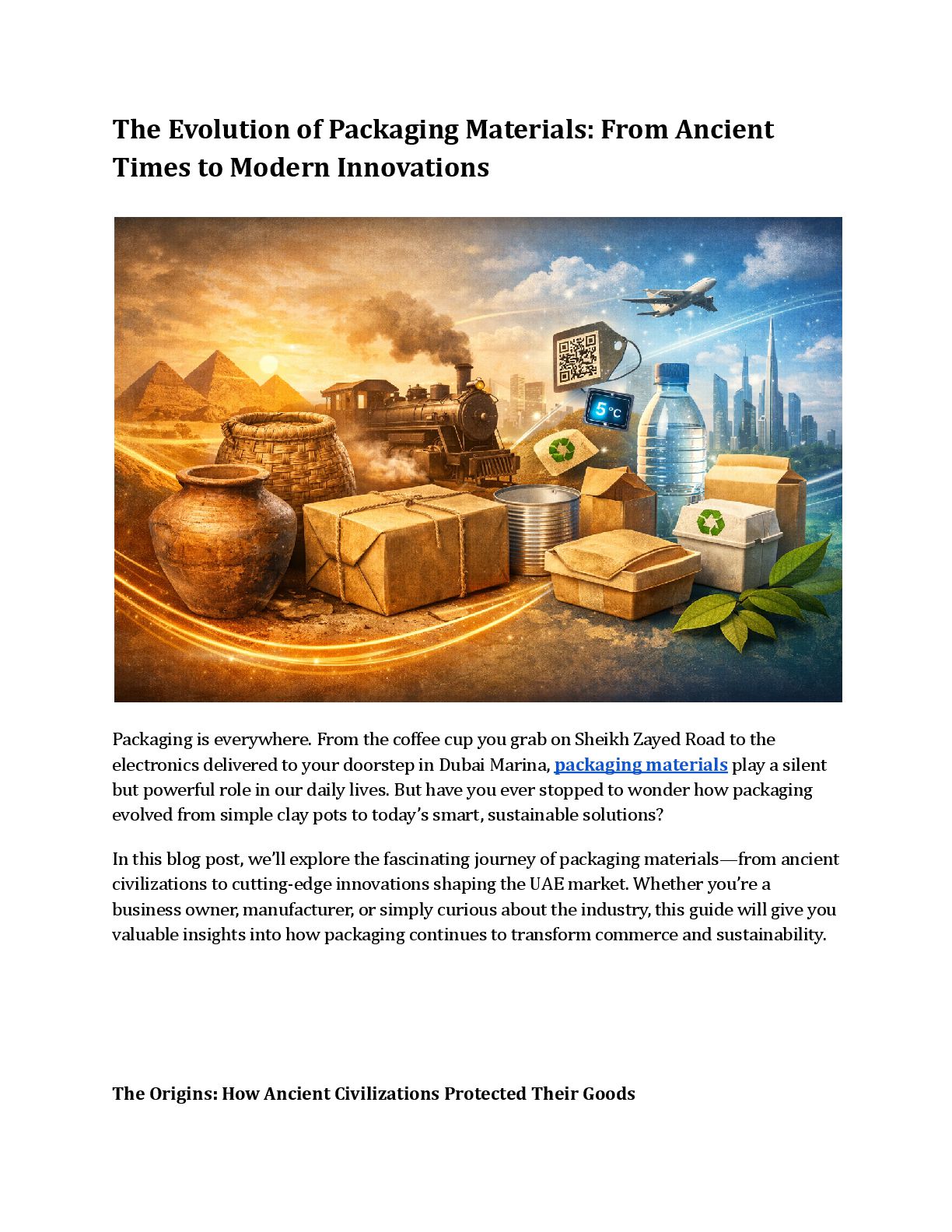
Innovations Packaging is everywhere. From the coffee cup you grab on Sheikh Zayed Road to the electronics delivered to your doorstep in Dubai Marina, packaging materials play a silent but powerful role in our daily lives. But have you ever stopped to wonder how packaging evolved from simple clay pots to today’s smart, sustainable solutions? In this blog post, we’ll explore the fascinating journey of packaging materials—from ancient civilizations to cutting-edge innovations shaping the UAE market. Whether you’re a business owner, manufacturer, or simply curious about the industry, this guide will give you valuable insights into how packaging continues to transform commerce and sustainability. The Origins: How Ancient Civilizations Protected Their Goods
relied on nature. • Clay pots were used in Mesopotamia to store grains and oils. • Glass containers appeared in ancient Egypt around 1500 BC. • Wooden crates and barrels became common during the Roman Empire for transporting wine and spices. • Animal skins and woven baskets were used to carry food and water. Packaging at that time was all about functionality—protecting goods from spoilage and damage during transport. There was no branding or marketing element yet. It was survival-driven innovation. The Industrial Revolution: A Turning Point for Packaging Materials The 18th and 19th centuries changed everything. With mass production came the need for better packaging. • The invention of paperboard cartons in the 1800s. • The introduction of metal cans for food preservation in 1810. • The rise of corrugated cardboard in the late 19th century. These advancements made transportation safer and more efficient. Businesses could now ship products over long distances without damage. According to industry research, corrugated cardboard remains one of the most widely used packaging materials globally, accounting for over 30% of packaging demand. Its durability and cost-effectiveness make it ideal for logistics-heavy markets like the UAE, where import and export are central to the economy. The Plastic Era: Convenience Meets Controversy The 20th century introduced plastics—and revolutionized packaging materials forever.
Water resistance • Greater flexibility From PET bottles to shrink wraps, plastic became the go-to solution across industries. However, this convenience came at a price. Globally, around 400 million tons of plastic waste are produced annually, according to UN Environment data. A significant portion comes from packaging. As awareness grew, so did the demand for alternatives. In the UAE, sustainability initiatives such as the ban on single-use plastic bags in Abu Dhabi and Dubai have pushed companies to rethink their packaging strategies. The Rise of Sustainable Packaging in the UAE Today, sustainability is no longer optional—it’s essential. Consumers in the UAE are becoming more environmentally conscious. A recent survey found that over 70% of shoppers in the region prefer brands that use eco-friendly packaging materials. Modern sustainable options include: • Biodegradable packaging • Recyclable corrugated boxes • Compostable plant-based plastics • Reusable industrial packaging solutions Companies like Barbhaya Industries are playing an important role in this transition by offering durable and innovative packaging solutions tailored to regional needs. By combining quality manufacturing with eco-conscious practices, they help businesses reduce waste without compromising performance.
economic sense. Sustainable packaging can reduce logistics costs, improve brand perception, and align with UAE Vision 2030 sustainability goals. Smart Packaging: The Future Is Already Here If you think packaging is just a box or wrapper, think again. Modern packaging materials now integrate technology, including: • QR codes for product traceability • Temperature-sensitive labels • Anti-counterfeit security features • Smart sensors for freshness monitoring These innovations are especially valuable in industries like pharmaceuticals, food distribution, and luxury goods—sectors that are rapidly expanding in the UAE. Smart packaging improves transparency and consumer trust. In a competitive market, that trust is priceless. Why Packaging Matters More Than Ever in the UAE The UAE is a global trade hub, connecting Asia, Europe, and Africa. Efficient and reliable packaging materials are critical for: • Protecting goods during long-distance transport • Meeting international shipping standards • Enhancing product presentation in premium retail environments • Supporting e-commerce growth With online shopping in the Middle East expected to exceed $50 billion in the coming years, demand for durable and cost-effective packaging will only increase. Businesses that invest in high-quality packaging solutions today position themselves for long-term success tomorrow.
in packaging history is its role in branding. Today, packaging tells a story. It communicates: • Quality • Sustainability values • Luxury or affordability • Innovation In fact, studies show that 72% of consumers say packaging design influences their purchasing decision. That’s powerful. Packaging materials are no longer just containers—they are marketing tools. Conclusion: The Journey Continues The evolution of packaging materials reflects human innovation itself. From clay jars to smart, sustainable solutions, packaging has adapted to meet changing needs, technologies, and environmental responsibilities. For businesses in the UAE, choosing the right packaging partner and materials is more important than ever. Whether you're focused on sustainability, durability, or brand presentation, investing in modern solutions can give you a clear competitive edge. If you're looking to upgrade your packaging strategy, now is the time to explore innovative and sustainable options. Connect with trusted industry leaders like Barbhaya Industries to discover packaging solutions that are built for the future.


 barbhayaindustries
 tamosan01
 nakasonejusetsu
 so_kotani
 arnekittler
 tbpgr
 fullerene_inc
 todatomohiro
 uemura2024
 mercari_inc
 superstudio
 ikuodanaka
 freee
 davetheseo
 skipperchong
 tenderlove
 caitiem20
 morganepeng
 erikaheidi
 frankvandijk
 csswizardry
 paigeccino
 jonoalderson
 addyosmani
 mclloyd