Upgrade to Pro — share decks privately, control downloads, hide ads and more …

Savoring the Senses: A Guide to the Craft, Memo...

Savoring the Senses: A Guide to the Craft, Memory, and Meaning Behind Every Sip

This beautifully written guide reveals how tasting becomes an art form when approached with awareness. Learn to identify notes in wine, whiskey, and beer, explore how scent links to memory, and understand how patience and perception shape flavor. Blending science, storytelling, and sensory insight, The Art of Tasting celebrates the shared human experience found in every glass — from quiet reflection to communal joy.

Avatar for Big Pigs wine & Spirit

Big Pigs wine & Spirit

November 04, 2025
Tweet

More Decks by Big Pigs wine & Spirit

Other Decks in Business

Transcript

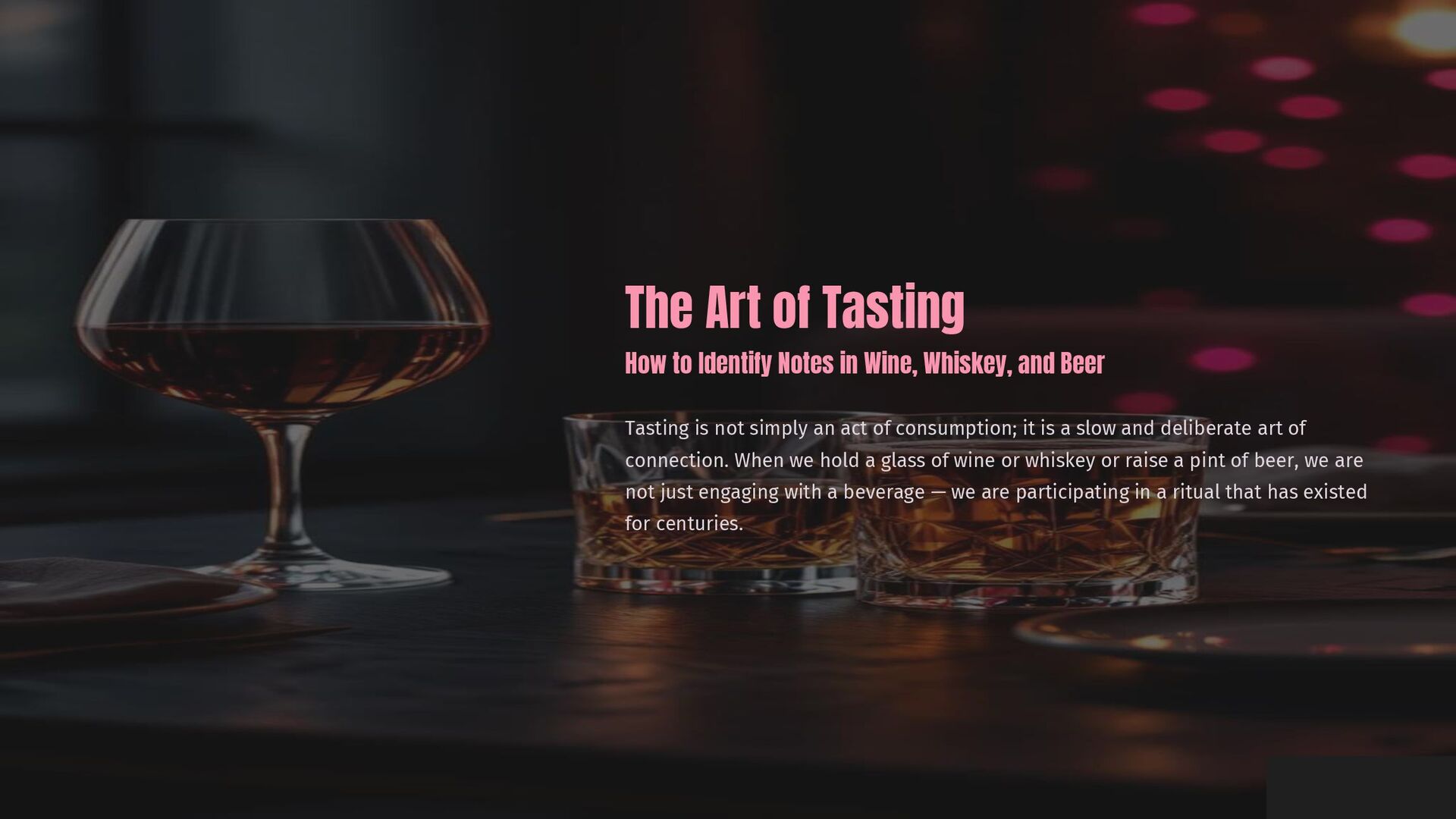
  1. preencoded.png The Art of Tasting How to Identify Notes in

    Wine, Whiskey, and Beer Tasting is not simply an act of consumption; it is a slow and deliberate art of connection. When we hold a glass of wine or whiskey or raise a pint of beer, we are not just engaging with a beverage — we are participating in a ritual that has existed for centuries.
  2. preencoded.png The Essence of Taste Taste begins long before the

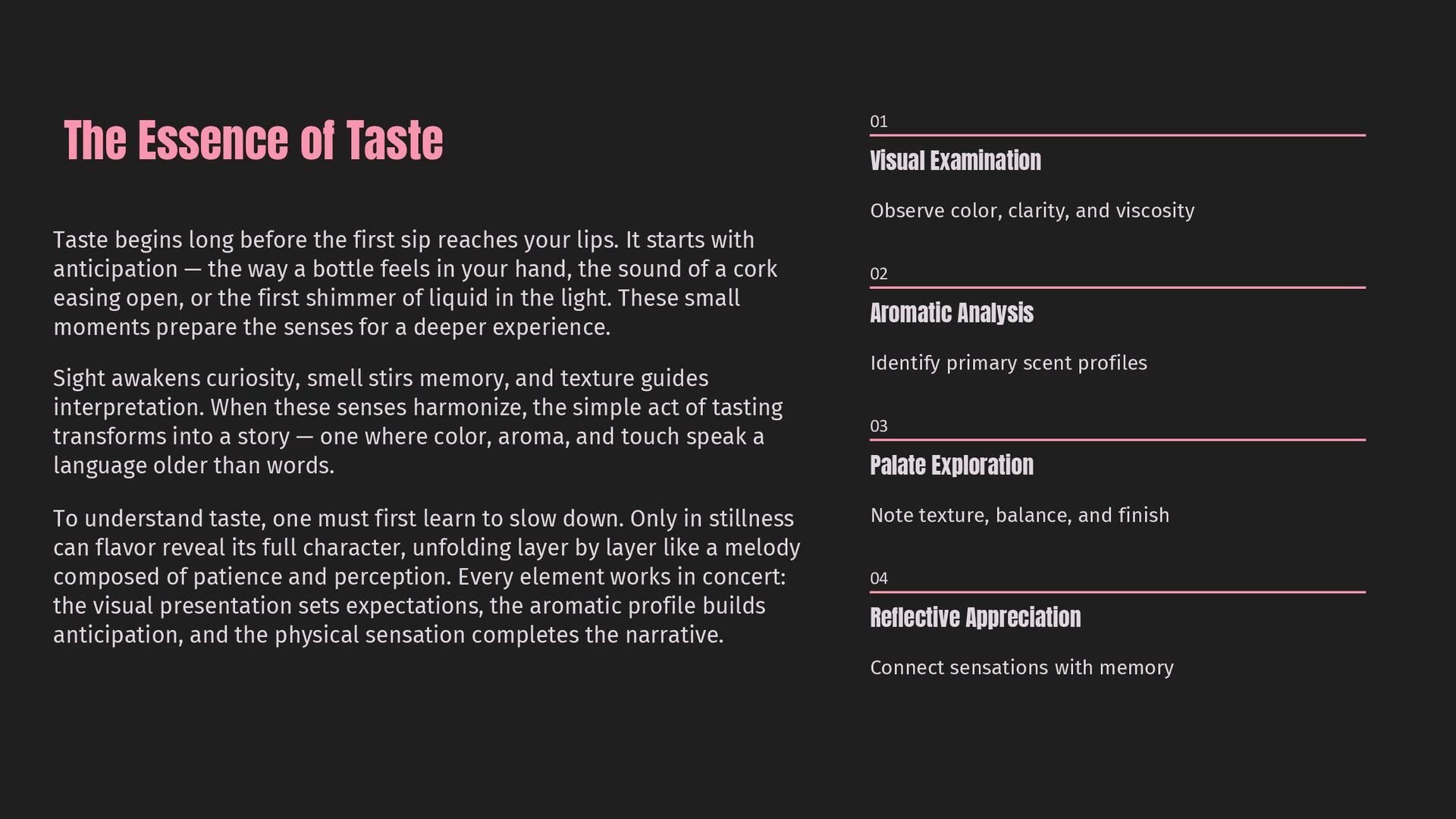
    first sip reaches your lips. It starts with anticipation — the way a bottle feels in your hand, the sound of a cork easing open, or the first shimmer of liquid in the light. These small moments prepare the senses for a deeper experience. Sight awakens curiosity, smell stirs memory, and texture guides interpretation. When these senses harmonize, the simple act of tasting transforms into a story — one where color, aroma, and touch speak a language older than words. To understand taste, one must first learn to slow down. Only in stillness can flavor reveal its full character, unfolding layer by layer like a melody composed of patience and perception. Every element works in concert: the visual presentation sets expectations, the aromatic profile builds anticipation, and the physical sensation completes the narrative. 01 Visual Examination Observe color, clarity, and viscosity 02 Aromatic Analysis Identify primary scent profiles 03 Palate Exploration Note texture, balance, and finish 04 Reflective Appreciation Connect sensations with memory
  3. preencoded.png The Palate as a Map Your palate is not

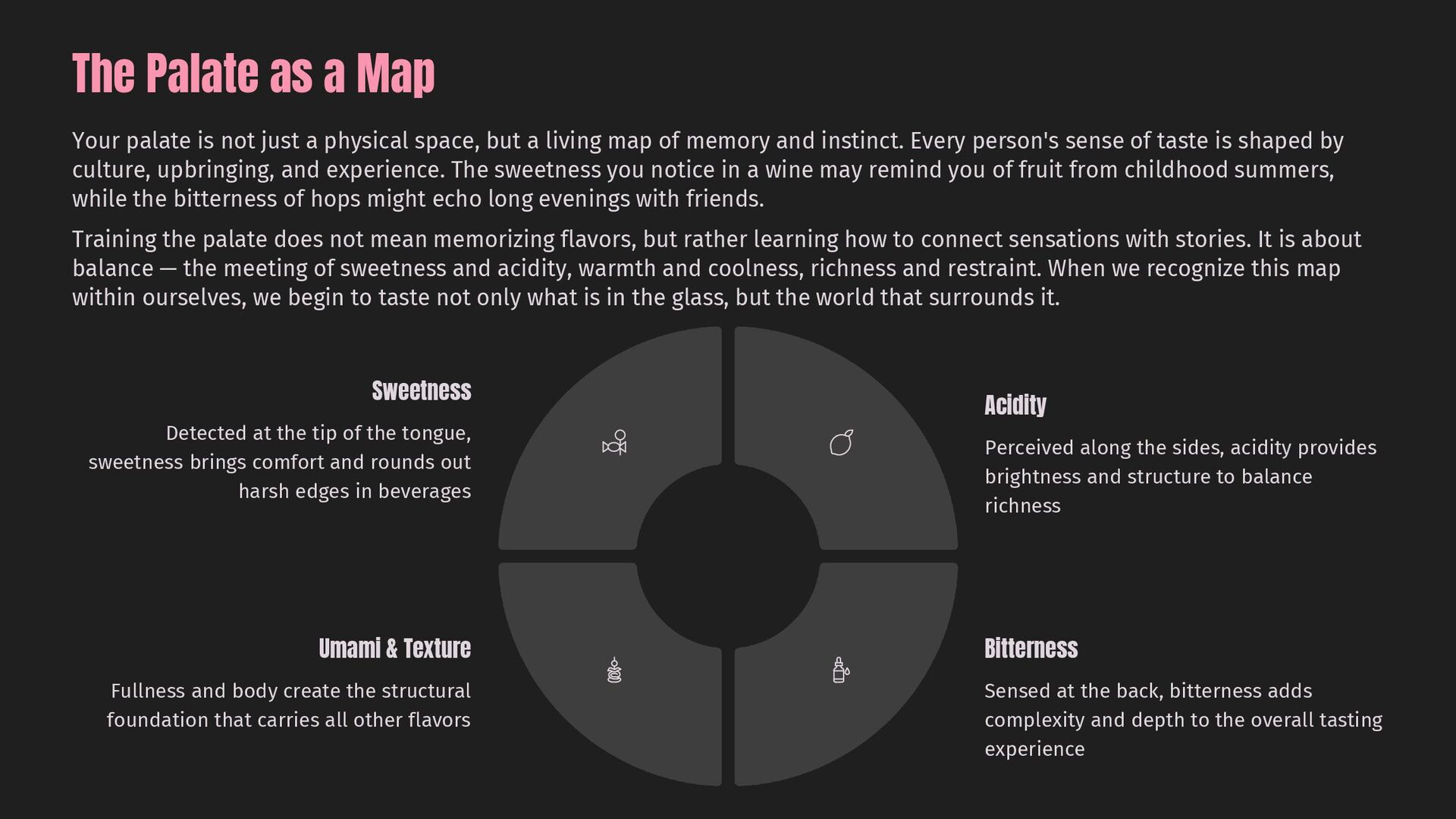
    just a physical space, but a living map of memory and instinct. Every person's sense of taste is shaped by culture, upbringing, and experience. The sweetness you notice in a wine may remind you of fruit from childhood summers, while the bitterness of hops might echo long evenings with friends. Training the palate does not mean memorizing flavors, but rather learning how to connect sensations with stories. It is about balance — the meeting of sweetness and acidity, warmth and coolness, richness and restraint. When we recognize this map within ourselves, we begin to taste not only what is in the glass, but the world that surrounds it. Sweetness Detected at the tip of the tongue, sweetness brings comfort and rounds out harsh edges in beverages Acidity Perceived along the sides, acidity provides brightness and structure to balance richness Bitterness Sensed at the back, bitterness adds complexity and depth to the overall tasting experience Umami & Texture Fullness and body create the structural foundation that carries all other flavors
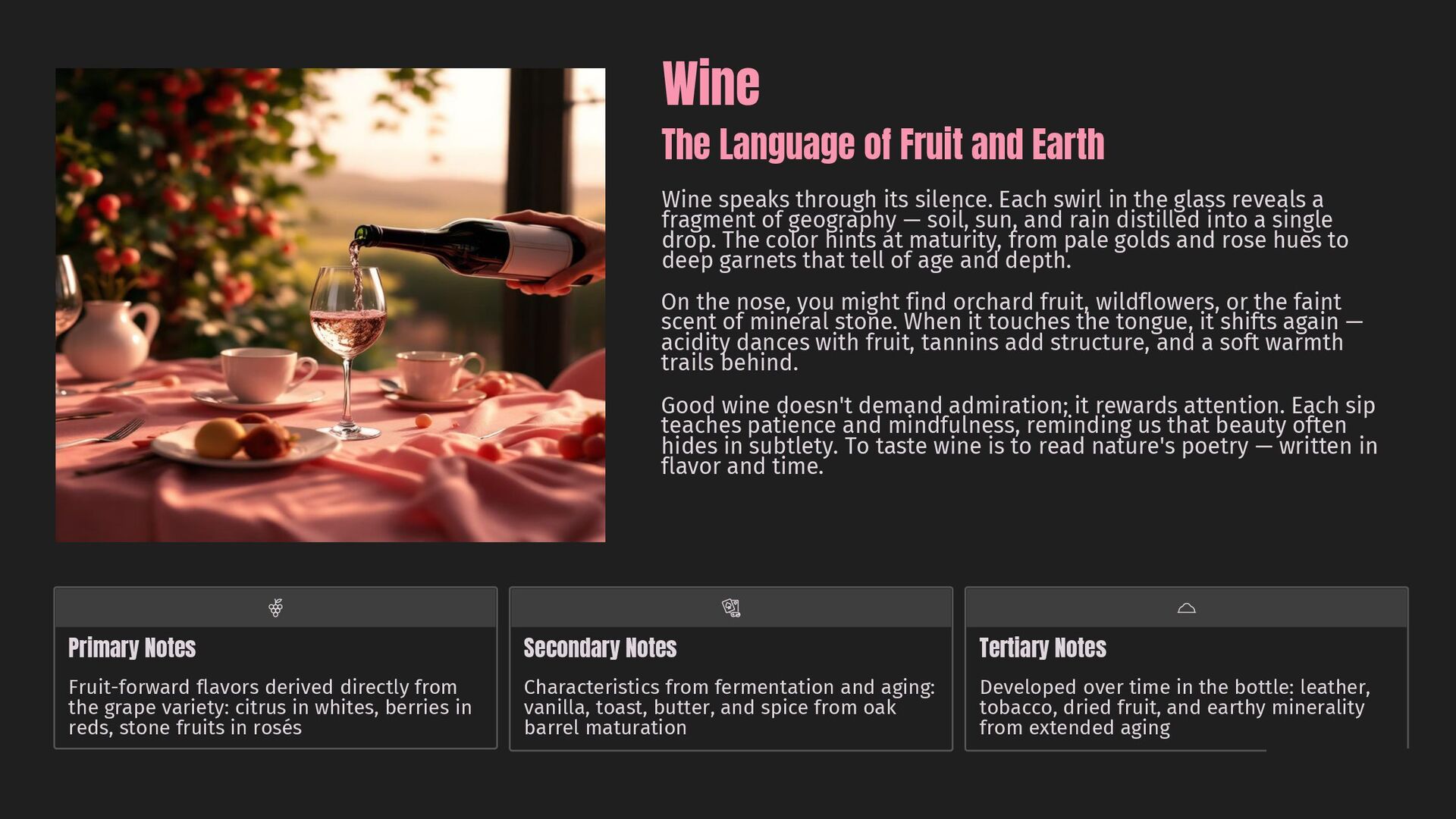
  4. preencoded.png Wine The Language of Fruit and Earth Wine speaks

    through its silence. Each swirl in the glass reveals a fragment of geography — soil, sun, and rain distilled into a single drop. The color hints at maturity, from pale golds and rose hues to deep garnets that tell of age and depth. On the nose, you might find orchard fruit, wildflowers, or the faint scent of mineral stone. When it touches the tongue, it shifts again — acidity dances with fruit, tannins add structure, and a soft warmth trails behind. Good wine doesn't demand admiration; it rewards attention. Each sip teaches patience and mindfulness, reminding us that beauty often hides in subtlety. To taste wine is to read nature's poetry — written in flavor and time. Primary Notes Fruit-forward flavors derived directly from the grape variety: citrus in whites, berries in reds, stone fruits in rosés Secondary Notes Characteristics from fermentation and aging: vanilla, toast, butter, and spice from oak barrel maturation Tertiary Notes Developed over time in the bottle: leather, tobacco, dried fruit, and earthy minerality from extended aging
  5. preencoded.png Whiskey The Story of Fire and Oak Whiskey is

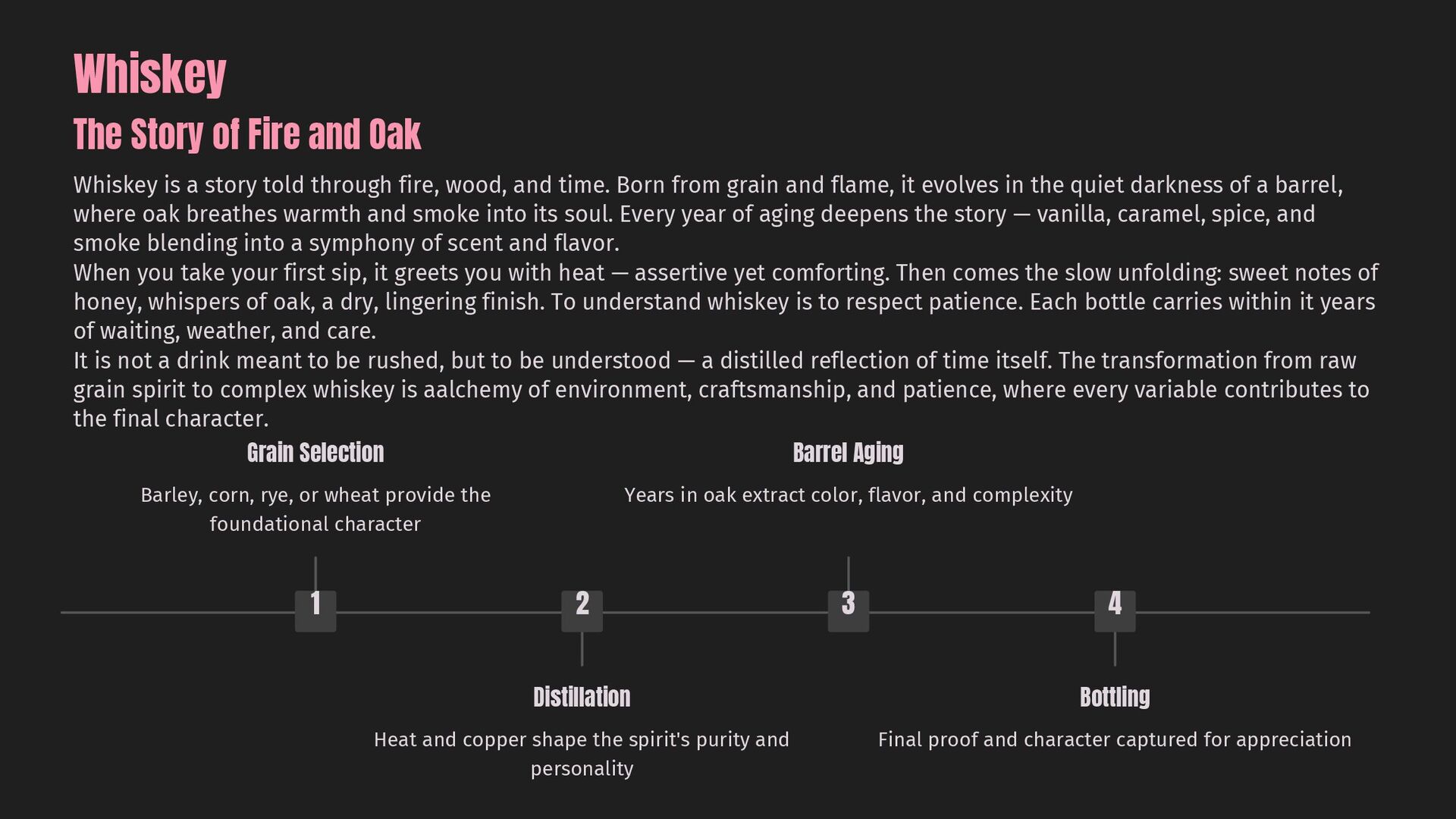
    a story told through fire, wood, and time. Born from grain and flame, it evolves in the quiet darkness of a barrel, where oak breathes warmth and smoke into its soul. Every year of aging deepens the story — vanilla, caramel, spice, and smoke blending into a symphony of scent and flavor. When you take your first sip, it greets you with heat — assertive yet comforting. Then comes the slow unfolding: sweet notes of honey, whispers of oak, a dry, lingering finish. To understand whiskey is to respect patience. Each bottle carries within it years of waiting, weather, and care. It is not a drink meant to be rushed, but to be understood — a distilled reflection of time itself. The transformation from raw grain spirit to complex whiskey is aalchemy of environment, craftsmanship, and patience, where every variable contributes to the final character. 1 Grain Selection Barley, corn, rye, or wheat provide the foundational character 2 Distillation Heat and copper shape the spirit's purity and personality 3 Barrel Aging Years in oak extract color, flavor, and complexity 4 Bottling Final proof and character captured for appreciation
  6. preencoded.png Beer The Balance of Craft and Comfort Beer holds

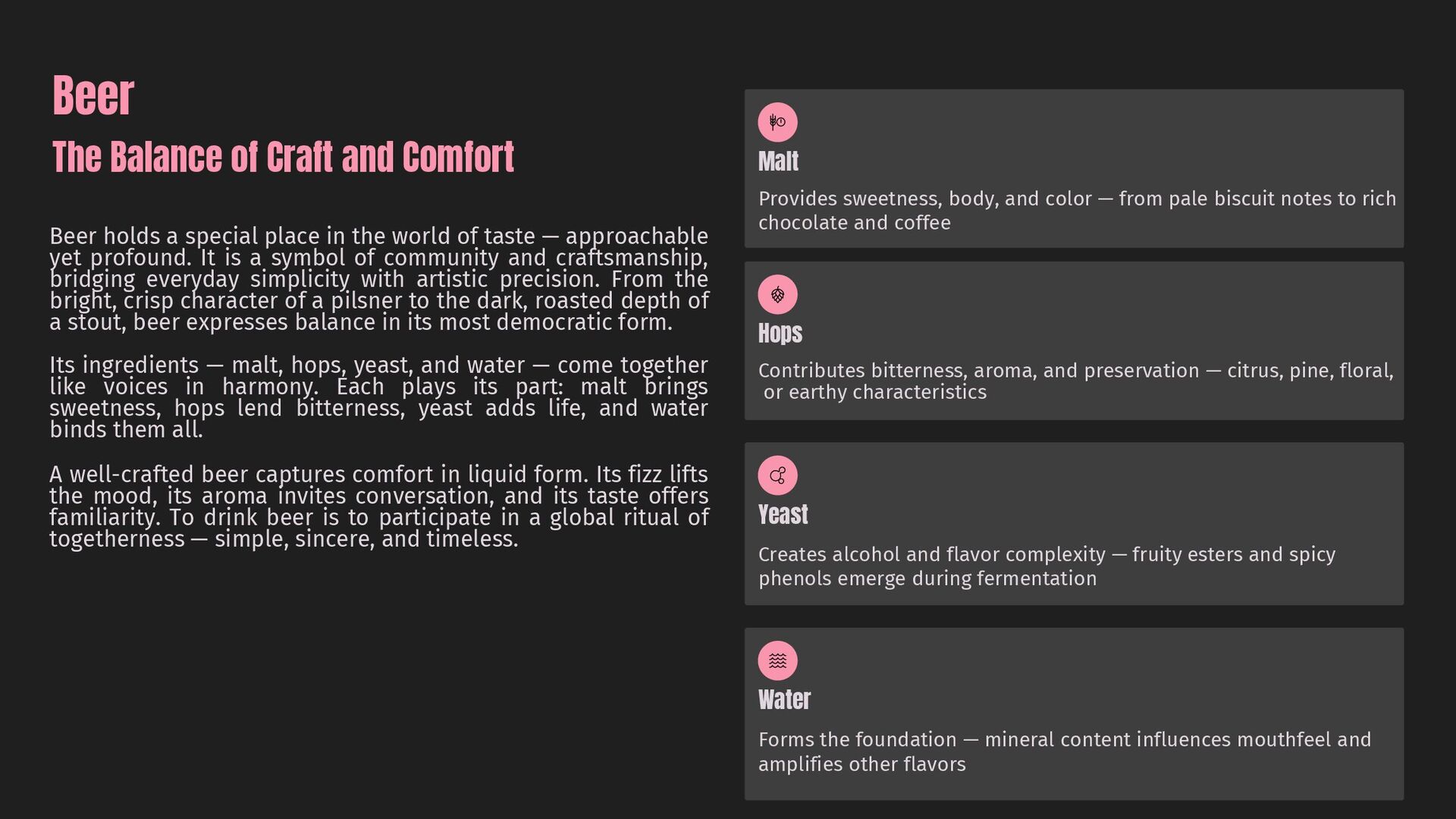
    a special place in the world of taste — approachable yet profound. It is a symbol of community and craftsmanship, bridging everyday simplicity with artistic precision. From the bright, crisp character of a pilsner to the dark, roasted depth of a stout, beer expresses balance in its most democratic form. Its ingredients — malt, hops, yeast, and water — come together like voices in harmony. Each plays its part: malt brings sweetness, hops lend bitterness, yeast adds life, and water binds them all. A well-crafted beer captures comfort in liquid form. Its fizz lifts the mood, its aroma invites conversation, and its taste offers familiarity. To drink beer is to participate in a global ritual of togetherness — simple, sincere, and timeless. Malt Provides sweetness, body, and color — from pale biscuit notes to rich chocolate and coffee Hops Contributes bitterness, aroma, and preservation — citrus, pine, floral, or earthy characteristics Yeast Creates alcohol and flavor complexity — fruity esters and spicy phenols emerge during fermentation Water Forms the foundation — mineral content influences mouthfeel and amplifies other flavors
  7. preencoded.png The Science of Scent and Memory Aromatic Pathways Our

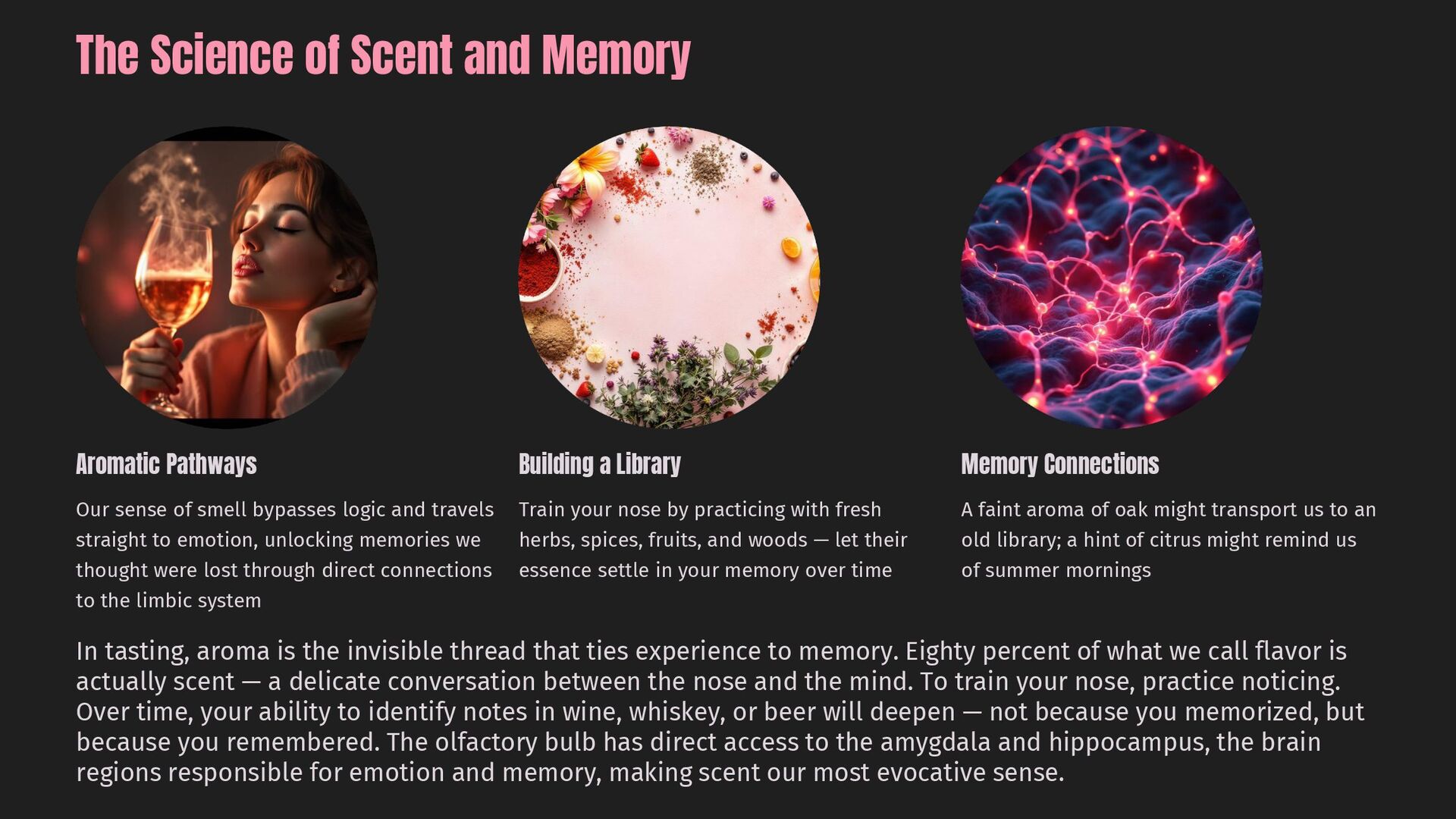
    sense of smell bypasses logic and travels straight to emotion, unlocking memories we thought were lost through direct connections to the limbic system Building a Library Train your nose by practicing with fresh herbs, spices, fruits, and woods — let their essence settle in your memory over time Memory Connections A faint aroma of oak might transport us to an old library; a hint of citrus might remind us of summer mornings In tasting, aroma is the invisible thread that ties experience to memory. Eighty percent of what we call flavor is actually scent — a delicate conversation between the nose and the mind. To train your nose, practice noticing. Over time, your ability to identify notes in wine, whiskey, or beer will deepen — not because you memorized, but because you remembered. The olfactory bulb has direct access to the amygdala and hippocampus, the brain regions responsible for emotion and memory, making scent our most evocative sense.
  8. preencoded.png A Practice in Patience True tasting cannot be hurried.

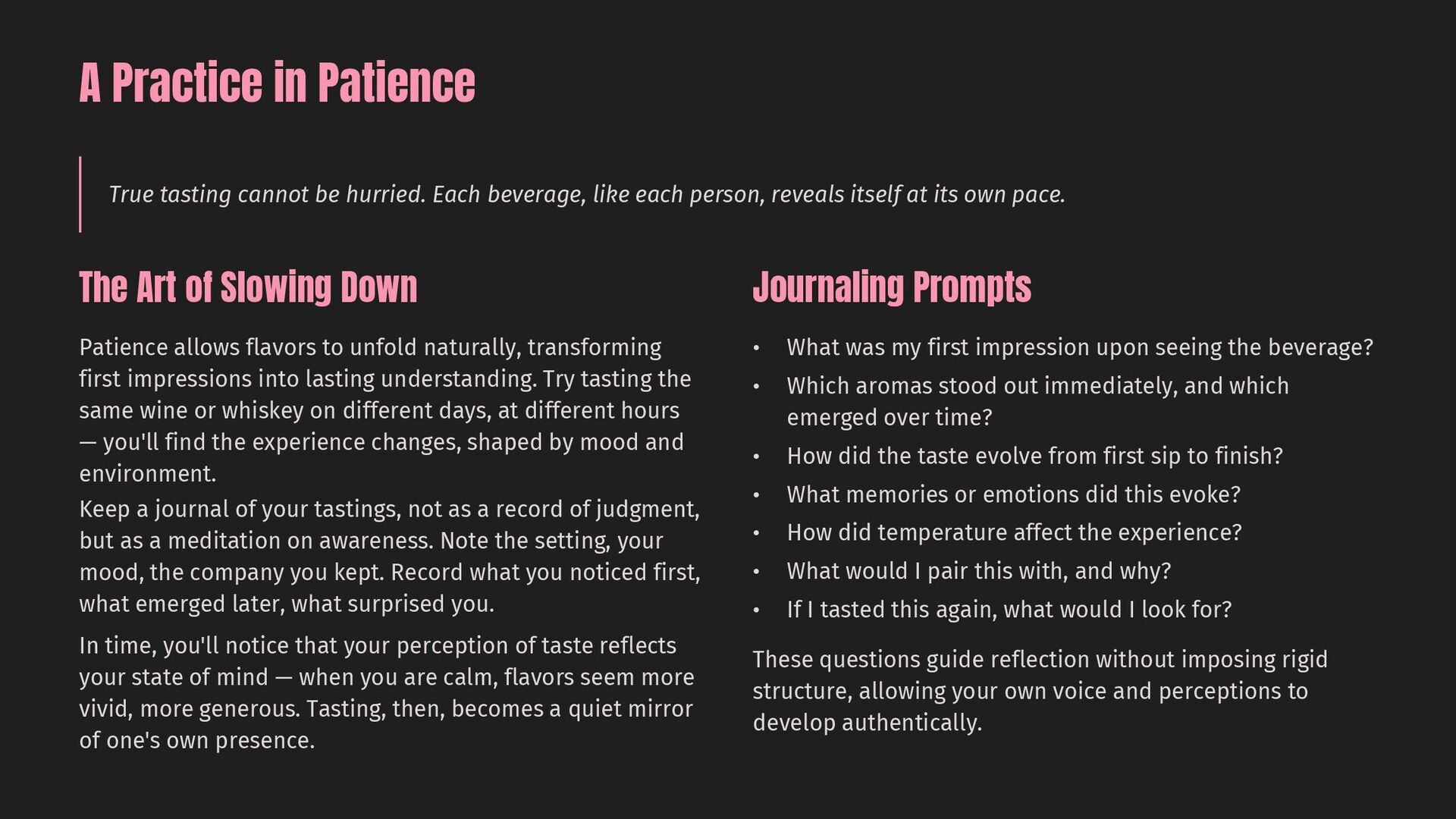
    Each beverage, like each person, reveals itself at its own pace. The Art of Slowing Down Patience allows flavors to unfold naturally, transforming first impressions into lasting understanding. Try tasting the same wine or whiskey on different days, at different hours — you'll find the experience changes, shaped by mood and environment. Keep a journal of your tastings, not as a record of judgment, but as a meditation on awareness. Note the setting, your mood, the company you kept. Record what you noticed first, what emerged later, what surprised you. In time, you'll notice that your perception of taste reflects your state of mind — when you are calm, flavors seem more vivid, more generous. Tasting, then, becomes a quiet mirror of one's own presence. Journaling Prompts • What was my first impression upon seeing the beverage? • Which aromas stood out immediately, and which emerged over time? • How did the taste evolve from first sip to finish? • What memories or emotions did this evoke? • How did temperature affect the experience? • What would I pair this with, and why? • If I tasted this again, what would I look for? These questions guide reflection without imposing rigid structure, allowing your own voice and perceptions to develop authentically.
  9. preencoded.png A Shared Ritual Although tasting can be personal, it

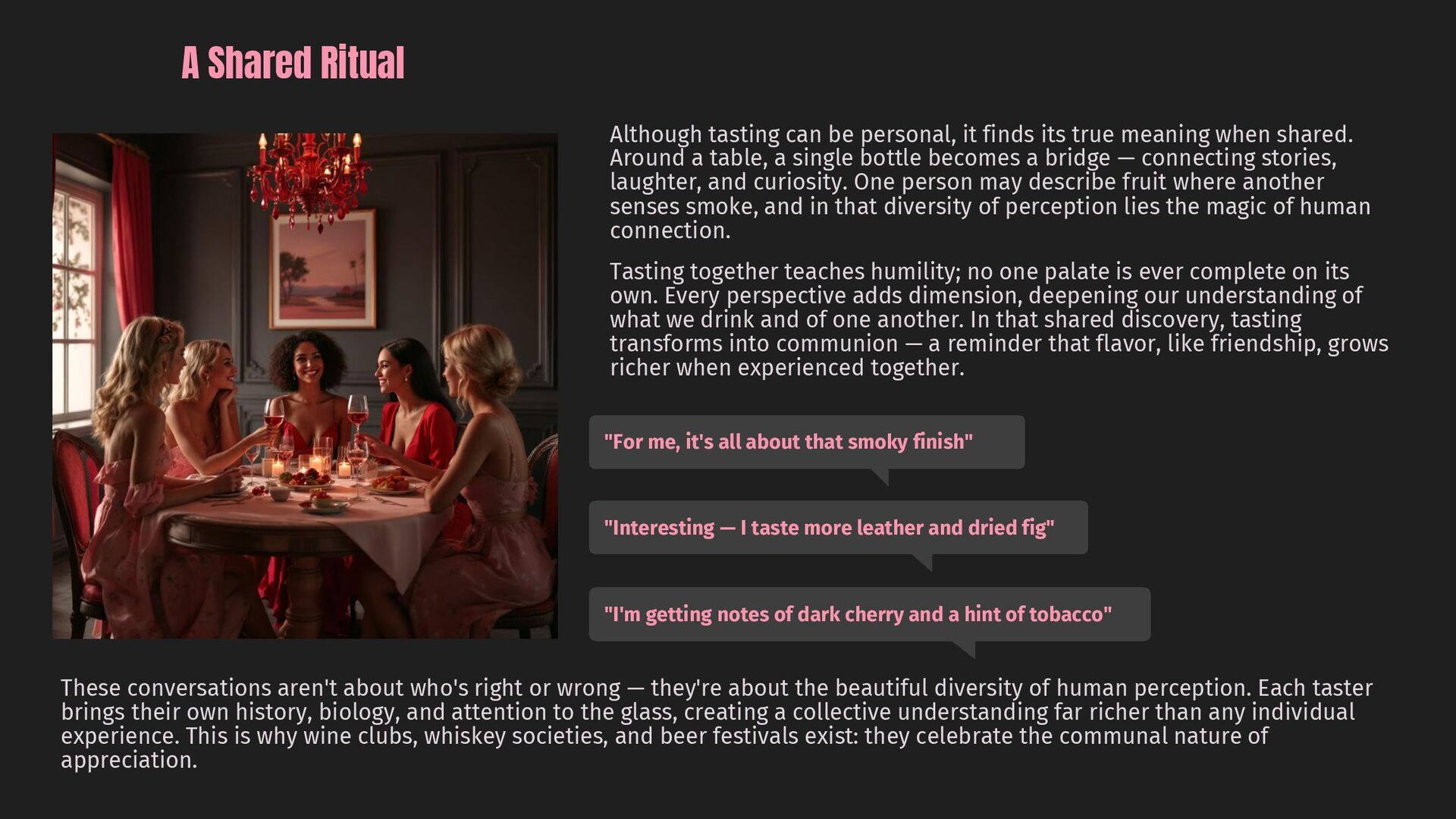
    finds its true meaning when shared. Around a table, a single bottle becomes a bridge — connecting stories, laughter, and curiosity. One person may describe fruit where another senses smoke, and in that diversity of perception lies the magic of human connection. Tasting together teaches humility; no one palate is ever complete on its own. Every perspective adds dimension, deepening our understanding of what we drink and of one another. In that shared discovery, tasting transforms into communion — a reminder that flavor, like friendship, grows richer when experienced together. "I'm getting notes of dark cherry and a hint of tobacco" "Interesting — I taste more leather and dried fig" "For me, it's all about that smoky finish" These conversations aren't about who's right or wrong — they're about the beautiful diversity of human perception. Each taster brings their own history, biology, and attention to the glass, creating a collective understanding far richer than any individual experience. This is why wine clubs, whiskey societies, and beer festivals exist: they celebrate the communal nature of appreciation.
  10. preencoded.png From Sipping to Understanding To taste is to slow

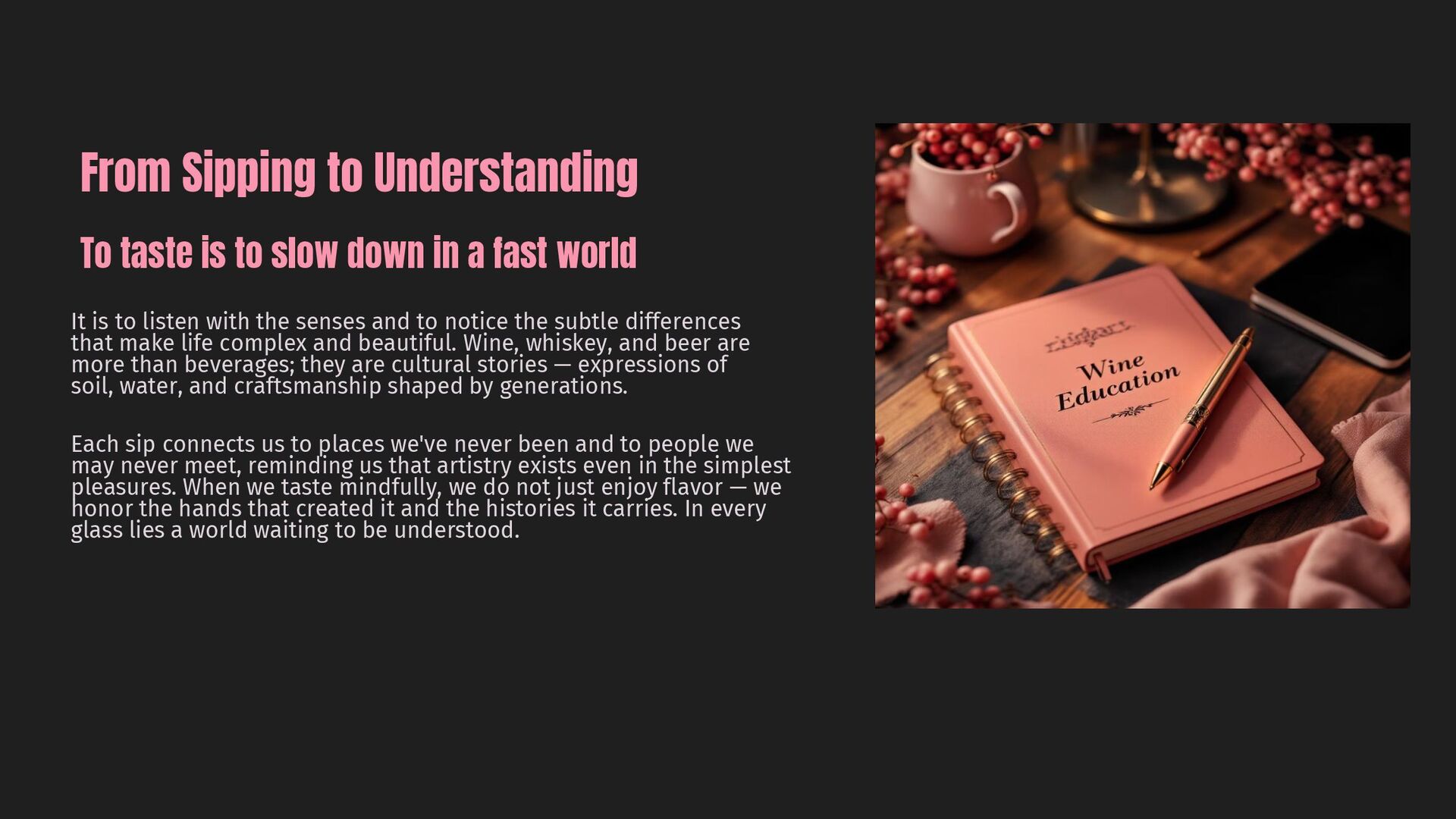
    down in a fast world It is to listen with the senses and to notice the subtle differences that make life complex and beautiful. Wine, whiskey, and beer are more than beverages; they are cultural stories — expressions of soil, water, and craftsmanship shaped by generations. Each sip connects us to places we've never been and to people we may never meet, reminding us that artistry exists even in the simplest pleasures. When we taste mindfully, we do not just enjoy flavor — we honor the hands that created it and the histories it carries. In every glass lies a world waiting to be understood.
  11. preencoded.png Acknowledgment This presentation honors the artisans, farmers, and makers

    who dedicate their lives to transforming raw nature into moments of reflection. Their work is a quiet dialogue between patience and passion, tradition and innovation. Through their craft, they remind us that tasting is not consumption but appreciation — a bridge between culture and creation. About the Author Suraj is a digital marketing specialist and cultural writer who explores the relationship between craftsmanship, flavor, and human connection. Through the Big Pig's Wine & Spirits Educational Series, he aims to preserve the art of appreciation — encouraging readers to taste not just with their palate, but with their presence. Written and compiled by SurajBig Pig's Culinary Team