Lock in $30 Savings on PRO—Offer Ends Soon! ⏳

Difference Between Traditional and Modern Abacu...

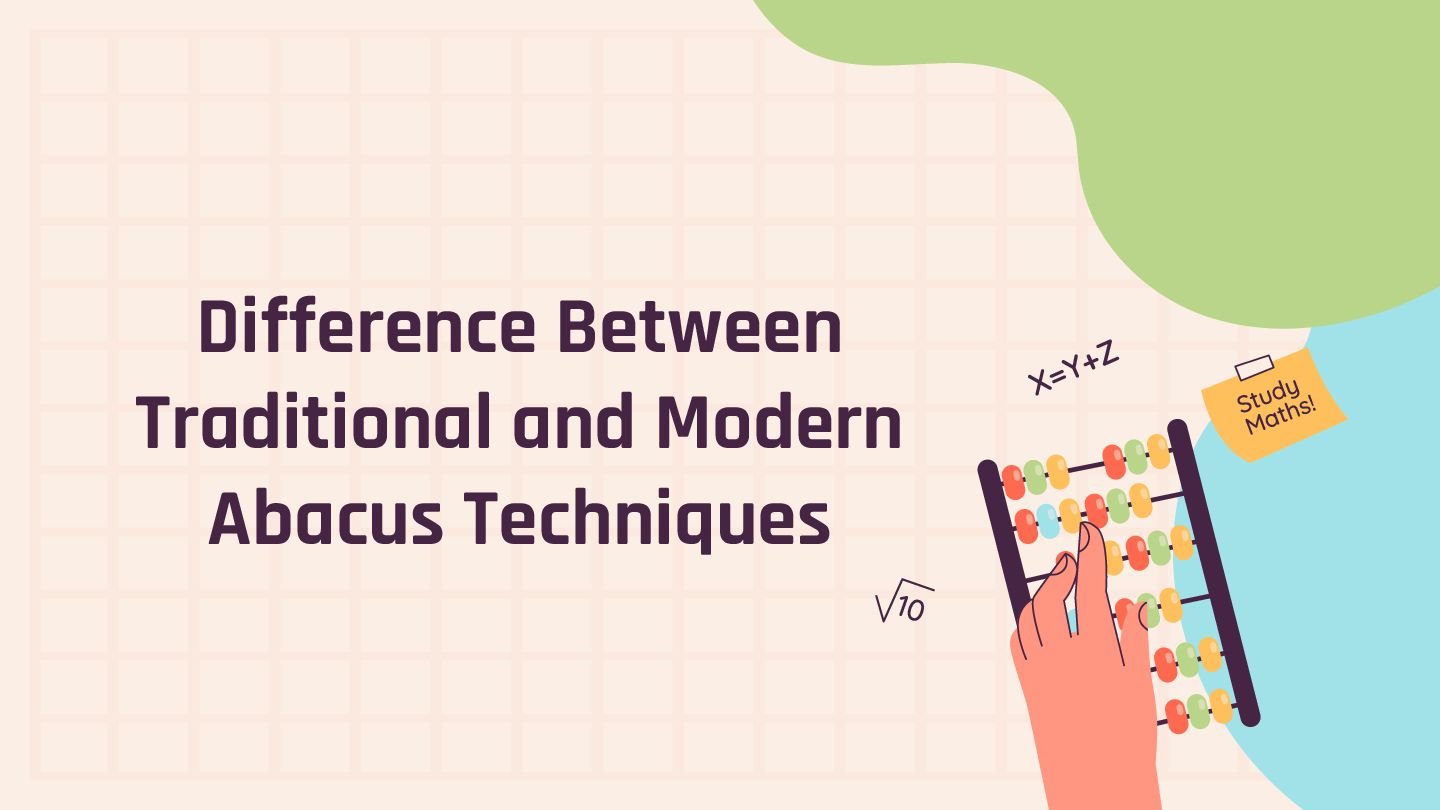
Difference Between Traditional and Modern Abacus Techniques

Based in Dubai, Brighter Mind Abacus offers expert-led abacus training for children aged 5 to 14, enhancing mental math, memory, focus, and confidence. Our fun and interactive offline and online programs help kids develop powerful cognitive skills through the ancient art of abacus learning. Join us to sharpen your child’s mind and build a brighter future. Check out for more information https://brightermindabacus.com/

Avatar for Brighter Mind Abacus

Brighter Mind Abacus

June 12, 2025
Tweet

Other Decks in Education

Transcript

  1. Traditional Abacus Technique Traditional abacus techniques, ancient and pre-modern, involve

    manual counting with beads, popular in Asia and Africa, relying on physical manipulation.
  2. Modern Abacus Technique Modern abacus methods combine traditional methods with

    technology, cognitive research, and pedagogy to enhance learning speed, interest, and brain stimulation, especially in children. Traditional and modern abacus techniques differ in tools, teaching methods, applications, and integration with modern technology.
  3. Physical Tool 01 The use of a physical abacus, such

    as the Chinese Suanpan or Japanese Soroban, involves manually moving beads for calculations.
  4. Teaching Method 02 The teaching method is primarily based on

    rote learning and manual dexterity, often passed down through expert practitioners or family traditions.
  5. Scope of Use 03 This term refers to a mathematical

    concept that was historically significant before the advent of calculators, primarily used for basic arithmetic such as addition, subtraction, multiplication, and division.
  6. Mental Abacus 04 The mental abacus is a technique that

    involves mastering the physical abacus by visualising it in the mind.
  7. Cultural Variation 05 Cultural variation is evident in various styles,

    such as Suanpan with 2:5 beads and Soroban with 1:4 beads.
  8. Digital and Hybrid Tools 01 The use of digital and

    hybrid tools, such as virtual abacuses, AI and gamification, is increasingly being utilised in teaching abacus methods.
  9. Teaching Method 02 The teaching method emphasises cognitive development, including

    memory, concentration, and speed, through engaging visuals, interactive lessons, and adaptive difficulty.
  10. Broader Educational Goals 03 Scientific studies on brain development support

    the use of broad educational goals to develop mental math skills, problem-solving, and neuroplasticity in children.
  11. Competitive and Recreational Use 04 This tool is utilised in

    mental math competitions like UCMAS, ALOHA, and SIP, promoting speed and accuracy through modern mental abacus visualisation.