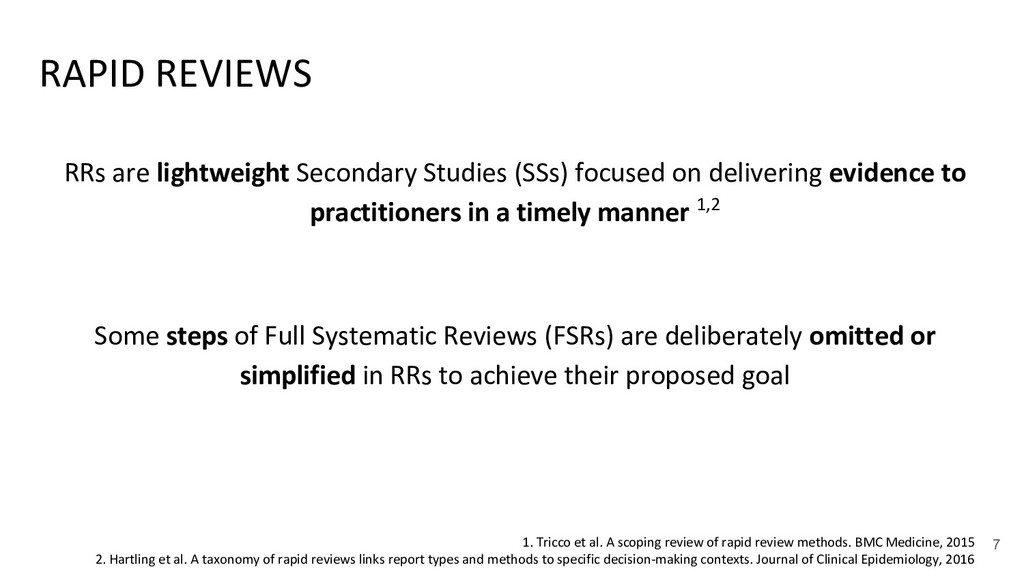
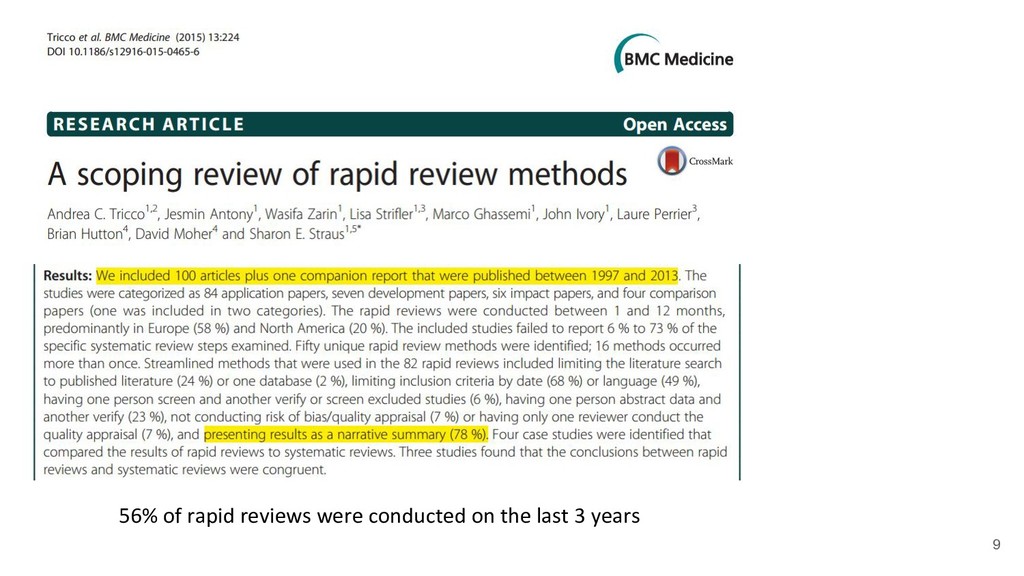
to practitioners in a timely manner 1,2 Some steps of Full Systematic Reviews (FSRs) are deliberately omitted or simplified in RRs to achieve their proposed goal RAPID REVIEWS 1. Tricco et al. A scoping review of rapid review methods. BMC Medicine, 2015 2. Hartling et al. A taxonomy of rapid reviews links report types and methods to specific decision-making contexts. Journal of Clinical Epidemiology, 2016 7
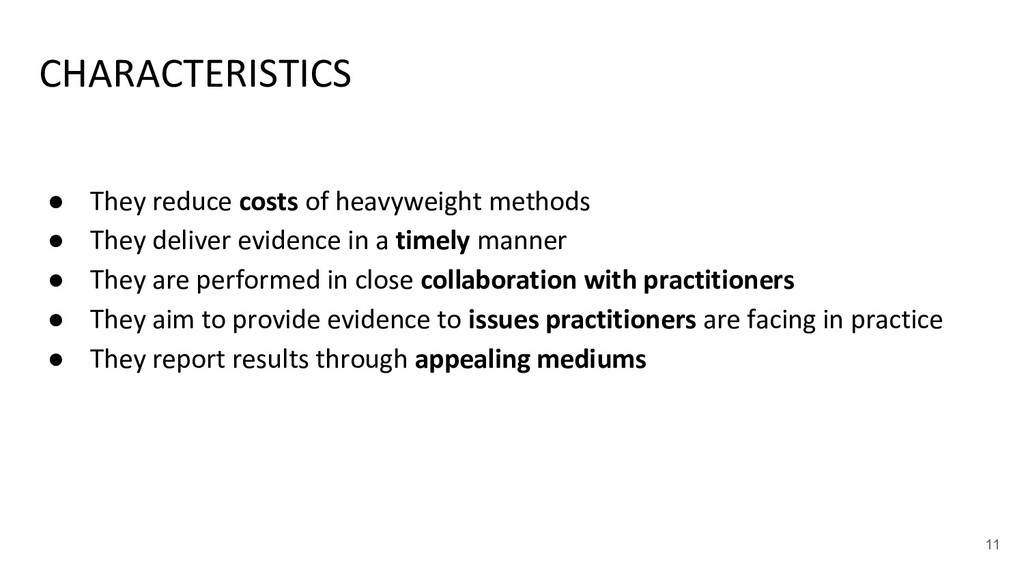
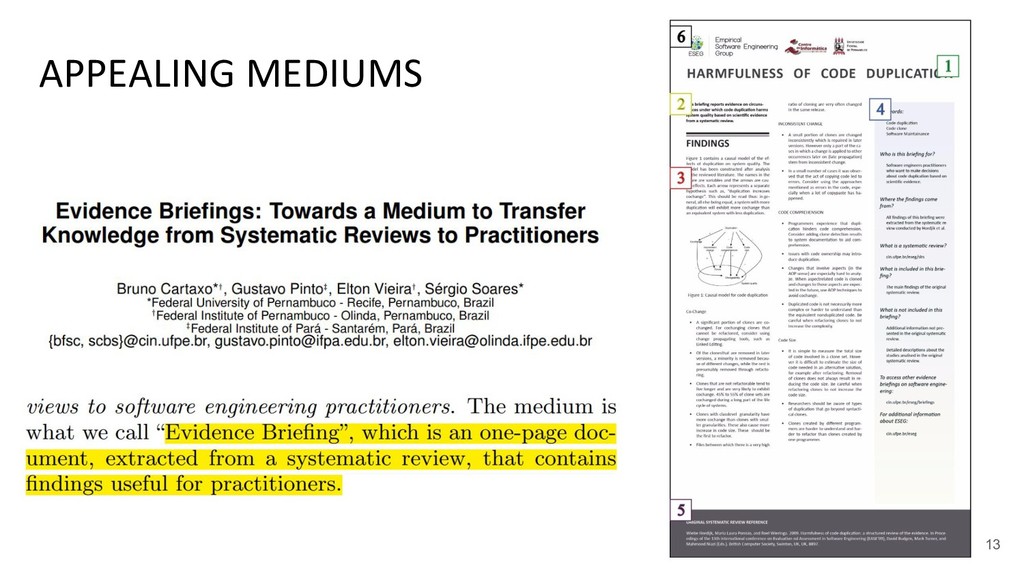
deliver evidence in a timely manner • They are performed in close collaboration with practitioners • They aim to provide evidence to issues practitioners are facing in practice • They report results through appealing mediums 11
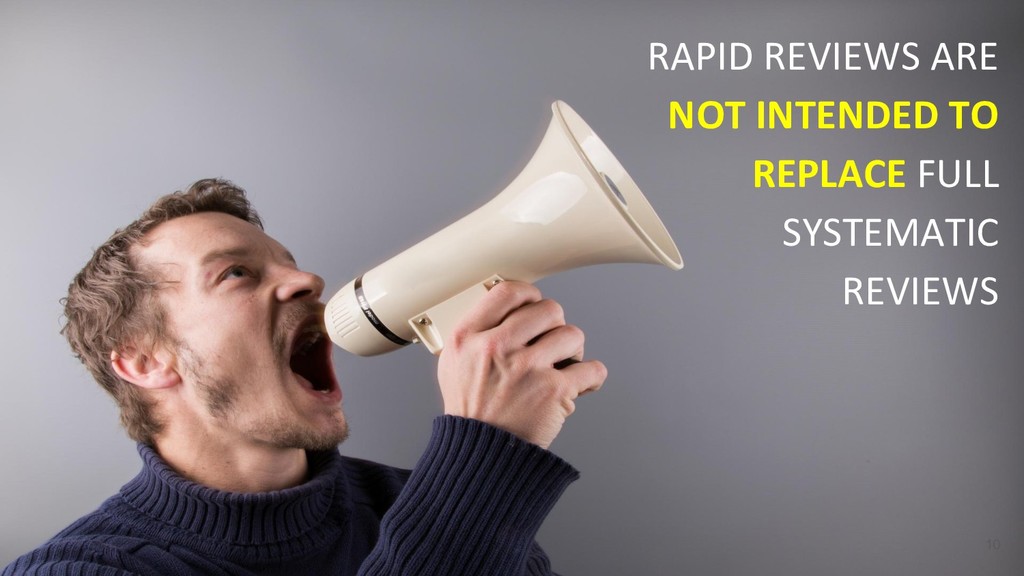
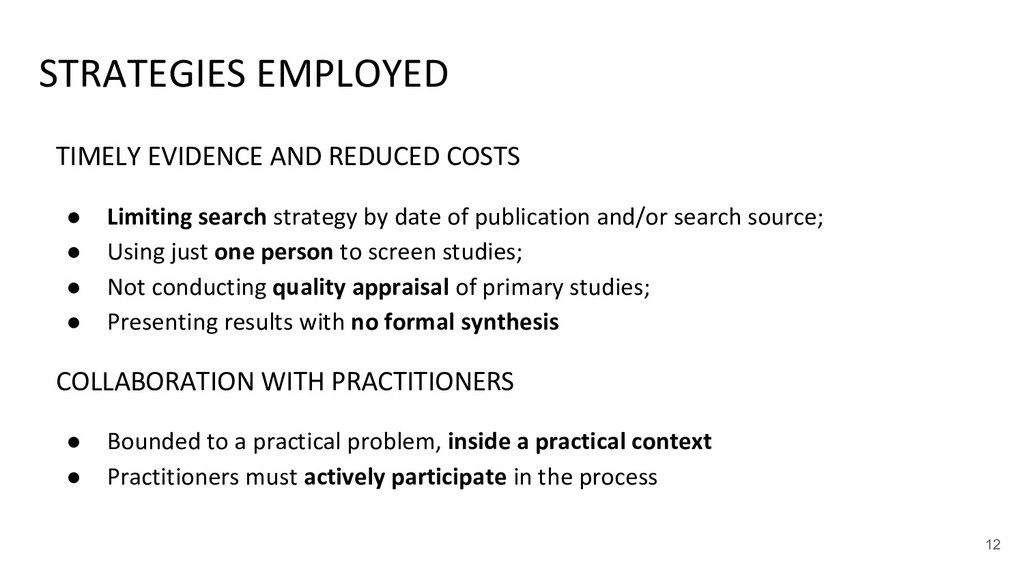
search strategy by date of publication and/or search source; • Using just one person to screen studies; • Not conducting quality appraisal of primary studies; • Presenting results with no formal synthesis COLLABORATION WITH PRACTITIONERS • Bounded to a practical problem, inside a practical context • Practitioners must actively participate in the process
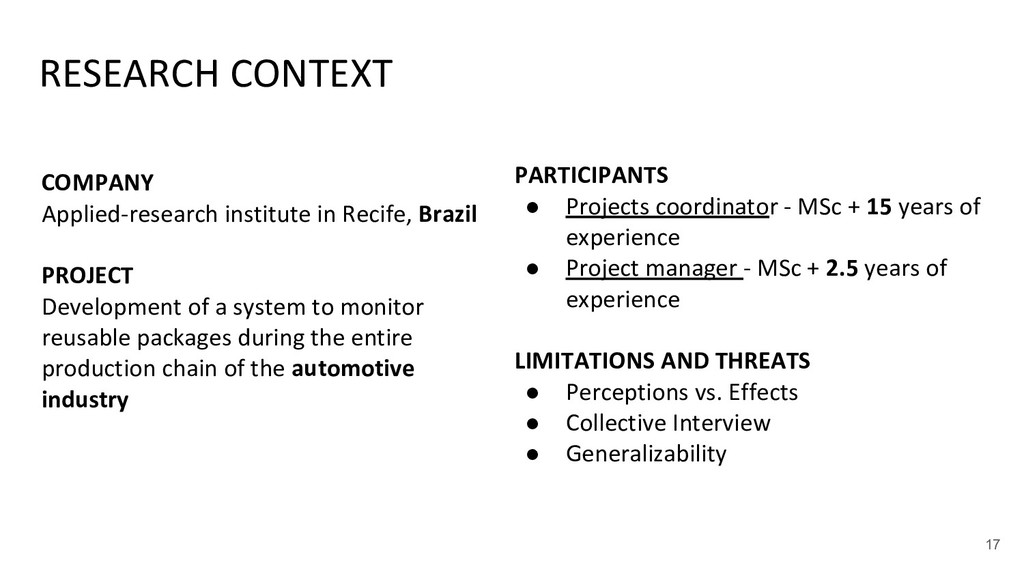
Development of a system to monitor reusable packages during the entire production chain of the automotive industry PARTICIPANTS • Projects coordinator - MSc + 15 years of experience • Project manager - MSc + 2.5 years of experience LIMITATIONS AND THREATS • Perceptions vs. Effects • Collective Interview • Generalizability
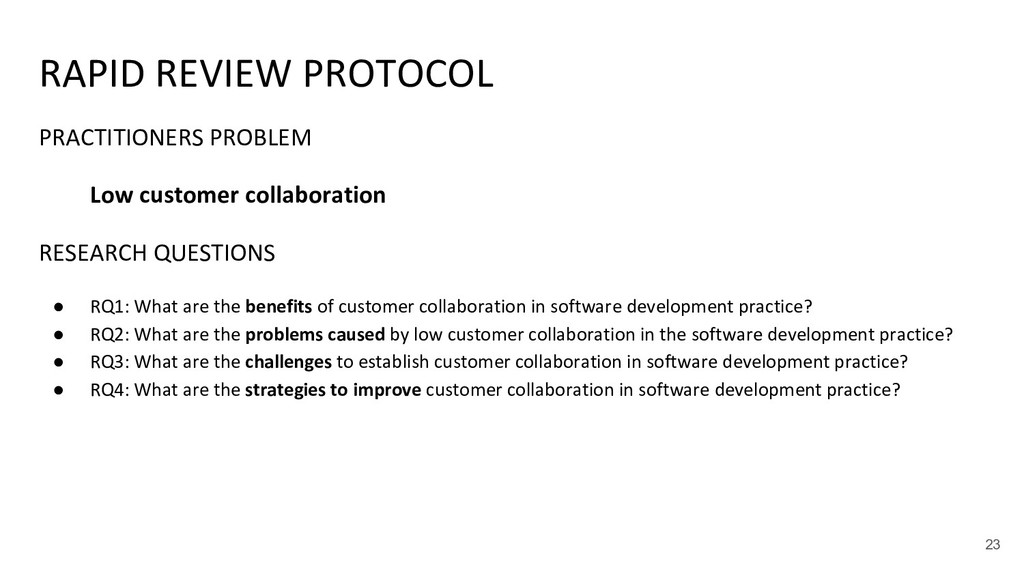
are the benefits of customer collaboration in software development practice? • RQ2: What are the problems caused by low customer collaboration in the software development practice? • RQ3: What are the challenges to establish customer collaboration in software development practice? • RQ4: What are the strategies to improve customer collaboration in software development practice? RAPID REVIEW PROTOCOL 23
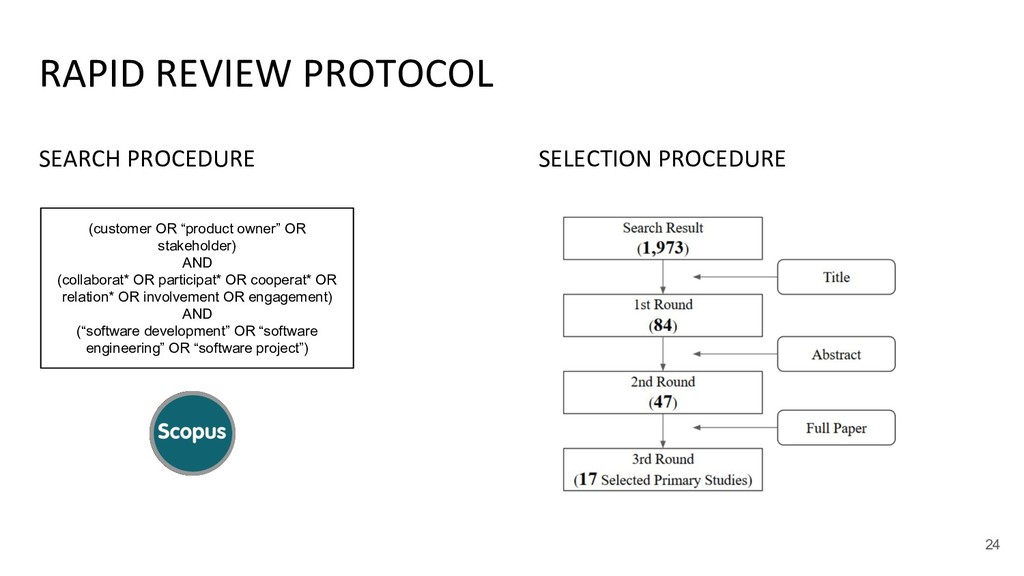
OR stakeholder) AND (collaborat* OR participat* OR cooperat* OR relation* OR involvement OR engagement) AND (“software development” OR “software engineering” OR “software project”) SELECTION PROCEDURE
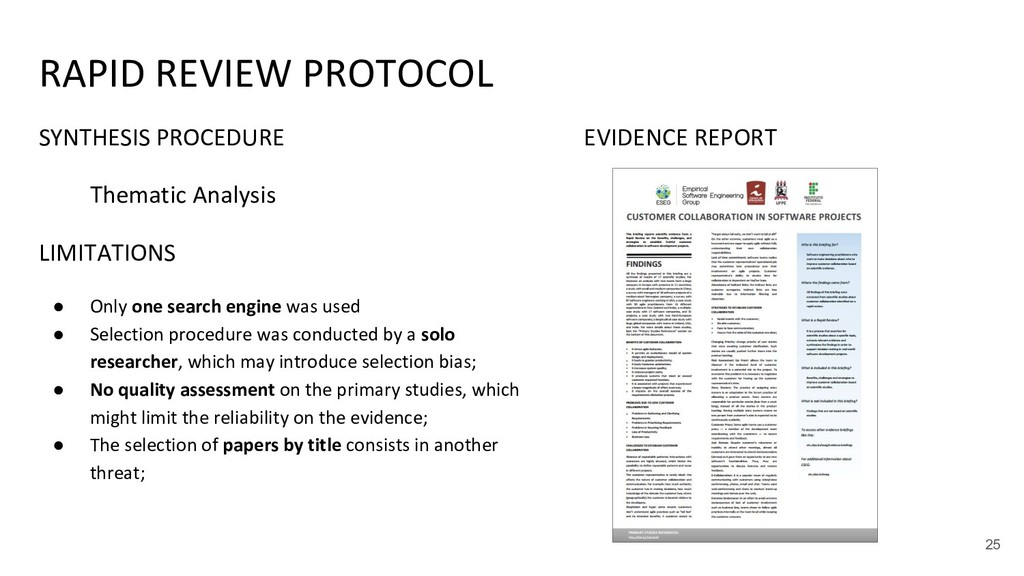
one search engine was used • Selection procedure was conducted by a solo researcher, which may introduce selection bias; • No quality assessment on the primary studies, which might limit the reliability on the evidence; • The selection of papers by title consists in another threat; 25 EVIDENCE REPORT
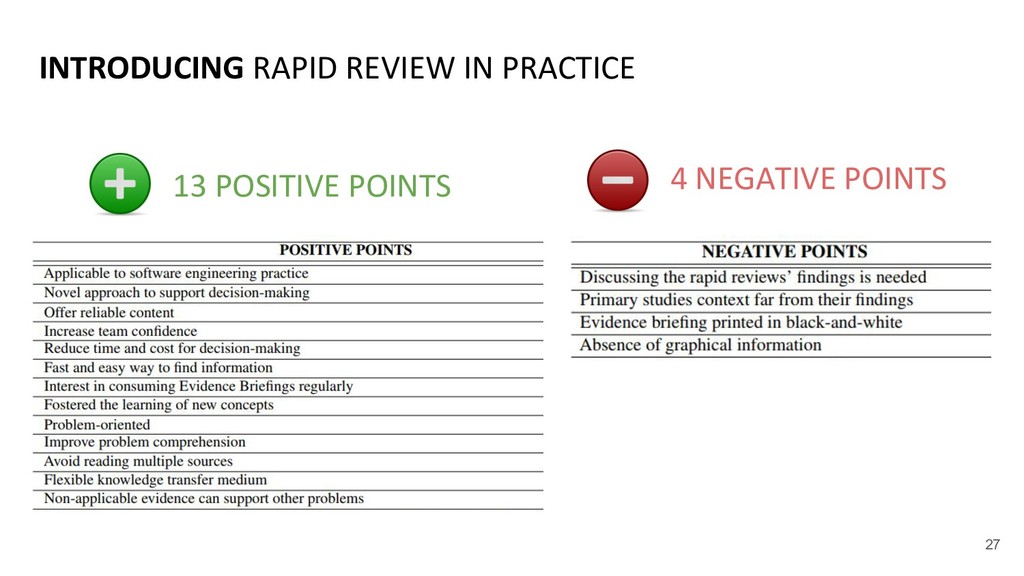
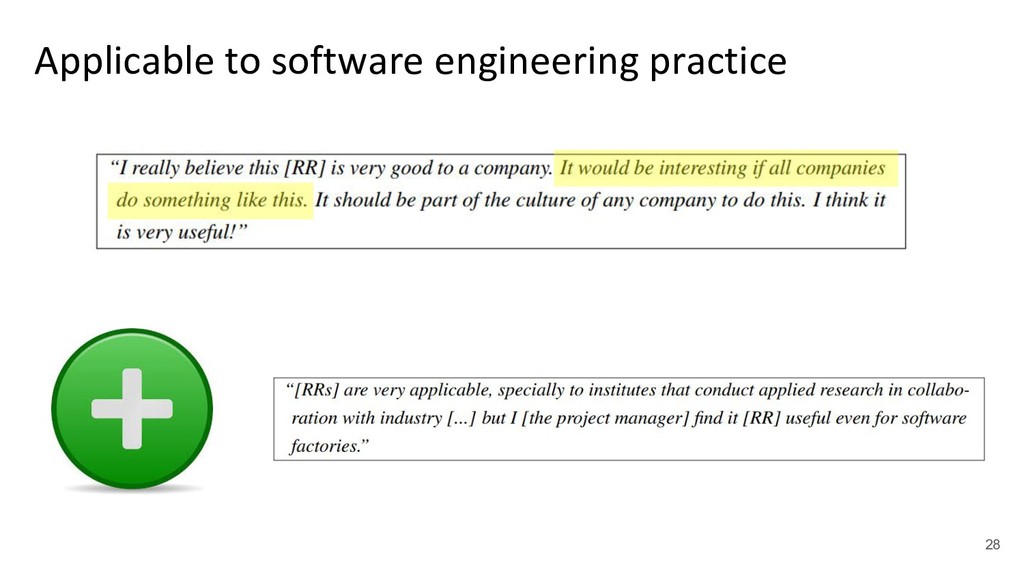
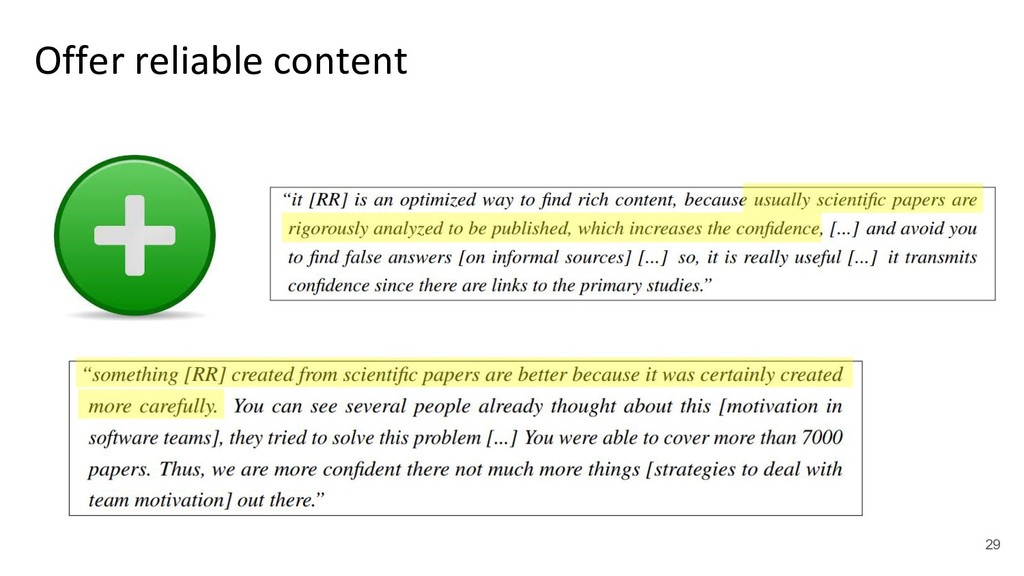
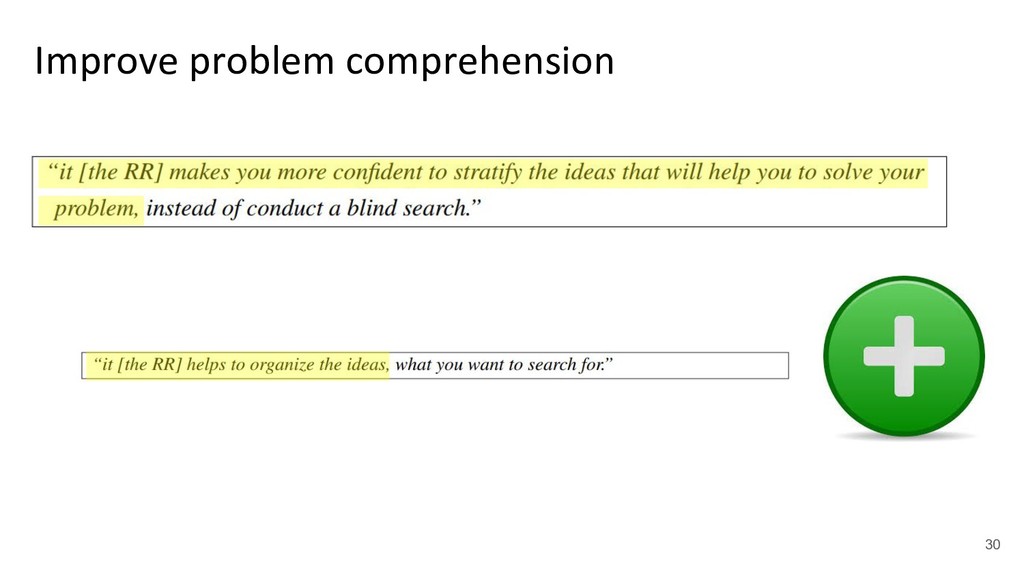
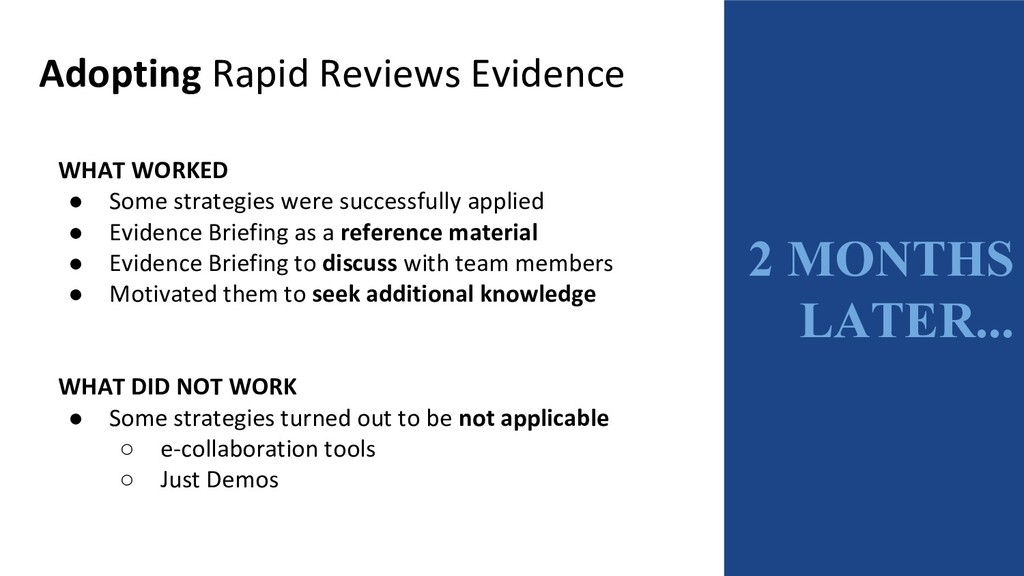
successfully applied • Evidence Briefing as a reference material • Evidence Briefing to discuss with team members • Motivated them to seek additional knowledge WHAT DID NOT WORK • Some strategies turned out to be not applicable ◦ e-collaboration tools ◦ Just Demos 33 2 MONTHS LATER...
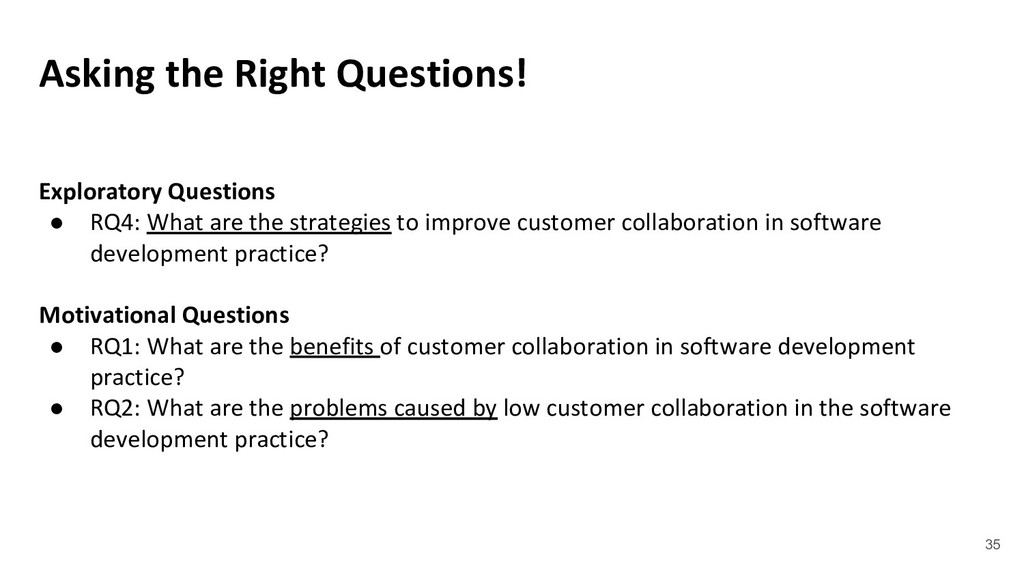
the strategies to improve customer collaboration in software development practice? Motivational Questions • RQ1: What are the benefits of customer collaboration in software development practice? • RQ2: What are the problems caused by low customer collaboration in the software development practice? 35
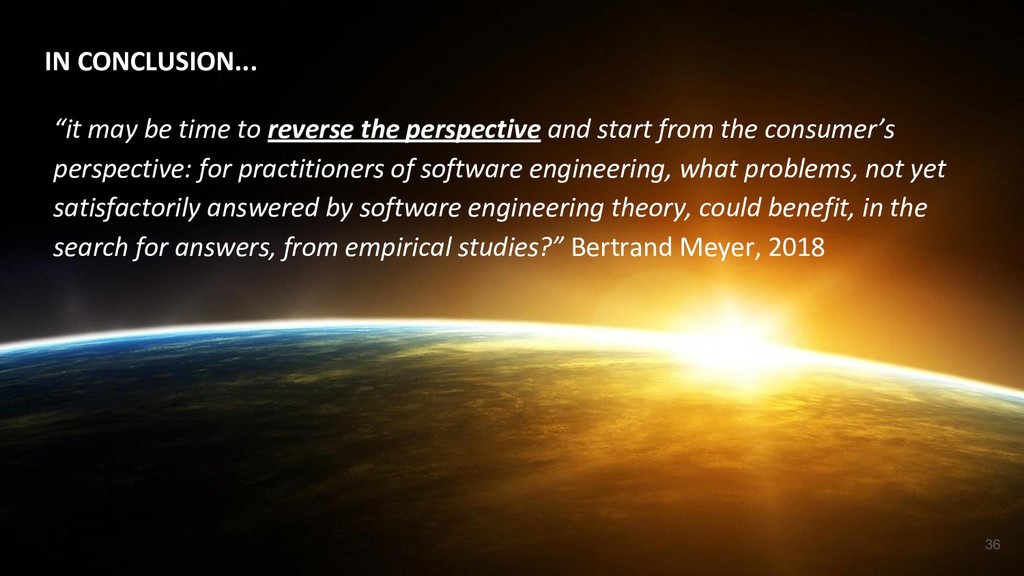
from the consumer’s perspective: for practitioners of software engineering, what problems, not yet satisfactorily answered by software engineering theory, could benefit, in the search for answers, from empirical studies?” Bertrand Meyer, 2018 IN CONCLUSION... 36
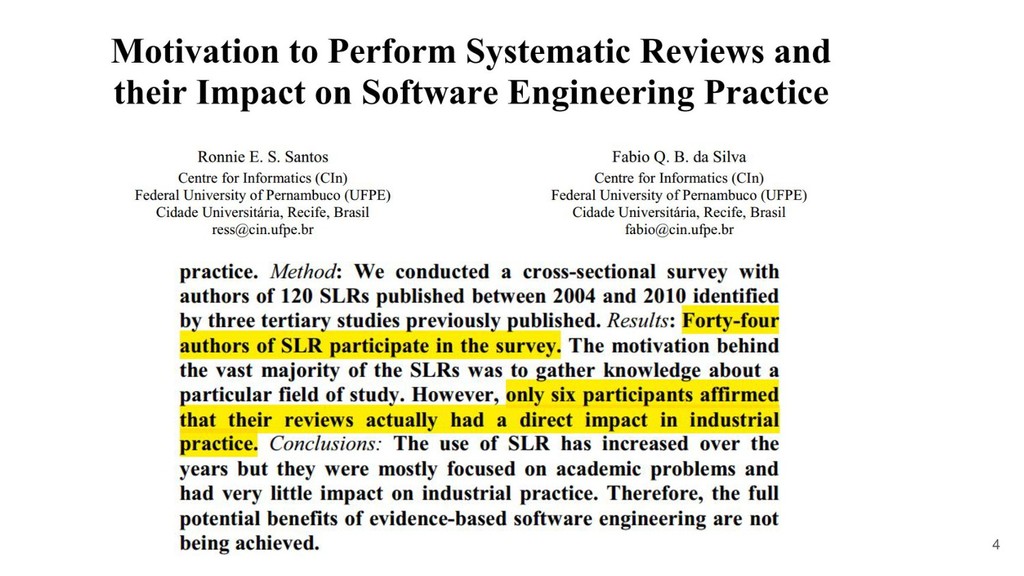
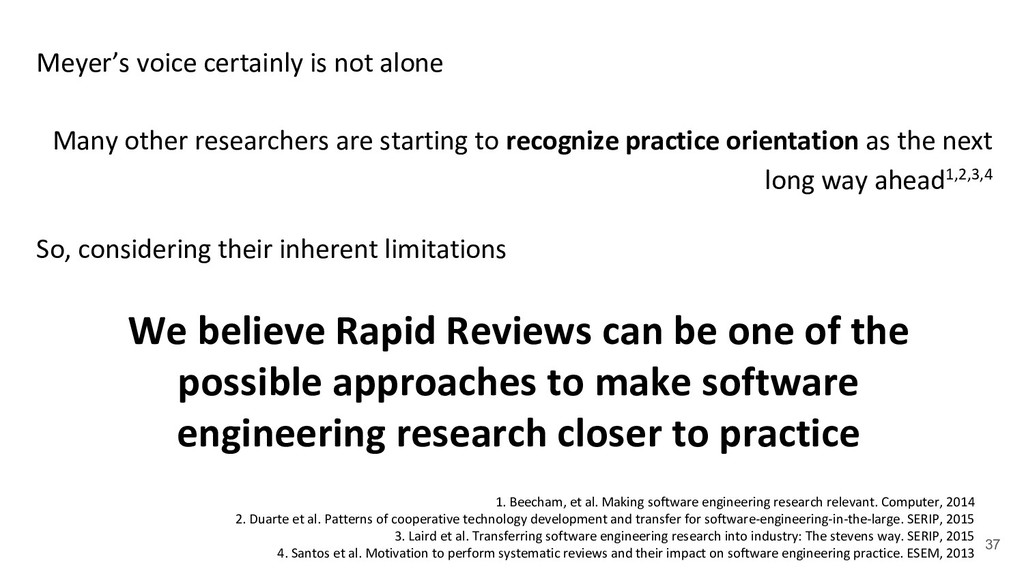
starting to recognize practice orientation as the next long way ahead1,2,3,4 1. Beecham, et al. Making software engineering research relevant. Computer, 2014 2. Duarte et al. Patterns of cooperative technology development and transfer for software-engineering-in-the-large. SERIP, 2015 3. Laird et al. Transferring software engineering research into industry: The stevens way. SERIP, 2015 4. Santos et al. Motivation to perform systematic reviews and their impact on software engineering practice. ESEM, 2013 37 We believe Rapid Reviews can be one of the possible approaches to make software engineering research closer to practice So, considering their inherent limitations
with FSSs Impact of RRs in practice Perception of researchers on RRs Coverage analysis for specific SE areas Creation of EBs templates for different audiences 38


 brunocartaxo
 kinoue_smarthr
 tomonom
 reokashiwa
 mickey_0226
.png) satai
satai
 tkng
tkng
 kzmssk
 s_mizuki_nlp
 koide3
 takasehideki
 fkske
fkske
 techseoconnect
 aemeredith
 trallard
 jacobtomlinson
 marcelosomers
 chrislema
 aleyda
 62gerente
 mfonobong
 notwaldorf
 palkan






![THANK YOU Bruno Cartaxo [[email protected]] 39](https://files.speakerdeck.com/presentations/22df26292e234a16aad46f33c53d8502/slide_38.jpg)