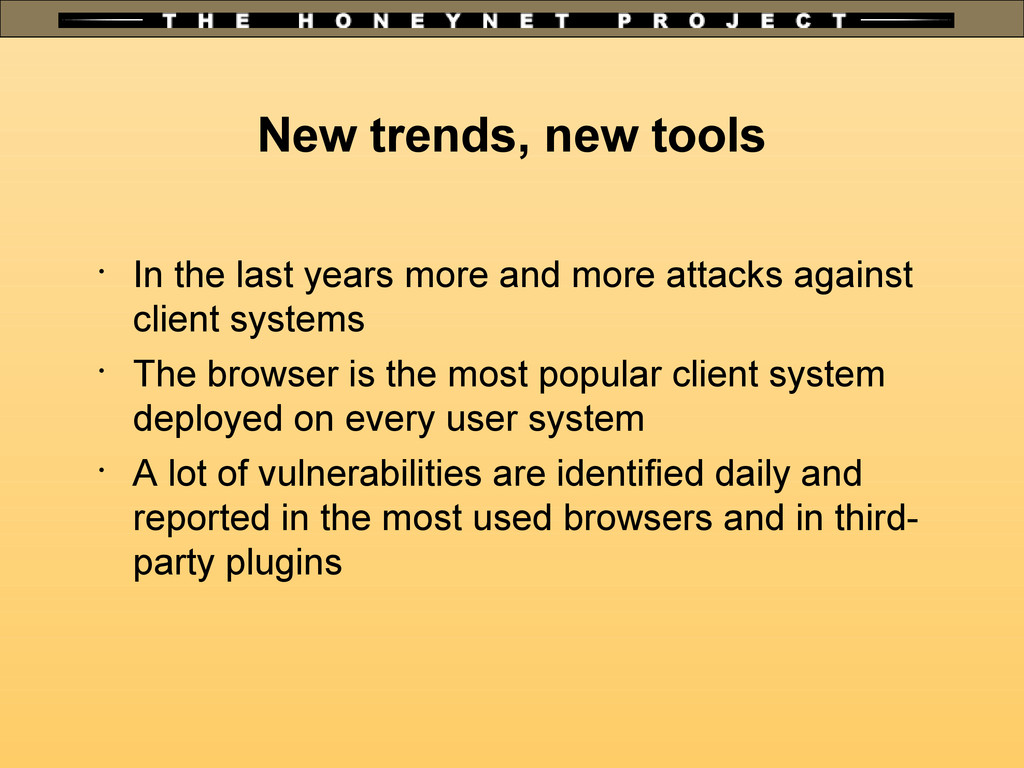
and more attacks against client systems The browser is the most popular client system deployed on every user system A lot of vulnerabilities are identified daily and reported in the most used browsers and in third- party plugins
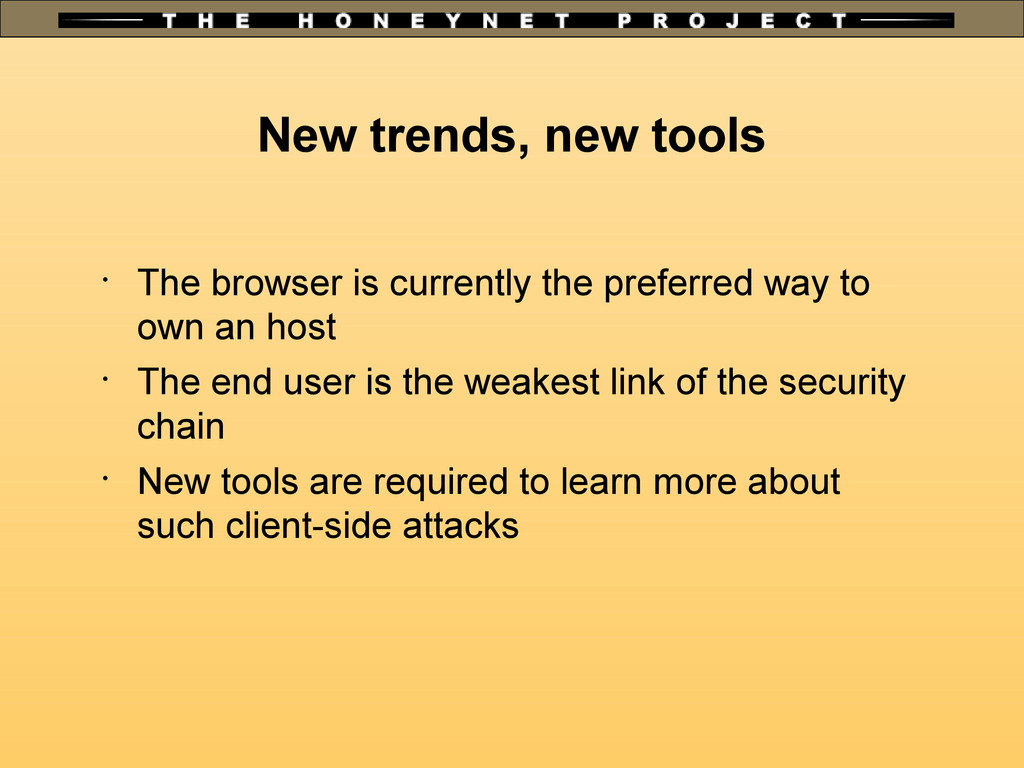
preferred way to own an host The end user is the weakest link of the security chain New tools are required to learn more about such client-side attacks
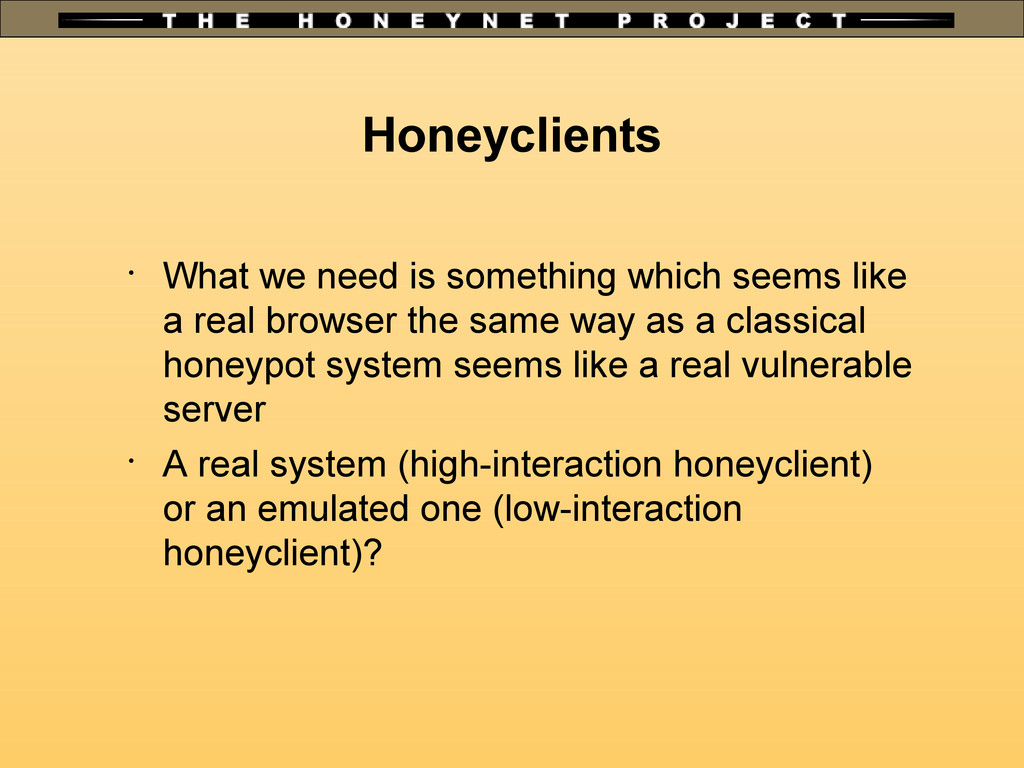
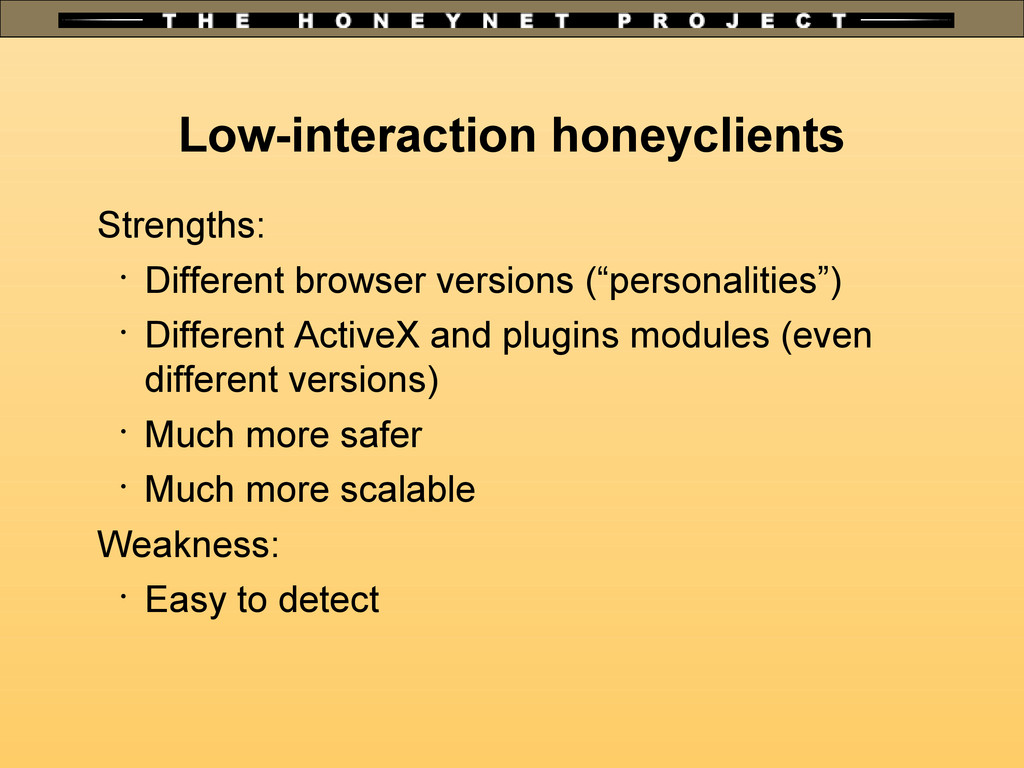
a real browser the same way as a classical honeypot system seems like a real vulnerable server A real system (high-interaction honeyclient) or an emulated one (low-interaction honeyclient)?
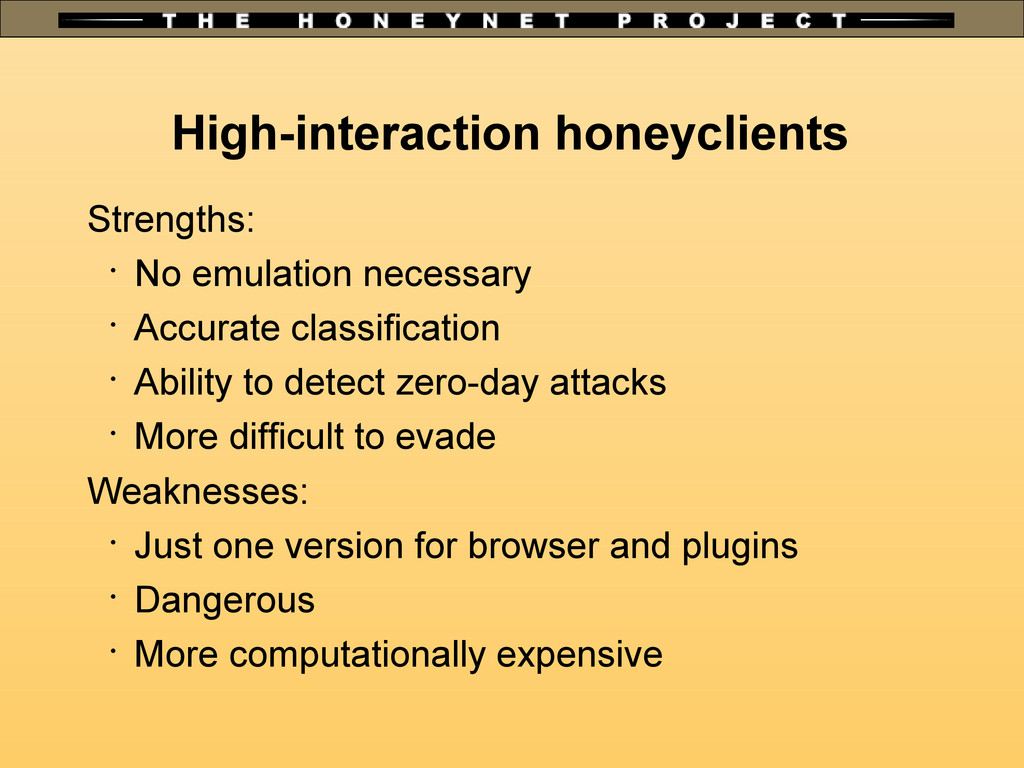
Ability to detect zero-day attacks More difficult to evade Weaknesses: Just one version for browser and plugins Dangerous More computationally expensive
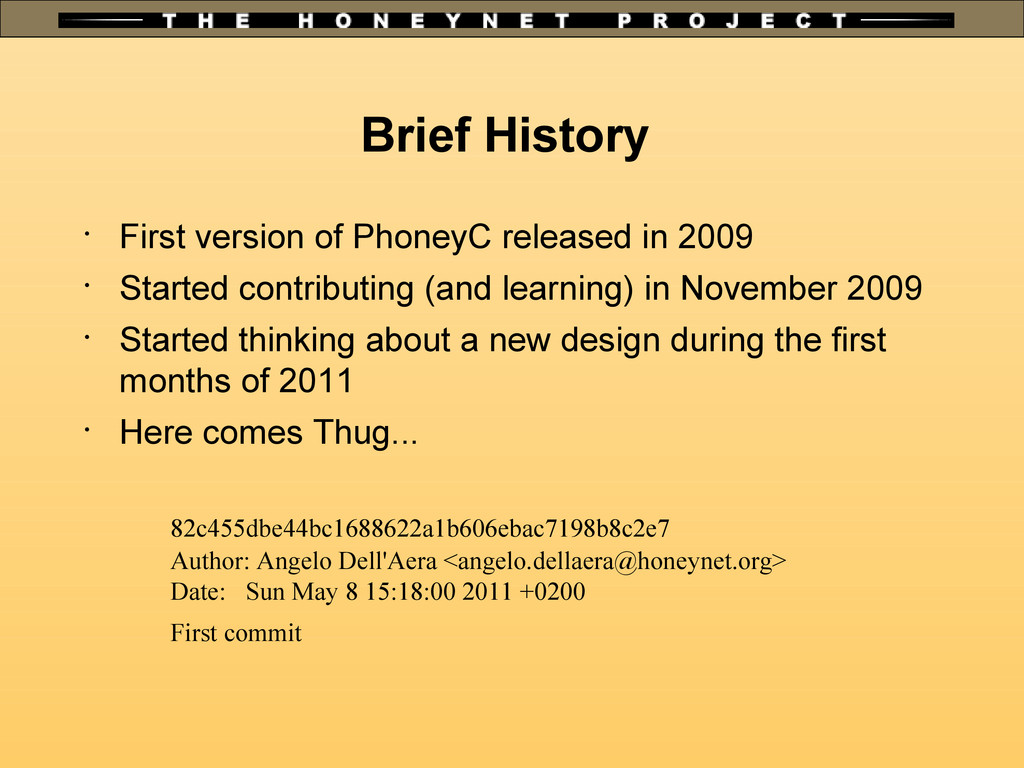
Started contributing (and learning) in November 2009 Started thinking about a new design during the first months of 2011 Here comes Thug... 82c455dbe44bc1688622a1b606ebac7198b8c2e7 Author: Angelo Dell'Aera <[email protected]> Date: Sun May 8 15:18:00 2011 +0200 First commit
platform- and language-neutral interface that will allow programs and scripts to dynamically access and update the content, structure and style of documents. The document can be further processed and the results of that processing can be incorporated back into the presented page.” Thug DOM is (almost) compliant with W3C DOM Core and HTML specifications (Level 1, 2 and partially 3) and partially compliant with W3C DOM Events and Style specifications Designed with the requirement that adding the missing features has to be as simple as possible Much more effective than chasing exploit writers!
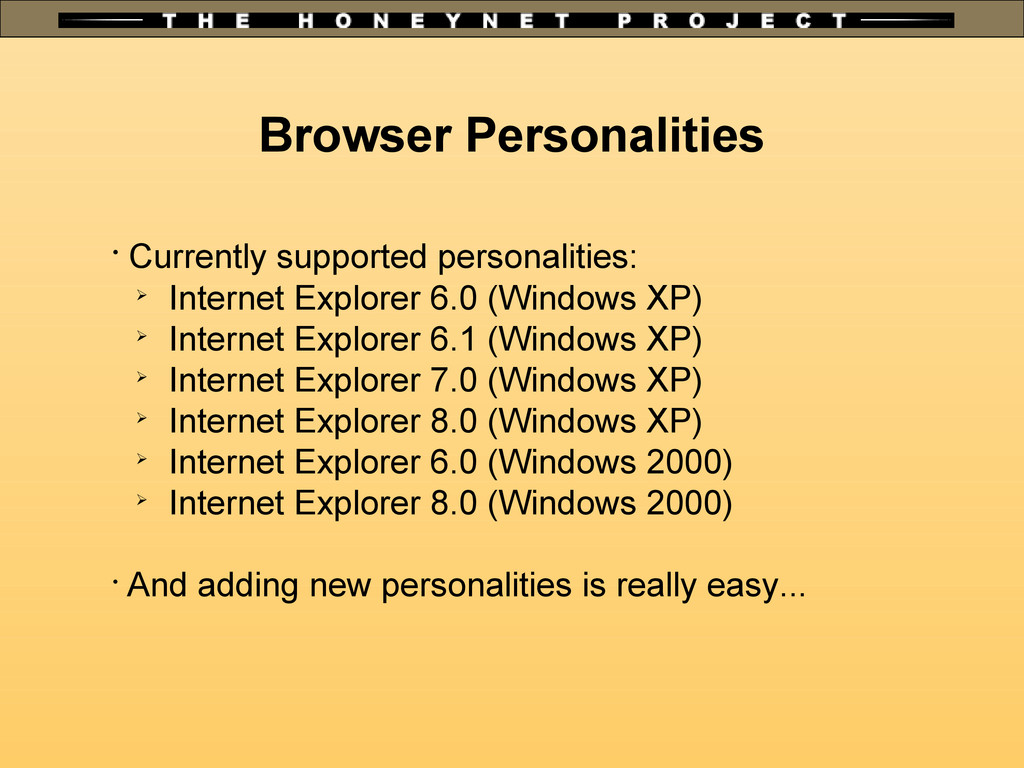
(Windows XP) Internet Explorer 6.1 (Windows XP) Internet Explorer 7.0 (Windows XP) Internet Explorer 8.0 (Windows XP) Internet Explorer 6.0 (Windows 2000) Internet Explorer 8.0 (Windows 2000) And adding new personalities is really easy...
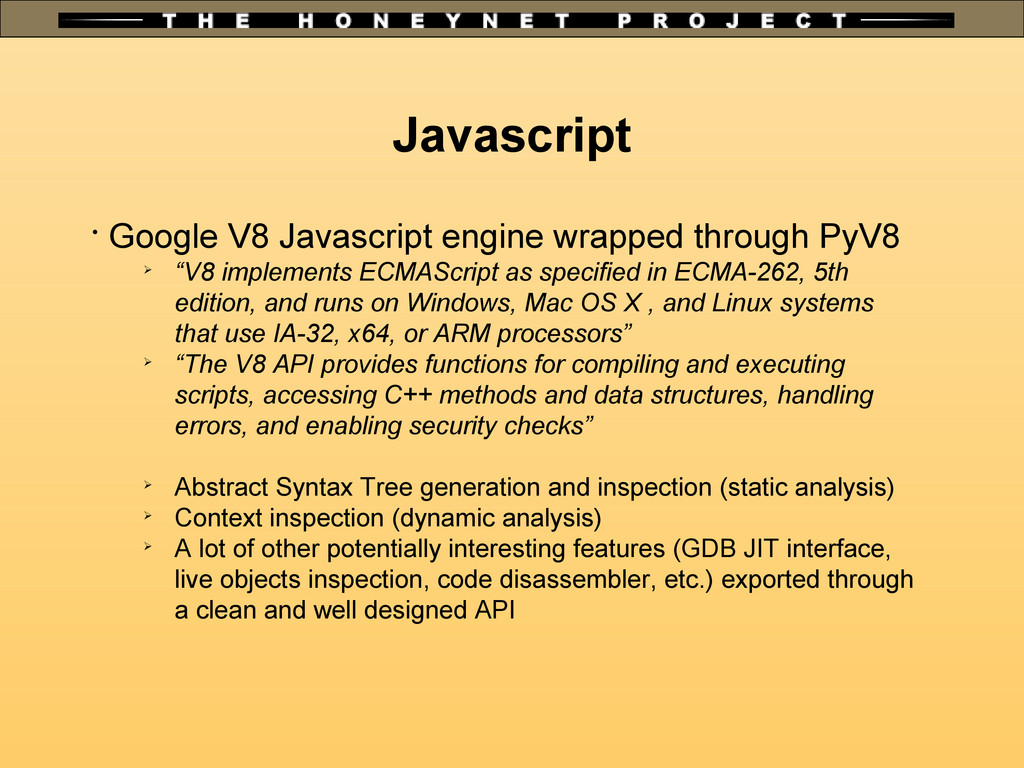
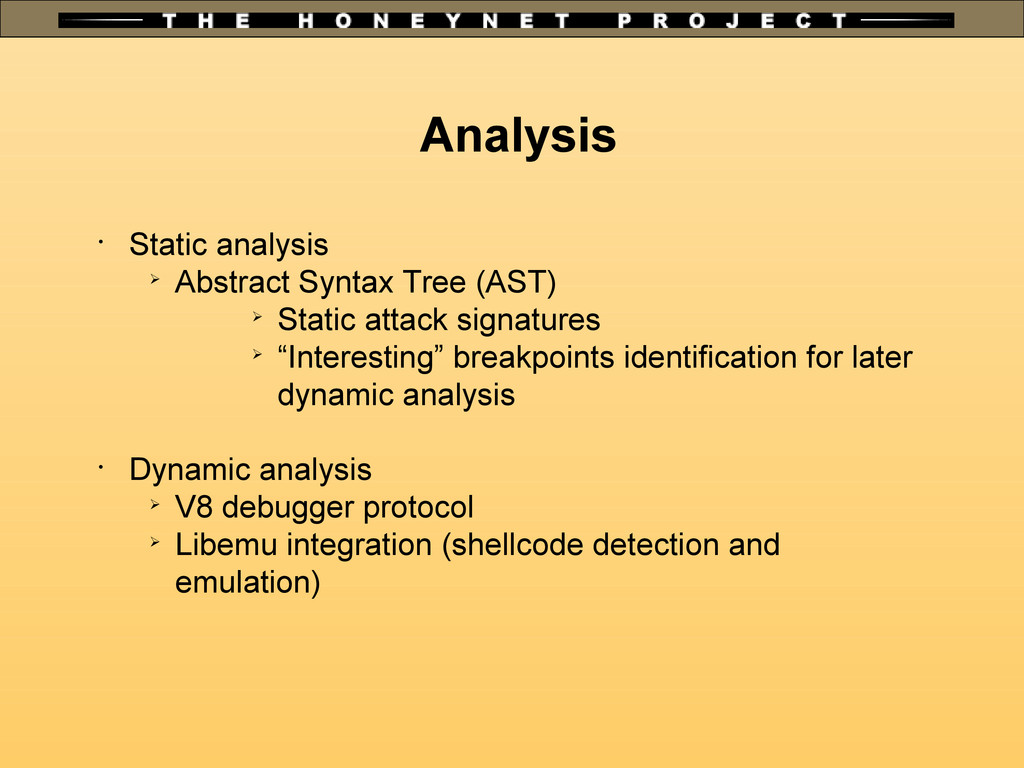
“V8 implements ECMAScript as specified in ECMA-262, 5th edition, and runs on Windows, Mac OS X , and Linux systems that use IA-32, x64, or ARM processors” “The V8 API provides functions for compiling and executing scripts, accessing C++ methods and data structures, handling errors, and enabling security checks” Abstract Syntax Tree generation and inspection (static analysis) Context inspection (dynamic analysis) A lot of other potentially interesting features (GDB JIT interface, live objects inspection, code disassembler, etc.) exported through a clean and well designed API


 rikkabotan7
 izumiyama_lab
 yumulab
 nzw0301
 institutdelelevage
 corochann
 signer
 stktu
 takasehideki
 satai
 nonsquared
 jnunemaker
 cassininazir
 baasie
 mlcsv
 inesmontani
 mayatellez
 carmenintech
 soudai
 tammyeverts
 mfonobong
 geoffreycrofte