Upgrade to Pro — share decks privately, control downloads, hide ads and more …

Lean Approach for Edge AI Industry-Academia Col...

Lean Approach for Edge AI Industry-Academia Collaboration and Startup Incubation

The Lean Approach for Edge AI industry-academia collaboration and startup incubation is about starting small, testing fast, and scaling smart. It turns complex, constraint-heavy Edge AI development into an agile, customer-driven process, fostering innovation that’s both cutting-edge and commercially viable.

Avatar for Chien-Cheng Wu

Chien-Cheng Wu

March 17, 2025
Tweet

Other Decks in Research

Transcript

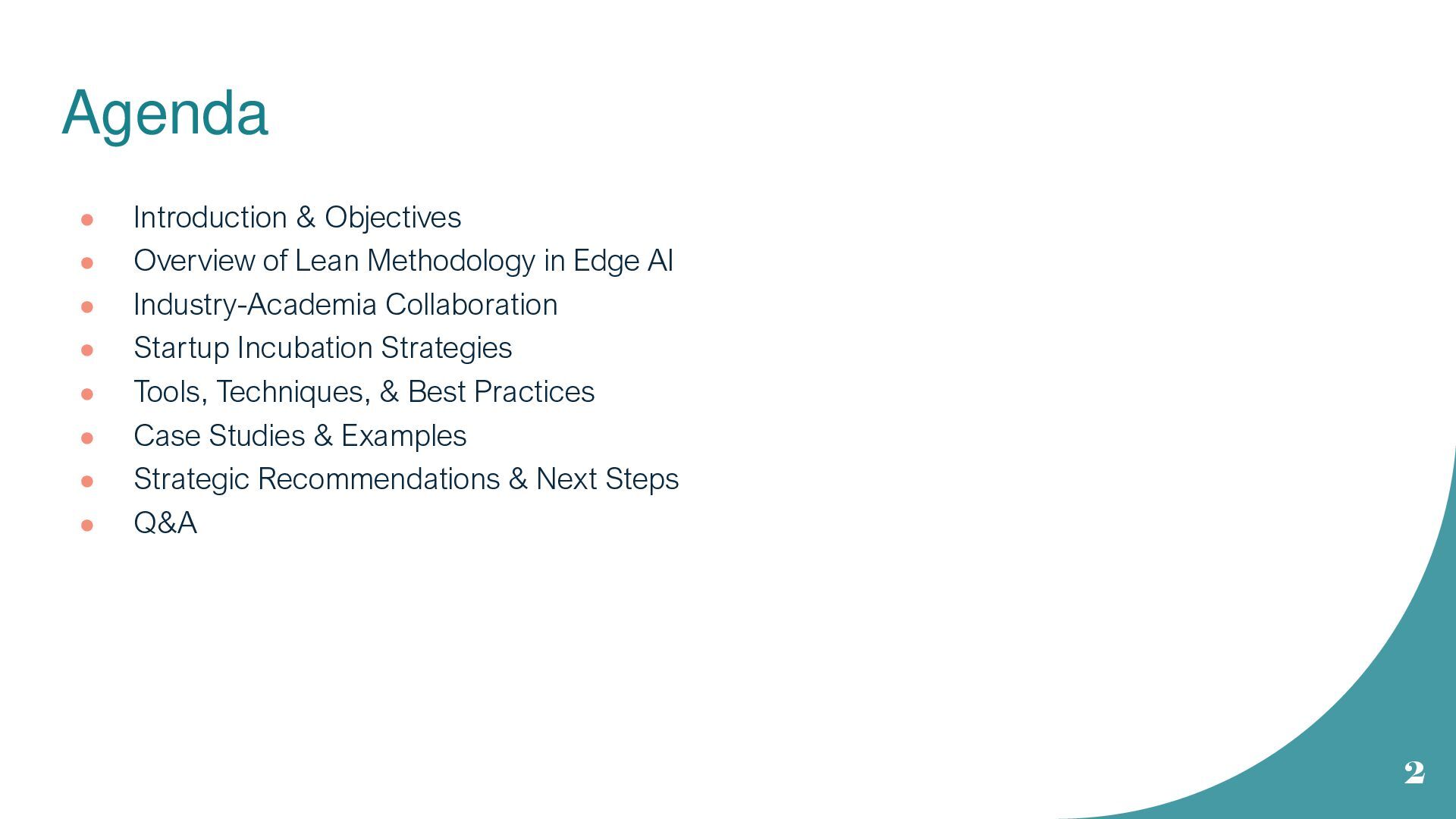
  1. Agenda • Introduction & Objectives • Overview of Lean Methodology

    in Edge AI • Industry-Academia Collaboration • Startup Incubation Strategies • Tools, Techniques, & Best Practices • Case Studies & Examples • Strategic Recommendations & Next Steps • Q&A 2
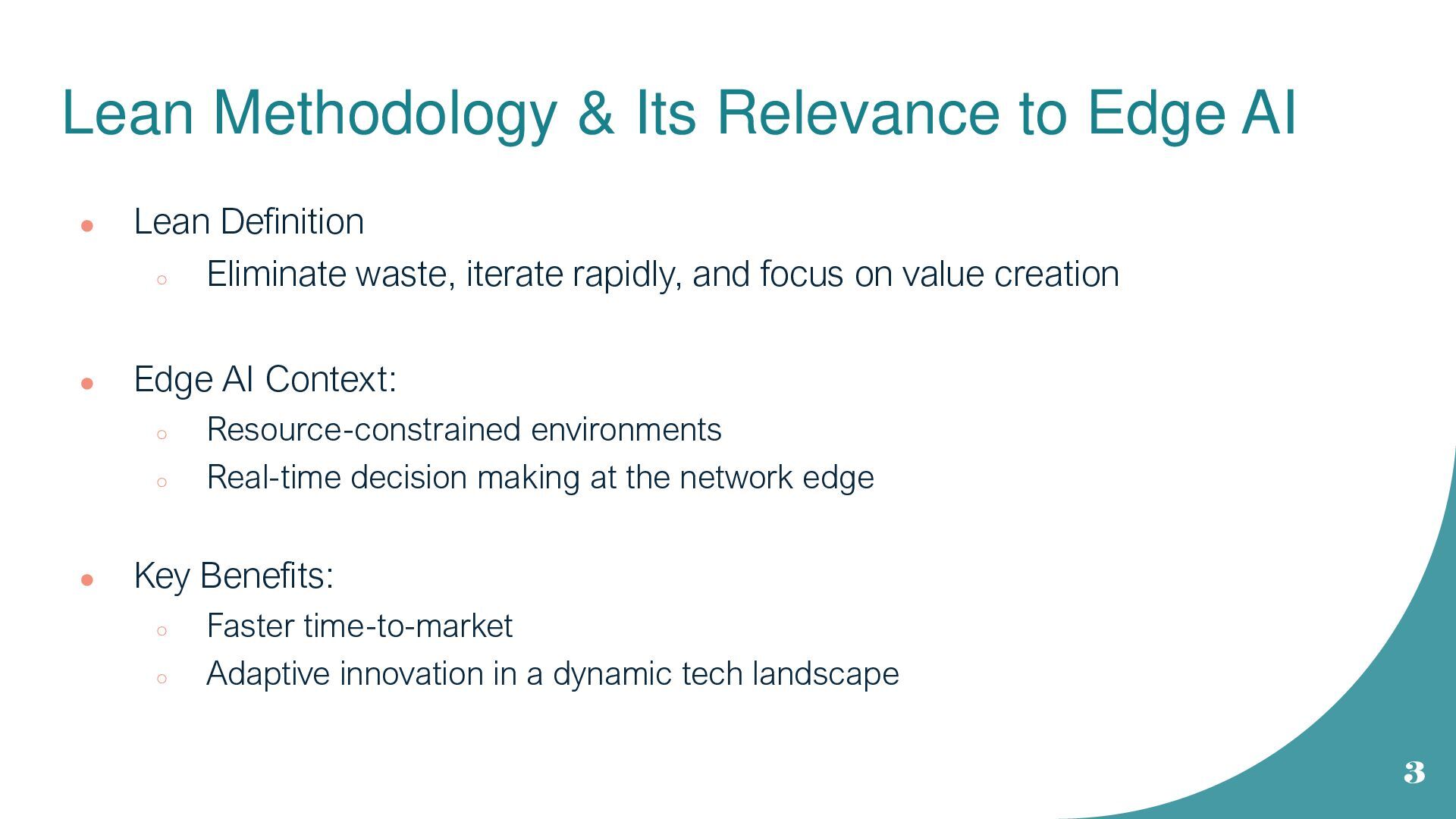
  2. Lean Methodology & Its Relevance to Edge AI • Lean

    Definition ◦ Eliminate waste, iterate rapidly, and focus on value creation • Edge AI Context: ◦ Resource-constrained environments ◦ Real-time decision making at the network edge • Key Benefits: ◦ Faster time-to-market ◦ Adaptive innovation in a dynamic tech landscape 3
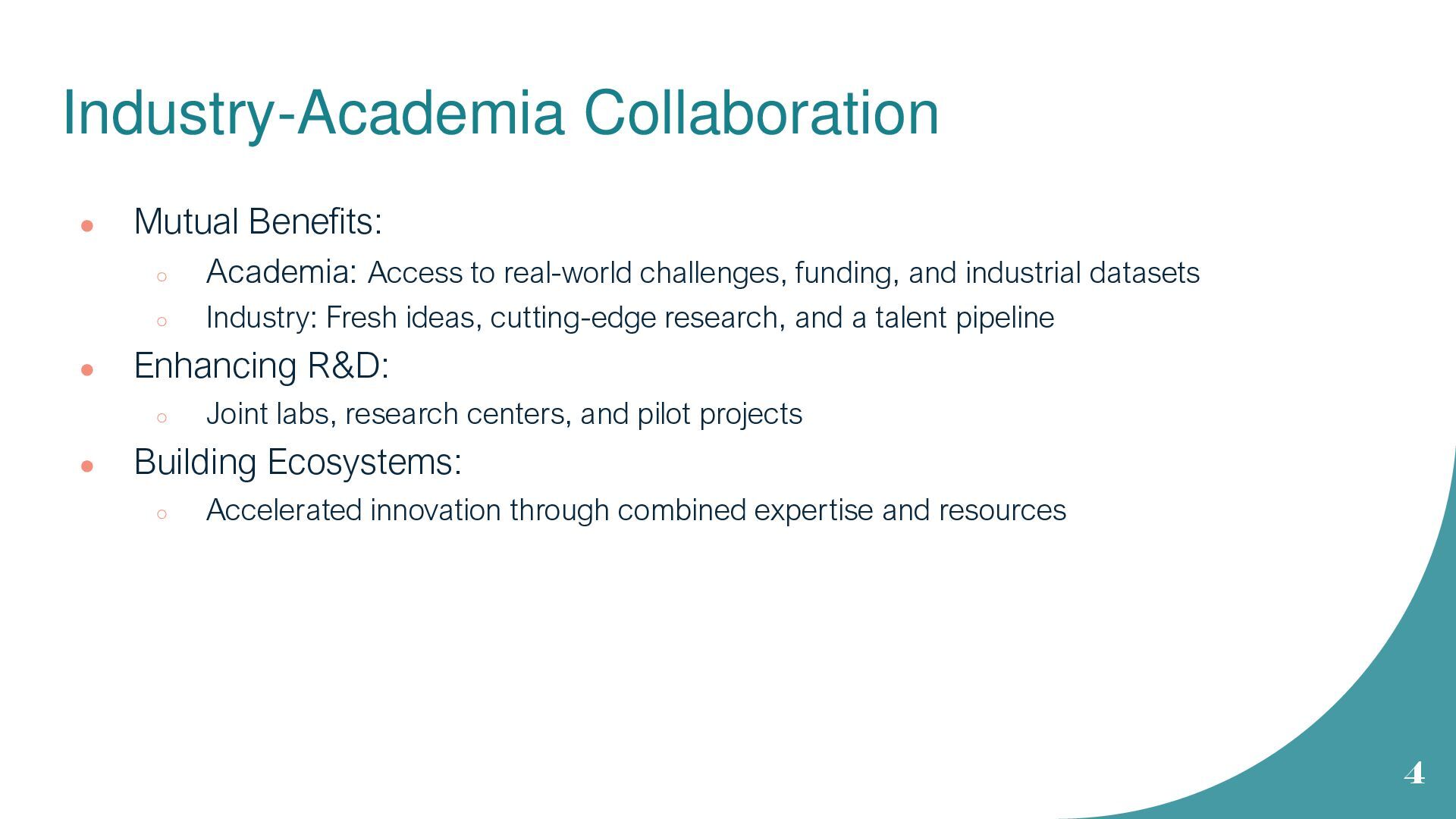
  3. Industry-Academia Collaboration • Mutual Benefits: ◦ Academia: Access to real-world

    challenges, funding, and industrial datasets ◦ Industry: Fresh ideas, cutting-edge research, and a talent pipeline • Enhancing R&D: ◦ Joint labs, research centers, and pilot projects • Building Ecosystems: ◦ Accelerated innovation through combined expertise and resources 4
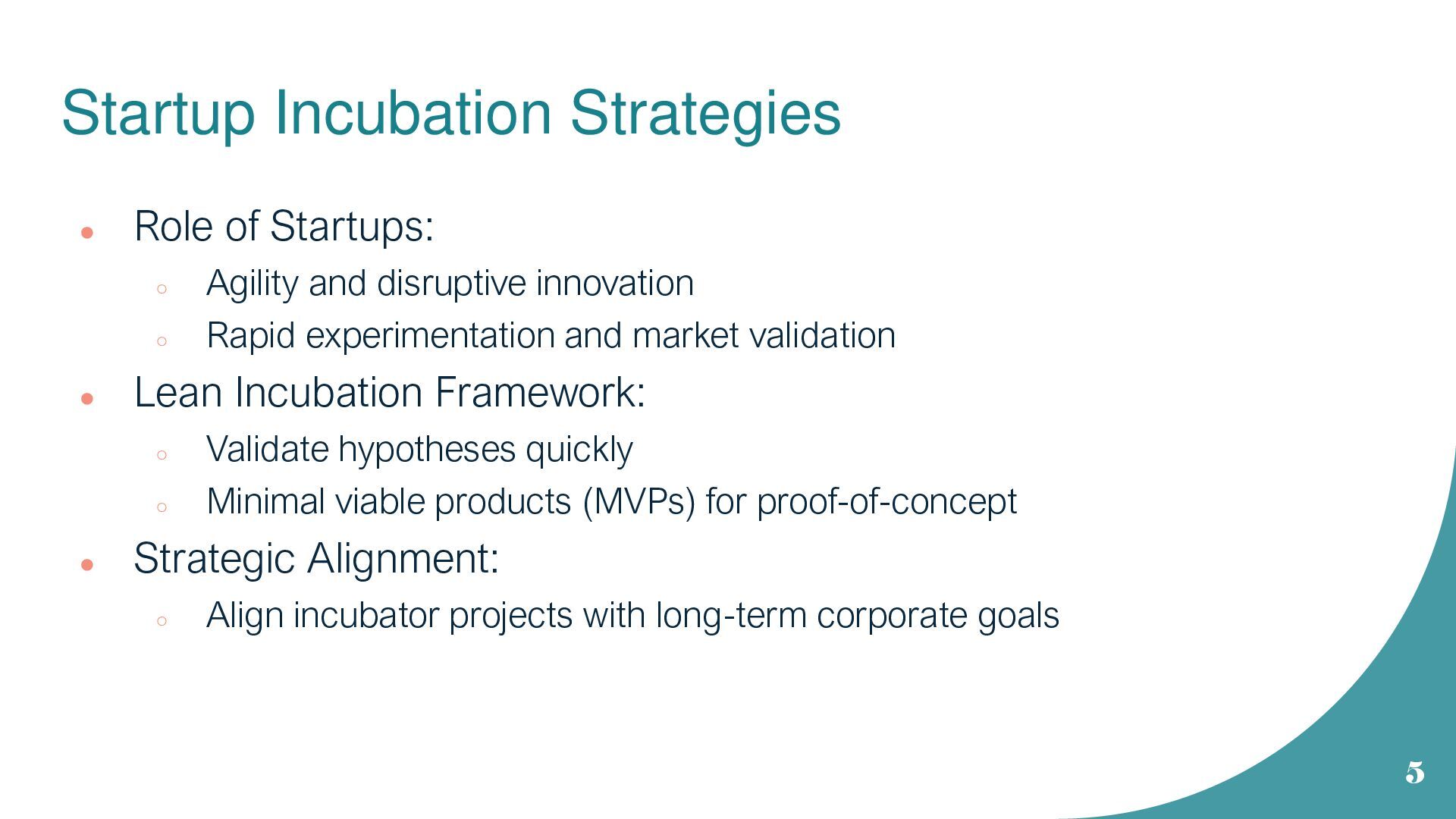
  4. Startup Incubation Strategies • Role of Startups: ◦ Agility and

    disruptive innovation ◦ Rapid experimentation and market validation • Lean Incubation Framework: ◦ Validate hypotheses quickly ◦ Minimal viable products (MVPs) for proof-of-concept • Strategic Alignment: ◦ Align incubator projects with long-term corporate goals 5
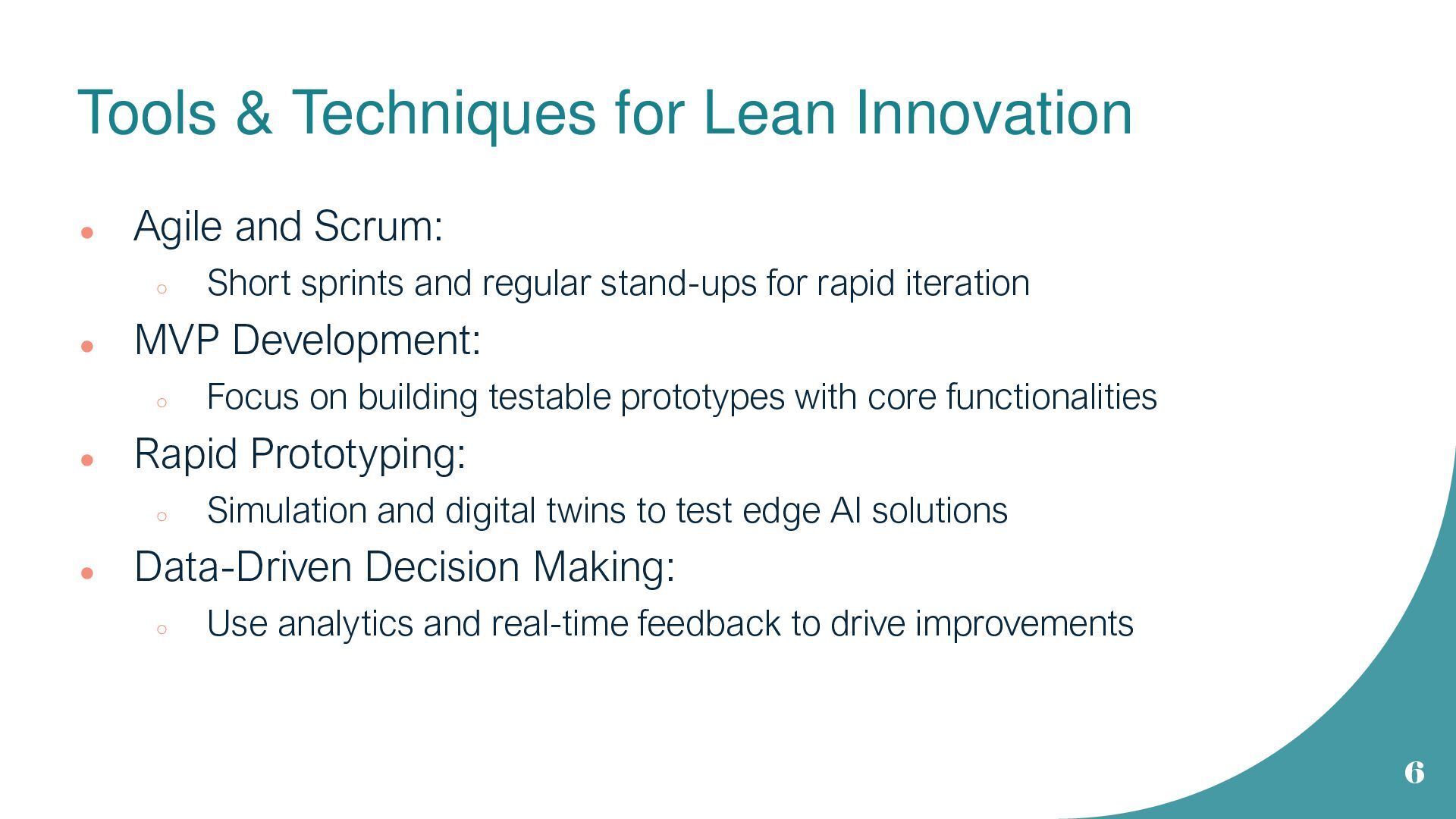
  5. Tools & Techniques for Lean Innovation • Agile and Scrum:

    ◦ Short sprints and regular stand-ups for rapid iteration • MVP Development: ◦ Focus on building testable prototypes with core functionalities • Rapid Prototyping: ◦ Simulation and digital twins to test edge AI solutions • Data-Driven Decision Making: ◦ Use analytics and real-time feedback to drive improvements 6
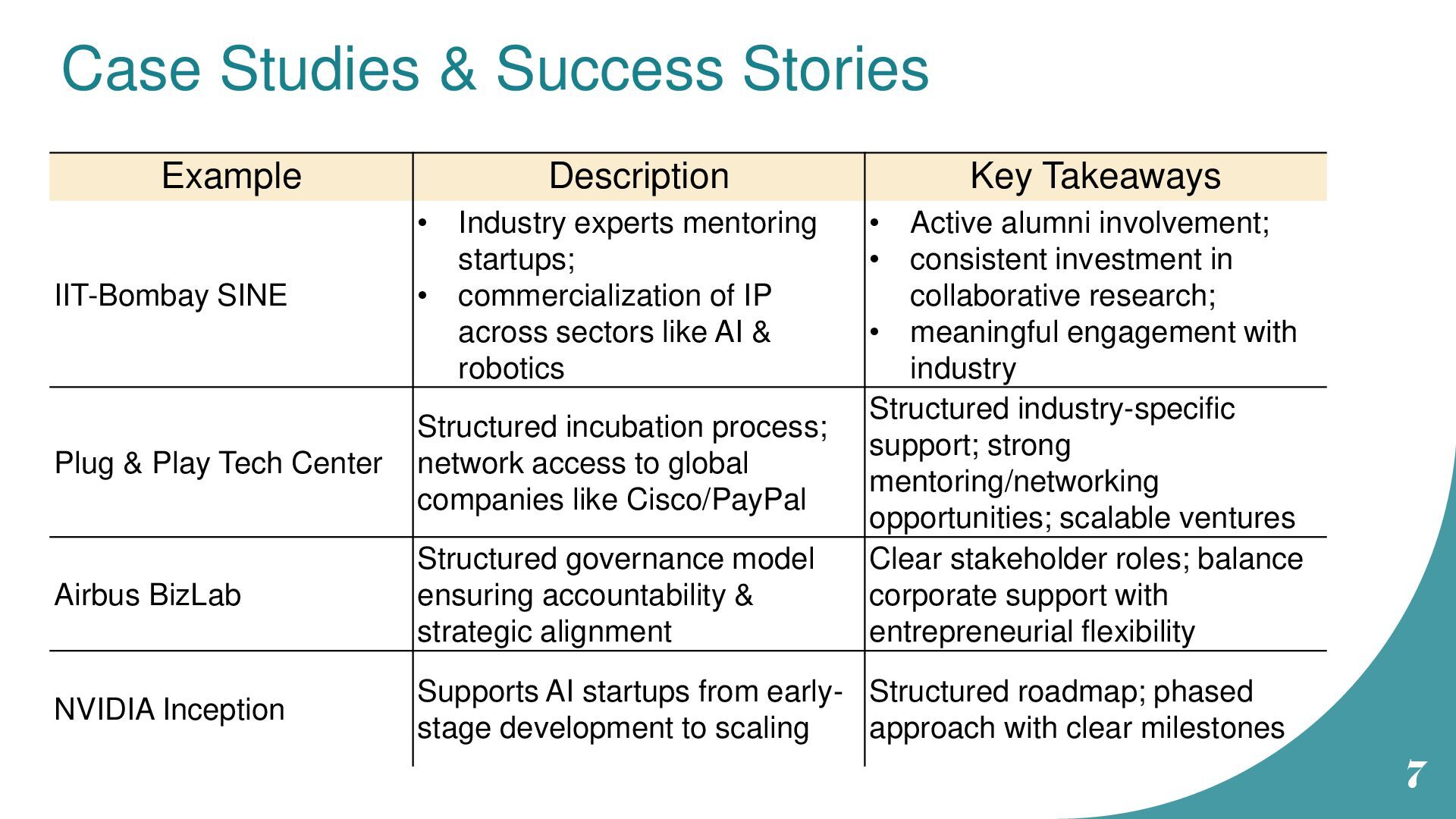
  6. Case Studies & Success Stories 7 Example Description Key Takeaways

    IIT-Bombay SINE • Industry experts mentoring startups; • commercialization of IP across sectors like AI & robotics • Active alumni involvement; • consistent investment in collaborative research; • meaningful engagement with industry Plug & Play Tech Center Structured incubation process; network access to global companies like Cisco/PayPal Structured industry-specific support; strong mentoring/networking opportunities; scalable ventures Airbus BizLab Structured governance model ensuring accountability & strategic alignment Clear stakeholder roles; balance corporate support with entrepreneurial flexibility NVIDIA Inception Supports AI startups from early- stage development to scaling Structured roadmap; phased approach with clear milestones
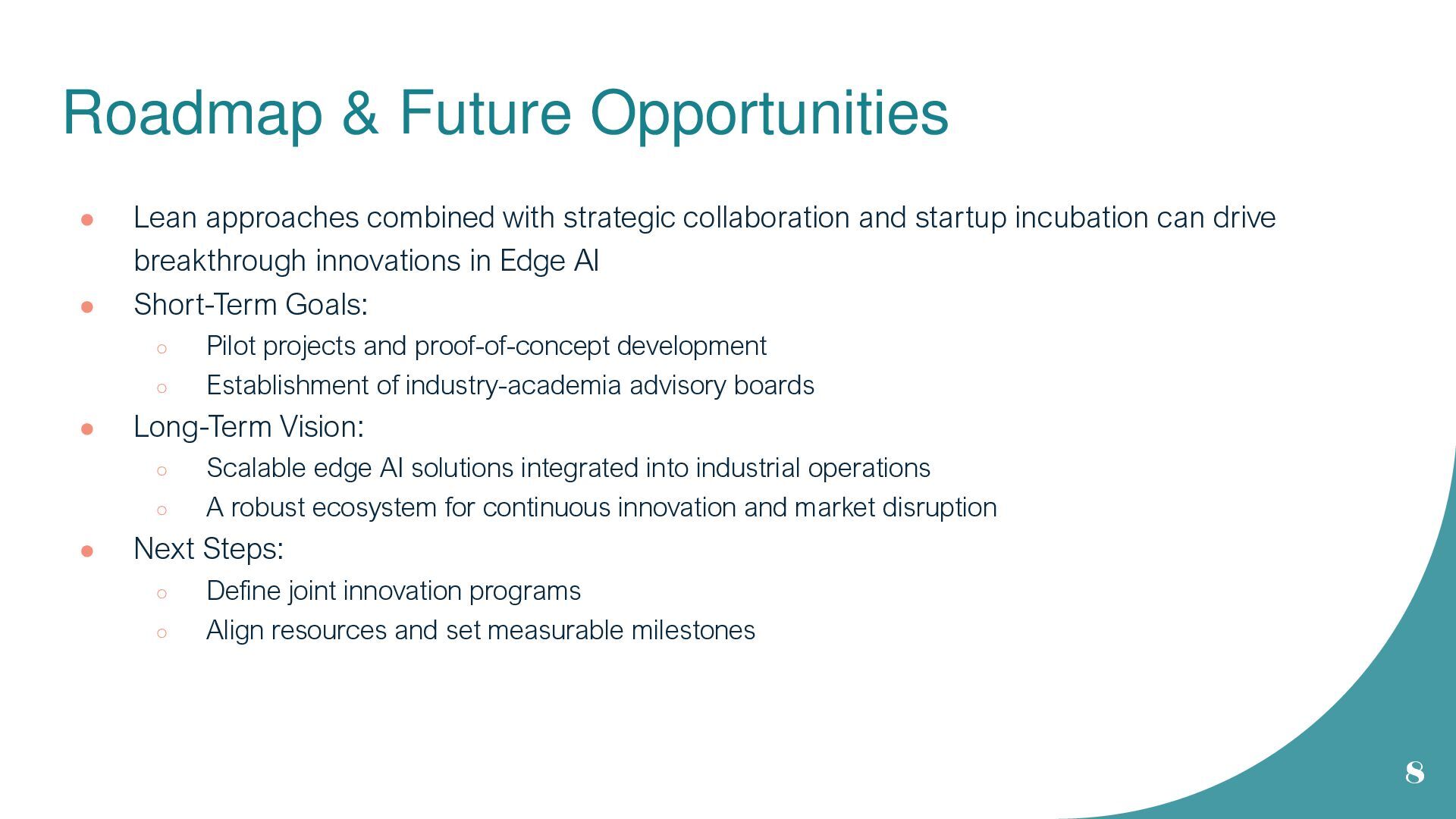
  7. Roadmap & Future Opportunities • Lean approaches combined with strategic

    collaboration and startup incubation can drive breakthrough innovations in Edge AI • Short-Term Goals: ◦ Pilot projects and proof-of-concept development ◦ Establishment of industry-academia advisory boards • Long-Term Vision: ◦ Scalable edge AI solutions integrated into industrial operations ◦ A robust ecosystem for continuous innovation and market disruption • Next Steps: ◦ Define joint innovation programs ◦ Align resources and set measurable milestones 8