Talk at KotlinLeeds2026
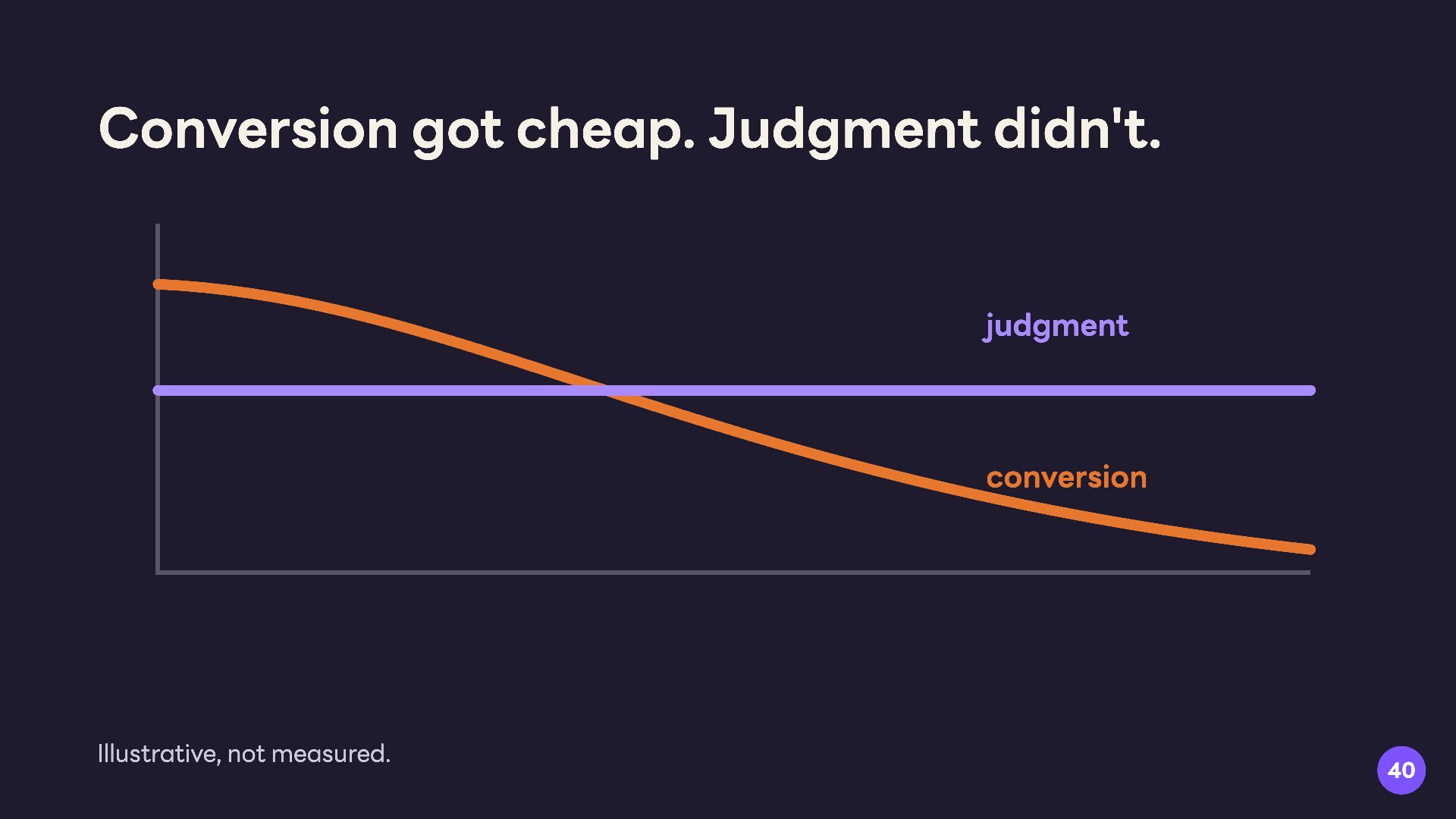
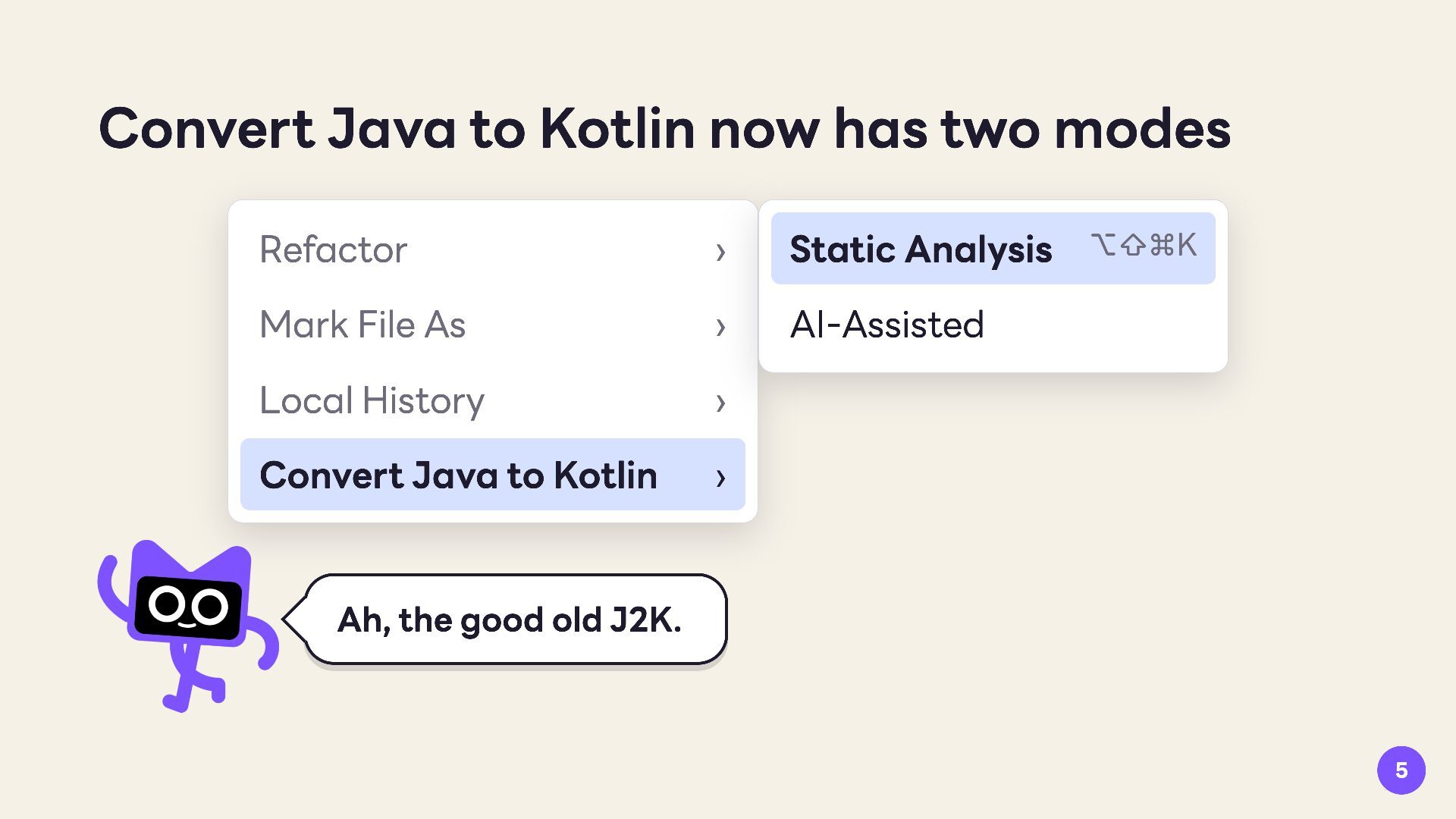
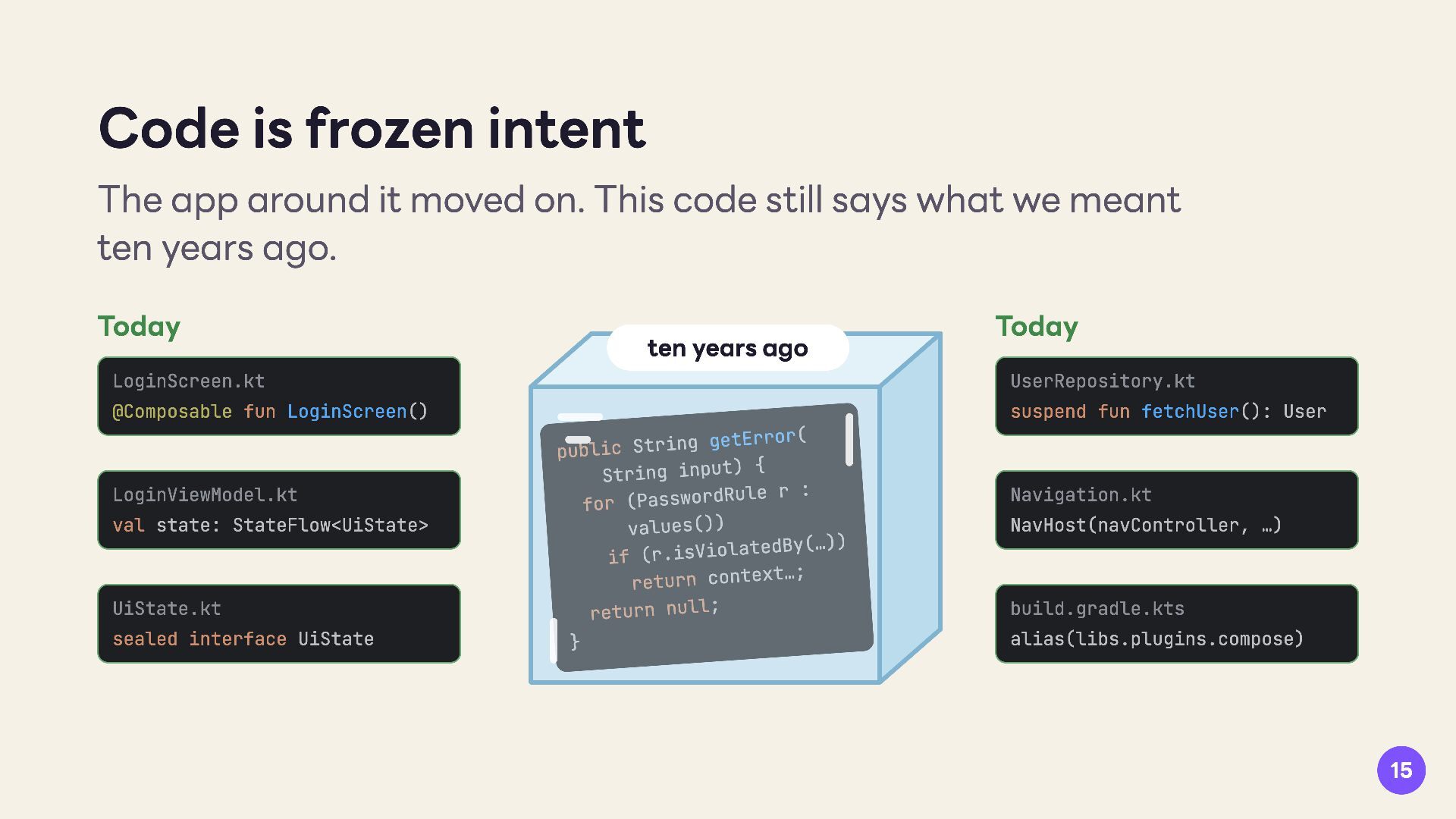
I've spent the past few years migrating Java to Kotlin in a decade-old Android codebase. Modern converters (IDE features, AI agents) can produce logically equivalent Kotlin code in seconds. So why does my team still spend hours on each file?
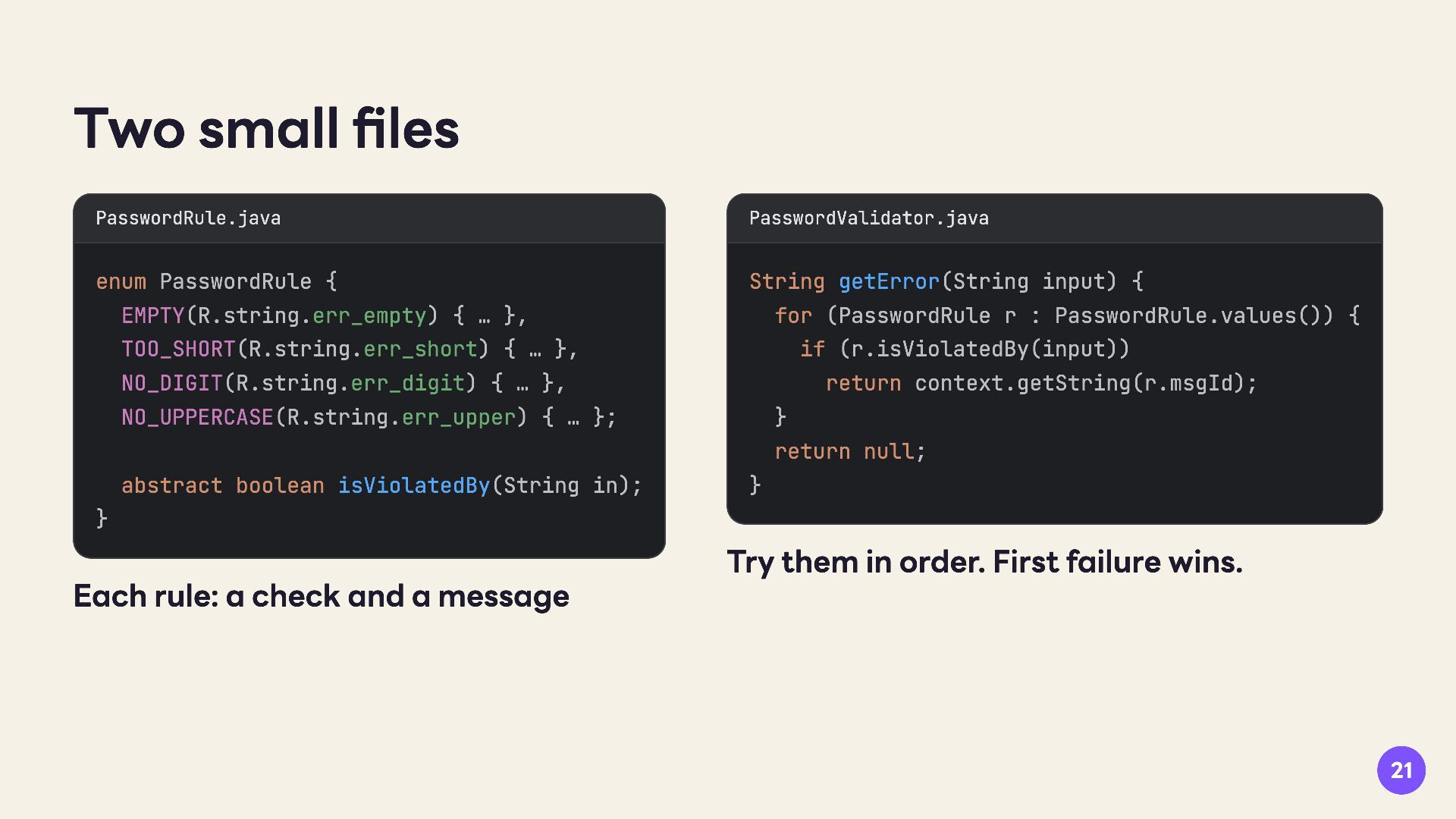
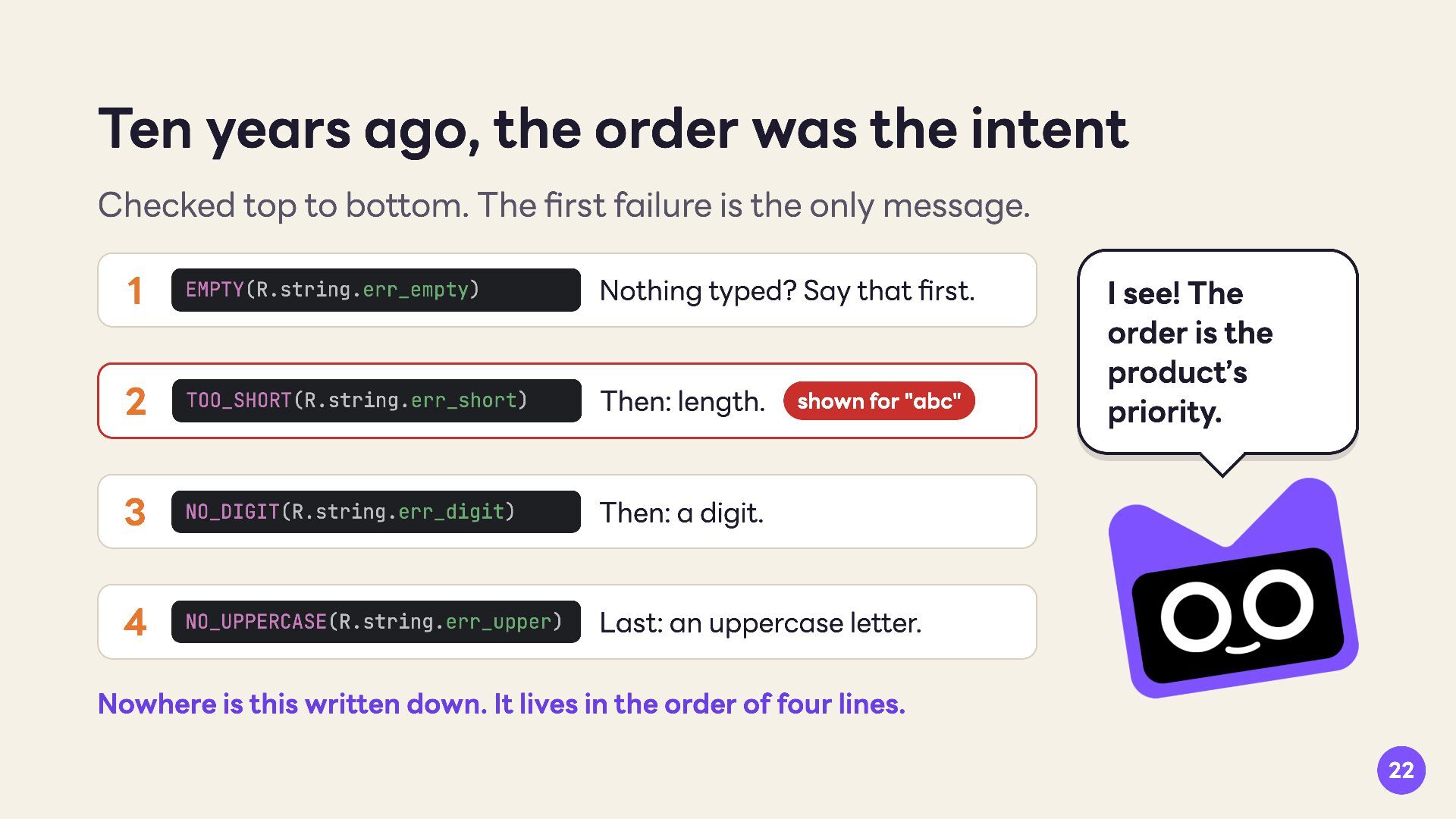
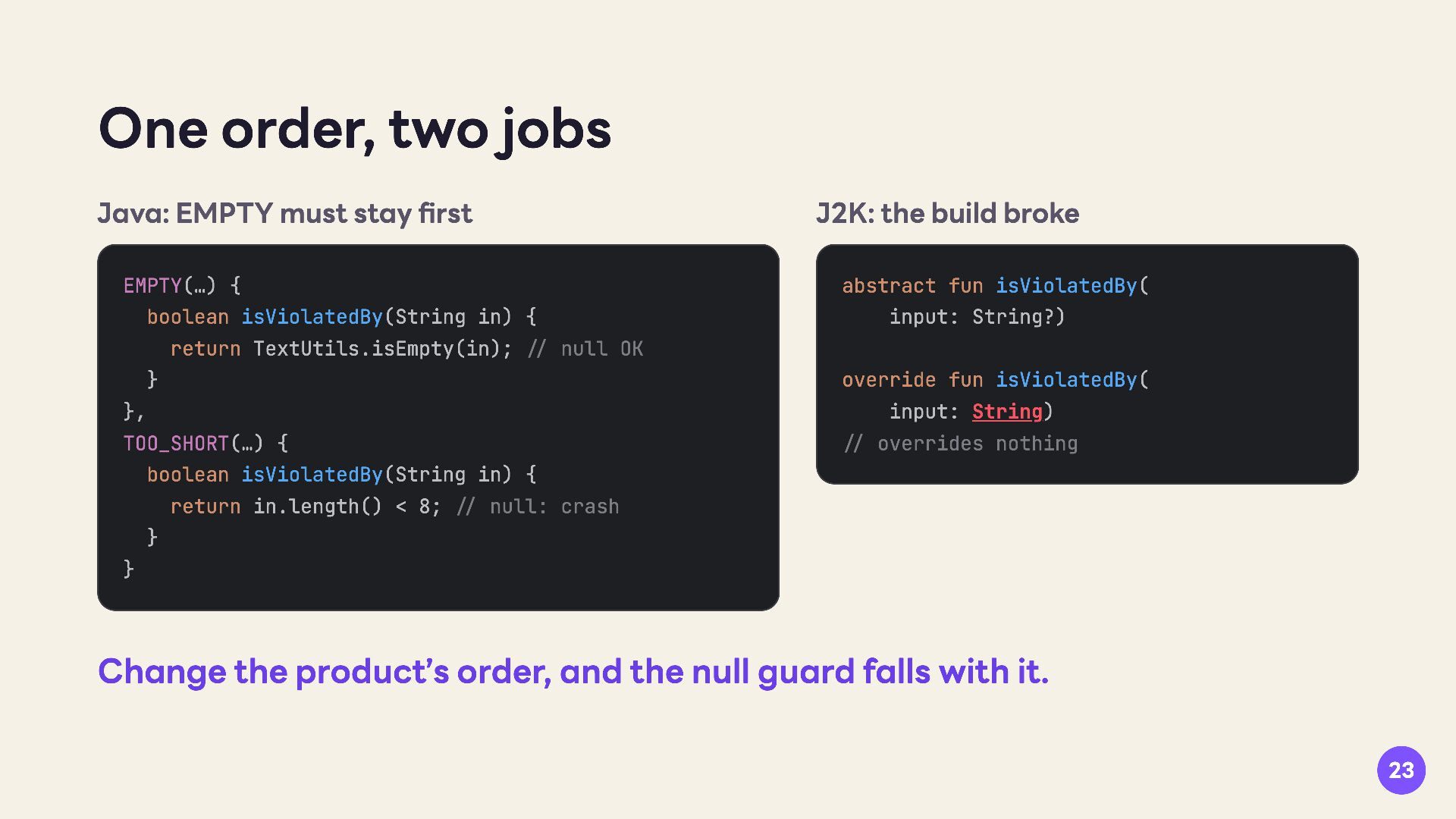
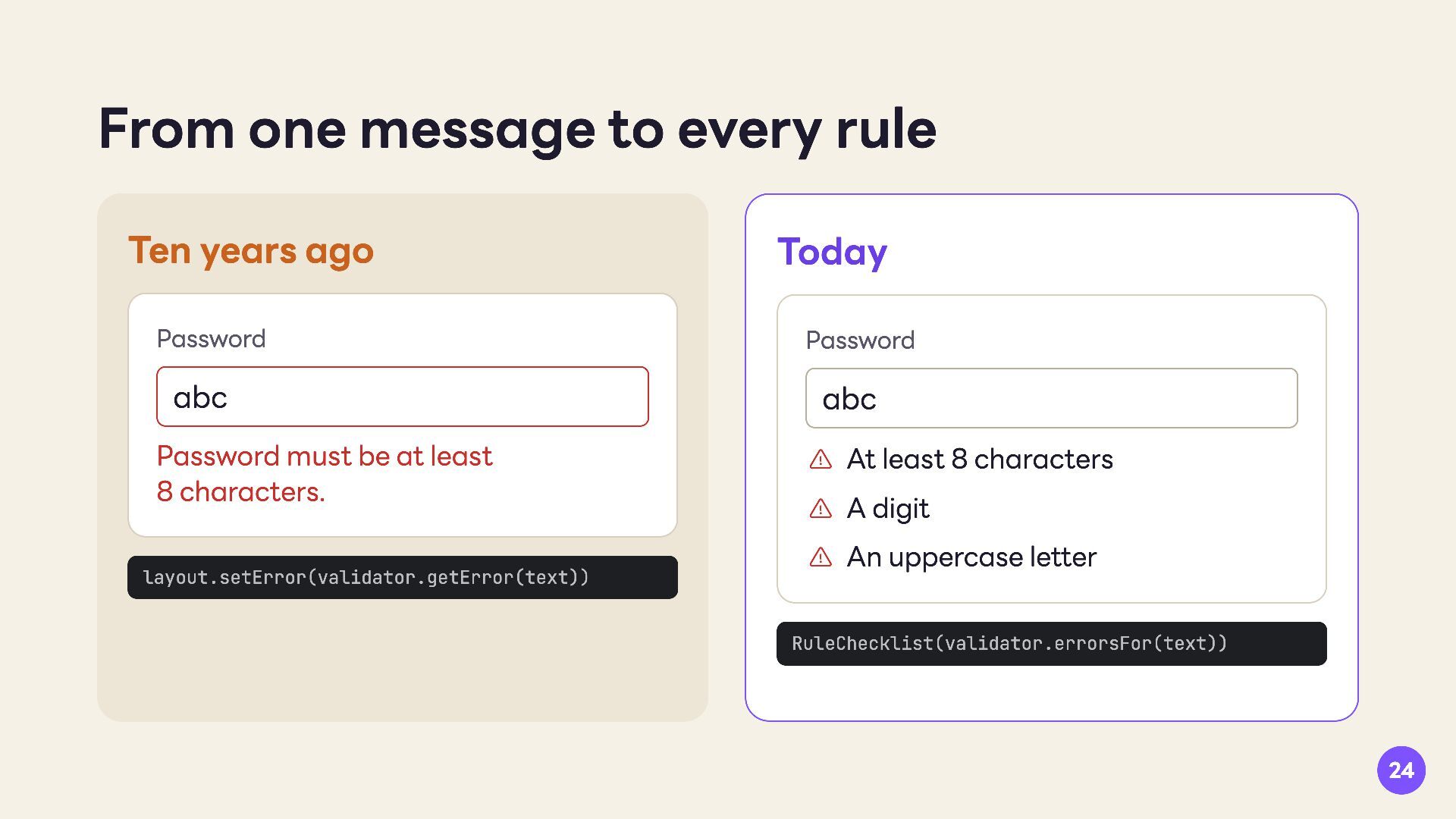
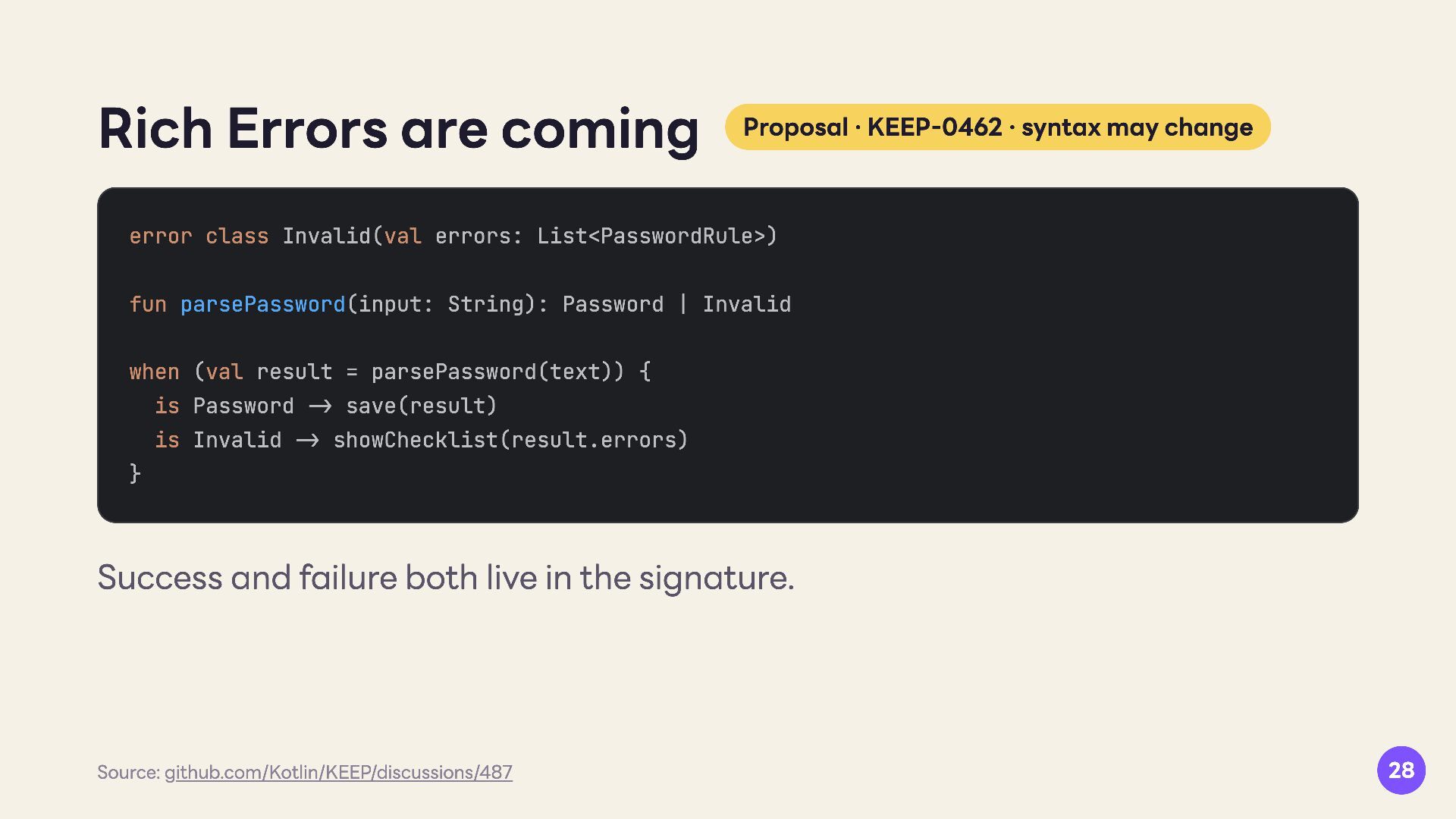
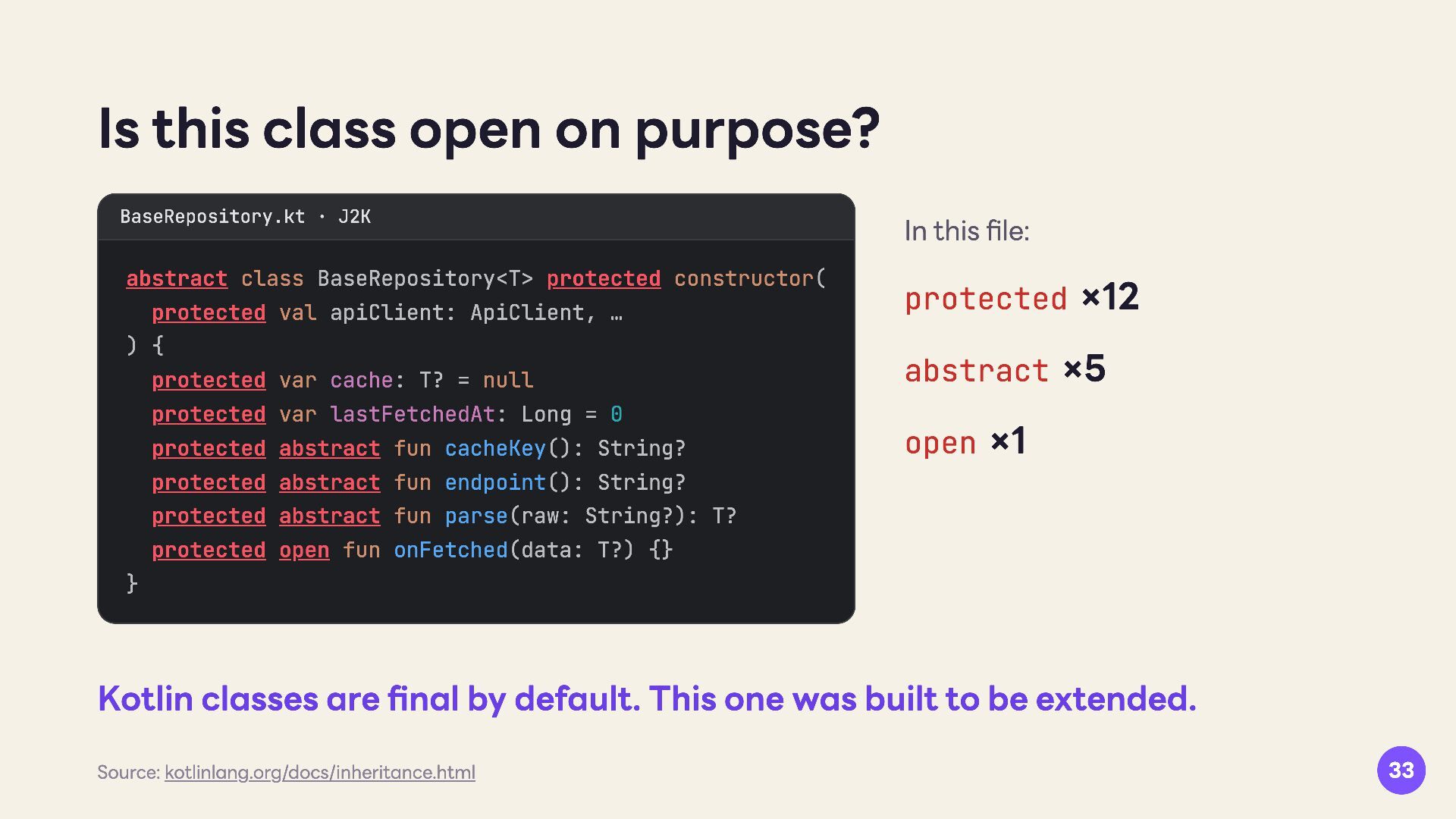
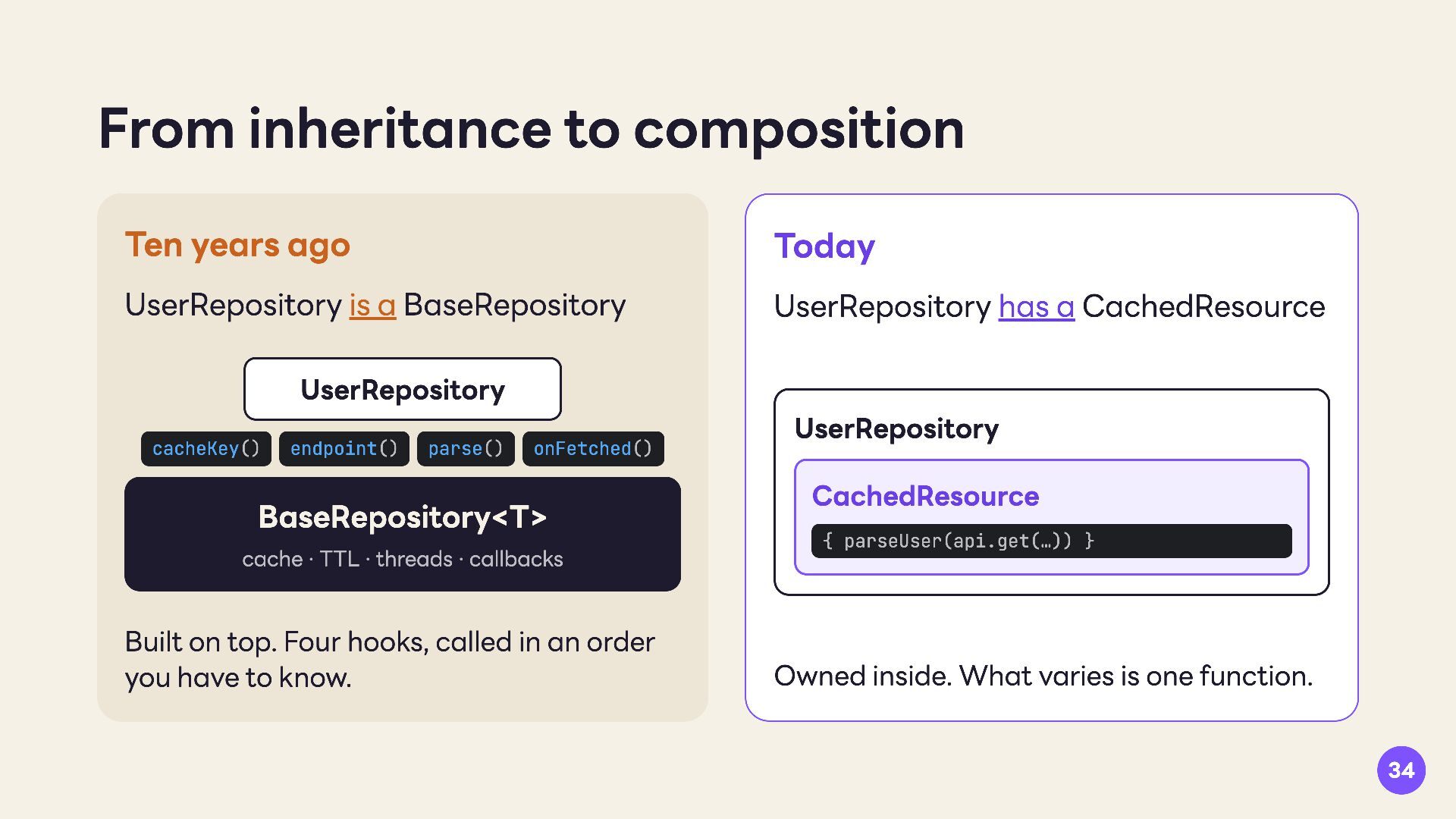
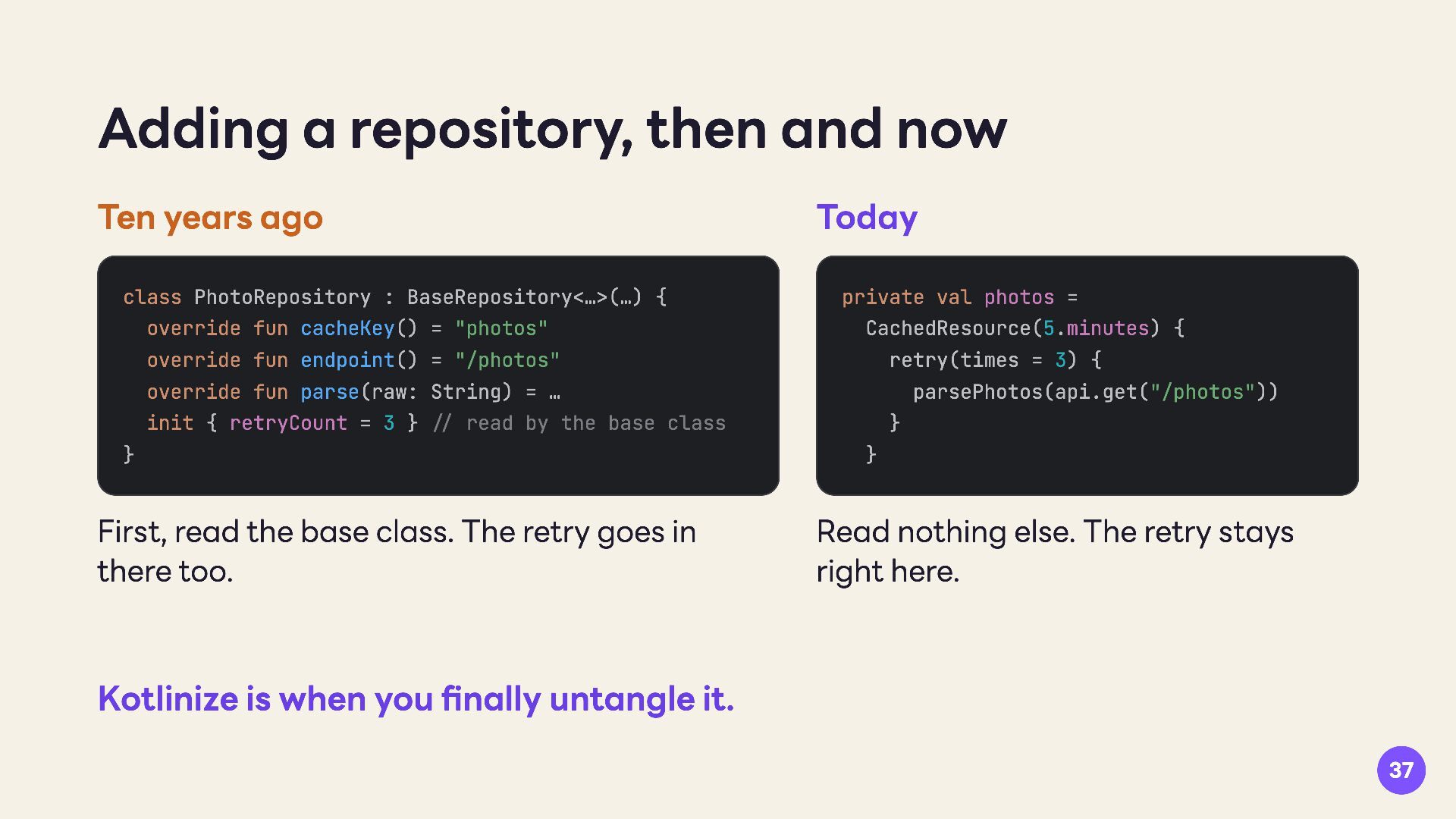
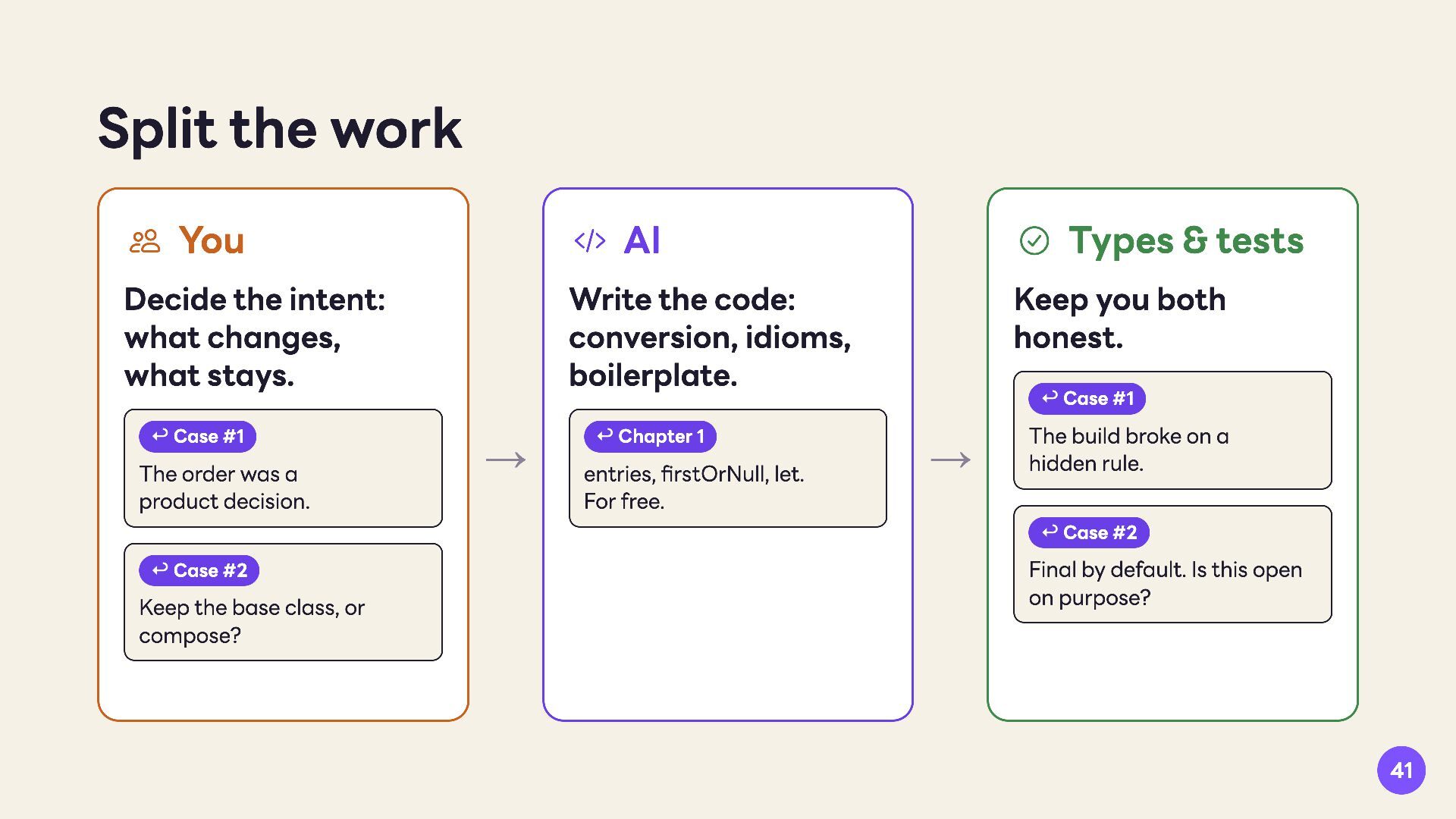
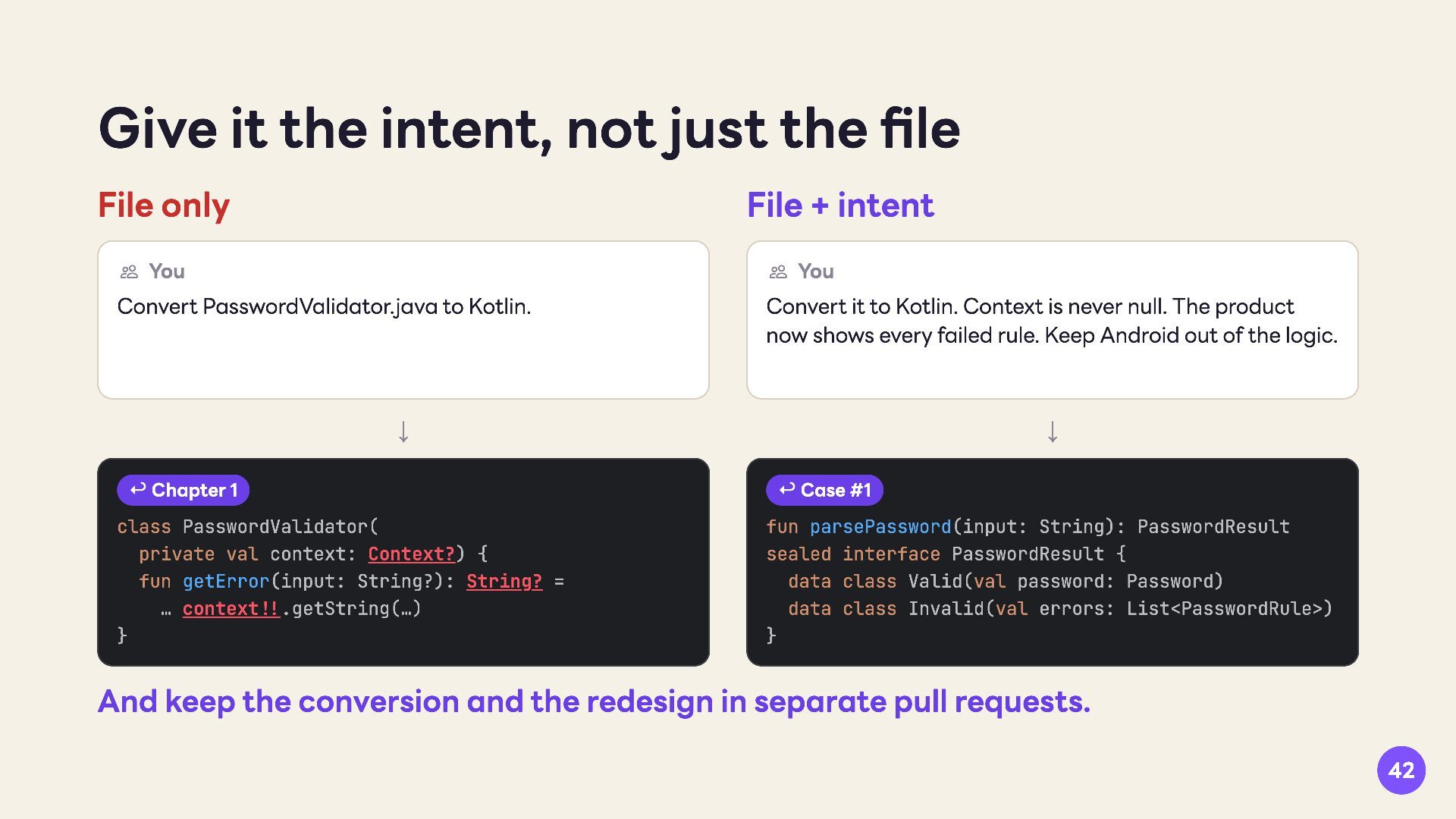
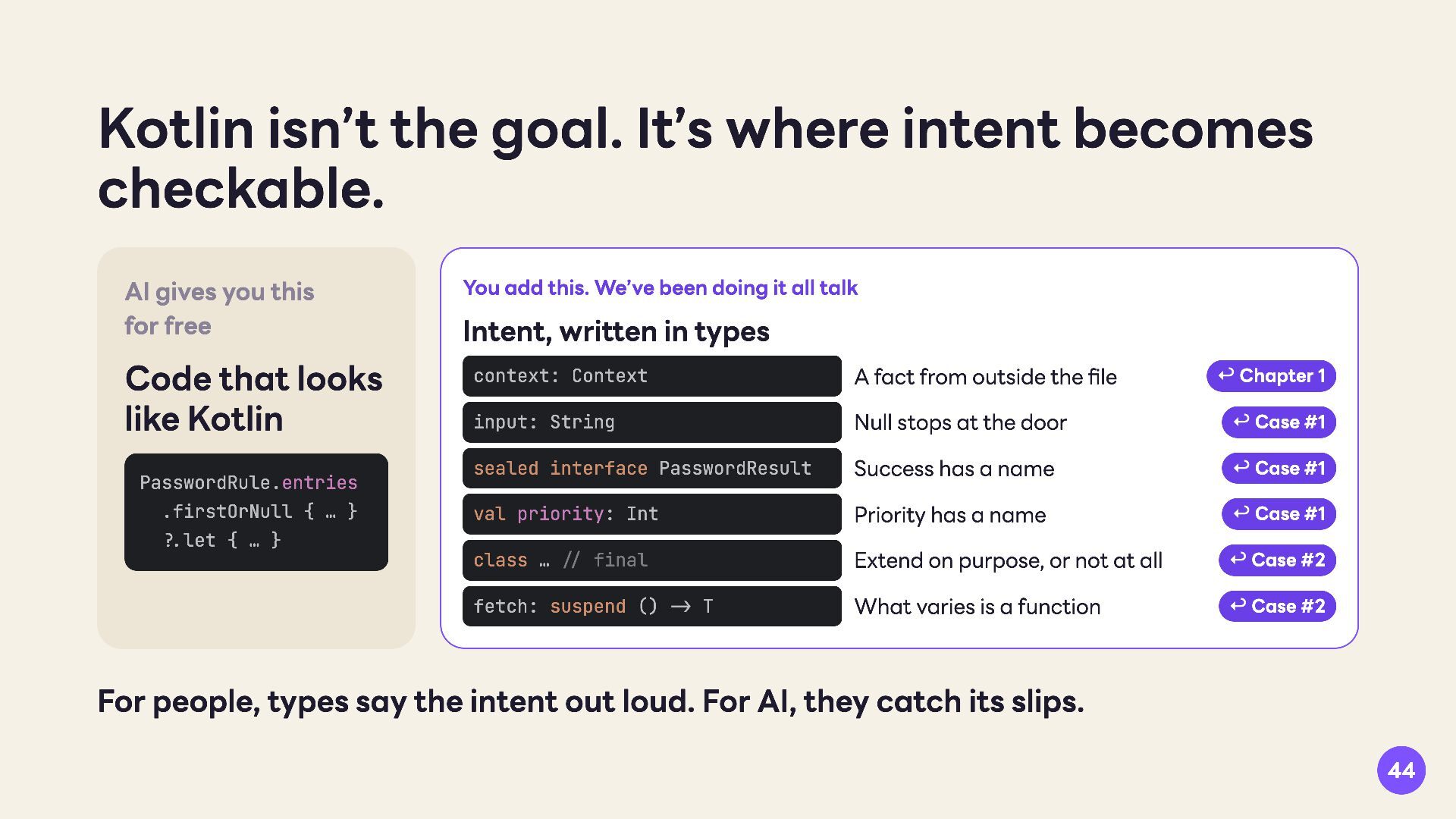
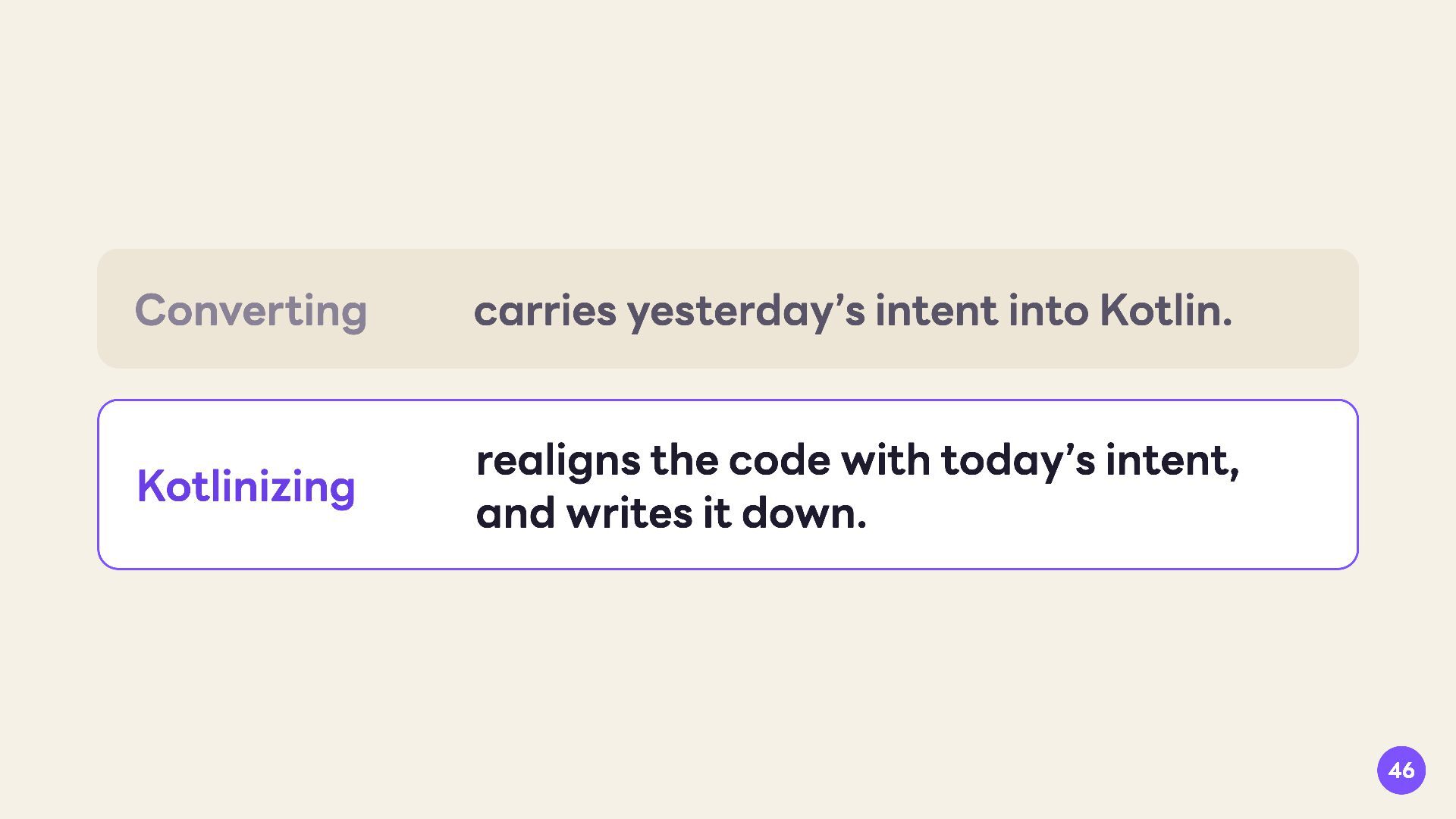
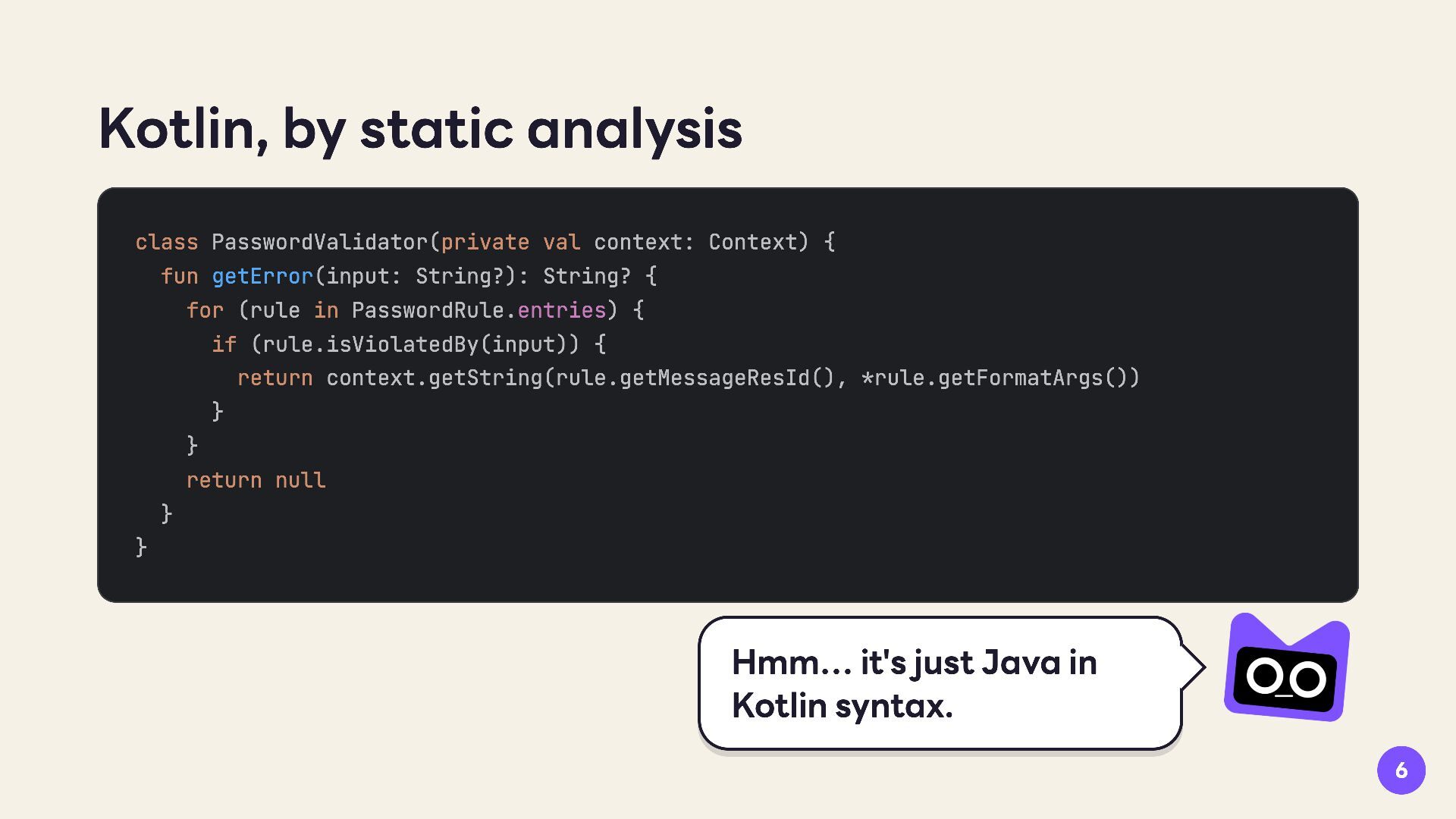
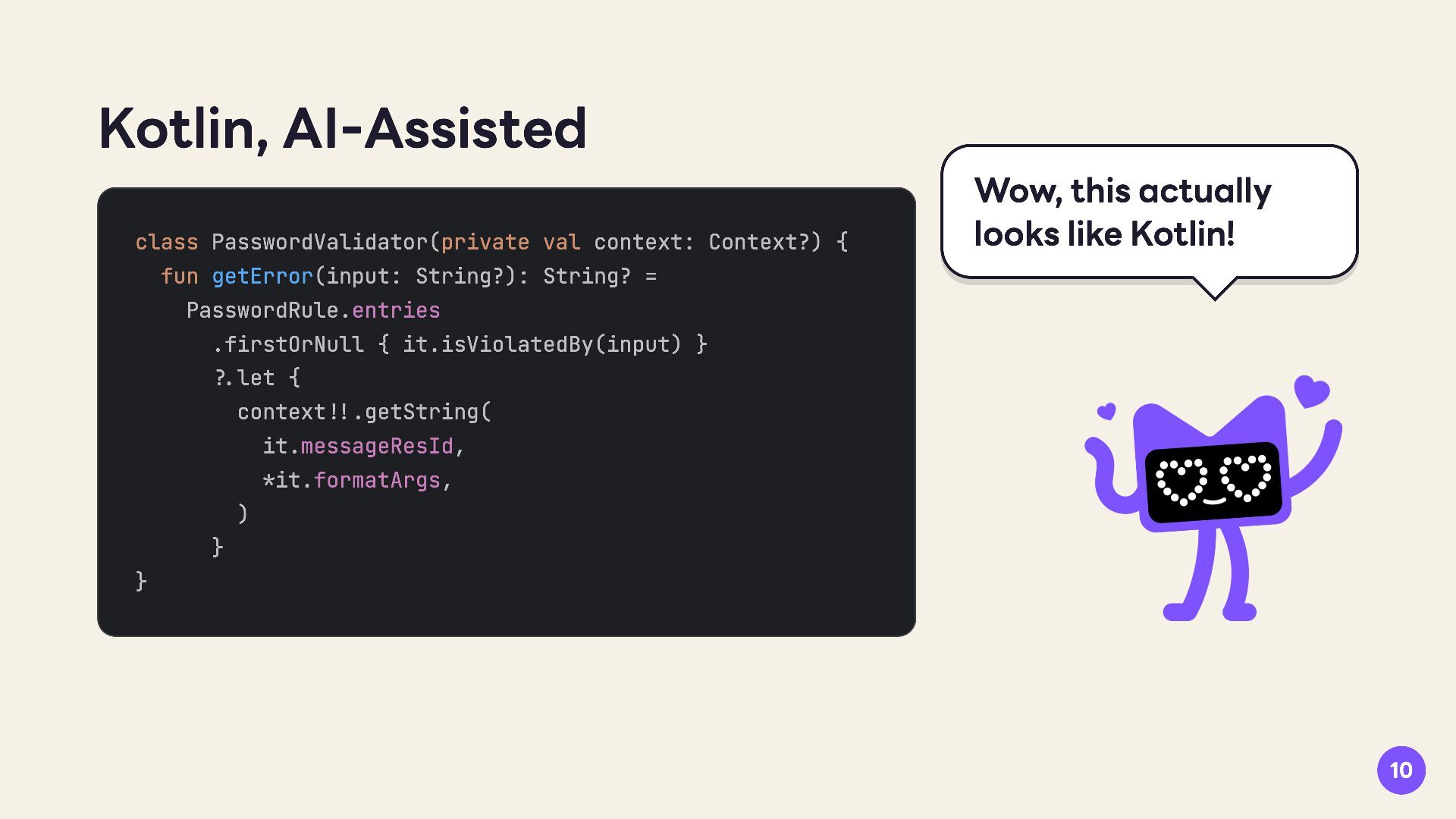
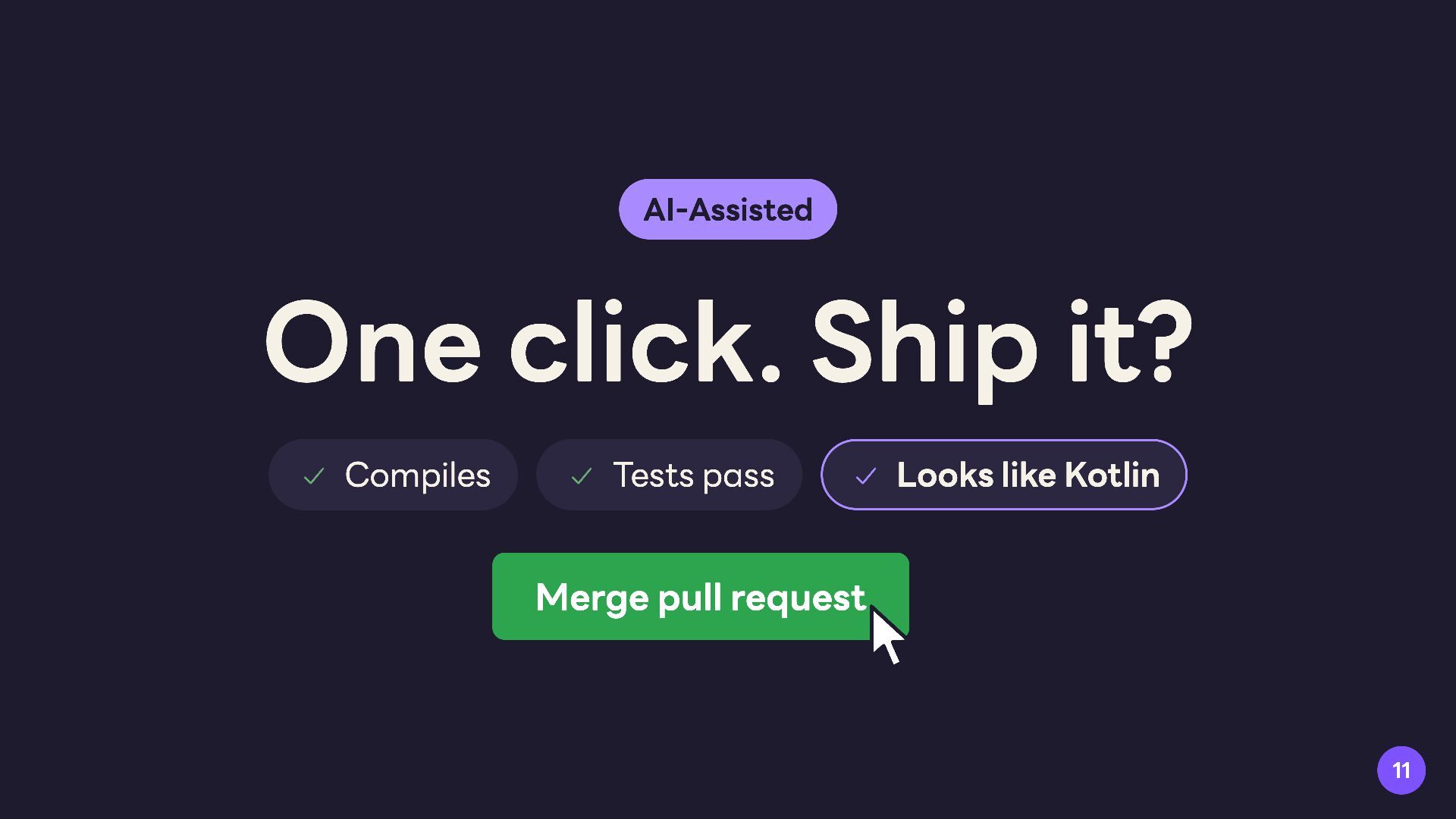
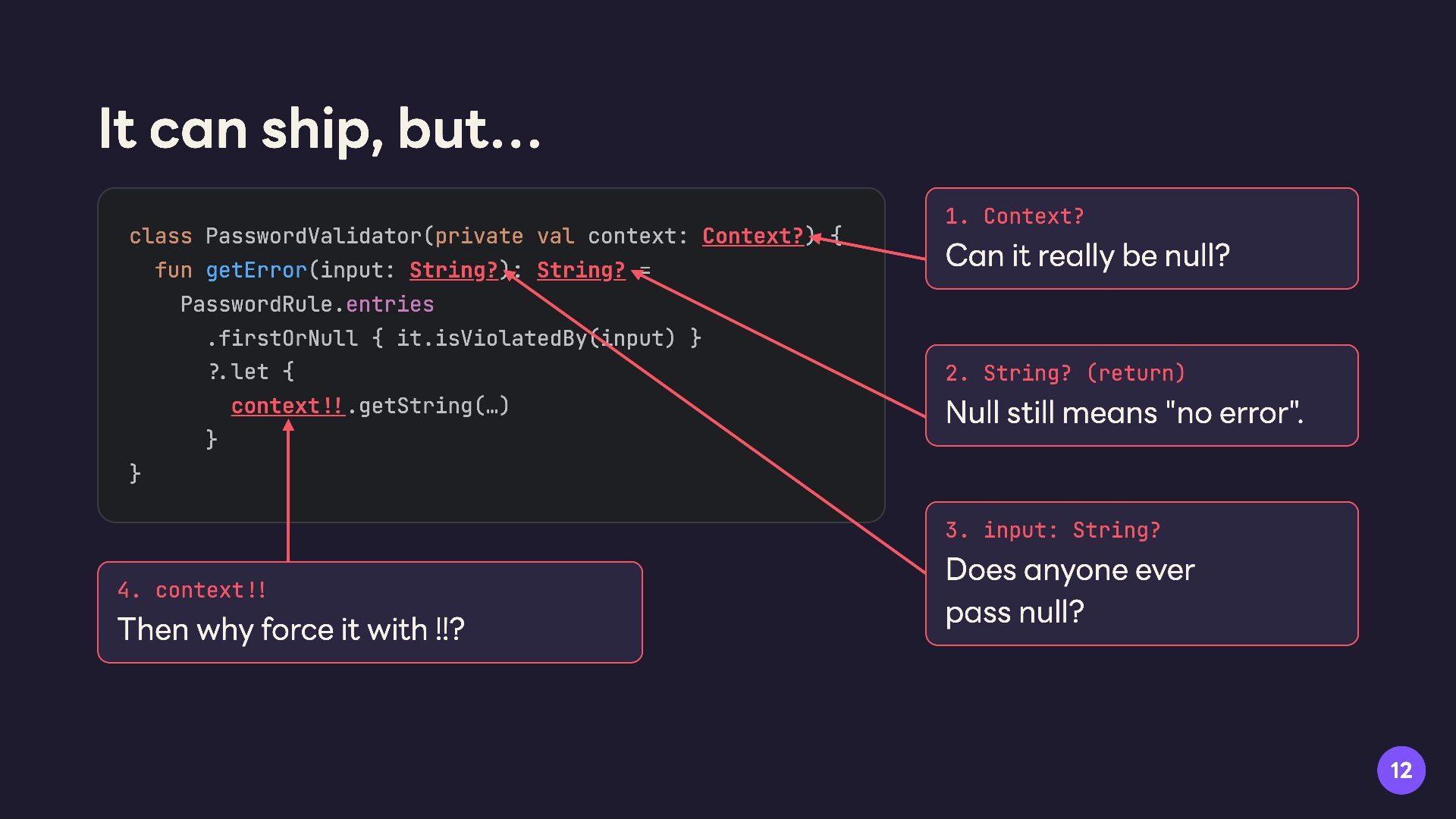
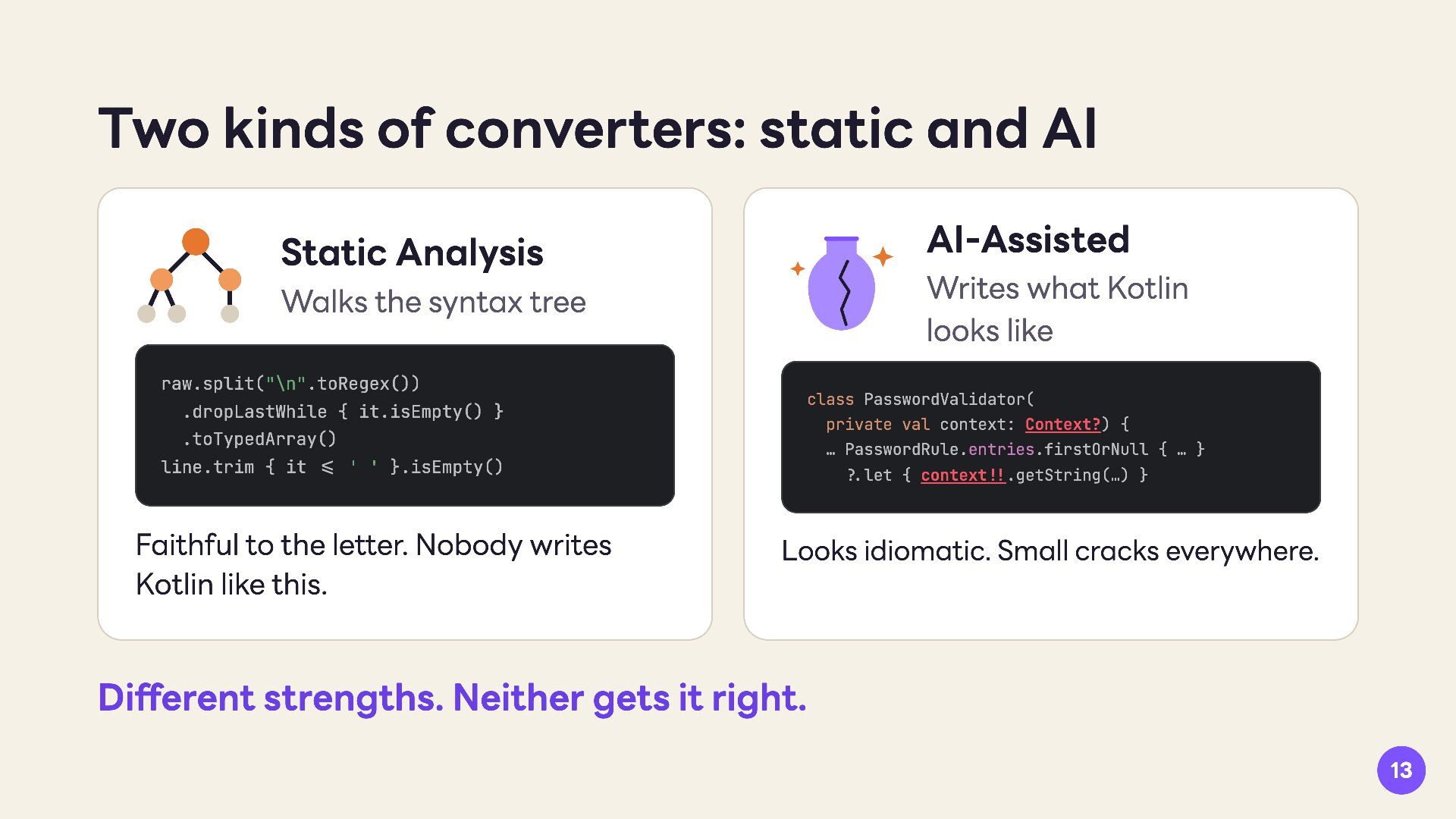
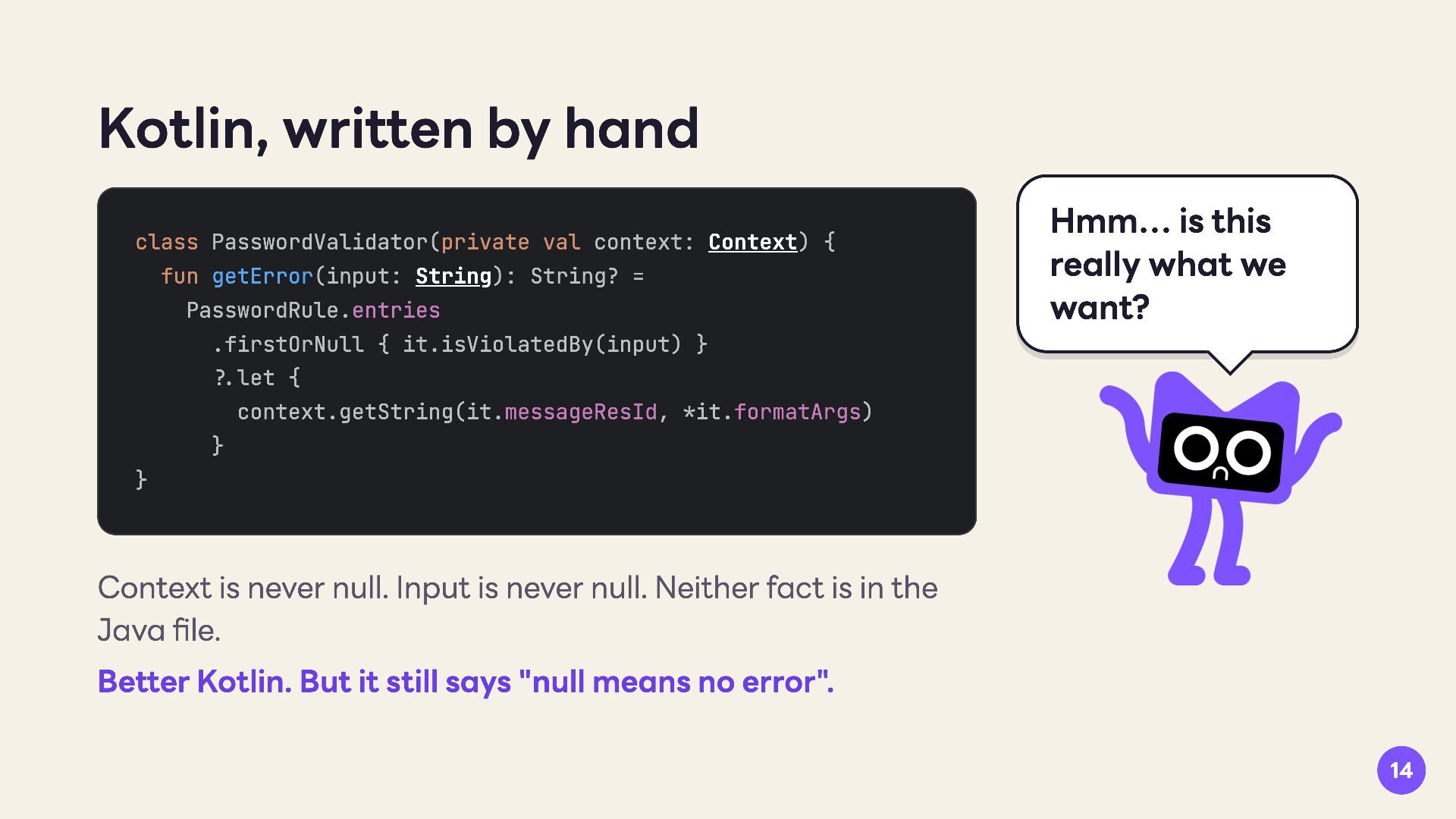
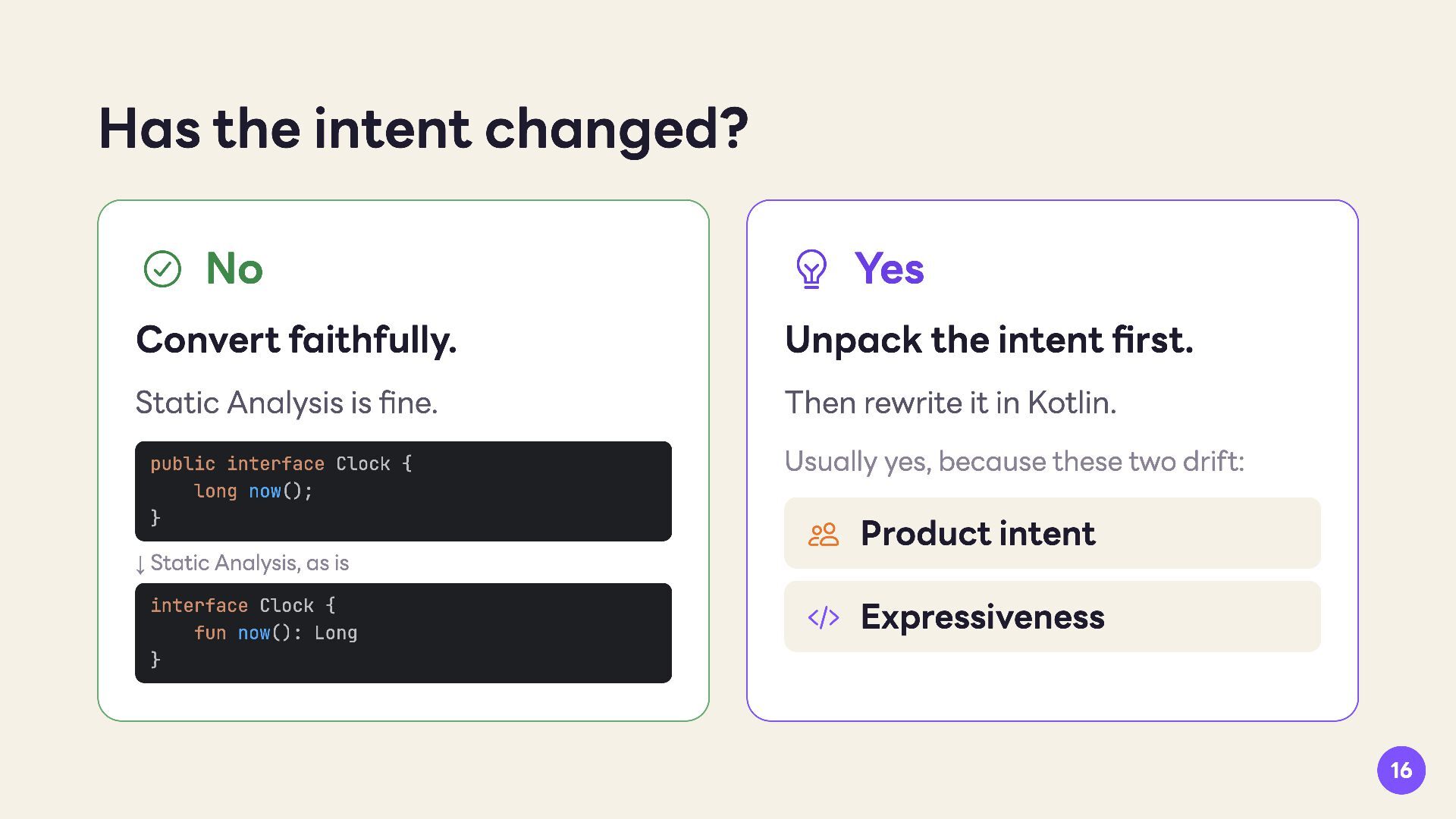
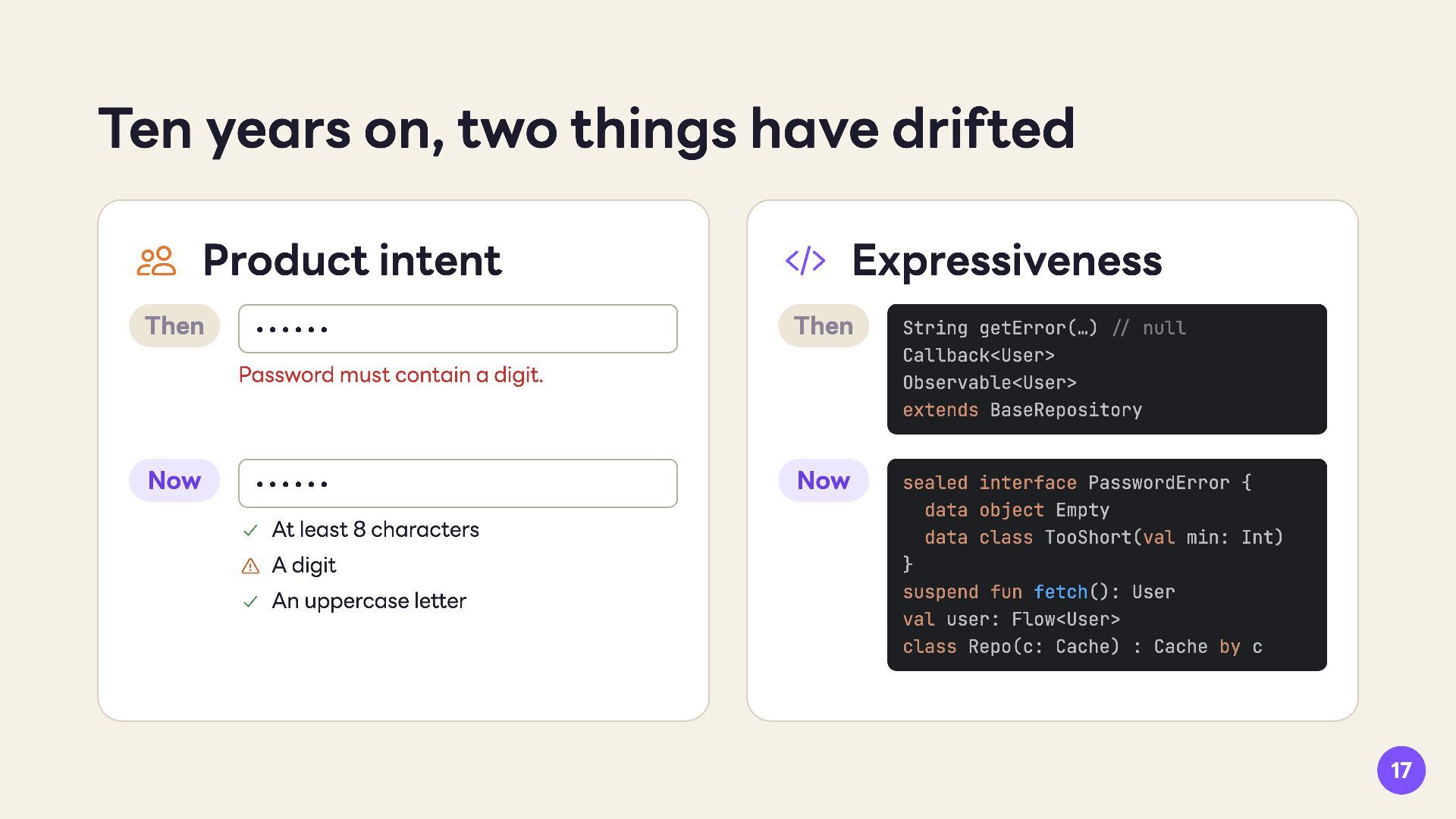
Because converting and Kotlinizing are not the same thing. A converter turns syntax into Kotlin. It does not decide whether an abstract class should survive the migration or be replaced with composition. It does not ask whether your validator should keep returning resource-backed error strings, or expose a sealed ValidationError for the UI layer. It just gives you Kotlin that compiles—and nothing more.I've shipped code like that and watched it haunt code reviews for months.The compiler was happy. Nothing else was.
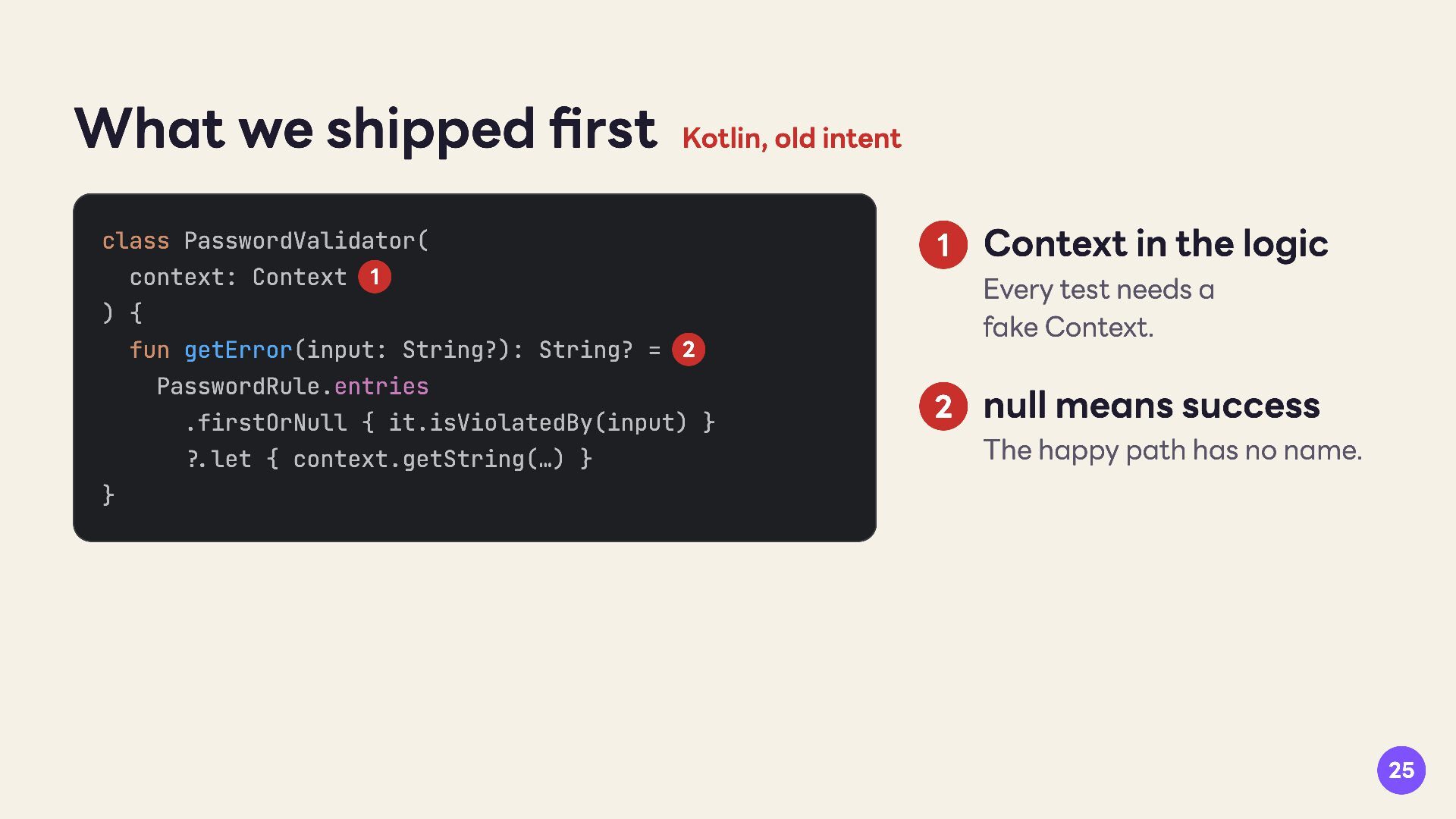
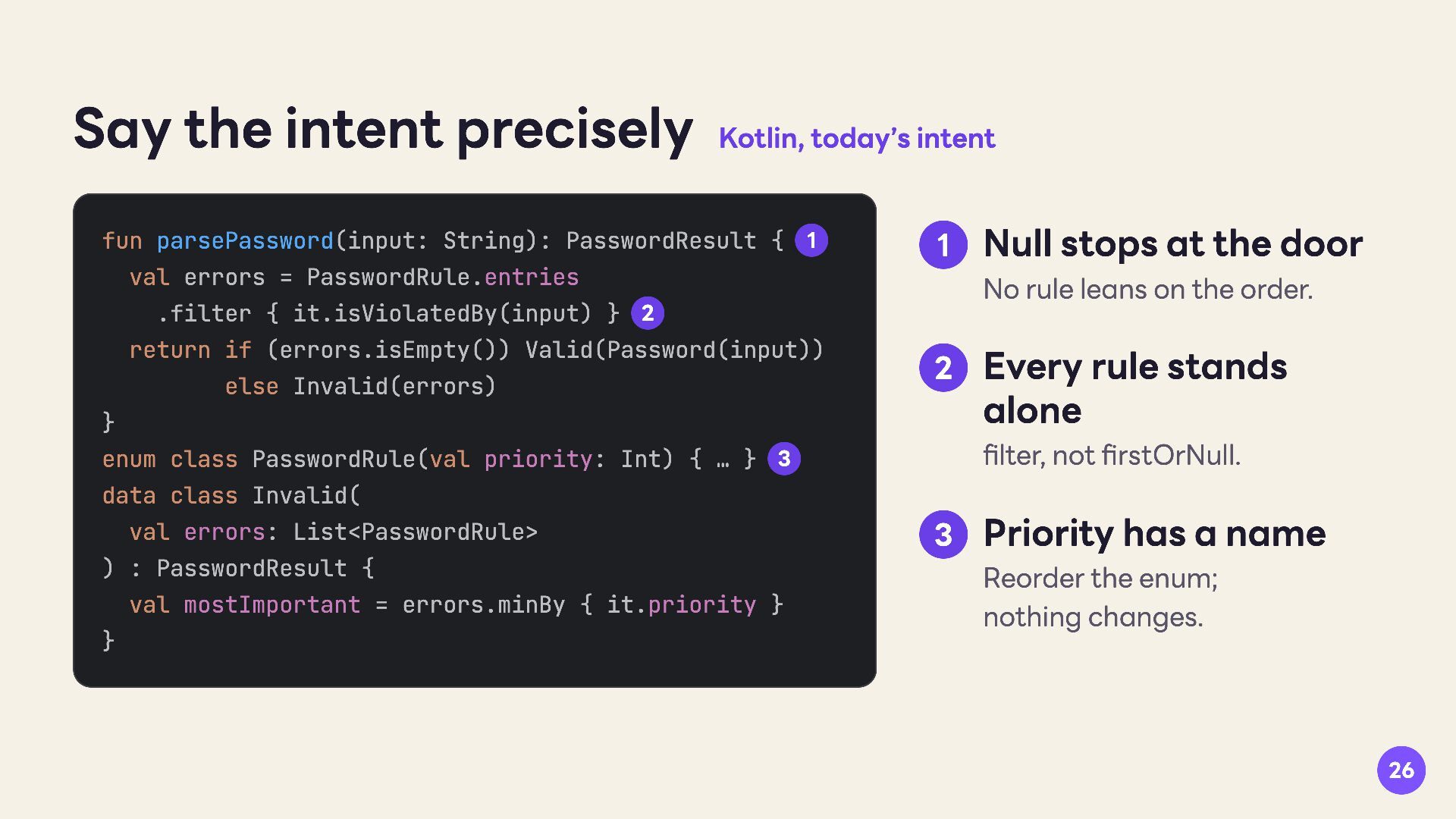
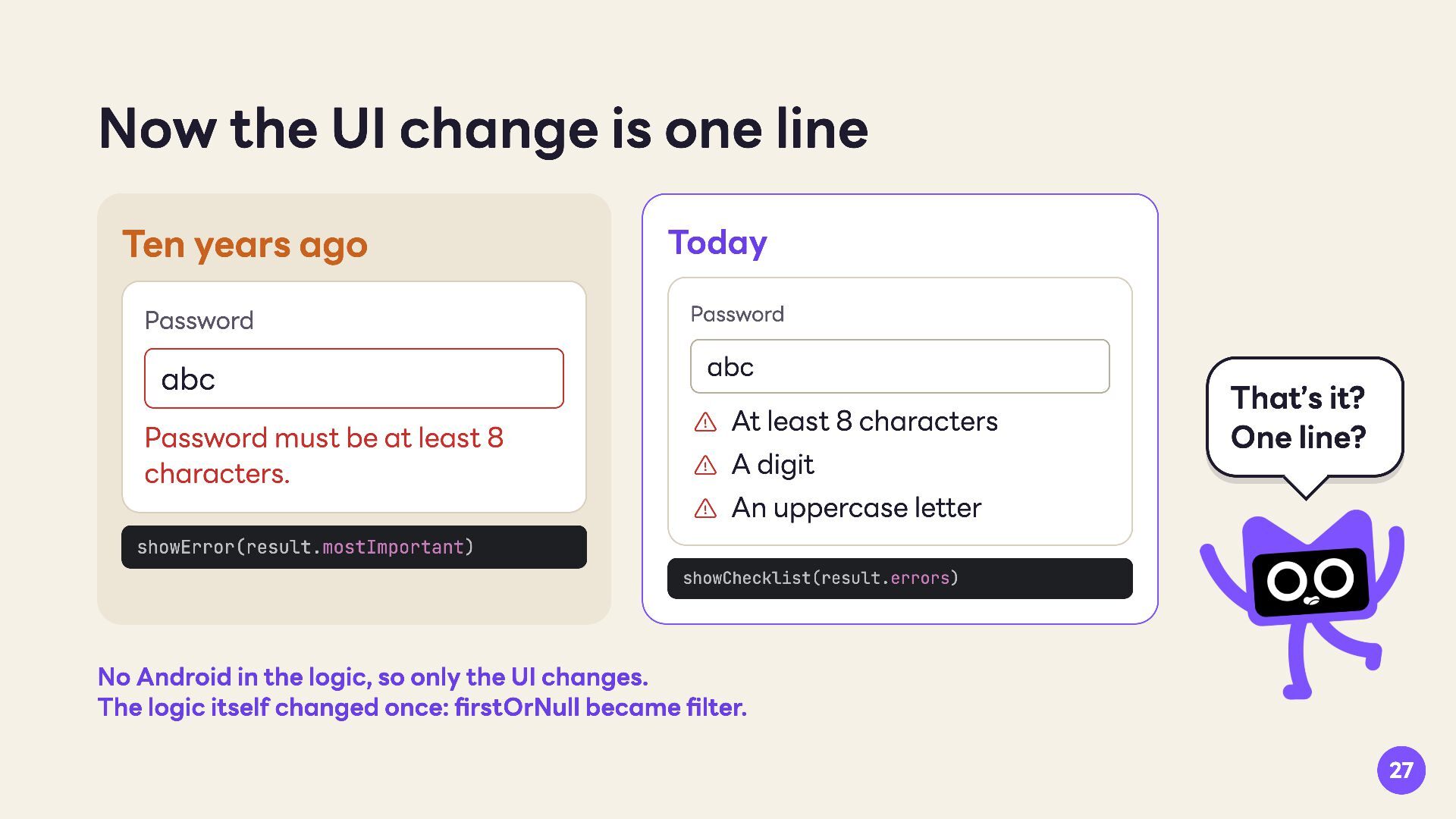
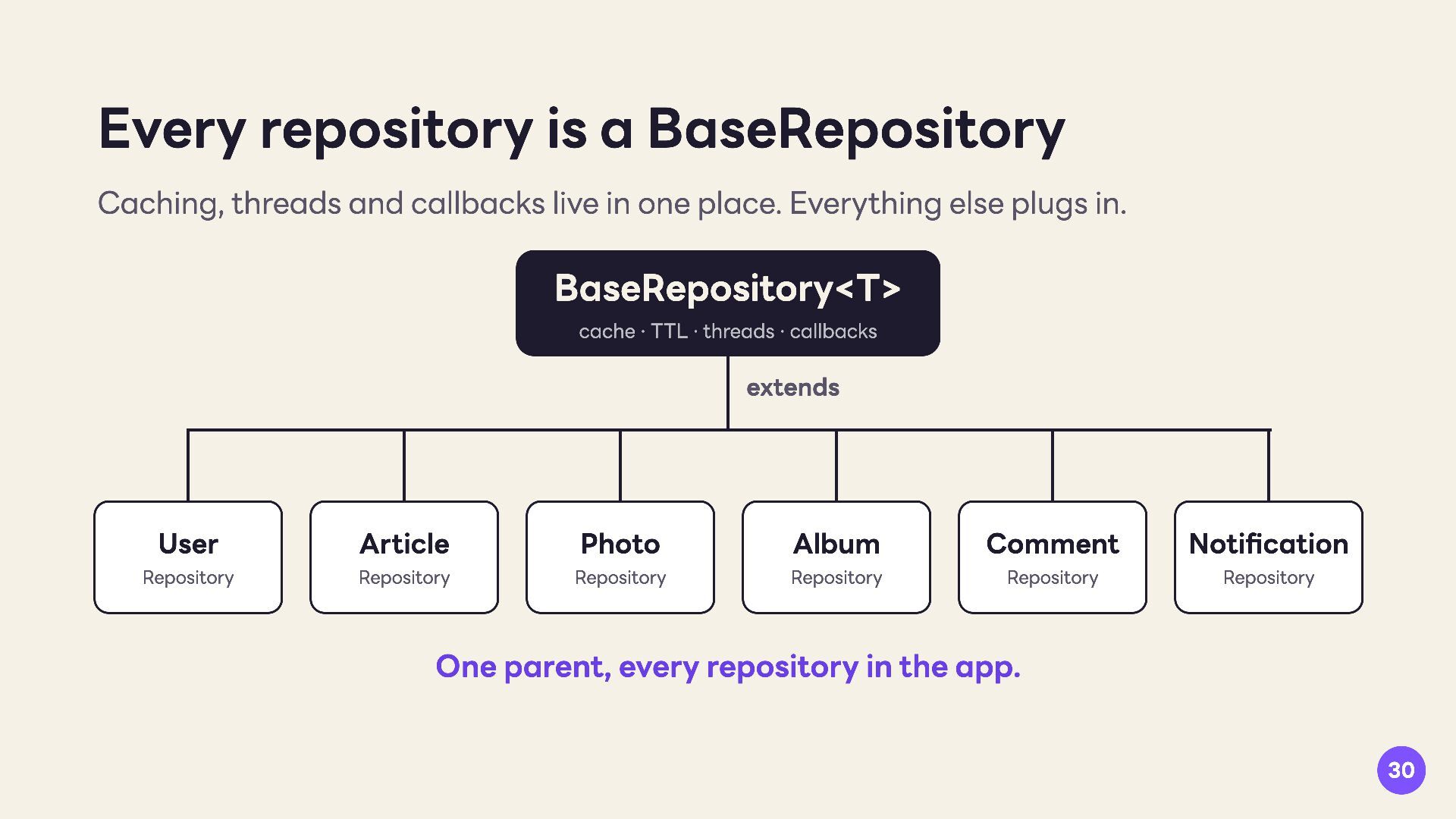
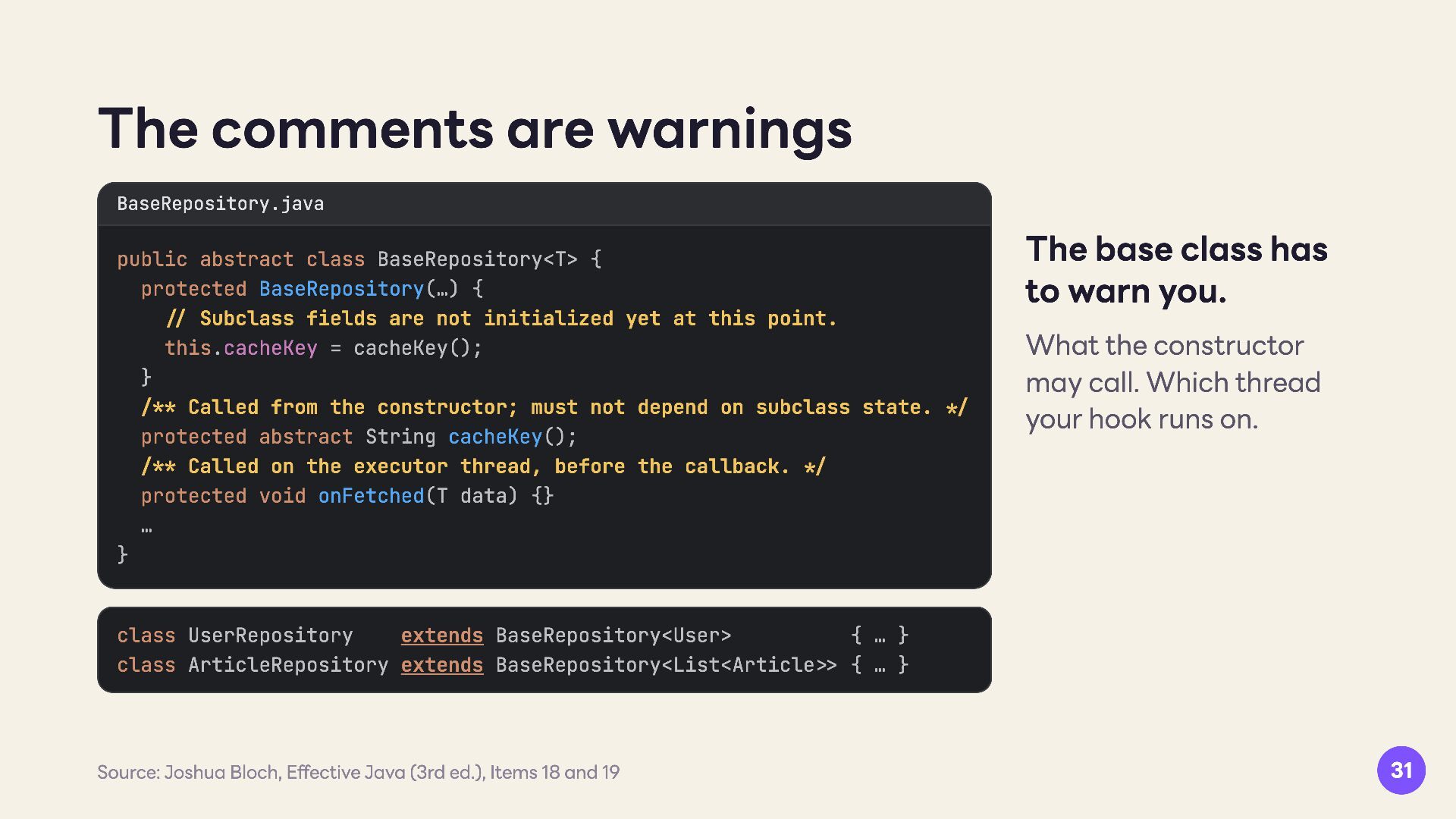
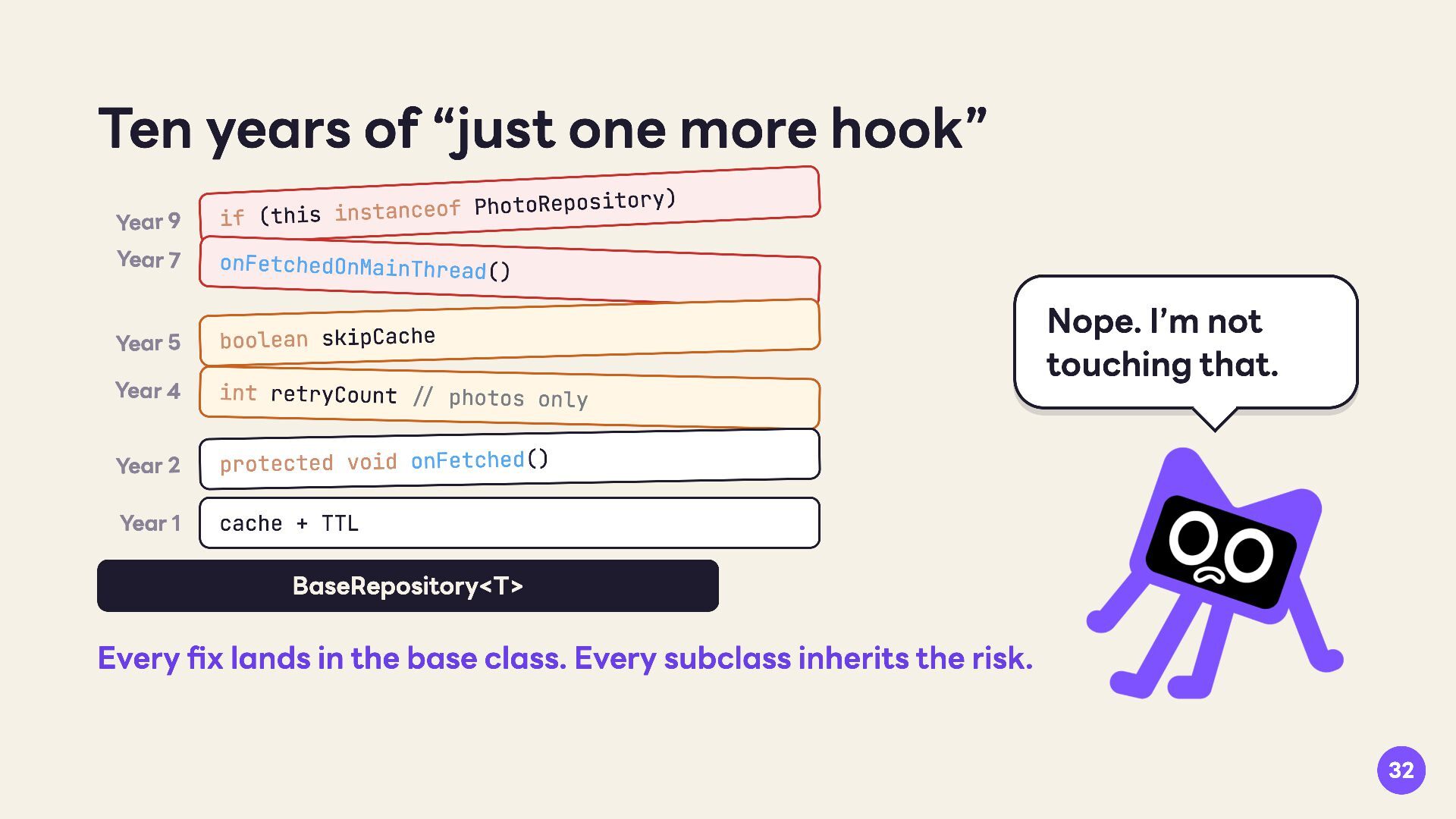
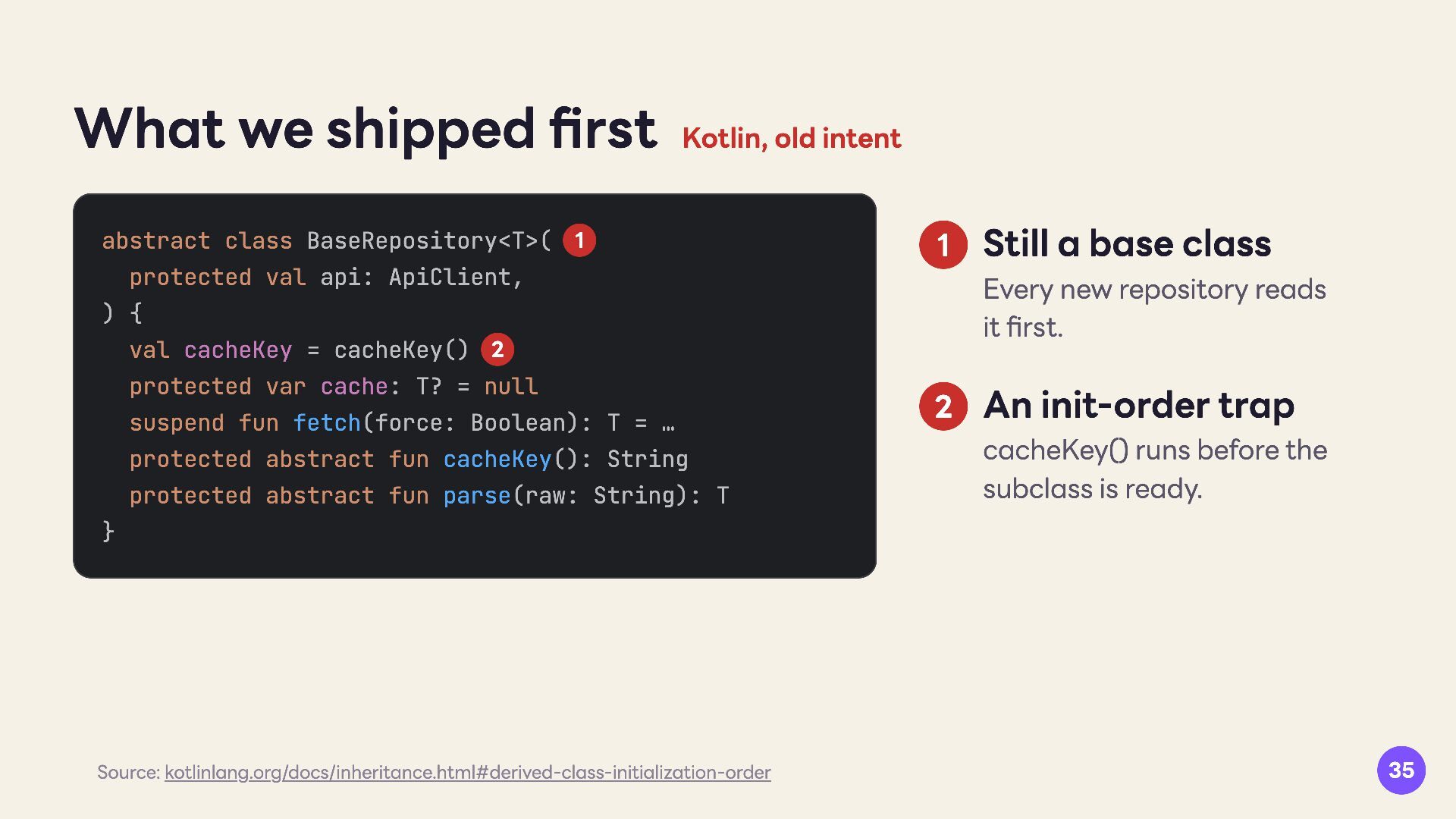
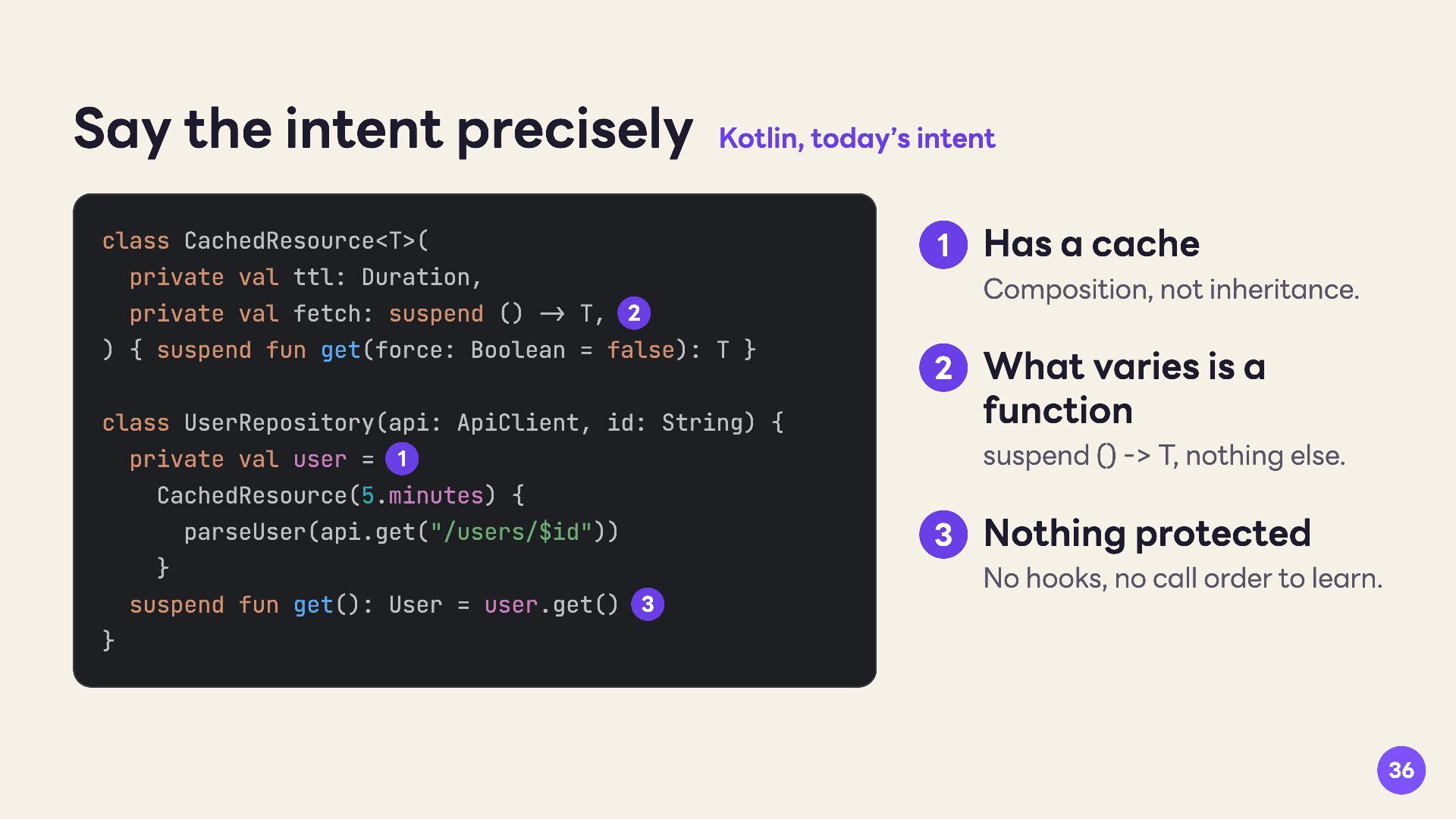
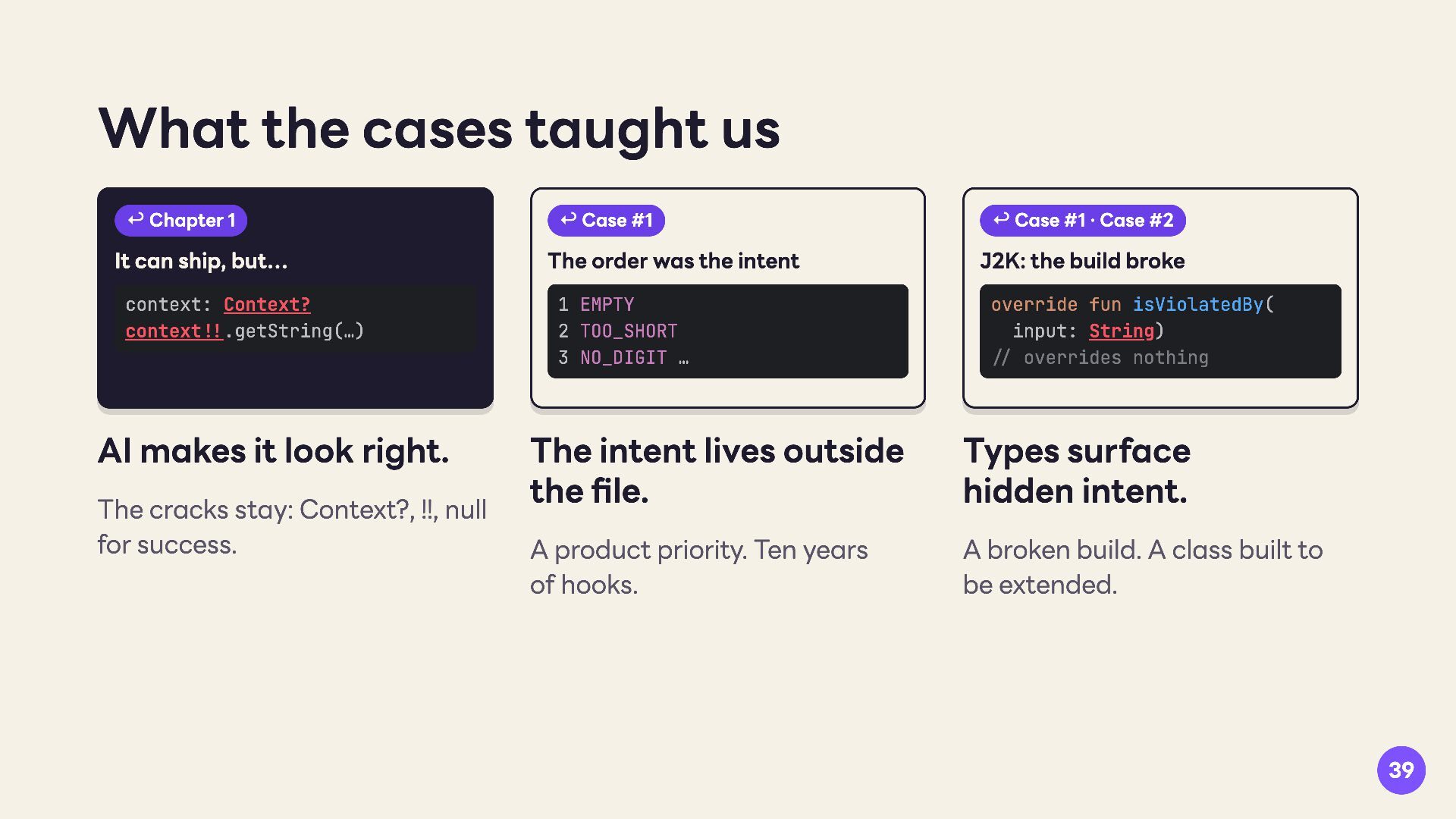
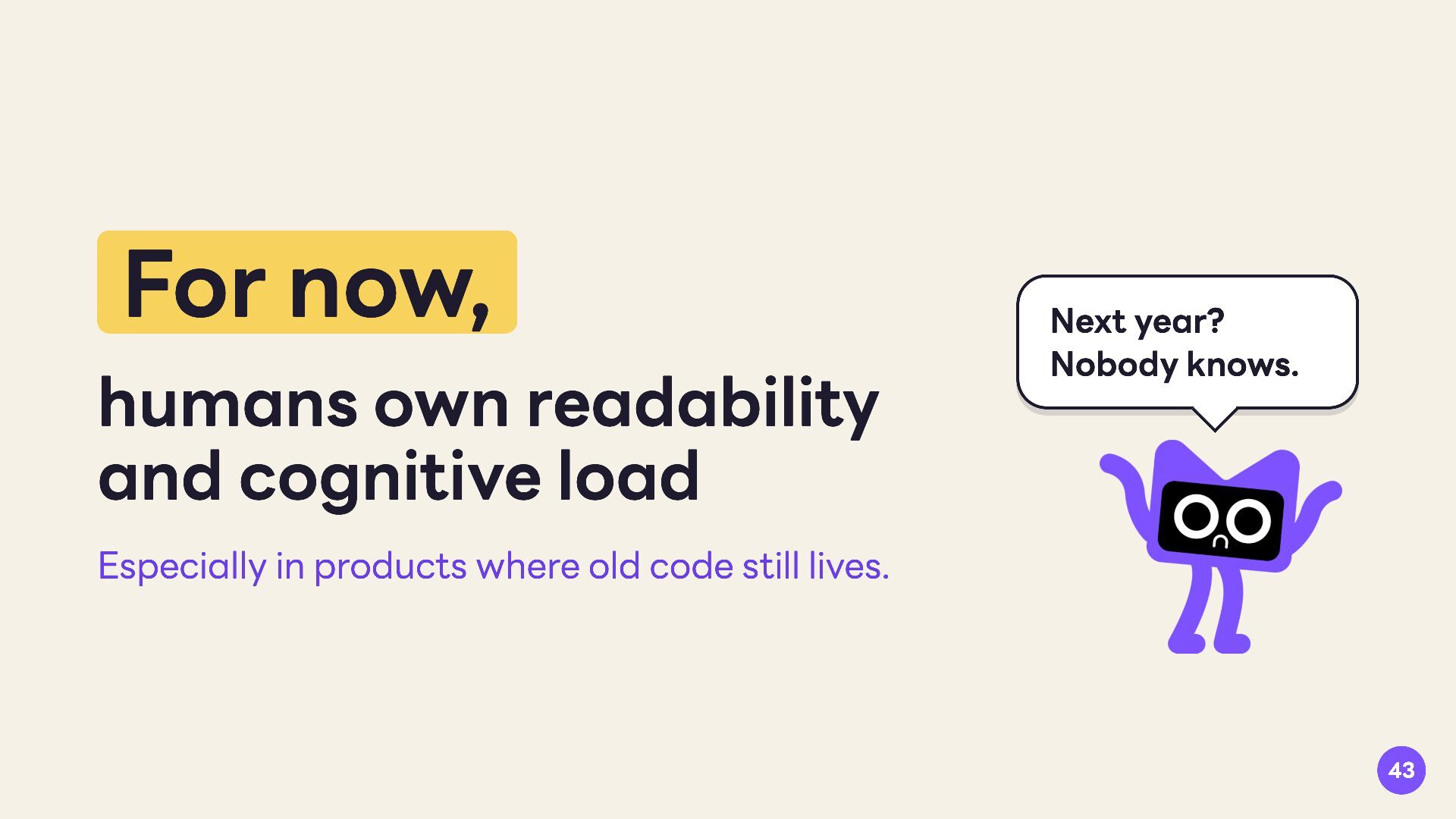
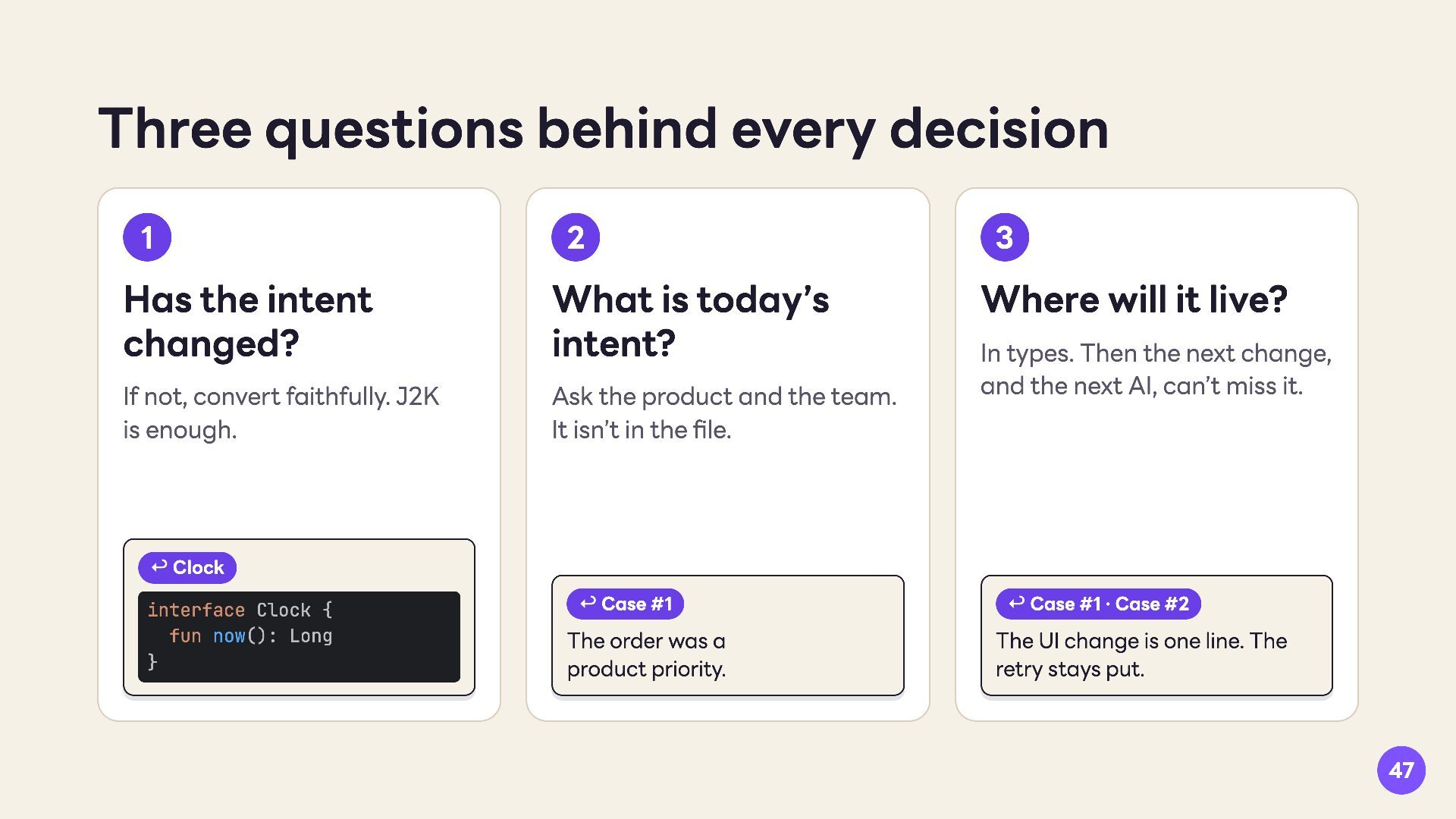
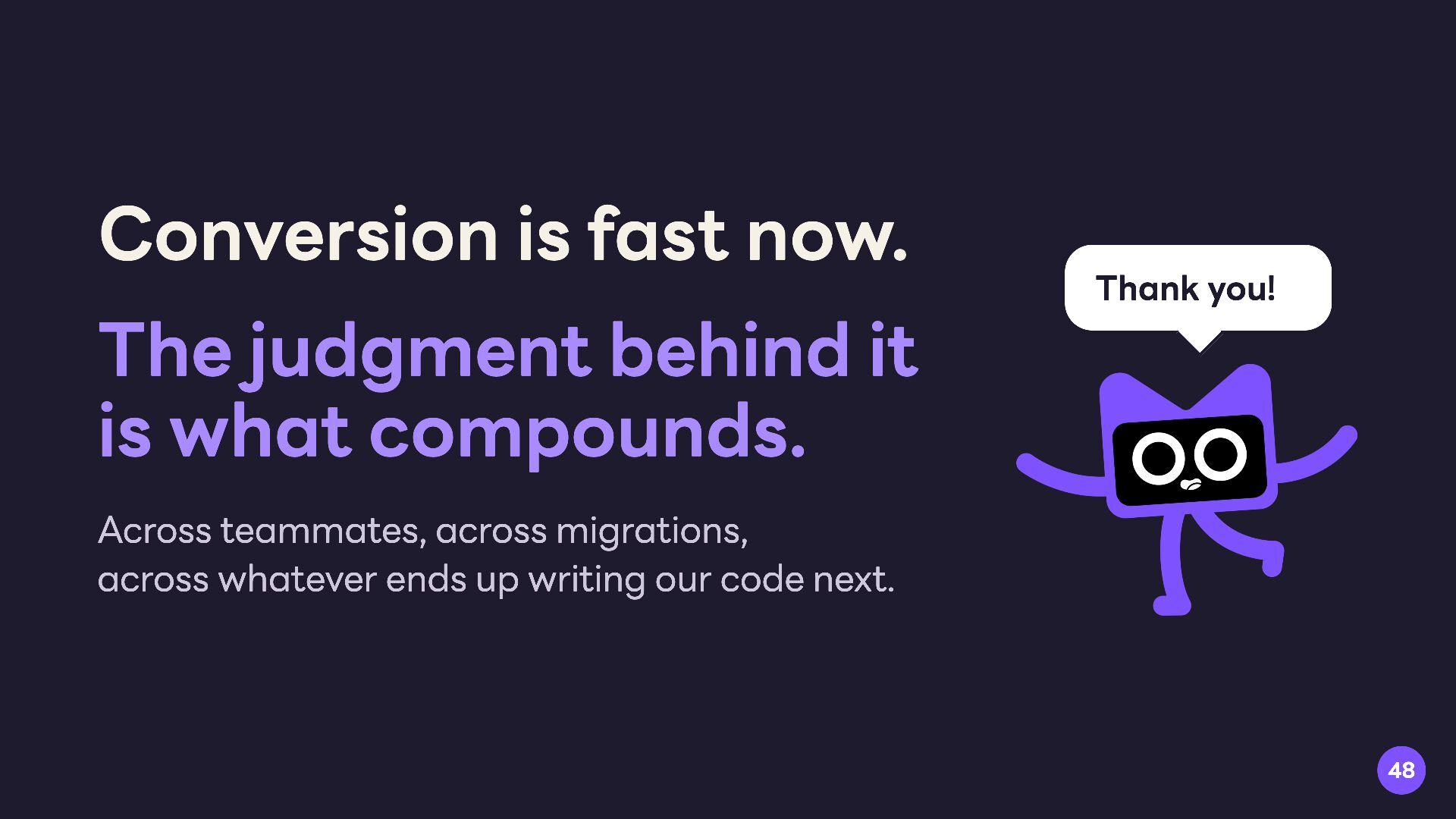
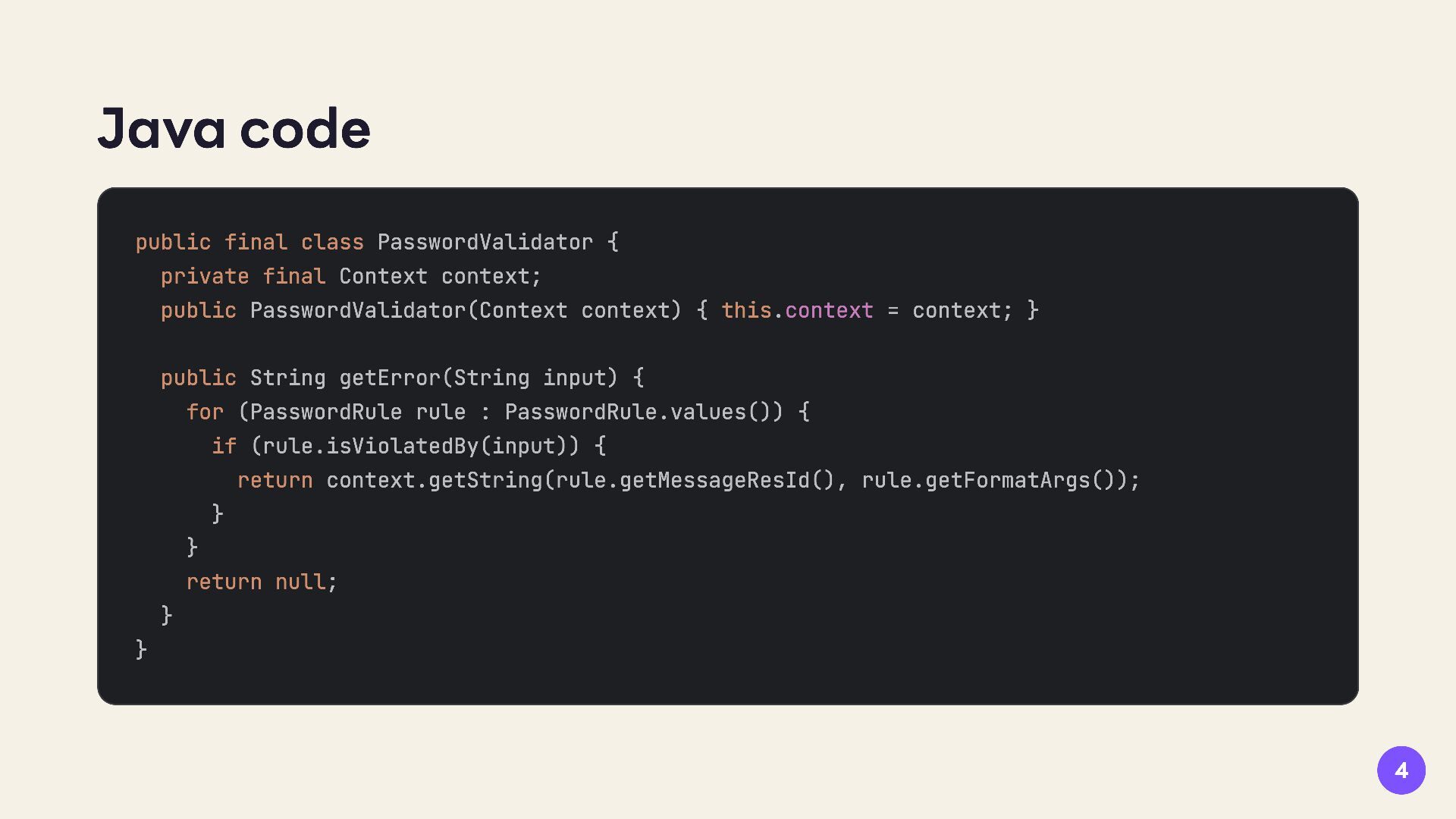
This talk walks through what I learned. I'll walk through two real refactors from production: a small enum-based validator that hides an Android dependency, and an abstract class whose Java-era seams resist a clean Kotlin rewrite. For each, I'll show the conversion the tool produced, the version we shipped first, and the version we wish we'd shipped. You won't leave with a checklist. You'll leave able to make these decisions yourself, on your own code, the same way I now do on mine. Conversion is fast now. The judgment behind it is what compounds: across teammates, across migrations, across whatever ends up writing our code next.


 chigichan24
 lynnswap
 kishida
 htkym
htkym
 florets1
 y0hgi
y0hgi
 glassfiber
 mixplace
 ogom
ogom
 j341nono
 andpad
 steliosf
 satoshi256kbyte
 portentint
 ipullrank
 ks91
ks91
 bkeepers
 mkilby
 lara
lara
 wjessup
 samtorres
 marktimemedia
 inesmontani
 lemiorhan
 aemeredith

![Three rules fail. You see one. Create account Email [email protected]](https://files.speakerdeck.com/presentations/b37efaf2034749b1b5a71fe870ba13c4/slide_19.jpg)