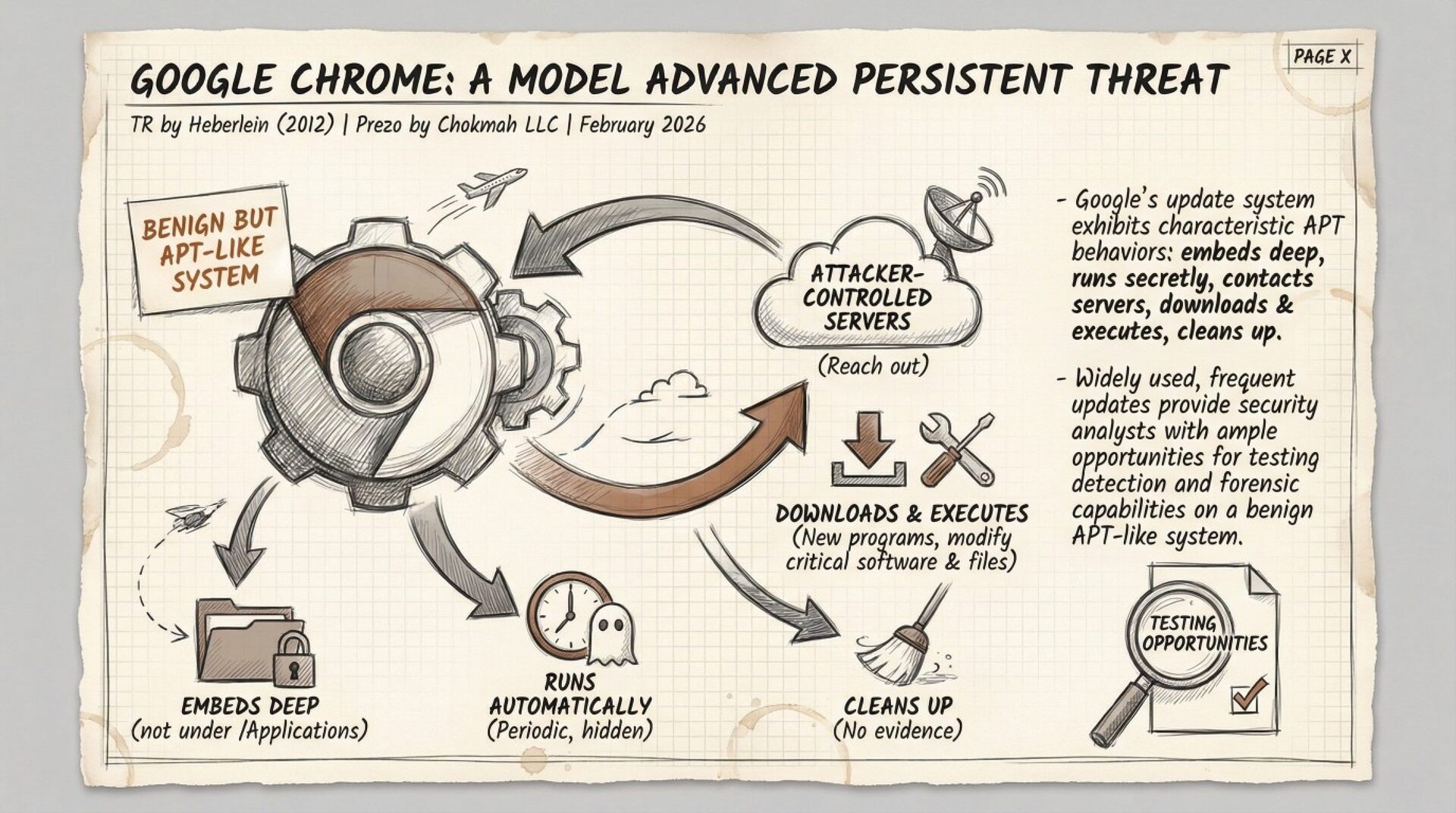
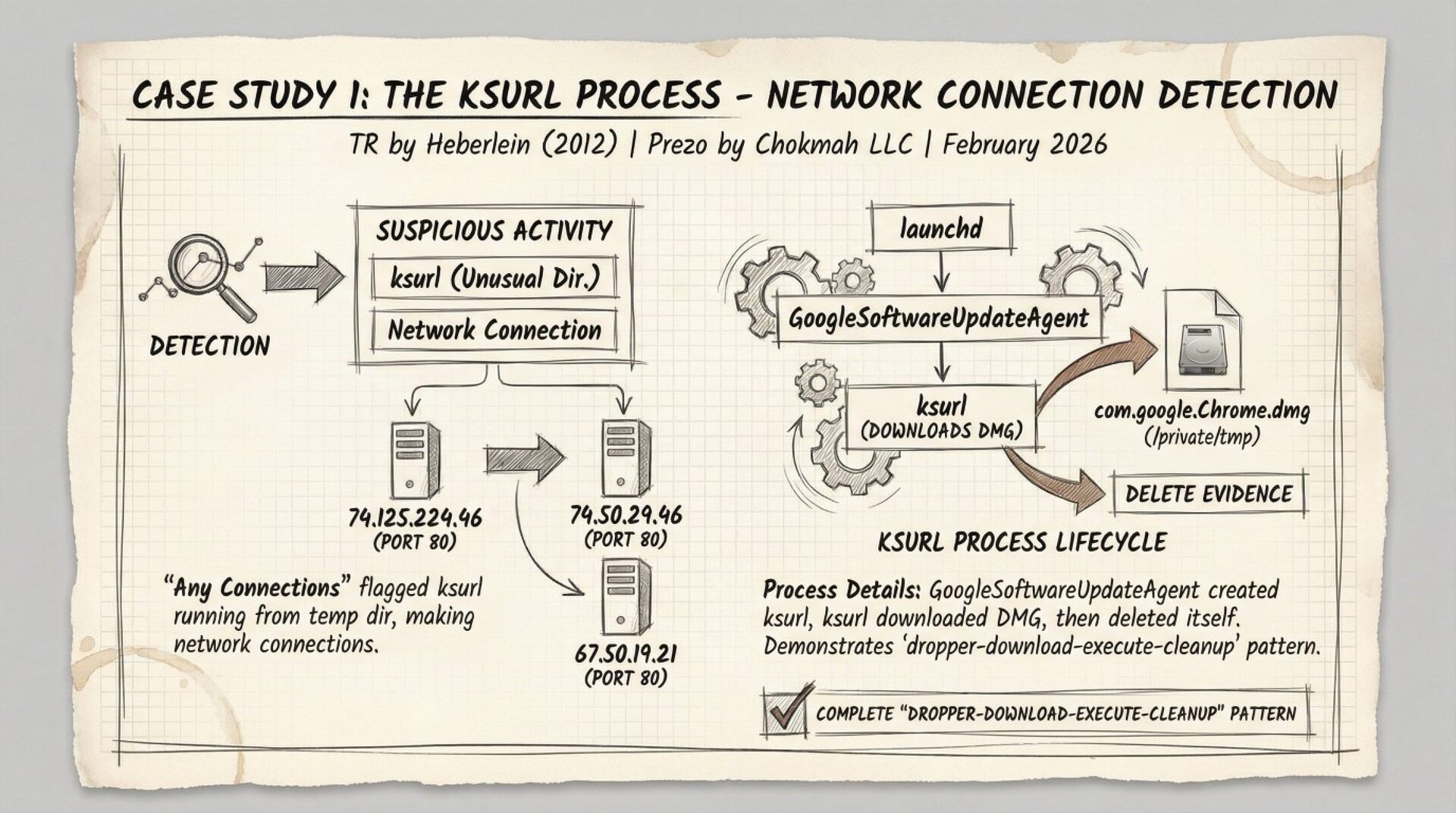
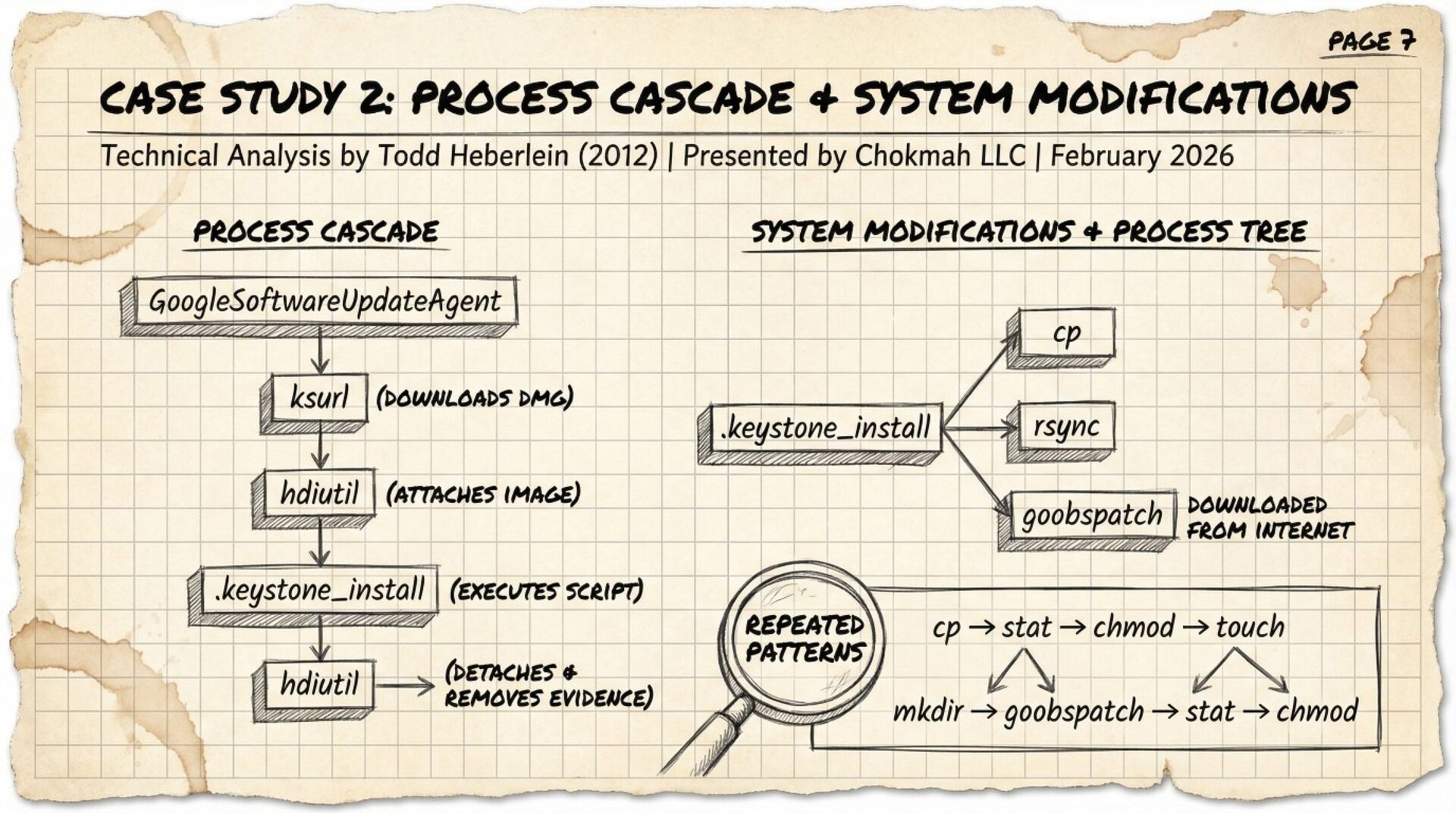
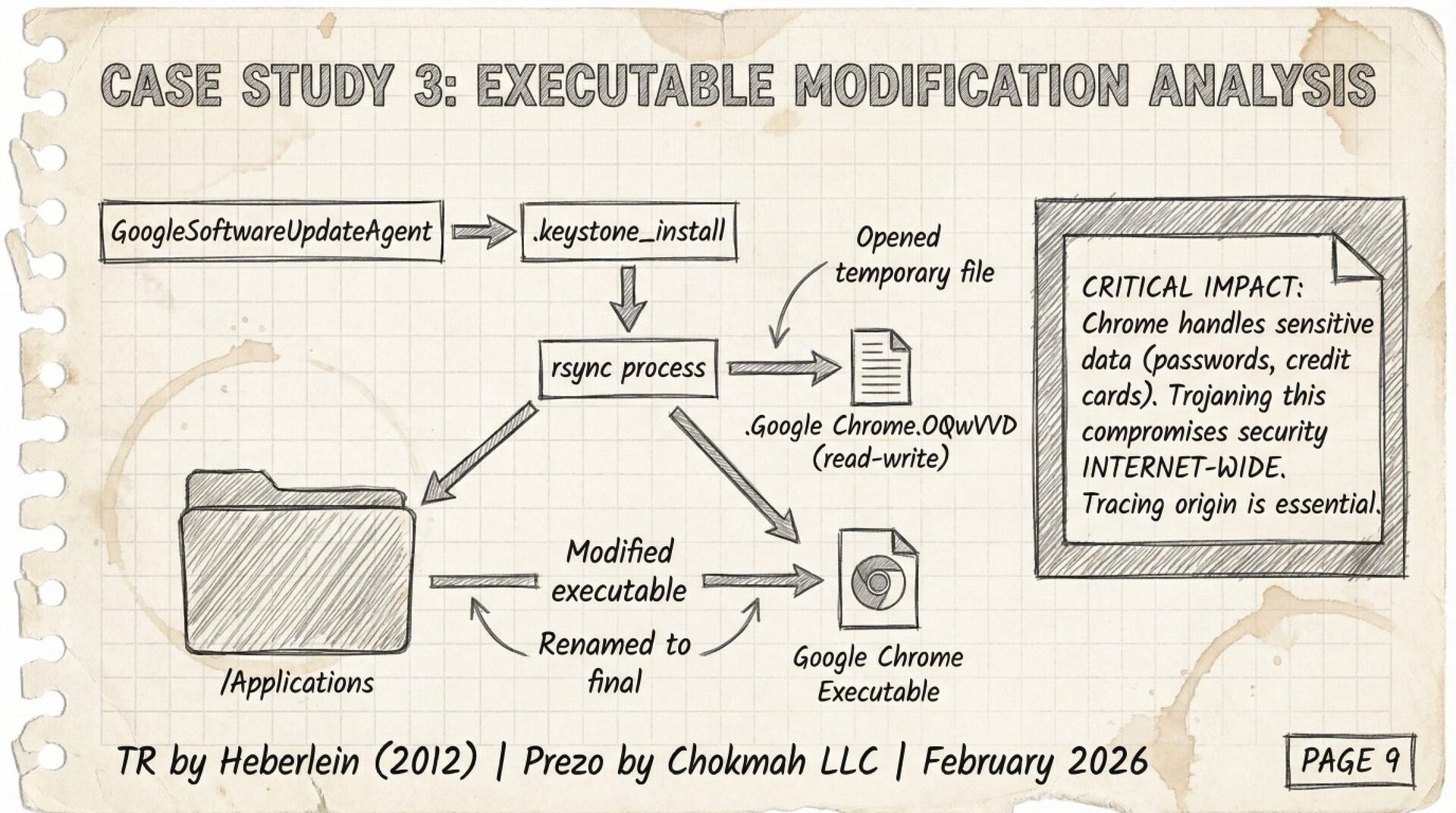
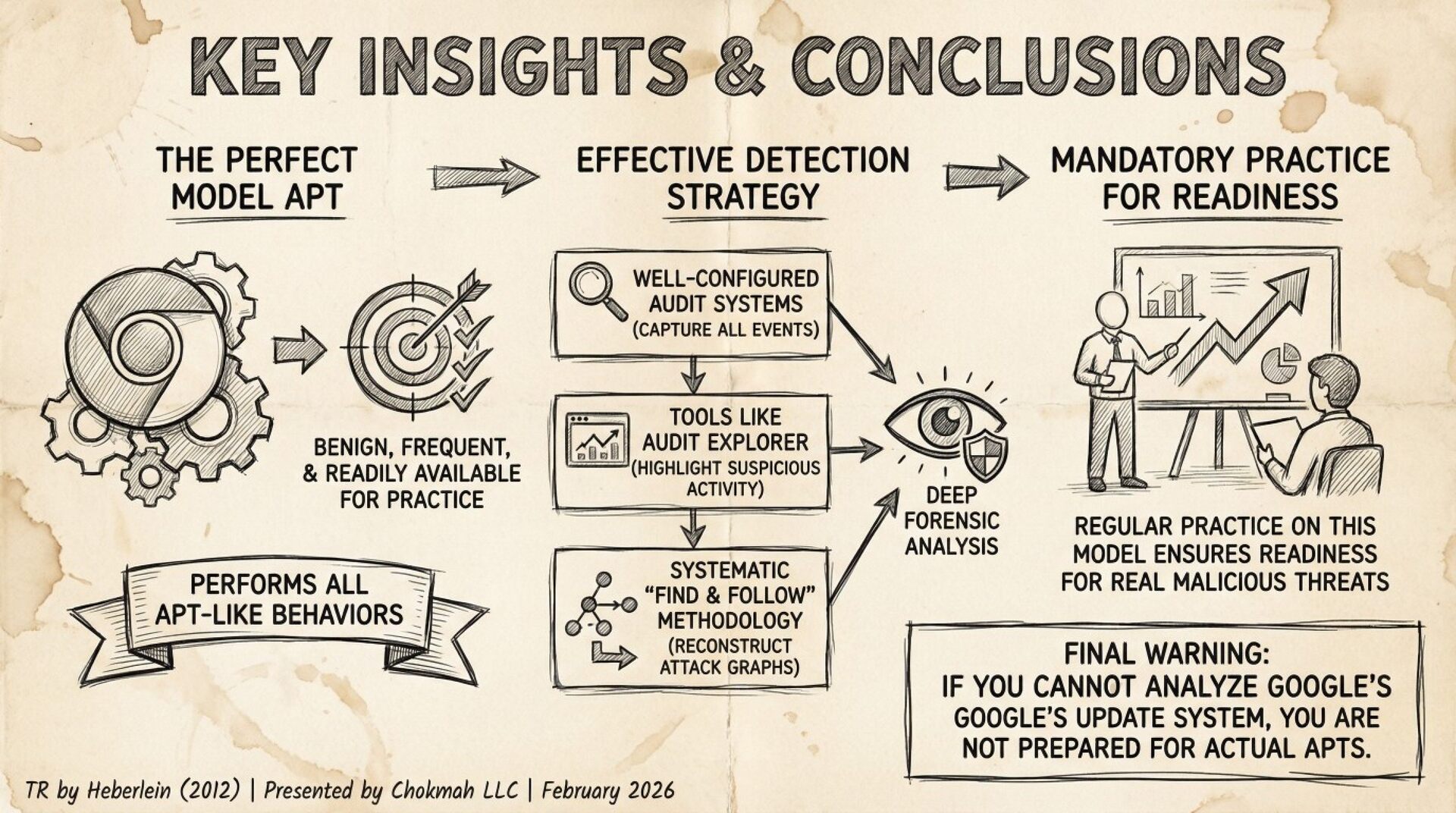
Google’s software update system can serve as a model Advanced Persistent Threat (APT). APTs often embed programs in a penetrated system. These programs wake up from time to time, call home, download additional programs and instructions to carry out, and modify systems.
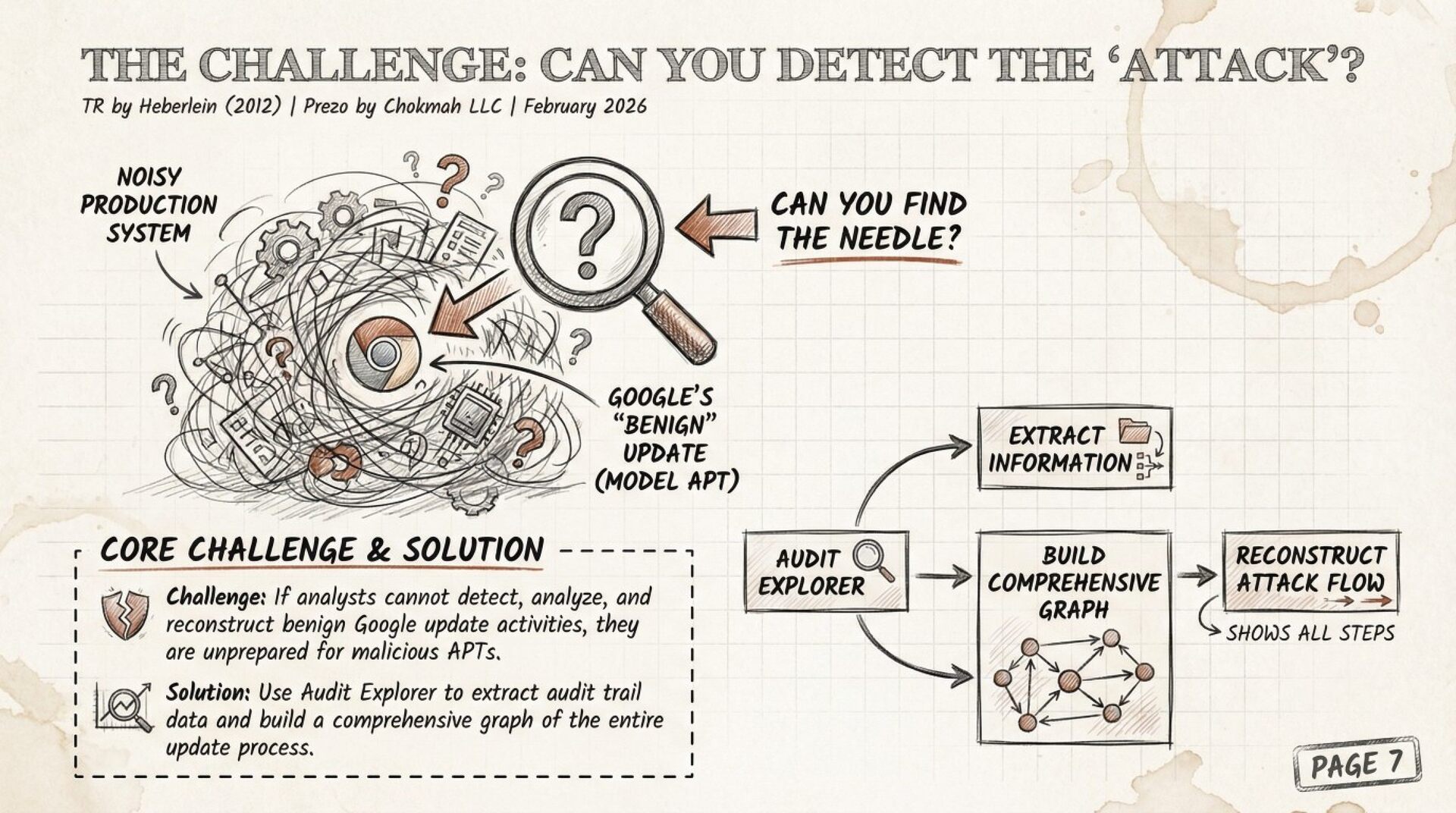
Google’s software update performs all these steps too. Furthermore, because the Google Chrome browser is so widely used and updated so frequently, Google’s update process provides analysts ample opportunity to test their data sources, tools, and skills for their ability to detect and reconstruct the “attack”. The 2012 paper “The Advanced Persistent Threat You Have: Google Chrome” made the claim that if the analyst could not perform the analysis of Google’s update system, they were probably not prepared for malicious APTs.
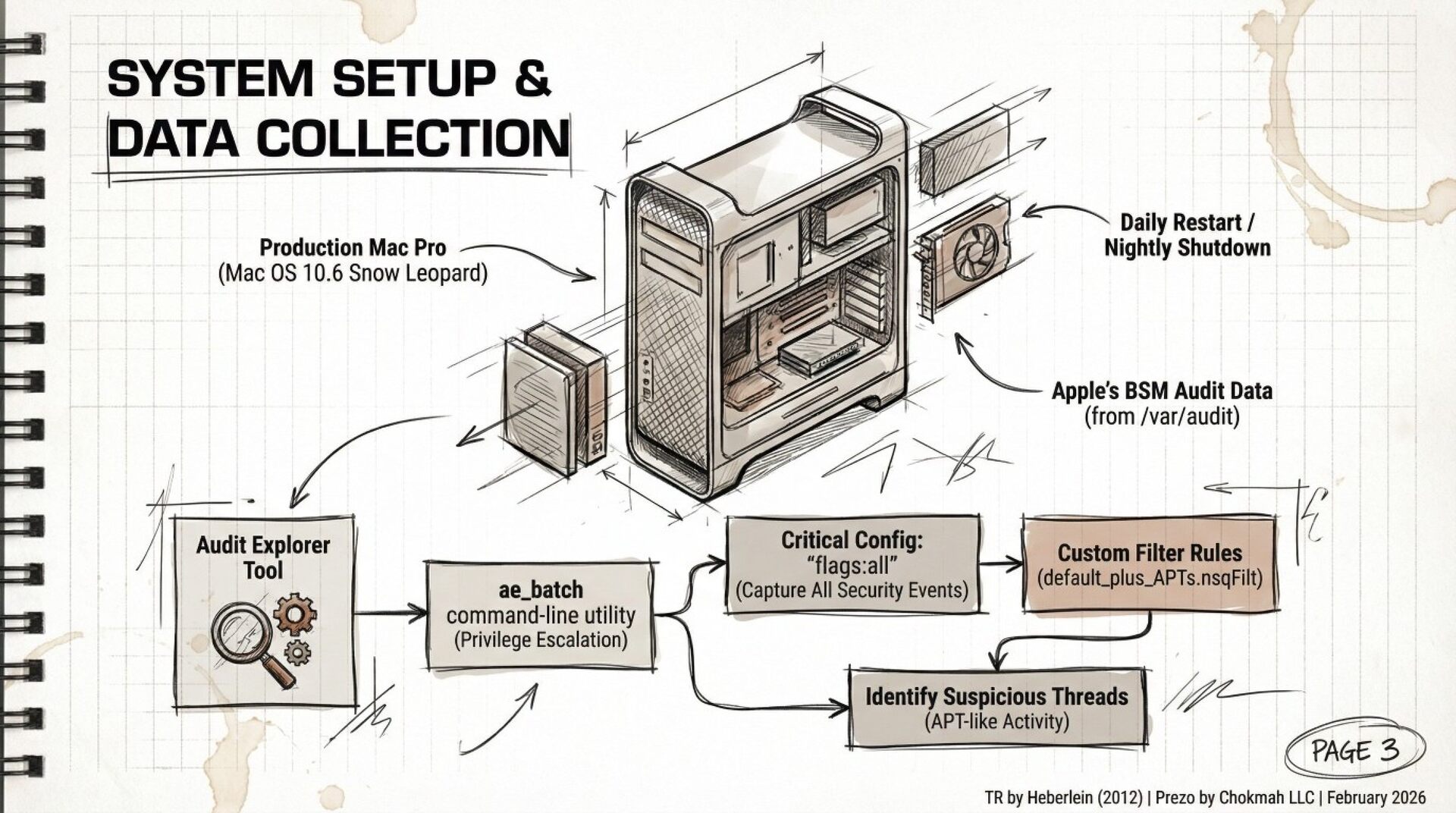
This presentation describes how the analysis in that first paper was performed. It describes the computer
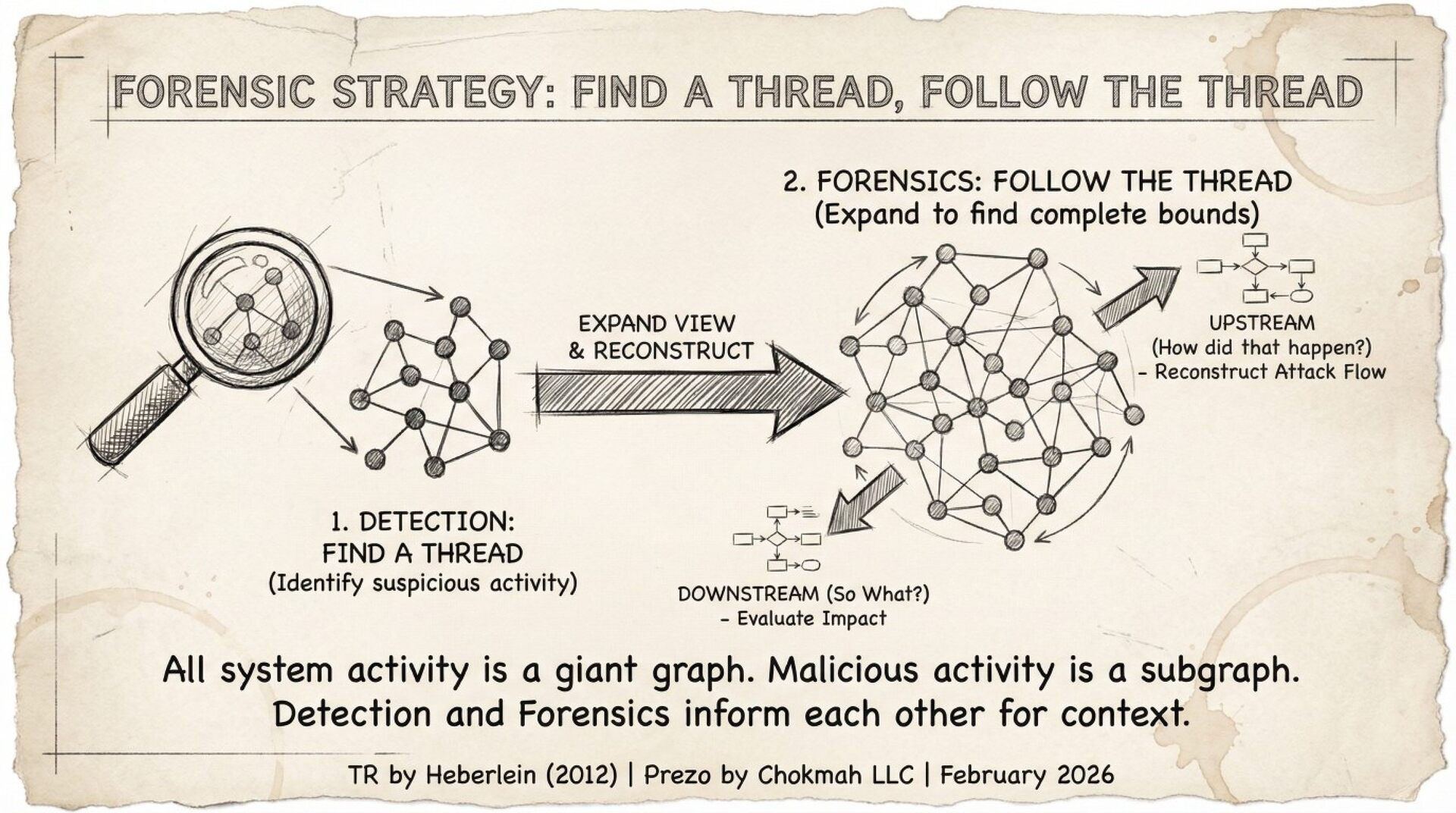
system, data collection, and analysis tool. It then shows how the tool and data were used to reconstruct the “attack”
Look at Appendix A graph of the paper


 chokmahllc
 satoshi256kbyte
 ivargrimstad
 palkan
 morizo_1984
 satotakeshi
 drumath2237
 repunit11
 kenjiyoneyama
 yusuga
 htkym
htkym
 texmeijin
 reverentgeek
 baasie
 eileencodes
 brad_frost
 mayunak
 axbom
axbom
 aemeredith
 marcelosomers
 62gerente
 elsirapls
 tenderlove
 sstephenson