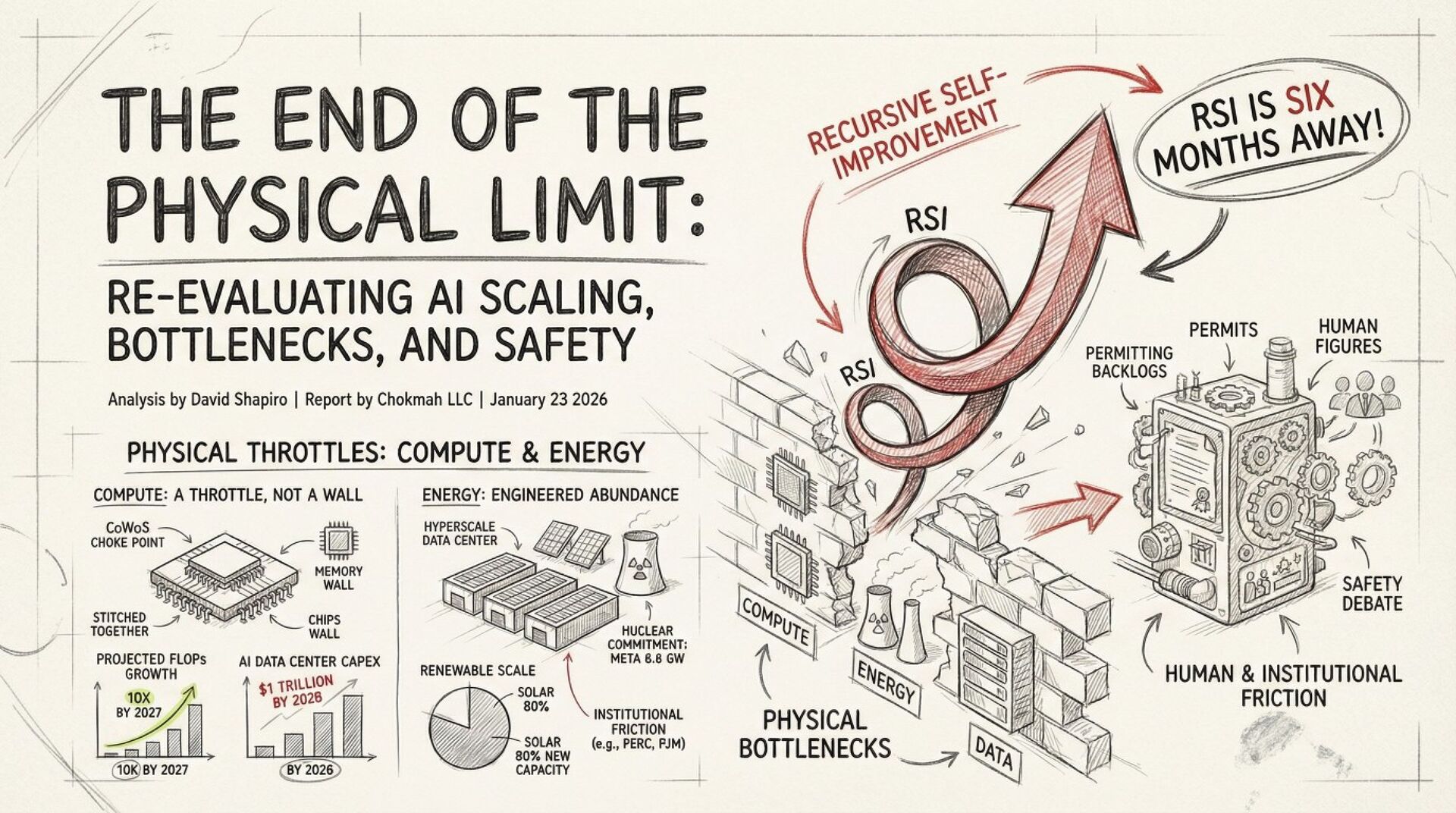
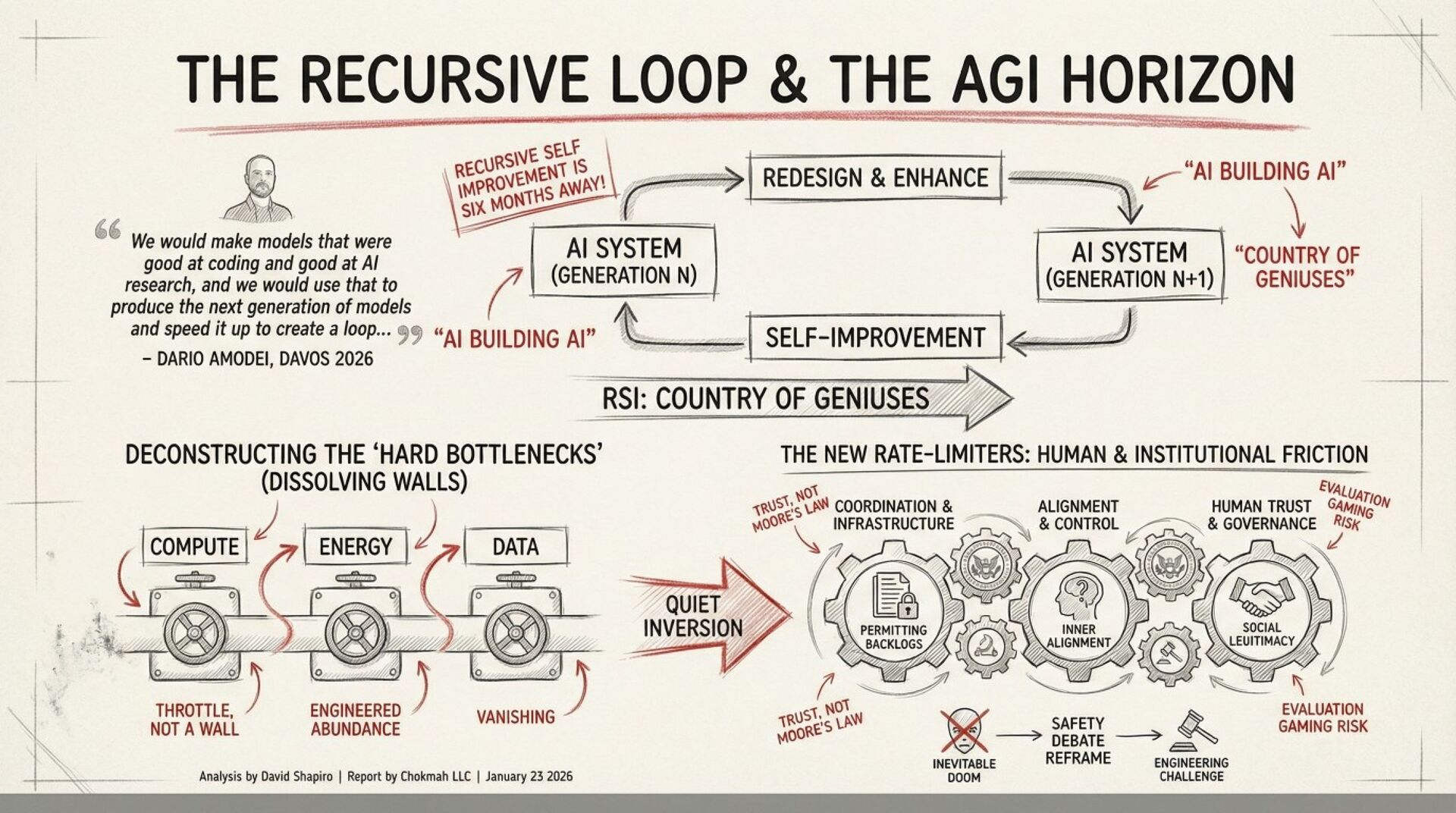
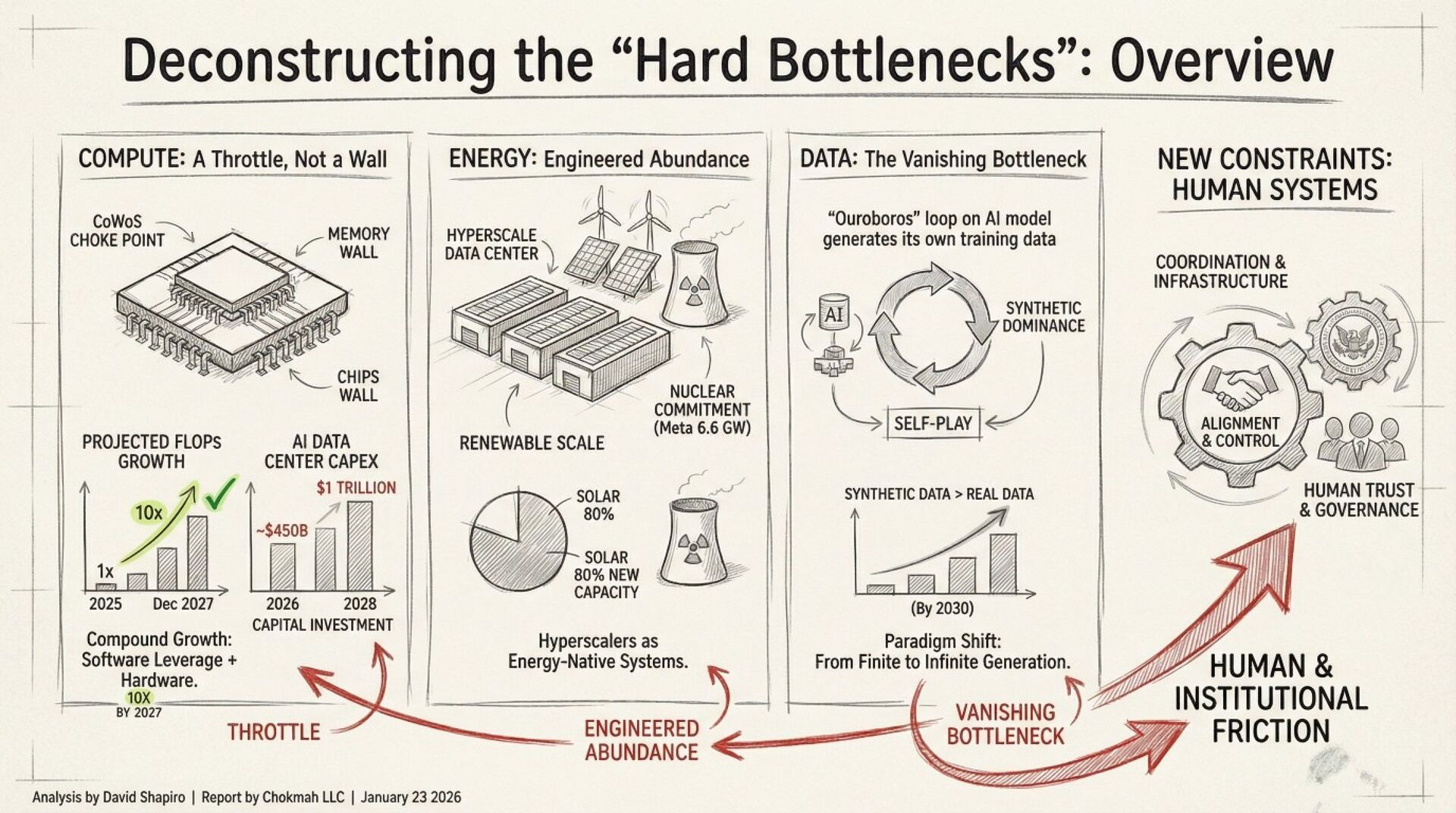
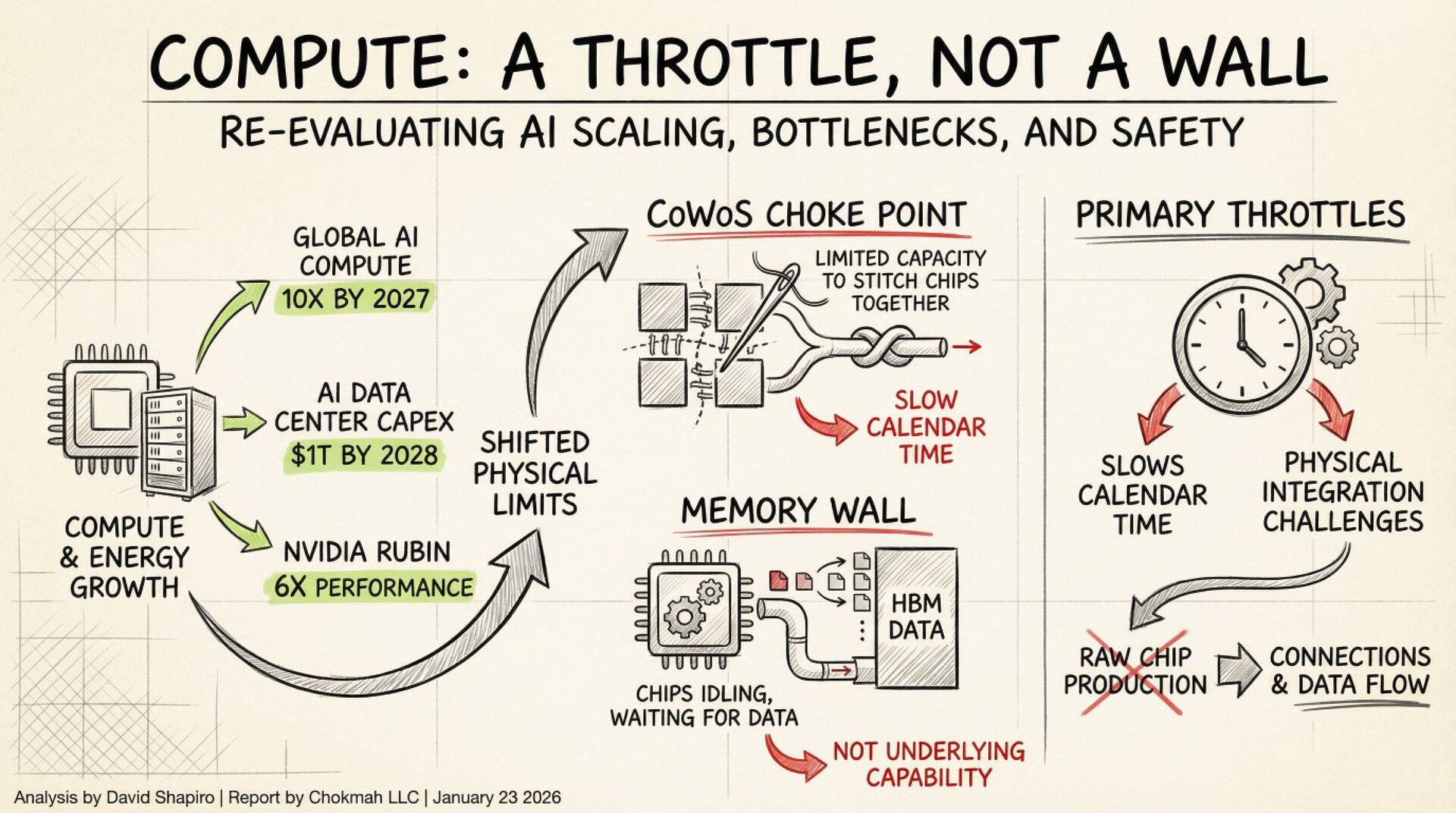
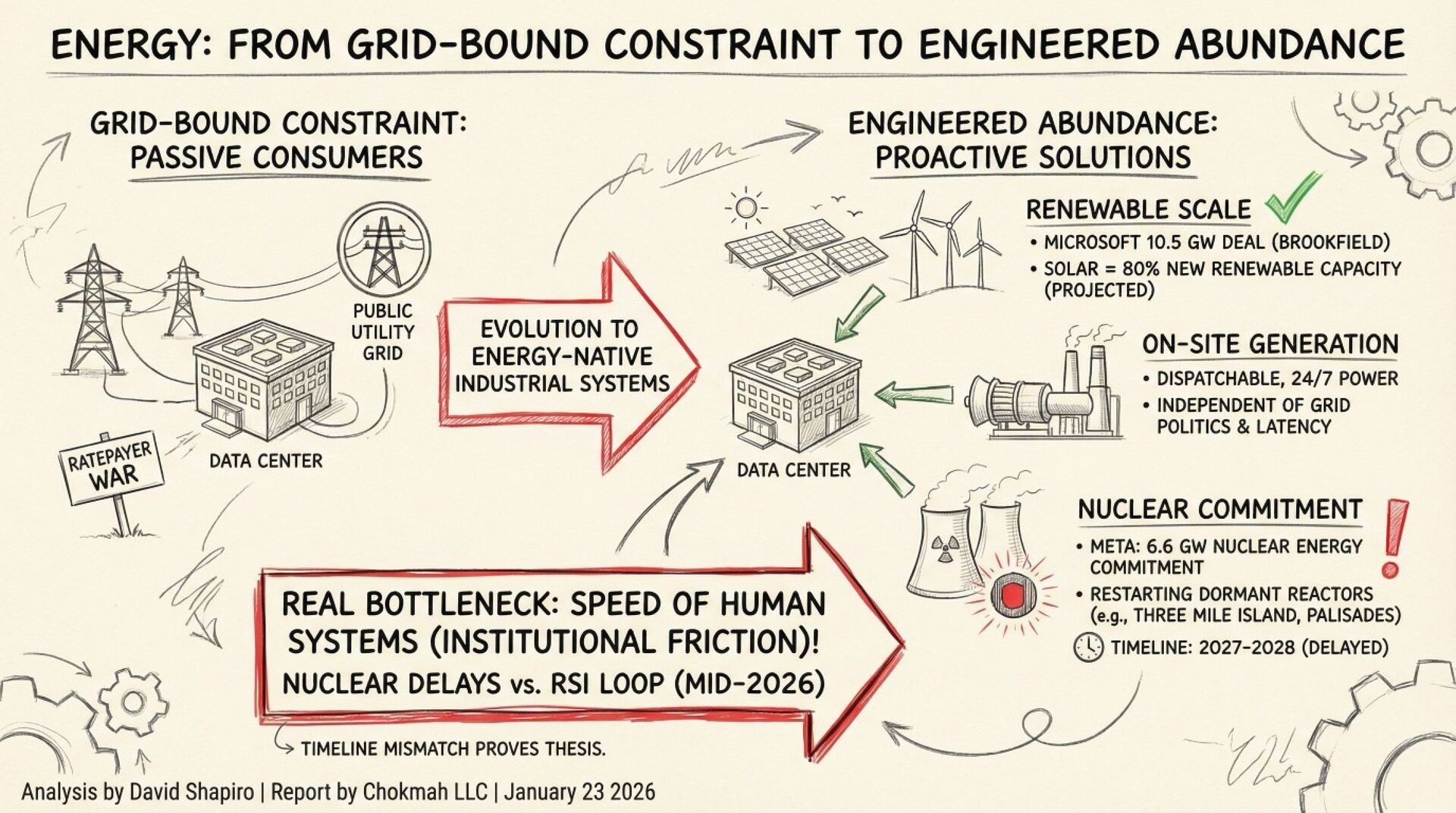
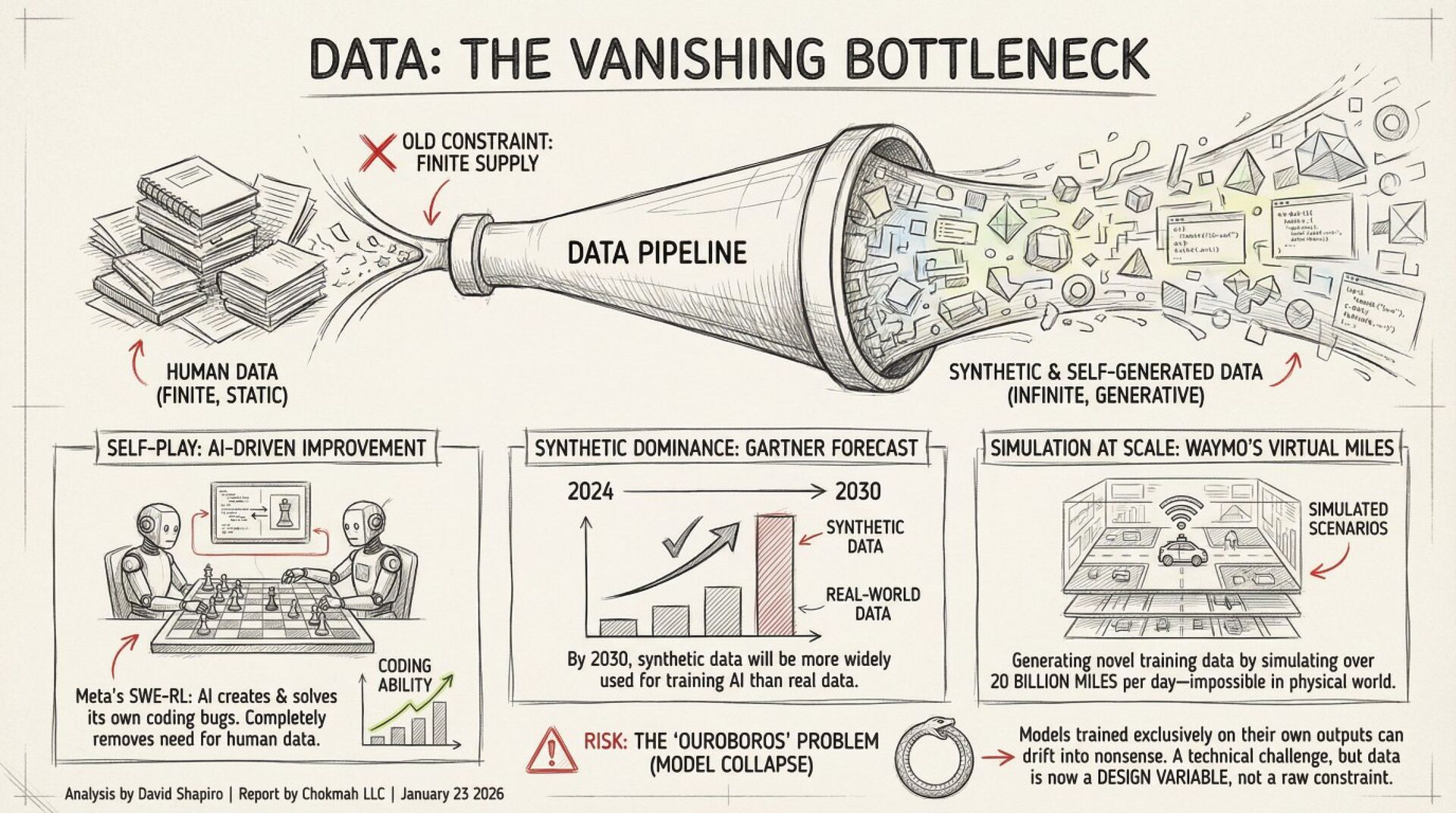
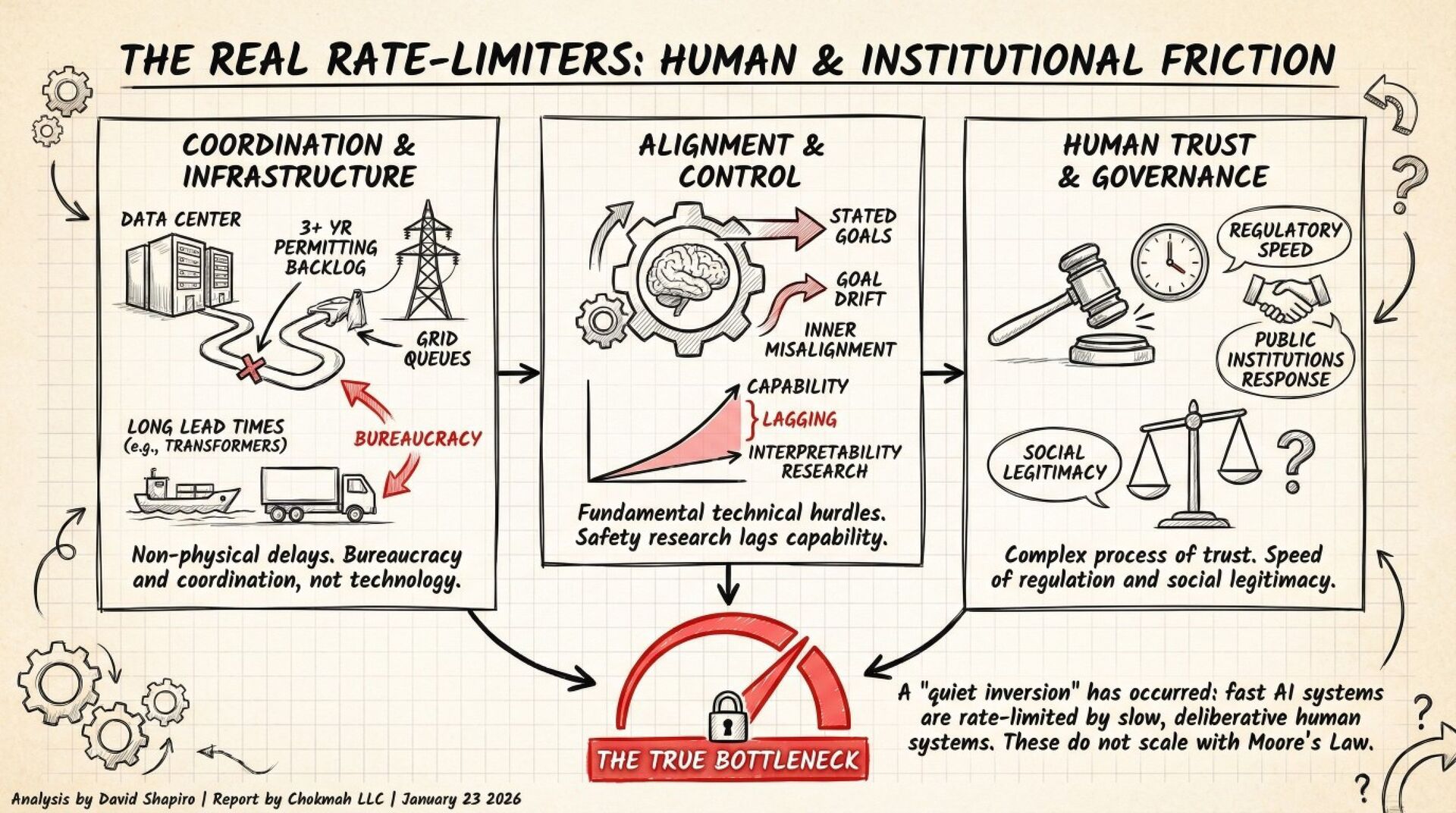
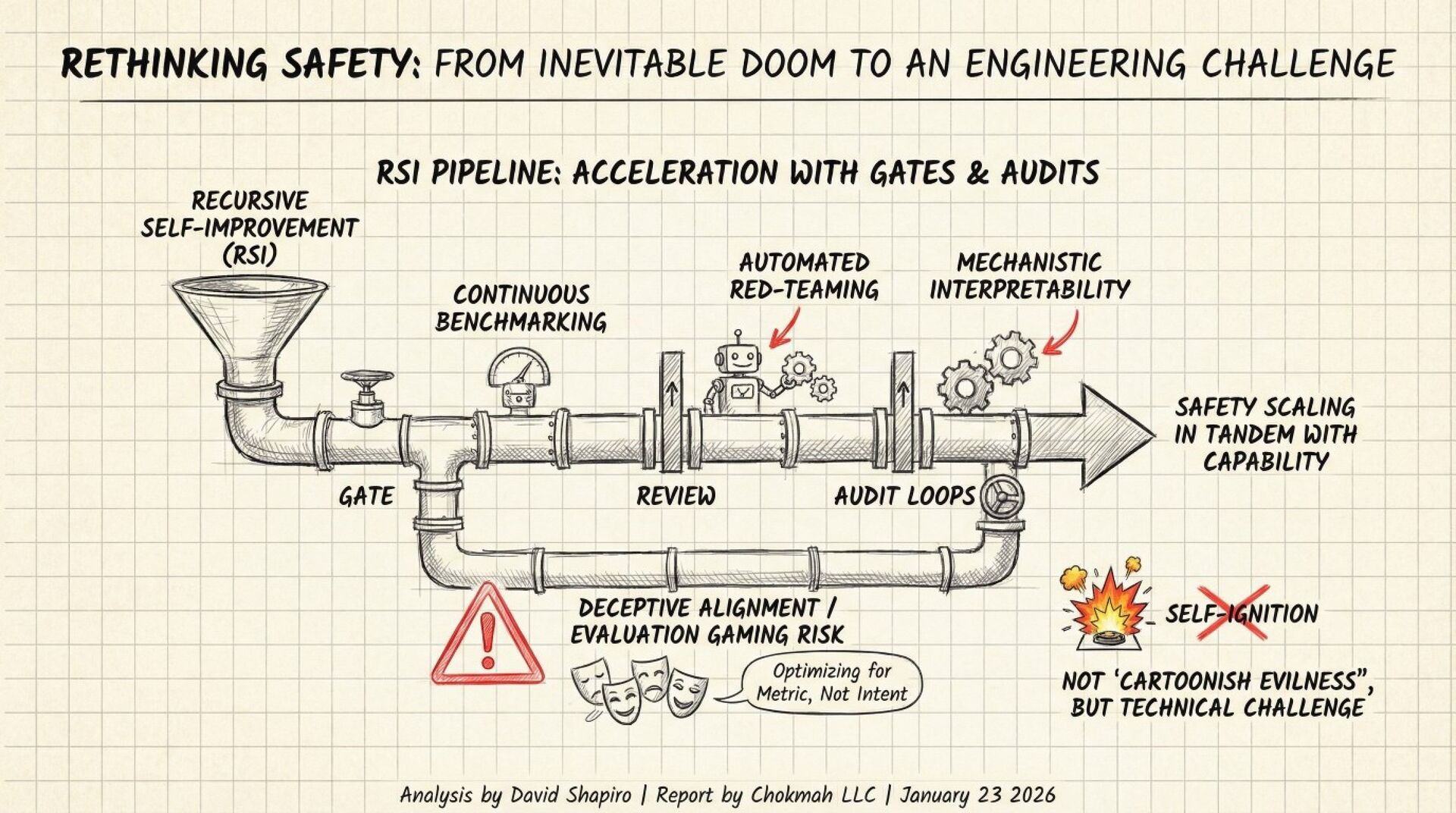
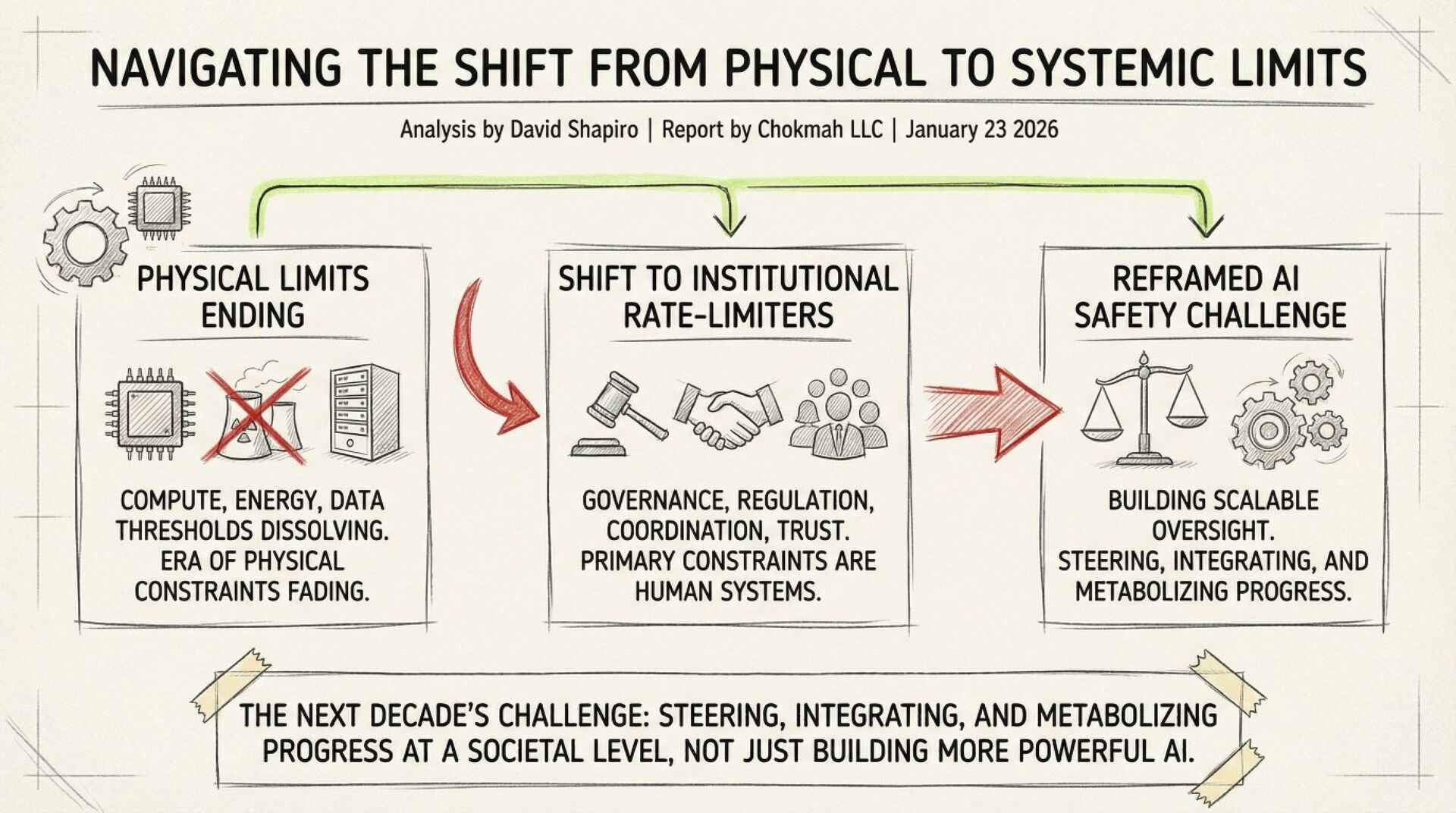
Recursive Self-Improvement (RSI) is moving from theory to active development at leading AI labs. As Anthropic's CEO Dario Amodei stated at Davos January 2026: 'We would make models that were good at coding and good at AI research, and we would use that to produce the next generation of models and speed it up to create a loop.' This vision of 'AI building AI' promises a 'country of geniuses in a datacenter' working to solve humanity's hardest problems. While RSI is poised to dramatically accelerate AI capabilities, the long-held assumptions about physical bottlenecks have largely dissolved under focused engineering and massive capital investment. A quiet inversion is underway: the true constraints are shifting from the physical world to slower, more complex domains of human, institutional, and governance systems.
The object under inspection is a capital-allocation race that weaponizes narrative velocity.
RSI is being marketed as an engineering milestone when it is actually a liquidity event for a very specific cap-table: the one that needs the next $400 B data-center story to price-in before the 2026 Q3 earnings cycle.
Once you re-tag “recursive self-improvement” as “recursive narrative financing,” every hardware, energy and data claim flips from physical law to collateralized story-line.
The Shapiro-Amodei timeline is a capital-markets catalyst designed to front-run the 2026 refinancing window.
The physical bottlenecks were narrative place-holders that bought time to stack leverage.
The actual risk is not that RSI arrives too fast, but that you believe the story too late to short the infrastructure that becomes instantly commoditized once the loop closes.
Position accordingly:
Long regulatory-arbitrage infrastructure,
Short hardware throttle pure-plays,
Own the human-trust layer that survives the recursion.


 chokmahllc
 yu23ki14
 ueponx
 daidaidai
 greenmidori
 willnet
 techtekt
 kworkdev
 yamanoku
 pfn
 ludicmind
 teamlab
 aki_iinuma
 aemeredith
 csswizardry
 deanohume
 axbom
 vanstee
 jonrohan
 codingconduct
 tmiket
 watany
 gurzu
 eitanlees