the trainer •Ah-Hwai Lim •Regional BPE Manager, Asia-Pacific. •With GSC LifeSpace Asia since March 2007. •Based in Clipsal Gepps Cross. •Deploy BPE in Asia and Pacific entities. •Train. Coach. Share. Manage. Execute. Develop talents. Promote Continuous Improvement Culture.
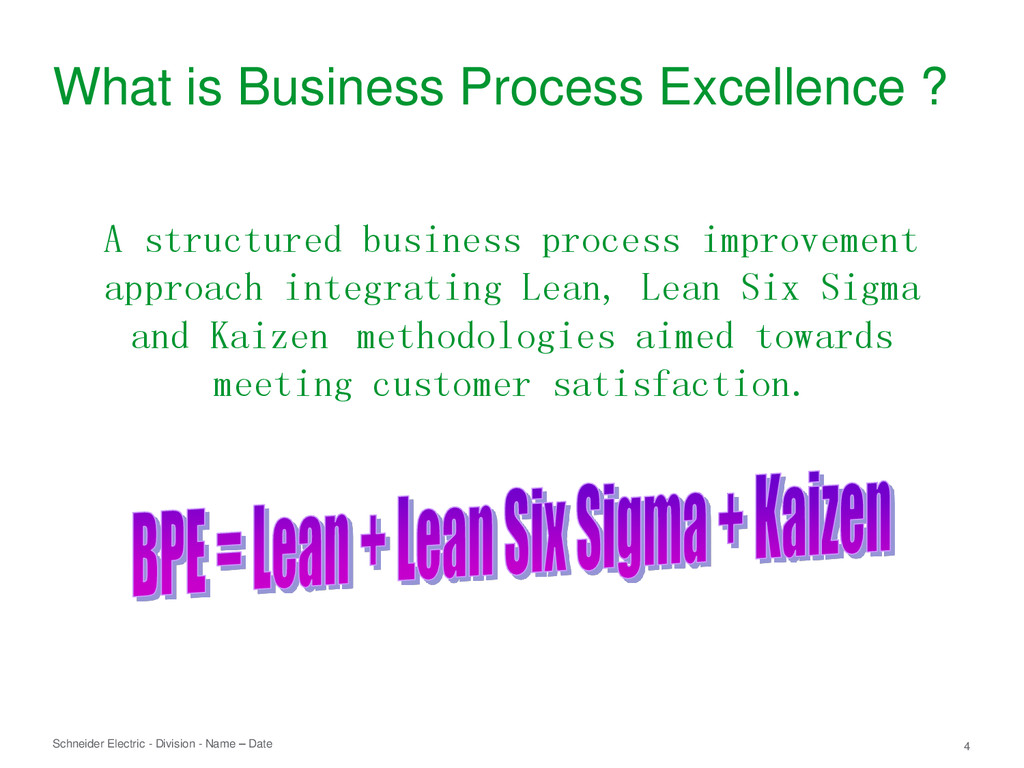
Process Excellence A structured business process improvement approach integrating Lean, Lean Six Sigma and Kaizen methodologies aimed towards meeting customer satisfaction. What is Business Process Excellence ?
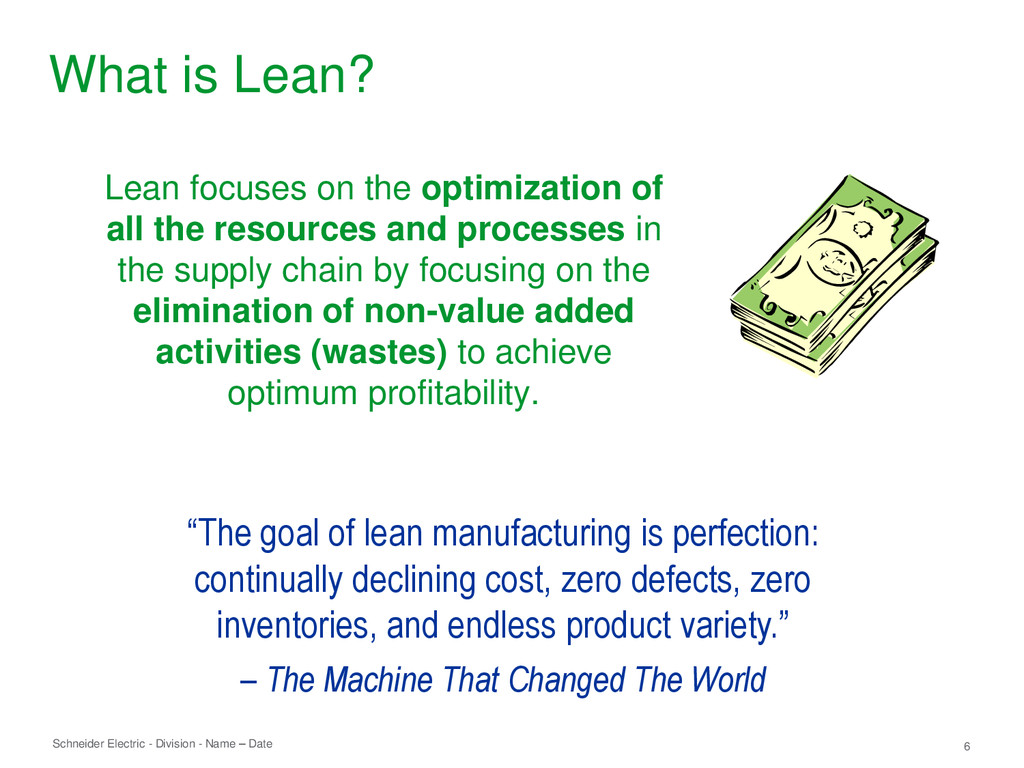
is Lean? Lean focuses on the optimization of all the resources and processes in the supply chain by focusing on the elimination of non-value added activities (wastes) to achieve optimum profitability. “The goal of lean manufacturing is perfection: continually declining cost, zero defects, zero inventories, and endless product variety.” – The Machine That Changed The World
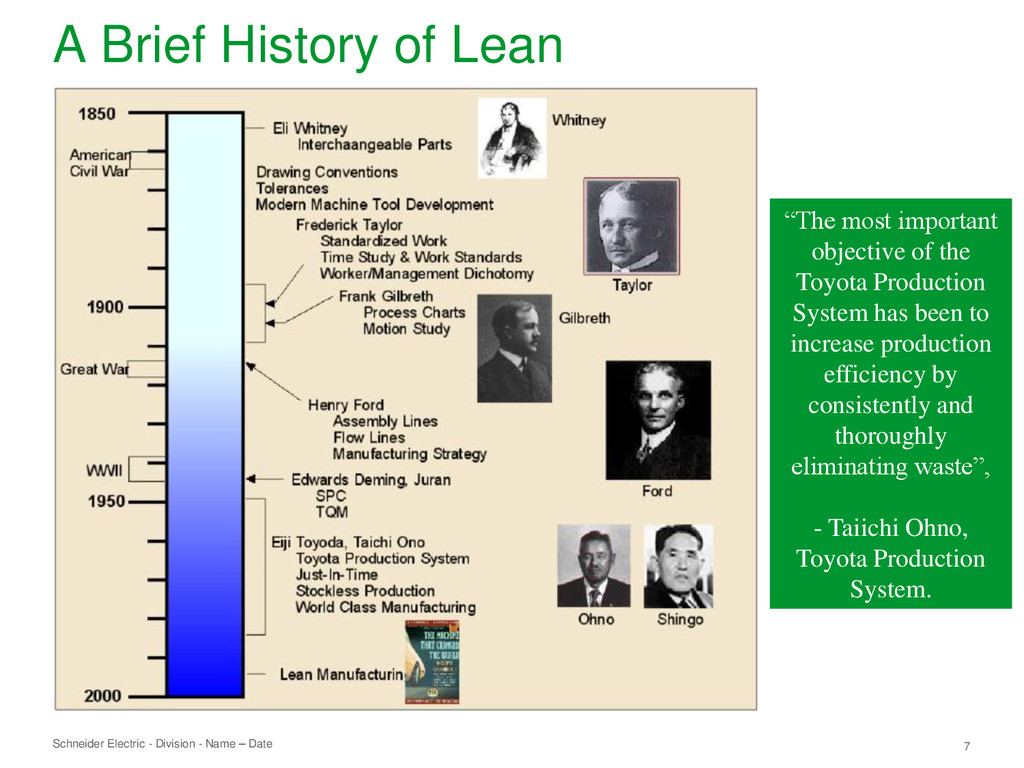
Brief History of Lean “The most important objective of the Toyota Production System has been to increase production efficiency by consistently and thoroughly eliminating waste”, - Taiichi Ohno, Toyota Production System.
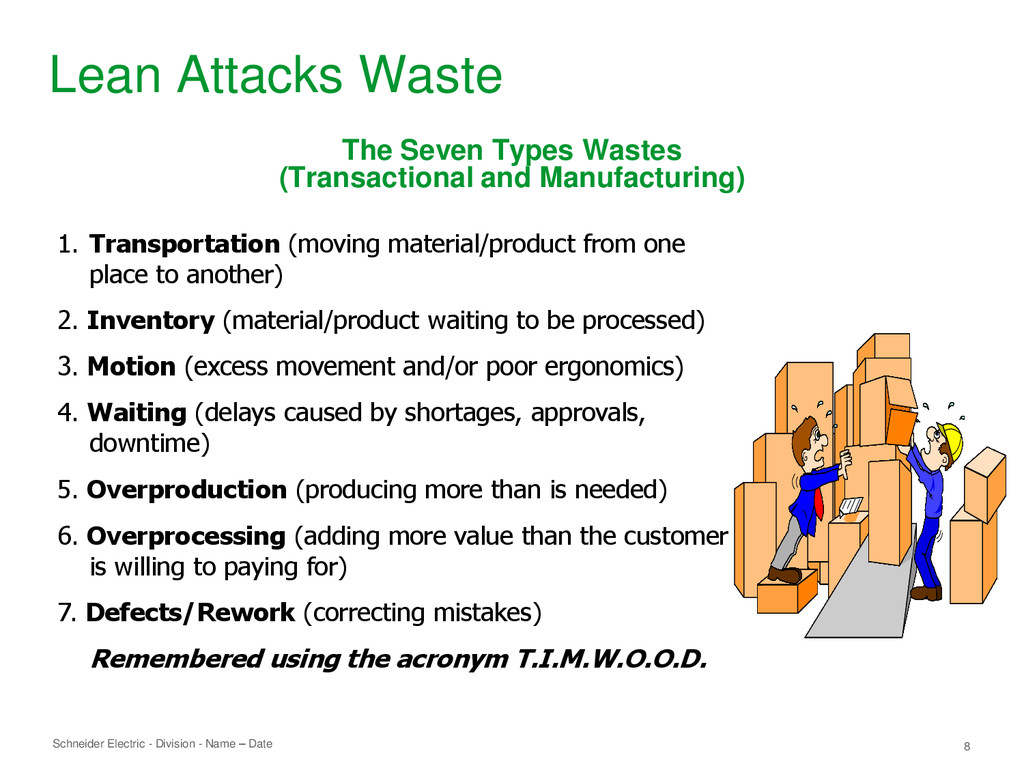
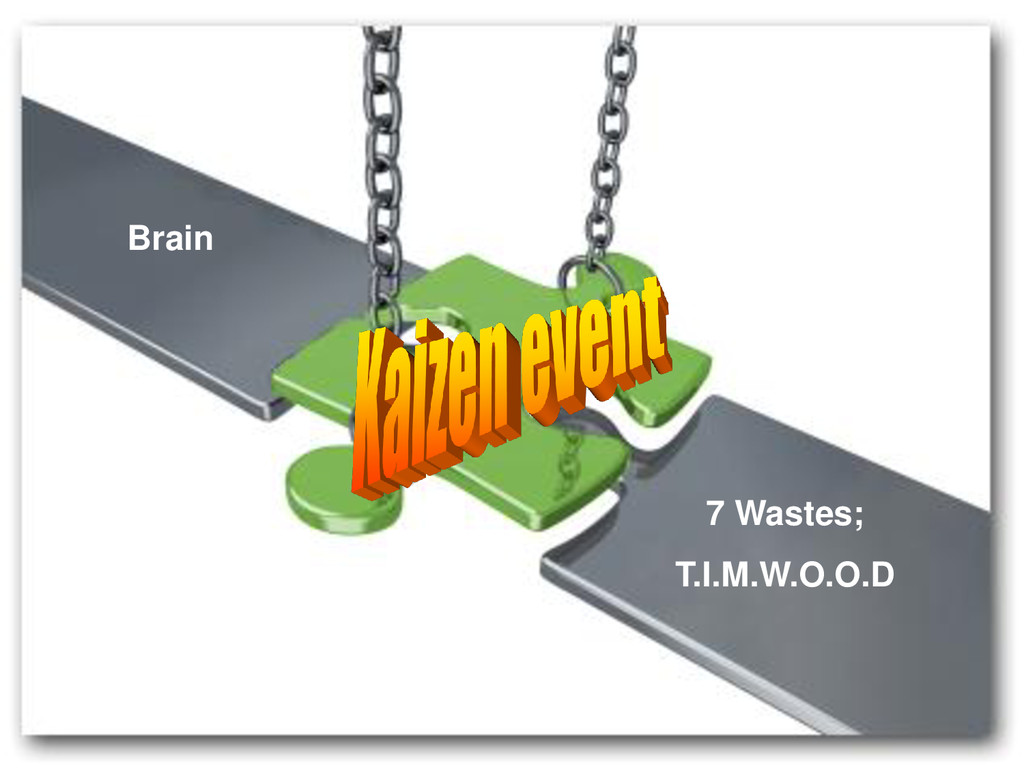
Transportation (moving material/product from one place to another) 2. Inventory (material/product waiting to be processed) 3. Motion (excess movement and/or poor ergonomics) 4. Waiting (delays caused by shortages, approvals, downtime) 5. Overproduction (producing more than is needed) 6. Overprocessing (adding more value than the customer is willing to paying for) 7. Defects/Rework (correcting mistakes) Remembered using the acronym T.I.M.W.O.O.D. Lean Attacks Waste The Seven Types Wastes (Transactional and Manufacturing)
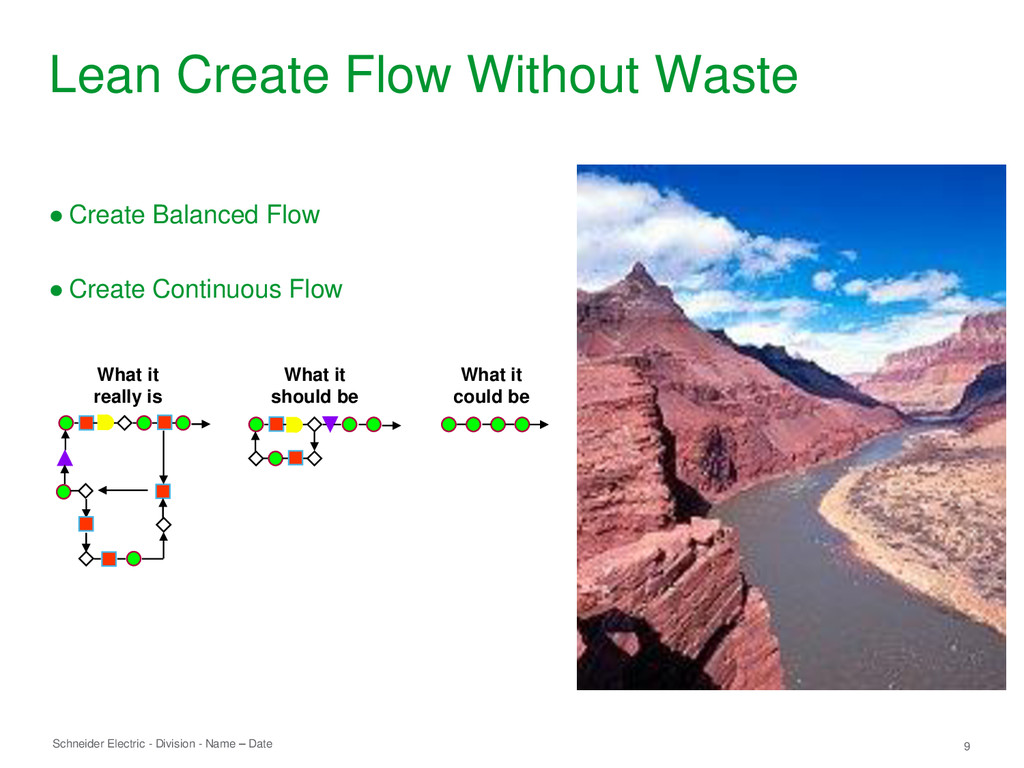
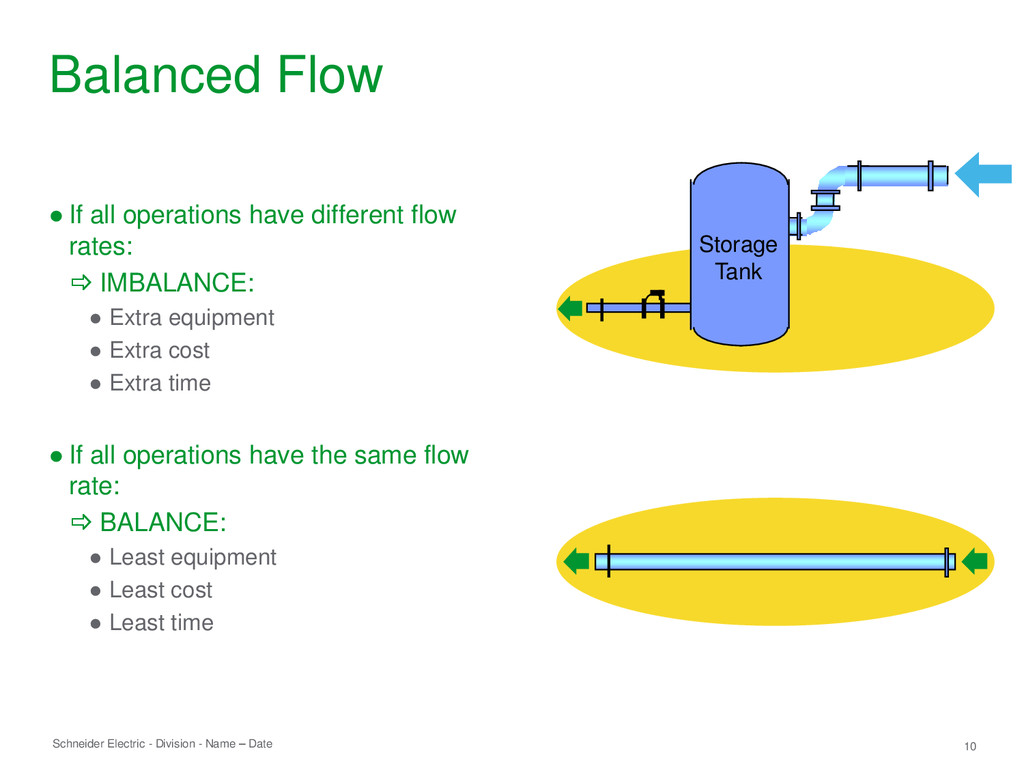
Flow • If all operations have different flow rates: IMBALANCE: • Extra equipment • Extra cost • Extra time • If all operations have the same flow rate: BALANCE: • Least equipment • Least cost • Least time Storage Tank
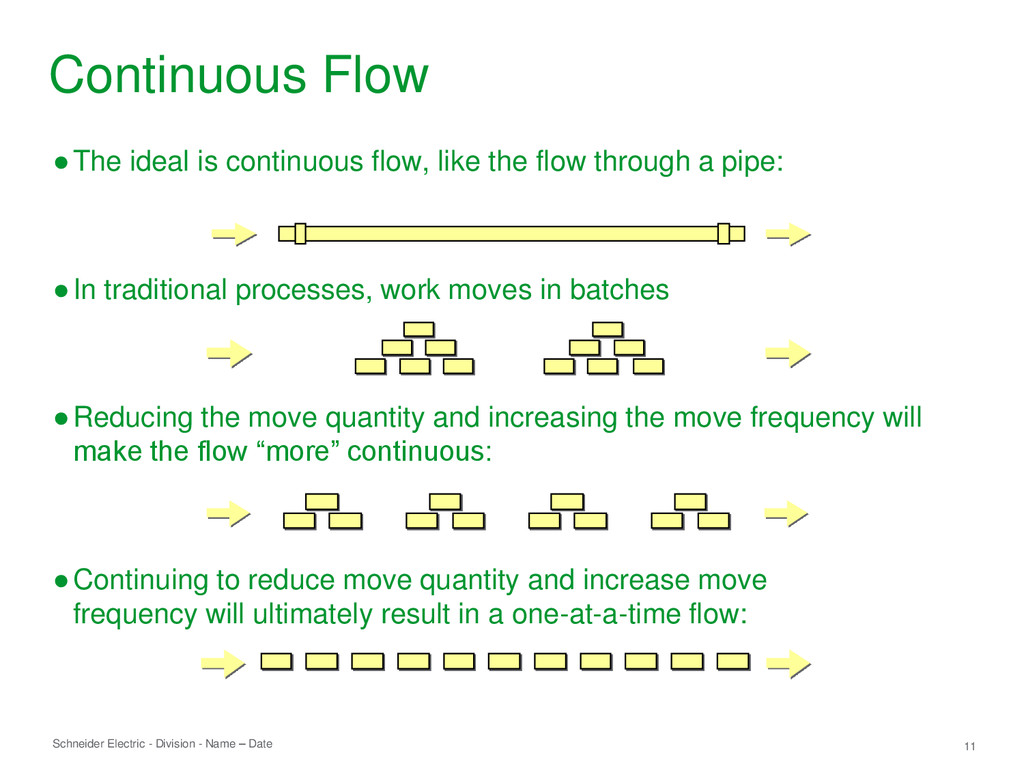
Flow •The ideal is continuous flow, like the flow through a pipe: •In traditional processes, work moves in batches •Reducing the move quantity and increasing the move frequency will make the flow “more” continuous: •Continuing to reduce move quantity and increase move frequency will ultimately result in a one-at-a-time flow:
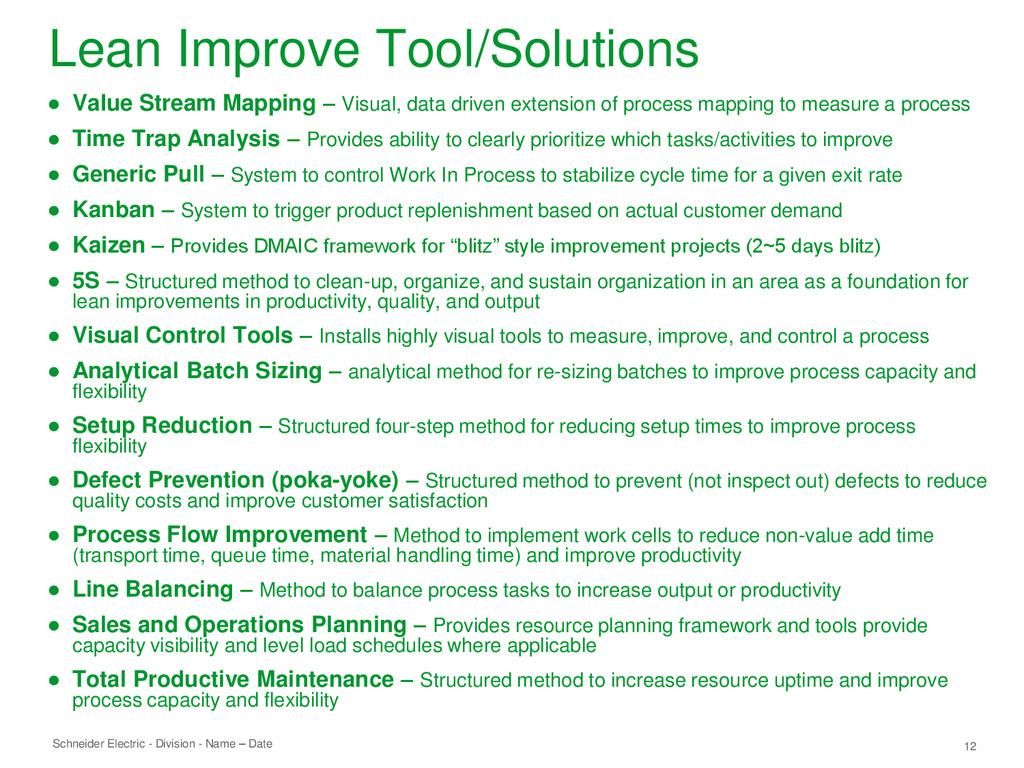
Improve Tool/Solutions • Value Stream Mapping – Visual, data driven extension of process mapping to measure a process • Time Trap Analysis – Provides ability to clearly prioritize which tasks/activities to improve • Generic Pull – System to control Work In Process to stabilize cycle time for a given exit rate • Kanban – System to trigger product replenishment based on actual customer demand • Kaizen – Provides DMAIC framework for “blitz” style improvement projects (2~5 days blitz) • 5S – Structured method to clean-up, organize, and sustain organization in an area as a foundation for lean improvements in productivity, quality, and output • Visual Control Tools – Installs highly visual tools to measure, improve, and control a process • Analytical Batch Sizing – analytical method for re-sizing batches to improve process capacity and flexibility • Setup Reduction – Structured four-step method for reducing setup times to improve process flexibility • Defect Prevention (poka-yoke) – Structured method to prevent (not inspect out) defects to reduce quality costs and improve customer satisfaction • Process Flow Improvement – Method to implement work cells to reduce non-value add time (transport time, queue time, material handling time) and improve productivity • Line Balancing – Method to balance process tasks to increase output or productivity • Sales and Operations Planning – Provides resource planning framework and tools provide capacity visibility and level load schedules where applicable • Total Productive Maintenance – Structured method to increase resource uptime and improve process capacity and flexibility
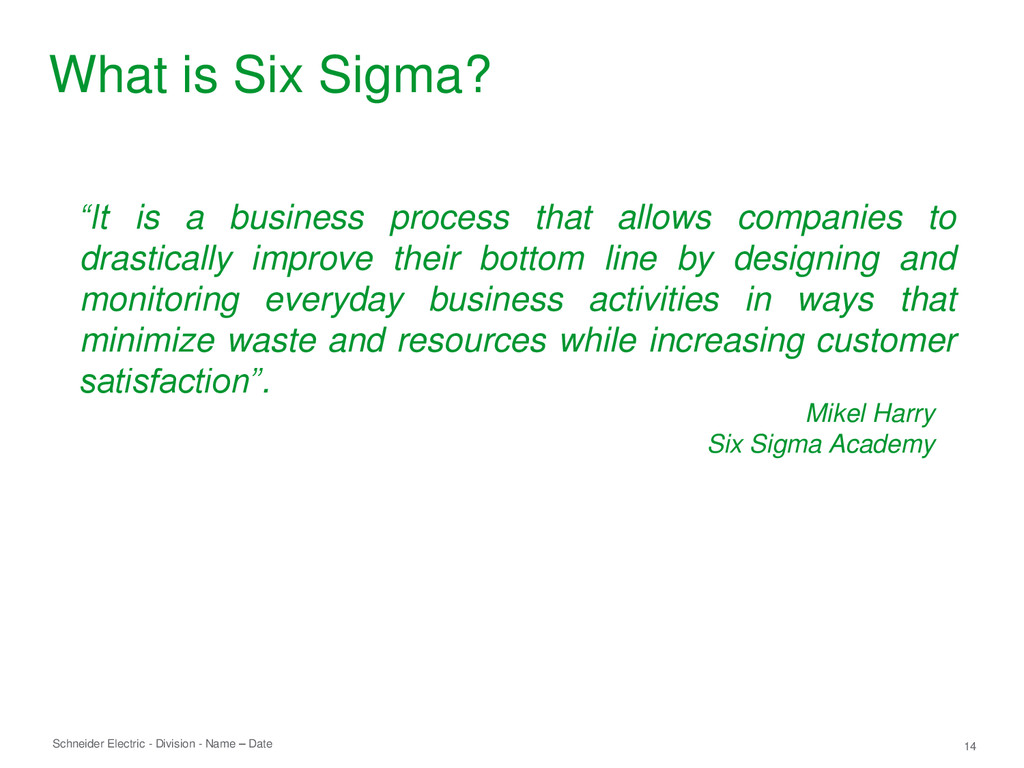
is Six Sigma? “It is a business process that allows companies to drastically improve their bottom line by designing and monitoring everyday business activities in ways that minimize waste and resources while increasing customer satisfaction”. Mikel Harry Six Sigma Academy
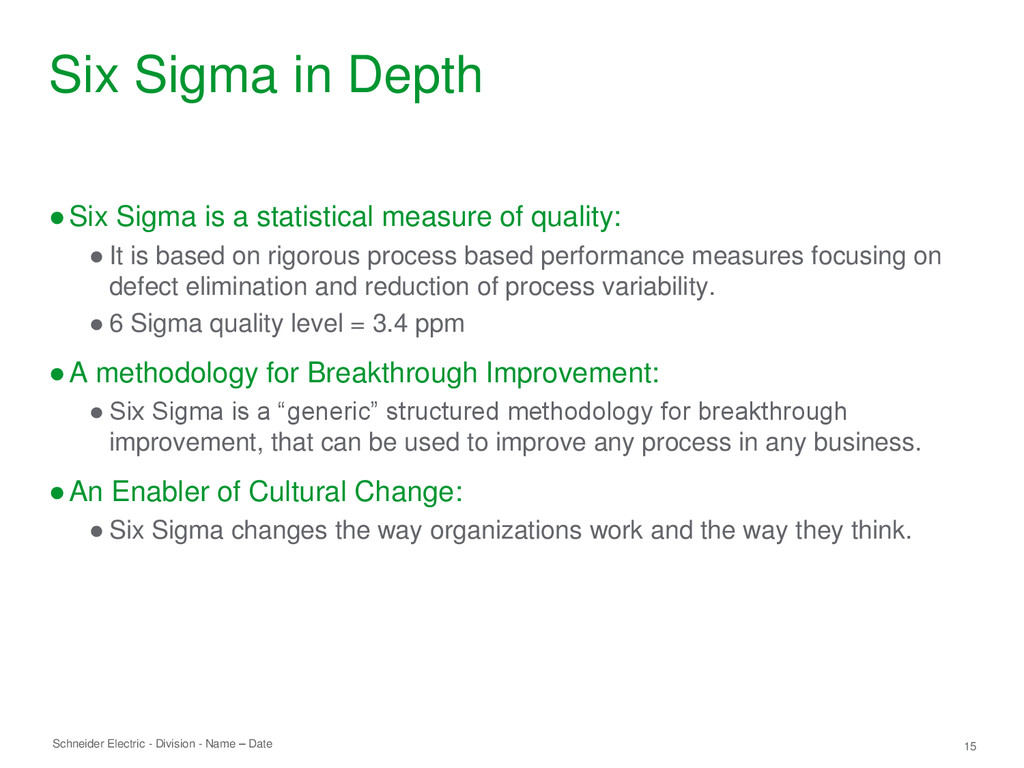
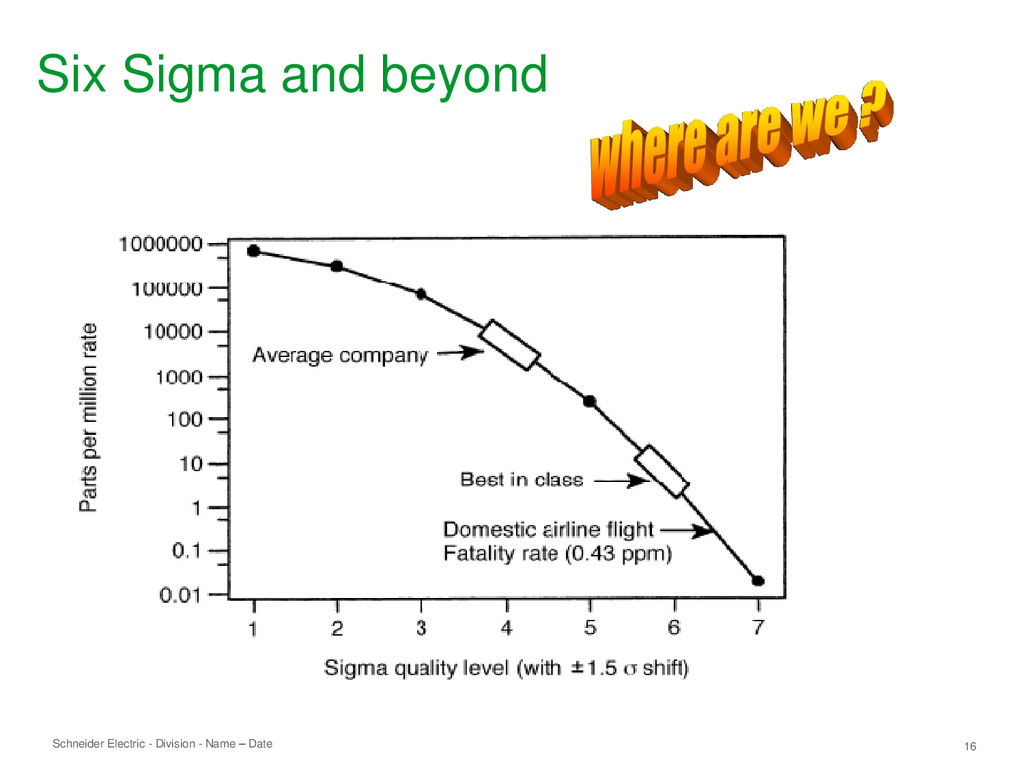
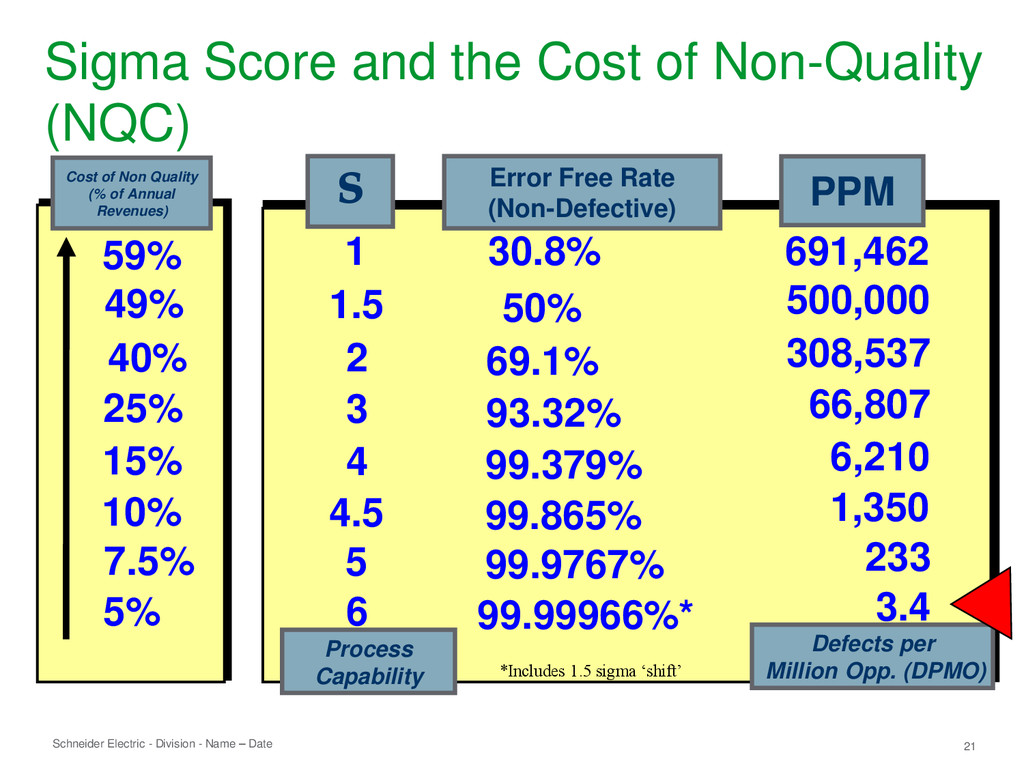
Sigma in Depth •Six Sigma is a statistical measure of quality: • It is based on rigorous process based performance measures focusing on defect elimination and reduction of process variability. • 6 Sigma quality level = 3.4 ppm •A methodology for Breakthrough Improvement: • Six Sigma is a “generic” structured methodology for breakthrough improvement, that can be used to improve any process in any business. •An Enabler of Cultural Change: • Six Sigma changes the way organizations work and the way they think.
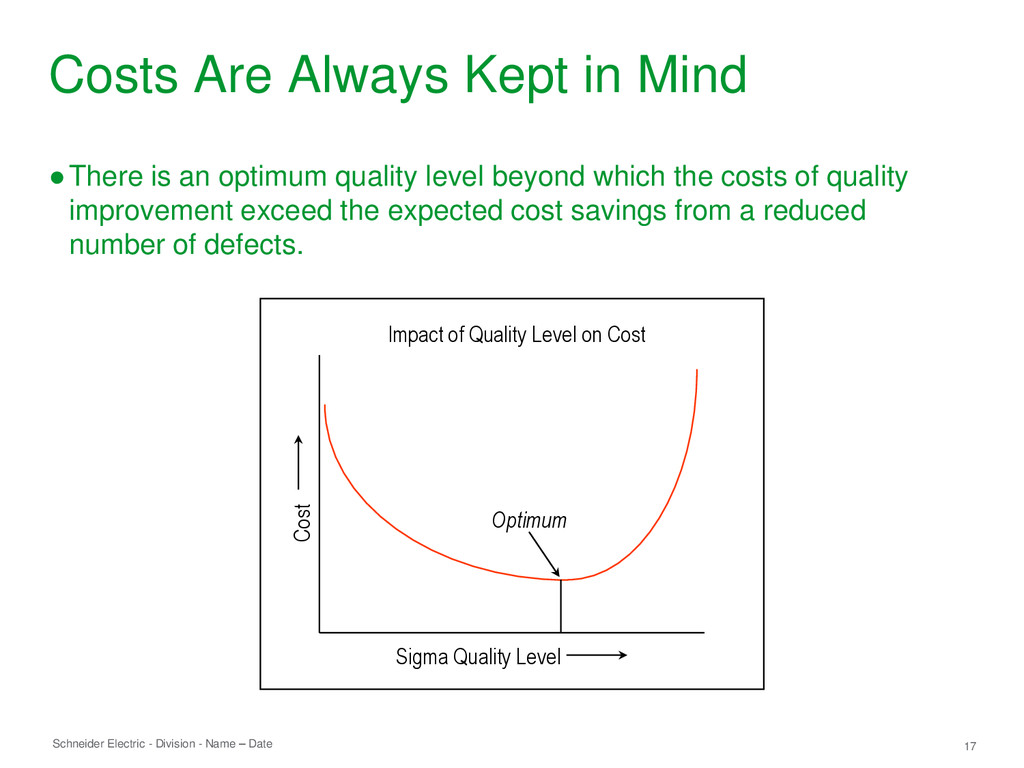
Are Always Kept in Mind •There is an optimum quality level beyond which the costs of quality improvement exceed the expected cost savings from a reduced number of defects. Cost Sigma Quality Level Optimum Impact of Quality Level on Cost
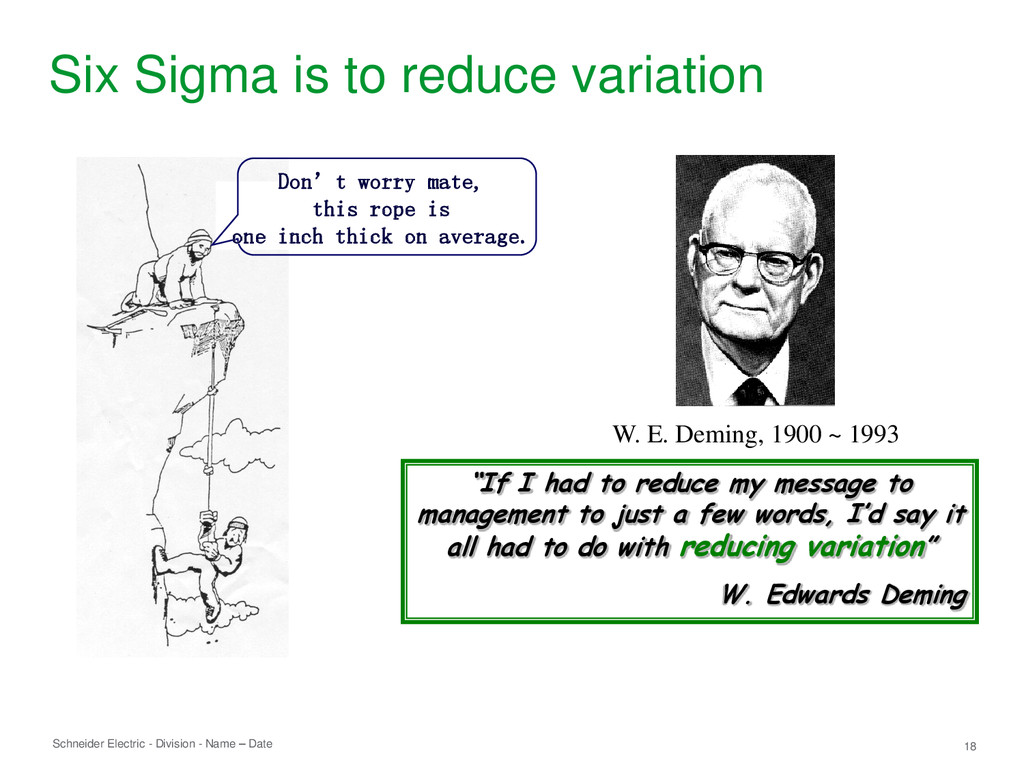
Sigma is to reduce variation Don’t worry mate, this rope is one inch thick on average. “If I had to reduce my message to management to just a few words, I’d say it all had to do with reducing variation” W. Edwards Deming W. E. Deming, 1900 ~ 1993
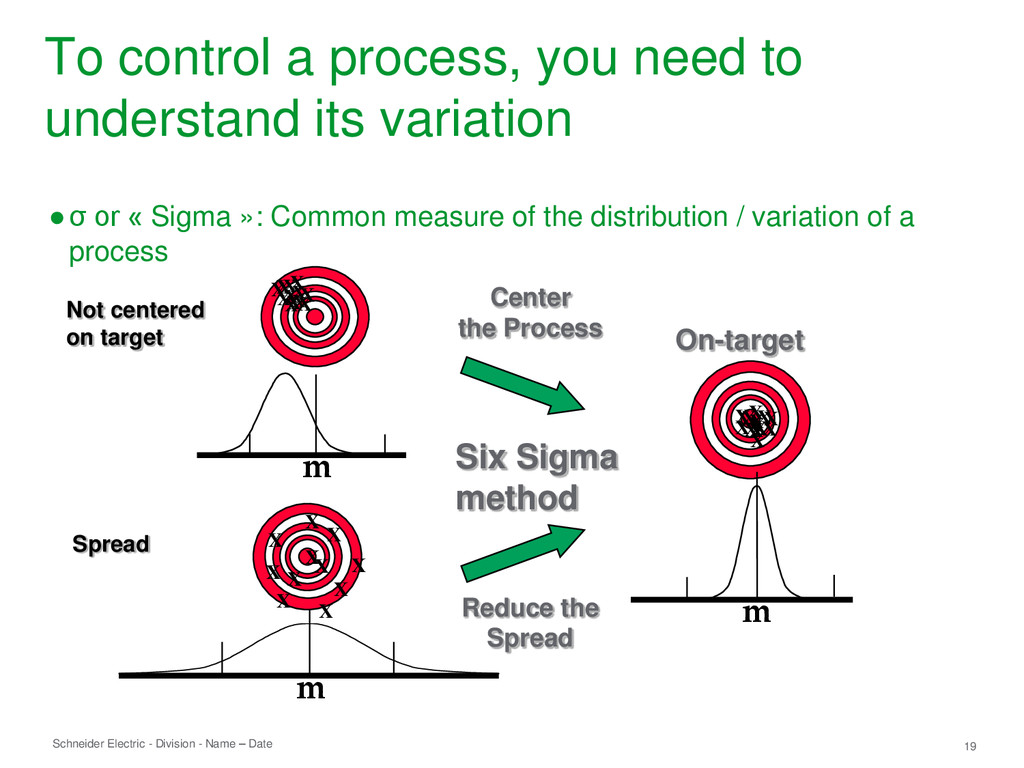
control a process, you need to understand its variation •σ or « Sigma »: Common measure of the distribution / variation of a process Not centered on target XX X X X X X X X X X X m Spread X X X X X X X X X X X m On-target X X X X X X X X X X X X X X Center the Process Reduce the Spread Six Sigma method m
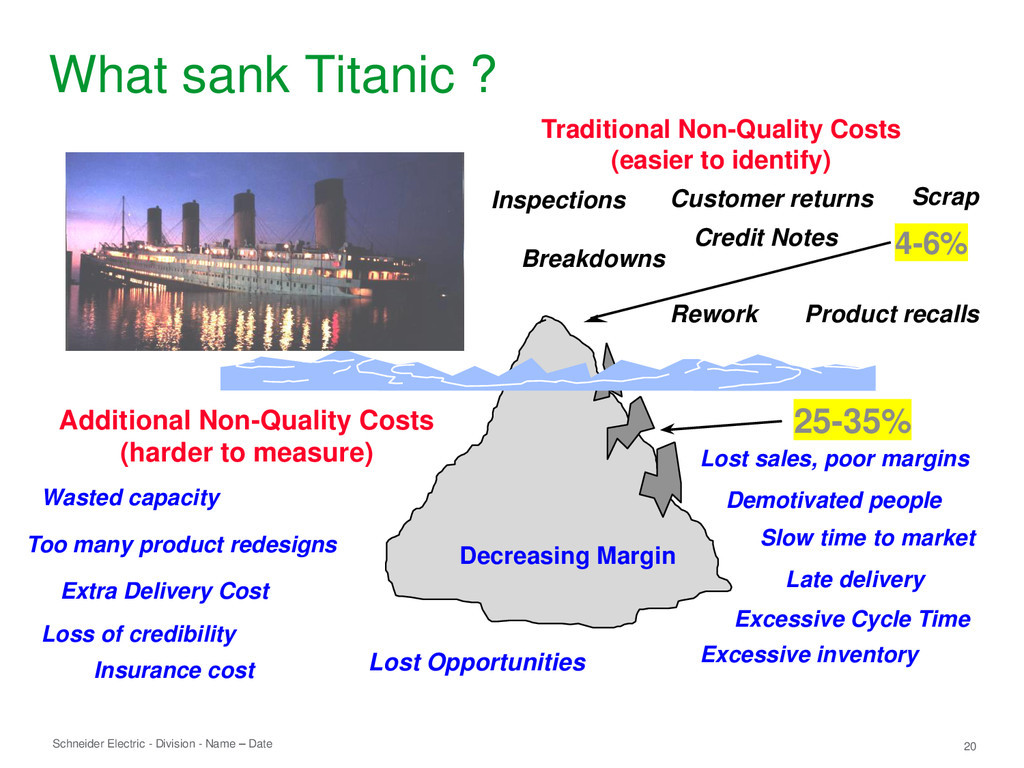
sank Titanic ? Lost Opportunities Scrap Rework Inspections Product recalls Customer returns Lost sales, poor margins Late delivery Too many product redesigns Excessive Cycle Time Extra Delivery Cost Excessive inventory Traditional Non-Quality Costs (easier to identify) Additional Non-Quality Costs (harder to measure) Loss of credibility Wasted capacity Breakdowns Slow time to market Demotivated people Credit Notes Insurance cost Decreasing Margin 4-6% 25-35%
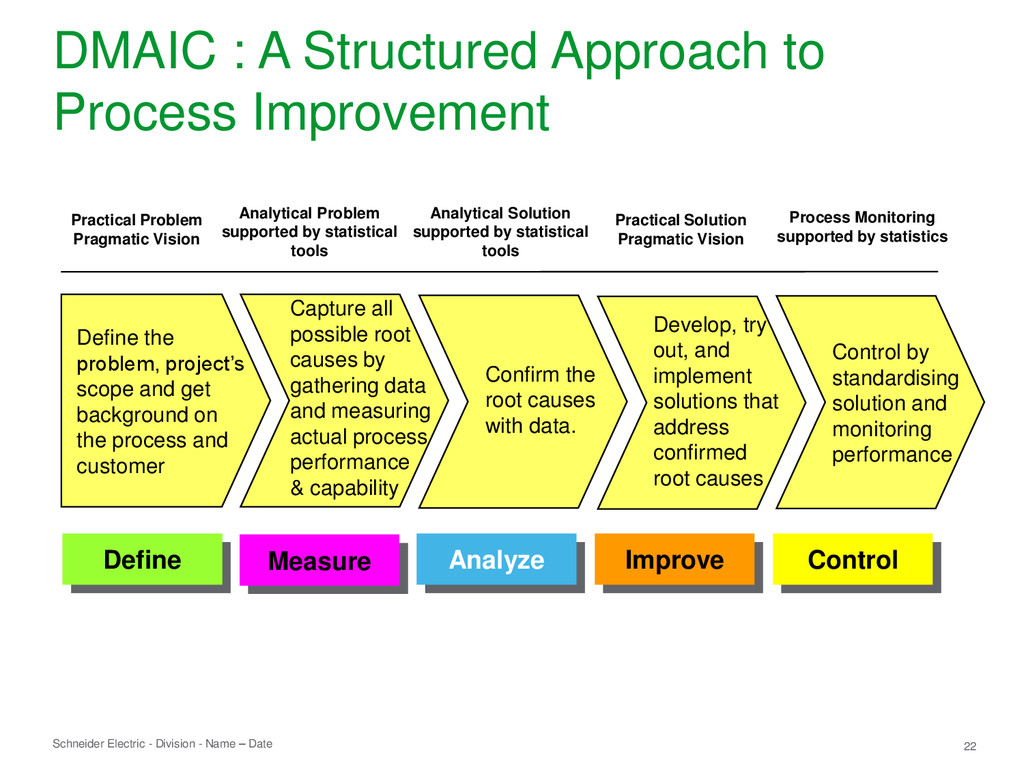
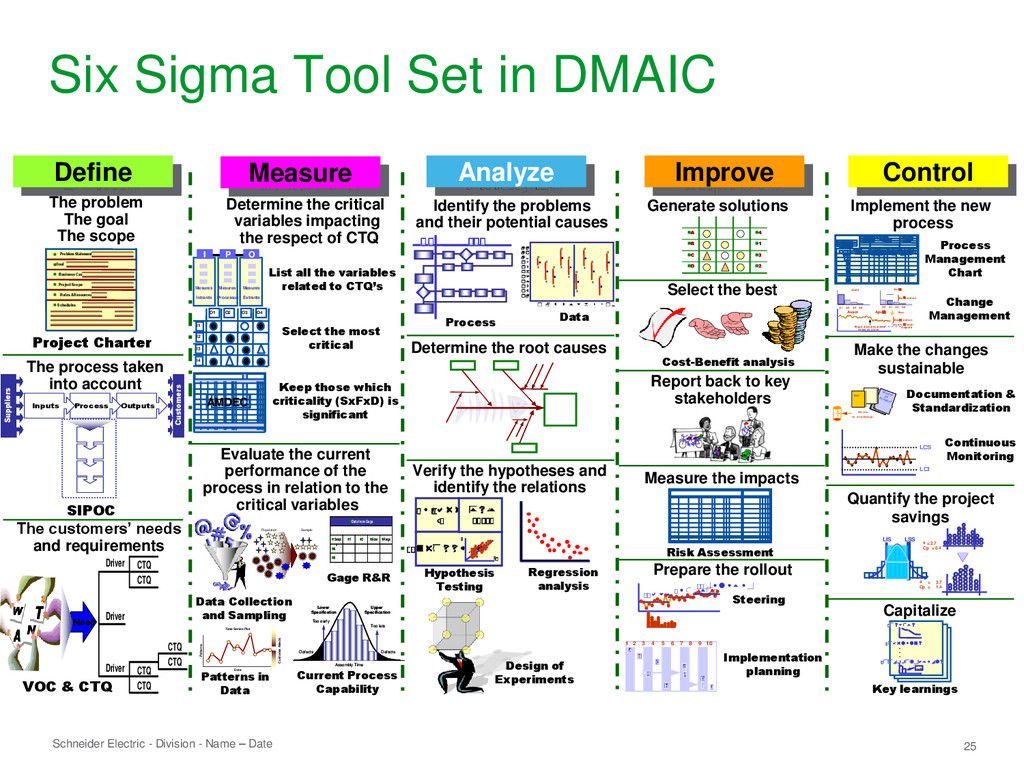
: A Structured Approach to Process Improvement Define the problem, project‟s scope and get background on the process and customer Capture all possible root causes by gathering data and measuring actual process performance & capability Confirm the root causes with data. Develop, try out, and implement solutions that address confirmed root causes Practical Problem Pragmatic Vision Analytical Problem supported by statistical tools Analytical Solution supported by statistical tools Practical Solution Pragmatic Vision Define Analyze Improve Control Measure Control by standardising solution and monitoring performance Process Monitoring supported by statistics
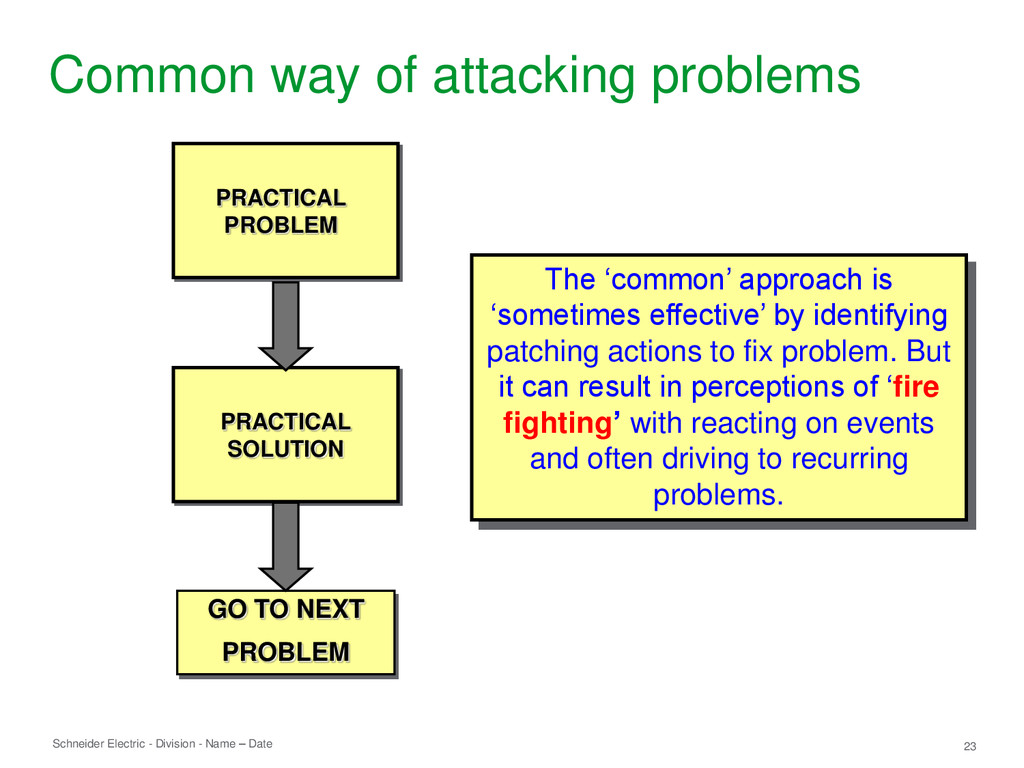
way of attacking problems The „common‟ approach is „sometimes effective‟ by identifying patching actions to fix problem. But it can result in perceptions of „fire fighting’ with reacting on events and often driving to recurring problems. GO TO NEXT PROBLEM PRACTICAL SOLUTION PRACTICAL PROBLEM
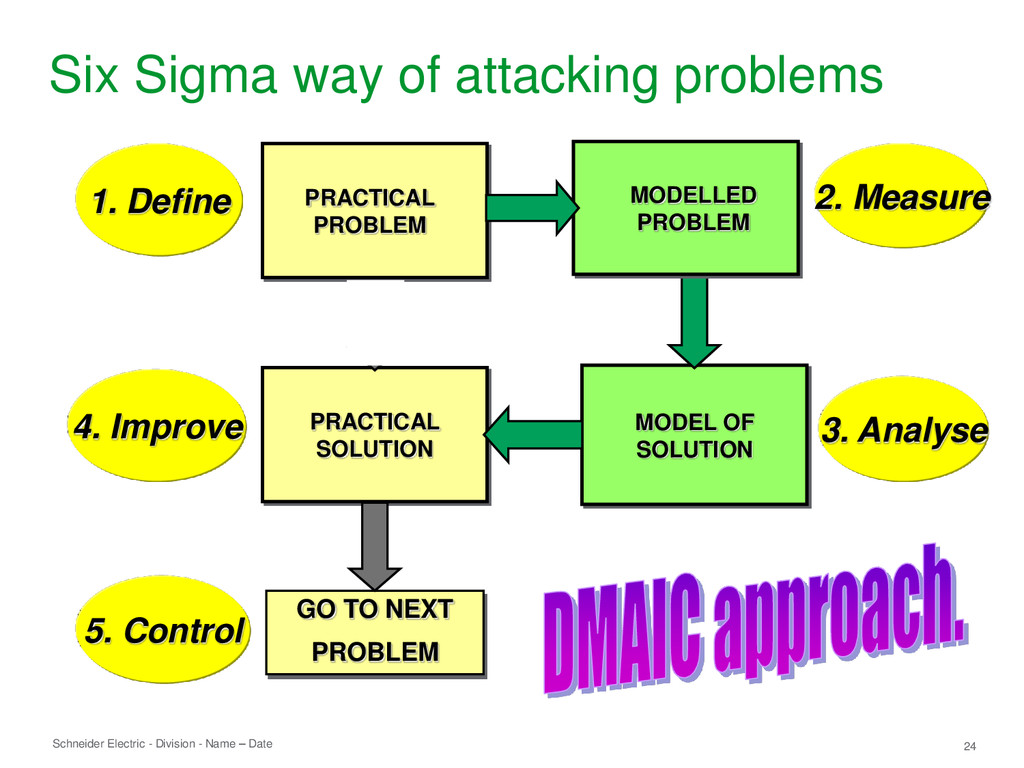
Sigma way of attacking problems 3. Analyse 4. Improve 1. Define 2. Measure GO TO NEXT PROBLEM PRACTICAL SOLUTION PRACTICAL PROBLEM MODEL OF SOLUTION MODELLED PROBLEM 5. Control
Sigma Tool Set in DMAIC Define Analyze Improve Control Measure Project Charter SIPOC Driver CTQ CTQ CTQ CTQ CTQ CTQ Driver Driver Need The problem The goal The scope The process taken into account Determine the critical variables impacting the respect of CTQ I1 I2 I3 I4 O1 O2 O3 O4 AMDEC Evaluate the current performance of the process in relation to the critical variables Identify the problems and their potential causes Determine the root causes Verify the hypotheses and identify the relations Generate solutions Select the best Report back to key stakeholders Measure the impacts Prepare the rollout Implement the new process Avant Apr鑣 Etape 4 modifications mises en place }Am閘ioration Objectif } Ecart r閟iduel Bon } Am閘ioration Avant Apr鑣 A1 A2 A3 A4 A2 A1 A3 A4 Make the changes sustainable Operating Procedures ISO Niveau de remplissage. Manuel de formation LCS LCI Quantify the project savings s = 3.7 Cp = 1.4 LIS LSS s = 2.7 Cp = 0.4 Capitalize The customers’ needs and requirements VOC & CTQ Defects Defects Too early Too late Assembly Time Lower Specification Upper Specification Defects Defects Too early Too late Assembly Time Lower Specification Upper Specification B A Range X-bar 2 1 Sampl e Data from Gage B A Range X-bar 2 1 Sampl e Data from Gage Time Series Plot Patterns Date Customer Needs Patterns in Data Data Collection and Sampling Current Process Capability Gage R&R Sample Population Design of Experiments Hypothesis Testing Regression analysis 2 D 3 C 1 B 4 A 2 D 3 C 1 B 4 A Cost-Benefit analysis Risk Assessment PBlo>P PP?BnBB? PP; Steering 2 4 8 6 10 G 1 3 5 7 9 A B C D F E J I H G Implementation planning Process Data Process Management Chart Change Management Key learnings Documentation & Standardization Continuous Monitoring Outputs Process Inputs Suppliers Customers P P PPP PAB P P:P cP PP@>Bon > PPPPP P 1 P 22 21 20 19 18 17 16 15 14 13 12 1 2 3 4 5 6 7 8 910 X O X O X O X O X O X O X O X O O X O PokP Pn<Bon PonolPPA><kP PoBn P>pon> o P;nom:lB Po> Po=>PP PA::< P >BB< Ponol PBmB P>Ao= PAo Pmm>=B:> PBP P>m:n>nP PB PAo Plo<A: 2 12 Po=<PP:m> Po<>PP:m> Po<> Po=>PP P:>Po?PP>P P>= ;P Pppo>= ;P P>BBon P:> P>:on PB@n:> 1 P>:nBn@ P><omm>n=:Bon P>l • • • suite Schedules Roles & Resources Project Scope Business Case Goal Problem Statement Schedules Roles & Resources Project Scope Business Case Goal Problem Statement I P O Mesures Intrants Mesures Processus Mesures Extrants List all the variables related to CTQ’s Select the most critical Keep those which criticality (SxFxD) is significant
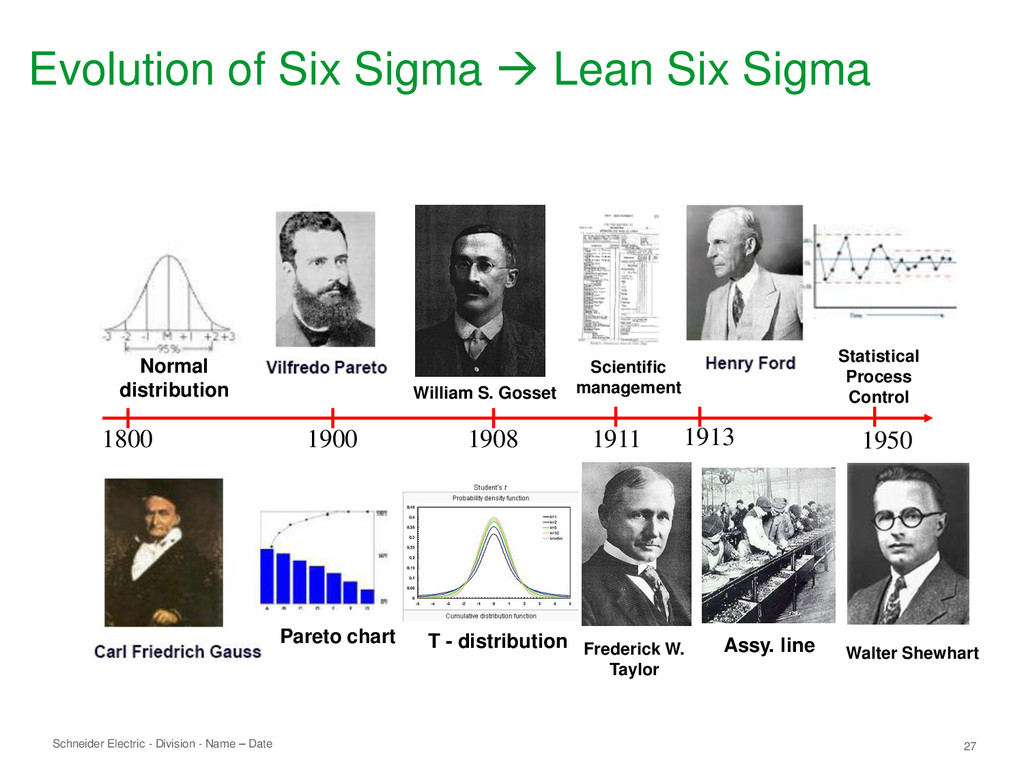
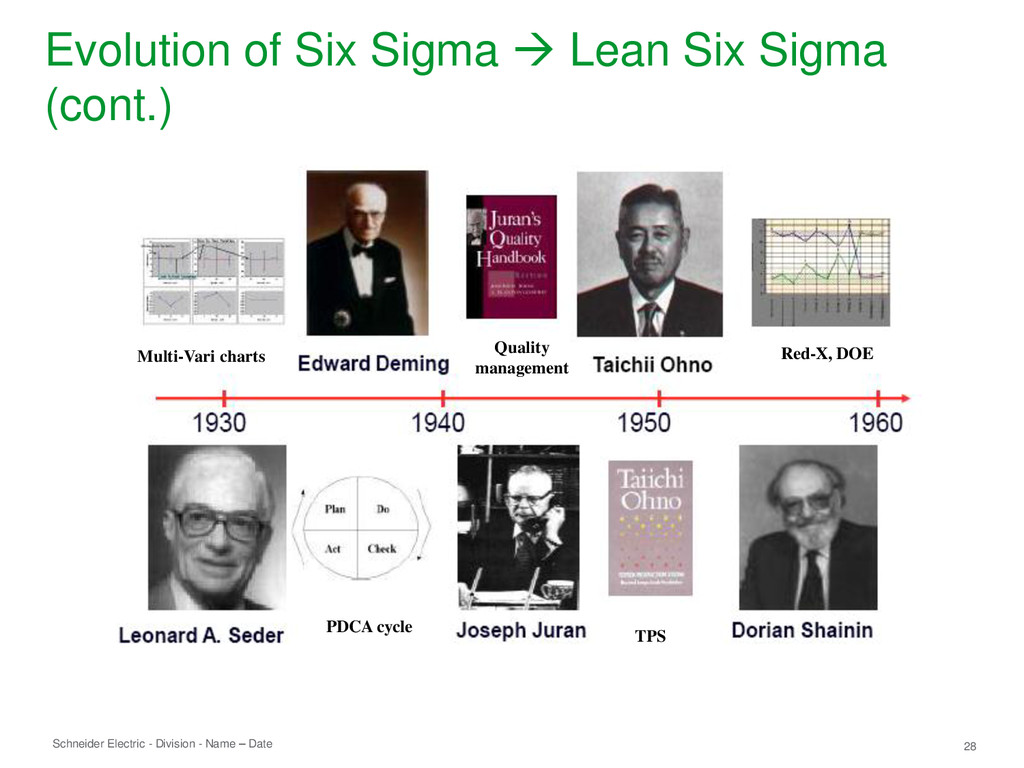
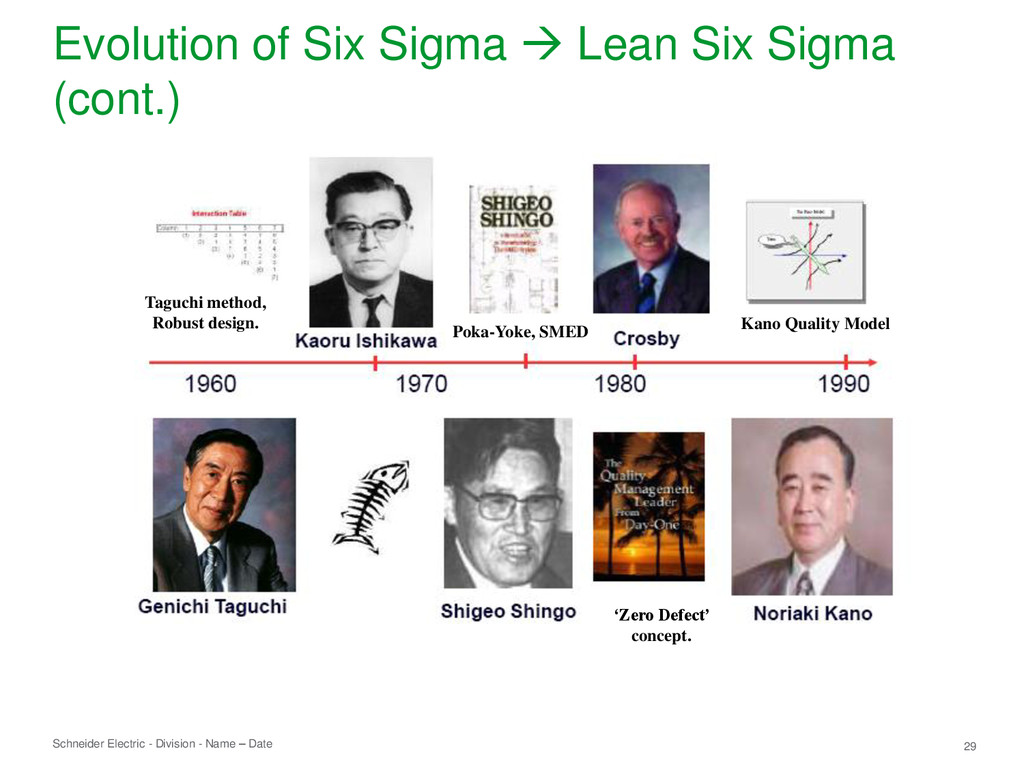
of Six Sigma Lean Six Sigma 1800 1900 1908 1911 1950 William S. Gosset T - distribution 1913 Scientific management Frederick W. Taylor Statistical Process Control Assy. line Pareto chart Normal distribution Walter Shewhart
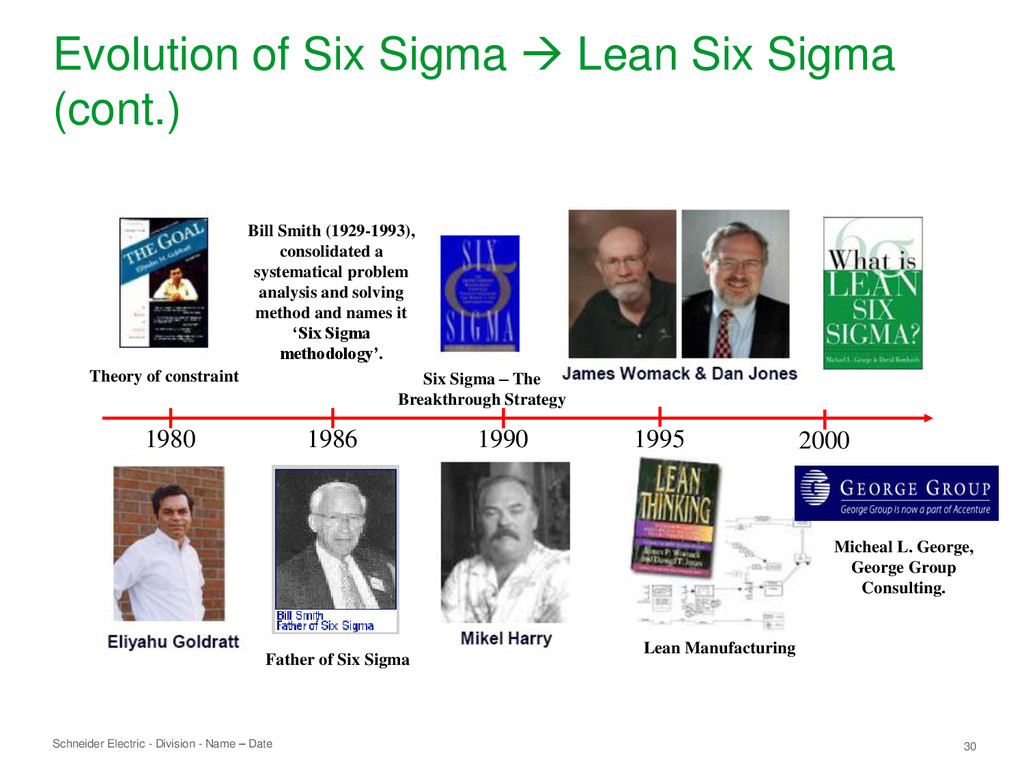
of Six Sigma Lean Six Sigma (cont.) 1980 1986 1990 1995 2000 Bill Smith (1929-1993), consolidated a systematical problem analysis and solving method and names it ‘Six Sigma methodology’. Micheal L. George, George Group Consulting. Theory of constraint Lean Manufacturing Father of Six Sigma Six Sigma – The Breakthrough Strategy
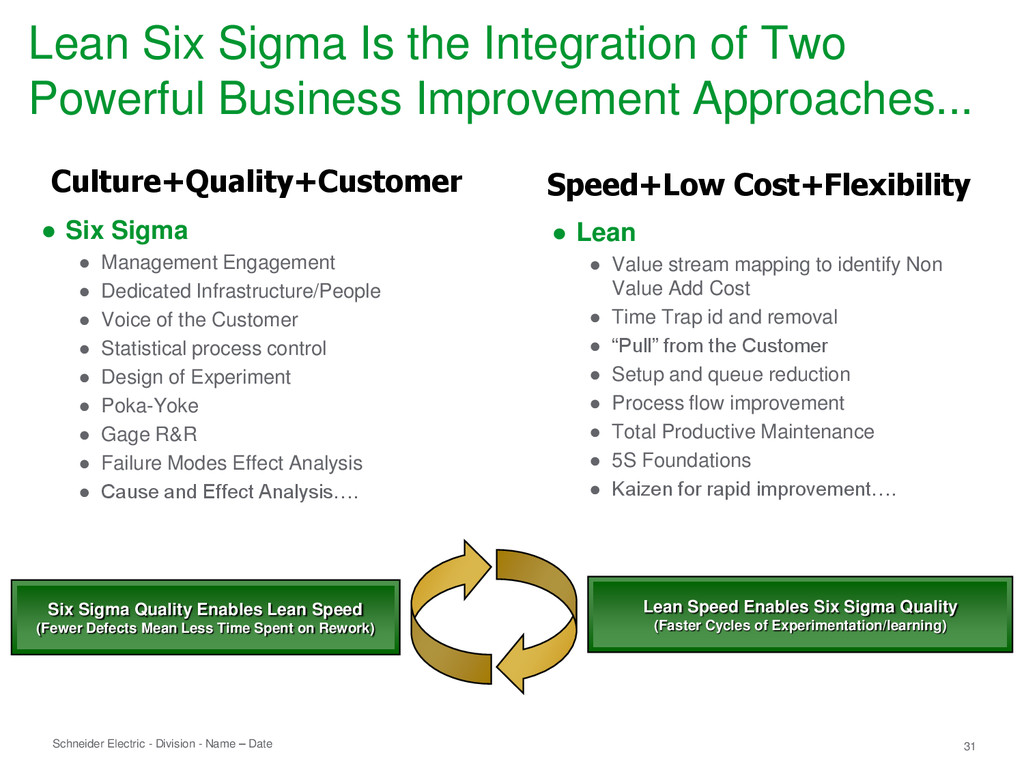
Six Sigma Is the Integration of Two Powerful Business Improvement Approaches... • Lean • Value stream mapping to identify Non Value Add Cost • Time Trap id and removal • “Pull” from the Customer • Setup and queue reduction • Process flow improvement • Total Productive Maintenance • 5S Foundations • Kaizen for rapid improvement…. • Six Sigma • Management Engagement • Dedicated Infrastructure/People • Voice of the Customer • Statistical process control • Design of Experiment • Poka-Yoke • Gage R&R • Failure Modes Effect Analysis • Cause and Effect Analysis…. Culture+Quality+Customer Speed+Low Cost+Flexibility Six Sigma Quality Enables Lean Speed (Fewer Defects Mean Less Time Spent on Rework) Lean Speed Enables Six Sigma Quality (Faster Cycles of Experimentation/learning)
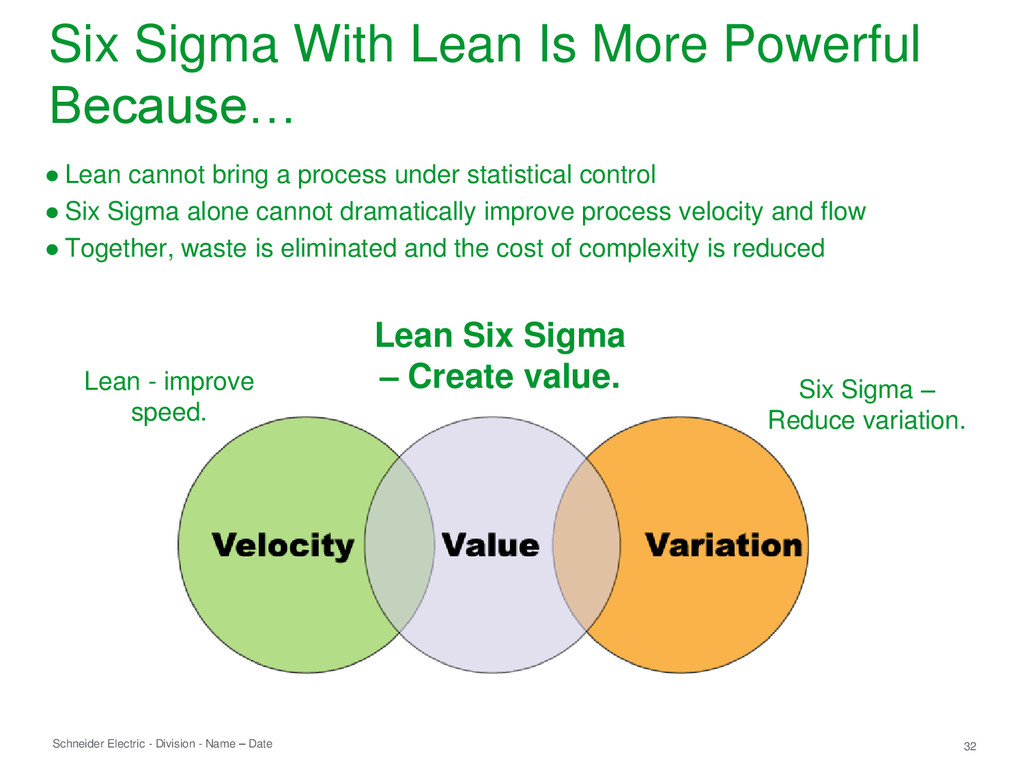
Sigma With Lean Is More Powerful Because… • Lean cannot bring a process under statistical control • Six Sigma alone cannot dramatically improve process velocity and flow • Together, waste is eliminated and the cost of complexity is reduced Lean - improve speed. Six Sigma – Reduce variation. Lean Six Sigma – Create value.
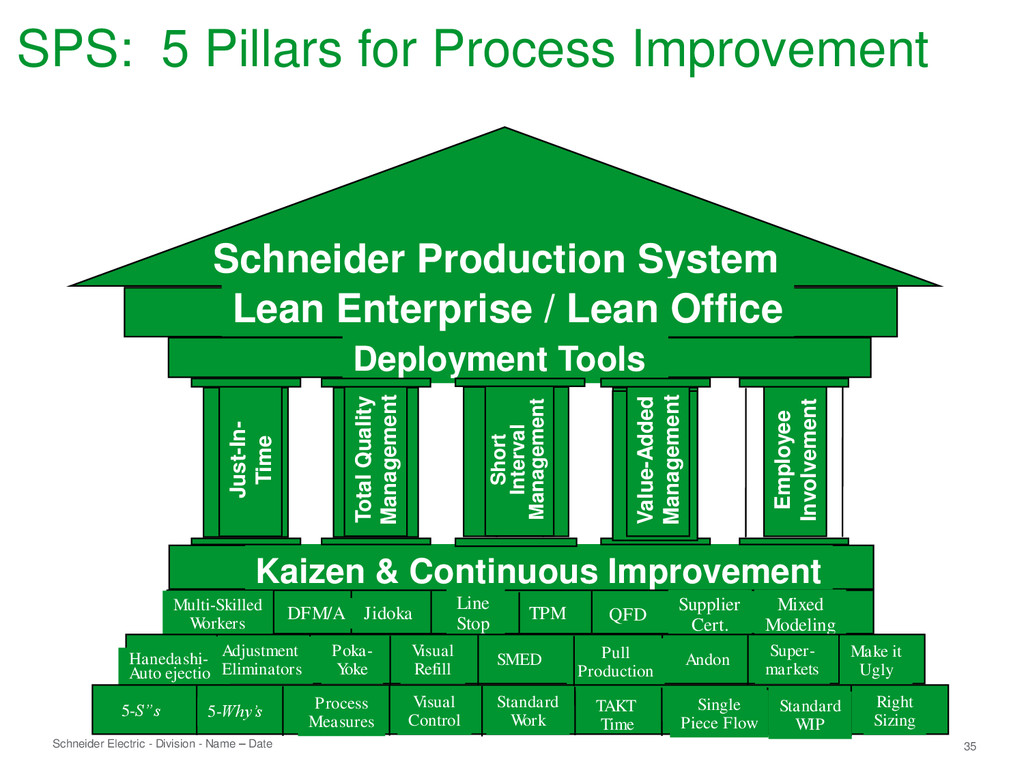
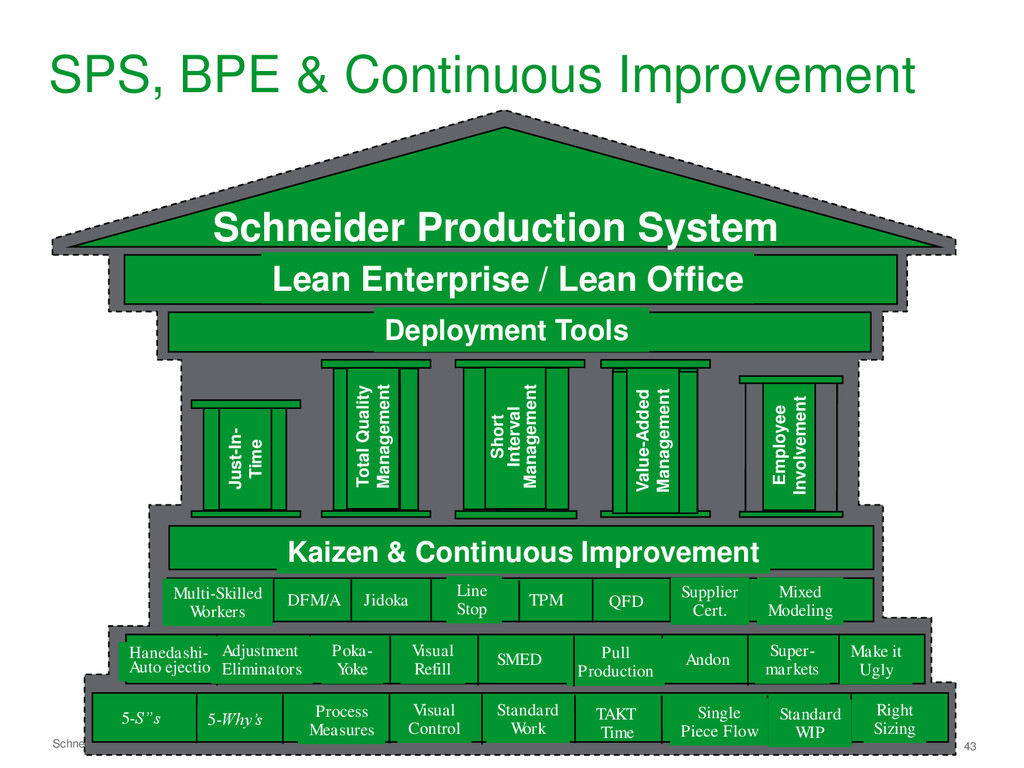
5 Pillars for Process Improvement Schneider Production System Lean Enterprise / Lean Office Kaizen & Continuous Improvement Multi-Skilled Workers DFM/A Jidoka Line Stop TPM QFD Supplier Cert. Mixed Modeling Hanedashi- Auto ejection Adjustment Eliminators Poka- Yoke Visual Refill SMED Pull Production Andon Super- markets Make it Ugly 5-Why’s Process Measures Visual Control TAKT Time Single Piece Flow Standard WIP Short Interval Management Just-In- Time Total Quality Management Value-Added Management Employee Involvement Deployment Tools 5-S”s Standard Work Right Sizing
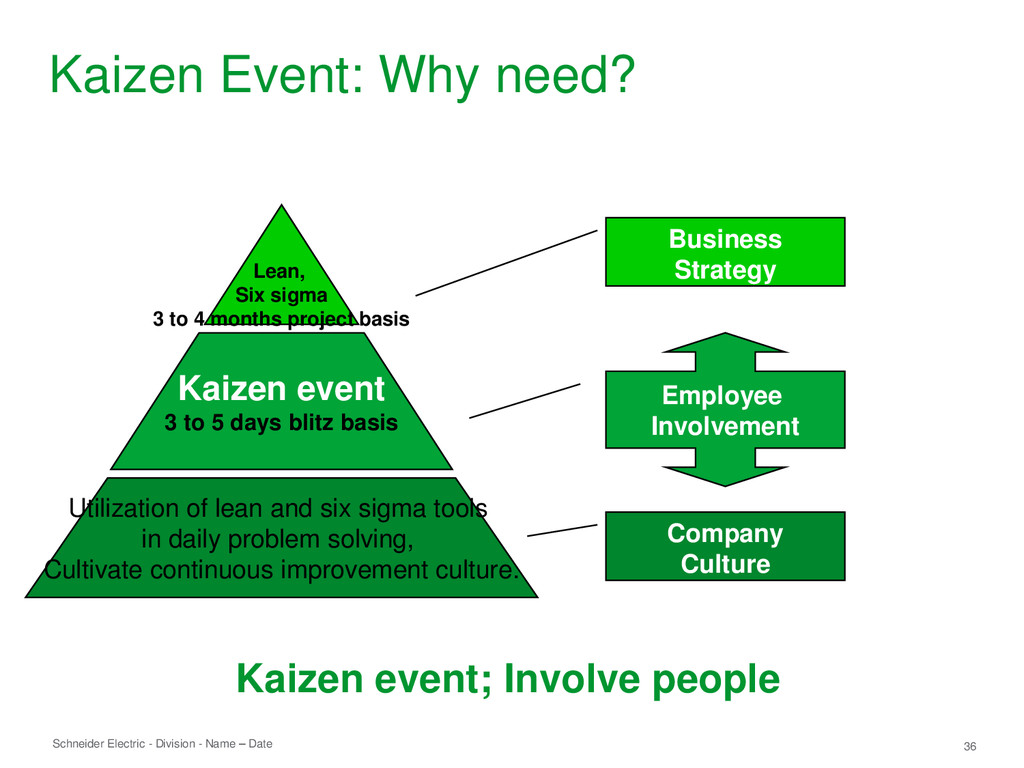
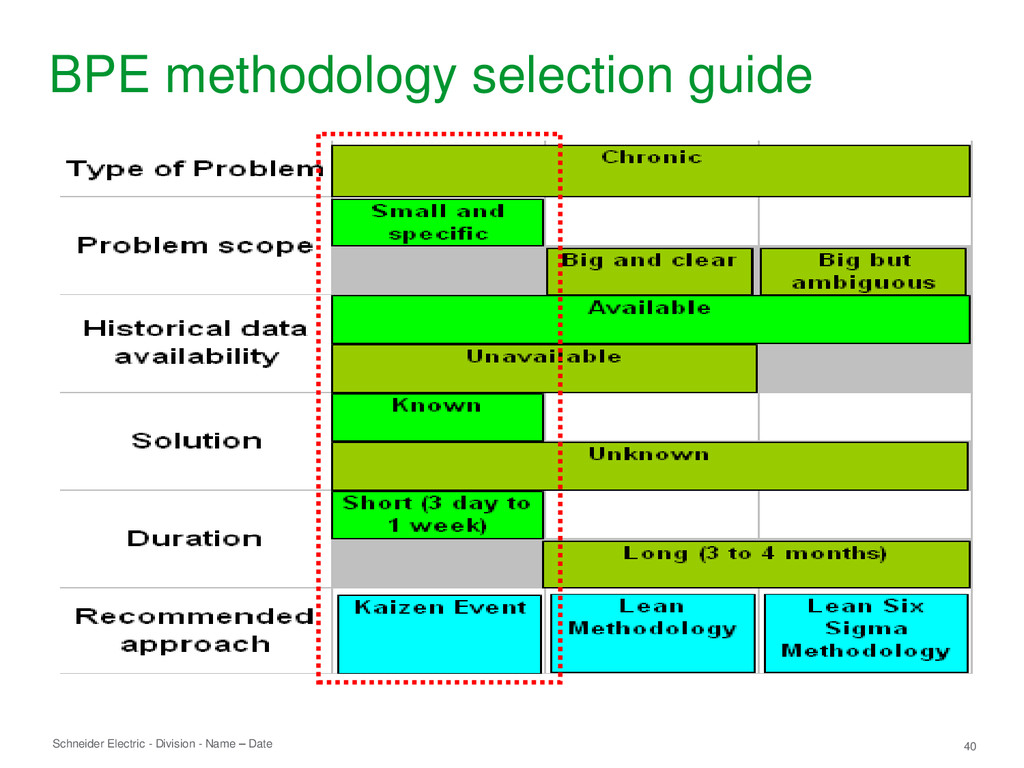
Event: Why need? Business Strategy Company Culture Employee Involvement Lean, Six sigma 3 to 4 months project basis Kaizen event 3 to 5 days blitz basis Utilization of lean and six sigma tools in daily problem solving, Cultivate continuous improvement culture. Kaizen event; Involve people
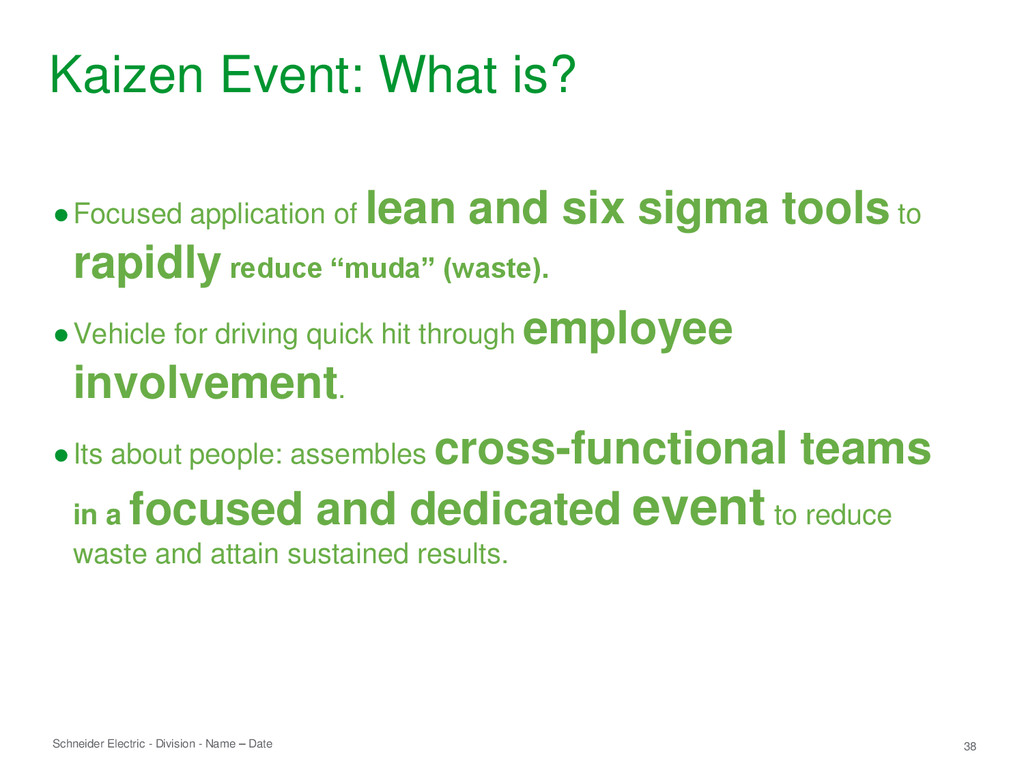
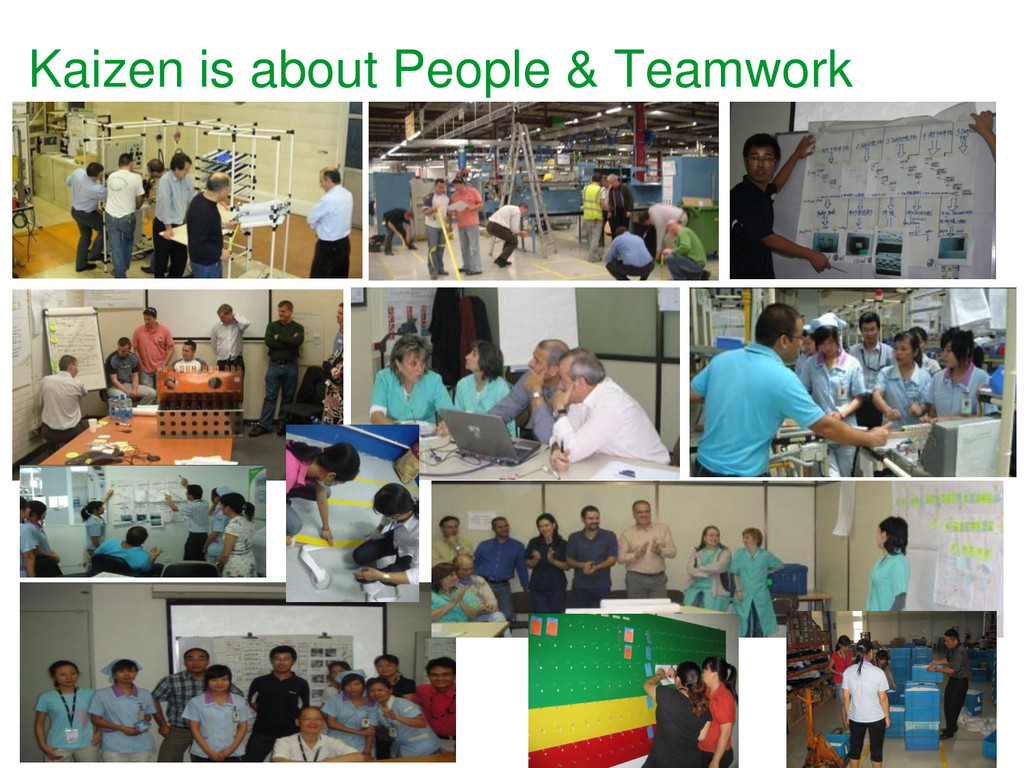
Event: What is? •Focused application of lean and six sigma tools to rapidly reduce “muda” (waste). •Vehicle for driving quick hit through employee involvement. •Its about people: assembles cross-functional teams in a focused and dedicated event to reduce waste and attain sustained results.
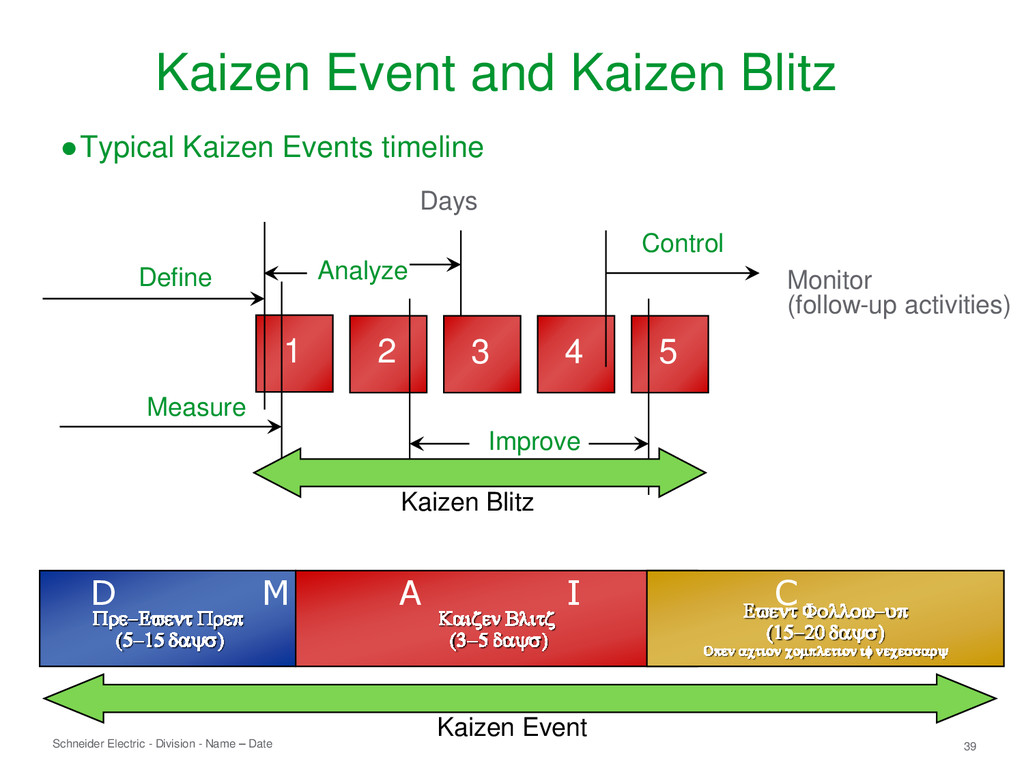
Event and Kaizen Blitz •Typical Kaizen Events timeline Pre-Event Prep (5-15 days) Kaizen Blitz (3-5 days) Event Follow-up (15-20 days) Open action completion if necessary D M A I C 1 3 4 5 Days Define Measure Analyze Improve Control Monitor (follow-up activities) 2 Kaizen Blitz Kaizen Event
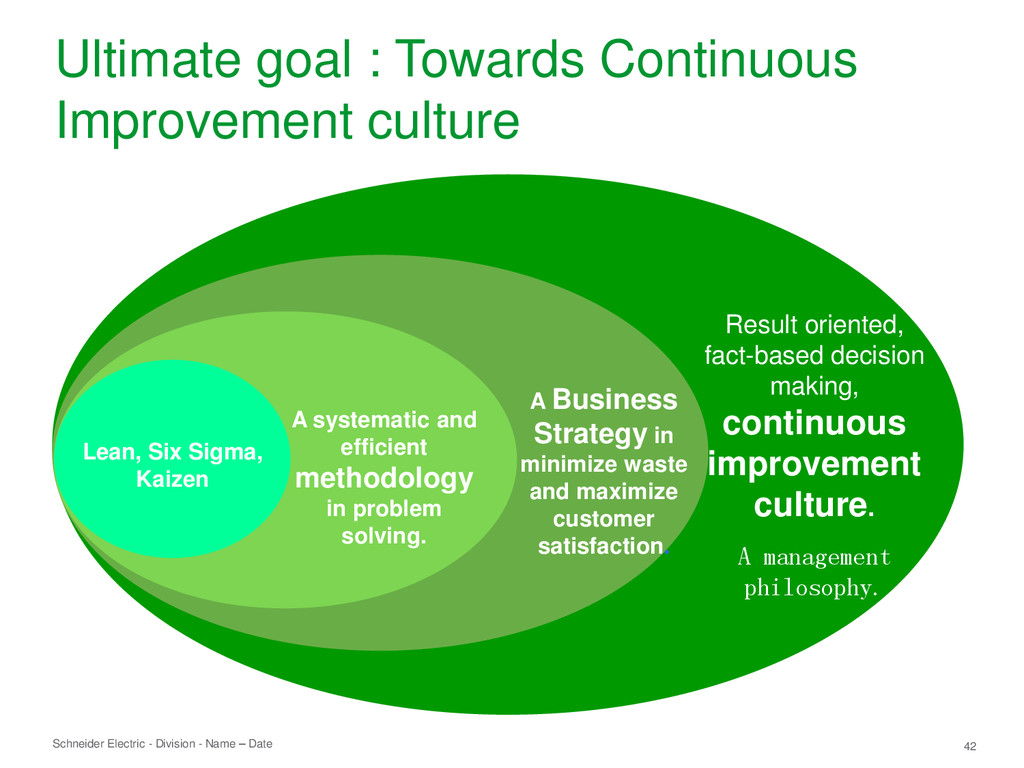
Continuous improvement culture Result oriented, fact-based decision making, continuous improvement culture. A management philosophy. A systematic and efficient methodology in problem solving. Lean, Six Sigma, Kaizen A Business Strategy in minimize waste and maximize customer satisfaction. Ultimate goal : Towards Continuous Improvement culture
BPE & Continuous Improvement Schneider Production System Lean Enterprise / Lean Office Kaizen & Continuous Improvement Multi-Skilled Workers DFM/A Jidoka Line Stop TPM QFD Supplier Cert. Mixed Modeling Hanedashi- Auto ejection Adjustment Eliminators Poka- Yoke Visual Refill SMED Pull Production Andon Super- markets Make it Ugly 5-Why’s Process Measures Visual Control TAKT Time Single Piece Flow Standard WIP Deployment Tools 5-S”s Standard Work Right Sizing Short Interval Management Just-In- Time Total Quality Management Value-Added Management Employee Involvement
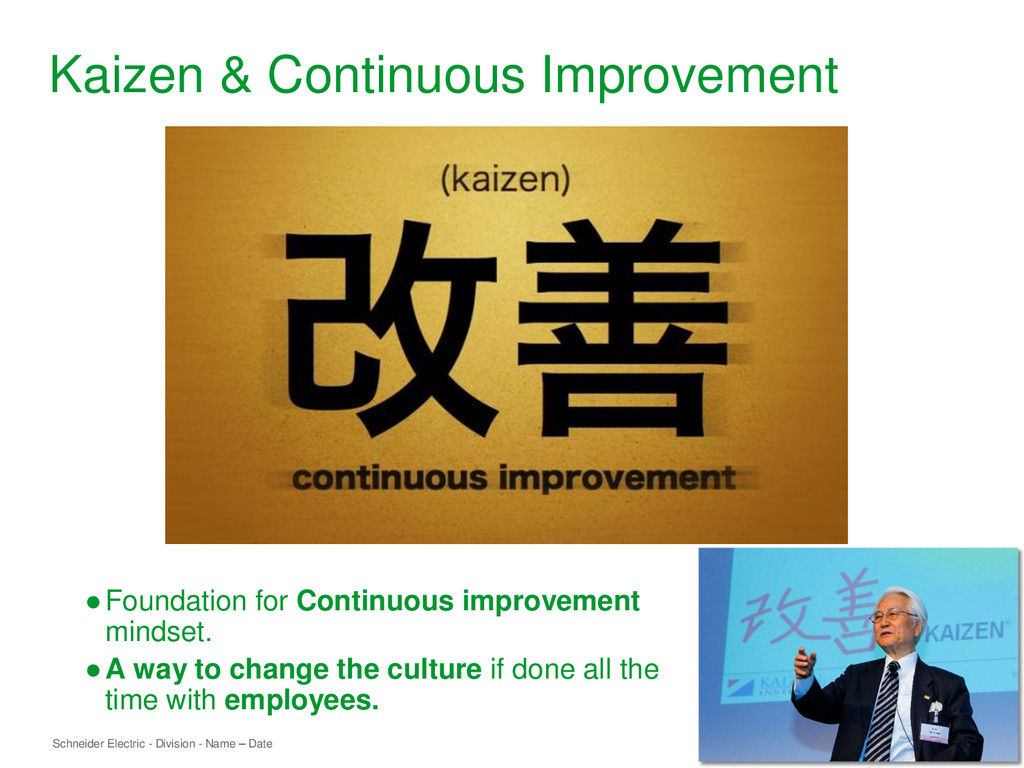
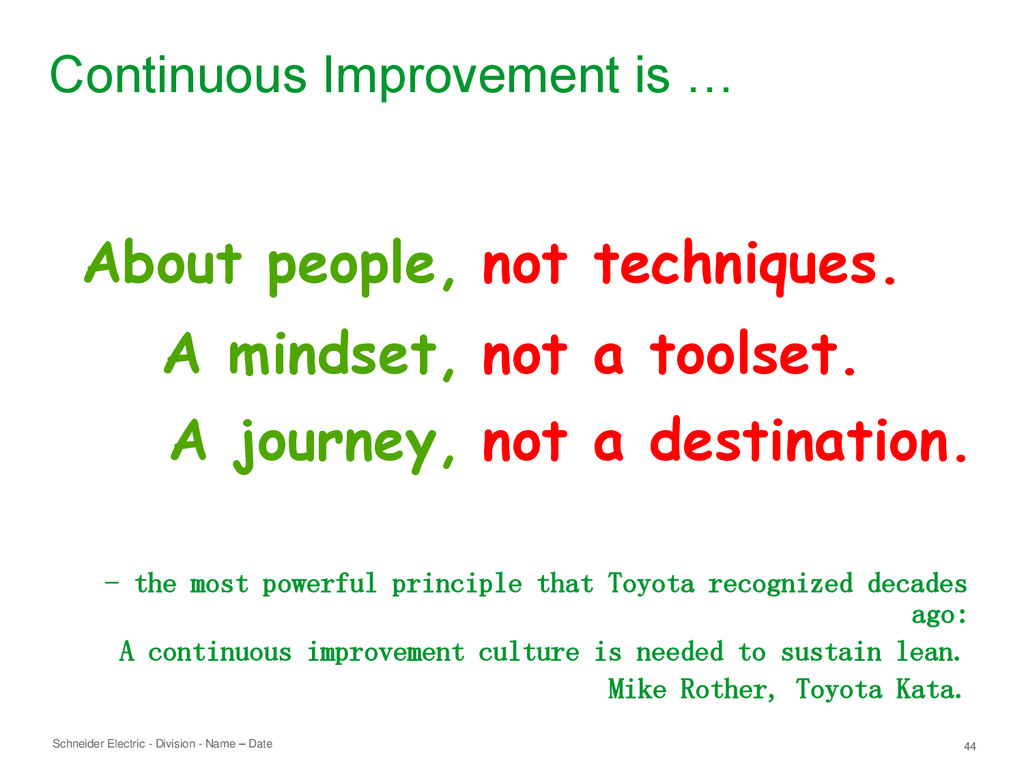
Improvement is … About people, A mindset, A journey, not techniques. not a toolset. not a destination. - the most powerful principle that Toyota recognized decades ago: A continuous improvement culture is needed to sustain lean. Mike Rother, Toyota Kata.


 ishii_mit
 hiola
 juanmartin2026
 bunnchinn3
 signer
 ssmedikasda
 coderdojojapan
 suisan
 frievea
 robintux
 yatabe
 techseoconnect
 khoart
 yeseniaperezcruz
 tmiket
 oripsolob
 morganepeng
 rmw
 badams
 axbom
 geshan
 reverentgeek
 tammyeverts