Upgrade to Pro — share decks privately, control downloads, hide ads and more …

Understanding GEO: How to Optimise Content in t...

Sponsored · Your Podcast. Everywhere. Effortlessly. Share. Educate. Inspire. Entertain. You do you. We'll handle the rest. →

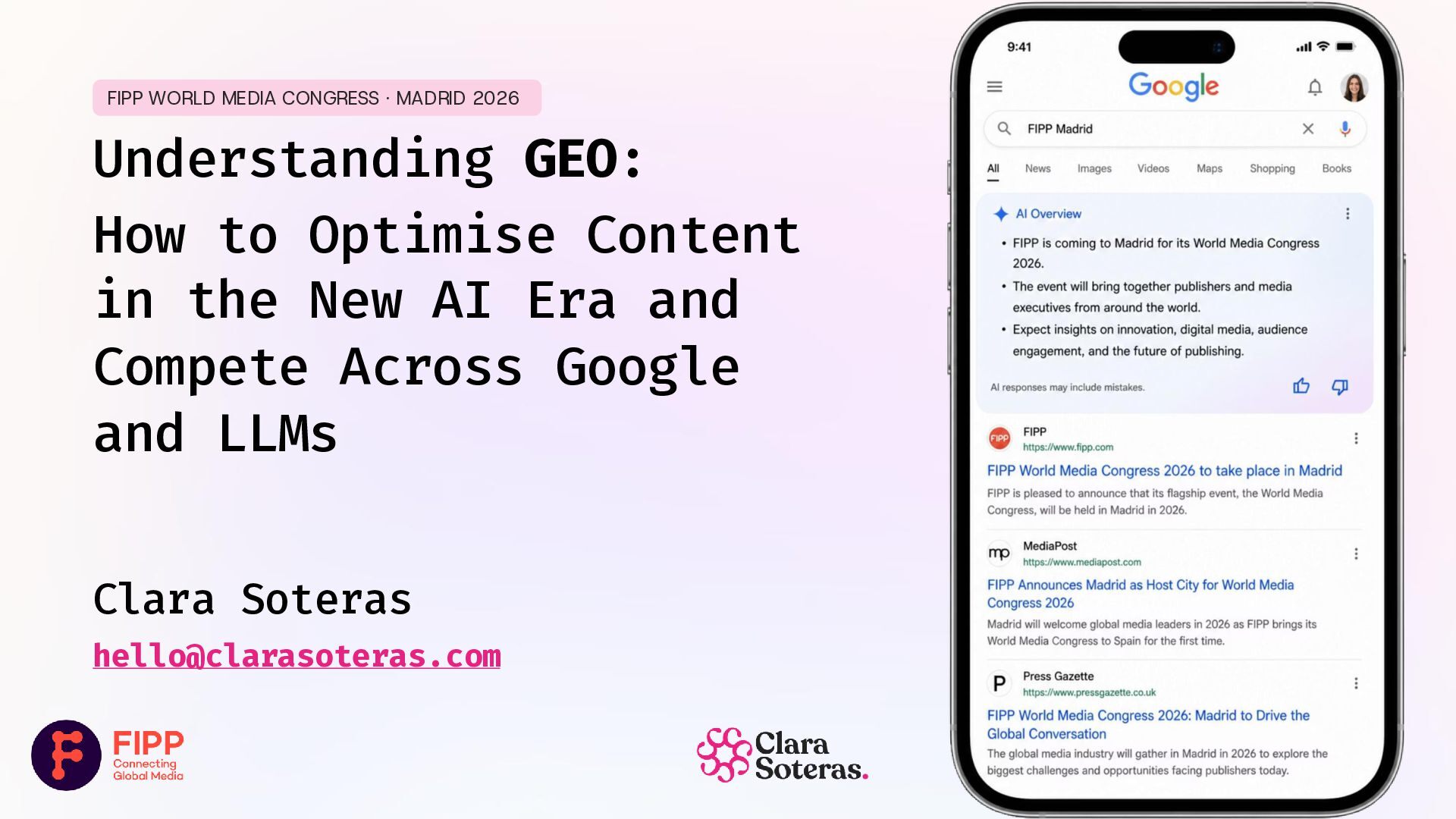
Understanding GEO: How to Optimise Content in the New AI Era and Compete Across Google and LLMs - FIPP 2026 - Clara Soteras

This workshop was delivered at the FIPP World Media Congress 2026 in Madrid on 14 October 2026, exploring the evolution of SEO towards Generative Engine Optimisation (GEO) and the new principles, signals and content strategies that media organisations need to consider to maintain and strengthen their visibility in an increasingly AI-driven search ecosystem.

The session examined how media organisations can move beyond generating traffic and clicks to focus on building authority, strengthening editorial brands and ensuring that the expertise, experience and specialist knowledge of journalists and publishers are recognised and surfaced by search engines and AI systems.

Participants were provided with clear, actionable guidelines to adapt their content strategies to the changing search landscape, alongside a practical exercise to help them understand and apply these principles in their own work. Key topics included the growing importance of new content formats, such as video, the role of social signals, and how to interpret evolving algorithms and understand what AI-driven platforms are looking for.

The workshop also explored strategies to increase the likelihood of editorial content being surfaced in Google AI Overviews, ChatGPT and other LLM-based experiences, helping publishers position their publications and journalism as authoritative, relevant and trustworthy sources for AI-generated answers.

Avatar for Clara Soteras

Clara Soteras

October 14, 2026

More Decks by Clara Soteras

Other Decks in Marketing & SEO
Transcript

  1. FIPP WORLD MEDIA CONGRESS · MADRID 2026 Understanding GEO: How

    to Optimise Content in the New AI Era and Compete Across Google and LLMs Clara Soteras [email protected]
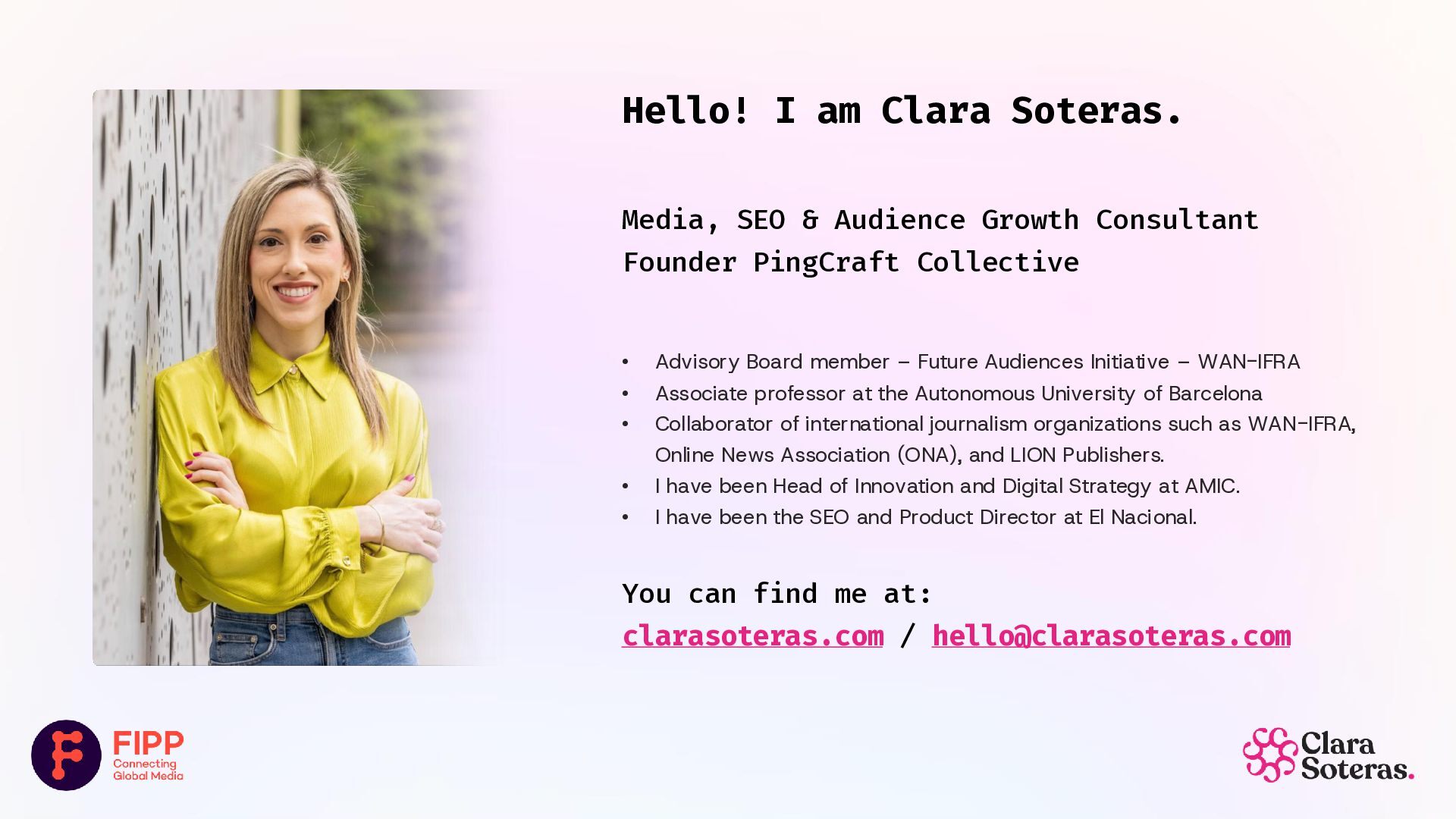
  2. Hello! I am Clara Soteras. Media, SEO & Audience Growth

    Consultant Founder PingCraft Collective • Advisory Board member – Future Audiences Initiative – WAN-IFRA • • Associate professor at the Autonomous University of Barcelona Collaborator of international journalism organizations such as WAN-IFRA, Online News Association (ONA), and LION Publishers. • • I have been Head of Innovation and Digital Strategy at AMIC. I have been the SEO and Product Director at El Nacional. You can find me at: clarasoteras.com / [email protected]
  3. WORKSHOP AGENDA What We'll Cover Today 01 02 State of

    the Situation What is GEO? AI Overviews, zero-click searches, bot traffic & the Generative Engine Optimisation: the new paradigm collapse of traditional search referrals beyond classic SEO 03 04 Actionable Ideas GEO Checklist 10 things to do now to compete on Google and LLMs A practical checklist to take home and implement
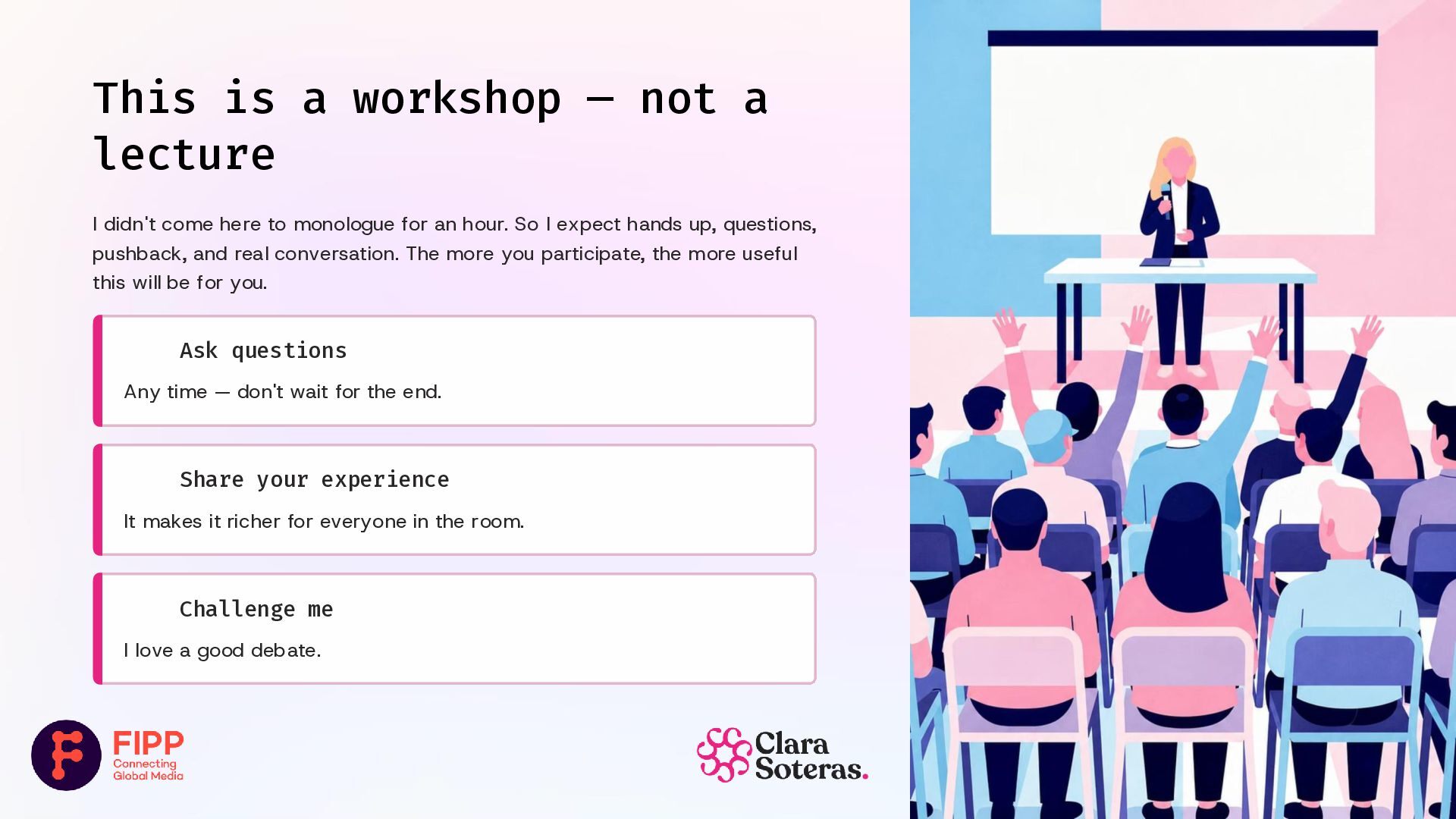
  4. This is a workshop — not a lecture I didn't

    come here to monologue for an hour. So I expect hands up, questions, pushback, and real conversation. The more you participate, the more useful this will be for you. Ask questions Any time — don't wait for the end. Share your experience It makes it richer for everyone in the room. Challenge me I love a good debate.
  5. "Every year, our search traffic was down more than we

    had forecast. So last year I told our teams, 'Assume there's no search.' You have to have your businesses planned as if search is zero." Roger Lynch (CEO Condé Nast) told TBPN that Condé Nast doesn't expect search traffic to literally reach zero. He expects it to settle at a single-digit percentage of total traffic. Source: Search Engine Journal (May 13, 2026)
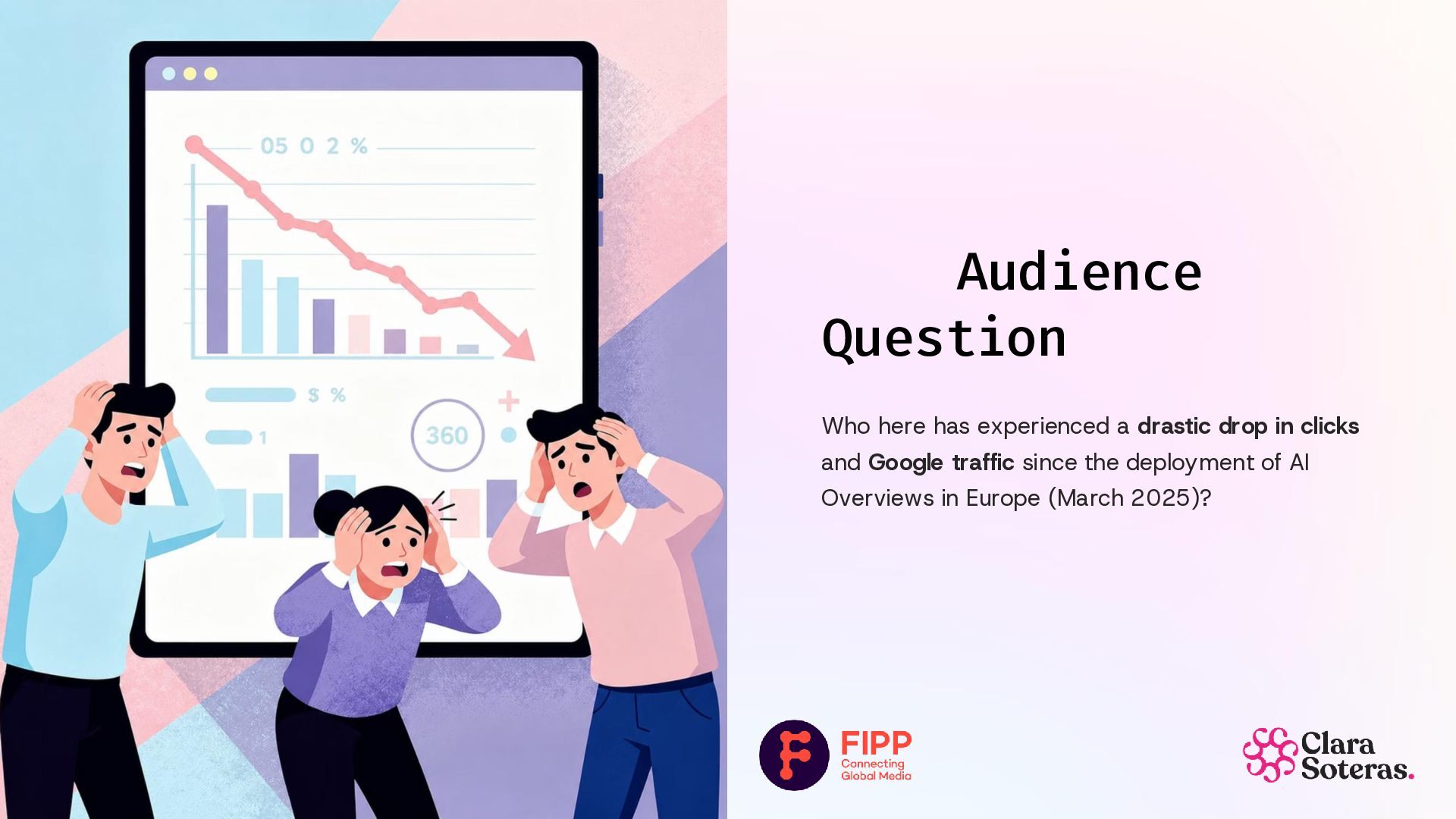
  6. Audience Question Who here has experienced a drastic drop in

    clicks and Google traffic since the deployment of AI Overviews in Europe (March 2025)?
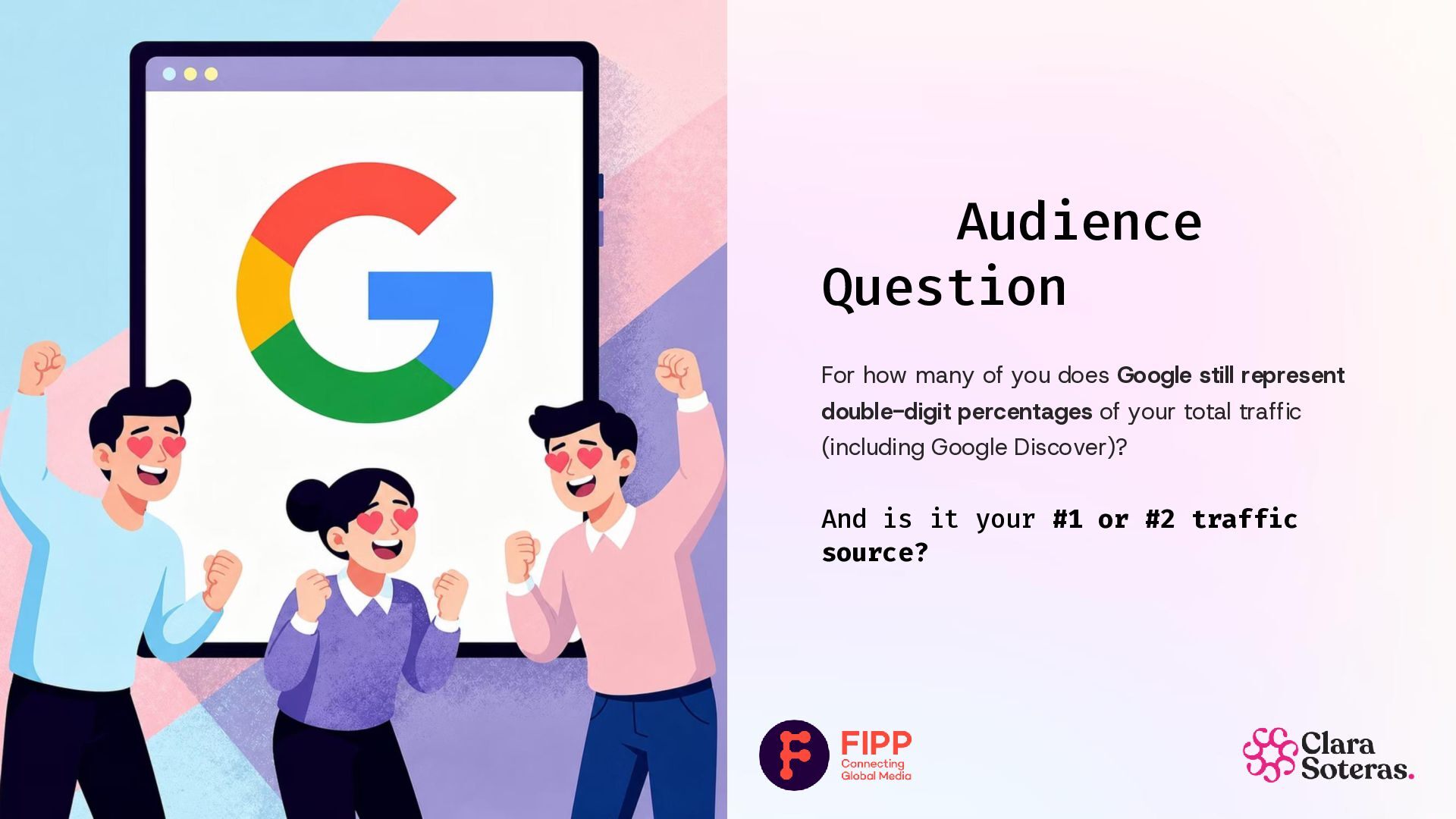
  7. Audience Question For how many of you does Google still

    represent double-digit percentages of your total traffic (including Google Discover)? And is it your #1 or #2 traffic source?
  8. PART 1 · STATE OF THE SITUATION The New Search

    Landscape: What Has Changed? AI Overviews · Zero-click · Changing user behaviour · Bot traffic
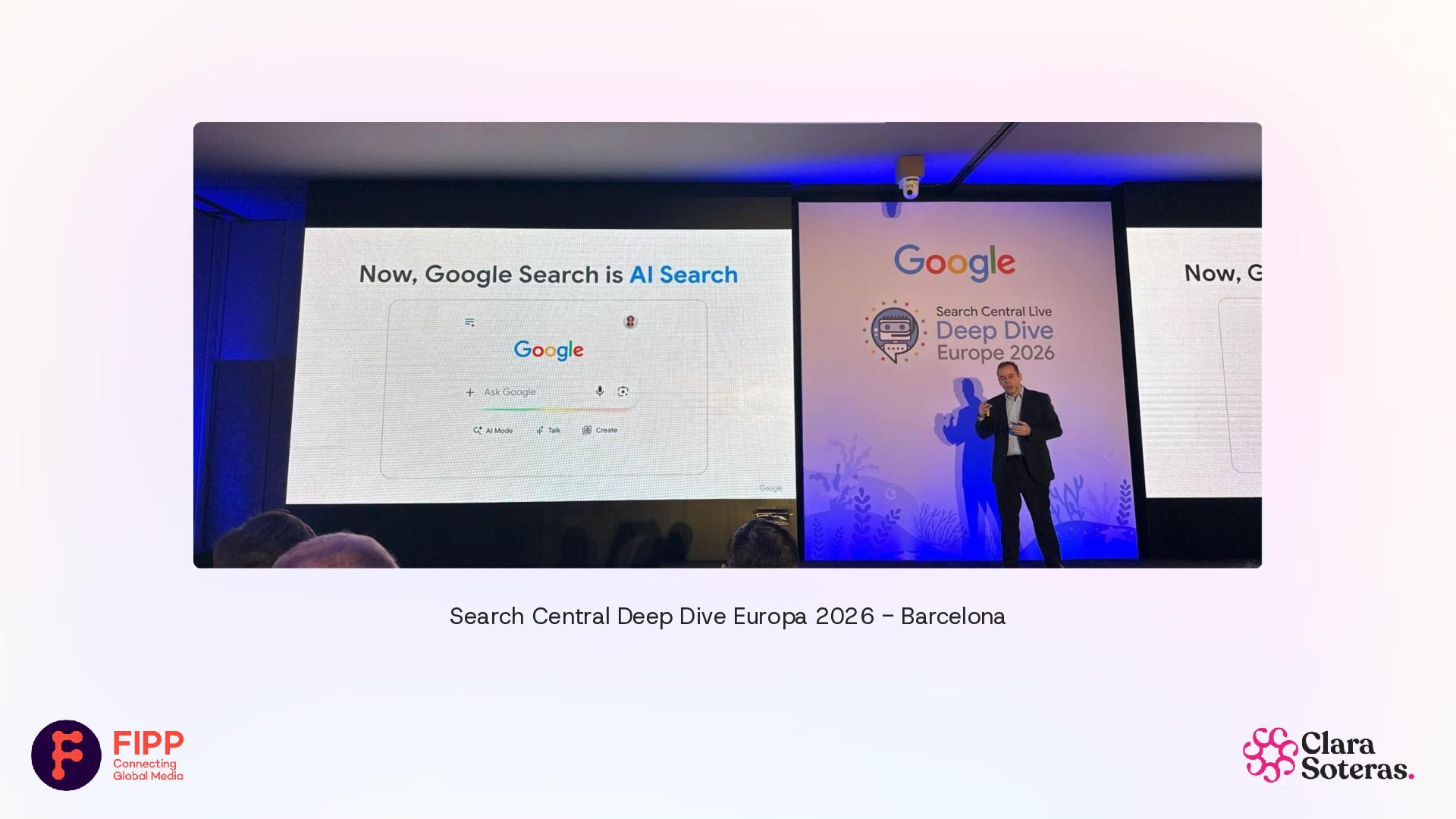
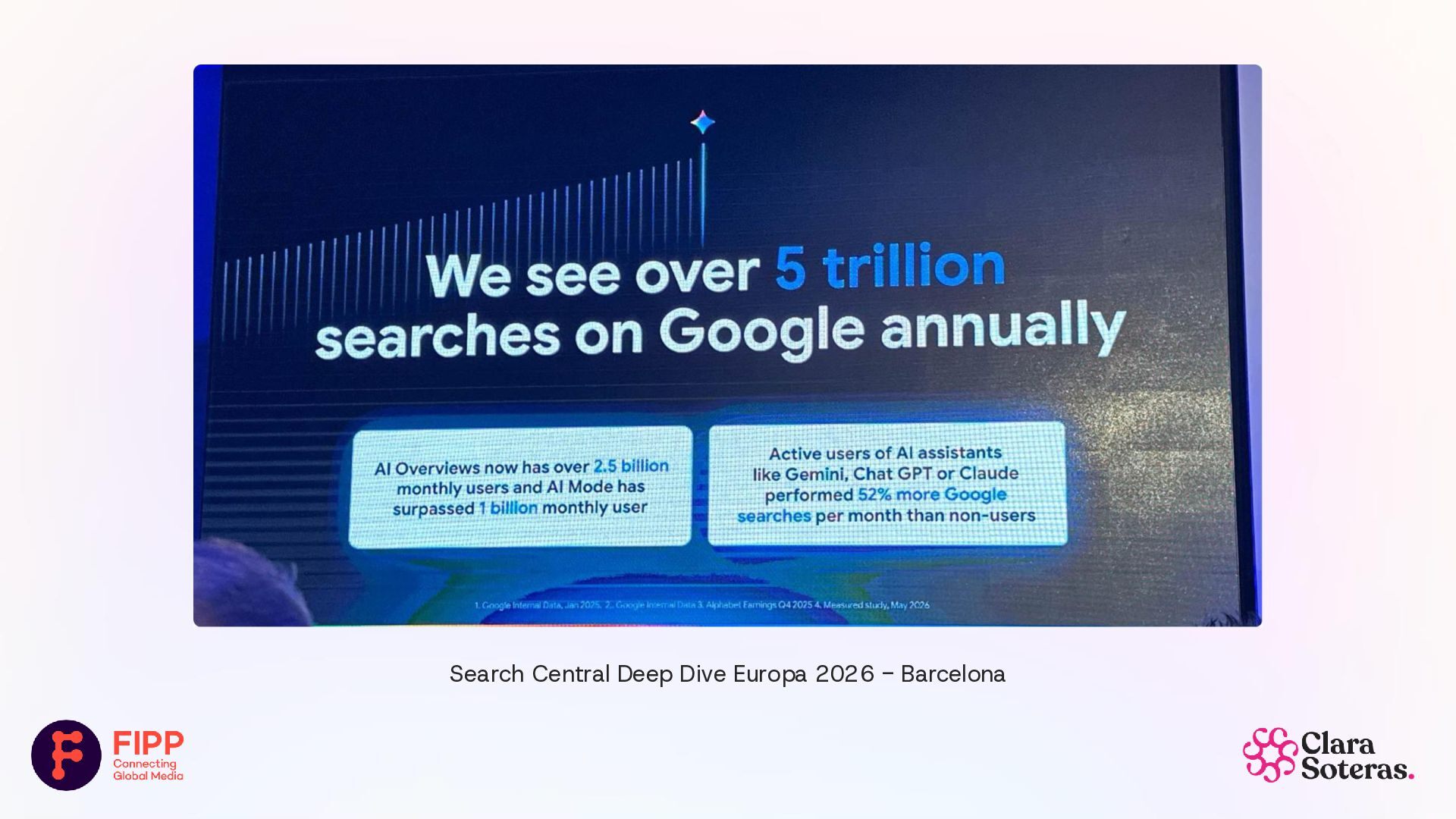
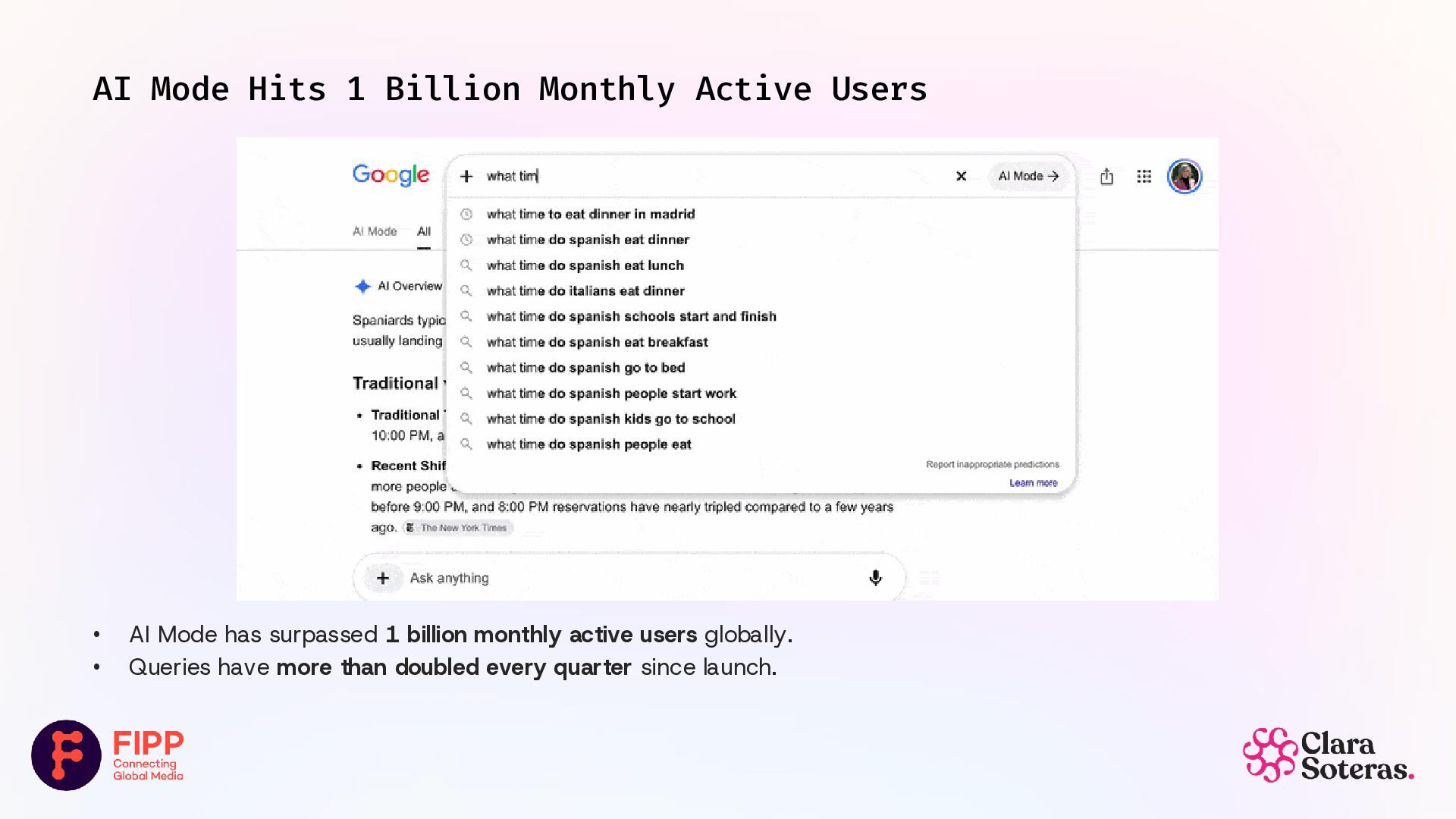
  9. AI Mode Hits 1 Billion Monthly Active Users • •

    AI Mode has surpassed 1 billion monthly active users globally. Queries have more than doubled every quarter since launch.
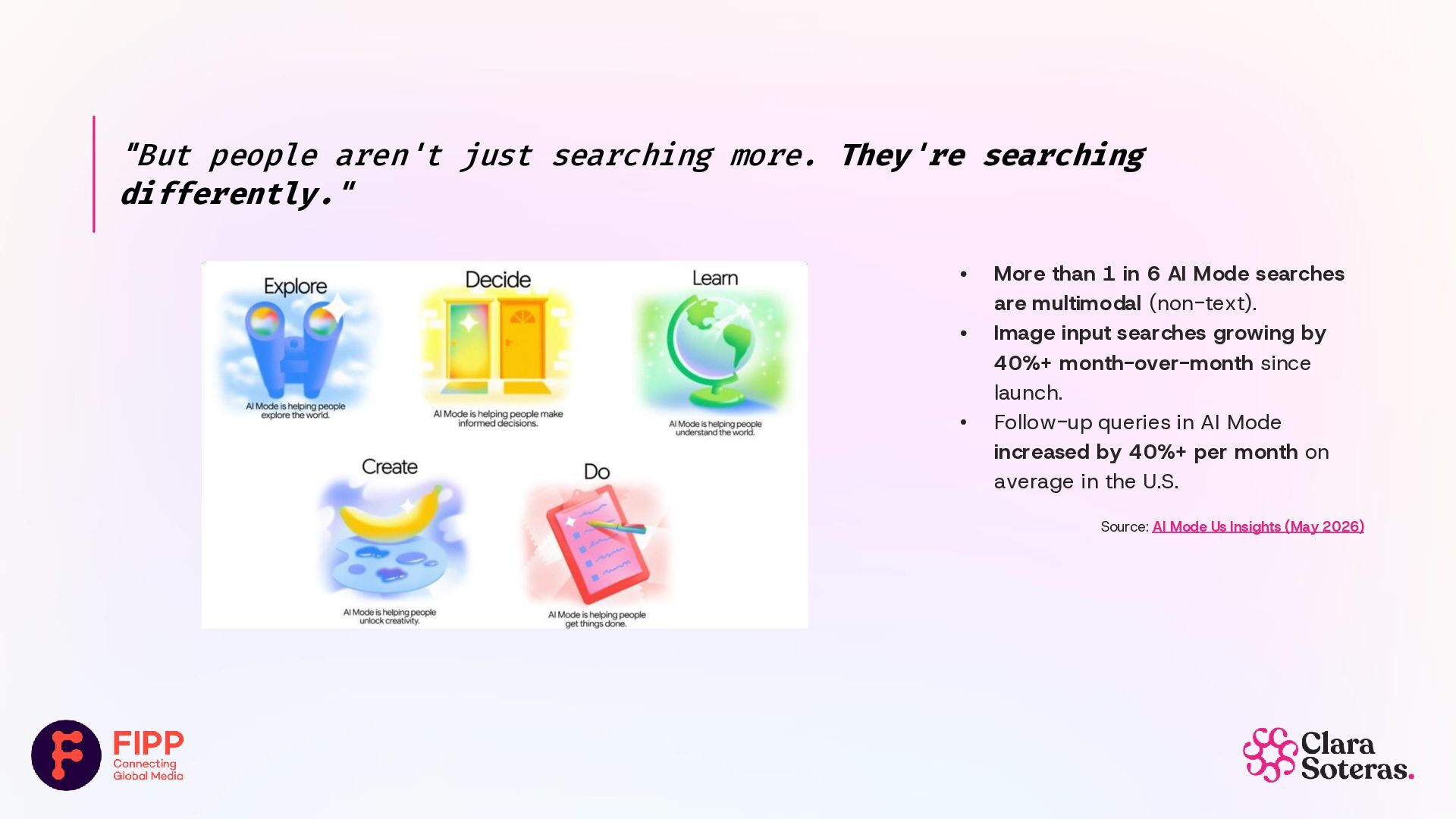
  10. "But people aren't just searching more. They're searching differently." •

    • • More than 1 in 6 AI Mode searches are multimodal (non-text). Image input searches growing by 40%+ month-over-month since launch. Follow-up queries in AI Mode increased by 40%+ per month on average in the U.S. Source: AI Mode Us Insights (May 2026)
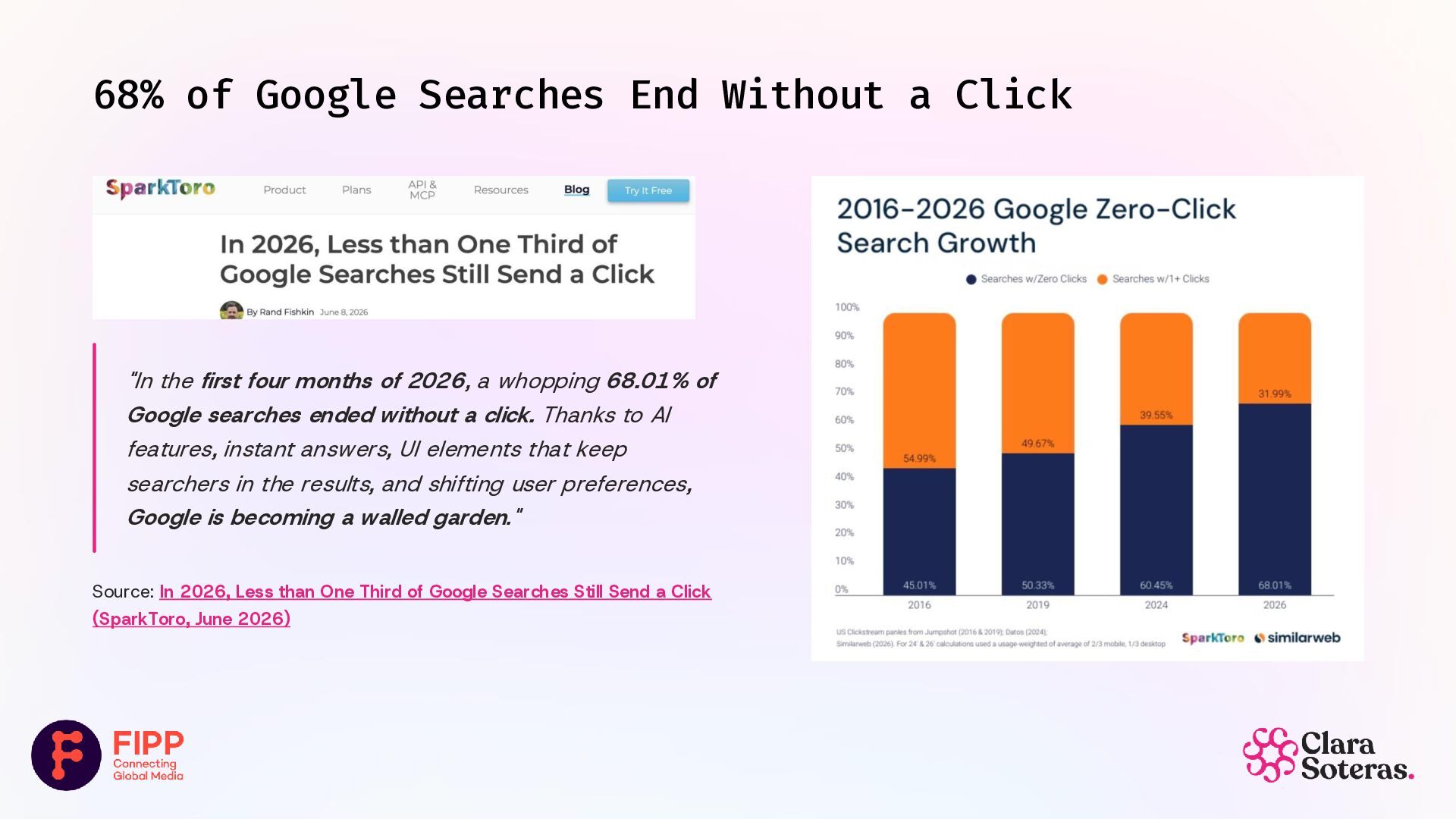
  11. 68% of Google Searches End Without a Click "In the

    first four months of 2026, a whopping 68.01% of Google searches ended without a click. Thanks to AI features, instant answers, UI elements that keep searchers in the results, and shifting user preferences, Google is becoming a walled garden." Source: In 2026, Less than One Third of Google Searches Still Send a Click (SparkToro, June 2026)
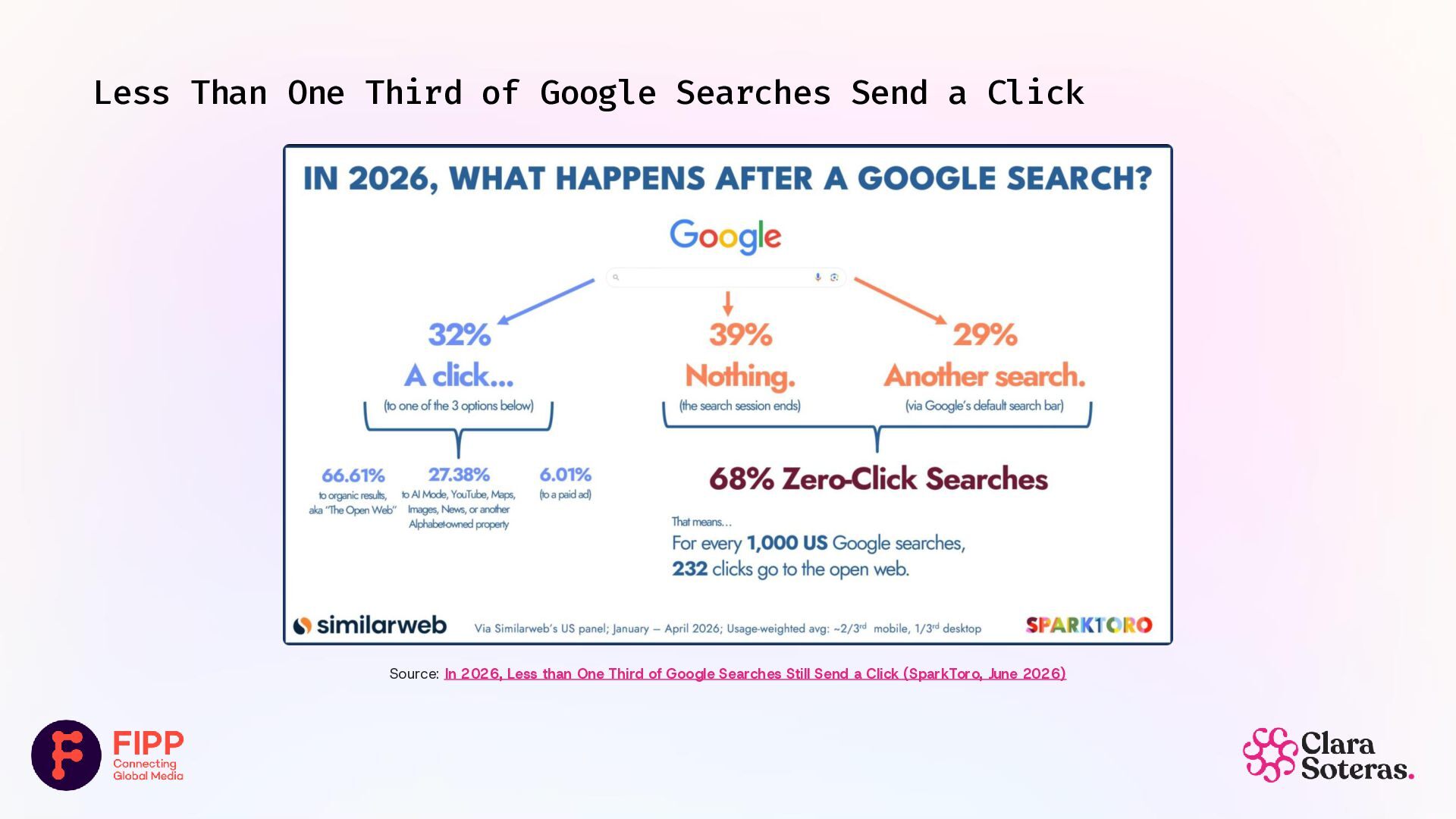
  12. Less Than One Third of Google Searches Send a Click

    Source: In 2026, Less than One Third of Google Searches Still Send a Click (SparkToro, June 2026)
  13. Audience Question Since 2025, have you taken action with your

    audience teams? Has your strategy changed? And what about your content strategy: evergreen, breaking news, subscriptions...?
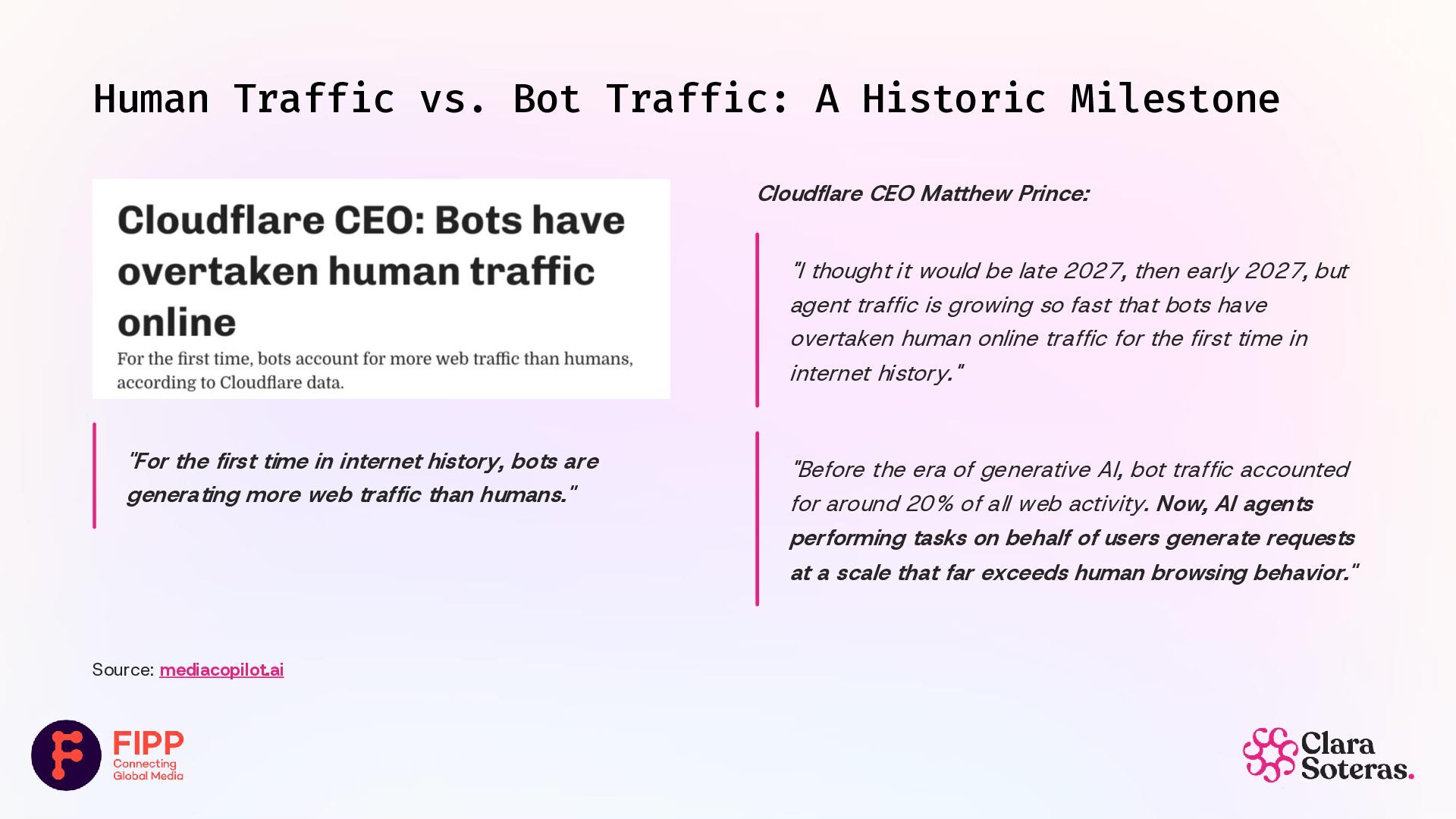
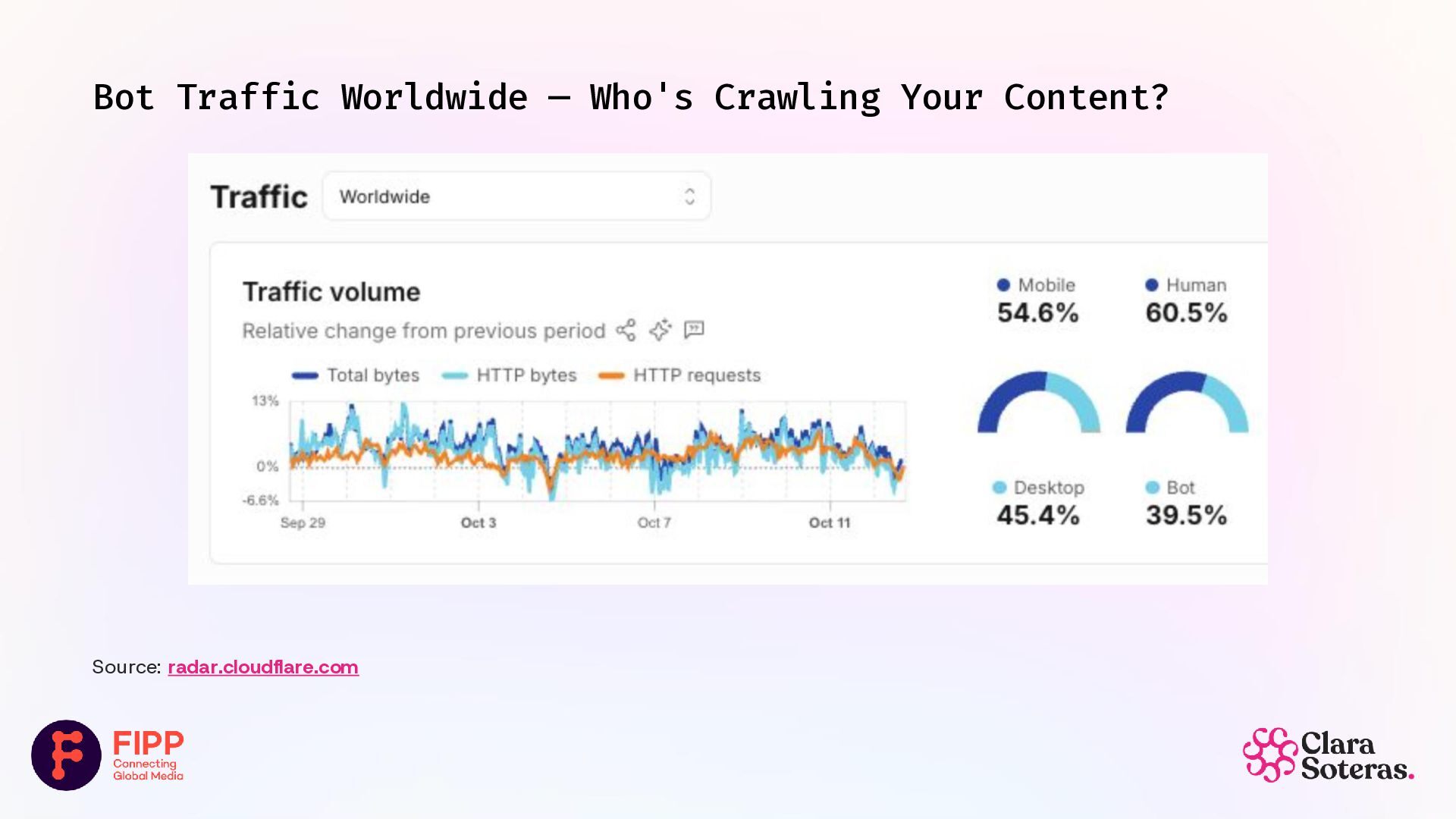
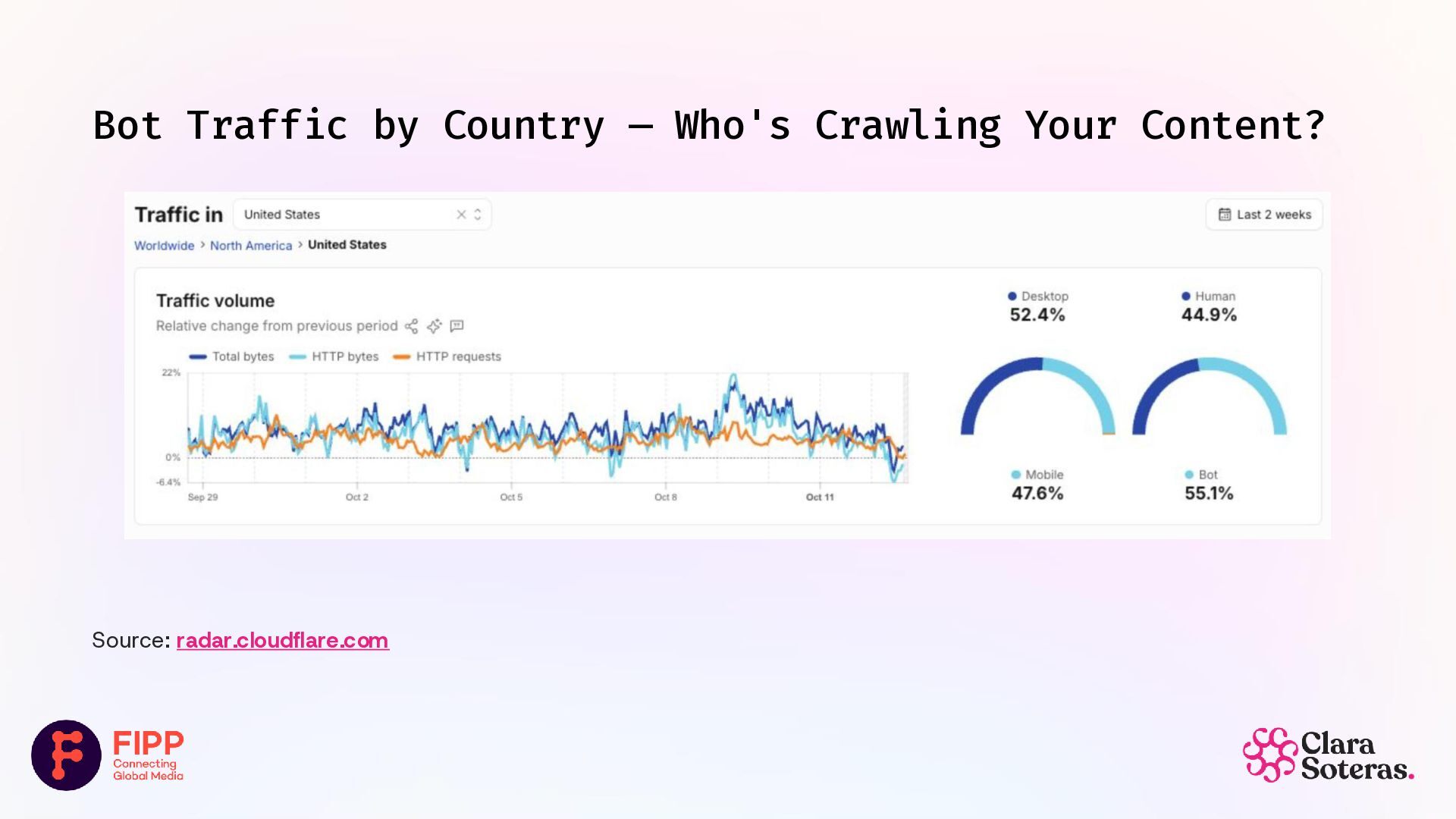
  14. Human Traffic vs. Bot Traffic: A Historic Milestone Cloudflare CEO

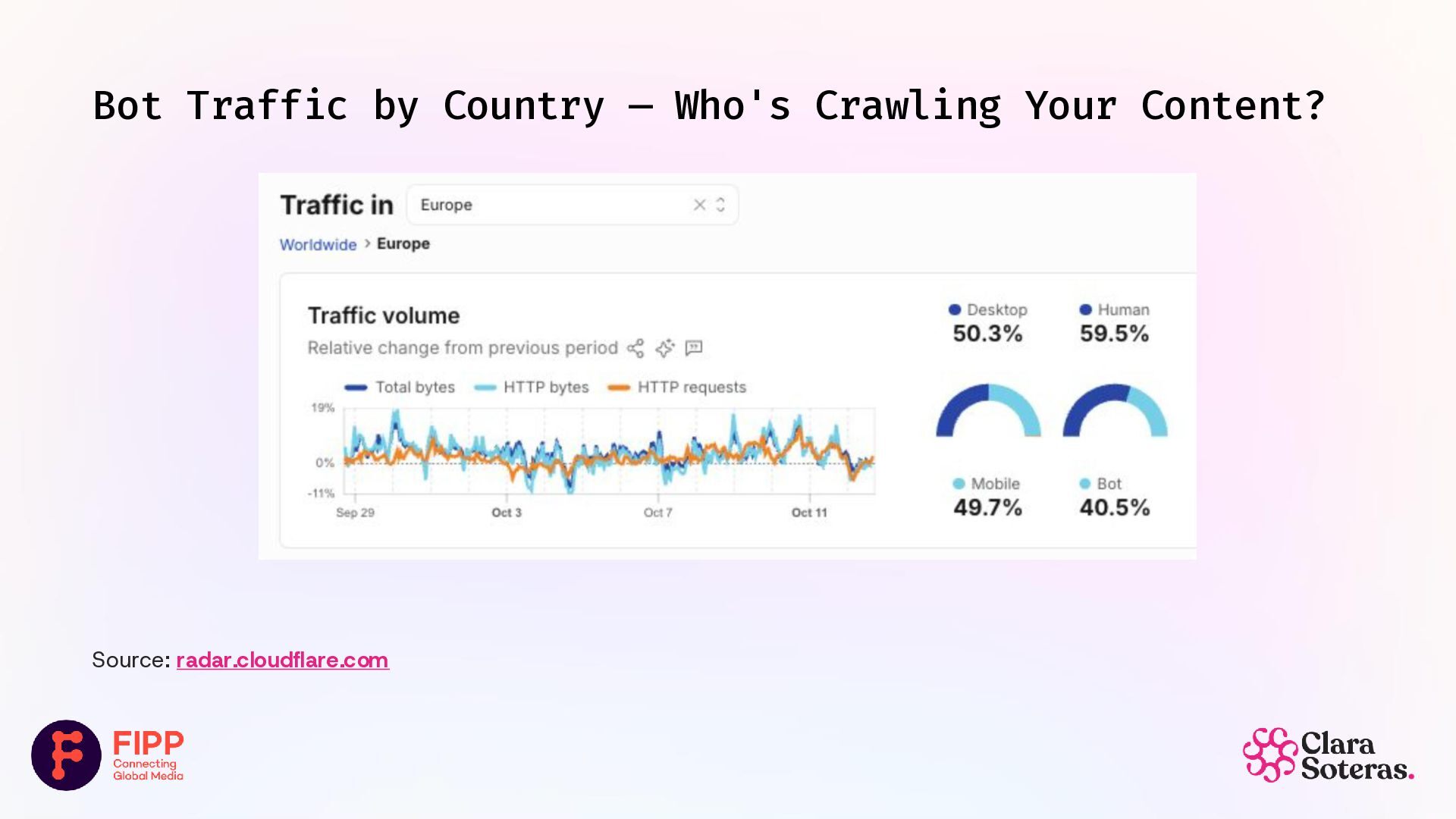
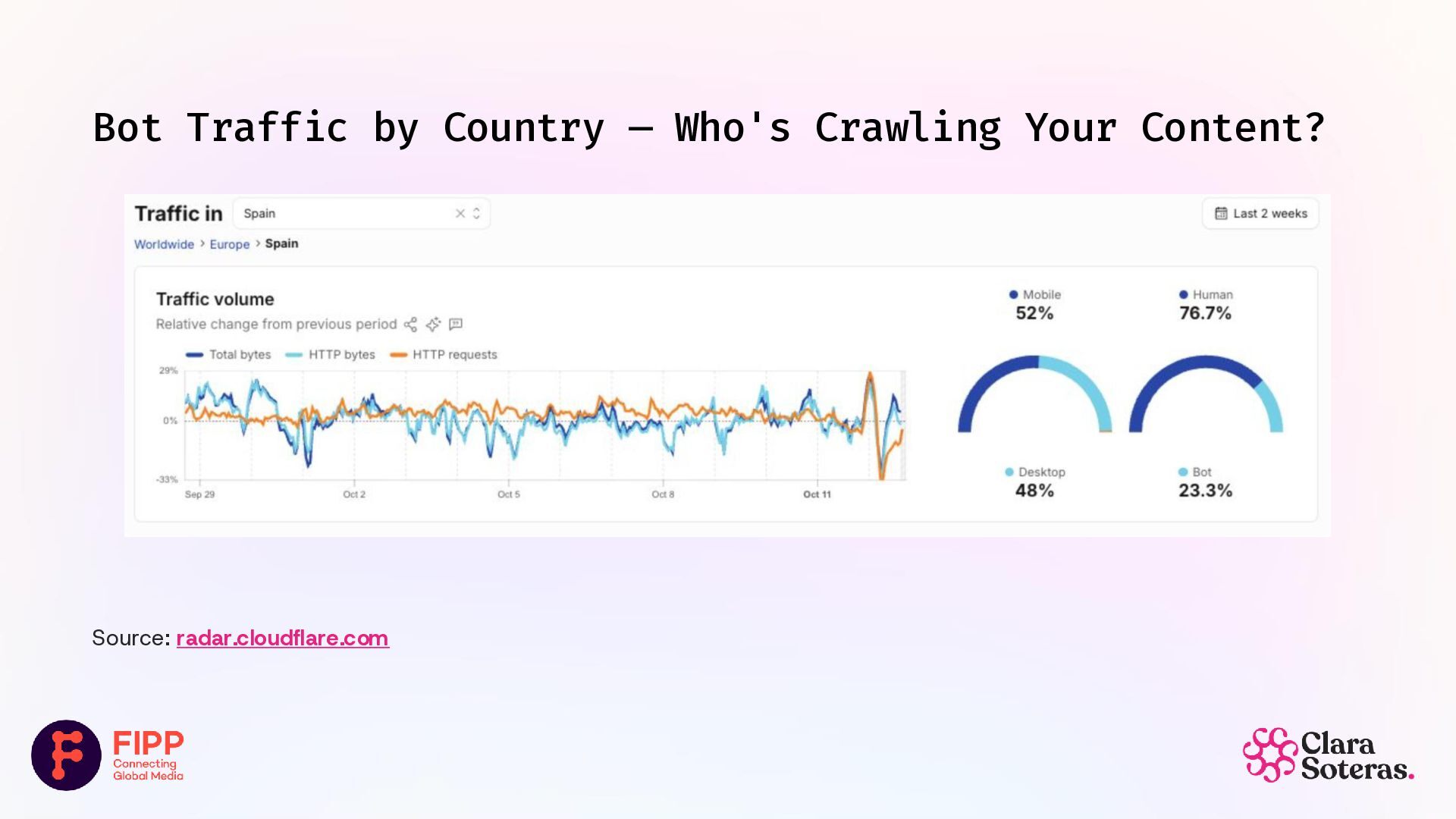
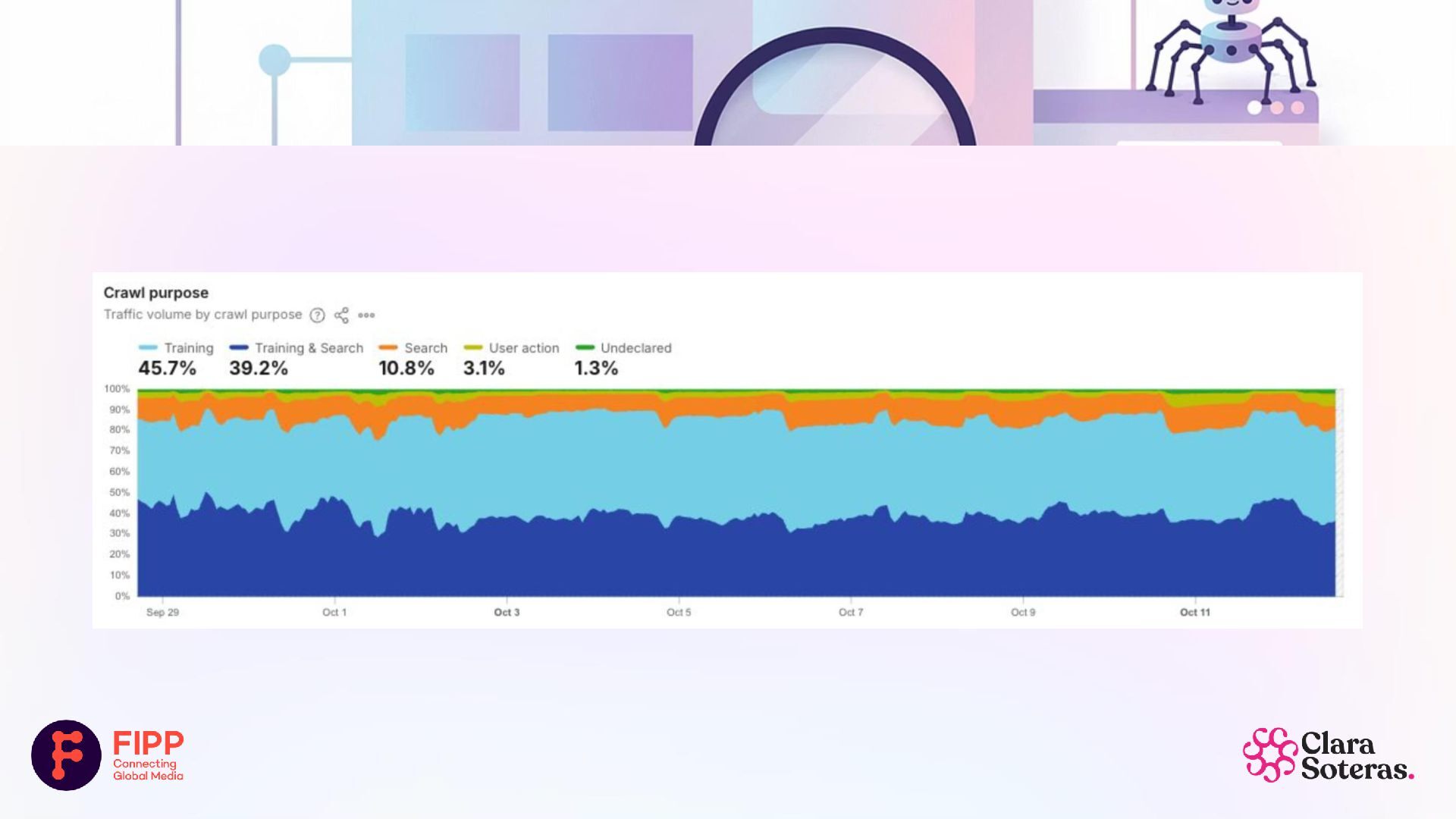
    Matthew Prince: "I thought it would be late 2027, then early 2027, but agent traffic is growing so fast that bots have overtaken human online traffic for the first time in internet history." "For the first time in internet history, bots are generating more web traffic than humans." "Before the era of generative AI, bot traffic accounted for around 20% of all web activity. Now, AI agents performing tasks on behalf of users generate requests at a scale that far exceeds human browsing behavior." Source: mediacopilot.ai
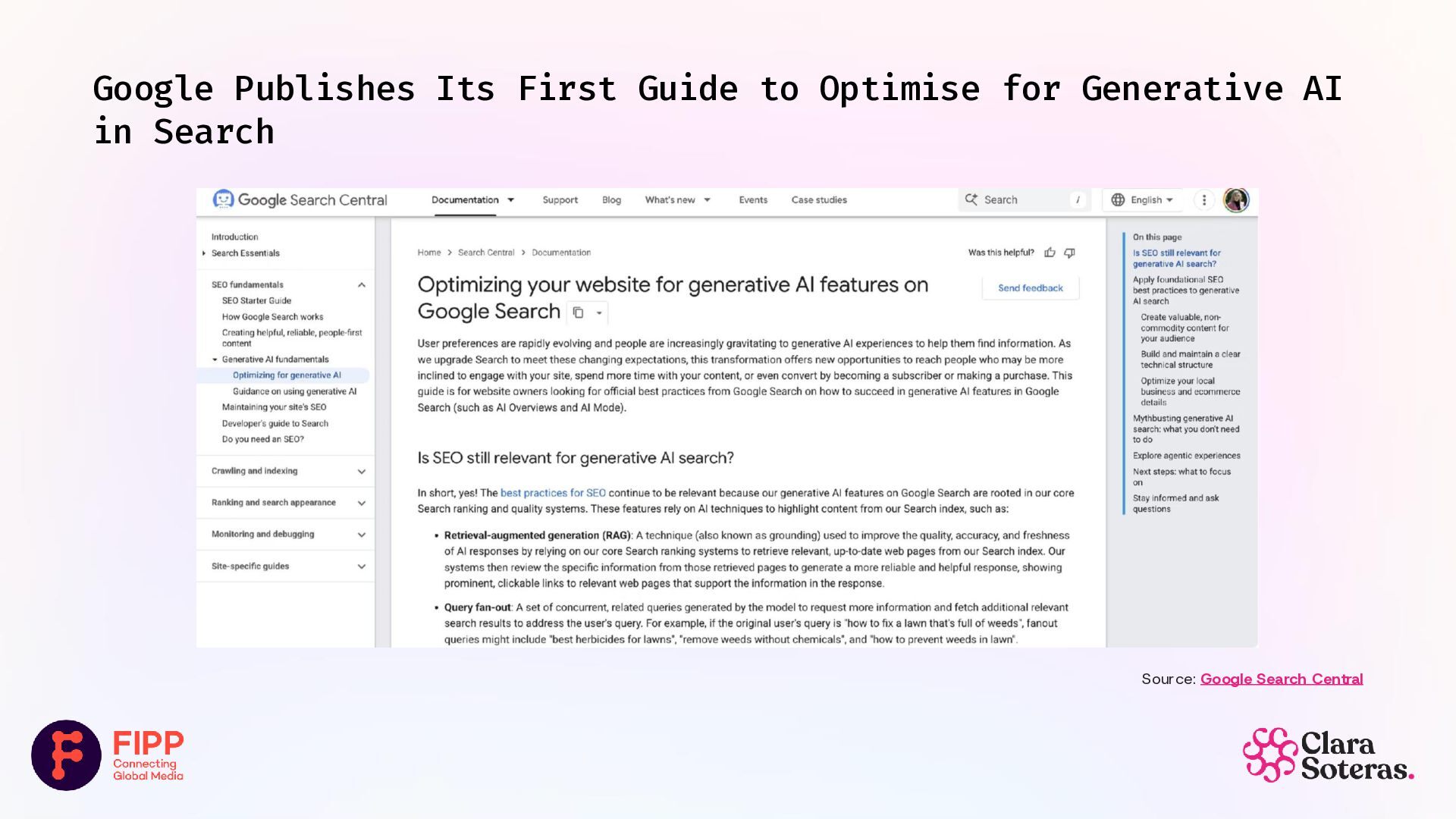
  15. Google Publishes Its First Guide to Optimise for Generative AI

    in Search Source: Google Search Central
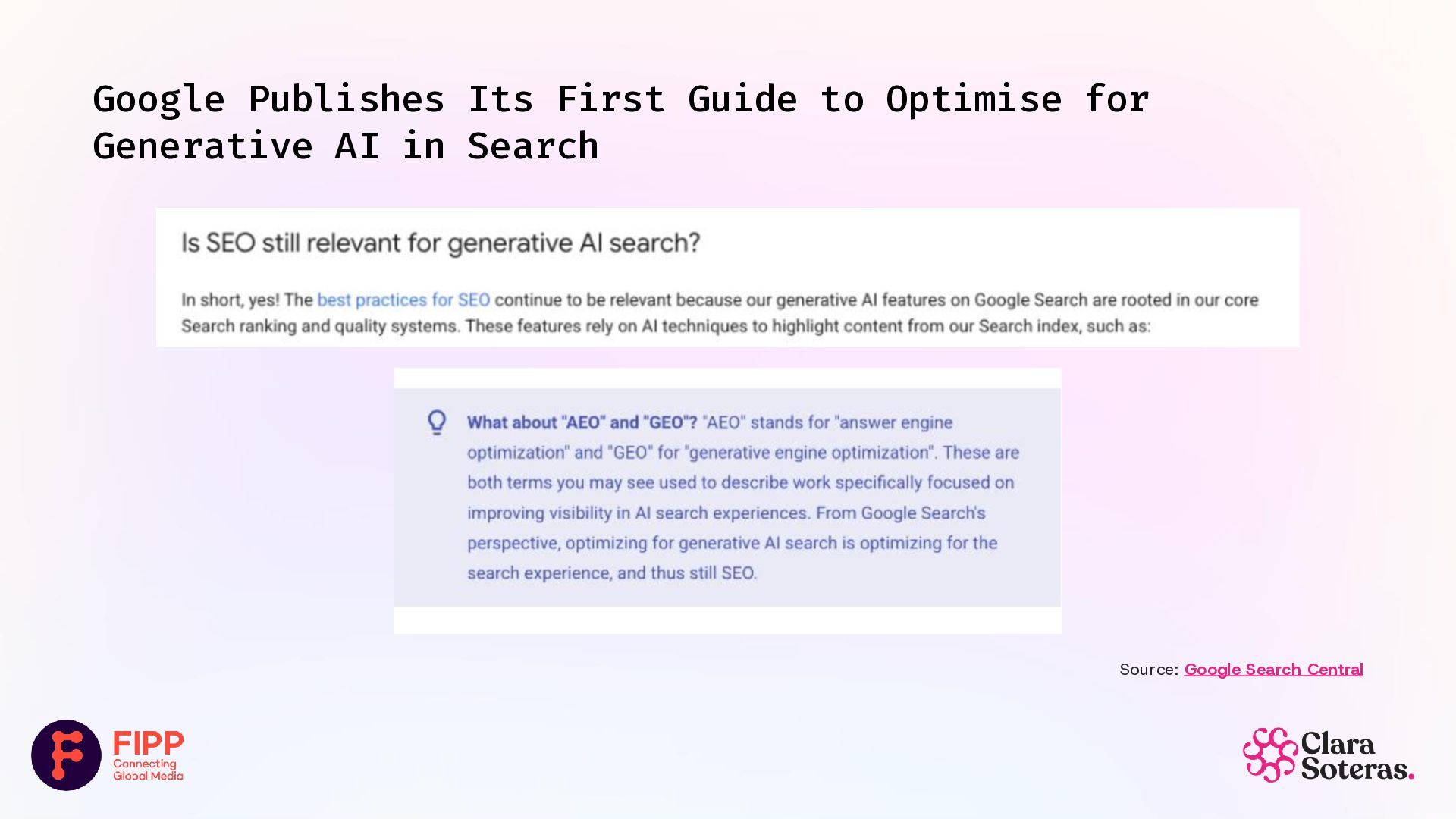
  16. Google Publishes Its First Guide to Optimise for Generative AI

    in Search Source: Google Search Central
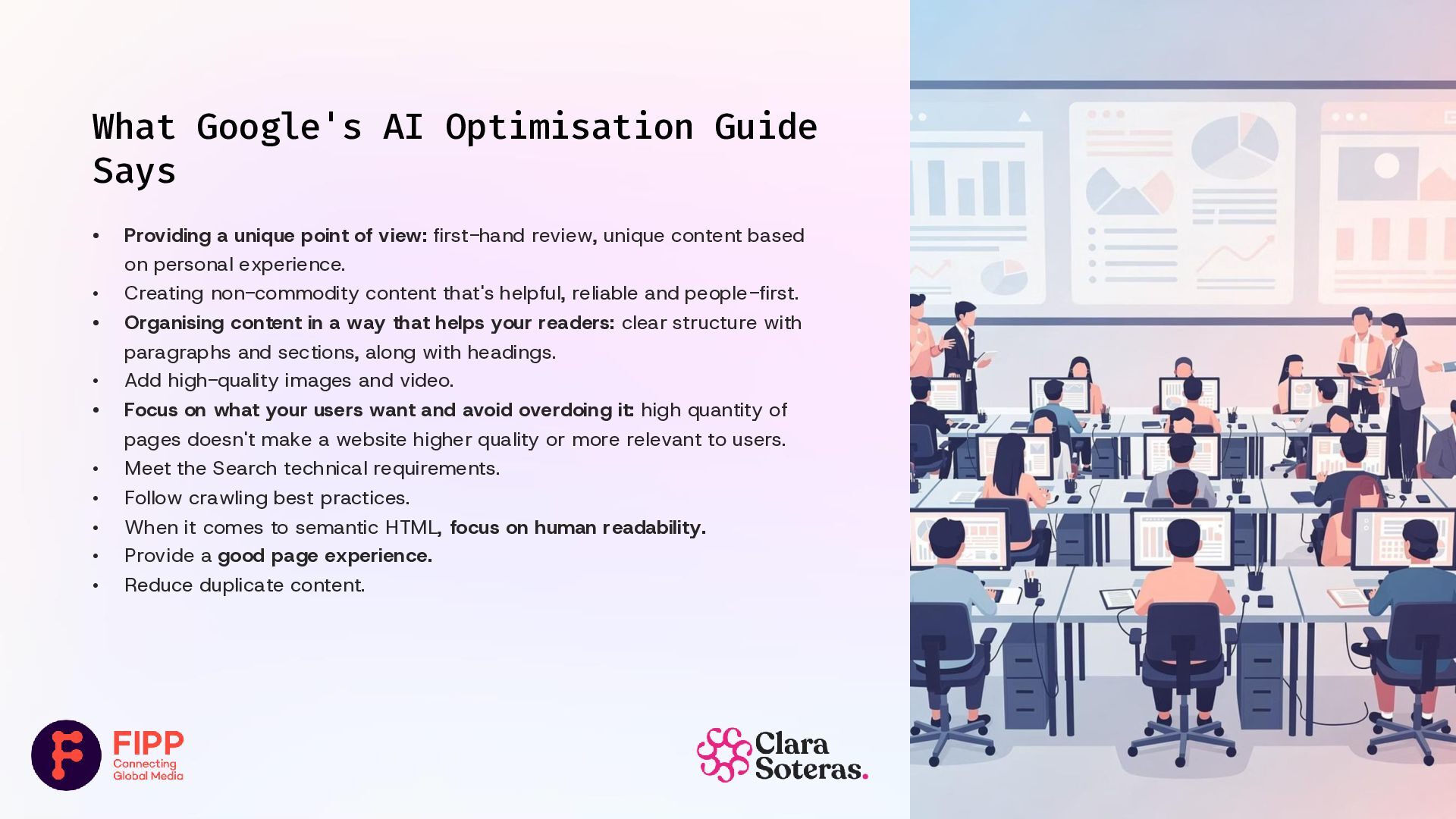
  17. What Google's AI Optimisation Guide Says • • Providing a

    unique point of view: first-hand review, unique content based on personal experience. Creating non-commodity content that's helpful, reliable and people-first. • Organising content in a way that helps your readers: clear structure with • • paragraphs and sections, along with headings. Add high-quality images and video. Focus on what your users want and avoid overdoing it: high quantity of • • • • • pages doesn't make a website higher quality or more relevant to users. Meet the Search technical requirements. Follow crawling best practices. When it comes to semantic HTML, focus on human readability. Provide a good page experience. Reduce duplicate content.
  18. Commodity Content vs. Non-Commodity Content Danny Sullivan (Director within Google

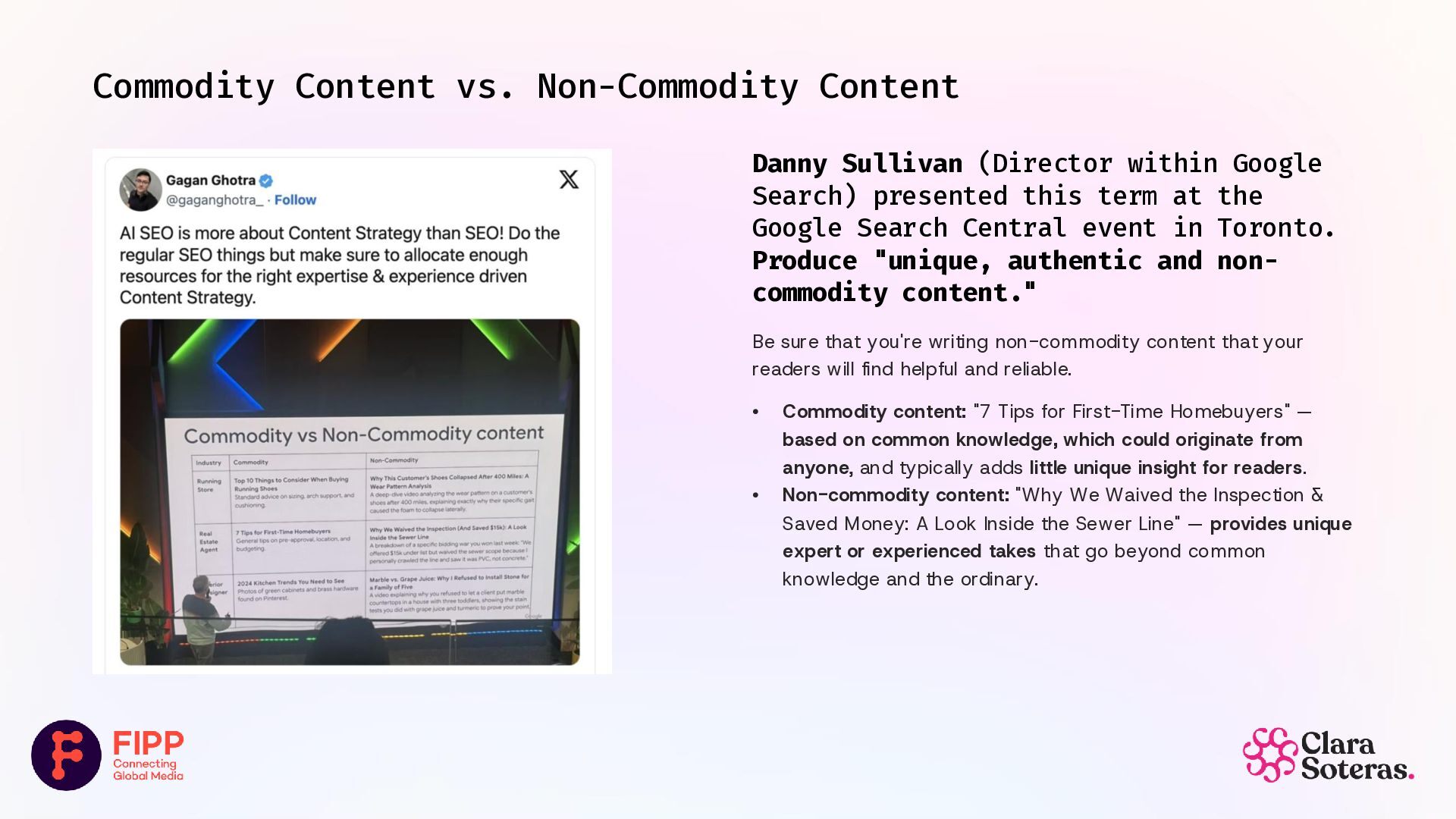
    Search) presented this term at the Google Search Central event in Toronto. Produce "unique, authentic and noncommodity content." Be sure that you're writing non-commodity content that your readers will find helpful and reliable. • • Commodity content: "7 Tips for First-Time Homebuyers" — based on common knowledge, which could originate from anyone, and typically adds little unique insight for readers. Non-commodity content: "Why We Waived the Inspection & Saved Money: A Look Inside the Sewer Line" — provides unique expert or experienced takes that go beyond common knowledge and the ordinary.
  19. Google rewrote its guidance on AI content on October 2026

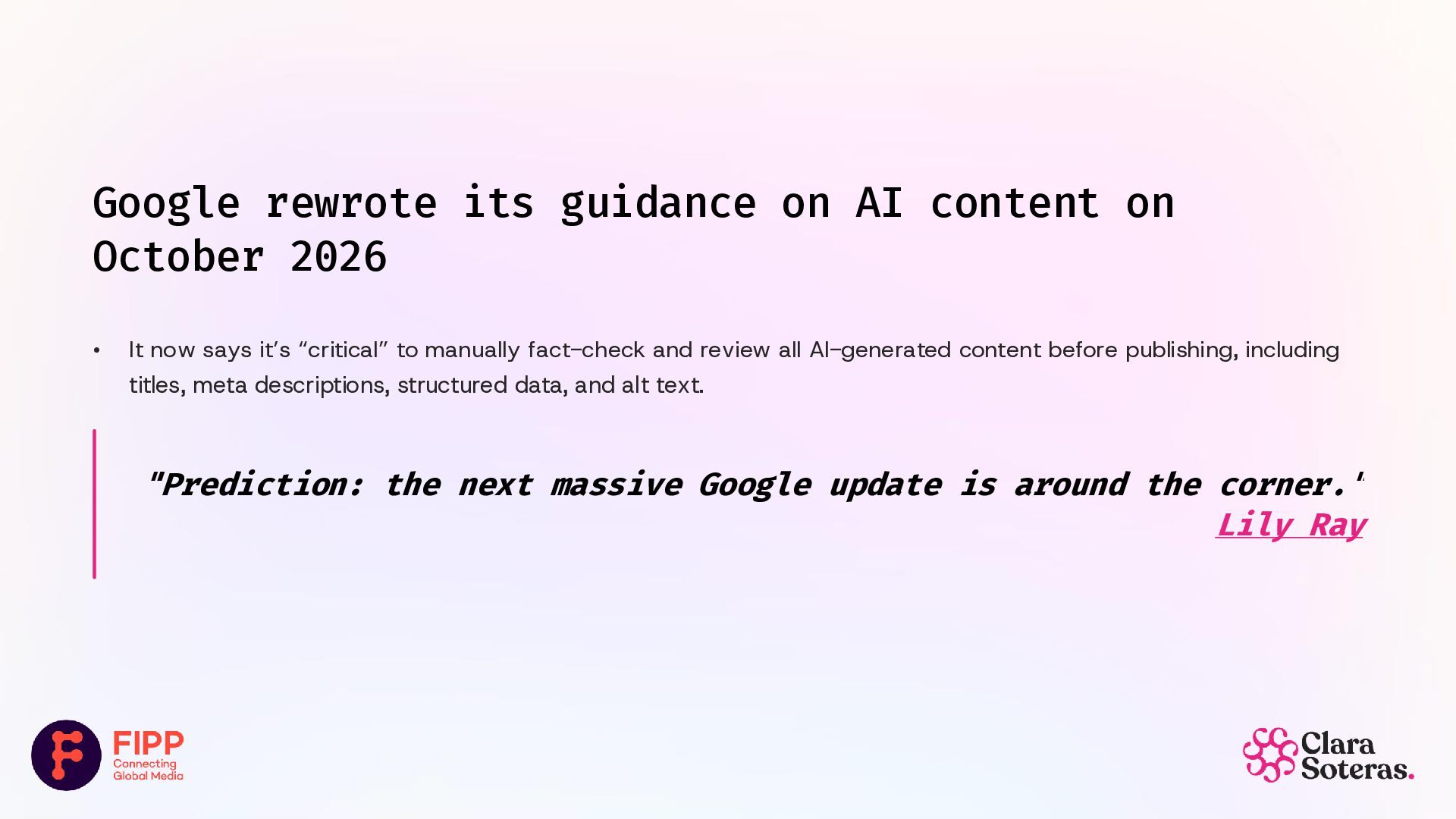
    • It now says it’s “critical” to manually fact-check and review all AI-generated content before publishing, including titles, meta descriptions, structured data, and alt text. "Prediction: the next massive Google update is around the corner." Lily Ray
  20. Google added a new section • Avoid creating search engine-first

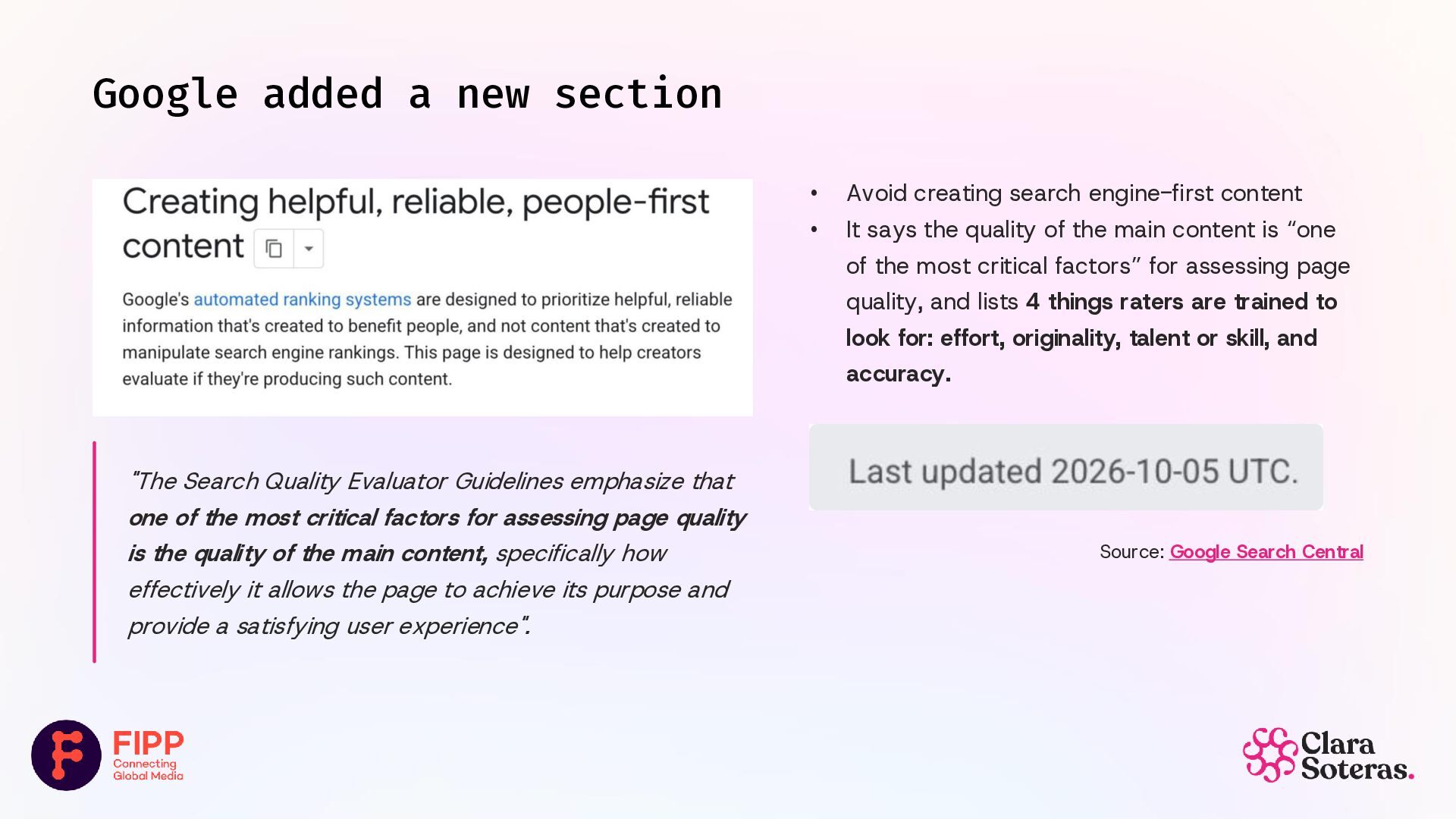
    content • It says the quality of the main content is “one of the most critical factors” for assessing page quality, and lists 4 things raters are trained to look for: effort, originality, talent or skill, and accuracy. "The Search Quality Evaluator Guidelines emphasize that one of the most critical factors for assessing page quality is the quality of the main content, specifically how effectively it allows the page to achieve its purpose and provide a satisfying user experience". Source: Google Search Central
  21. Google added a new section 4 dimensions that build content

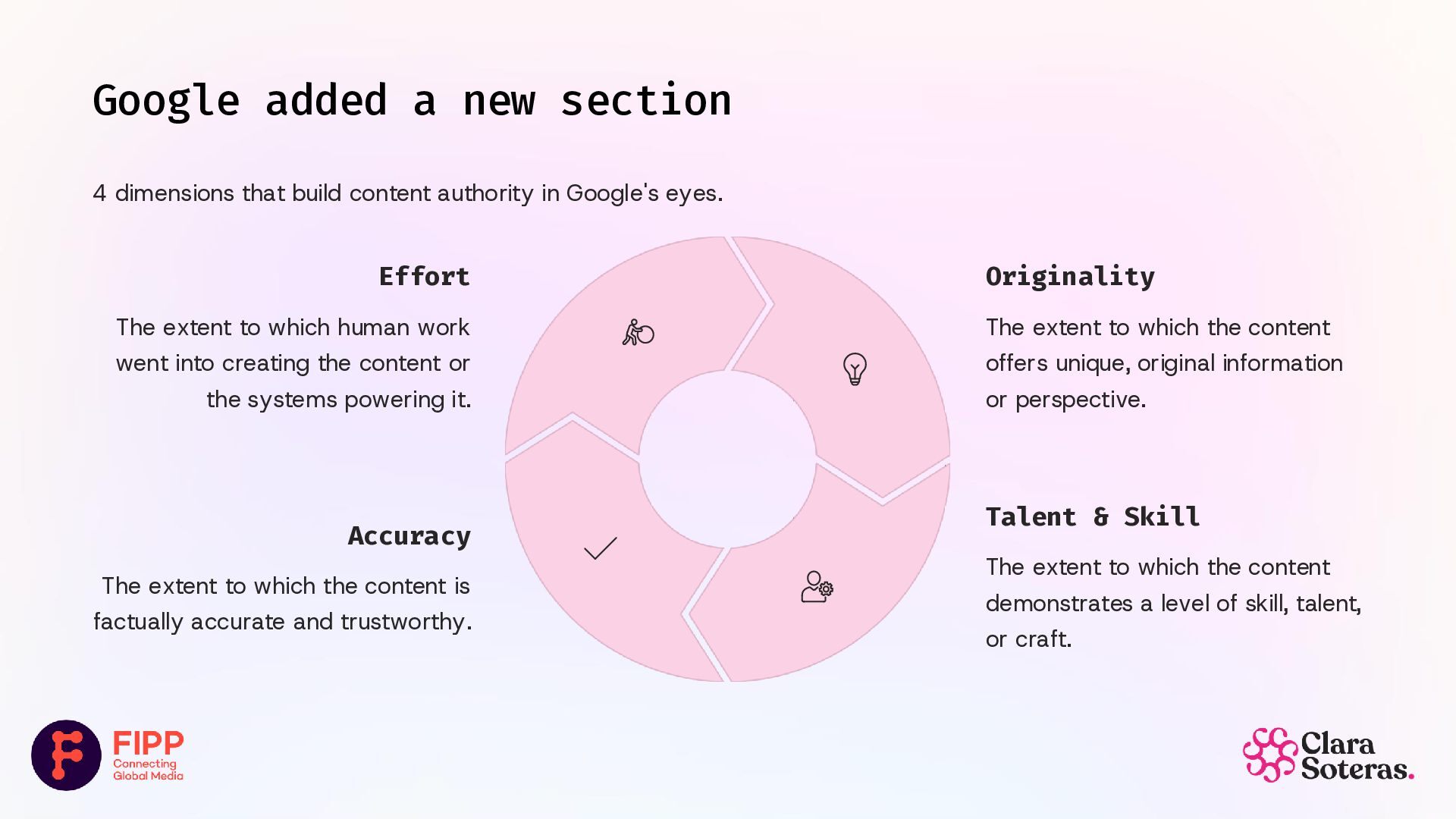
    authority in Google's eyes. Effort Originality The extent to which human work The extent to which the content went into creating the content or offers unique, original information the systems powering it. Accuracy The extent to which the content is factually accurate and trustworthy. or perspective. Talent & Skill The extent to which the content demonstrates a level of skill, talent, or craft.
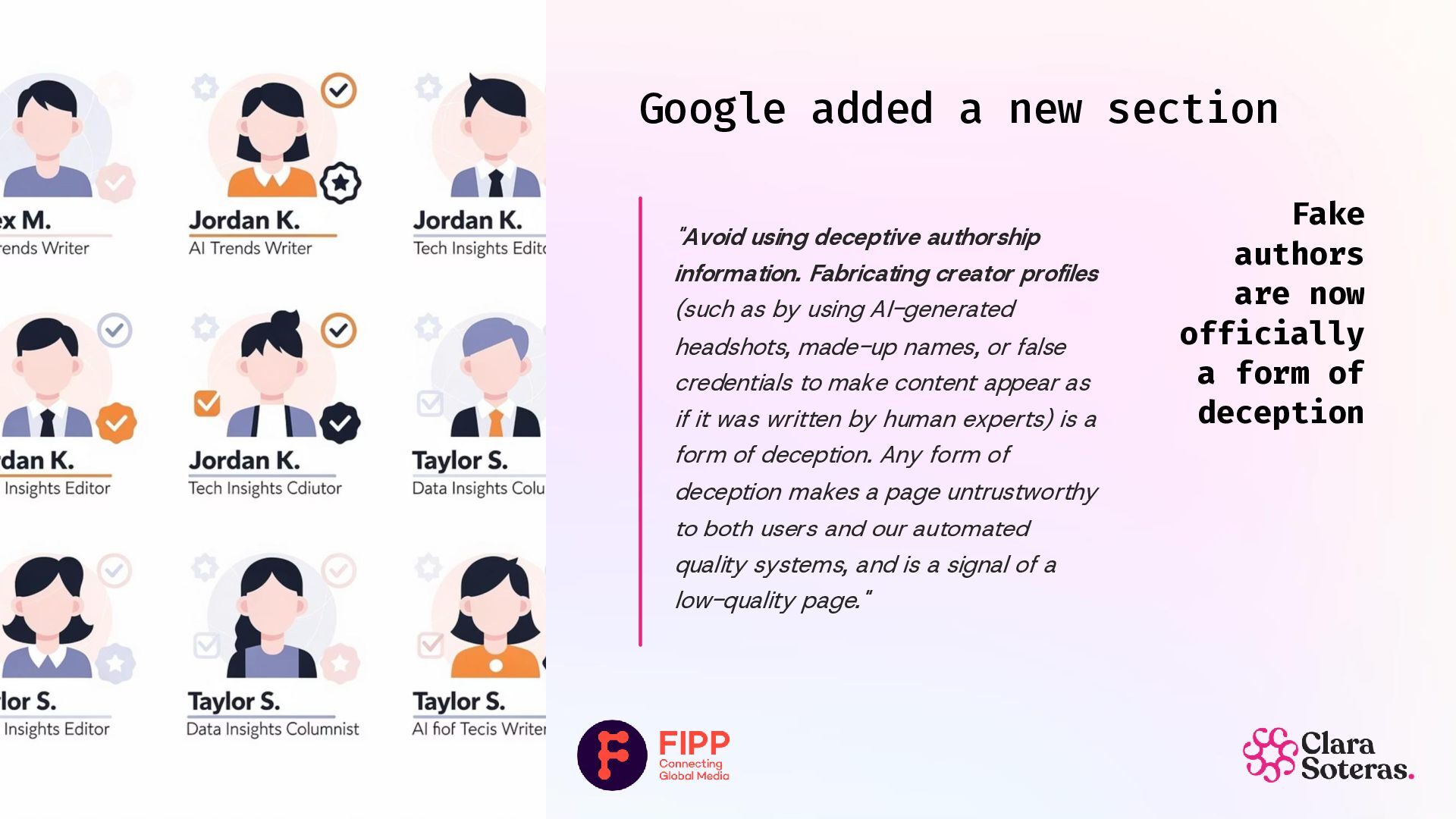
  22. Google added a new section "Avoid using deceptive authorship information.

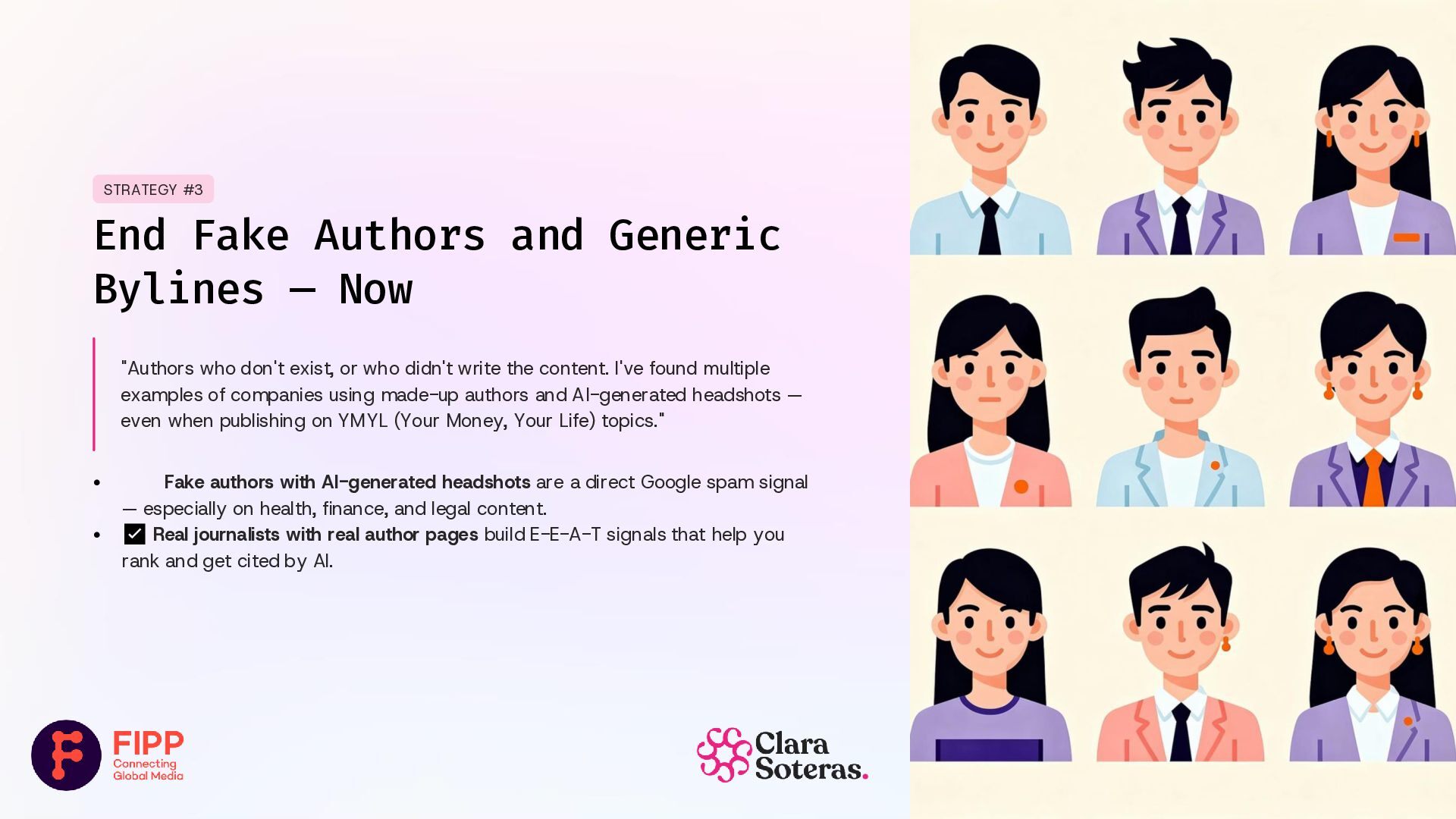
    Fabricating creator profiles (such as by using AI-generated headshots, made-up names, or false credentials to make content appear as if it was written by human experts) is a form of deception. Any form of deception makes a page untrustworthy to both users and our automated quality systems, and is a signal of a low-quality page." Fake authors are now officially a form of deception
  23. Audience Question How many of you actively maintain author pages,

    build your journalists' credibility, and invest in their personal brand?
  24. Audience Question And how many of your articles are still

    published under 'Editorial Team' or a generic byline — instead of a real journalist's name?
  25. PART 3 · ACTIONABLE IDEAS 10 Things to Do Now

    to Compete on Google and LLMs Practical strategies for publishers navigating the GEO era
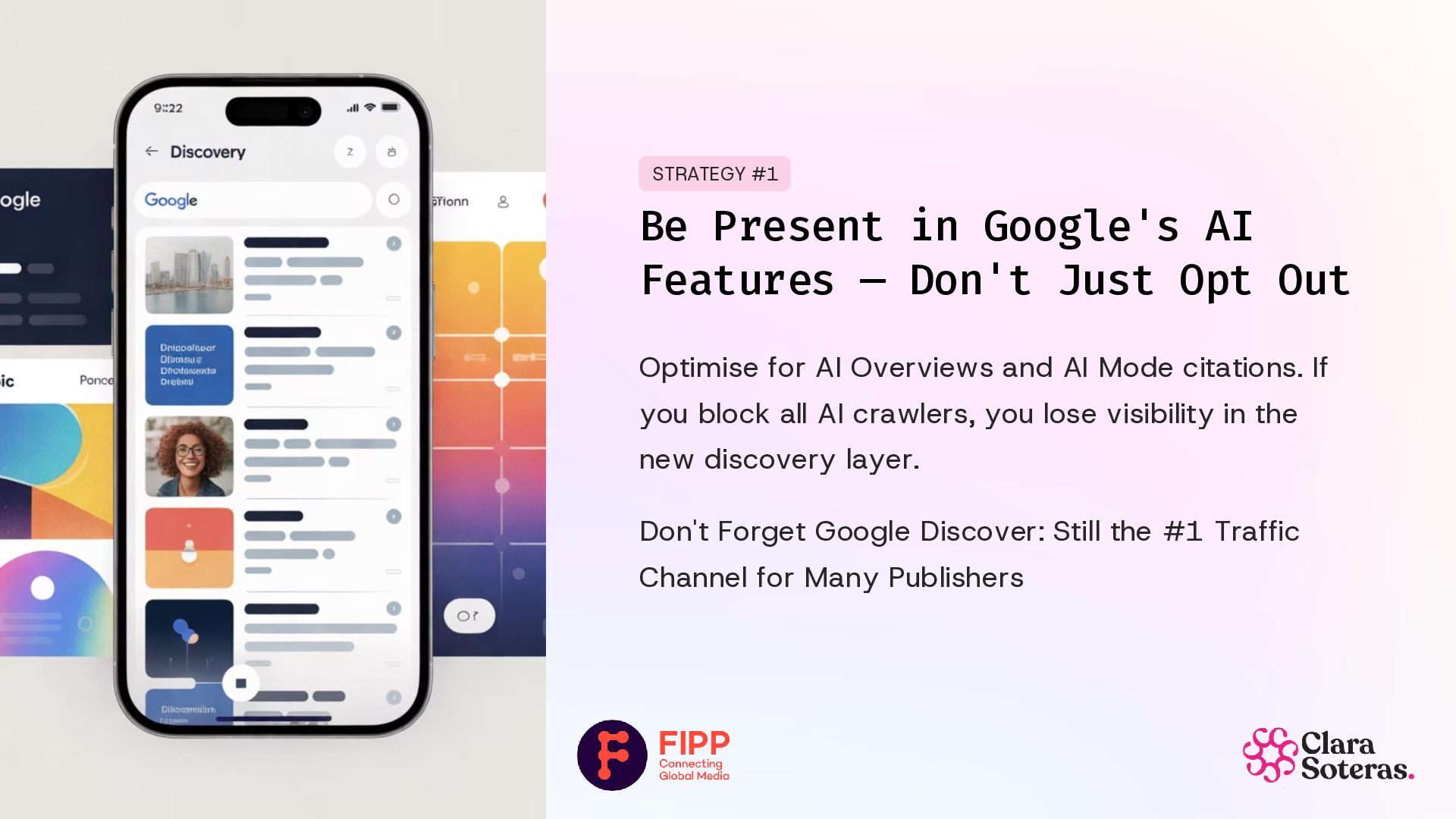
  26. STRATEGY #1 Be Present in Google's AI Features — Don't

    Just Opt Out Optimise for AI Overviews and AI Mode citations. If you block all AI crawlers, you lose visibility in the new discovery layer. Don't Forget Google Discover: Still the #1 Traffic Channel for Many Publishers
  27. STRATEGY #2 Don't Scale AI Content — Google Will Penalise

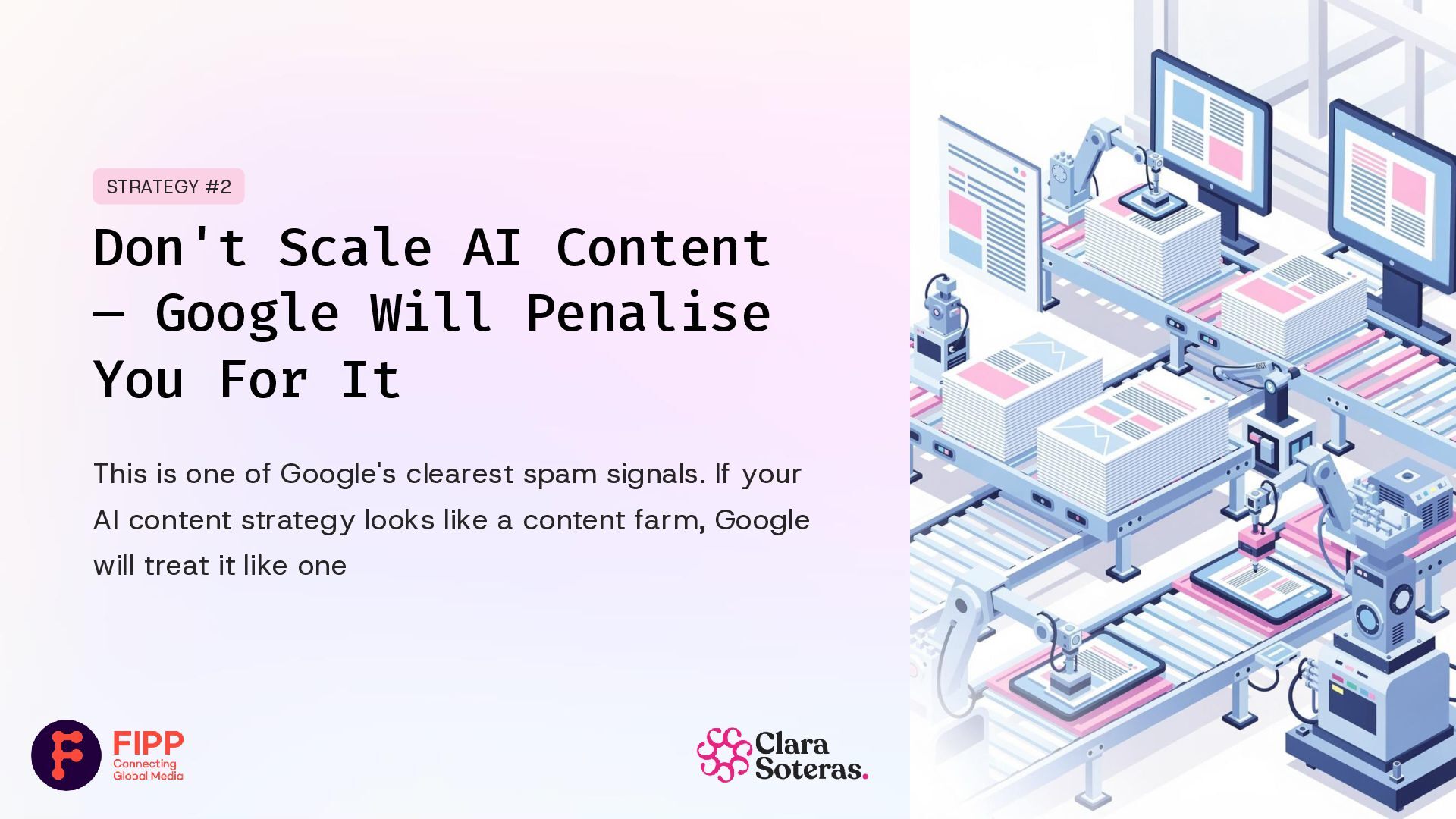
    You For It This is one of Google's clearest spam signals. If your AI content strategy looks like a content farm, Google will treat it like one
  28. STRATEGY #3 End Fake Authors and Generic Bylines — Now

    "Authors who don't exist, or who didn't write the content. I've found multiple examples of companies using made-up authors and AI-generated headshots — even when publishing on YMYL (Your Money, Your Life) topics." • • Fake authors with AI-generated headshots are a direct Google spam signal — especially on health, finance, and legal content. ✅ Real journalists with real author pages build E-E-A-T signals that help you rank and get cited by AI.
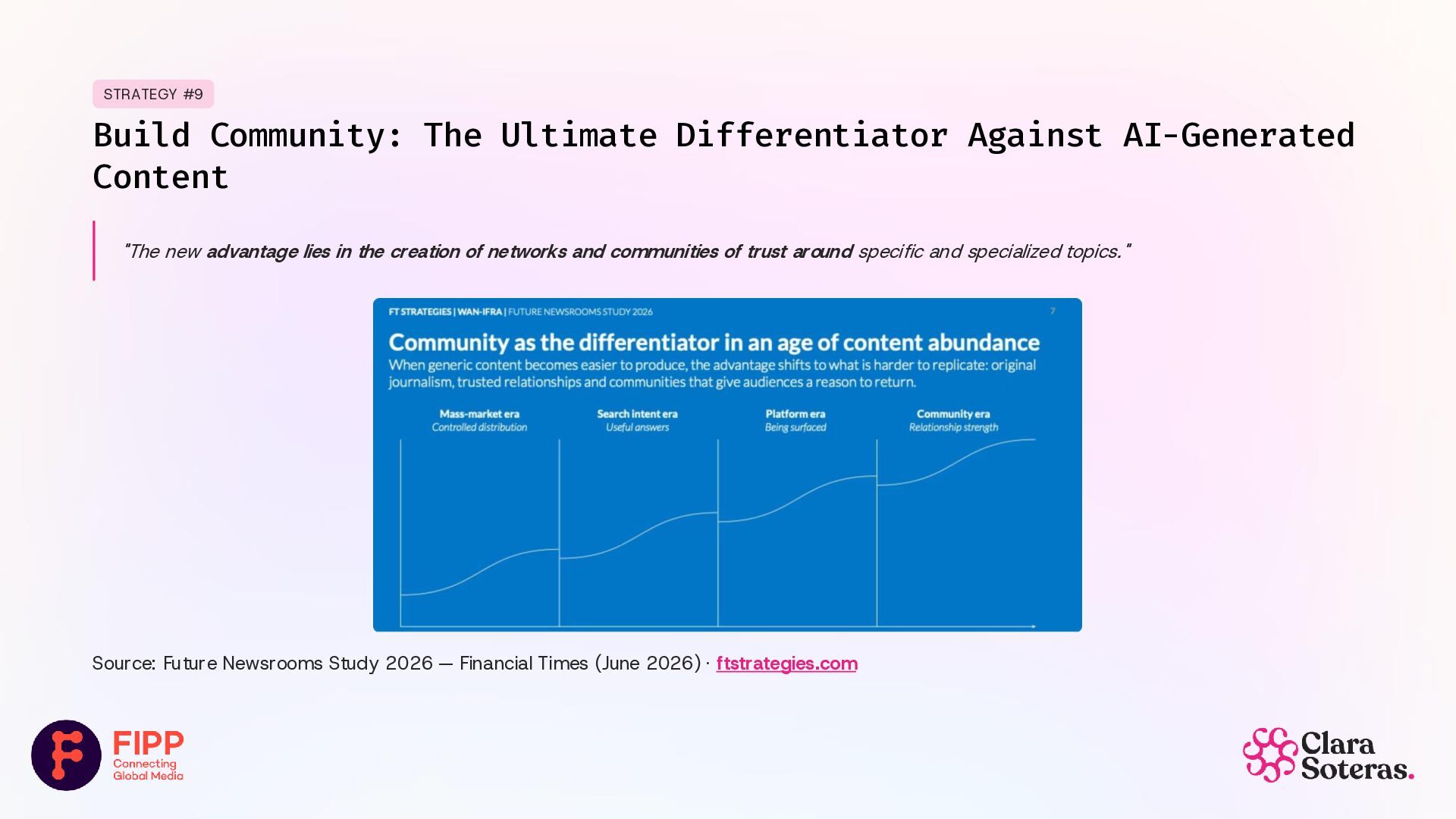
  29. STRATEGY #9 Build Community: The Ultimate Differentiator Against AI-Generated Content

    "The new advantage lies in the creation of networks and communities of trust around specific and specialized topics." Source: Future Newsrooms Study 2026 — Financial Times (June 2026) · ftstrategies.com
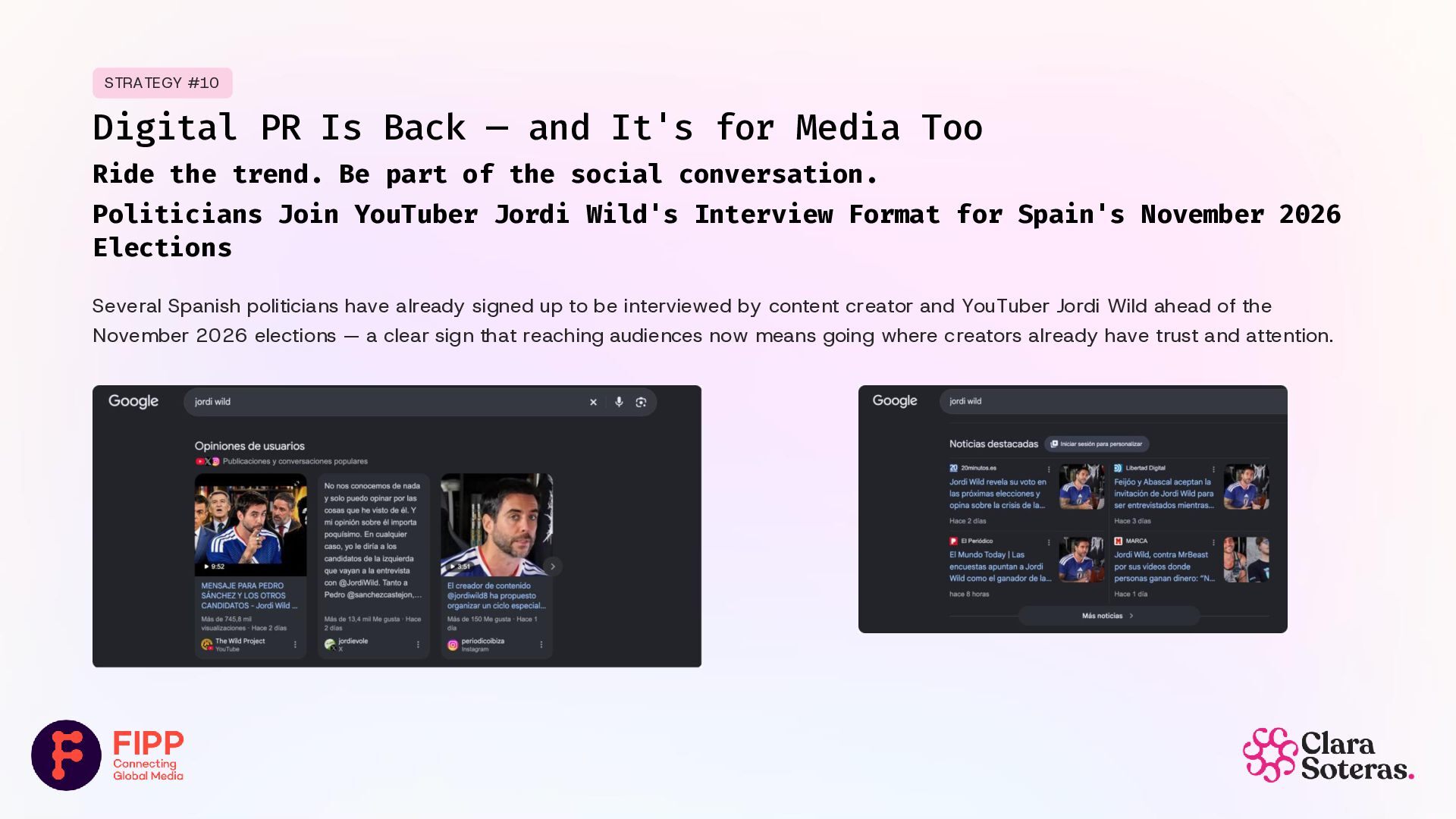
  30. STRATEGY #10 Digital PR Is Back — and It's for

    Media Too Ride the trend. Be part of the social conversation. Politicians Join YouTuber Jordi Wild's Interview Format for Spain's November 2026 Elections Several Spanish politicians have already signed up to be interviewed by content creator and YouTuber Jordi Wild ahead of the November 2026 elections — a clear sign that reaching audiences now means going where creators already have trust and attention.
  31. Audience Question Of these 10 strategies, which one feels most

    urgent for your publication — and which one feels most out of reach right now? Get into groups of 4 or 5. Discuss for 10 minutes — then we'll share back with the room.
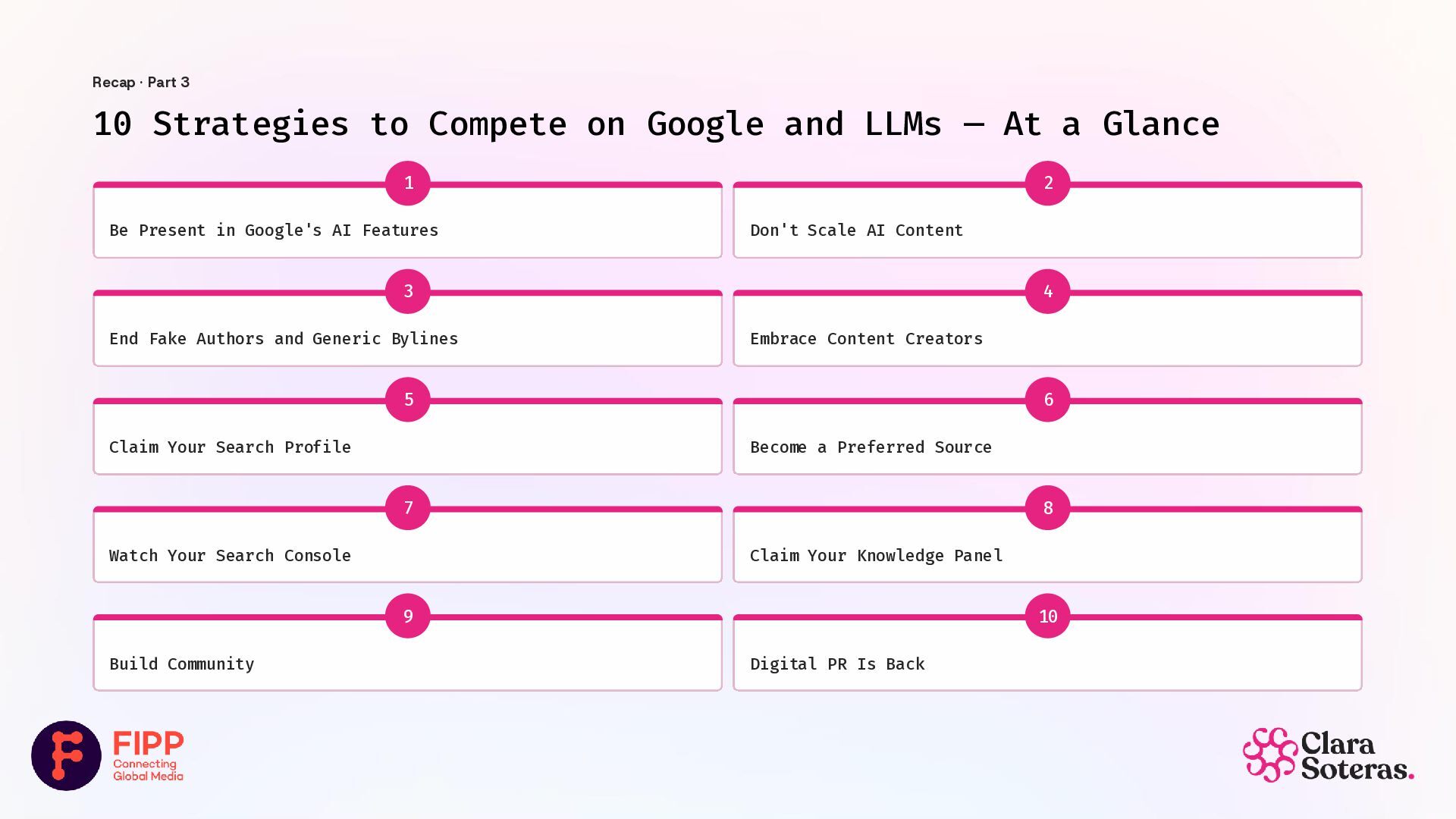
  32. Recap · Part 3 10 Strategies to Compete on Google

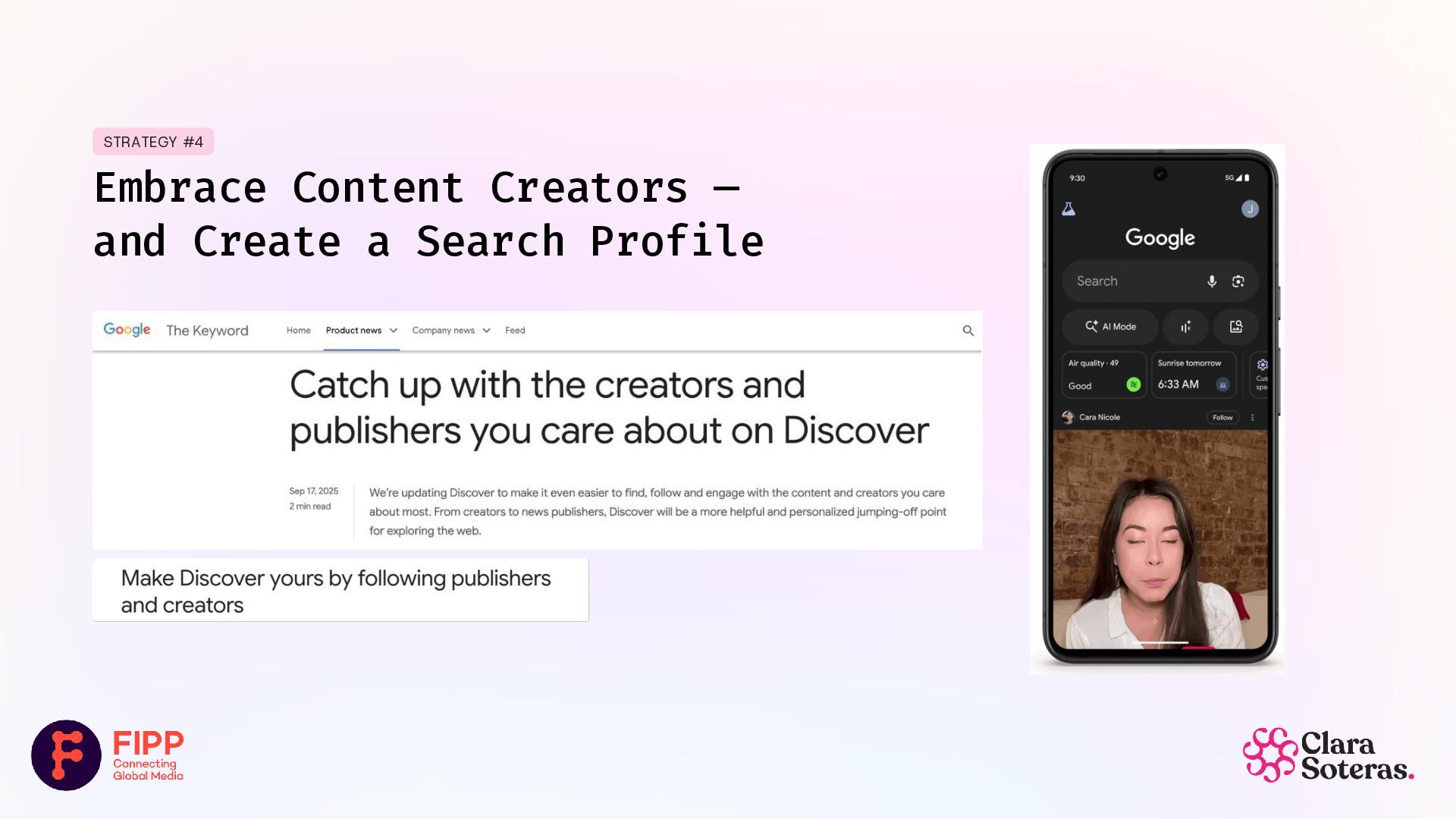
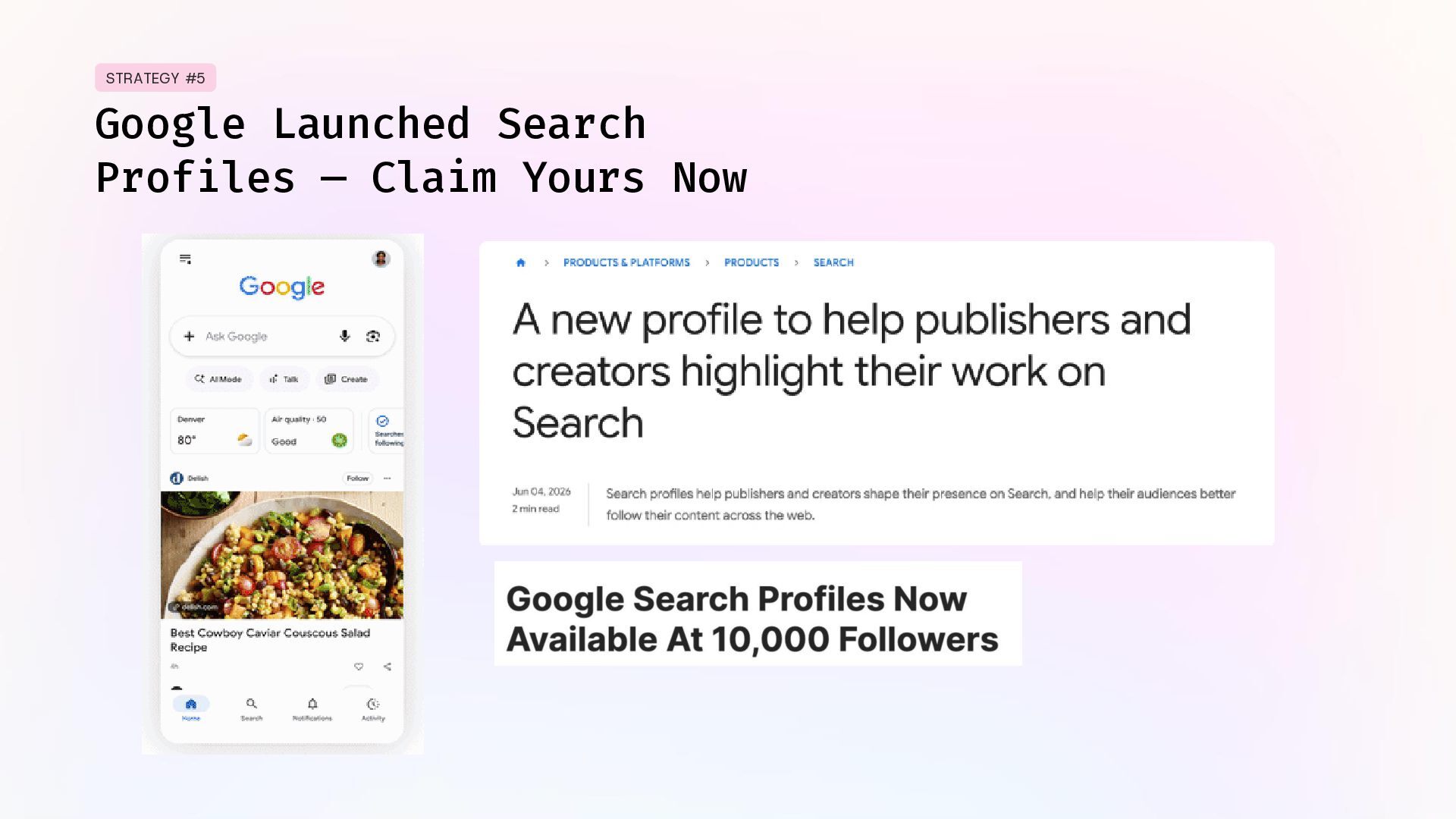
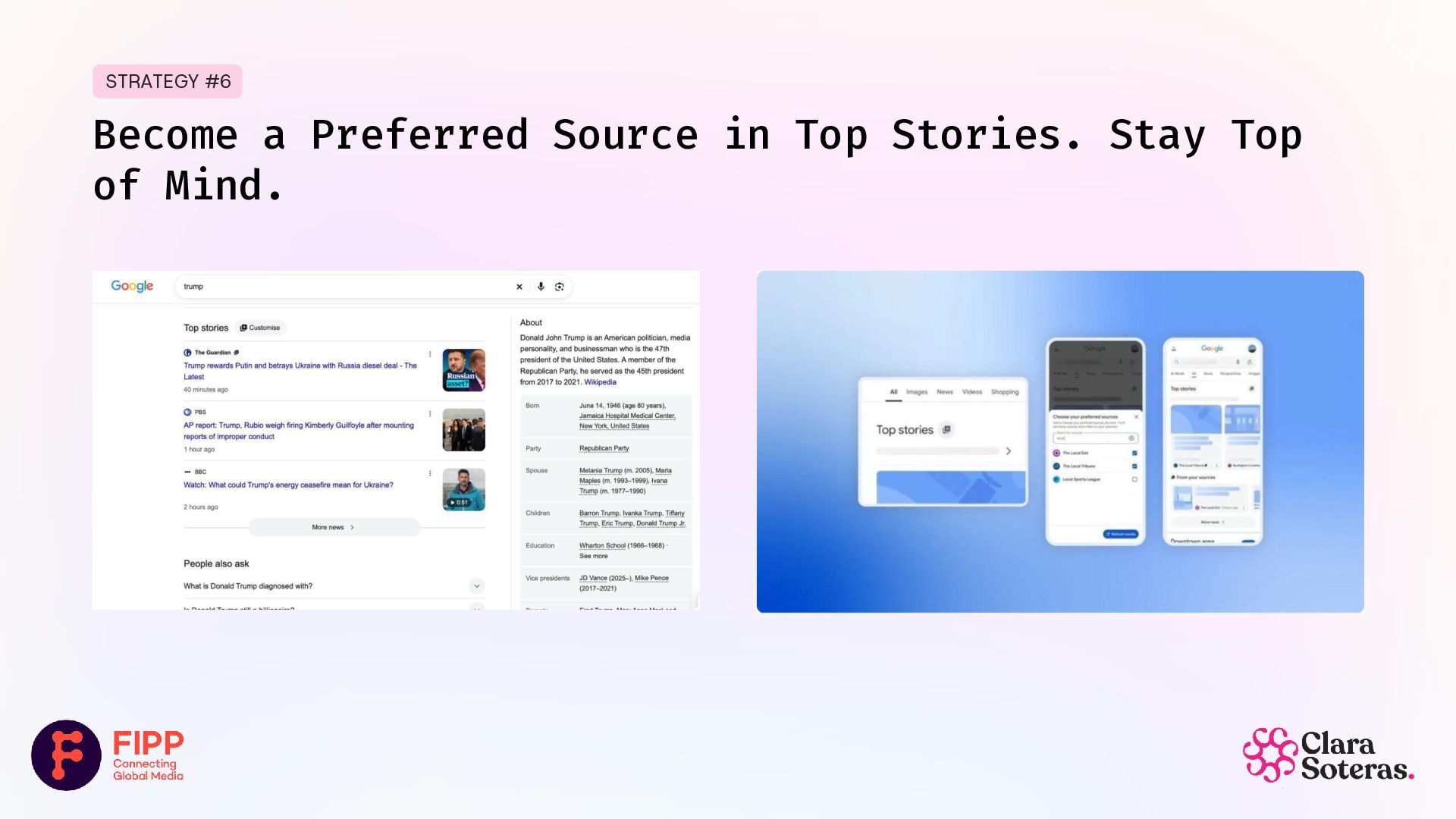
    and LLMs — At a Glance 1 Be Present in Google's AI Features 2 Don't Scale AI Content 3 End Fake Authors and Generic Bylines 4 Embrace Content Creators 5 Claim Your Search Profile 6 Become a Preferred Source 7 Watch Your Search Console 8 Claim Your Knowledge Panel 9 Build Community 10 Digital PR Is Back
  33. PART 4 · GEO CHECKLIST Your GEO Checklist: Take This

    Home Practical actions to optimise your content for Google and LLMs
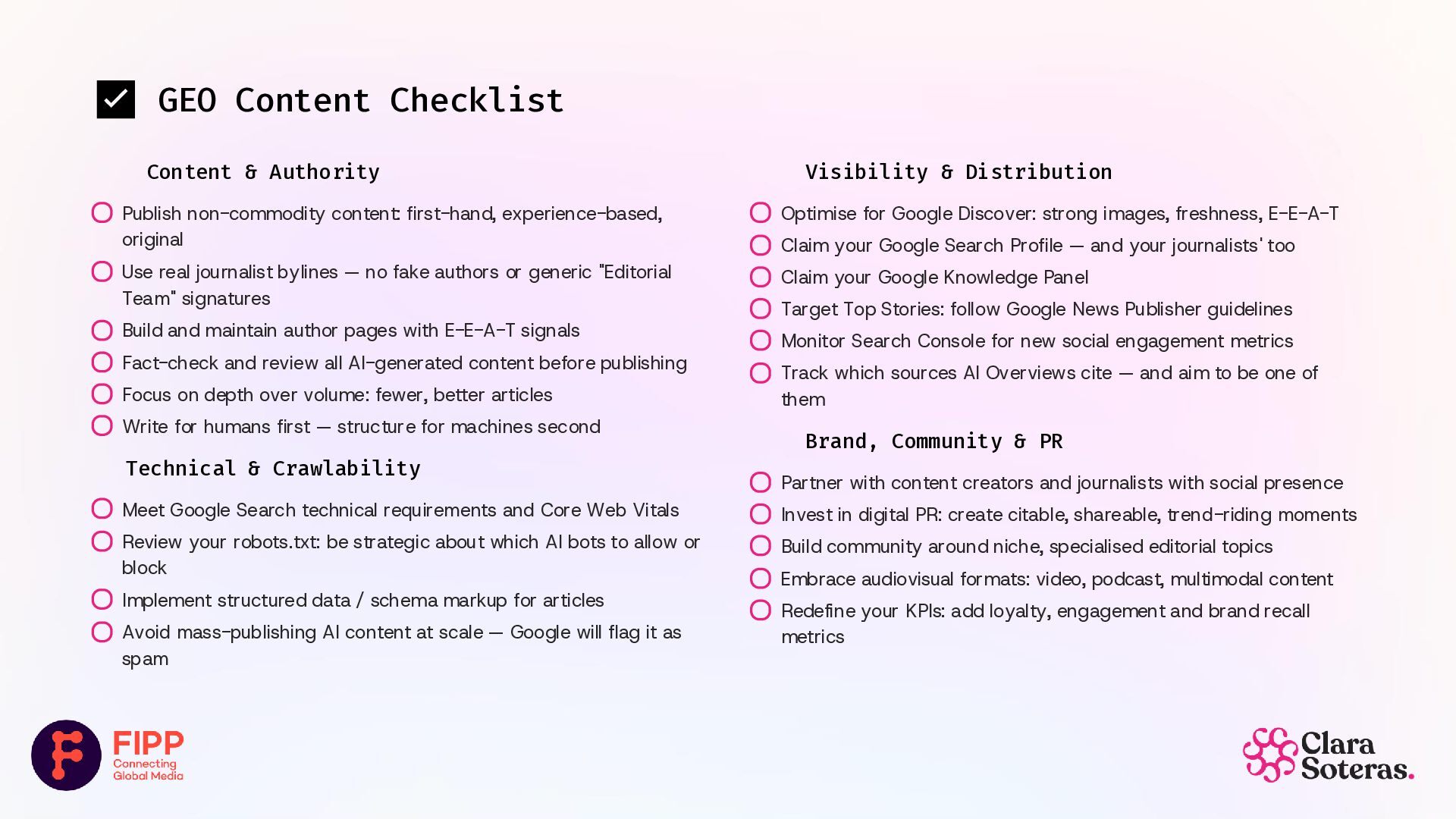
  34. ✅ GEO Content Checklist Content & Authority Visibility & Distribution

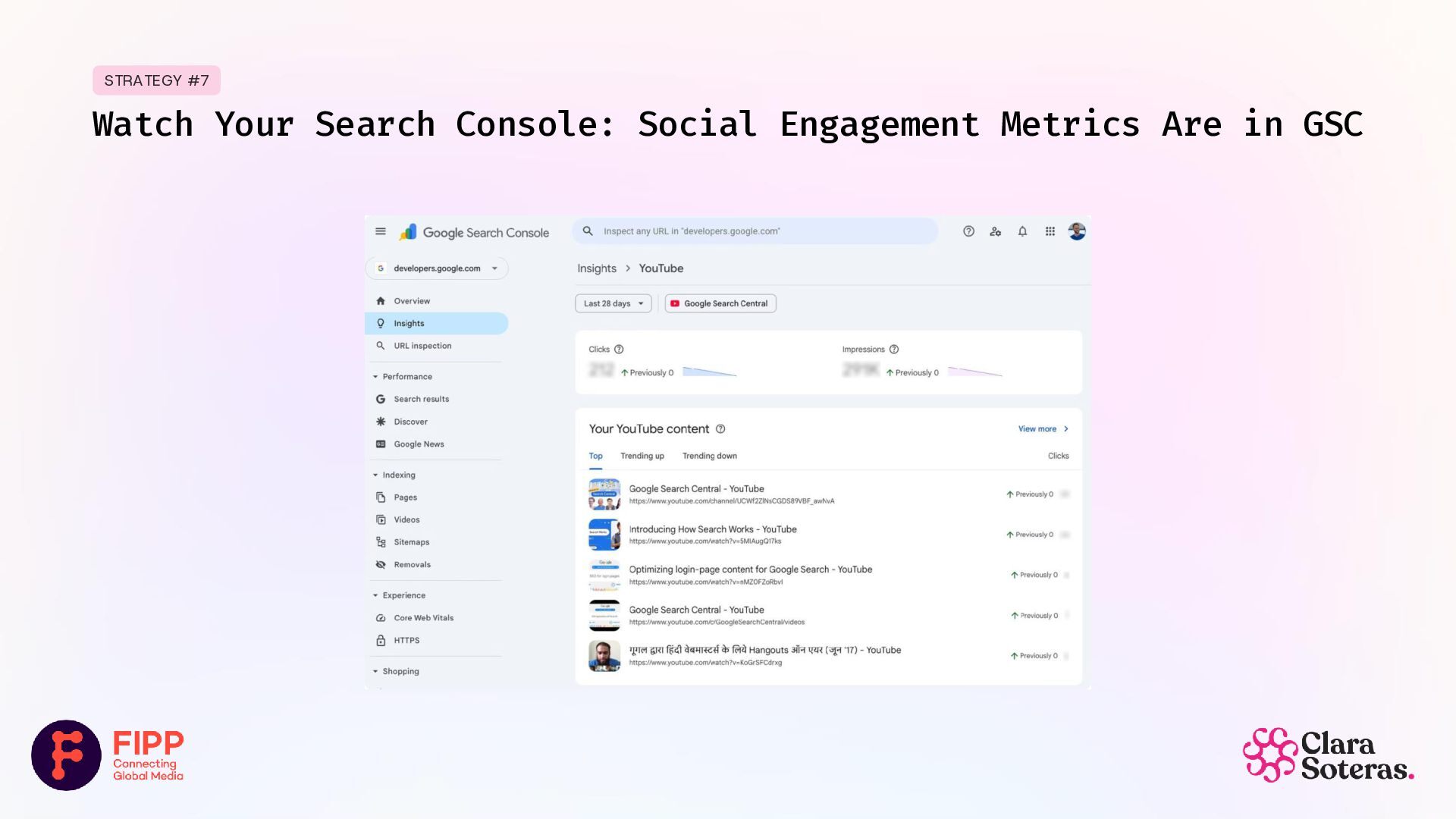
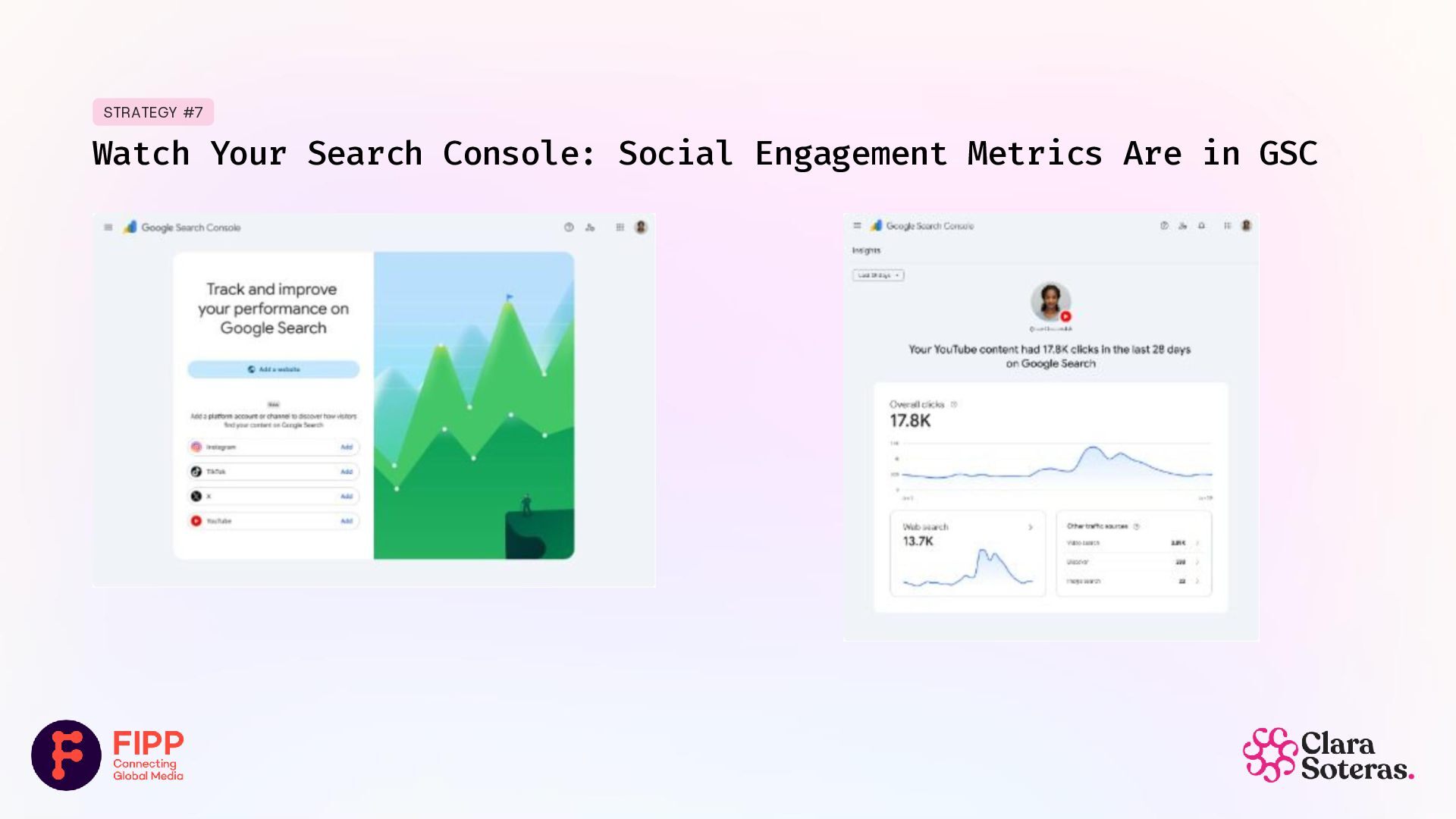
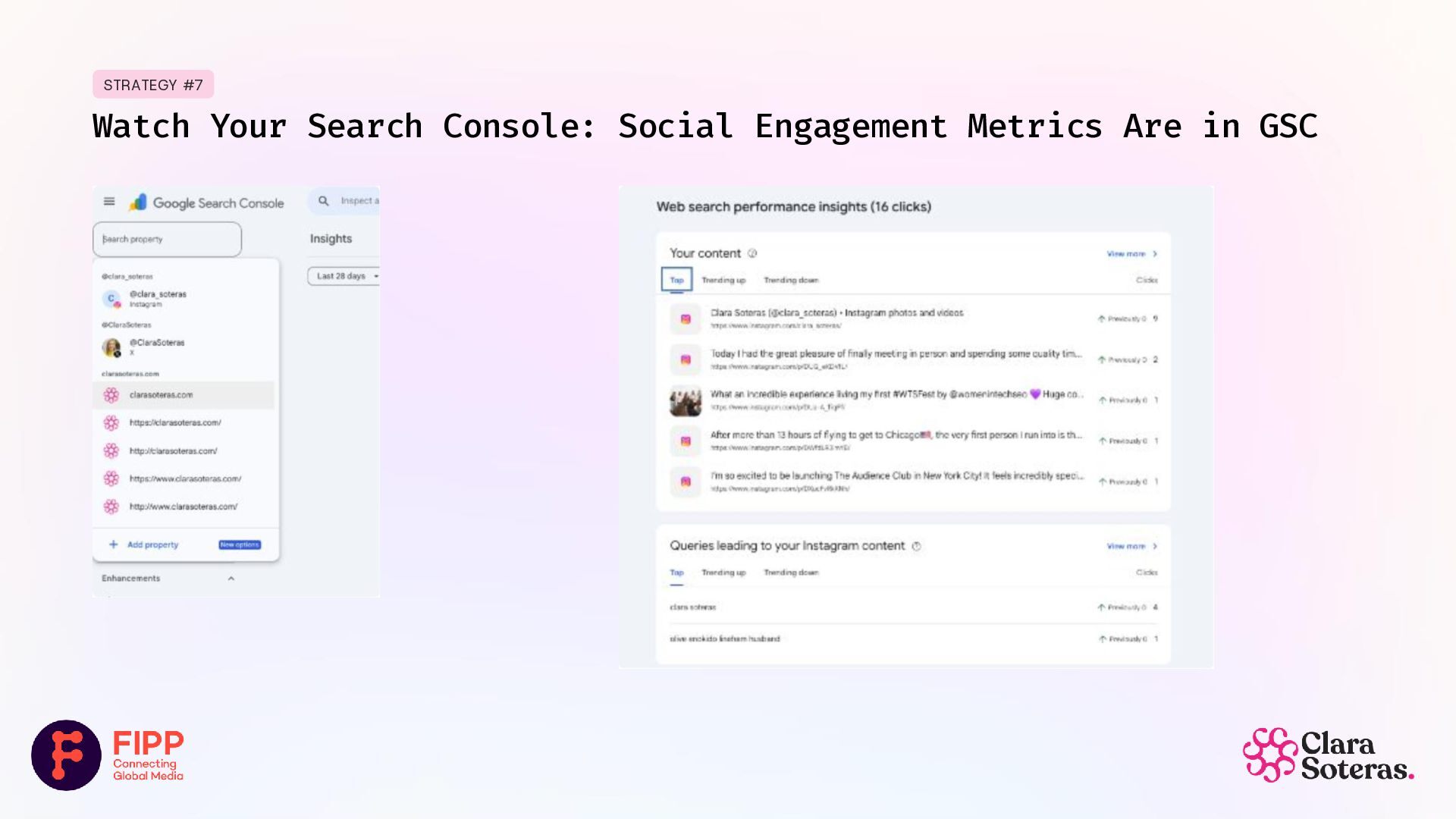
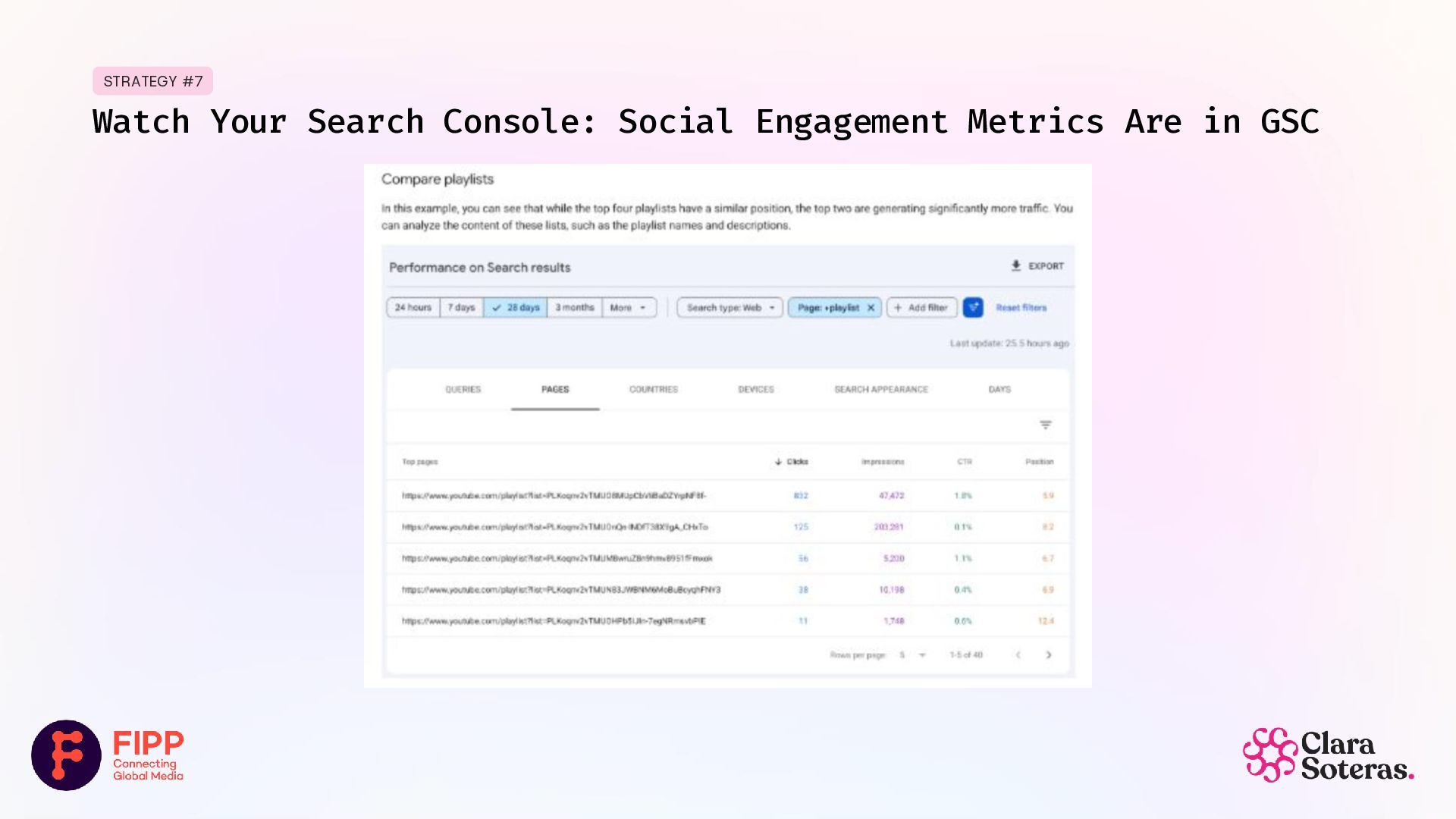
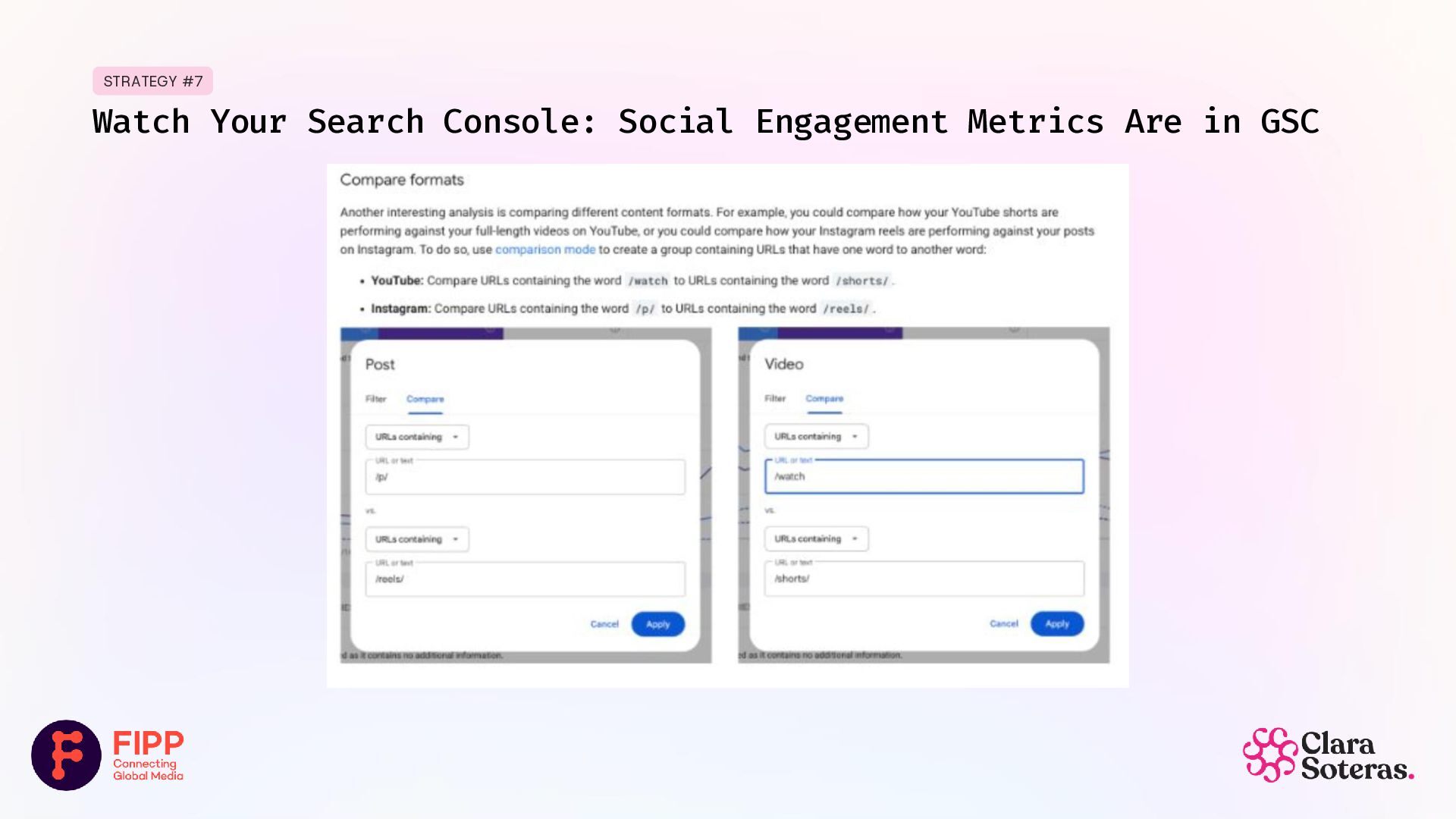
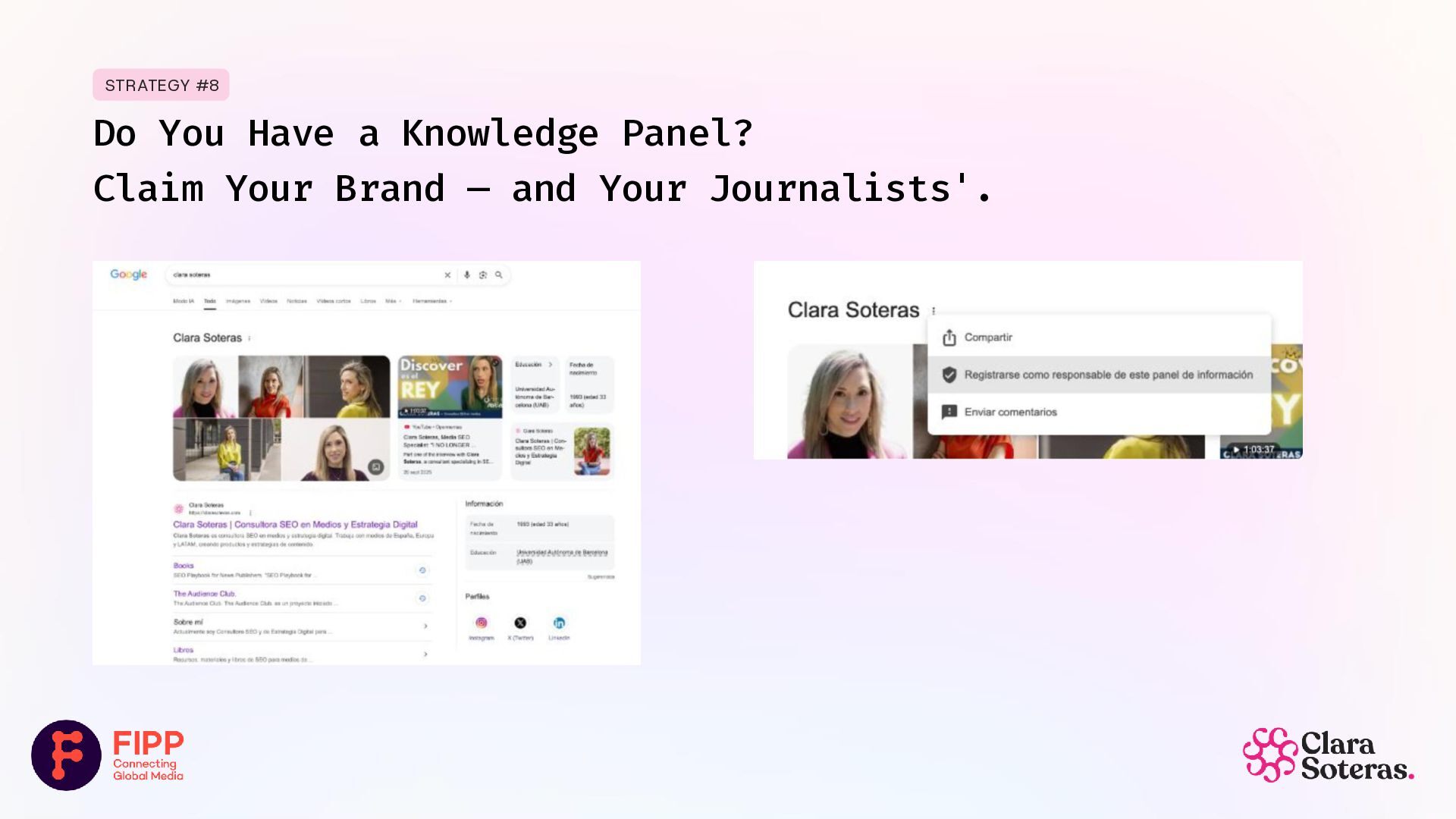
    Publish non-commodity content: first-hand, experience-based, original Optimise for Google Discover: strong images, freshness, E-E-A-T Use real journalist bylines — no fake authors or generic "Editorial Team" signatures Claim your Google Knowledge Panel Build and maintain author pages with E-E-A-T signals Fact-check and review all AI-generated content before publishing Focus on depth over volume: fewer, better articles Write for humans first — structure for machines second Technical & Crawlability Claim your Google Search Profile — and your journalists' too Target Top Stories: follow Google News Publisher guidelines Monitor Search Console for new social engagement metrics Track which sources AI Overviews cite — and aim to be one of them Brand, Community & PR Partner with content creators and journalists with social presence Meet Google Search technical requirements and Core Web Vitals Invest in digital PR: create citable, shareable, trend-riding moments Review your robots.txt: be strategic about which AI bots to allow or block Build community around niche, specialised editorial topics Implement structured data / schema markup for articles Avoid mass-publishing AI content at scale — Google will flag it as spam Embrace audiovisual formats: video, podcast, multimodal content Redefine your KPIs: add loyalty, engagement and brand recall metrics
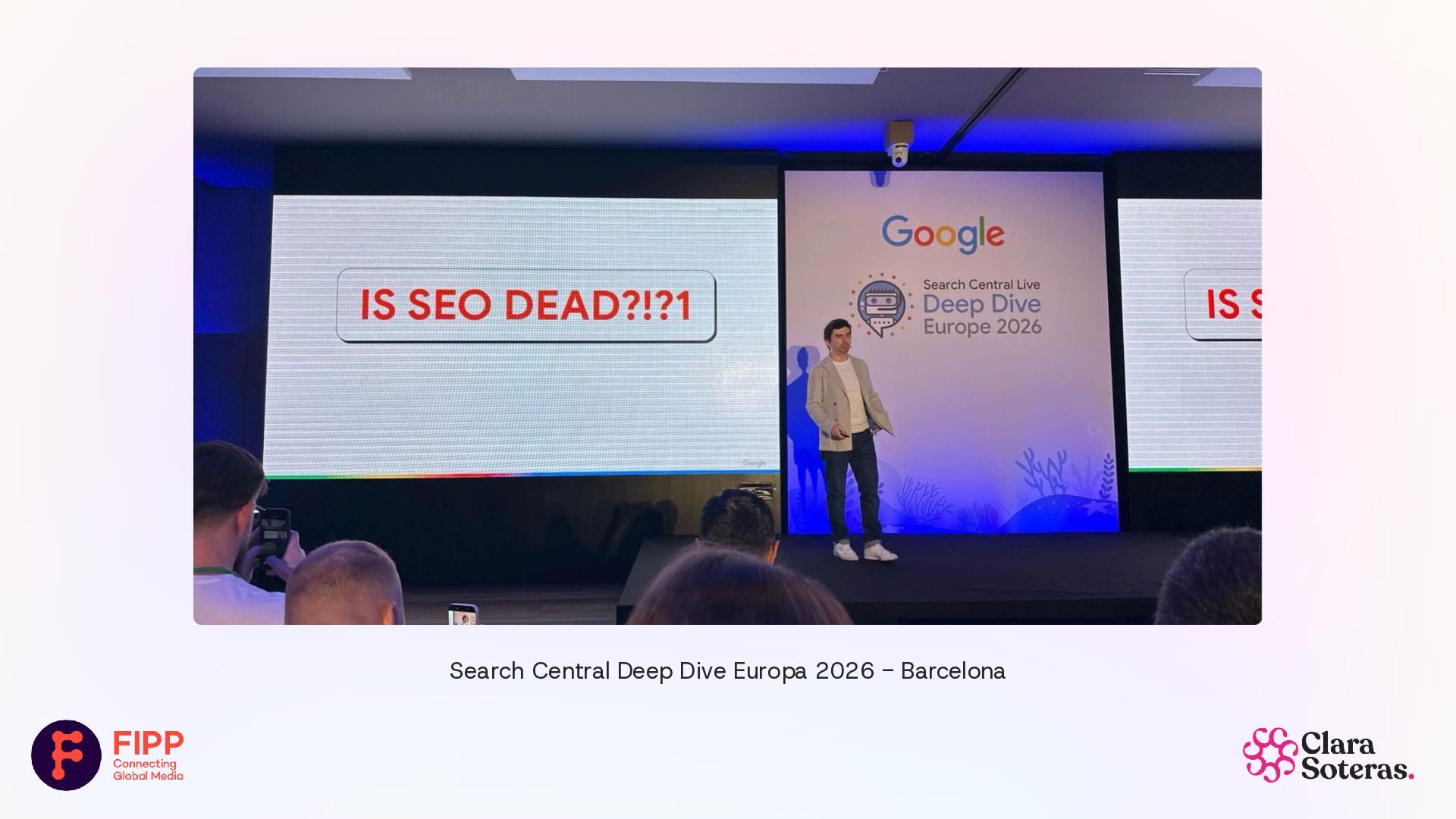
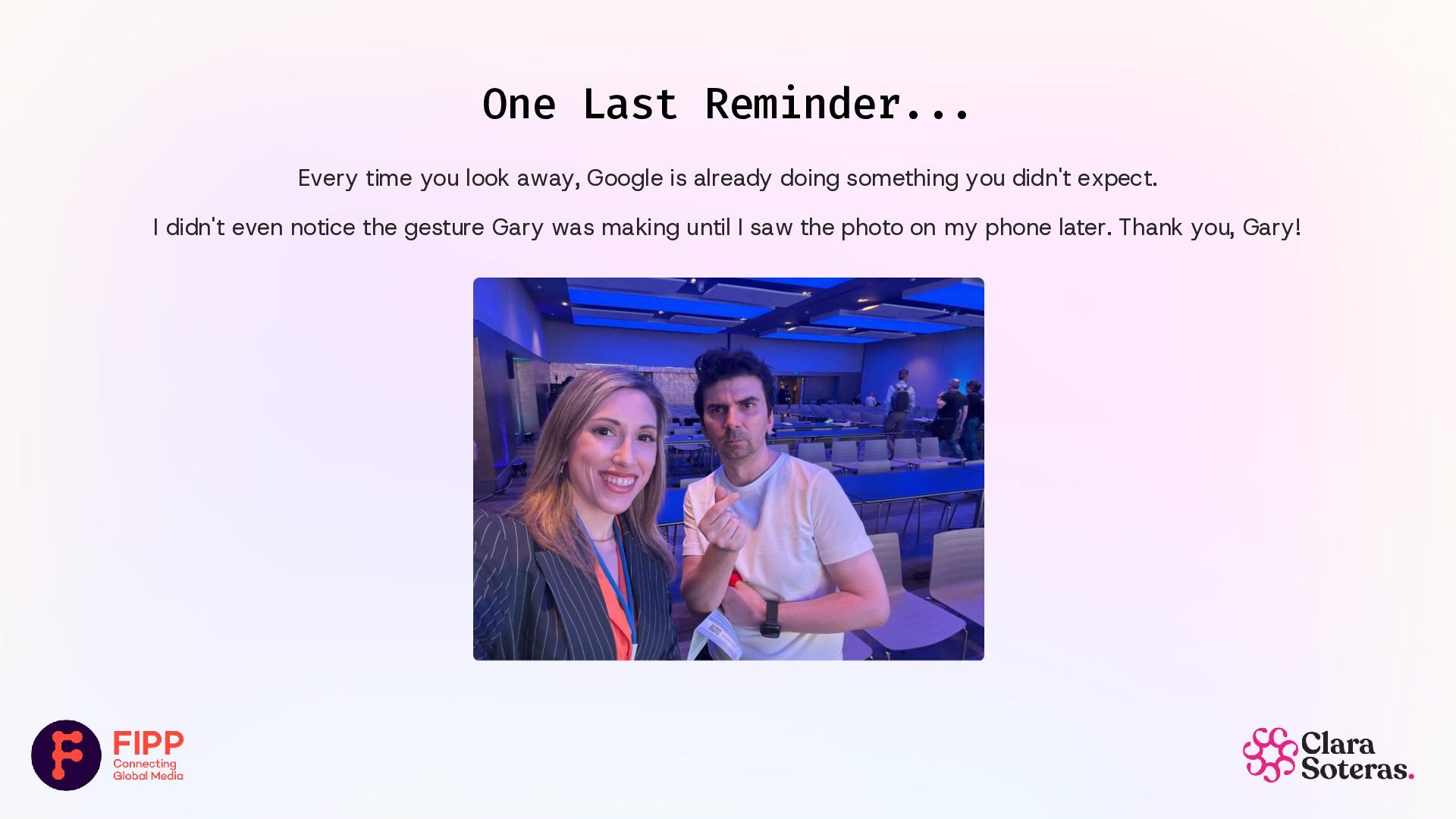
  35. One Last Reminder... Every time you look away, Google is

    already doing something you didn't expect. I didn't even notice the gesture Gary was making until I saw the photo on my phone later. Thank you, Gary!