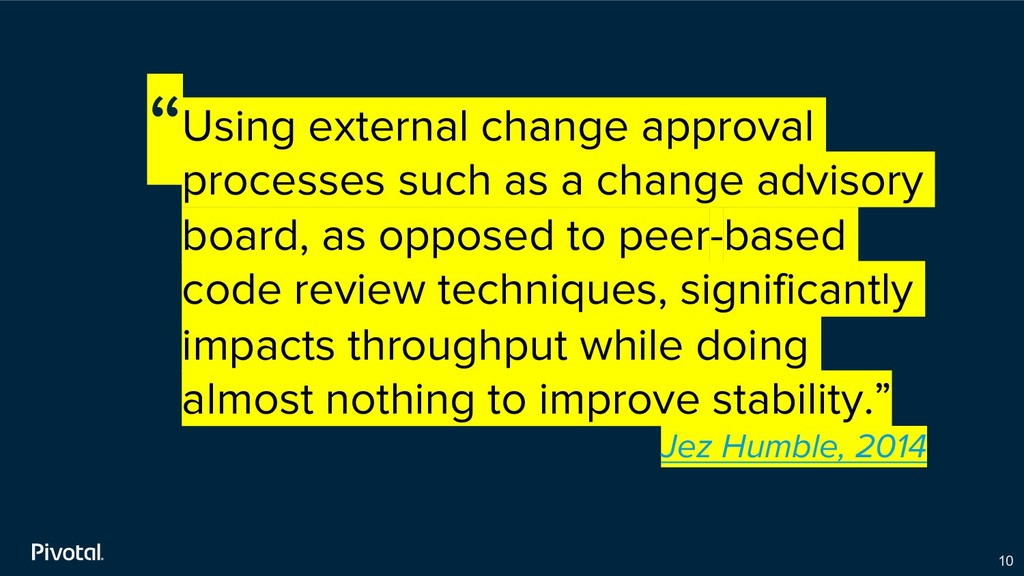
advisory board, as opposed to peer-based code review techniques, significantly impacts throughput while doing almost nothing to improve stability.” Jez Humble, 2014 “
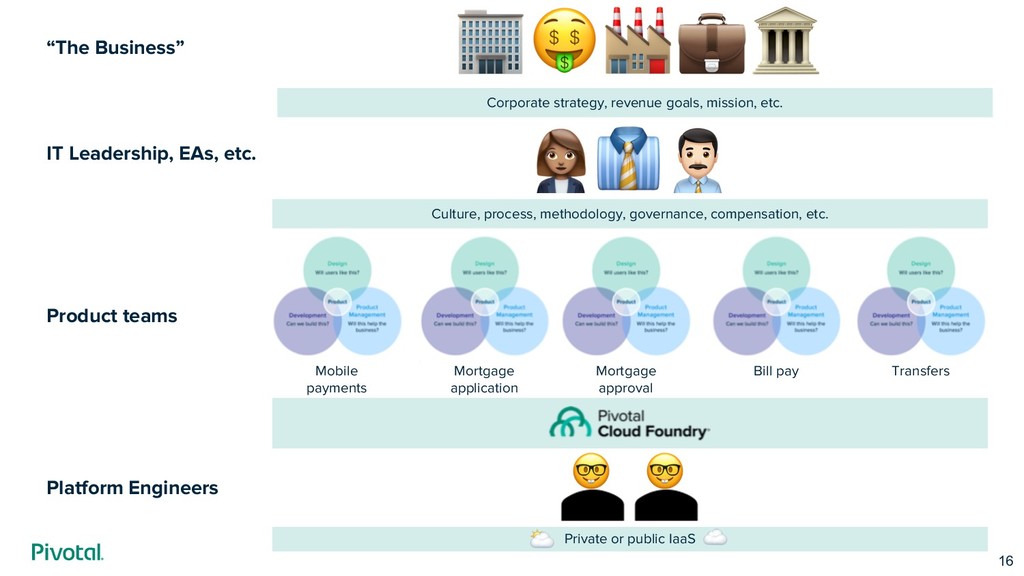
! ! Private or public IaaS "#$ Culture, process, methodology, governance, compensation, etc. IT Leadership, EAs, etc. Platform Engineers Product teams Corporate strategy, revenue goals, mission, etc. % &' ( ) * ☁ “The Business”
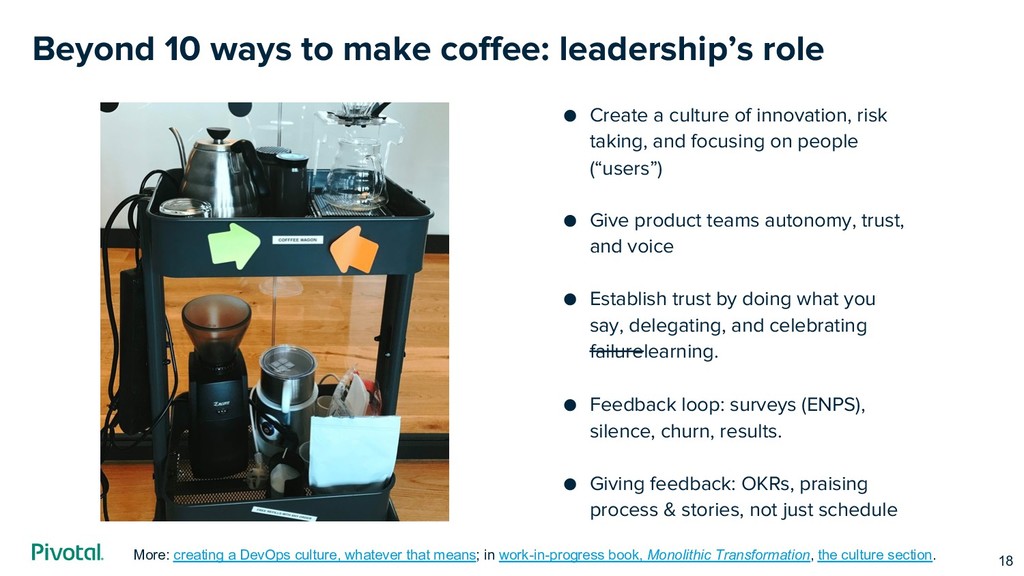
culture of innovation, risk taking, and focusing on people (“users”) Give product teams autonomy, trust, and voice Establish trust by doing what you say, delegating, and celebrating failurelearning. Feedback loop: surveys (ENPS), silence, churn, results. Giving feedback: OKRs, praising process & stories, not just schedule 18 More: creating a DevOps culture, whatever that means; in work-in-progress book, Monolithic Transformation, the culture section.
say to your team that 'when you build it you also run it,’ you cannot do that with a consolidated environment. You cannot say to a team 'you own that stuff, and by the way somebody else can also break it.'" Vincent Oostindië, Rabobank “
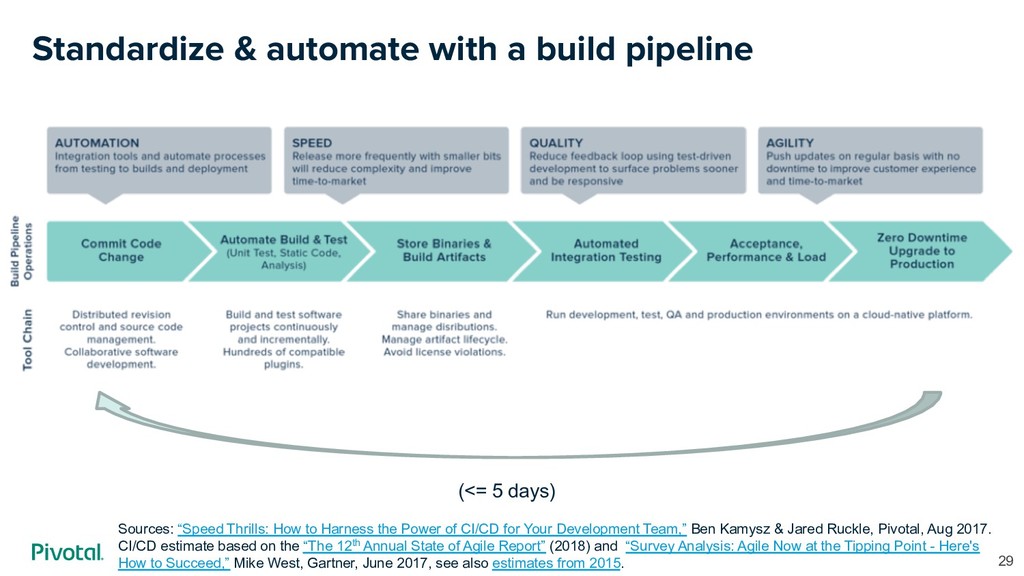
Thrills: How to Harness the Power of CI/CD for Your Development Team,” Ben Kamysz & Jared Ruckle, Pivotal, Aug 2017. CI/CD estimate based on the “The 12th Annual State of Agile Report” (2018) and “Survey Analysis: Agile Now at the Tipping Point - Here's How to Succeed,” Mike West, Gartner, June 2017, see also estimates from 2015. (<= 5 days)
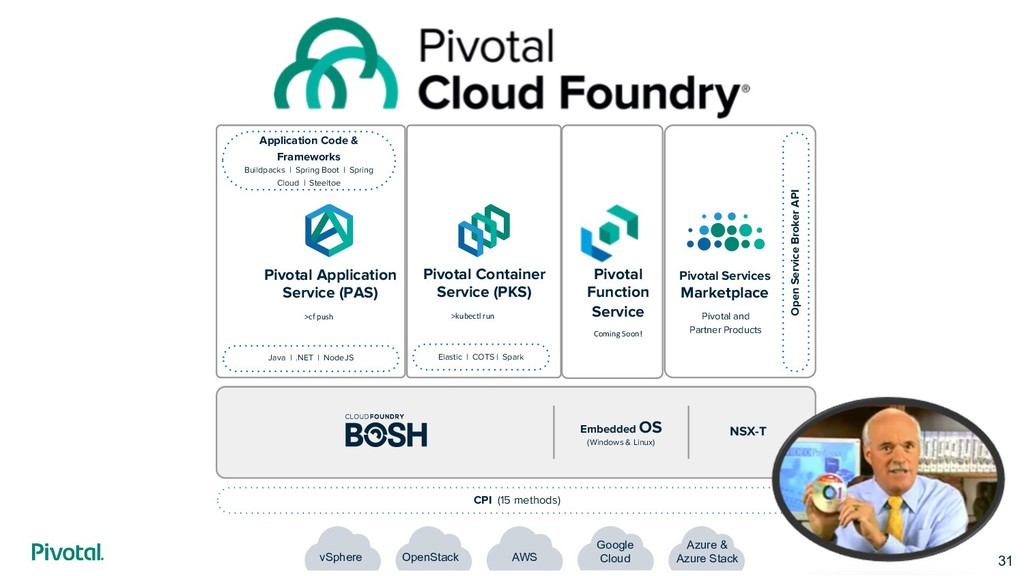
| .NET | NodeJS Pivotal Application Service (PAS) Application Code & Frameworks Buildpacks | Spring Boot | Spring Cloud | Steeltoe Elastic | COTS | Spark Pivotal Container Service (PKS) >cf push >kubectl run Pivotal Services Marketplace Pivotal and Partner Products Open Service Broker API 31 Pivotal Function Service vSphere OpenStack AWS Google Cloud Azure & Azure Stack Coming Soon!
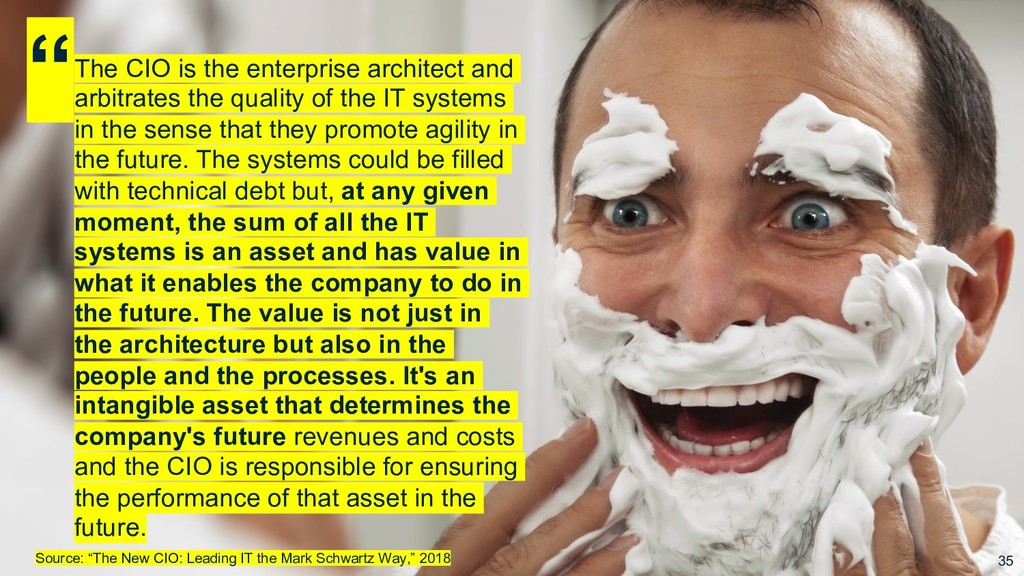
Way,” 2018 The CIO is the enterprise architect and arbitrates the quality of the IT systems in the sense that they promote agility in the future. The systems could be filled with technical debt but, at any given moment, the sum of all the IT systems is an asset and has value in what it enables the company to do in the future. The value is not just in the architecture but also in the people and the processes. It's an intangible asset that determines the company's future revenues and costs and the CIO is responsible for ensuring the performance of that asset in the future. “


 cote
cote
 kentapapa
 rena1208
 junkifurukawa
 mikanichinose
 ryomaru0825
 masakiokuda
 genda
genda
 sony
sony
 yukun
yukun
 tomtanaka
 ishiirikie
 cassius7
 addyosmani
 inesmontani
 aleyda
 chriscoyier
 reverentgeek
 auna
auna
 honzajavorek
 retrage
 lcolladotor
 sugarenia
 michaelherold
 bluesmoon







![28 Source: Presentation at SpringOne Platform, Sep 2018. [I]f you](https://files.speakerdeck.com/presentations/0812e3505a4a45579af33242de5b02c8/slide_26.jpg)