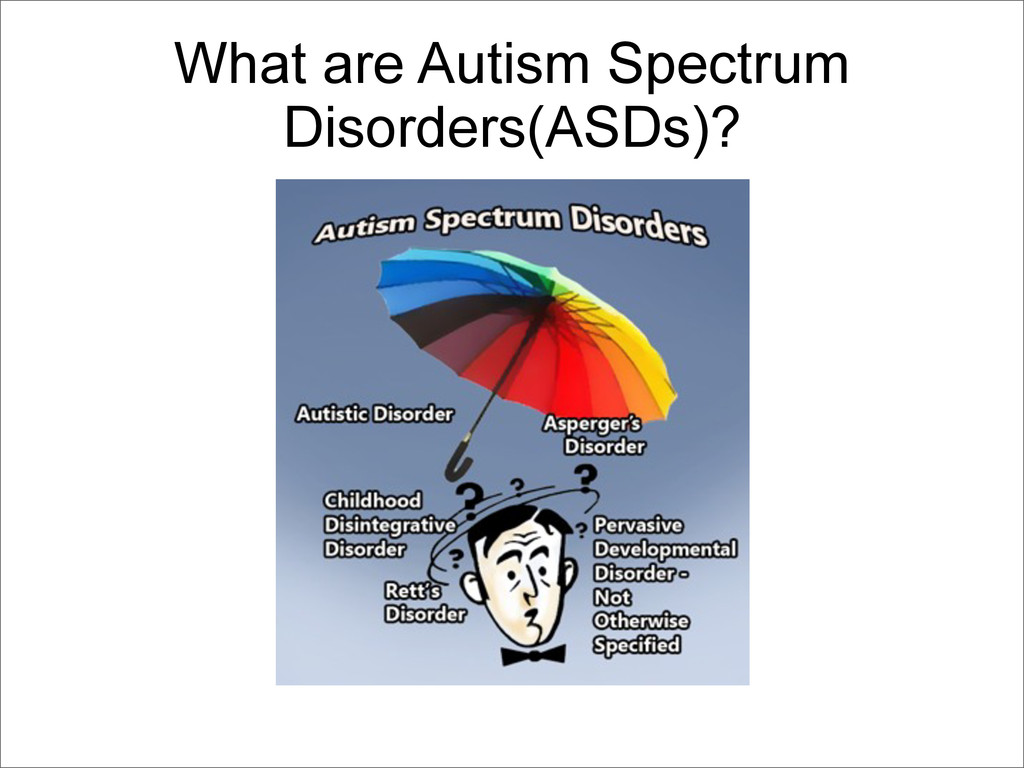
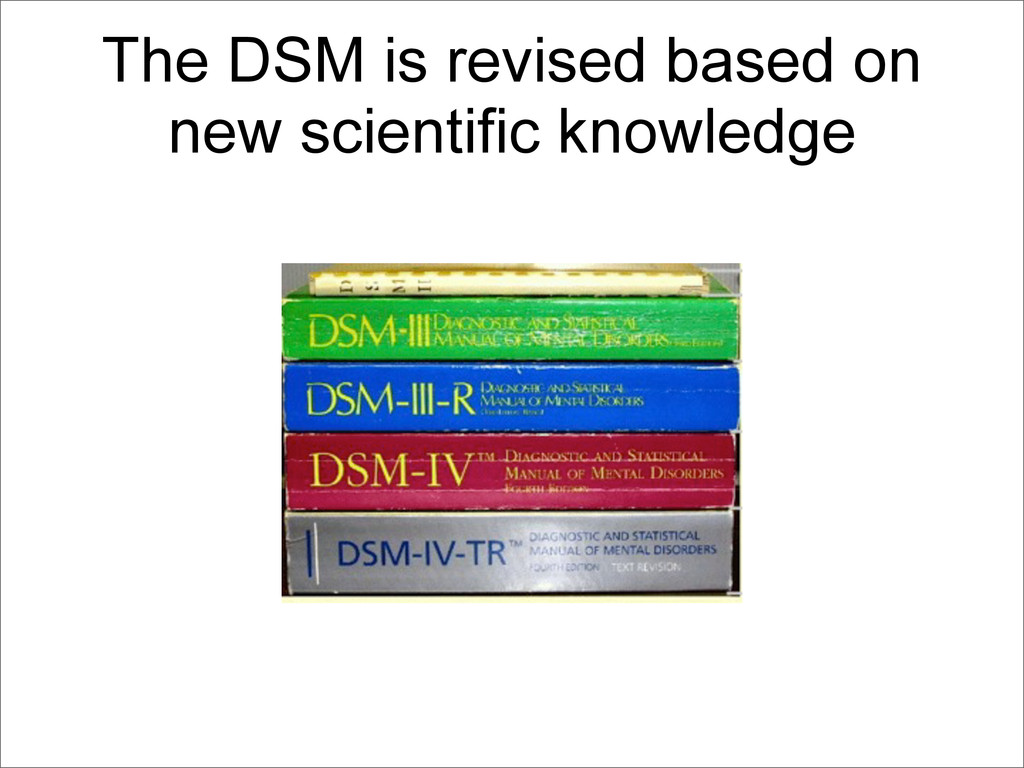
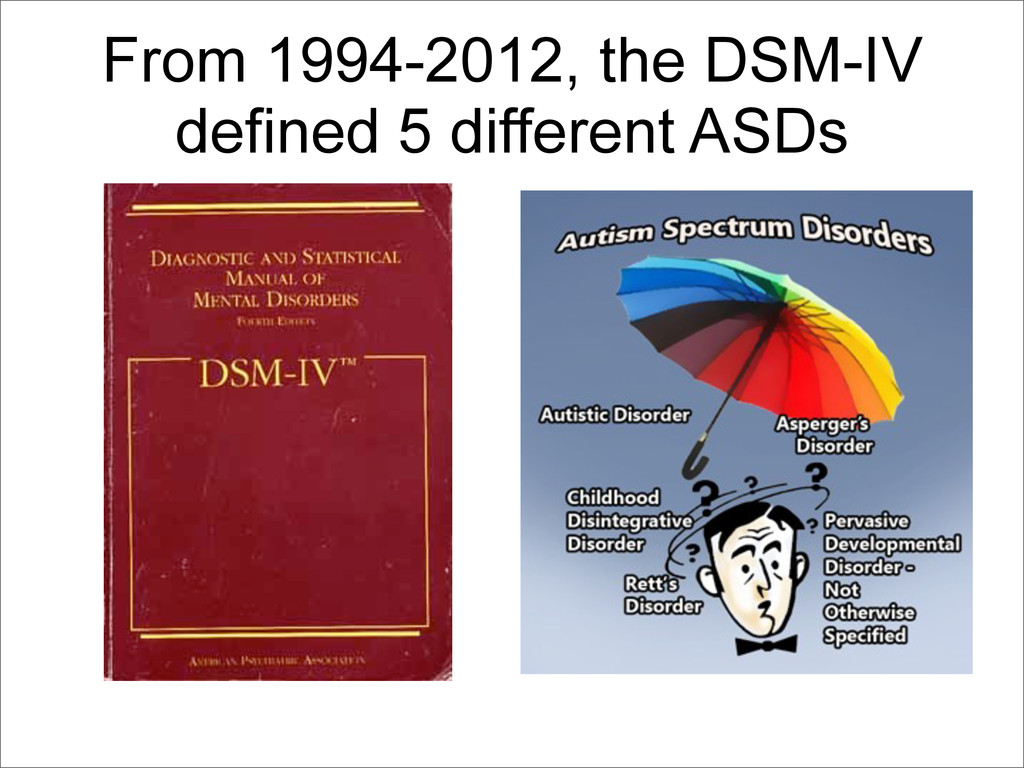
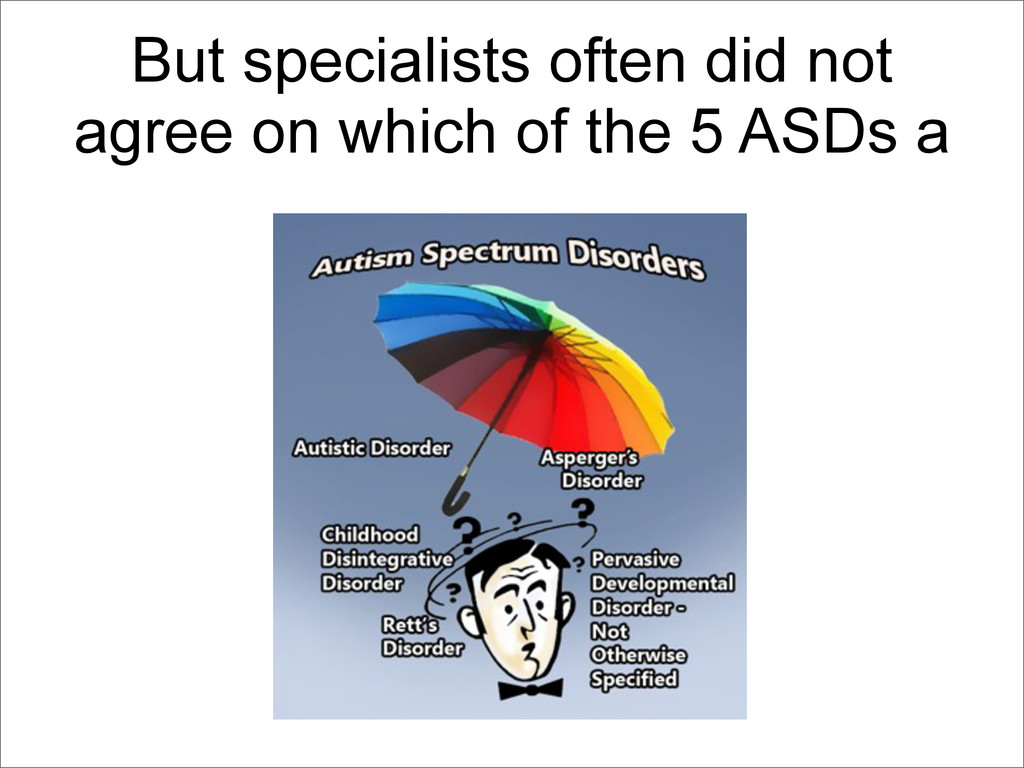
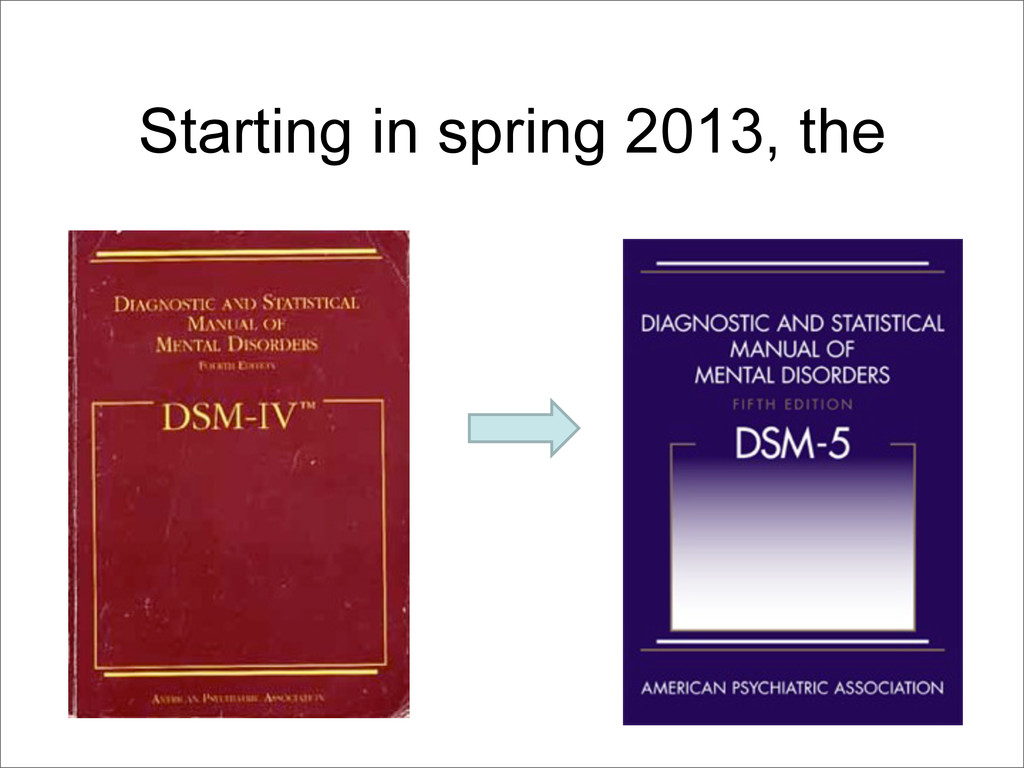
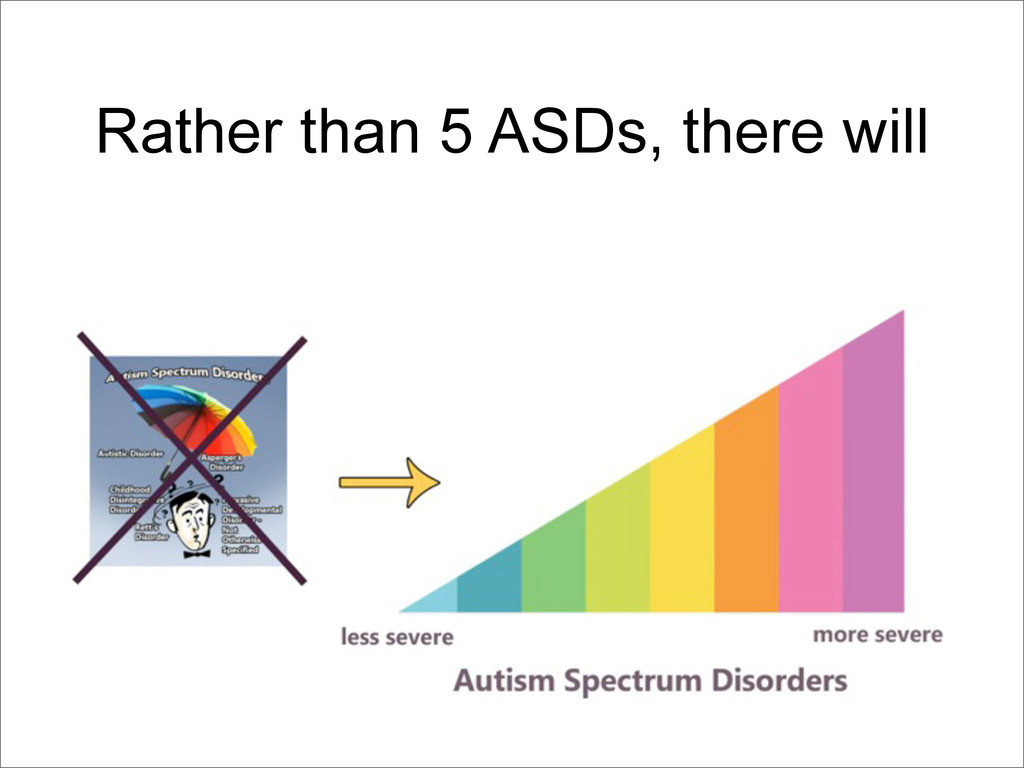
of this training carefully. • Feel free to take notes. • There will be comprehension checks throughout the training. • After the training is complete, you will move into the post-test. Please put your notes away when you take the post-test.
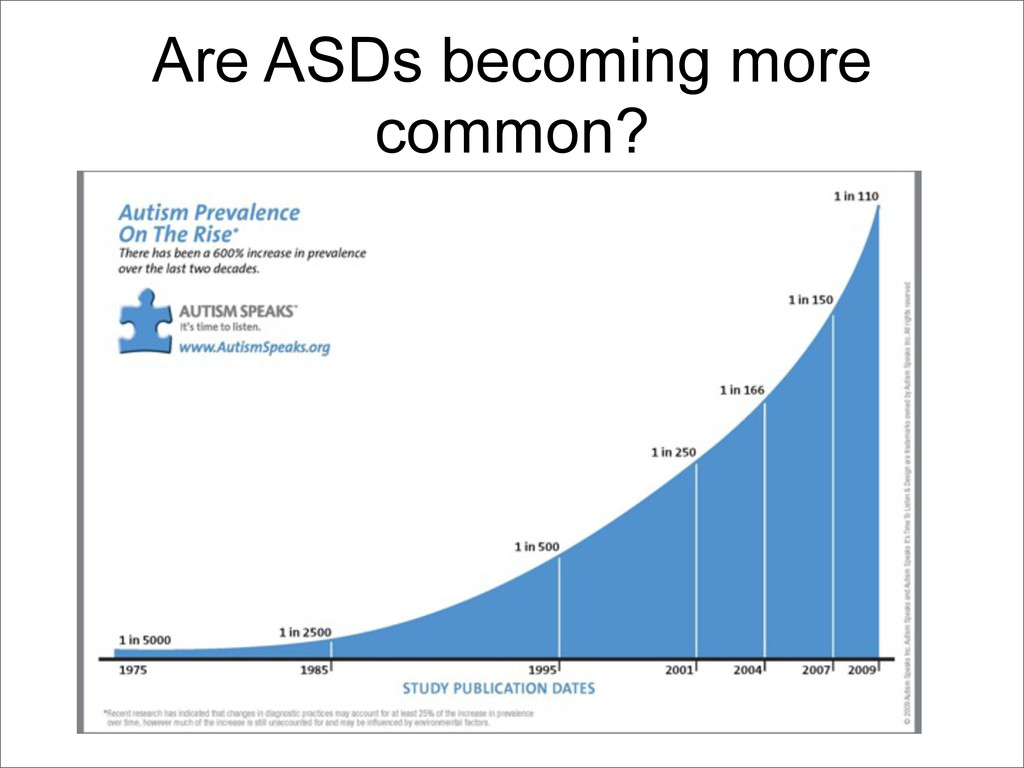
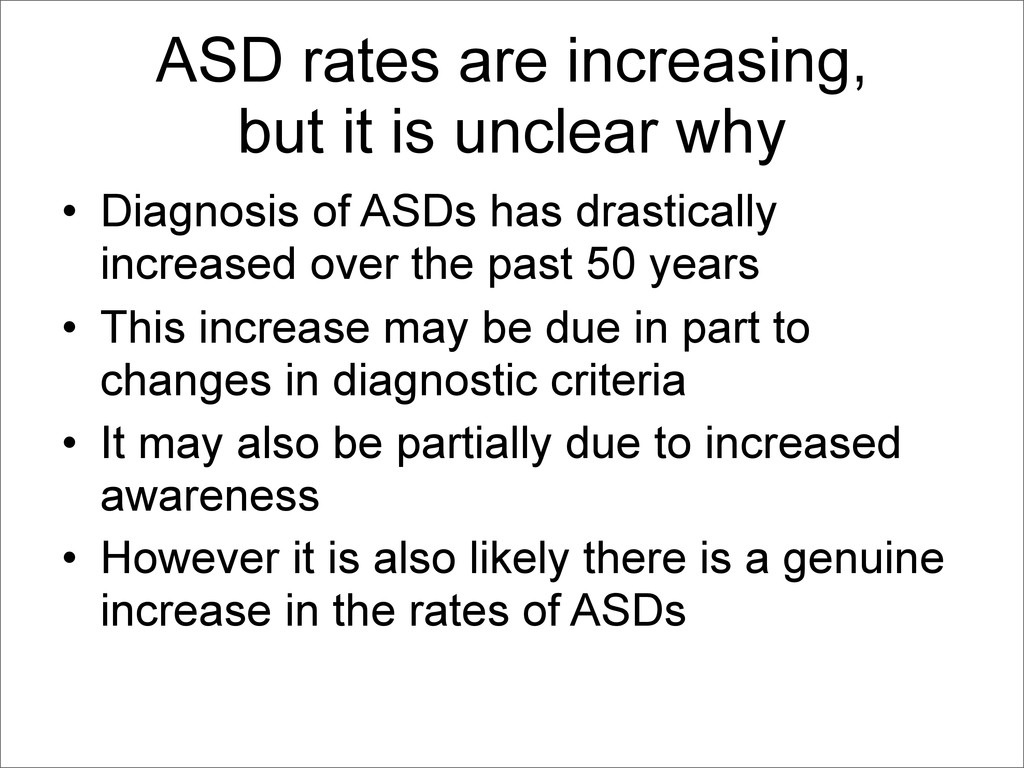
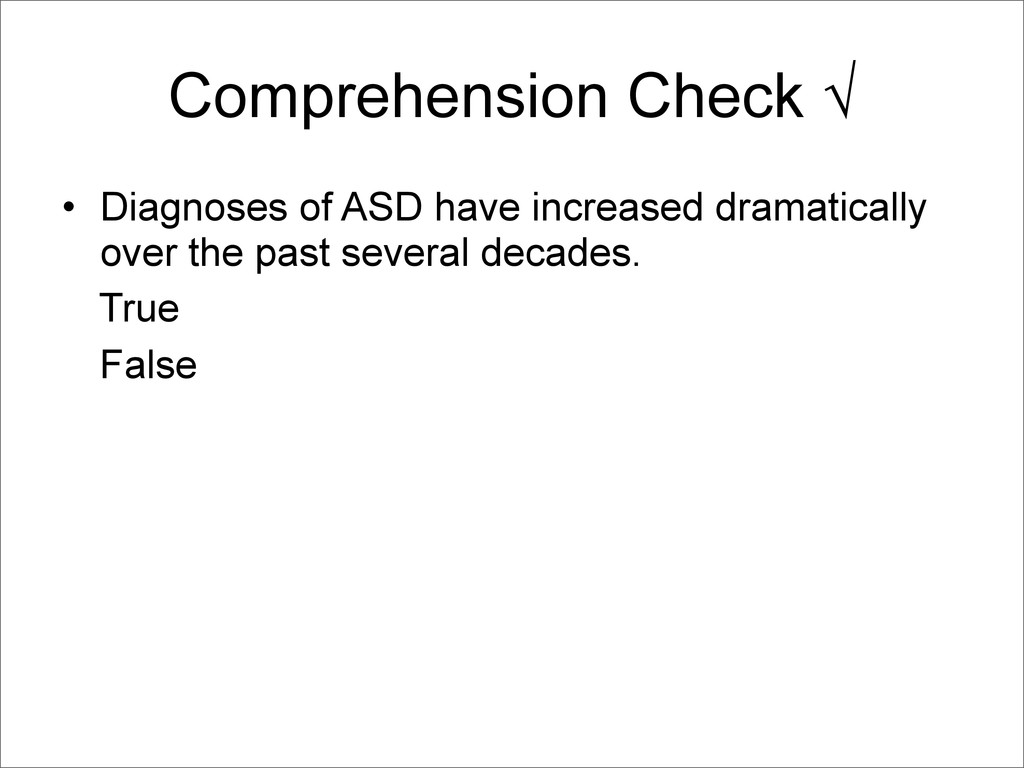
Diagnosis of ASDs has drastically increased over the past 50 years • This increase may be due in part to changes in diagnostic criteria • It may also be partially due to increased awareness • However it is also likely there is a genuine increase in the rates of ASDs
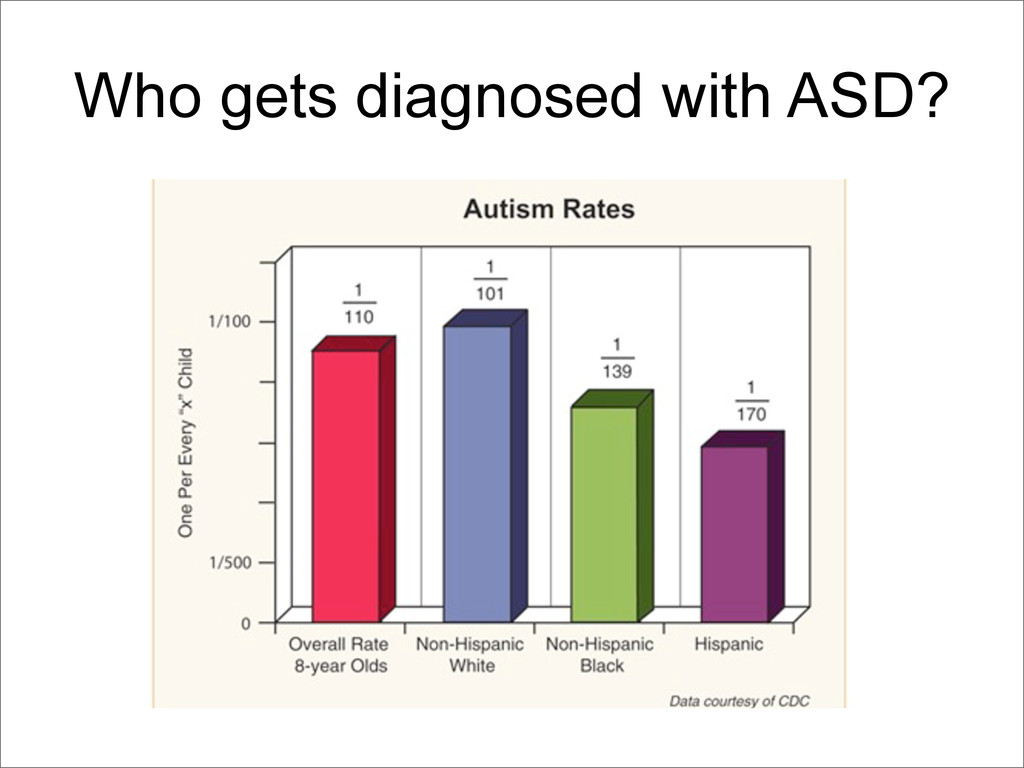
• White people are diagnosed more frequently and earlier than minorities • However, community screenings tend to show similar rates of ASD across ethnic groups • The different rates of diagnosis across groups are probably due to other factors, such as access to health care
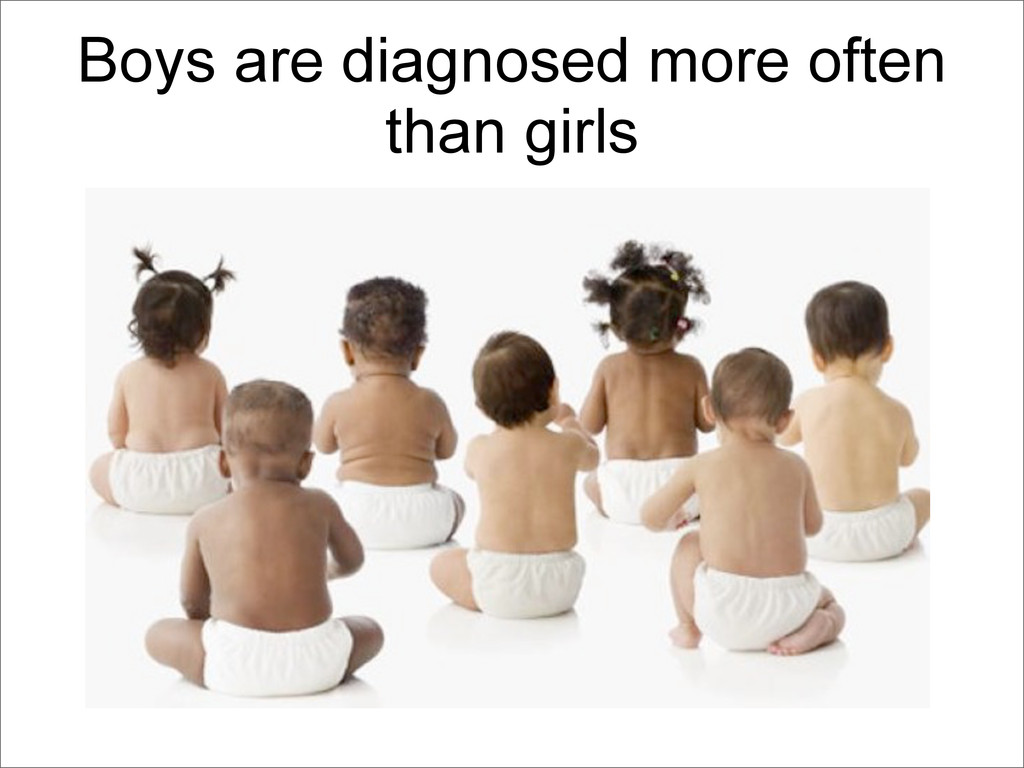
diagnostic criteria may be less effective in identifying girls with ASD • Recent community screenings have found higher rates of ASDs in girls than were previously reported
may not want their children diagnosed with ASD due to stigma • However, increasing awareness about ASD helps to decrease stigma • Even in countries, such as the United States, where awareness of ASD is relatively high, lack of understanding creates stigma for families
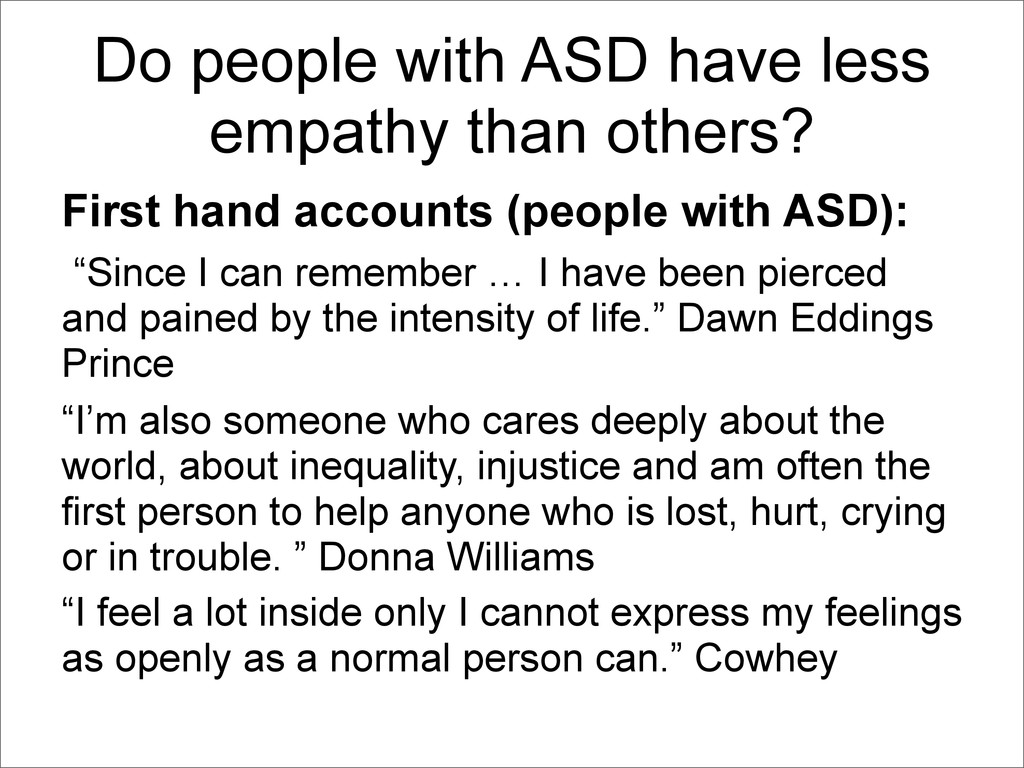
hand accounts (people with ASD): “Since I can remember … I have been pierced and pained by the intensity of life.” Dawn Eddings Prince “I’m also someone who cares deeply about the world, about inequality, injustice and am often the first person to help anyone who is lost, hurt, crying or in trouble. ” Donna Williams “I feel a lot inside only I cannot express my feelings as openly as a normal person can.” Cowhey
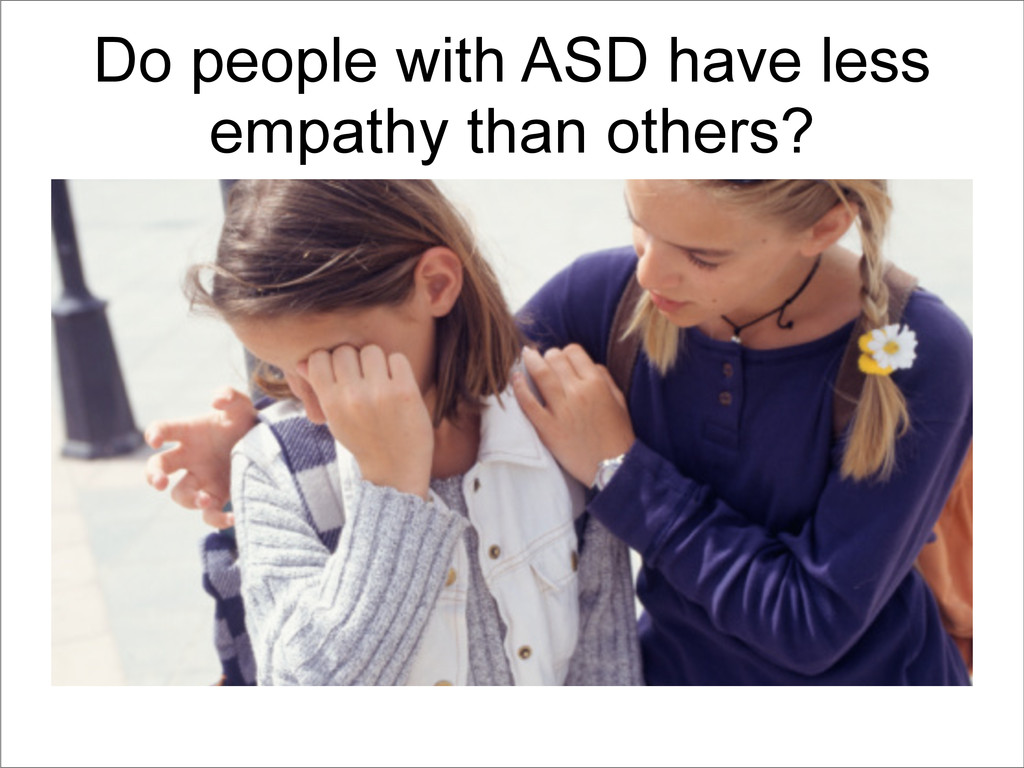
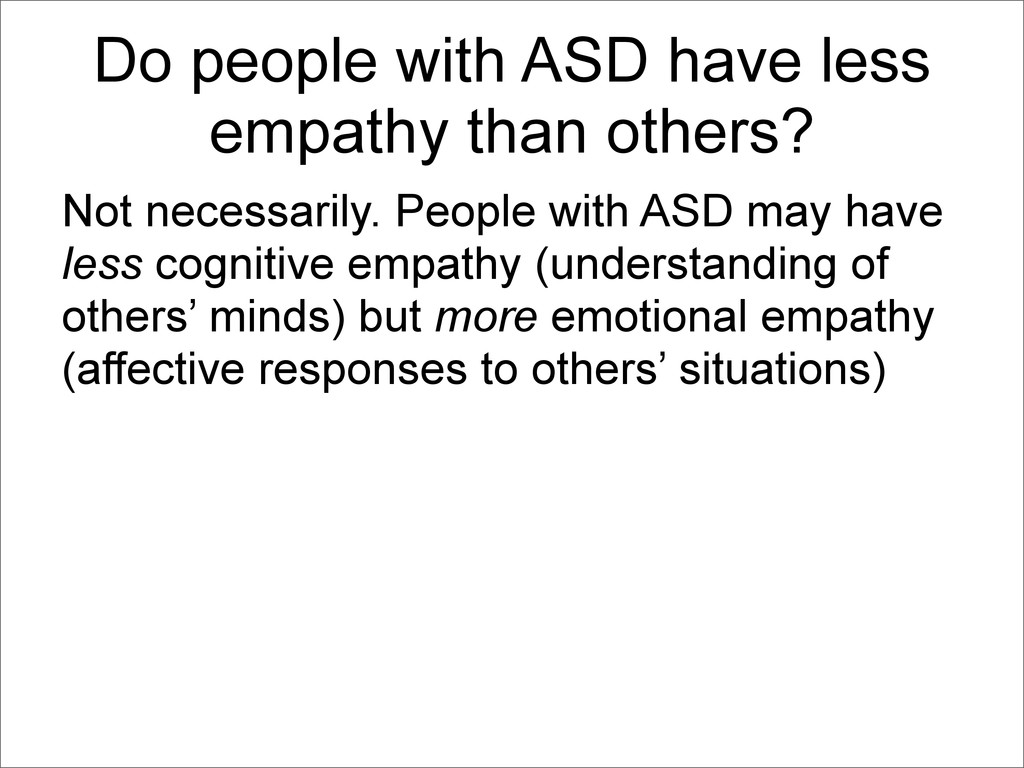
necessarily. People with ASD may have less cognitive empathy (understanding of others’ minds) but more emotional empathy (affective responses to others’ situations)
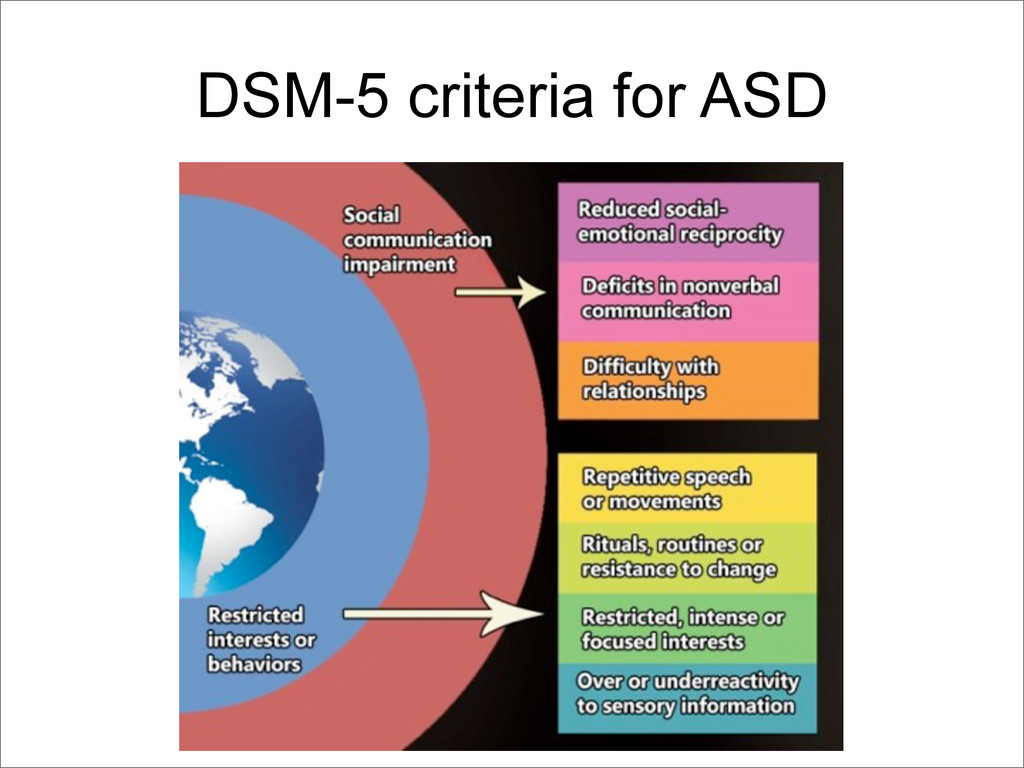
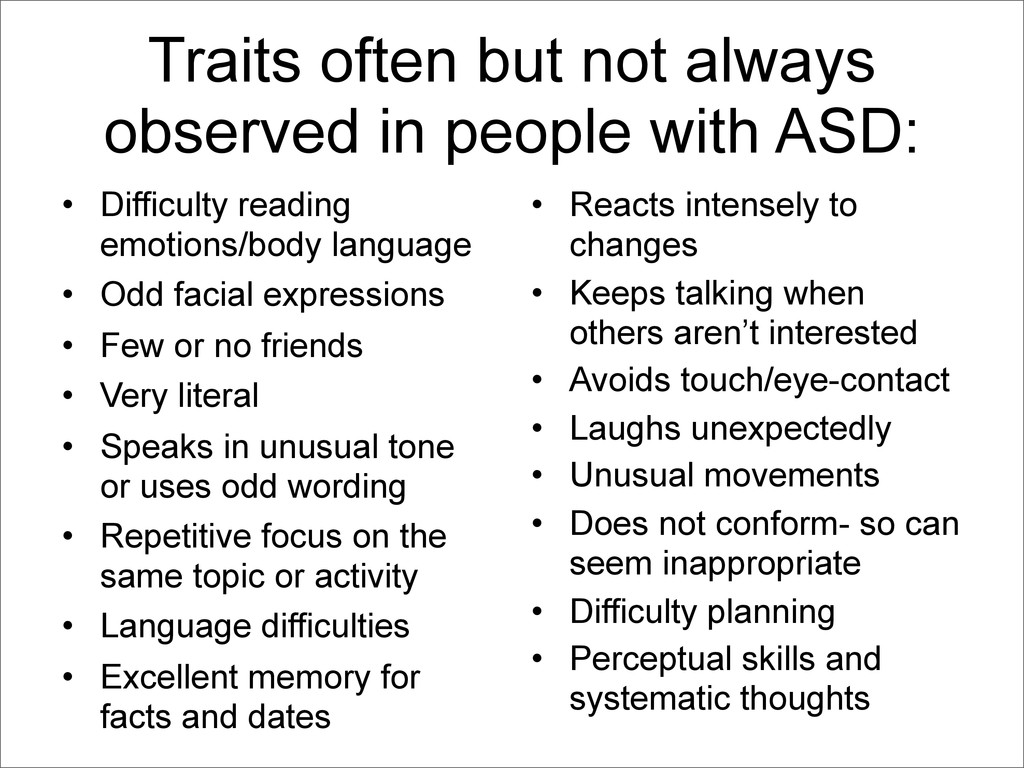
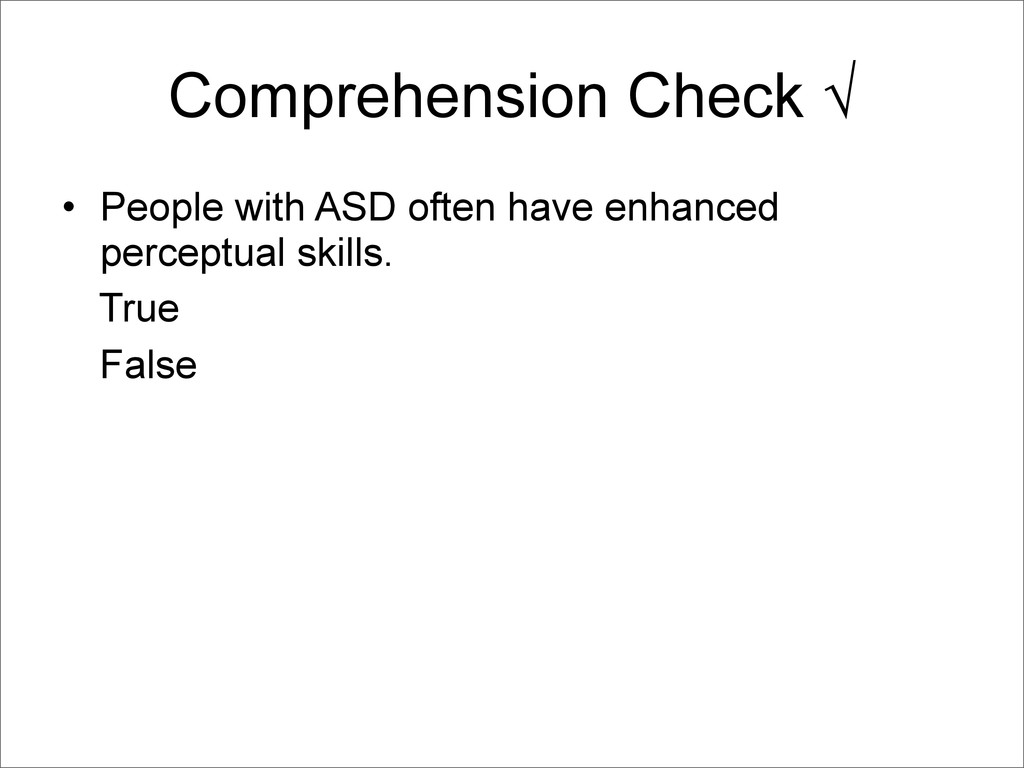
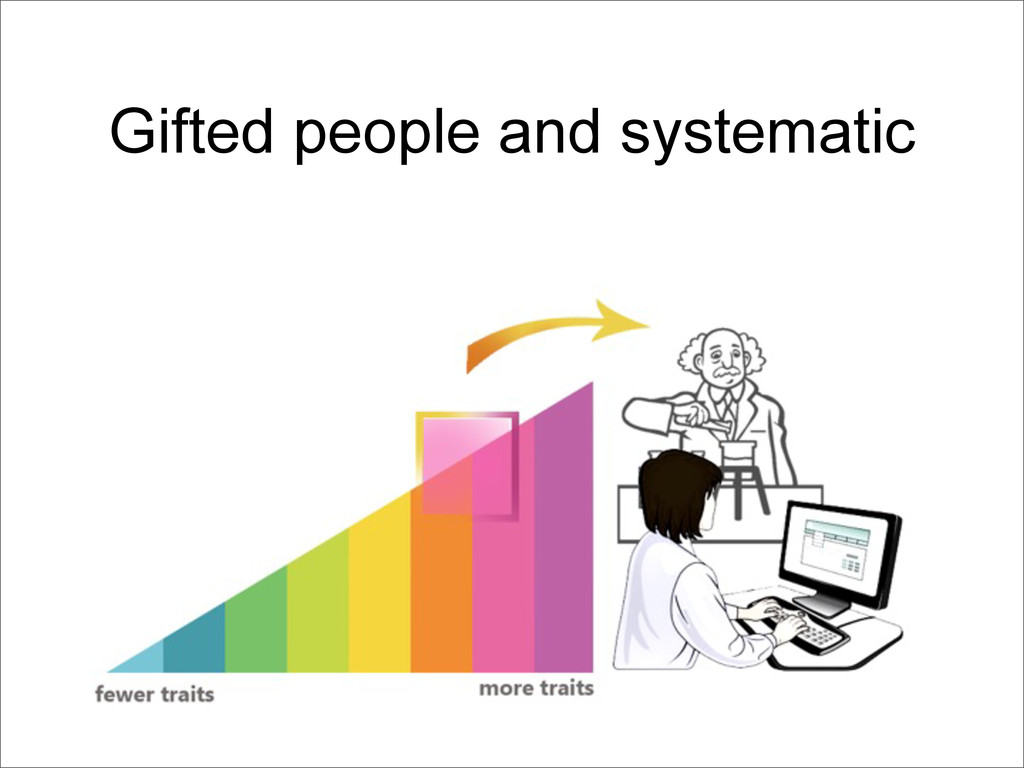
• Difficulty reading emotions/body language • Odd facial expressions • Few or no friends • Very literal • Speaks in unusual tone or uses odd wording • Repetitive focus on the same topic or activity • Language difficulties • Excellent memory for facts and dates • Reacts intensely to changes • Keeps talking when others aren’t interested • Avoids touch/eye-contact • Laughs unexpectedly • Unusual movements • Does not conform- so can seem inappropriate • Difficulty planning • Perceptual skills and systematic thoughts
is a parental interview often used to gain information about developmental history and everyday functioning • The Autism Diagnostic Observation Schedule (ADOS)uses semi-structured observations to measure symptoms
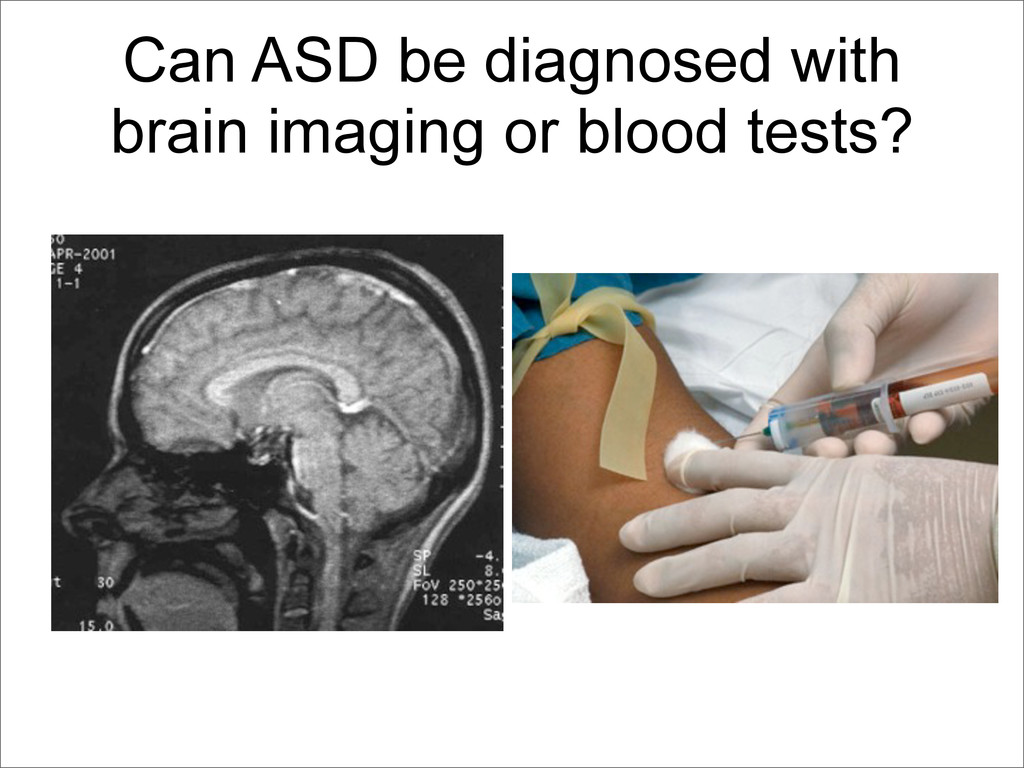
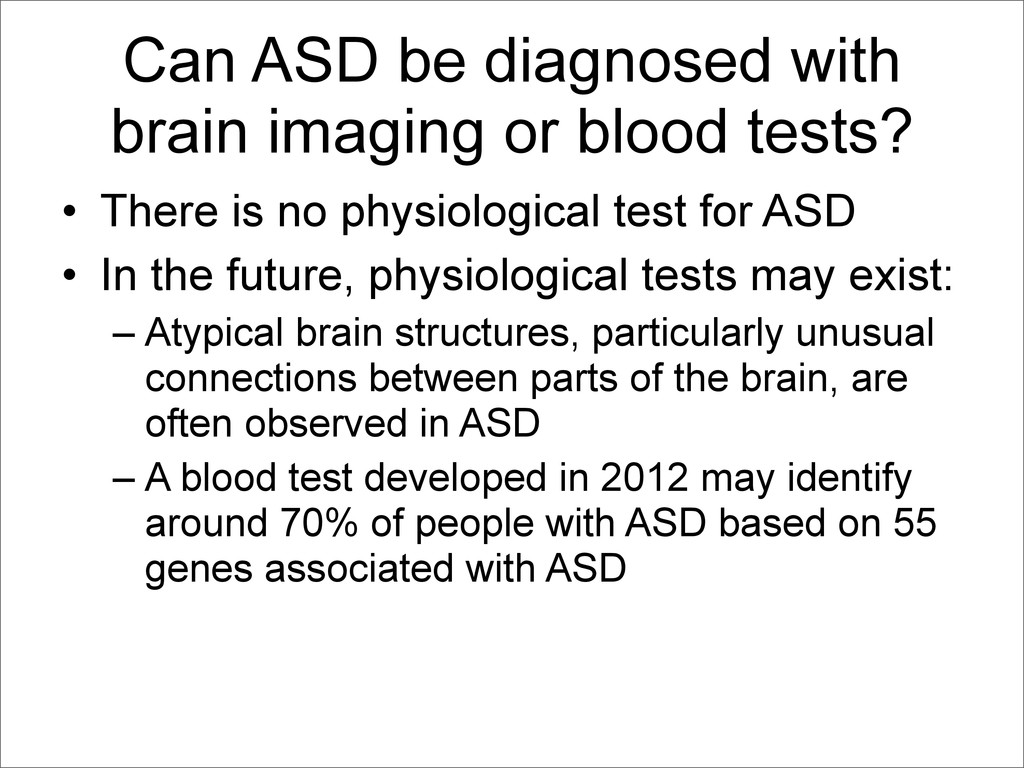
• There is no physiological test for ASD • In the future, physiological tests may exist: – Atypical brain structures, particularly unusual connections between parts of the brain, are often observed in ASD – A blood test developed in 2012 may identify around 70% of people with ASD based on 55 genes associated with ASD
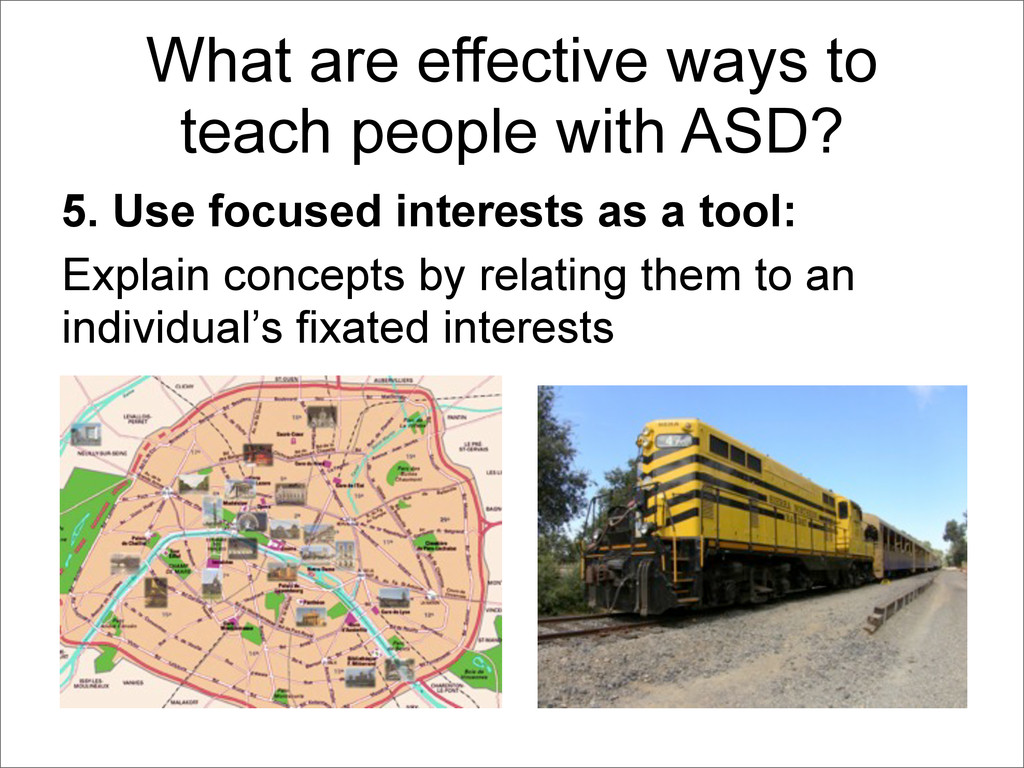
early intervention, can improve functioning tremendously • Interventions that combine behavioral and relationship-based approaches are particularly effective • Interventions should be tailored to developmental level and should make social interaction rewarding by building from the individual’s interests
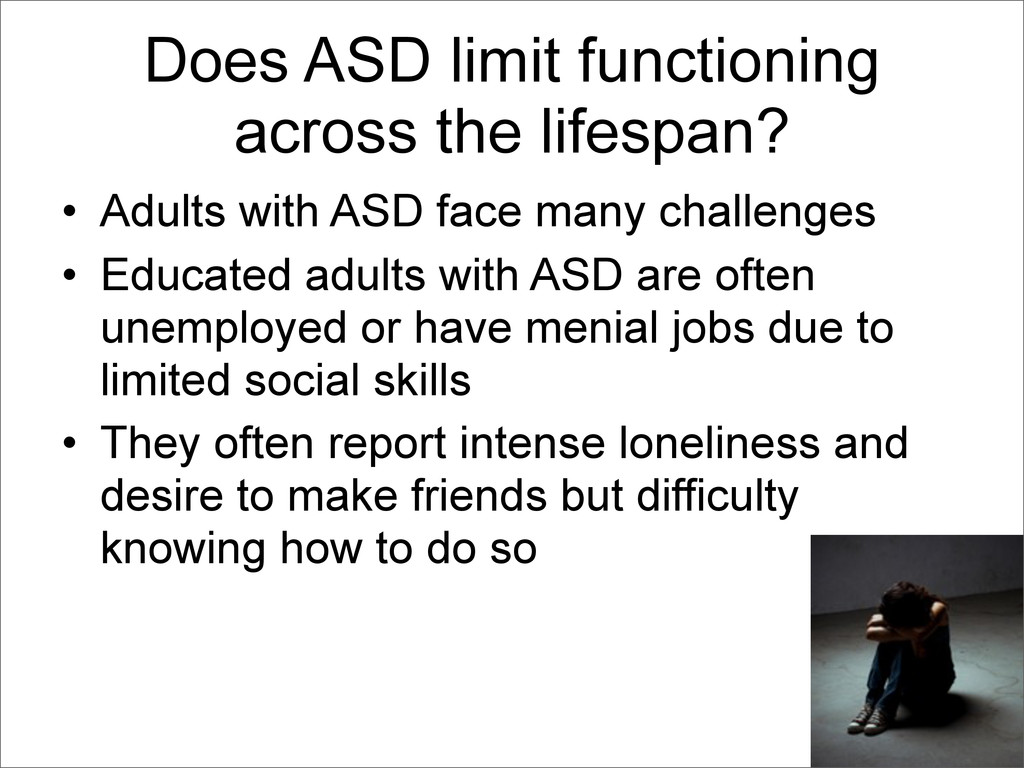
ASD face many challenges • Educated adults with ASD are often unemployed or have menial jobs due to limited social skills • They often report intense loneliness and desire to make friends but difficulty knowing how to do so
hand accounts (people with ASD): “I know that every time I try to make a friend or be a part of a group, some autistic trait pops up and seems to sabotage my efforts, no matter how hard I try to hold it back or try to control it.” Wayne “my sense of isolation and depression grew with time. I went deeper into my own world for some sense of reconciliation and self-comfort.” Lawson “And there is no place where I can hide. The ‘normals’ are everywhere, watching my every move.” Fred
Struggling to try to appear normal using learned strategies to mask difficulties • College and jobs are less structured than environments experienced by youths • Support services available to youths are often no longer available in adulthood • Adult relationships, such as romance, often involve reading subtle social cues • Difficulty finding jobs and loneliness • High risk for anxiety and depression
from Temple Grandin (professor with ASD) and Susan J. Moreno 1. Adapt to sensory difficulties: People with ASD may respond more or less (or both at different times) to sensory information like sounds, touch and sights
Adapt to sensory difficulties First hand accounts: “Learning how the senses of each individual with autism function is a crucial key toward understanding this person.” O’Neill “Rocking and spinning [would] shut out the world when I became overloaded with too much noise.” Grandin
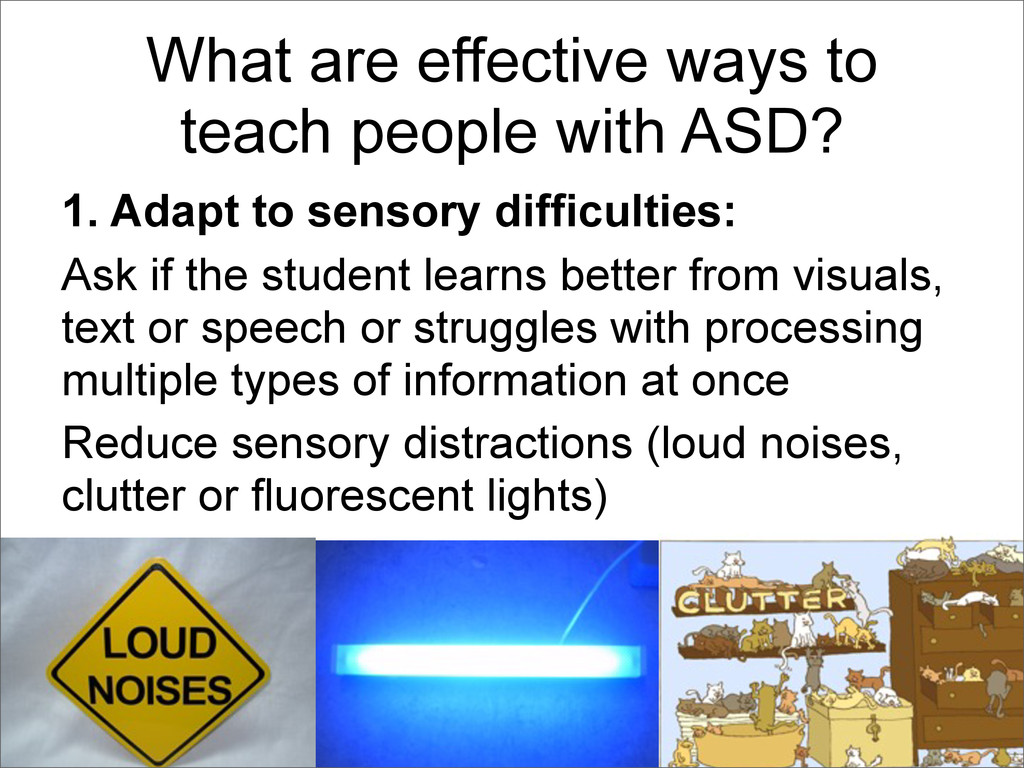
Adapt to sensory difficulties: Ask if the student learns better from visuals, text or speech or struggles with processing multiple types of information at once Reduce sensory distractions (loud noises, clutter or fluorescent lights)
Use writing and visuals as a tool: Provide alternatives to long strings of verbal instructions. Written or picture instructions allow people to process at their own pace Use written or drawing dialogues to de- escalate situations and enhance comprehension: Ask students to write down or draw repetitive questions or arguments
Make teaching materials clear: Use concise instructions Provide visuals and hands-on activities Explain non-literal language like metaphors or sarcasm when necessary Provide examples of concepts across situations to encourage generalization Break tasks down into smaller steps and monitor progress
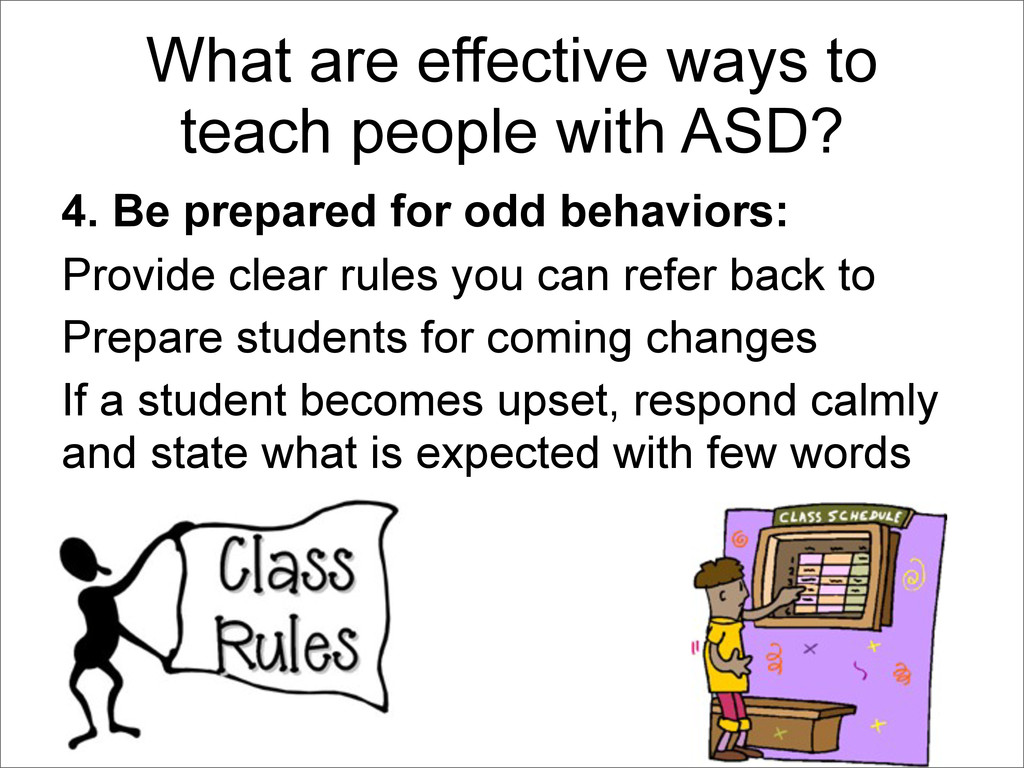
Be prepared for odd behaviors: Provide clear rules you can refer back to Prepare students for coming changes If a student becomes upset, respond calmly and state what is expected with few words
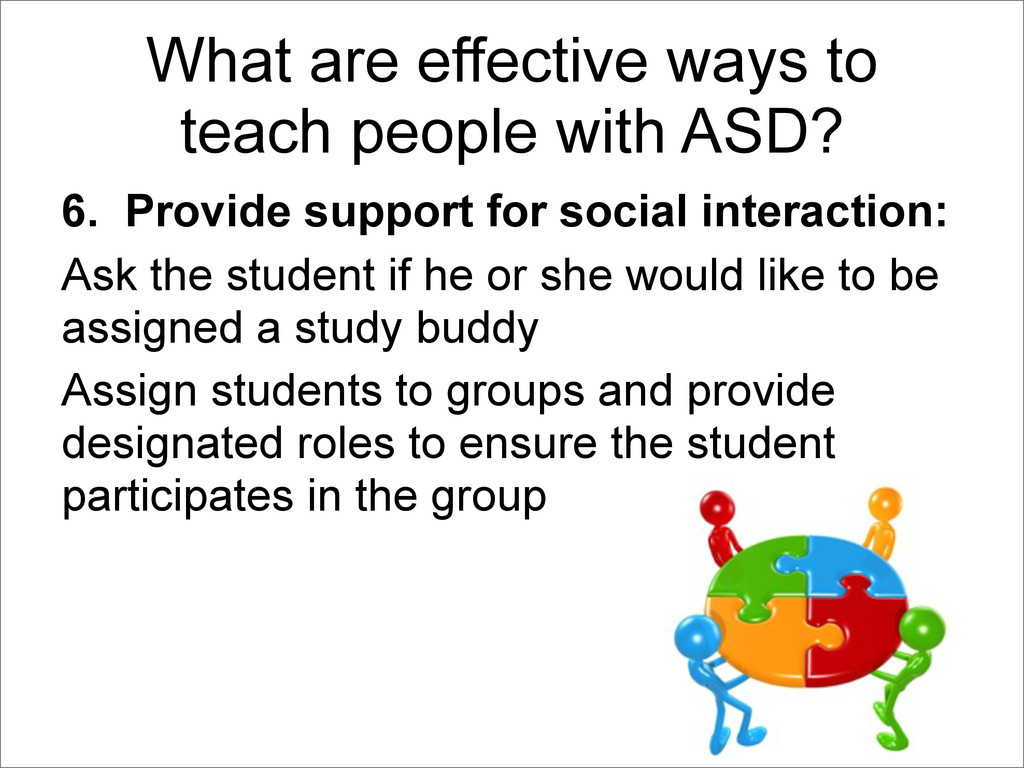
Provide support for social interaction: Ask the student if he or she would like to be assigned a study buddy Assign students to groups and provide designated roles to ensure the student participates in the group
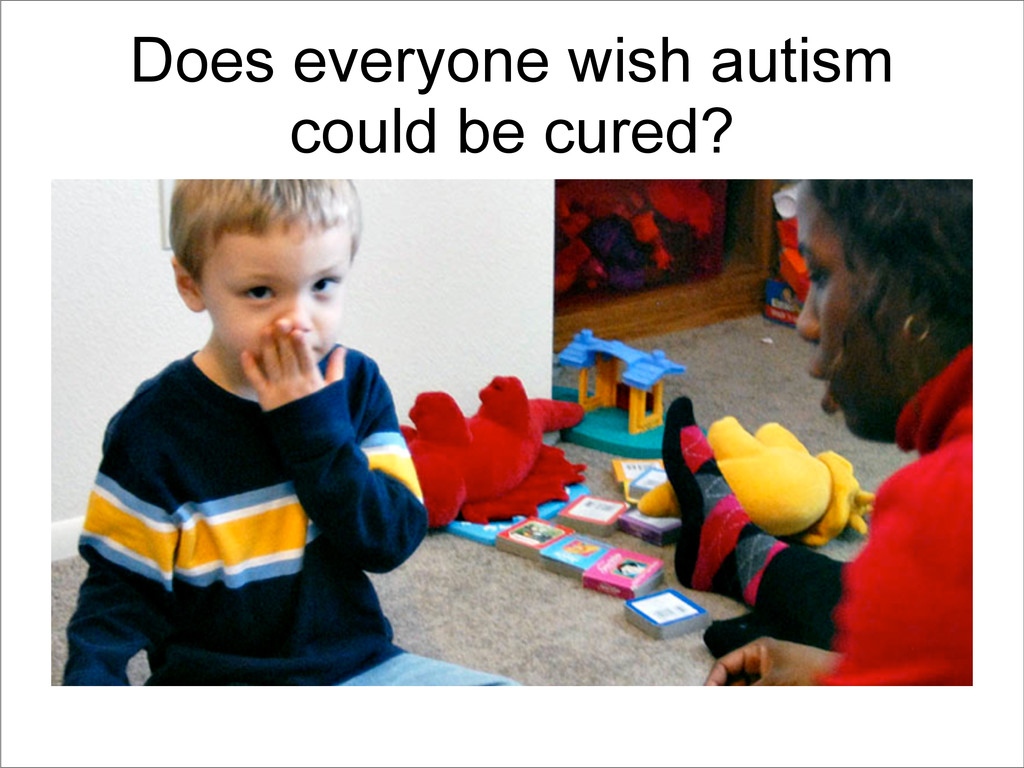
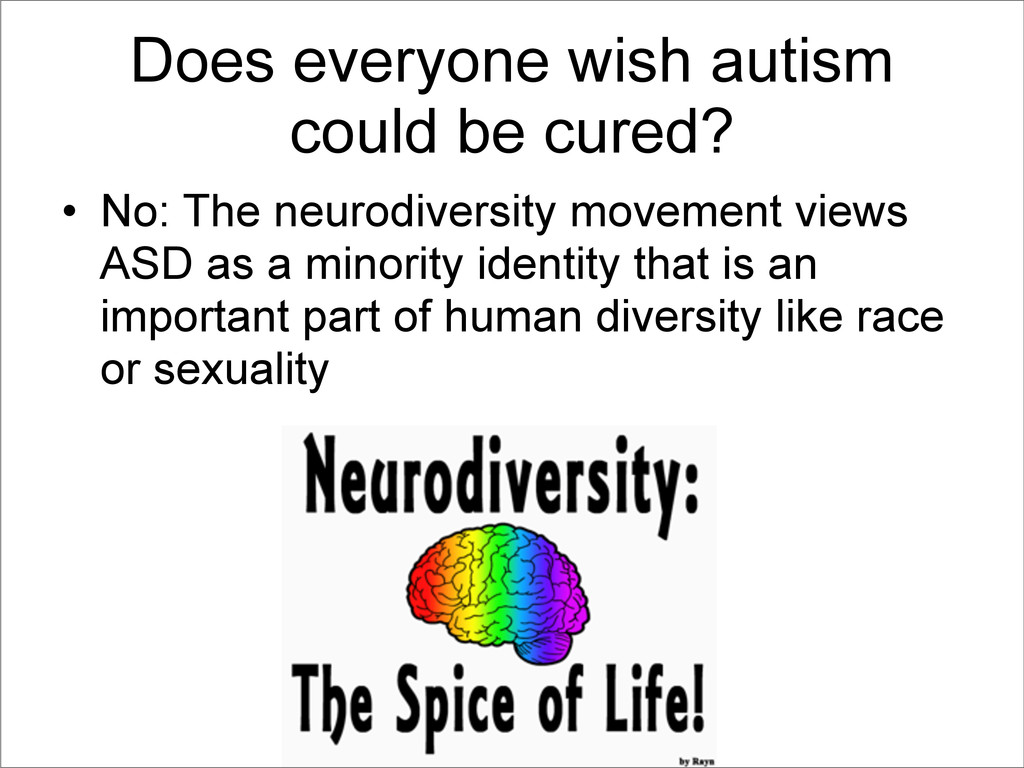
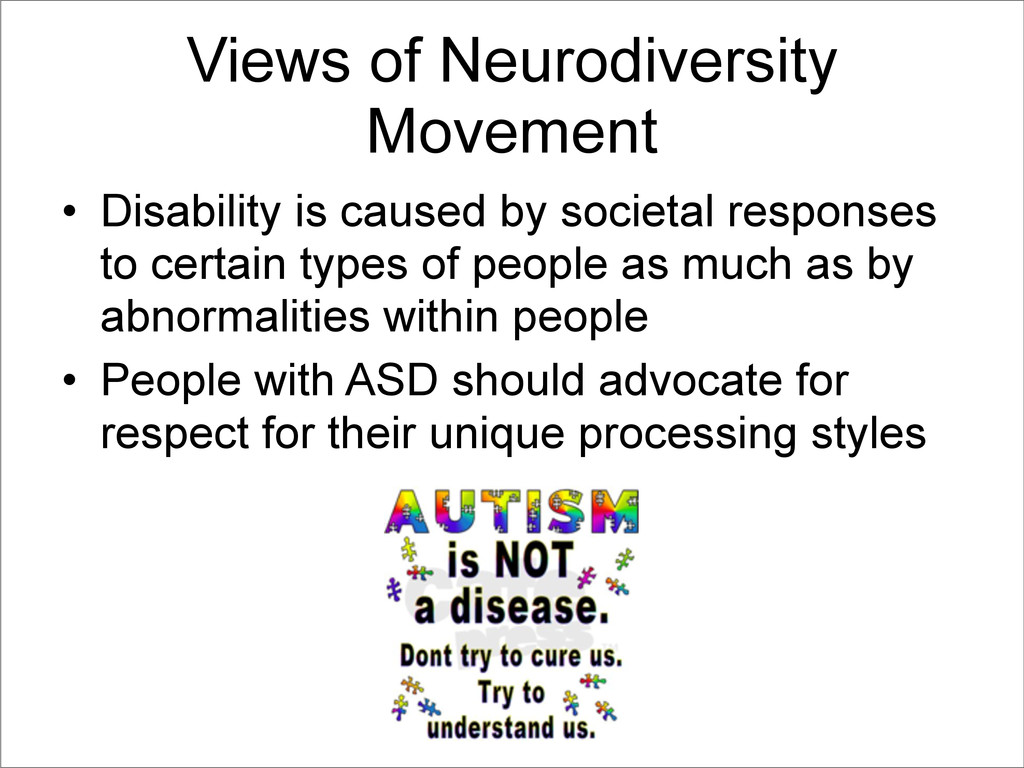
responses to certain types of people as much as by abnormalities within people • People with ASD should advocate for respect for their unique processing styles
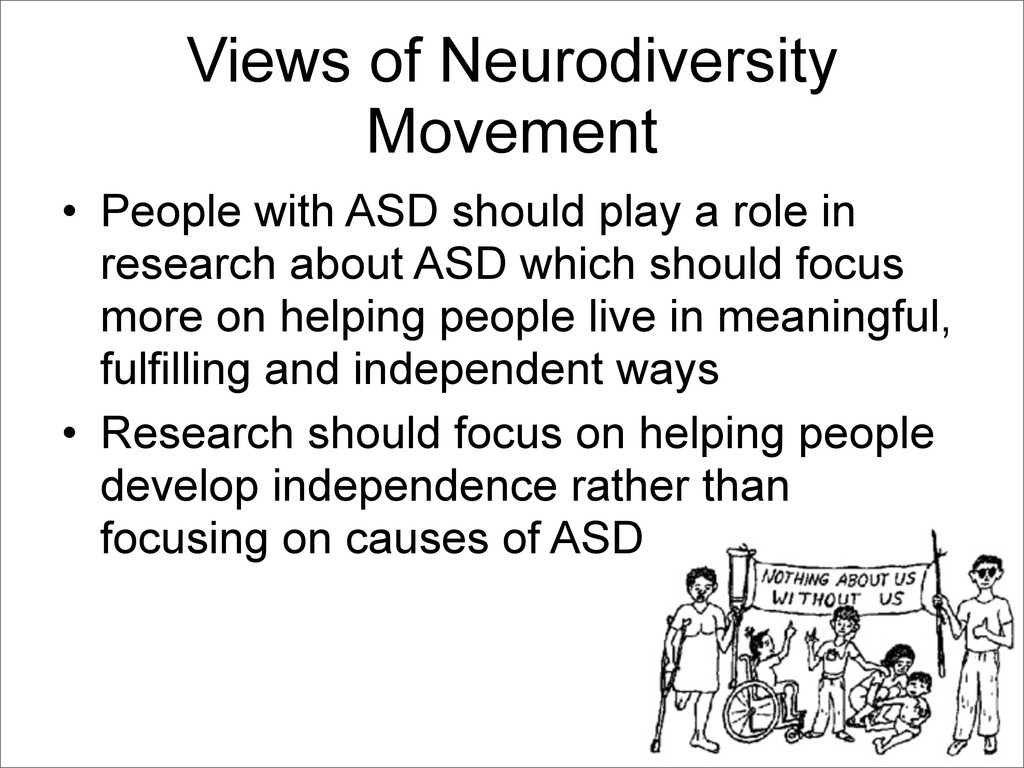
a role in research about ASD which should focus more on helping people live in meaningful, fulfilling and independent ways • Research should focus on helping people develop independence rather than focusing on causes of ASD
numbers of people with ASD attend college • Young adults with ASD are seeking jobs and careers in diverse fields • Workplaces are becoming better adapted to the needs of workers with ASD • People with ASD and their families are playing a greater role in national research initiatives
Accessibility at your campus helps students with ASD succeed in college! • If you are interested in mentoring or tutoring students with ASD, please contact the Office of Student Accessibility • NOW: On to the post-test!


 fmarot
 hiola
 ainischool
 arnoknobbe
 robintux
 yatabe
 signer
 terazawa
 2720japanoke
 terasawat
 pawan_pharm
 dragon2
 bcantrill
 mza
 techseoconnect
 portentint
 afnizarnur
 rkendrick25
 rabernat
 asonas
 morganepeng
 bermonpainter
 destraynor
 reverentgeek