Upgrade to Pro — share decks privately, control downloads, hide ads and more …

Tailoring Remote Healthcare Technology 
to Meet...

Tailoring Remote Healthcare Technology 
to Meet the Needs and Privacy Expectations 
of Older Adults

Slides for my doctoral dissertation defence in September 2025. This research focused on understanding the privacy needs and expectations of older adults, seniors, as they pertain to remote healthcare technology. Outcomes from this work include recommendations and a design toolkit for tailoring technology to support the unique needs of this demographic.

Avatar for Daniela Napoli

Daniela Napoli

October 07, 2026

More Decks by Daniela Napoli

Other Decks in Research

Transcript

  1. Tailoring Remote Healthcare Technology to Meet the Needs and Privacy

    Expectations of Older Adults Daniela Napoli Carleton University School of Computer Science
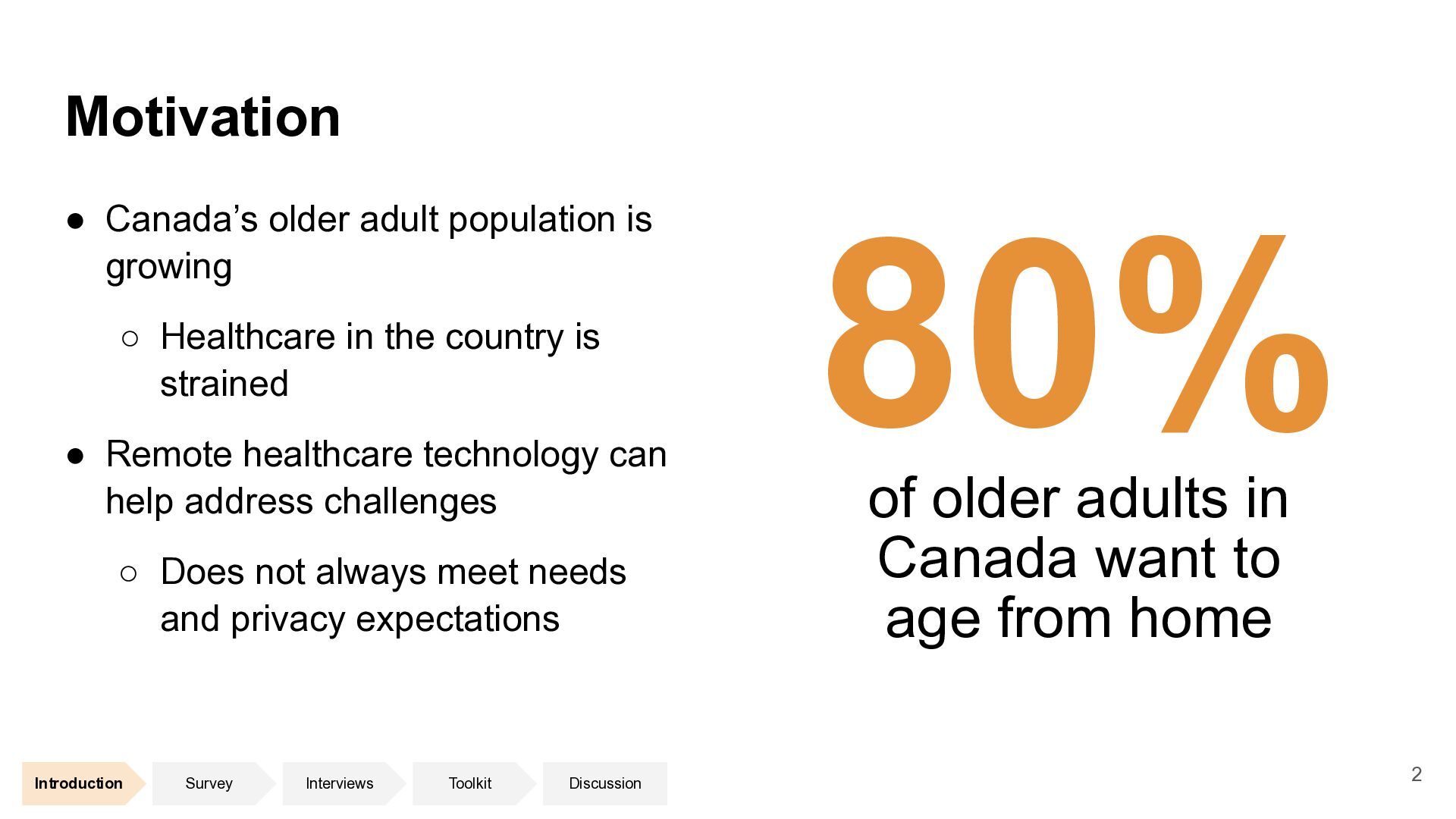
  2. Motivation • Canada’s older adult population is growing ◦ Healthcare

    in the country is strained • Remote healthcare technology can help address challenges ◦ Does not always meet needs and privacy expectations Introduction Survey Interviews Toolkit Discussion 80% of older adults in Canada want to age from home 2
  3. Contributions to HCI Uncovered additional contextual factors impacting older adults’

    needs Applied privacy vignettes for qualitative privacy research Created and assessed design toolkit to support development of remote healthcare technology Explored two additional information flows Introduction Survey Interviews Toolkit Discussion 4
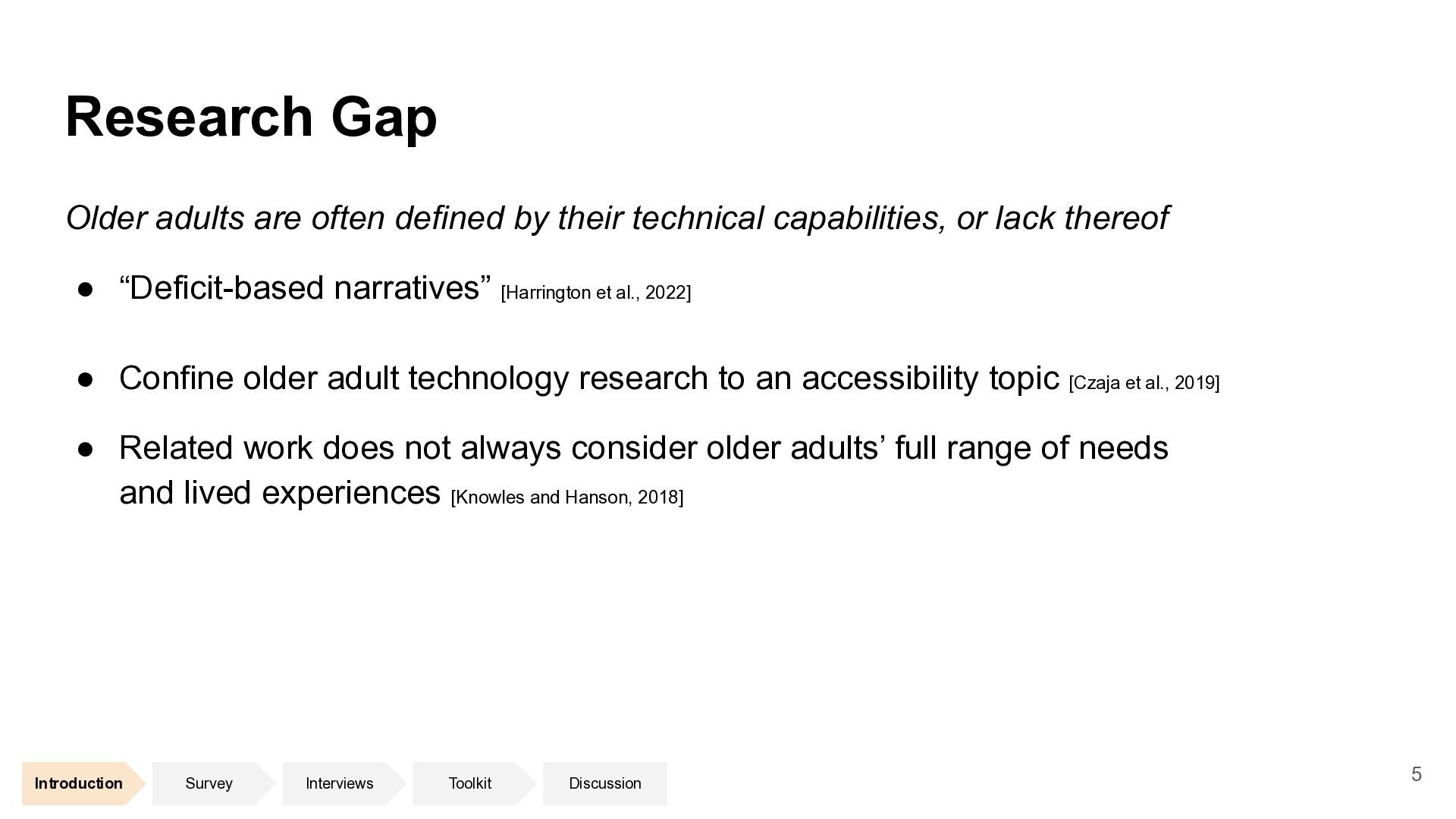
  4. Research Gap Older adults are often defined by their technical

    capabilities, or lack thereof • “Deficit-based narratives” [Harrington et al., 2022] • Confine older adult technology research to an accessibility topic [Czaja et al., 2019] • Related work does not always consider older adults’ full range of needs and lived experiences [Knowles and Hanson, 2018] Introduction Survey Interviews Toolkit Discussion 5
  5. Underlying Theoretical Framework Contextual Integrity Framework (CI) [Nissenbaum, 2004] •

    Perspectives are contextual and impacted by personal values, societal rules, and norms • Derivation and generation information flows explore beyond traditional CI [Bloom and Ministero, 2023] The device shares your vital signs data with a healthcare provider sender subject data receiver to help you manage your chronic condition. transmission principle Introduction Survey Interviews Toolkit Discussion 6
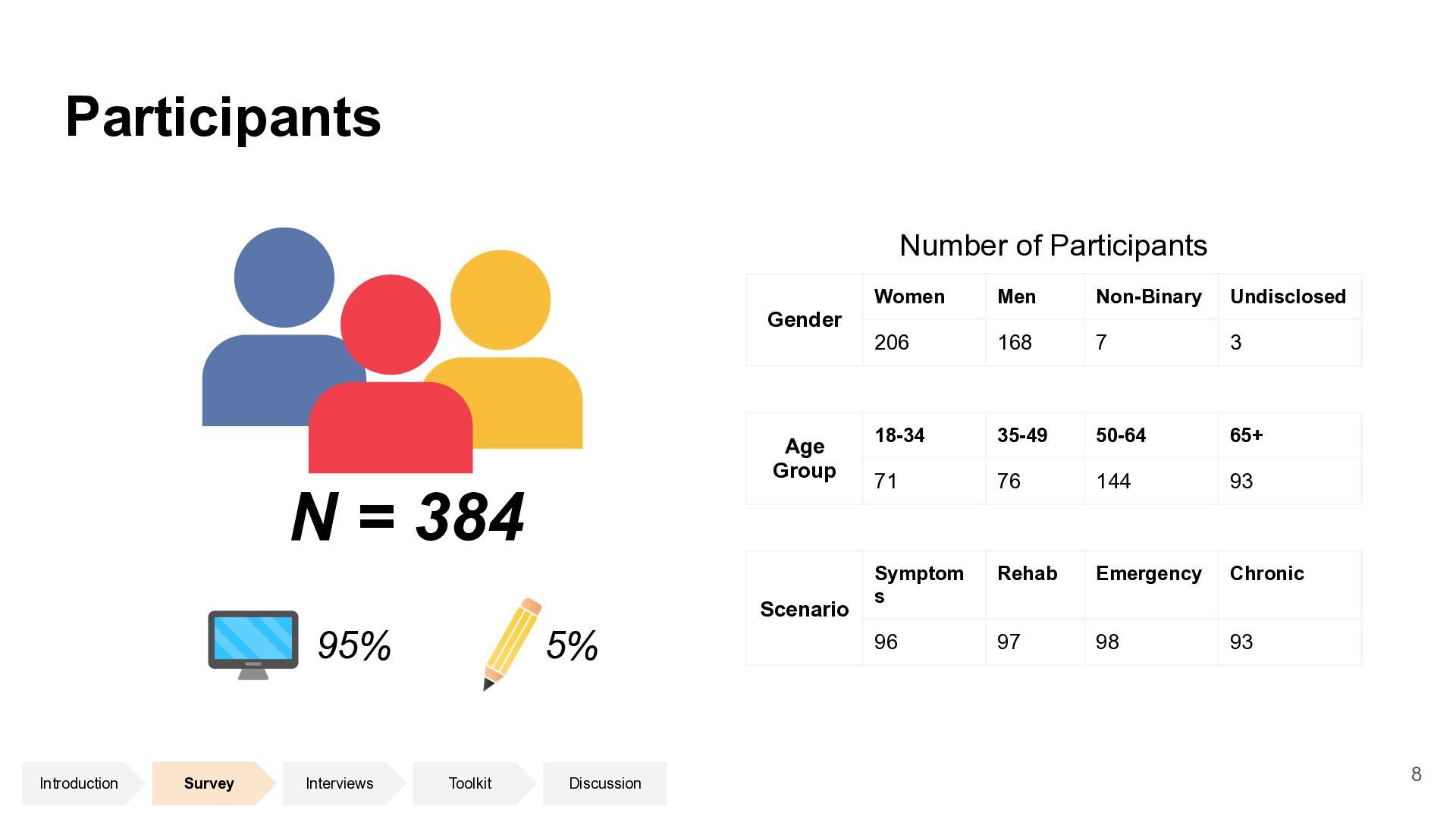
  6. Participants Number of Participants Gender Age Group N = 384

    Scenario 95% Introduction Survey Interviews 5% Toolkit Discussion Women Men Non-Binary Undisclosed 206 168 7 3 18-34 35-49 50-64 65+ 71 76 144 93 Symptom s Rehab Emergency Chronic 96 97 98 93 8
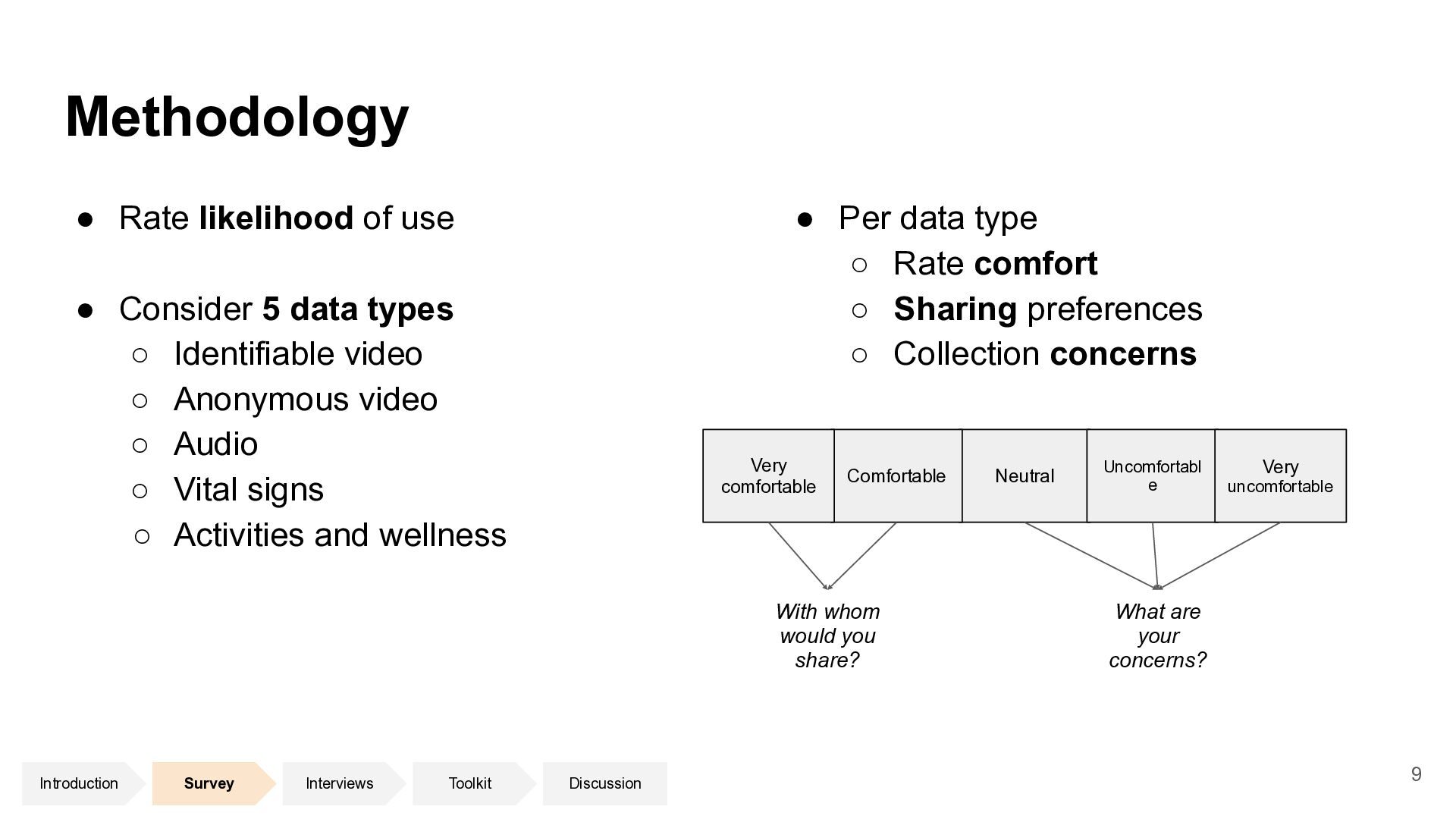
  7. Methodology • Rate likelihood of use • Per data type

    ◦ Rate comfort ◦ Sharing preferences ◦ Collection concerns • Consider 5 data types ◦ Identifiable video ◦ Anonymous video ◦ Audio ◦ Vital signs ◦ Activities and wellness Very comfortable Comfortable With whom would you share? Introduction Survey Interviews Toolkit Discussion Neutral Uncomfortabl e Very uncomfortable What are your concerns? 9
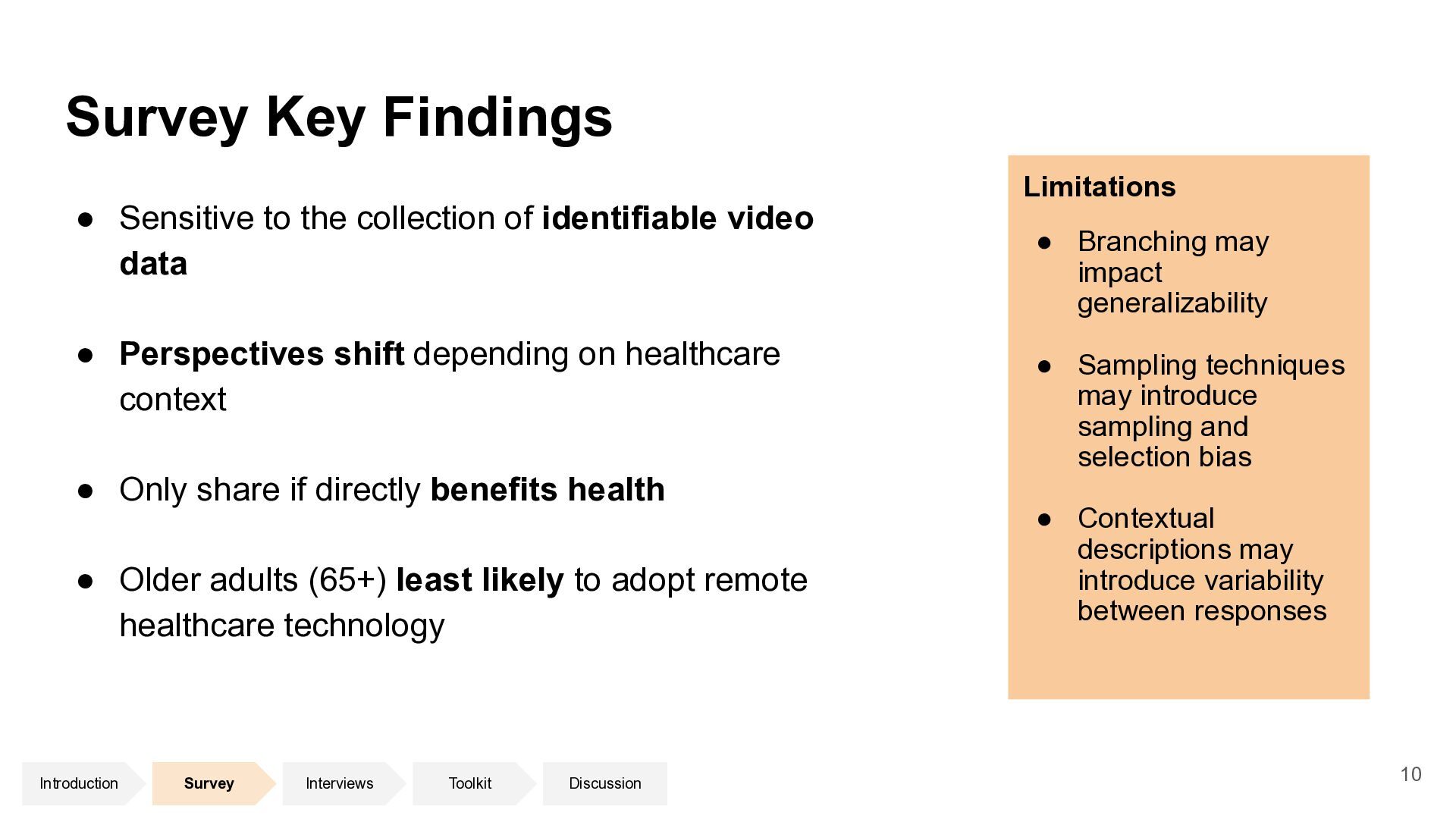
  8. Survey Key Findings • Sensitive to the collection of identifiable

    video data • Perspectives shift depending on healthcare context • Only share if directly benefits health • Older adults (65+) least likely to adopt remote healthcare technology Introduction Survey Interviews Toolkit Discussion Limitations • Branching may impact generalizability • Sampling techniques may introduce sampling and selection bias • Contextual descriptions may introduce variability between responses 10
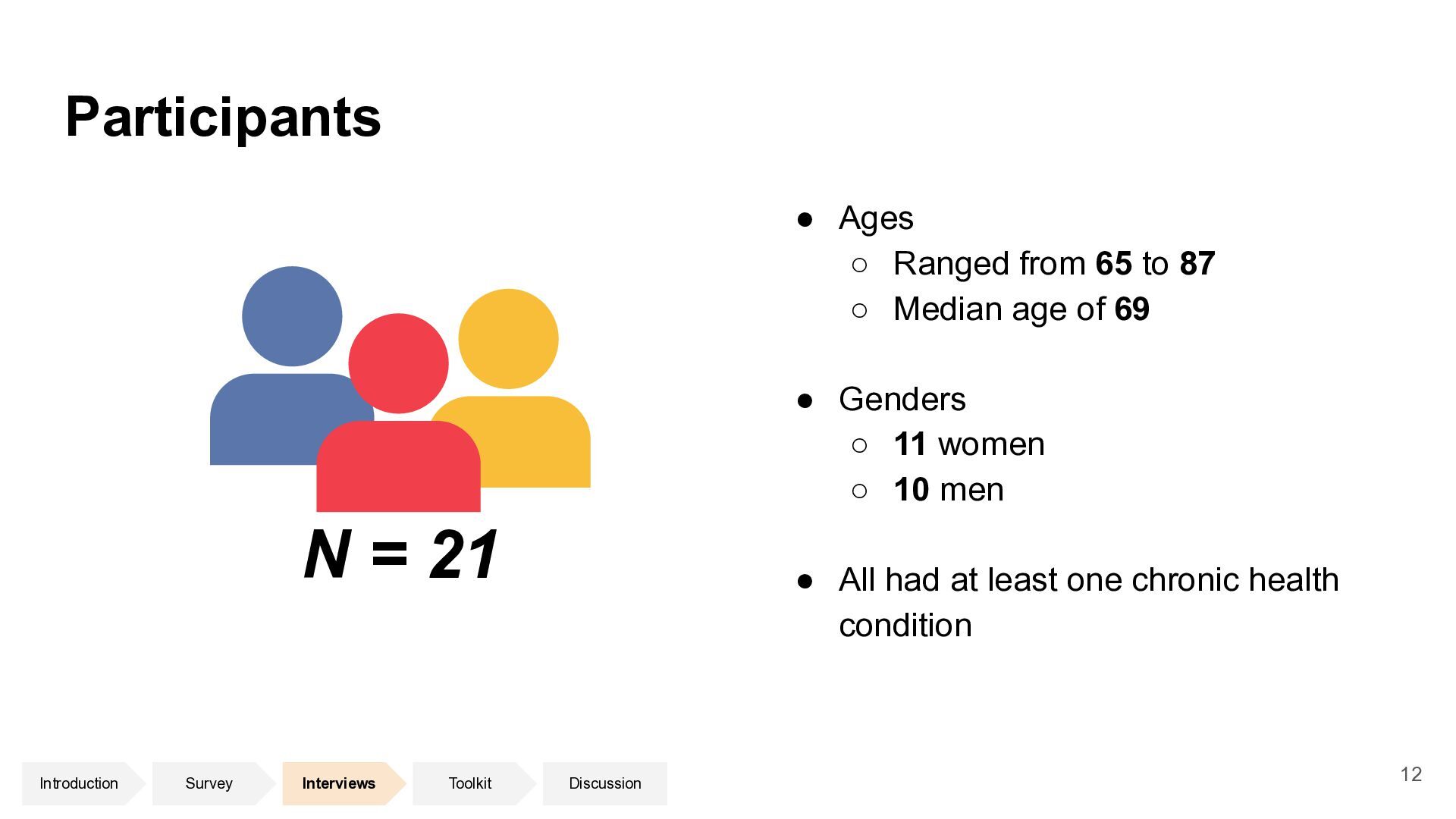
  9. Participants • Ages ◦ Ranged from 65 to 87 ◦

    Median age of 69 • Genders ◦ 11 women ◦ 10 men N = 21 Introduction Survey Interviews Toolkit • All had at least one chronic health condition Discussion 12
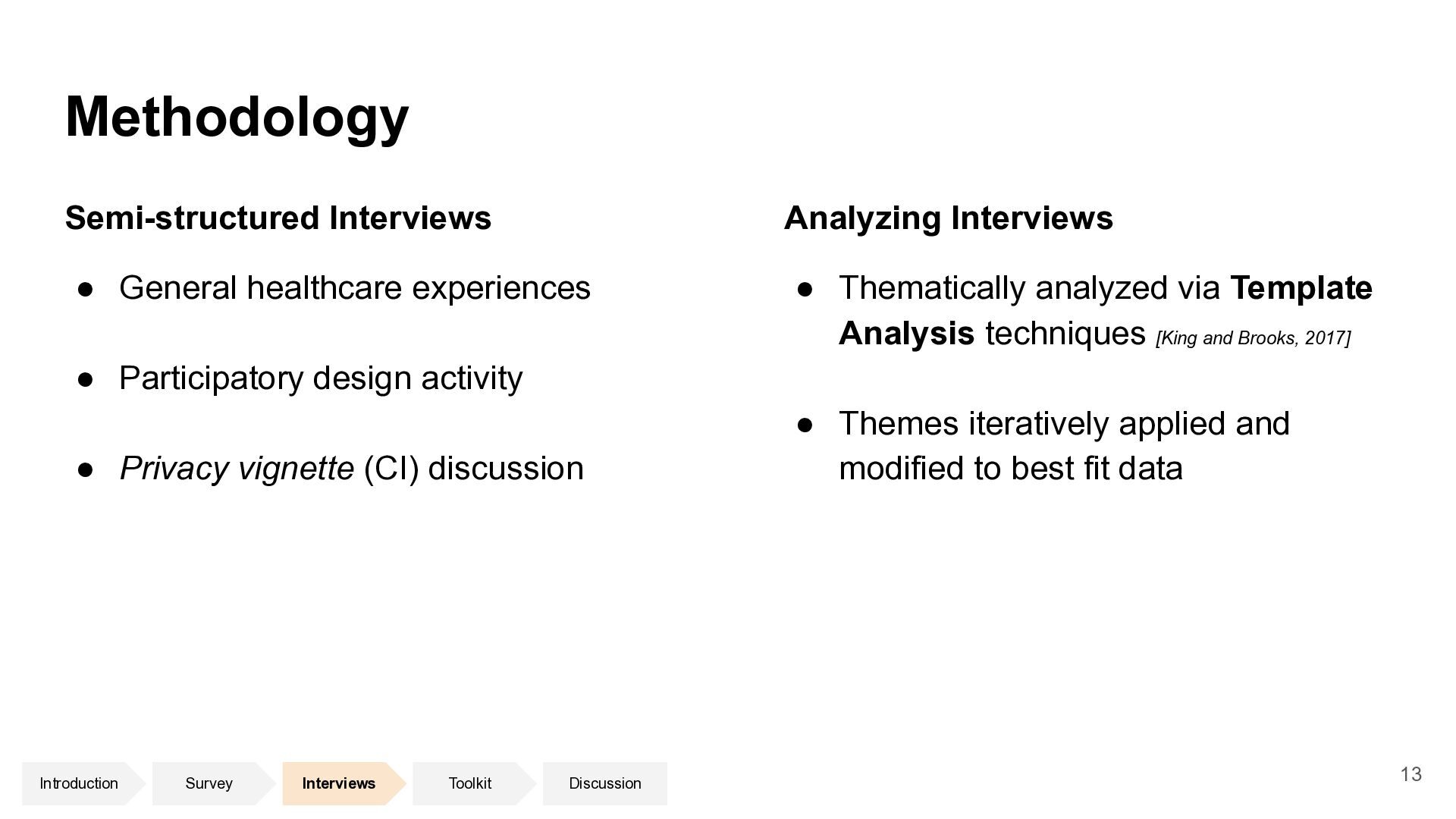
  10. Methodology Semi-structured Interviews Analyzing Interviews • General healthcare experiences •

    Thematically analyzed via Template Analysis techniques [King and Brooks, 2017] • Participatory design activity • Privacy vignette (CI) discussion Introduction Survey Interviews Toolkit Discussion • Themes iteratively applied and modified to best fit data 13
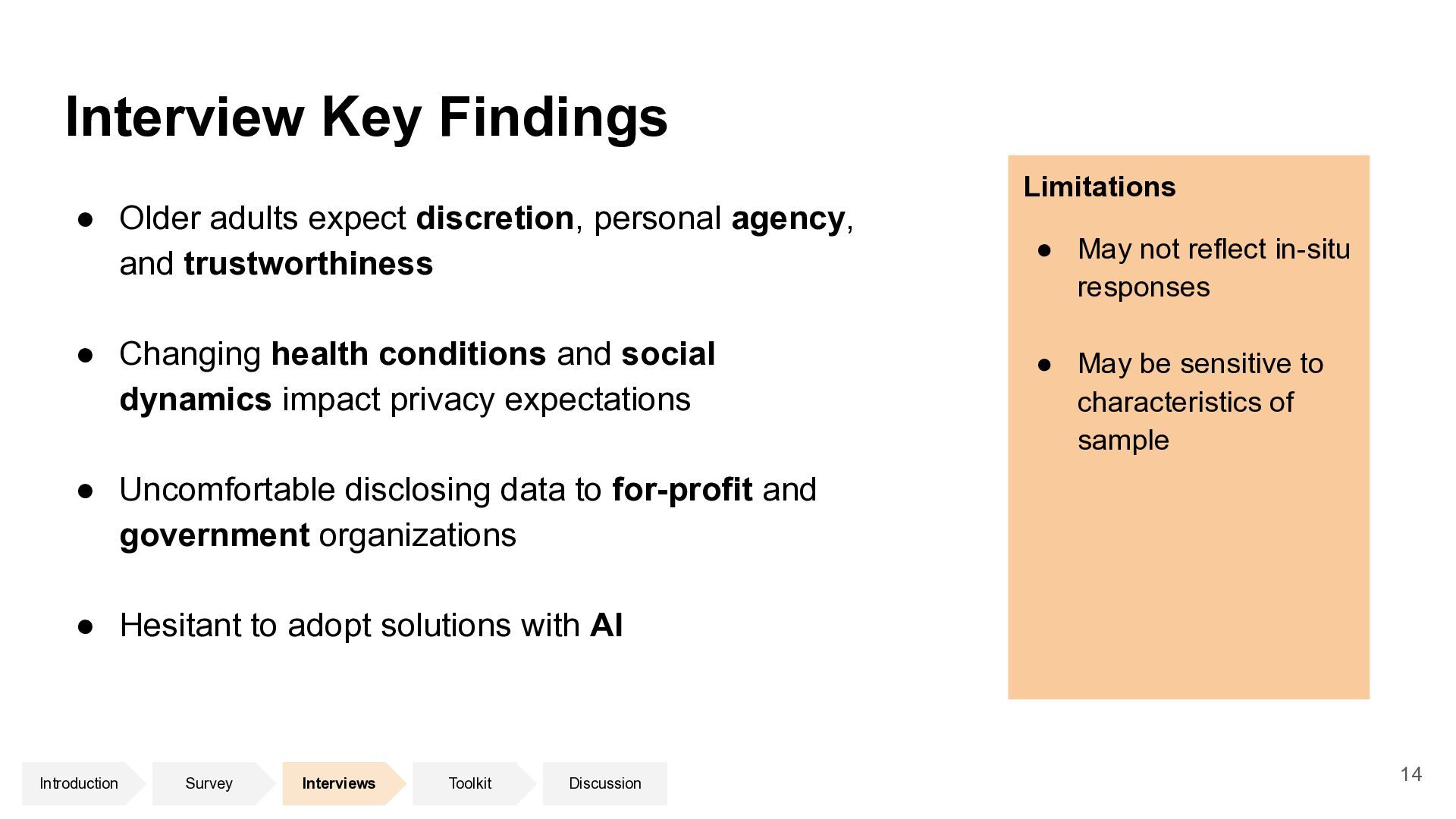
  11. Interview Key Findings • Older adults expect discretion, personal agency,

    and trustworthiness • Changing health conditions and social dynamics impact privacy expectations Limitations • May not reflect in-situ responses • May be sensitive to characteristics of sample • Uncomfortable disclosing data to for-profit and government organizations • Hesitant to adopt solutions with AI Introduction Survey Interviews Toolkit Discussion 14
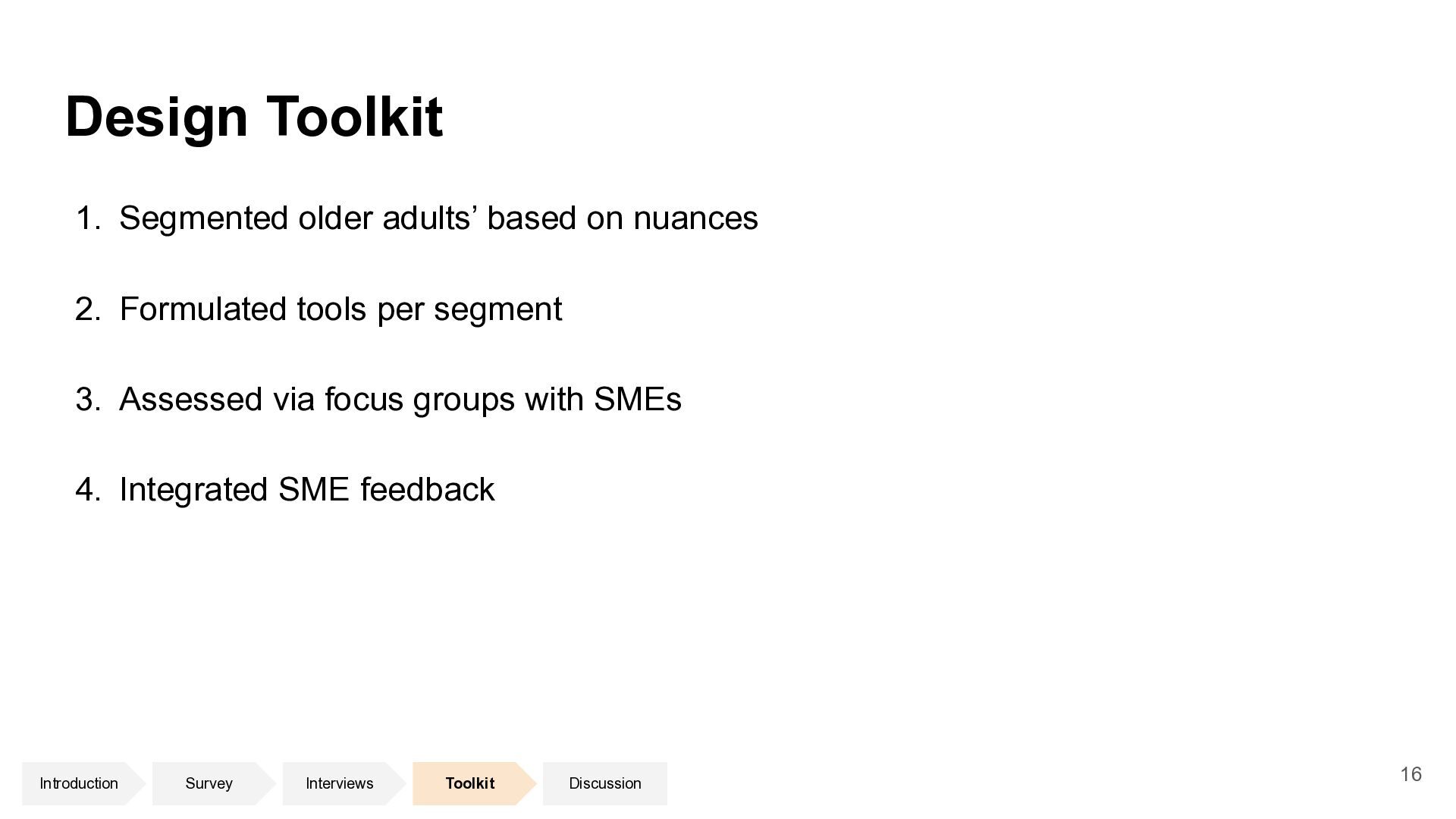
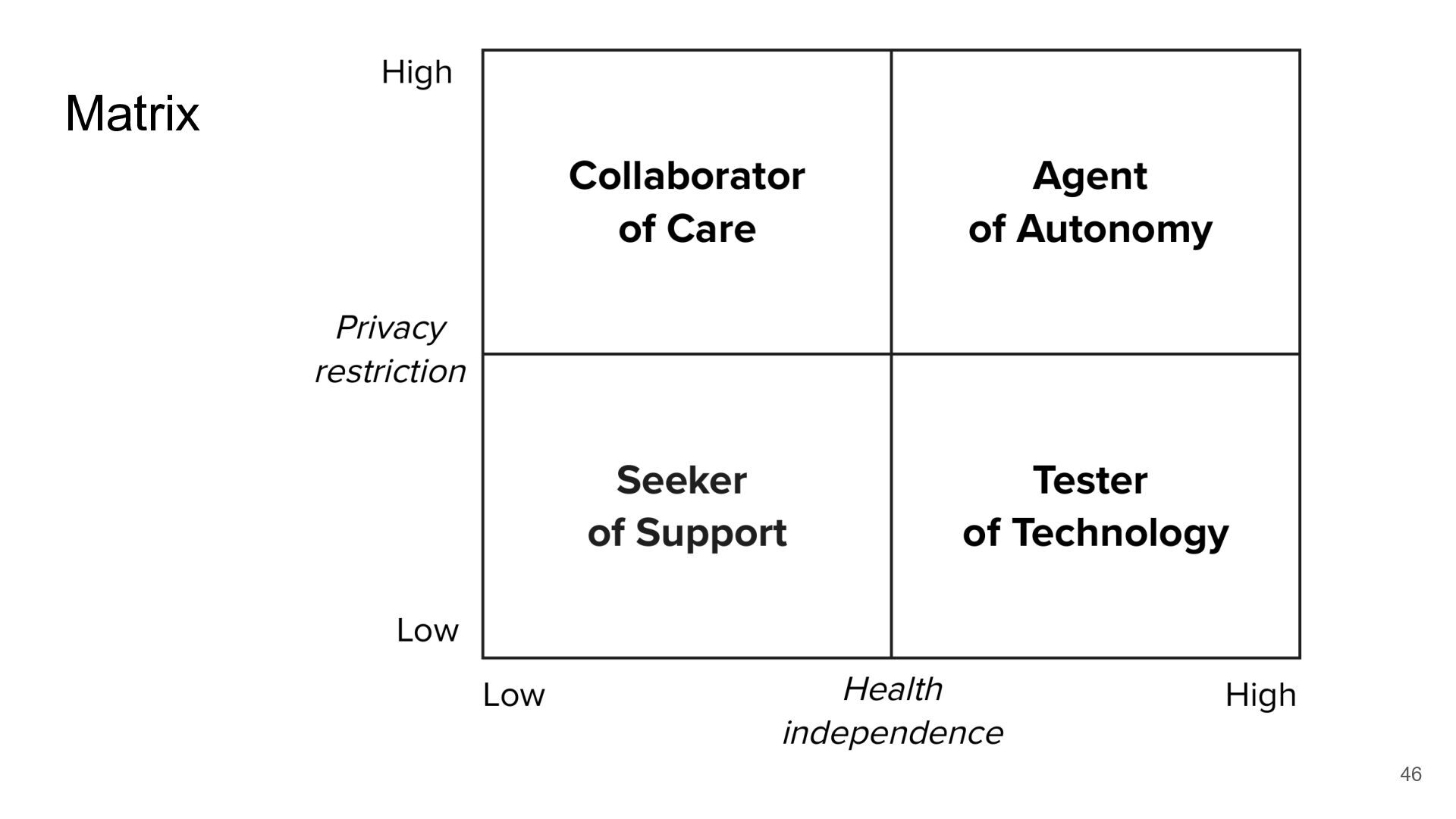
  12. Design Toolkit 1. Segmented older adults’ based on nuances 2.

    Formulated tools per segment 3. Assessed via focus groups with SMEs 4. Integrated SME feedback Introduction Survey Interviews Toolkit Discussion 16
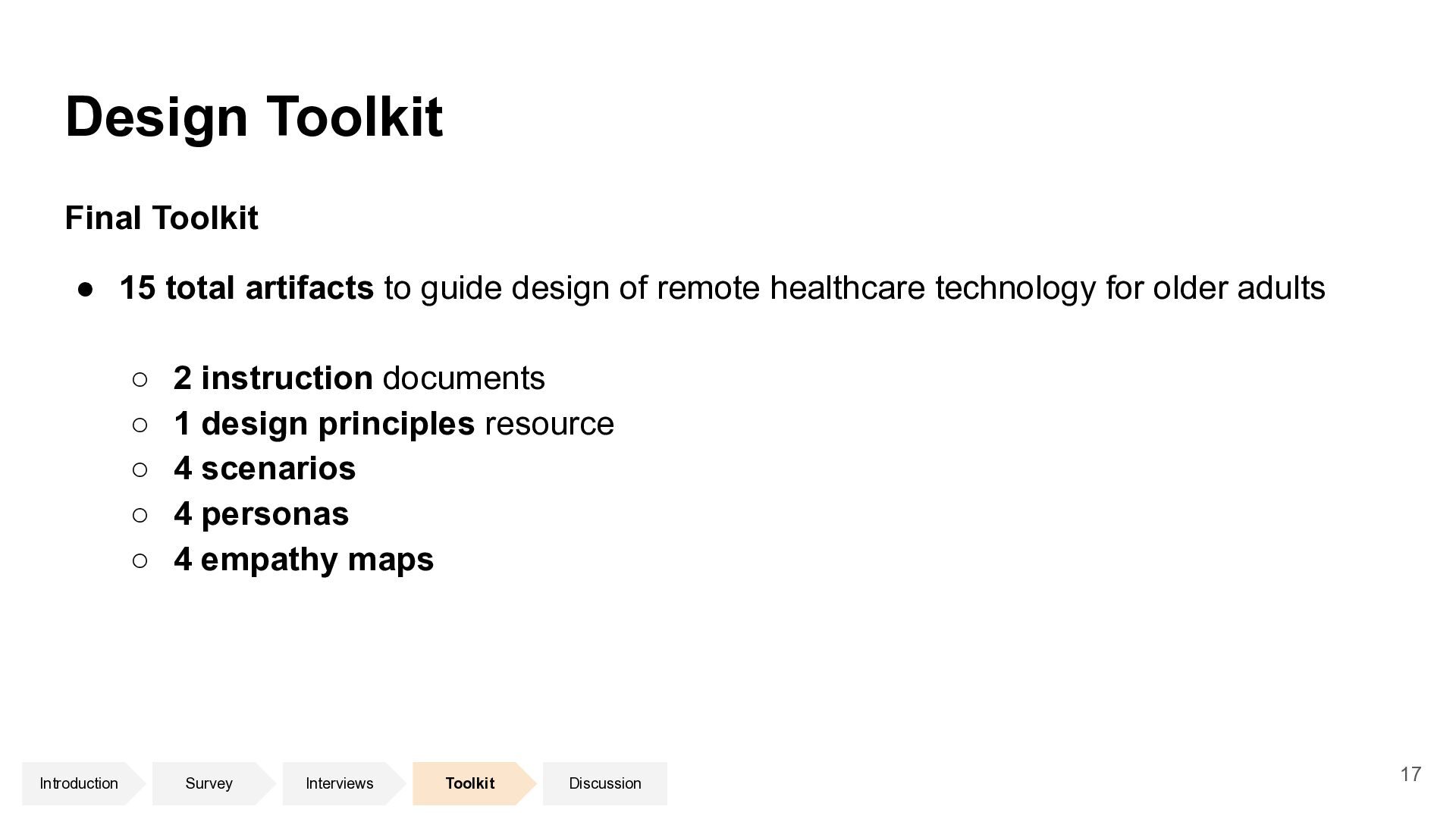
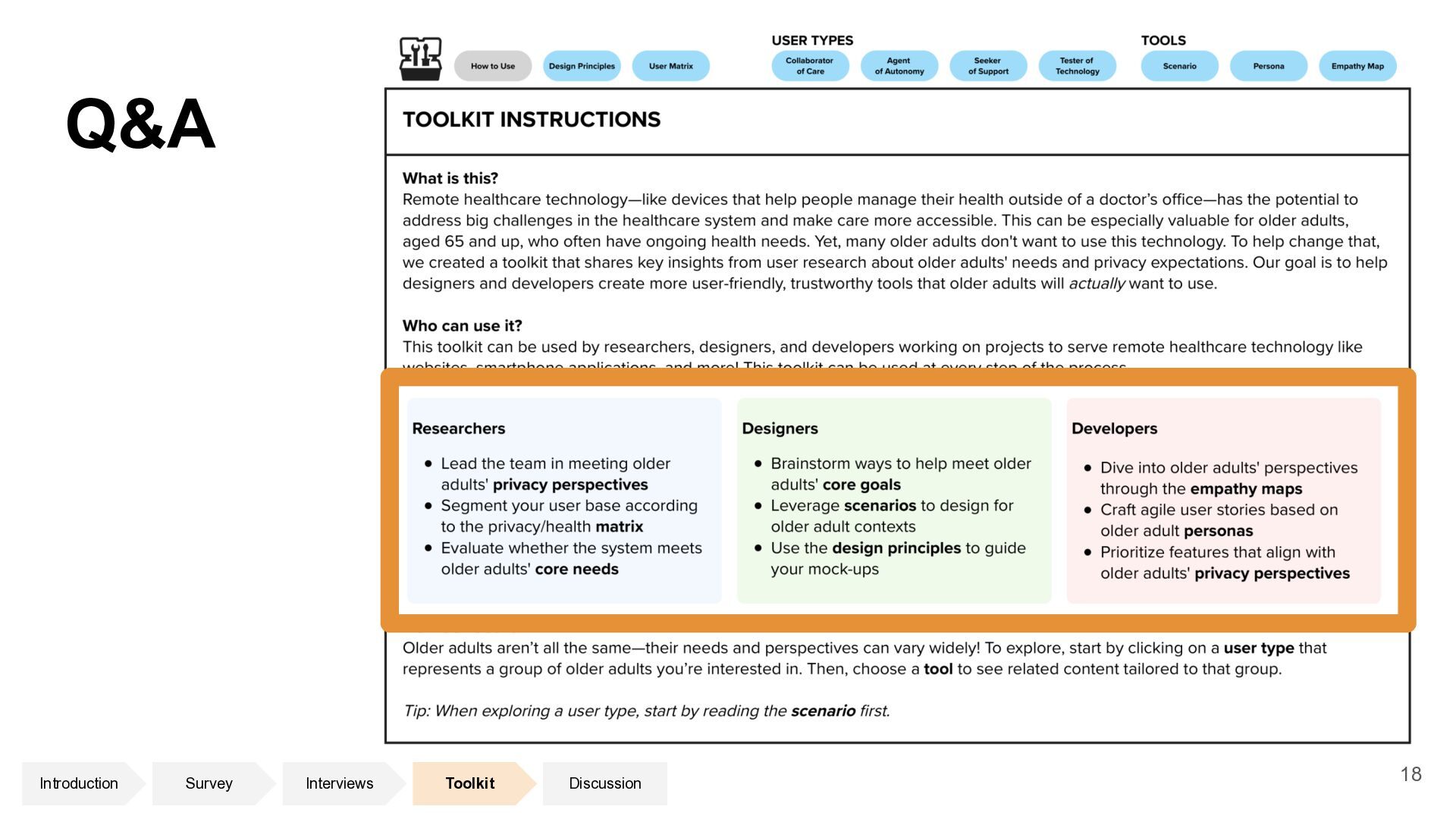
  13. Design Toolkit Final Toolkit • 15 total artifacts to guide

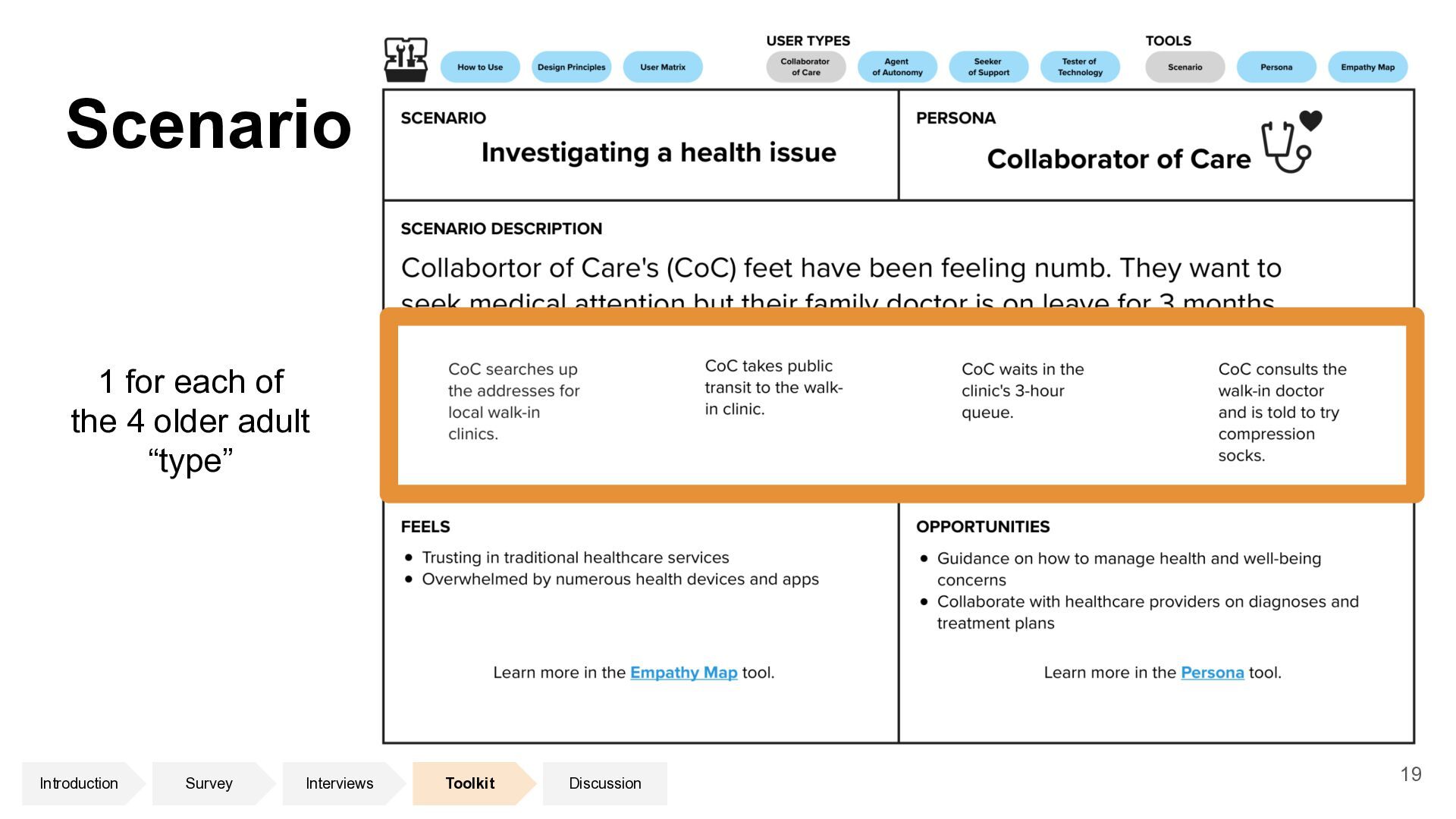
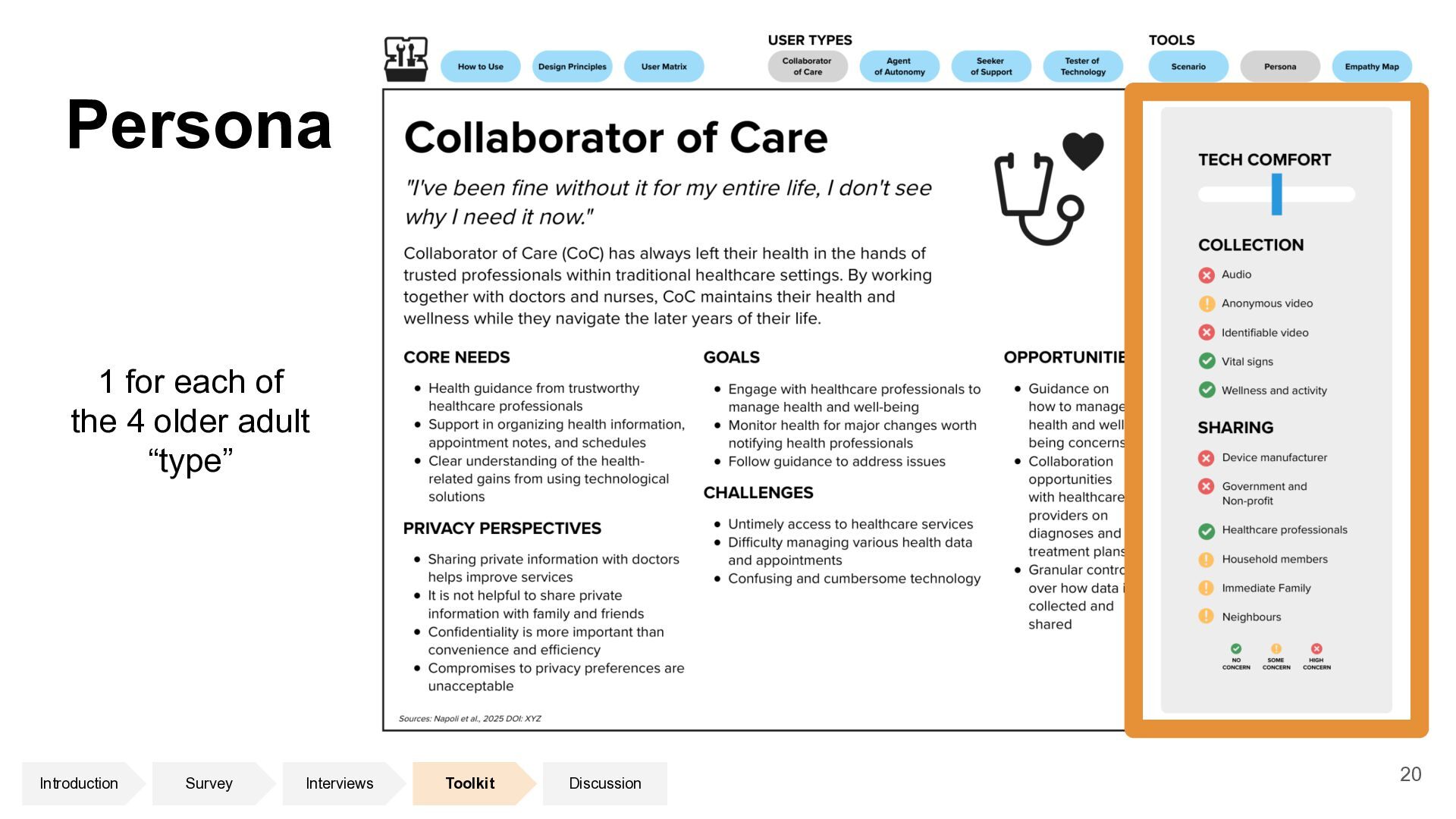
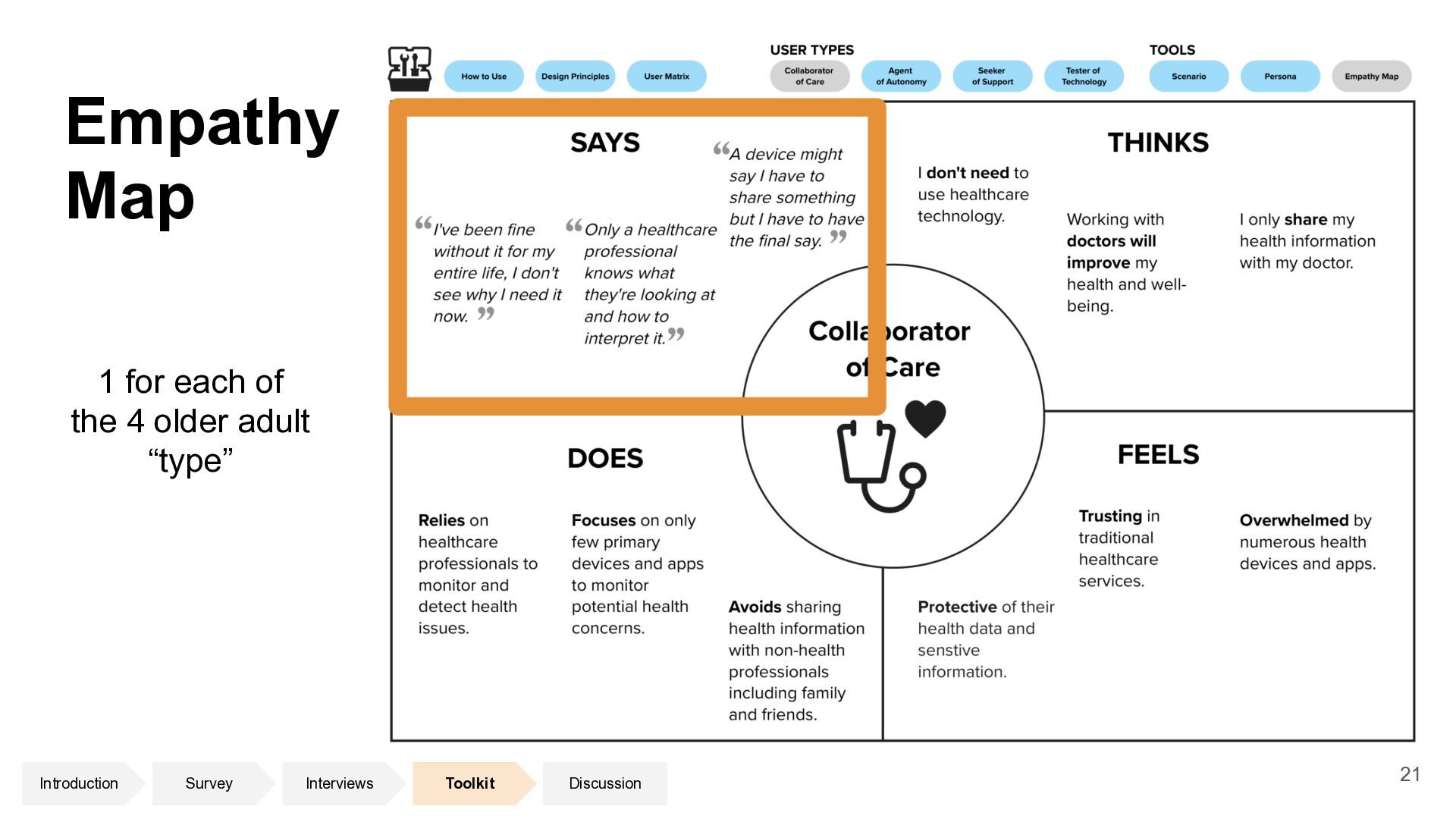
    design of remote healthcare technology for older adults ◦ ◦ ◦ ◦ ◦ Introduction 2 instruction documents 1 design principles resource 4 scenarios 4 personas 4 empathy maps Survey Interviews Toolkit Discussion 17
  14. Scenario 1 for each of the 4 older adult “type”

    Introduction Survey Interviews Toolkit Discussion 19
  15. Persona 1 for each of the 4 older adult “type”

    Introduction Survey Interviews Toolkit Discussion 20
  16. Empathy Map 1 for each of the 4 older adult

    “type” Introduction Survey Interviews Toolkit Discussion 21
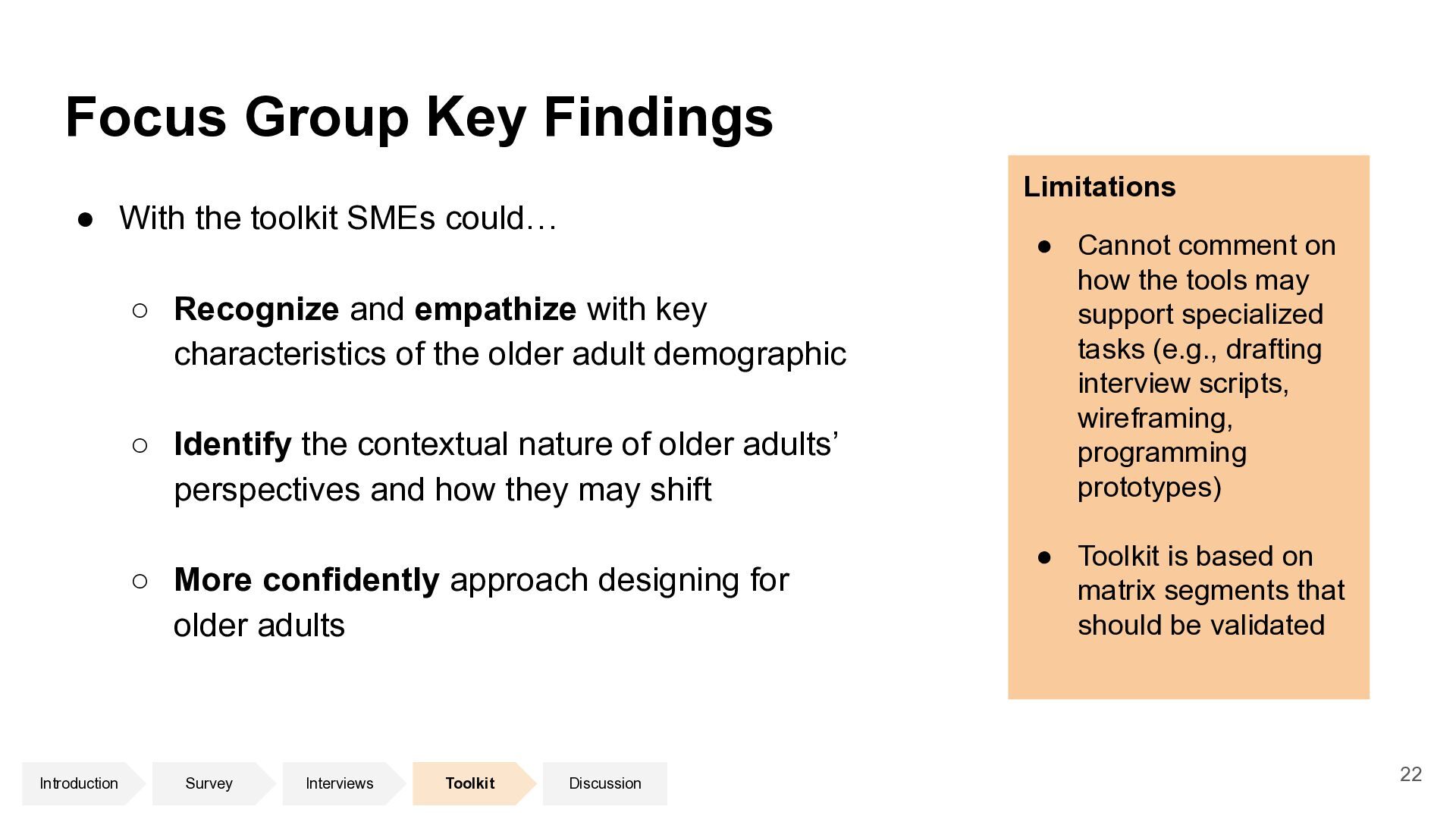
  17. Focus Group Key Findings Limitations • With the toolkit SMEs

    could… ◦ Identify the contextual nature of older adults’ perspectives and how they may shift • Cannot comment on how the tools may support specialized tasks (e.g., drafting interview scripts, wireframing, programming prototypes) ◦ More confidently approach designing for older adults • Toolkit is based on matrix segments that should be validated ◦ Recognize and empathize with key characteristics of the older adult demographic Introduction Survey Interviews Toolkit Discussion 22
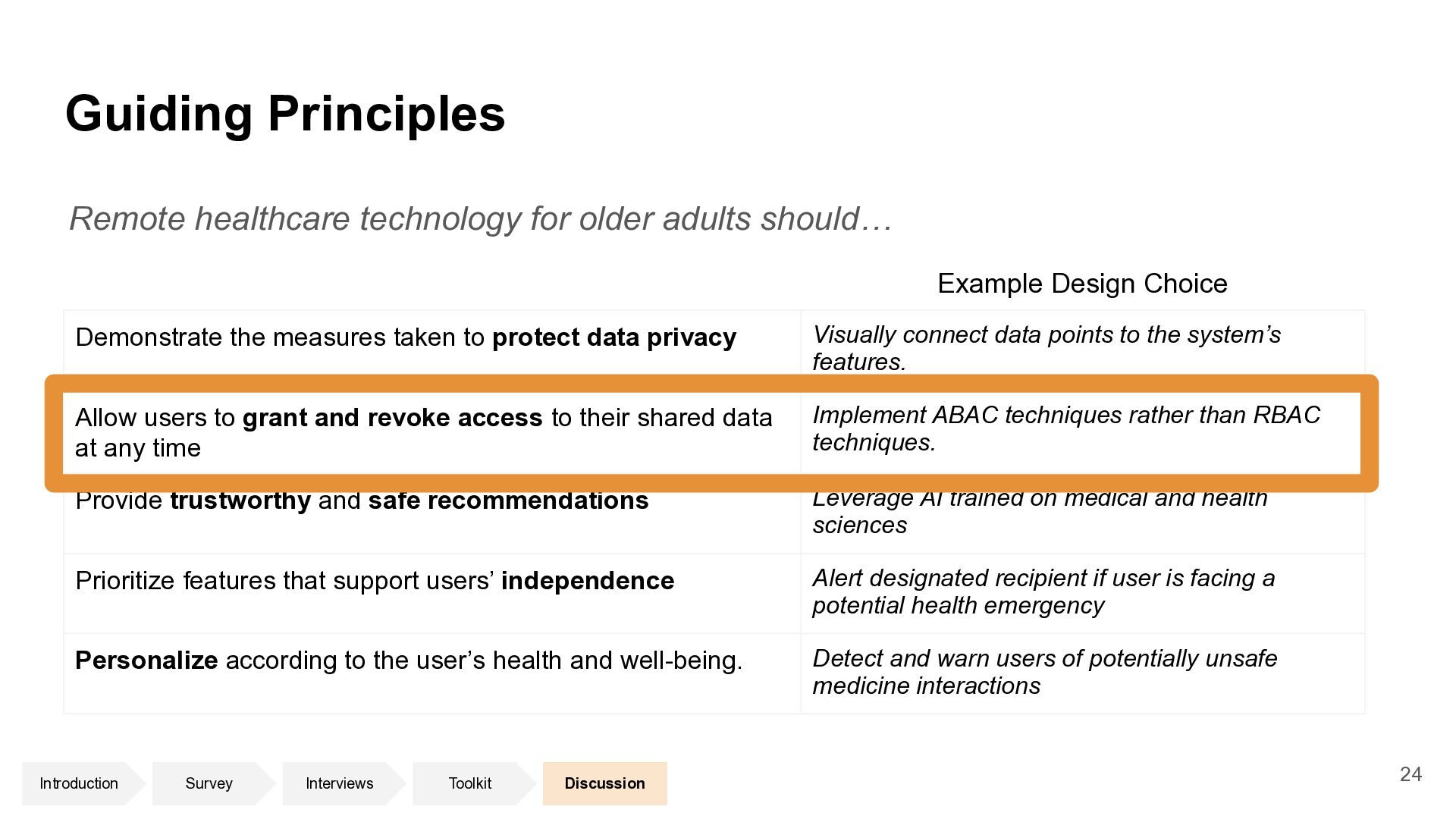
  18. Guiding Principles Remote healthcare technology for older adults should… Example

    Design Choice Demonstrate the measures taken to protect data privacy Visually connect data points to the system’s features. Allow users to grant and revoke access to their shared data at any time Implement ABAC techniques rather than RBAC techniques. Provide trustworthy and safe recommendations Leverage AI trained on medical and health sciences Prioritize features that support users’ independence Alert designated recipient if user is facing a potential health emergency Personalize according to the user’s health and well-being. Detect and warn users of potentially unsafe medicine interactions Introduction Survey Interviews Toolkit Discussion 24
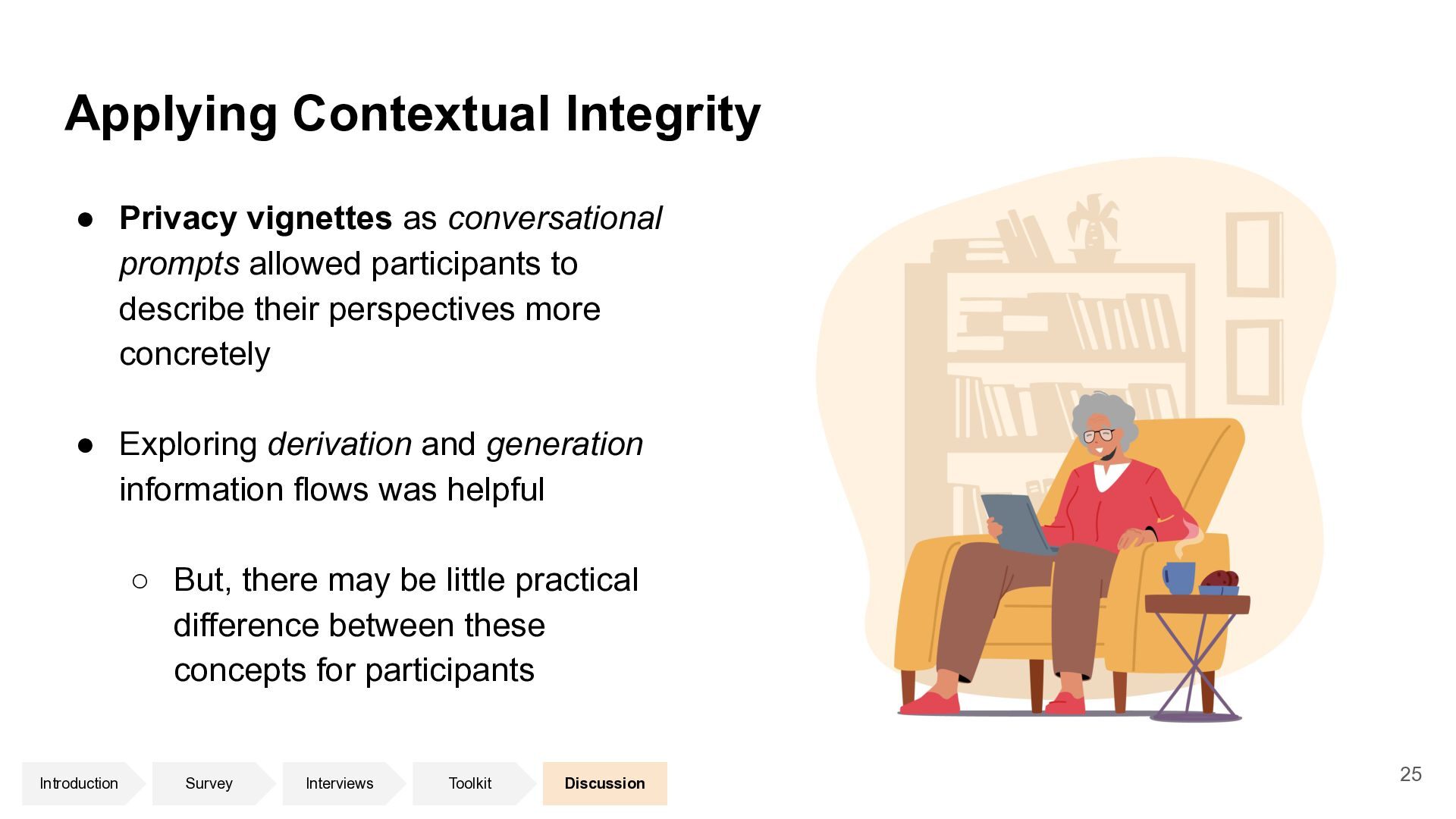
  19. Applying Contextual Integrity • Privacy vignettes as conversational prompts allowed

    participants to describe their perspectives more concretely • Exploring derivation and generation information flows was helpful ◦ But, there may be little practical difference between these concepts for participants Introduction Survey Interviews Toolkit Discussion 25
  20. Future Work • Validate identified older adult user subgroups via

    large-scale surveys and interviews • Further develop the design toolkit to improve effectiveness in communicating older adults’ needs • Explore secondary and tertiary user perspectives Introduction Survey Interviews Toolkit Discussion 26
  21. Tailoring Remote Healthcare Technology to Meet the Needs and Privacy

    Expectations of Older Adults Daniela Napoli Carleton University School of Computer Science
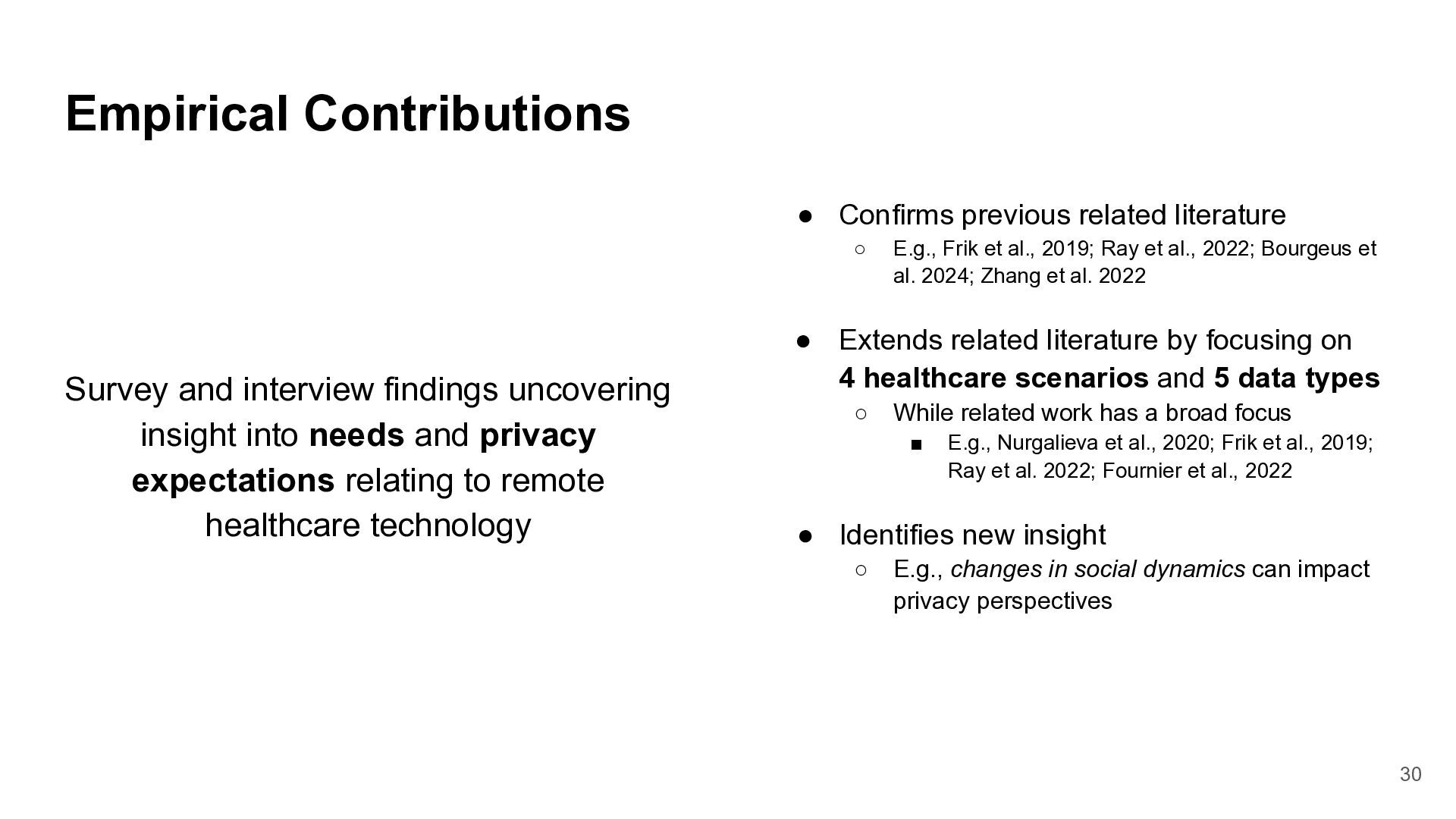
  22. Empirical Contributions • Confirms previous related literature ◦ Survey and

    interview findings uncovering insight into needs and privacy expectations relating to remote healthcare technology E.g., Frik et al., 2019; Ray et al., 2022; Bourgeus et al. 2024; Zhang et al. 2022 • Extends related literature by focusing on 4 healthcare scenarios and 5 data types ◦ While related work has a broad focus ▪ E.g., Nurgalieva et al., 2020; Frik et al., 2019; Ray et al. 2022; Fournier et al., 2022 • Identifies new insight ◦ E.g., changes in social dynamics can impact privacy perspectives 30
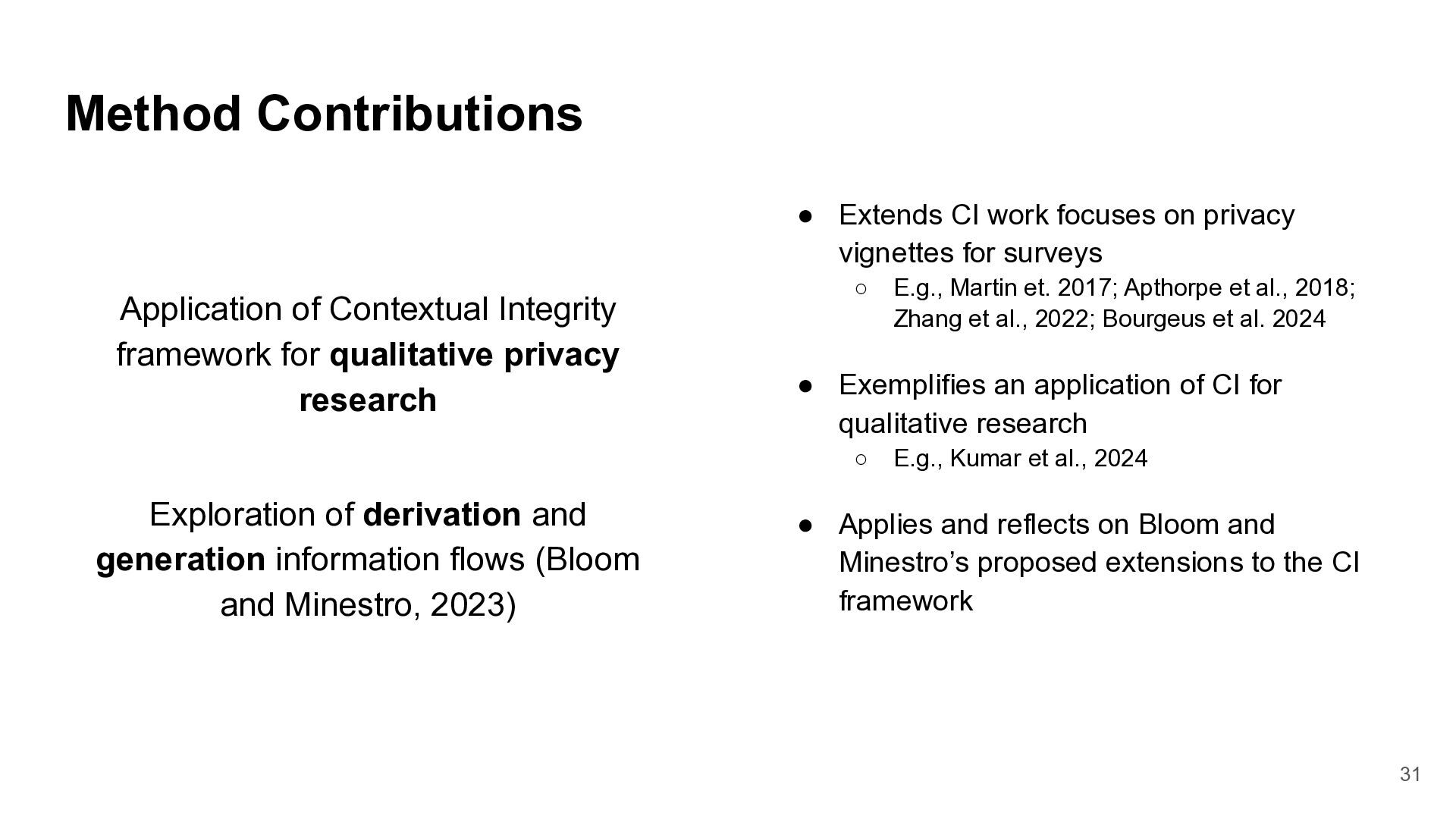
  23. Method Contributions • Extends CI work focuses on privacy vignettes

    for surveys Application of Contextual Integrity framework for qualitative privacy research ◦ • Exemplifies an application of CI for qualitative research ◦ Exploration of derivation and generation information flows (Bloom and Minestro, 2023) E.g., Martin et. 2017; Apthorpe et al., 2018; Zhang et al., 2022; Bourgeus et al. 2024 E.g., Kumar et al., 2024 • Applies and reflects on Bloom and Minestro’s proposed extensions to the CI framework 31
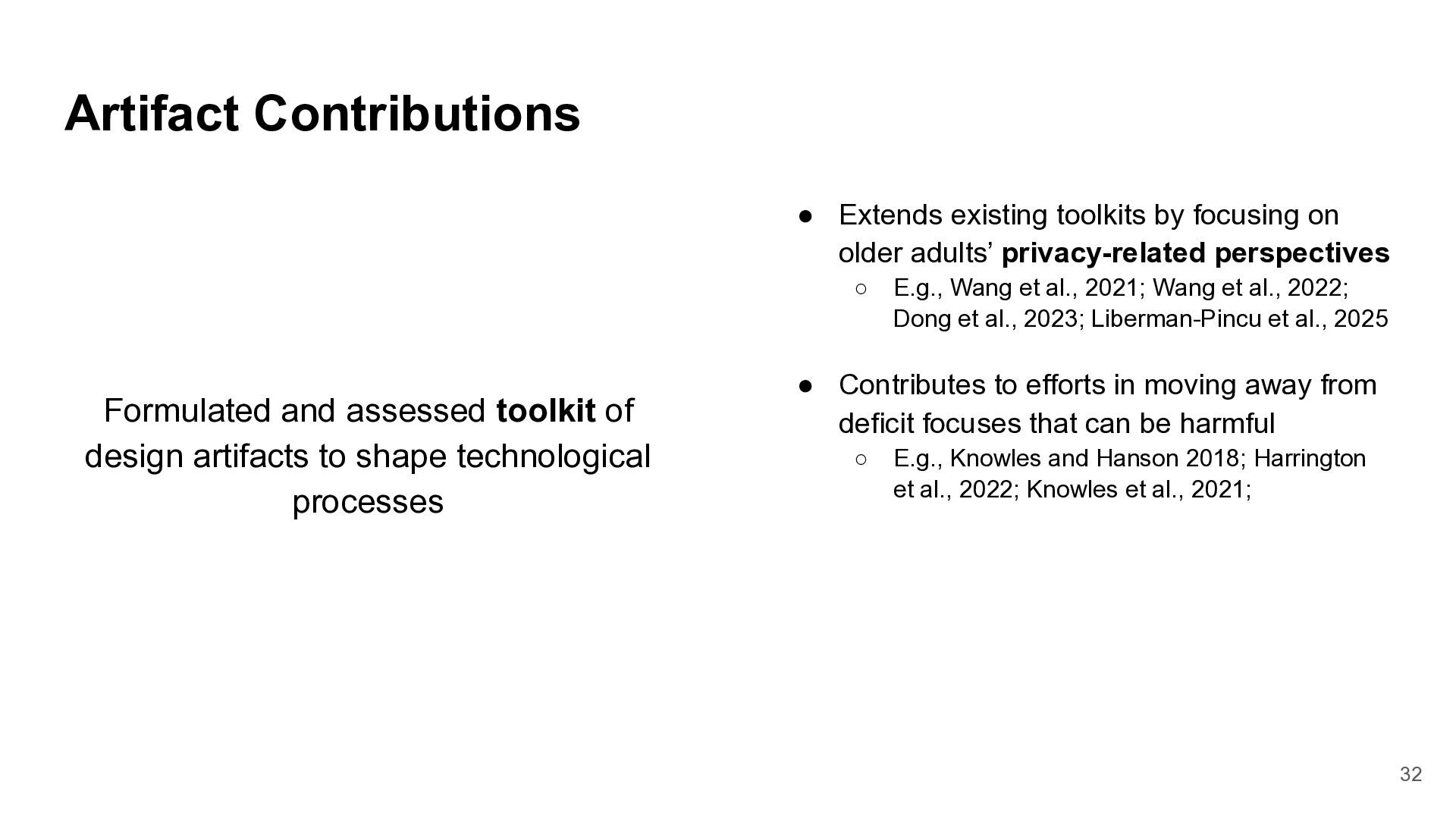
  24. Artifact Contributions • Extends existing toolkits by focusing on older

    adults’ privacy-related perspectives ◦ Formulated and assessed toolkit of design artifacts to shape technological processes E.g., Wang et al., 2021; Wang et al., 2022; Dong et al., 2023; Liberman-Pincu et al., 2025 • Contributes to efforts in moving away from deficit focuses that can be harmful ◦ E.g., Knowles and Hanson 2018; Harrington et al., 2022; Knowles et al., 2021; 32
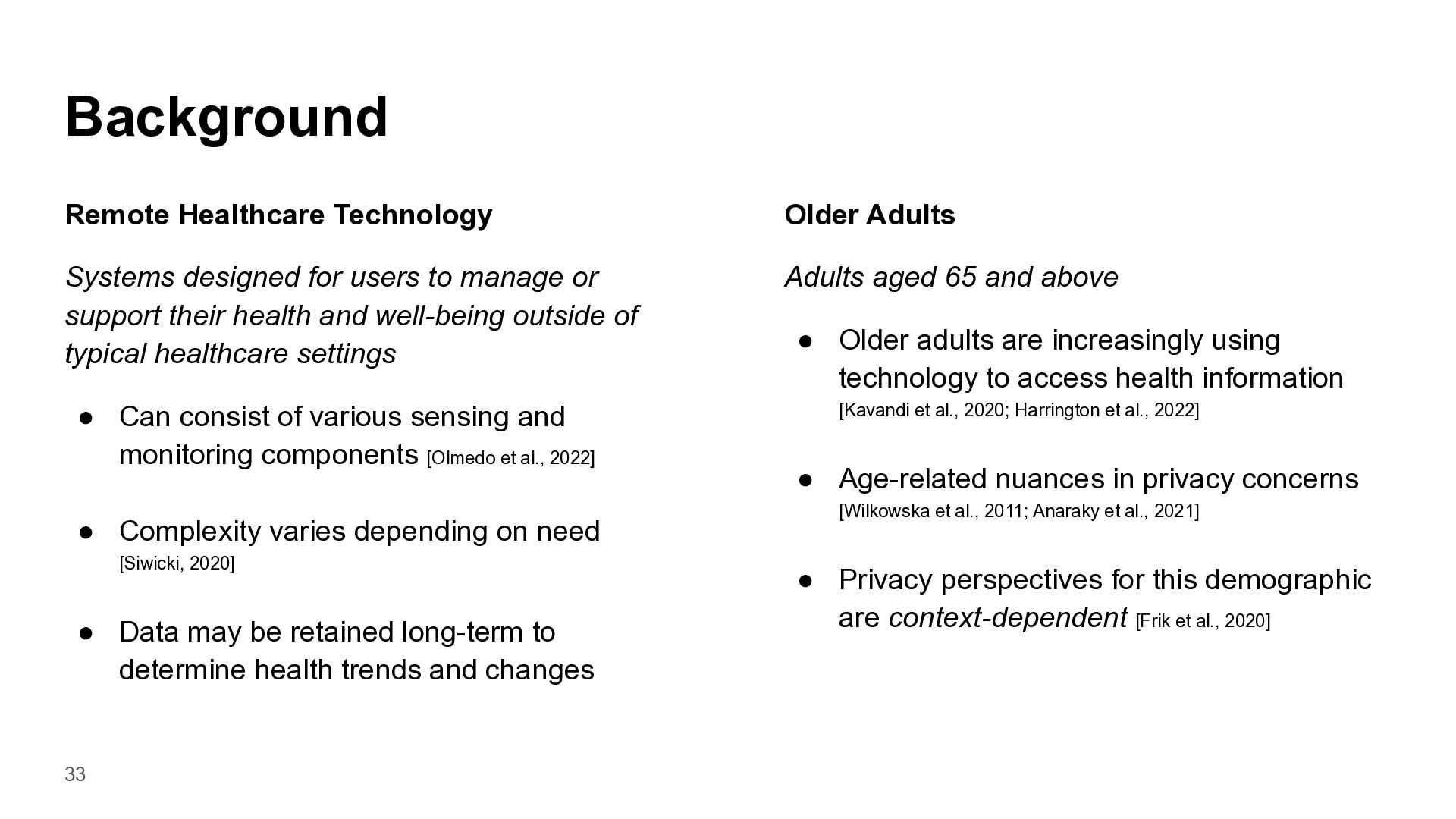
  25. Background Remote Healthcare Technology Older Adults Systems designed for users

    to manage or support their health and well-being outside of typical healthcare settings Adults aged 65 and above • Can consist of various sensing and monitoring components [Olmedo et al., 2022] • Complexity varies depending on need [Siwicki, 2020] • Data may be retained long-term to determine health trends and changes 33 • Older adults are increasingly using technology to access health information [Kavandi et al., 2020; Harrington et al., 2022] • Age-related nuances in privacy concerns [Wilkowska et al., 2011; Anaraky et al., 2021] • Privacy perspectives for this demographic are context-dependent [Frik et al., 2020]
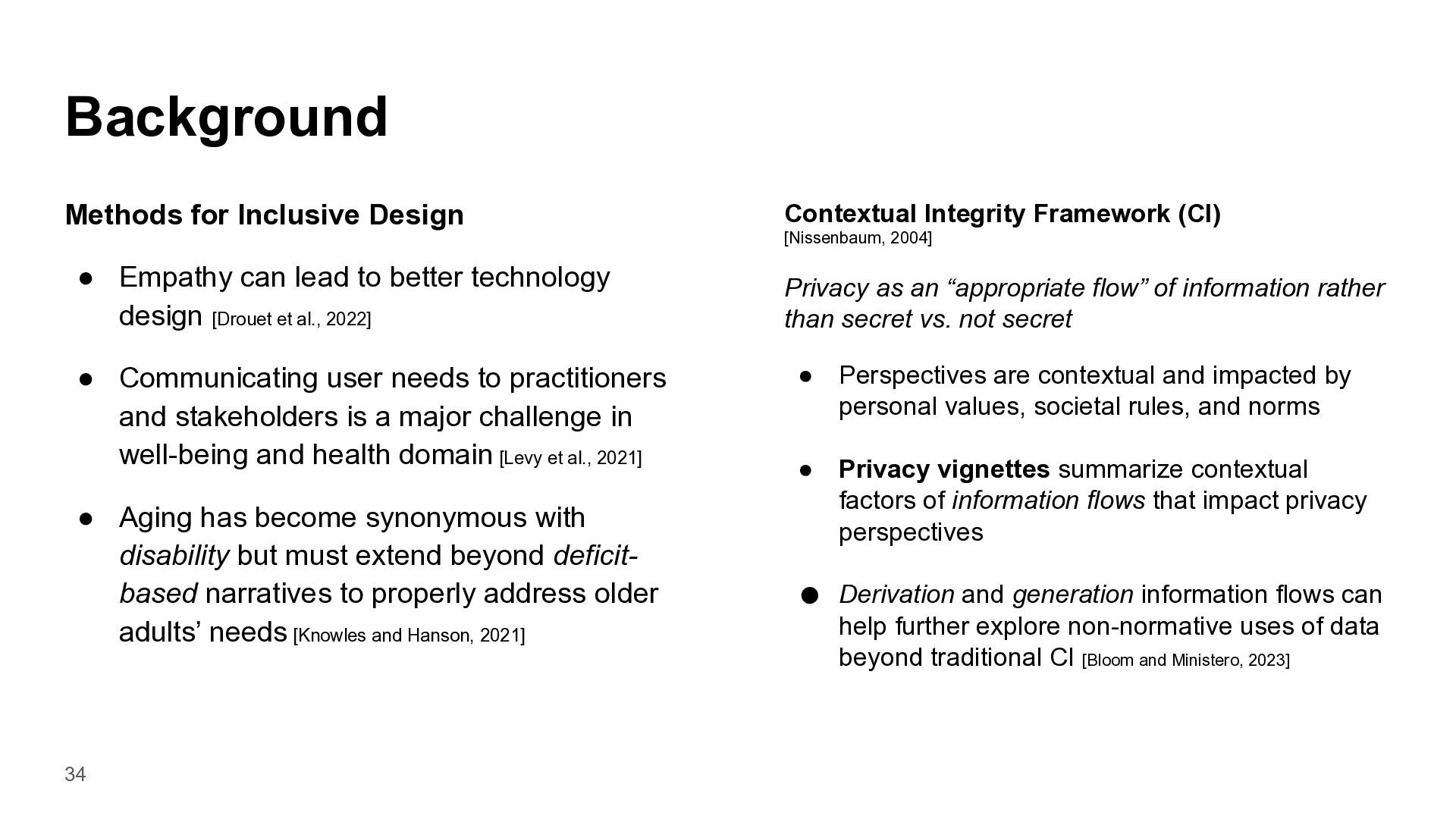
  26. Background Methods for Inclusive Design Contextual Integrity Framework (CI) •

    Empathy can lead to better technology design [Drouet et al., 2022] Privacy as an “appropriate flow” of information rather than secret vs. not secret • Communicating user needs to practitioners and stakeholders is a major challenge in well-being and health domain [Levy et al., 2021] • Perspectives are contextual and impacted by personal values, societal rules, and norms • Aging has become synonymous with disability but must extend beyond deficitbased narratives to properly address older adults’ needs [Knowles and Hanson, 2021] 34 [Nissenbaum, 2004] • Privacy vignettes summarize contextual factors of information flows that impact privacy perspectives • Derivation and generation information flows can help further explore non-normative uses of data beyond traditional CI [Bloom and Ministero, 2023]
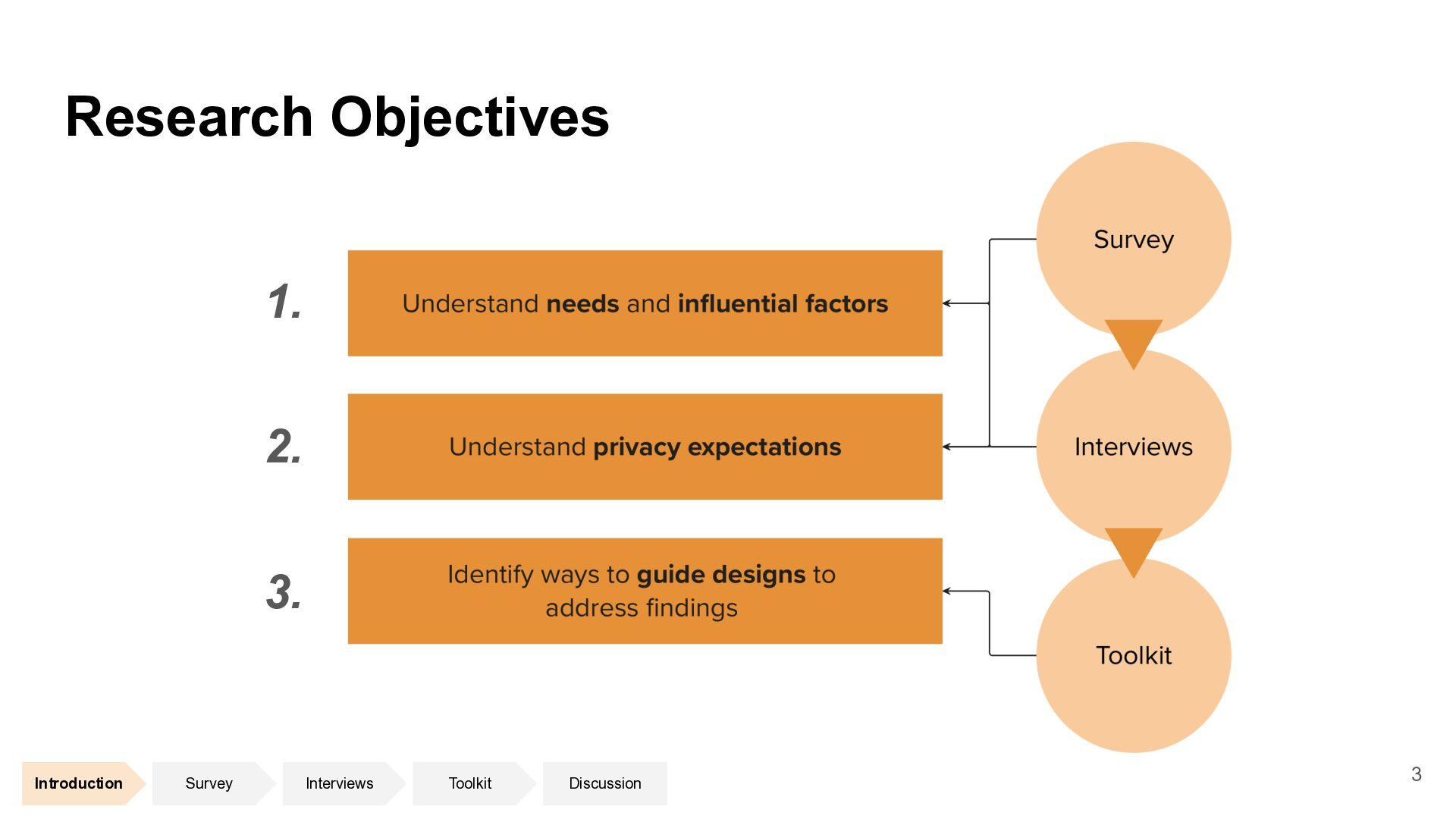
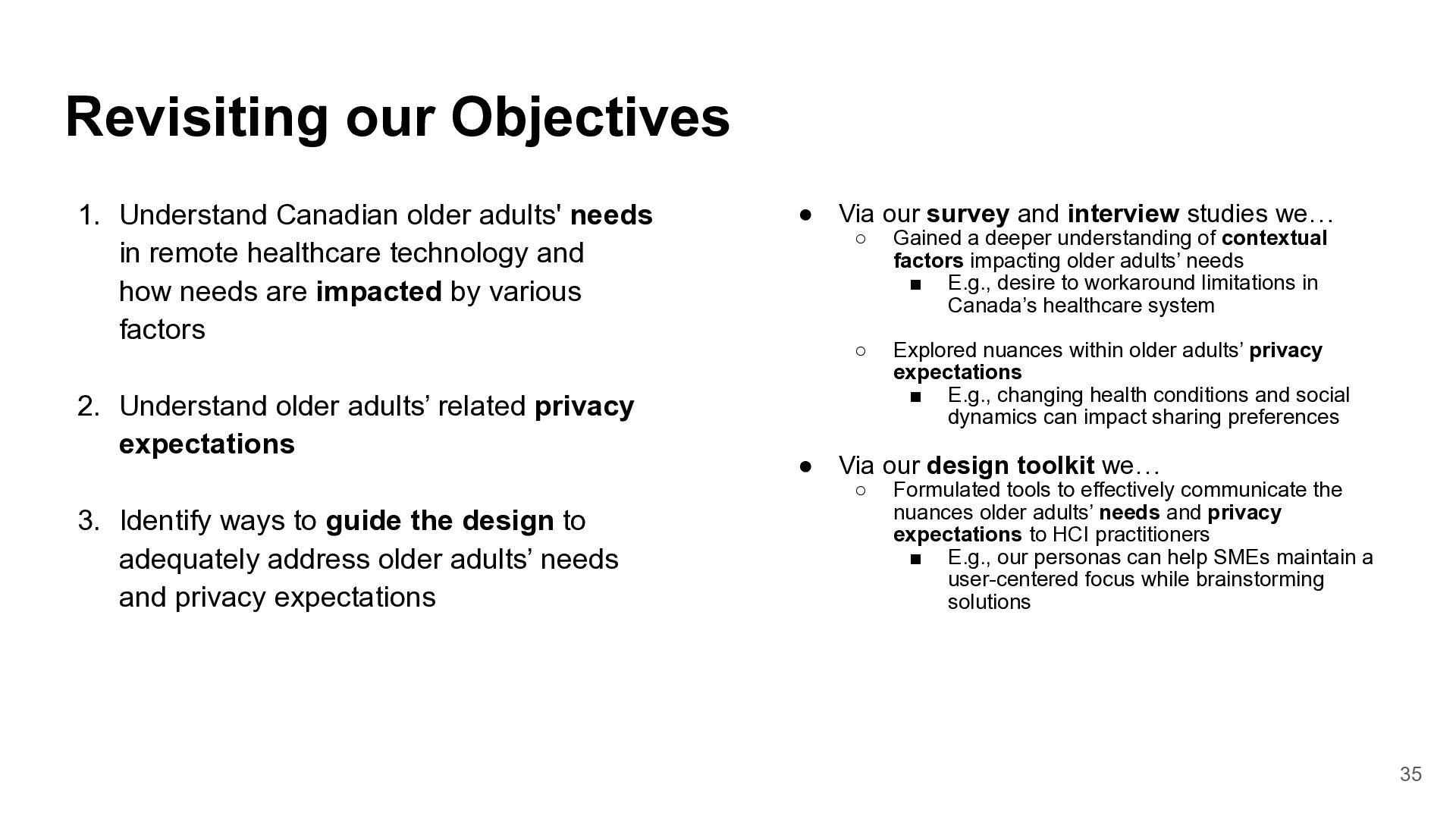
  27. Revisiting our Objectives 1. Understand Canadian older adults' needs in

    remote healthcare technology and how needs are impacted by various factors 2. Understand older adults’ related privacy expectations • Via our survey and interview studies we… ◦ Gained a deeper understanding of contextual factors impacting older adults’ needs ▪ E.g., desire to workaround limitations in Canada’s healthcare system ◦ Explored nuances within older adults’ privacy expectations ▪ E.g., changing health conditions and social dynamics can impact sharing preferences • Via our design toolkit we… ◦ 3. Identify ways to guide the design to adequately address older adults’ needs and privacy expectations Formulated tools to effectively communicate the nuances older adults’ needs and privacy expectations to HCI practitioners ▪ E.g., our personas can help SMEs maintain a user-centered focus while brainstorming solutions 35
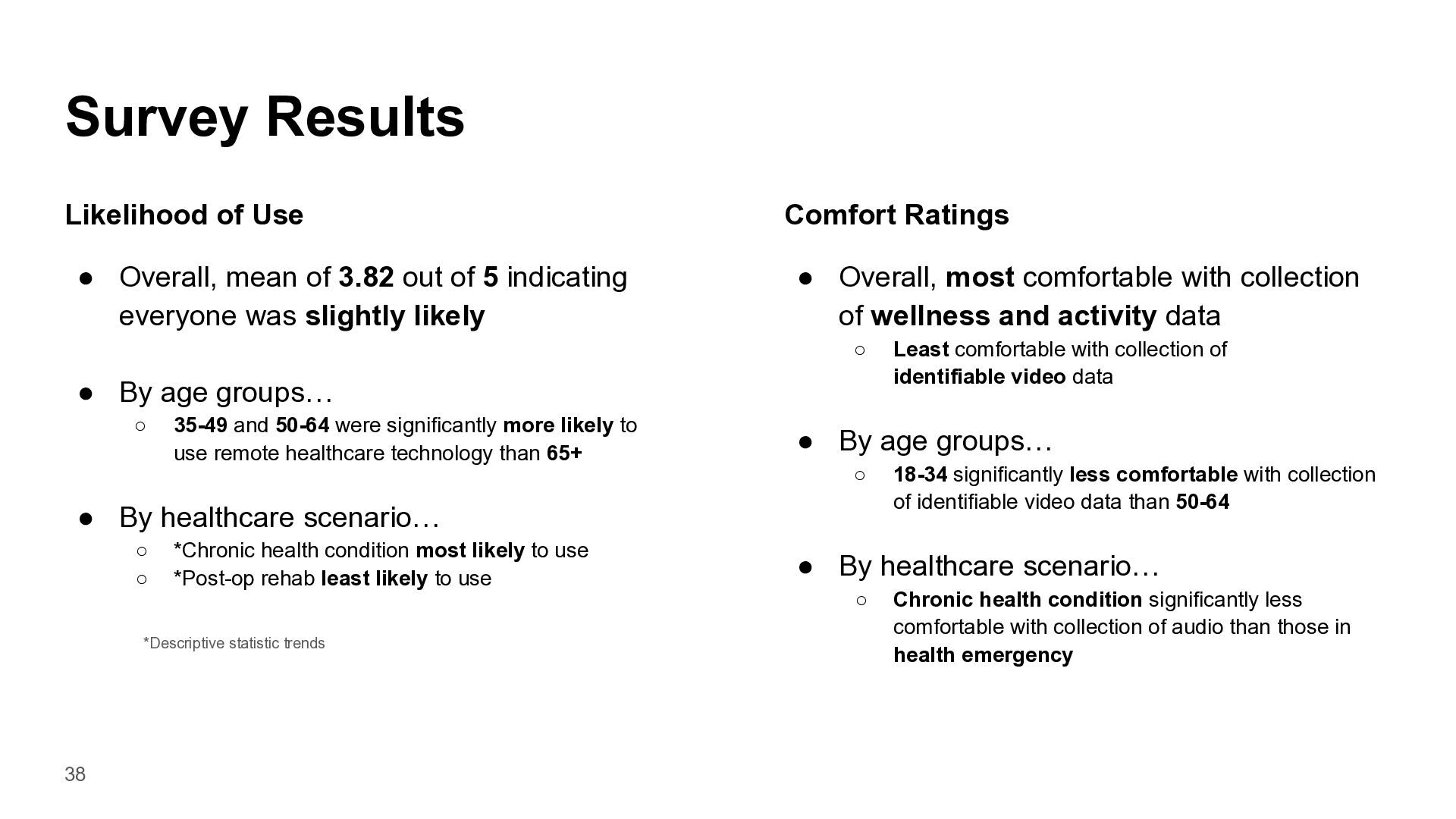
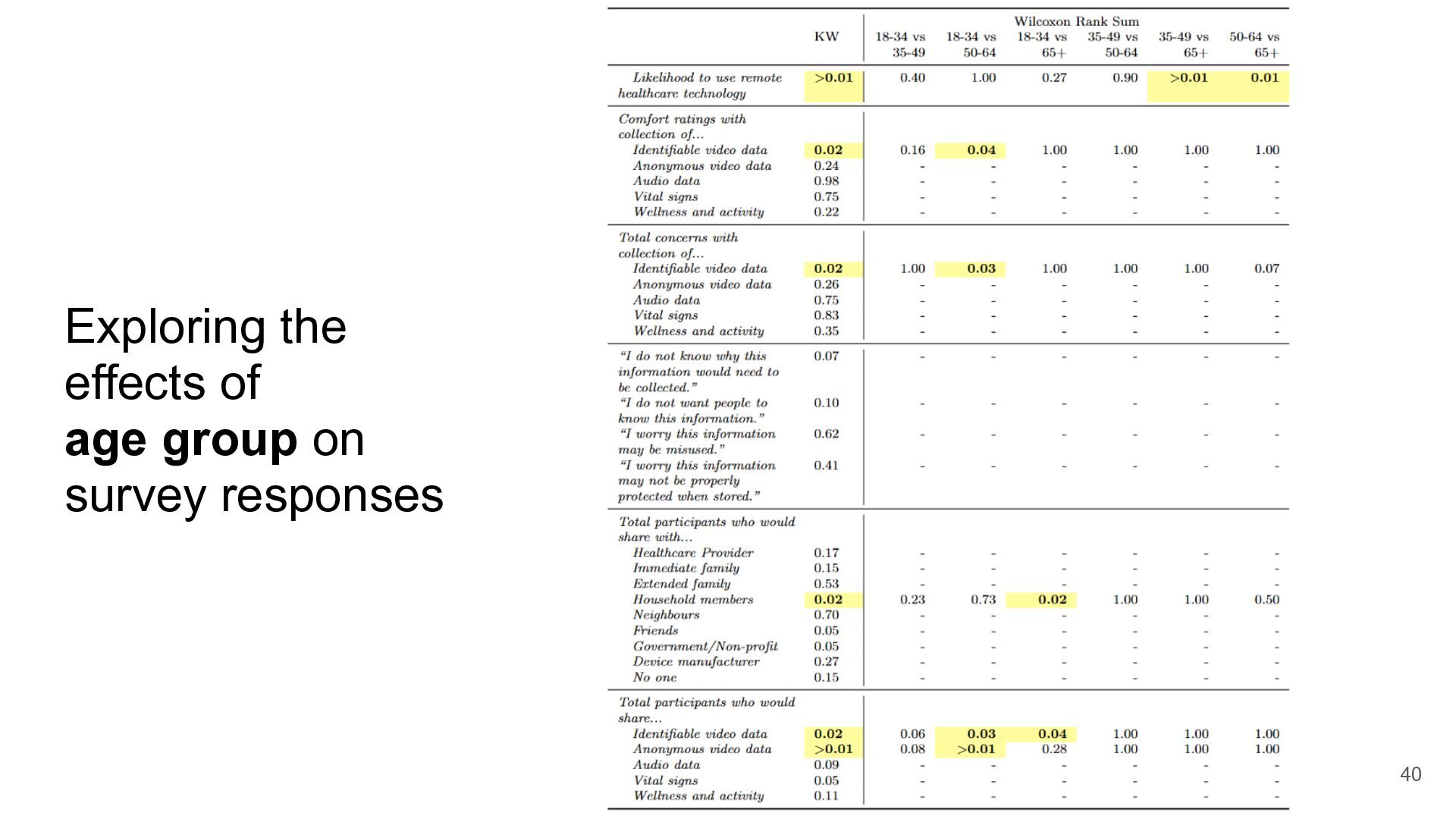
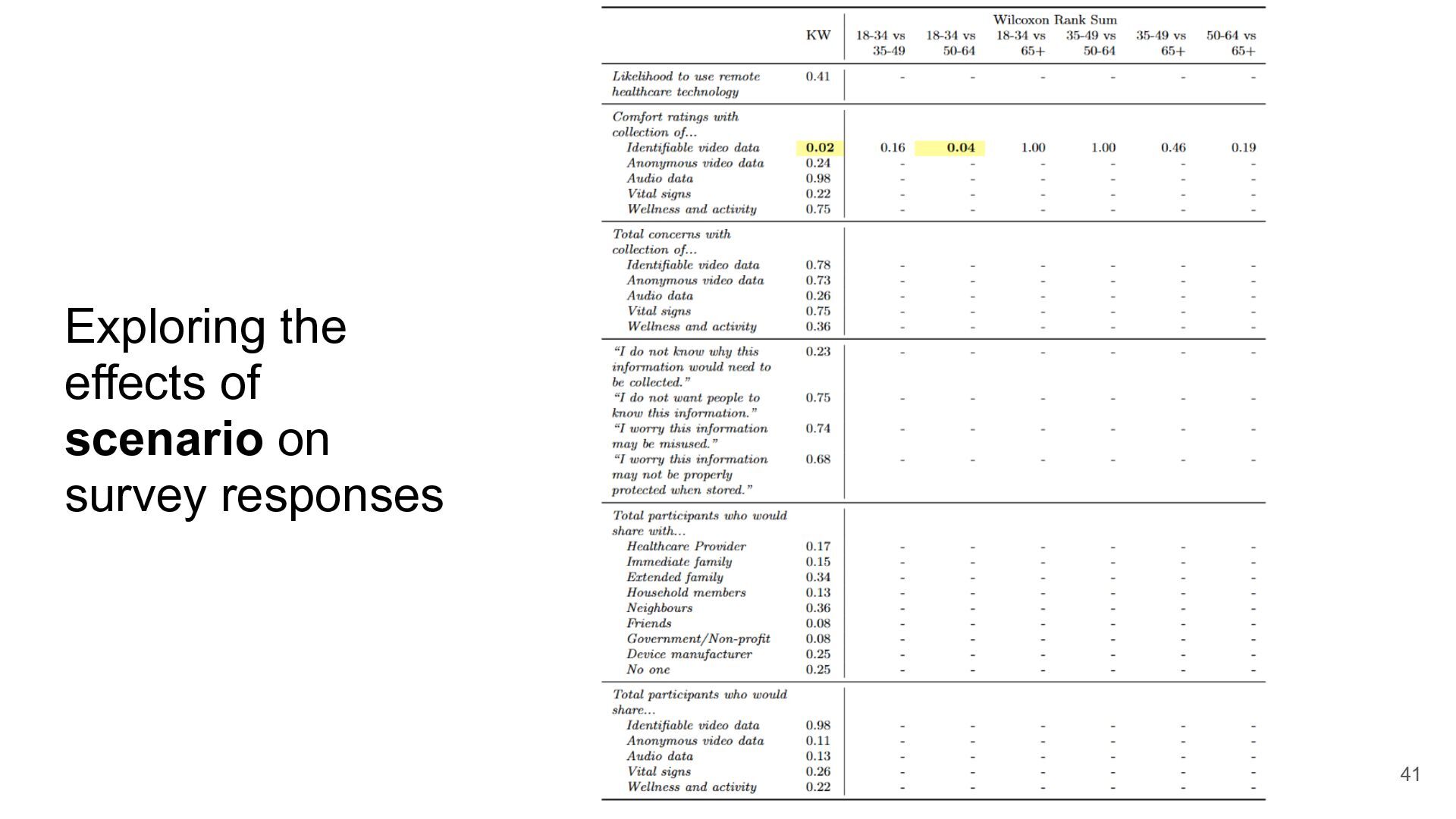
  28. Survey Results Likelihood of Use Comfort Ratings • Overall, mean

    of 3.82 out of 5 indicating everyone was slightly likely • Overall, most comfortable with collection of wellness and activity data ◦ • By age groups… ◦ 35-49 and 50-64 were significantly more likely to use remote healthcare technology than 65+ • By age groups… ◦ • By healthcare scenario… ◦ ◦ *Chronic health condition most likely to use *Post-op rehab least likely to use *Descriptive statistic trends 38 Least comfortable with collection of identifiable video data 18-34 significantly less comfortable with collection of identifiable video data than 50-64 • By healthcare scenario… ◦ Chronic health condition significantly less comfortable with collection of audio than those in health emergency
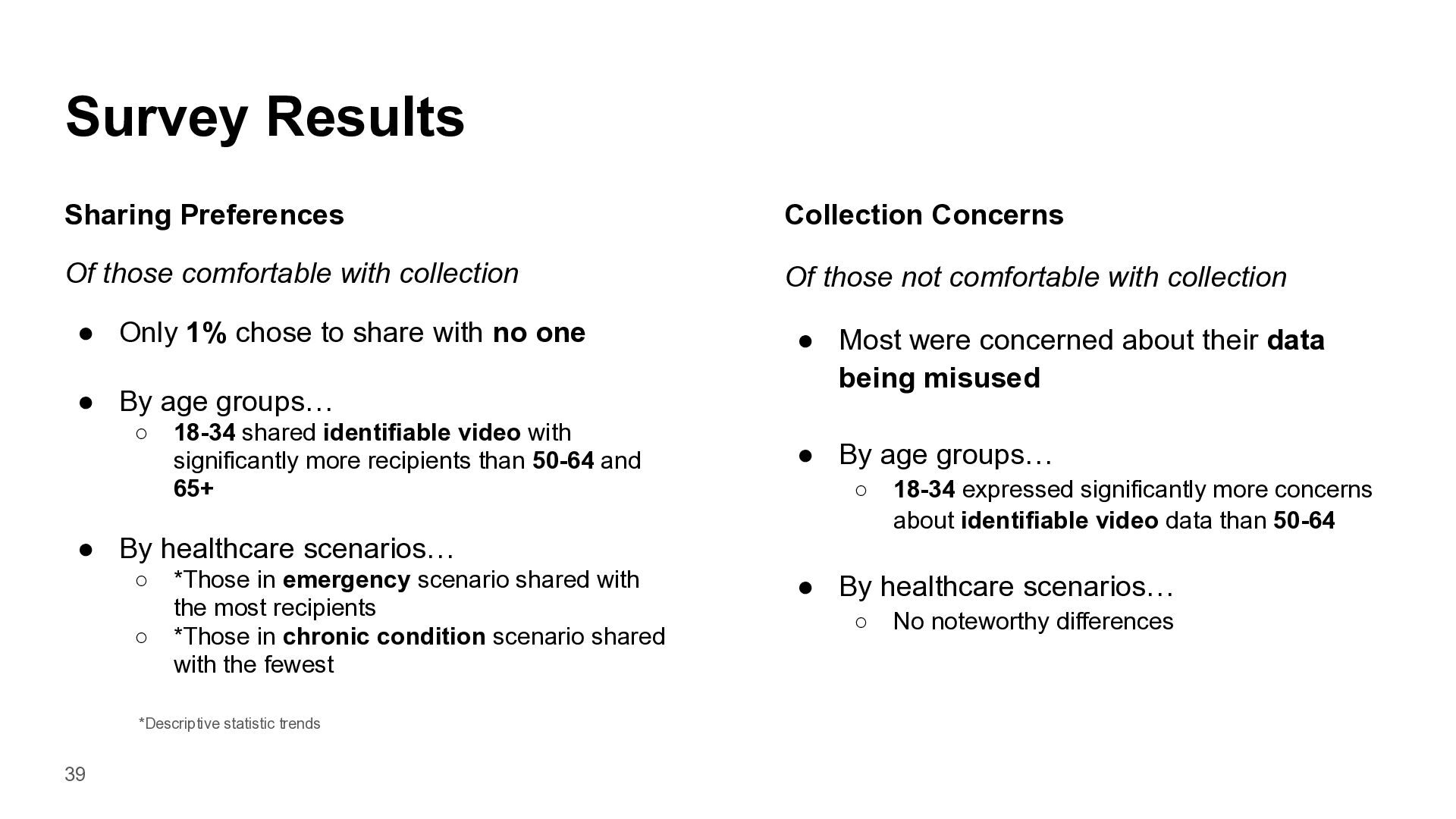
  29. Survey Results Sharing Preferences Collection Concerns Of those comfortable with

    collection Of those not comfortable with collection • Only 1% chose to share with no one • Most were concerned about their data being misused • By age groups… ◦ 18-34 shared identifiable video with significantly more recipients than 50-64 and 65+ • By age groups… ◦ • By healthcare scenarios… ◦ ◦ *Those in emergency scenario shared with the most recipients *Those in chronic condition scenario shared with the fewest *Descriptive statistic trends 39 18-34 expressed significantly more concerns about identifiable video data than 50-64 • By healthcare scenarios… ◦ No noteworthy differences
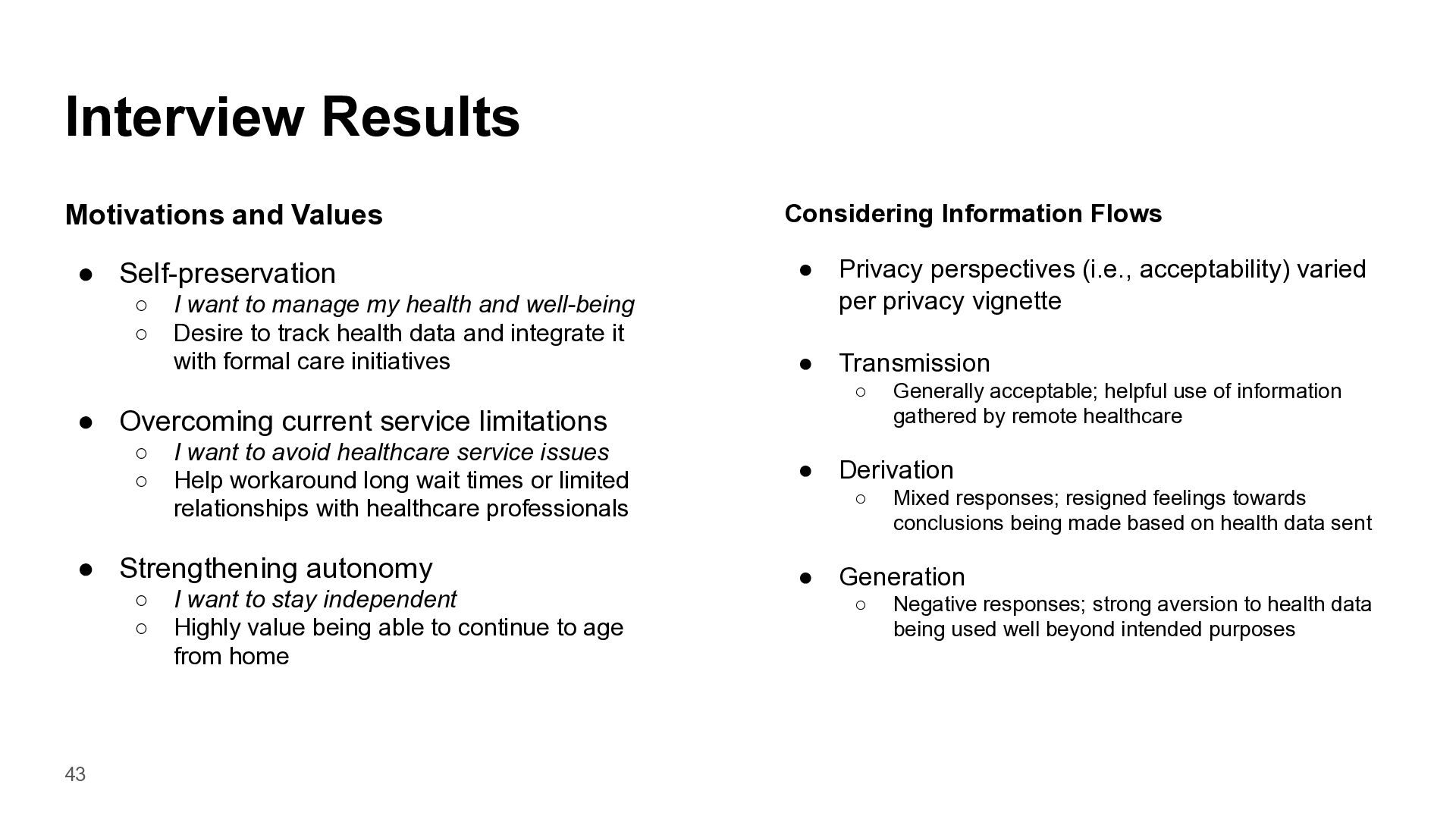
  30. Interview Results Motivations and Values Considering Information Flows • Self-preservation

    • Privacy perspectives (i.e., acceptability) varied per privacy vignette ◦ ◦ I want to manage my health and well-being Desire to track health data and integrate it with formal care initiatives • Transmission ◦ • Overcoming current service limitations ◦ ◦ I want to avoid healthcare service issues Help workaround long wait times or limited relationships with healthcare professionals • Strengthening autonomy ◦ ◦ 43 I want to stay independent Highly value being able to continue to age from home Generally acceptable; helpful use of information gathered by remote healthcare • Derivation ◦ Mixed responses; resigned feelings towards conclusions being made based on health data sent • Generation ◦ Negative responses; strong aversion to health data being used well beyond intended purposes
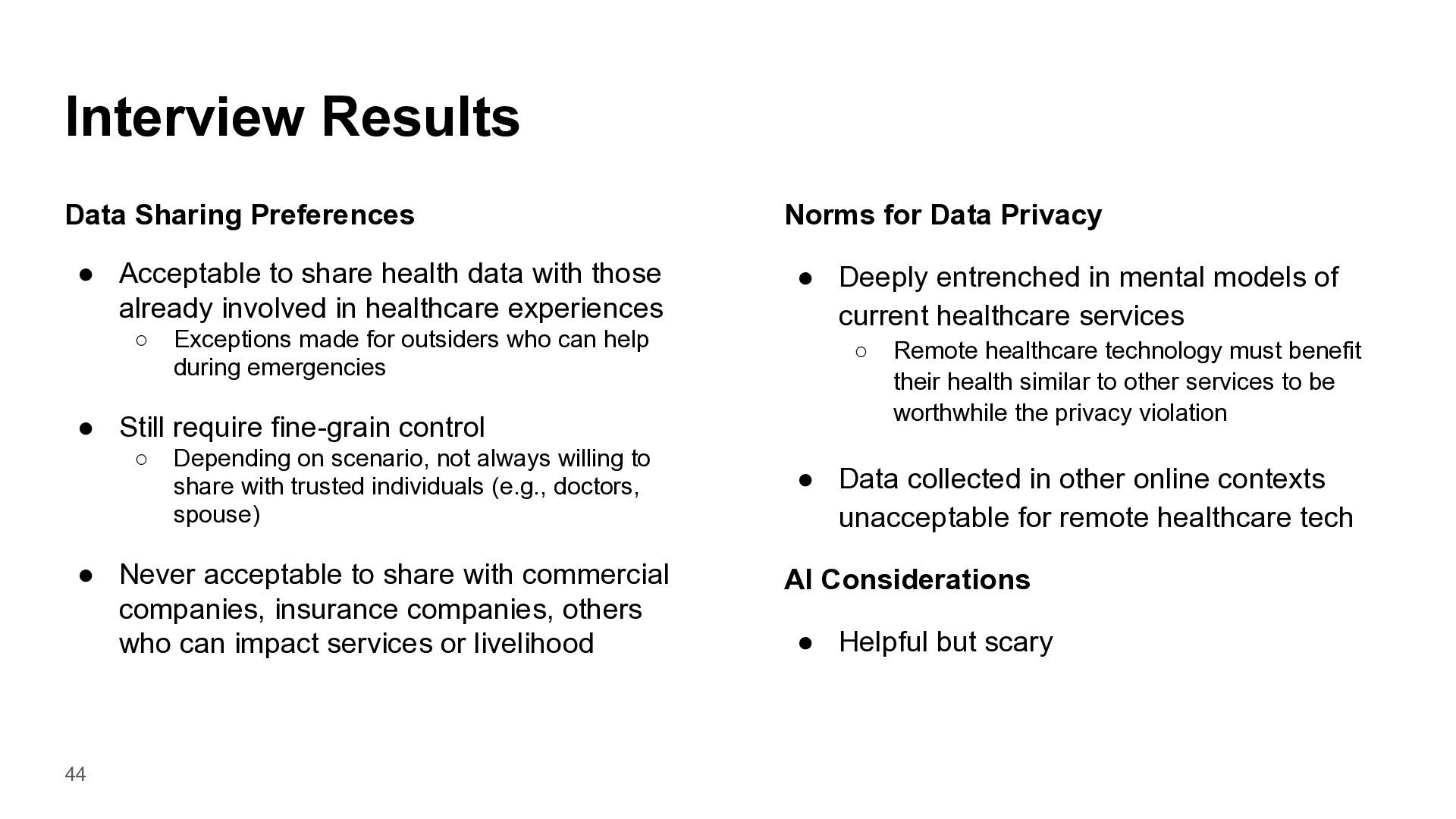
  31. Interview Results Data Sharing Preferences Norms for Data Privacy •

    Acceptable to share health data with those already involved in healthcare experiences • Deeply entrenched in mental models of current healthcare services ◦ Exceptions made for outsiders who can help during emergencies • Still require fine-grain control ◦ Depending on scenario, not always willing to share with trusted individuals (e.g., doctors, spouse) • Never acceptable to share with commercial companies, insurance companies, others who can impact services or livelihood 44 ◦ Remote healthcare technology must benefit their health similar to other services to be worthwhile the privacy violation • Data collected in other online contexts unacceptable for remote healthcare tech AI Considerations • Helpful but scary
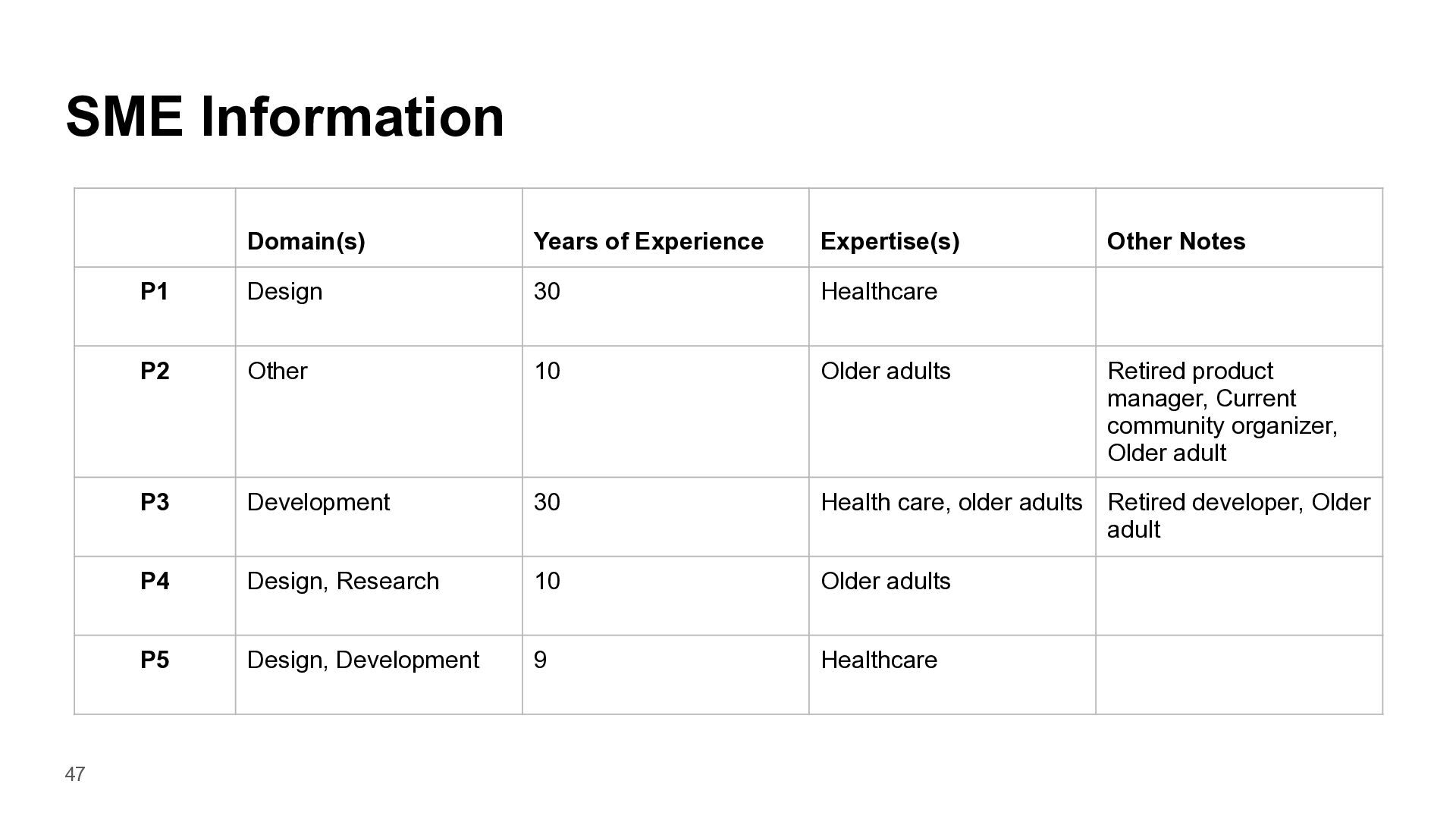
  32. SME Information 47 Domain(s) Years of Experience Expertise(s) Other Notes

    P1 Design 30 Healthcare P2 Other 10 Older adults P3 Development 30 Health care, older adults Retired developer, Older adult P4 Design, Research 10 Older adults P5 Design, Development 9 Healthcare Retired product manager, Current community organizer, Older adult