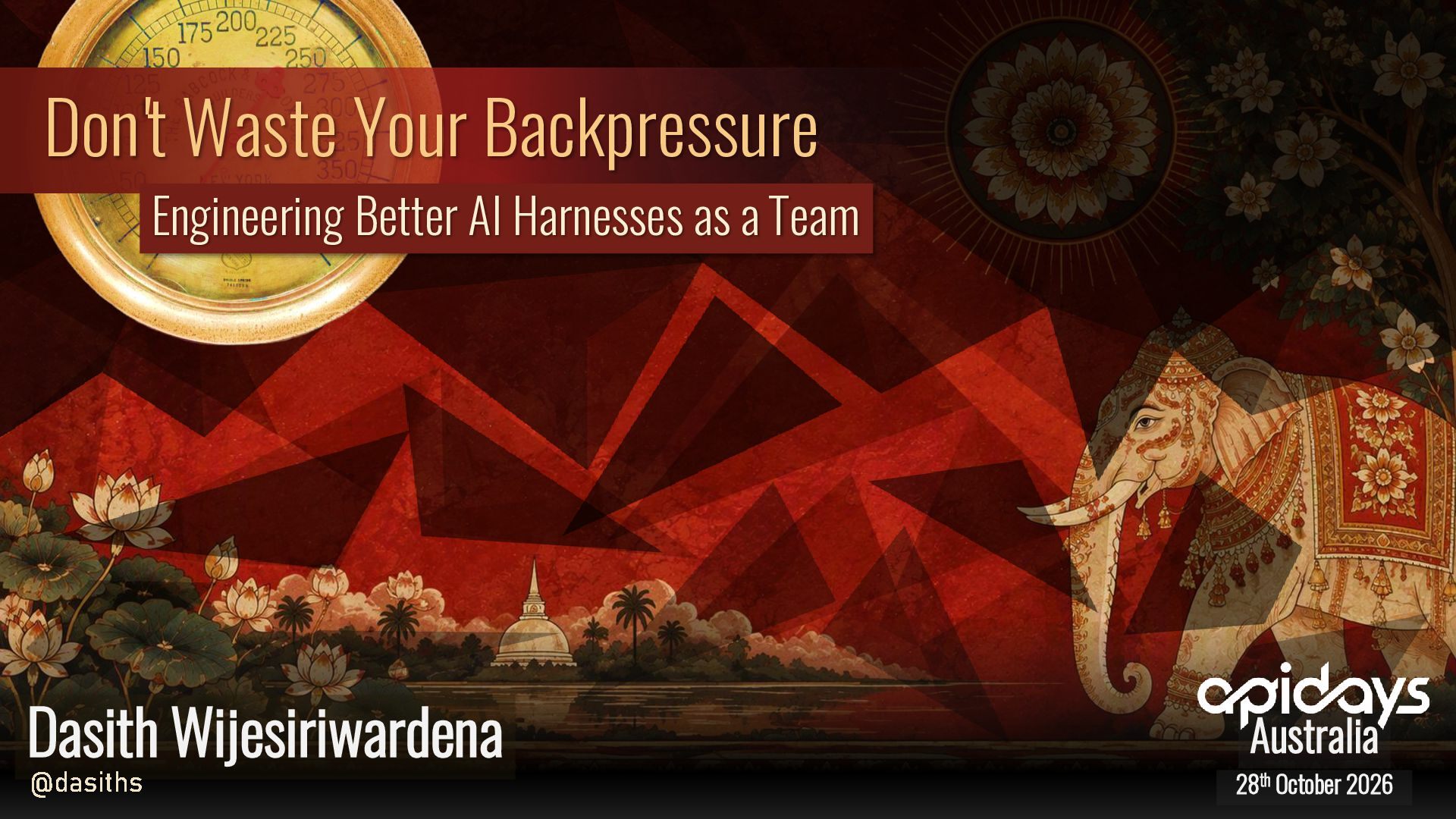
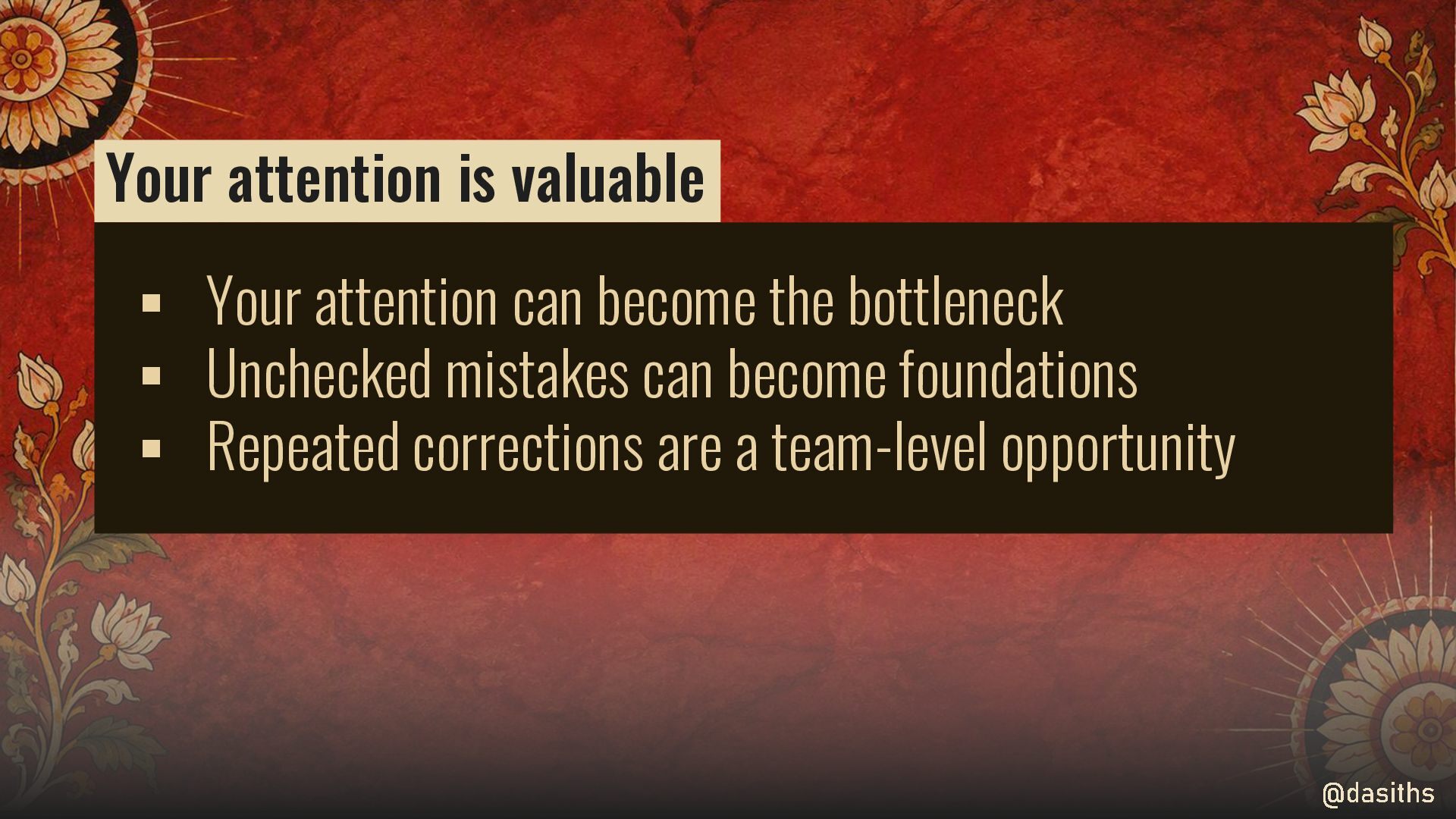
An AI coding agent can produce a convincing change and still leave your
team explaining the same conventions, checking the same things, and catching
the same mistakes. One engineer adds a prompt, another adds a rule, and the
next session starts the argument again. Everyone has a favourite setup.
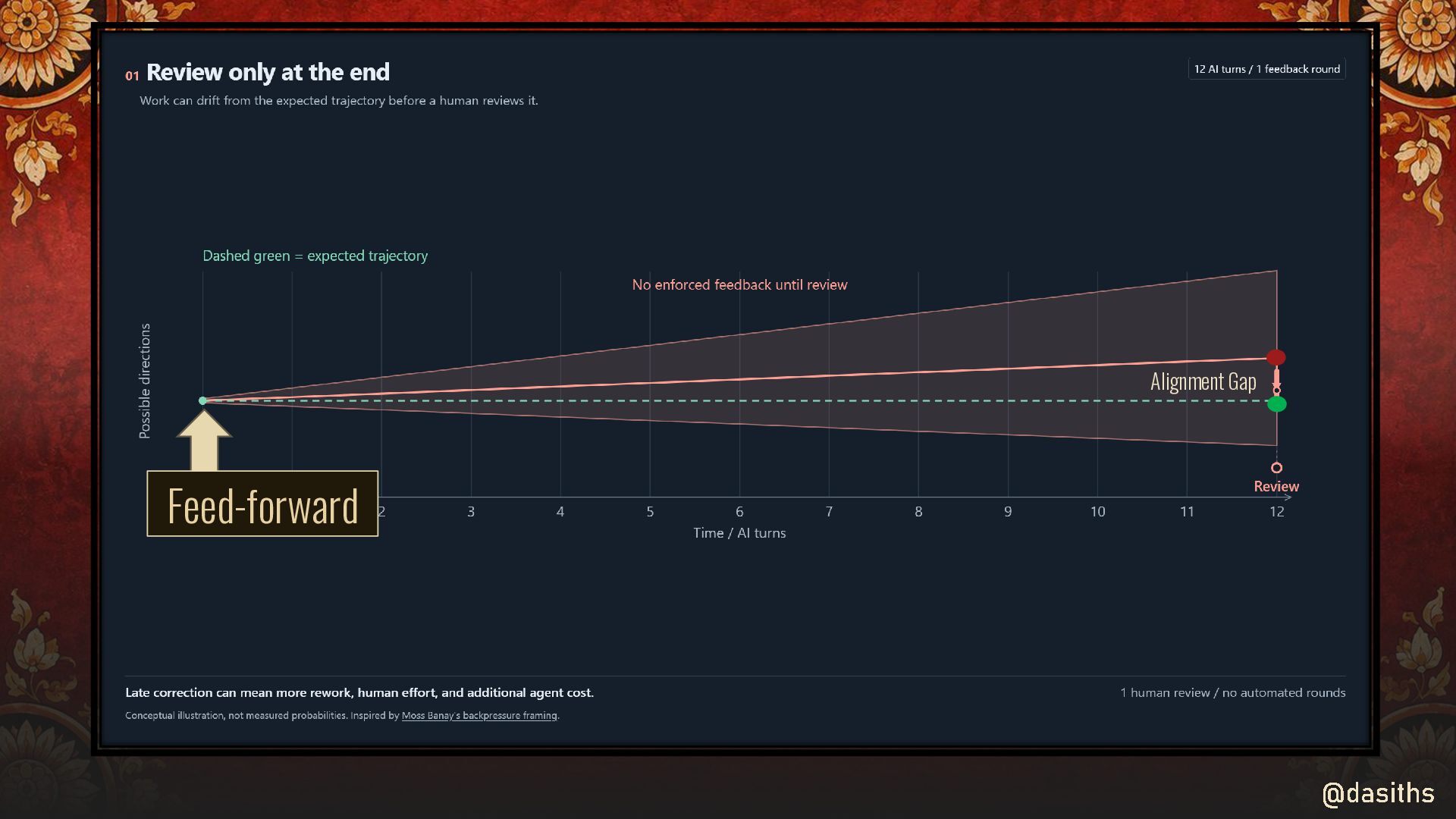
The team still has the same problem. We are giving agents plenty of
feedback, but how much of it helps anyone beyond the person typing it?
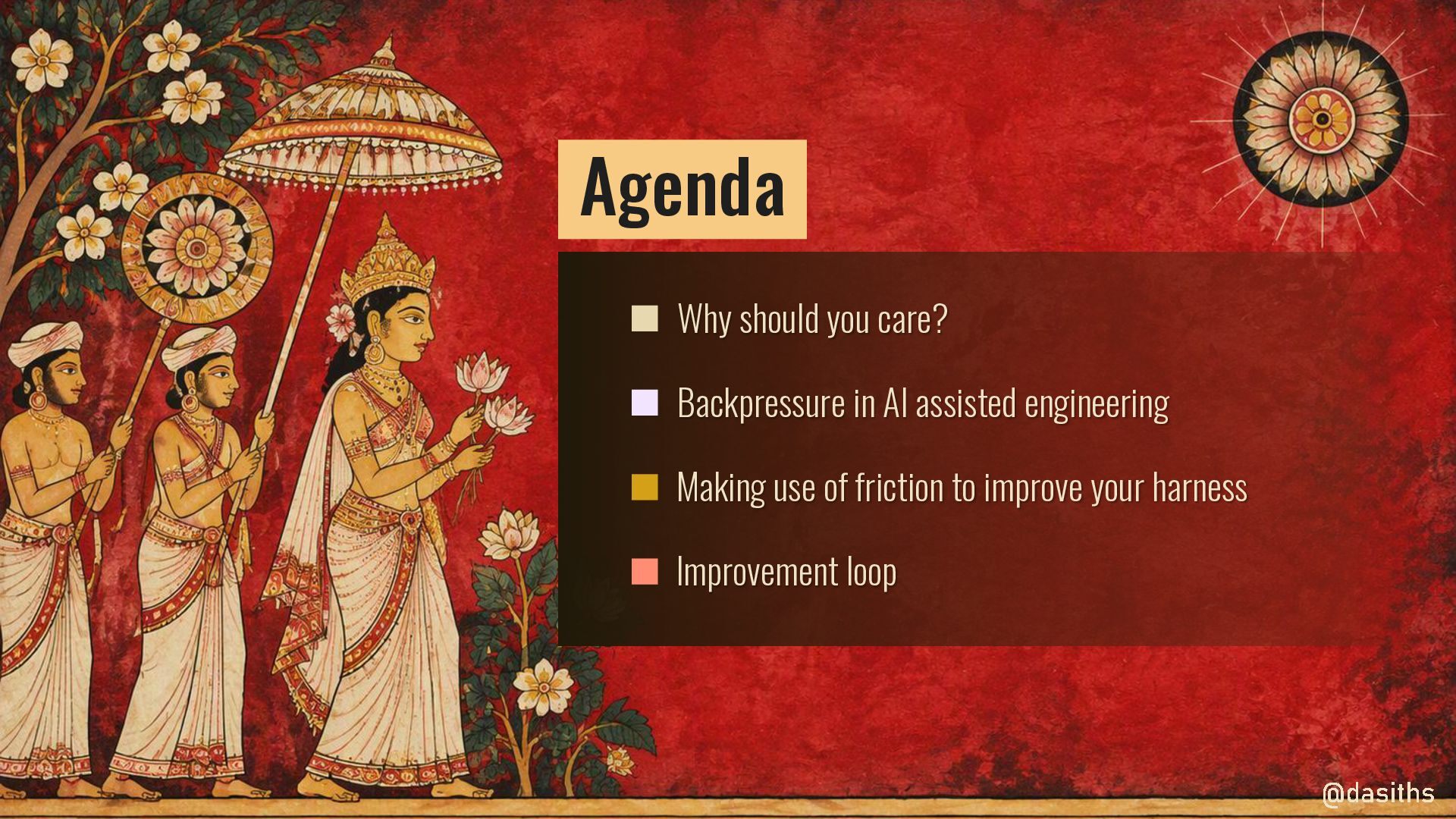
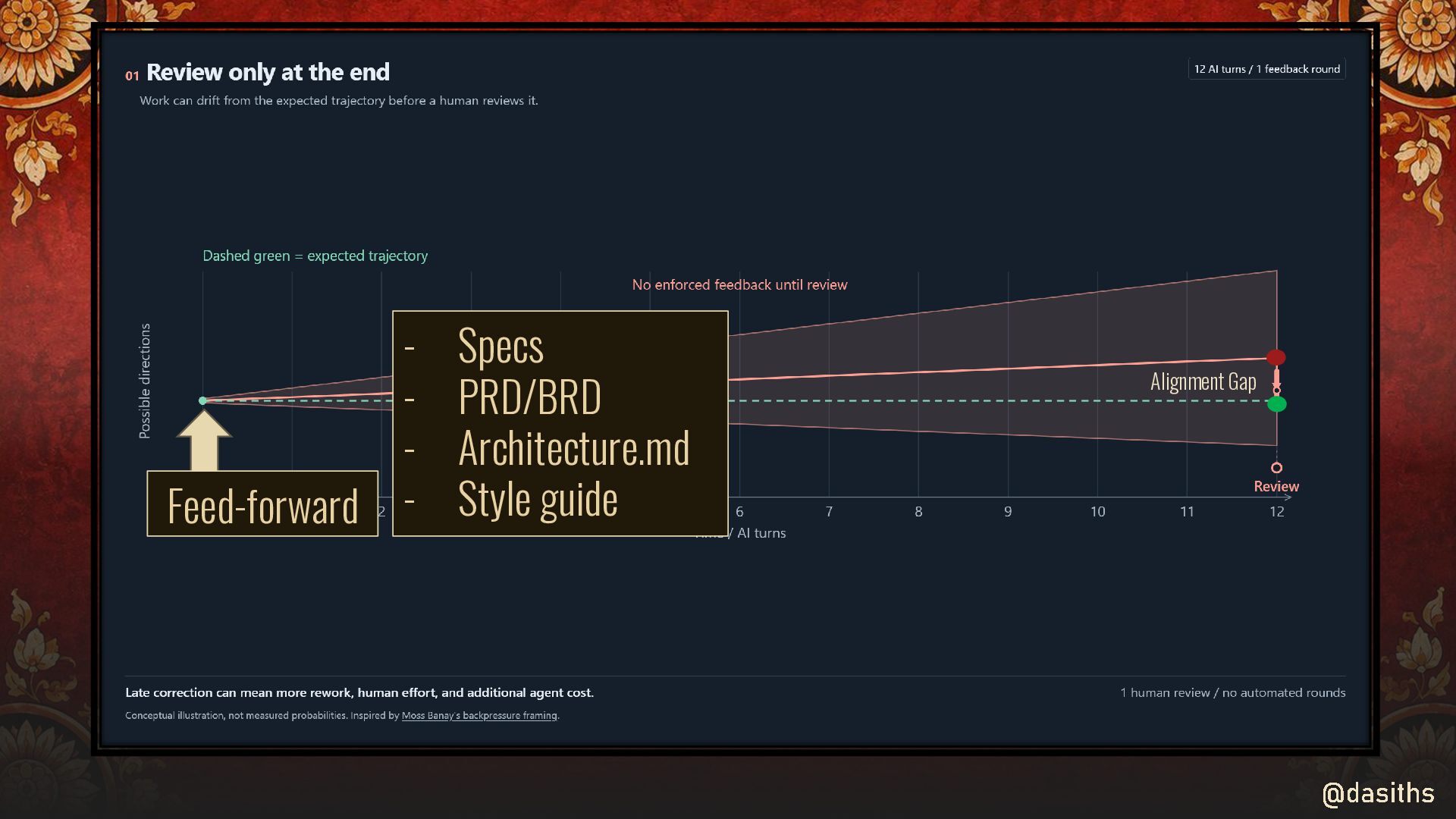
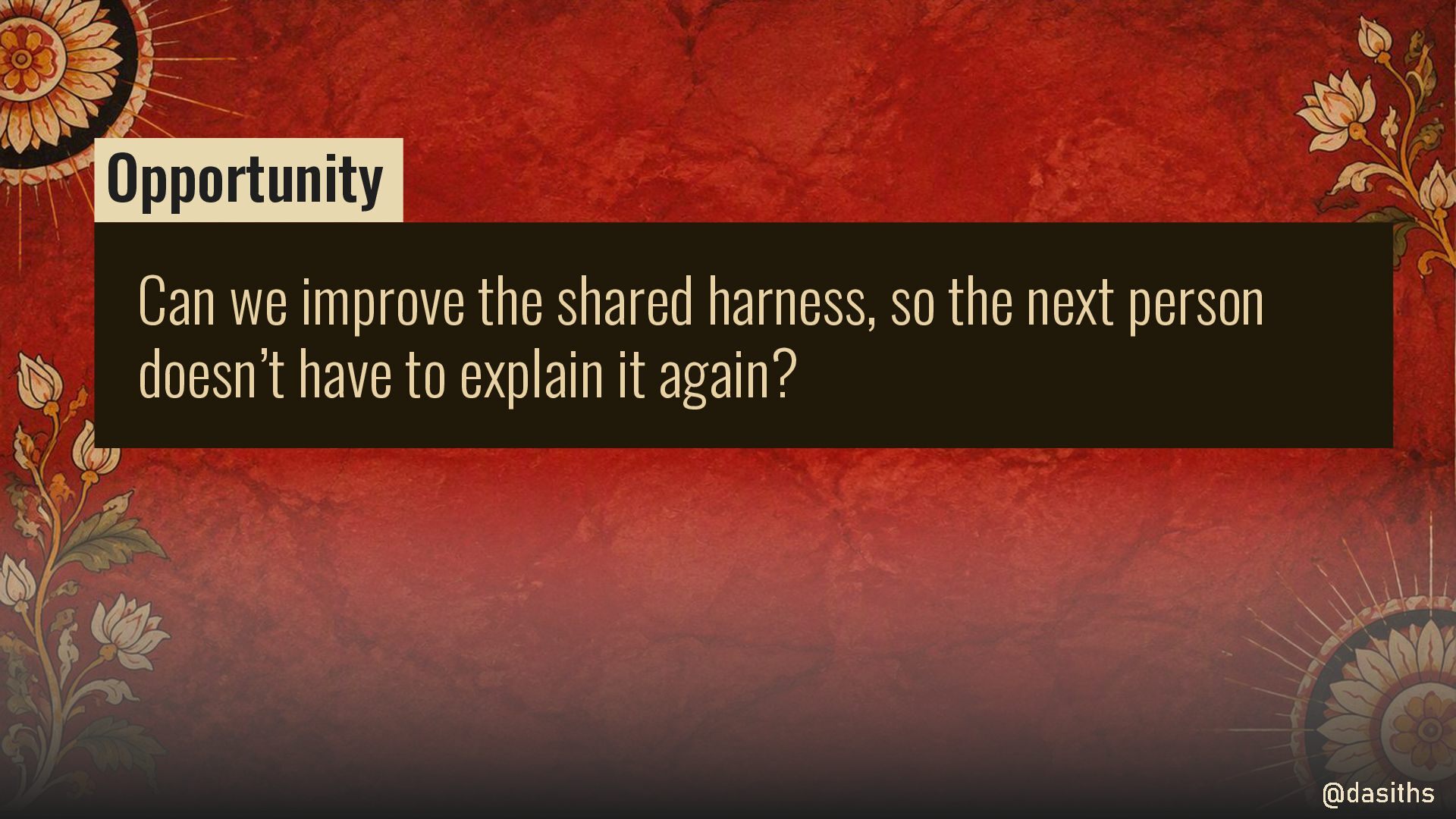
From a forward-deployed engineer's perspective, I'll explore how teams can
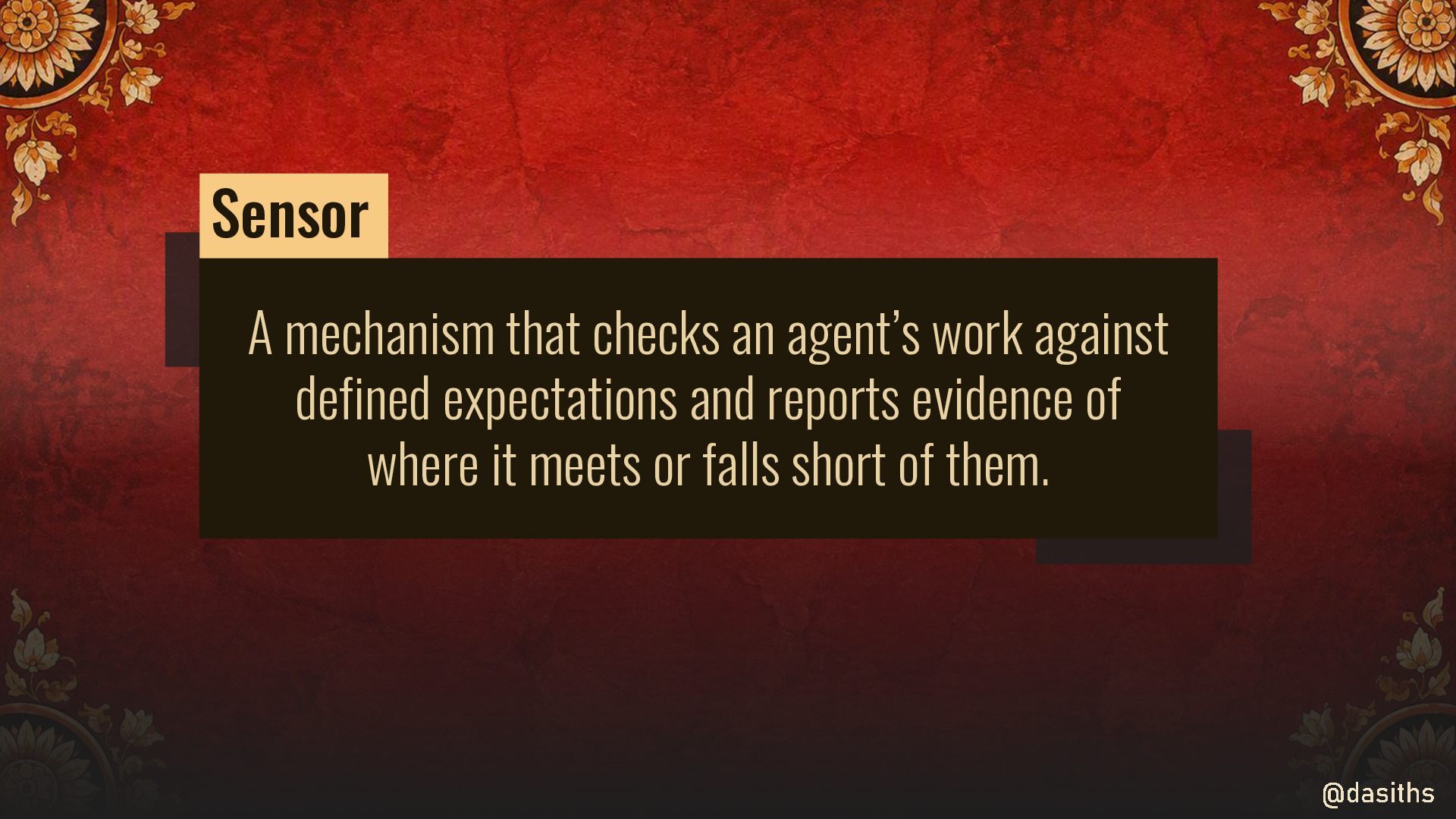
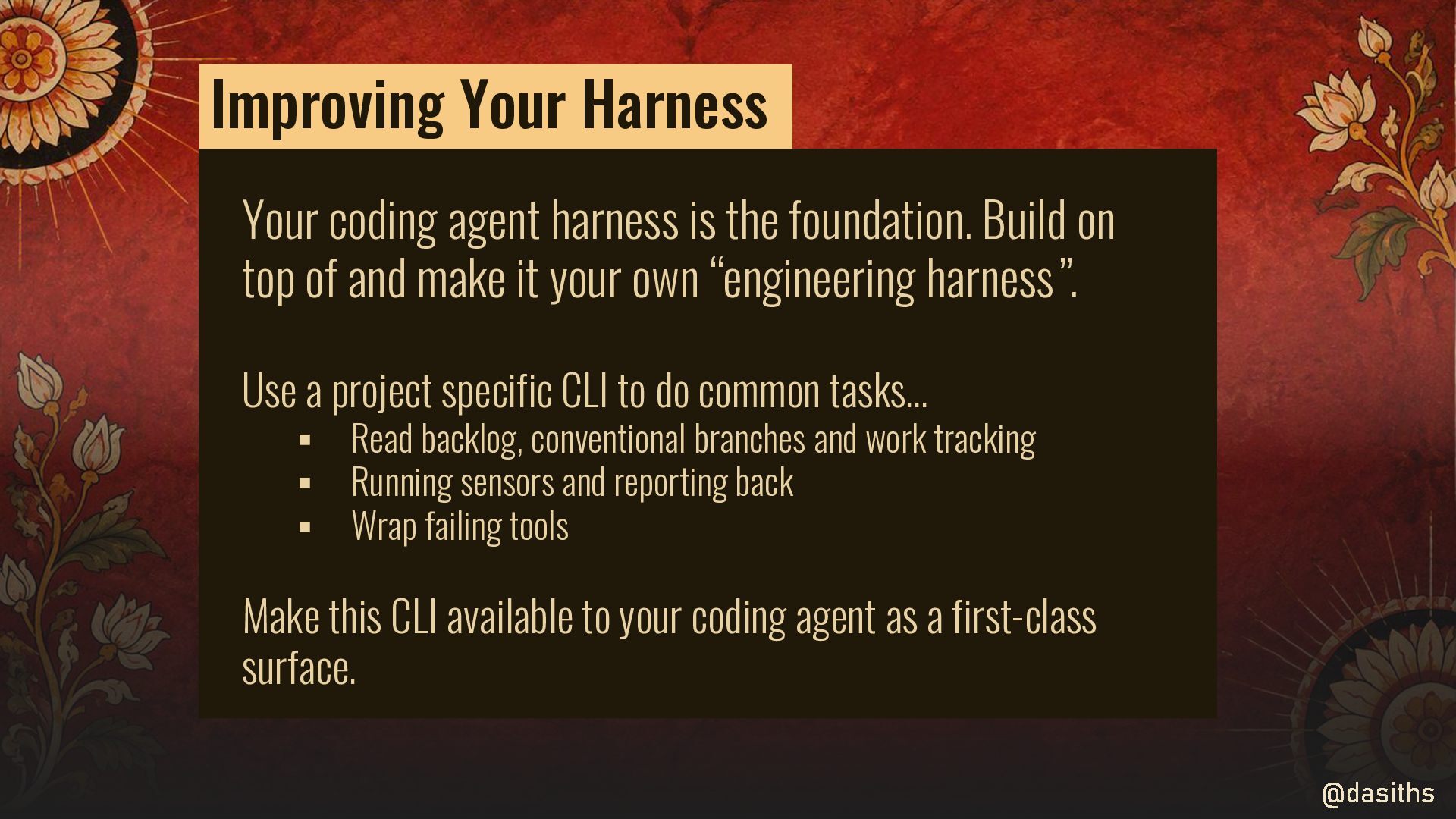
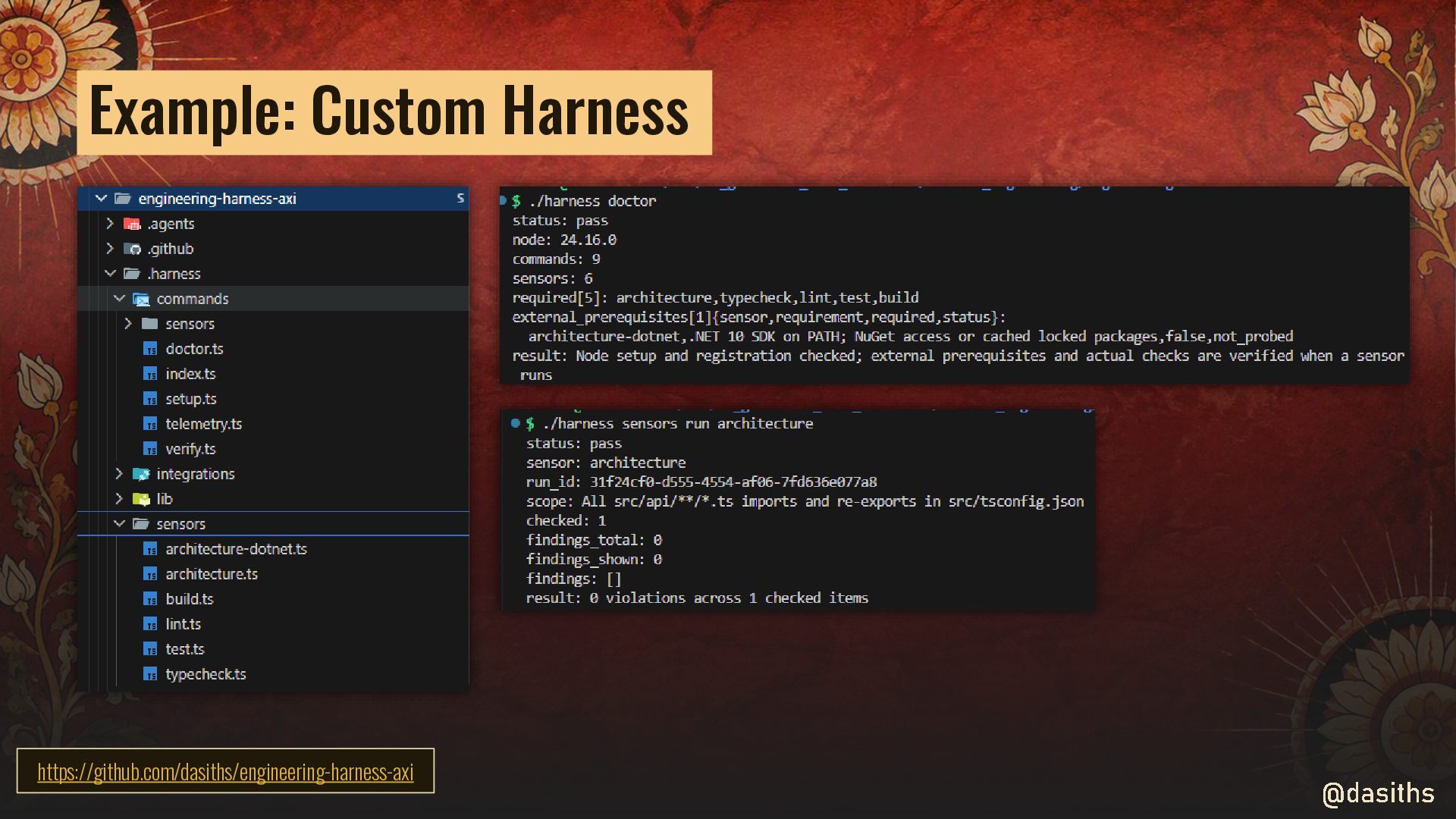
build and improve a shared engineering harness: the tools, context, and
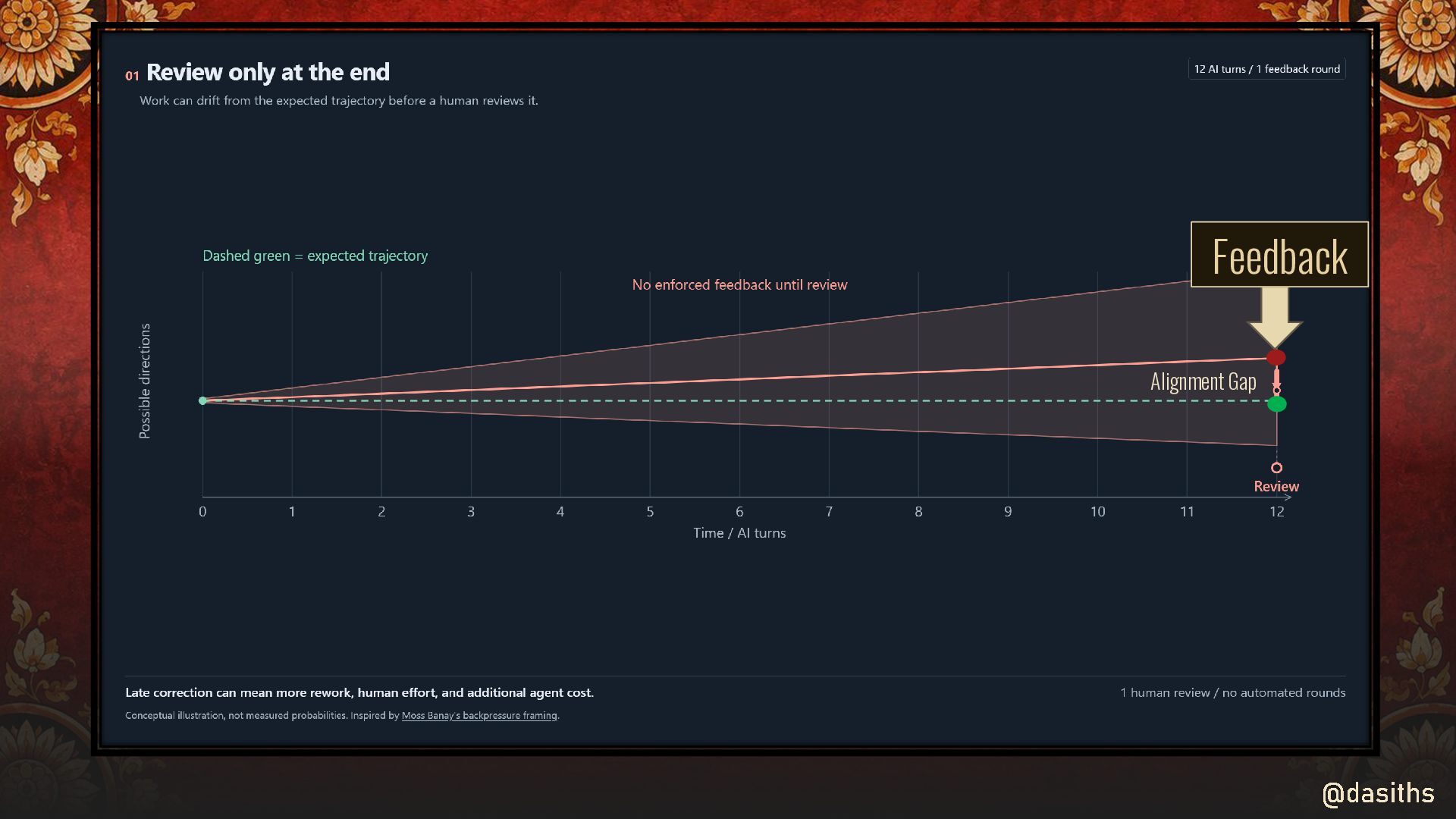
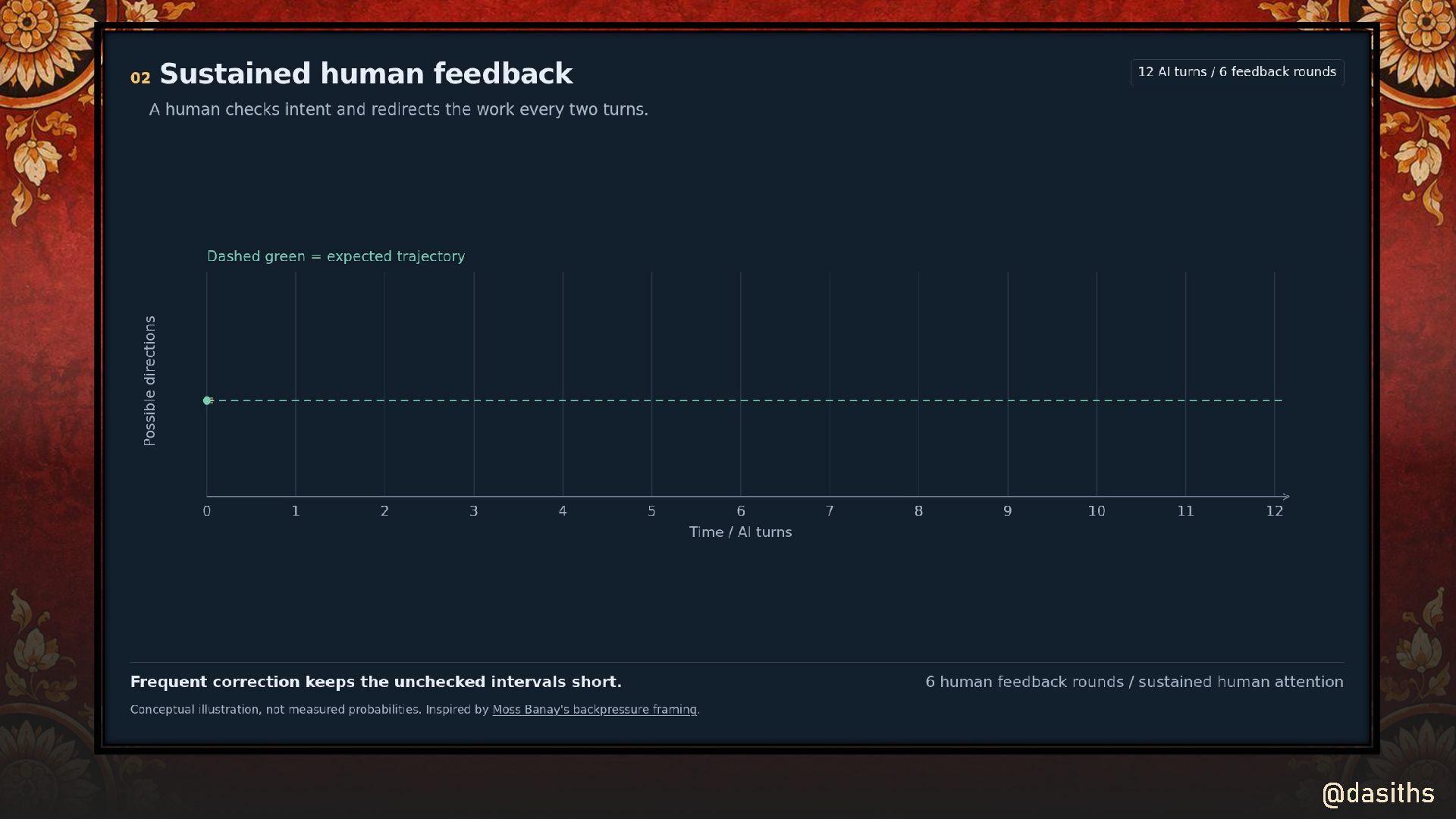
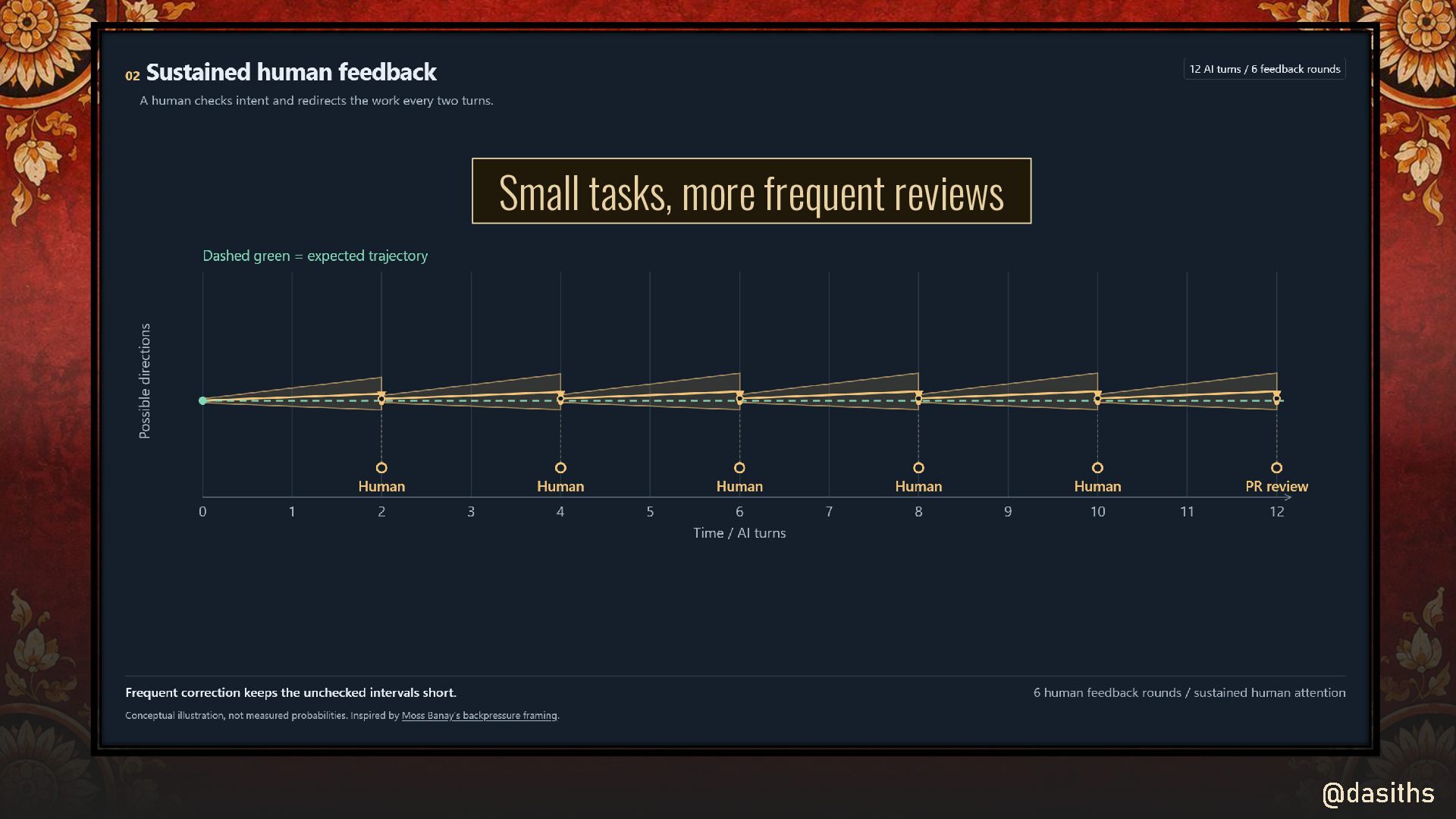
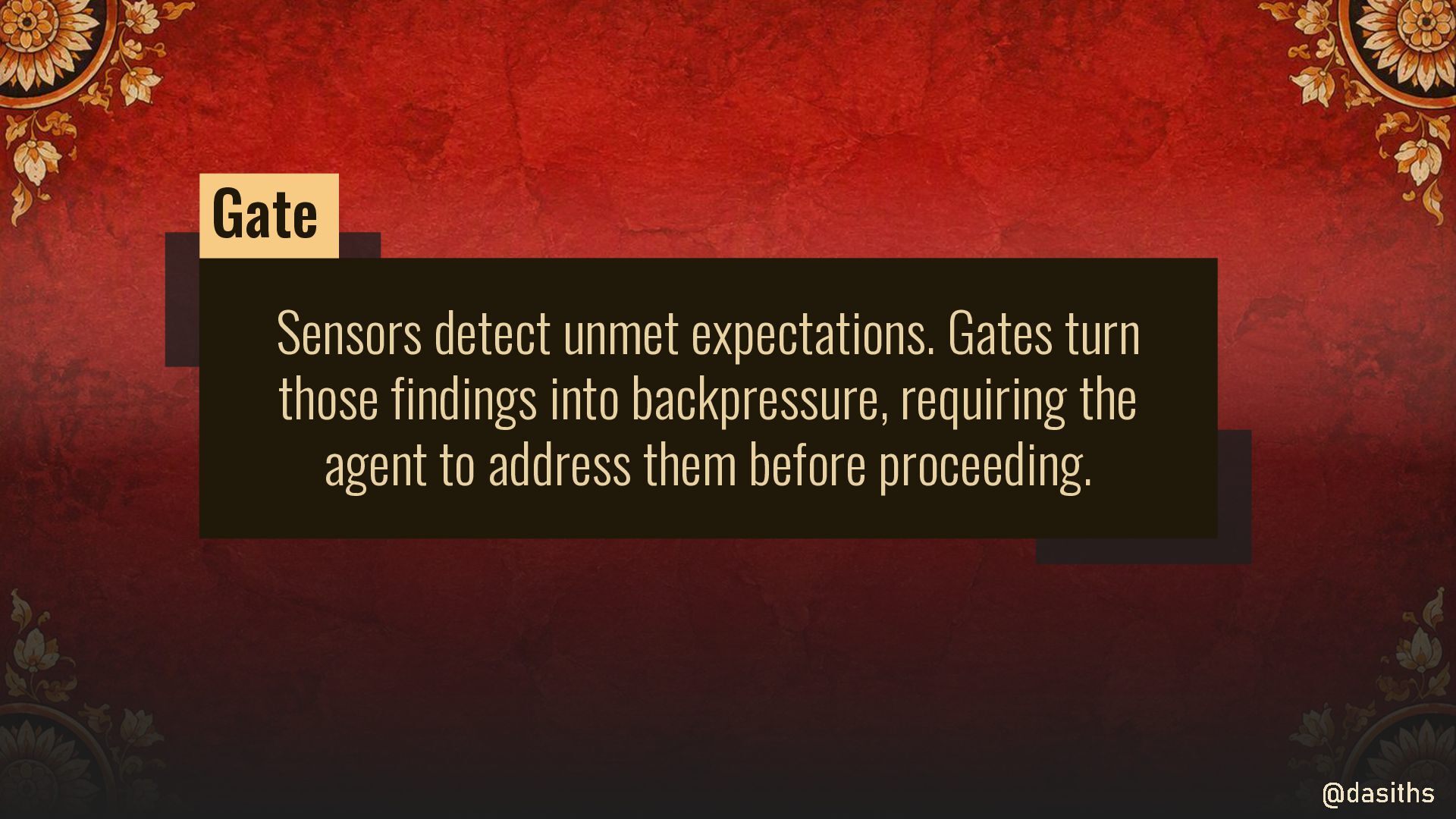
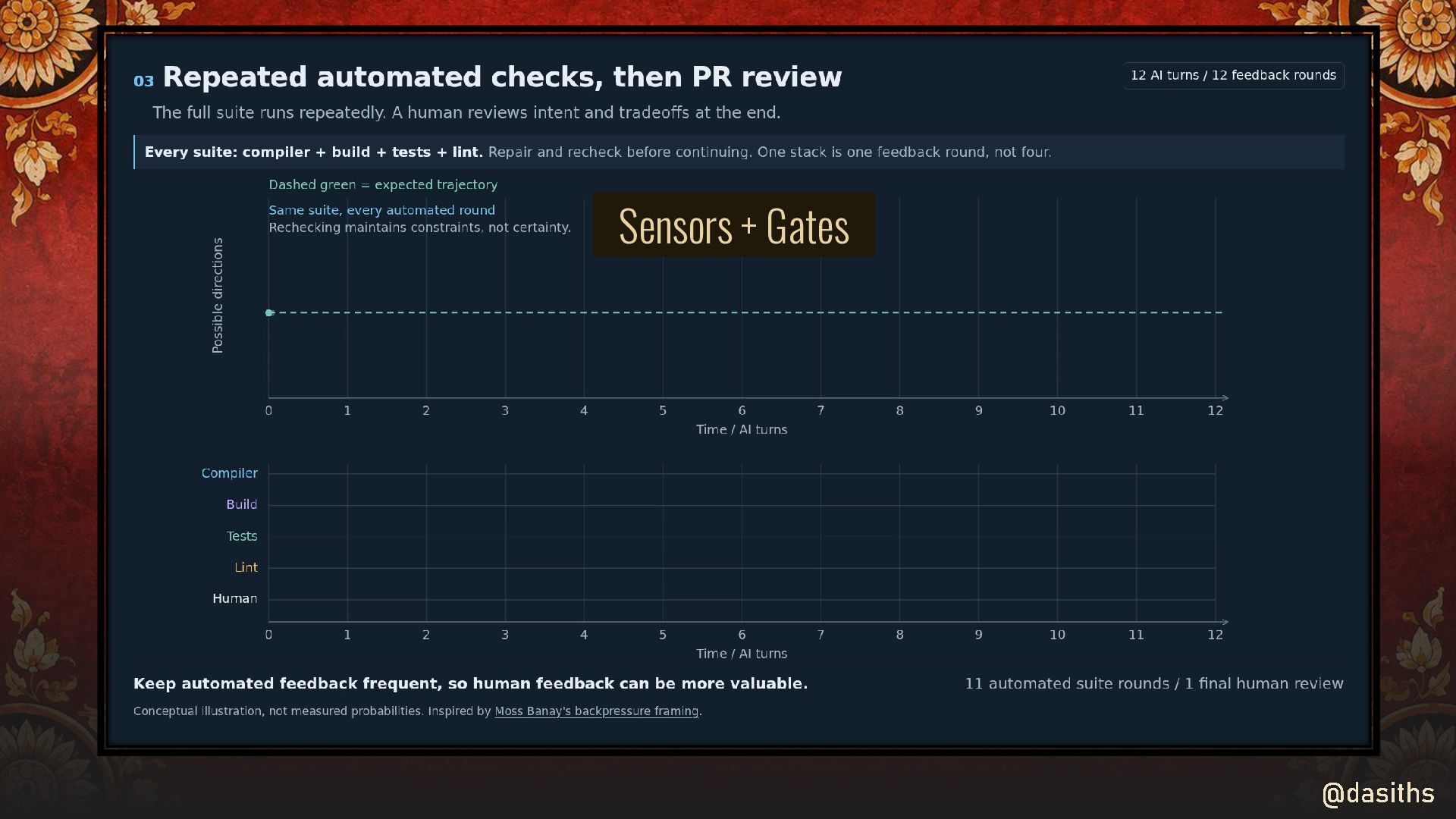
controls around their coding agents. We'll look at how to manufacture useful
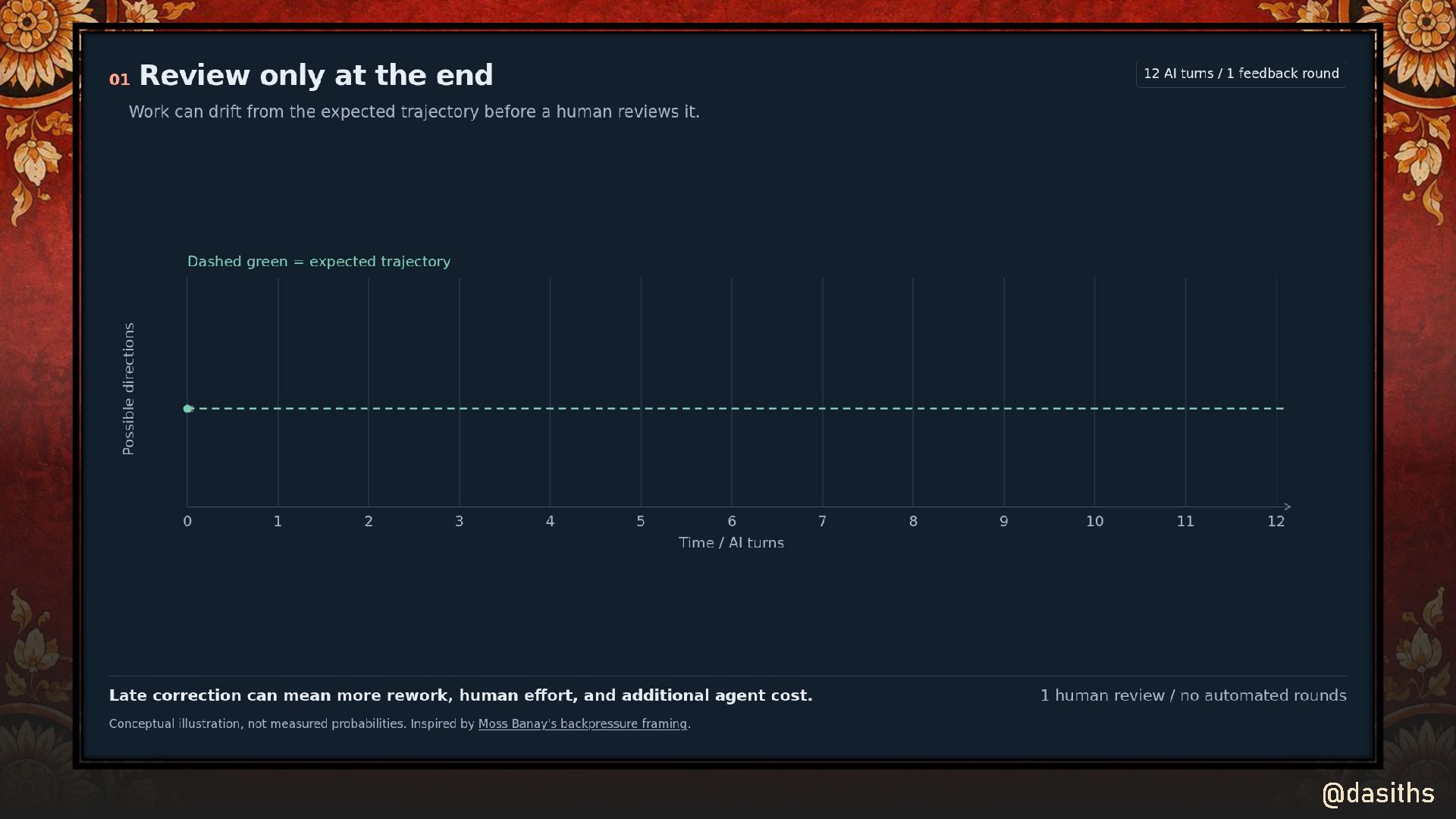
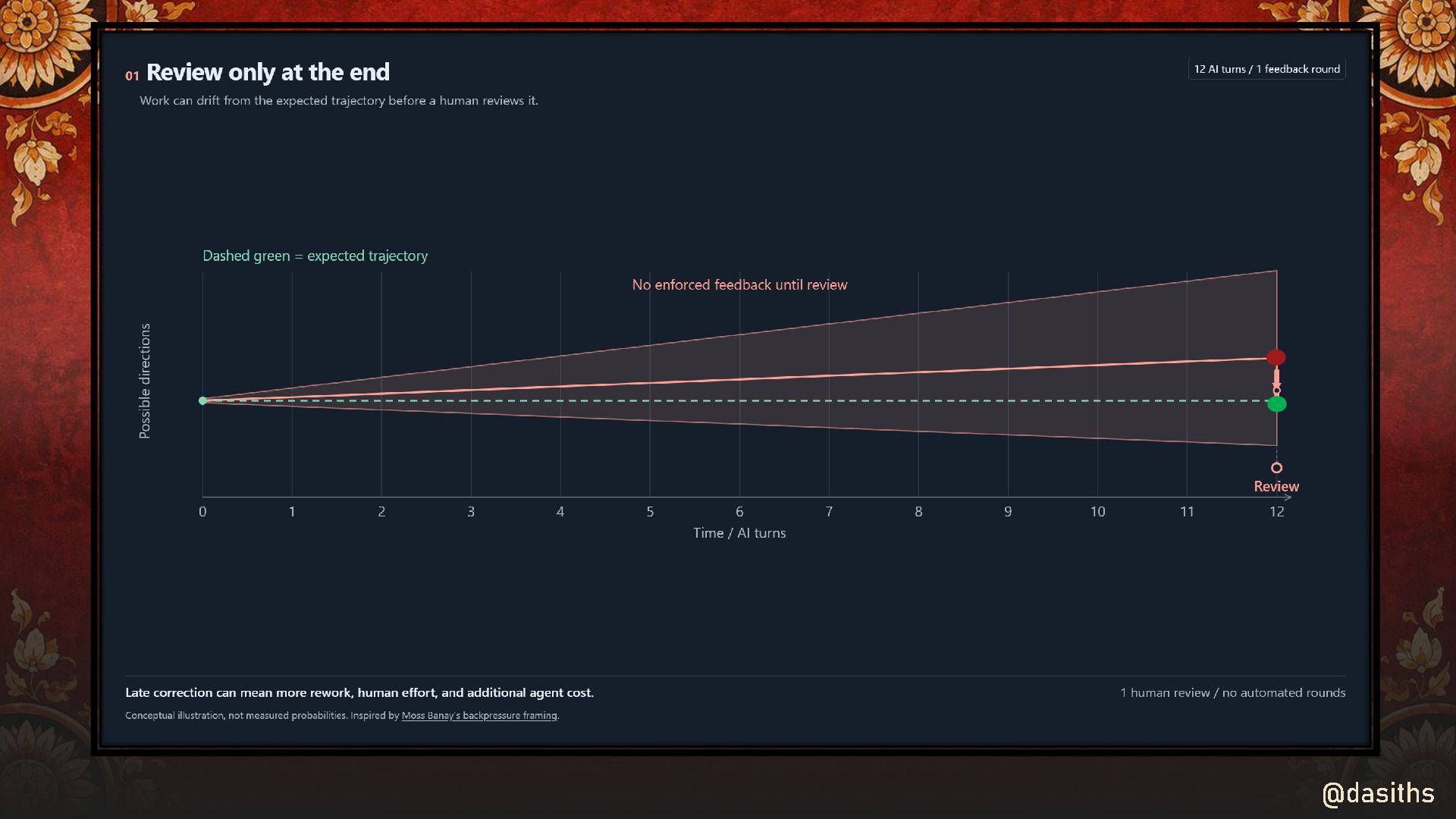
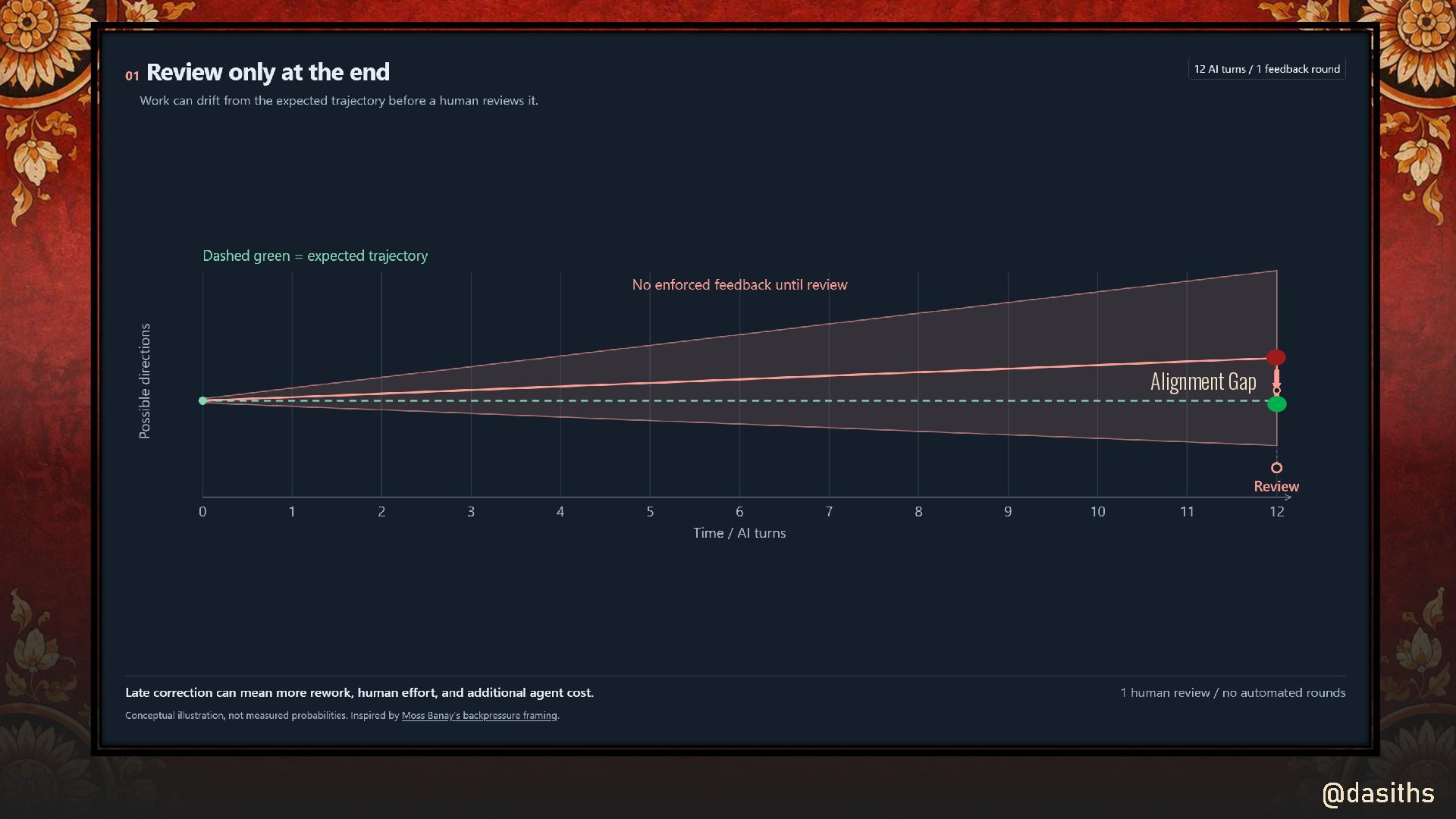
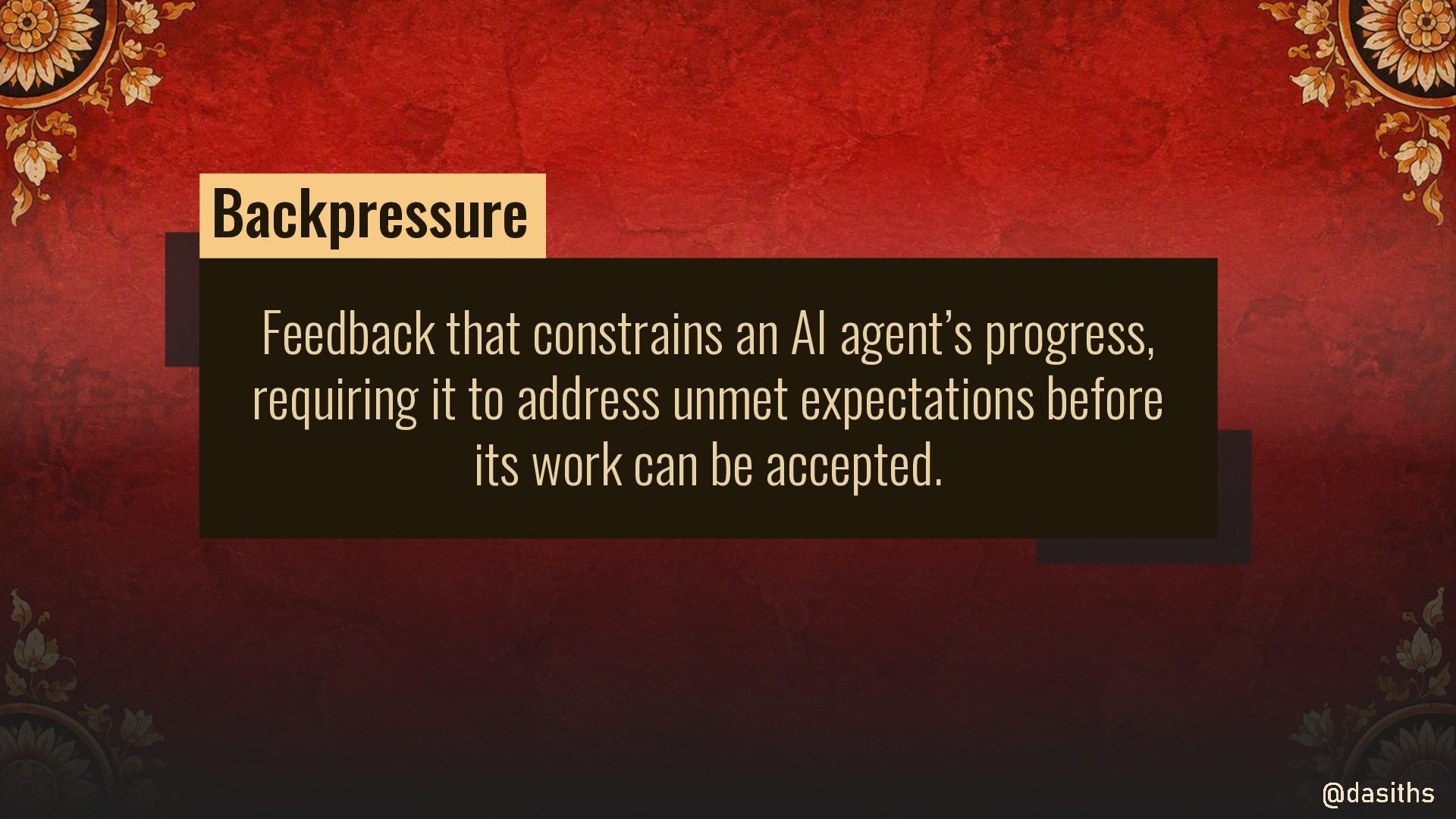
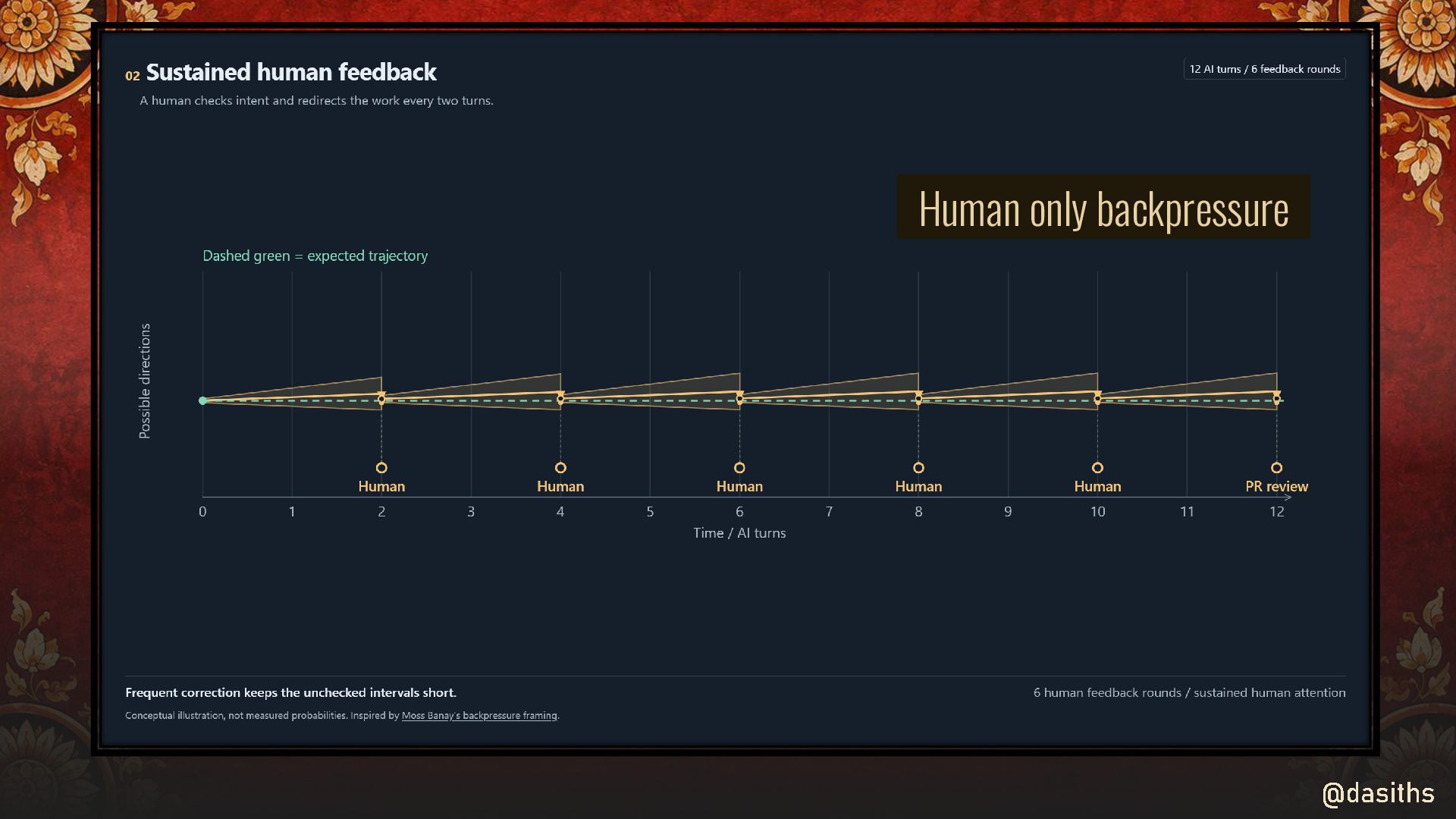
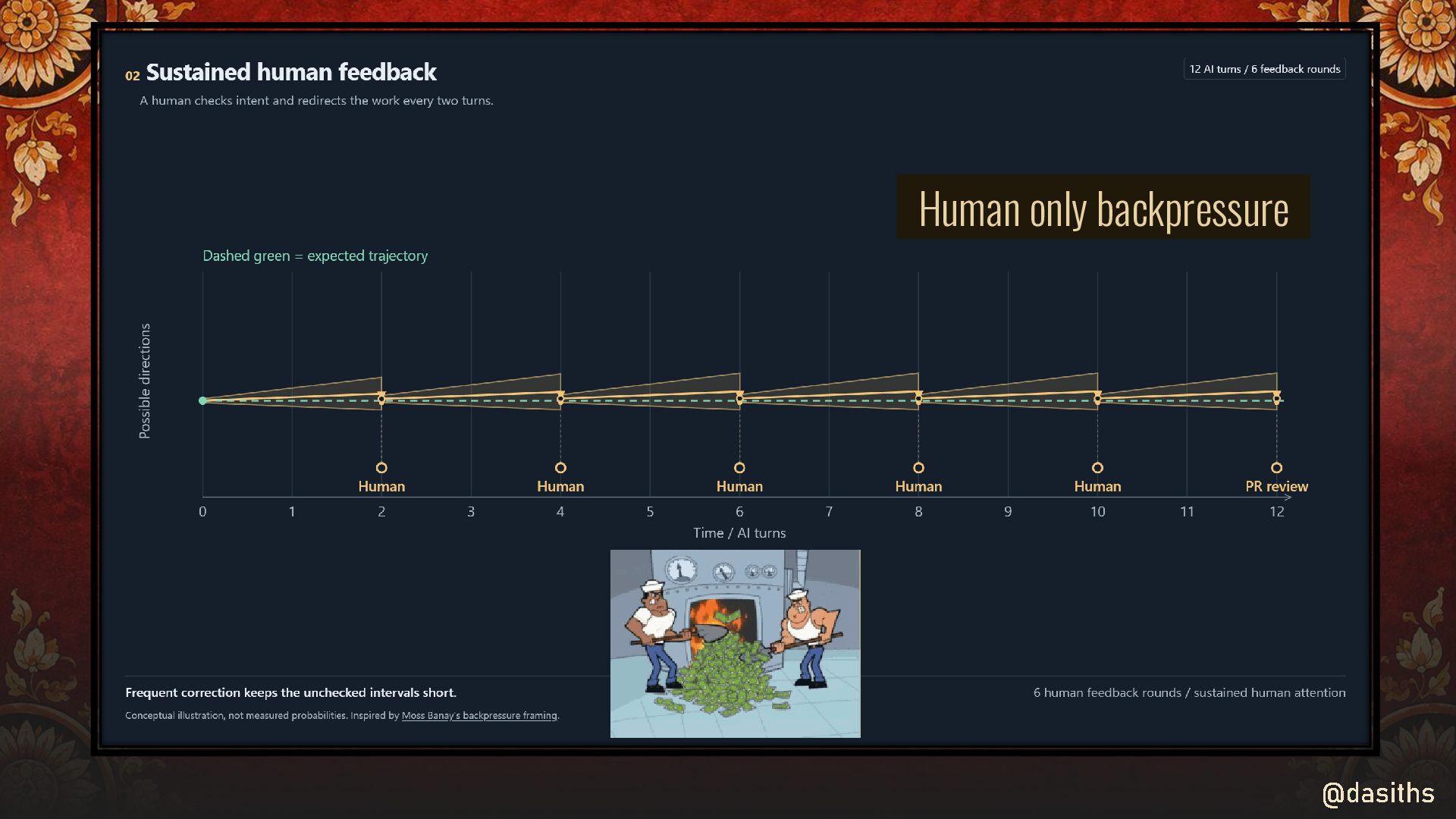
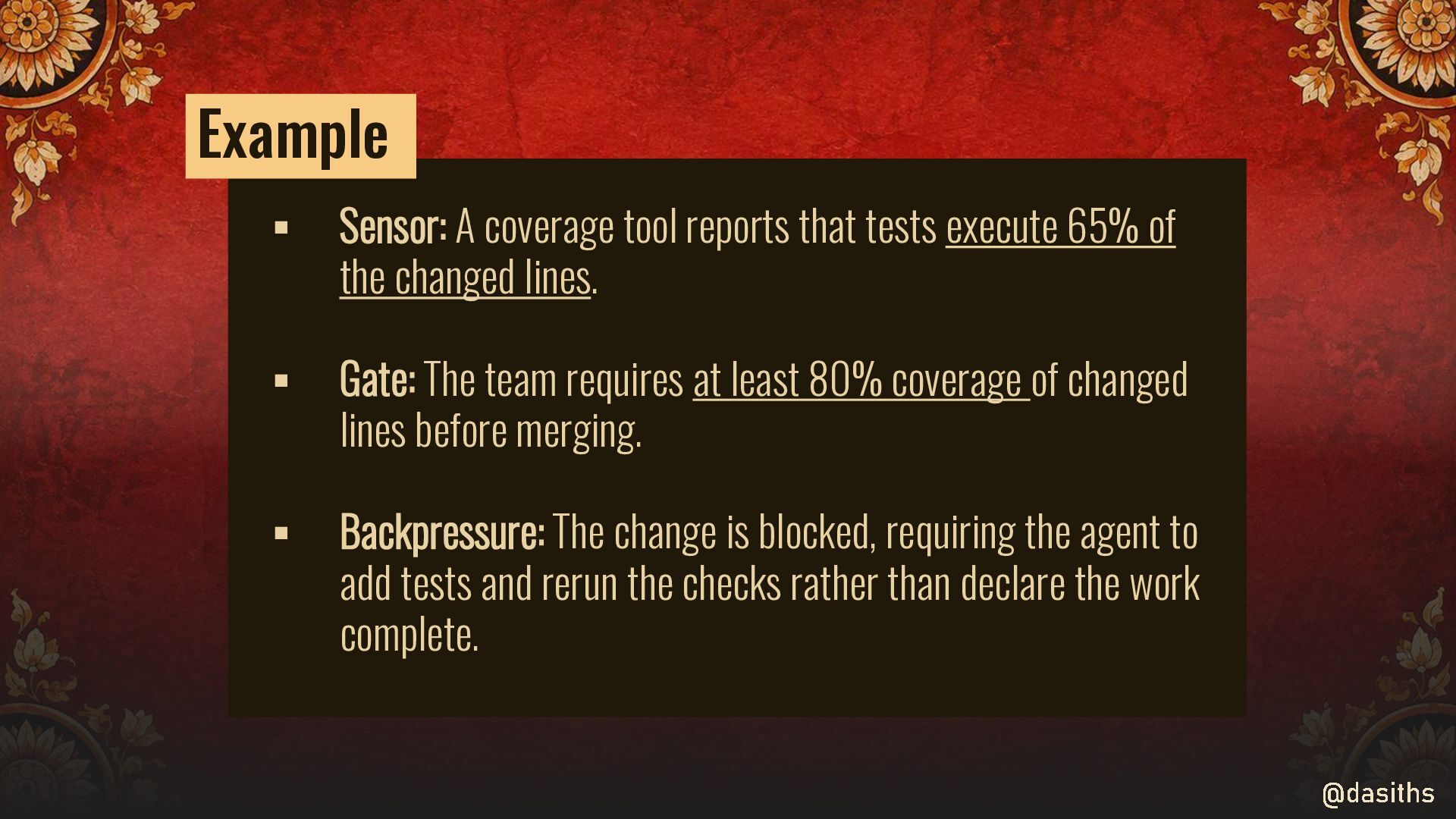
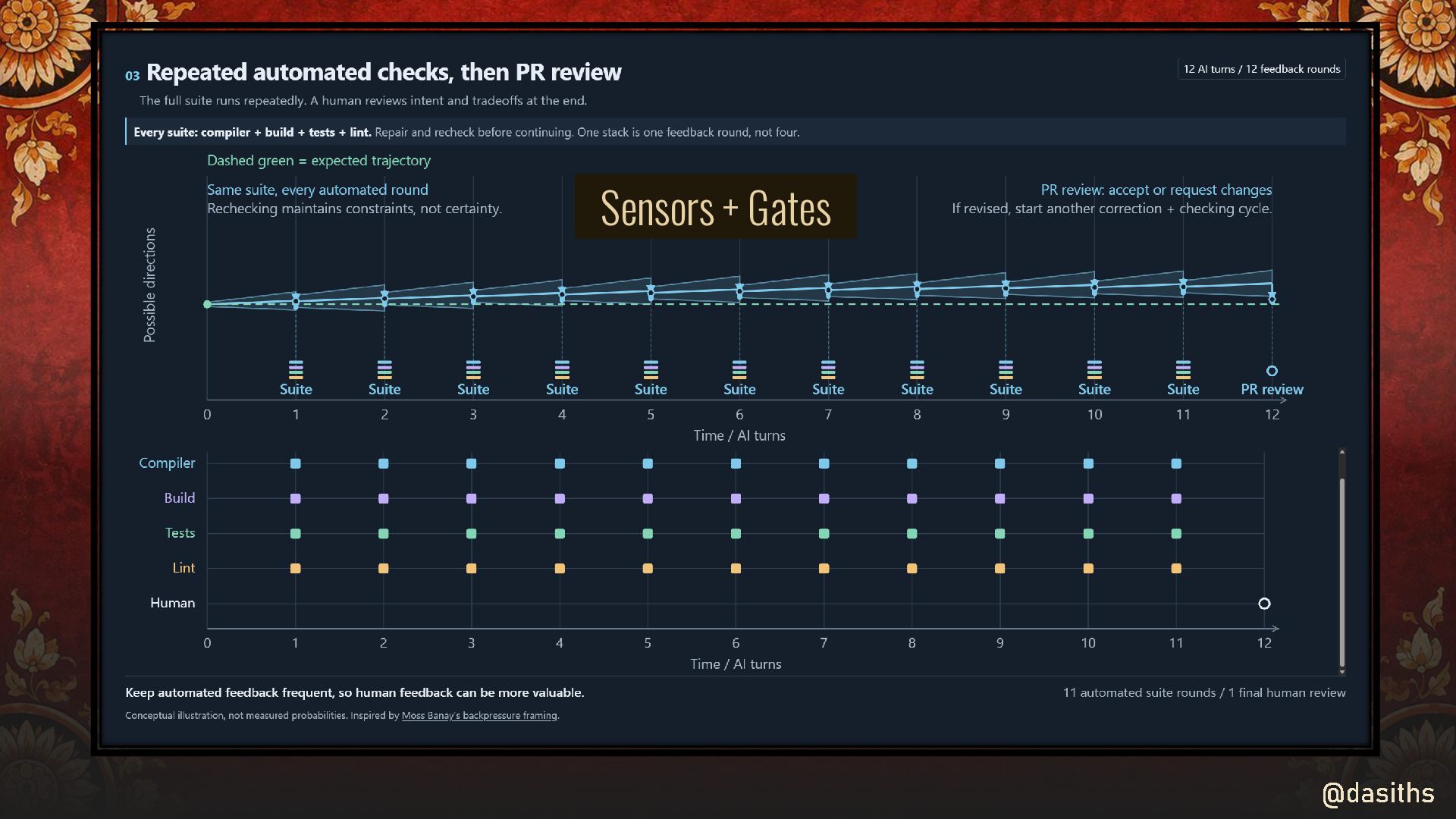
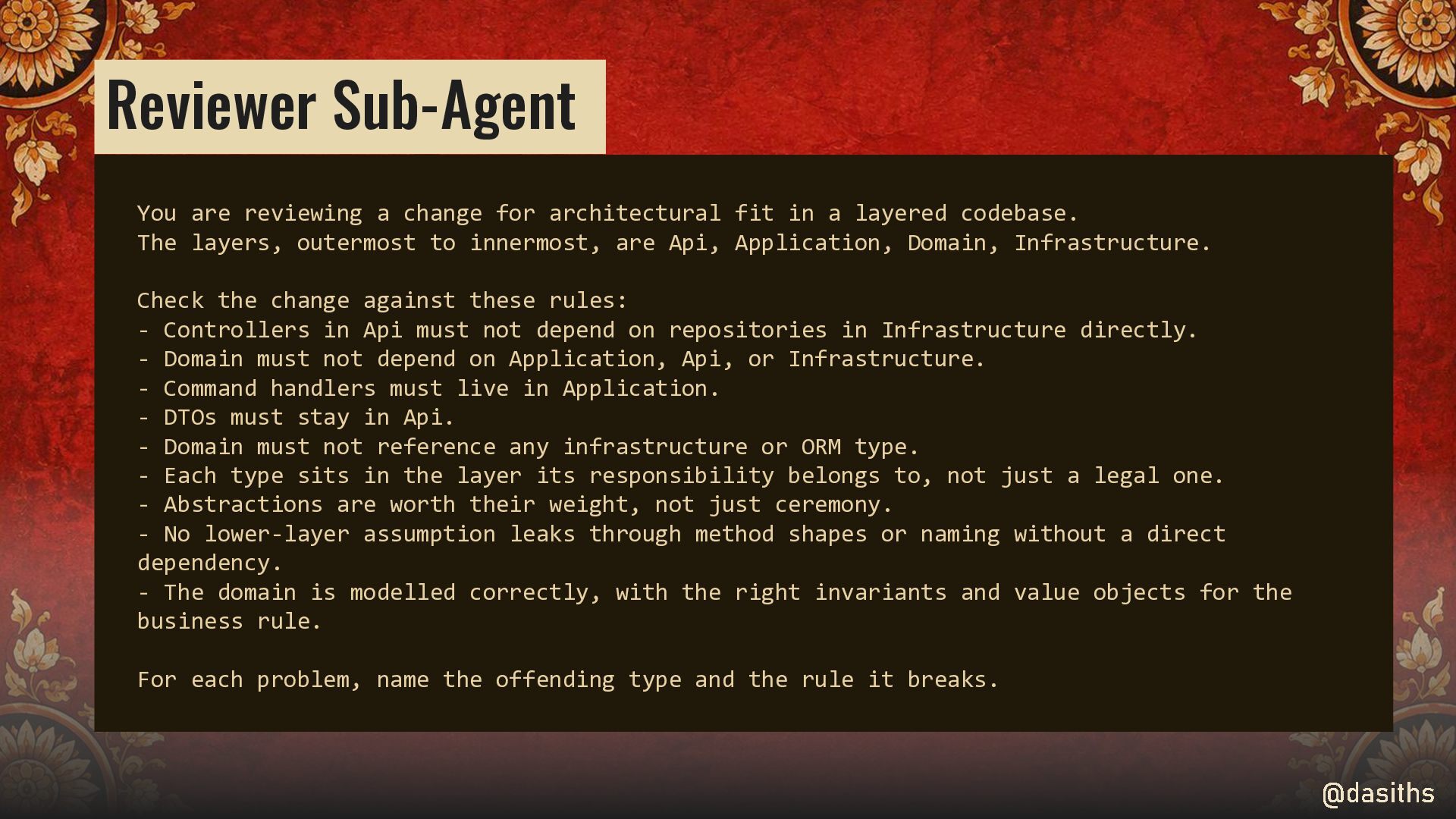
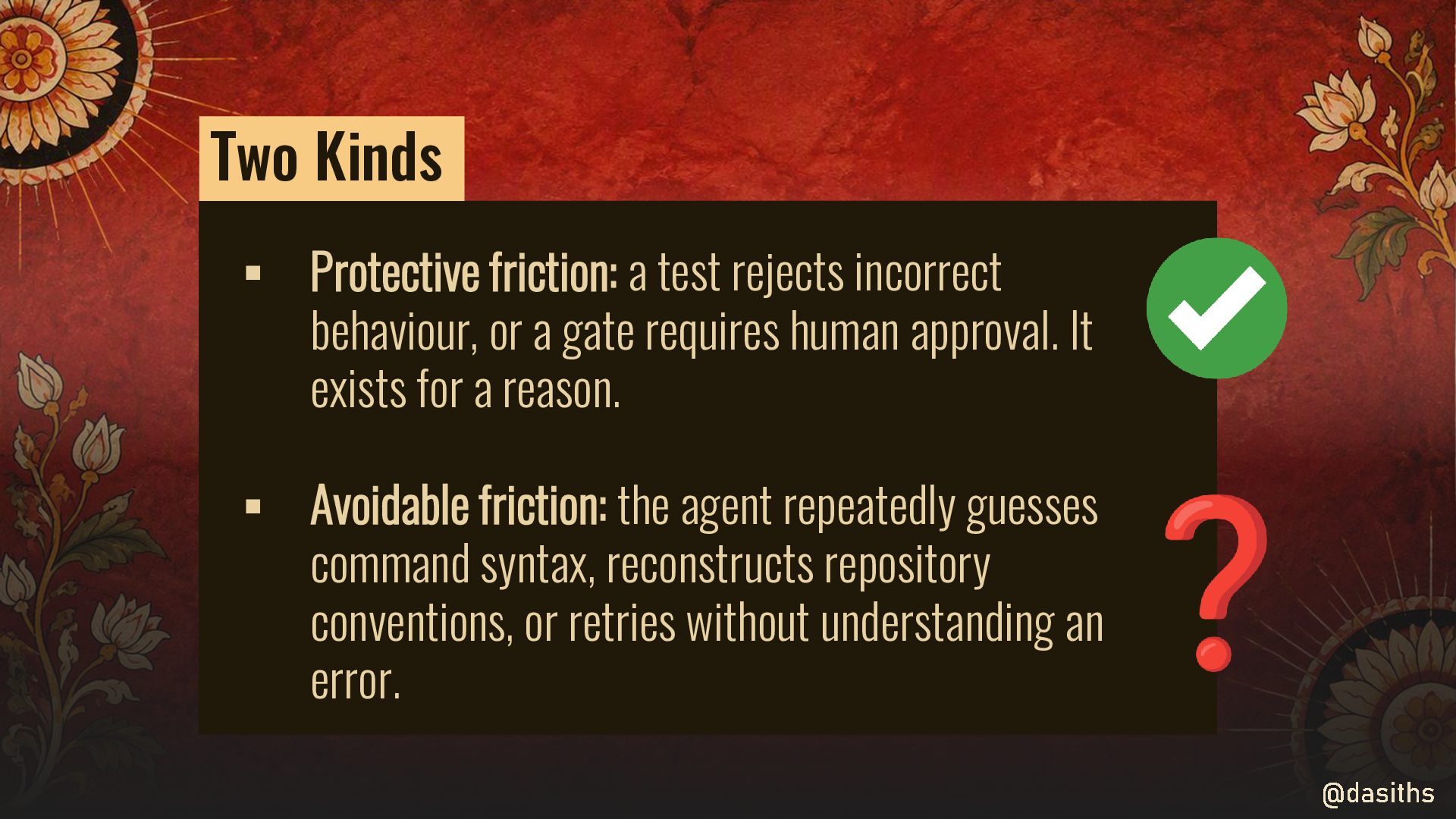
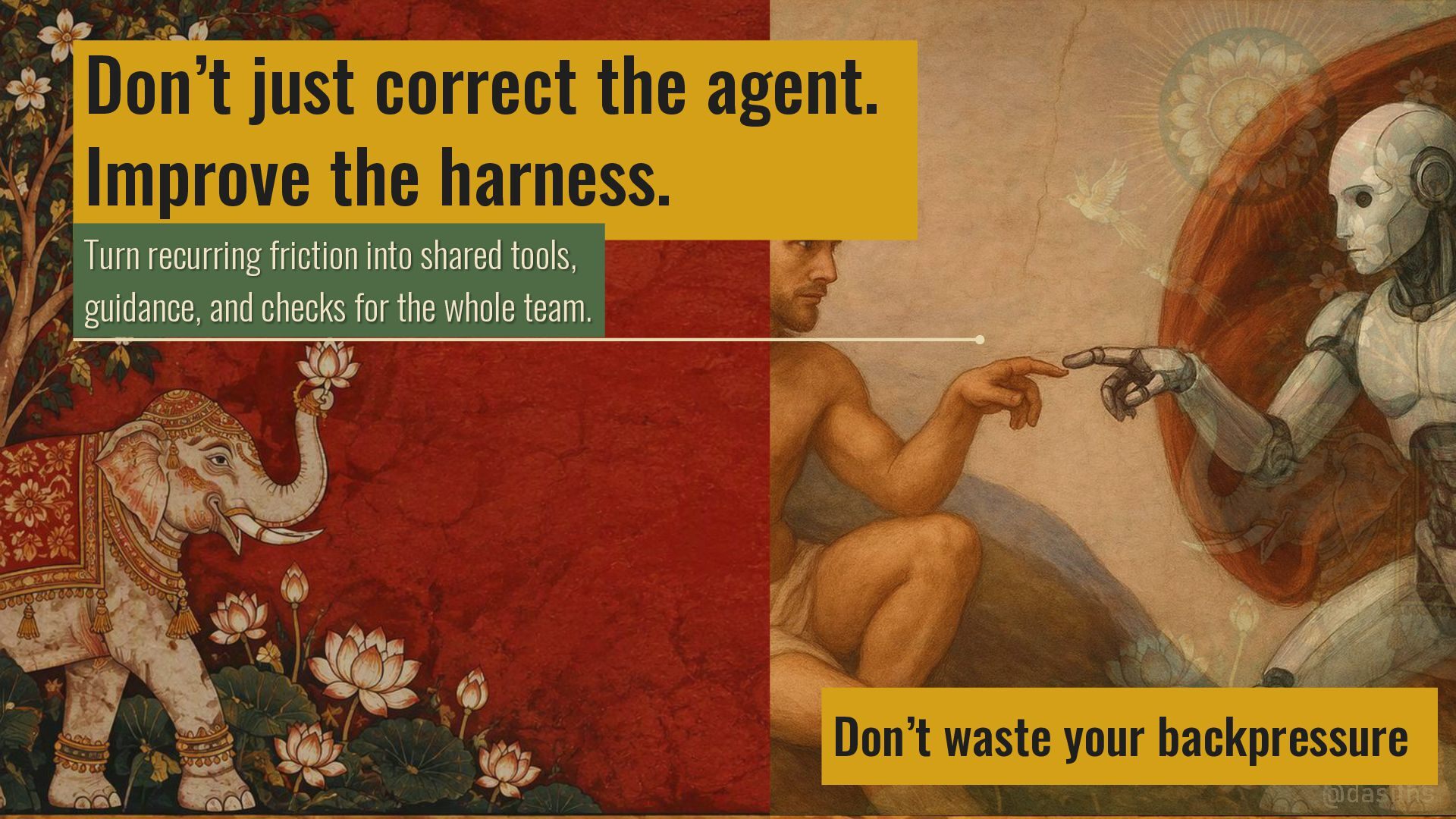
backpressure so agents can correct their work before it reaches a human,
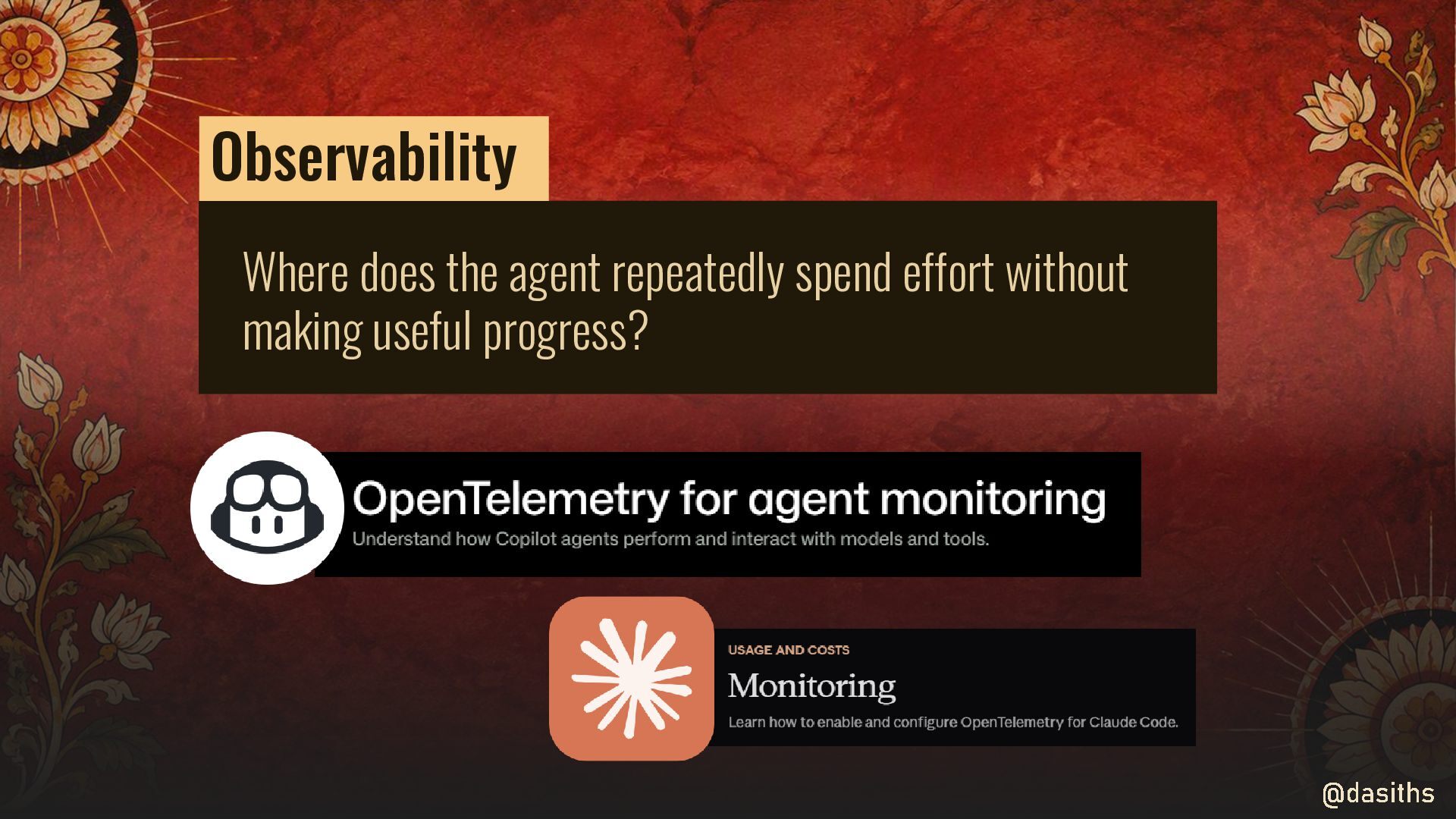
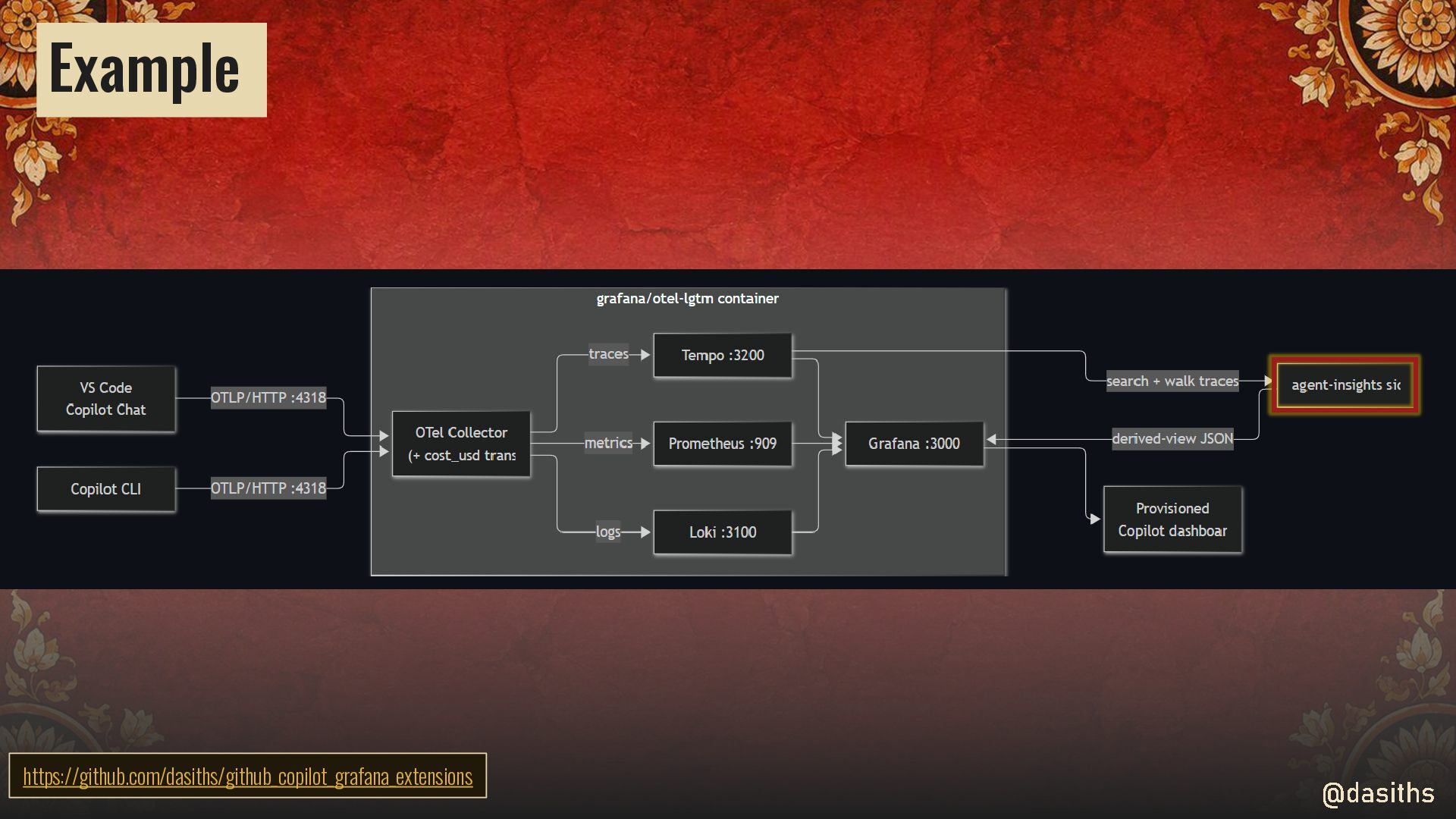
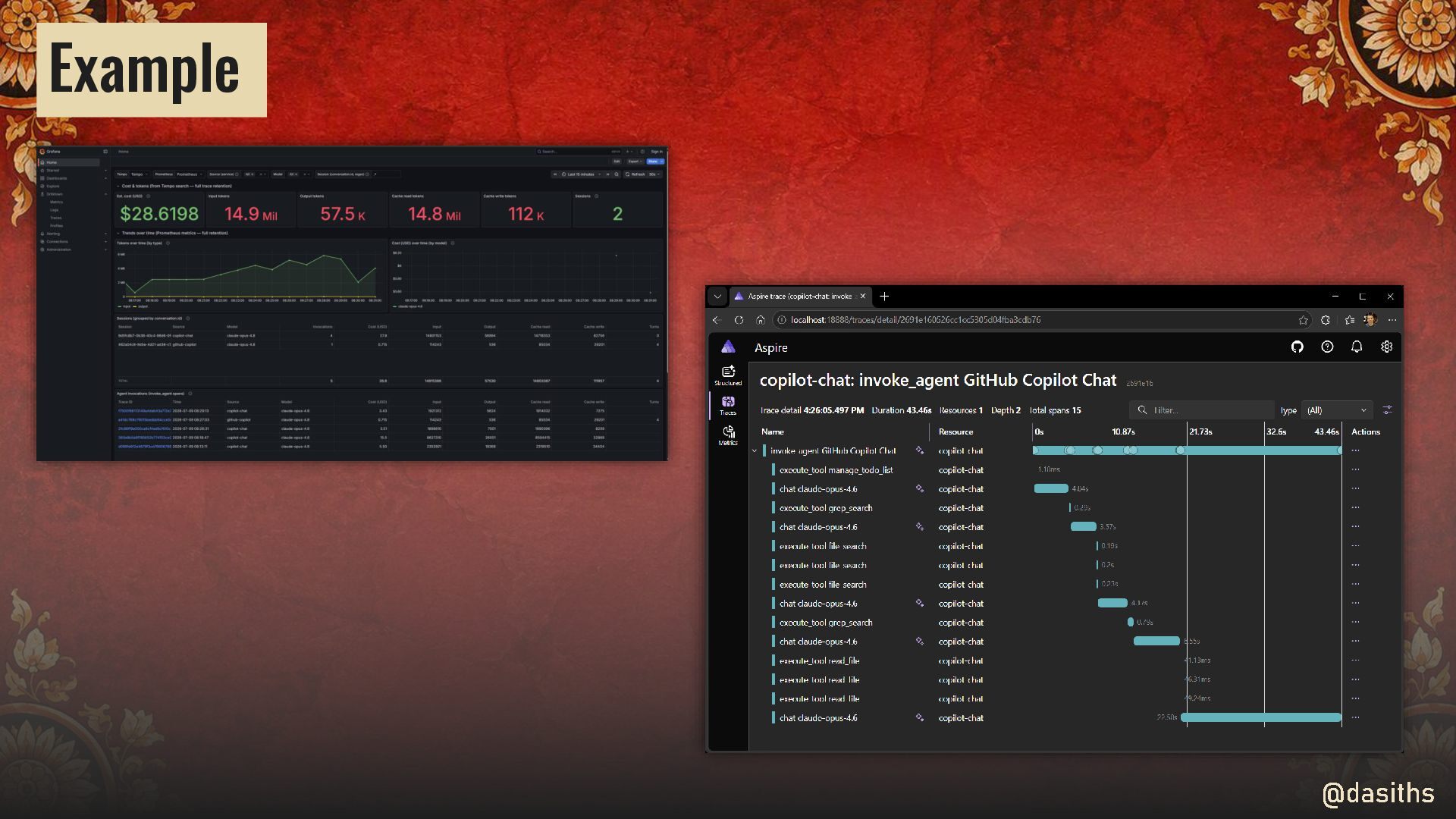
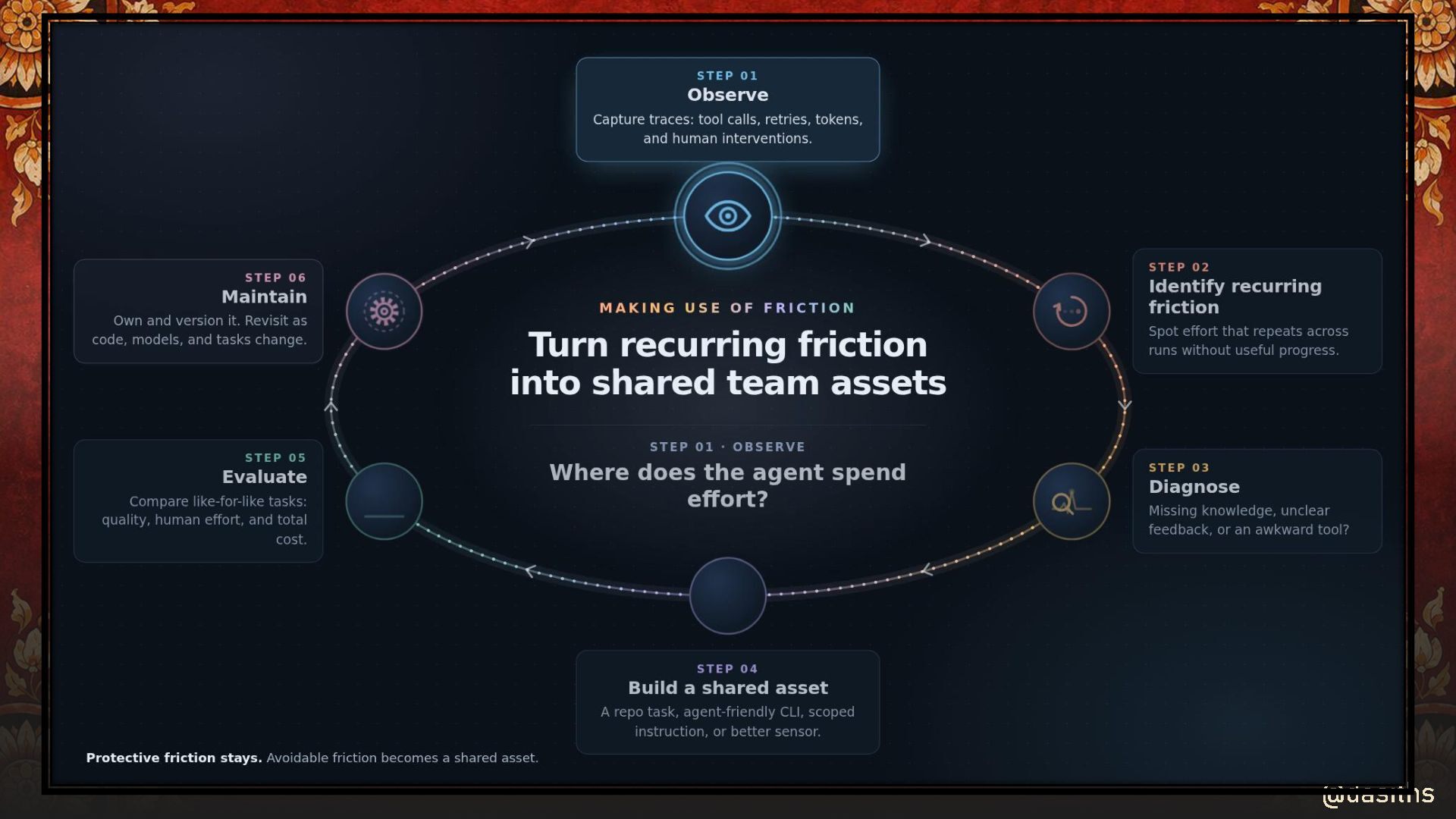
then use telemetry to find where that feedback is helping and where it is
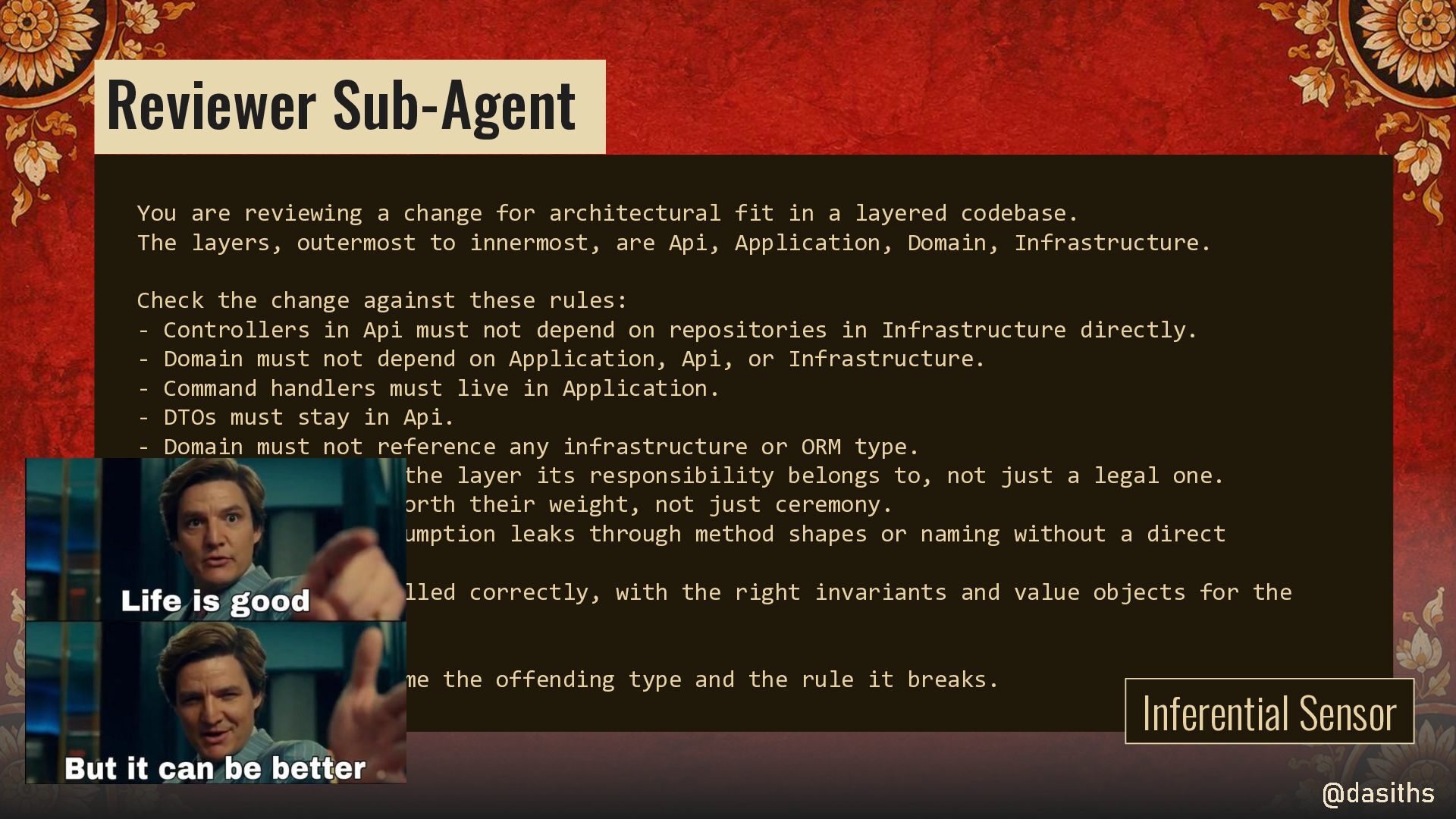
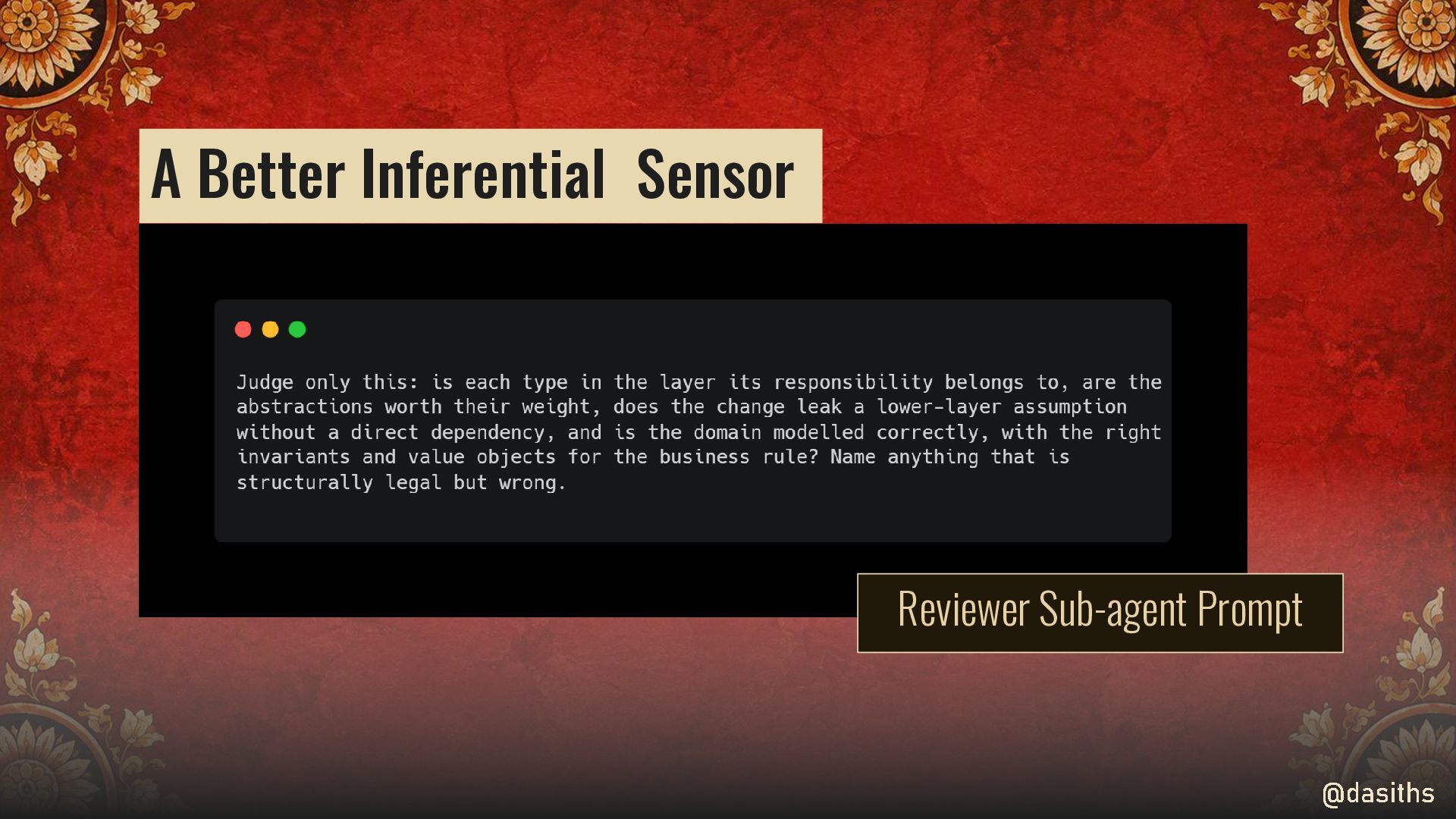
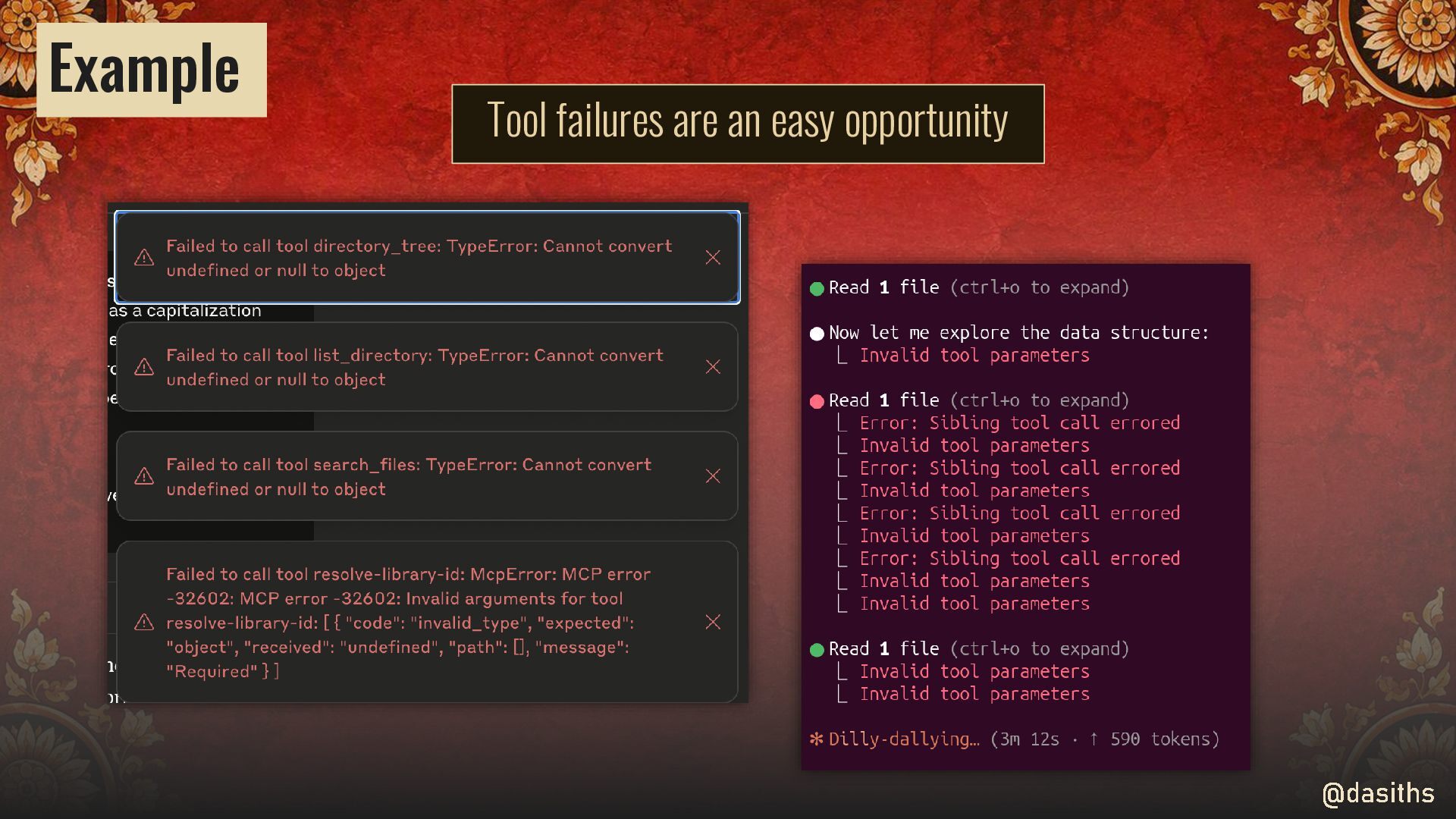
creating expensive friction. I'll show how to refine noisy sensors, move
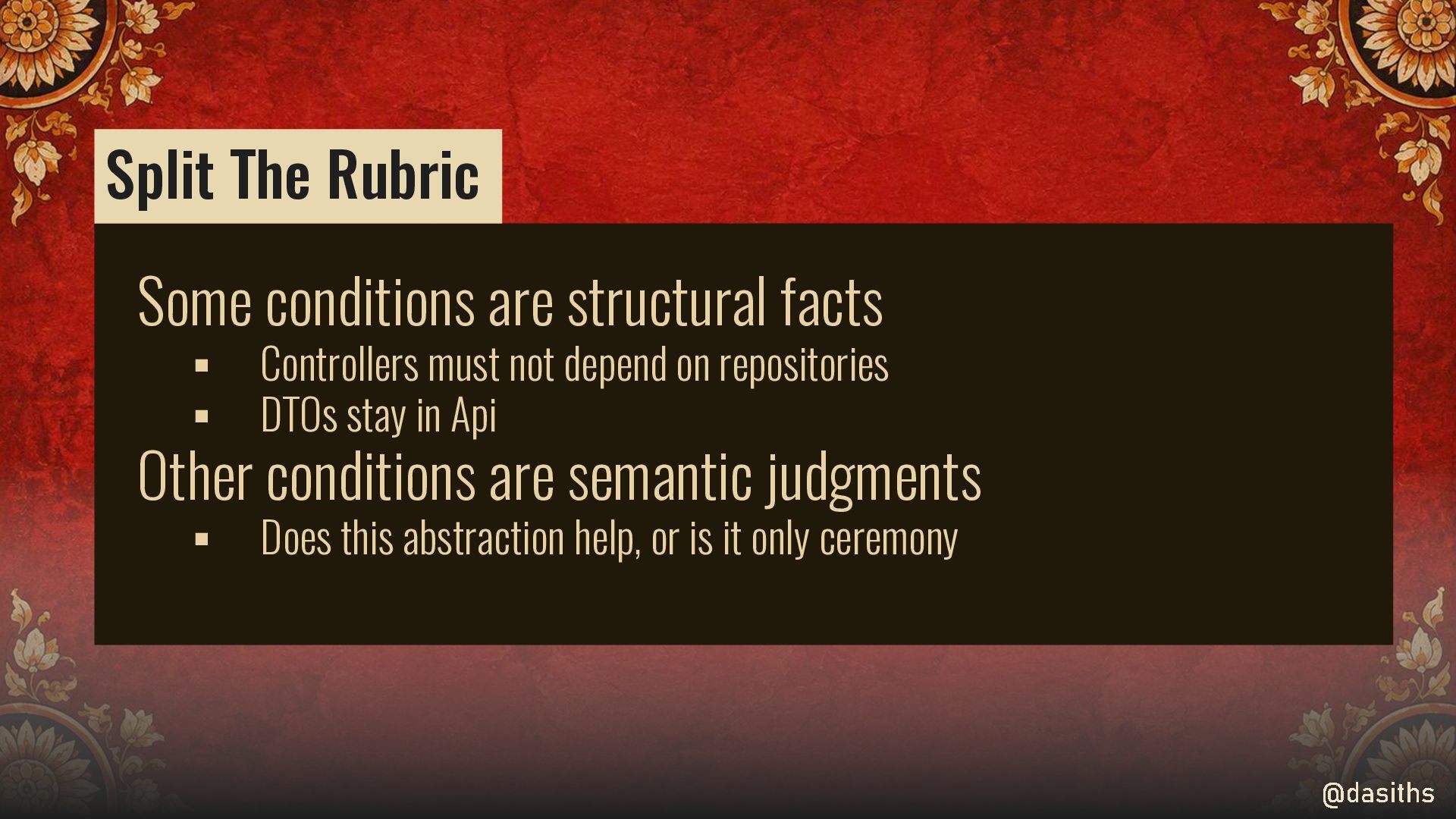
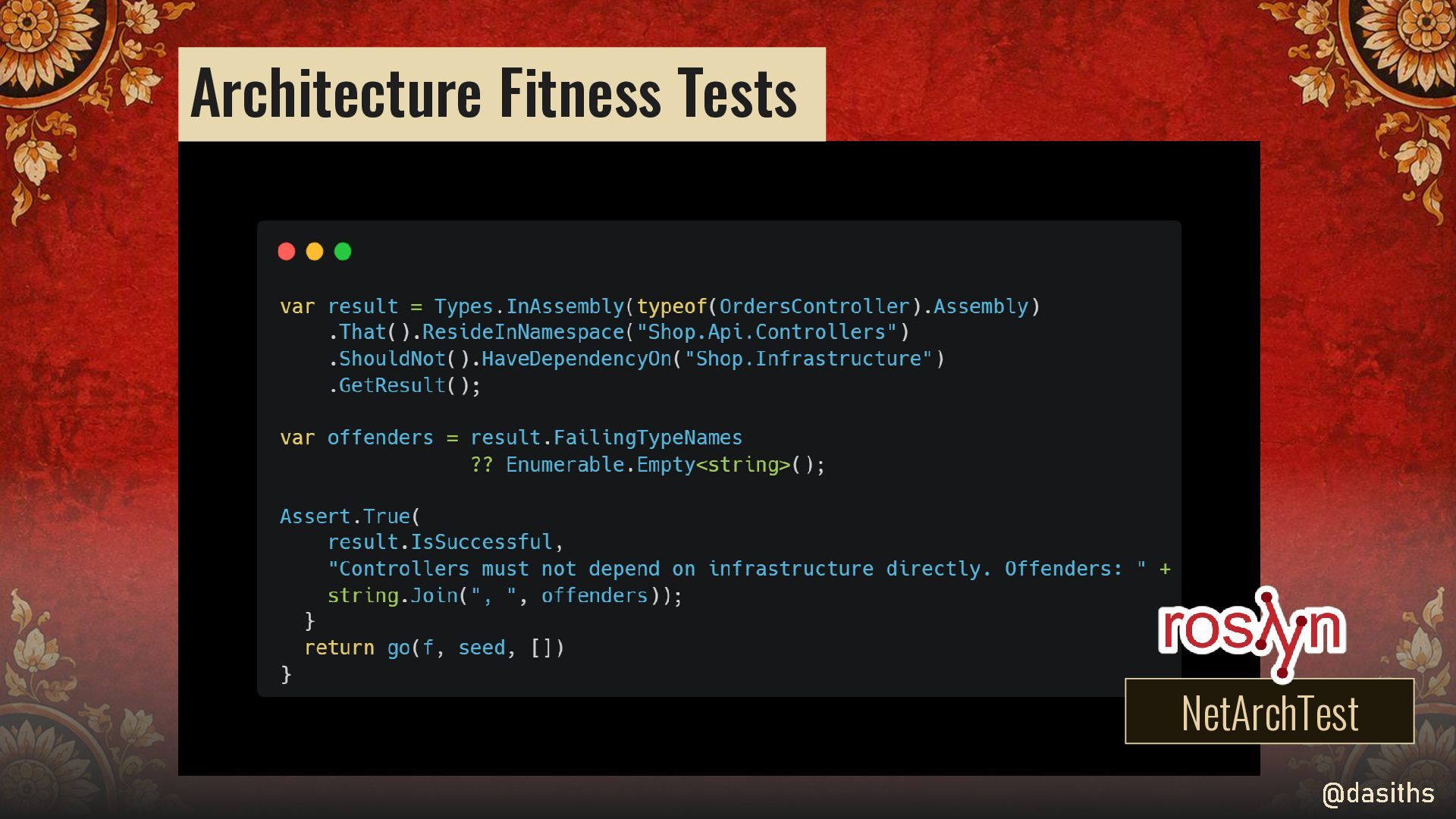
repeatable checks from model judgment into tools, and reduce token waste
without quietly handing more work back to reviewers. You'll leave with a
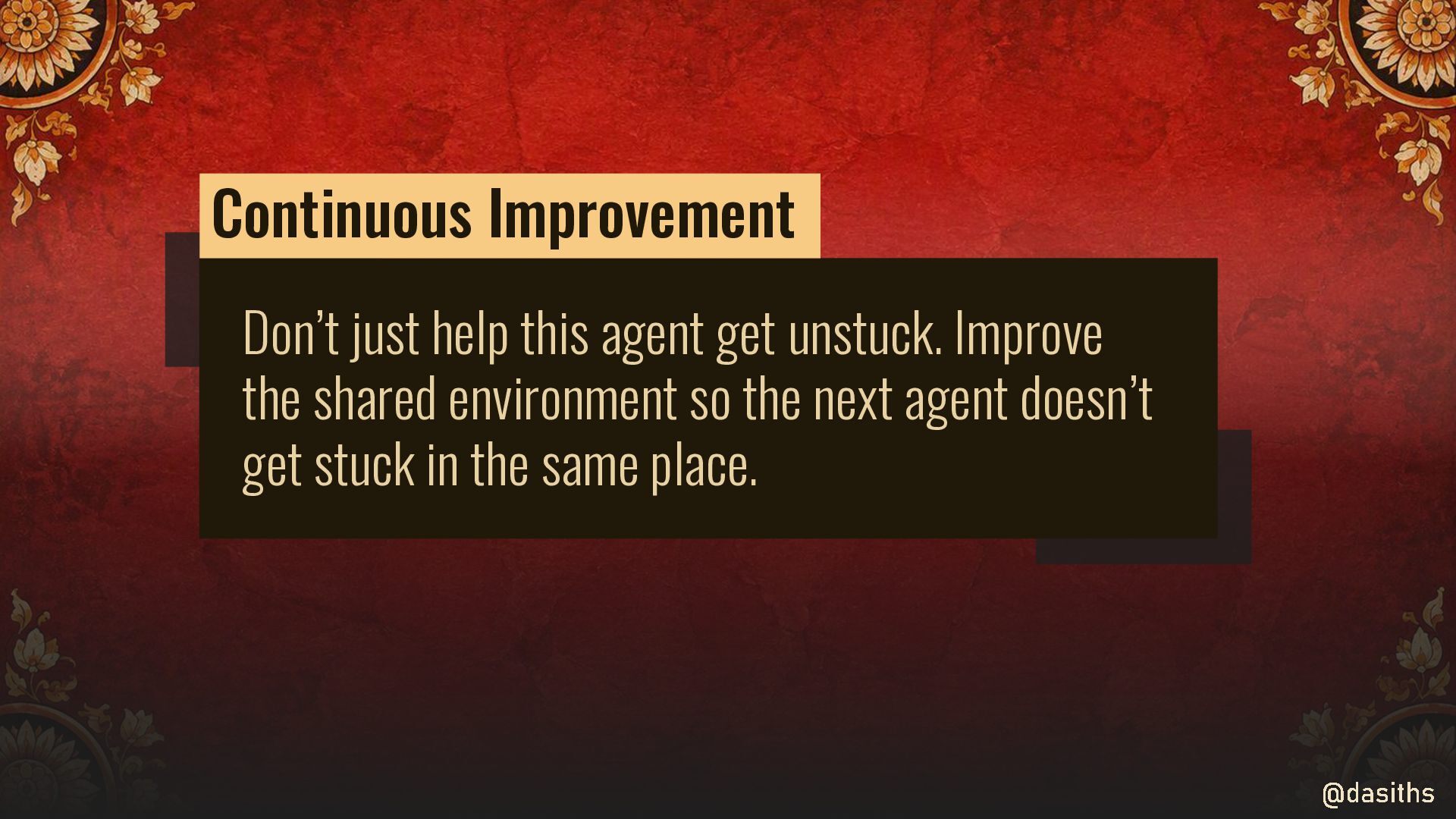
practical improvement cycle for your team: find a recurring failure, improve
the harness, measure the result, and share what works. The goal isn't more
rules. It's to stop paying for the same lesson twice.


 dasiths
 akaboshinit
 okamototakuyasr2
 yama3133
 cmusudakeisuke
 yuukiyo
 kinopeee
 kenichiodo
 nrinetcom
 hisuzuya
 say_no_w
 yakumo
 davidcarrasco
 aleyda
 cassininazir
 jct
 techseoconnect
 lauravandoore
 bluesmoon
 philnash
 jacobtomlinson
 elsirapls
 holman
 marktimemedia