Share
An overview of Scala, a brief look at its functional features including higher order functions, monads, currying etc.


 denisftw
 moro
moro
 marcoroth
 kaityo256
 yuta_onishi_97
 taiseiue
 syumai
 nao_randd
 sylph01
 tmikov2023
 teyamagu
 chobishiba
 seike460
 sarafernandez
 garrettdimon
 eileencodes
 brad_frost
 rkaga
rkaga
 sergeychernyshev
 inesmontani
 nikkihalliwell
 szymonslowik
 tomoyanonymous
 seathinner
 marktimemedia
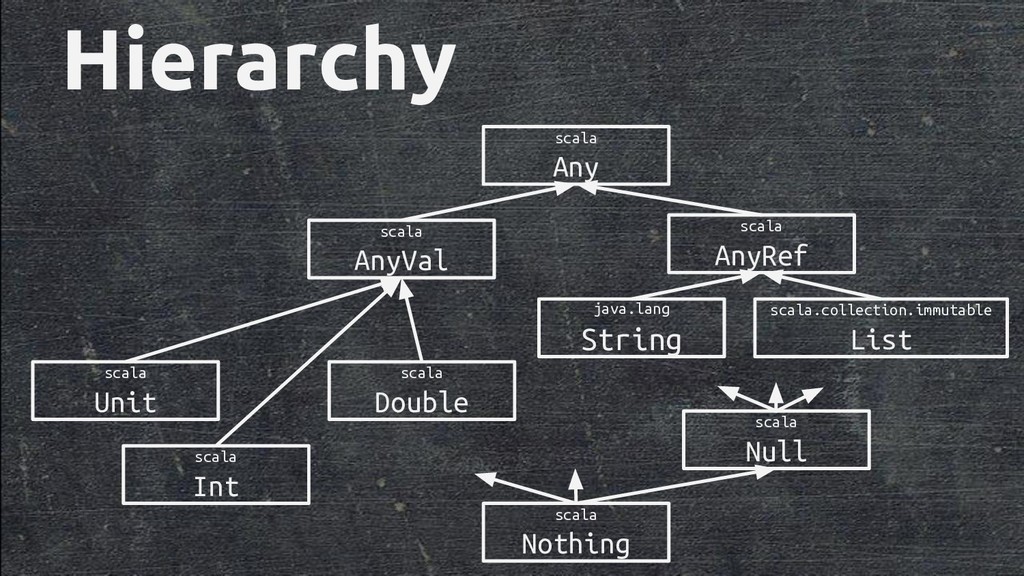
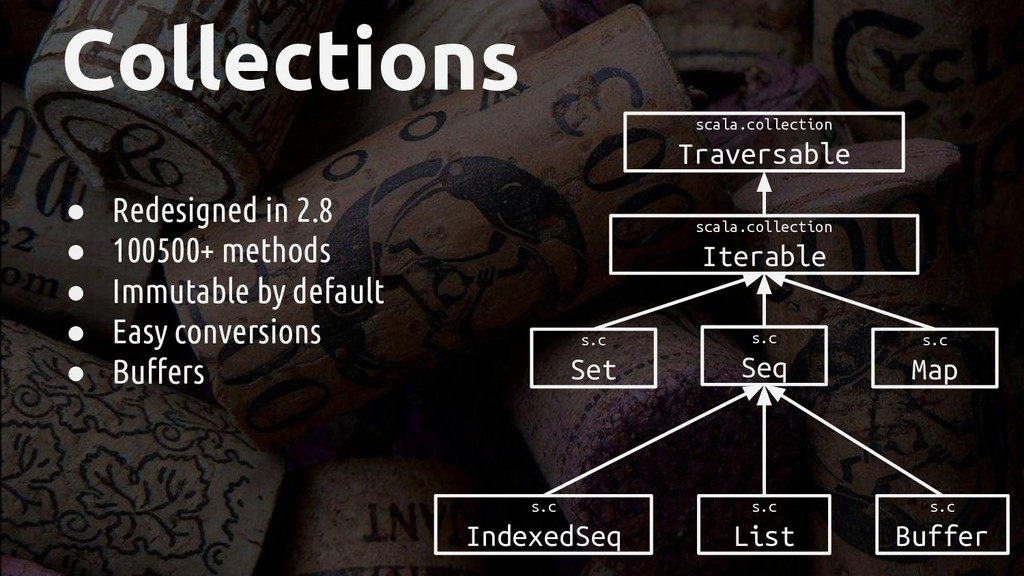
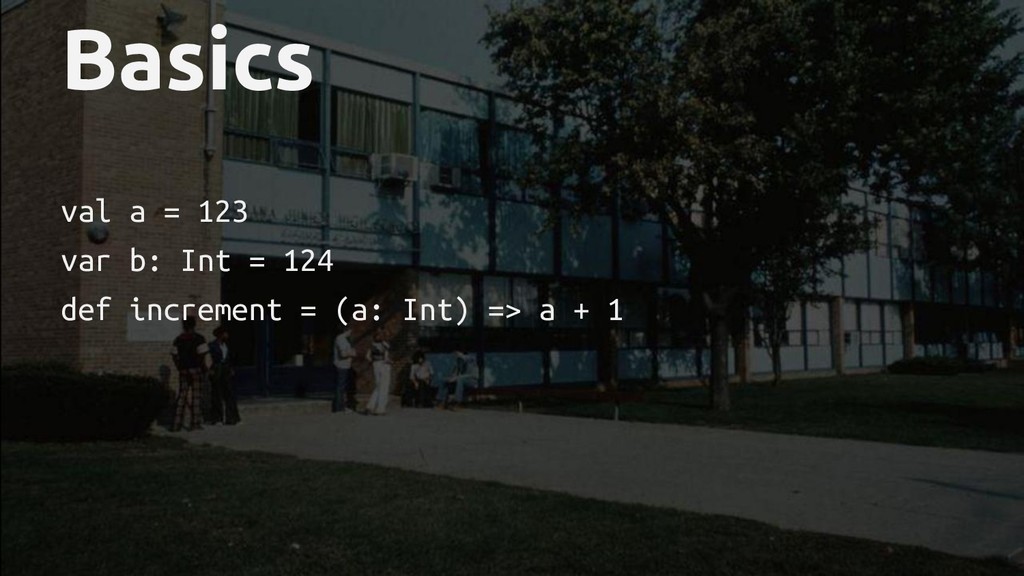
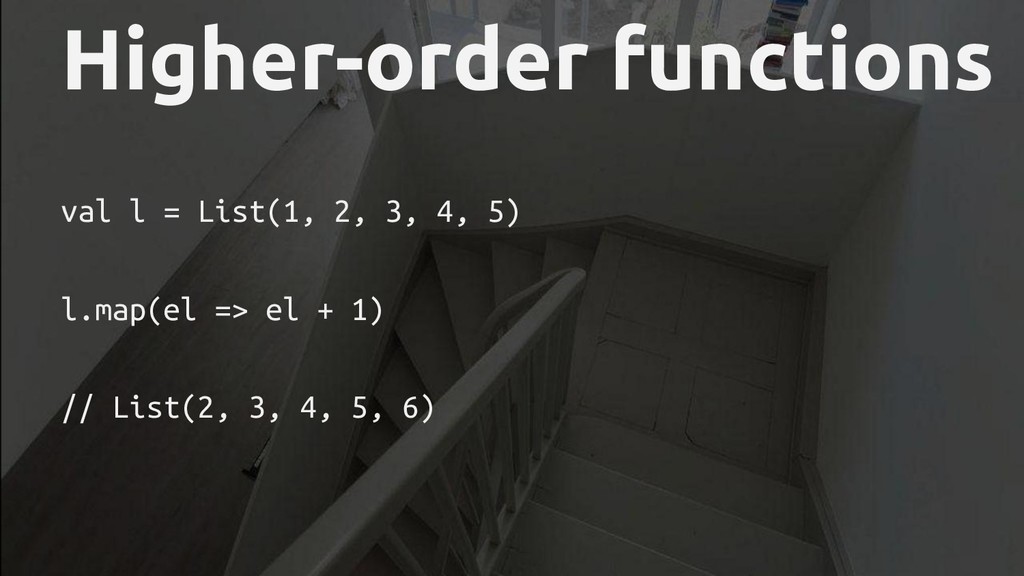
 val](https://files.speakerdeck.com/presentations/50dbdb406c6b0132089156f5e10f822f/slide_9.jpg)
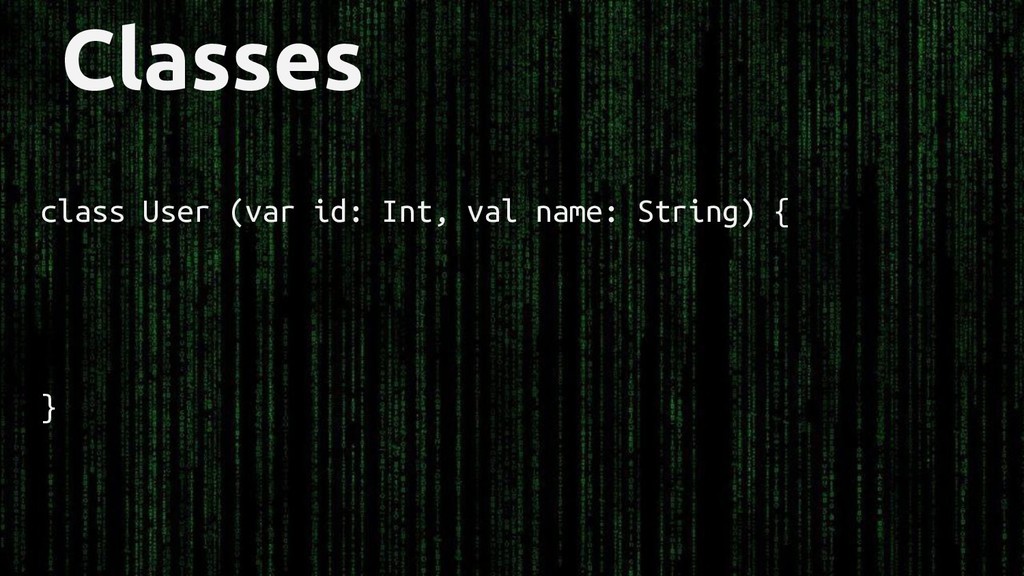
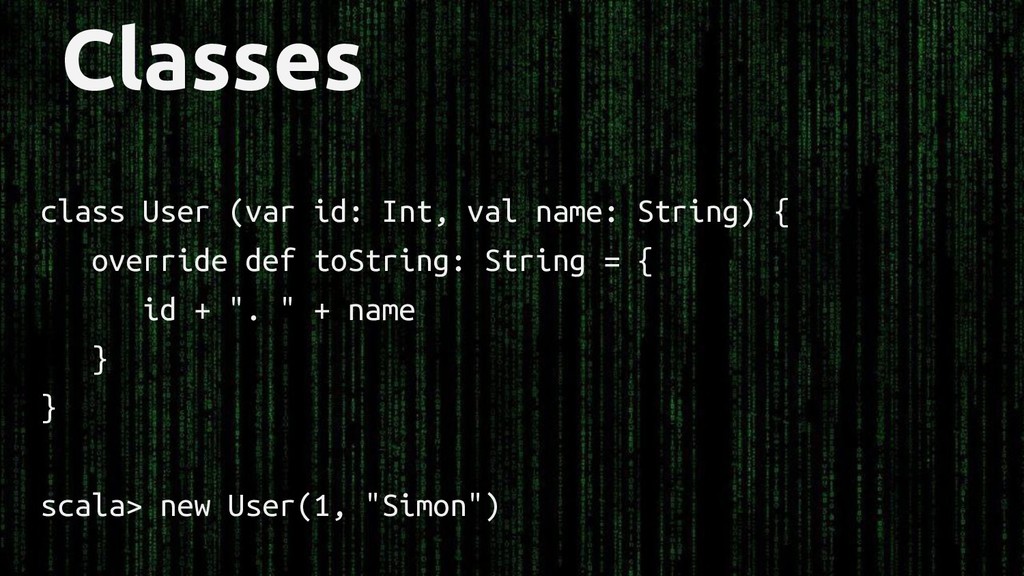
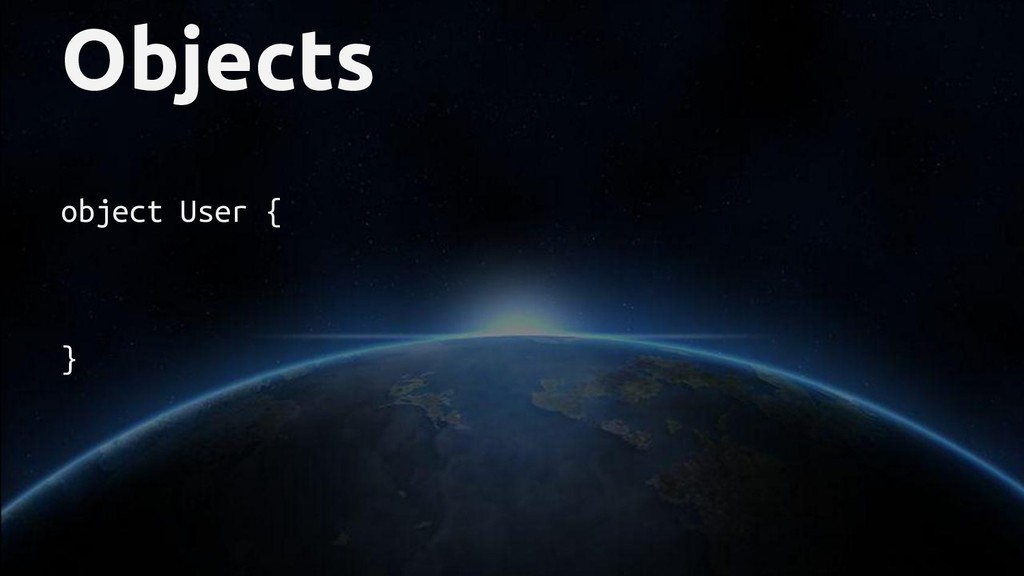
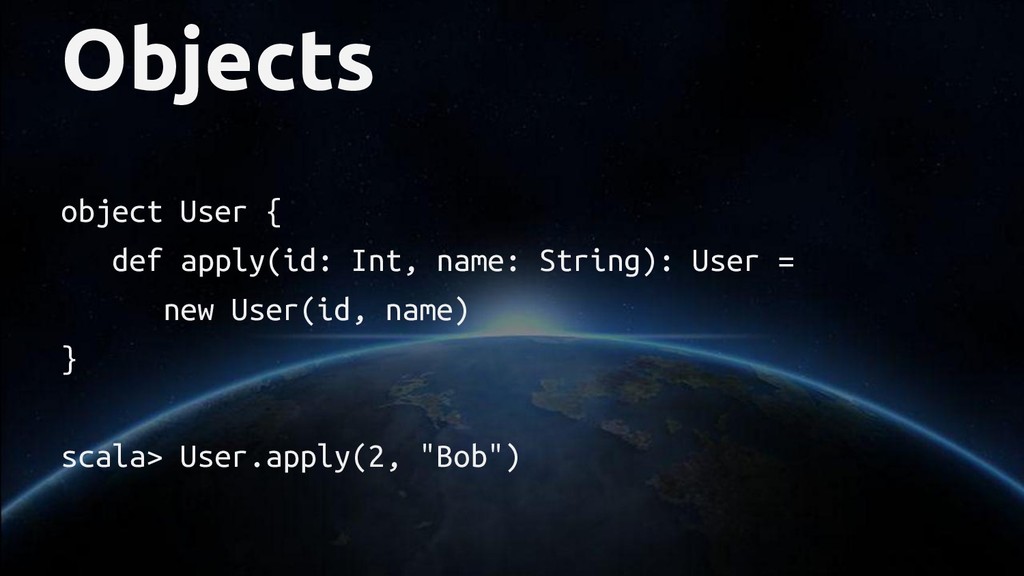
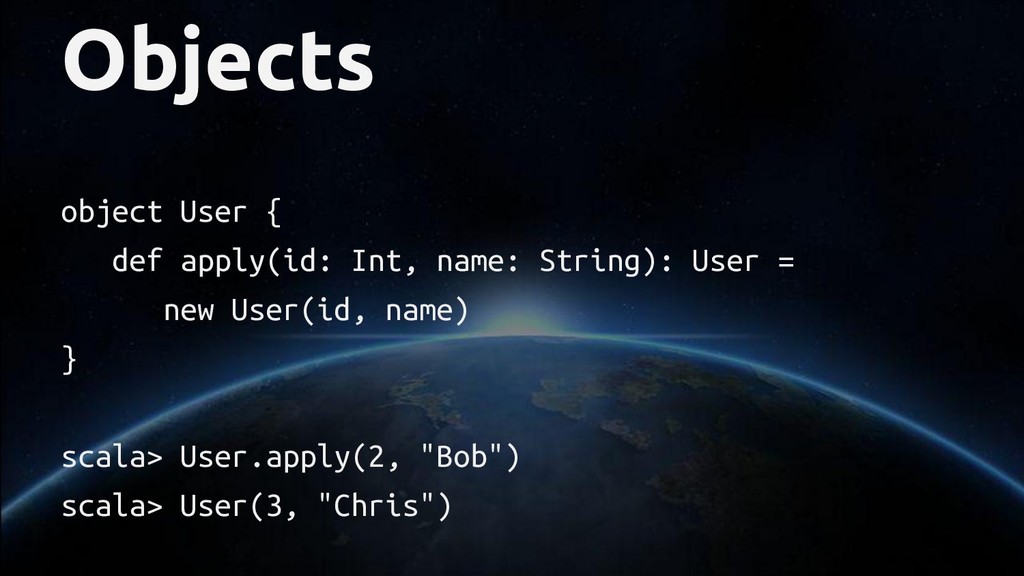
 val el =](https://files.speakerdeck.com/presentations/50dbdb406c6b0132089156f5e10f822f/slide_15.jpg)
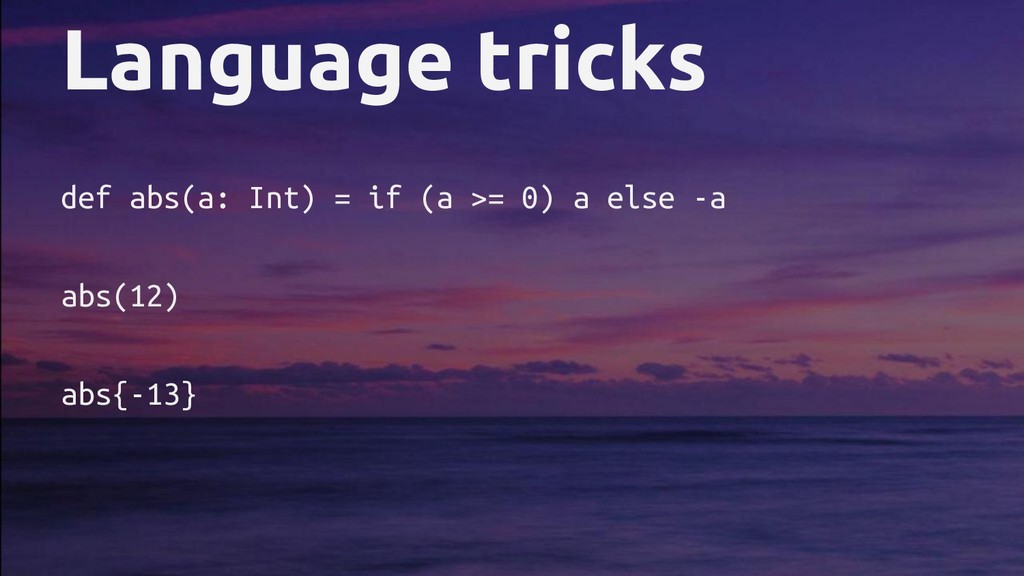
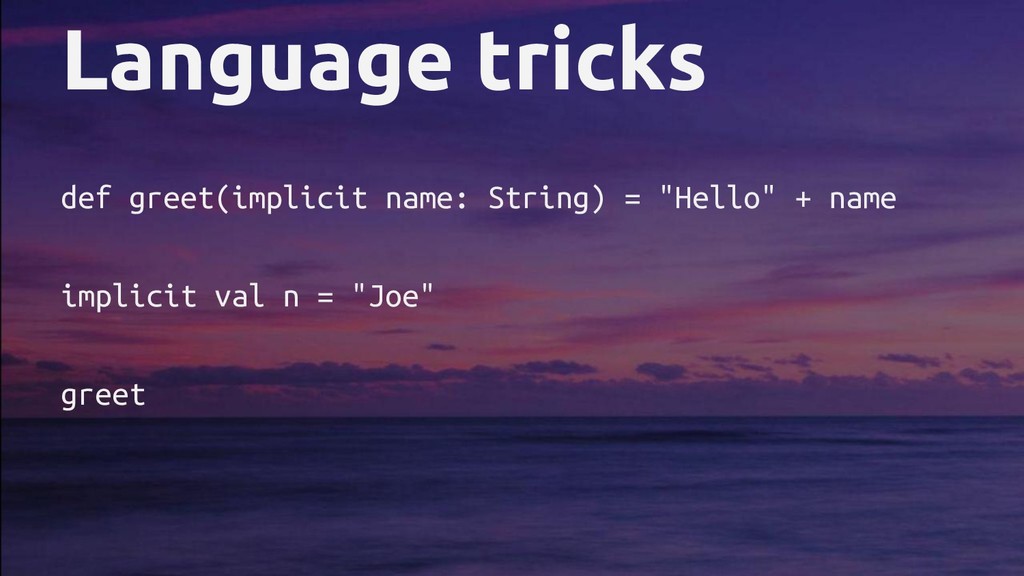

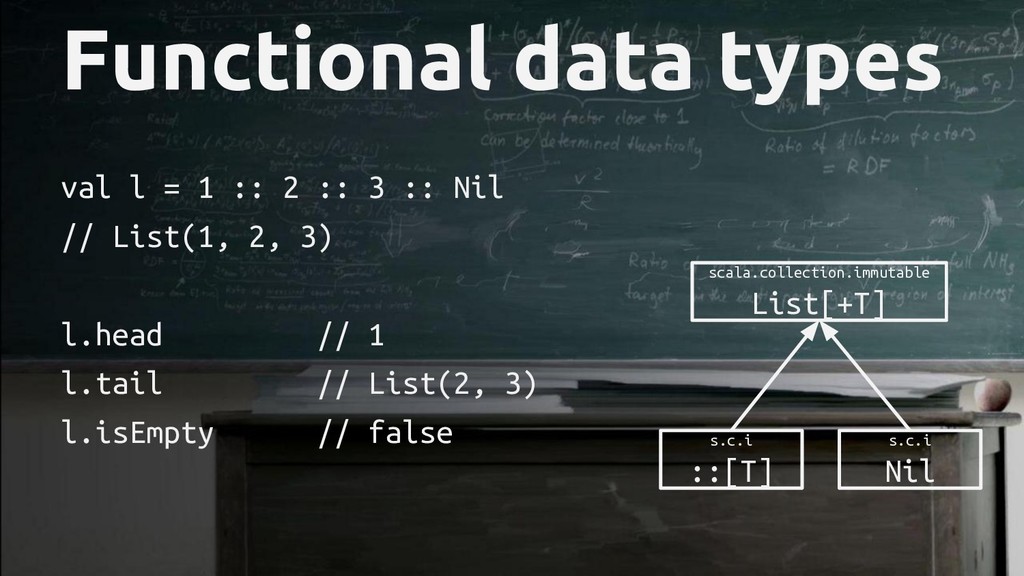
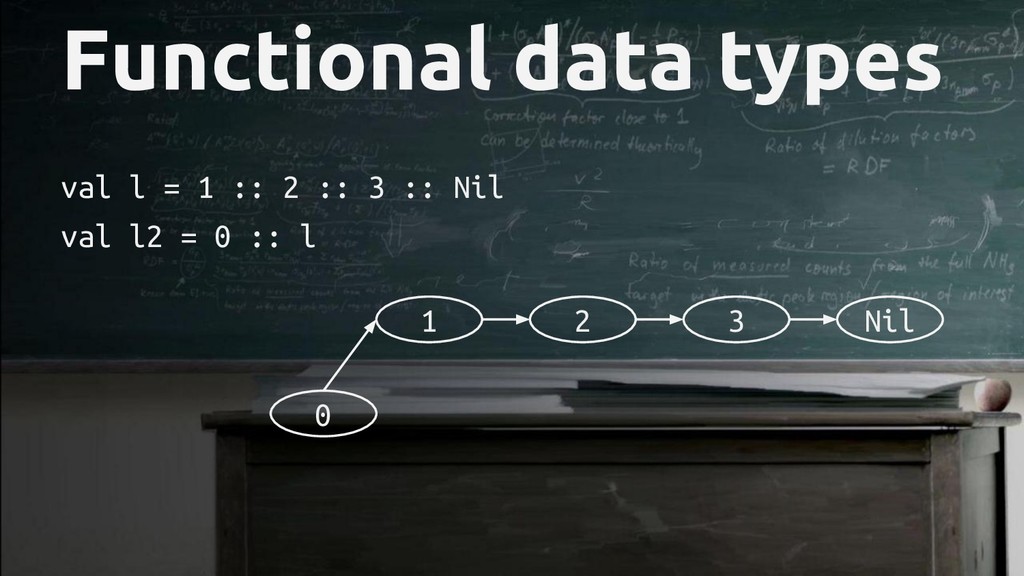
![Imperative example def concat(list: List[Any]): String = { }](https://files.speakerdeck.com/presentations/50dbdb406c6b0132089156f5e10f822f/slide_21.jpg)
![Imperative example def concat(list: List[Any]): String = { val iter](https://files.speakerdeck.com/presentations/50dbdb406c6b0132089156f5e10f822f/slide_22.jpg)
![Tail recursion def concat(l: List[Any]): String = if (l.isEmpty) else](https://files.speakerdeck.com/presentations/50dbdb406c6b0132089156f5e10f822f/slide_23.jpg)
![Tail recursion def concat(l: List[Any]): String = if (l.isEmpty) ""](https://files.speakerdeck.com/presentations/50dbdb406c6b0132089156f5e10f822f/slide_24.jpg)
![Tail recursion def concatT(s: String, list: List[Any]): String = if](https://files.speakerdeck.com/presentations/50dbdb406c6b0132089156f5e10f822f/slide_25.jpg)
![Tail recursion def concat(l: List[Any]): String = { @tailrec def](https://files.speakerdeck.com/presentations/50dbdb406c6b0132089156f5e10f822f/slide_26.jpg)
![Pattern matching def concat(l: List[Any]): String = l match {](https://files.speakerdeck.com/presentations/50dbdb406c6b0132089156f5e10f822f/slide_27.jpg)
![Pattern matching def concat(l: List[Any]): String = l match {](https://files.speakerdeck.com/presentations/50dbdb406c6b0132089156f5e10f822f/slide_28.jpg)

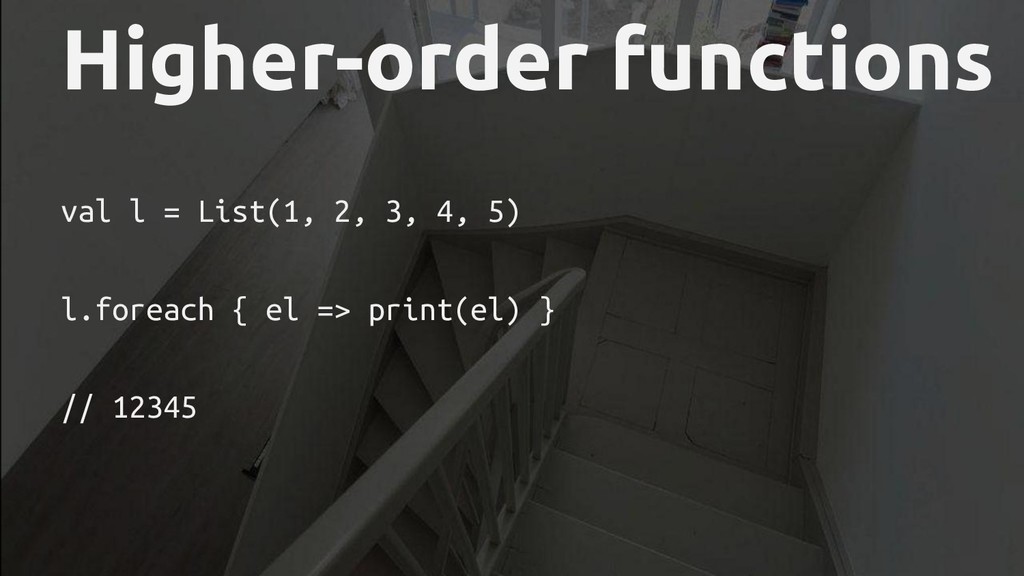

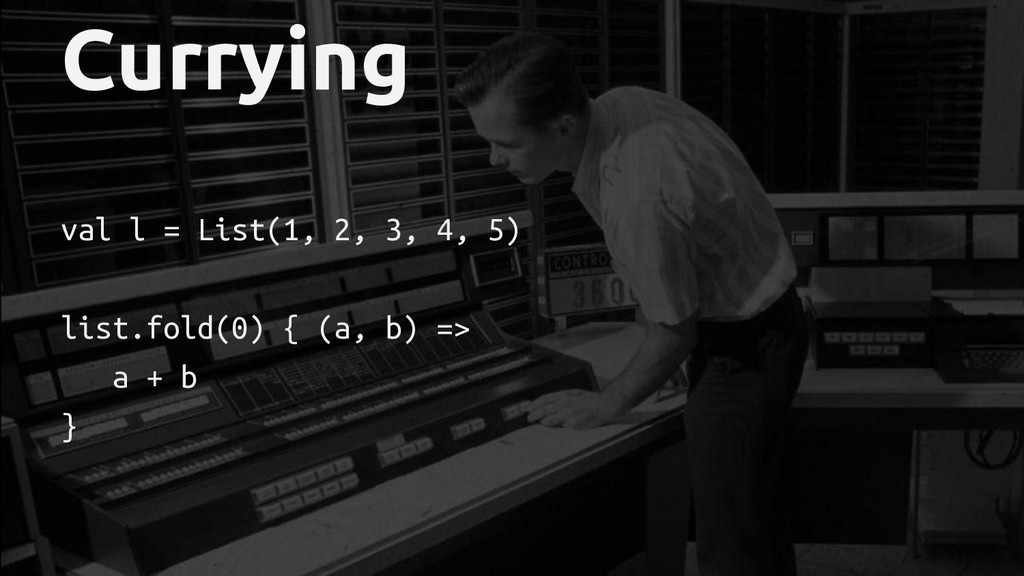
 (implicit ctx: Context)](https://files.speakerdeck.com/presentations/50dbdb406c6b0132089156f5e10f822f/slide_37.jpg)
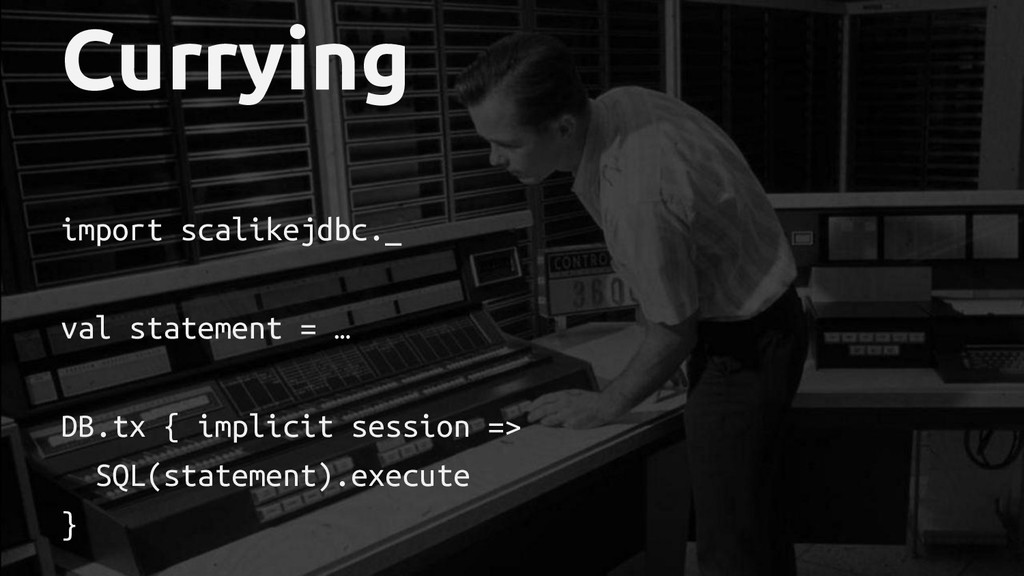
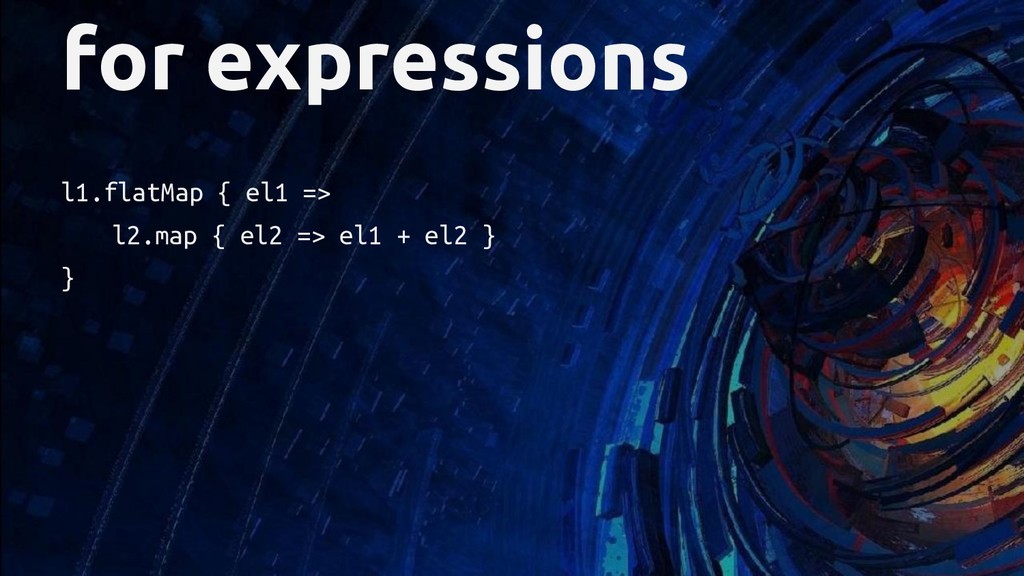
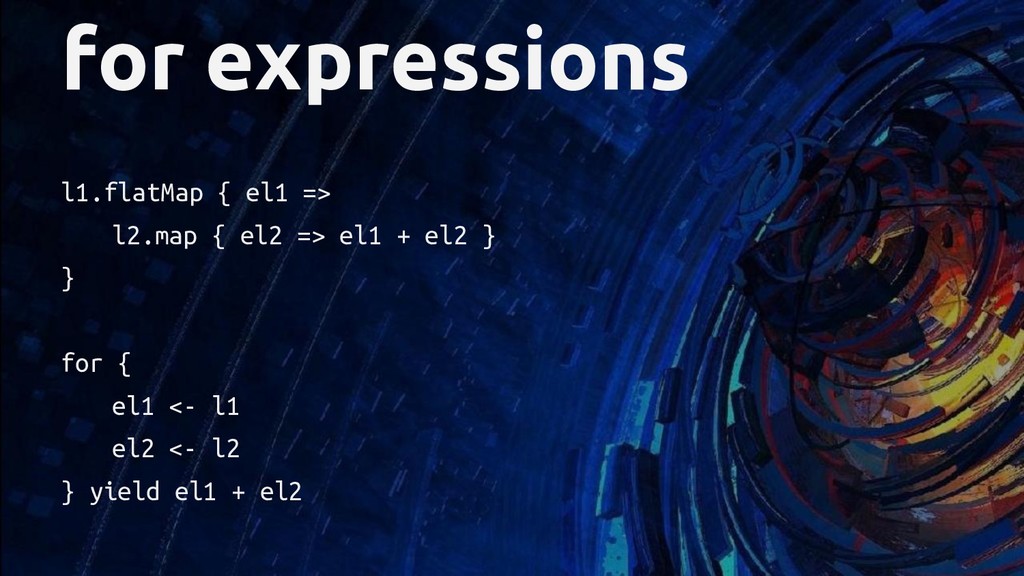
![flatMap class C[T] def map[R](block: T => R): C[R] =](https://files.speakerdeck.com/presentations/50dbdb406c6b0132089156f5e10f822f/slide_39.jpg)
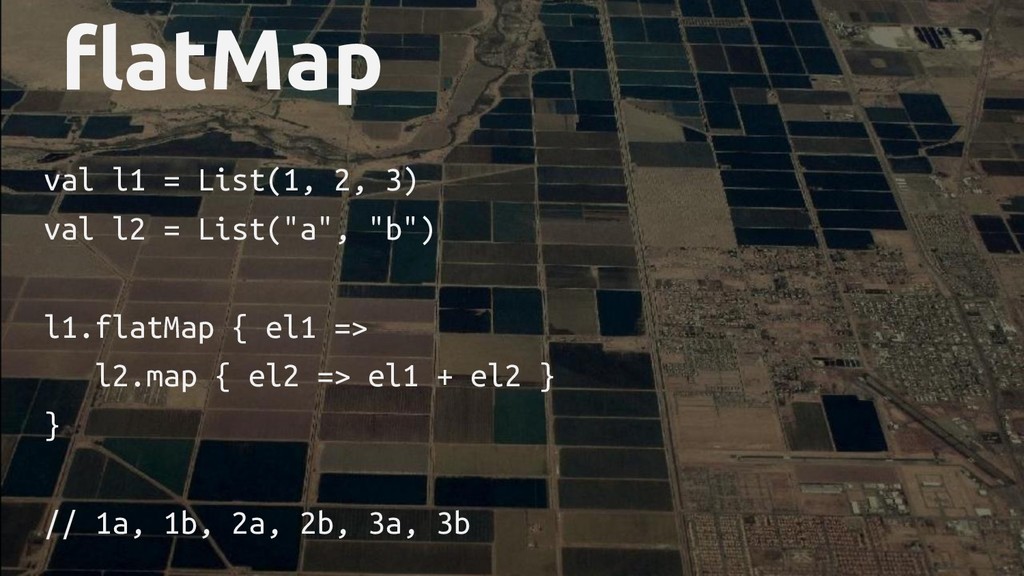
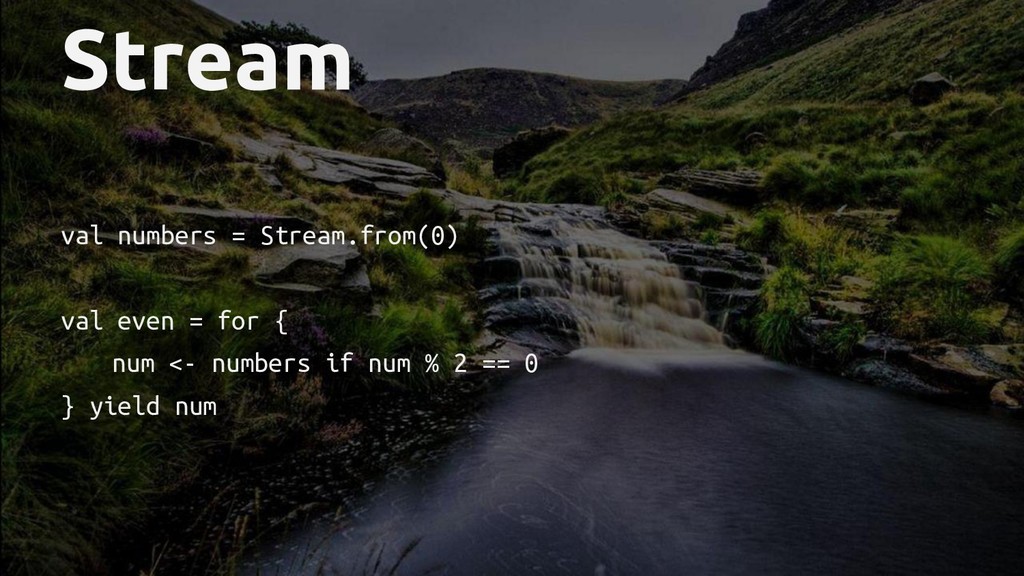
![Stream val numbers = Stream.from(0) scala.collection.immutable Stream[+T] scala.collection Traversable[+T]](https://files.speakerdeck.com/presentations/50dbdb406c6b0132089156f5e10f822f/slide_45.jpg)
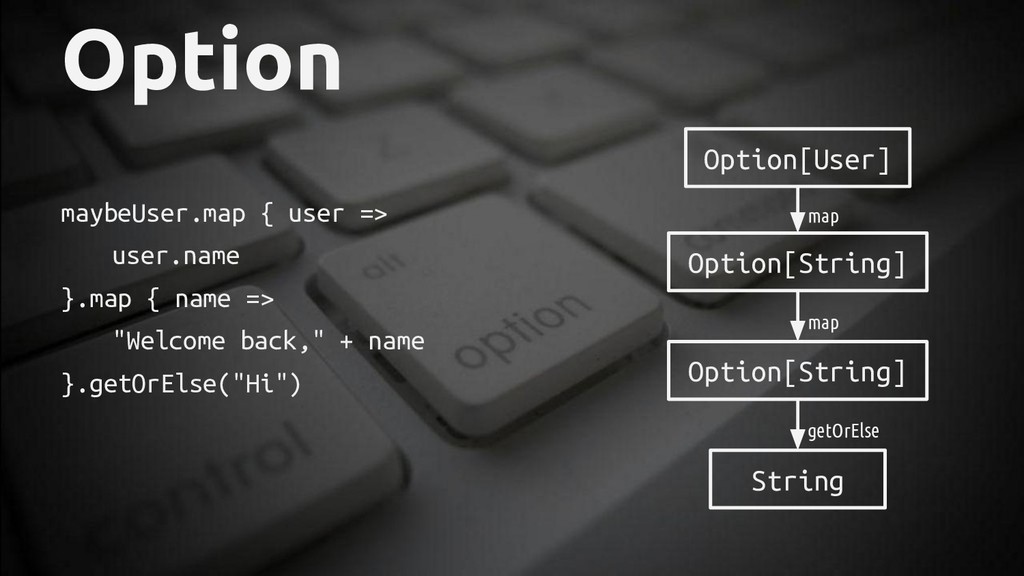
: T scala None](https://files.speakerdeck.com/presentations/50dbdb406c6b0132089156f5e10f822f/slide_47.jpg)
![Option def lookup(login: String, password: String): Option[User] val maybeUser: Option[User]](https://files.speakerdeck.com/presentations/50dbdb406c6b0132089156f5e10f822f/slide_48.jpg)

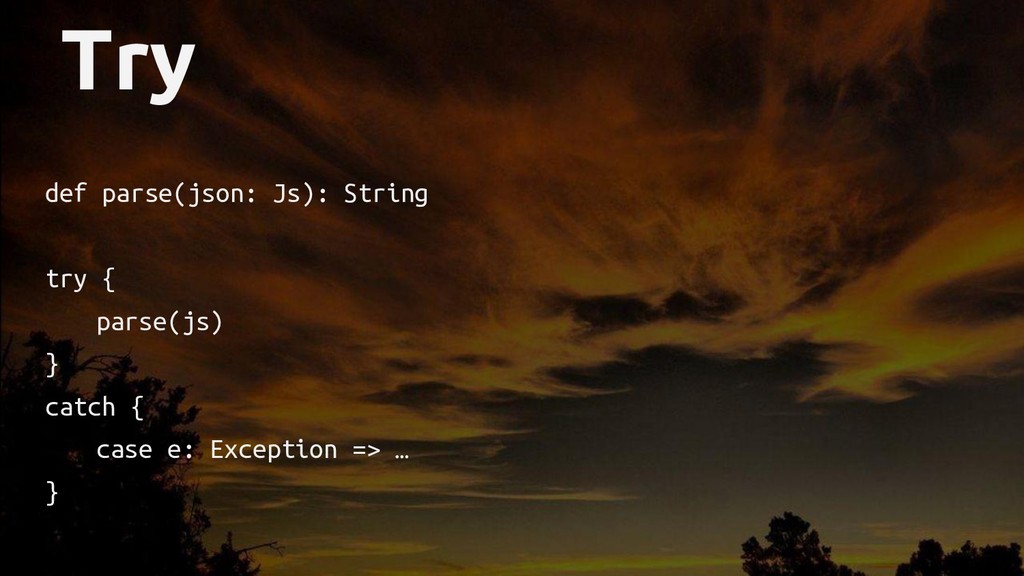
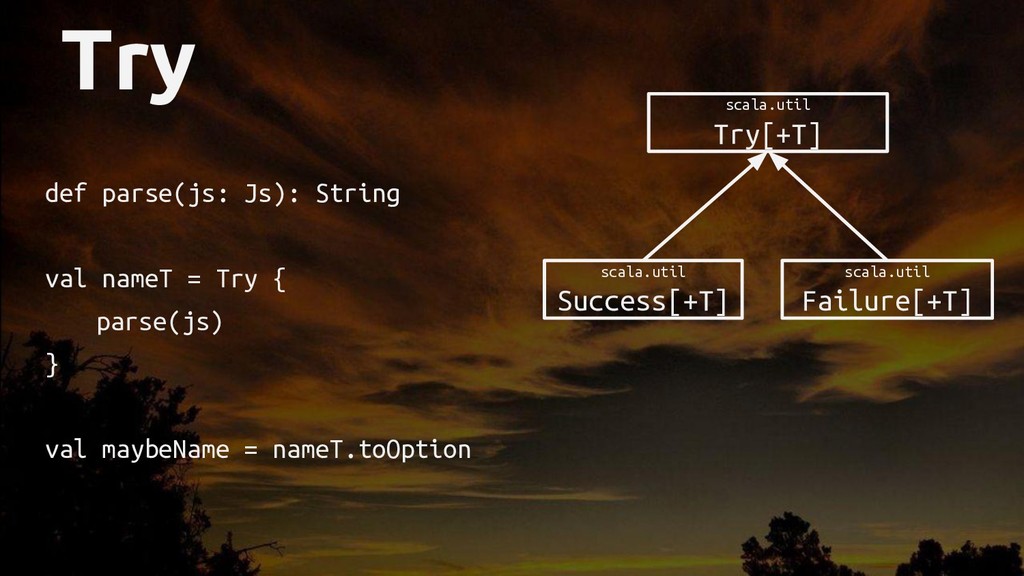
![Try def parse(js: Js): Try[String] def store(name: String): Try[Int] for](https://files.speakerdeck.com/presentations/50dbdb406c6b0132089156f5e10f822f/slide_53.jpg)
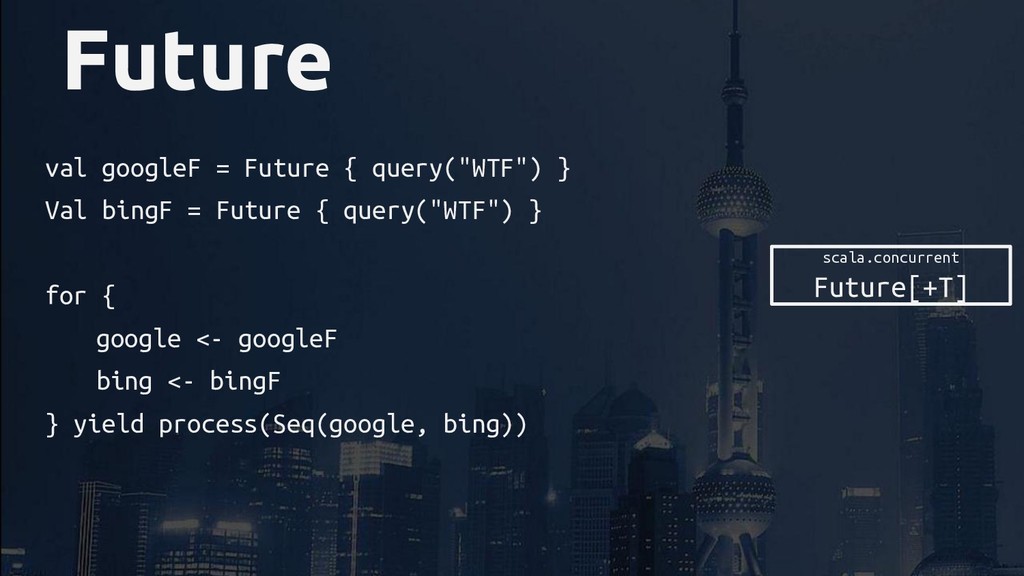
![Future def query(q: String): List[String] val resF = Future {](https://files.speakerdeck.com/presentations/50dbdb406c6b0132089156f5e10f822f/slide_54.jpg)
![Future def query(q: String): Future[List[String]] def store(l: List[String]): Future[Int] def](https://files.speakerdeck.com/presentations/50dbdb406c6b0132089156f5e10f822f/slide_55.jpg)