Share
Embed
Bathroom Vanity or Storage Cabinet? A Homeowner’s Guide to Choosing the Right Fit
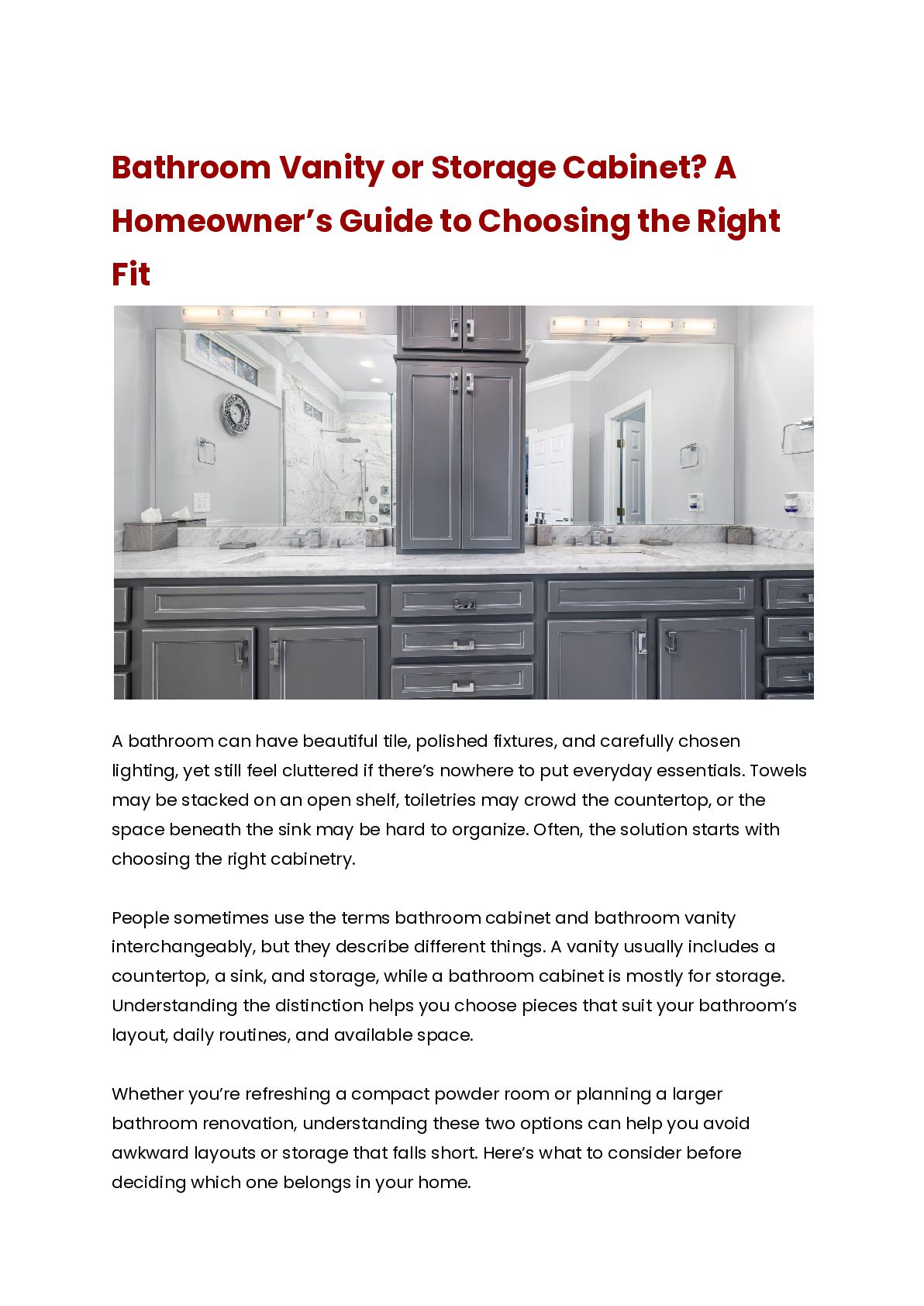
A bathroom can have beautiful tile, polished fixtures, and carefully chosen lighting, yet still feel cluttered if there’s nowhere to put everyday essentials. Towels may be stacked on an open shelf, toiletries may crowd the countertop, or the space beneath the sink may be hard to organize. Often, the solution starts with choosing the right cabinetry.

Diego Rodríguez
October 28, 2026
Transcript
10 slides
-
Bathroom Vanity or Storage Cabinet? A Homeowner’s Guide to Choosing
the Right Fit A bathroom can have beautiful tile, polished fixtures, and carefully chosen lighting, yet still feel cluttered if there’s nowhere to put everyday essentials. Towels may be stacked on an open shelf, toiletries may crowd the countertop, or the space beneath the sink may be hard to organize. Often, the solution starts with choosing the right cabinetry. People sometimes use the terms bathroom cabinet and bathroom vanity interchangeably, but they describe different things. A vanity usually includes a countertop, a sink, and storage, while a bathroom cabinet is mostly for storage. Understanding the distinction helps you choose pieces that suit your bathroom’s layout, daily routines, and available space. Whether you’re refreshing a compact powder room or planning a larger bathroom renovation, understanding these two options can help you avoid awkward layouts or storage that falls short. Here’s what to consider before deciding which one belongs in your home. -
What Is a Bathroom Cabinet? A bathroom cabinet is a
storage unit that keeps toiletries, towels, cleaning supplies, and other essentials organized. Depending on the style and installation, it may be wall-mounted, built into a recess, or placed on the floor. Unlike a vanity, a standard bathroom storage cabinet does not necessarily include a sink or countertop. Its main purpose is to add storage without taking up valuable floor or counter space. Common types include: • Wall-mounted cabinets: These are attached above the toilet, beside the mirror, or on another suitable wall. They keep smaller items accessible while leaving the floor clear. • Freestanding storage cabinets: These units sit on the floor and can store towels, spare toiletries, and other household supplies. • Tall linen cabinets: Designed to use vertical space, these cabinets are useful in bathrooms where horizontal storage is limited. • Recessed cabinets: Installed within a suitable wall cavity, they offer storage that projects less into the room. • Built-in cabinets: Designed around the room’s dimensions, these can use otherwise awkward areas and create a more integrated appearance. The best option depends on what you need to store and how much room you have. A family bathroom may benefit from a tall cabinet for towels and toiletries, while a small ensuite might need only a compact wall-mounted unit. -
What Is a Bathroom Vanity? A bathroom vanity is the
unit installed around or beneath a bathroom sink. It usually includes a cabinet base, a countertop, and space for the basin and plumbing. Some designs also incorporate drawers, shelves, integrated sinks, or additional counter space. Because a vanity combines several functions, it often becomes one of the room's most prominent features. Its size, finish, shape, and hardware can shape the bathroom's overall look. Vanities come in several configurations. A wall-mounted vanity creates a floating appearance and exposes more of the floor beneath it. A freestanding vanity offers a more traditional furniture-like look, while a double vanity provides two sink positions for bathrooms used by more than one person. Storage deserves as much attention as appearance. Deep drawers make grooming products easier to reach, while cupboard doors may work better for larger bottles or plumbing that takes up space beneath the basin. The right layout depends on how you use the bathroom each day. A well-chosen vanity should accommodate the sink and plumbing without sacrificing the storage you need. It should also leave enough clearance for doors, drawers, and comfortable movement around the room. Bathroom Cabinet vs. Bathroom Vanity: What Are the Main Differences? The clearest distinction is function: a cabinet provides storage, while a vanity combines storage with a sink and countertop. However, a few other differences are worth considering before you decide. 1. Purpose and everyday use A bathroom cabinet helps keep the room organized. Depending on its location and design, it can store towels, toilet paper, toiletries, and cleaning products. -
Because it doesn't need to accommodate a basin, you can
often arrange the interior around the items you want to store. A vanity serves a more central role. It supports the sink, provides a surface for daily grooming, and stores frequently used products nearby. If your existing bathroom lacks a suitable sink unit, a vanity is likely to be the more immediate priority. 2. Plumbing requirements A typical storage cabinet does not need water supply lines or a drain. This can make installation more straightforward, though wall-mounted or built-in units still need proper support and careful placement. A vanity must accommodate the sink’s plumbing. The drain, water lines, and shut-off valves can affect the unit’s dimensions and internal storage. If you’re replacing an existing vanity, matching the new layout to the available plumbing may simplify the work. 3. Space and placement Cabinets can fit into a range of locations, including above the toilet, beside the mirror, or along an unused wall. This flexibility makes them useful when a bathroom needs extra storage but has little room for another floor-standing unit. A vanity generally occupies the sink area, so its dimensions must suit the room and allow comfortable access. A large vanity may offer more counter space, but it can make a narrow bathroom feel crowded if it doesn’t have enough clearance. 4. Design and visual impact A storage cabinet can blend into the background or serve as a decorative feature. Matching its finish to the vanity creates a coordinated look, while a contrasting colour or wood tone can add visual interest. The vanity often has a stronger presence because it brings together the sink, countertop, cabinetry, and hardware. Choosing complementary materials and finishes helps the bathroom feel cohesive without requiring every element to look identical. -
5. Cost and installation The cost of either option varies
according to its dimensions, materials, finish, construction, and installation requirements. A simple off-the-shelf cabinet may be relatively straightforward to add, while a built-in unit may require more planning and fitting. A vanity may involve additional considerations, including the sink, countertop, faucet, plumbing connections, and any layout adjustments. Comparing the full project cost, not just the cabinet price, gives you a more realistic budget. Should You Choose a Bathroom Cabinet or a Vanity? The right choice depends on what your bathroom lacks. If the sink area already works well but the room feels cluttered, adding a storage cabinet may solve the problem without a major renovation. If the sink unit is outdated, hard to clean, or lacks usable storage, replacing the vanity may be a better investment. Consider these three common situations. • If you have a small bathroom: Prioritize space-saving storage. A compact vanity with drawers, paired with a wall-mounted cabinet, can keep daily essentials organized without filling the floor with bulky furniture. Check the door and drawer clearances before committing to a layout. • If you share the bathroom with family members: Look at how much storage everyone needs. A vanity with separate drawers can keep personal items separate, while a linen cabinet can store towels and spare supplies. Keeping frequently used products within reach also helps prevent countertop clutter. • If you’re renovating the entire room: Plan the vanity and additional cabinets together. This lets you coordinate finishes, use awkward corners better, and ensure the storage fits your routines. It also helps avoid buying separate pieces that look mismatched or leave unused gaps. -
You don’t necessarily have to choose one over the other.
In many bathrooms, a vanity handles the sink area while one or two additional cabinets provide the storage the main unit cannot accommodate. When Are Custom Bathroom Cabinets Worth Considering? Standard bathroom furniture works well when your room has conventional dimensions and straightforward storage needs. However, unusual layouts, limited wall space, sloped ceilings, or specific storage requirements can make ready-made units harder to fit. This is where custom bathroom cabinets can be useful. Rather than choosing a unit and trying to make the room work around it, you can plan the dimensions, configuration, and finish around the available space. For example, a narrow bathroom might benefit from a shallow cabinet that leaves more room to move. A vanity may need drawers arranged around the plumbing, or a built-in storage unit could use an otherwise overlooked recess. Custom design also gives you more control over how the cabinetry relates to your countertop, flooring, wall colour, and fixtures. Before committing, consider what you want the finished bathroom to achieve. Do you need more room for towels, easier access to everyday products, a larger counter, or a cleaner look? Identifying these priorities makes it easier to decide which features are worth paying for. For homeowners exploring bathroom storage cabinets in Saanich, local cabinetry professionals can assess the room, discuss practical layouts, and help you decide whether a standard or made-to-measure solution is best. Custom work is not automatically necessary for every bathroom. The goal is to find a design that solves a real problem, fits your budget, and will remain practical as your needs change. -
How Do You Plan Bathroom Storage Without Creating Clutter? Even
a spacious bathroom can feel disorganized when storage is poorly planned. Before selecting cabinetry, take stock of what you use regularly and where you naturally reach for it. Start by separating daily essentials from occasional-use items. Keep toothbrushes, skincare products, and other everyday items easy to access, while storing spare toiletries and seasonal supplies in a less prominent cabinet. Next, consider how different storage features will work in practice. Drawers make small items easier to find, adjustable shelves accommodate changing product sizes, and tall cupboards hold towels without spreading them across multiple shelves. If several people use the room, separate storage areas can also help everyone keep their belongings organized. Think about moisture and ventilation, too. Bathrooms experience regular humidity changes, so choose cabinetry that suits the environment. Use suitable materials and finishes, keep surfaces dry where possible, and address ventilation issues so moisture doesn't linger. Finally, measure before you buy. Account for the sink, plumbing, door swings, shower access, and the space needed to fully open drawers. A storage unit may look ideal in a showroom but prove inconvenient once installed in a compact bathroom. What Should You Consider Before Choosing Bathroom Cabinetry? A few practical checks can help you narrow down your options and avoid expensive changes later. -
• Measure the available space carefully. Record the width, height,
and depth of the intended installation area. Note nearby doors, windows, outlets, and plumbing connections that could affect the design. • Choose materials for bathroom conditions. Ask about the cabinetry's construction, surface finish, and care requirements. Because of regular humidity and occasional splashes, the materials and installation need to suit the room. • Think beyond appearance. A beautiful vanity may not be the best choice if its drawers cannot hold your essentials or its countertop leaves little usable space. Compare the internal layout as carefully as the exterior finish. • Set a realistic budget. Include the cabinetry, countertop, sink, hardware, delivery, installation, and any plumbing adjustments you may need. If you’re adding storage to an existing bathroom, confirm whether the wall or floor requires preparation. • Coordinate the overall design. Your vanity and cabinets don't have to match exactly, but their colours, finishes, and proportions should feel intentional. A few key details can create a pulled-together look without making the room feel overly matched. Homeowners comparing bathroom cabinets in Saanich may also want to ask about available finishes, construction options, warranties, and the design support provided before installation. These details help you understand what you’re purchasing and how the cabinetry will suit your home over time. Finding the Right Cabinetry for Your Bathroom A bathroom renovation is a chance to make the room work better, not just give it a new look. The right vanity creates a practical sink area, while extra cabinets store what would otherwise end up on the counter. If you’re considering a more tailored design, Seaside Cabinetry & Design Inc offers cabinetry options and design guidance to help homeowners create a -
cohesive interior. Their approach combines design experience, a personal process,
and a range of cabinetry products to suit different preferences and budgets. For anyone considering a custom bathroom vanity, it’s worth discussing how the sink, storage, countertop, and surrounding finishes will work as one design. The same planning can help when you need custom bath cabinets to fit a specific layout or complement an existing vanity. Instead of choosing each piece separately, speak with experienced bathroom cabinet makers in Saanich who can help you explore options for your space. Seaside Cabinetry & Design Inc. is one local option to consider when planning bathroom cabinetry in the Saanich Peninsula and Greater Victoria area. The Bottom Line A bathroom cabinet and a bathroom vanity may look similar, but they serve different purposes. Cabinets provide additional storage, while vanities combine a sink, countertop, and storage in one unit. Understanding how each option works helps you decide whether your bathroom needs a simple organizational upgrade, a new sink unit, or a coordinated cabinetry plan. The best choice suits your space, storage habits, and design preferences without making the room harder to use. If you’re ready to rethink your bathroom layout, connect with Seaside Cabinetry & Design Inc. to explore cabinetry options and create a design that feels right for your home. A well-planned bathroom starts with storage that works as beautifully as it looks. Seaside Cabinetry & Design Inc. serves homeowners across North Saanich, Sidney, Central Saanich, and Saanich, as well as Victoria, Esquimalt, Oak Bay, Langford, Colwood, View Royal, Highlands, Metchosin, and Sooke. Reach out to discuss your cabinetry project and explore options for your space. -
FAQs 1. Is a bathroom cabinet the same as a
bathroom vanity? No. A bathroom cabinet is primarily designed for storage, while a vanity typically combines a sink, countertop, and storage in one unit. A bathroom can have both to provide a practical balance of sink space and organization. 2. Can you install a bathroom cabinet without replacing the vanity? Yes. You can add a wall-mounted, freestanding, or built-in cabinet while keeping your existing vanity, as long as the layout allows it. Measure carefully to ensure the new unit doesn't block doors, fixtures, or movement around the room. 3. Are custom bathroom cabinets worth the extra cost? Custom cabinetry can be worthwhile when standard units do not fit your bathroom dimensions or storage needs. It gives you more control over sizing, internal layouts, finishes, and how the cabinetry works with the rest of the room. 4. What should I choose for a small bathroom: a vanity or a storage cabinet? If you need a sink, a compact vanity is essential, but it may not offer enough storage for everything. Pair it with a slim, wall-mounted cabinet to add storage without taking up much extra floor space. 5. What should I look for when choosing bathroom cabinetry? Consider dimensions, storage configuration, materials, finishes, moisture resistance, and installation requirements. Also consider how the cabinetry will coordinate with your sink, countertop, flooring, and fixtures so the finished bathroom feels cohesive.
 diegorodriguez23
 mayu1001
 handy_official
 maijun
 aokiplayer
 flatt_security
 enechain
 yoshi22
 chibanba1982
 sixtypercent
 tamosan01
 matthewskelton
 ggen
 malarkey
 inesmontani
 chriscoyier
 helenjbeal
 sarafernandez
 bermonpainter
 tammyeverts
 baasie
 konakalab
 kristinabergwall1
 vanstee