Upgrade to Pro — share decks privately, control downloads, hide ads and more …

Social Media Apps: The Study of Advantages and ...

Social Media Apps: The Study of Advantages and Disadvantages

Explore social media apps, benefits, demerits of social media, social media cons, drawbacks of social media for students, parents, and professionals. Today, people have shifted their communication, studies, shopping, and other professional needs from traditional channels to social media apps in India and worldwide. Students today are using social media apps for learning purposes while professionals are using these apps to network. Moreover, these apps have made it easier for parents to keep up with all their family information along with news updates. Despite many advantages these apps offer, there’s also drawbacks of social media. Proper restrictions should be taken into account due to their impact on performance, privacy, and mental health. Despite its benefits one must also look into the social media cons and demerits of social media as well since its two sides of the same coin.

Avatar for dishani das

dishani das

June 17, 2026

Other Decks in Education

Transcript

  1. Social Media Apps: The Study of Advantages and Disadvantages From

    communication to commerce, social media has transformed how we live, learn,andwork 4 butitcomes with realrisks to privacy,mentalhealth, and productivity.
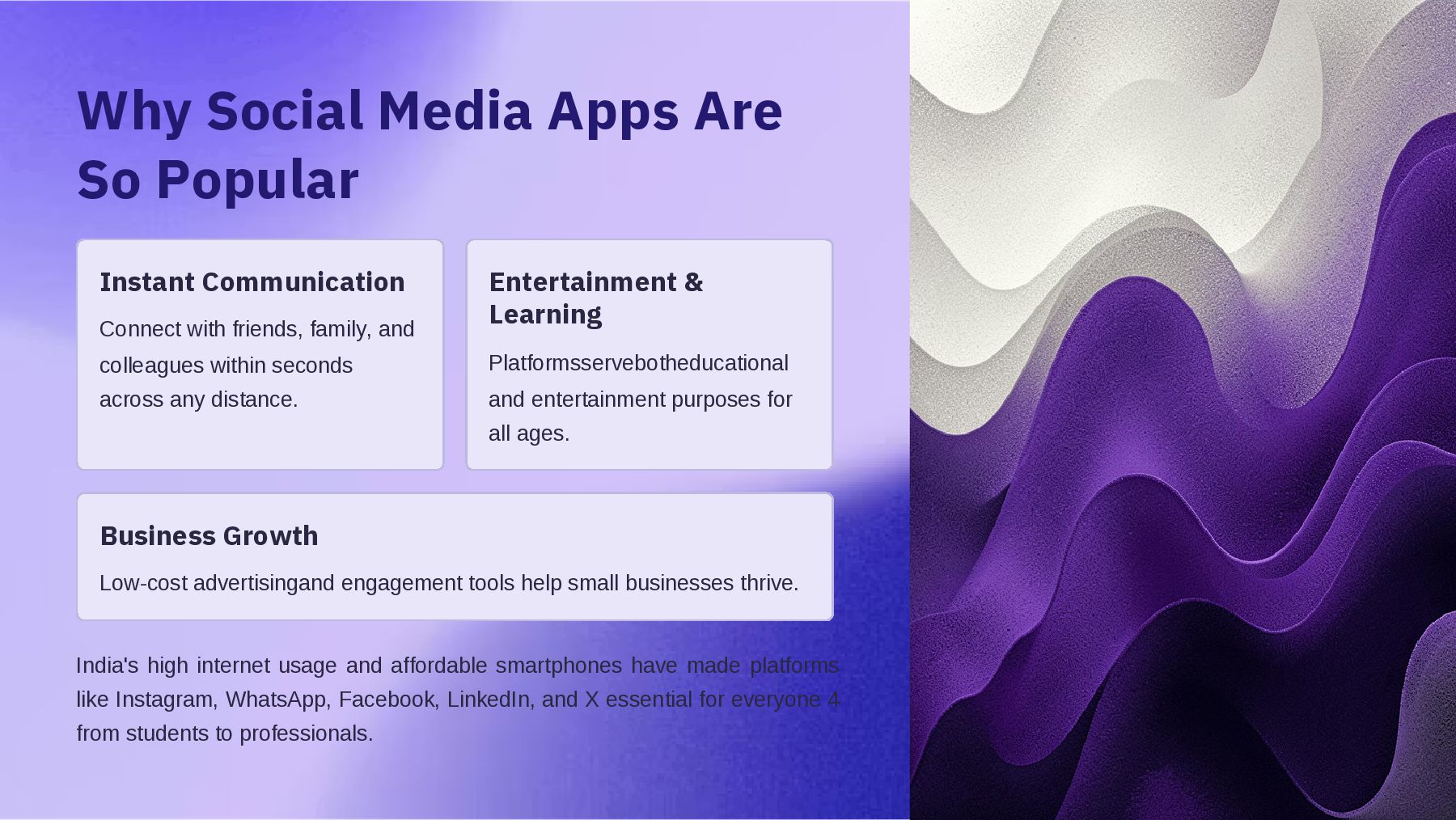
  2. Why Social Media Apps Are So Popular Business Growth Instant

    Communication Entertainment & Learning Connect with friends, family, and colleagues within seconds across any distance. Platformsservebotheducational and entertainment purposes for all ages. Low-cost advertisingand engagement tools help small businesses thrive. India's high internet usage and affordable smartphones have made platforms like Instagram, WhatsApp, Facebook, LinkedIn, and X essential for everyone 4 from students to professionals.
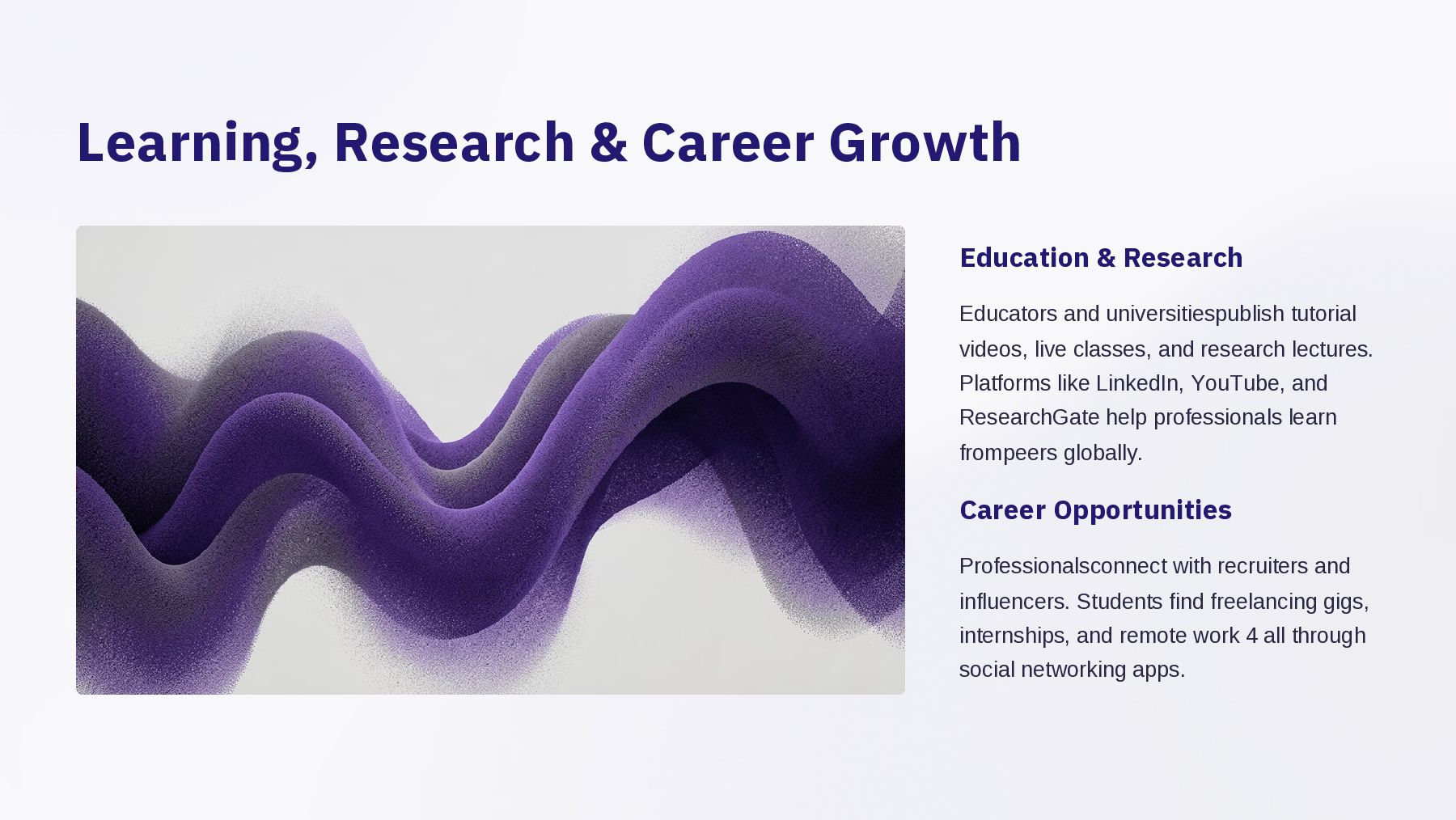
  3. Learning, Research & Career Growth Education & Research Career Opportunities

    Professionalsconnect with recruiters and influencers. Students find freelancing gigs, internships, and remote work 4 all through social networking apps. Educators and universitiespublish tutorial videos, live classes, and research lectures. Platforms like LinkedIn, YouTube, and ResearchGate help professionals learn frompeers globally.
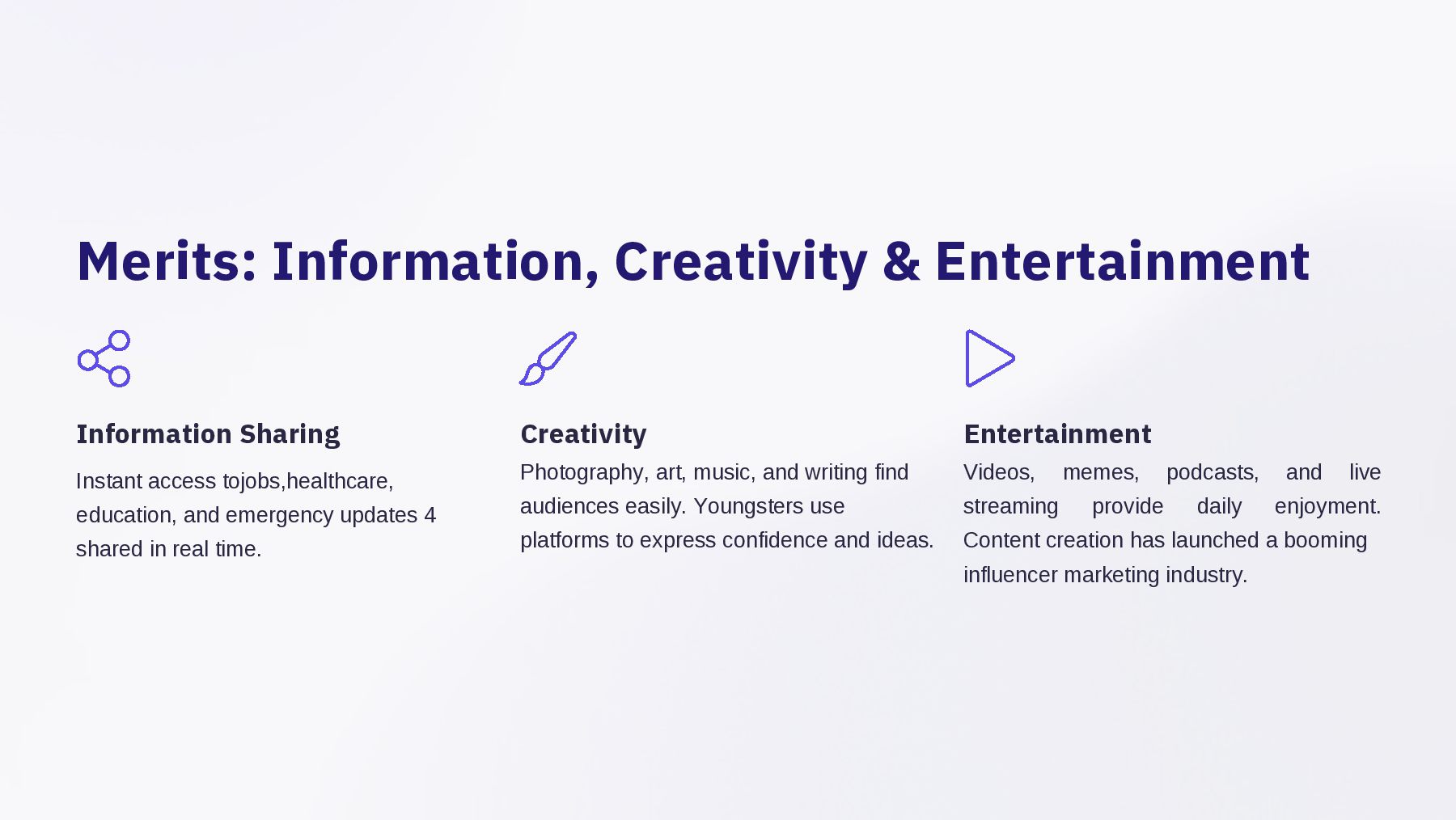
  4. Merits: Information, Creativity & Entertainment Information Sharing Creativity Photography, art,

    music, and writing find audiences easily. Youngsters use platforms to express confidence and ideas. Entertainment Videos, memes, podcasts, and live streaming provide daily enjoyment. Content creation has launched a booming influencer marketing industry. Instant access tojobs,healthcare, education, and emergency updates 4 shared in real time.
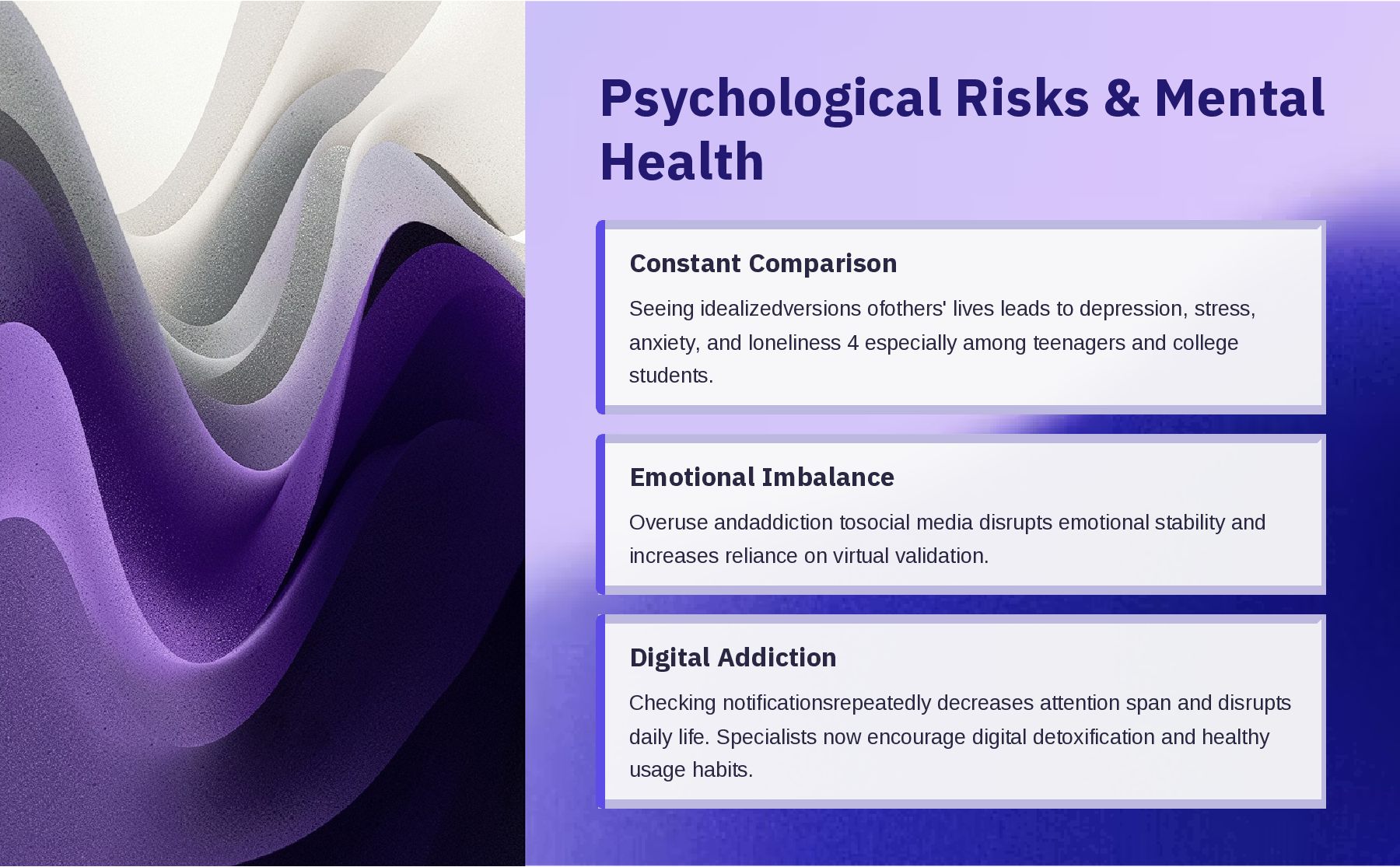
  5. Psychological Risks & Mental Health Digital Addiction Emotional Imbalance Constant

    Comparison Seeing idealizedversions ofothers' lives leads to depression, stress, anxiety, and loneliness 4 especially among teenagers and college students. Overuse andaddiction tosocial media disrupts emotional stability and increases reliance on virtual validation. Checking notificationsrepeatedly decreases attention span and disrupts daily life. Specialists now encourage digital detoxification and healthy usage habits.
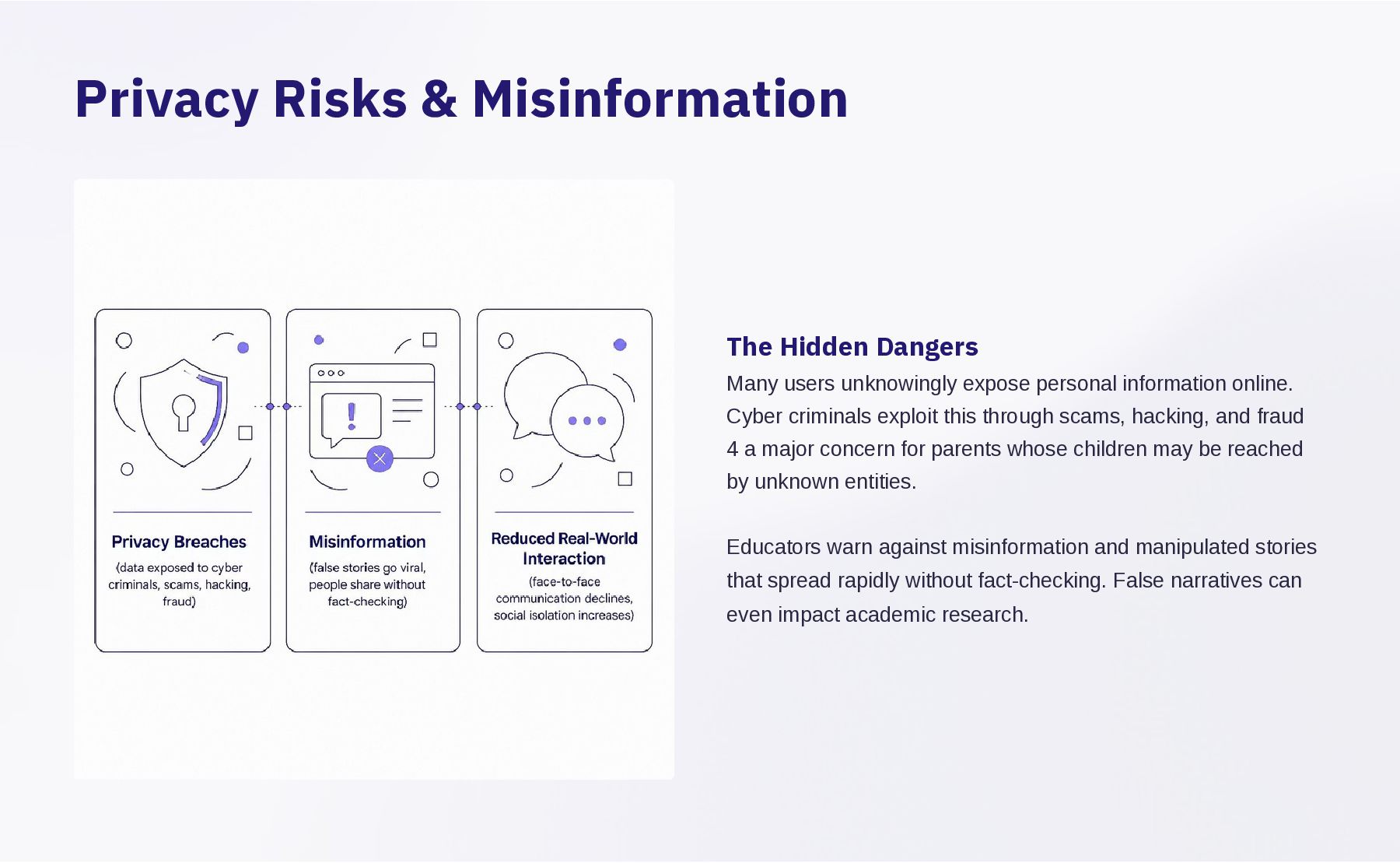
  6. Privacy Risks & Misinformation The Hidden Dangers Many users unknowingly

    expose personal information online. Cyber criminals exploit this through scams, hacking, and fraud 4 a major concern for parents whose children may be reached by unknown entities. Educators warn against misinformation and manipulated stories that spread rapidly without fact-checking. False narratives can even impact academic research.
  7. Productivity Loss & Social Impact Constant Distraction Reduced Face-to-Face Interaction

    Misinformation Spread Notifications and endlessscrolling divert students from studies and employees from work, reducing overall productivity. Excessive appusediminishesreal- world communication, weakening personal relationships and social skills. False stories go viralquickly. People often believe and share news without verifying facts, amplifying the problem.
  8. Impact on Different User Groups Students Professionals Networking and industry

    updates are valuable, but excessive use during work hours disrupts productivity and blurs professional boundaries. Parents Useful for tracking children's school life, but comparing kids to others online can harm relationships and create generational gaps. Researchers Global collaboration is enabled, but rapid misinformation spread can negatively impact the quality and credibility of research. Accessto learning resources is a key benefit, but gaming addiction, online bullying, and irrational comparisons harm academic performance.
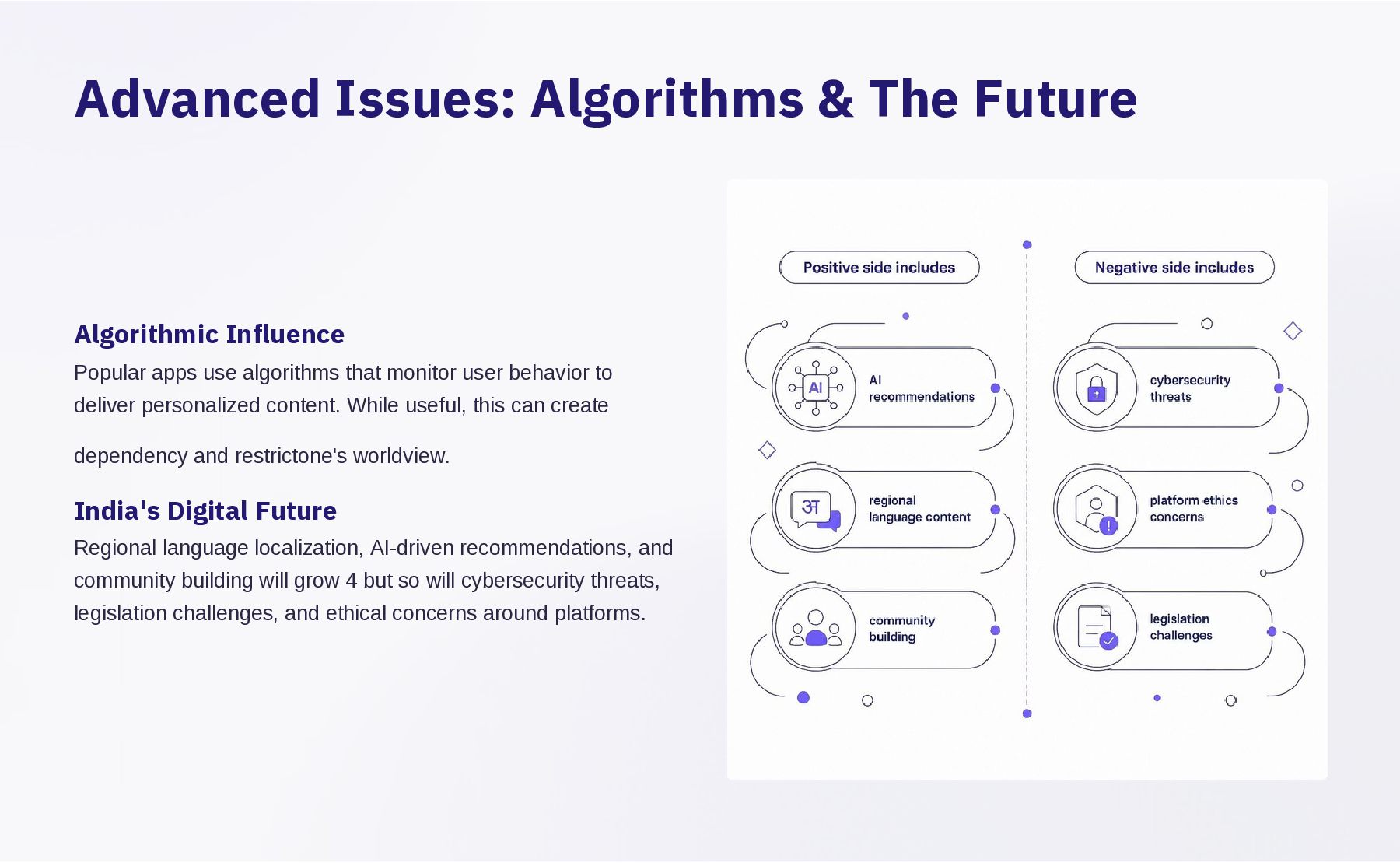
  9. Advanced Issues: Algorithms & The Future India's Digital Future Regional

    language localization, AI-driven recommendations, and community building will grow 4 but so will cybersecurity threats, legislation challenges, and ethical concerns around platforms. Algorithmic Influence Popular apps use algorithms that monitor user behavior to deliver personalized content. While useful, this can create dependency and restrictone's worldview.
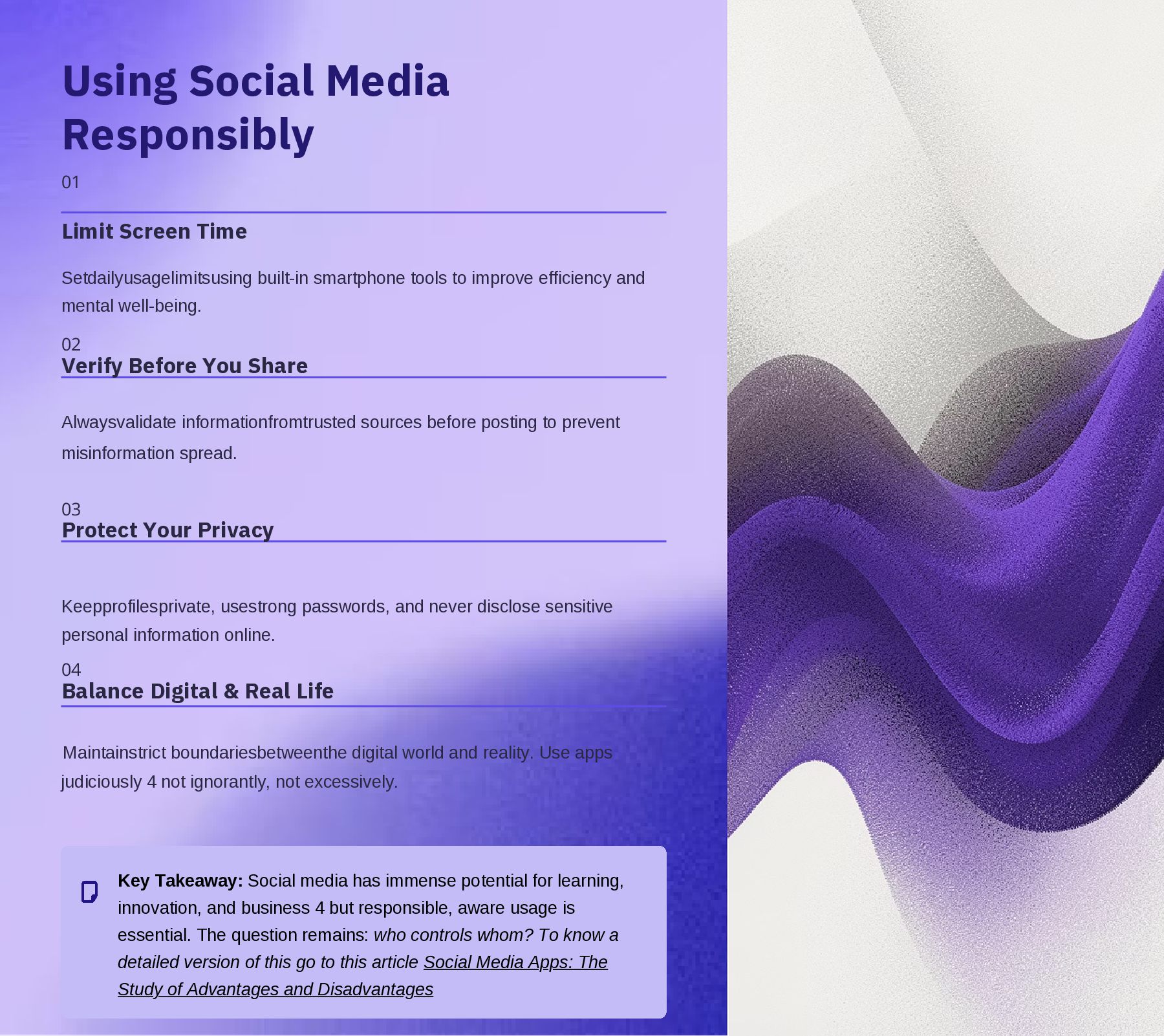
  10. Using Social Media Responsibly 01 Limit Screen Time 04 Balance

    Digital & Real Life 02 Verify Before You Share 03 Protect Your Privacy Key Takeaway: Social media has immense potential for learning, innovation, and business 4 but responsible, aware usage is essential. The question remains: who controls whom? To know a detailed version of this go to this article Social Media Apps: The Study of Advantages and Disadvantages Maintainstrict boundariesbetweenthe digital world and reality. Use apps judiciously 4 not ignorantly, not excessively. Keepprofilesprivate, usestrong passwords, and never disclose sensitive personal information online. Alwaysvalidate informationfromtrusted sources before posting to prevent misinformation spread. Setdailyusagelimitsusing built-in smartphone tools to improve efficiency and mental well-being.