Upgrade to Pro — share decks privately, control downloads, hide ads and more …

Action research

Sponsored · Your Podcast. Everywhere. Effortlessly. Share. Educate. Inspire. Entertain. You do you. We'll handle the rest. →

Action research

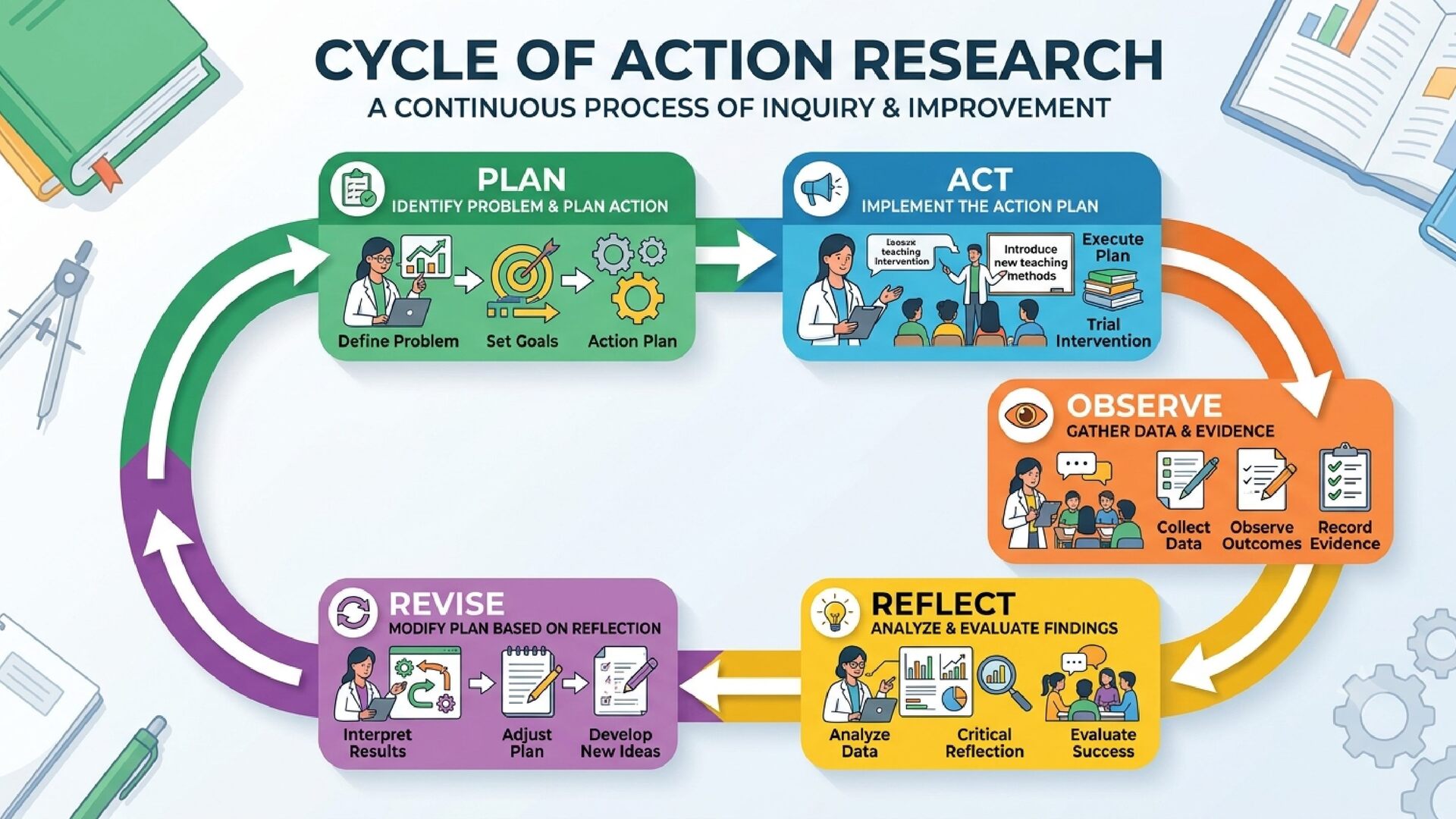
Action research is a type of research. Action research is a systematic process used by teachers to identify and solve classroom problems by planning, implementing, observing, and evaluating suitable actions.

Avatar for Divya Lakshmi

Divya Lakshmi

October 01, 2026

Other Decks in Education

Transcript

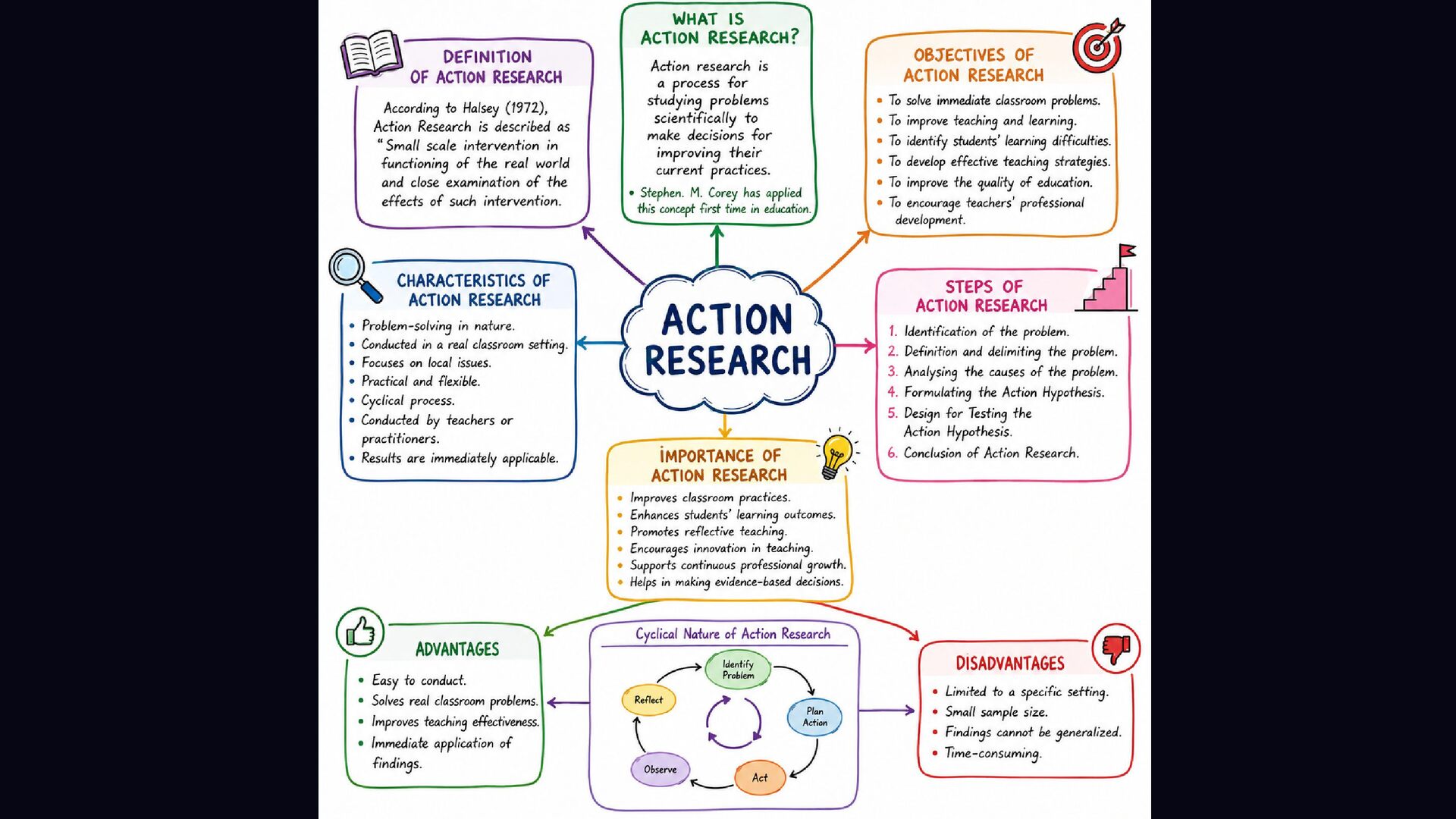
  1. Action research is a proccss for studying problems scientifically to

    make decision for improving their current practices. Stephen. M.Corey has applicd this concept first time in education.
  2. According to Halsey(1972), Action Research is described as " Small

    scale intervention in functioning of the real world and close examination of the effects of such intervention".
  3. To solve immediate classroom problems. To improve teaching and learning.

    To identify students' learning difficulties. To develop effective teaching strategies. To improve the quality of education. To support informed decision-making. To encourage teachers' professional development.
  4. Problem-solving in nature. Conducted in a real classroom setting. Focuses

    on local issues. Practical and flexible. Cyclical process. Conducted by teachers or practitioners. Results are immediately applicable.
  5. 1. Identification of the problem. 2. Definition and delimiting the

    problem. 3. Analysing the causes of the problem. 4.Formulating the Action Hypothesis. 5.Design for Testing the Action Hypothesis. 6.Conclusion of Action Research
  6. IDENTIFICATION OF THE PROBLEM The teacher identifies a problem faced

    in the classroom. The problem should be related to teaching and learning. The teacher should understand the seriousness and importance of the problem. The problem should be clearly identified from the broader area.
  7. DEFINITION AND DELIMATING THE PROBLEM After identifying the problem, it

    is clearly defined. The problem is limited to a specific class, subject, group and period. This makes the research more focused and manageable.
  8. ANALYSISING THE CAUSES OF THE PROBLEM The teacher tries to

    find out why the problem occurs. Different possible causes are studied. The teacher may use observation, interviews, tests or discussions to identify the causes.
  9. FORMULATING THE ACTION HYPOTHESES The teacher develops a possible solution

    to the problem. This expected solution is called an action hypothesis. It predicts what may happen if a particular action is taken.
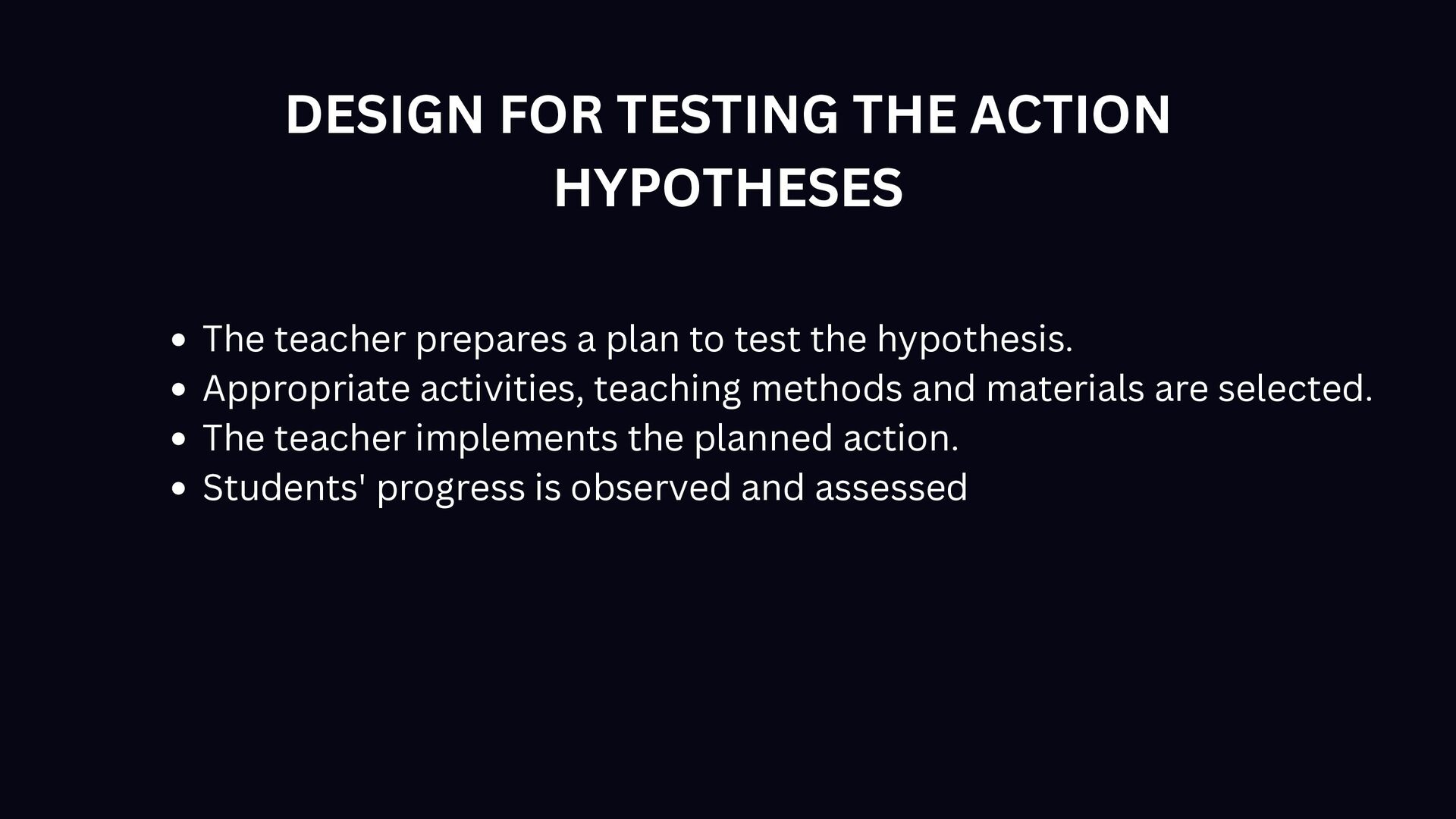
  10. DESIGN FOR TESTING THE ACTION HYPOTHESES The teacher prepares a

    plan to test the hypothesis. Appropriate activities, teaching methods and materials are selected. The teacher implements the planned action. Students' progress is observed and assessed
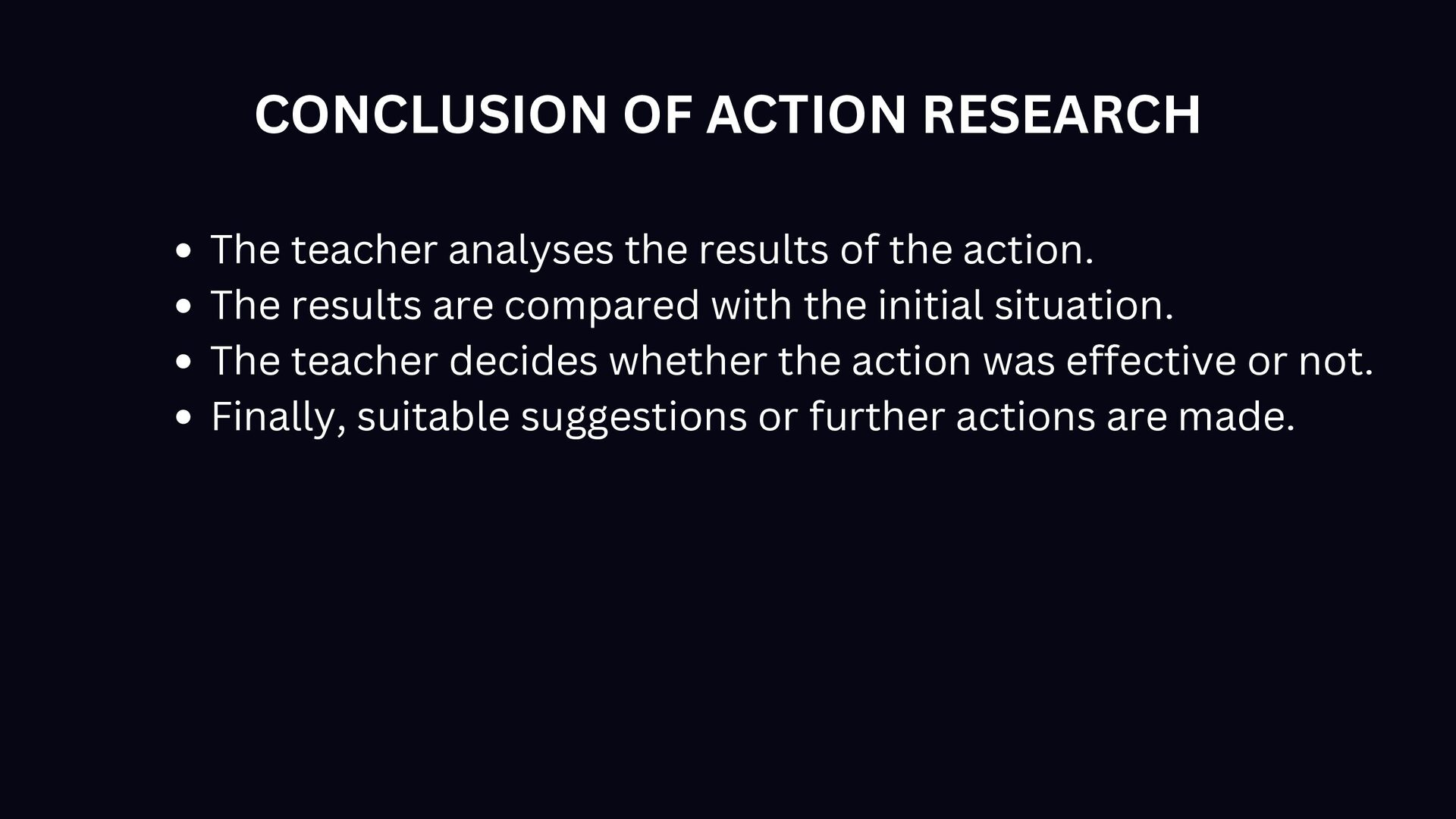
  11. CONCLUSION OF ACTION RESEARCH The teacher analyses the results of

    the action. The results are compared with the initial situation. The teacher decides whether the action was effective or not. Finally, suitable suggestions or further actions are made.
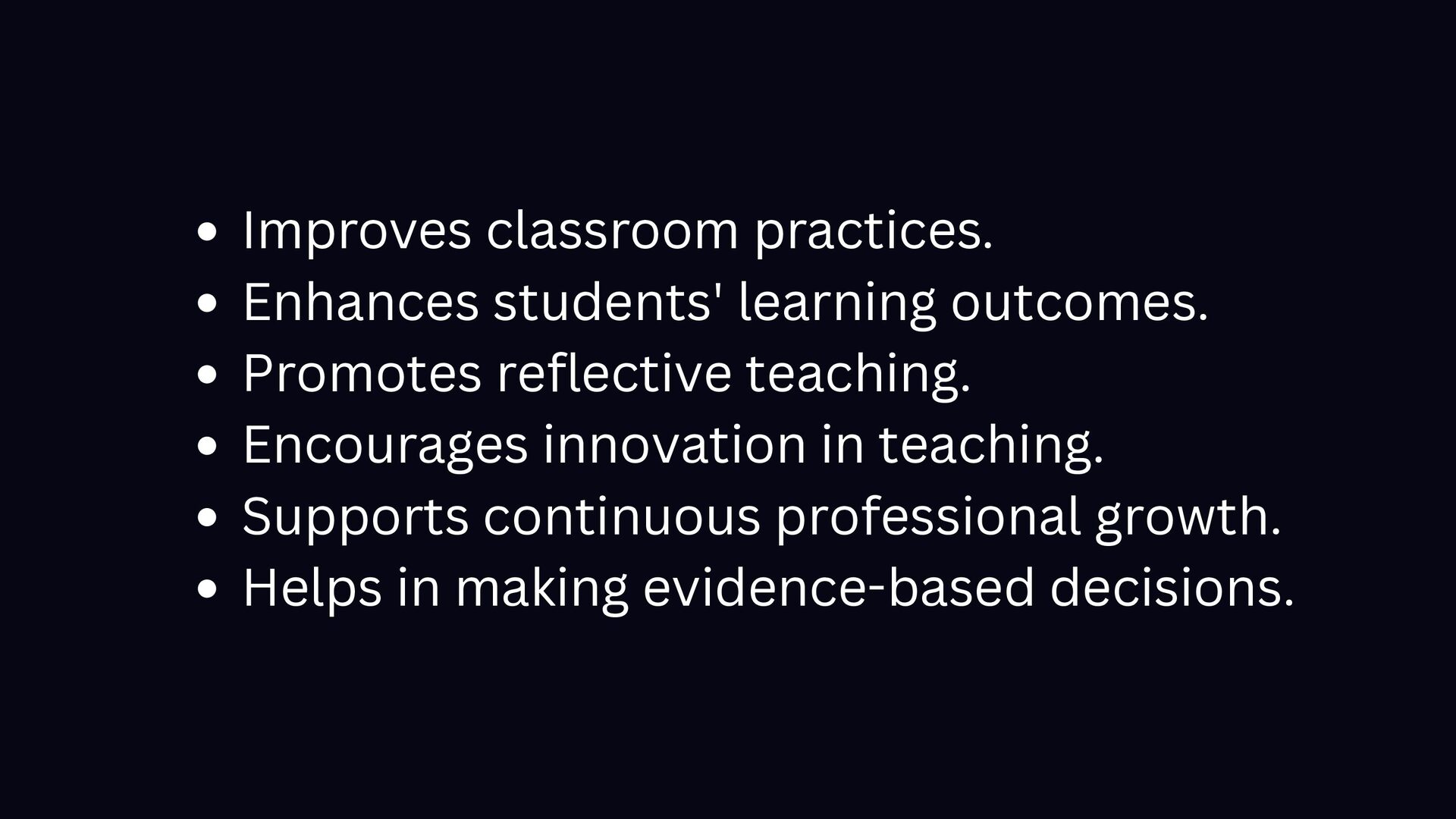
  12. Improves classroom practices. Enhances students' learning outcomes. Promotes reflective teaching.

    Encourages innovation in teaching. Supports continuous professional growth. Helps in making evidence-based decisions.
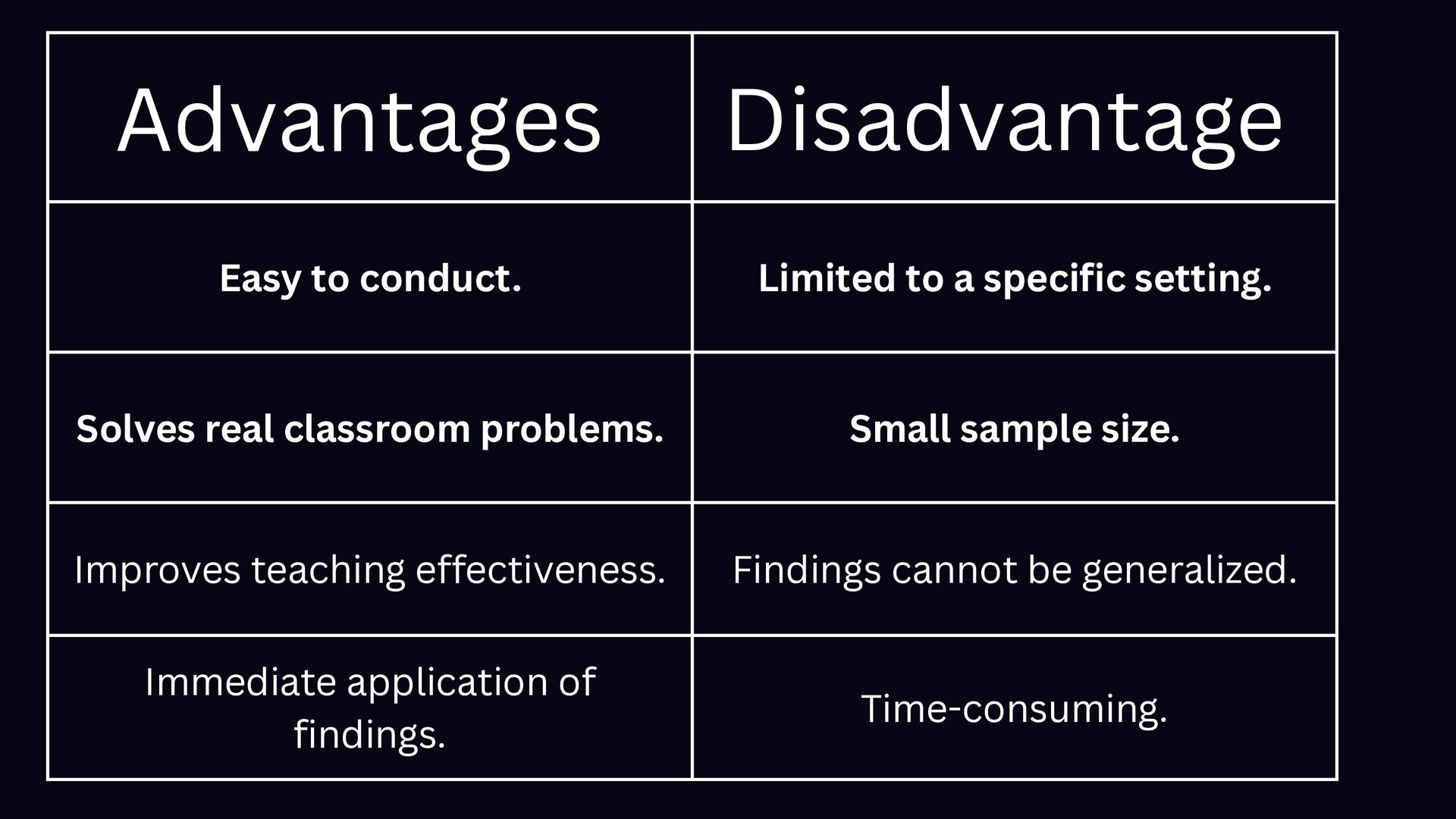
  13. Advantages Disadvantage Easy to conduct. Limited to a specific setting.

    Solves real classroom problems. Small sample size. Improves teaching effectiveness. Findings cannot be generalized. Immediate application of findings. Time-consuming.