Upgrade to PRO for Only $50/Year—Limited-Time Offer! 🔥

2024 ICD-10-CM Outpatient Updates

Avatar for e4health e4health PRO
January 30, 2024
1

2024 ICD-10-CM Outpatient Updates

Avatar for e4health

e4health PRO

January 30, 2024
Tweet

Transcript

  1. H I M | C O D I N G

    & C D I | H E A LT H I T | R E V C Y C L E Empowering Better Health e4health tackles healthcare’s data, quality and revenue challenges empowering your providers to focus on better care.
  2. e4Health IQ Education & Training Disclaimer • The information and

    opinions presented here are based on the experience, training, and interpretation of the author. Although the information has been researched and reviewed for accuracy, the instructor does not accept any responsibility or liability with regard to errors, omissions, misuse, or misinterpretation. This information is intended as a guide; it should not be considered a legal/consulting opinion or advice. • This information is proprietary and should not be copied or distributed by anyone other than e4Health.
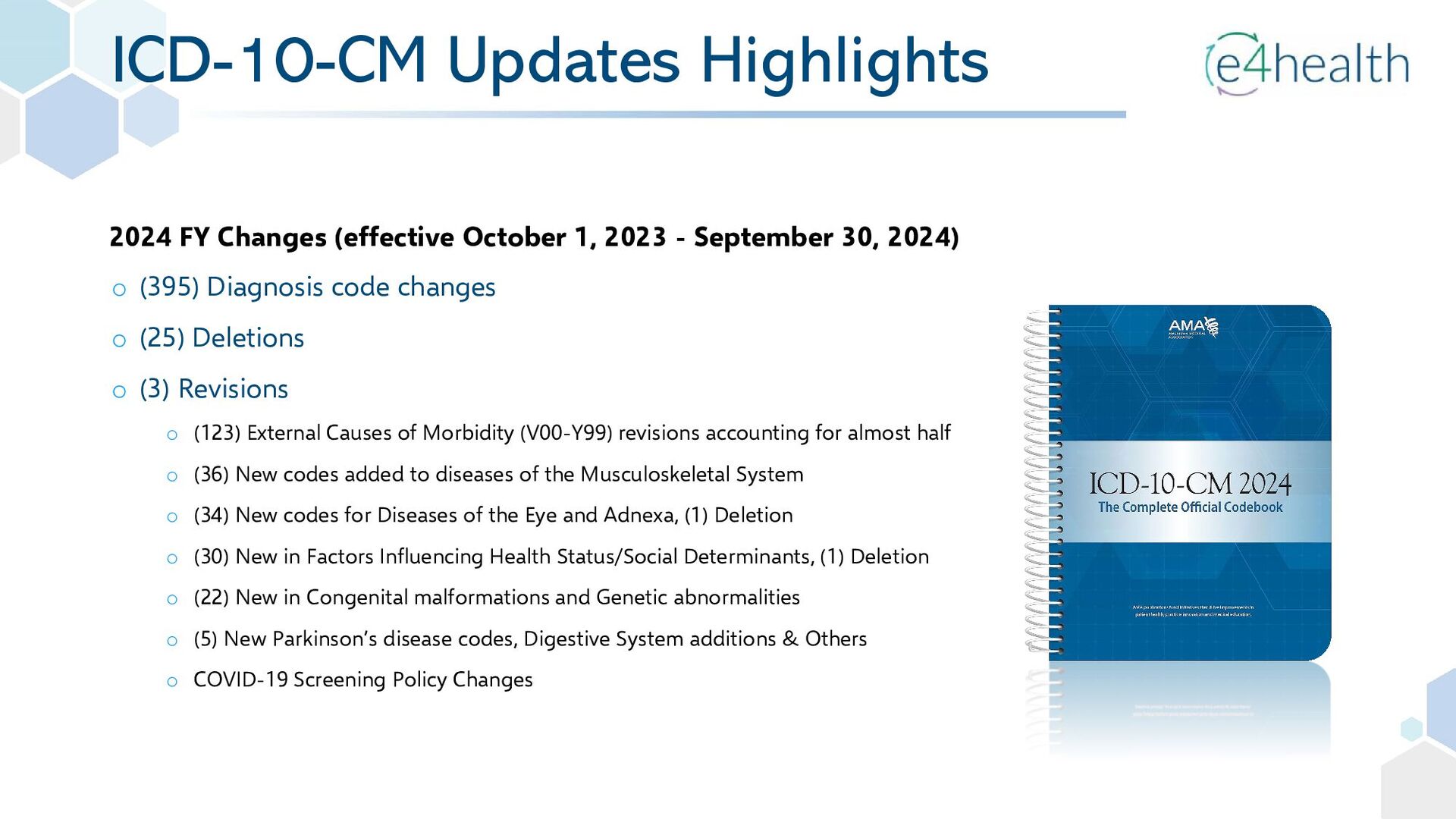
  3. ICD-10-CM Updates Highlights o (395) Diagnosis code changes o (25)

    Deletions o (3) Revisions o (123) External Causes of Morbidity (V00-Y99) revisions accounting for almost half o (36) New codes added to diseases of the Musculoskeletal System o (34) New codes for Diseases of the Eye and Adnexa, (1) Deletion o (30) New in Factors Influencing Health Status/Social Determinants, (1) Deletion o (22) New in Congenital malformations and Genetic abnormalities o (5) New Parkinson’s disease codes, Digestive System additions & Others o COVID-19 Screening Policy Changes 2024 FY Changes (effective October 1, 2023 - September 30, 2024)
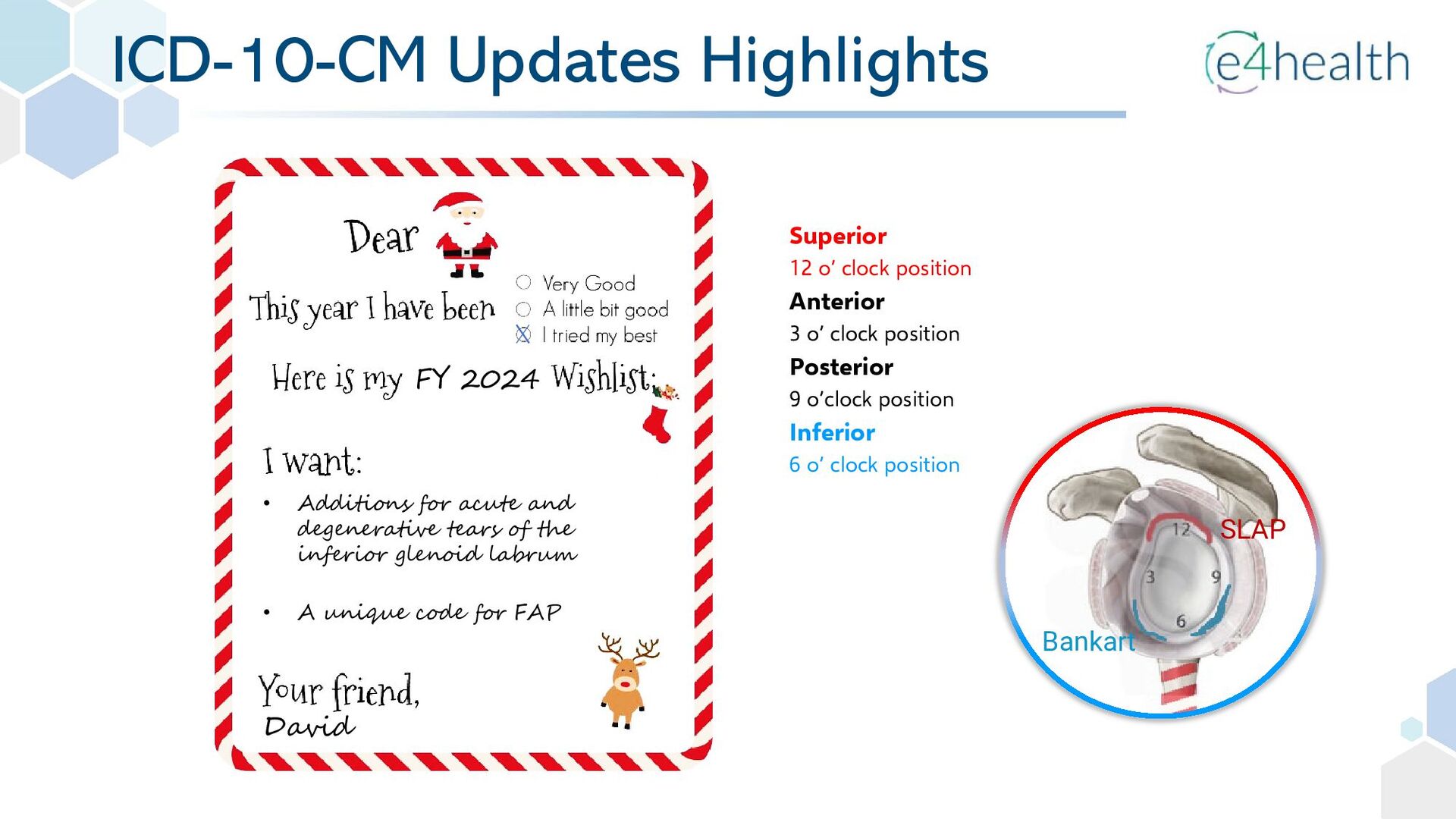
  4. ICD-10-CM Updates Highlights FY 2024 David • Additions for acute

    and degenerative tears of the inferior glenoid labrum • A unique code for FAP Superior 12 o’ clock position Anterior 3 o’ clock position Posterior 9 o’clock position Inferior 6 o’ clock position SLAP Bankart
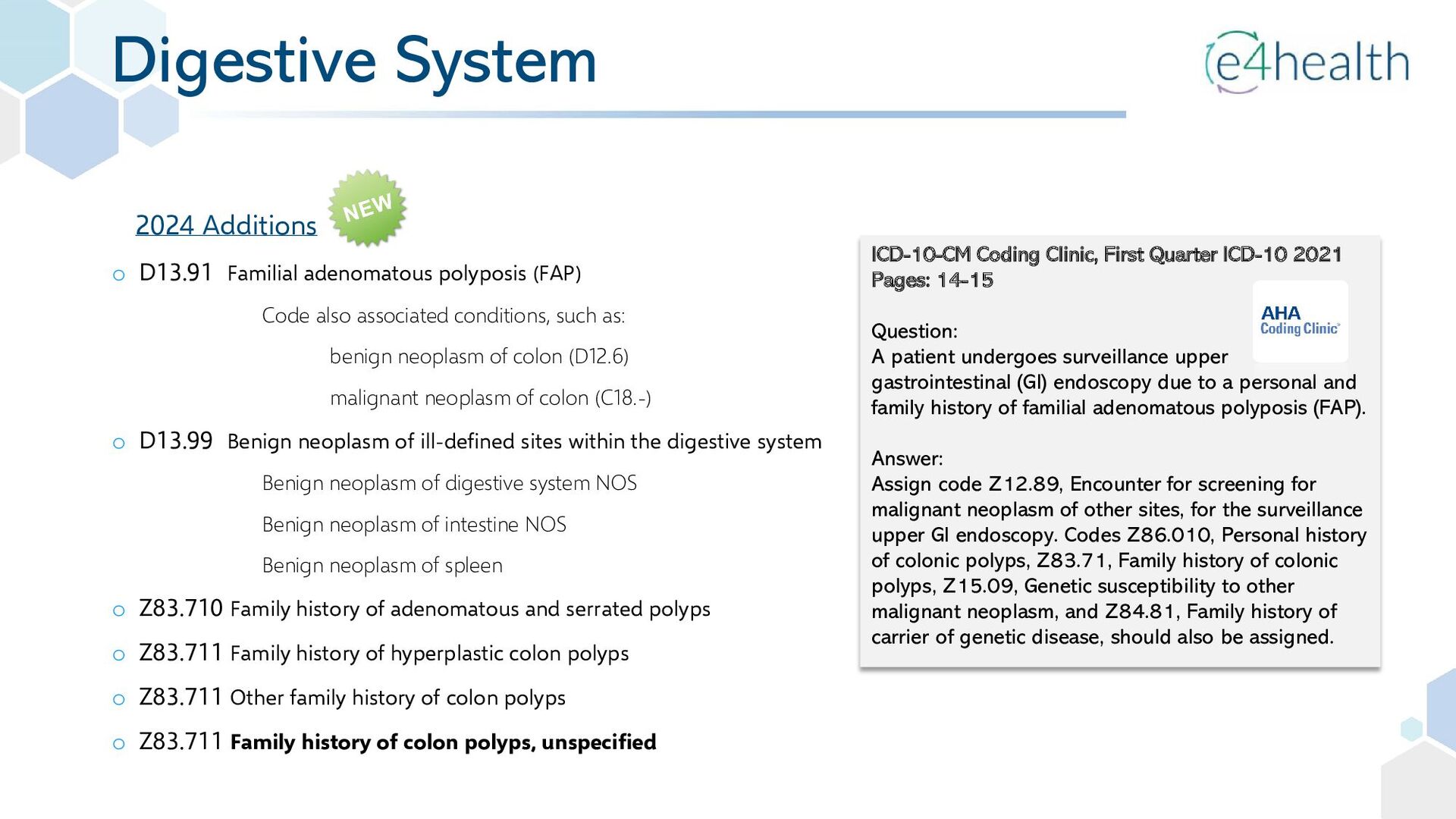
  5. Digestive System o D13.91 Familial adenomatous polyposis (FAP) Code also

    associated conditions, such as: benign neoplasm of colon (D12.6) malignant neoplasm of colon (C18.-) o D13.99 Benign neoplasm of ill-defined sites within the digestive system Benign neoplasm of digestive system NOS Benign neoplasm of intestine NOS Benign neoplasm of spleen o Z83.710 Family history of adenomatous and serrated polyps o Z83.711 Family history of hyperplastic colon polyps o Z83.711 Other family history of colon polyps o Z83.711 Family history of colon polyps, unspecified 2024 Additions ICD-10-CM Coding Clinic, First Quarter ICD-10 2021 Pages: 14-15 Question: A patient undergoes surveillance upper gastrointestinal (GI) endoscopy due to a personal and family history of familial adenomatous polyposis (FAP). Answer: Assign code Z12.89, Encounter for screening for malignant neoplasm of other sites, for the surveillance upper GI endoscopy. Codes Z86.010, Personal history of colonic polyps, Z83.71, Family history of colonic polyps, Z15.09, Genetic susceptibility to other malignant neoplasm, and Z84.81, Family history of carrier of genetic disease, should also be assigned.
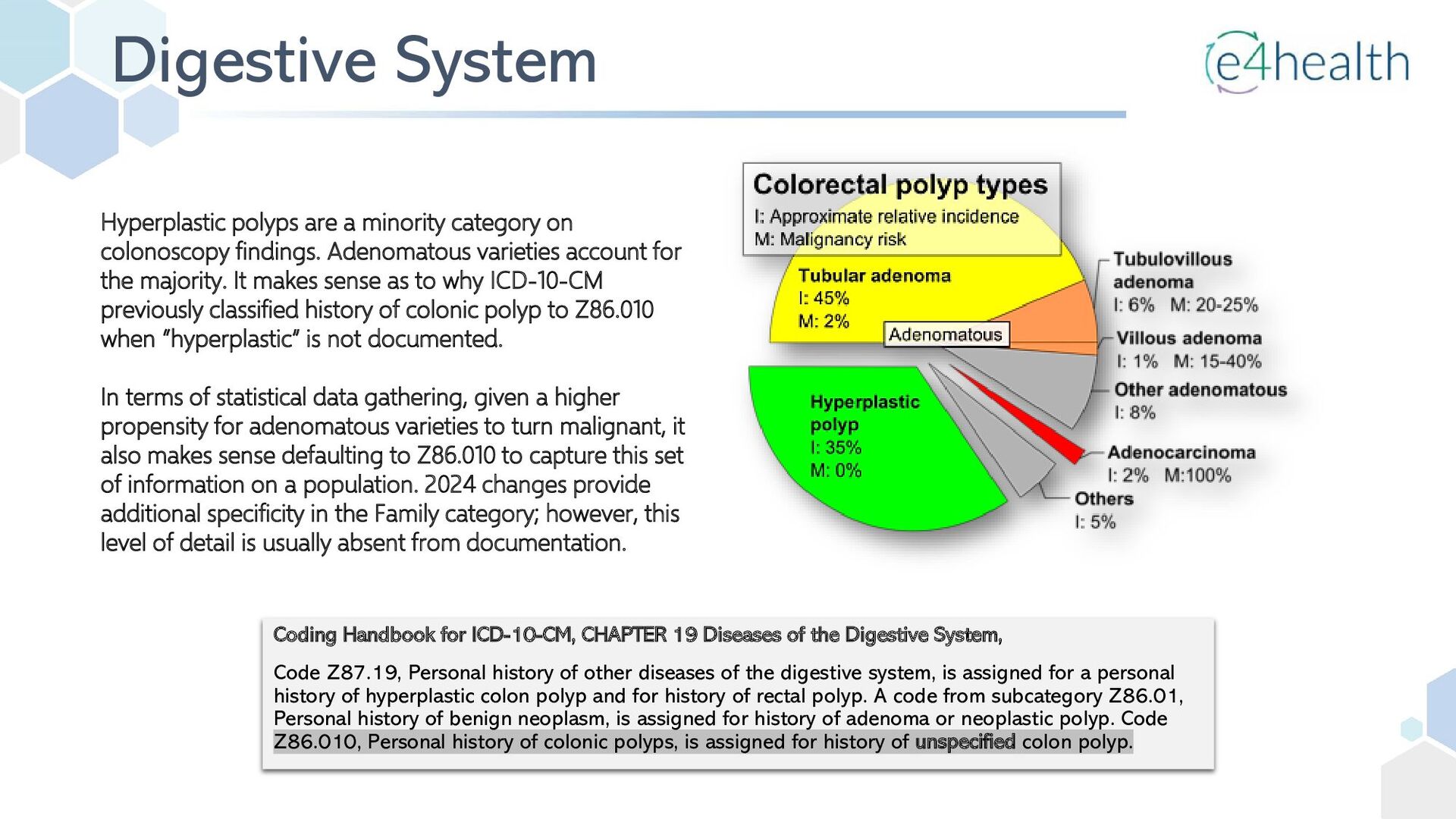
  6. Digestive System Hyperplastic polyps are a minority category on colonoscopy

    findings. Adenomatous varieties account for the majority. It makes sense as to why ICD-10-CM previously classified history of colonic polyp to Z86.010 when “hyperplastic” is not documented. In terms of statistical data gathering, given a higher propensity for adenomatous varieties to turn malignant, it also makes sense defaulting to Z86.010 to capture this set of information on a population. 2024 changes provide additional specificity in the Family category; however, this level of detail is usually absent from documentation. Coding Handbook for ICD-10-CM, CHAPTER 19 Diseases of the Digestive System, Code Z87.19, Personal history of other diseases of the digestive system, is assigned for a personal history of hyperplastic colon polyp and for history of rectal polyp. A code from subcategory Z86.01, Personal history of benign neoplasm, is assigned for history of adenoma or neoplastic polyp. Code Z86.010, Personal history of colonic polyps, is assigned for history of unspecified colon polyp.
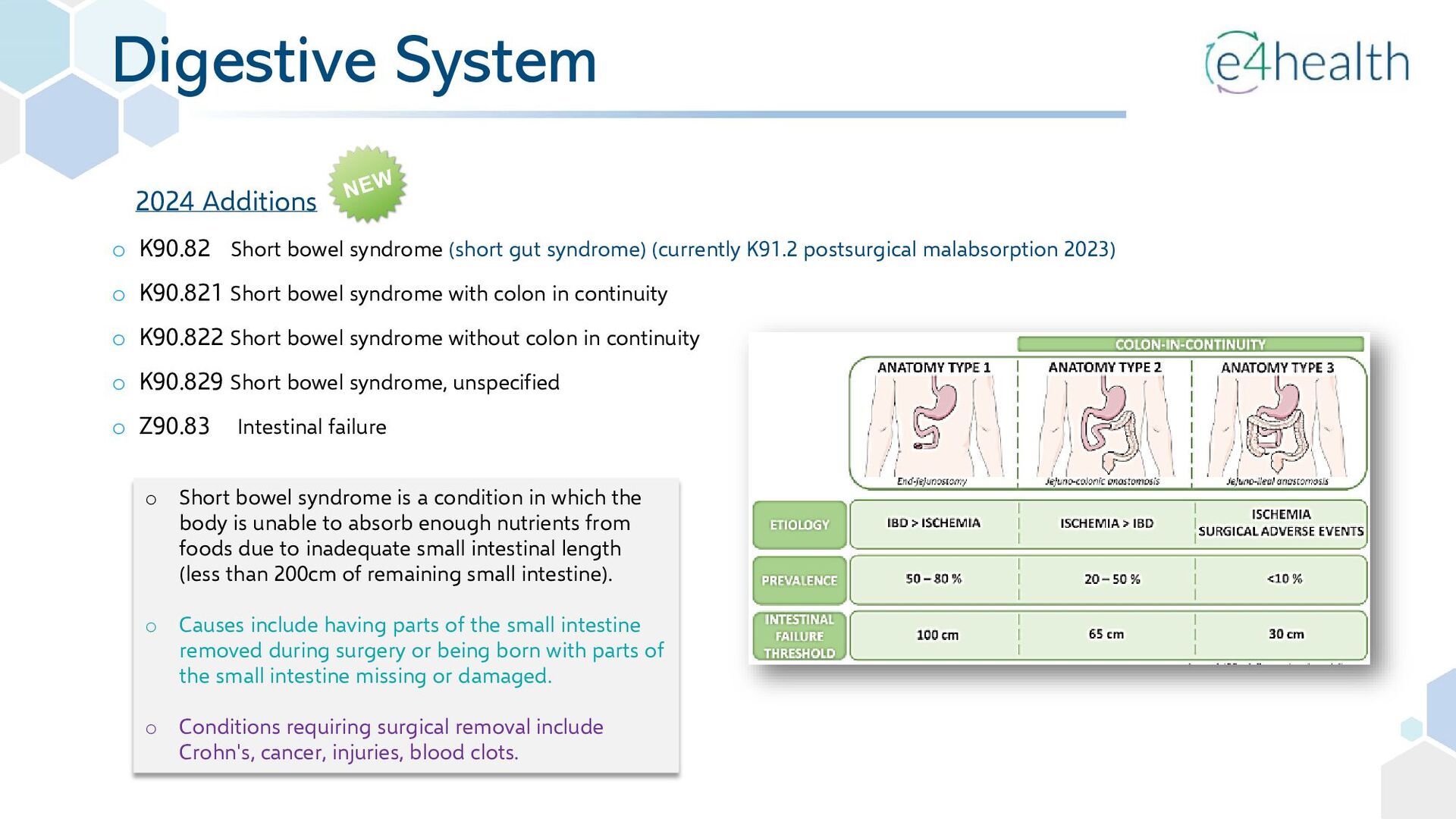
  7. Digestive System o K90.82 Short bowel syndrome (short gut syndrome)

    (currently K91.2 postsurgical malabsorption 2023) o K90.821 Short bowel syndrome with colon in continuity o K90.822 Short bowel syndrome without colon in continuity o K90.829 Short bowel syndrome, unspecified o Z90.83 Intestinal failure 2024 Additions o Short bowel syndrome is a condition in which the body is unable to absorb enough nutrients from foods due to inadequate small intestinal length (less than 200cm of remaining small intestine). o Causes include having parts of the small intestine removed during surgery or being born with parts of the small intestine missing or damaged. o Conditions requiring surgical removal include Crohn's, cancer, injuries, blood clots.
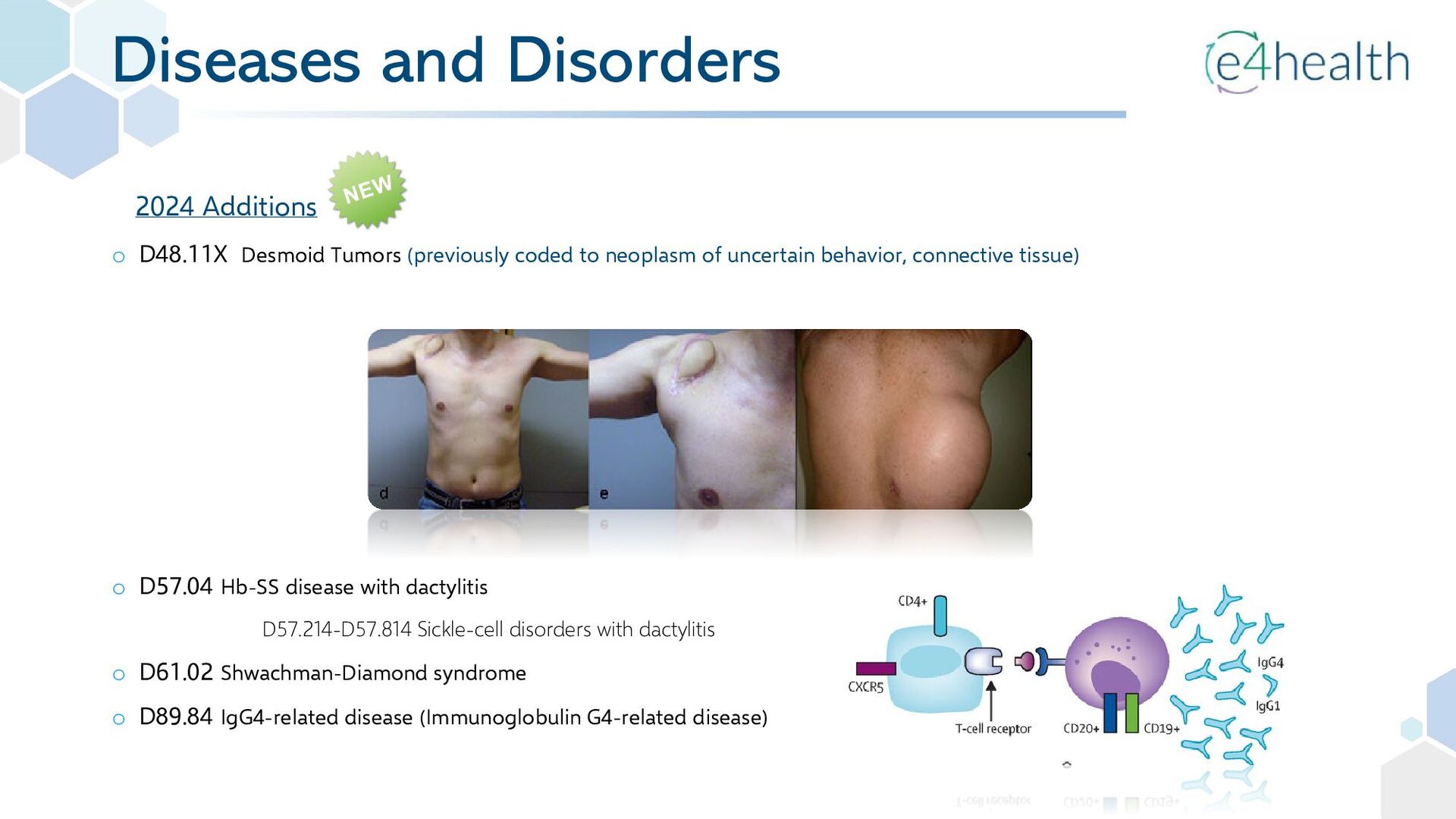
  8. Diseases and Disorders o D48.11X Desmoid Tumors (previously coded to

    neoplasm of uncertain behavior, connective tissue) o D57.04 Hb-SS disease with dactylitis D57.214-D57.814 Sickle-cell disorders with dactylitis o D61.02 Shwachman-Diamond syndrome o D89.84 IgG4-related disease (Immunoglobulin G4-related disease) 2024 Additions
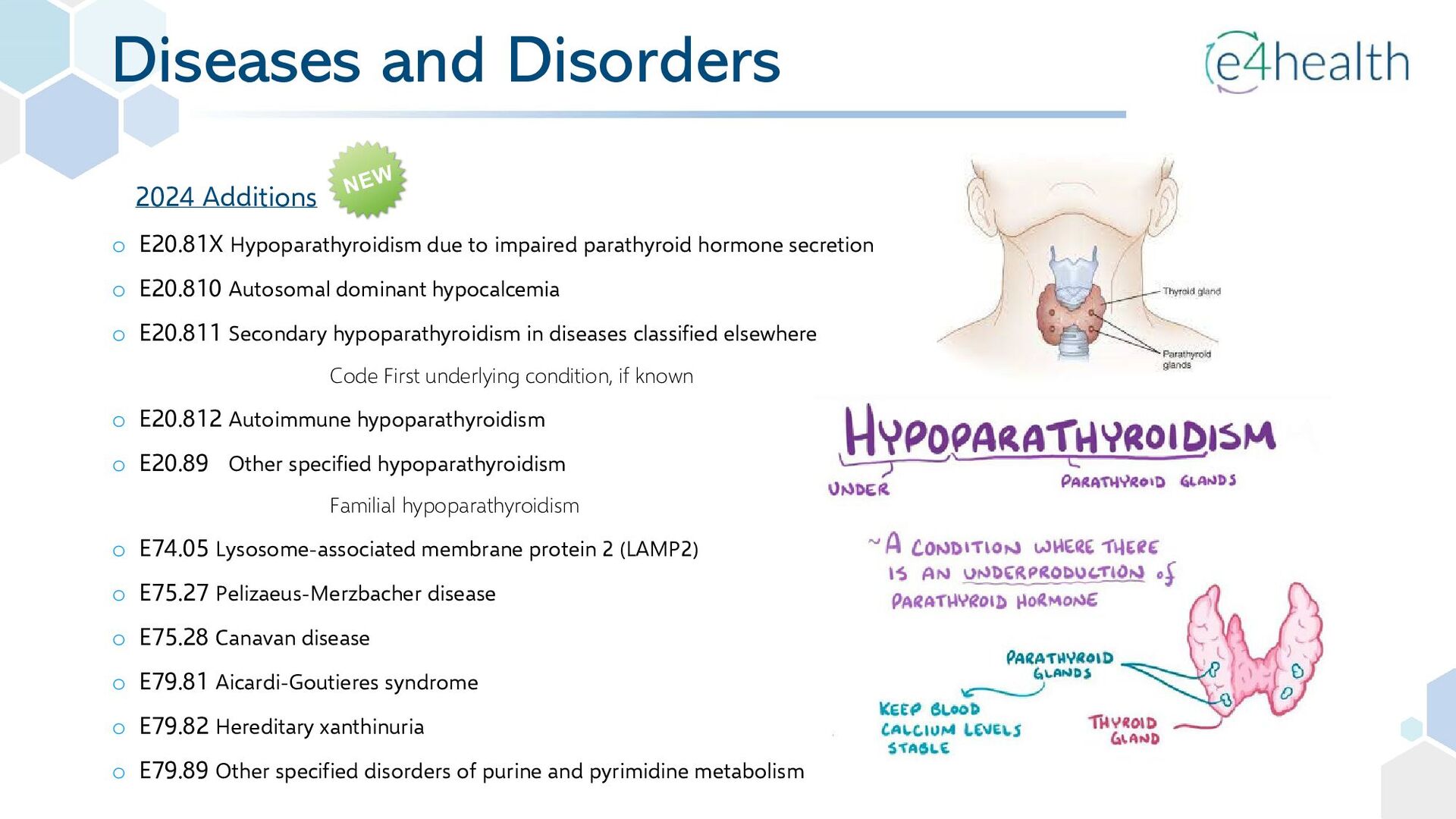
  9. Diseases and Disorders o E20.81X Hypoparathyroidism due to impaired parathyroid

    hormone secretion o E20.810 Autosomal dominant hypocalcemia o E20.811 Secondary hypoparathyroidism in diseases classified elsewhere Code First underlying condition, if known o E20.812 Autoimmune hypoparathyroidism o E20.89 Other specified hypoparathyroidism Familial hypoparathyroidism o E74.05 Lysosome-associated membrane protein 2 (LAMP2) o E75.27 Pelizaeus-Merzbacher disease o E75.28 Canavan disease o E79.81 Aicardi-Goutieres syndrome o E79.82 Hereditary xanthinuria o E79.89 Other specified disorders of purine and pyrimidine metabolism 2024 Additions
  10. Diseases and Disorders o E88.43 Disorders of mitochondrial tRNA o

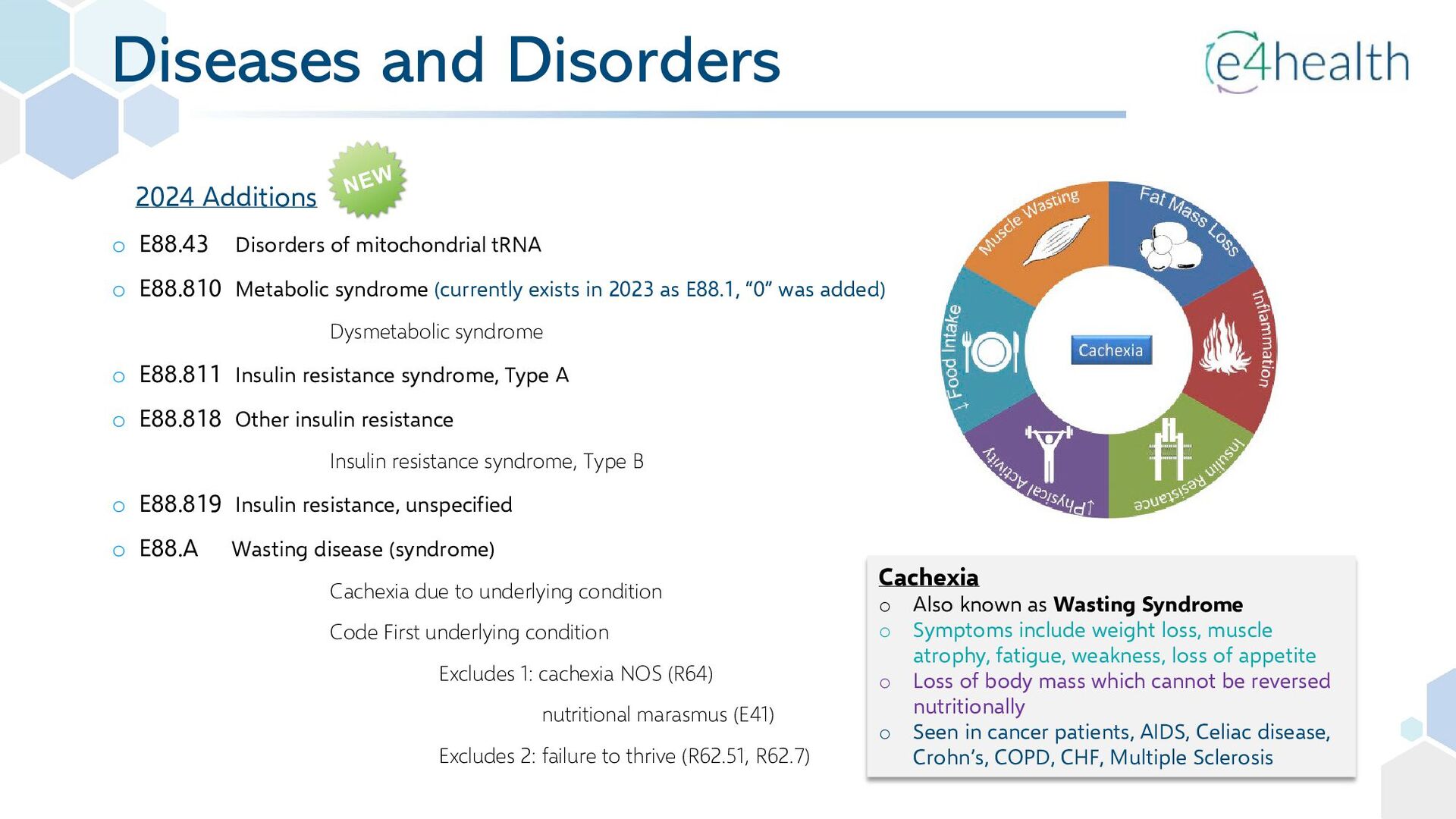
    E88.810 Metabolic syndrome (currently exists in 2023 as E88.1, “0” was added) Dysmetabolic syndrome o E88.811 Insulin resistance syndrome, Type A o E88.818 Other insulin resistance Insulin resistance syndrome, Type B o E88.819 Insulin resistance, unspecified o E88.A Wasting disease (syndrome) Cachexia due to underlying condition Code First underlying condition Excludes 1: cachexia NOS (R64) nutritional marasmus (E41) Excludes 2: failure to thrive (R62.51, R62.7) 2024 Additions Cachexia o Also known as Wasting Syndrome o Symptoms include weight loss, muscle atrophy, fatigue, weakness, loss of appetite o Loss of body mass which cannot be reversed nutritionally o Seen in cancer patients, AIDS, Celiac disease, Crohn’s, COPD, CHF, Multiple Sclerosis
  11. External Causes of Morbidity o W44.B3XA Plastic toy and toy

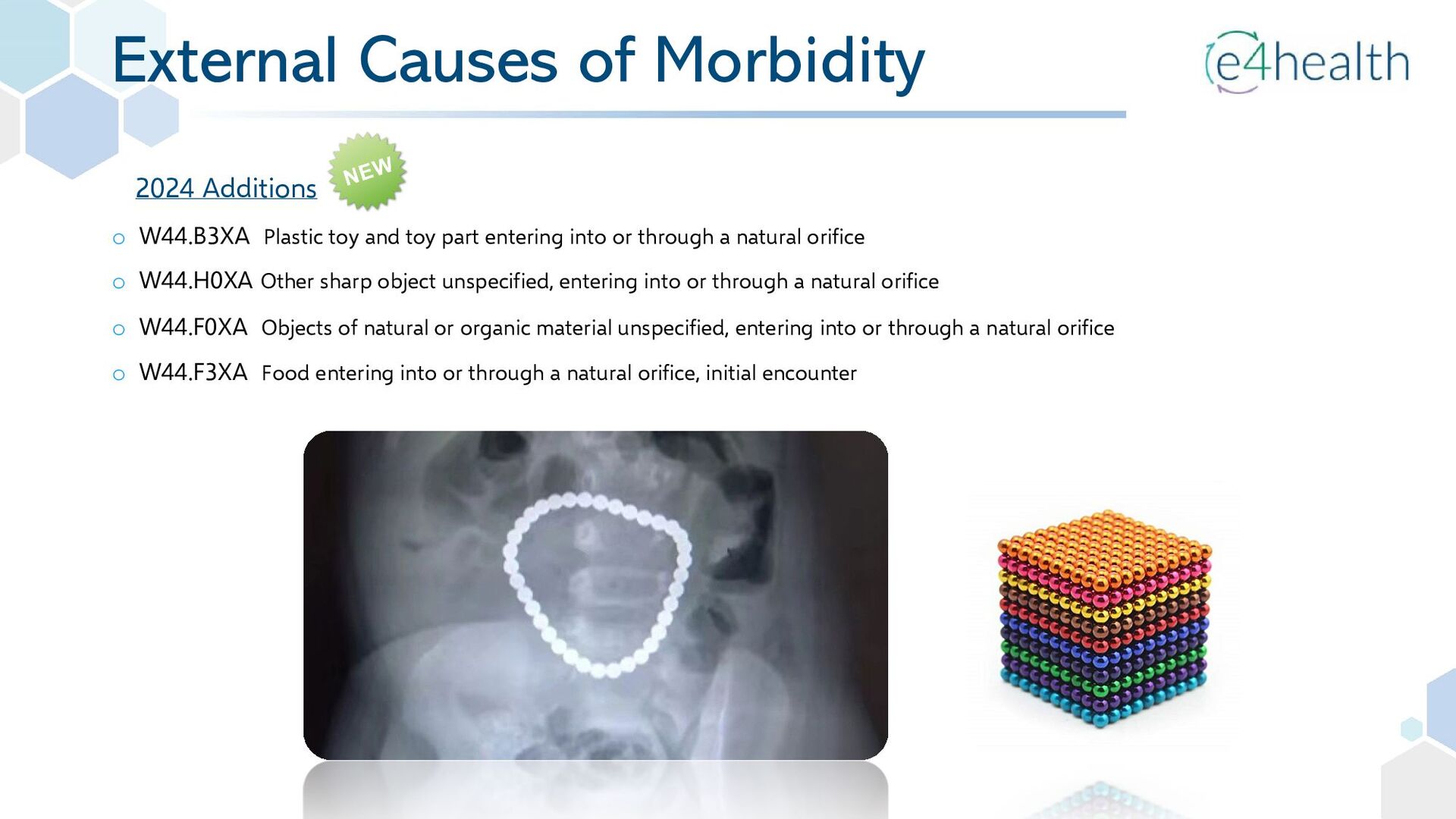
    part entering into or through a natural orifice o W44.H0XA Other sharp object unspecified, entering into or through a natural orifice o W44.F0XA Objects of natural or organic material unspecified, entering into or through a natural orifice o W44.F3XA Food entering into or through a natural orifice, initial encounter 2024 Additions
  12. External Causes of Morbidity o W44.A1XA Button battery entering into

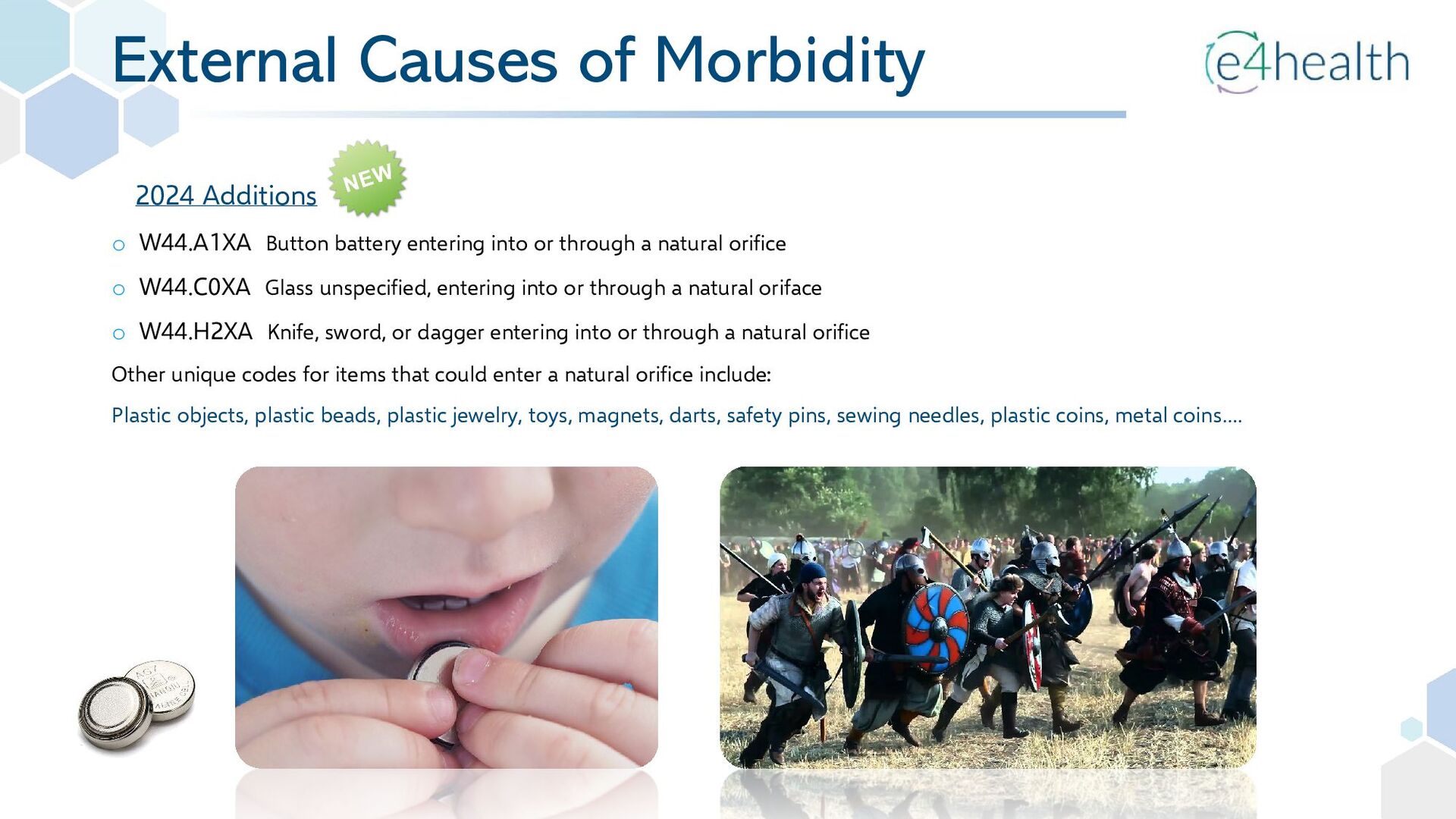
    or through a natural orifice o W44.C0XA Glass unspecified, entering into or through a natural oriface o W44.H2XA Knife, sword, or dagger entering into or through a natural orifice Other unique codes for items that could enter a natural orifice include: Plastic objects, plastic beads, plastic jewelry, toys, magnets, darts, safety pins, sewing needles, plastic coins, metal coins…. 2024 Additions
  13. Social Determinants of Health o Z62.892 Runaway (from current living

    environment) o Z62.23 Child in custody of non-parental relative o Z62.24 Child in custody of non-relative guardian o Z62.823 Parent-step child conflict o Z62.83 Non-parental relative or guardian-child conflict o Z62.831 Non-parental relative-child conflict o Z62.832 Non-relative guardian-child conflict o Z62.823 Group home staff-child conflict ICD-10-CM and ICD-10-PCS Coding Handbook “Codes from categories Z55 through Z65, Persons with potential health hazards related to socioeconomic and psychosocial circumstances, are used to indicate certain problems or risk factors that may affect the patient's care or prevent satisfactory compliance with the recommended regimen. Because codes from categories Z55 through Z65 represent information about SDOH, rather than medical diagnoses, they do not need to be derived from physician documentation; it is also acceptable to report them based on medical record documentation from clinicians involved in the care of the patient who are not the patient's provider.” 2024 Additions In the context of SDOH, ICD-10-CM Official Guidelines for Coding and Reporting define "clinicians" other than the patient's provider as healthcare professionals permitted, based on regulatory or accreditation requirements or internal hospital policies, to document in a patient's official medical record. This may include documentation from social workers, community health workers, case managers, or nurses.
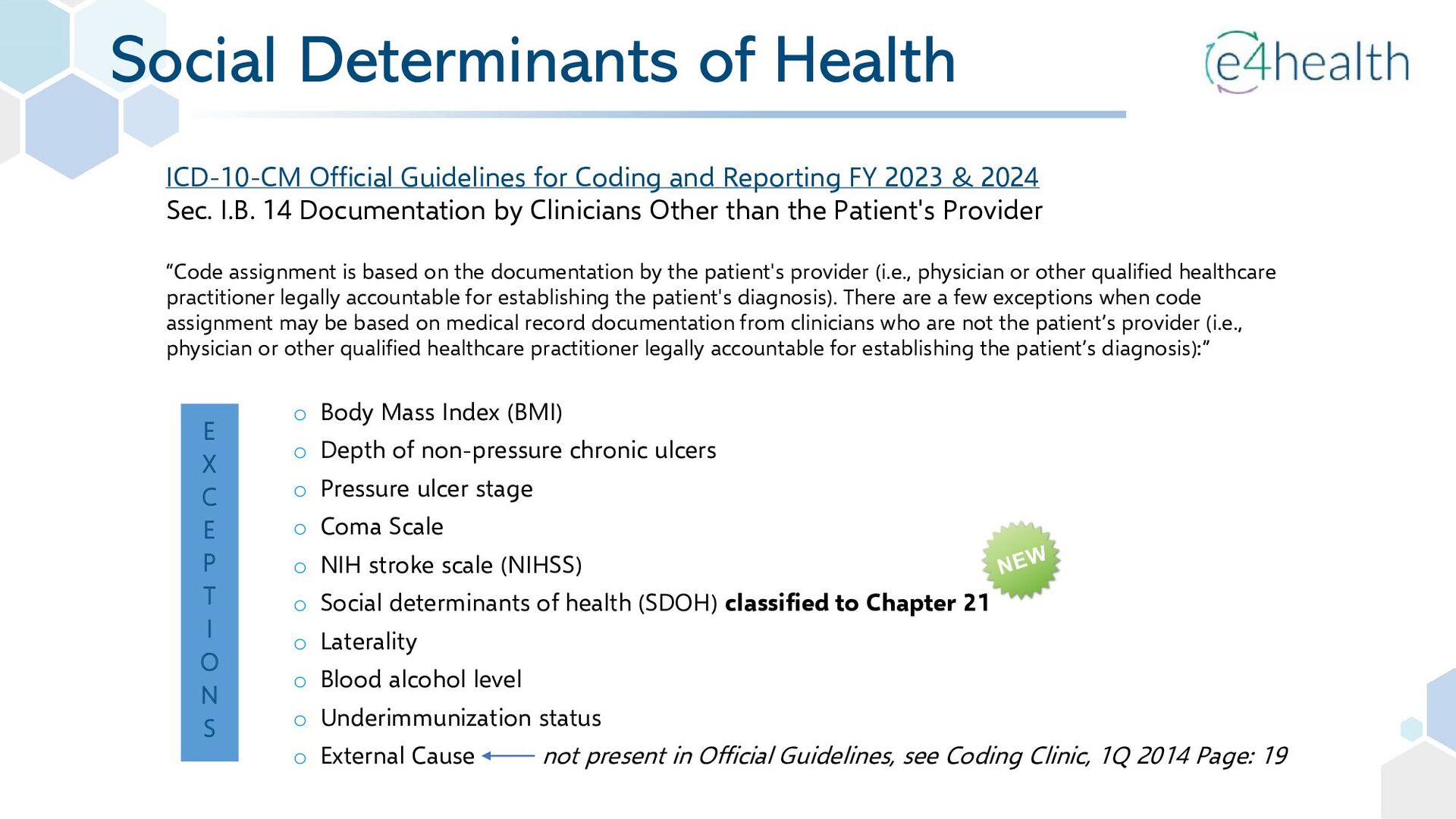
  14. Social Determinants of Health o Body Mass Index (BMI) o

    Depth of non-pressure chronic ulcers o Pressure ulcer stage o Coma Scale o NIH stroke scale (NIHSS) o Social determinants of health (SDOH) classified to Chapter 21 o Laterality o Blood alcohol level o Underimmunization status o External Cause not present in Official Guidelines, see Coding Clinic, 1Q 2014 Page: 19 ICD-10-CM Official Guidelines for Coding and Reporting FY 2023 & 2024 Sec. I.B. 14 Documentation by Clinicians Other than the Patient's Provider “Code assignment is based on the documentation by the patient's provider (i.e., physician or other qualified healthcare practitioner legally accountable for establishing the patient's diagnosis). There are a few exceptions when code assignment may be based on medical record documentation from clinicians who are not the patient’s provider (i.e., physician or other qualified healthcare practitioner legally accountable for establishing the patient’s diagnosis):” E X C E P T I O N S
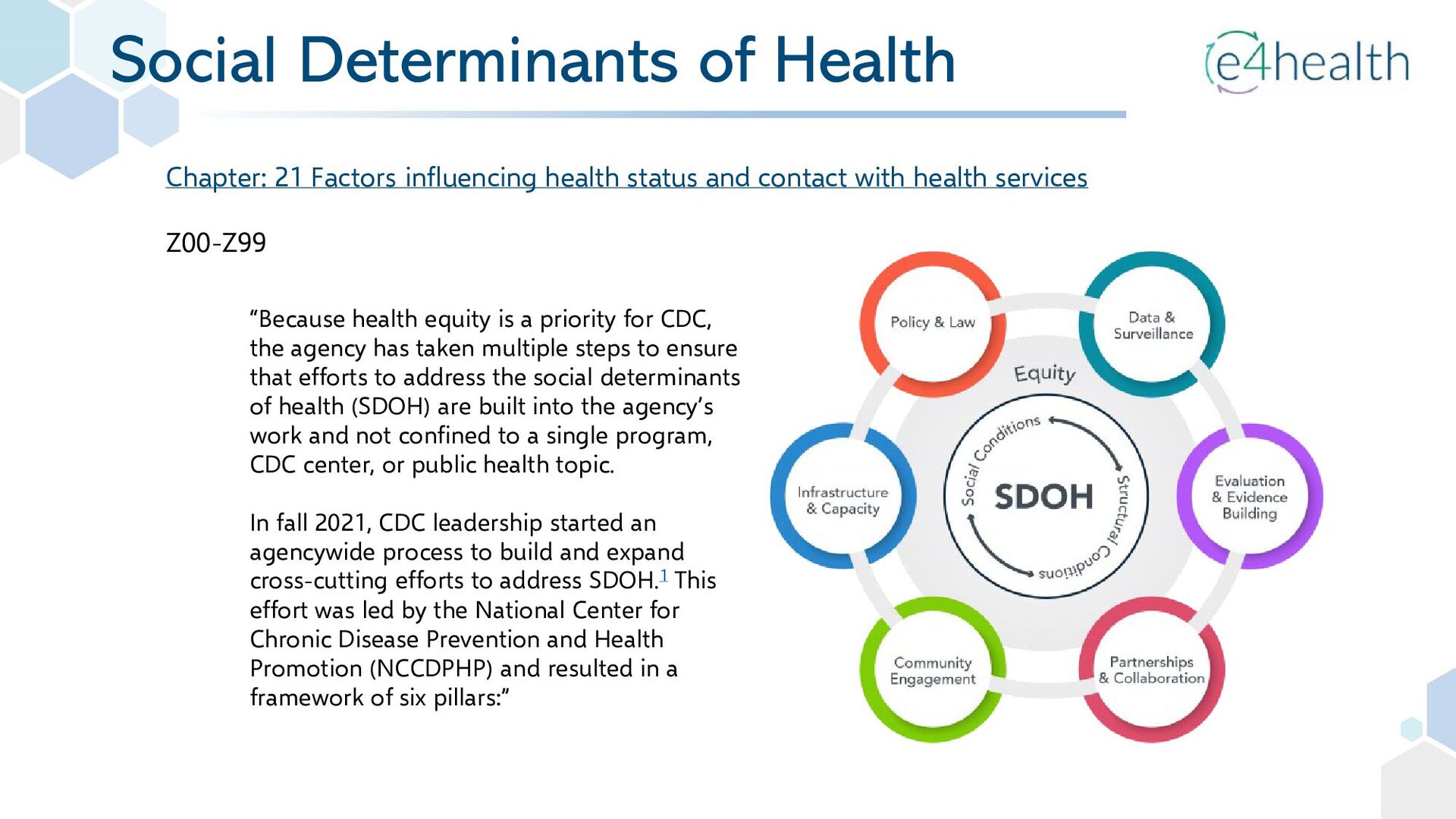
  15. Social Determinants of Health Chapter: 21 Factors influencing health status

    and contact with health services Z00-Z99 “Because health equity is a priority for CDC, the agency has taken multiple steps to ensure that efforts to address the social determinants of health (SDOH) are built into the agency’s work and not confined to a single program, CDC center, or public health topic. In fall 2021, CDC leadership started an agencywide process to build and expand cross-cutting efforts to address SDOH.1 This effort was led by the National Center for Chronic Disease Prevention and Health Promotion (NCCDPHP) and resulted in a framework of six pillars:”
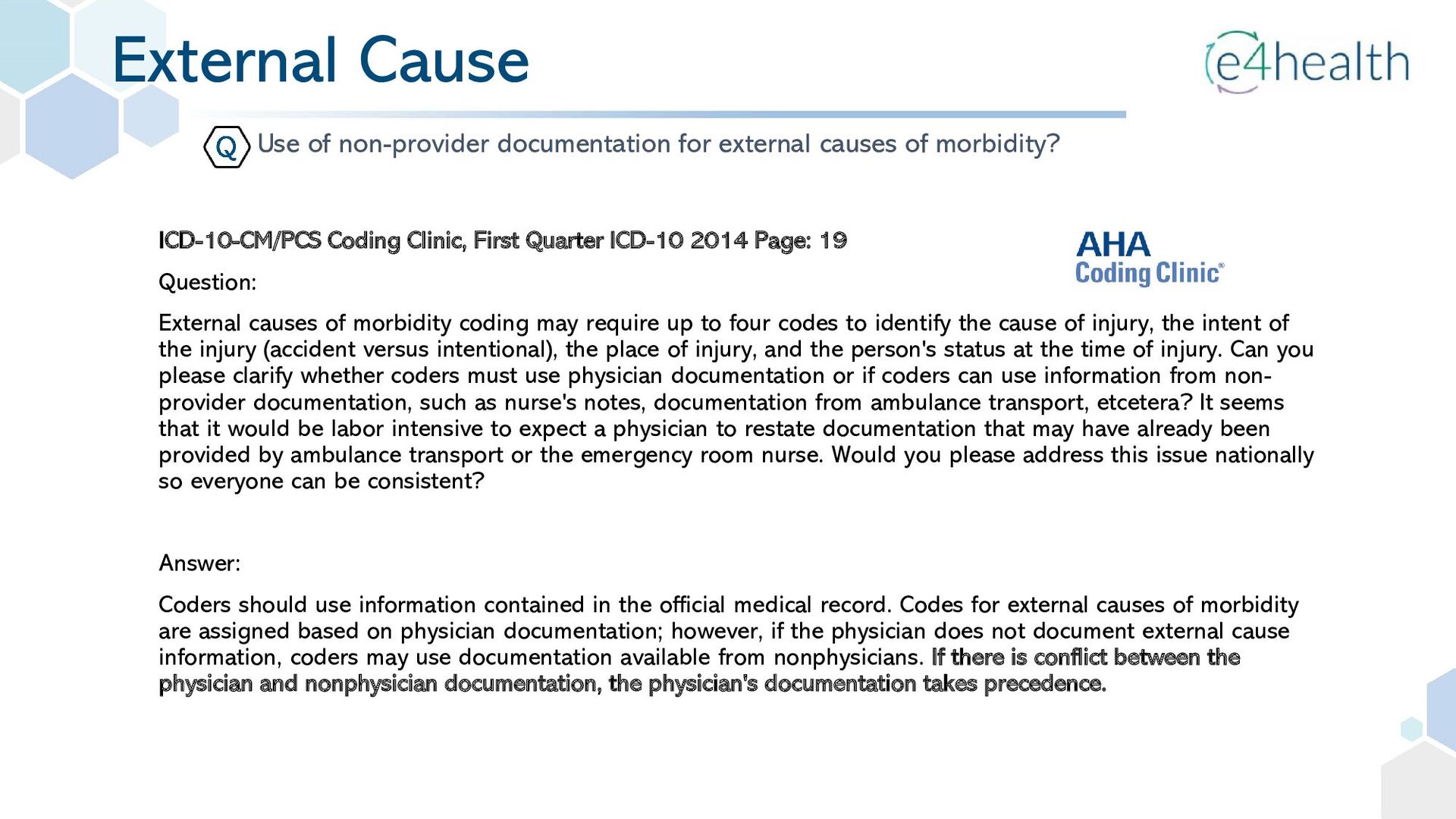
  16. External Cause Use of non-provider documentation for external causes of

    morbidity? ICD-10-CM/PCS Coding Clinic, First Quarter ICD-10 2014 Page: 19 Question: External causes of morbidity coding may require up to four codes to identify the cause of injury, the intent of the injury (accident versus intentional), the place of injury, and the person's status at the time of injury. Can you please clarify whether coders must use physician documentation or if coders can use information from non- provider documentation, such as nurse's notes, documentation from ambulance transport, etcetera? It seems that it would be labor intensive to expect a physician to restate documentation that may have already been provided by ambulance transport or the emergency room nurse. Would you please address this issue nationally so everyone can be consistent? Answer: Coders should use information contained in the official medical record. Codes for external causes of morbidity are assigned based on physician documentation; however, if the physician does not document external cause information, coders may use documentation available from nonphysicians. If there is conflict between the physician and nonphysician documentation, the physician's documentation takes precedence.
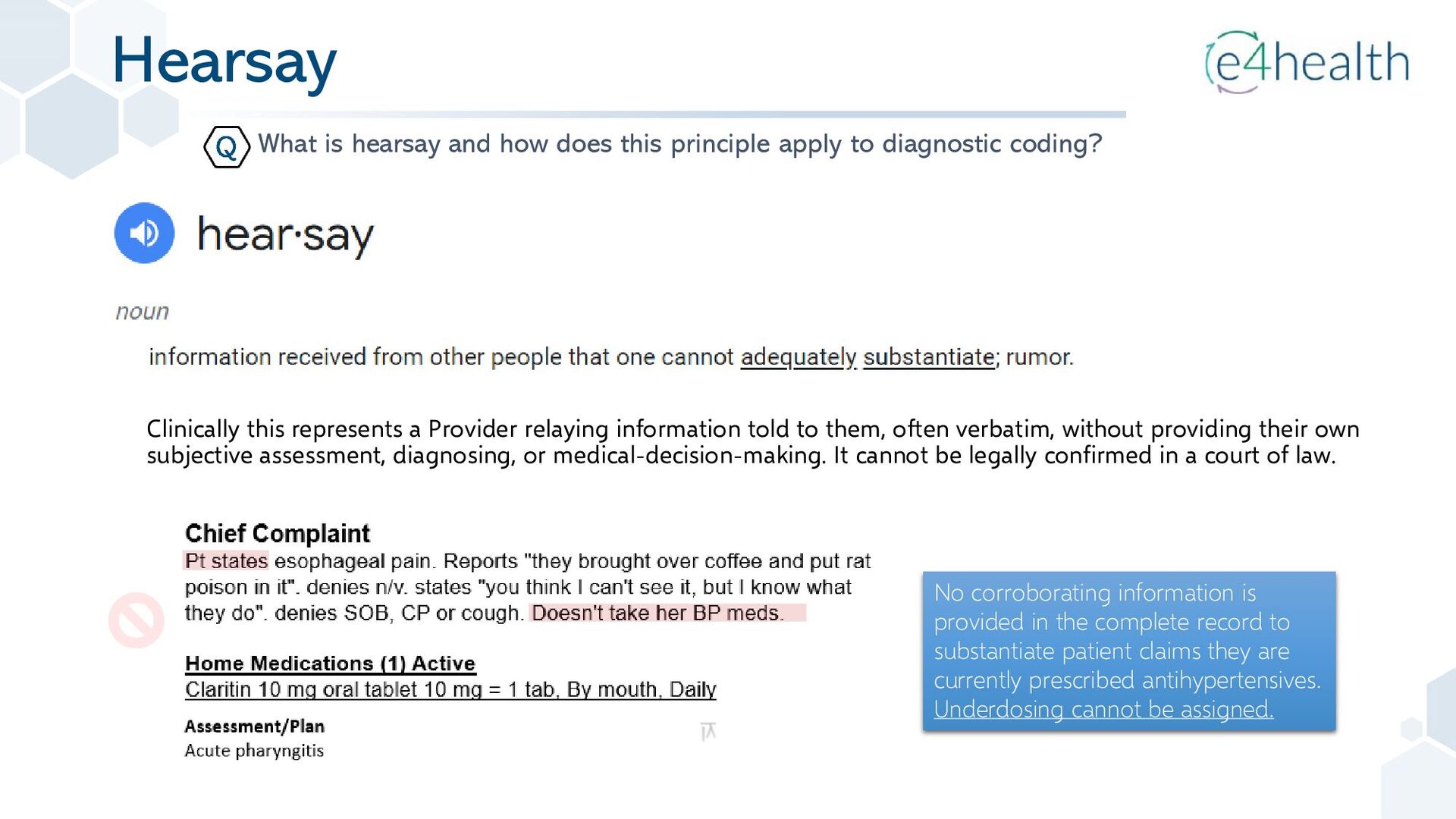
  17. Hearsay What is hearsay and how does this principle apply

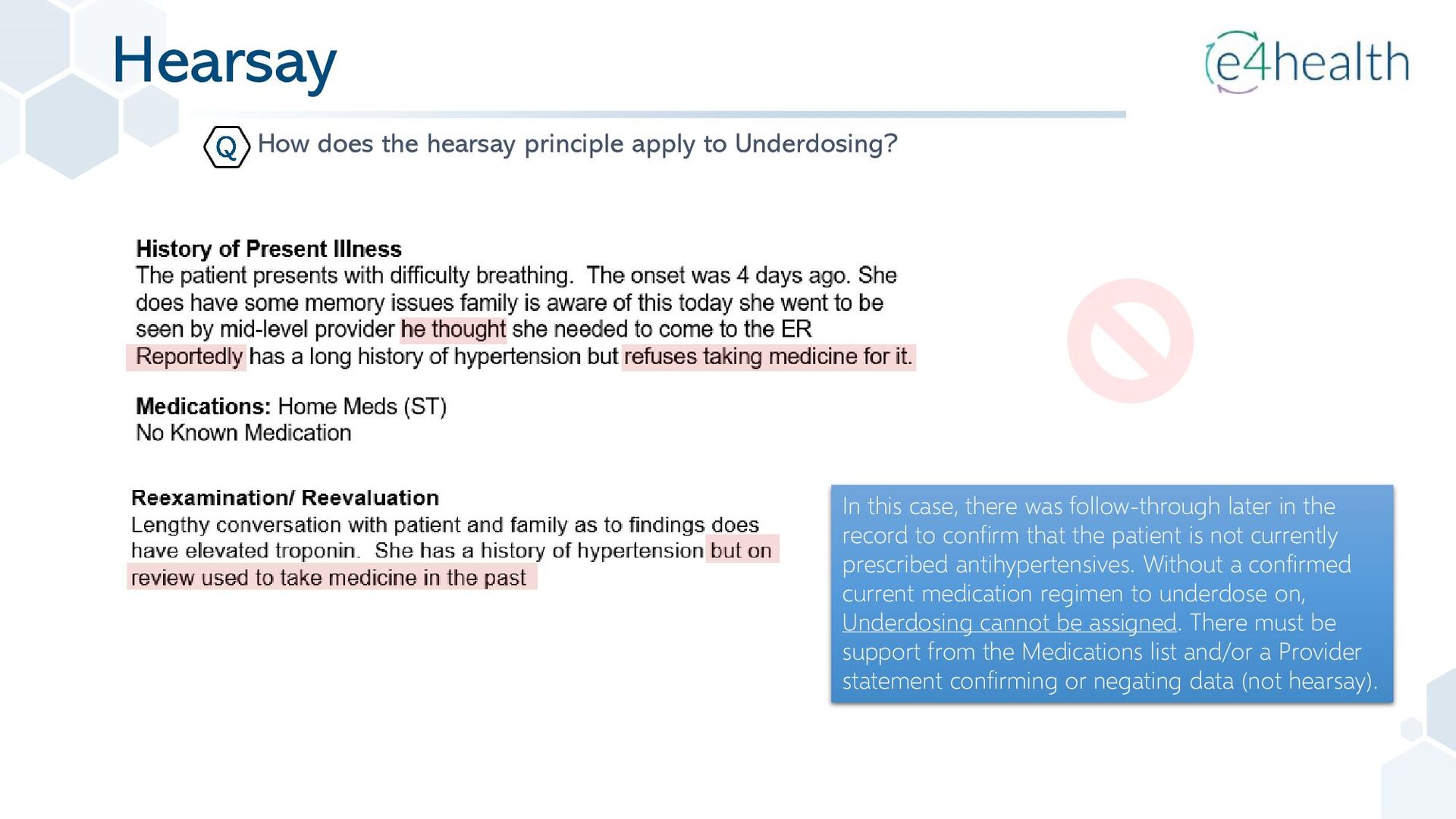
    to diagnostic coding? Clinically this represents a Provider relaying information told to them, often verbatim, without providing their own subjective assessment, diagnosing, or medical-decision-making. It cannot be legally confirmed in a court of law. No corroborating information is provided in the complete record to substantiate patient claims they are currently prescribed antihypertensives. Underdosing cannot be assigned.
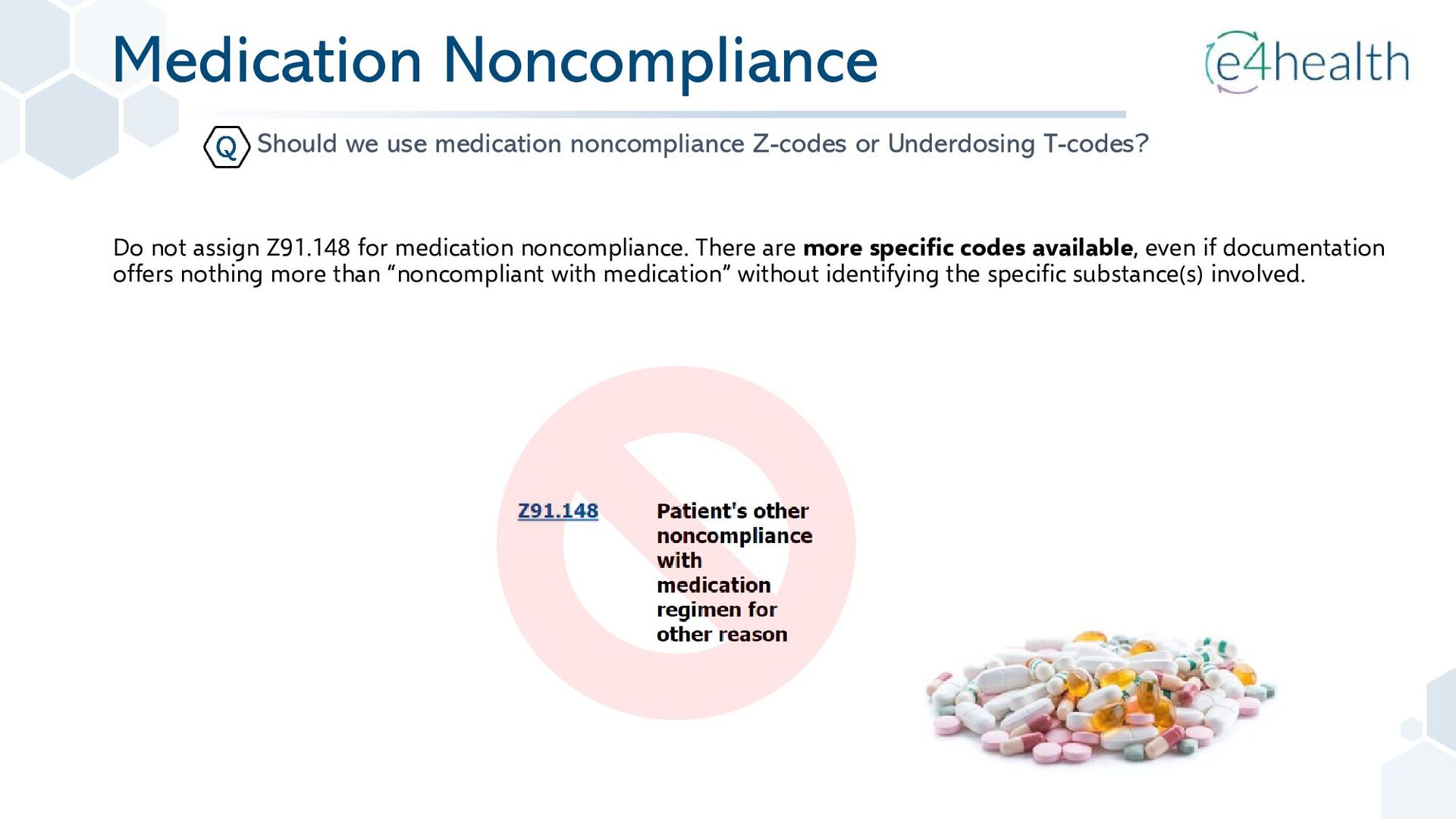
  18. Medication Noncompliance Should we use medication noncompliance Z-codes or Underdosing

    T-codes? Do not assign Z91.148 for medication noncompliance. There are more specific codes available, even if documentation offers nothing more than “noncompliant with medication” without identifying the specific substance(s) involved.
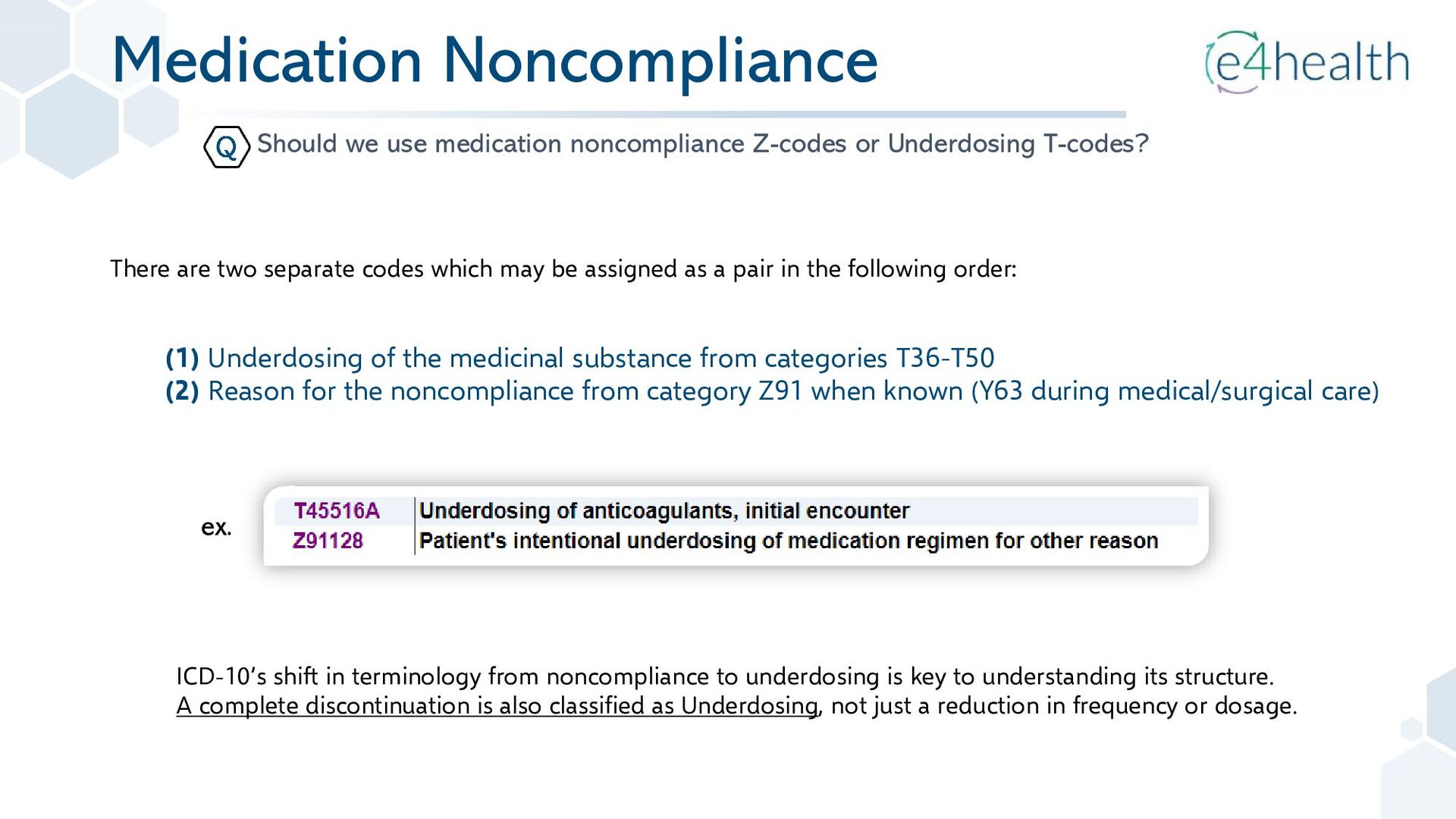
  19. Medication Noncompliance Should we use medication noncompliance Z-codes or Underdosing

    T-codes? There are two separate codes which may be assigned as a pair in the following order: (1) Underdosing of the medicinal substance from categories T36-T50 (2) Reason for the noncompliance from category Z91 when known (Y63 during medical/surgical care) ICD-10’s shift in terminology from noncompliance to underdosing is key to understanding its structure. A complete discontinuation is also classified as Underdosing, not just a reduction in frequency or dosage. ex.
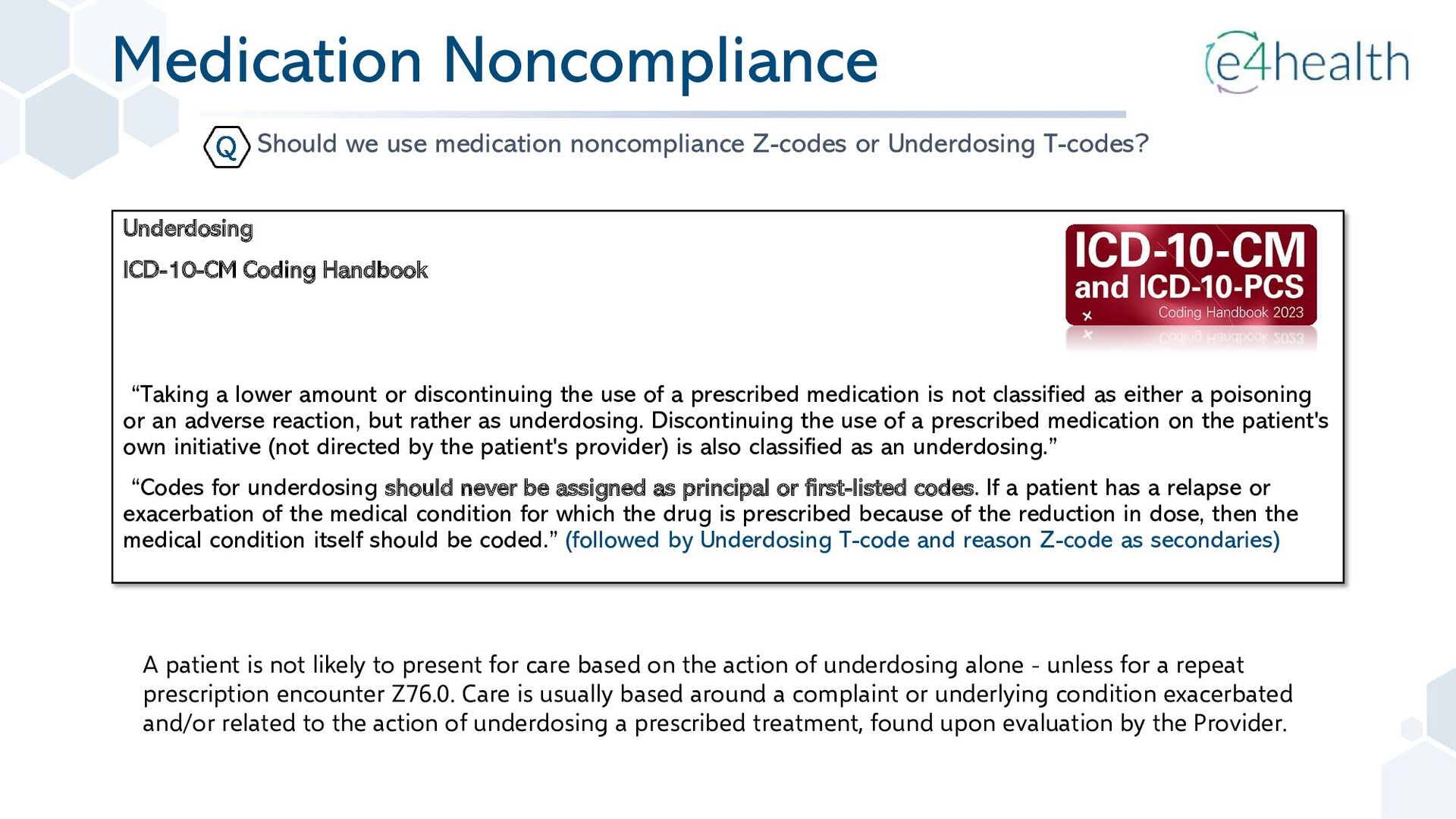
  20. Should we use medication noncompliance Z-codes or Underdosing T-codes? Underdosing

    ICD-10-CM Coding Handbook “Taking a lower amount or discontinuing the use of a prescribed medication is not classified as either a poisoning or an adverse reaction, but rather as underdosing. Discontinuing the use of a prescribed medication on the patient's own initiative (not directed by the patient's provider) is also classified as an underdosing.” “Codes for underdosing should never be assigned as principal or first-listed codes. If a patient has a relapse or exacerbation of the medical condition for which the drug is prescribed because of the reduction in dose, then the medical condition itself should be coded.” (followed by Underdosing T-code and reason Z-code as secondaries) Medication Noncompliance A patient is not likely to present for care based on the action of underdosing alone - unless for a repeat prescription encounter Z76.0. Care is usually based around a complaint or underlying condition exacerbated and/or related to the action of underdosing a prescribed treatment, found upon evaluation by the Provider.
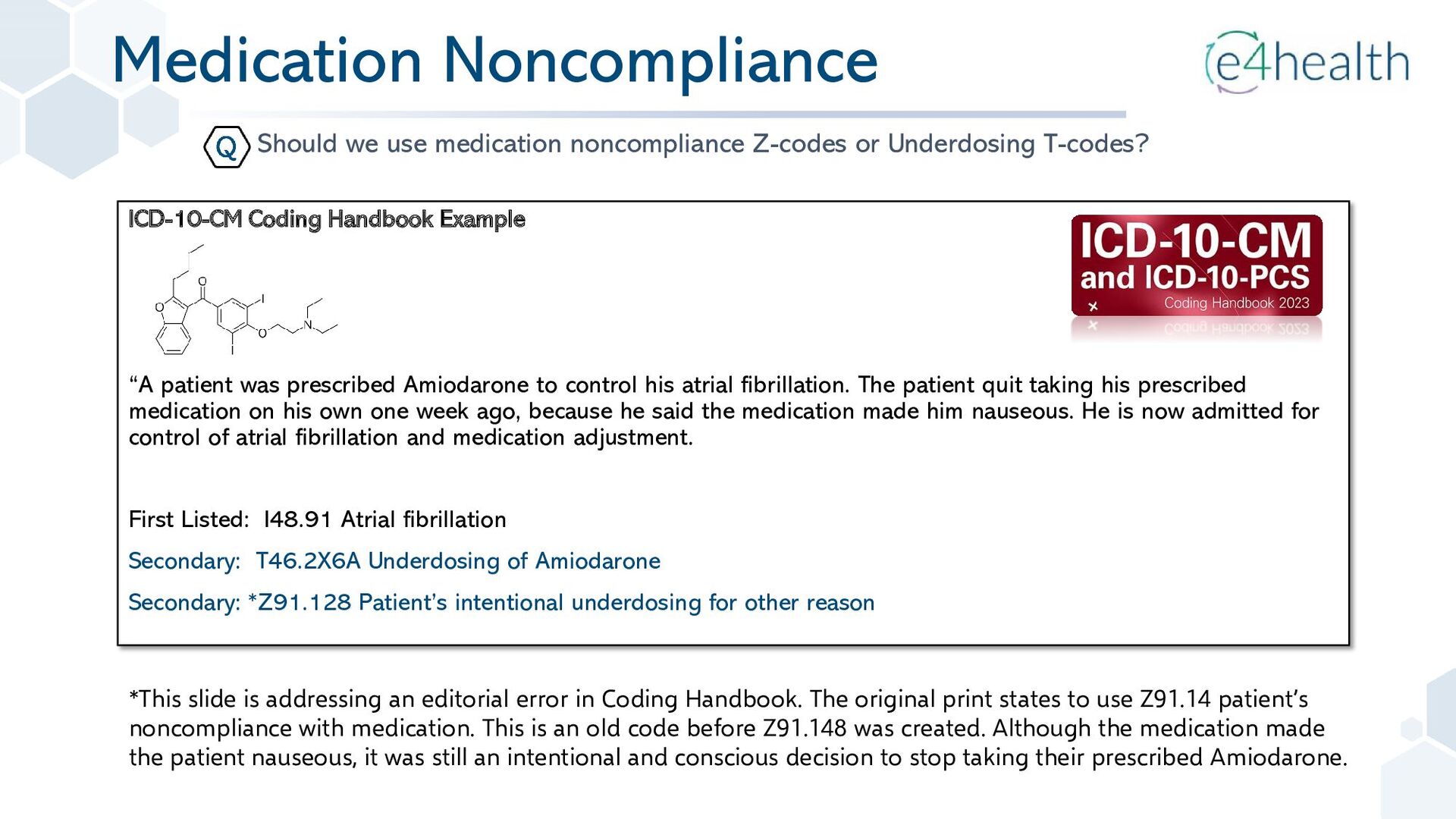
  21. Should we use medication noncompliance Z-codes or Underdosing T-codes? ICD-10-CM

    Coding Handbook Example “A patient was prescribed Amiodarone to control his atrial fibrillation. The patient quit taking his prescribed medication on his own one week ago, because he said the medication made him nauseous. He is now admitted for control of atrial fibrillation and medication adjustment. First Listed: I48.91 Atrial fibrillation Secondary: T46.2X6A Underdosing of Amiodarone Secondary: *Z91.128 Patient’s intentional underdosing for other reason Medication Noncompliance *This slide is addressing an editorial error in Coding Handbook. The original print states to use Z91.14 patient’s noncompliance with medication. This is an old code before Z91.148 was created. Although the medication made the patient nauseous, it was still an intentional and conscious decision to stop taking their prescribed Amiodarone.
  22. Medication Noncompliance Should we use medication noncompliance Z-codes or Underdosing

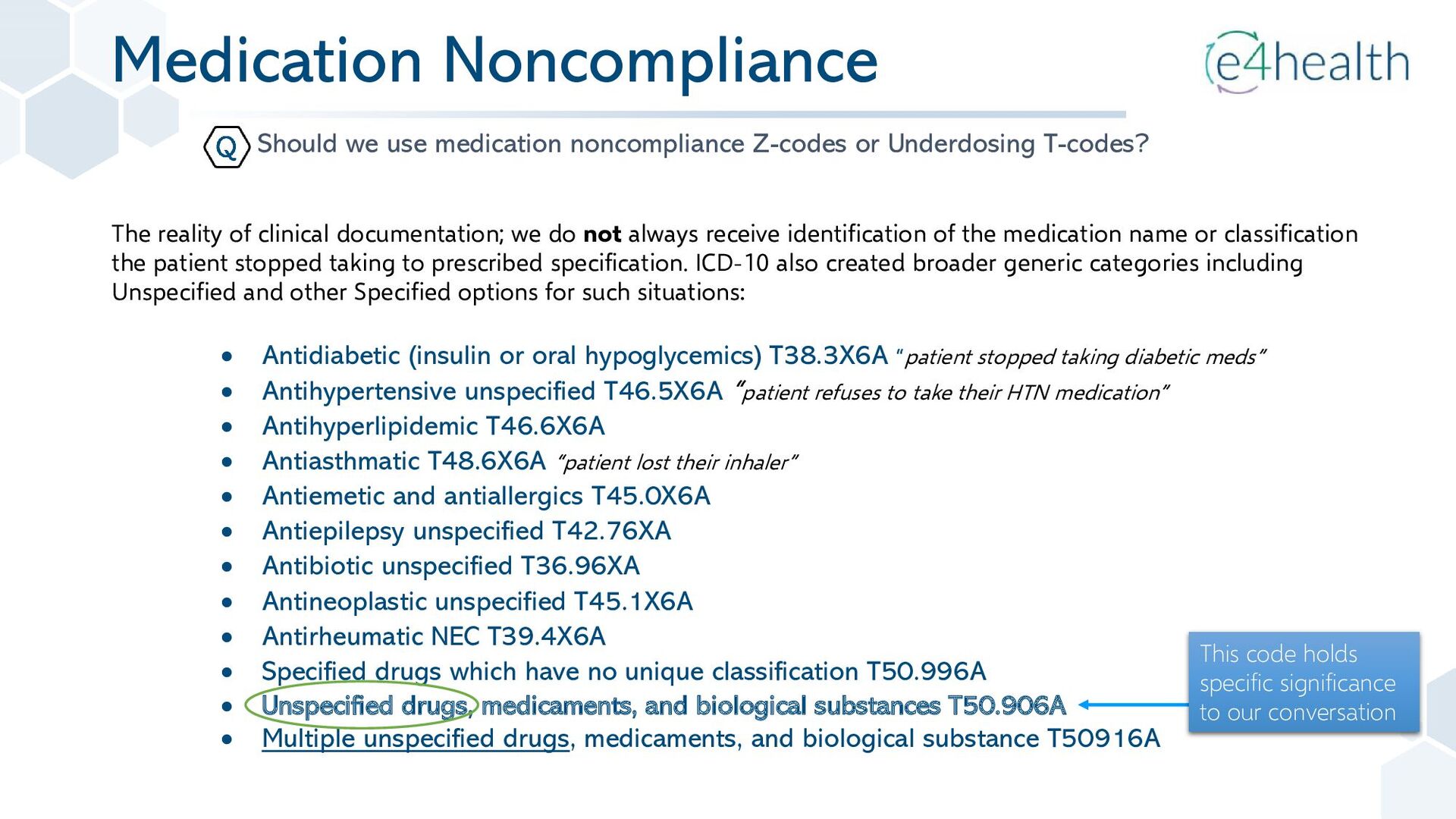
    T-codes? The reality of clinical documentation; we do not always receive identification of the medication name or classification the patient stopped taking to prescribed specification. ICD-10 also created broader generic categories including Unspecified and other Specified options for such situations: • Antidiabetic (insulin or oral hypoglycemics) T38.3X6A “patient stopped taking diabetic meds” • Antihypertensive unspecified T46.5X6A “patient refuses to take their HTN medication” • Antihyperlipidemic T46.6X6A • Antiasthmatic T48.6X6A “patient lost their inhaler” • Antiemetic and antiallergics T45.0X6A • Antiepilepsy unspecified T42.76XA • Antibiotic unspecified T36.96XA • Antineoplastic unspecified T45.1X6A • Antirheumatic NEC T39.4X6A • Specified drugs which have no unique classification T50.996A • Unspecified drugs, medicaments, and biological substances T50.906A • Multiple unspecified drugs, medicaments, and biological substance T50916A This code holds specific significance to our conversation
  23. Medication Noncompliance Should we use medication noncompliance Z-codes or Underdosing

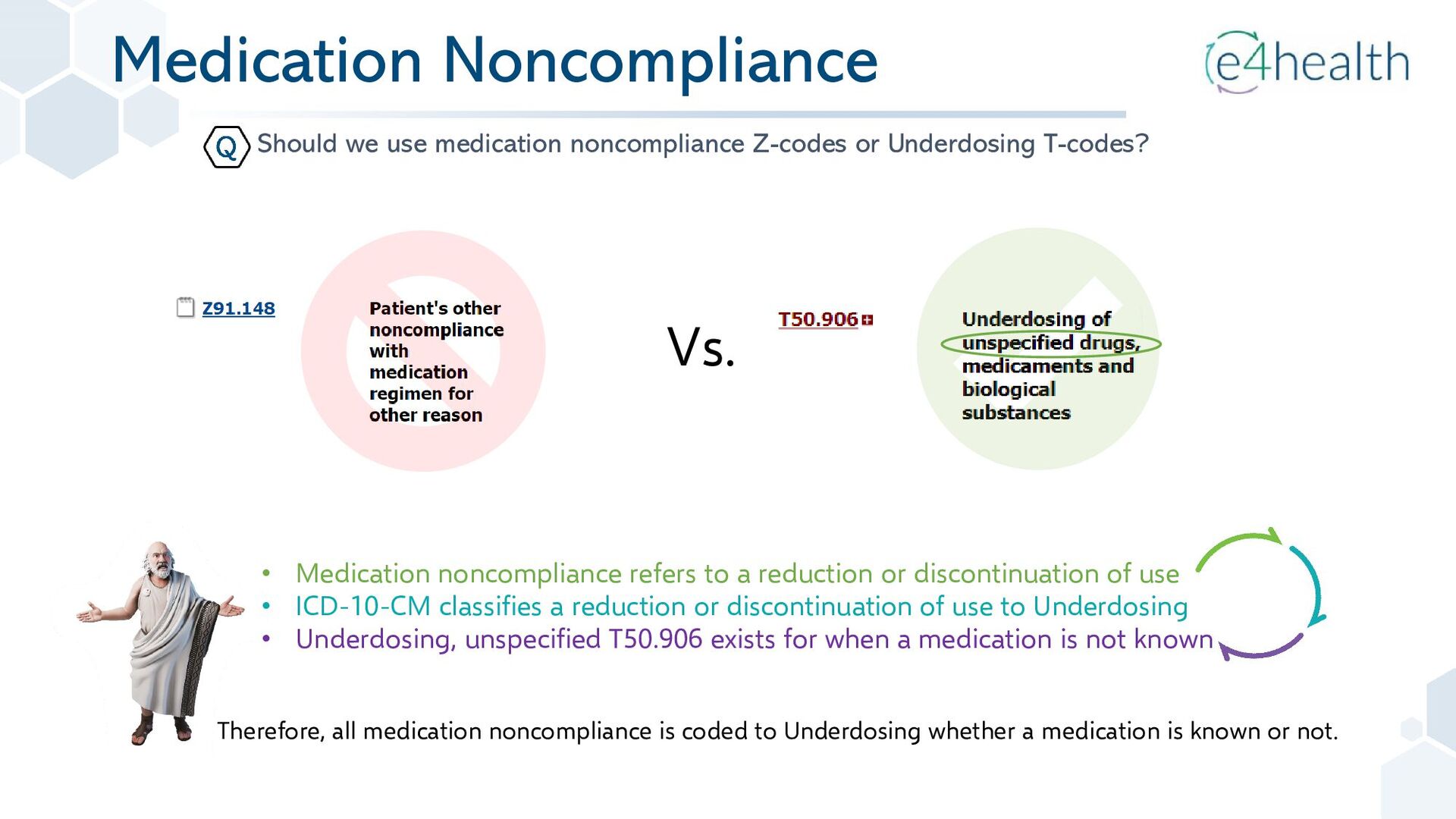
    T-codes? Vs. • Medication noncompliance refers to a reduction or discontinuation of use • ICD-10-CM classifies a reduction or discontinuation of use to Underdosing • Underdosing, unspecified T50.906 exists for when a medication is not known Therefore, all medication noncompliance is coded to Underdosing whether a medication is known or not.
  24. Medication Noncompliance Should we use medication noncompliance Z-codes or Underdosing

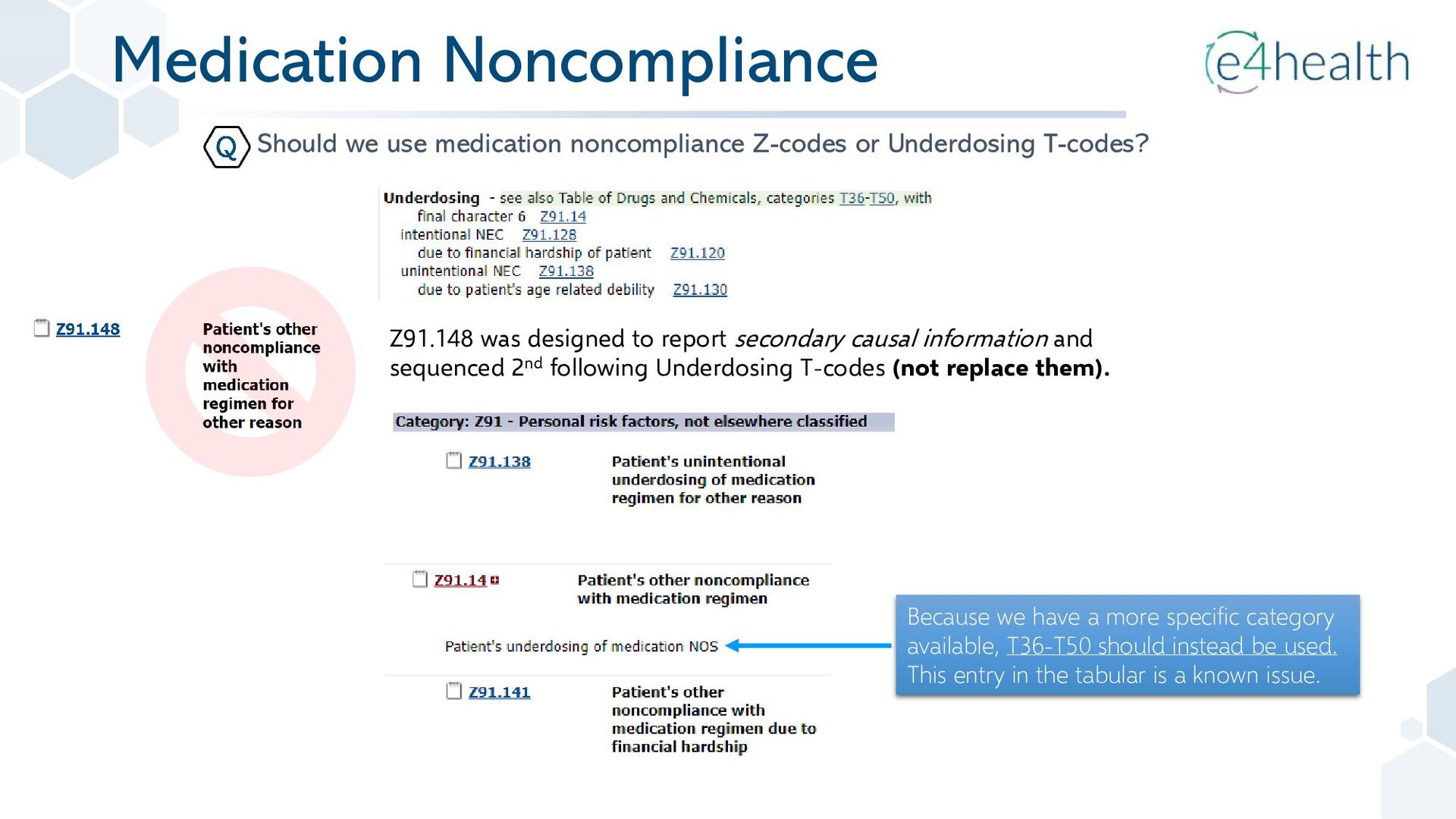
    T-codes? Z91.148 was designed to report secondary causal information and sequenced 2nd following Underdosing T-codes (not replace them). Because we have a more specific category available, T36-T50 should instead be used. This entry in the tabular is a known issue.
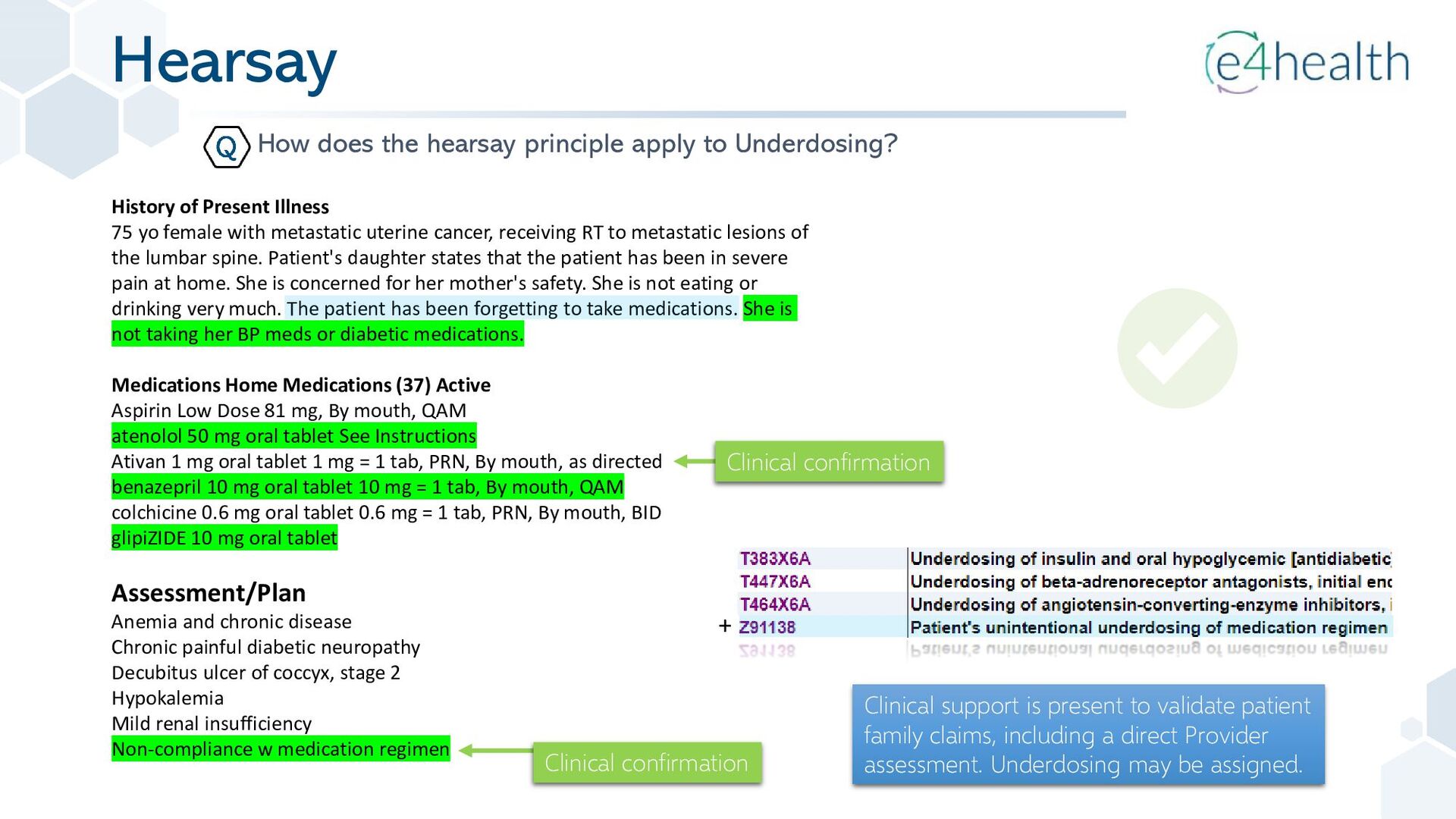
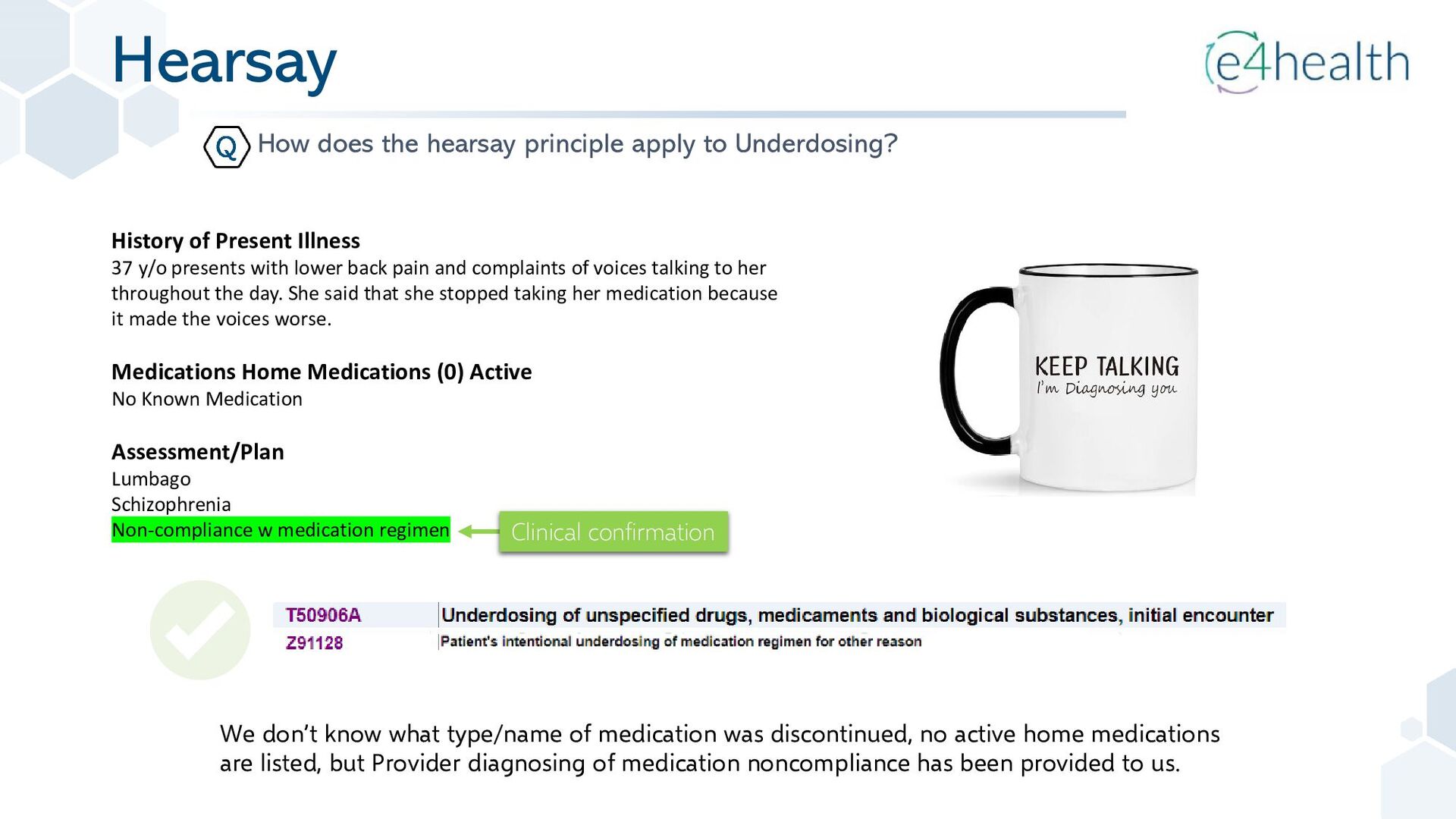
  25. Hearsay How does the hearsay principle apply to Underdosing? In

    this case, there was follow-through later in the record to confirm that the patient is not currently prescribed antihypertensives. Without a confirmed current medication regimen to underdose on, Underdosing cannot be assigned. There must be support from the Medications list and/or a Provider statement confirming or negating data (not hearsay).
  26. Hearsay How does the hearsay principle apply to Underdosing? History

    of Present Illness 75 yo female with metastatic uterine cancer, receiving RT to metastatic lesions of the lumbar spine. Patient's daughter states that the patient has been in severe pain at home. She is concerned for her mother's safety. She is not eating or drinking very much. The patient has been forgetting to take medications. She is not taking her BP meds or diabetic medications. Medications Home Medications (37) Active Aspirin Low Dose 81 mg, By mouth, QAM atenolol 50 mg oral tablet See Instructions Ativan 1 mg oral tablet 1 mg = 1 tab, PRN, By mouth, as directed benazepril 10 mg oral tablet 10 mg = 1 tab, By mouth, QAM colchicine 0.6 mg oral tablet 0.6 mg = 1 tab, PRN, By mouth, BID glipiZIDE 10 mg oral tablet Assessment/Plan Anemia and chronic disease Chronic painful diabetic neuropathy Decubitus ulcer of coccyx, stage 2 Hypokalemia Mild renal insufficiency Non-compliance w medication regimen Clinical confirmation Clinical confirmation Clinical support is present to validate patient family claims, including a direct Provider assessment. Underdosing may be assigned. +
  27. Hearsay How does the hearsay principle apply to Underdosing? History

    of Present Illness 37 y/o presents with lower back pain and complaints of voices talking to her throughout the day. She said that she stopped taking her medication because it made the voices worse. Medications Home Medications (0) Active No Known Medication Assessment/Plan Lumbago Schizophrenia Non-compliance w medication regimen Clinical confirmation We don’t know what type/name of medication was discontinued, no active home medications are listed, but Provider diagnosing of medication noncompliance has been provided to us.
  28. COVID-19 Updates o Z11.52 Screening for COVID-19 2024 Policy Changes

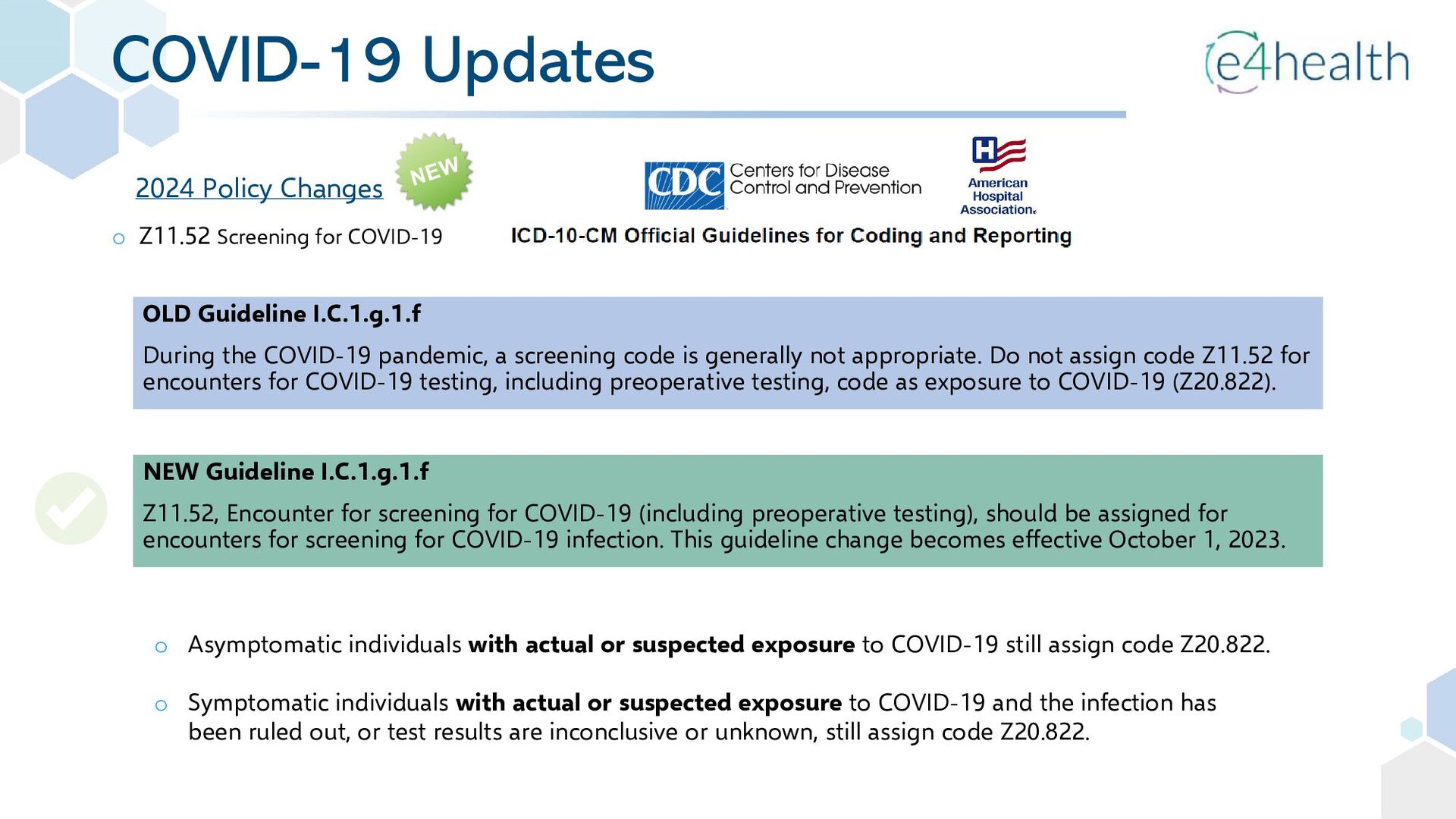
    OLD Guideline I.C.1.g.1.f During the COVID-19 pandemic, a screening code is generally not appropriate. Do not assign code Z11.52 for encounters for COVID-19 testing, including preoperative testing, code as exposure to COVID-19 (Z20.822). NEW Guideline I.C.1.g.1.f Z11.52, Encounter for screening for COVID-19 (including preoperative testing), should be assigned for encounters for screening for COVID-19 infection. This guideline change becomes effective October 1, 2023. o Asymptomatic individuals with actual or suspected exposure to COVID-19 still assign code Z20.822. o Symptomatic individuals with actual or suspected exposure to COVID-19 and the infection has been ruled out, or test results are inconclusive or unknown, still assign code Z20.822.
  29. COVID-19 Updates Scenario Code Code Description Concern about possible exposure

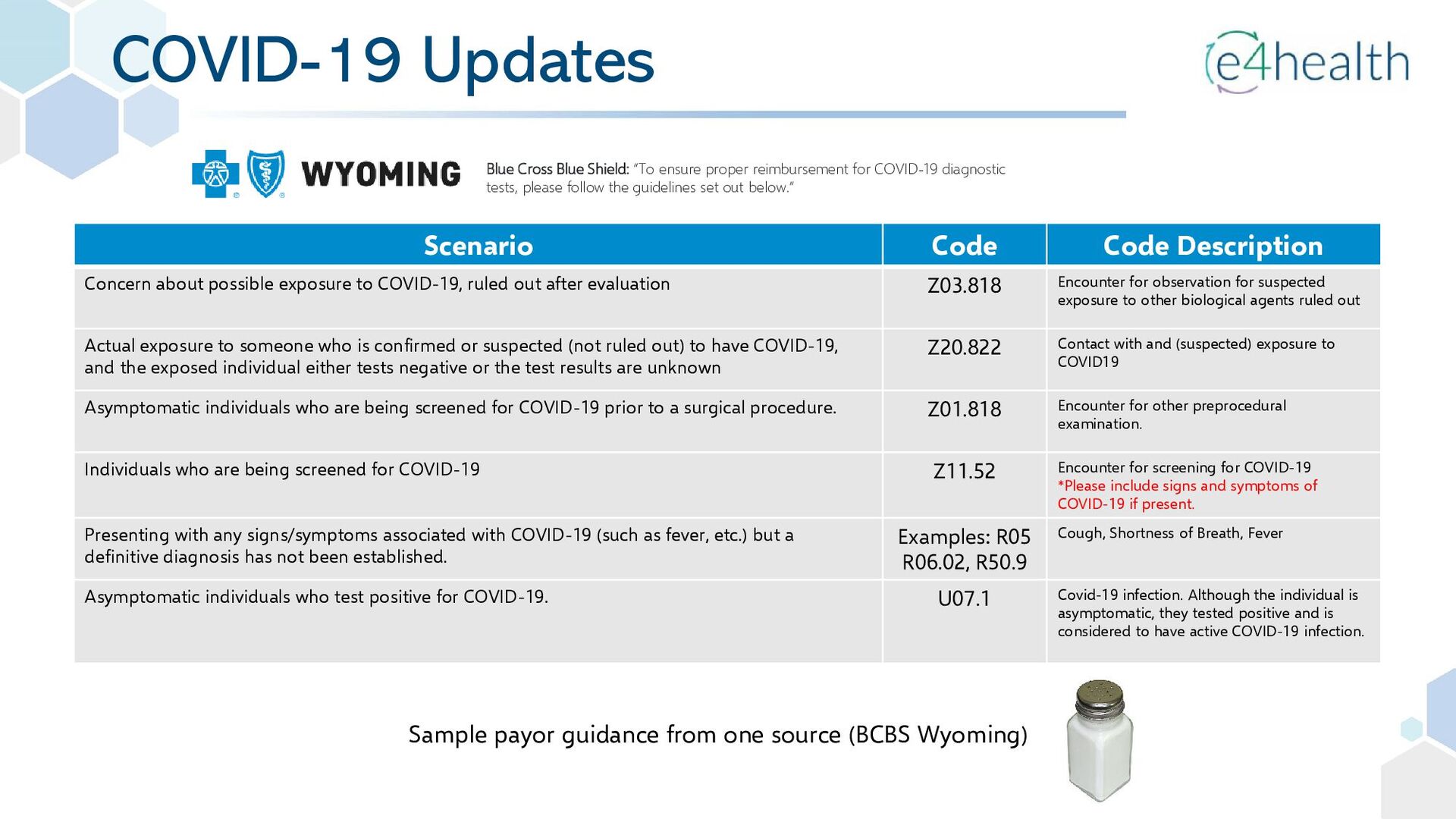
    to COVID-19, ruled out after evaluation Z03.818 Encounter for observation for suspected exposure to other biological agents ruled out Actual exposure to someone who is confirmed or suspected (not ruled out) to have COVID-19, and the exposed individual either tests negative or the test results are unknown Z20.822 Contact with and (suspected) exposure to COVID19 Asymptomatic individuals who are being screened for COVID-19 prior to a surgical procedure. Z01.818 Encounter for other preprocedural examination. Individuals who are being screened for COVID-19 Z11.52 Encounter for screening for COVID-19 *Please include signs and symptoms of COVID-19 if present. Presenting with any signs/symptoms associated with COVID-19 (such as fever, etc.) but a definitive diagnosis has not been established. Examples: R05 R06.02, R50.9 Cough, Shortness of Breath, Fever Asymptomatic individuals who test positive for COVID-19. U07.1 Covid-19 infection. Although the individual is asymptomatic, they tested positive and is considered to have active COVID-19 infection. Blue Cross Blue Shield: “To ensure proper reimbursement for COVID-19 diagnostic tests, please follow the guidelines set out below.” Sample payor guidance from one source (BCBS Wyoming)
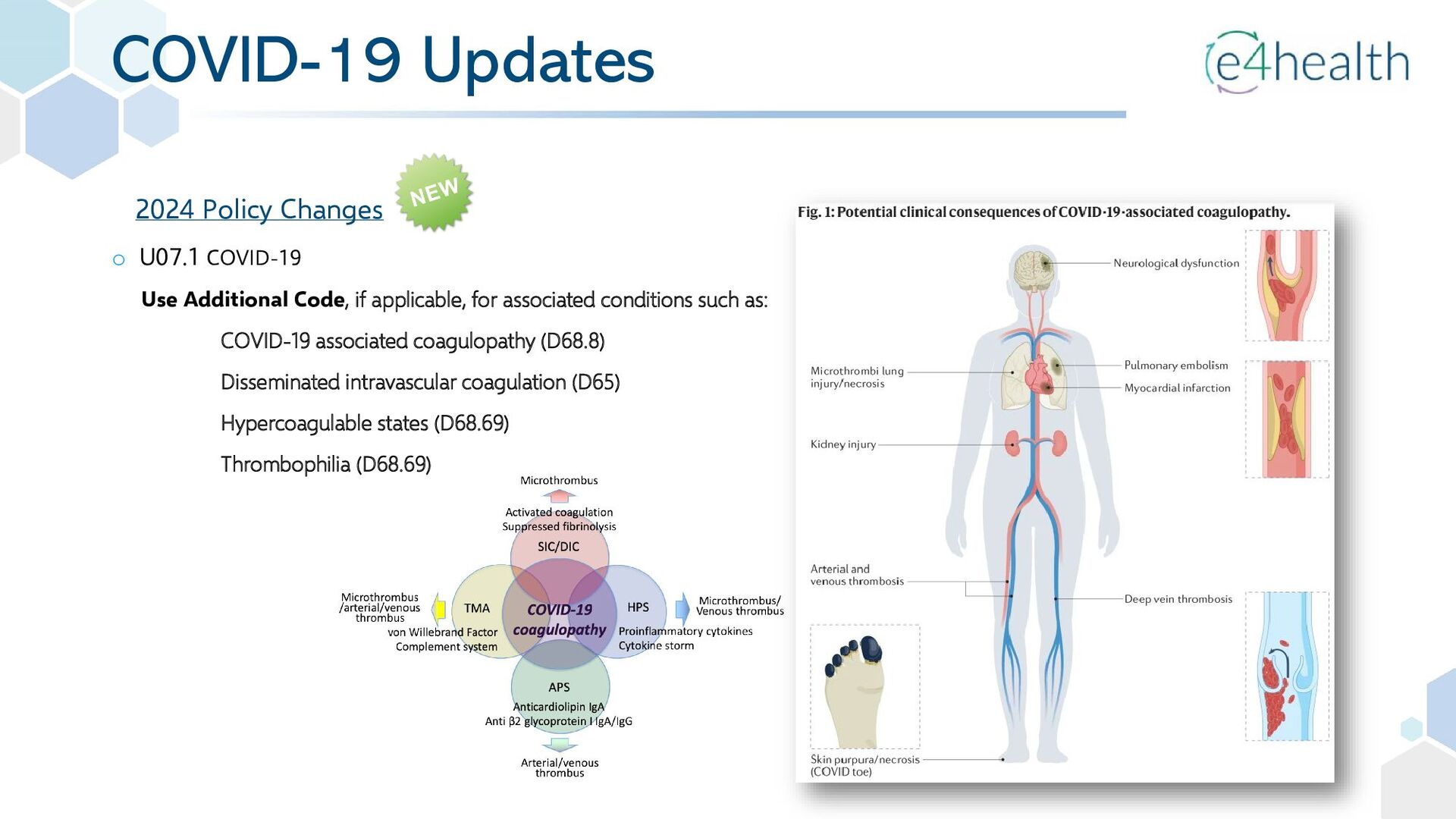
  30. COVID-19 Updates o U07.1 COVID-19 Use Additional Code, if applicable,

    for associated conditions such as: COVID-19 associated coagulopathy (D68.8) Disseminated intravascular coagulation (D65) Hypercoagulable states (D68.69) Thrombophilia (D68.69) 2024 Policy Changes
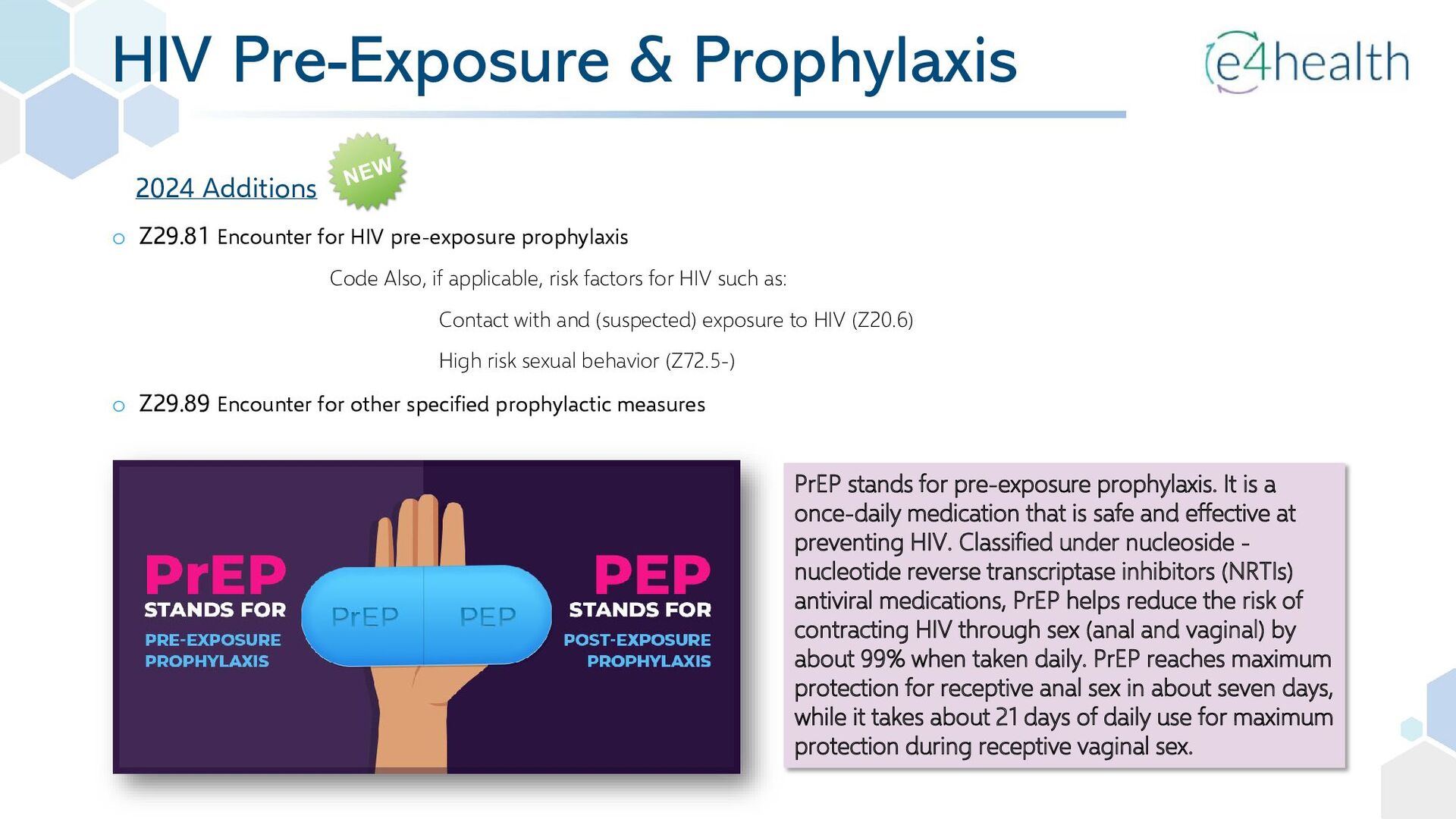
  31. HIV Pre-Exposure & Prophylaxis o Z29.81 Encounter for HIV pre-exposure

    prophylaxis Code Also, if applicable, risk factors for HIV such as: Contact with and (suspected) exposure to HIV (Z20.6) High risk sexual behavior (Z72.5-) o Z29.89 Encounter for other specified prophylactic measures 2024 Additions PrEP stands for pre-exposure prophylaxis. It is a once-daily medication that is safe and effective at preventing HIV. Classified under nucleoside - nucleotide reverse transcriptase inhibitors (NRTIs) antiviral medications, PrEP helps reduce the risk of contracting HIV through sex (anal and vaginal) by about 99% when taken daily. PrEP reaches maximum protection for receptive anal sex in about seven days, while it takes about 21 days of daily use for maximum protection during receptive vaginal sex.
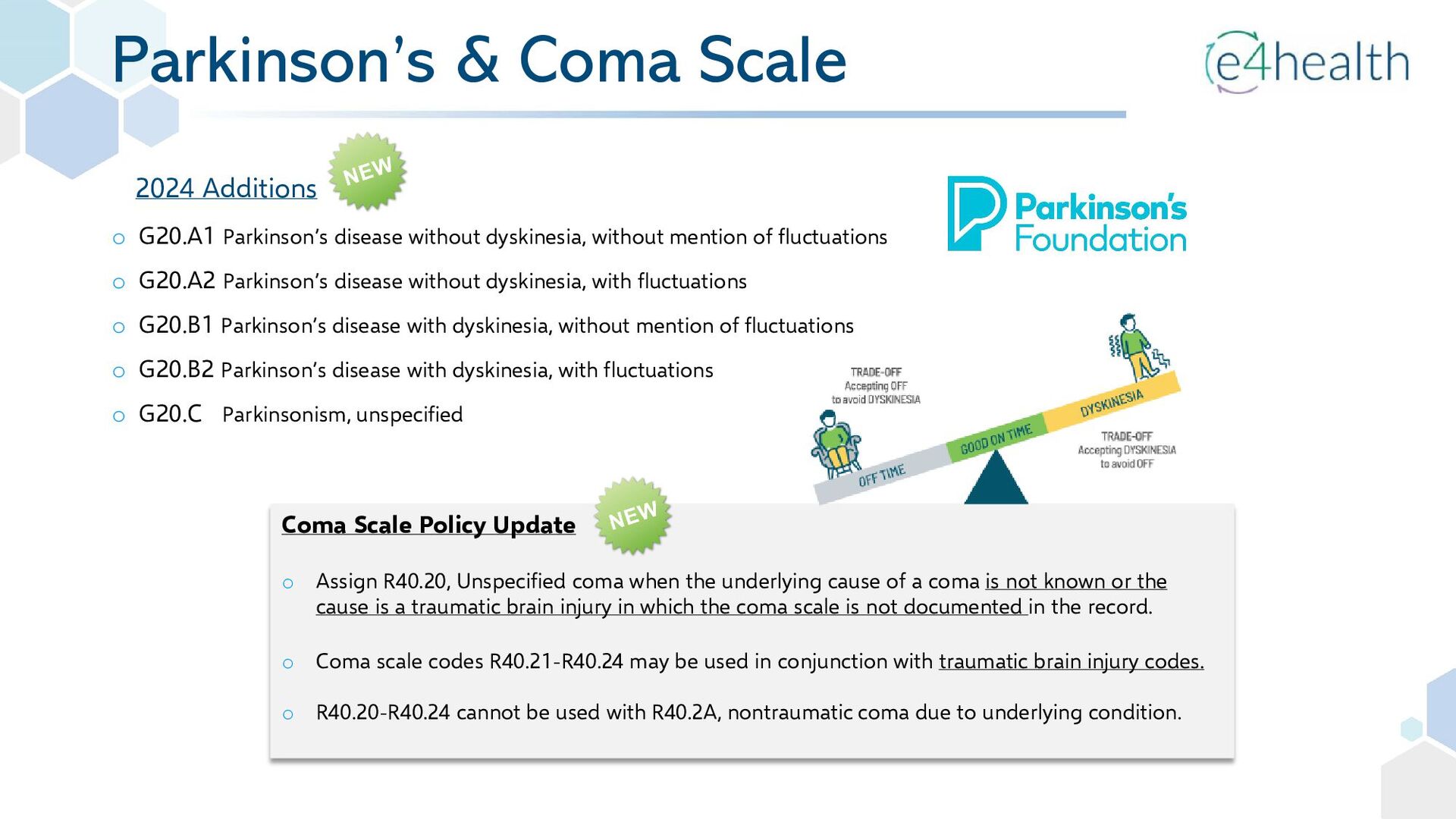
  32. Parkinson’s & Coma Scale o G20.A1 Parkinson’s disease without dyskinesia,

    without mention of fluctuations o G20.A2 Parkinson’s disease without dyskinesia, with fluctuations o G20.B1 Parkinson’s disease with dyskinesia, without mention of fluctuations o G20.B2 Parkinson’s disease with dyskinesia, with fluctuations o G20.C Parkinsonism, unspecified 2024 Additions Coma Scale Policy Update o Assign R40.20, Unspecified coma when the underlying cause of a coma is not known or the cause is a traumatic brain injury in which the coma scale is not documented in the record. o Coma scale codes R40.21-R40.24 may be used in conjunction with traumatic brain injury codes. o R40.20-R40.24 cannot be used with R40.2A, nontraumatic coma due to underlying condition.
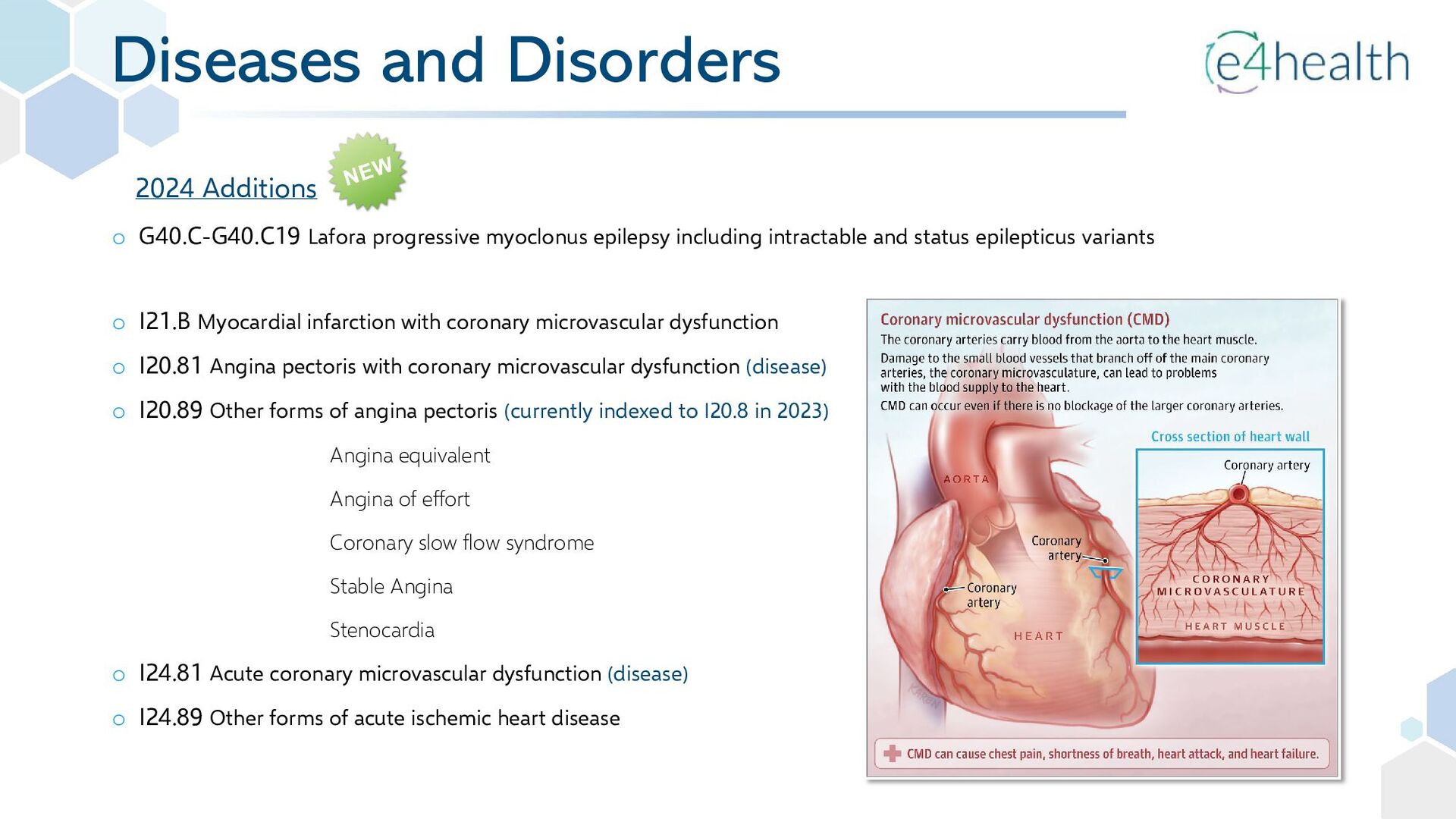
  33. Diseases and Disorders o G40.C-G40.C19 Lafora progressive myoclonus epilepsy including

    intractable and status epilepticus variants o I21.B Myocardial infarction with coronary microvascular dysfunction o I20.81 Angina pectoris with coronary microvascular dysfunction (disease) o I20.89 Other forms of angina pectoris (currently indexed to I20.8 in 2023) Angina equivalent Angina of effort Coronary slow flow syndrome Stable Angina Stenocardia o I24.81 Acute coronary microvascular dysfunction (disease) o I24.89 Other forms of acute ischemic heart disease 2024 Additions
  34. Diseases and Disorders o I47.10 Supraventricular tachycardia, unspecified (currently I47.1

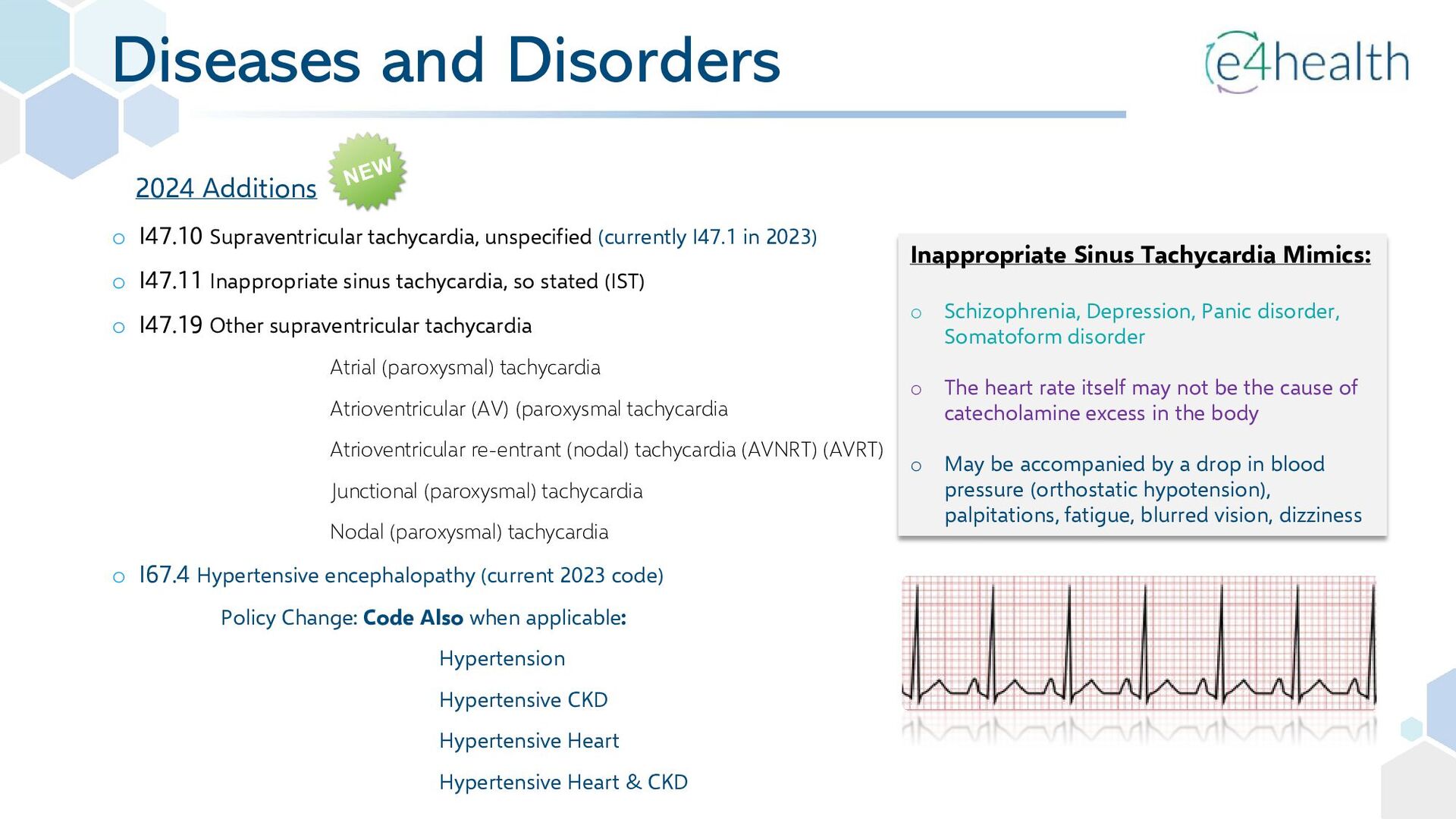
    in 2023) o I47.11 Inappropriate sinus tachycardia, so stated (IST) o I47.19 Other supraventricular tachycardia Atrial (paroxysmal) tachycardia Atrioventricular (AV) (paroxysmal tachycardia Atrioventricular re-entrant (nodal) tachycardia (AVNRT) (AVRT) Junctional (paroxysmal) tachycardia Nodal (paroxysmal) tachycardia o I67.4 Hypertensive encephalopathy (current 2023 code) Policy Change: Code Also when applicable: Hypertension Hypertensive CKD Hypertensive Heart Hypertensive Heart & CKD 2024 Additions Inappropriate Sinus Tachycardia Mimics: o Schizophrenia, Depression, Panic disorder, Somatoform disorder o The heart rate itself may not be the cause of catecholamine excess in the body o May be accompanied by a drop in blood pressure (orthostatic hypotension), palpitations, fatigue, blurred vision, dizziness
  35. Diseases and Disorders o M80.0B Age-related osteoporosis with current pathological

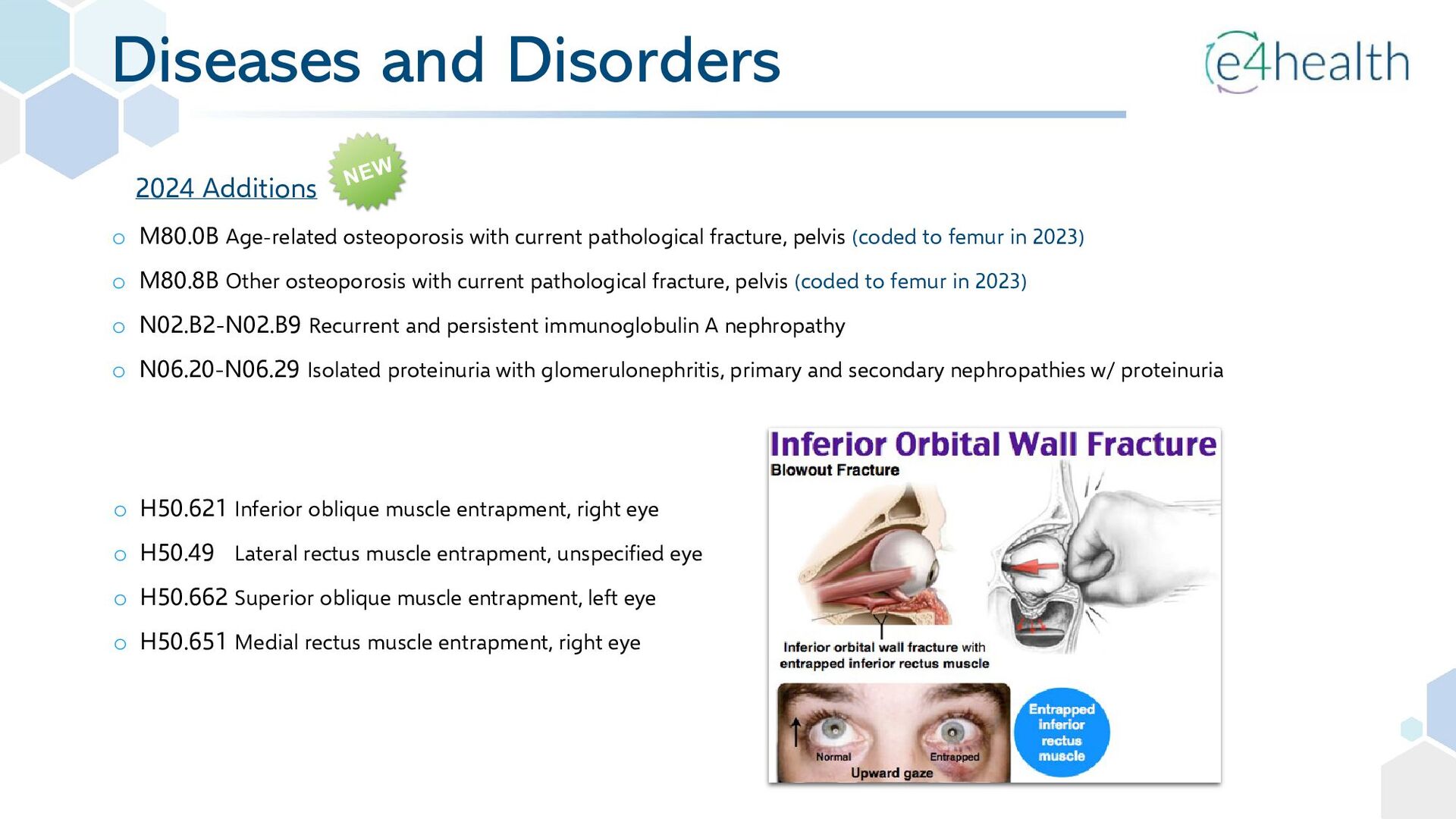
    fracture, pelvis (coded to femur in 2023) o M80.8B Other osteoporosis with current pathological fracture, pelvis (coded to femur in 2023) o N02.B2-N02.B9 Recurrent and persistent immunoglobulin A nephropathy o N06.20-N06.29 Isolated proteinuria with glomerulonephritis, primary and secondary nephropathies w/ proteinuria 2024 Additions o H50.621 Inferior oblique muscle entrapment, right eye o H50.49 Lateral rectus muscle entrapment, unspecified eye o H50.662 Superior oblique muscle entrapment, left eye o H50.651 Medial rectus muscle entrapment, right eye
  36. Pregnancy & Congenital Malformations o O26.64 Intrahepatic cholestasis of pregnancy

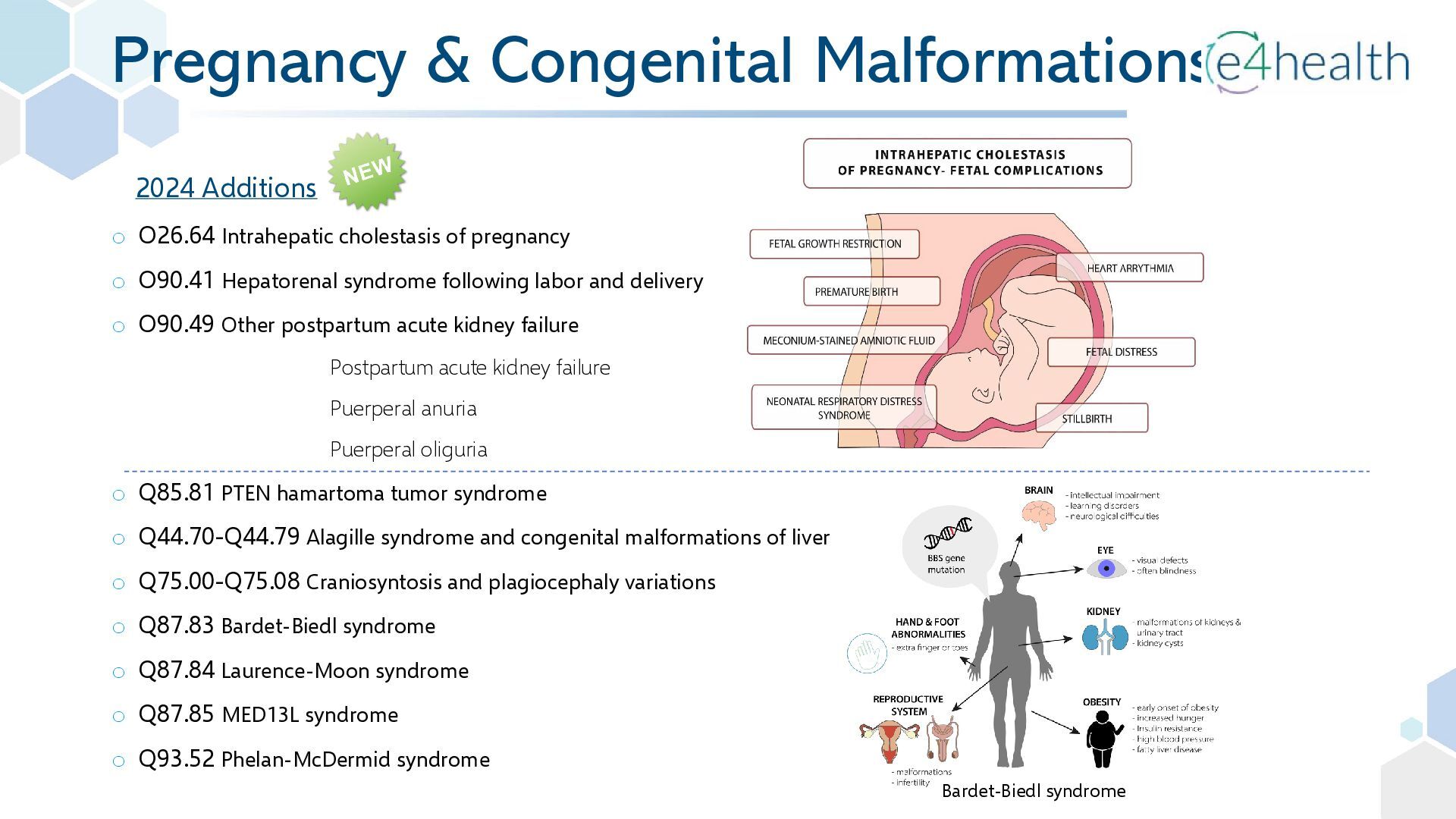
    o O90.41 Hepatorenal syndrome following labor and delivery o O90.49 Other postpartum acute kidney failure Postpartum acute kidney failure Puerperal anuria Puerperal oliguria o Q85.81 PTEN hamartoma tumor syndrome o Q44.70-Q44.79 Alagille syndrome and congenital malformations of liver o Q75.00-Q75.08 Craniosyntosis and plagiocephaly variations o Q87.83 Bardet-Biedl syndrome o Q87.84 Laurence-Moon syndrome o Q87.85 MED13L syndrome o Q93.52 Phelan-McDermid syndrome 2024 Additions Bardet-Biedl syndrome
  37. Observation of Newborn o Z05.81 Observation and evaluation of suspected

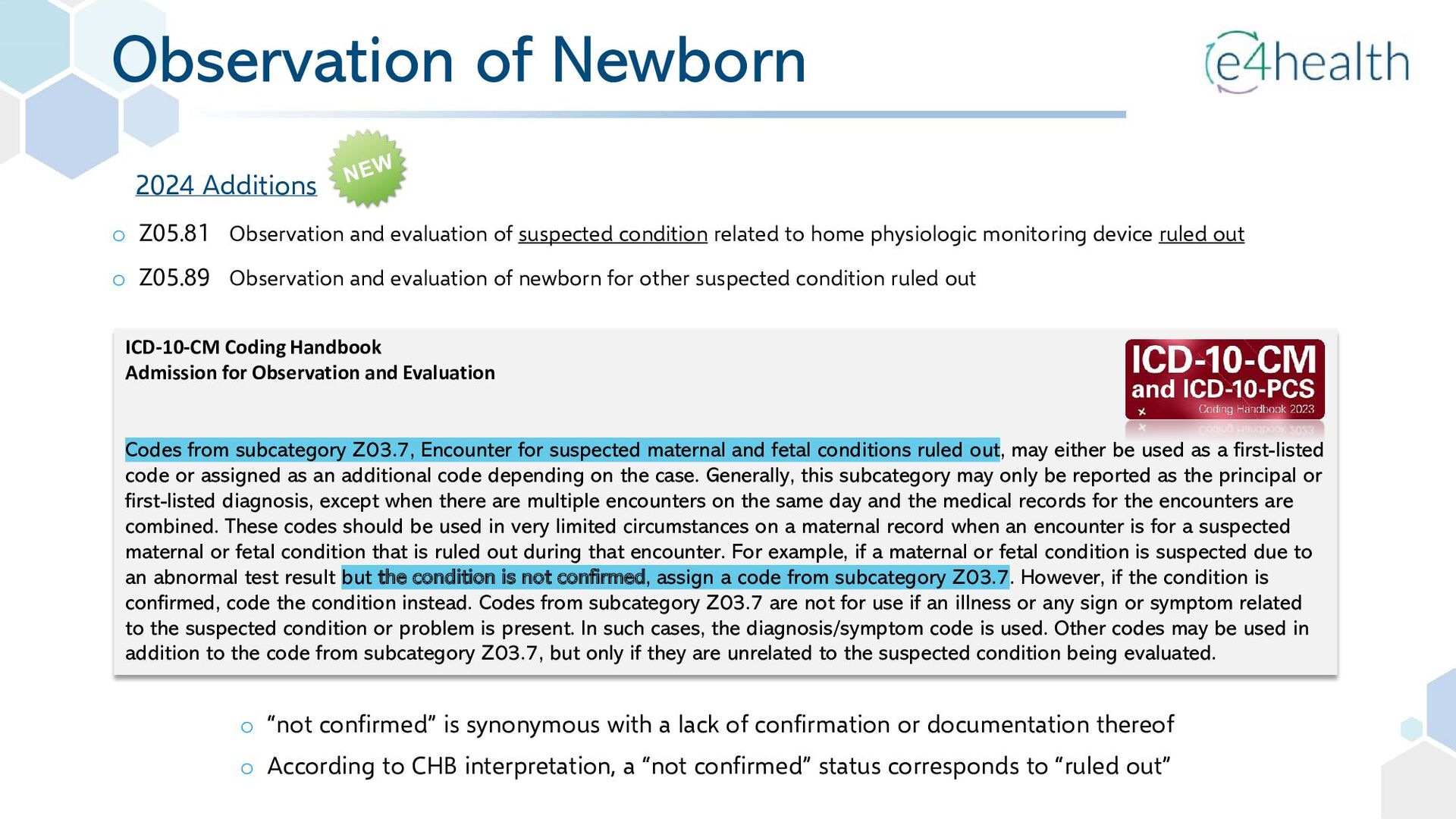
    condition related to home physiologic monitoring device ruled out o Z05.89 Observation and evaluation of newborn for other suspected condition ruled out 2024 Additions ICD-10-CM Coding Handbook Admission for Observation and Evaluation Codes from subcategory Z03.7, Encounter for suspected maternal and fetal conditions ruled out, may either be used as a first-listed code or assigned as an additional code depending on the case. Generally, this subcategory may only be reported as the principal or first-listed diagnosis, except when there are multiple encounters on the same day and the medical records for the encounters are combined. These codes should be used in very limited circumstances on a maternal record when an encounter is for a suspected maternal or fetal condition that is ruled out during that encounter. For example, if a maternal or fetal condition is suspected due to an abnormal test result but the condition is not confirmed, assign a code from subcategory Z03.7. However, if the condition is confirmed, code the condition instead. Codes from subcategory Z03.7 are not for use if an illness or any sign or symptom related to the suspected condition or problem is present. In such cases, the diagnosis/symptom code is used. Other codes may be used in addition to the code from subcategory Z03.7, but only if they are unrelated to the suspected condition being evaluated. o “not confirmed” is synonymous with a lack of confirmation or documentation thereof o According to CHB interpretation, a “not confirmed” status corresponds to “ruled out”
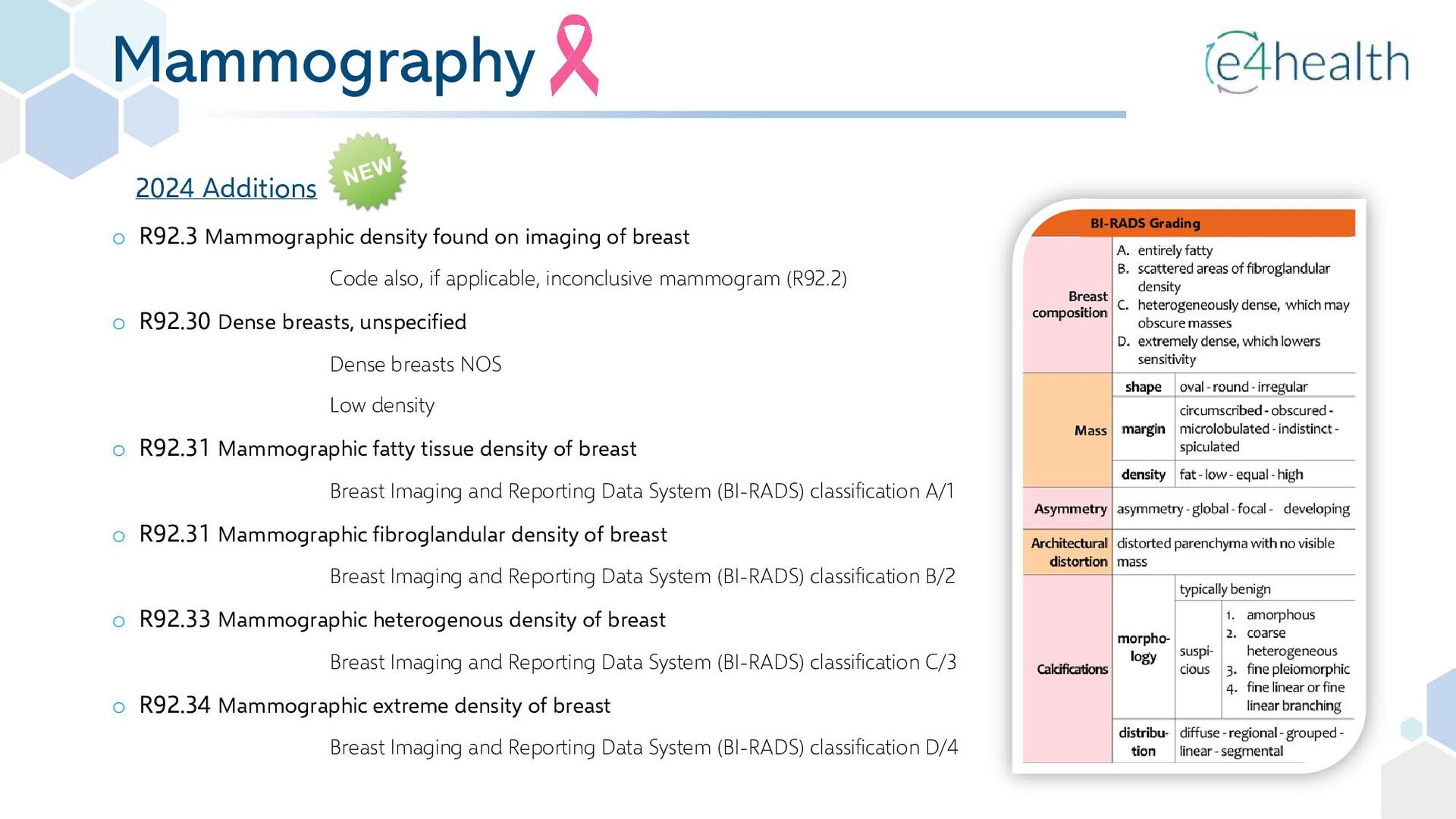
  38. Mammography o R92.3 Mammographic density found on imaging of breast

    Code also, if applicable, inconclusive mammogram (R92.2) o R92.30 Dense breasts, unspecified Dense breasts NOS Low density o R92.31 Mammographic fatty tissue density of breast Breast Imaging and Reporting Data System (BI-RADS) classification A/1 o R92.31 Mammographic fibroglandular density of breast Breast Imaging and Reporting Data System (BI-RADS) classification B/2 o R92.33 Mammographic heterogenous density of breast Breast Imaging and Reporting Data System (BI-RADS) classification C/3 o R92.34 Mammographic extreme density of breast Breast Imaging and Reporting Data System (BI-RADS) classification D/4 2024 Additions BI-RADS Grading
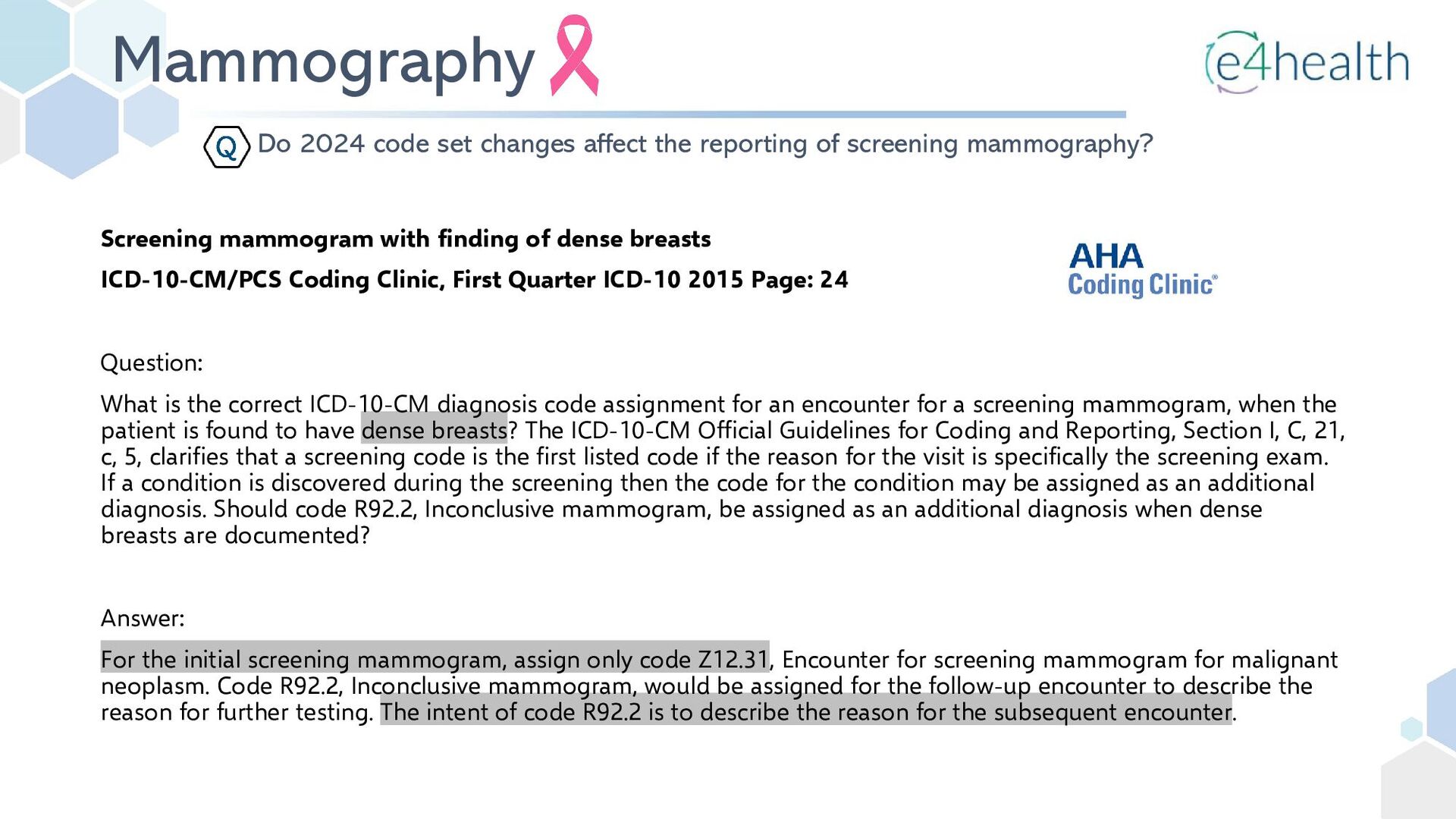
  39. Mammography Do 2024 code set changes affect the reporting of

    screening mammography? Screening mammogram with finding of dense breasts ICD-10-CM/PCS Coding Clinic, First Quarter ICD-10 2015 Page: 24 Question: What is the correct ICD-10-CM diagnosis code assignment for an encounter for a screening mammogram, when the patient is found to have dense breasts? The ICD-10-CM Official Guidelines for Coding and Reporting, Section I, C, 21, c, 5, clarifies that a screening code is the first listed code if the reason for the visit is specifically the screening exam. If a condition is discovered during the screening then the code for the condition may be assigned as an additional diagnosis. Should code R92.2, Inconclusive mammogram, be assigned as an additional diagnosis when dense breasts are documented? Answer: For the initial screening mammogram, assign only code Z12.31, Encounter for screening mammogram for malignant neoplasm. Code R92.2, Inconclusive mammogram, would be assigned for the follow-up encounter to describe the reason for further testing. The intent of code R92.2 is to describe the reason for the subsequent encounter.
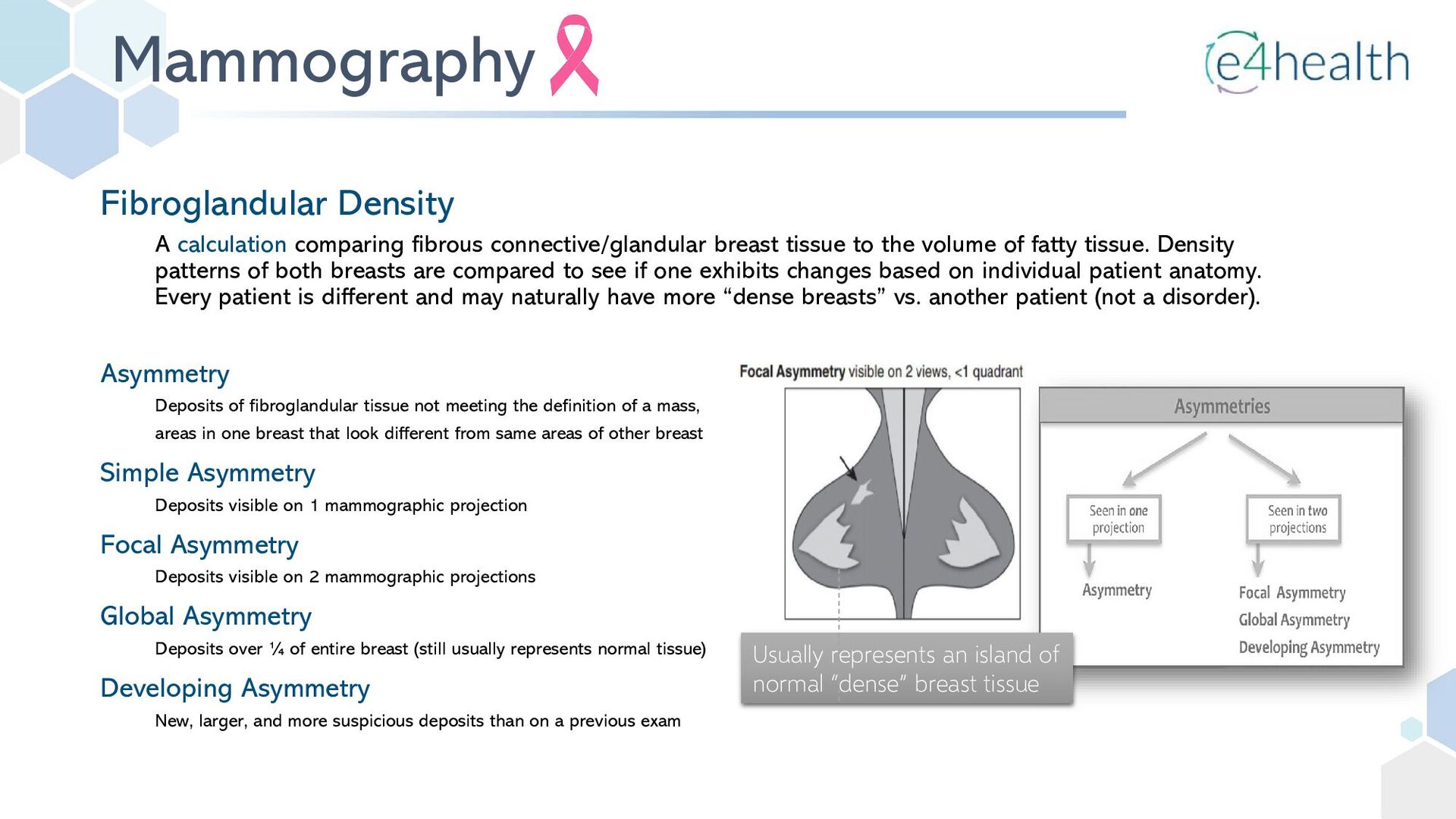
  40. Mammography Fibroglandular Density A calculation comparing fibrous connective/glandular breast tissue

    to the volume of fatty tissue. Density patterns of both breasts are compared to see if one exhibits changes based on individual patient anatomy. Every patient is different and may naturally have more “dense breasts” vs. another patient (not a disorder). Asymmetry Deposits of fibroglandular tissue not meeting the definition of a mass, areas in one breast that look different from same areas of other breast Simple Asymmetry Deposits visible on 1 mammographic projection Focal Asymmetry Deposits visible on 2 mammographic projections Global Asymmetry Deposits over ¼ of entire breast (still usually represents normal tissue) Developing Asymmetry New, larger, and more suspicious deposits than on a previous exam Usually represents an island of normal “dense” breast tissue
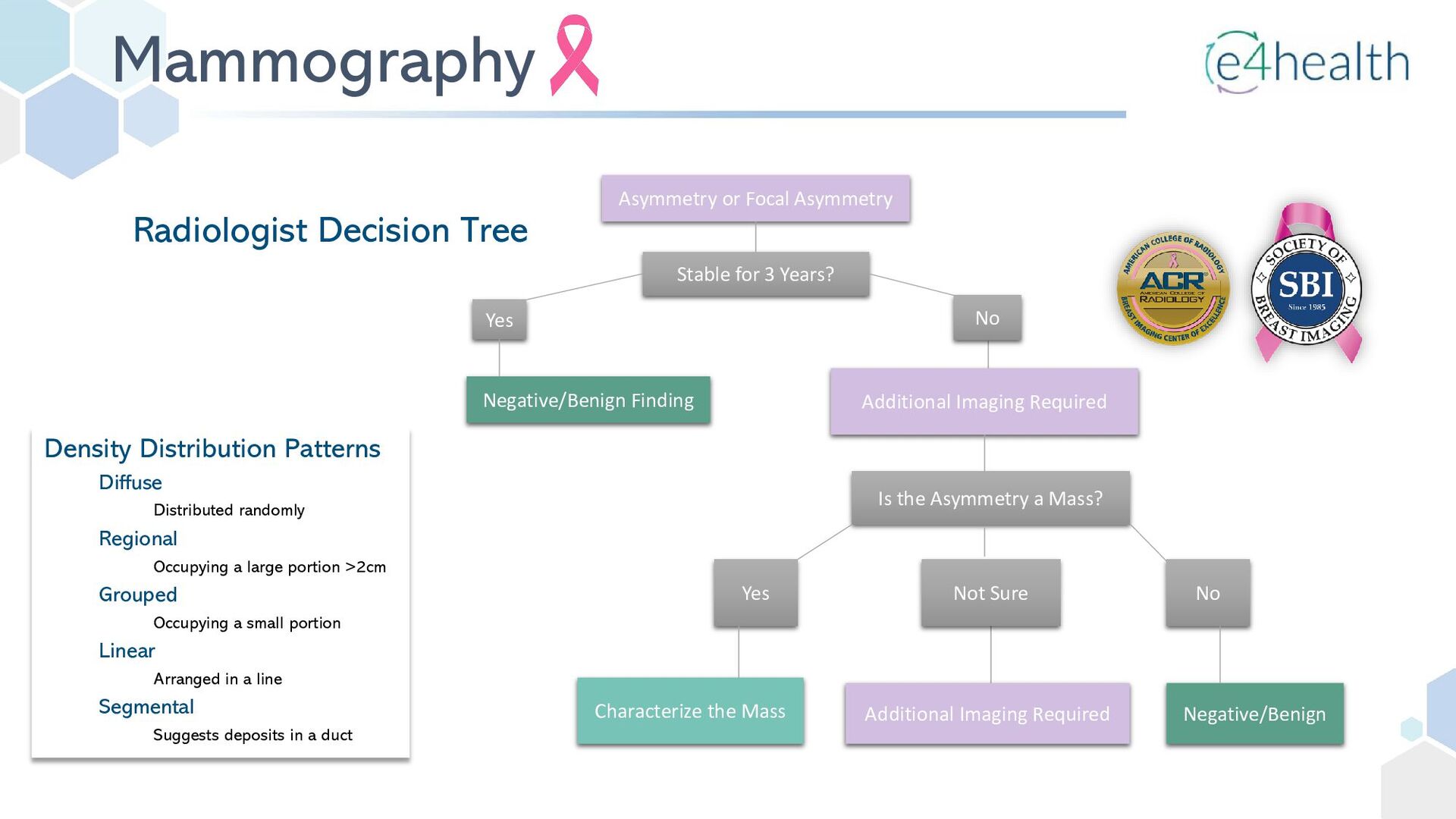
  41. Mammography Density Distribution Patterns Diffuse Distributed randomly Regional Occupying a

    large portion >2cm Grouped Occupying a small portion Linear Arranged in a line Segmental Suggests deposits in a duct Asymmetry or Focal Asymmetry Stable for 3 Years? Yes No Additional Imaging Required Negative/Benign Finding Is the Asymmetry a Mass? Yes No Not Sure Additional Imaging Required Characterize the Mass Negative/Benign Radiologist Decision Tree
  42. Lipoma Updates Is lipoma considered a soft connective tissue tumor?

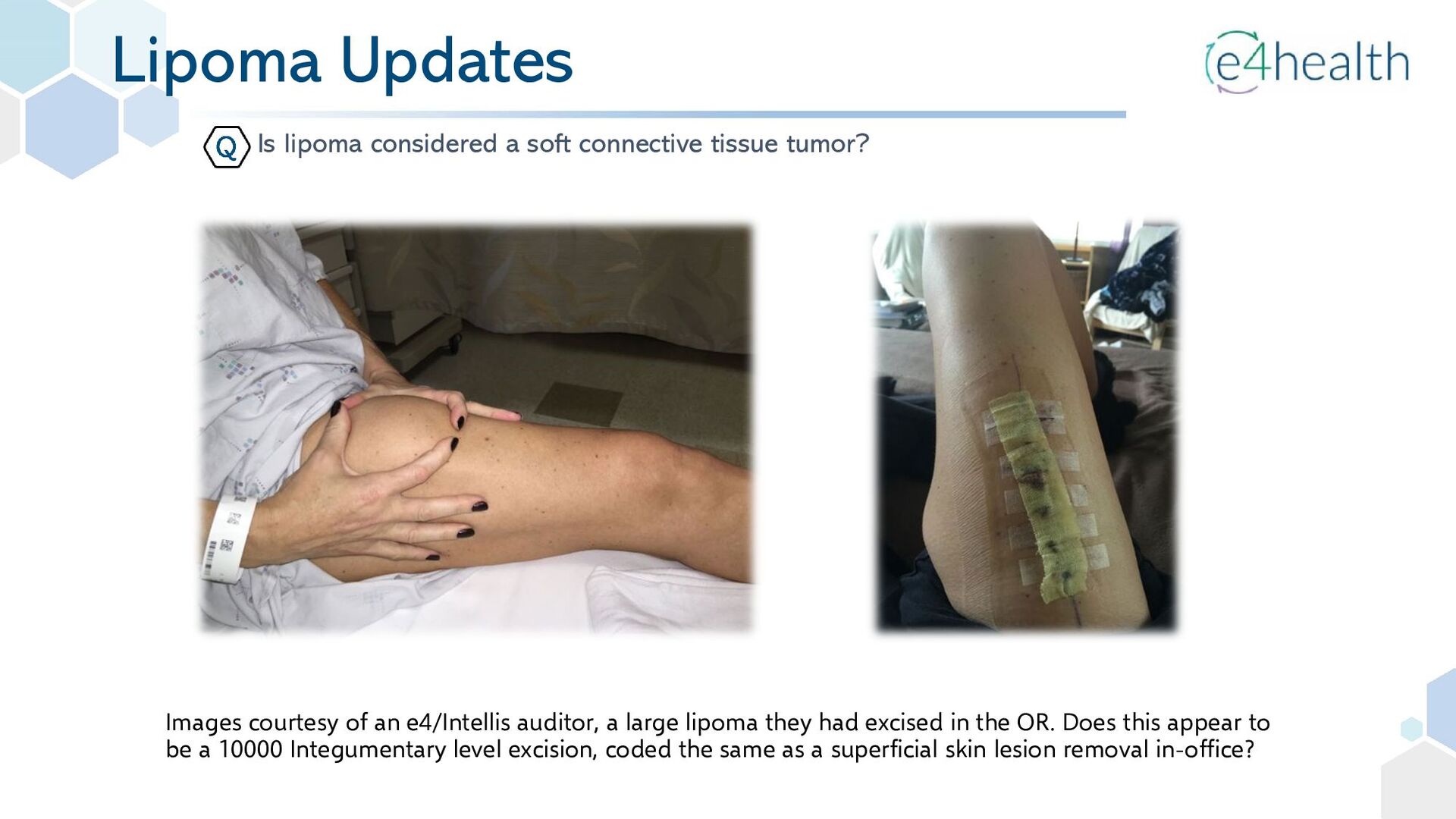
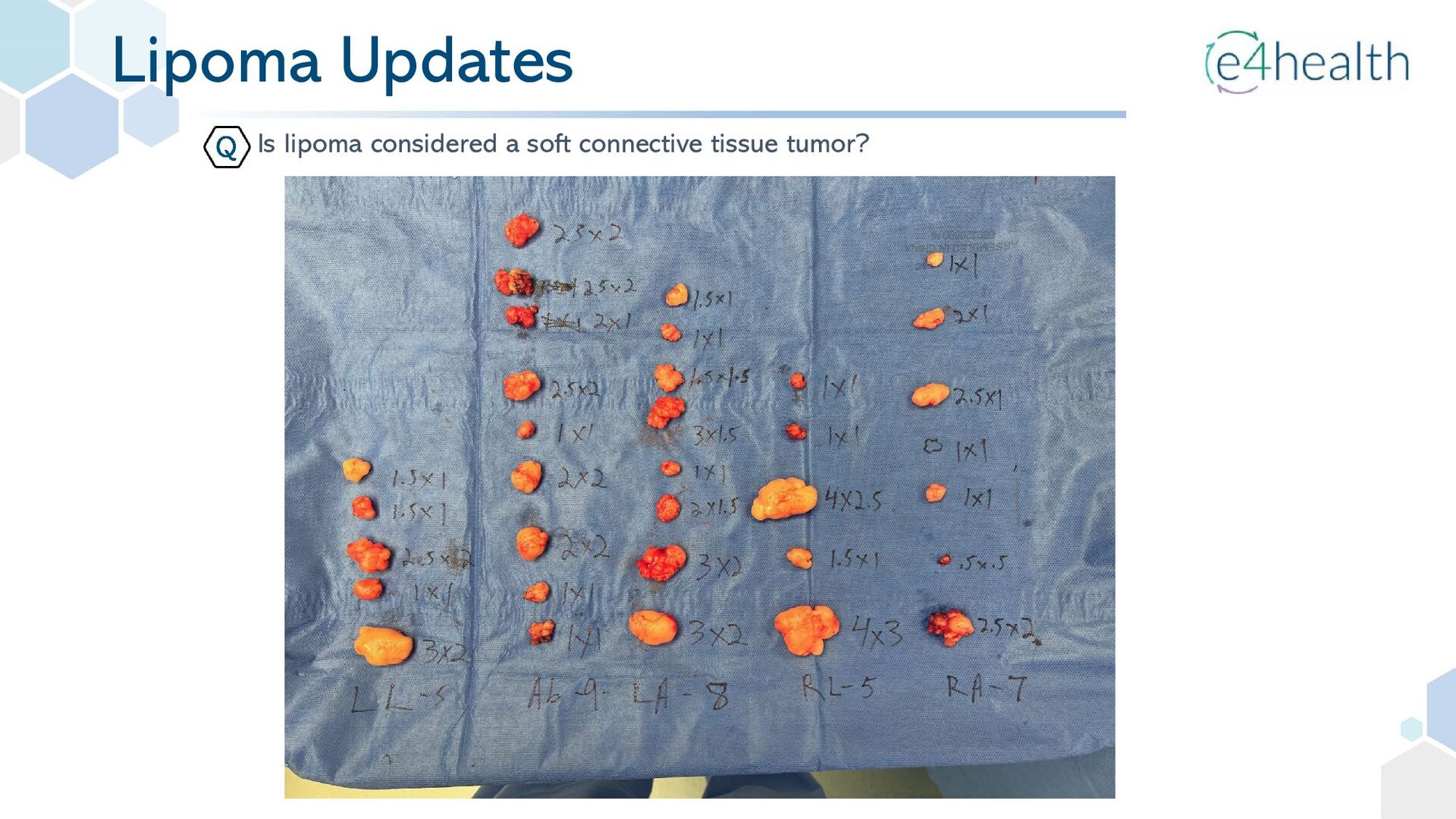
    Images courtesy of an e4/Intellis auditor, a large lipoma they had excised in the OR. Does this appear to be a 10000 Integumentary level excision, coded the same as a superficial skin lesion removal in-office?
  43. Lipoma Updates Is lipoma considered a soft connective tissue tumor?

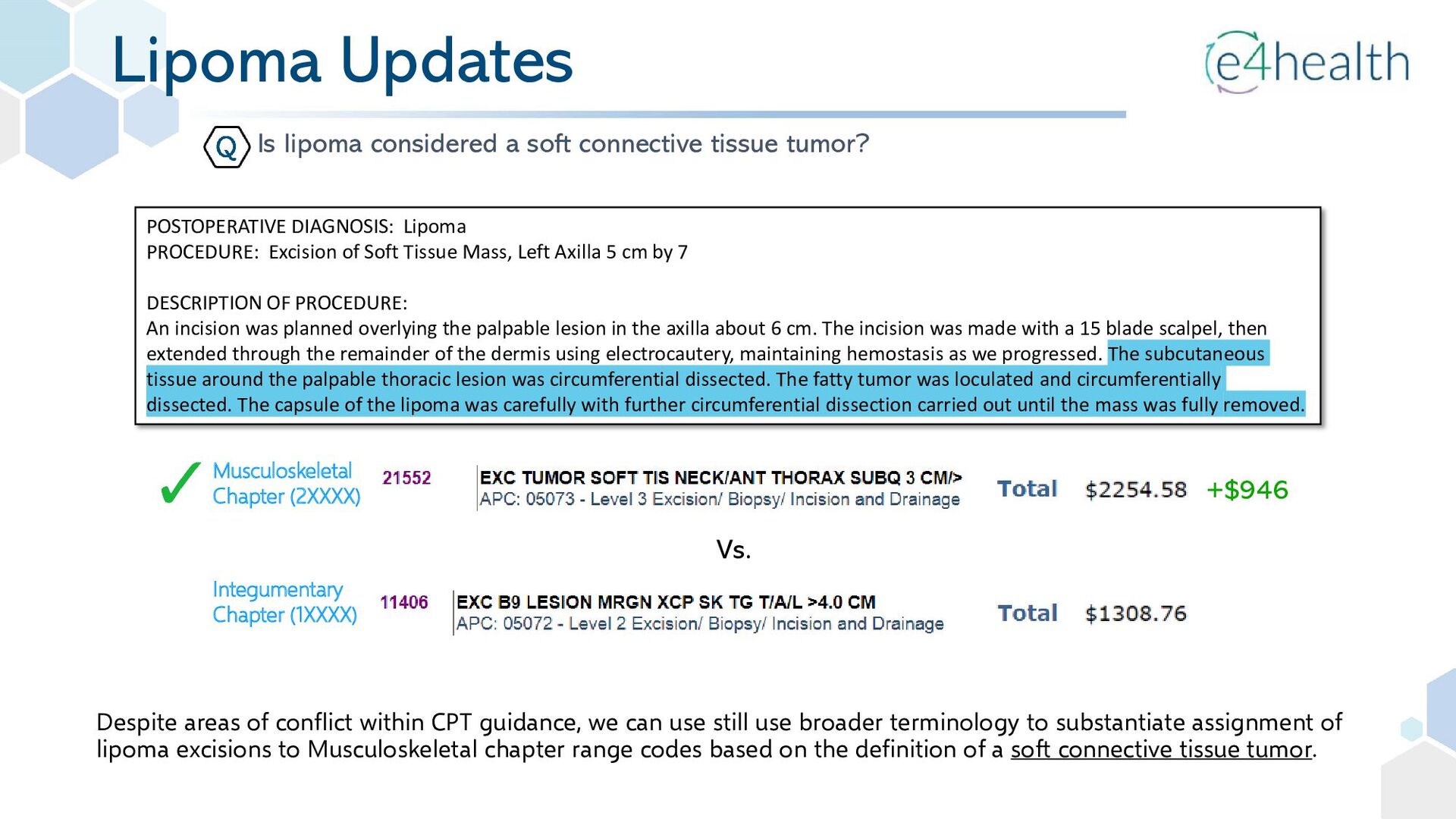
    POSTOPERATIVE DIAGNOSIS: Lipoma PROCEDURE: Excision of Soft Tissue Mass, Left Axilla 5 cm by 7 DESCRIPTION OF PROCEDURE: An incision was planned overlying the palpable lesion in the axilla about 6 cm. The incision was made with a 15 blade scalpel, then extended through the remainder of the dermis using electrocautery, maintaining hemostasis as we progressed. The subcutaneous tissue around the palpable thoracic lesion was circumferential dissected. The fatty tumor was loculated and circumferentially dissected. The capsule of the lipoma was carefully with further circumferential dissection carried out until the mass was fully removed. Vs. Musculoskeletal Chapter (2XXXX) Integumentary Chapter (1XXXX) +$946 Despite areas of conflict within CPT guidance, we can use still use broader terminology to substantiate assignment of lipoma excisions to Musculoskeletal chapter range codes based on the definition of a soft connective tissue tumor.
  44. Lipoma Updates Is lipoma considered a soft connective tissue tumor?

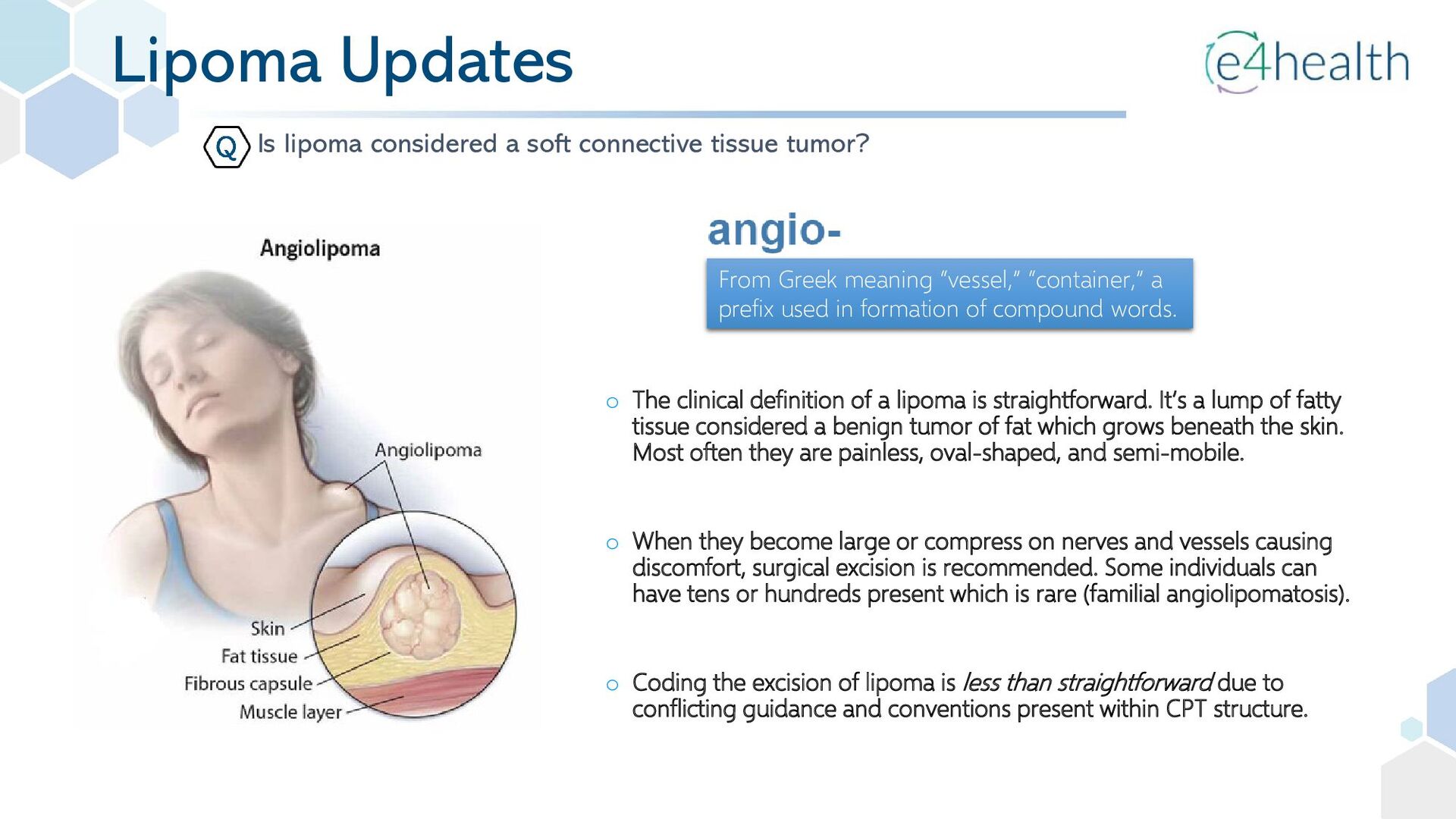
    o The clinical definition of a lipoma is straightforward. It’s a lump of fatty tissue considered a benign tumor of fat which grows beneath the skin. Most often they are painless, oval-shaped, and semi-mobile. o When they become large or compress on nerves and vessels causing discomfort, surgical excision is recommended. Some individuals can have tens or hundreds present which is rare (familial angiolipomatosis). o Coding the excision of lipoma is less than straightforward due to conflicting guidance and conventions present within CPT structure. From Greek meaning “vessel,” “container,” a prefix used in formation of compound words.
  45. Lipoma Updates Is lipoma considered a soft connective tissue tumor?

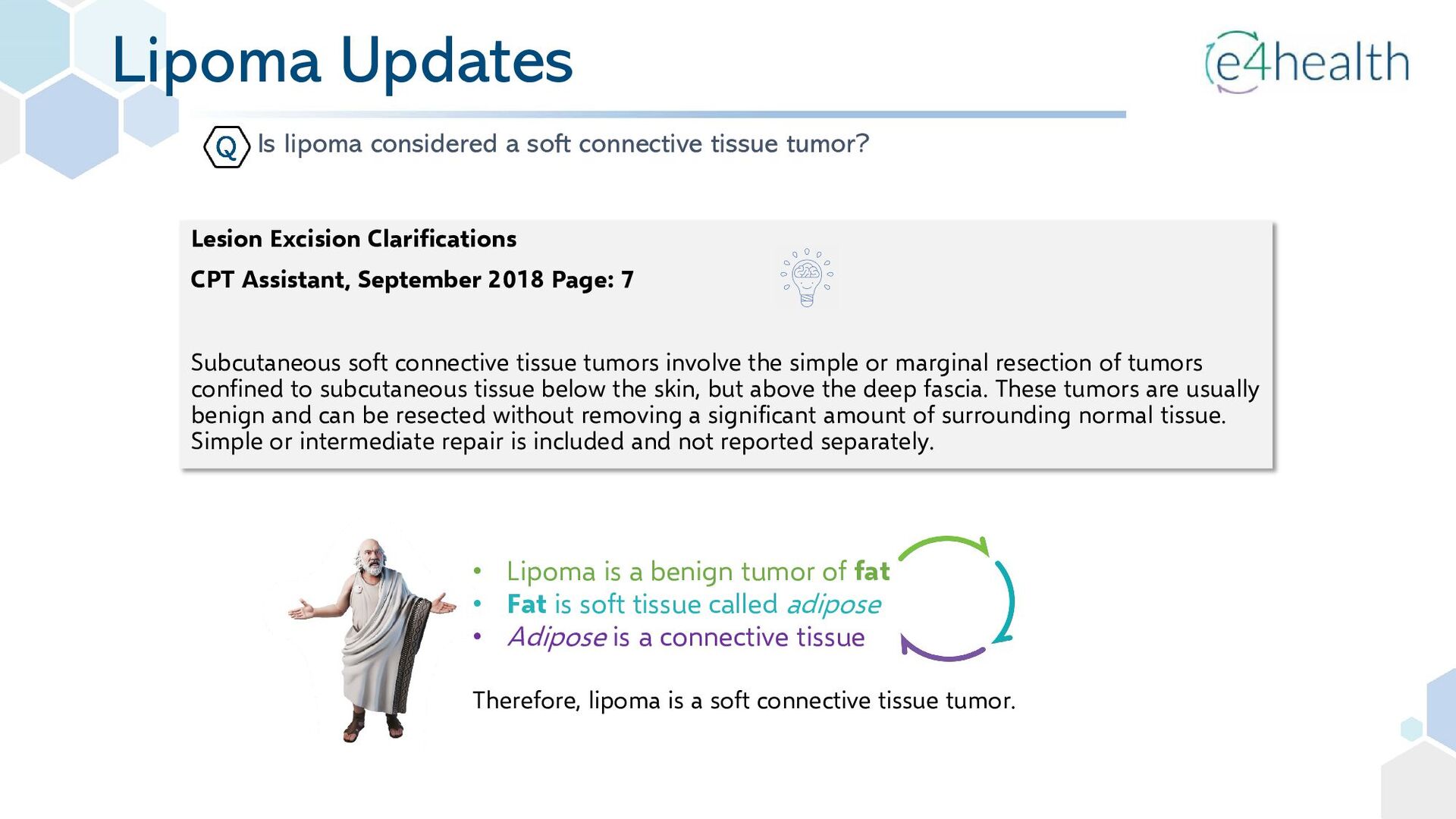
    Lesion Excision Clarifications CPT Assistant, September 2018 Page: 7 Subcutaneous soft connective tissue tumors involve the simple or marginal resection of tumors confined to subcutaneous tissue below the skin, but above the deep fascia. These tumors are usually benign and can be resected without removing a significant amount of surrounding normal tissue. Simple or intermediate repair is included and not reported separately. • Lipoma is a benign tumor of fat • Fat is soft tissue called adipose • Adipose is a connective tissue Therefore, lipoma is a soft connective tissue tumor.
  46. Lipoma Updates Is lipoma considered a soft connective tissue tumor?

    Is everyone onboard with this particular interpretation of lipoma as a “soft connective tissue tumor”, as opposed to other guidance present in CPT Assistant on “lesions of cutaneous origin” coding to Integumentary chapter regardless of depth? CPT exhibits similar conflict in directions regarding the excision of lesions of cutaneous origin. For example, a radical excision of melanoma including muscle tissue according to book instruction is still coded to Integumentary chapter (16XXX). For this reason, local facility policies have decided to realign with connective tissue tumor definitions originally provided by the AMA to support a code assignment from the Musculoskeletal chapter (2XXXX) in such situations. Is this a blanket instruction provided to all coders and auditors to follow? No. We are aware of opposing viewpoints on this subject, but it also serves as a good exercise to develop our own thought processes and understanding of the general design and construct of CPT. It is a decision to be made on a local level after careful assessment and coordination between members of both HIM and Clinical teams.
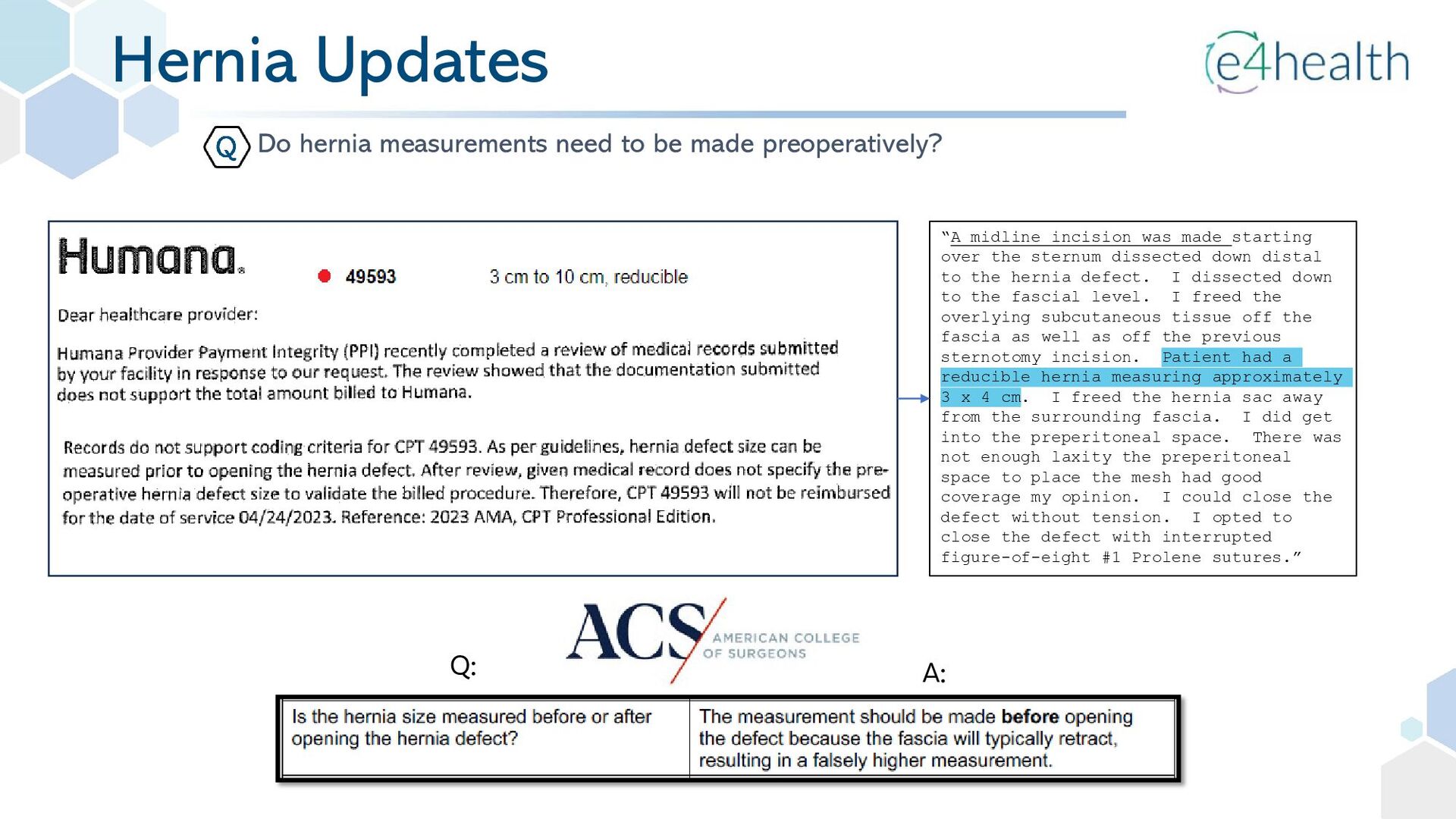
  47. Hernia Updates Do hernia measurements need to be made preoperatively?

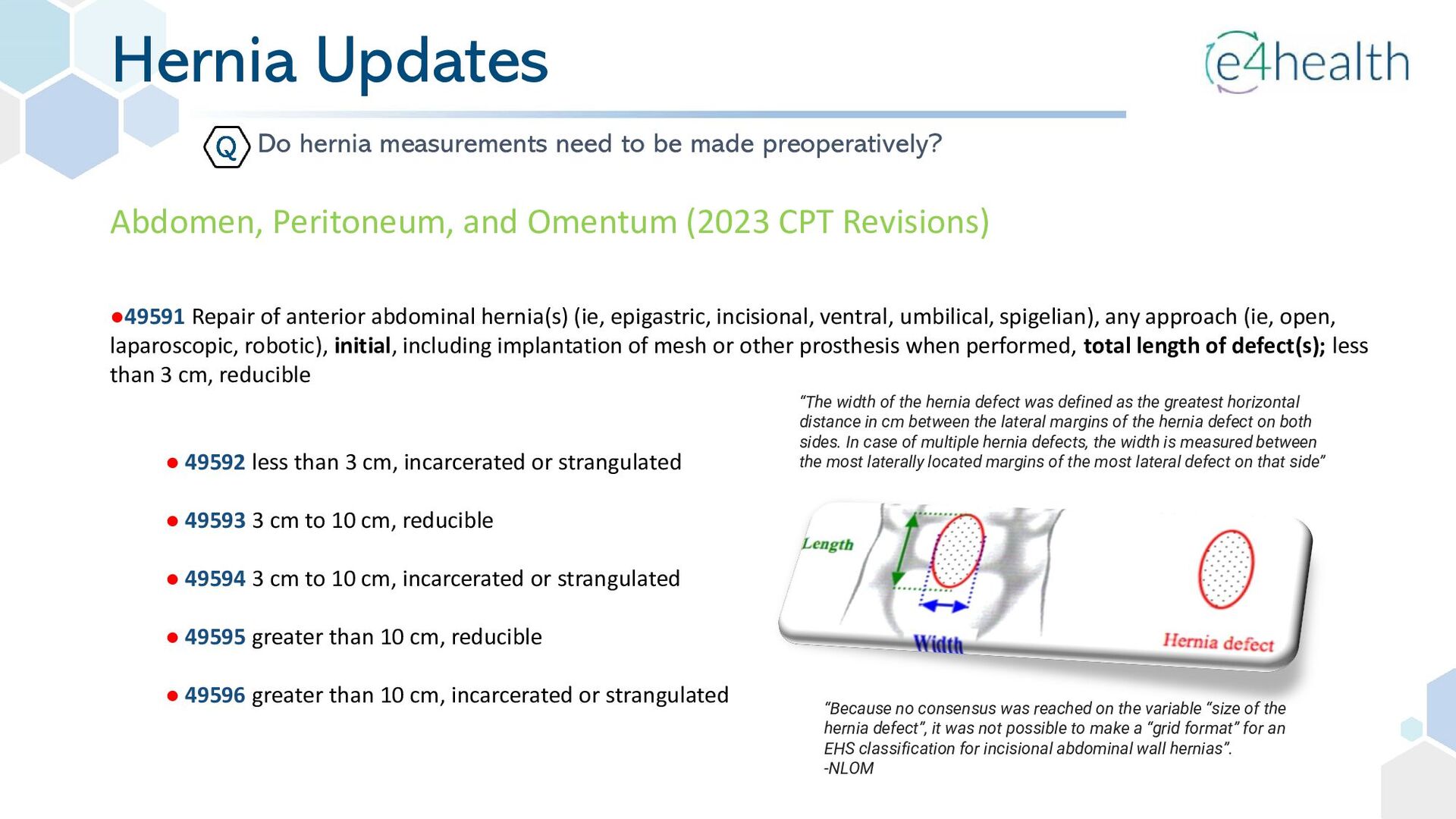
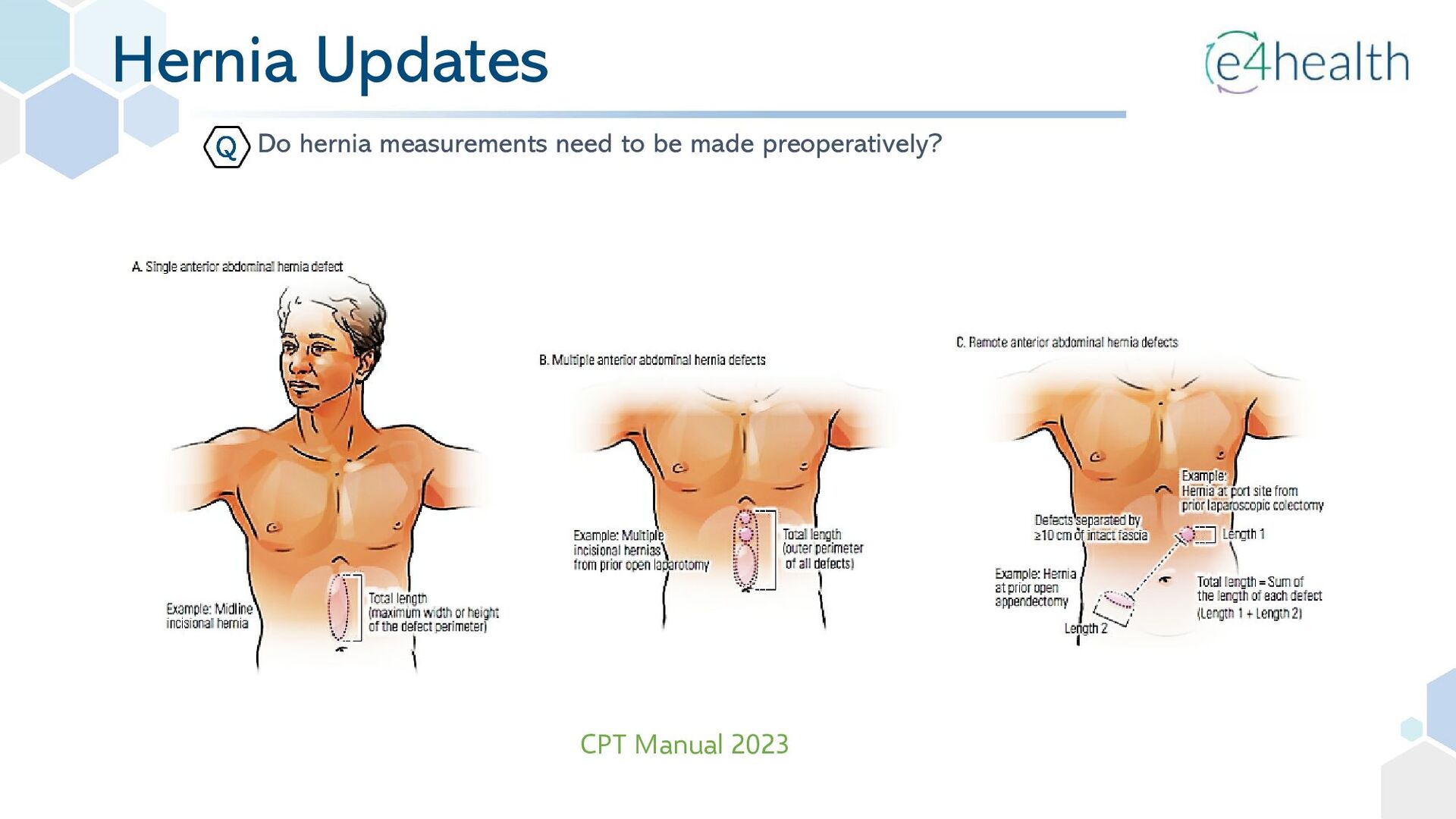
    •49591 Repair of anterior abdominal hernia(s) (ie, epigastric, incisional, ventral, umbilical, spigelian), any approach (ie, open, laparoscopic, robotic), initial, including implantation of mesh or other prosthesis when performed, total length of defect(s); less than 3 cm, reducible • 49592 less than 3 cm, incarcerated or strangulated • 49593 3 cm to 10 cm, reducible • 49594 3 cm to 10 cm, incarcerated or strangulated • 49595 greater than 10 cm, reducible • 49596 greater than 10 cm, incarcerated or strangulated Abdomen, Peritoneum, and Omentum (2023 CPT Revisions) “The width of the hernia defect was defined as the greatest horizontal distance in cm between the lateral margins of the hernia defect on both sides. In case of multiple hernia defects, the width is measured between the most laterally located margins of the most lateral defect on that side” “Because no consensus was reached on the variable “size of the hernia defect”, it was not possible to make a “grid format” for an EHS classification for incisional abdominal wall hernias”. -NLOM
  48. Hernia Updates Do hernia measurements need to be made preoperatively?

    Q: A: “A midline incision was made starting over the sternum dissected down distal to the hernia defect. I dissected down to the fascial level. I freed the overlying subcutaneous tissue off the fascia as well as off the previous sternotomy incision. Patient had a reducible hernia measuring approximately 3 x 4 cm. I freed the hernia sac away from the surrounding fascia. I did get into the preperitoneal space. There was not enough laxity the preperitoneal space to place the mesh had good coverage my opinion. I could close the defect without tension. I opted to close the defect with interrupted figure-of-eight #1 Prolene sutures.”
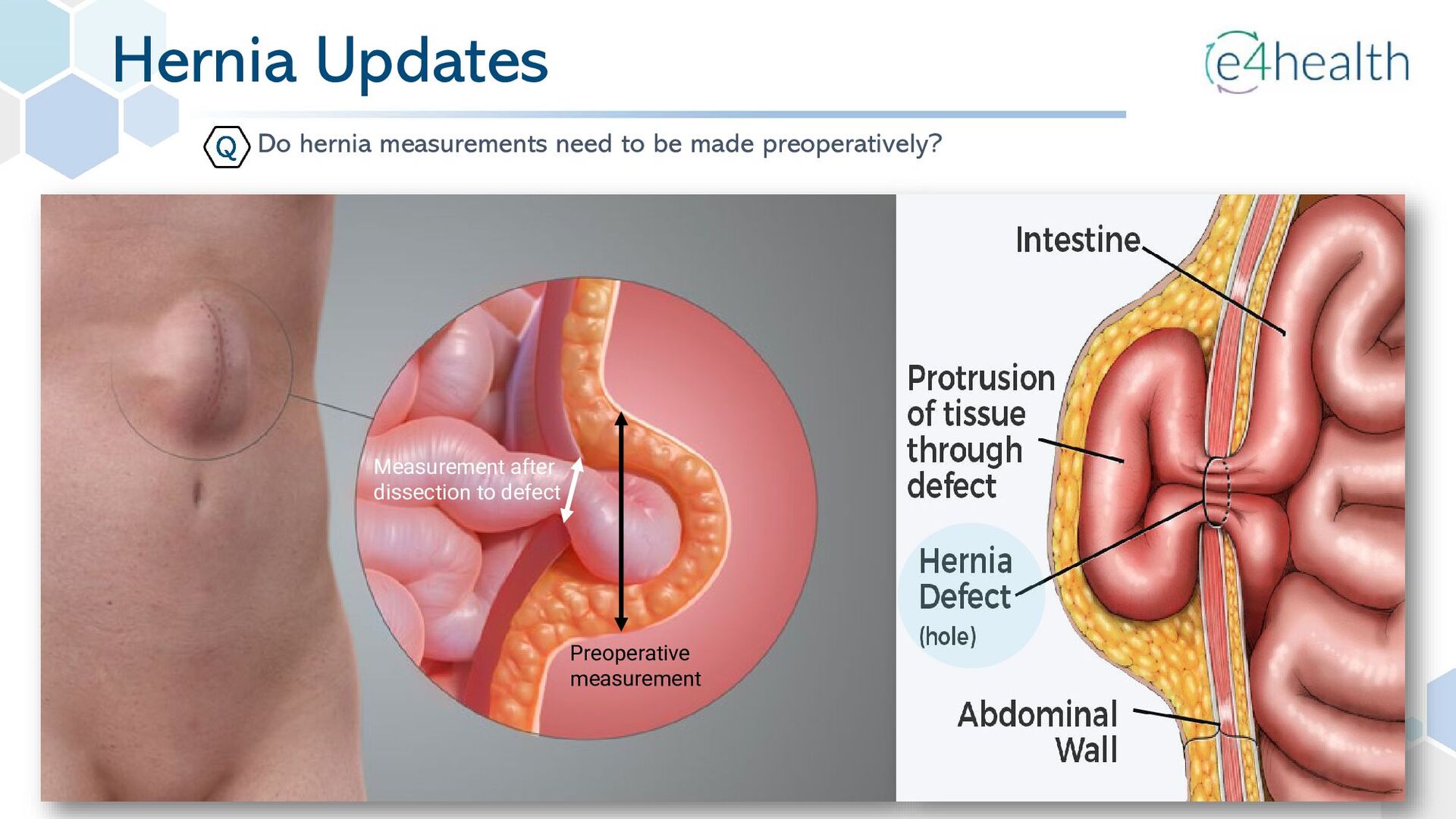
  49. Hernia Updates Do hernia measurements need to be made preoperatively?

    Preoperative measurement Measurement after dissection to defect