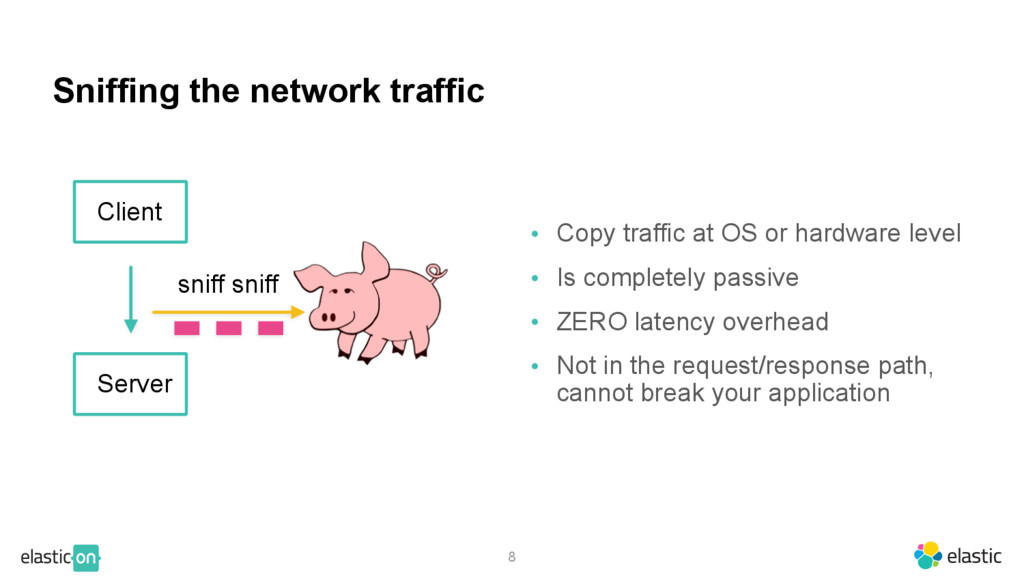
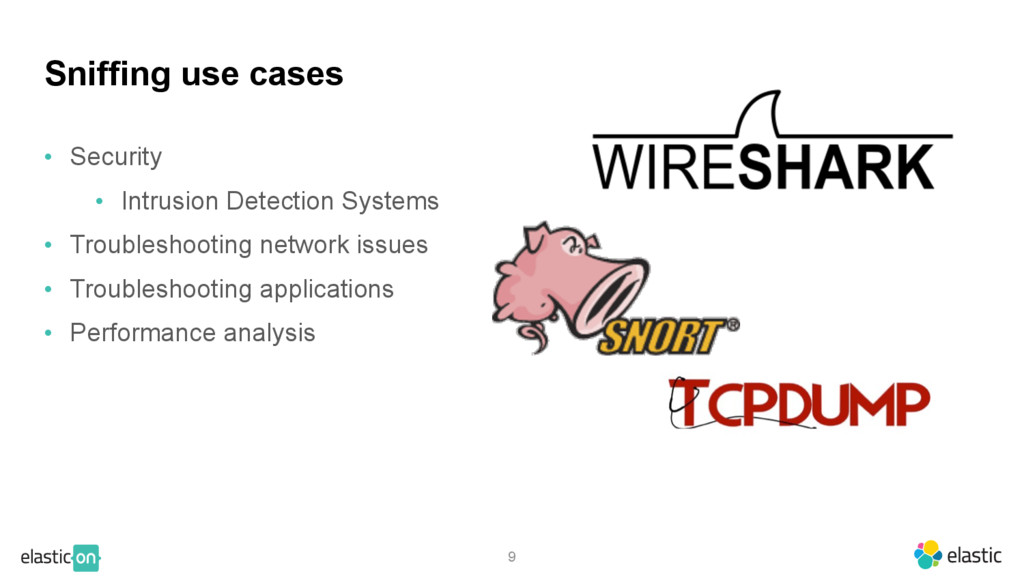
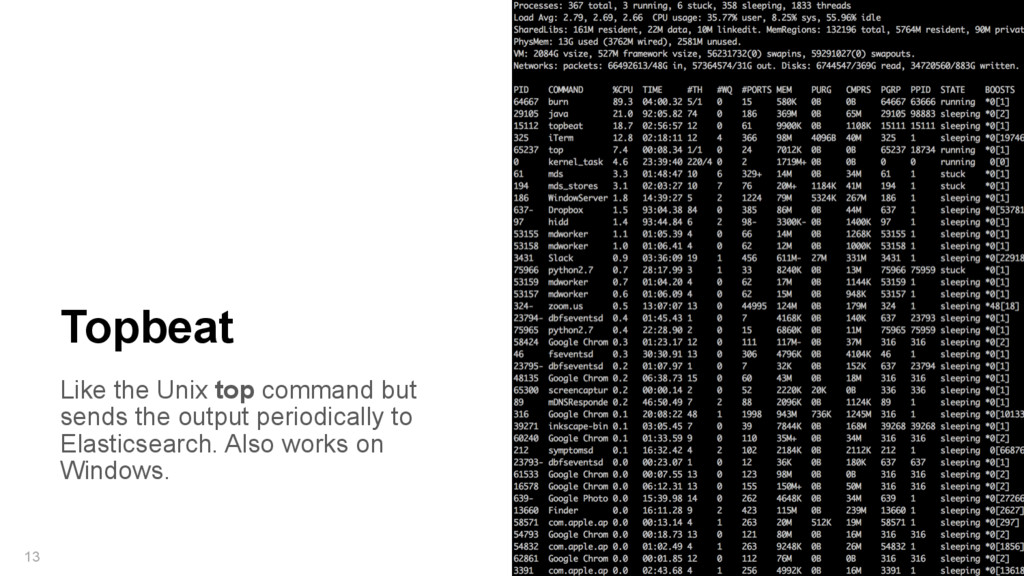
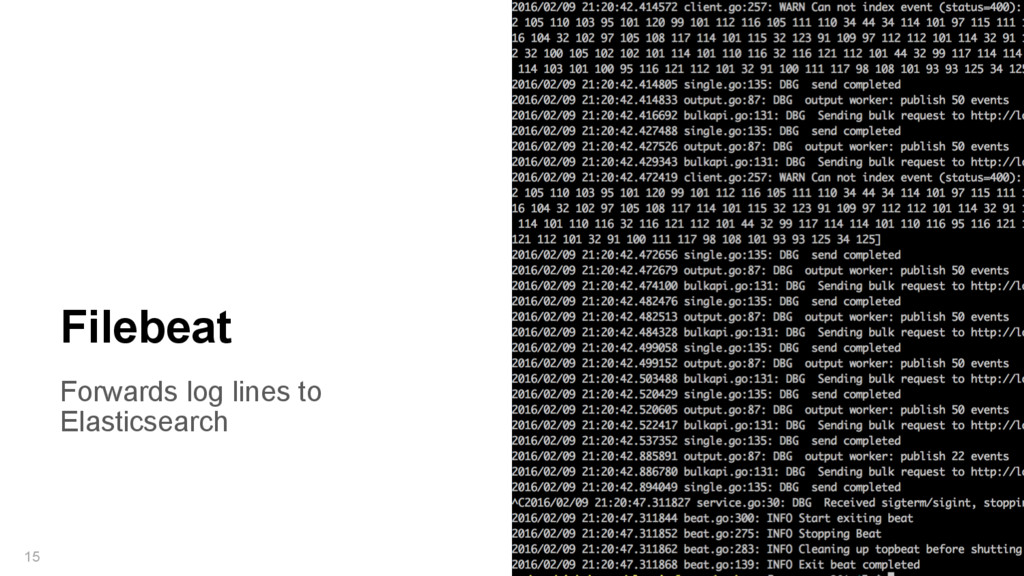
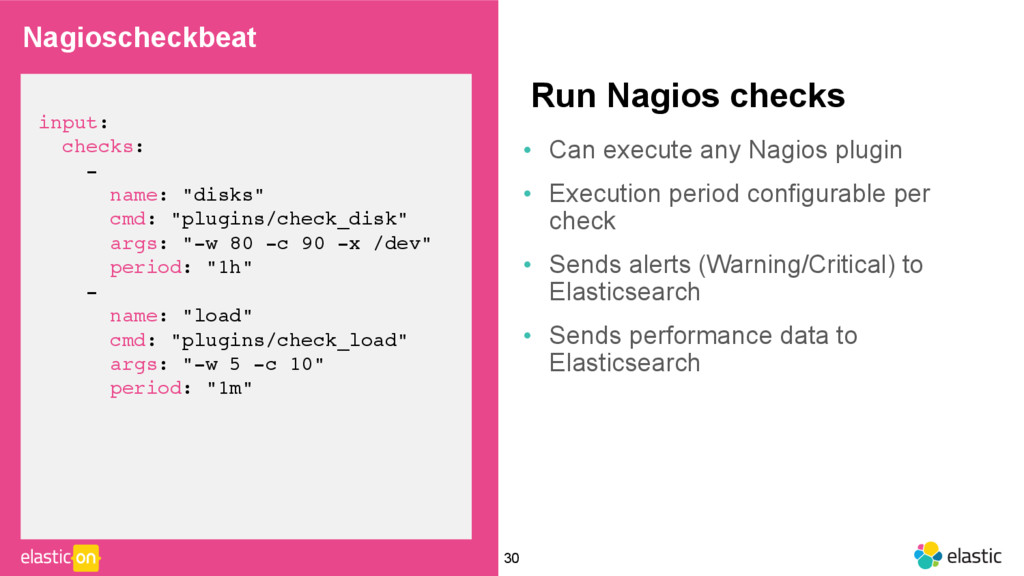
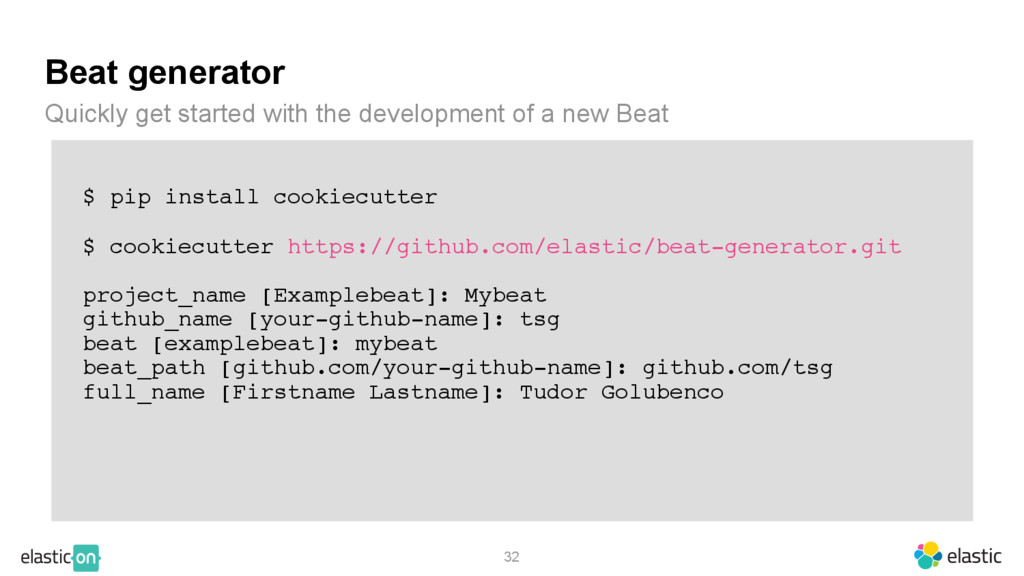
or hardware level • Is completely passive • ZERO latency overhead • Not in the request/response path, cannot break your application Client Server sniff sniff
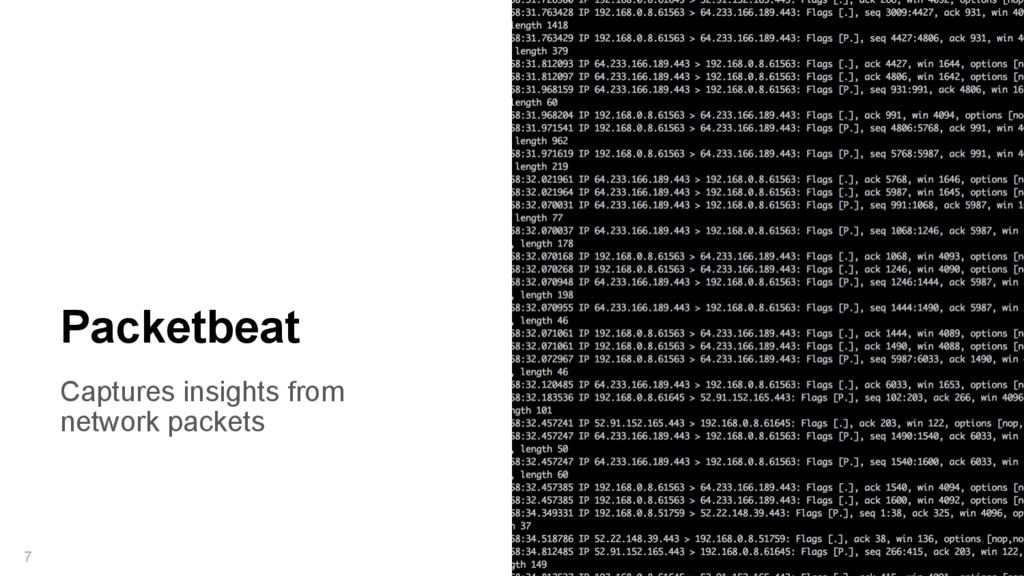
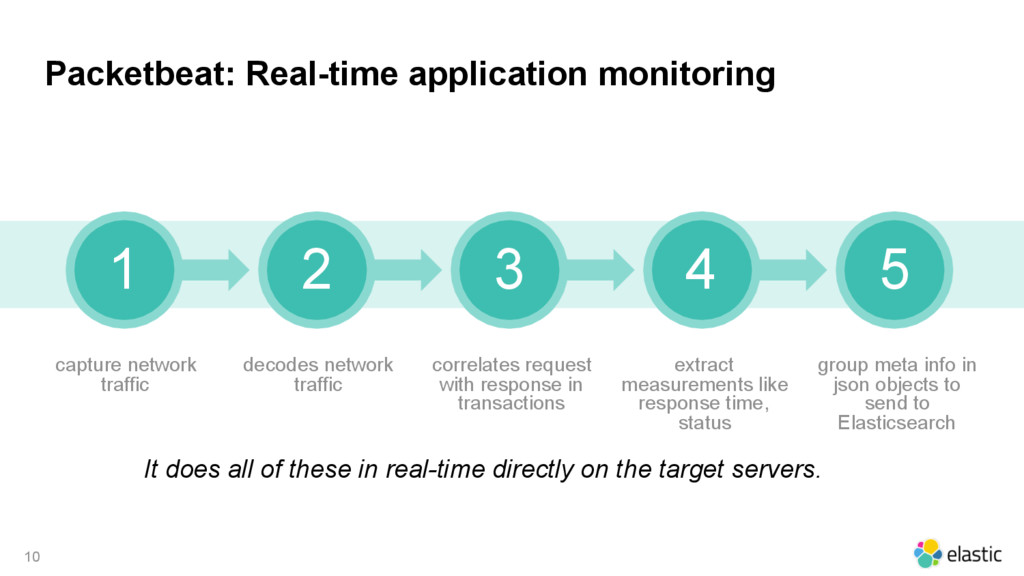
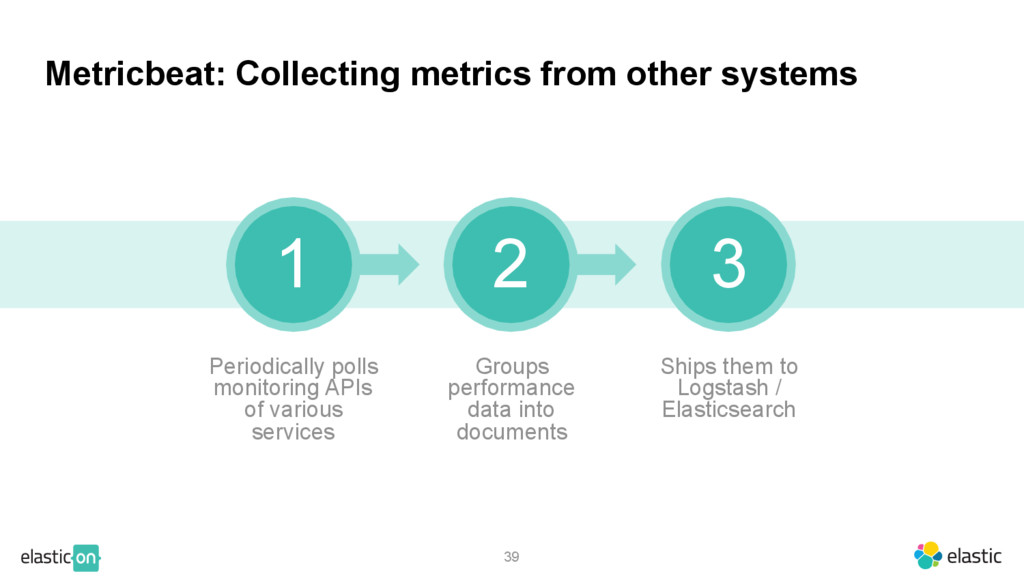
network traffic decodes network traffic correlates request with response in transactions extract measurements like response time, status 5 group meta info in json objects to send to Elasticsearch It does all of these in real-time directly on the target servers.
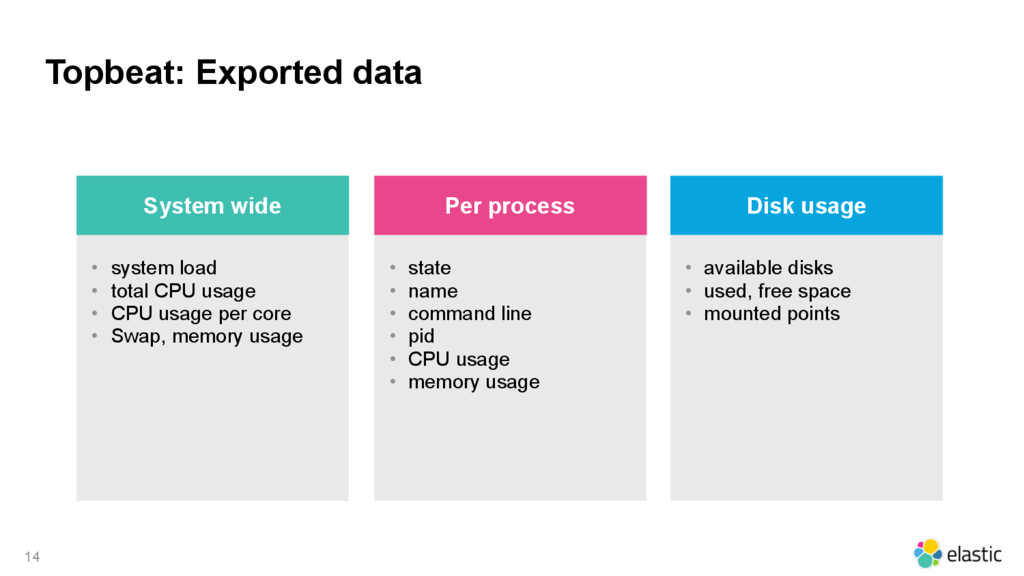
usage • CPU usage per core • Swap, memory usage System wide • state • name • command line • pid • CPU usage • memory usage Per process • available disks • used, free space • mounted points Disk usage
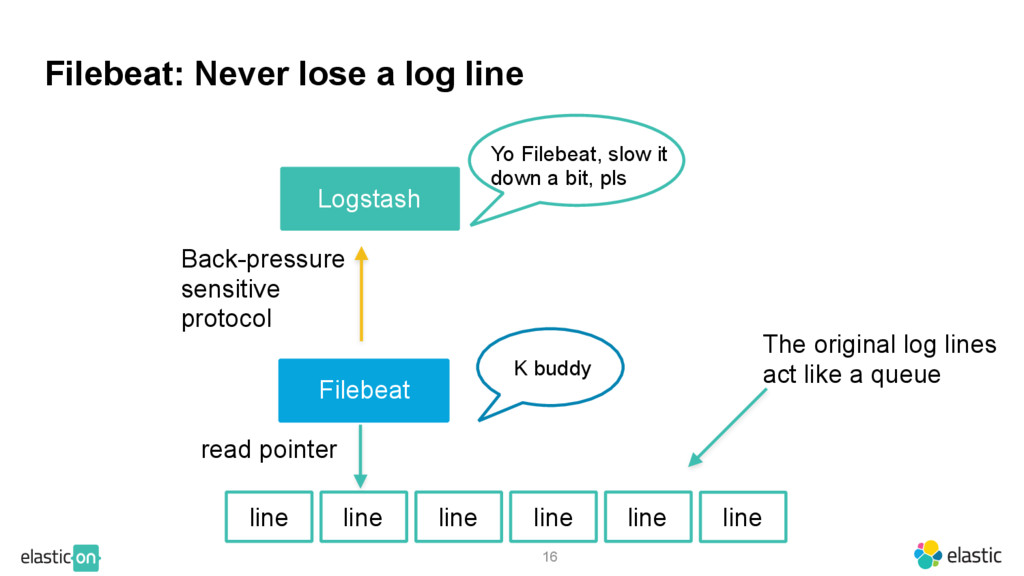
line line read pointer Filebeat Logstash Back-pressure sensitive protocol Yo Filebeat, slow it down a bit, pls K buddy line The original log lines act like a queue
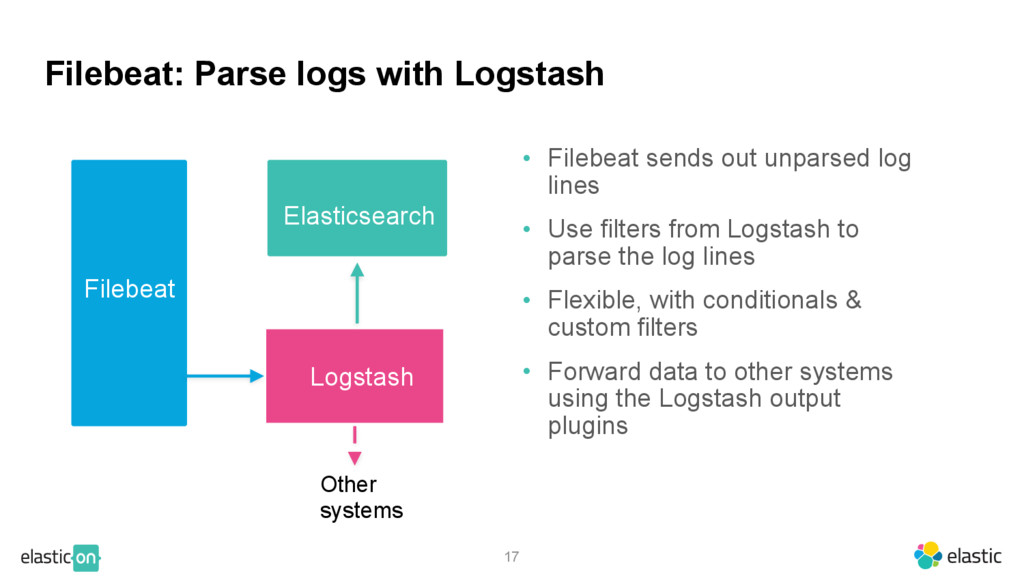
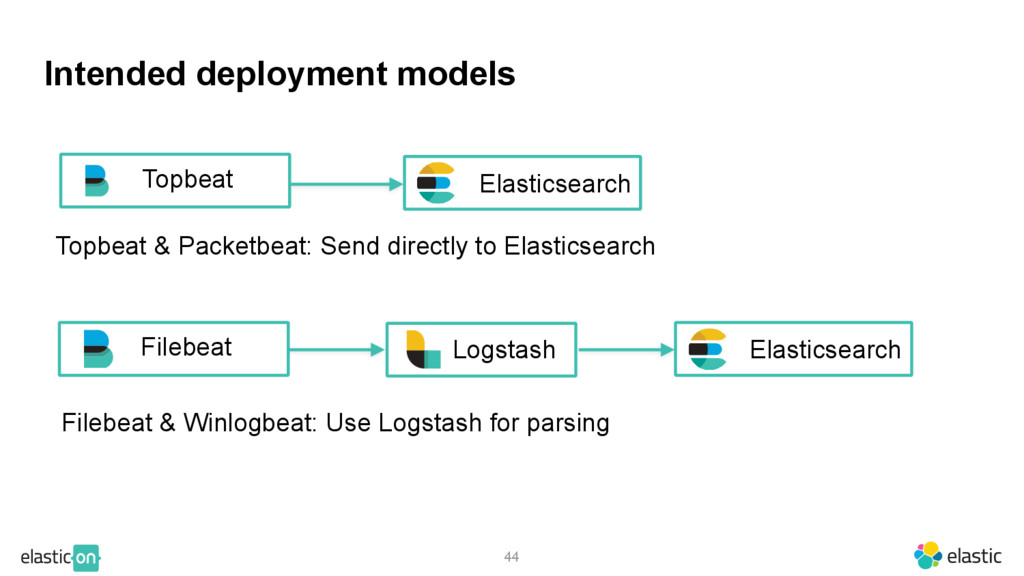
unparsed log lines • Use filters from Logstash to parse the log lines • Flexible, with conditionals & custom filters • Forward data to other systems using the Logstash output plugins Filebeat Elasticsearch Logstash Other systems
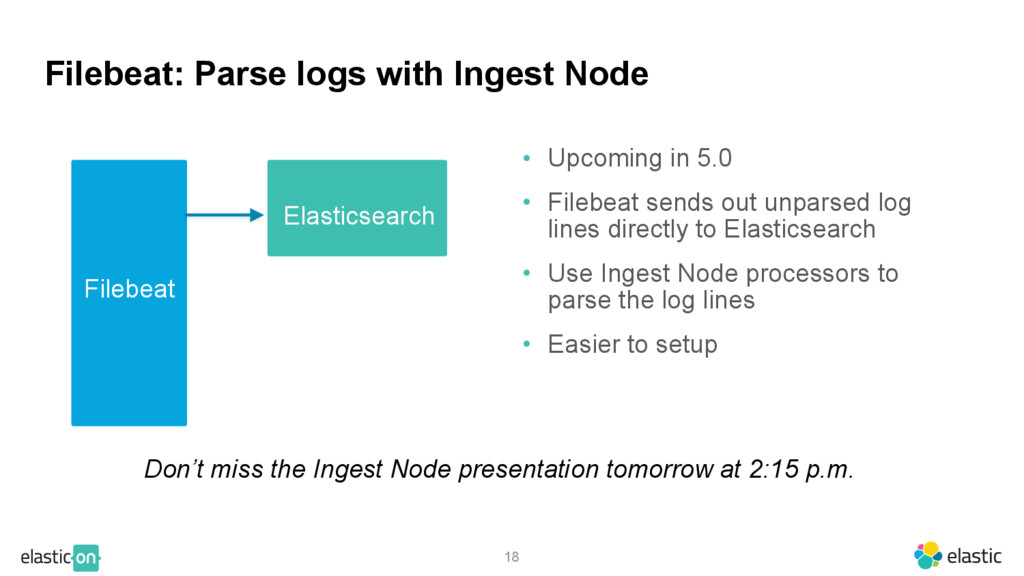
5.0 • Filebeat sends out unparsed log lines directly to Elasticsearch • Use Ingest Node processors to parse the log lines • Easier to setup Filebeat Elasticsearch Don’t miss the Ingest Node presentation tomorrow at 2:15 p.m.
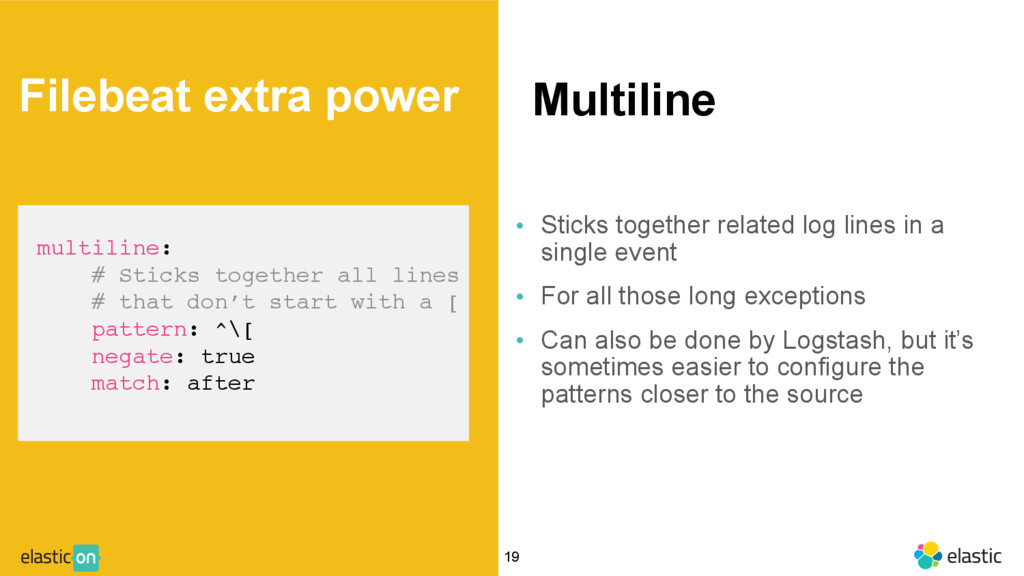
that don’t start with a [ pattern: ^\[ negate: true match: after Filebeat extra power • Sticks together related log lines in a single event • For all those long exceptions • Can also be done by Logstash, but it’s sometimes easier to configure the patterns closer to the source
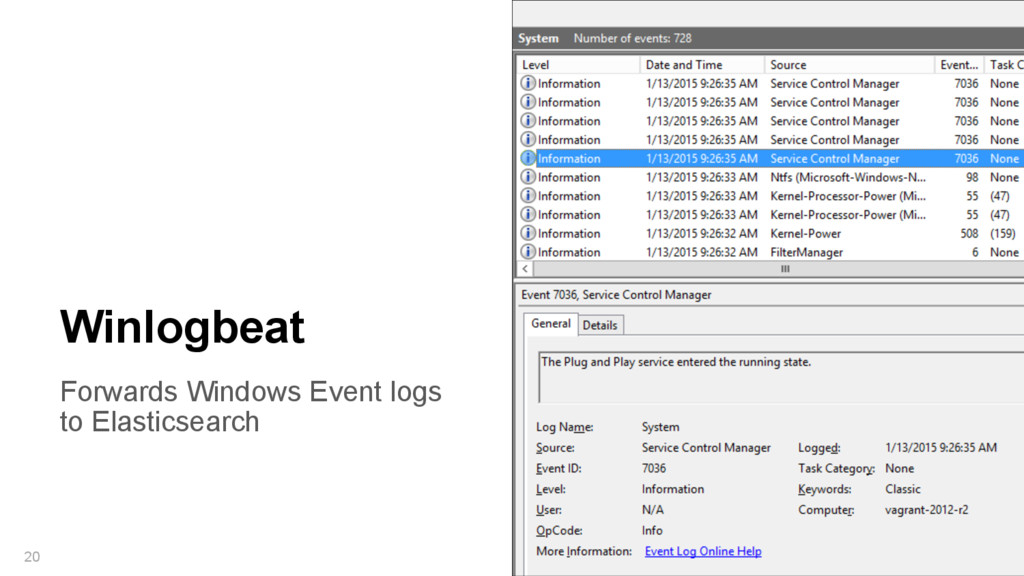
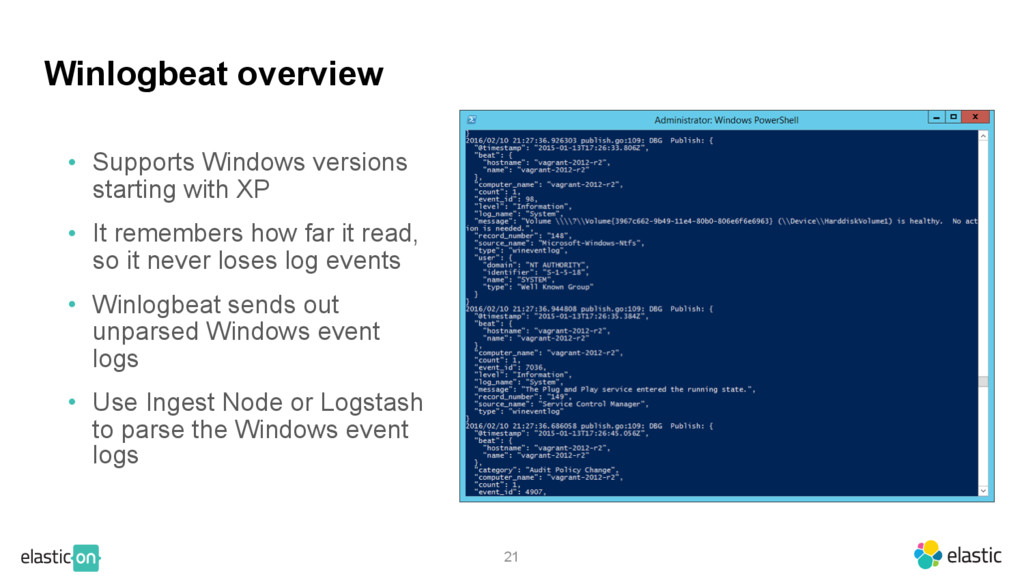
• It remembers how far it read, so it never loses log events • Winlogbeat sends out unparsed Windows event logs • Use Ingest Node or Logstash to parse the Windows event logs
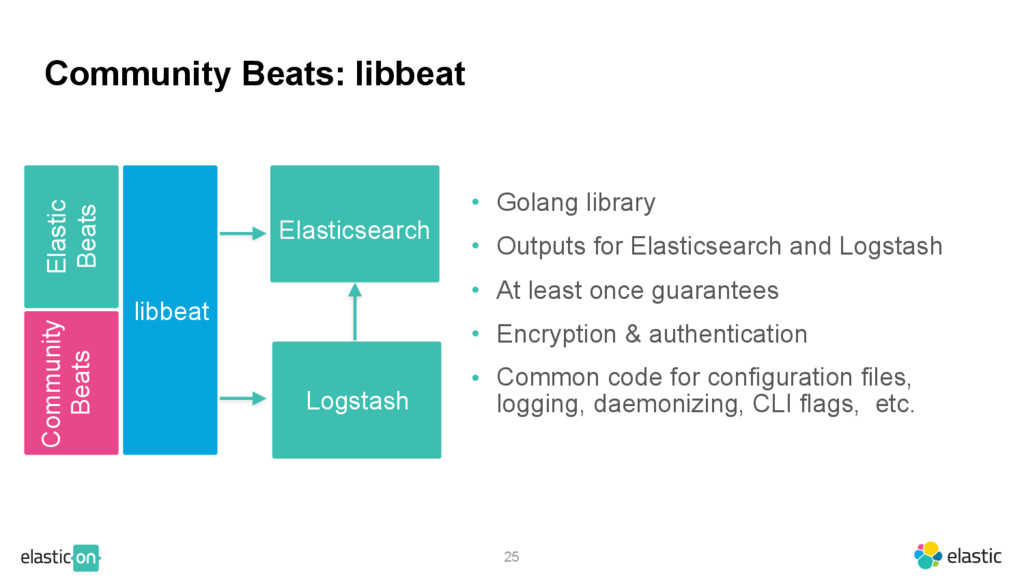
Golang library • Outputs for Elasticsearch and Logstash • At least once guarantees • Encryption & authentication • Common code for configuration files, logging, daemonizing, CLI flags, etc. Elasticsearch Logstash
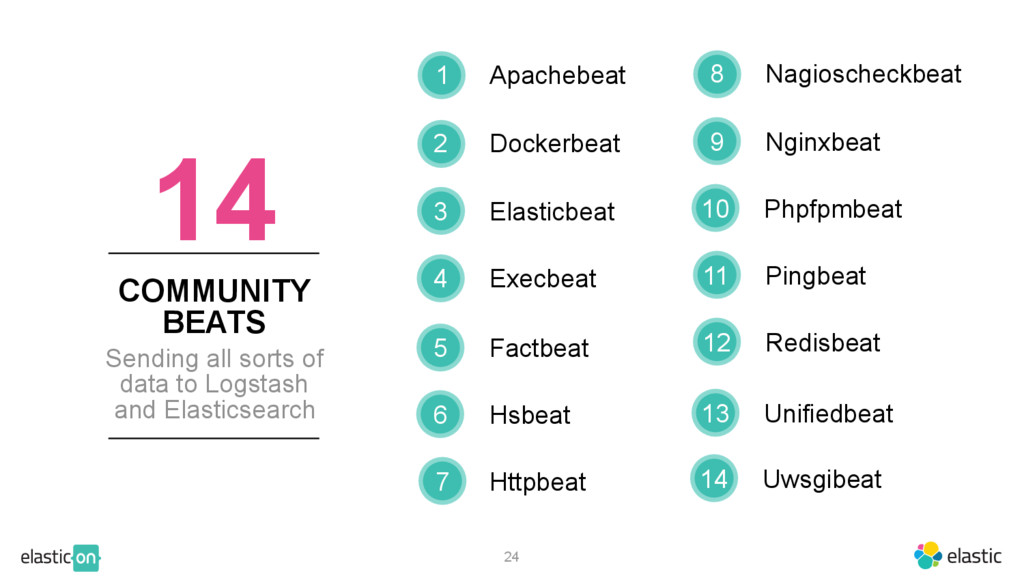
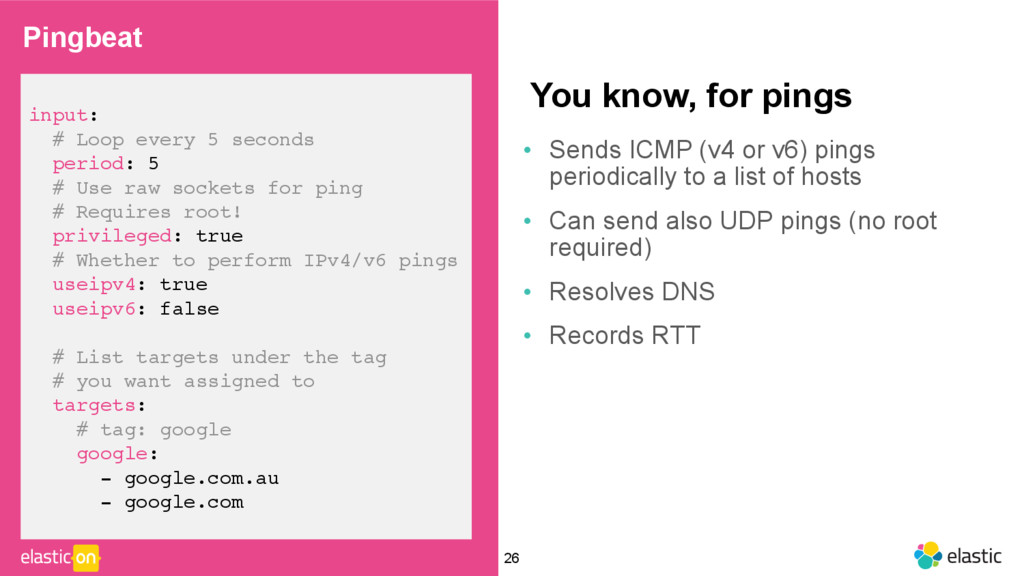
# Use raw sockets for ping # Requires root! privileged: true # Whether to perform IPv4/v6 pings useipv4: true useipv6: false # List targets under the tag # you want assigned to targets: # tag: google google: - google.com.au - google.com You know, for pings • Sends ICMP (v4 or v6) pings periodically to a list of hosts • Can send also UDP pings (no root required) • Resolves DNS • Records RTT Pingbeat
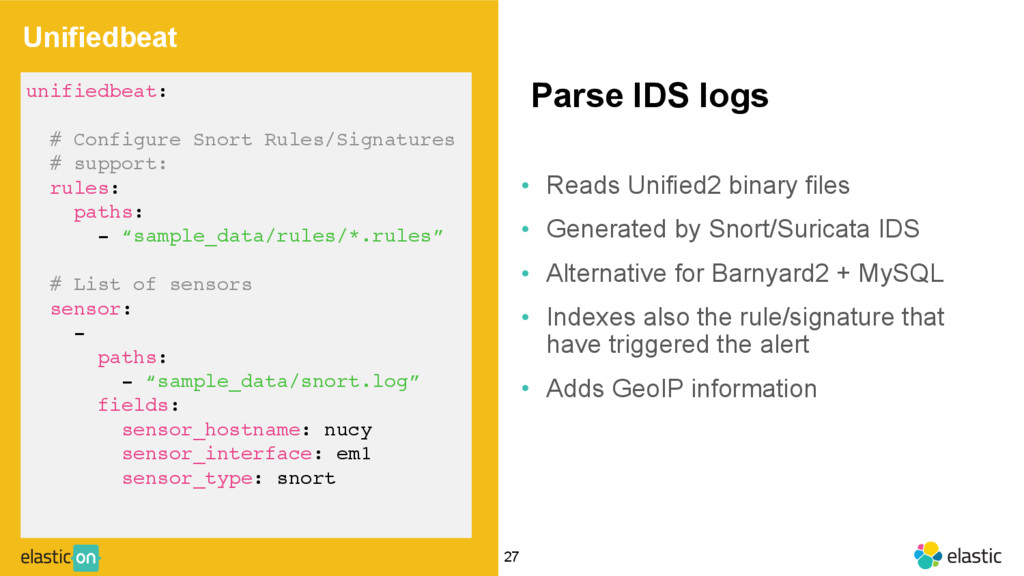
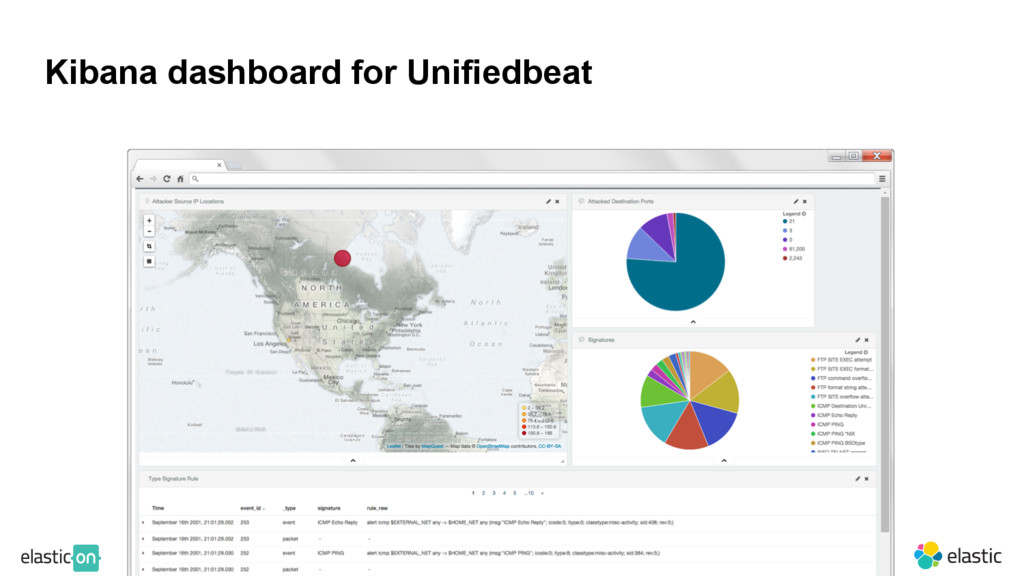
files • Generated by Snort/Suricata IDS • Alternative for Barnyard2 + MySQL • Indexes also the rule/signature that have triggered the alert • Adds GeoIP information unifiedbeat: # Configure Snort Rules/Signatures # support: rules: paths: - “sample_data/rules/*.rules” # List of sensors sensor: - paths: - “sample_data/snort.log” fields: sensor_hostname: nucy sensor_interface: em1 sensor_type: snort
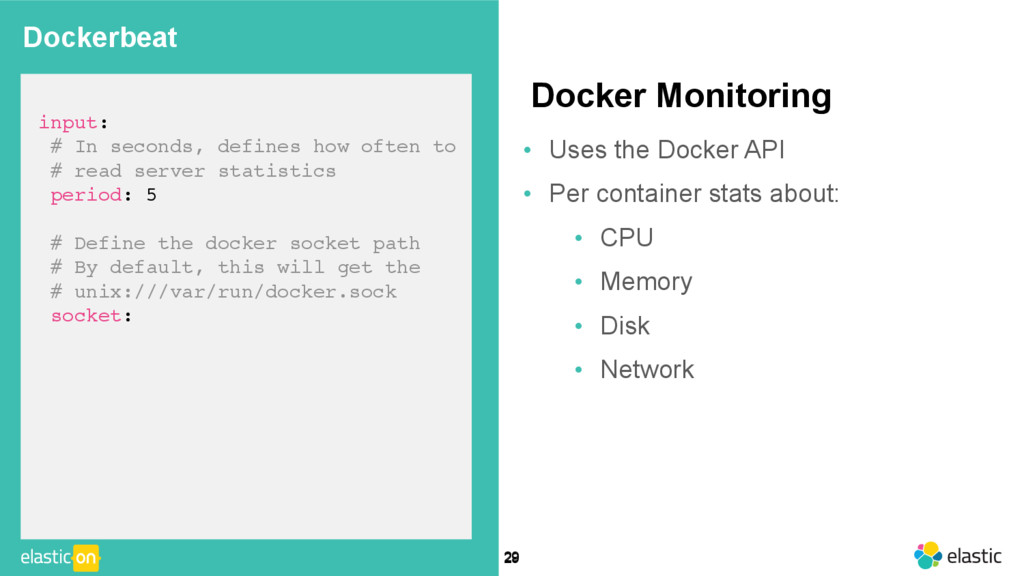
Per container stats about: • CPU • Memory • Disk • Network Dockerbeat input: # In seconds, defines how often to # read server statistics period: 5 # Define the docker socket path # By default, this will get the # unix:///var/run/docker.sock socket: 29
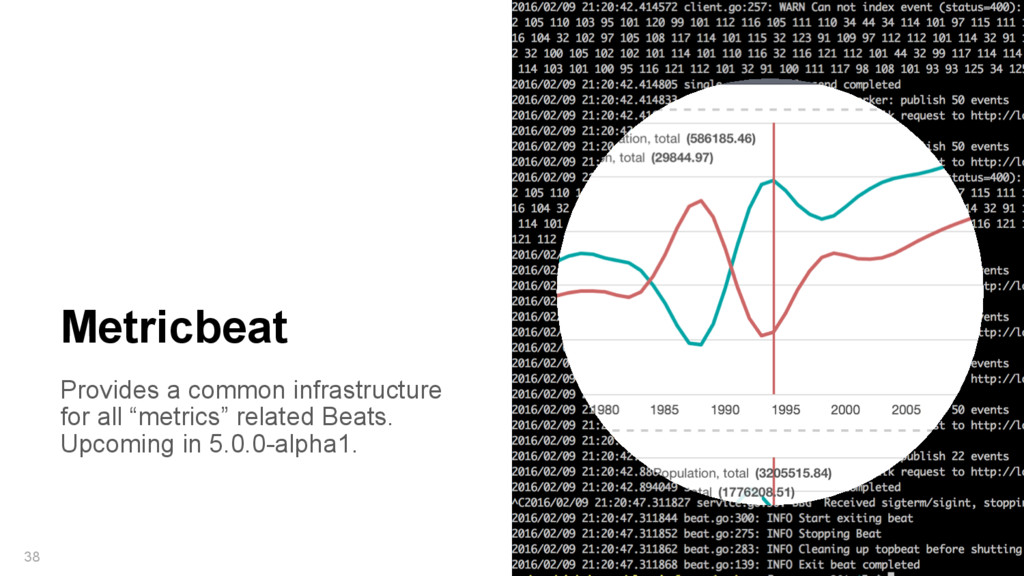
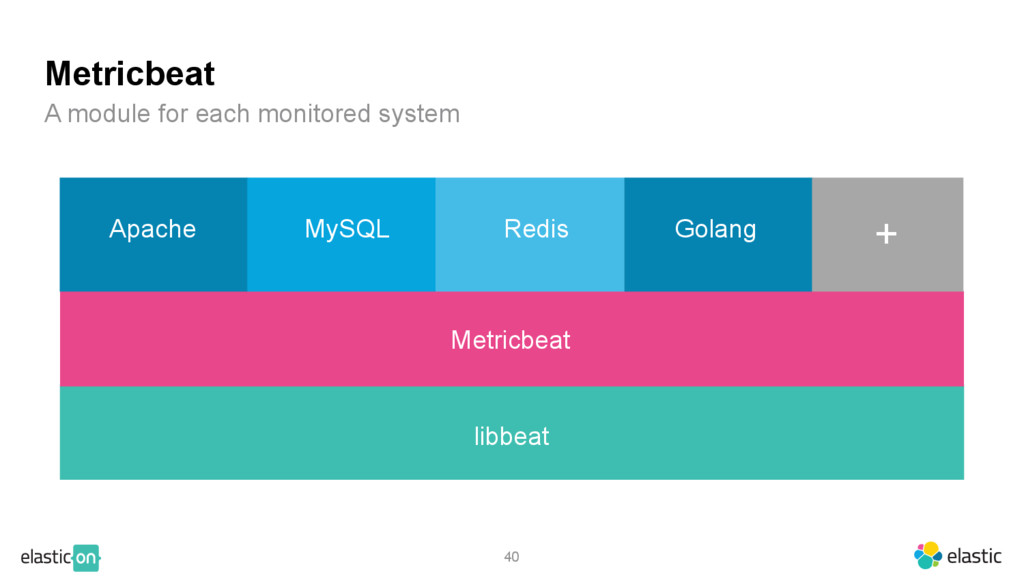
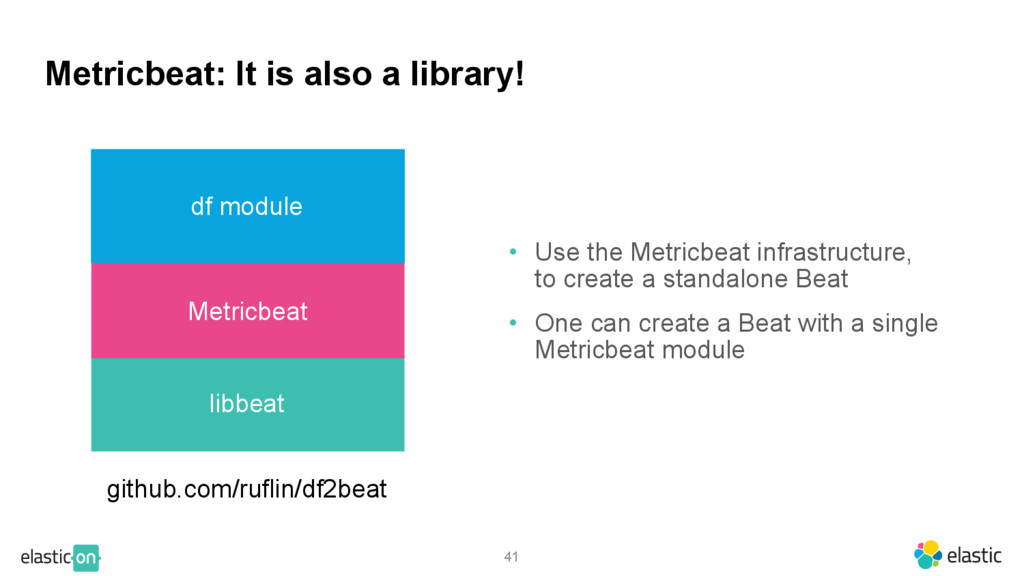
Metricbeat infrastructure, to create a standalone Beat • One can create a Beat with a single Metricbeat module libbeat Metricbeat df module github.com/ruflin/df2beat
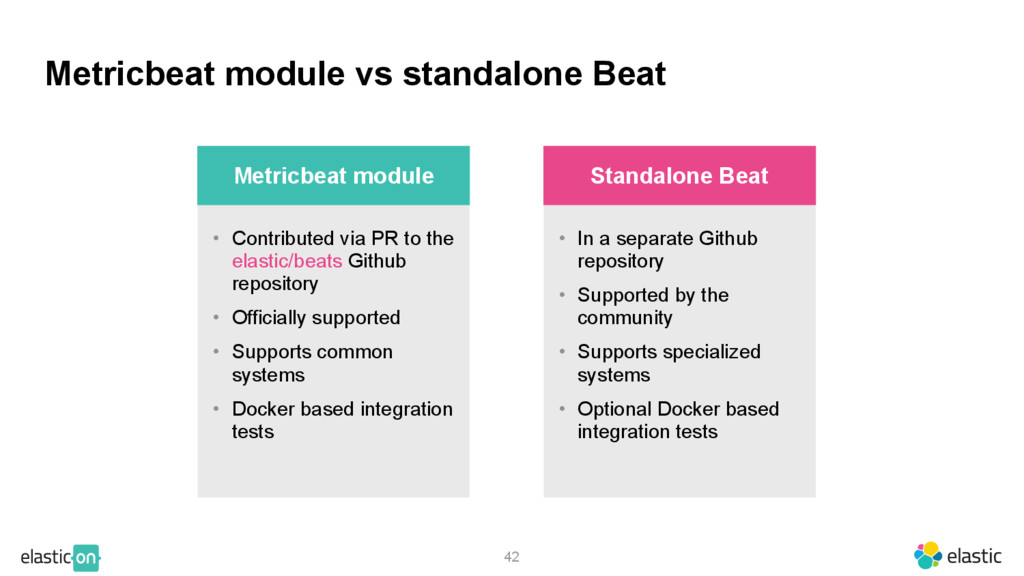
to the elastic/beats Github repository • Officially supported • Supports common systems • Docker based integration tests Metricbeat module • In a separate Github repository • Supported by the community • Supports specialized systems • Optional Docker based integration tests Standalone Beat
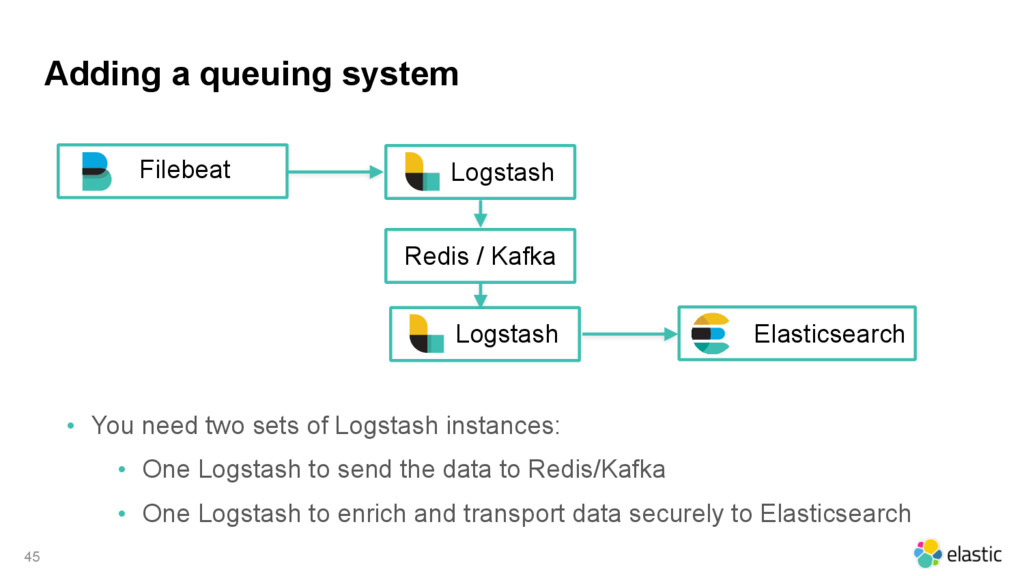
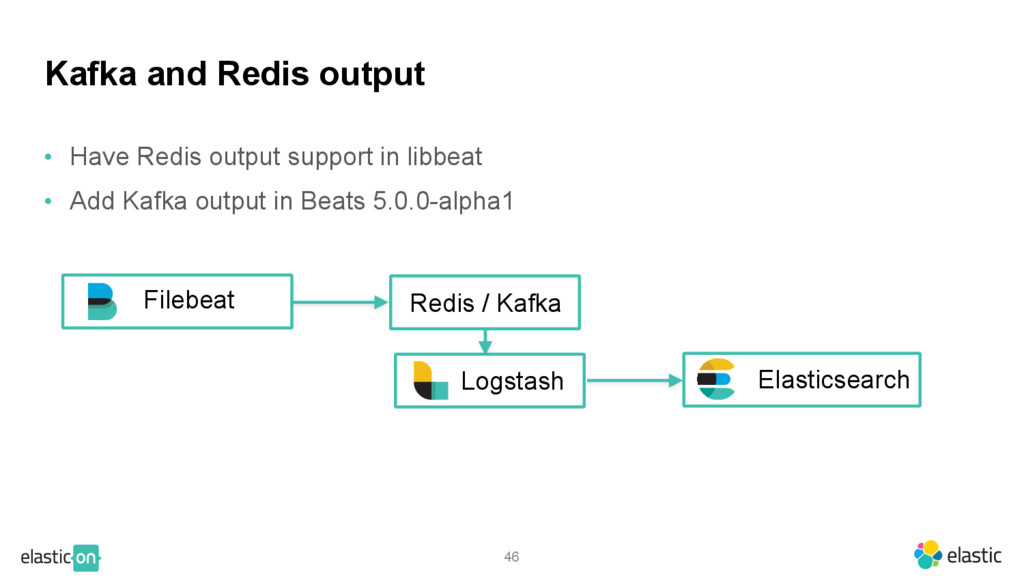
/ Kafka • You need two sets of Logstash instances: • One Logstash to send the data to Redis/Kafka • One Logstash to enrich and transport data securely to Elasticsearch
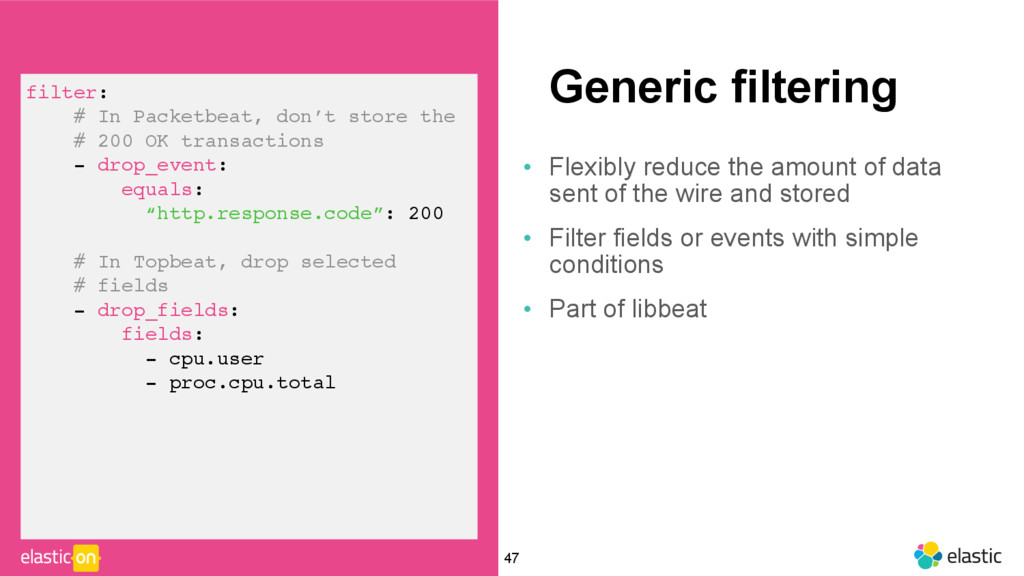
the # 200 OK transactions - drop_event: equals: “http.response.code”: 200 # In Topbeat, drop selected # fields - drop_fields: fields: - cpu.user - proc.cpu.total • Flexibly reduce the amount of data sent of the wire and stored • Filter fields or events with simple conditions • Part of libbeat
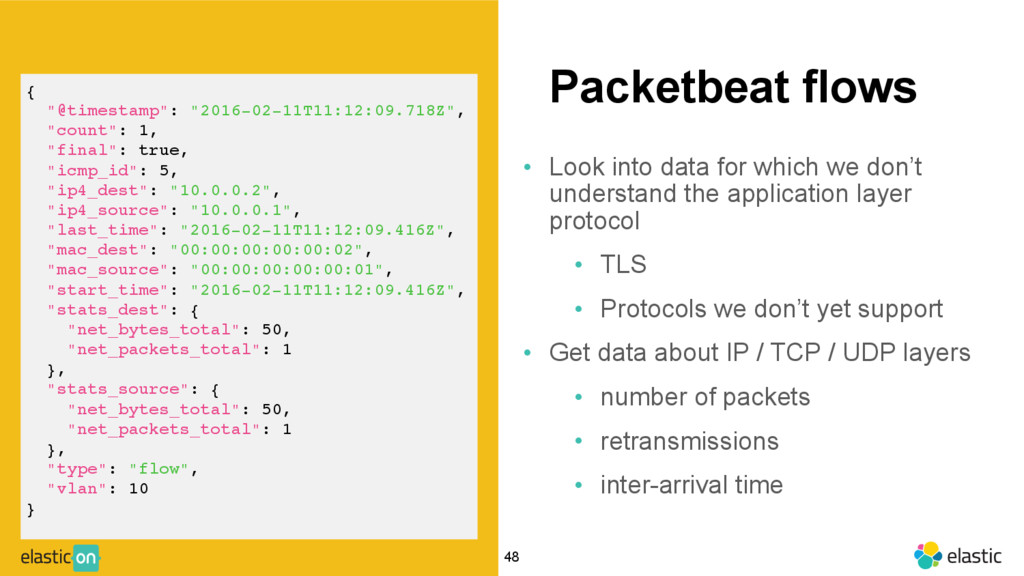
true, "icmp_id": 5, "ip4_dest": "10.0.0.2", "ip4_source": "10.0.0.1", "last_time": "2016-02-11T11:12:09.416Z", "mac_dest": "00:00:00:00:00:02", "mac_source": "00:00:00:00:00:01", "start_time": "2016-02-11T11:12:09.416Z", "stats_dest": { "net_bytes_total": 50, "net_packets_total": 1 }, "stats_source": { "net_bytes_total": 50, "net_packets_total": 1 }, "type": "flow", "vlan": 10 } • Look into data for which we don’t understand the application layer protocol • TLS • Protocols we don’t yet support • Get data about IP / TCP / UDP layers • number of packets • retransmissions • inter-arrival time
where otherwise noted, this work is licensed under http://creativecommons.org/licenses/by-nd/4.0/ Creative Commons and the double C in a circle are registered trademarks of Creative Commons in the United States and other countries. Third party marks and brands are the property of their respective holders. 50


 elastic
 torumakabe
 masakane55
 makocchi
 ishikawa_satoru
 bgpat
bgpat
 grimoh
 ueponx
 moznion
 oikon48
 mewuto
 puhitaku
 kairim0
 eileencodes
 sarafernandez
 morganepeng
.jpg) cargoodrich
cargoodrich
 codingconduct
 kimpetersen
 tamaranovitovic
 mongodb
 inesmontani
 jonyablonski
 axbom
axbom