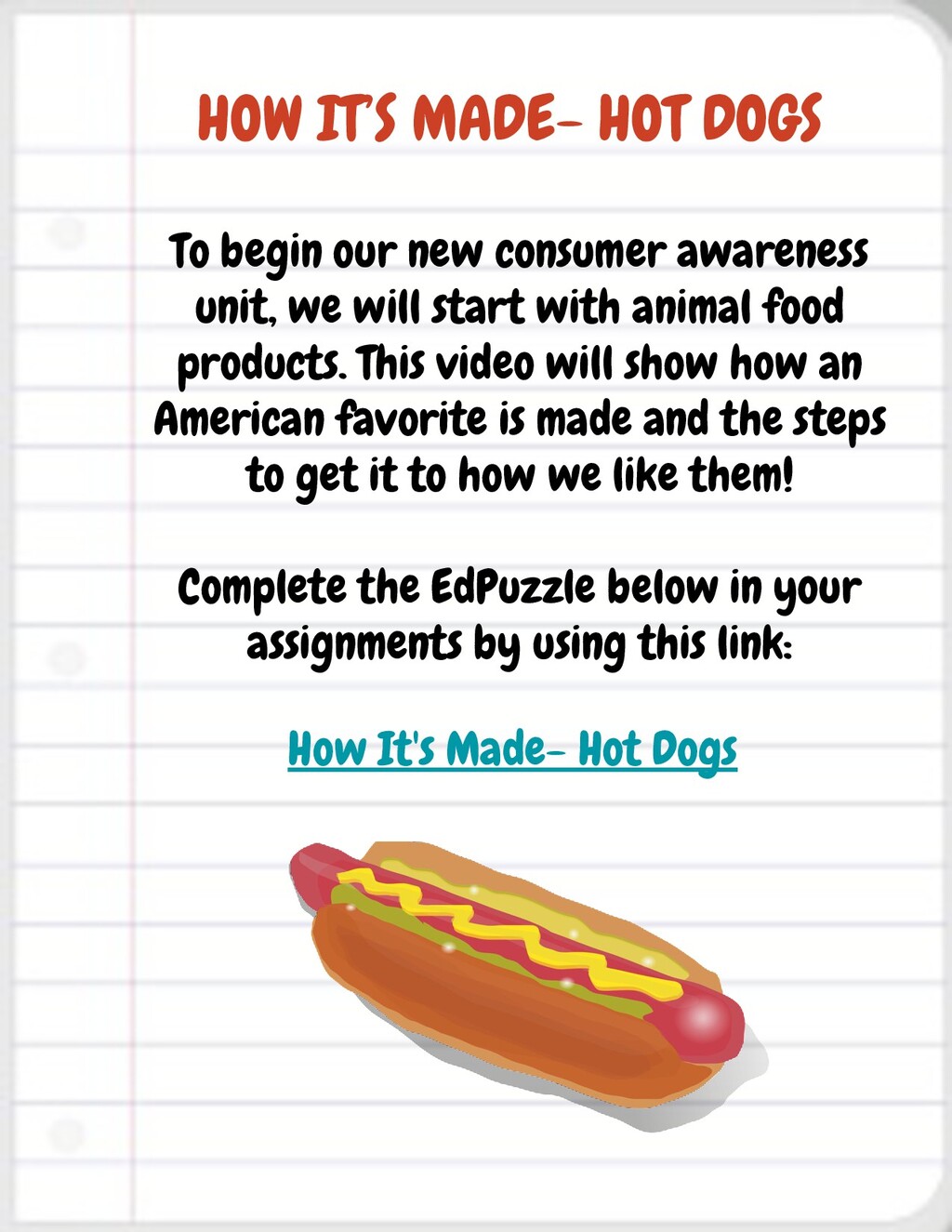
awareness unit, we will start with animal food products. This video will show how an American favorite is made and the steps to get it to how we like them! Complete the EdPuzzle below in your assignments by using this link: How It's Made- Hot Dogs
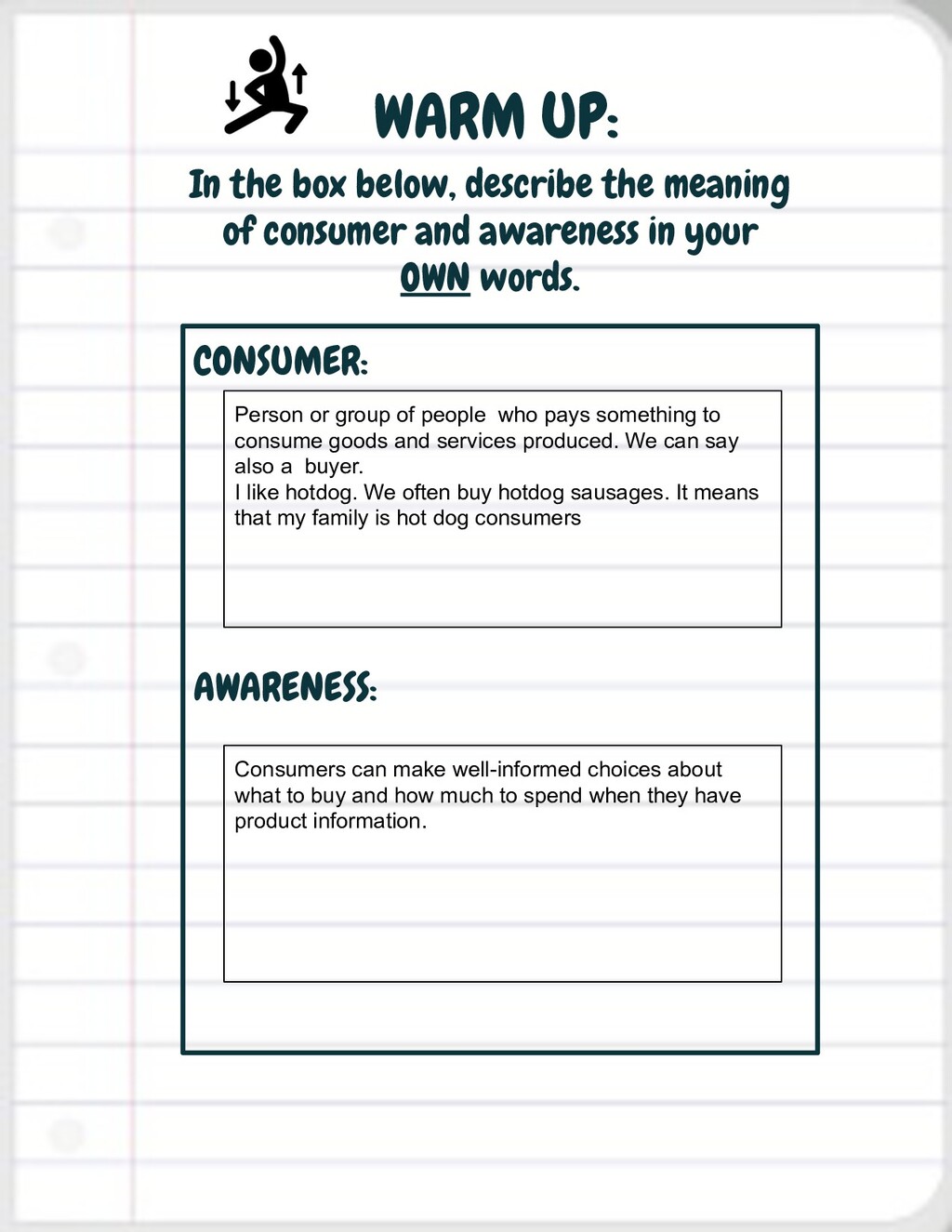
consumer and awareness in your OWN words. CONSUMER: AWARENESS: Person or group of people who pays something to consume goods and services produced. We can say also a buyer. I like hotdog. We often buy hotdog sausages. It means that my family is hot dog consumers Consumers can make well-informed choices about what to buy and how much to spend when they have product information.
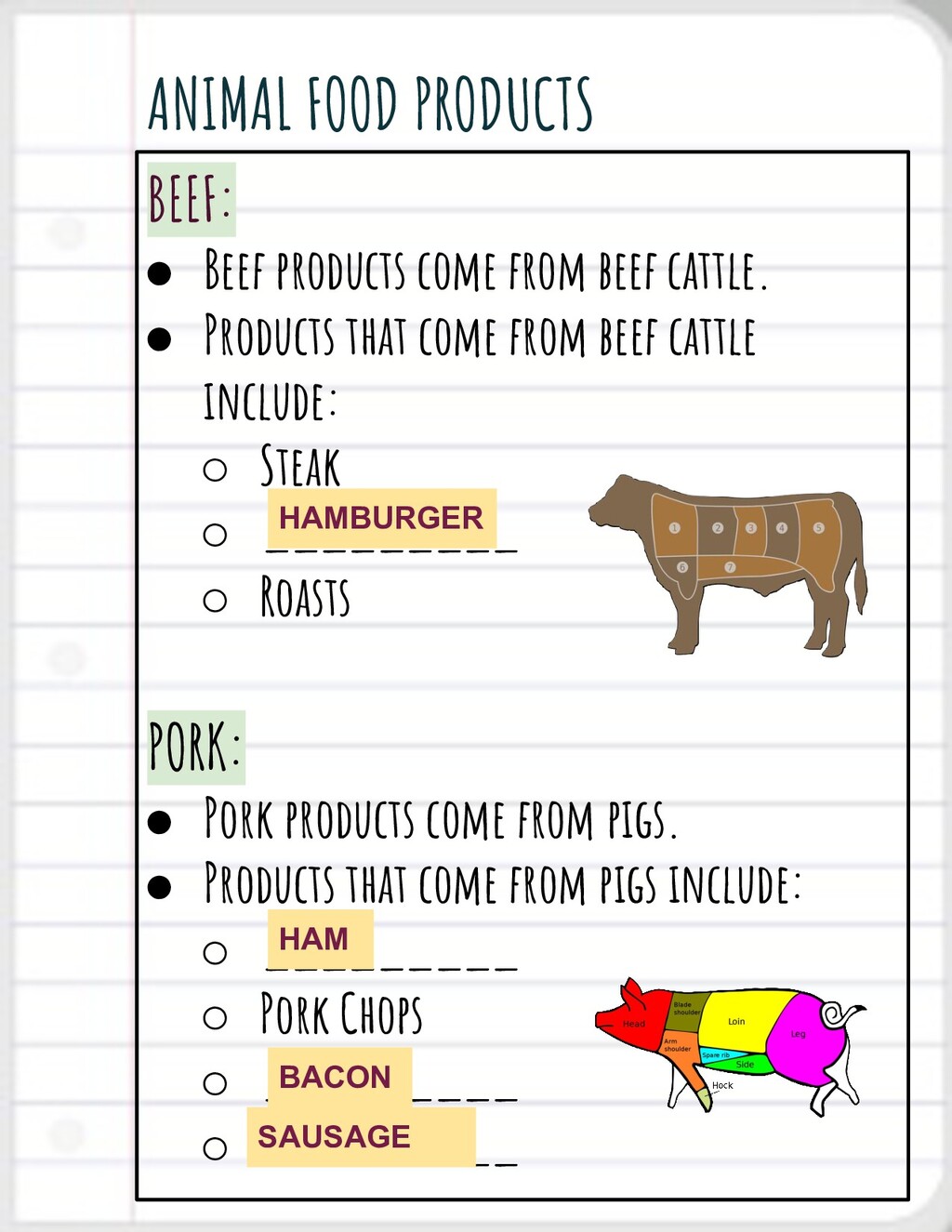
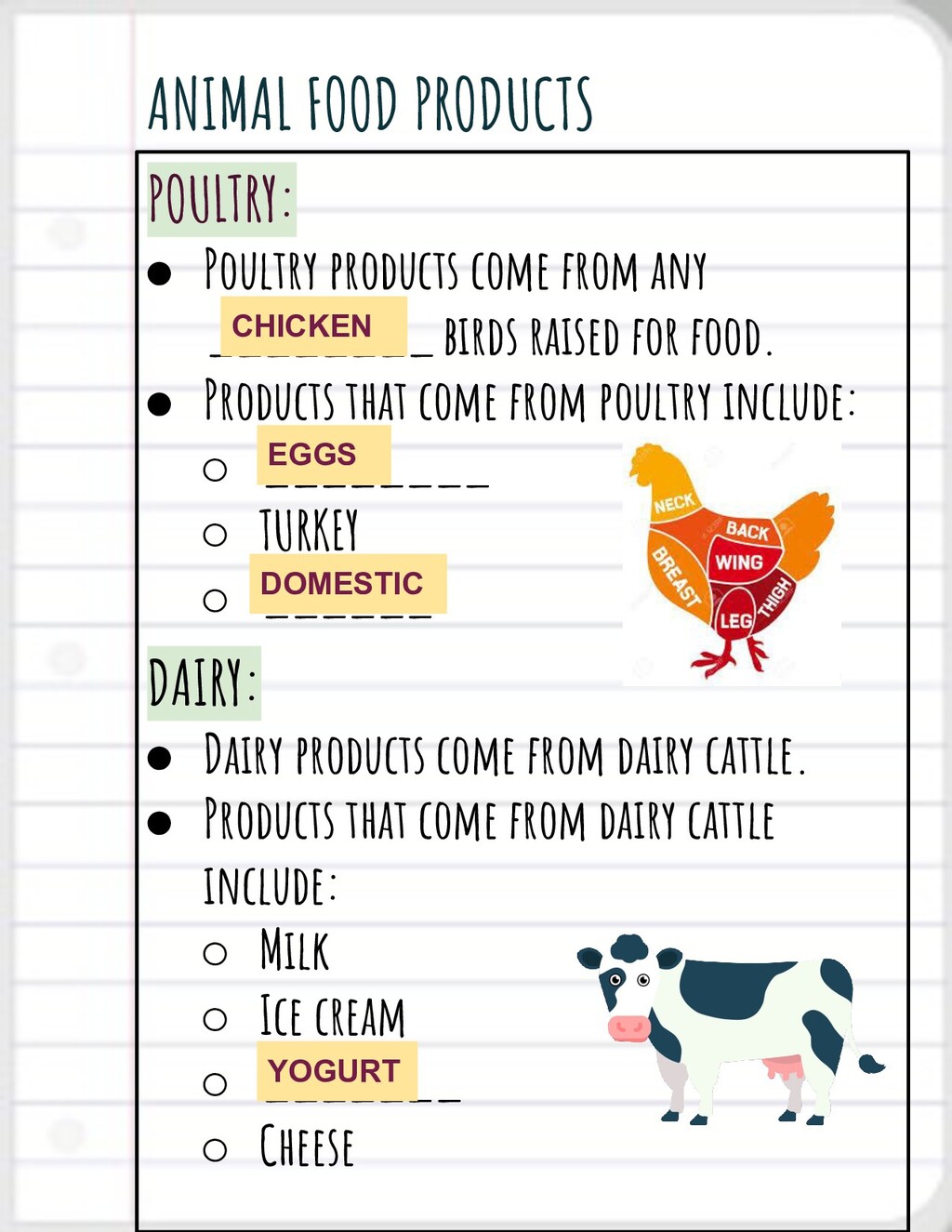
cattle. • Products that come from beef cattle include: ◦ Steak ◦ _________ ◦ Roasts PORK: • Pork products come from pigs. • Products that come from pigs include: ◦ _________ ◦ Pork Chops ◦ _________ ◦ _________ HAMBURGER BACON SAUSAGE HAM
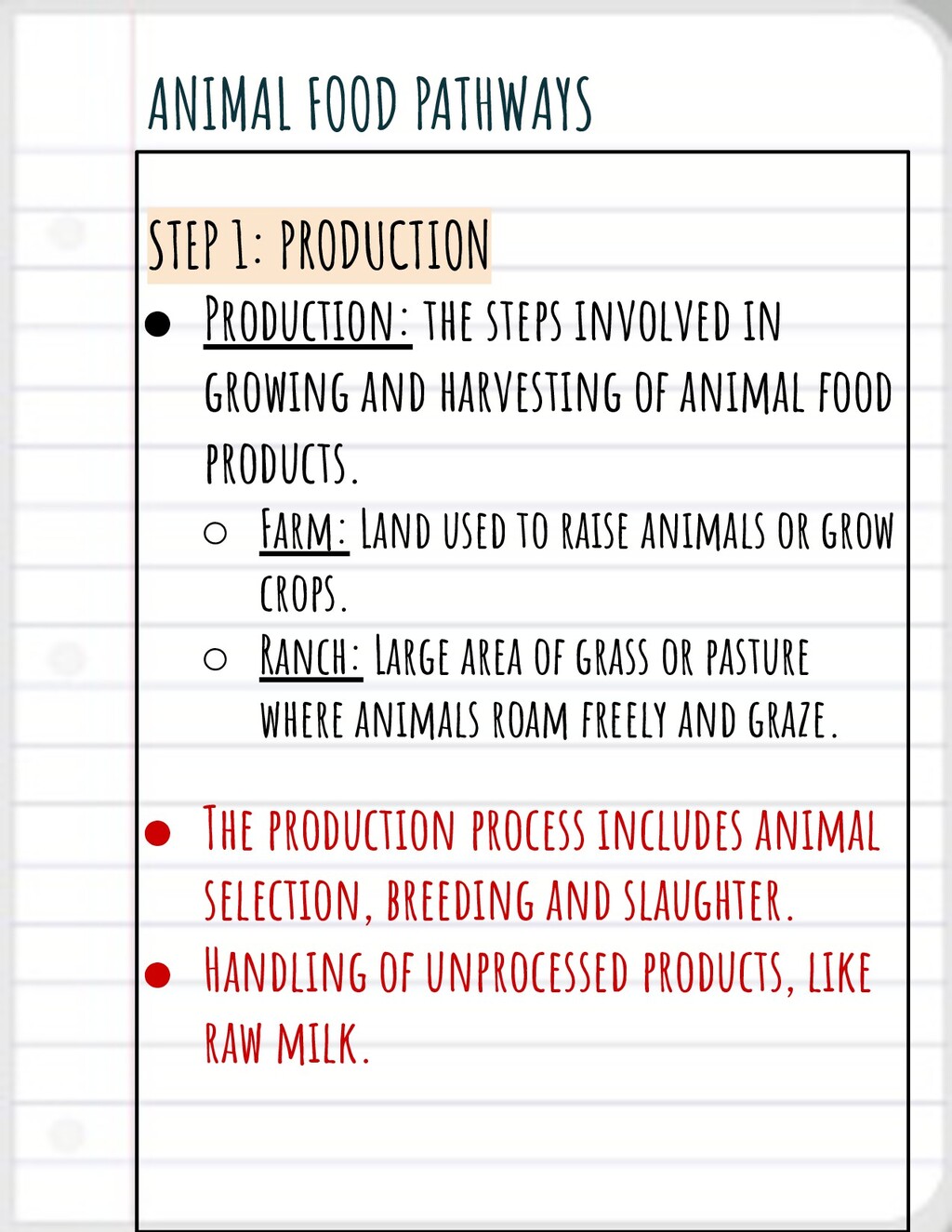
involved in growing and harvesting of animal food products. ◦ Farm: Land used to raise animals or grow crops. ◦ Ranch: Large area of grass or pasture where animals roam freely and graze. • The production process includes animal selection, breeding and slaughter. • Handling of unprocessed products, like raw milk.
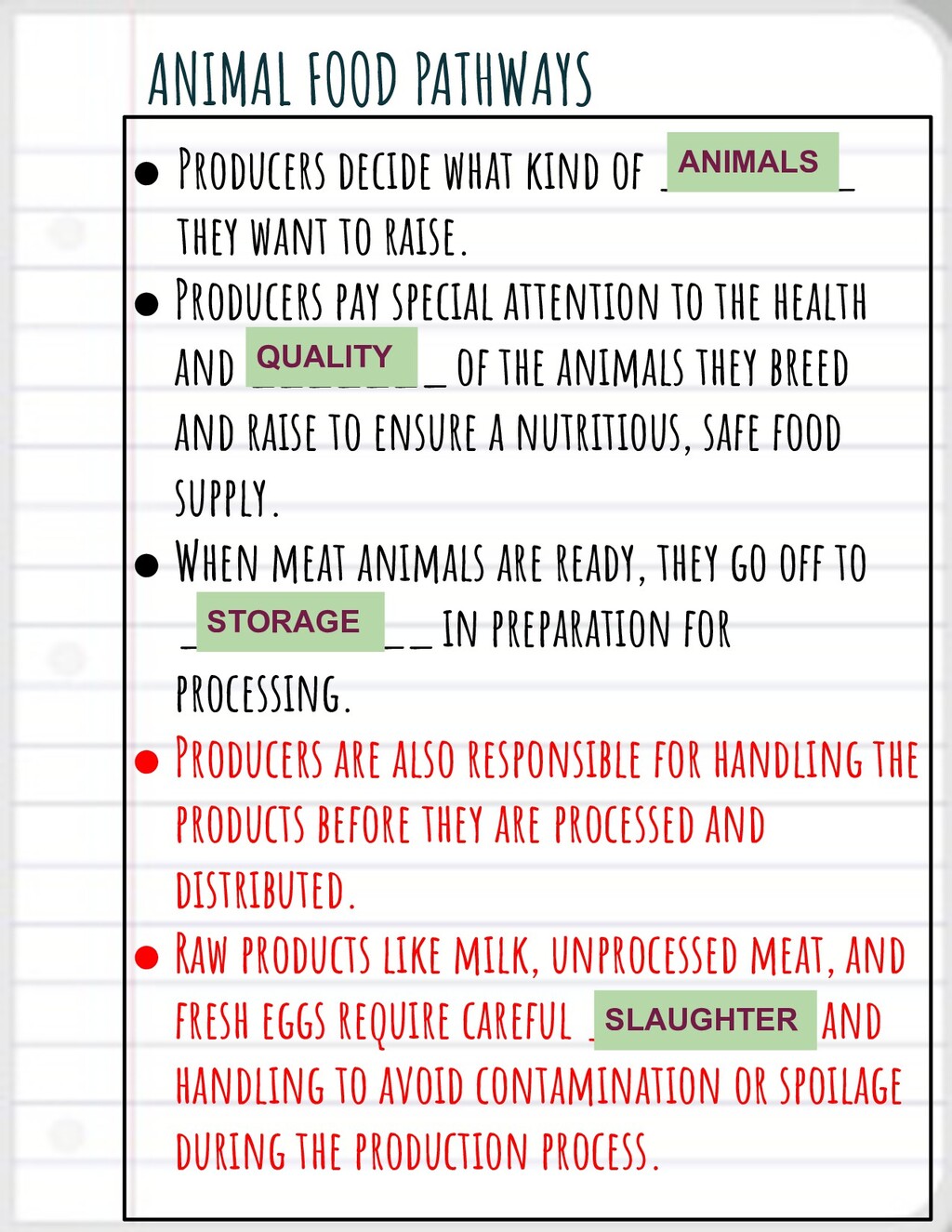
they want to raise. • Producers pay special attention to the health and _______ of the animals they breed and raise to ensure a nutritious, safe food supply. • When meat animals are ready, they go off to _________ in preparation for processing. • Producers are also responsible for handling the products before they are processed and distributed. • Raw products like milk, unprocessed meat, and fresh eggs require careful ________ and handling to avoid contamination or spoilage during the production process. ANIMALS SLAUGHTER QUALITY STORAGE
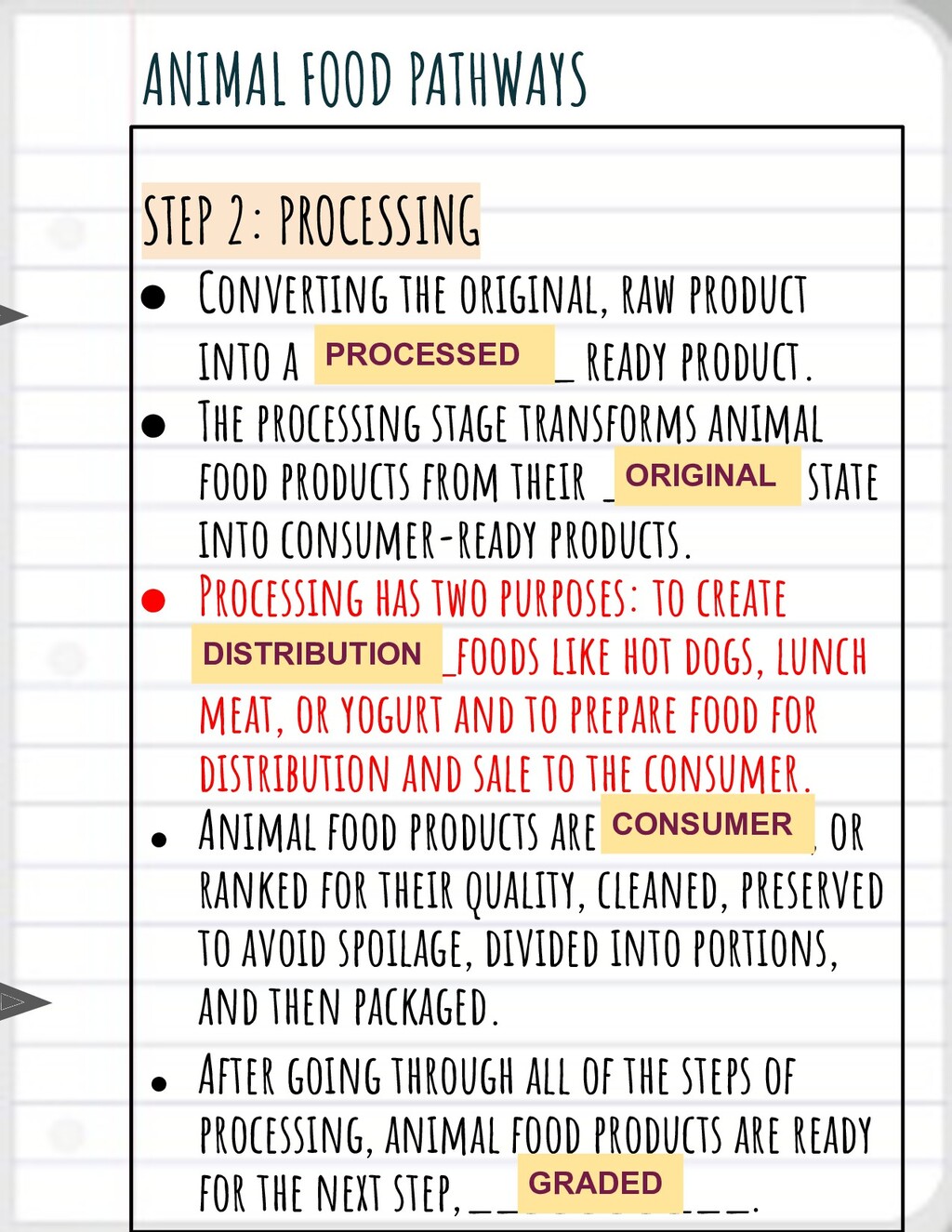
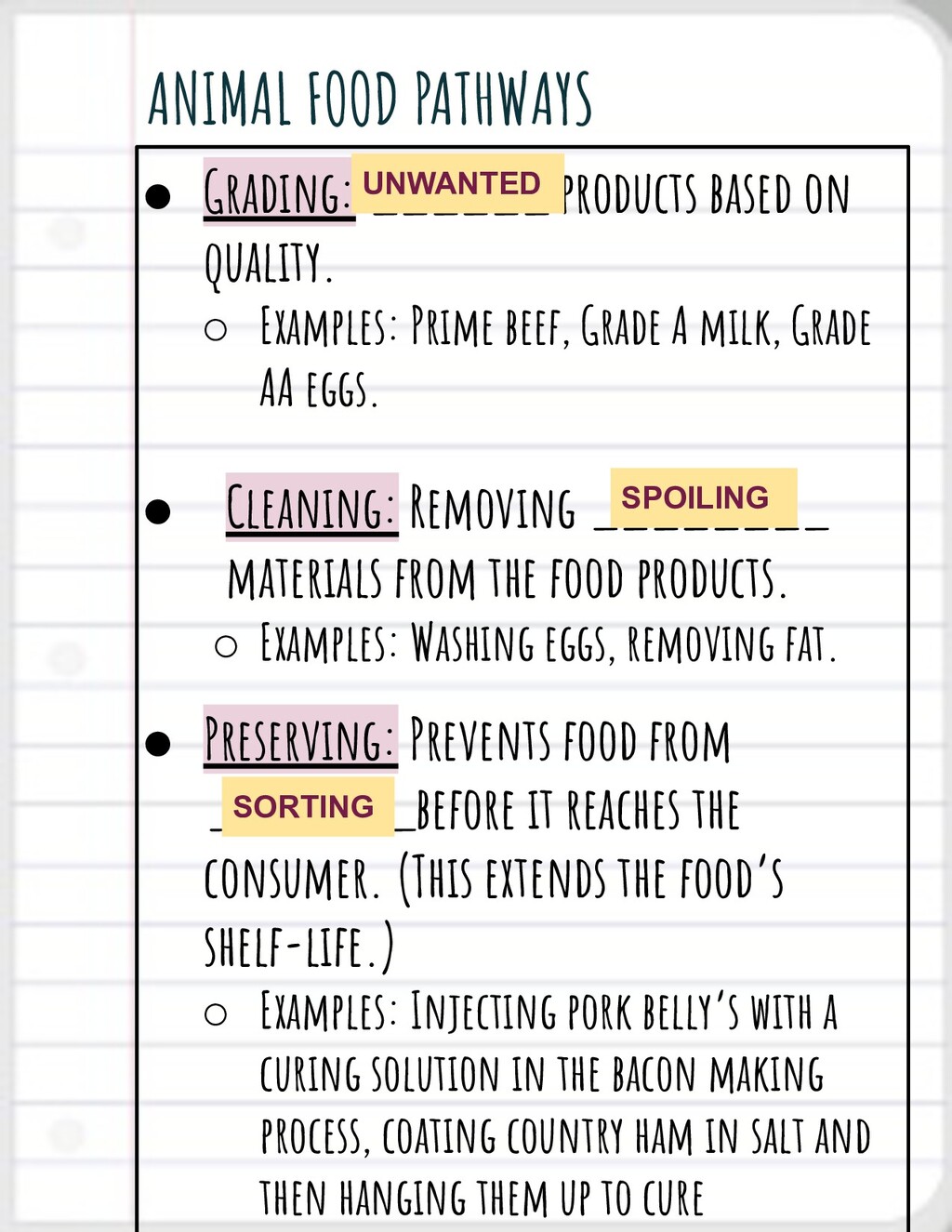
raw product into a _________ ready product. • The processing stage transforms animal food products from their _______ state into consumer-ready products. • Processing has two purposes: to create _________foods like hot dogs, lunch meat, or yogurt and to prepare food for distribution and sale to the consumer. • Animal food products are _______, or ranked for their quality, cleaned, preserved to avoid spoilage, divided into portions, and then packaged. • After going through all of the steps of processing, animal food products are ready for the next step,__________. CONSUMER GRADED ORIGINAL PROCESSED DISTRIBUTION
◦ Examples: Prime beef, Grade A milk, Grade AA eggs. • Cleaning: Removing ________ materials from the food products. ◦ Examples: Washing eggs, removing fat. • Preserving: Prevents food from _______before it reaches the consumer. (This extends the food’s shelf-life.) ◦ Examples: Injecting pork belly’s with a curing solution in the bacon making process, coating country ham in salt and then hanging them up to cure SORTING UNWANTED SPOILING
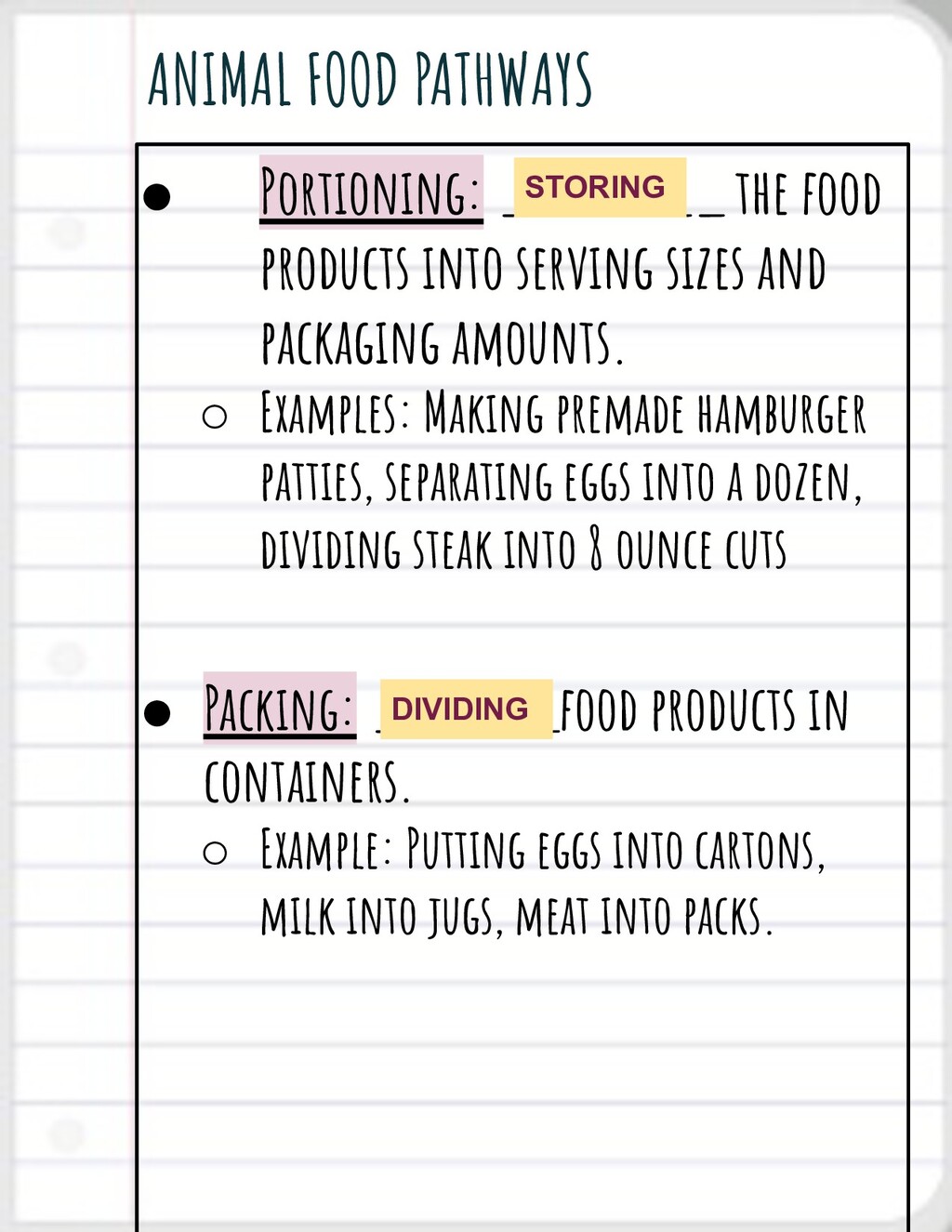
serving sizes and packaging amounts. ◦ Examples: Making premade hamburger patties, separating eggs into a dozen, dividing steak into 8 ounce cuts • Packing: ______food products in containers. ◦ Example: Putting eggs into cartons, milk into jugs, meat into packs. STORING DIVIDING
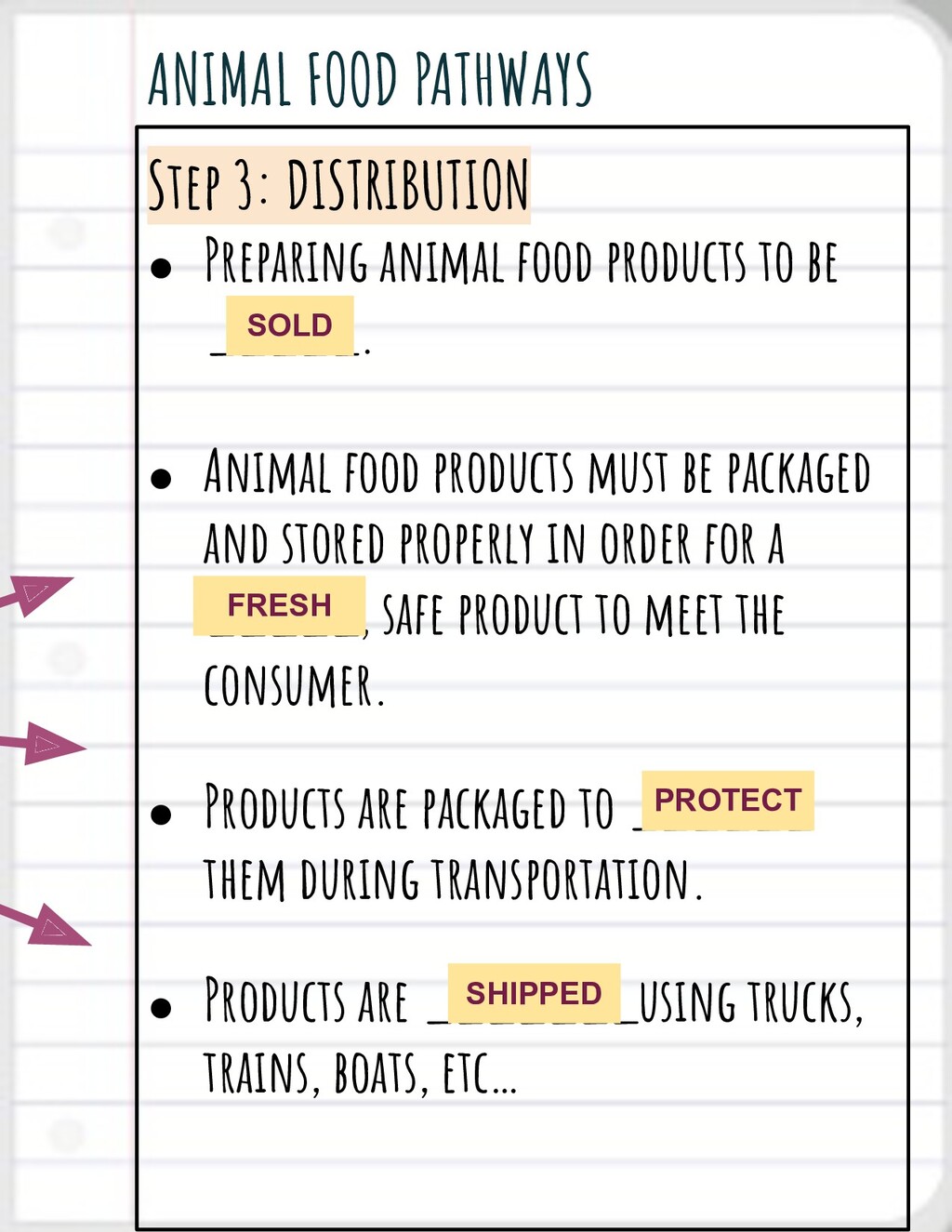
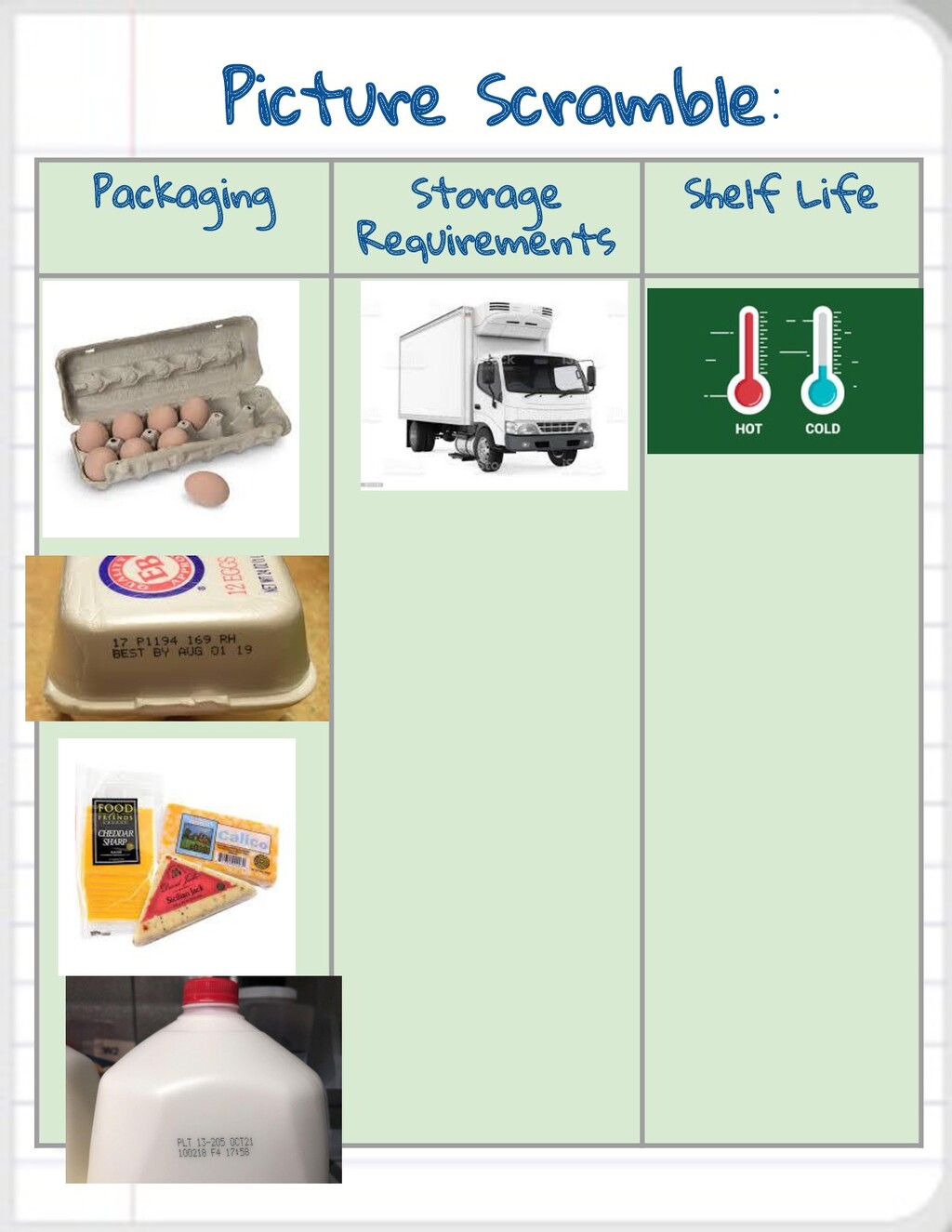
products to be _____. • Animal food products must be packaged and stored properly in order for a _____, safe product to meet the consumer. • Products are packaged to ______ them during transportation. • Products are _______using trucks, trains, boats, etc… SOLD FRESH SHIPPED PROTECT
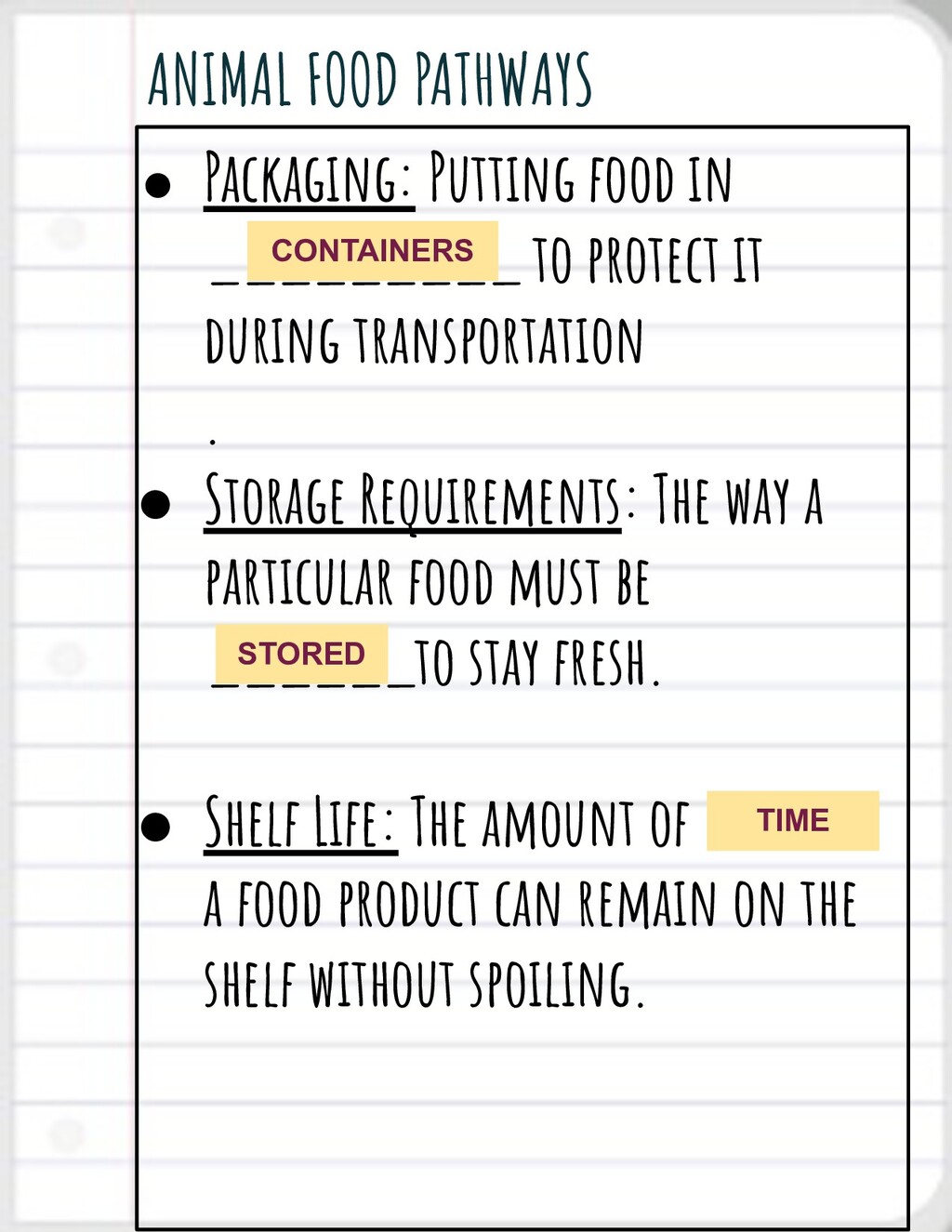
protect it during transportation . • Storage Requirements: The way a particular food must be ______to stay fresh. • Shelf Life: The amount of _____ a food product can remain on the shelf without spoiling. TIME CONTAINERS STORED
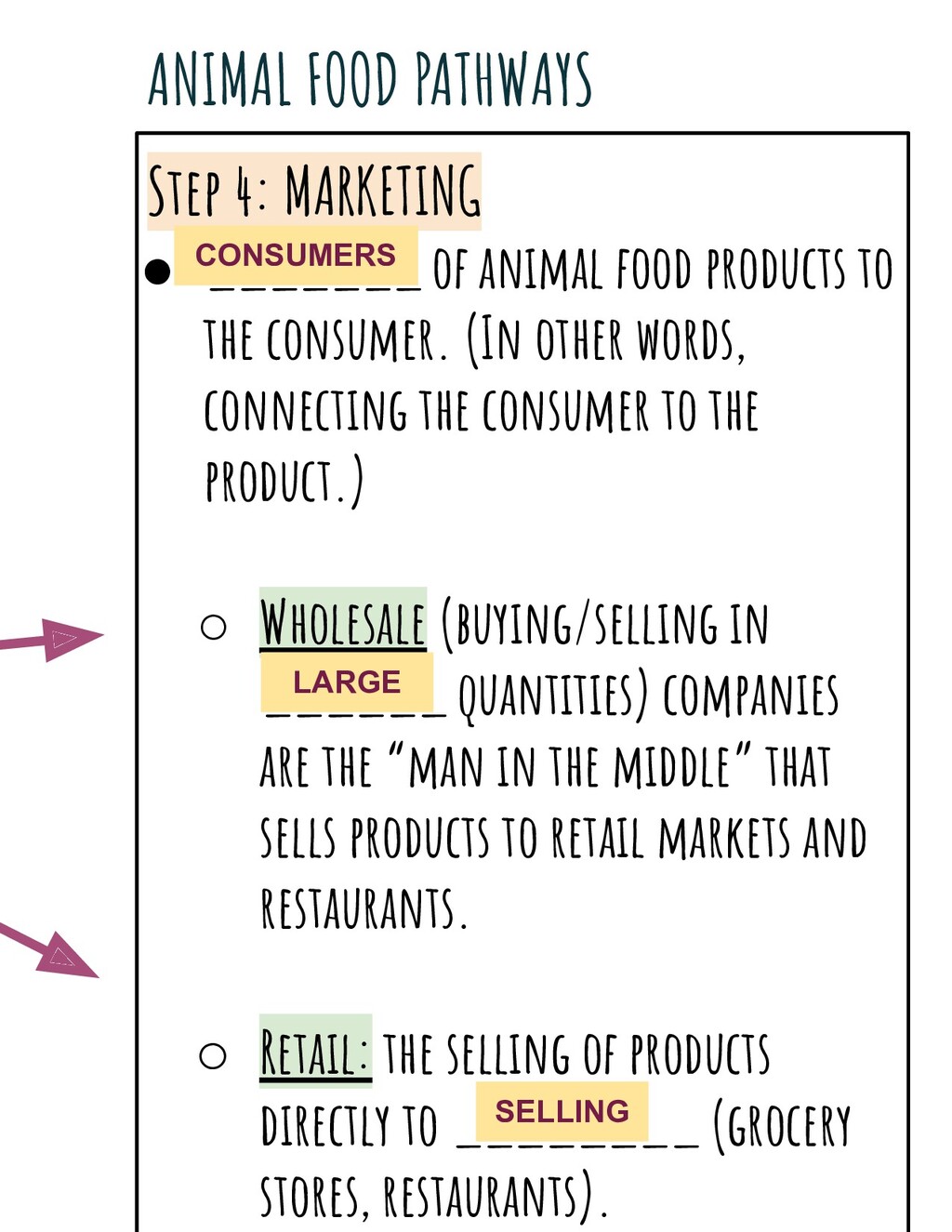
food products to the consumer. (In other words, connecting the consumer to the product.) ◦ Wholesale (buying/selling in ______ quantities) companies are the “man in the middle” that sells products to retail markets and restaurants. ◦ Retail: the selling of products directly to ________ (grocery stores, restaurants). CONSUMERS SELLING LARGE
(milk, cheese, meat of some kind, etc.) 2. Go to storyboardthat.com and create an account. 3. Create a 3 or 6 square comic on how your product gets from the farm to the store….remember the 4 stages: - Production - Processing - Distribution - Marketing 4. Upload to Canvas page “Animal Food Comic” when complete for a separate grade! **BE CREATIVE & HAVE FUN WITH THIS!**


 hiola
 terasawat
 auctria
 akiraasano
 sciencetokyo
 naoji_taniguchi_ksk_0827
 soudai
 bvr7352
 ainischool
 katarinadahlin
 tamaranovitovic
 tessaabrams
 palkan
 sarafernandez
 bluesmoon
 garrettdimon
 sonatard
 orderedlist
 akademiya2063
 denniskardys
 stephaniewalter