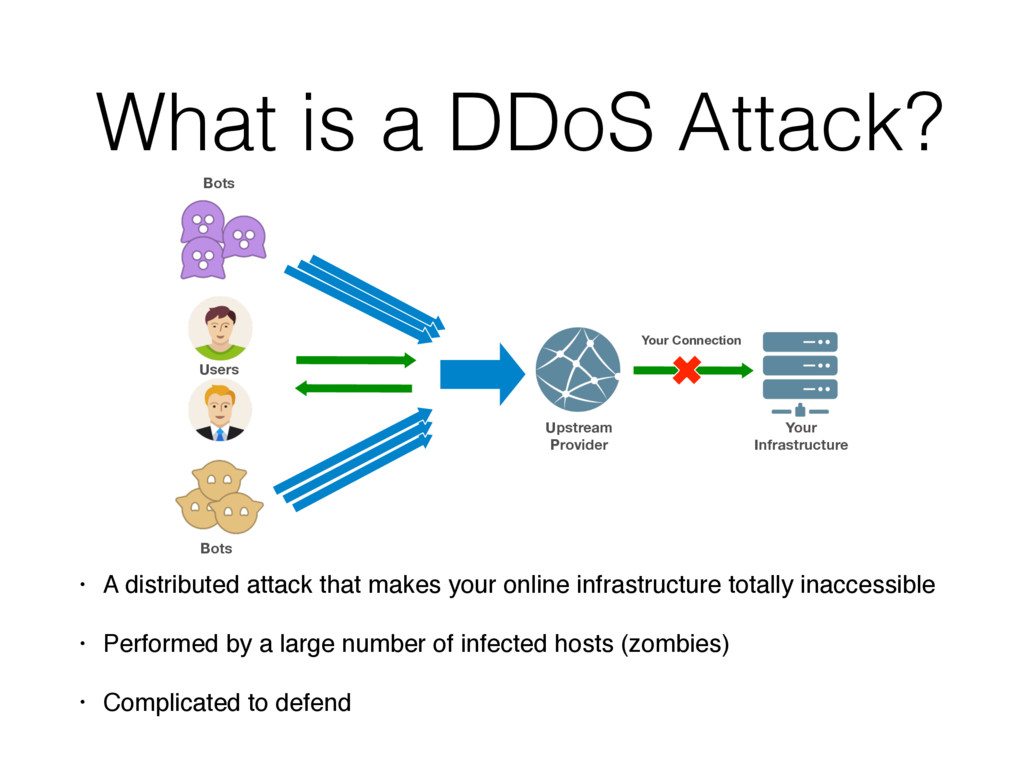
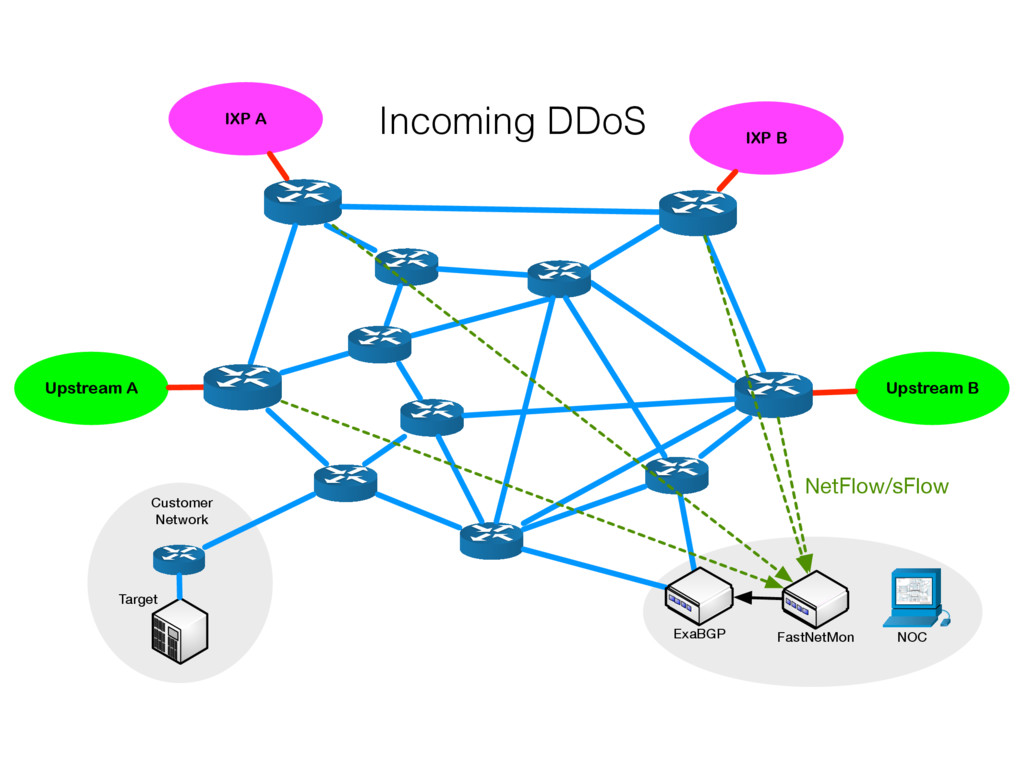
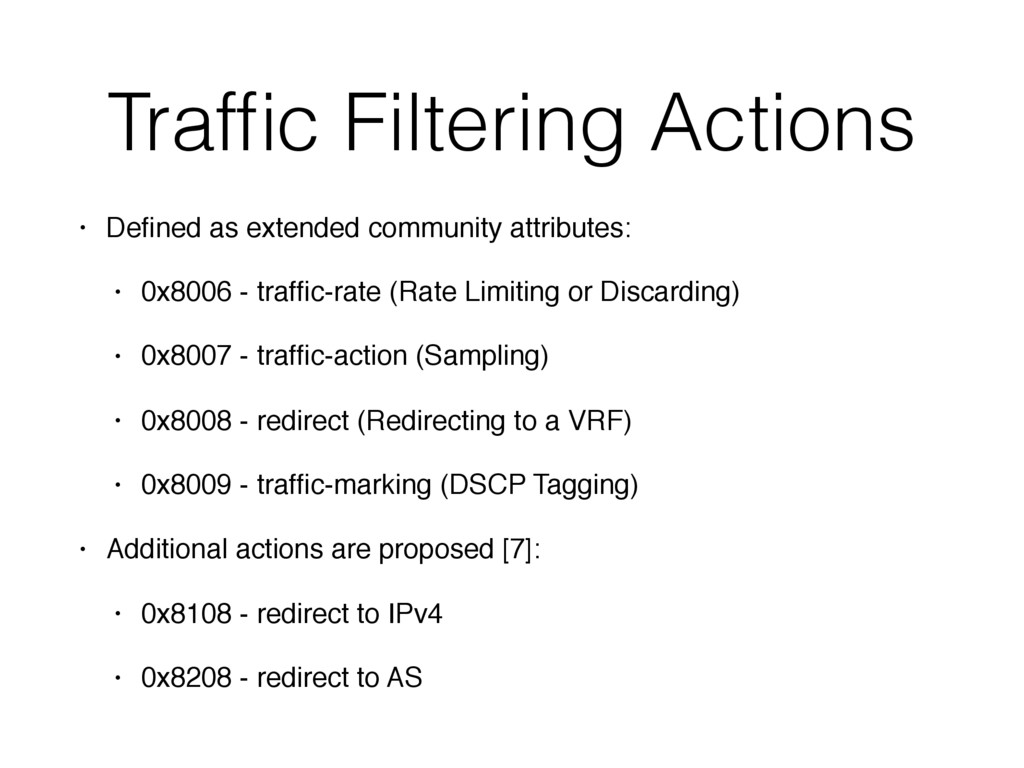
makes your online infrastructure totally inaccessible • Performed by a large number of infected hosts (zombies) • Complicated to defend Upstream Provider Your Infrastructure Your Connection Bots Bots Users
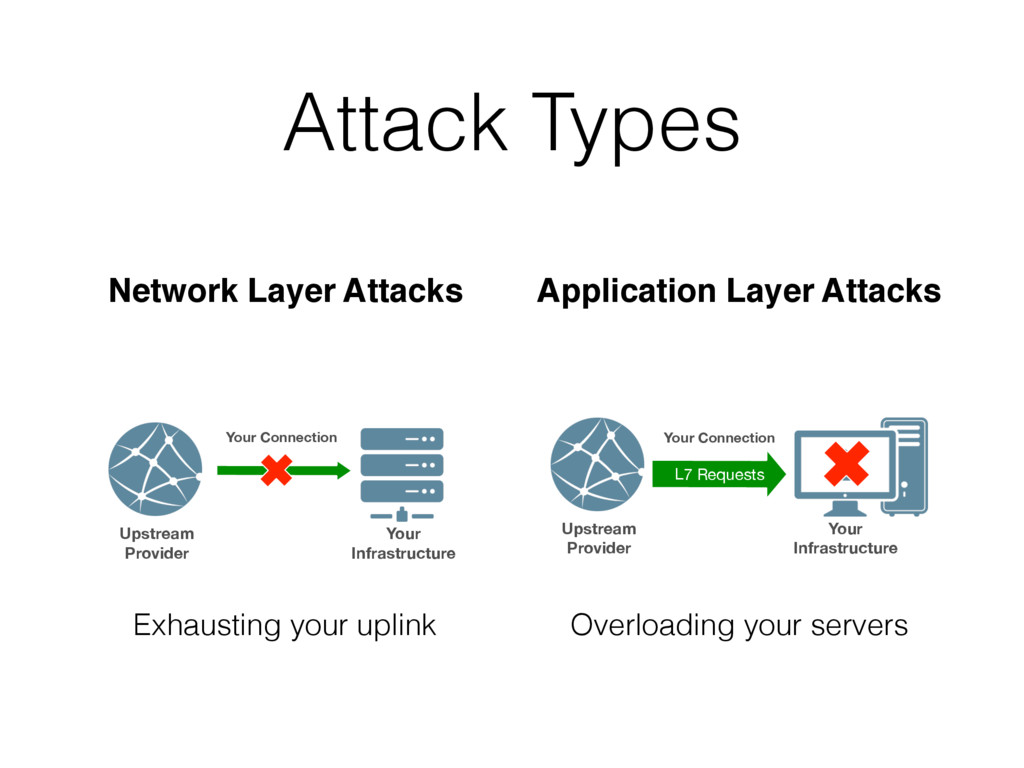
Attacks Overloading your servers Upstream Provider Your Infrastructure Your Connection Upstream Provider L7 Requests Your Infrastructure Your Connection
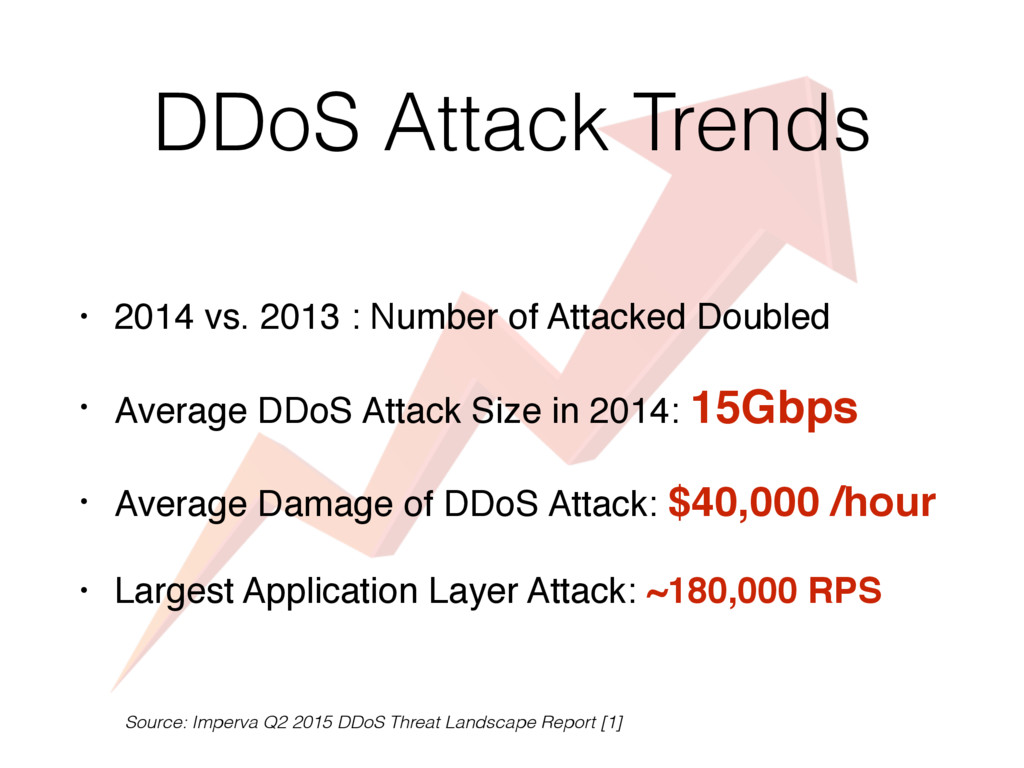
days or weeks • Attacks usually reappear • Network layer attacks are getting bigger (so, your defense should scale proportionally) • Operators should be equipped with appropriate equipment (and knowledge)
(once attack hits a customer’s firewall, its too late) • Attack on one customer may affect the other customers, or the whole infrastructure • Loss of revenue • Loss of reputation • Legal Issues • Service Level degradation, missing SLA targets
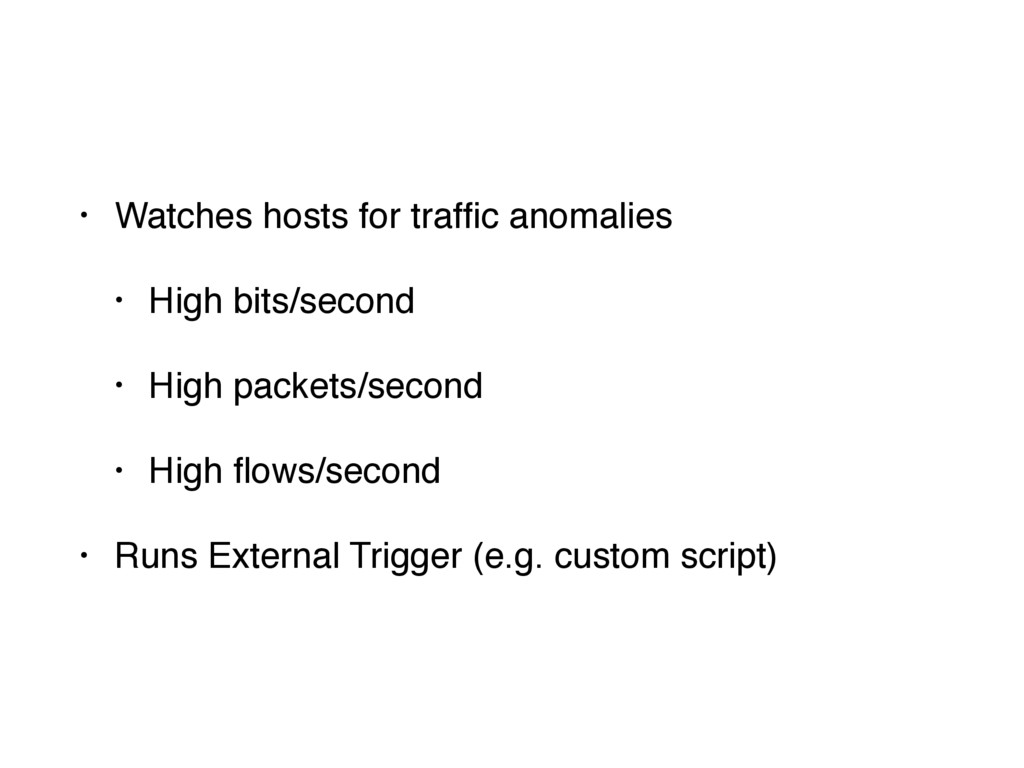
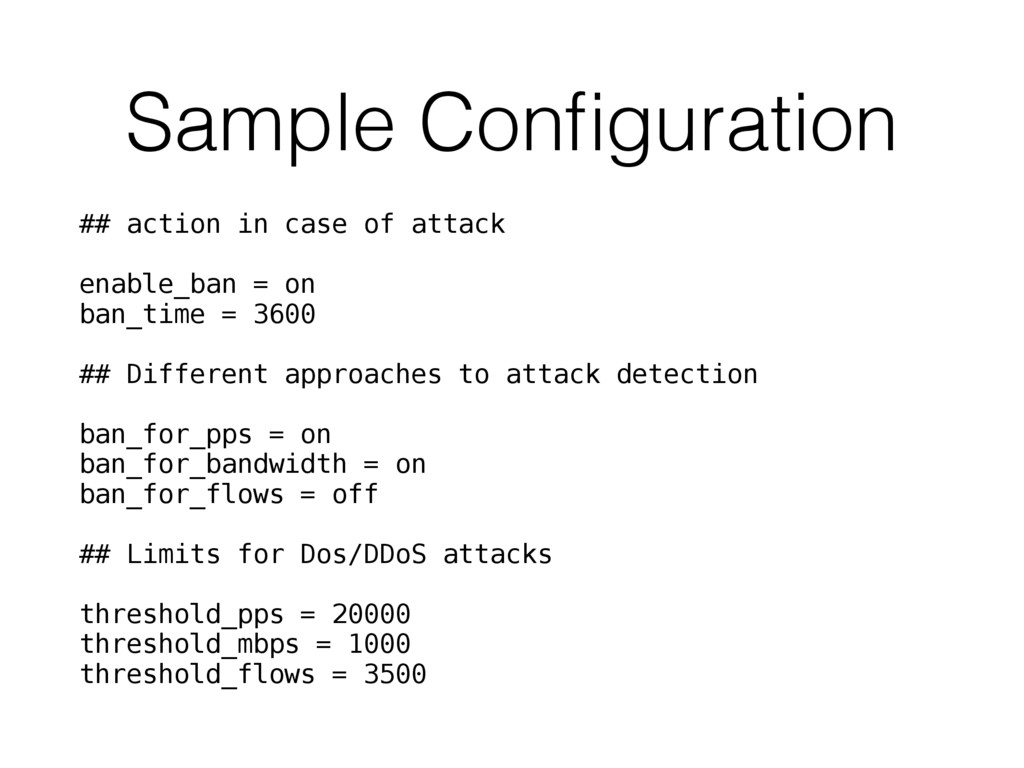
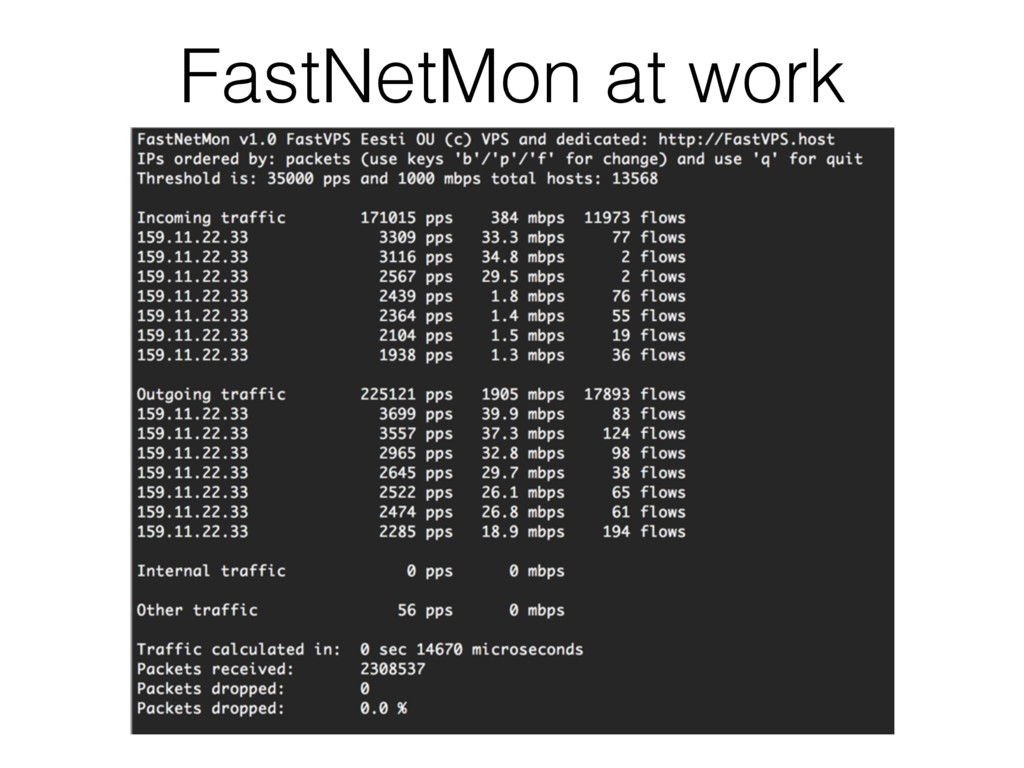
= on ban_time = 3600 ## Different approaches to attack detection ban_for_pps = on ban_for_bandwidth = on ban_for_flows = off ## Limits for Dos/DDoS attacks threshold_pps = 20000 threshold_mbps = 1000 threshold_flows = 3500
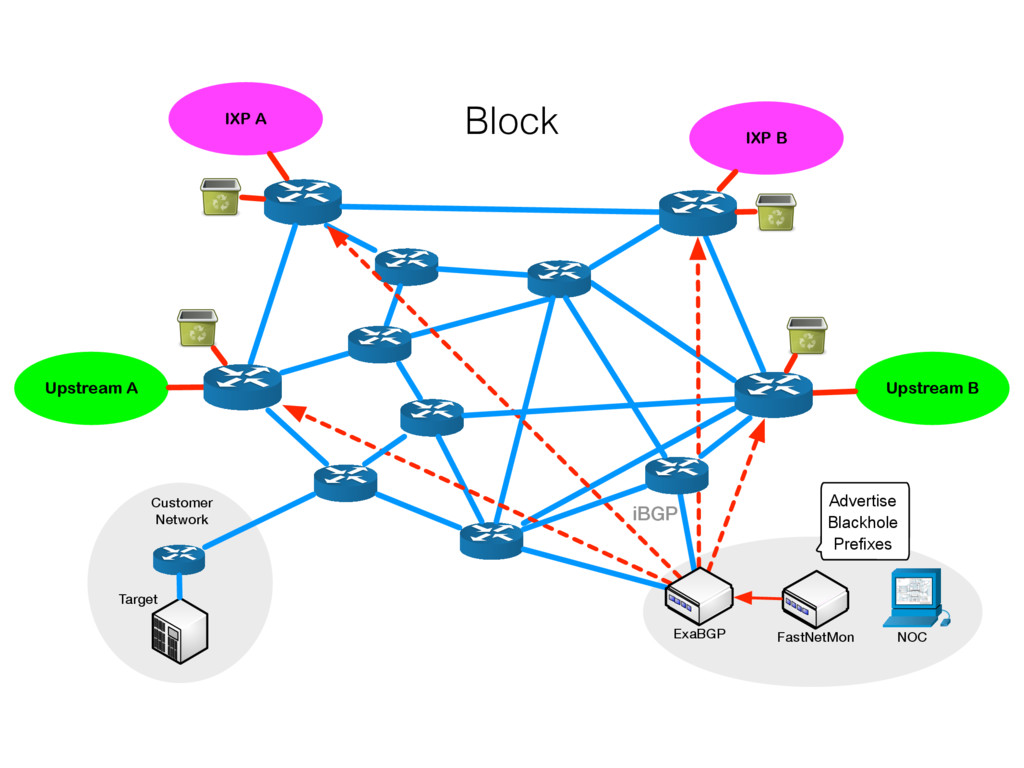
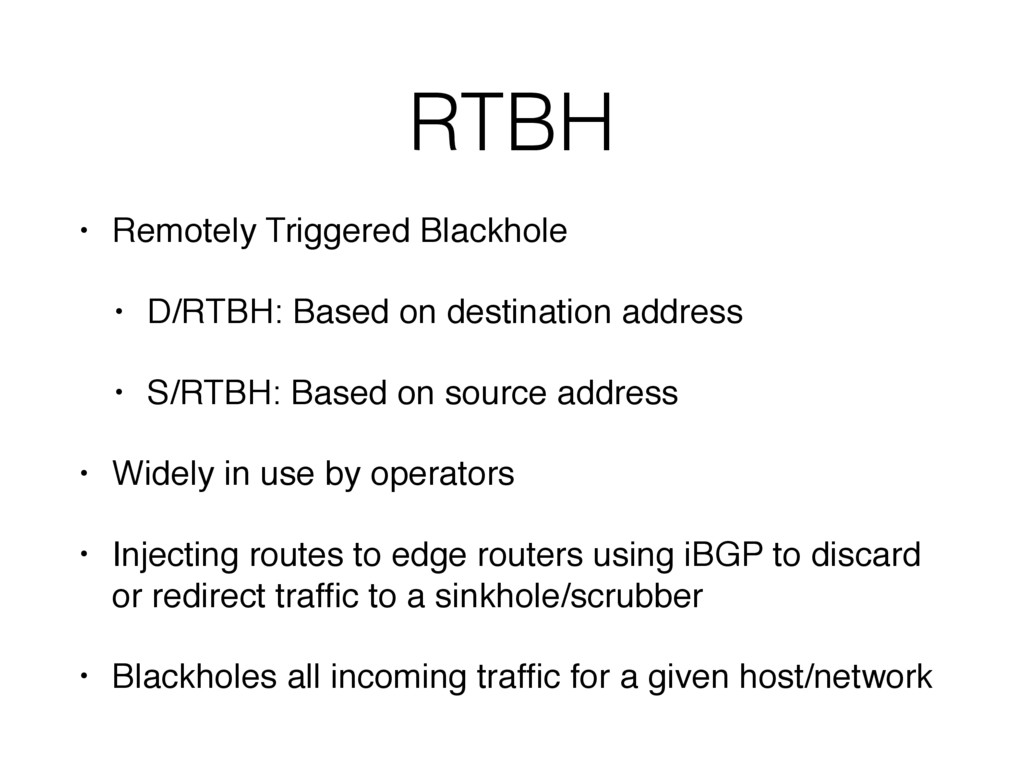
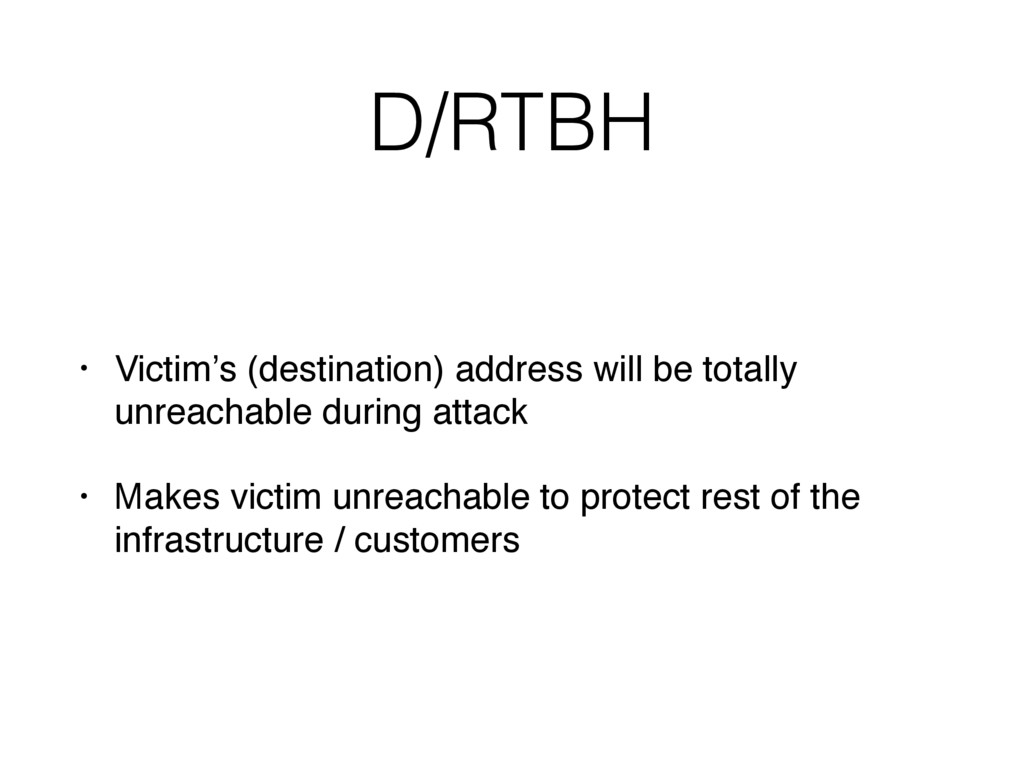
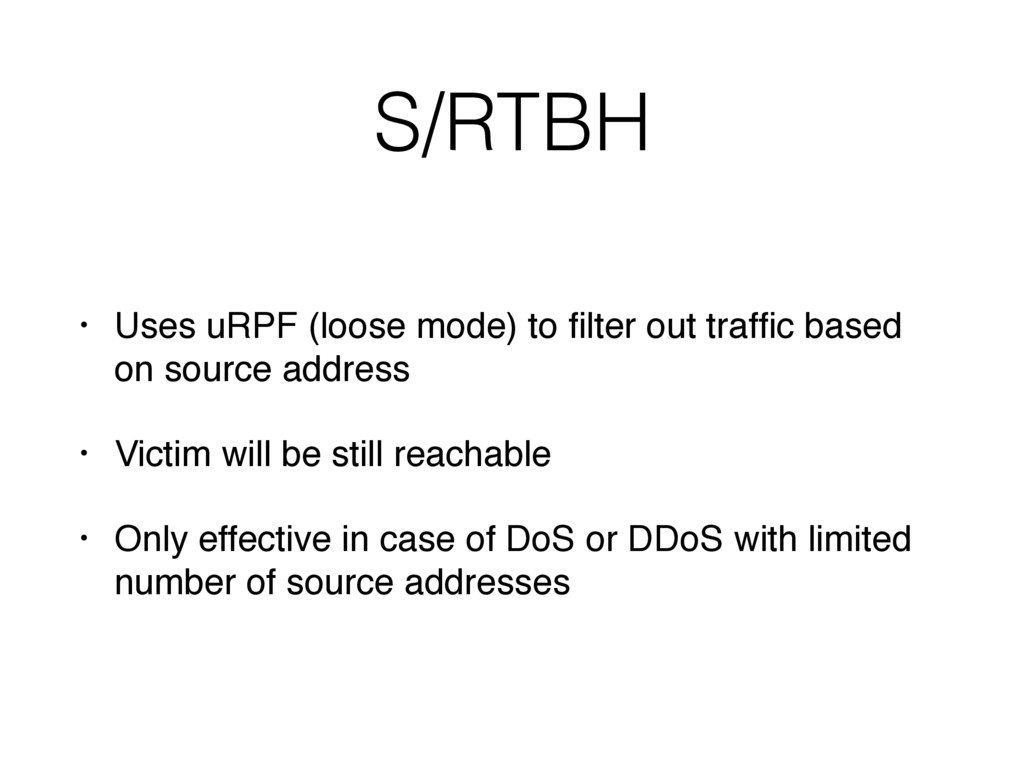
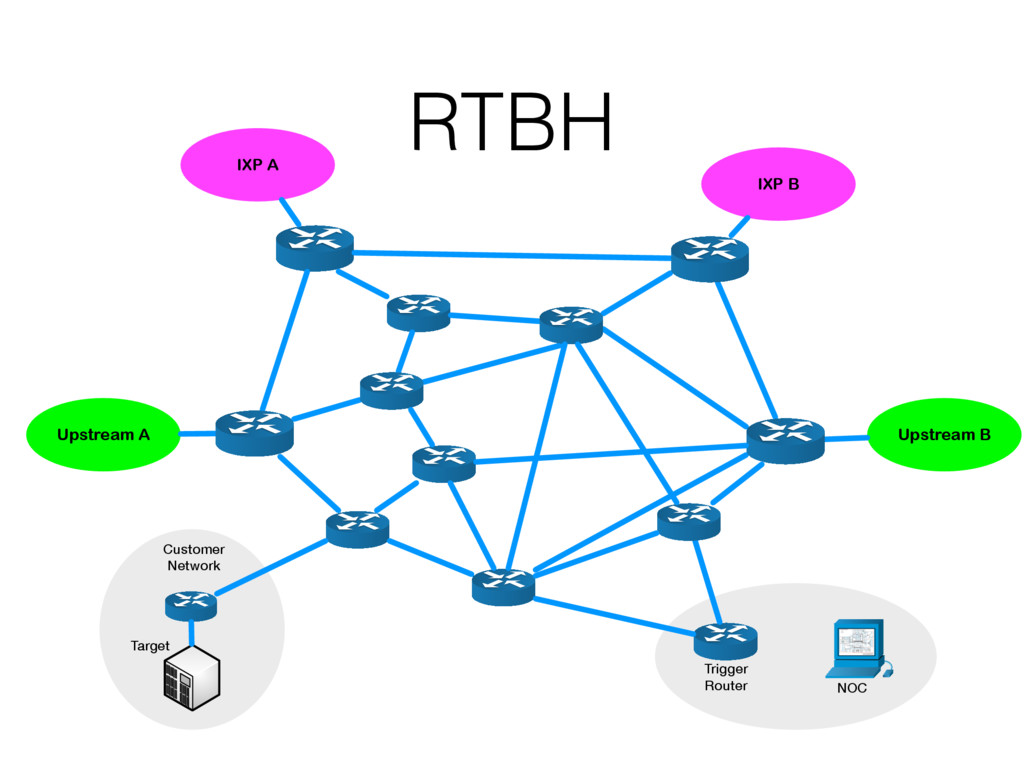
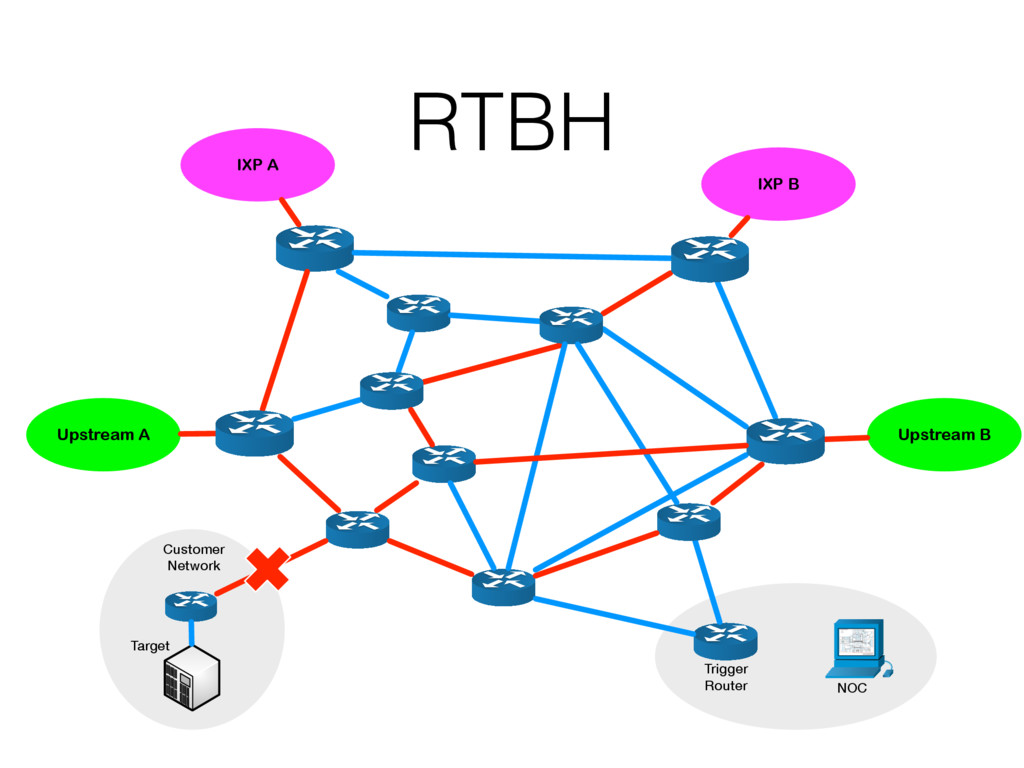
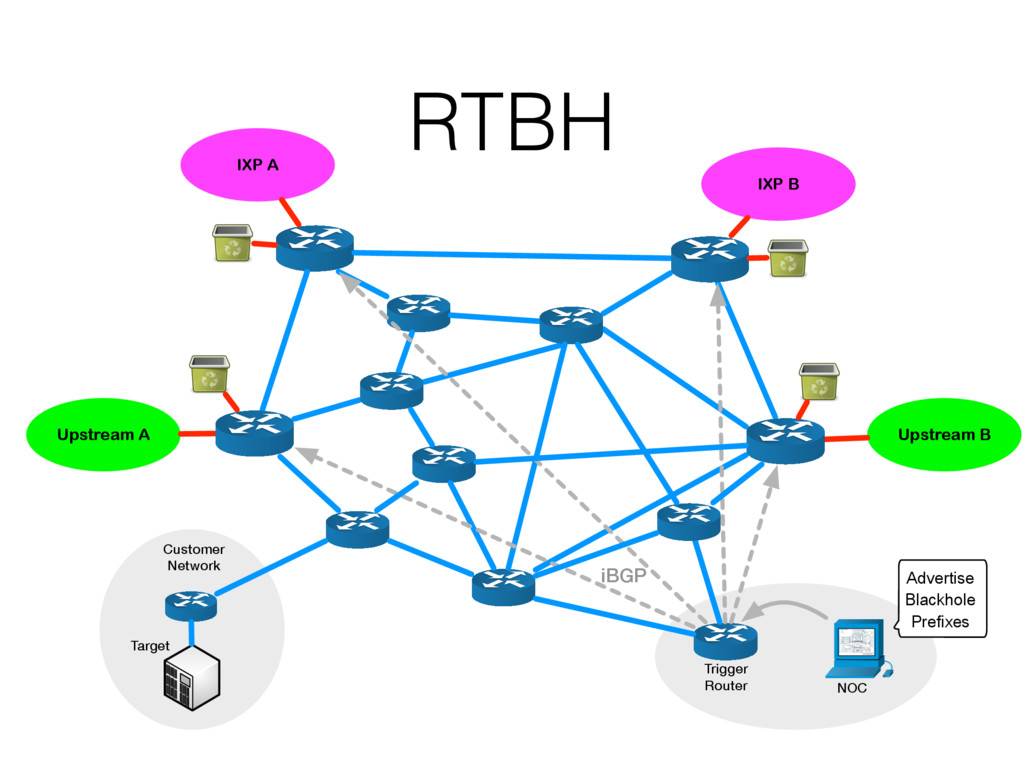
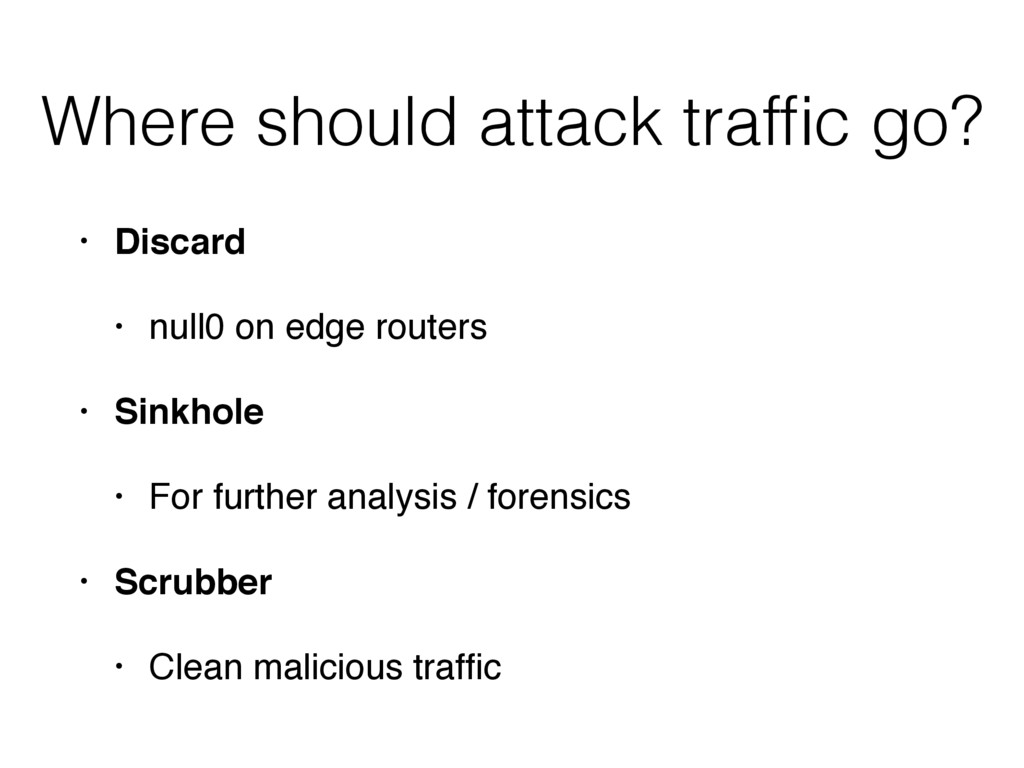
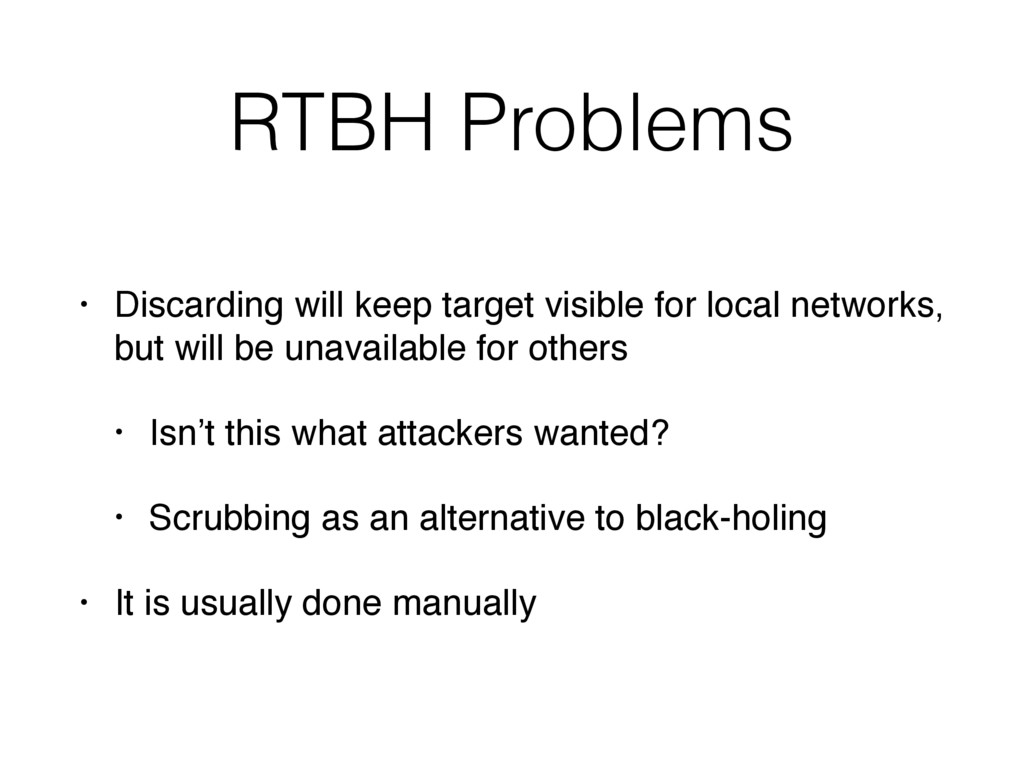
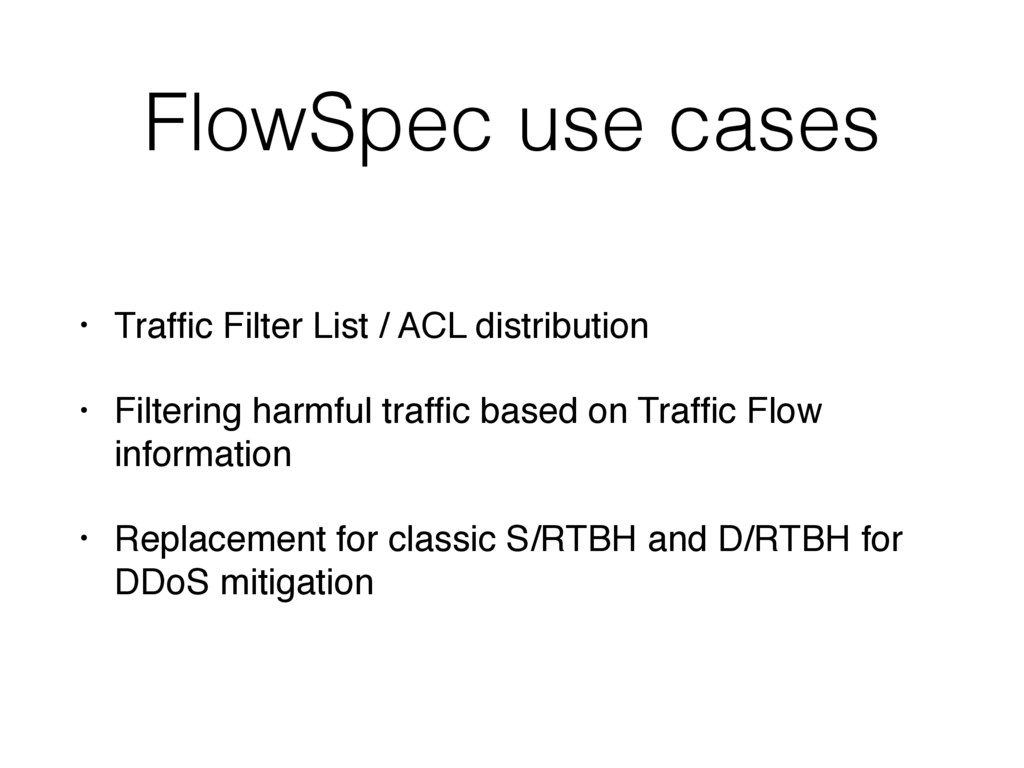
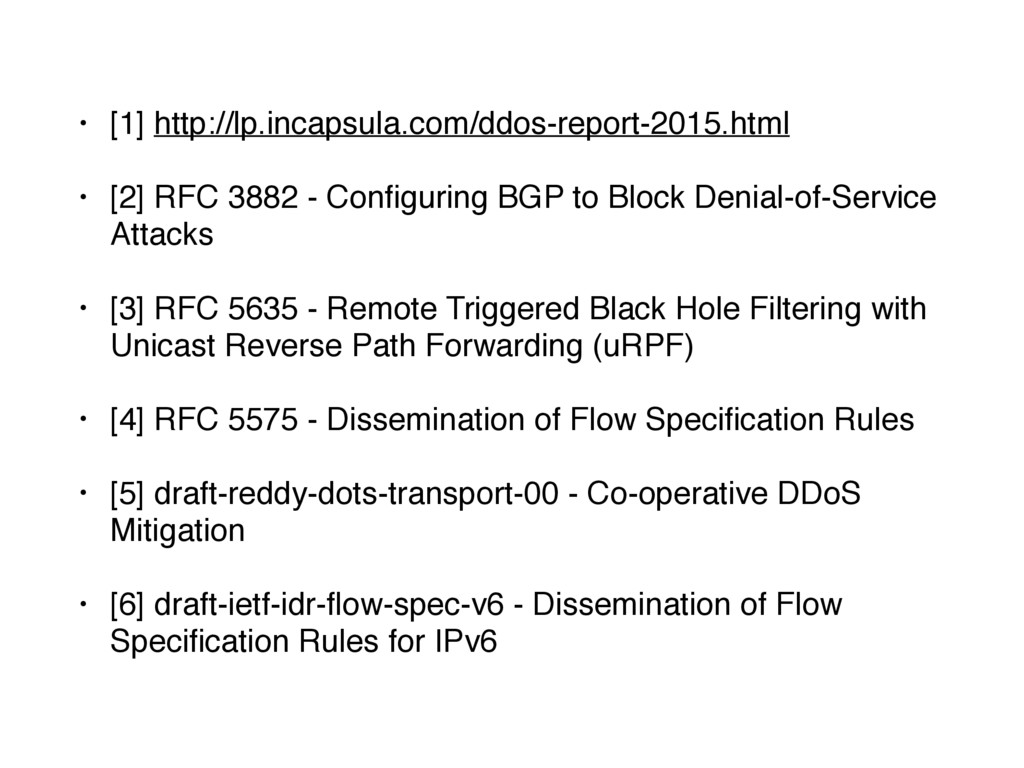
address • S/RTBH: Based on source address • Widely in use by operators • Injecting routes to edge routers using iBGP to discard or redirect traffic to a sinkhole/scrubber • Blackholes all incoming traffic for a given host/network
networks, but will be unavailable for others • Isn’t this what attackers wanted? • Scrubbing as an alternative to black-holing • It is usually done manually
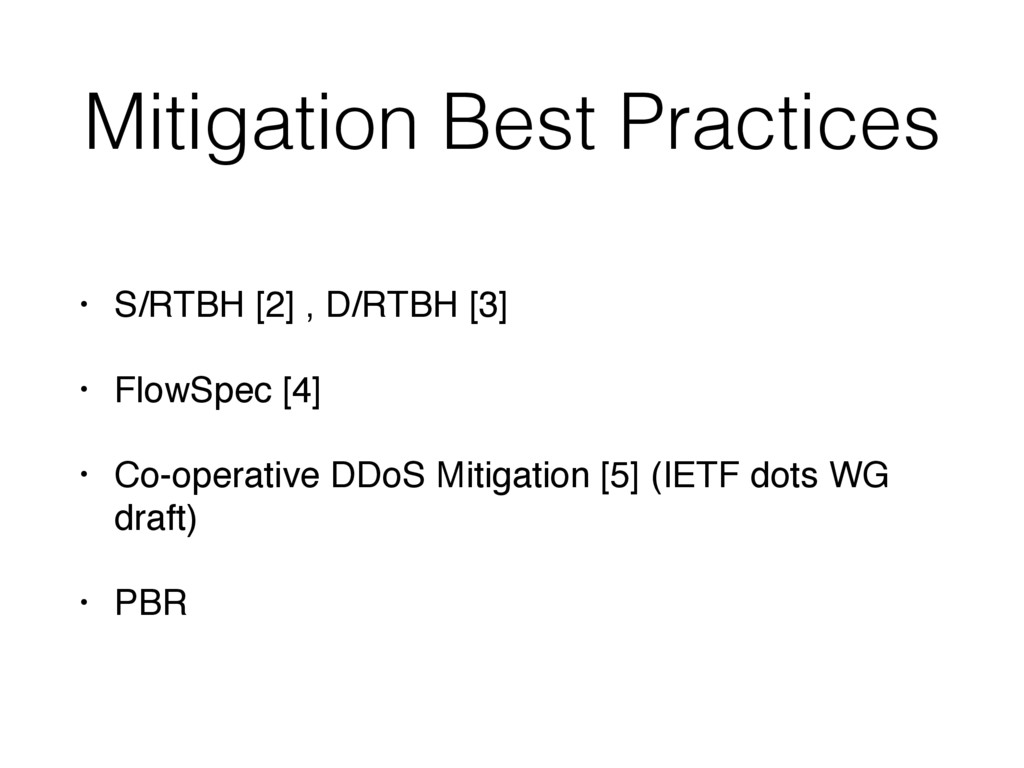
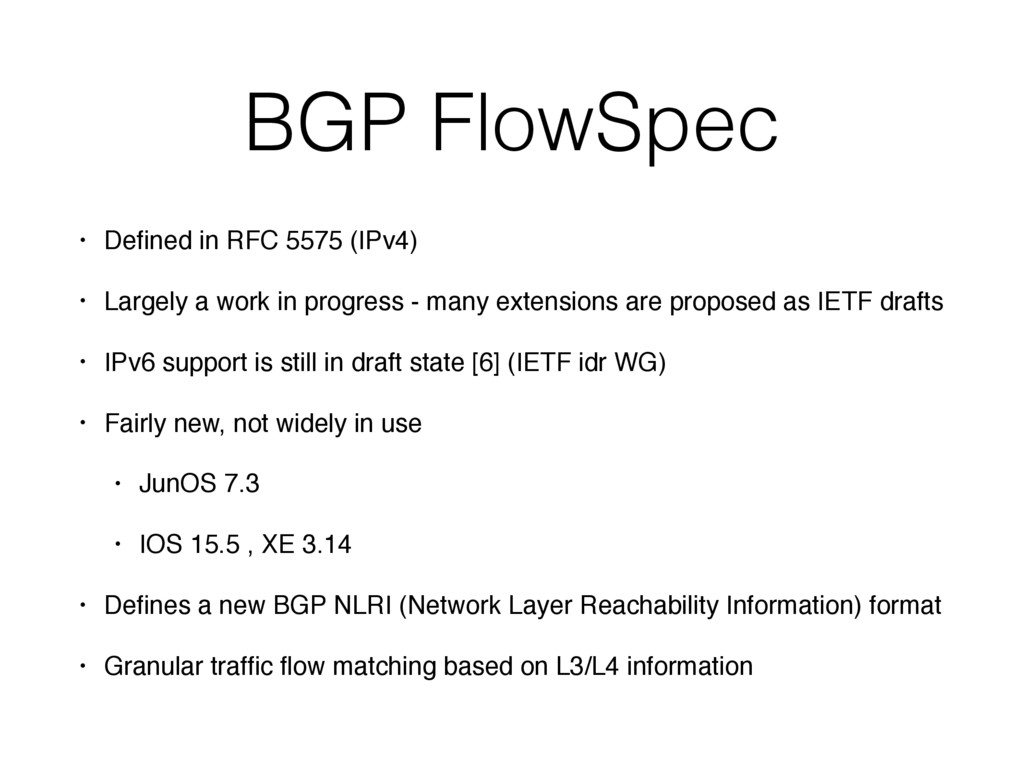
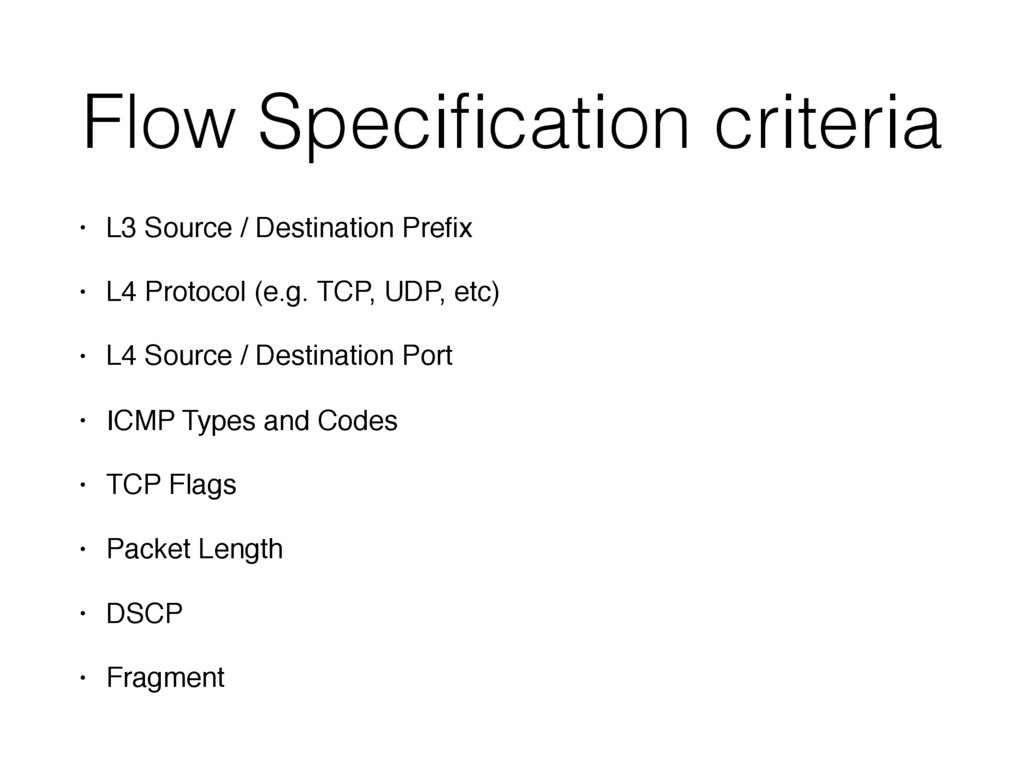
a work in progress - many extensions are proposed as IETF drafts • IPv6 support is still in draft state [6] (IETF idr WG) • Fairly new, not widely in use • JunOS 7.3 • IOS 15.5 , XE 3.14 • Defines a new BGP NLRI (Network Layer Reachability Information) format • Granular traffic flow matching based on L3/L4 information
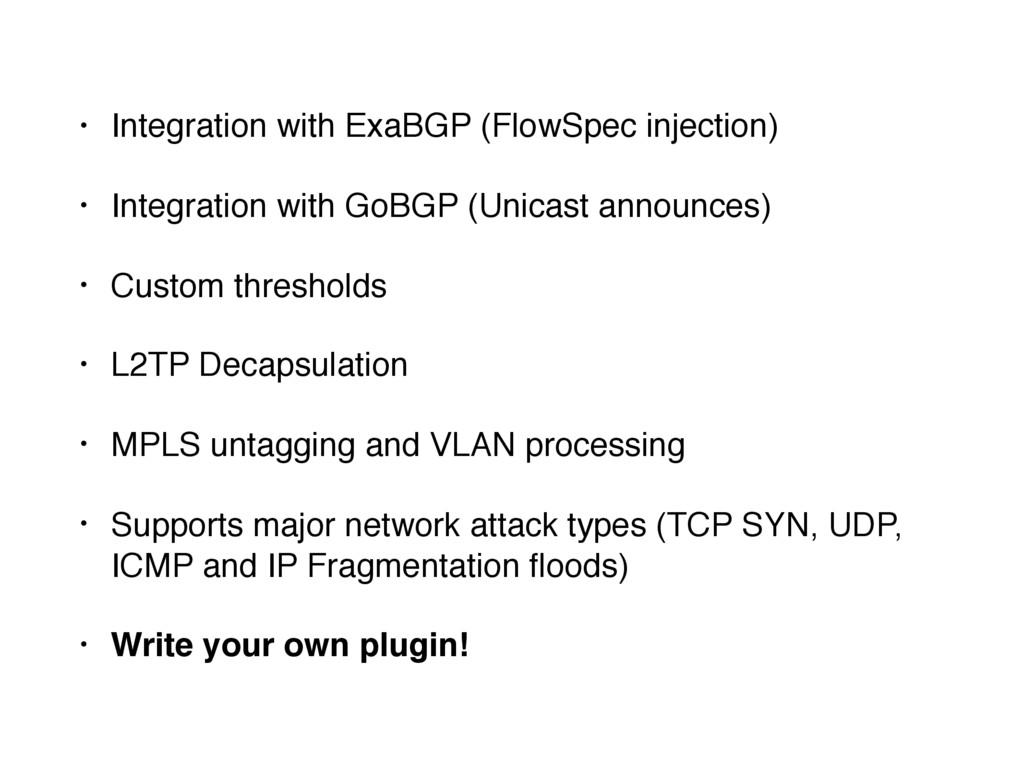
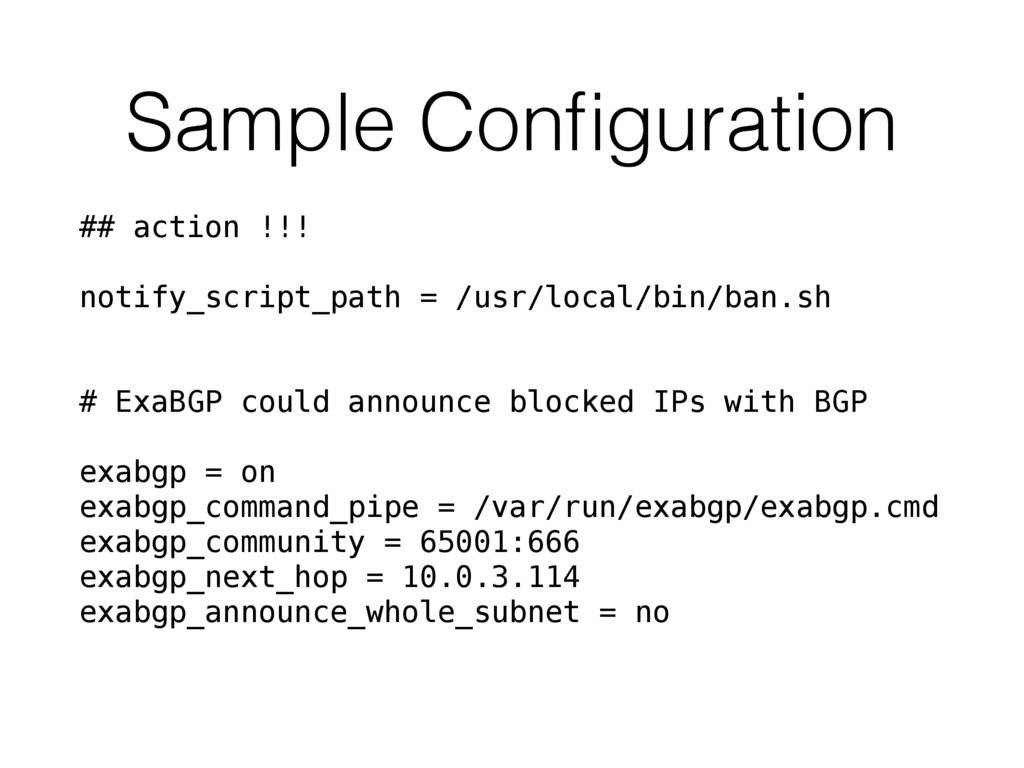
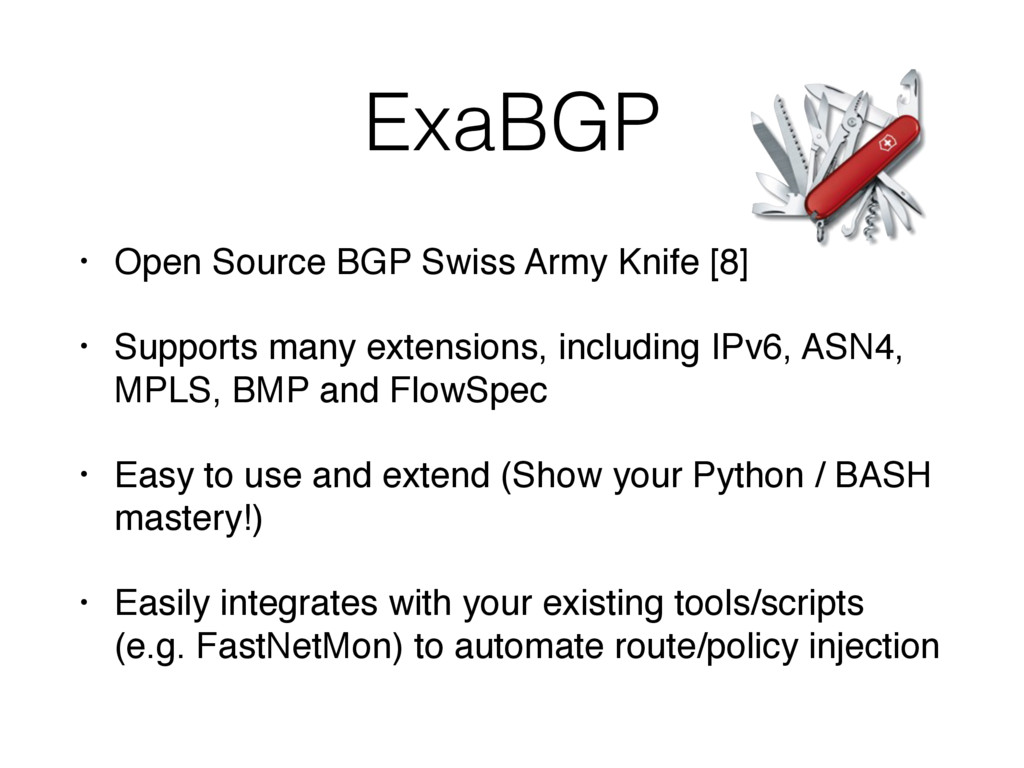
Supports many extensions, including IPv6, ASN4, MPLS, BMP and FlowSpec • Easy to use and extend (Show your Python / BASH mastery!) • Easily integrates with your existing tools/scripts (e.g. FastNetMon) to automate route/policy injection


 farrokhi
 institutdelelevage
 satai
 analokmaus
 naok615
 signer
 youten622
 yukako_nakano
 ayaniwa
 enochan
 fr0gger
 axbom
 nonsquared
 khoart
 jct
 davidcarrasco
 katarinadahlin
 aarron
 rkendrick25
 akademiya2063
 marketingsoph
 sugarenia
 aleyda