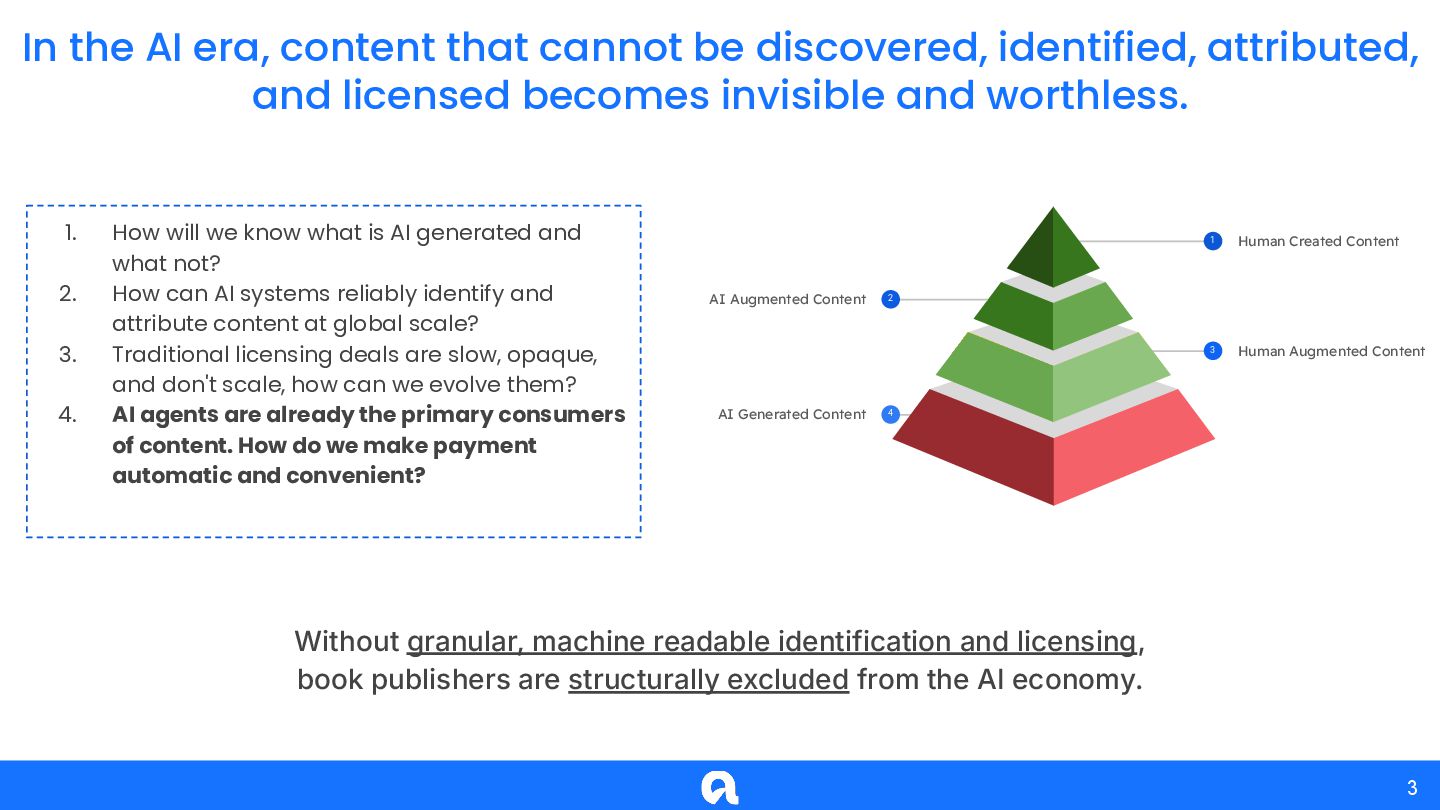
attributed, and licensed becomes invisible and worthless. 3 Human Augmented Content 3 AI Generated Content 4 Human Created Content 1 AI Augmented Content 2 1. How will we know what is AI generated and what not? 2. How can AI systems reliably identify and attribute content at global scale? 3. Traditional licensing deals are slow, opaque, and don't scale, how can we evolve them? 4. AI agents are already the primary consumers of content. How do we make payment automatic and convenient? Without granular, machine readable identification and licensing, book publishers are structurally excluded from the AI economy.
transforms content from static assets into AI native economic units. LAYER 1 Content Identification and Provenance • Content based ISCC fingerprint • Integrity, similarity, deduplication • Timestamped provenance AI systems can recognize content reliably LAYER 2 Global AI Rights Registry • Machine readable usage rights • Public searchable registry • Proof of ownership and permissions AI systems know what they are allowed to do LAYER 3 AI Native Licensing and Monetization • Usage based pricing at runtime • Real-time tracking and attribution • Automated payouts Content usage becomes billable at scale
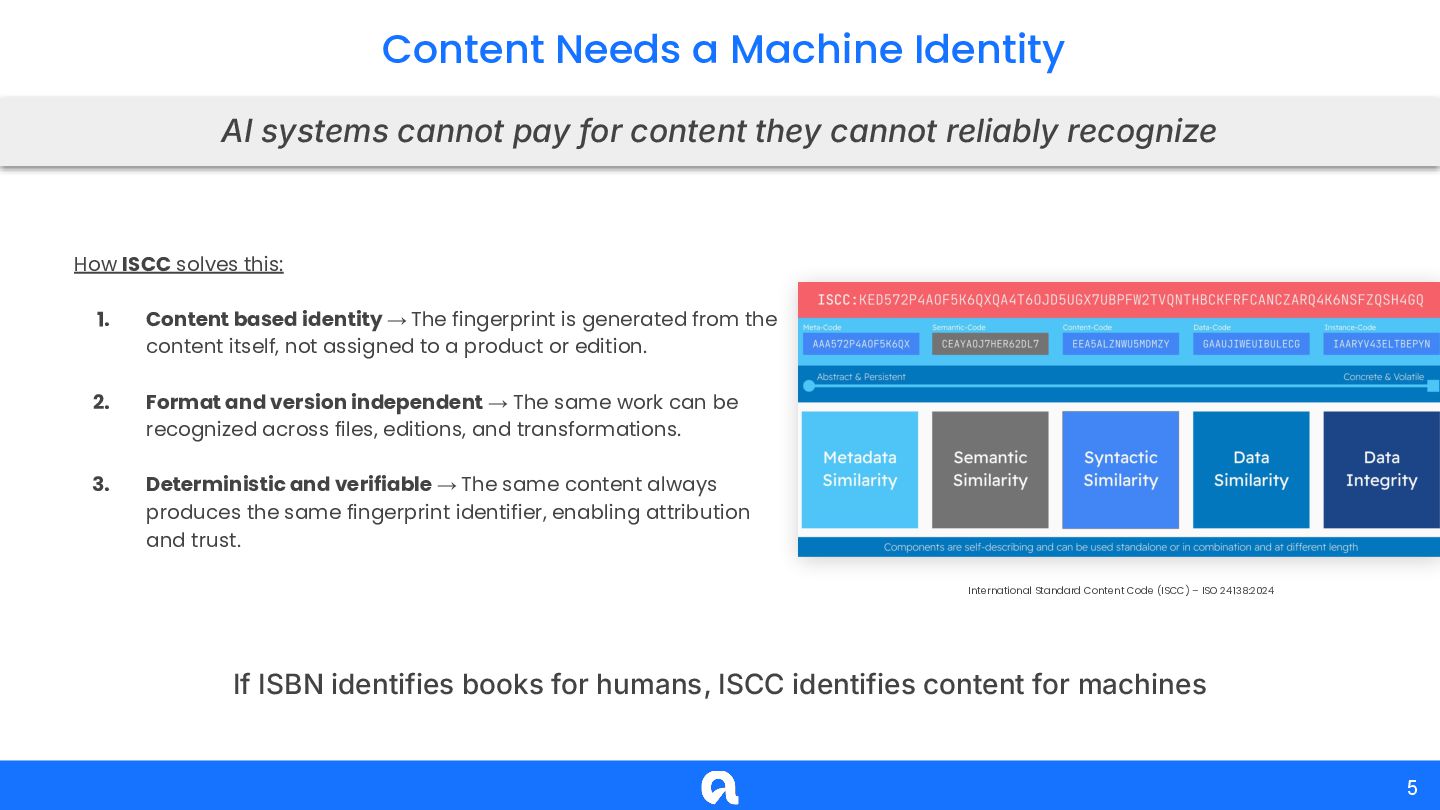
for humans, ISCC identifies content for machines How ISCC solves this: 1. Content based identity → The fingerprint is generated from the content itself, not assigned to a product or edition. 2. Format and version independent → The same work can be recognized across files, editions, and transformations. 3. Deterministic and verifiable → The same content always produces the same fingerprint identifier, enabling attribution and trust. AI systems cannot pay for content they cannot reliably recognize International Standard Content Code (ISCC) – ISO 24138:2024
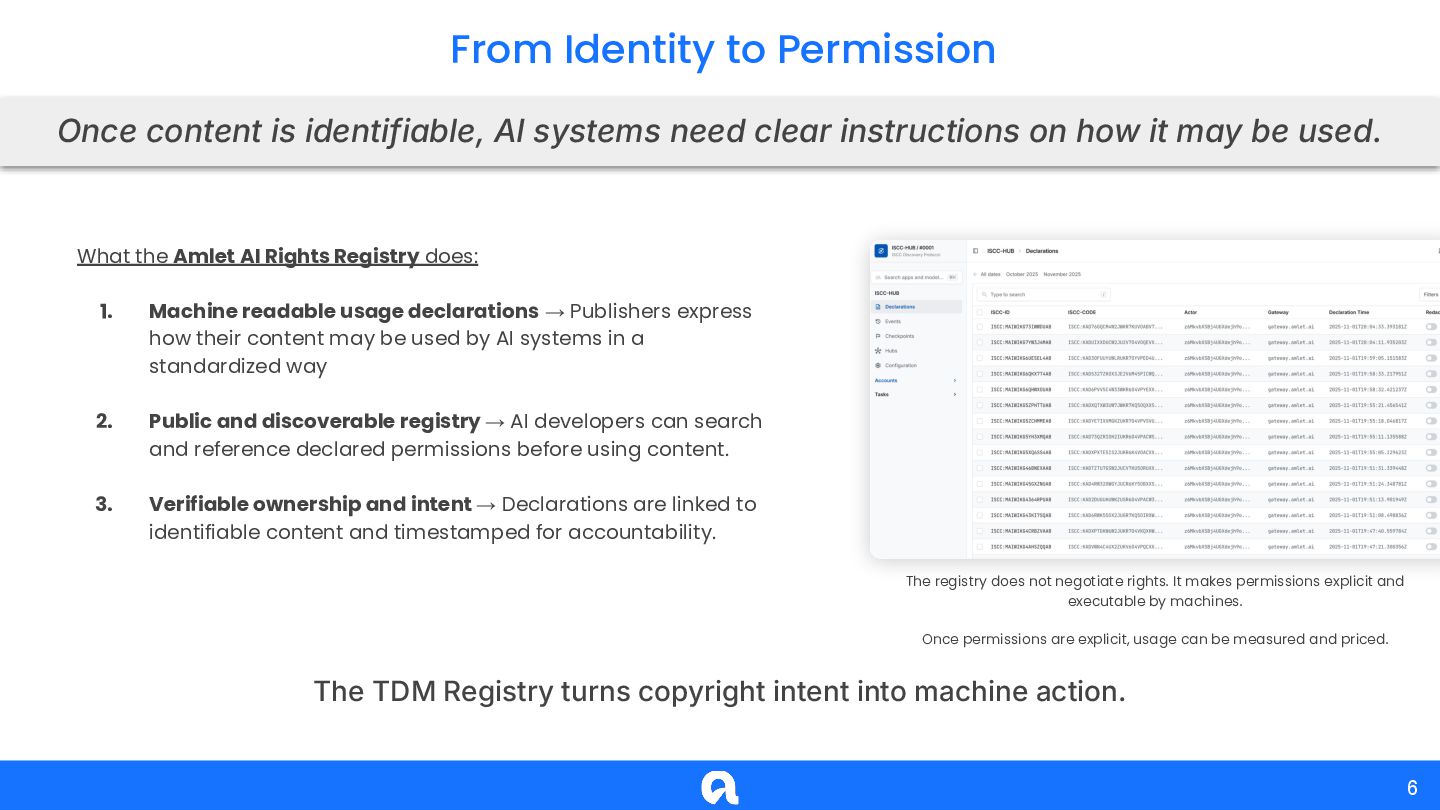
systems need clear instructions on how it may be used. The TDM Registry turns copyright intent into machine action. What the Amlet AI Rights Registry does: 1. Machine readable usage declarations → Publishers express how their content may be used by AI systems in a standardized way 2. Public and discoverable registry → AI developers can search and reference declared permissions before using content. 3. Verifiable ownership and intent → Declarations are linked to identifiable content and timestamped for accountability. The registry does not negotiate rights. It makes permissions explicit and executable by machines. Once permissions are explicit, usage can be measured and priced.
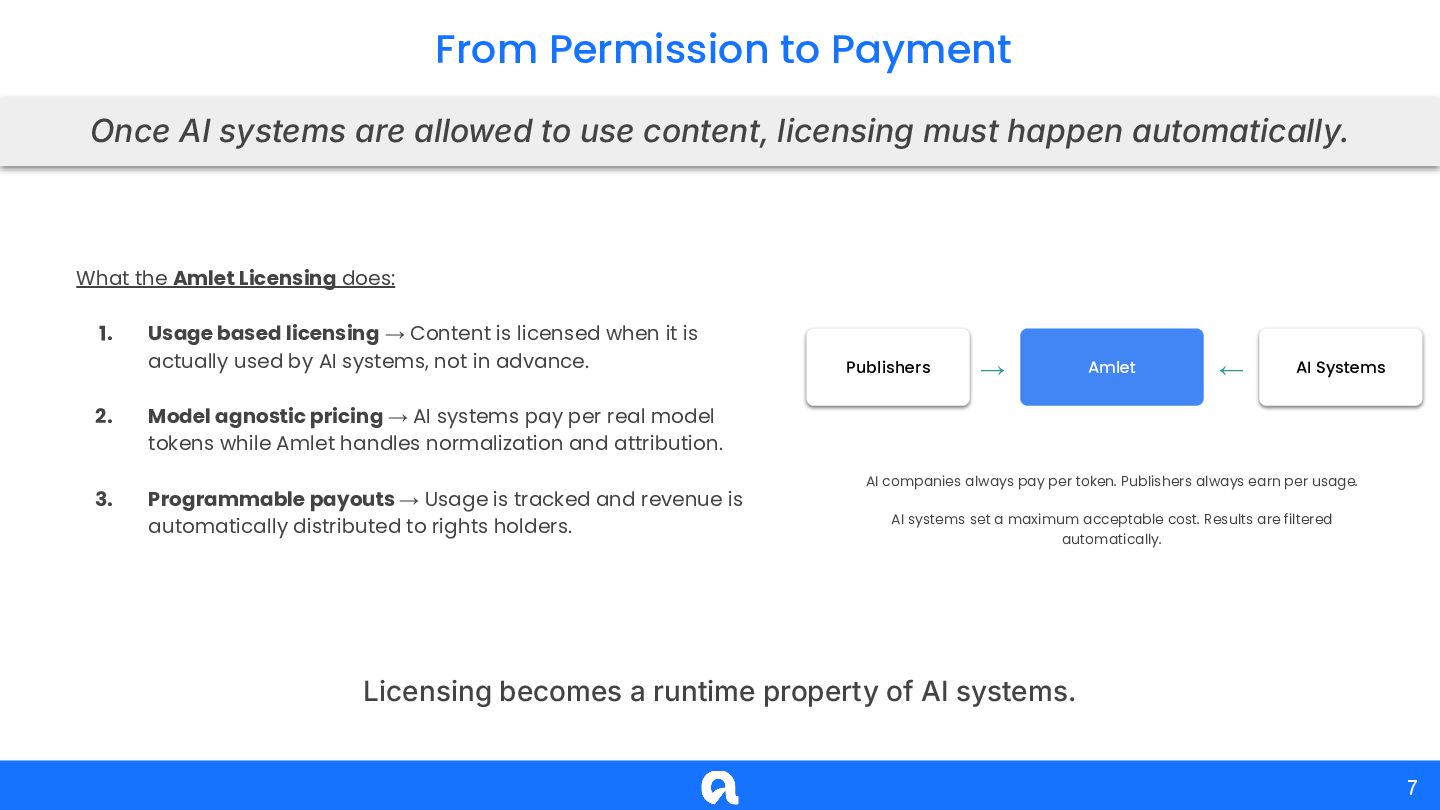
to use content, licensing must happen automatically. What the Amlet Licensing does: 1. Usage based licensing → Content is licensed when it is actually used by AI systems, not in advance. 2. Model agnostic pricing → AI systems pay per real model tokens while Amlet handles normalization and attribution. 3. Programmable payouts → Usage is tracked and revenue is automatically distributed to rights holders. Licensing becomes a runtime property of AI systems. → Amlet ← Publishers AI Systems AI companies always pay per token. Publishers always earn per usage. AI systems set a maximum acceptable cost. Results are filtered automatically.
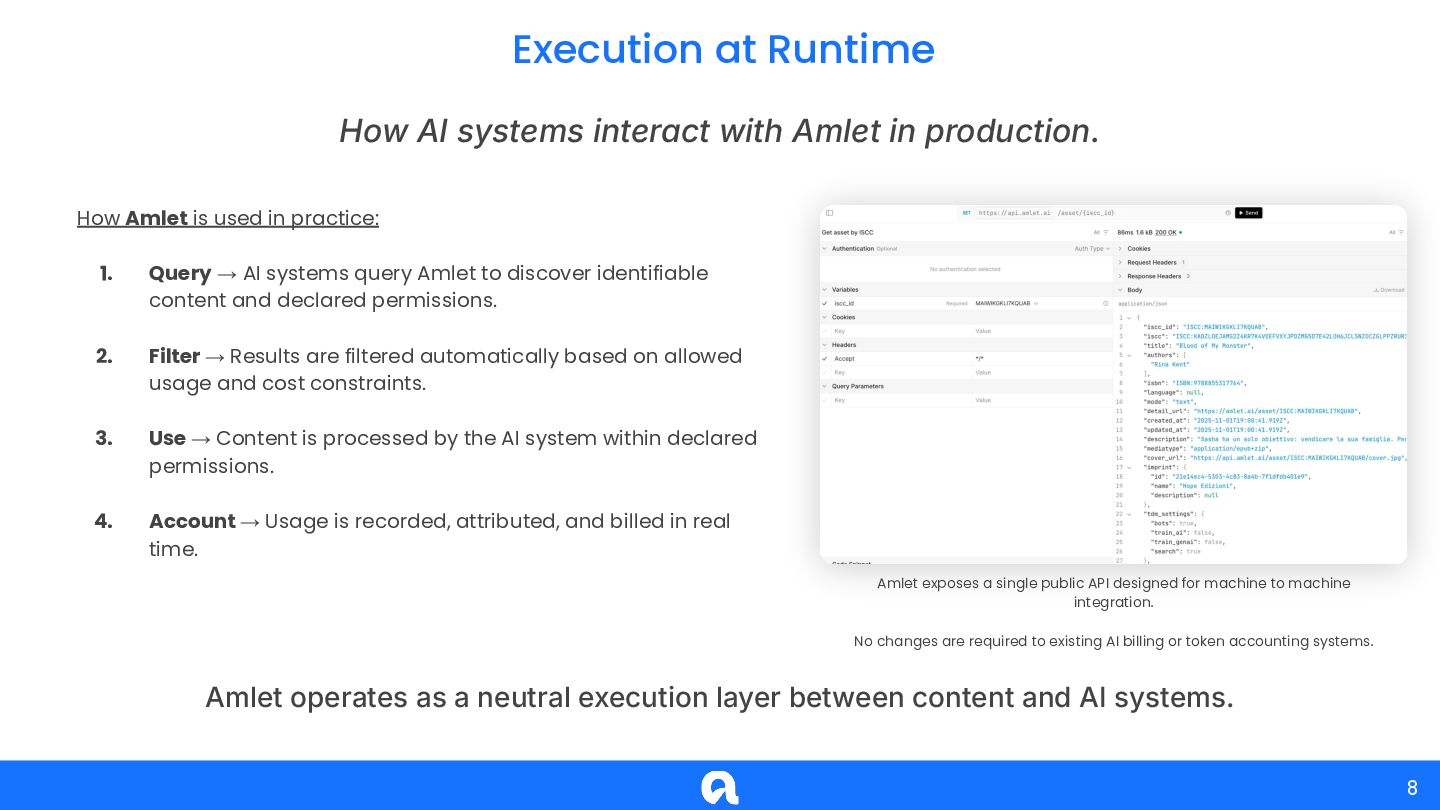
in production. How Amlet is used in practice: 1. Query → AI systems query Amlet to discover identifiable content and declared permissions. 2. Filter → Results are filtered automatically based on allowed usage and cost constraints. 3. Use → Content is processed by the AI system within declared permissions. 4. Account → Usage is recorded, attributed, and billed in real time. Amlet exposes a single public API designed for machine to machine integration. No changes are required to existing AI billing or token accounting systems. Amlet operates as a neutral execution layer between content and AI systems.
economy is closing AI systems are already consuming content at scale. What is changing right now: 1. AI demand is exploding → AI companies urgently need high quality, trusted, rights cleared content. 2. Regulation is becoming enforceable → Copyright, opt out, and disclosure obligations are no longer theoretical. 3. Infrastructure now exists → For the first time, content can be identified, authorized, and licensed automatically. The question is no longer if content will be used by AI, but under what terms. AI Leaders Hungry for Data


 giacd
giacd
 techtekt
 occhi
occhi
 gree_tech
 jtakeda
 yut0naga1_fa
 shumei_ito
 daidaidai
 takanorip
 camiha
 onk
onk
 ykanoh
 sachag
 soudai
 jacobtomlinson
 chriscoyier
 caitiem20
 brettharned
 aleyda
 palkan
 bkeepers
 jonoalderson
 axbom
axbom
![The Infrastructure for the AI Content Economy [email protected] 4 Amlet](https://files.speakerdeck.com/presentations/49b96ed0ca144973bc37eecc655dfe40/slide_3.jpg)
![Thank you Giacomo D’Angelo Founder and CEO, Amlet [email protected] The](https://files.speakerdeck.com/presentations/49b96ed0ca144973bc37eecc655dfe40/slide_9.jpg)