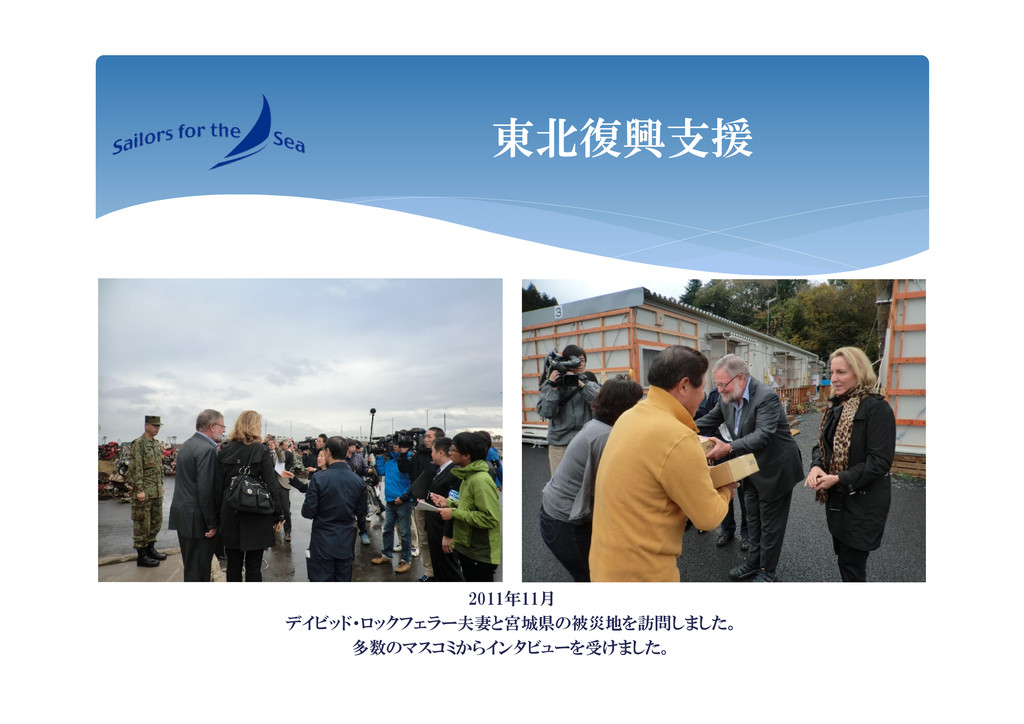
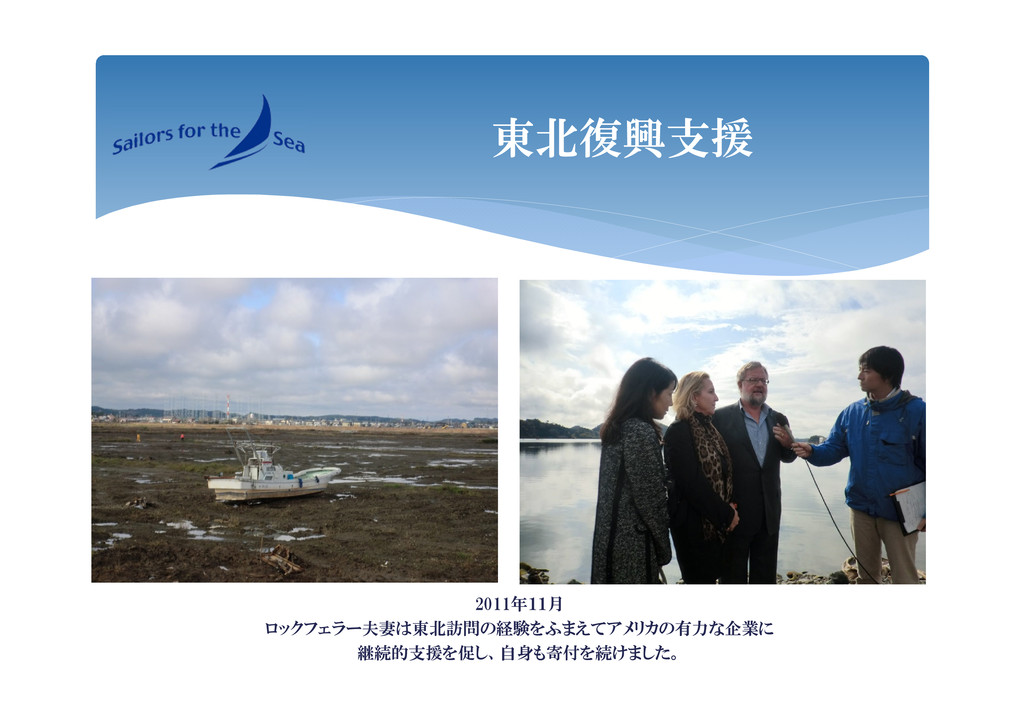
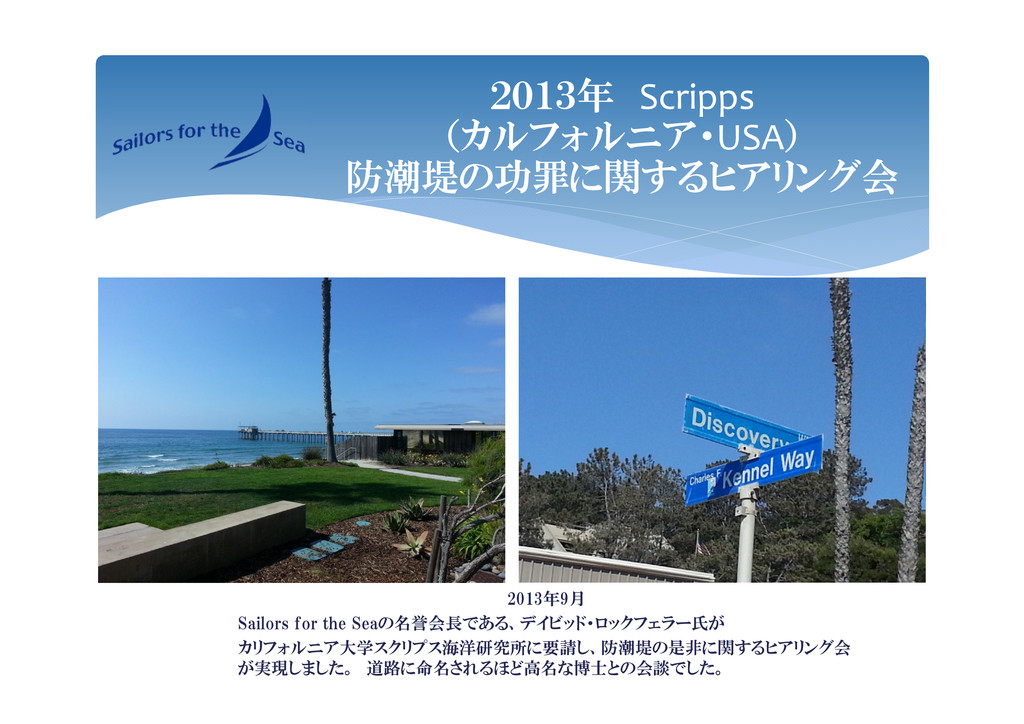
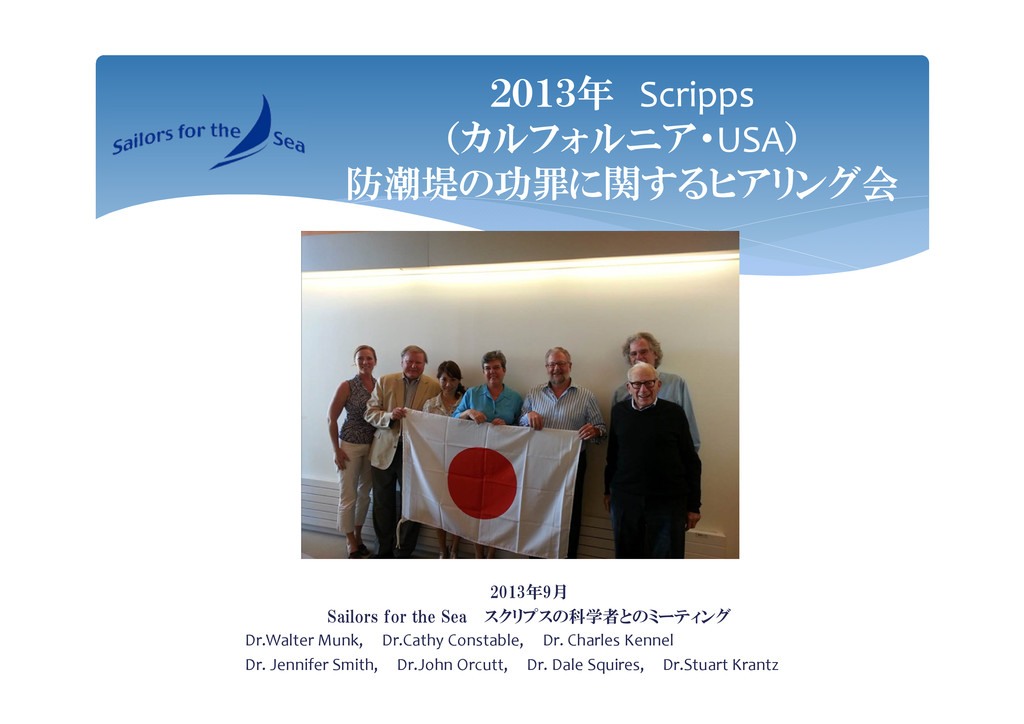
to address members of the Japanese Diet, and I wish all the Japanese leaders the very best in both recovering from the March 11 Tsunami and in making plans to protect the Japanese shores from another disaster. As the Chairman of the Rockefeller Foundation in New York, I have been learning a lot about human resilience in the face of natural disasters. In fact, the Foundation will be selecting 100 Resilient Cities (from around the world) for special funding consideration in the next two years, and of course we have learned a lot from our own encounter with Super Storm Sandy one year ago. What I am gathering from the experts advising us is that there is no single “silver bullet” solution to effective resilience in the face of cyclones, tornadoes, tsunamis or other natural disasters. Rather, it is vital to prepare a broad menu of resilience measures which fit the particular conditions of a lightly populated coastline or a densely populated city. Following Sandy, the President of our Foundation, Dr. Judith Rodin, co-chaired a review commission on Resilience Preparation for New York Governor Cuomo, and I would be happy to share that report with members of the Diet. I wish you well as you seek to invest scarce and valuable yen in preparing for future events of unknown date or magnitude. Certainly, a well-prepared populace is essential, and, in addition, many location/appropriate modifications to the existing landscape and infrastructure. All best wishes from your American friend, David Rockefeller, Jr.”
to enable 100 cities to better address the increasing shocks and stresses of the 21st century. One hundred cities from across the globe will be selected to receive technical support and resources for developing and implementing plans for urban resilience over the next three years. 100Resilient Cities By Rockefeller Foundation
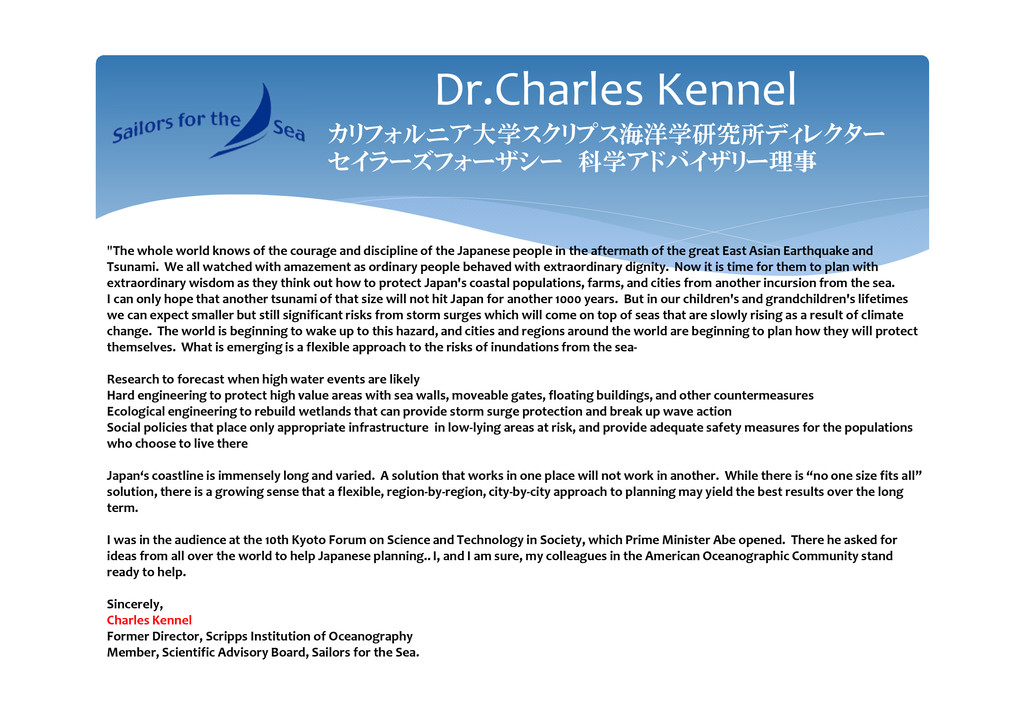
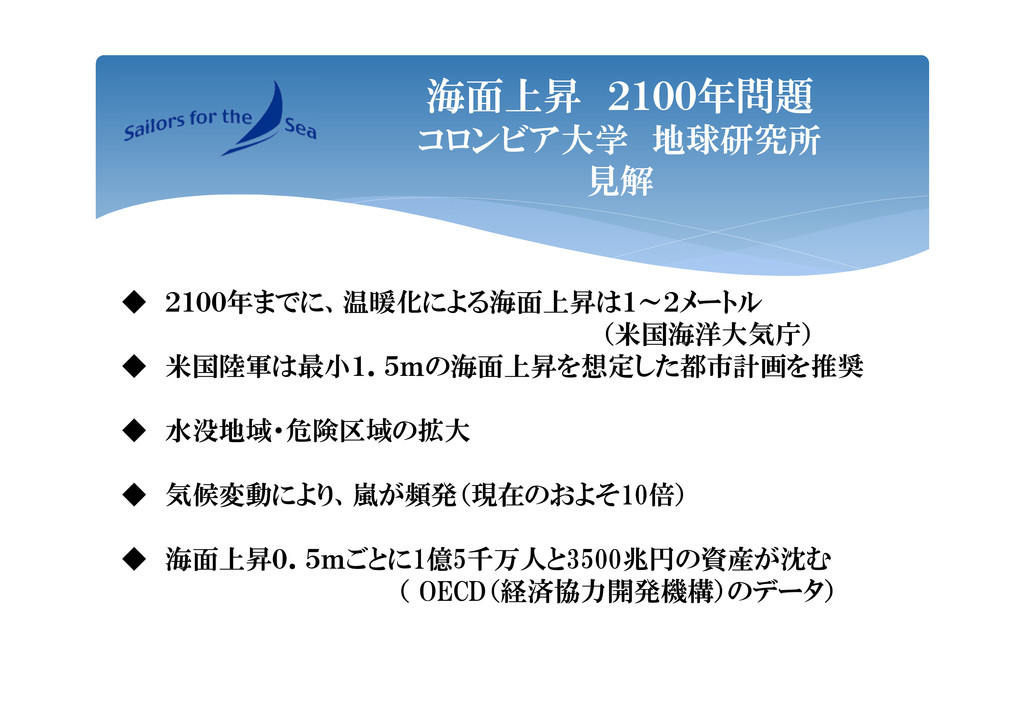
of the courage and discipline of the Japanese people in the aftermath of the great East Asian Earthquake and Tsunami. We all watched with amazement as ordinary people behaved with extraordinary dignity. Now it is time for them to plan with extraordinary wisdom as they think out how to protect Japan's coastal populations, farms, and cities from another incursion from the sea. I can only hope that another tsunami of that size will not hit Japan for another 1000 years. But in our children's and grandchildren's lifetimes we can expect smaller but still significant risks from storm surges which will come on top of seas that are slowly rising as a result of climate change. The world is beginning to wake up to this hazard, and cities and regions around the world are beginning to plan how they will protect themselves. What is emerging is a flexible approach to the risks of inundations from the sea- Research to forecast when high water events are likely Hard engineering to protect high value areas with sea walls, moveable gates, floating buildings, and other countermeasures Ecological engineering to rebuild wetlands that can provide storm surge protection and break up wave action Social policies that place only appropriate infrastructure in low-lying areas at risk, and provide adequate safety measures for the populations who choose to live there Japan‘s coastline is immensely long and varied. A solution that works in one place will not work in another. While there is “no one size fits all” solution, there is a growing sense that a flexible, region-by-region, city-by-city approach to planning may yield the best results over the long term. I was in the audience at the 10th Kyoto Forum on Science and Technology in Society, which Prime Minister Abe opened. There he asked for ideas from all over the world to help Japanese planning.. I, and I am sure, my colleagues in the American Oceanographic Community stand ready to help. Sincerely, Charles Kennel Former Director, Scripps Institution of Oceanography Member, Scientific Advisory Board, Sailors for the Sea.
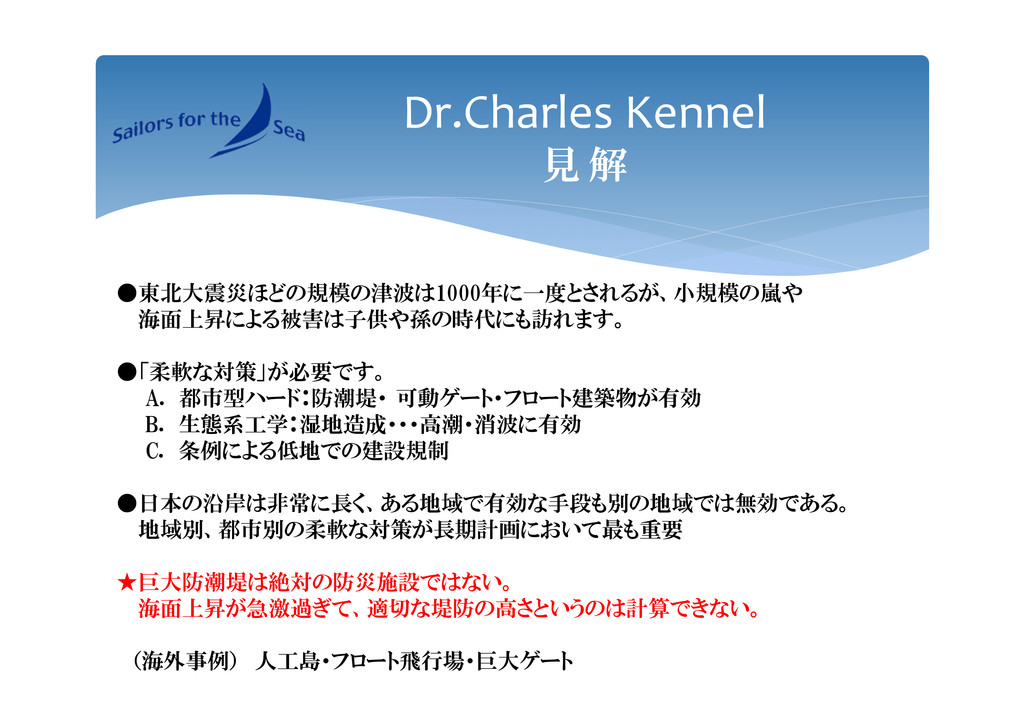
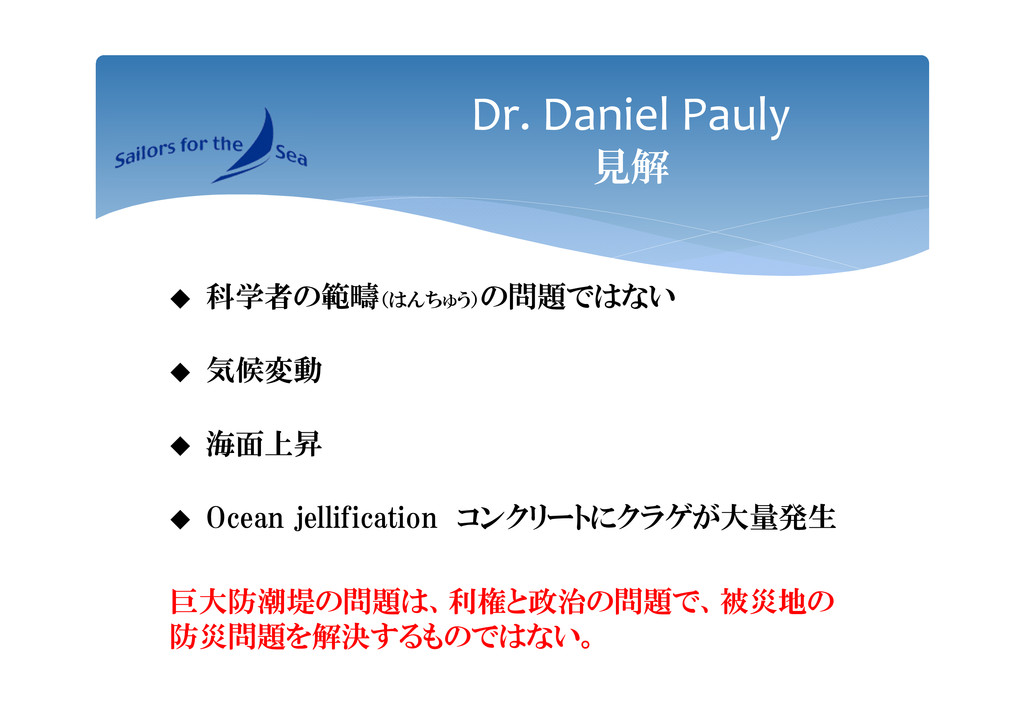
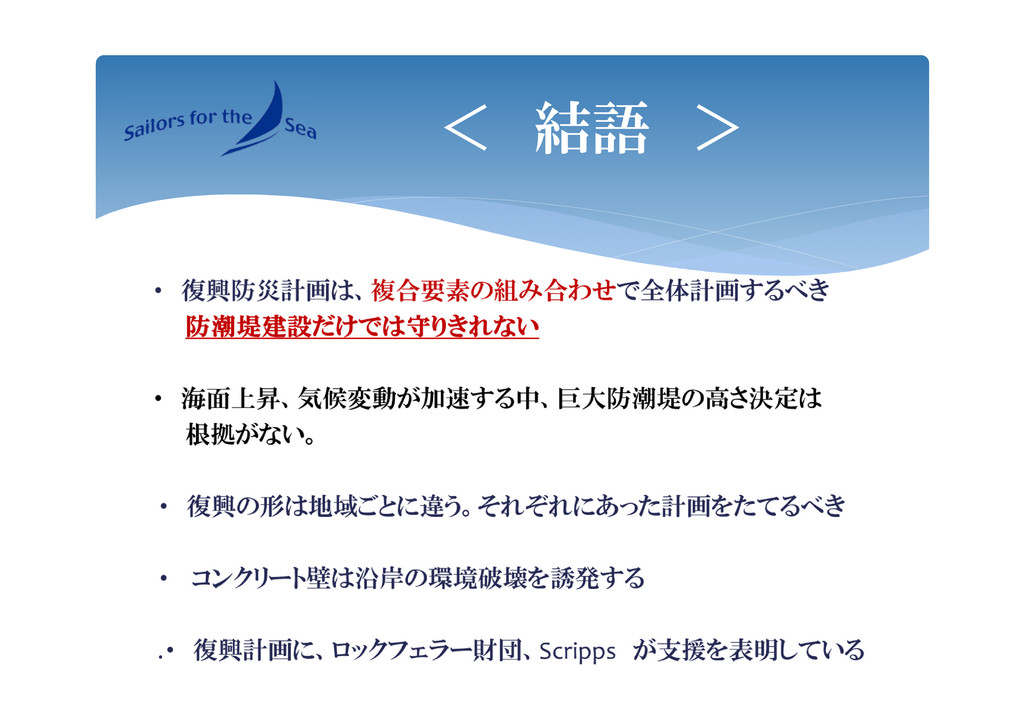
B. 生態系工学:湿地造成・・・高潮・消波に有効 C. 条例による低地での建設規制 •日本の沿岸は非常に長く、ある地域で有効な手段も別の地域では無効である。 地域別、都市別の柔軟な対策が長期計画において最も重要 ★巨大防潮堤は絶対の防災施設ではない。 海面上昇が急激過ぎて、適切な堤防の高さというのは計算できない。 (海外事例) 人工島・フロート飛行場・巨大ゲート
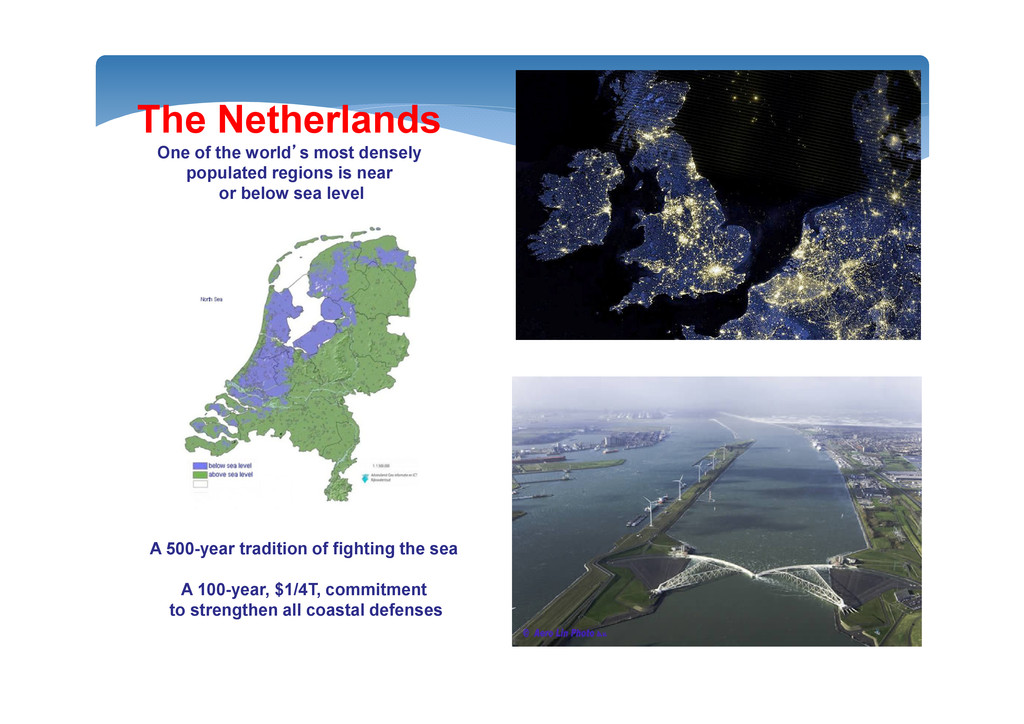
s most densely populated regions is near or below sea level A 500-year tradition of fighting the sea A 100-year, $1/4T, commitment to strengthen all coastal defenses
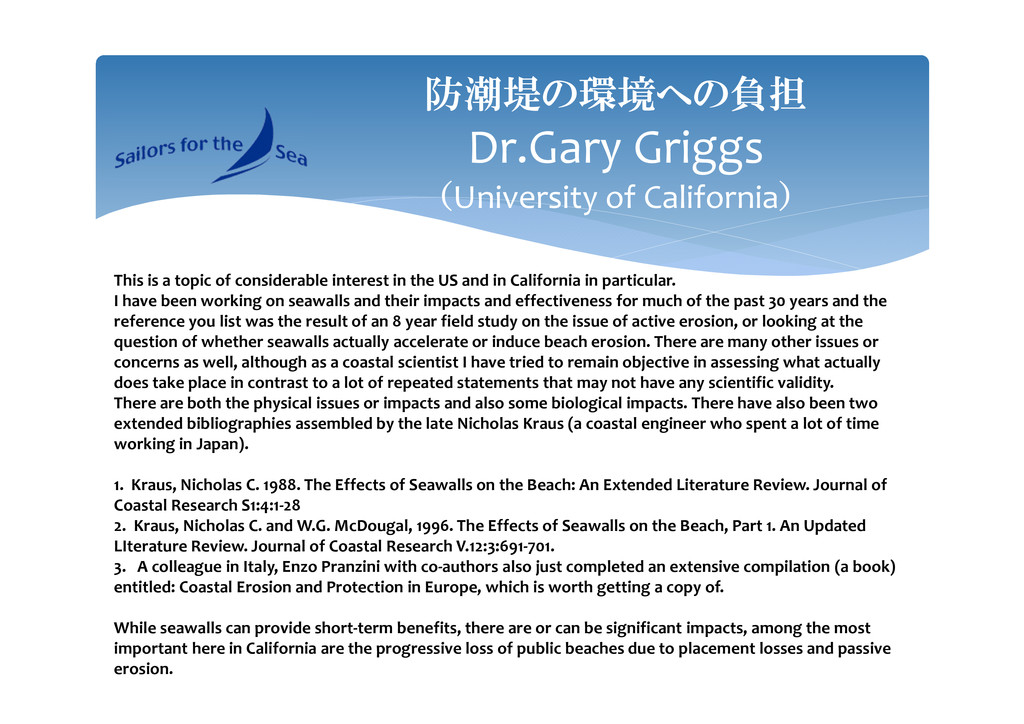
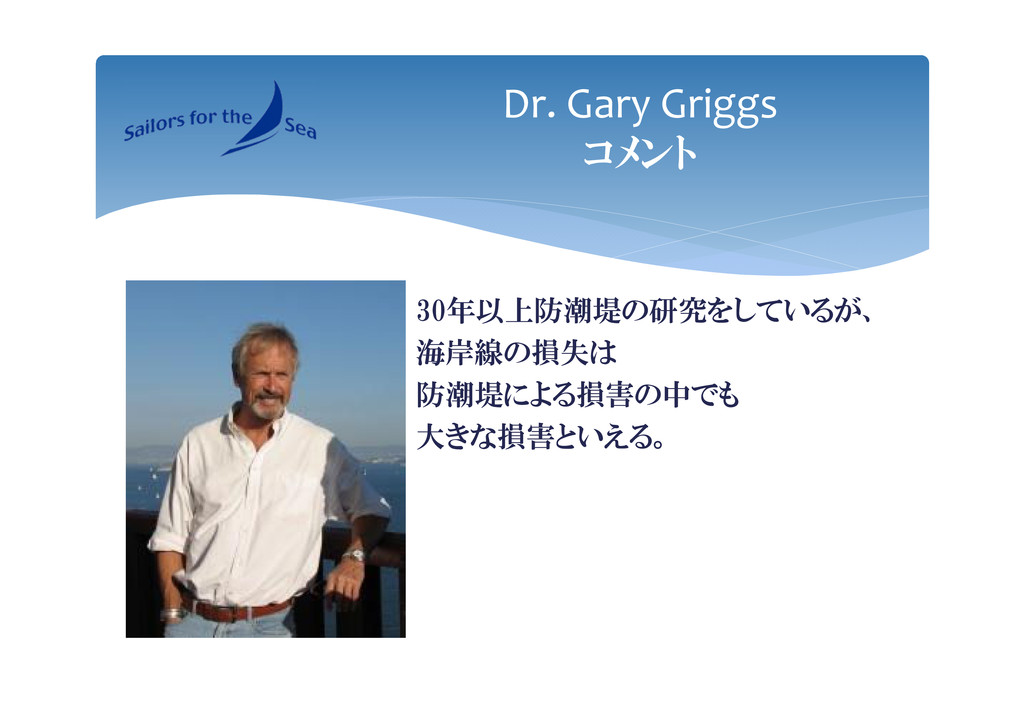
a topic of considerable interest in the US and in California in particular. I have been working on seawalls and their impacts and effectiveness for much of the past 30 years and the reference you list was the result of an 8 year field study on the issue of active erosion, or looking at the question of whether seawalls actually accelerate or induce beach erosion. There are many other issues or concerns as well, although as a coastal scientist I have tried to remain objective in assessing what actually does take place in contrast to a lot of repeated statements that may not have any scientific validity. There are both the physical issues or impacts and also some biological impacts. There have also been two extended bibliographies assembled by the late Nicholas Kraus (a coastal engineer who spent a lot of time working in Japan). 1. Kraus, Nicholas C. 1988. The Effects of Seawalls on the Beach: An Extended Literature Review. Journal of Coastal Research S1:4:1-28 2. Kraus, Nicholas C. and W.G. McDougal, 1996. The Effects of Seawalls on the Beach, Part 1. An Updated LIterature Review. Journal of Coastal Research V.12:3:691-701. 3. A colleague in Italy, Enzo Pranzini with co-authors also just completed an extensive compilation (a book) entitled: Coastal Erosion and Protection in Europe, which is worth getting a copy of. While seawalls can provide short-term benefits, there are or can be significant impacts, among the most important here in California are the progressive loss of public beaches due to placement losses and passive erosion.


 giantseawall
 satocos135
 ykiyota
 mickey_kubo
 tomoaki0705
 aikinohara
 trycycle
 neutron63zf
 akasan
 naokimuroki
 signer
 tanichu
 carmenintech
 rakko
rakko
 inesmontani
 joshbly
 addyosmani
 honzajavorek
 stephenakadiri
 ipullrank
 csswizardry
 reverentgeek
 konakalab
 danielanewman