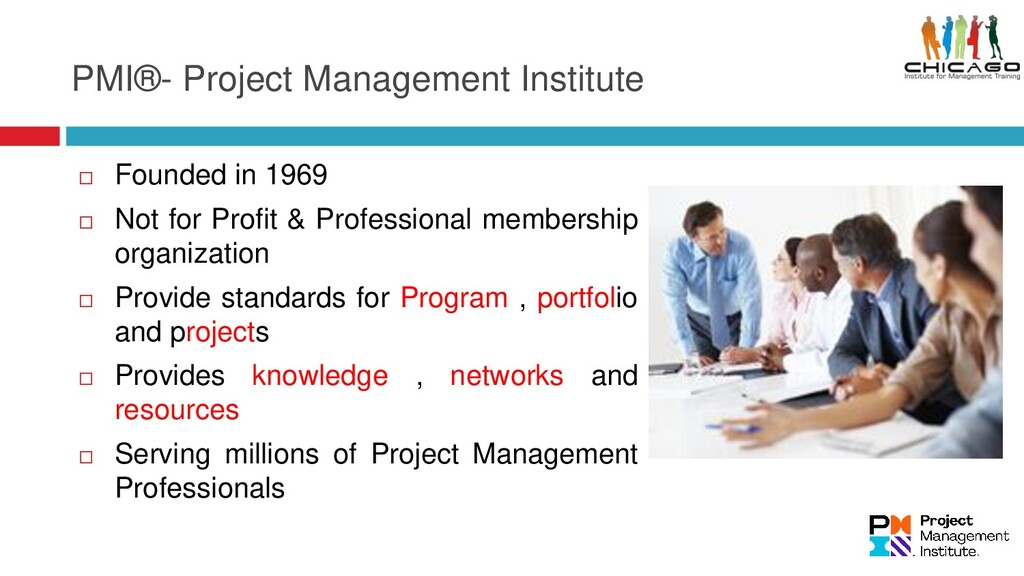
for Profit & Professional membership organization Provide standards for Program , portfolio and projects Provides knowledge , networks and resources Serving millions of Project Management Professionals
Save money on globally recognized PMI® Certifications Attend undemand Webinars and Events, Local chapter meetings 1000+ Tools and templates Global and Local Connections Earn Free PDUs
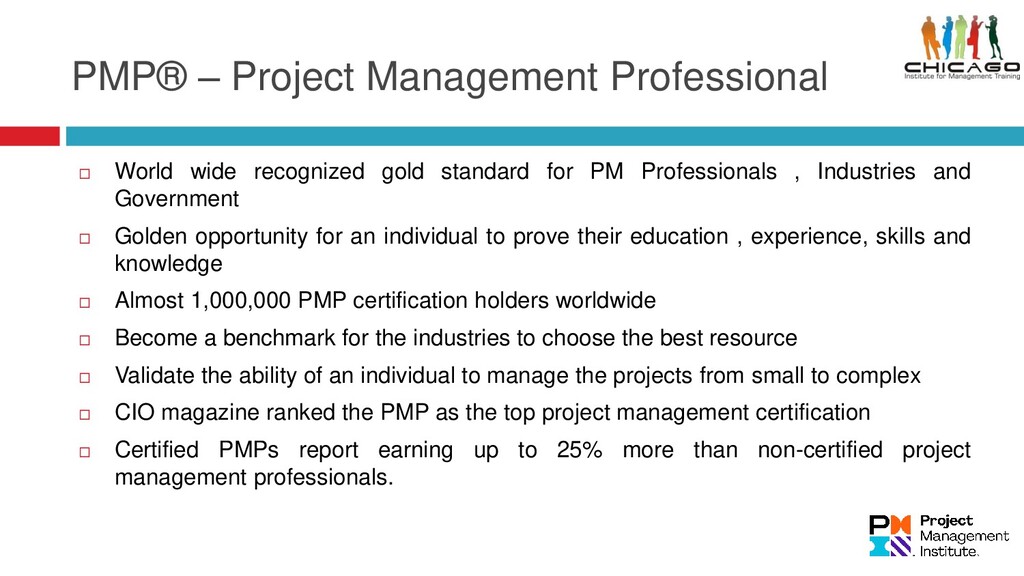
standard for PM Professionals , Industries and Government Golden opportunity for an individual to prove their education , experience, skills and knowledge Almost 1,000,000 PMP certification holders worldwide Become a benchmark for the industries to choose the best resource Validate the ability of an individual to manage the projects from small to complex CIO magazine ranked the PMP as the top project management certification Certified PMPs report earning up to 25% more than non-certified project management professionals.
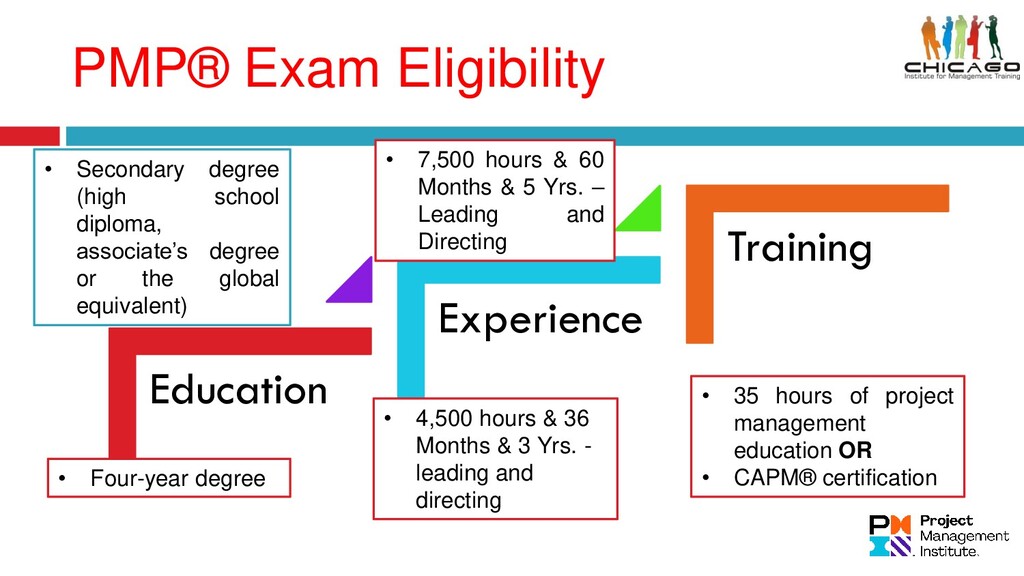
school diploma, associate’s degree or the global equivalent) • Four-year degree • 7,500 hours & 60 Months & 5 Yrs. – Leading and Directing • 4,500 hours & 36 Months & 3 Yrs. - leading and directing • 35 hours of project management education OR • CAPM® certification
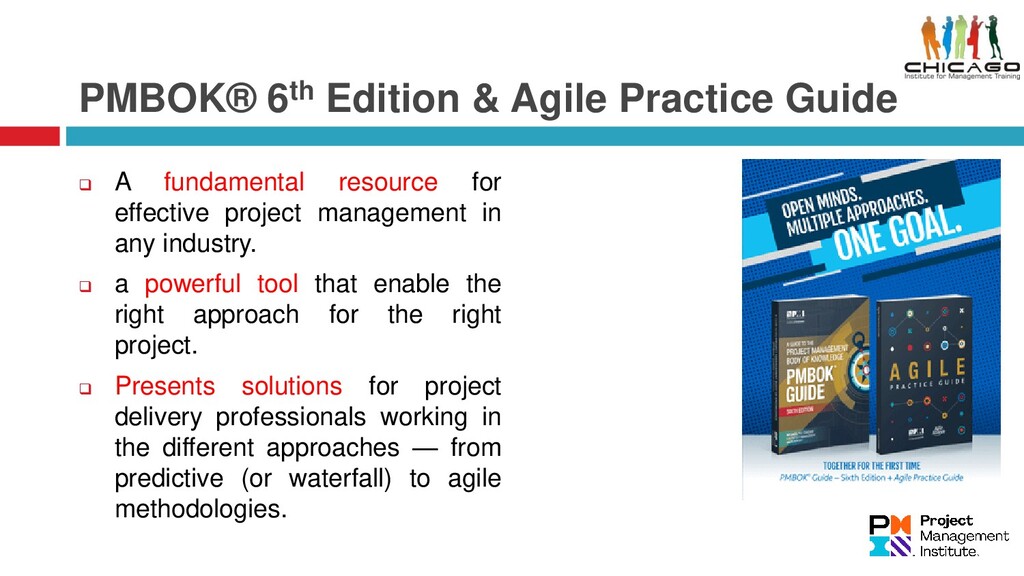
resource for effective project management in any industry. a powerful tool that enable the right approach for the right project. Presents solutions for project delivery professionals working in the different approaches — from predictive (or waterfall) to agile methodologies.
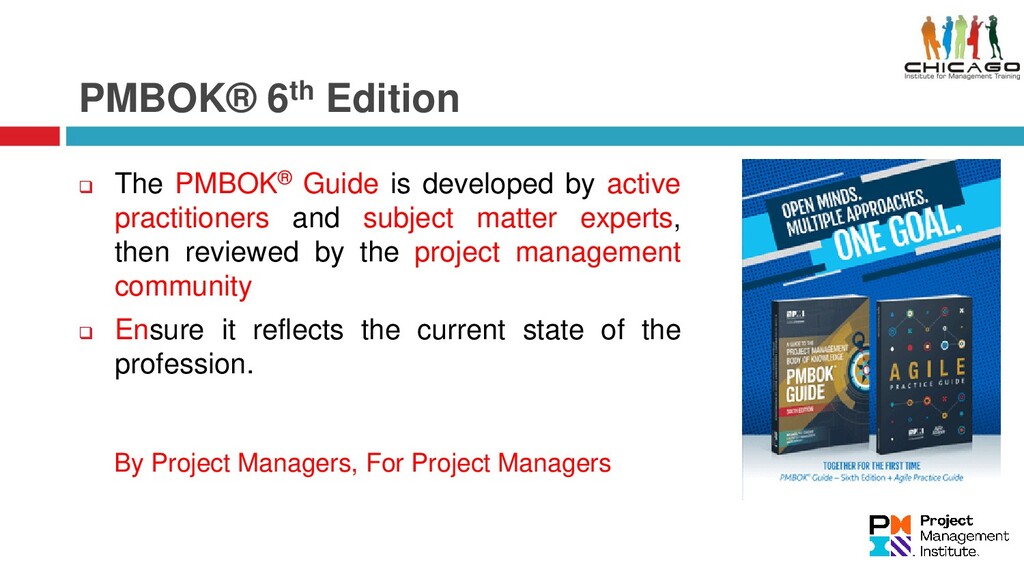
active practitioners and subject matter experts, then reviewed by the project management community Ensure it reflects the current state of the profession. By Project Managers, For Project Managers
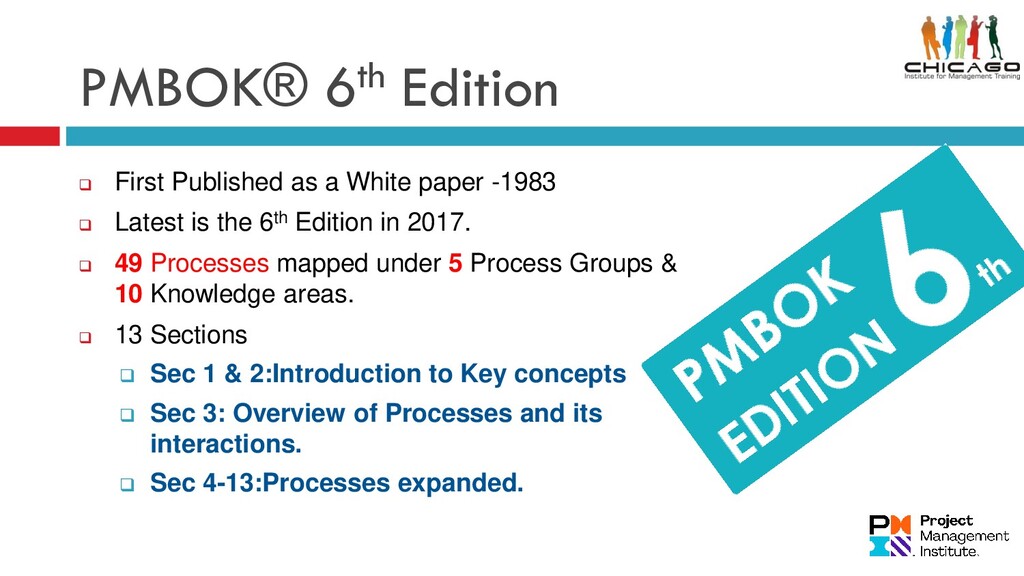
-1983 Latest is the 6th Edition in 2017. 49 Processes mapped under 5 Process Groups & 10 Knowledge areas. 13 Sections Sec 1 & 2:Introduction to Key concepts Sec 3: Overview of Processes and its interactions. Sec 4-13:Processes expanded.
traditional practices with innovative practices Constantly Developed & Updated Generally recognized good practices. Generally applicable to most of the projects of the most of the time Can not be uniformly applied to all projects.


 matleenalaakso
 soudai
 hiola
hiola
 terasawat
 signer
 pawan_pharm
 mutomasa
 cbtlibrary
 bvr7352
 juanmartin2026
 tamaranovitovic
 pedronauck
 tammyeverts
 ks91
ks91
 cassininazir
 addyosmani
.png) helenjbeal
helenjbeal
 auna
auna
 jnunemaker
 bluesmoon
 jmmastey