Upgrade to Pro — share decks privately, control downloads, hide ads and more …

Istio's Ambient Mesh: The Real Cost of Sidecar-...

Sponsored · Your Podcast. Everywhere. Effortlessly. Share. Educate. Inspire. Entertain. You do you. We'll handle the rest.

Istio's Ambient Mesh: The Real Cost of Sidecar-less Tracing

The promise of Istio's Ambient Mesh is a future free from sidecar overhead. But what is the true cost of adopting this new model for production workloads? Our team went beyond the hype to perform a deep, pragmatic analysis.

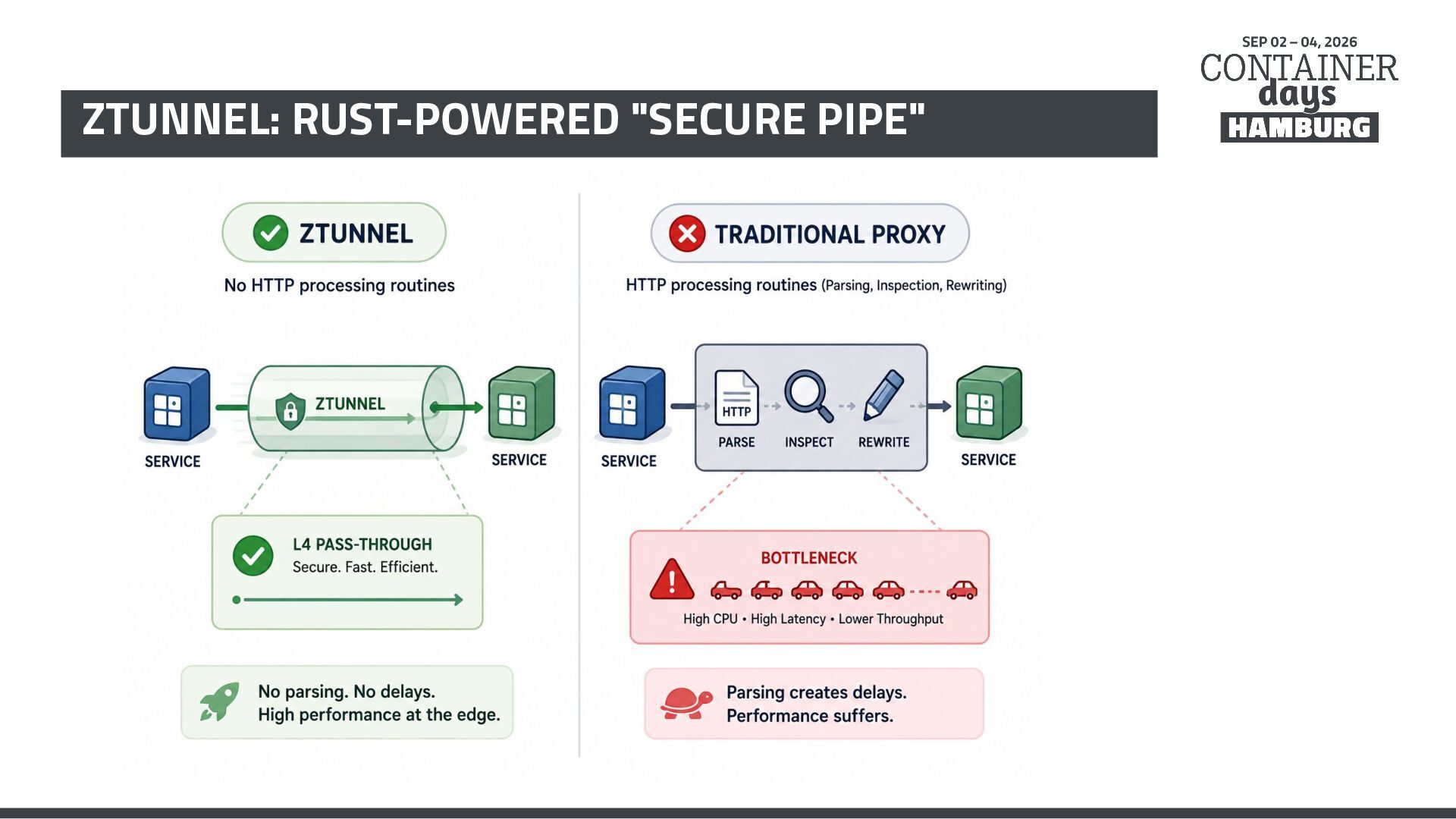
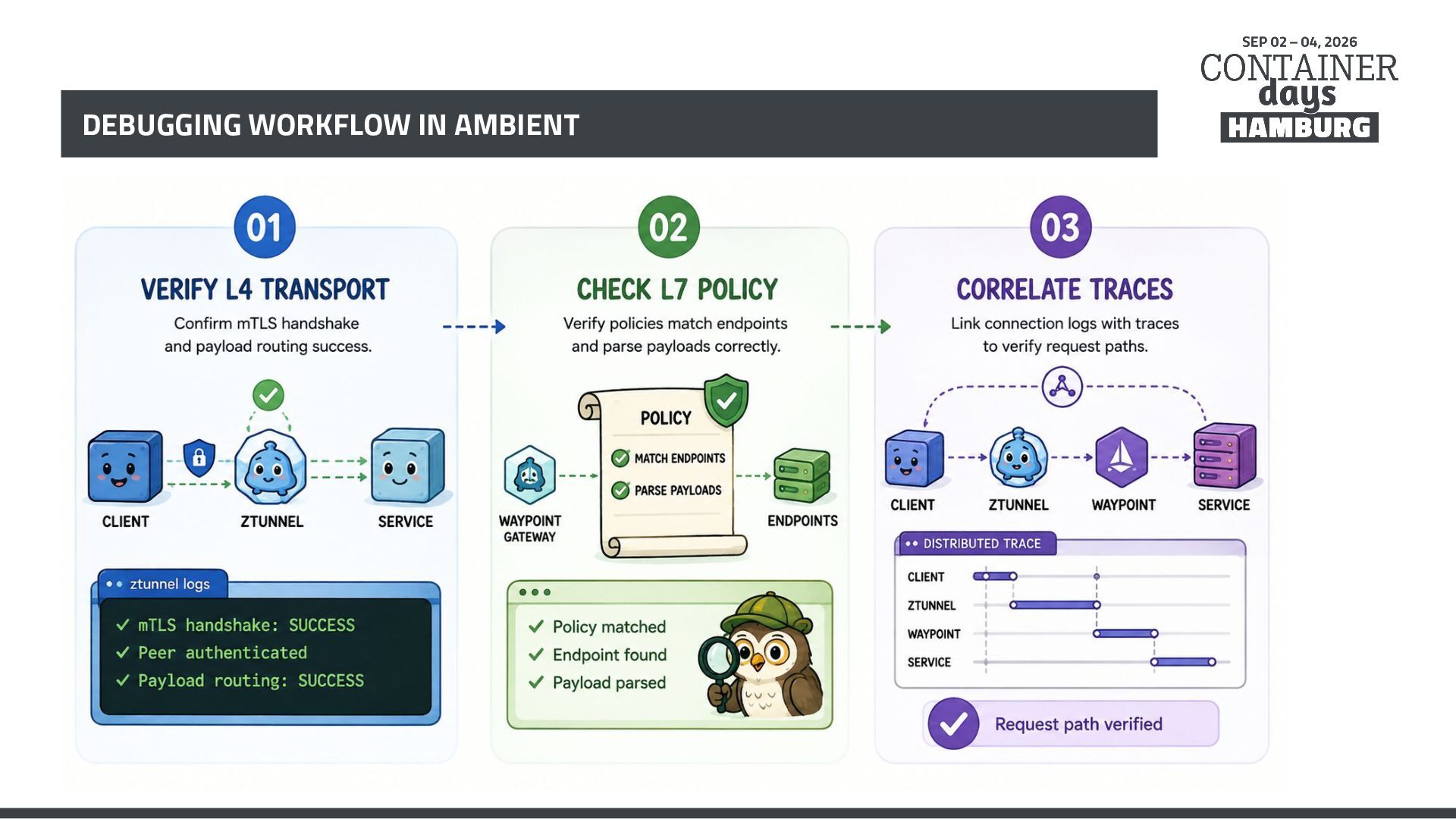
This session presents our comprehensive findings on the economics of sidecar-less tracing. We'll show our before-and-after cluster utilization metrics (Resource Cost) and present latency benchmarks for the new ztunnel and waypoint proxy architecture (Performance Cost). We'll also detail the hidden Operational Cost of new debugging patterns and the impact on our platform team's cognitive load.

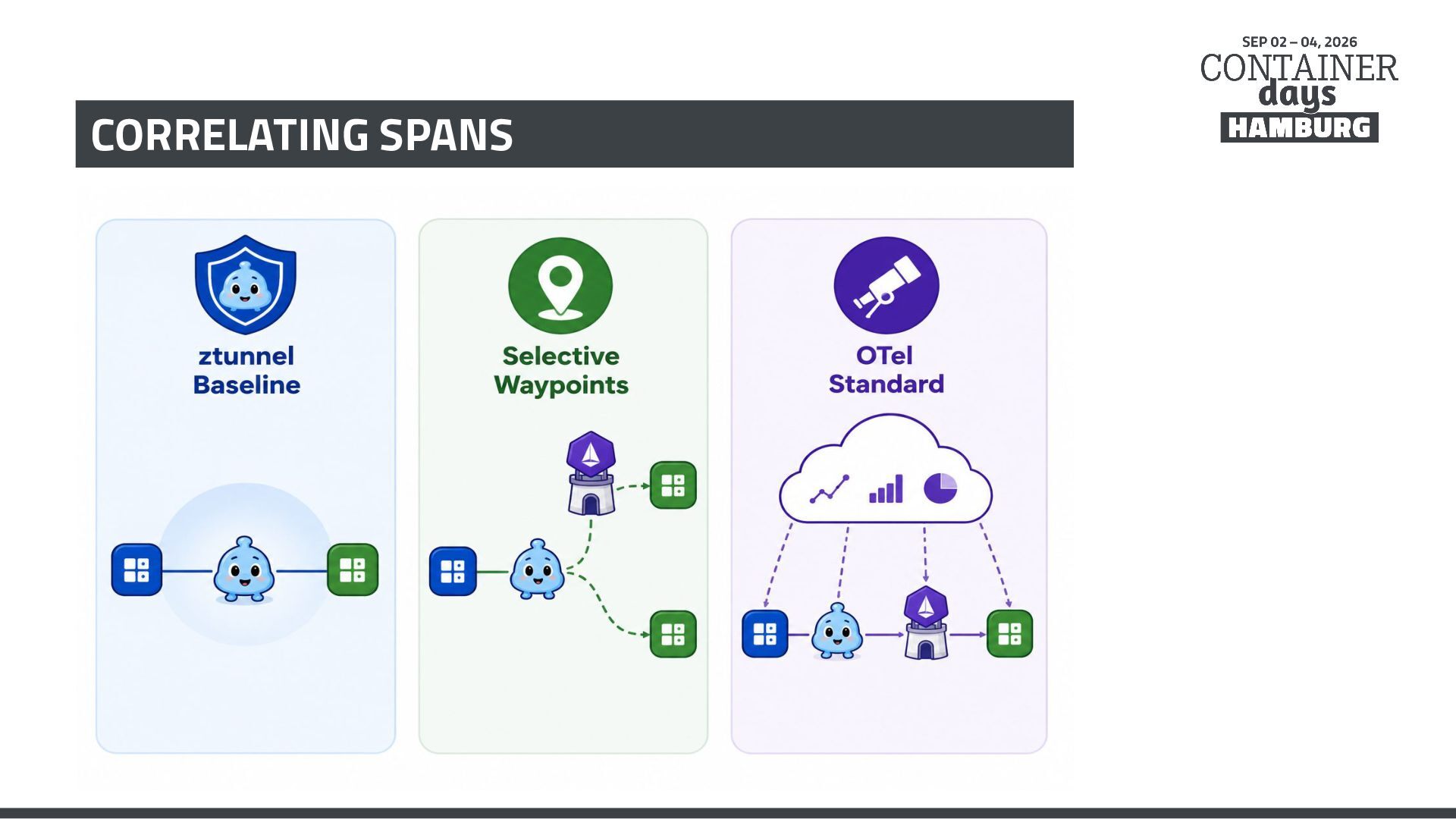
Finally, we'll share strategies for solving the observability "blind spot," ensuring developers receive actionable insights by correlating mesh telemetry with rich application context. This is the data-driven talk we wish we had, presented by the platform builder (SRE) and a key platform customer (EM).

Avatar for Hannah Olukoye

Hannah Olukoye

September 04, 2026

More Decks by Hannah Olukoye

Other Decks in Technology

Transcript

  1. ISTIO'S AMBIENT MESH: THE REAL COST OF SIDECAR-LESS TRACING Mofesola

    Babalola Staff SRE Hannah Olukoye Engineering Manager
  2. THE SESSION PROMISE 01 02 03 04 BEFORE/AFTER CLUSTER METRICS

    L4 VS L7 LATENCY BENCHMARKS THE "COGNITIVE LOAD" OF DEBUGGING SOLVING THE OBSERVABILITY BLIND SPOT
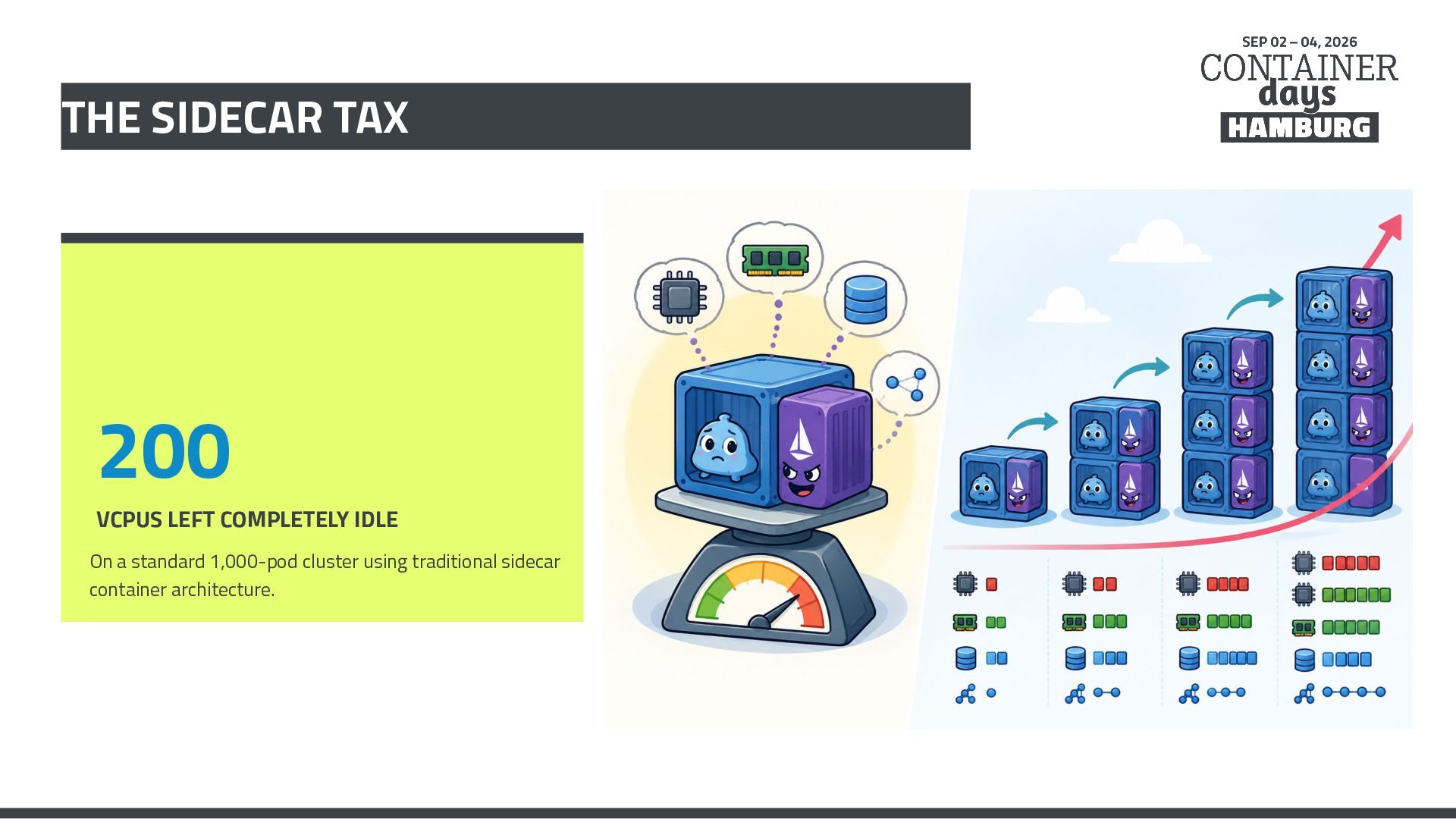
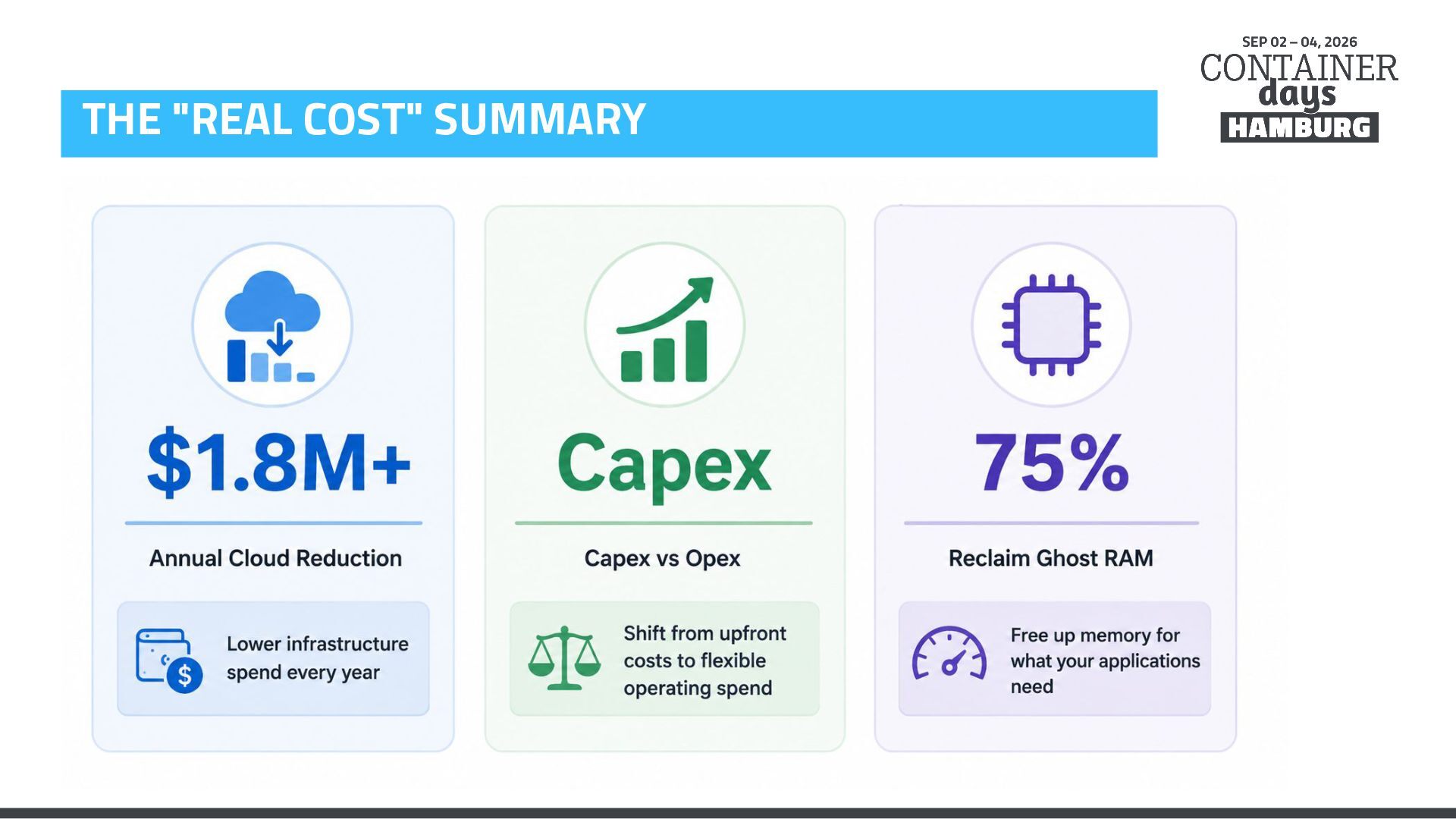
  3. THE SIDECAR TAX 200 VCPUS LEFT COMPLETELY IDLE On a

    standard 1,000-pod cluster using traditional sidecar container architecture.
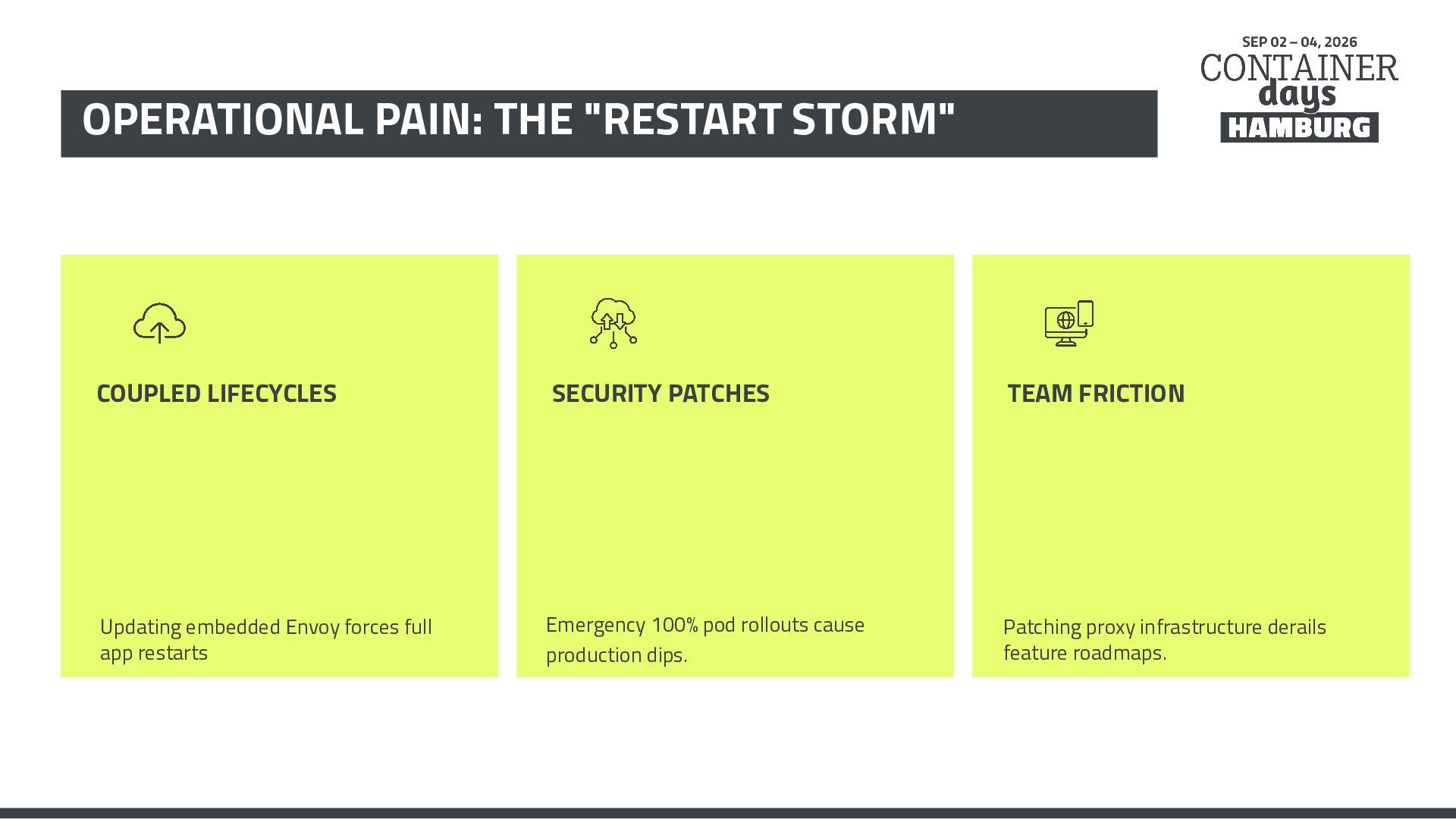
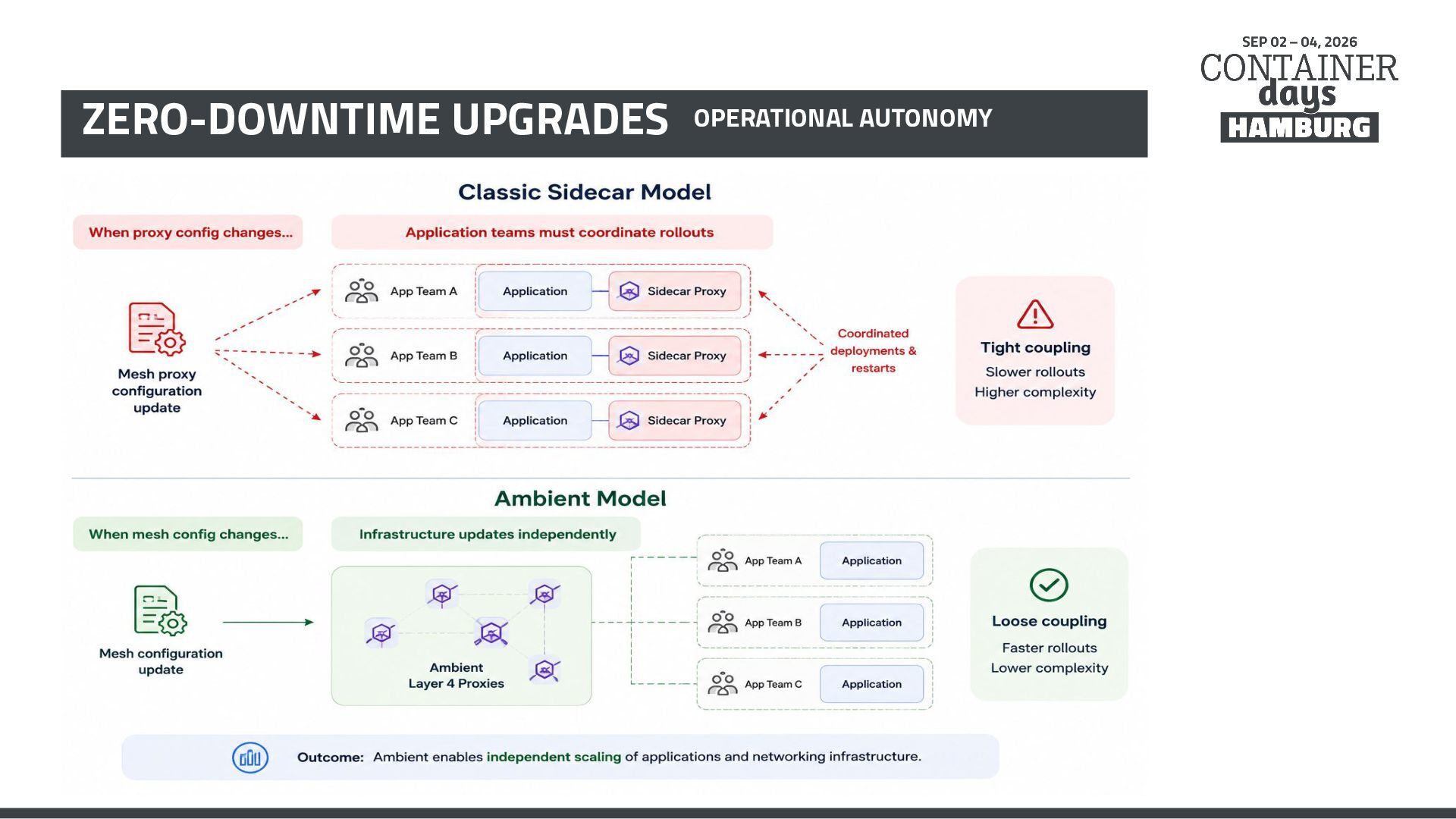
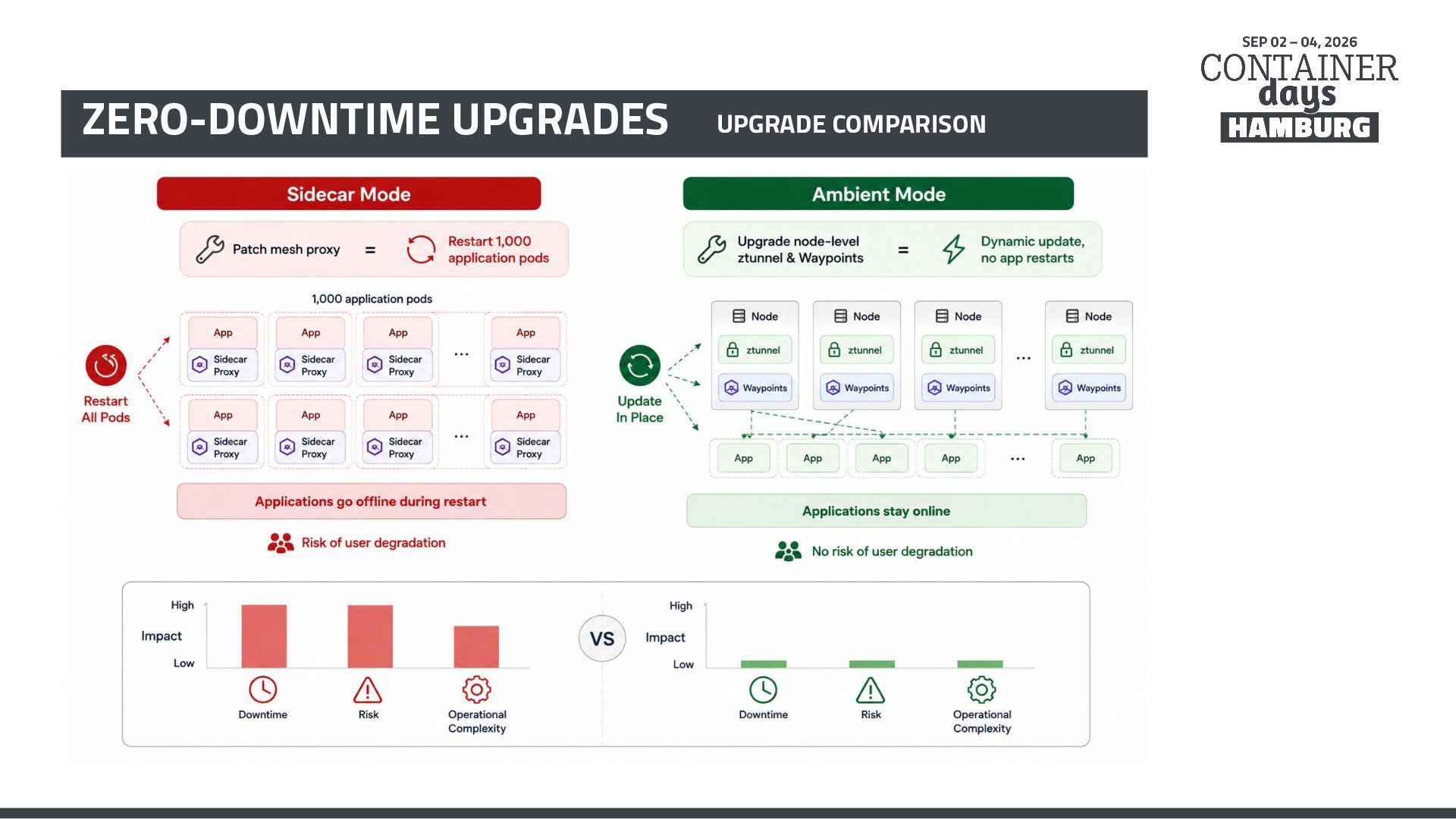
  4. OPERATIONAL PAIN: THE "RESTART STORM" COUPLED LIFECYCLES SECURITY PATCHES TEAM

    FRICTION Updating embedded Envoy forces full app restarts Emergency 100% pod rollouts cause production dips. Patching proxy infrastructure derails feature roadmaps.
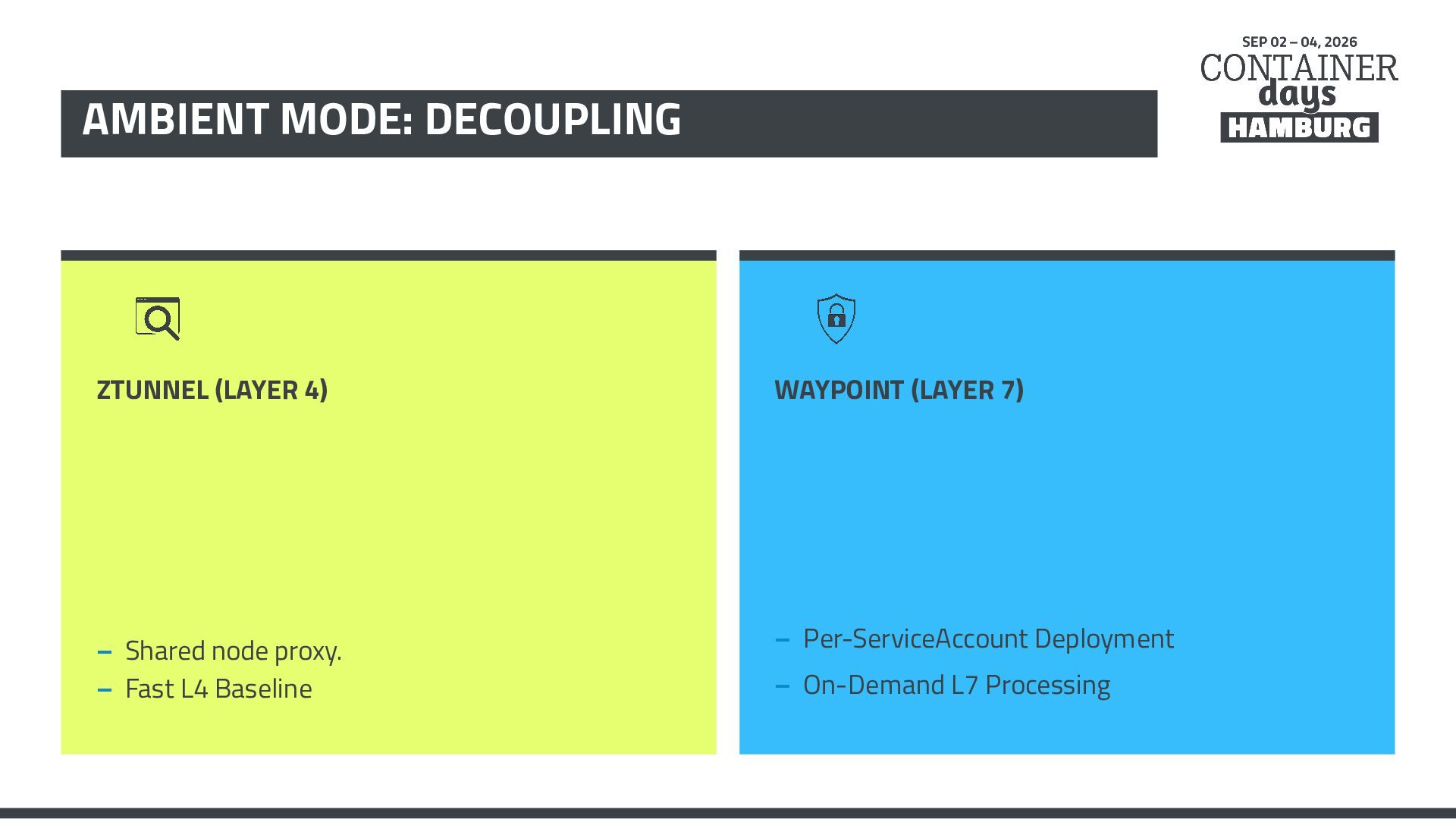
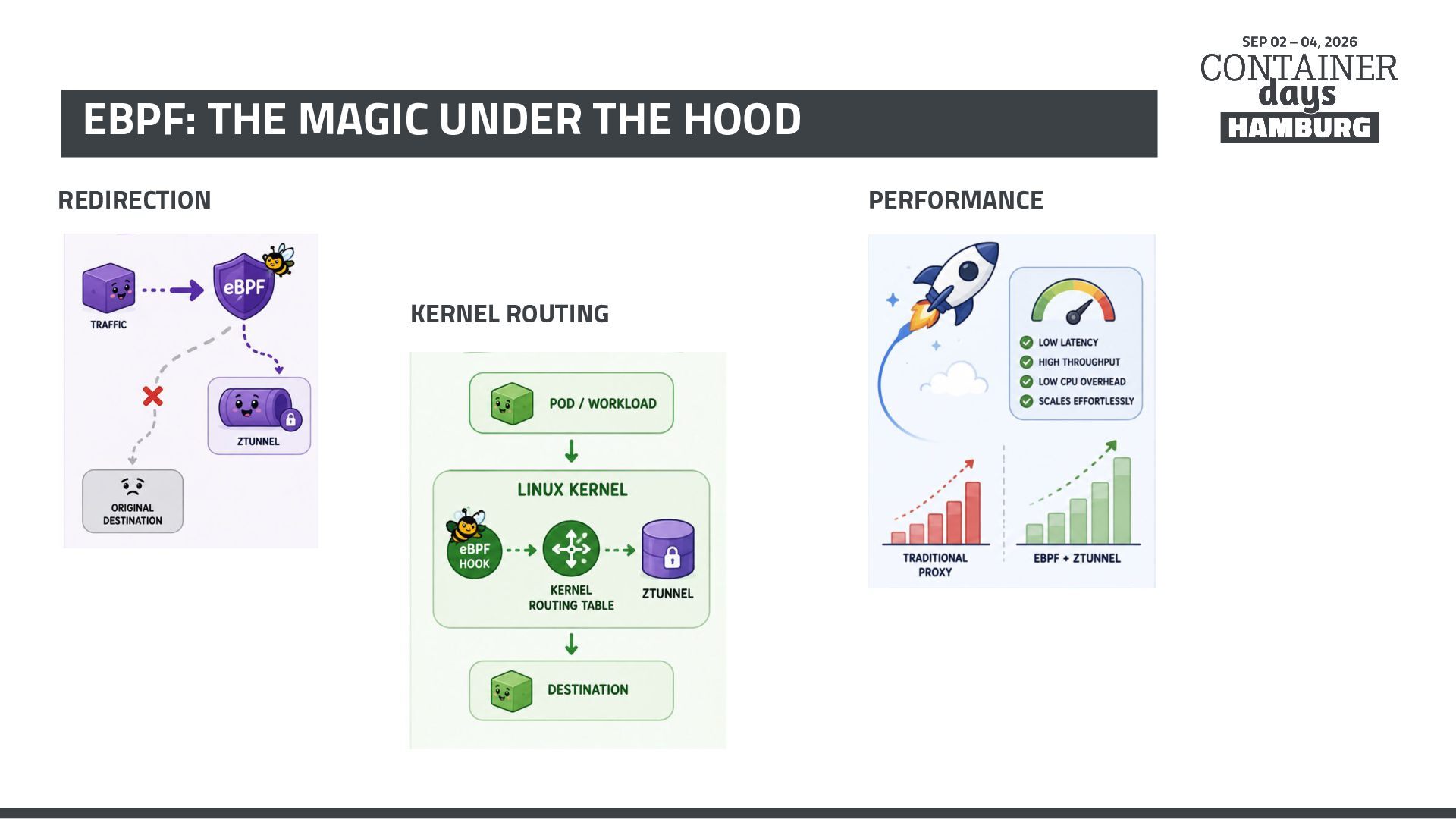
  5. AMBIENT MODE: DECOUPLING ZTUNNEL (LAYER 4) WAYPOINT (LAYER 7) –

    Shared node proxy. – Fast L4 Baseline – Per-ServiceAccount Deployment – On-Demand L7 Processing
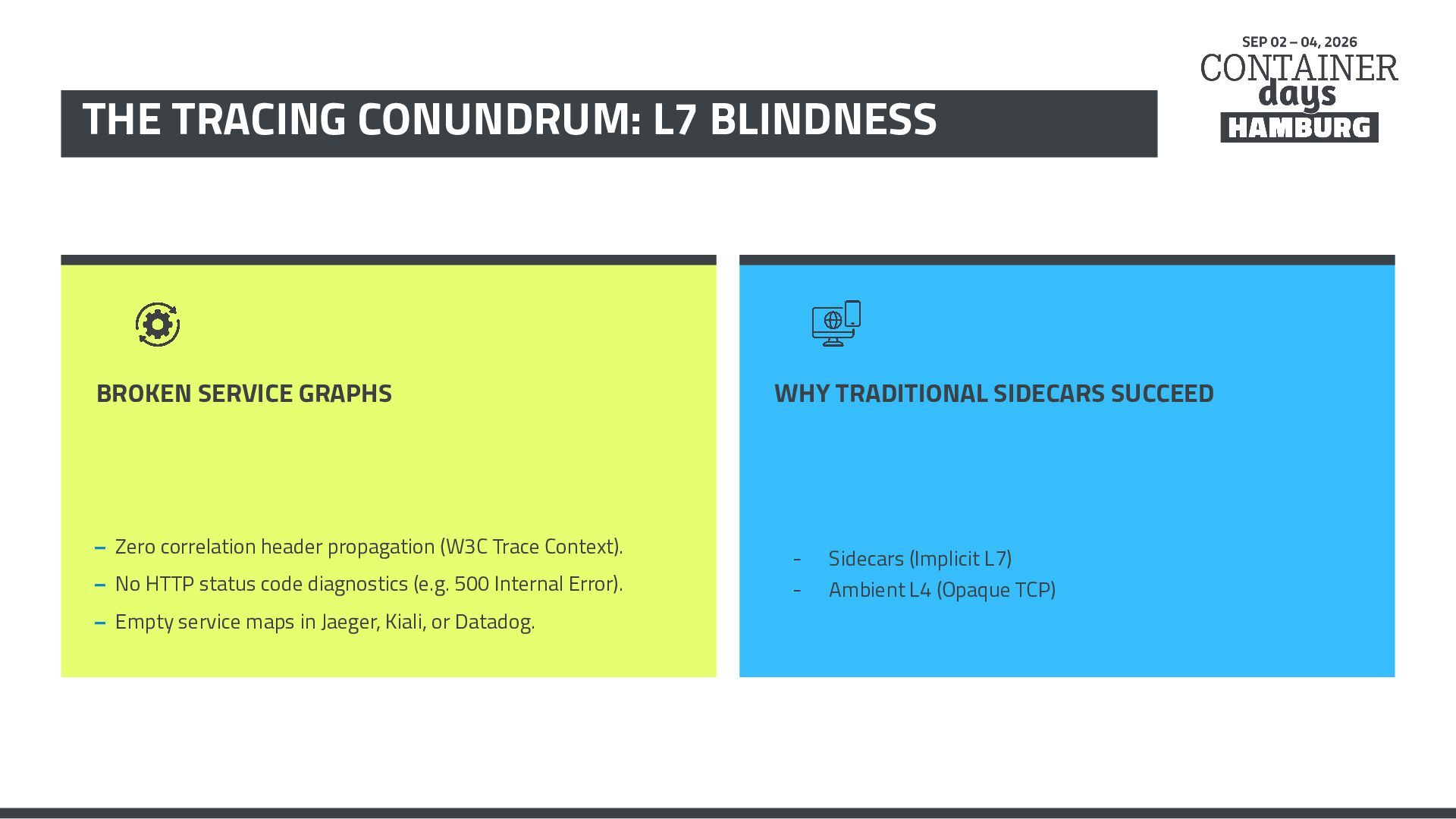
  6. THE TRACING CONUNDRUM: L7 BLINDNESS BROKEN SERVICE GRAPHS – Zero

    correlation header propagation (W3C Trace Context). – No HTTP status code diagnostics (e.g. 500 Internal Error). – Empty service maps in Jaeger, Kiali, or Datadog. WHY TRADITIONAL SIDECARS SUCCEED - Sidecars (Implicit L7) Ambient L4 (Opaque TCP)
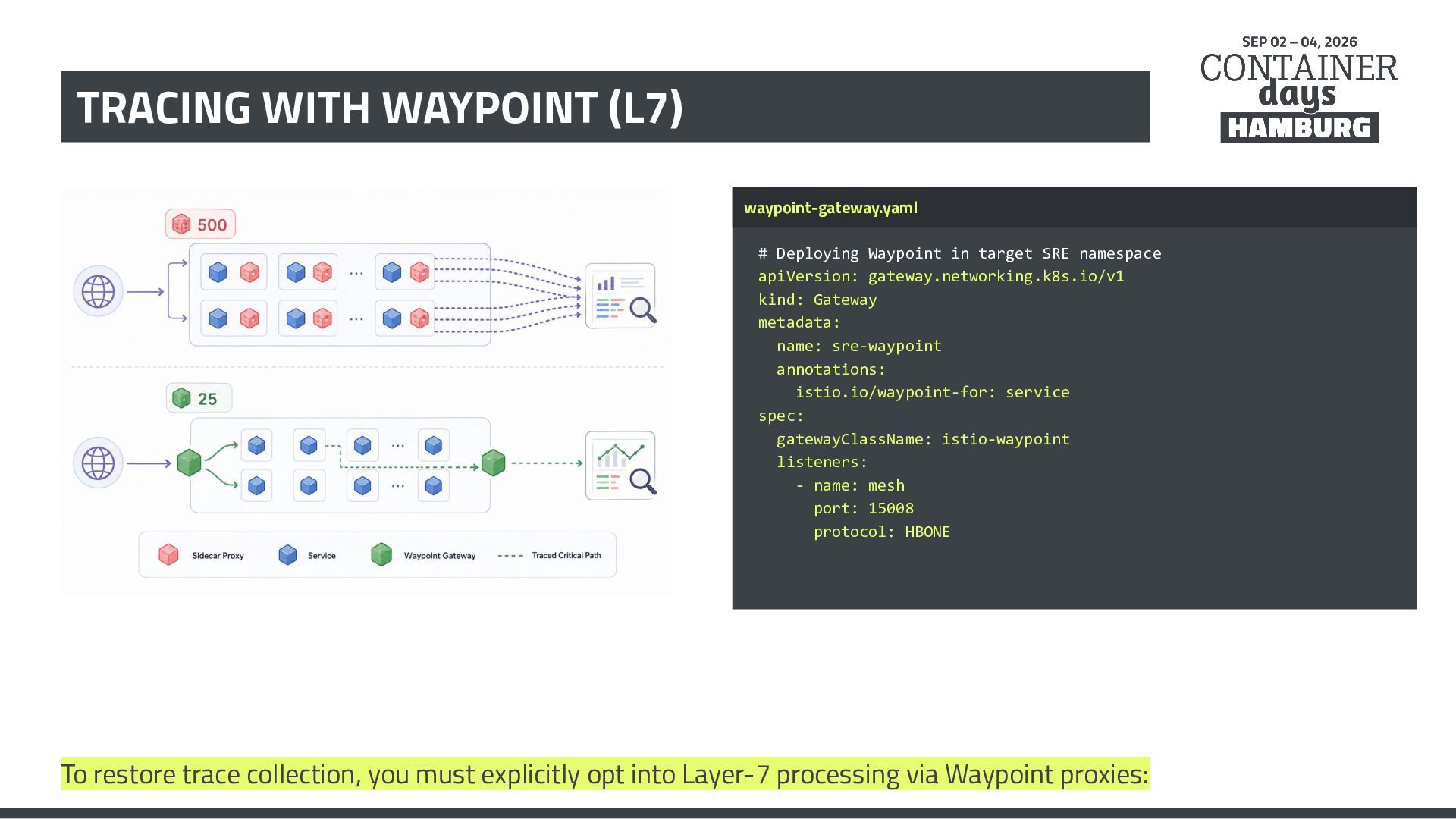
  7. TRACING WITH WAYPOINT (L7) waypoint-gateway.yaml # Deploying Waypoint in target

    SRE namespace apiVersion: gateway.networking.k8s.io/v1 kind: Gateway metadata: name: sre-waypoint annotations: istio.io/waypoint-for: service spec: gatewayClassName: istio-waypoint listeners: - name: mesh port: 15008 protocol: HBONE To restore trace collection, you must explicitly opt into Layer-7 processing via Waypoint proxies:
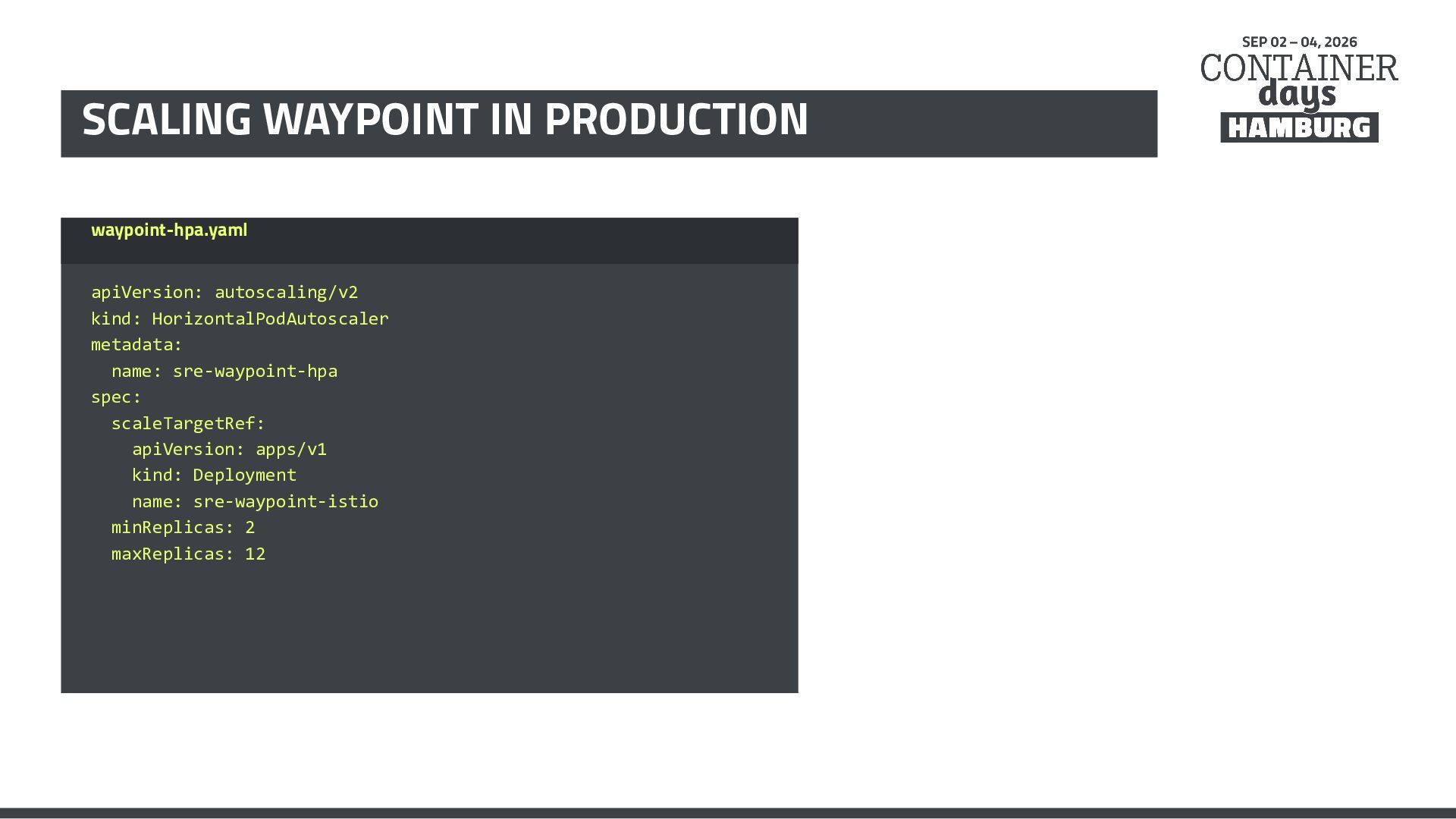
  8. SCALING WAYPOINT IN PRODUCTION waypoint-hpa.yaml apiVersion: autoscaling/v2 kind: HorizontalPodAutoscaler metadata:

    name: sre-waypoint-hpa spec: scaleTargetRef: apiVersion: apps/v1 kind: Deployment name: sre-waypoint-istio minReplicas: 2 maxReplicas: 12
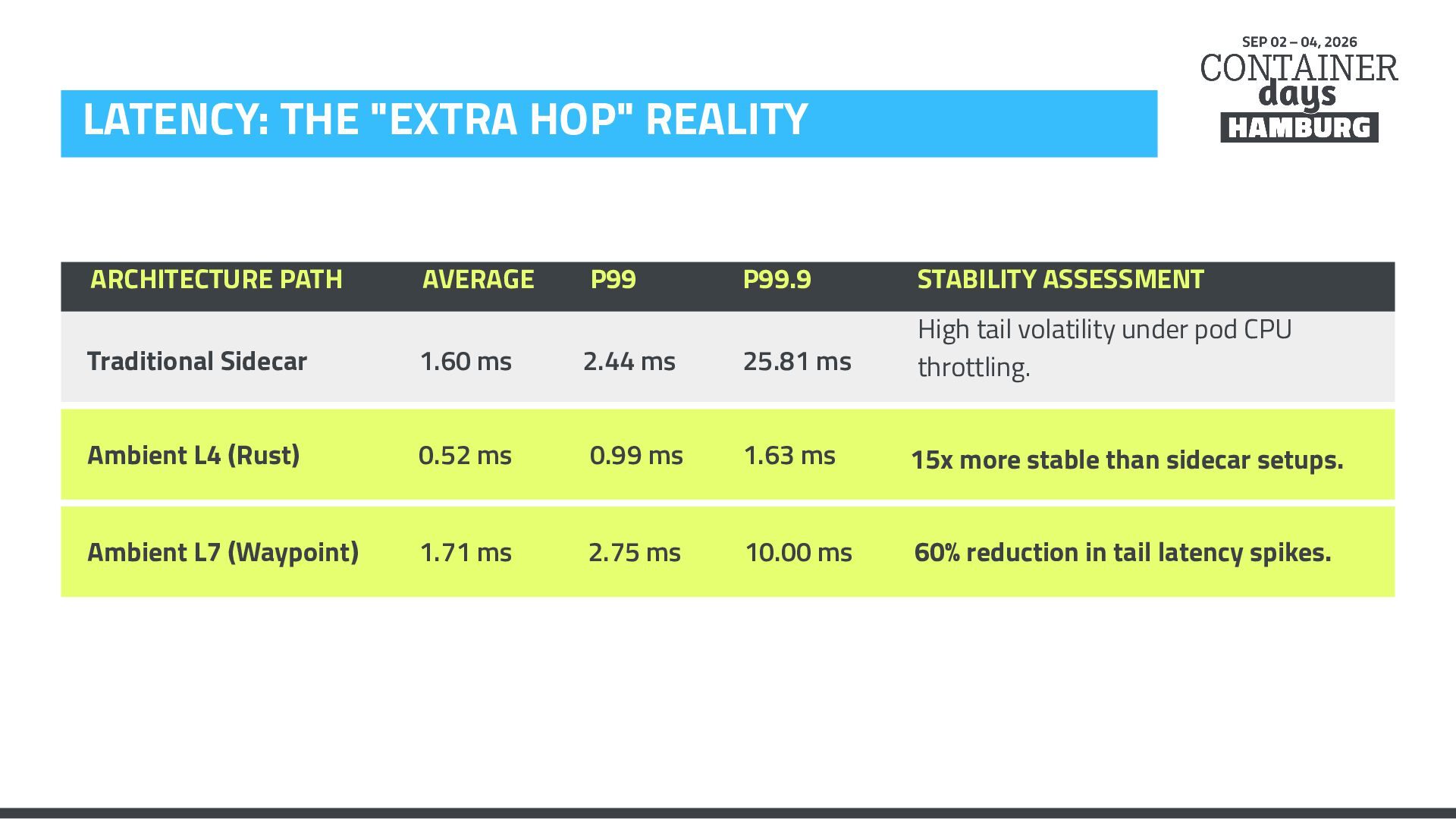
  9. LATENCY: THE "EXTRA HOP" REALITY ARCHITECTURE PATH AVERAGE P99 P99.9

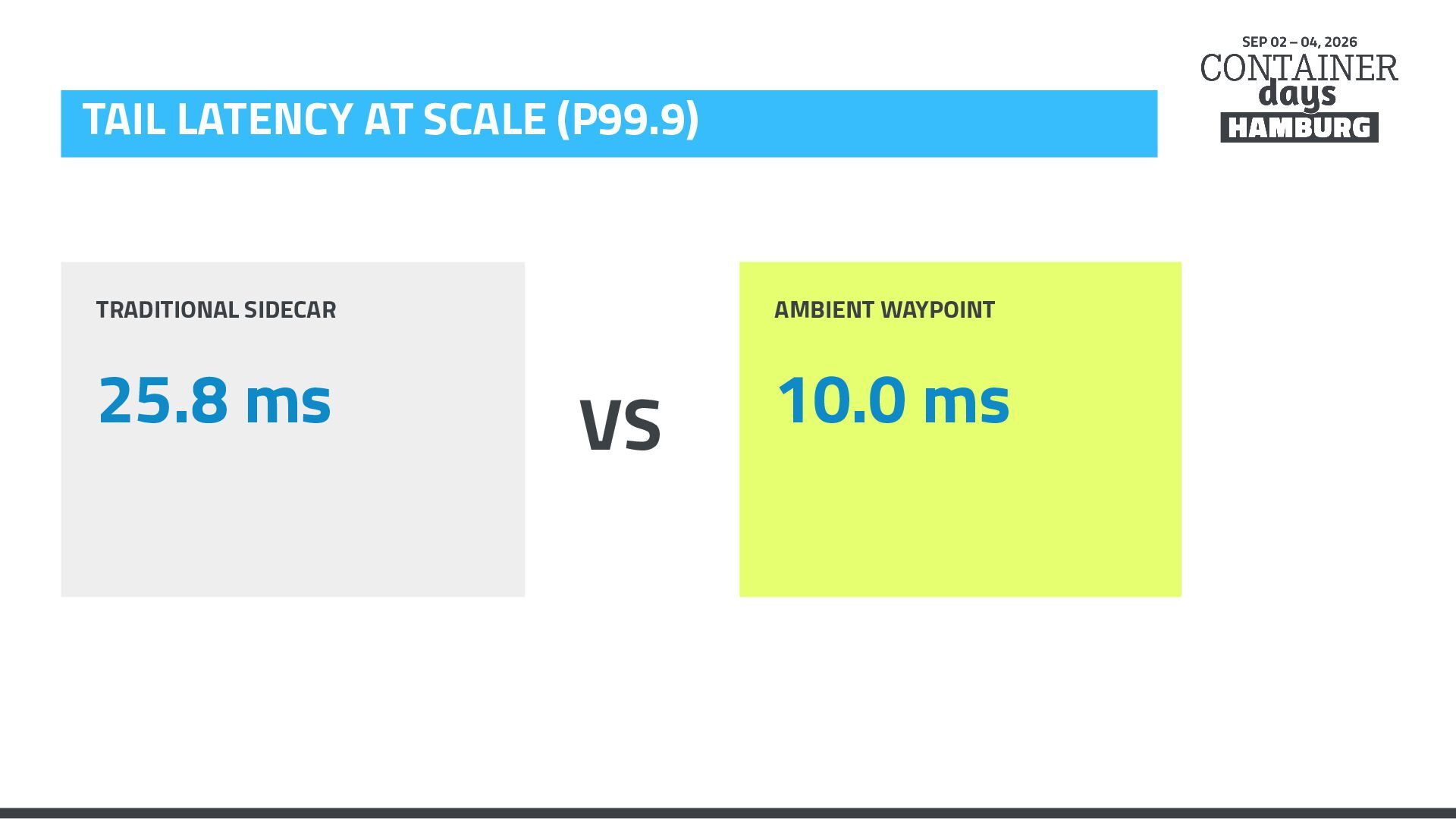
    STABILITY ASSESSMENT Traditional Sidecar 1.60 ms 2.44 ms 25.81 ms High tail volatility under pod CPU throttling. Ambient L4 (Rust) 0.52 ms 0.99 ms 1.63 ms 15x more stable than sidecar setups. Ambient L7 (Waypoint) 1.71 ms 2.75 ms 10.00 ms 60% reduction in tail latency spikes.
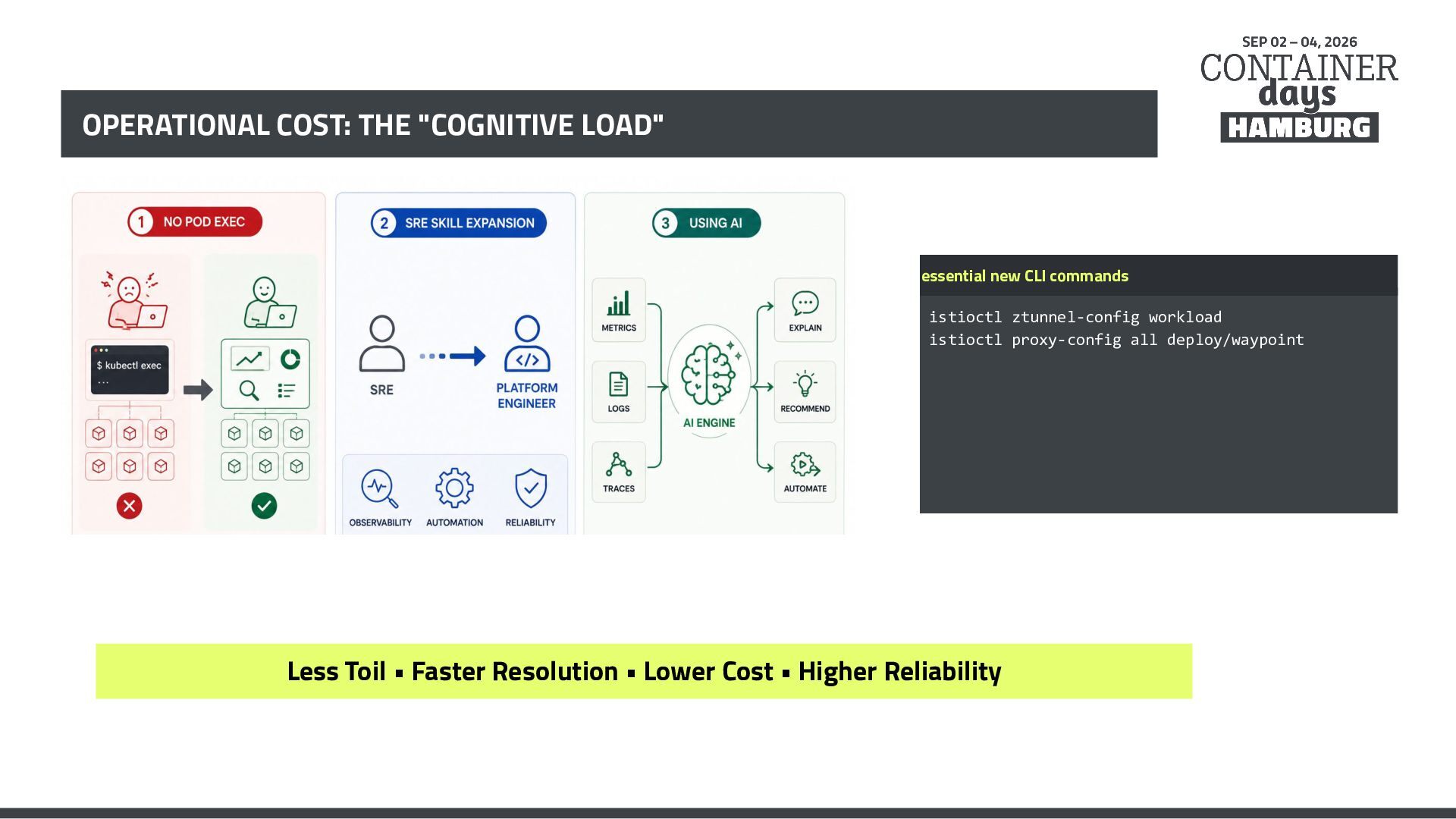
  10. OPERATIONAL COST: THE "COGNITIVE LOAD" essential new CLI commands istioctl

    ztunnel-config workload istioctl proxy-config all deploy/waypoint Less Toil • Faster Resolution • Lower Cost • Higher Reliability
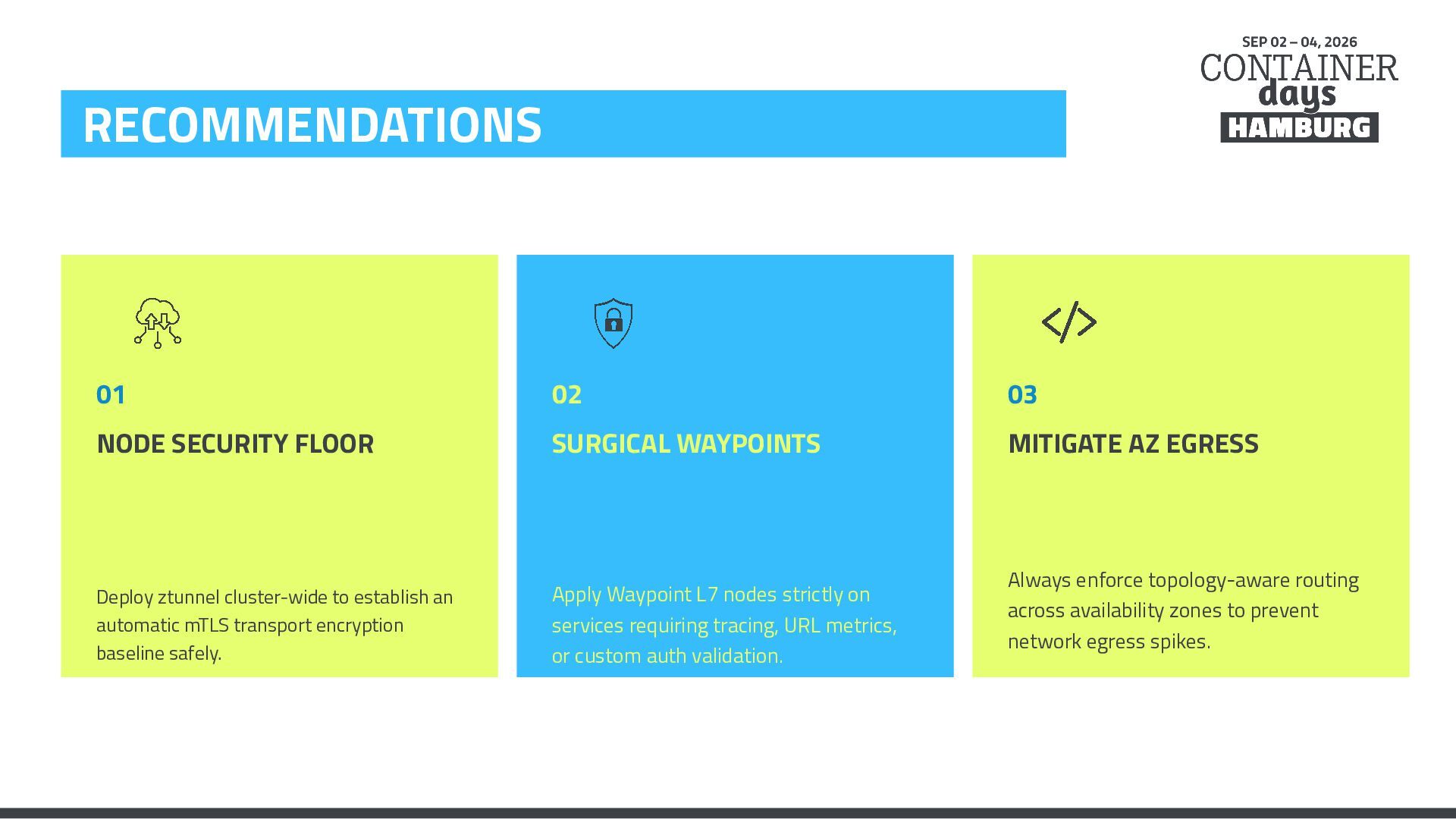
  11. RECOMMENDATIONS 01 02 03 NODE SECURITY FLOOR SURGICAL WAYPOINTS MITIGATE

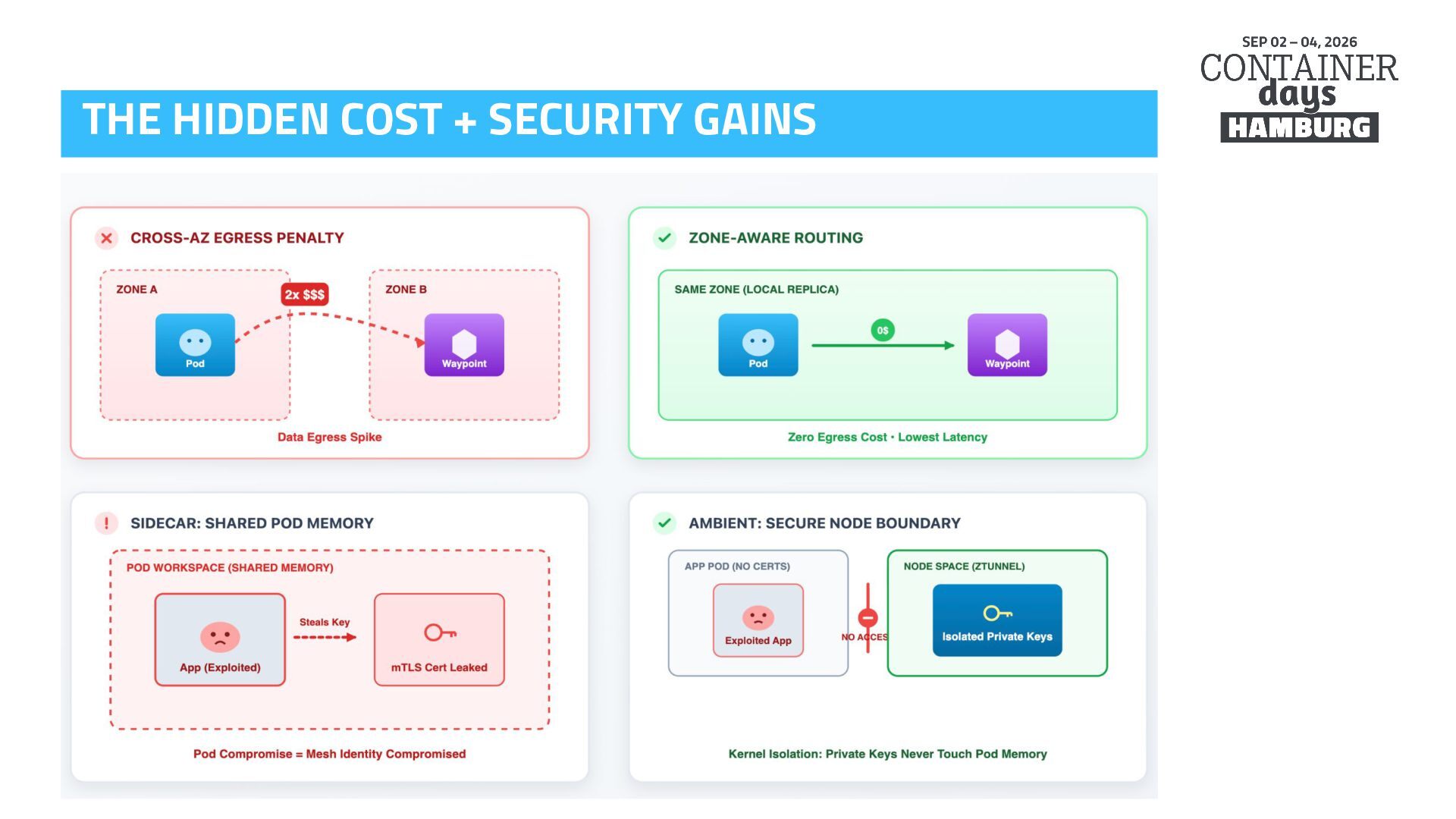
    AZ EGRESS Deploy ztunnel cluster-wide to establish an automatic mTLS transport encryption baseline safely. Apply Waypoint L7 nodes strictly on services requiring tracing, URL metrics, or custom auth validation. Always enforce topology-aware routing across availability zones to prevent network egress spikes.