Upgrade to Pro — share decks privately, control downloads, hide ads and more …

Istio's Ambient Mesh: The Real Cost of Sidecar-...

Istio's Ambient Mesh: The Real Cost of Sidecar-less Tracing

The promise of Istio's Ambient Mesh is a future free from sidecar overhead. But what is the true cost of adopting this new model for production workloads? Our team went beyond the hype to perform a deep, pragmatic analysis.

This session presents our comprehensive findings on the economics of sidecar-less tracing. We'll show our before-and-after cluster utilization metrics (Resource Cost) and present latency benchmarks for the new ztunnel and waypoint proxy architecture (Performance Cost). We'll also detail the hidden Operational Cost of new debugging patterns and the impact on our platform team's cognitive load.

Finally, we'll share strategies for solving the observability "blind spot," ensuring developers receive actionable insights by correlating mesh telemetry with rich application context. This is the data-driven talk we wish we had, presented by the platform builder (SRE) and a key platform customer (EM).

Avatar for Hannah Olukoye

Hannah Olukoye

March 29, 2026
Tweet

More Decks by Hannah Olukoye

Other Decks in Technology

Transcript

  1. #KubeCon #CloudNativeCon Istio's Ambient Mesh: The Real Cost of Sidecar-less

    Tracing Mofesola Babalola Staff SRE Hannah Olukoye Engineering Manager
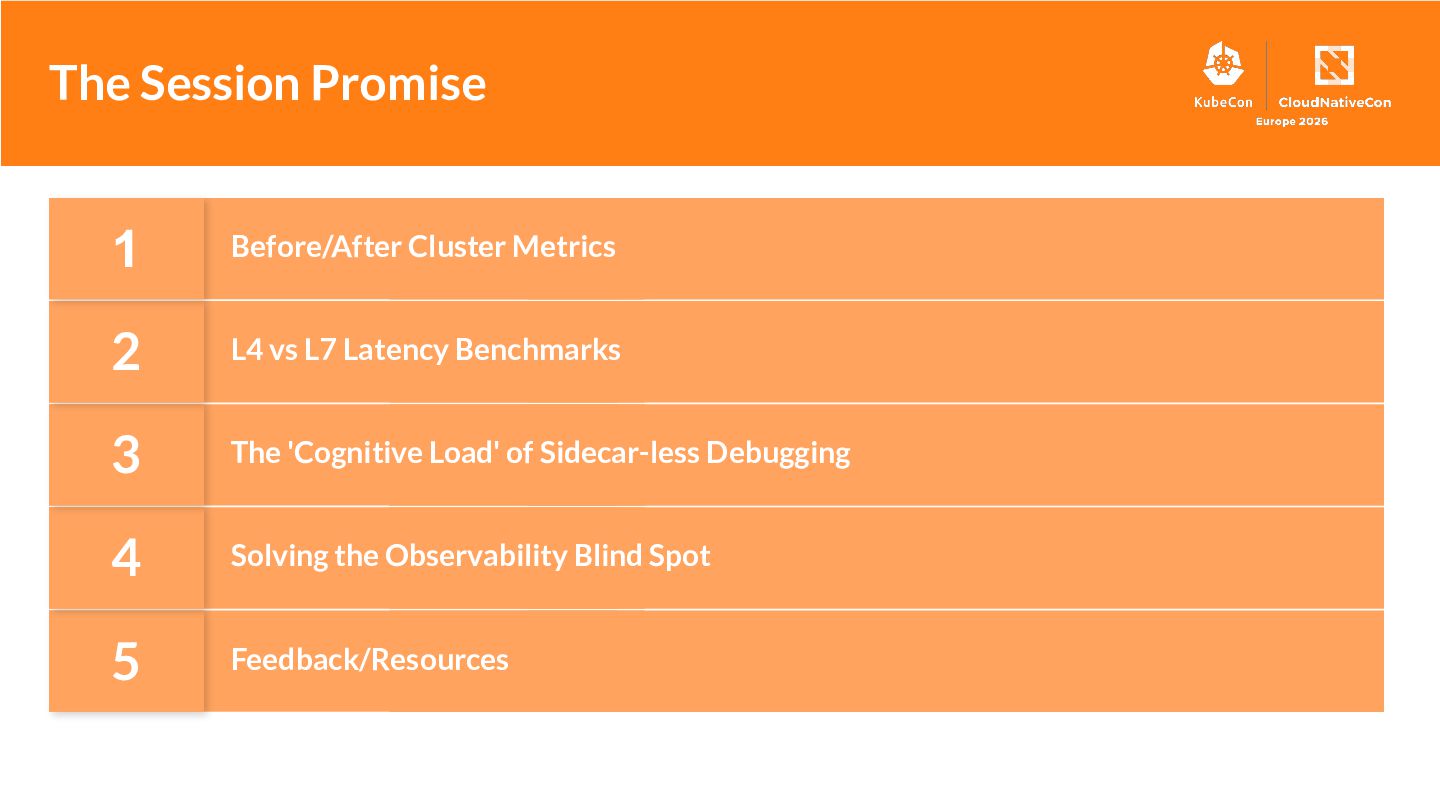
  2. The Session Promise Feedback/Resources 5 Solving the Observability Blind Spot

    4 The 'Cognitive Load' of Sidecar-less Debugging 3 L4 vs L7 Latency Benchmarks 2 Before/After Cluster Metrics 1
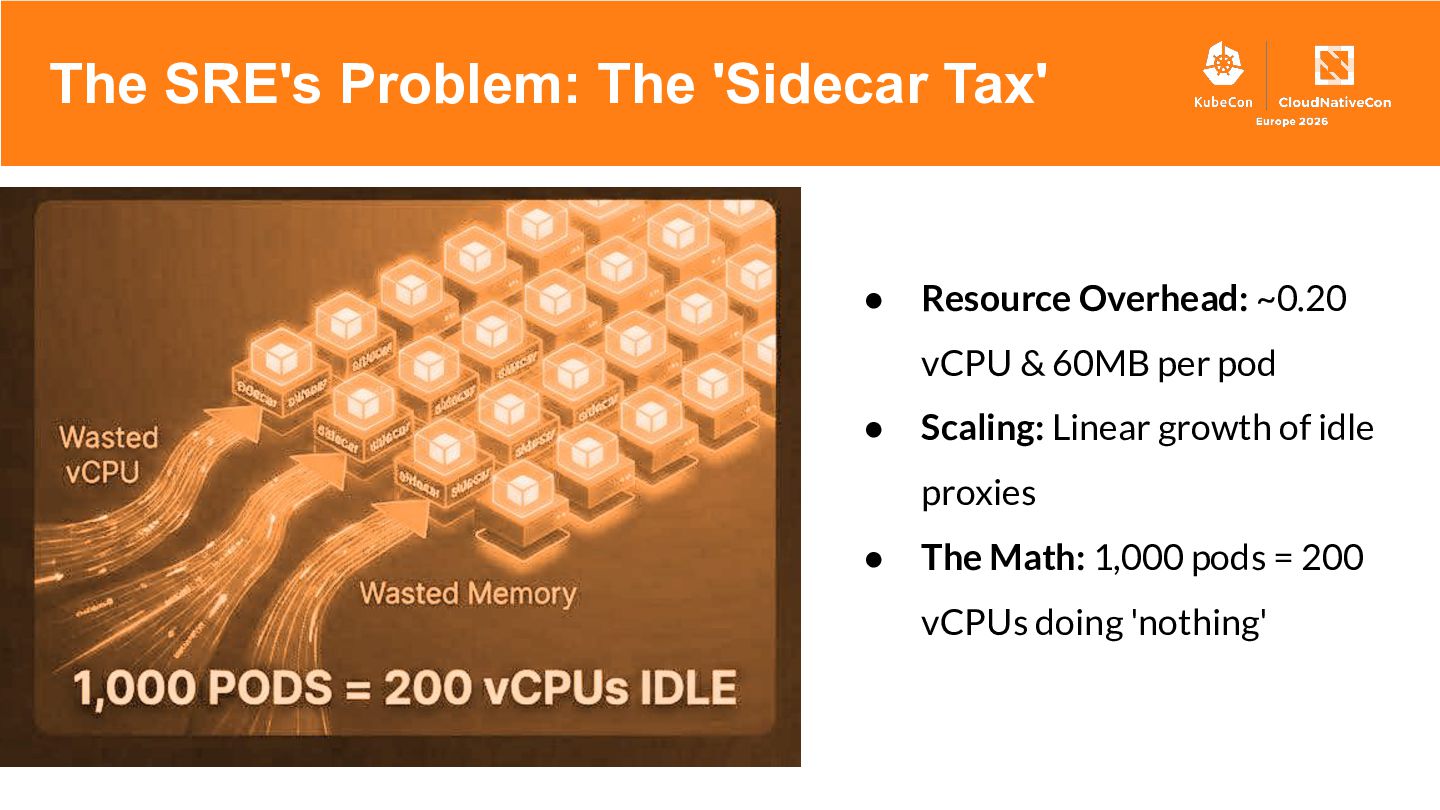
  3. The SRE's Problem: The 'Sidecar Tax' • Resource Overhead: ~0.20

    vCPU & 60MB per pod • Scaling: Linear growth of idle proxies • The Math: 1,000 pods = 200 vCPUs doing 'nothing'
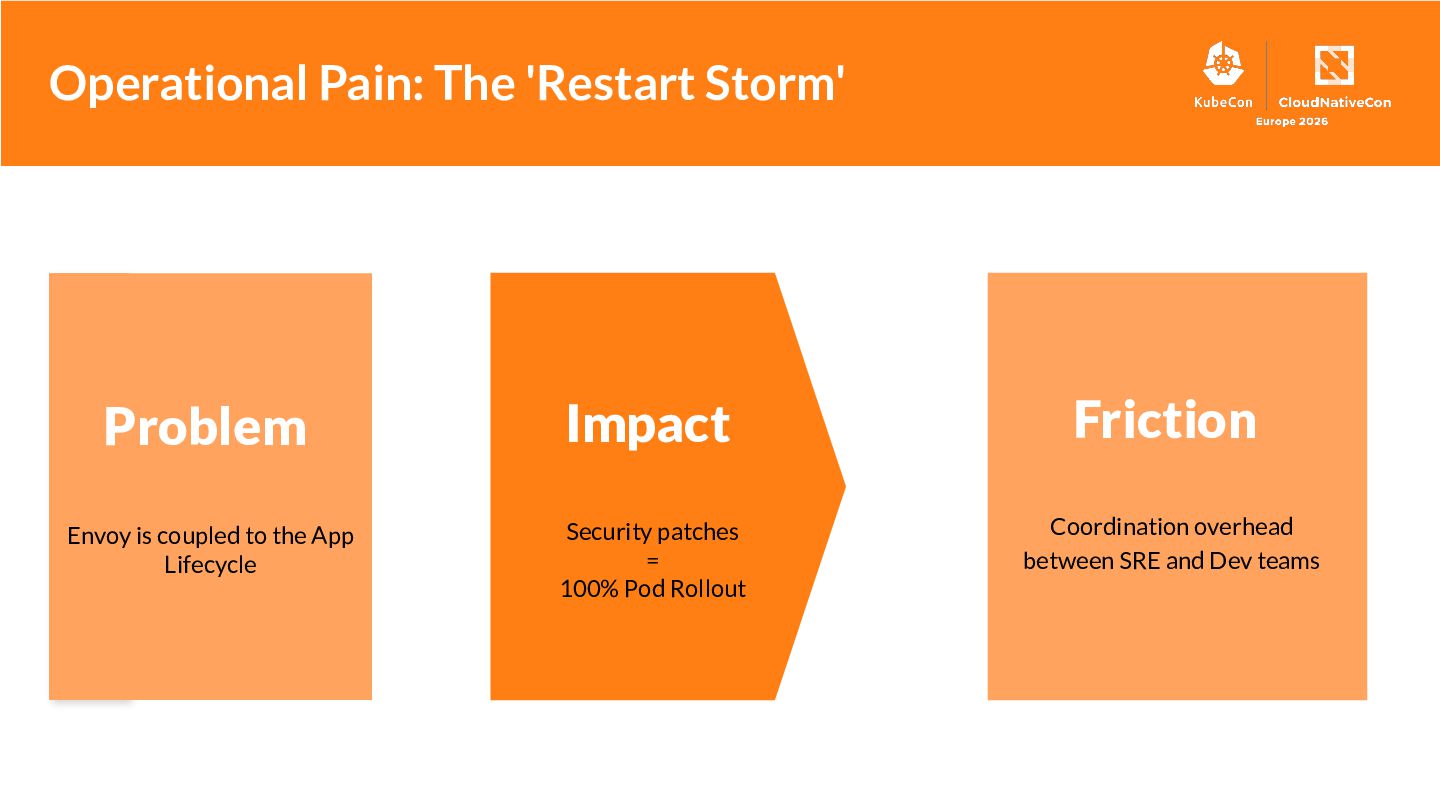
  4. Operational Pain: The 'Restart Storm' Problem Envoy is coupled to

    the App Lifecycle Friction Coordination overhead between SRE and Dev teams Impact Security patches = 100% Pod Rollout
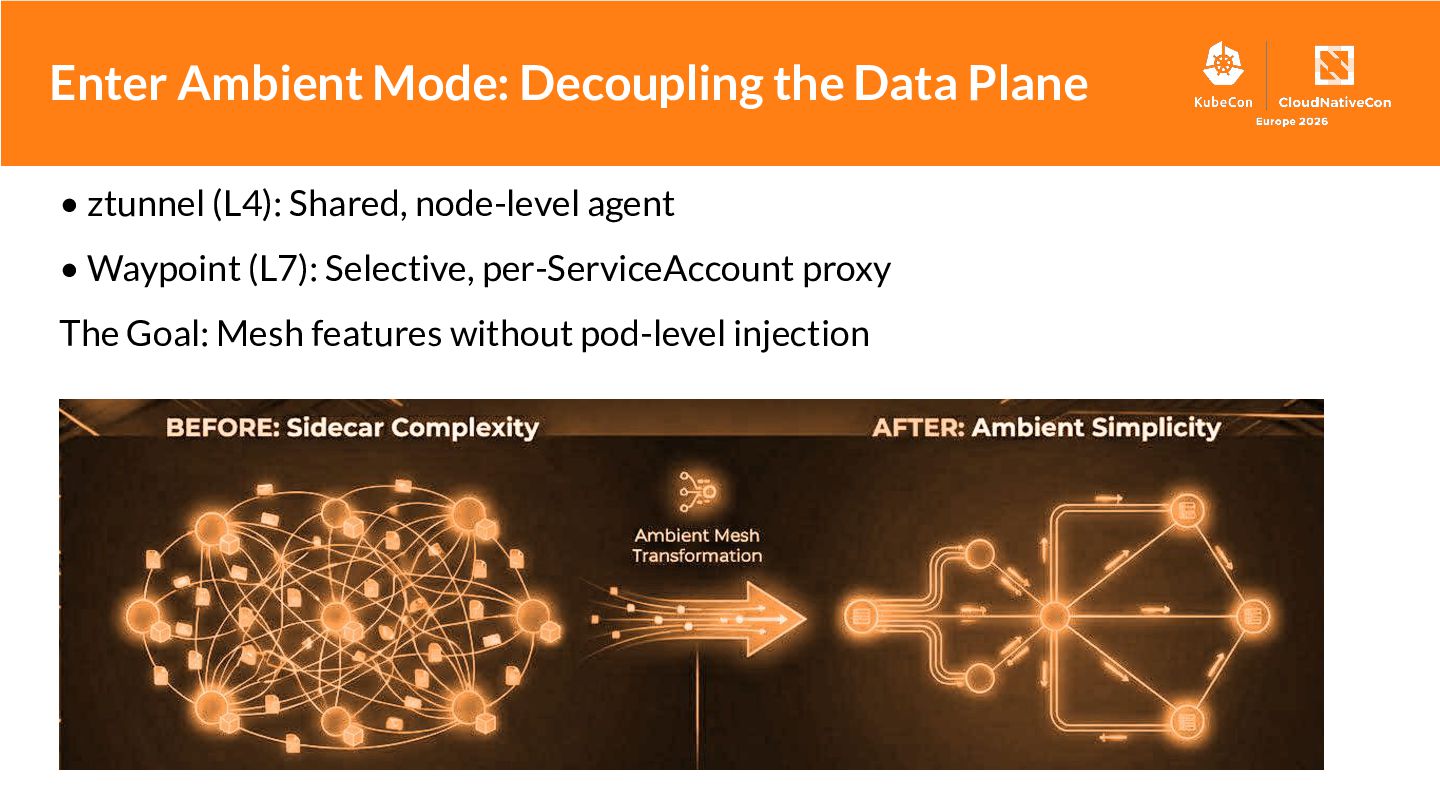
  5. Enter Ambient Mode: Decoupling the Data Plane • ztunnel (L4):

    Shared, node-level agent • Waypoint (L7): Selective, per-ServiceAccount proxy The Goal: Mesh features without pod-level injection
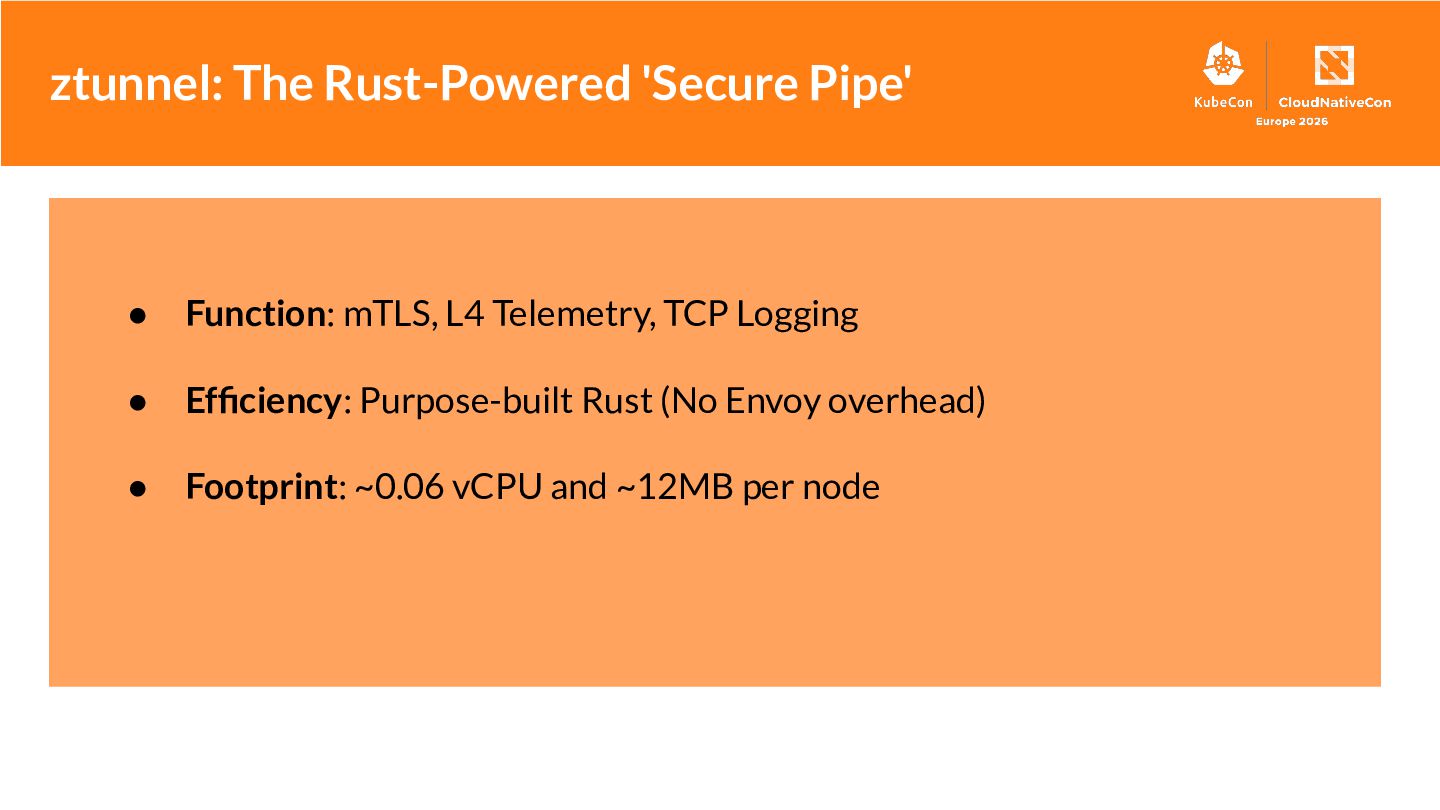
  6. ztunnel: The Rust-Powered 'Secure Pipe' • Function: mTLS, L4 Telemetry,

    TCP Logging • Efficiency: Purpose-built Rust (No Envoy overhead) • Footprint: ~0.06 vCPU and ~12MB per node
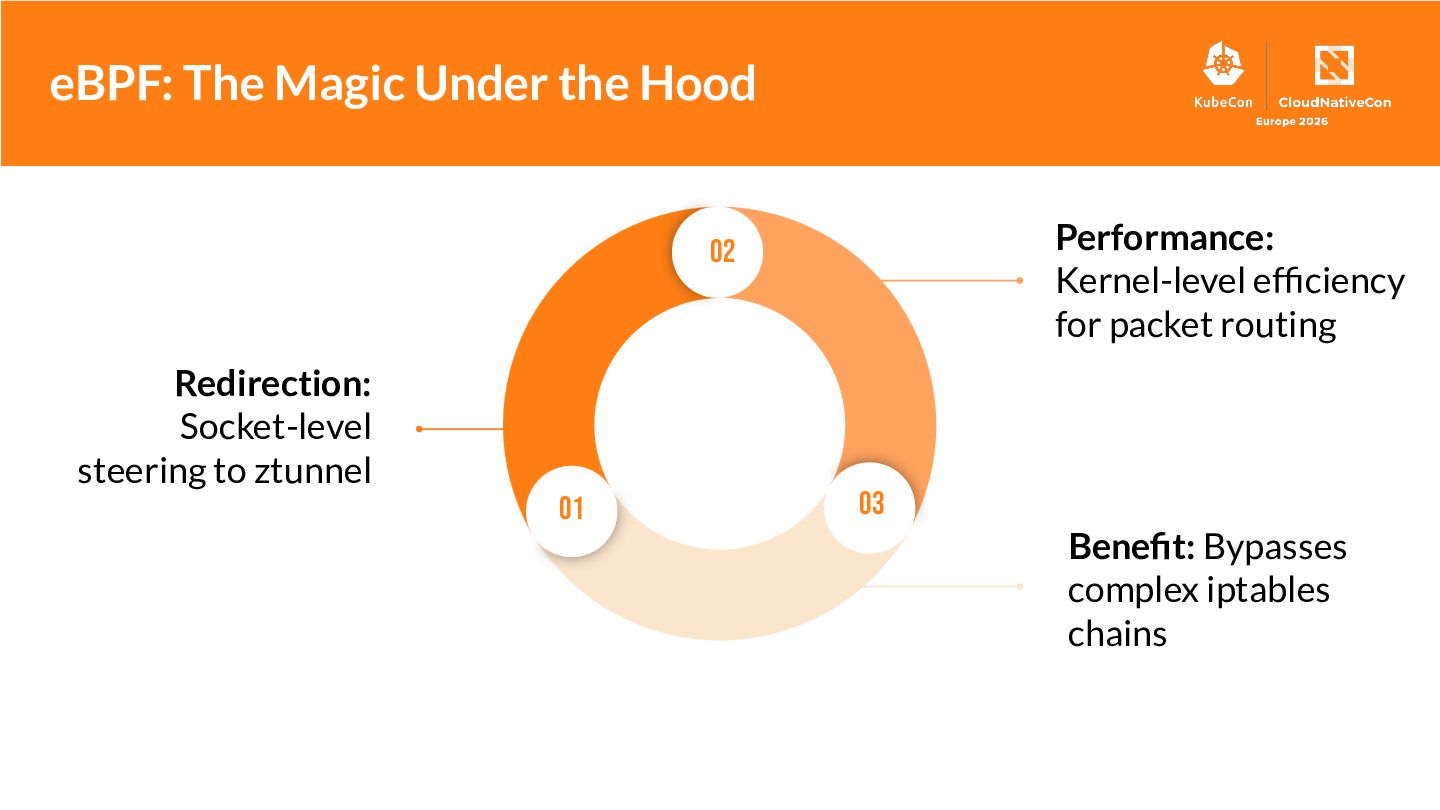
  7. eBPF: The Magic Under the Hood Performance: Kernel-level efficiency for

    packet routing Redirection: Socket-level steering to ztunnel Benefit: Bypasses complex iptables chains 02 01 03
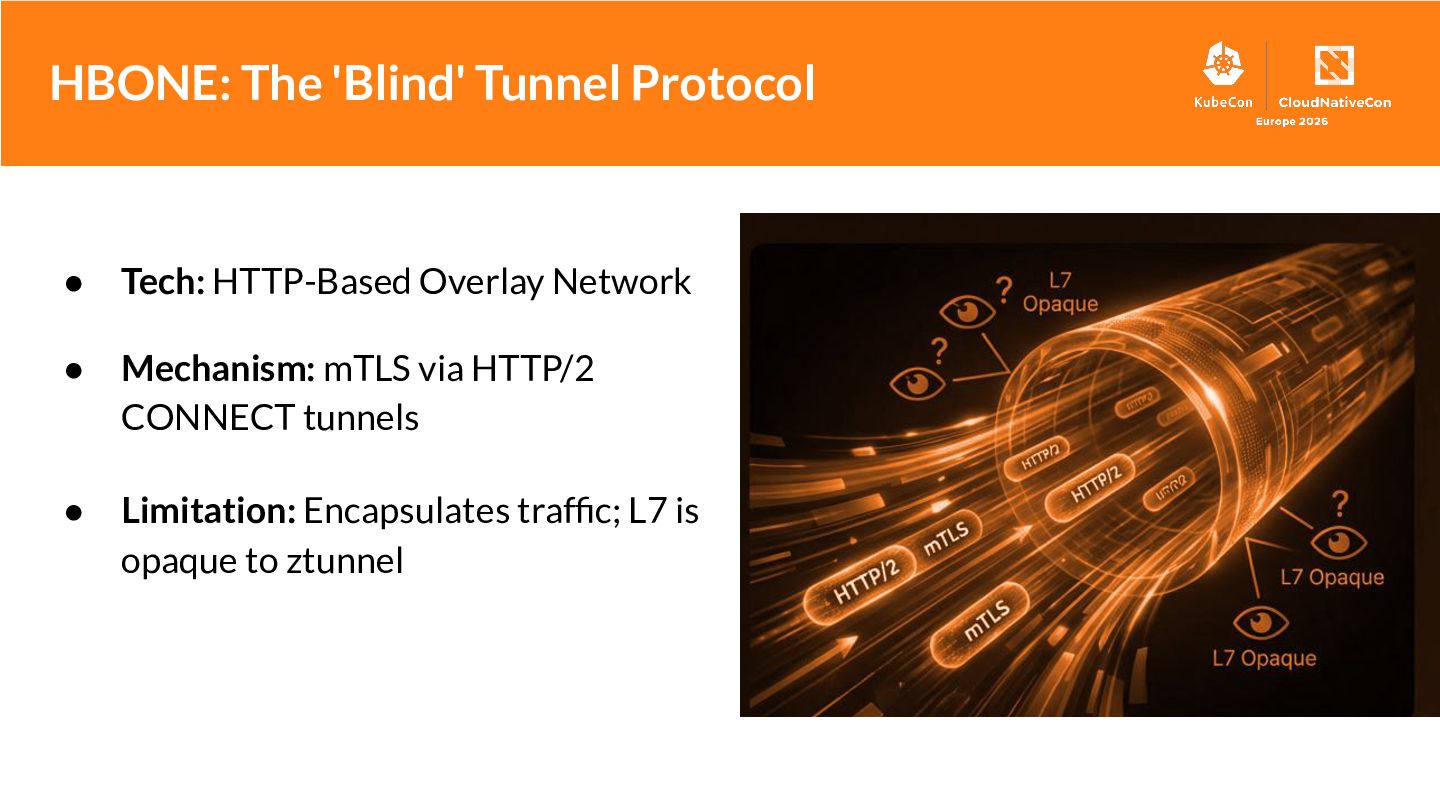
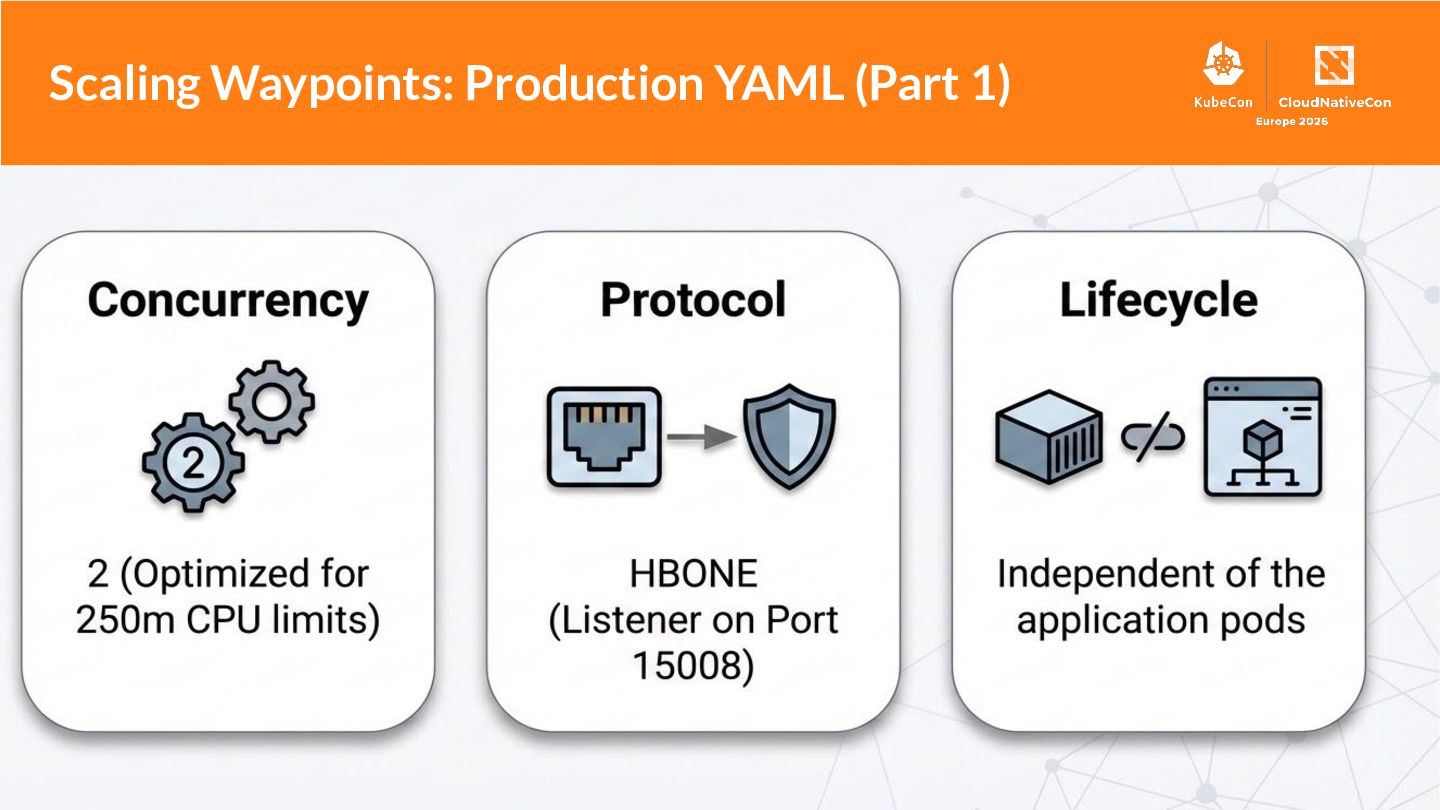
  8. HBONE: The 'Blind' Tunnel Protocol • Tech: HTTP-Based Overlay Network

    • Mechanism: mTLS via HTTP/2 CONNECT tunnels • Limitation: Encapsulates traffic; L7 is opaque to ztunnel
  9. The Tracing Conundrum: L7 Blindness ❏ Sidecar: Sees L7 headers

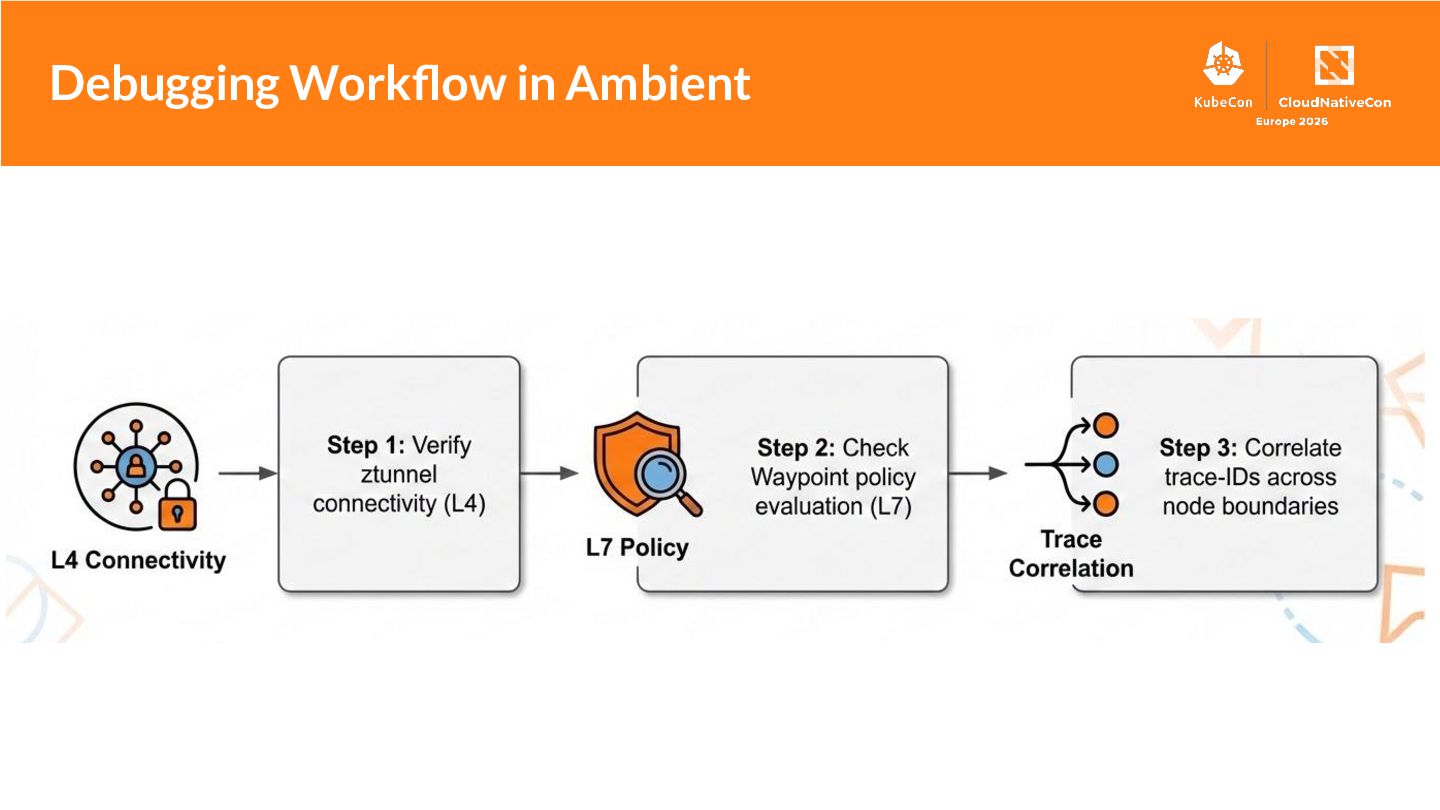
    by default (MITM) ❏ Ambient L4: No header inspection = No trace spans ❏ The Gap: Broken service graphs in ztunnel-only mode
  10. The Waypoint Requirement ❖ Requirement: L7 observability requires an Envoy

    Waypoint ❖ Opt-in: Only pay for L7 where you need Tracing/AuthZ ❖ Incremental: You don't have to boil the ocean
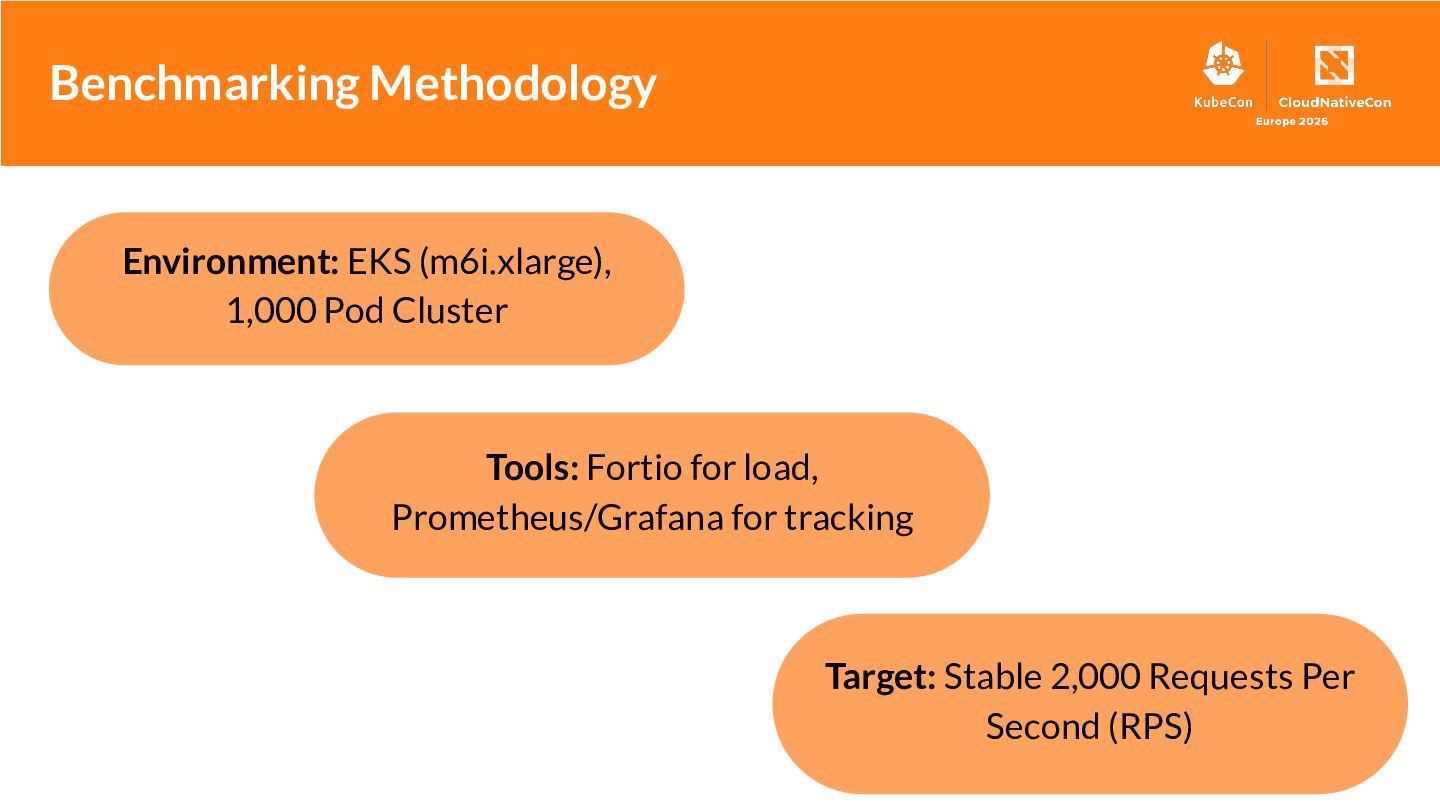
  11. Benchmarking Methodology Environment: EKS (m6i.xlarge), 1,000 Pod Cluster Tools: Fortio

    for load, Prometheus/Grafana for tracking Target: Stable 2,000 Requests Per Second (RPS)
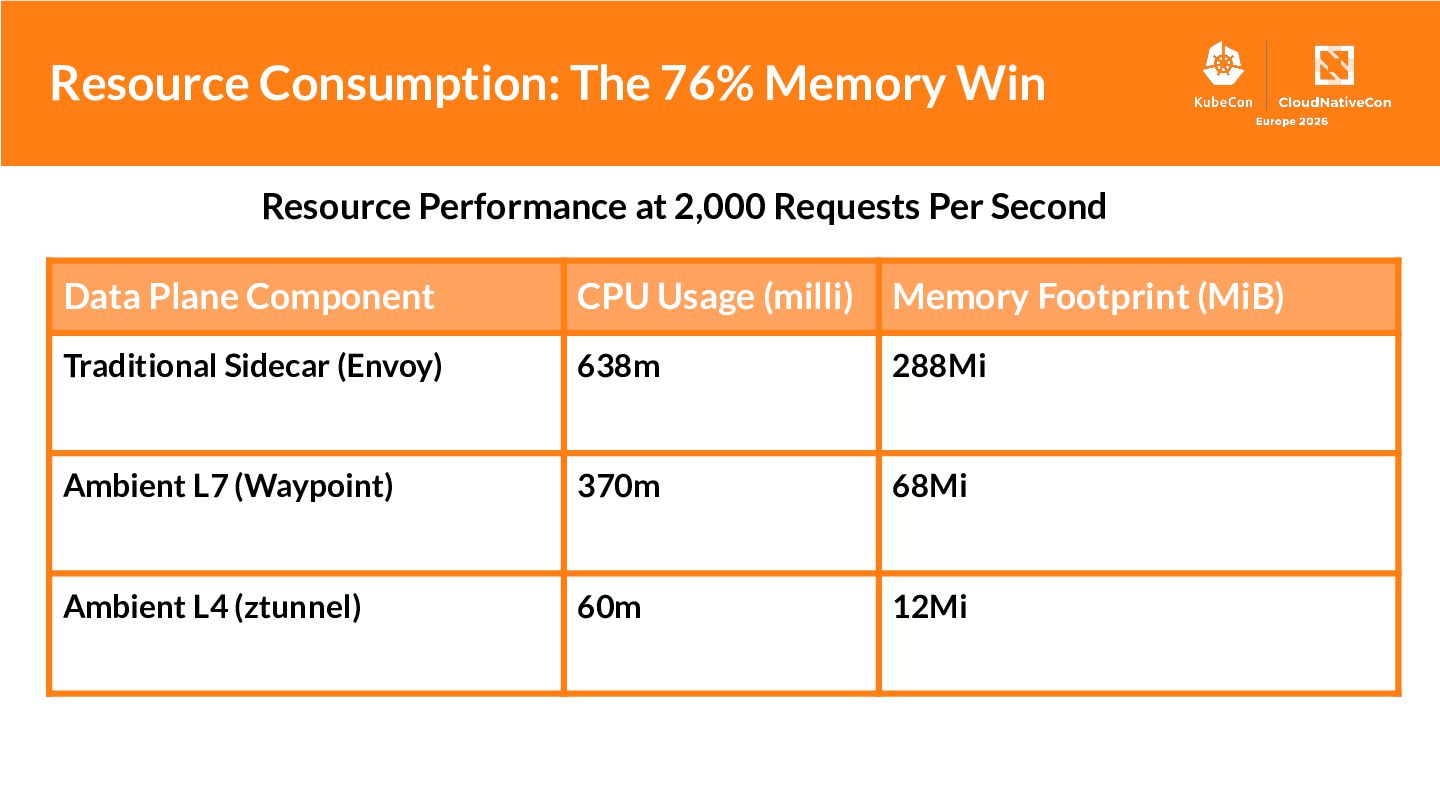
  12. Resource Consumption: The 76% Memory Win Data Plane Component CPU

    Usage (milli) Memory Footprint (MiB) Traditional Sidecar (Envoy) 638m 288Mi Ambient L7 (Waypoint) 370m 68Mi Ambient L4 (ztunnel) 60m 12Mi Resource Performance at 2,000 Requests Per Second
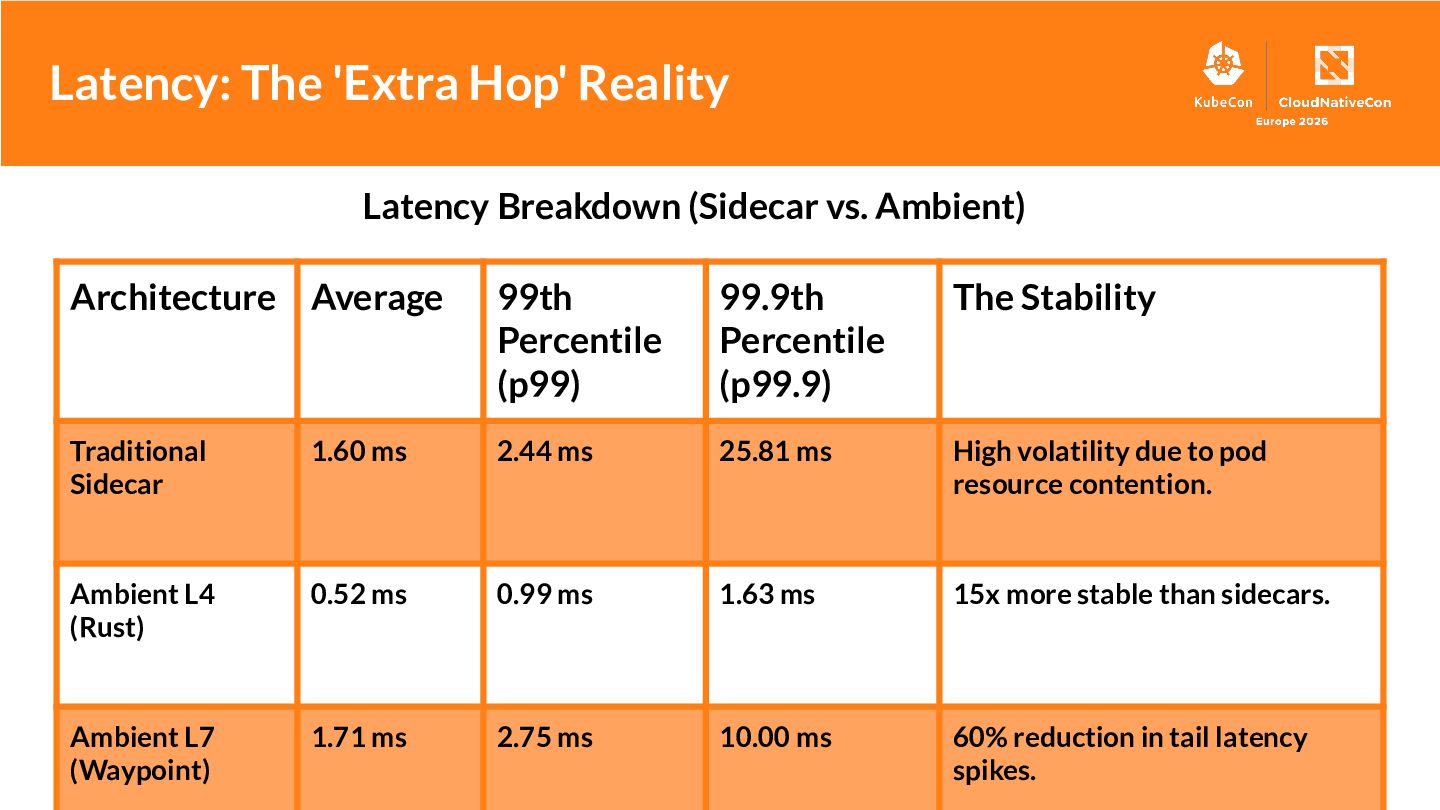
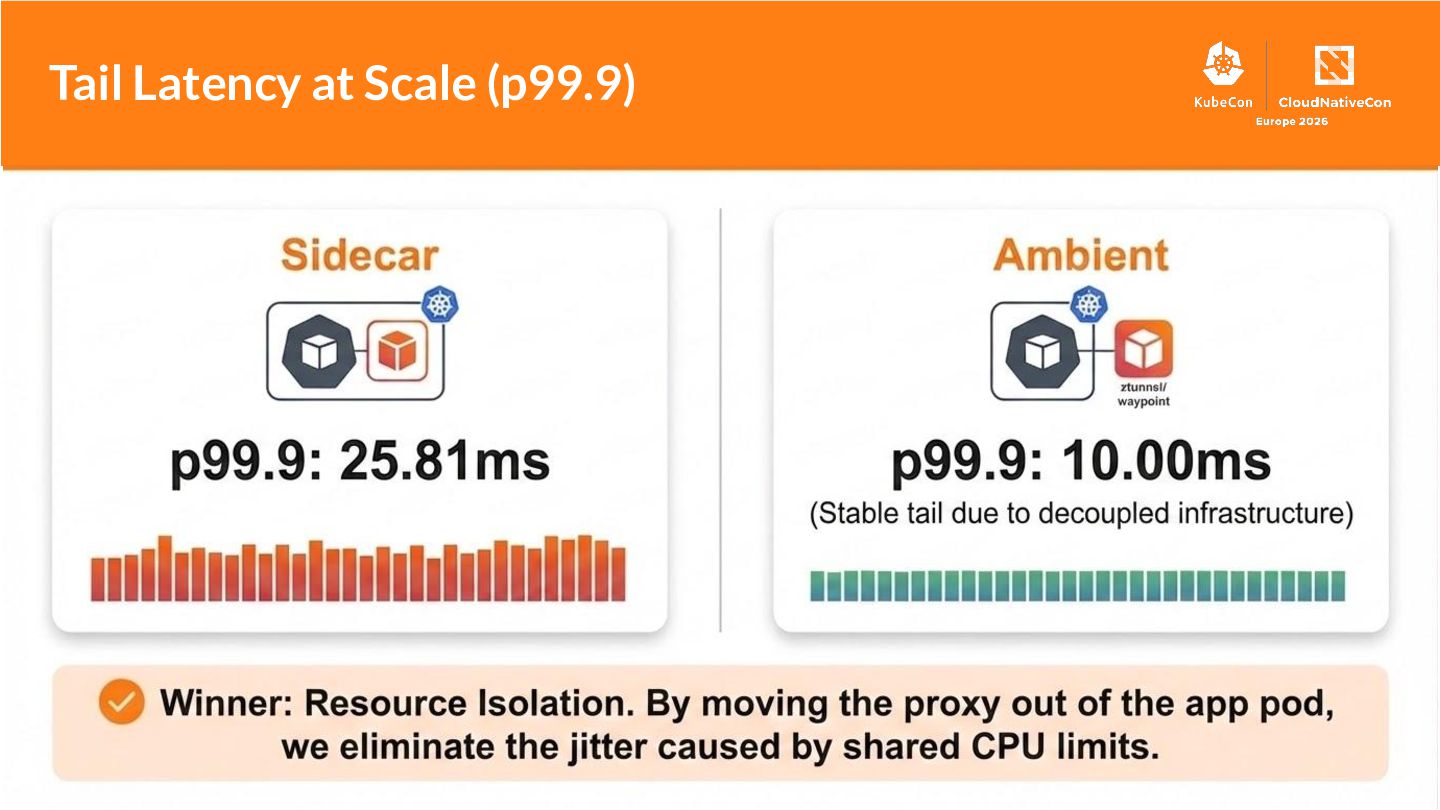
  13. Latency: The 'Extra Hop' Reality Architecture Average 99th Percentile (p99)

    99.9th Percentile (p99.9) The Stability Traditional Sidecar 1.60 ms 2.44 ms 25.81 ms High volatility due to pod resource contention. Ambient L4 (Rust) 0.52 ms 0.99 ms 1.63 ms 15x more stable than sidecars. Ambient L7 (Waypoint) 1.71 ms 2.75 ms 10.00 ms 60% reduction in tail latency spikes. Latency Breakdown (Sidecar vs. Ambient)
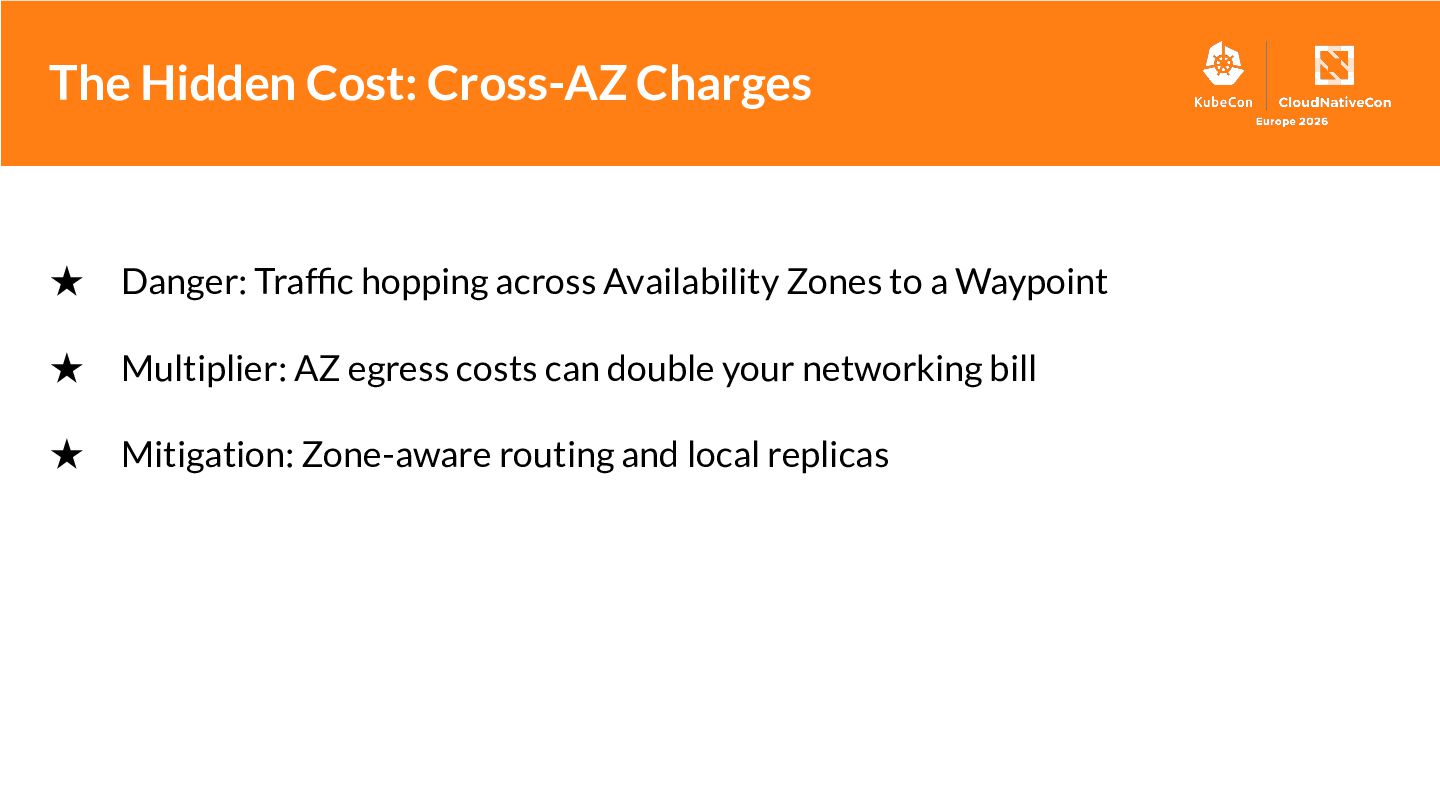
  14. The Hidden Cost: Cross-AZ Charges ★ Danger: Traffic hopping across

    Availability Zones to a Waypoint ★ Multiplier: AZ egress costs can double your networking bill ★ Mitigation: Zone-aware routing and local replicas
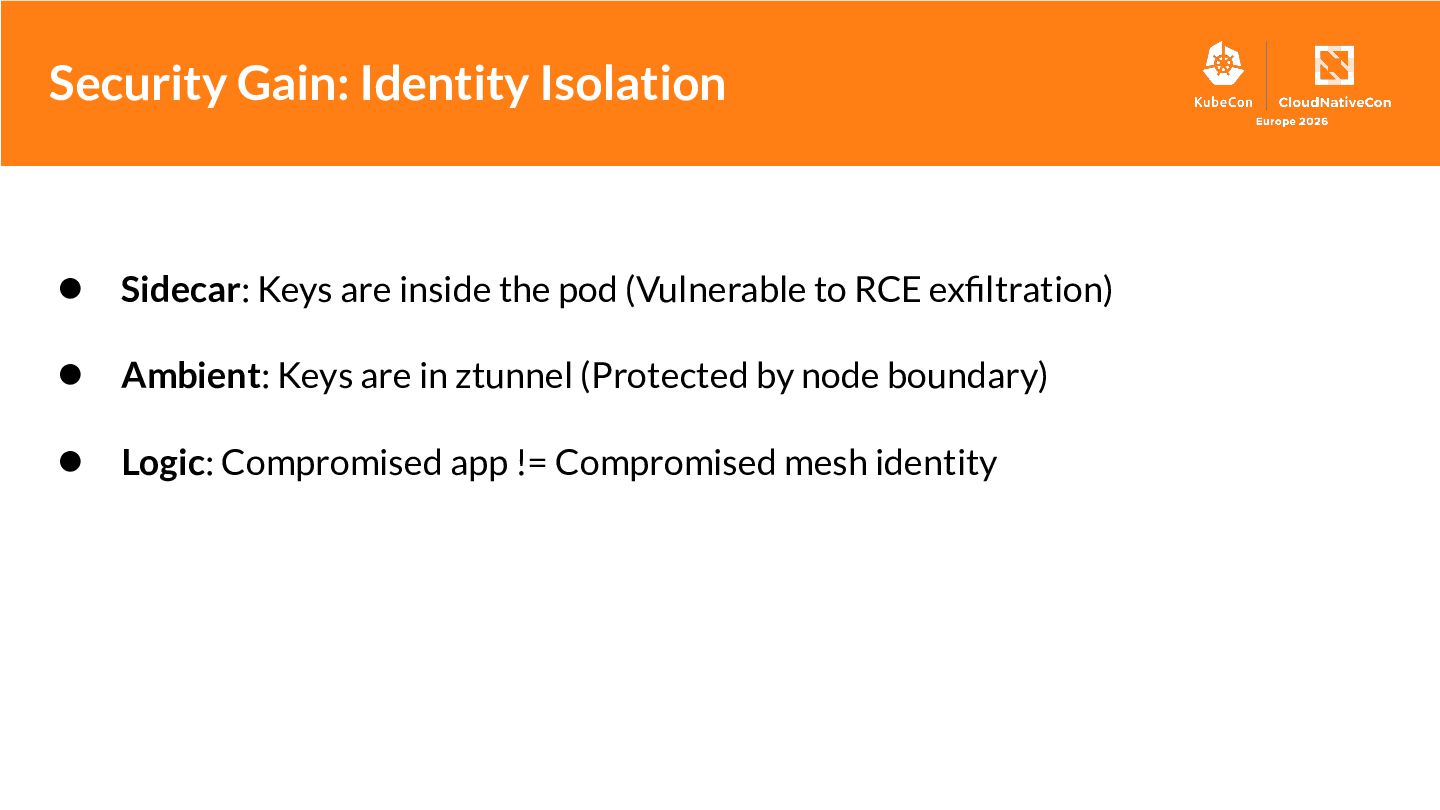
  15. Security Gain: Identity Isolation • Sidecar: Keys are inside the

    pod (Vulnerable to RCE exfiltration) • Ambient: Keys are in ztunnel (Protected by node boundary) • Logic: Compromised app != Compromised mesh identity
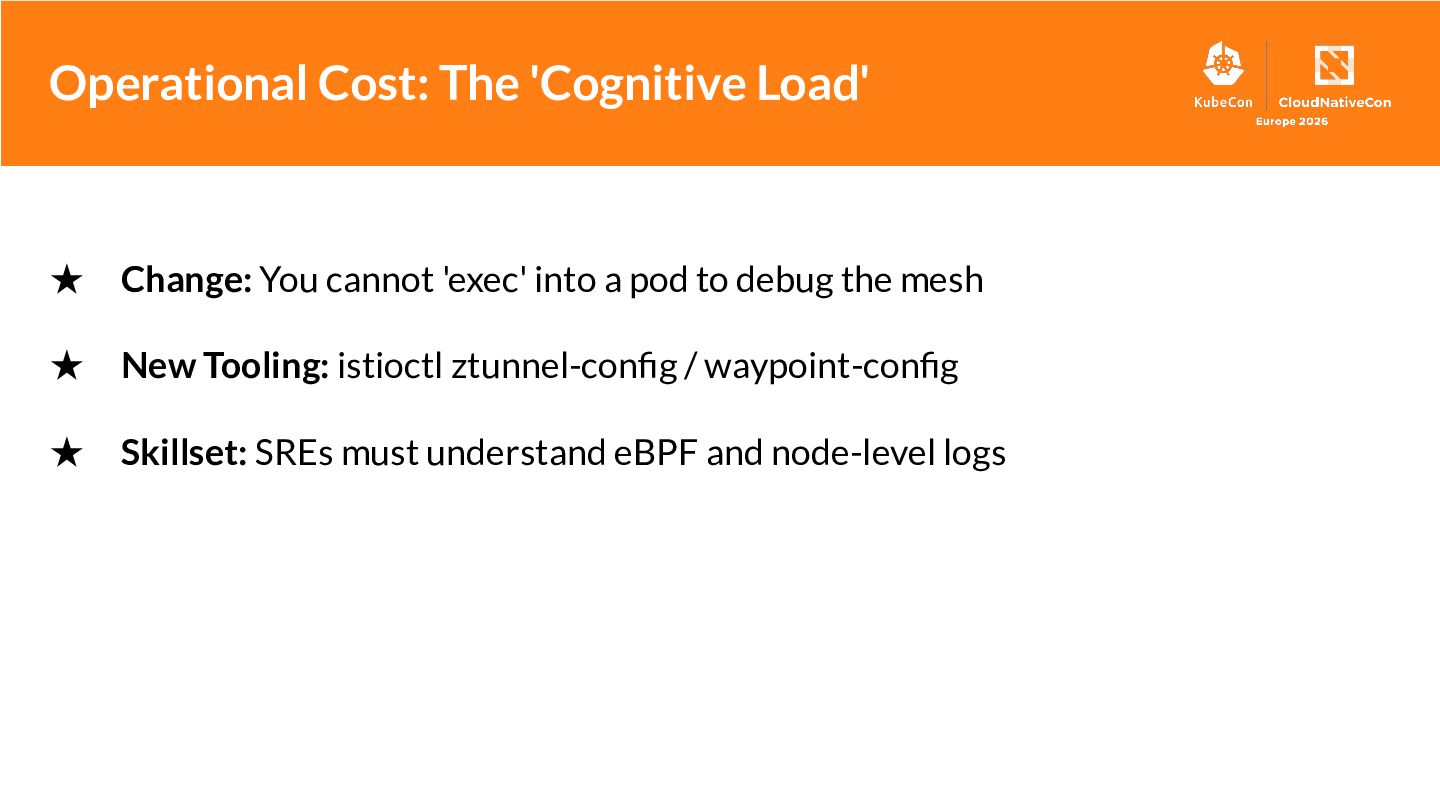
  16. Operational Cost: The 'Cognitive Load' ★ Change: You cannot 'exec'

    into a pod to debug the mesh ★ New Tooling: istioctl ztunnel-config / waypoint-config ★ Skillset: SREs must understand eBPF and node-level logs
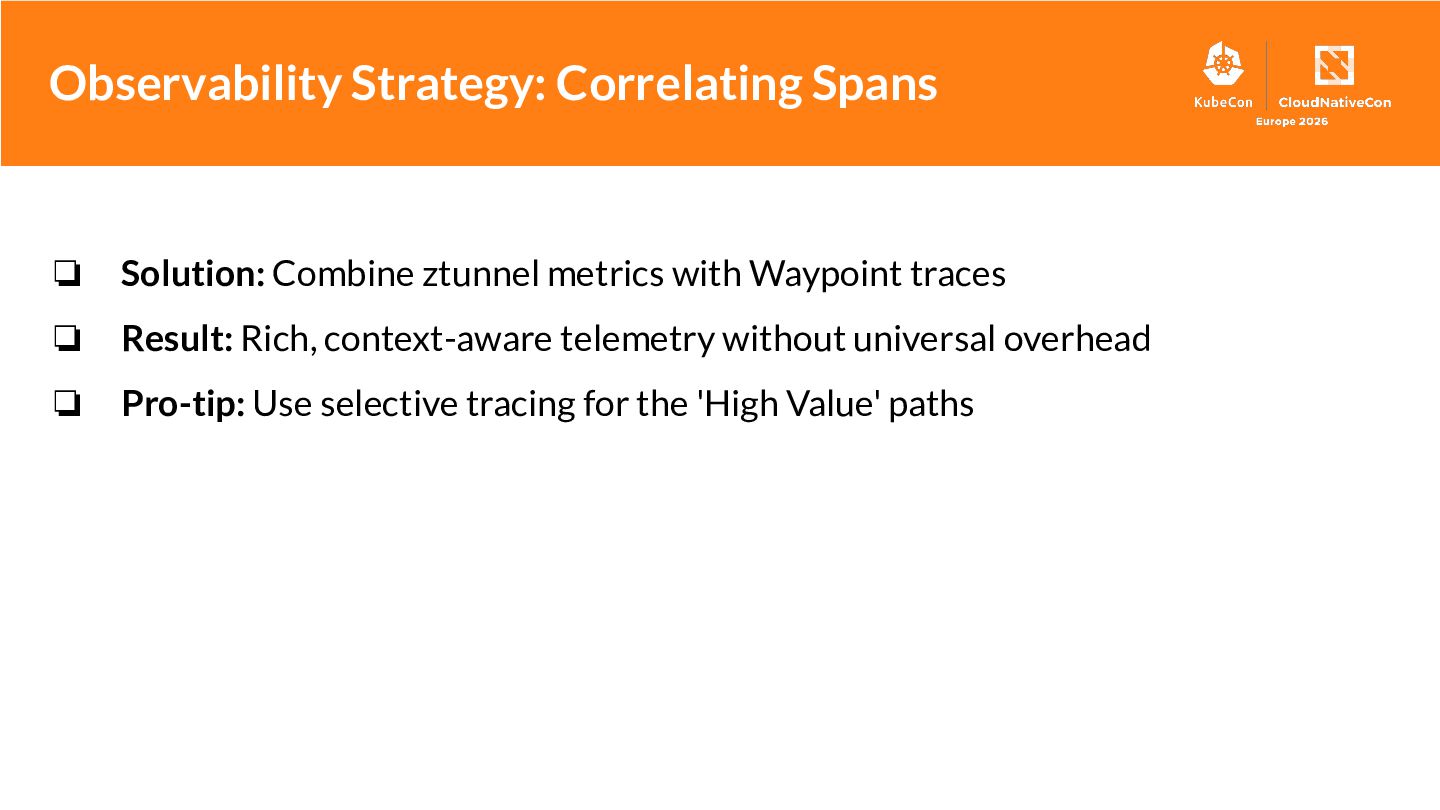
  17. Observability Strategy: Correlating Spans ❏ Solution: Combine ztunnel metrics with

    Waypoint traces ❏ Result: Rich, context-aware telemetry without universal overhead ❏ Pro-tip: Use selective tracing for the 'High Value' paths
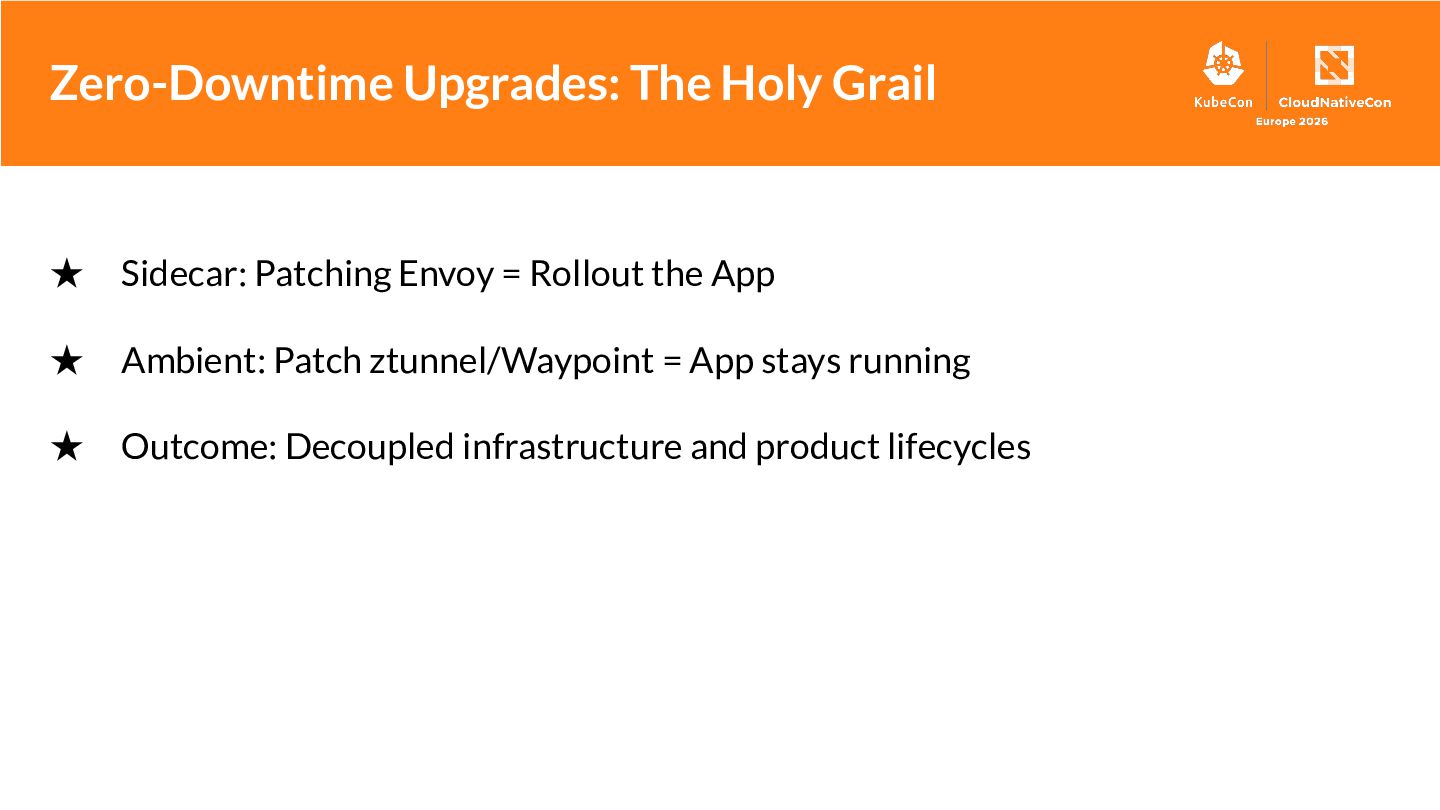
  18. Zero-Downtime Upgrades: The Holy Grail ★ Sidecar: Patching Envoy =

    Rollout the App ★ Ambient: Patch ztunnel/Waypoint = App stays running ★ Outcome: Decoupled infrastructure and product lifecycles
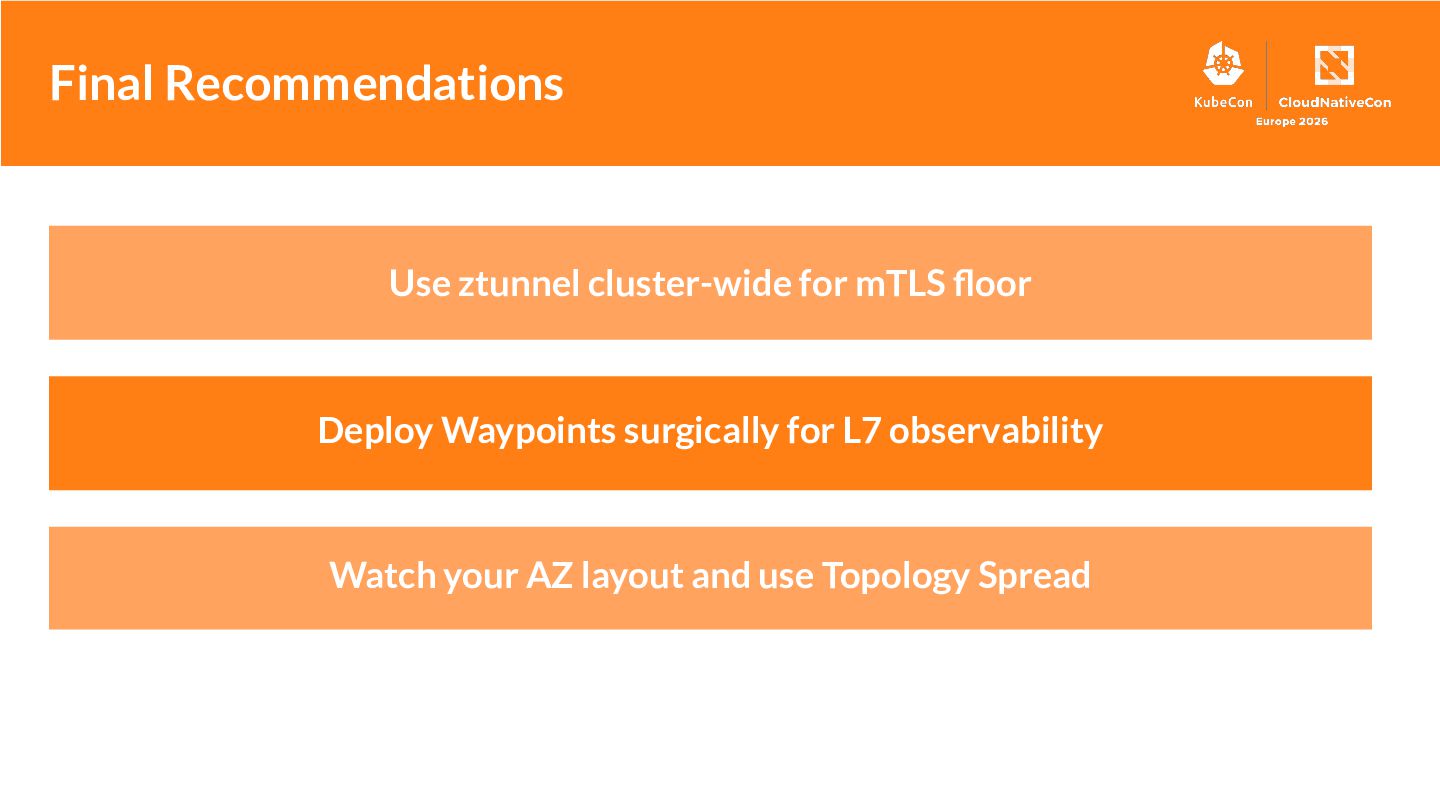
  19. Final Recommendations Use ztunnel cluster-wide for mTLS floor Deploy Waypoints

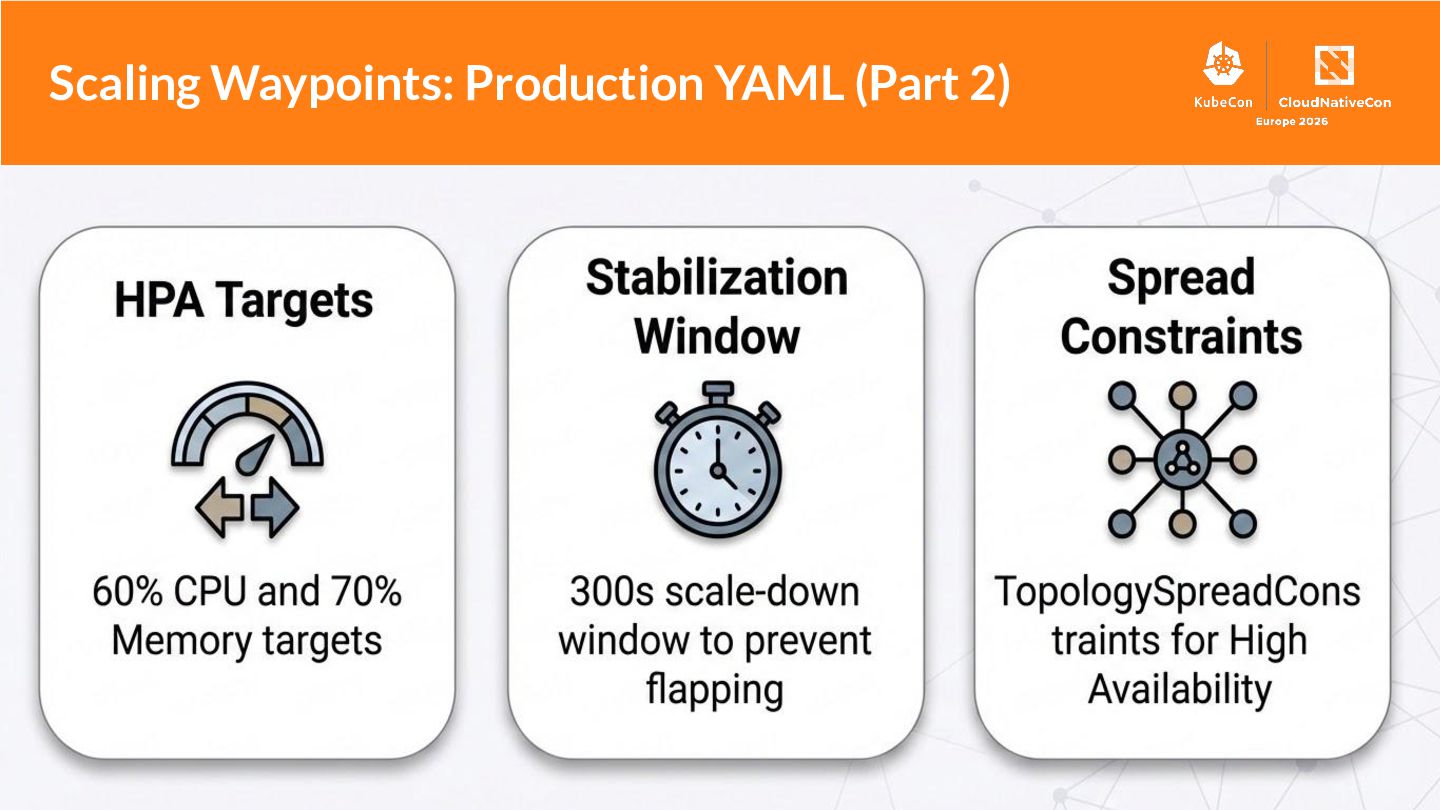
    surgically for L7 observability Watch your AZ layout and use Topology Spread