Share
Embed
Effective Startup Engineering
Guest Lecture at "Startup Engineering" (Stanford CS184 / Coursera class)
Ian Wong
February 12, 2013
Transcript
48 slides
-
An effective sta up engineering team ships useful and delightful
products to the customers at a fast pace. ef·fec·tive /iˈfektiv/ 2 -
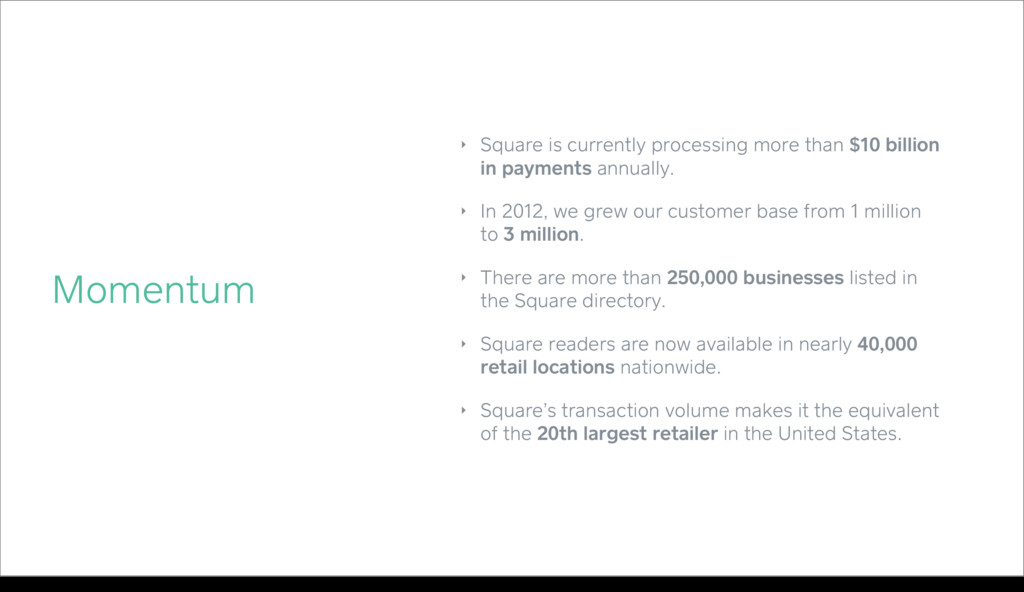
Momentum ‣ Square is currently processing more than $10 billion
in payments annually. ‣ In 2012, we grew our customer base from 1 million to 3 million. ‣ There are more than 250,000 businesses listed in the Square directory. ‣ Square readers are now available in nearly 40,000 retail locations nationwide. ‣ Square’s transaction volume makes it the equivalent of the 20th largest retailer in the United States. 8 -
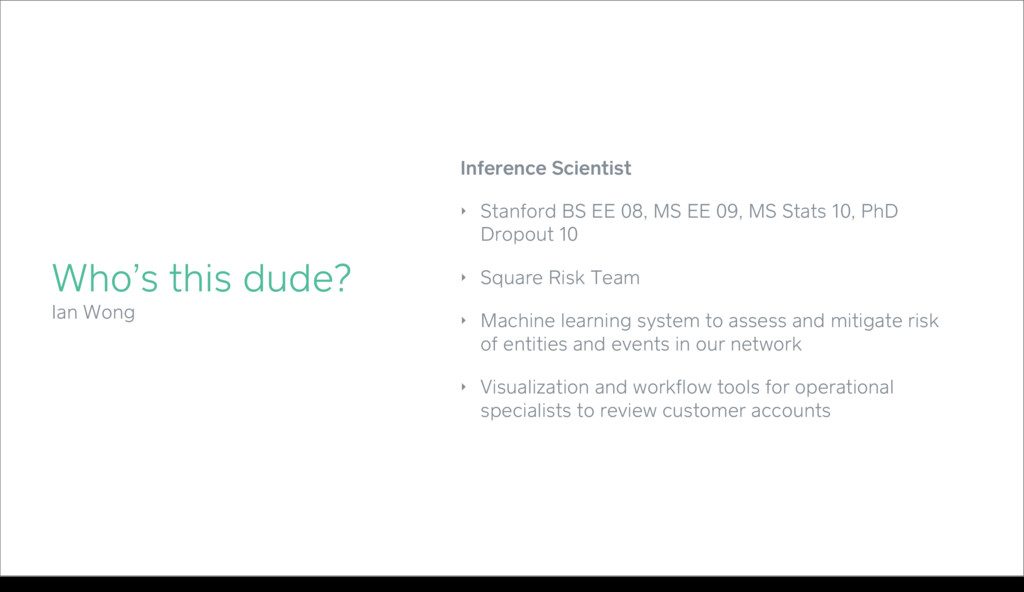
Who’s this dude? Ian Wong Inference Scientist ‣ Stanford BS
EE 08, MS EE 09, MS Stats 10, PhD Dropout 10 ‣ Square Risk Team ‣ Machine learning system to assess and mitigate risk of entities and events in our network ‣ Visualization and workflow tools for operational specialists to review customer accounts 9 -
Design for modularity Learn to test Use and contribute to
open source Foster an open, collaborative and responsible culture 10 -
Design for modularity Learn to test Use and contribute to
open source 11 -
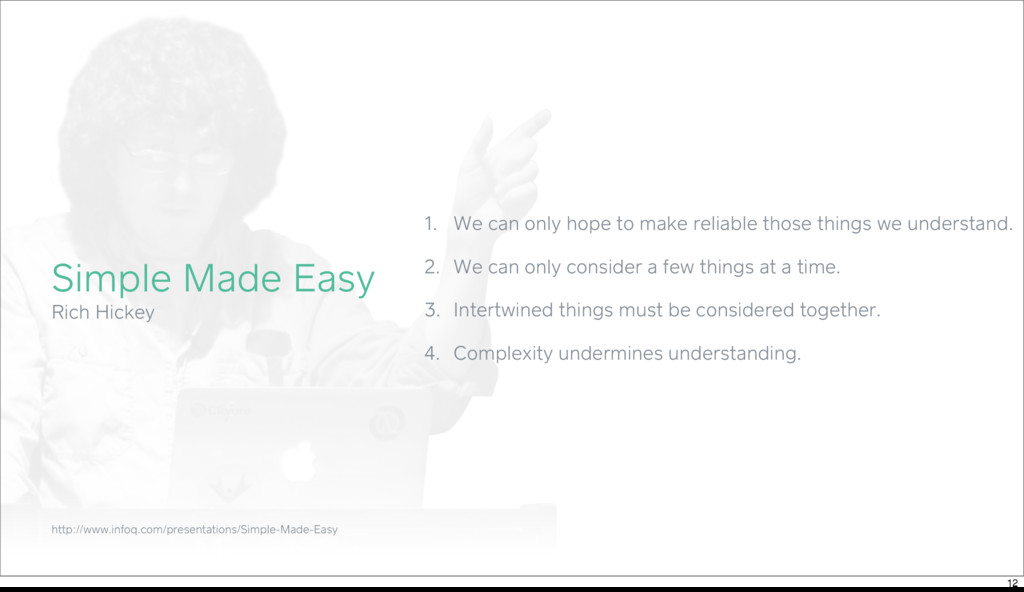
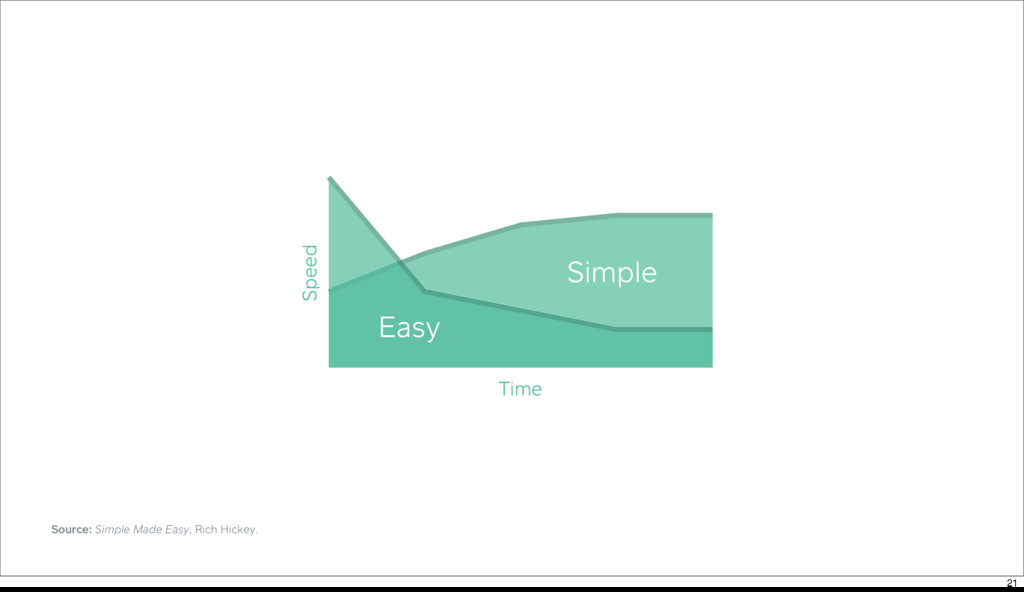
Simple Made Easy Rich Hickey 1. We can only hope
to make reliable those things we understand. 2. We can only consider a few things at a time. 3. Inte wined things must be considered together. 4. Complexity undermines understanding. http://www.infoq.com/presentations/Simple-Made-Easy 12 -
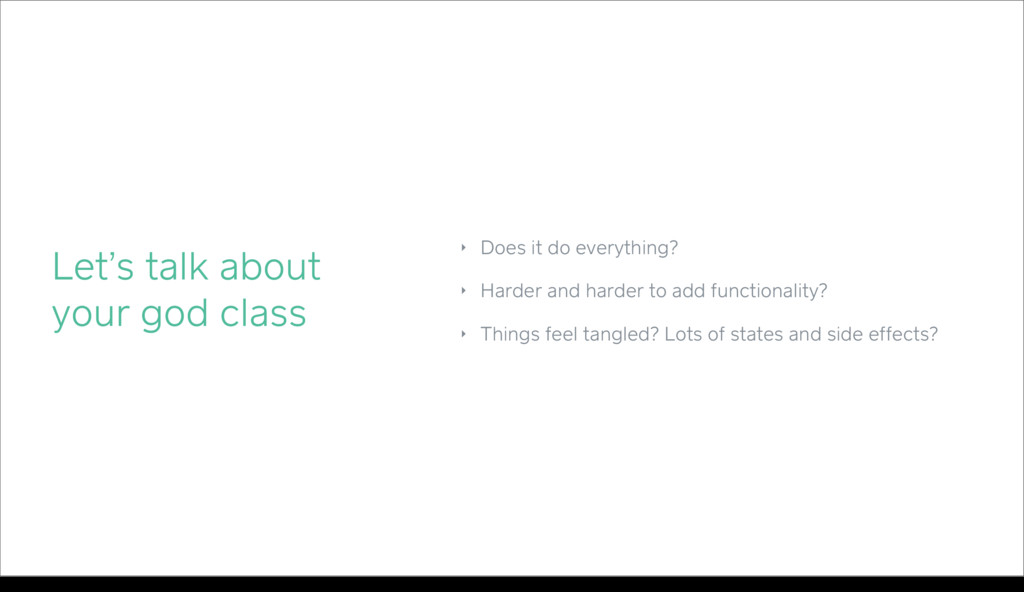
Let’s talk about your god class ‣ Does it do
everything? ‣ Harder and harder to add functionality? ‣ Things feel tangled? Lots of states and side effects? 15 -
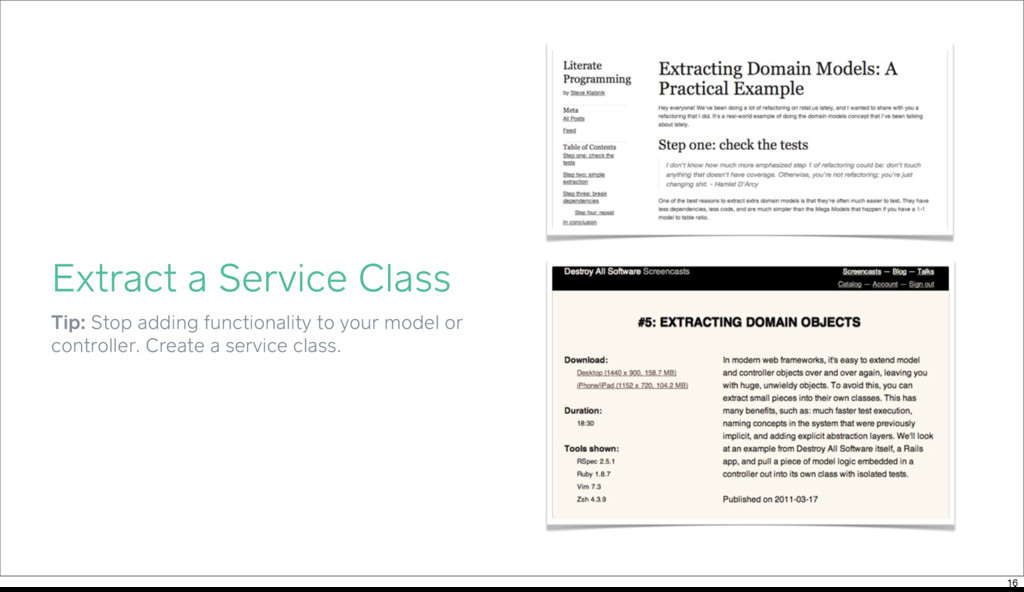
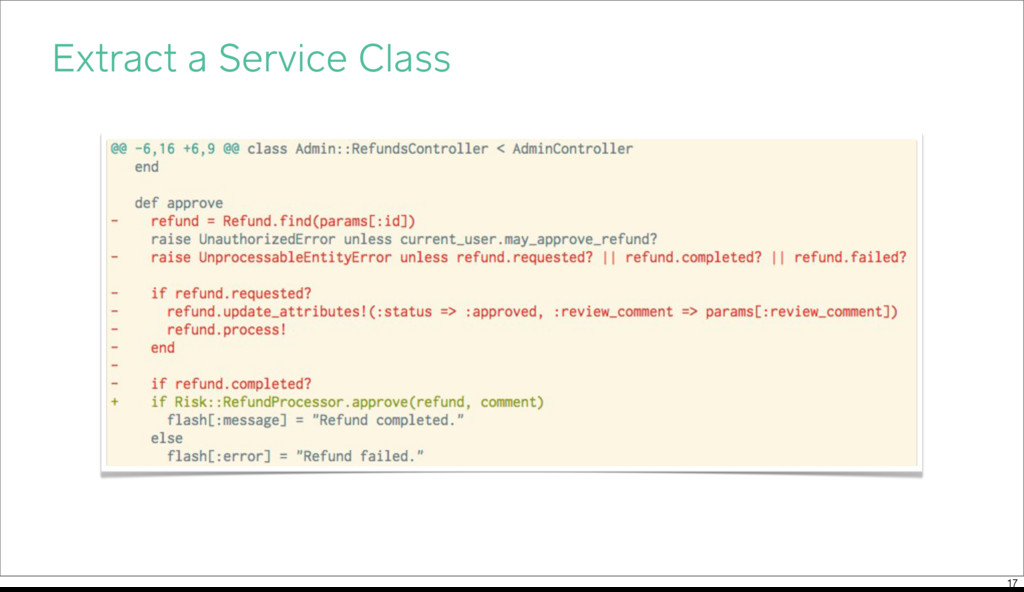
Extract a Service Class Tip: Stop adding functionality to your
model or controller. Create a service class. 16 -
Micro to Macro ‣ Loosely coupled, well-encapsulated service classes within
a code base interact with each other via simple inte aces. ‣ Loosely coupled, well-encapsulated services within a service oriented architecture interact with each other via simple inte aces. 18 -
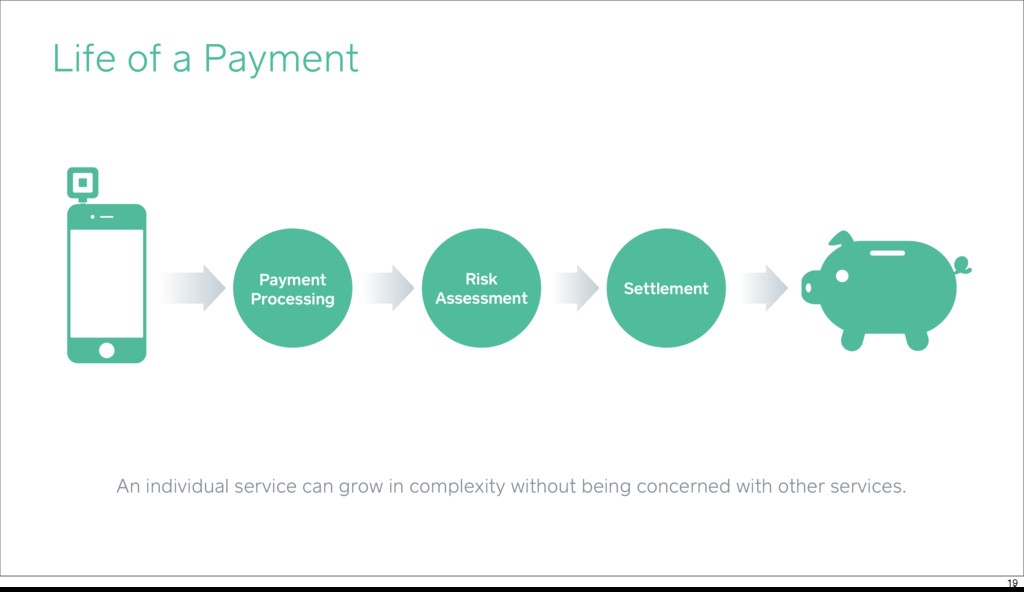
Life of a Payment Payment Processing Risk Assessment Settlement An
individual service can grow in complexity without being concerned with other services. 19 -
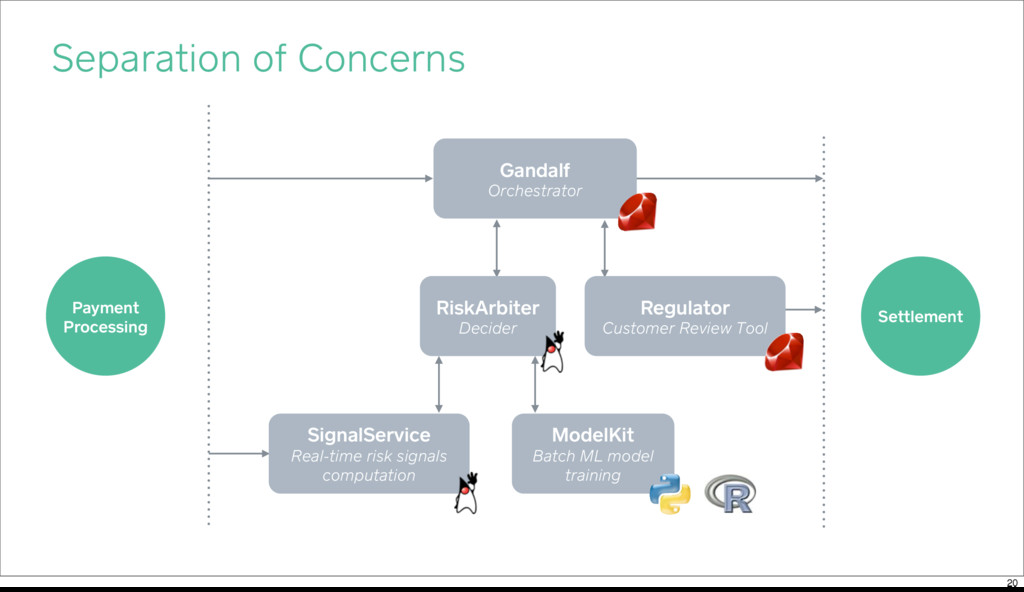
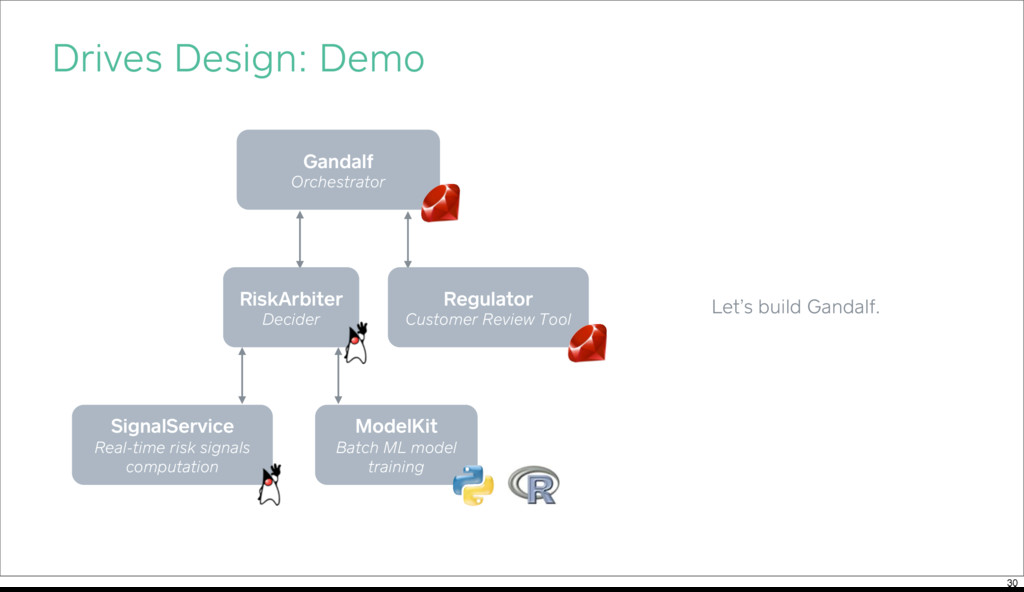
Separation of Concerns Payment Processing Settlement Gandalf Orchestrator RiskArbiter Decider
Regulator Customer Review Tool SignalService Real-time risk signals computation ModelKit Batch ML model training 20 -
Design for modularity Learn to test Use and contribute to
open source 22 -
Design for modularity Learn to test Use and contribute to
open source Foster an open, collaborative and responsible culture 23 -
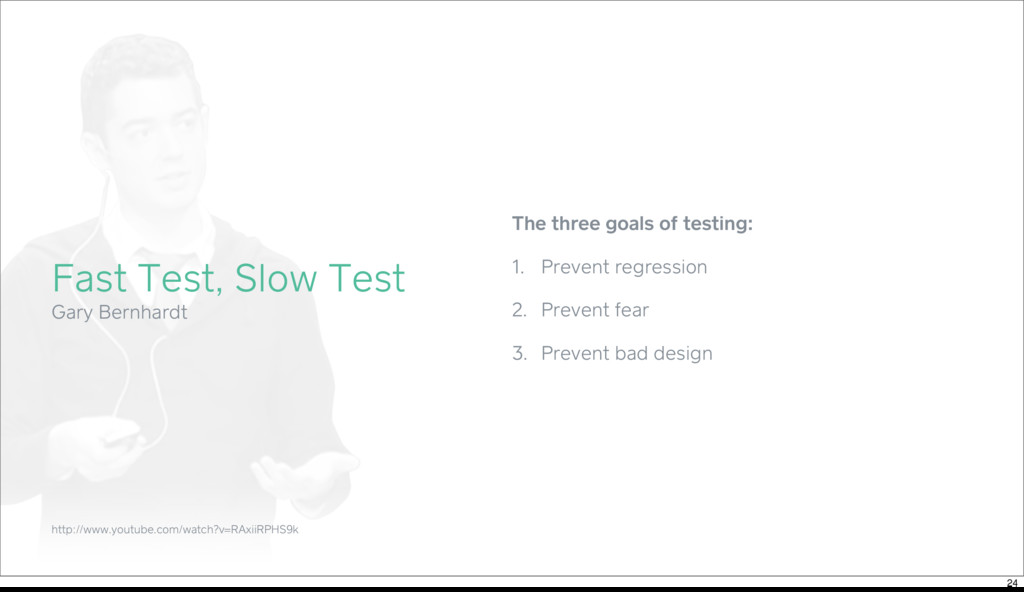
Fast Test, Slow Test Gary Bernhardt The three goals of
testing: 1. Prevent regression 2. Prevent fear 3. Prevent bad design http://www.youtube.com/watch?v=RAxiiRPHS9k 24 -
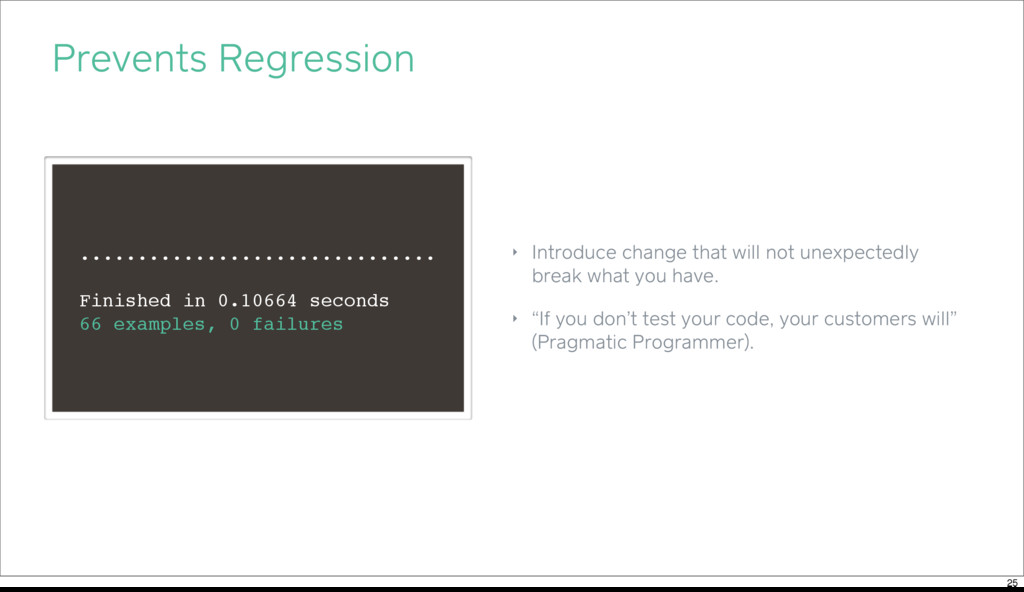
‣ Introduce change that will not unexpectedly break what you
have. ‣ “If you don’t test your code, your customers will” (Pragmatic Programmer). Prevents Regression ............................... Finished in 0.10664 seconds 66 examples, 0 failures 25 -
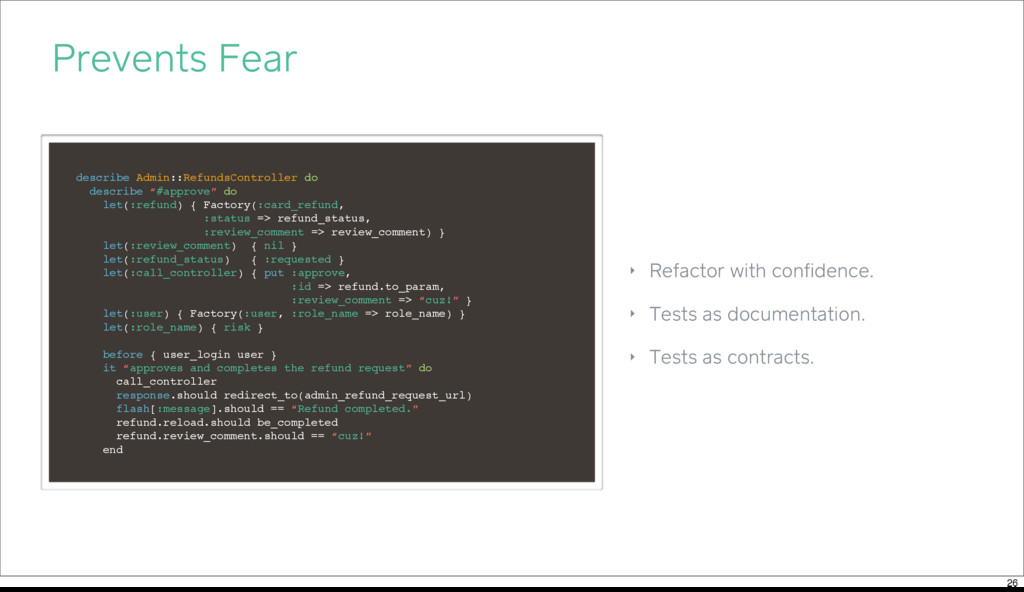
‣ Refactor with confidence. ‣ Tests as documentation. ‣ Tests
as contracts. Prevents Fear describe Admin::RefundsController do describe “#approve” do let(:refund) { Factory(:card_refund, :status => refund_status, :review_comment => review_comment) } let(:review_comment) { nil } let(:refund_status) { :requested } let(:call_controller) { put :approve, :id => refund.to_param, :review_comment => “cuz!” } let(:user) { Factory(:user, :role_name => role_name) } let(:role_name) { risk } before { user_login user } it “approves and completes the refund request” do call_controller response.should redirect_to(admin_refund_request_url) flash[:message].should == “Refund completed.” refund.reload.should be_completed refund.review_comment.should == “cuz!” end 26 -
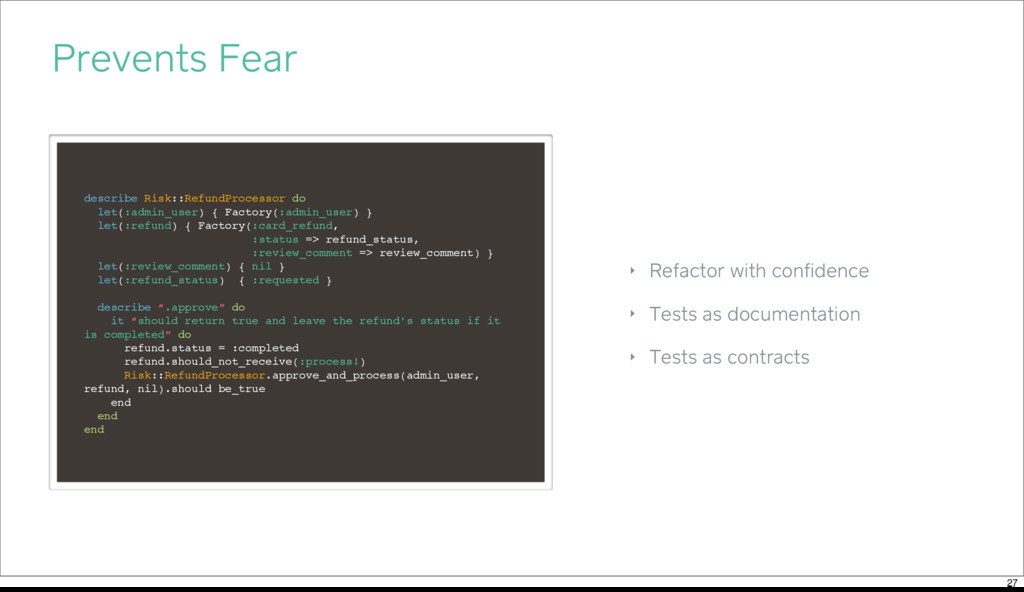
Prevents Fear describe Risk::RefundProcessor do let(:admin_user) { Factory(:admin_user) } let(:refund)
{ Factory(:card_refund, :status => refund_status, :review_comment => review_comment) } let(:review_comment) { nil } let(:refund_status) { :requested } describe “.approve” do it “should return true and leave the refund’s status if it is completed” do refund.status = :completed refund.should_not_receive(:process!) Risk::RefundProcessor.approve_and_process(admin_user, refund, nil).should be_true end end end ‣ Refactor with confidence ‣ Tests as documentation ‣ Tests as contracts 27 -
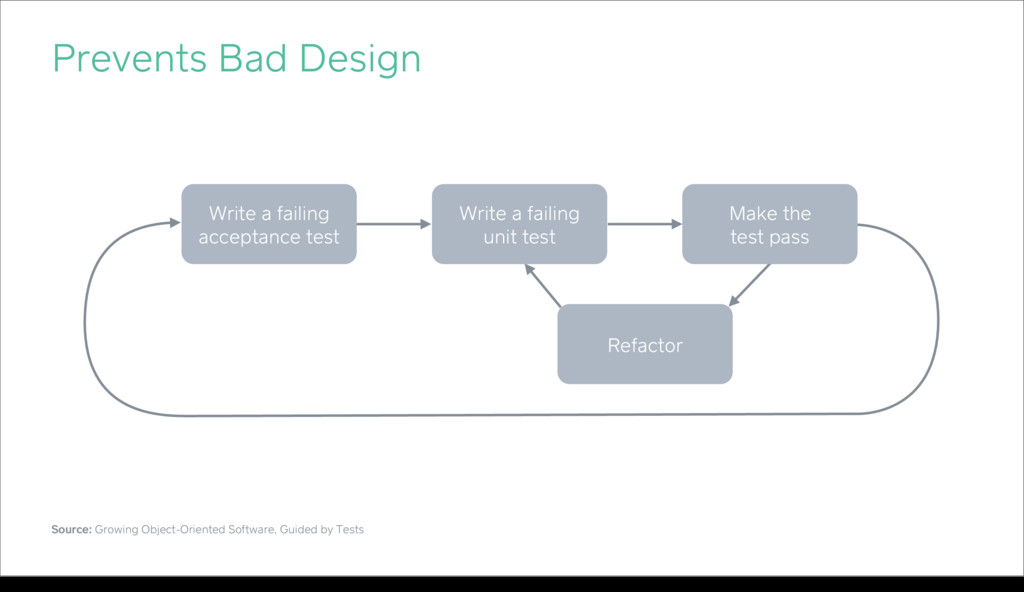
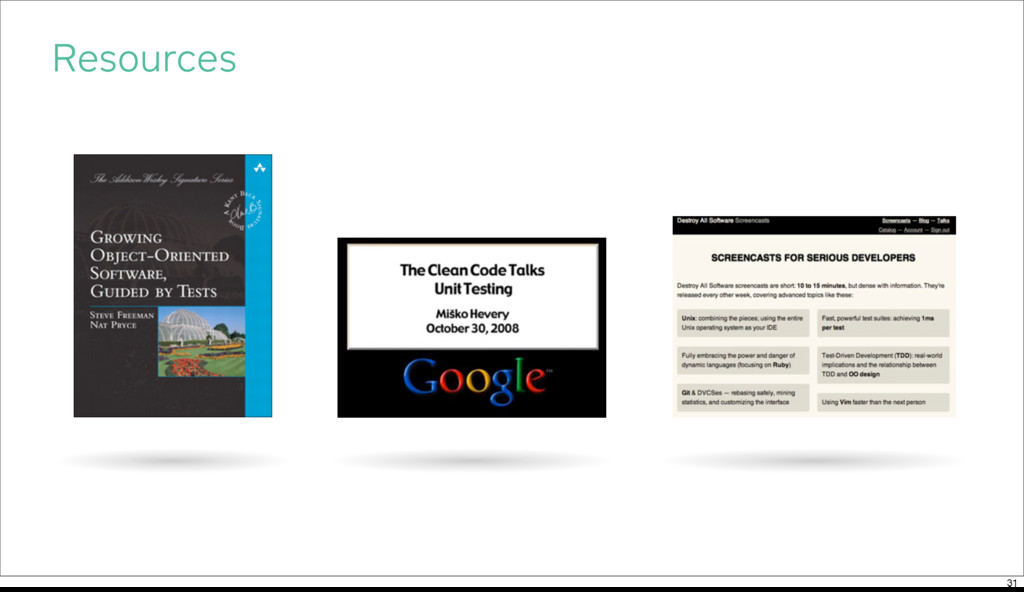
Prevents Bad Design Source: Growing Object-Oriented Software, Guided by Tests
Refactor Write a failing acceptance test Make the test pass Write a failing unit test 28 -
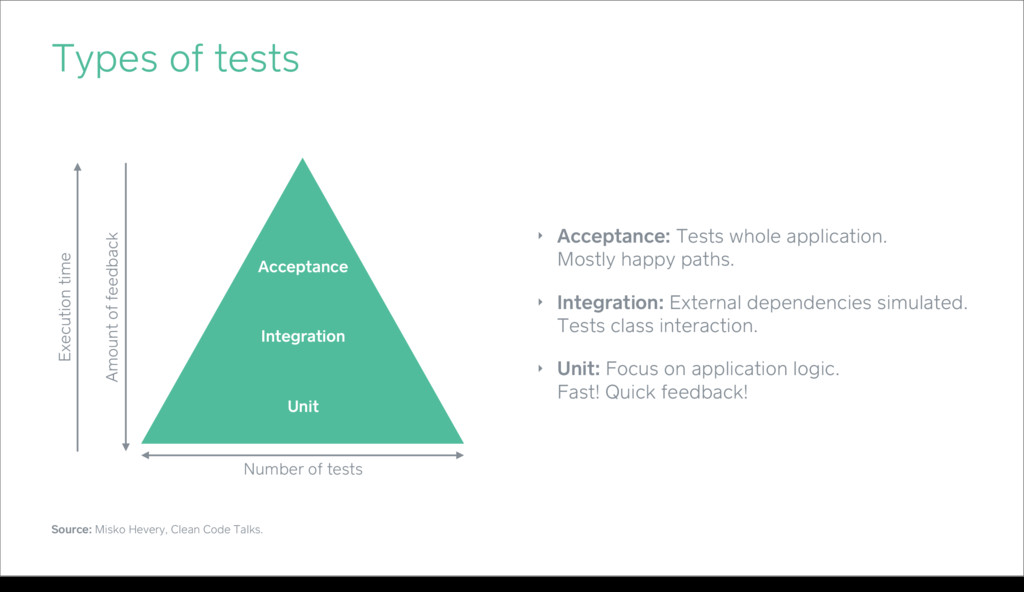
Types of tests Source: Misko Hevery, Clean Code Talks. ‣
Acceptance: Tests whole application. Mostly happy paths. ‣ Integration: External dependencies simulated. Tests class interaction. ‣ Unit: Focus on application logic. Fast! Quick feedback! Execution time Amount of feedback Number of tests Unit Integration Acceptance 29 -
Drives Design: Demo Gandalf Orchestrator RiskArbiter Decider Regulator Customer Review
Tool SignalService Real-time risk signals computation ModelKit Batch ML model training Let’s build Gandalf. 30 -
Design for modularity Learn to test Use and contribute to
open source Foster an open, collaborative and responsible culture 32 -
Design for modularity Learn to test Use and contribute to
open source Foster an open, collaborative and responsible culture 33 -
Develop an Open Source Philosophy ‣ Square is built upon
open source. ‣ Many developers are active contributors to open source software. ‣ Build what you need to deliver value. ‣ When you must, invent and open source. ‣ Build your brand. 34 -
‣ KIF (Objective-C): Keep It Functional - An iOS functional
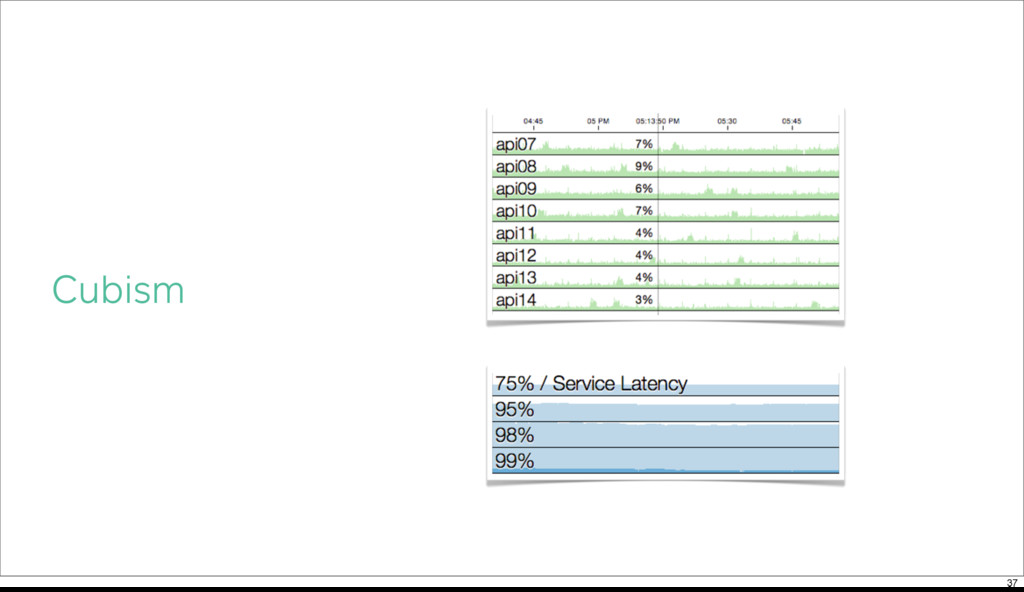
testing framework. ‣ Cane (Ruby): Code quality threshold checking as pa of your build. ‣ Dagger (Java): A fast dependency injection framework for Android and Java. ‣ Cubism (JS): A JavaScript library for time series visualization. ‣ Squash (x-platform): A library for exception tracking and bug repo ing. Square’s Open Source Projects Sampling from github.com/square 35 -
Design for modularity Learn to test Use and contribute to
open source Foster an open, collaborative and responsible culture 38 -
Learn to test Use and contribute to open source Foster
an open, collaborative and responsible culture 39 -
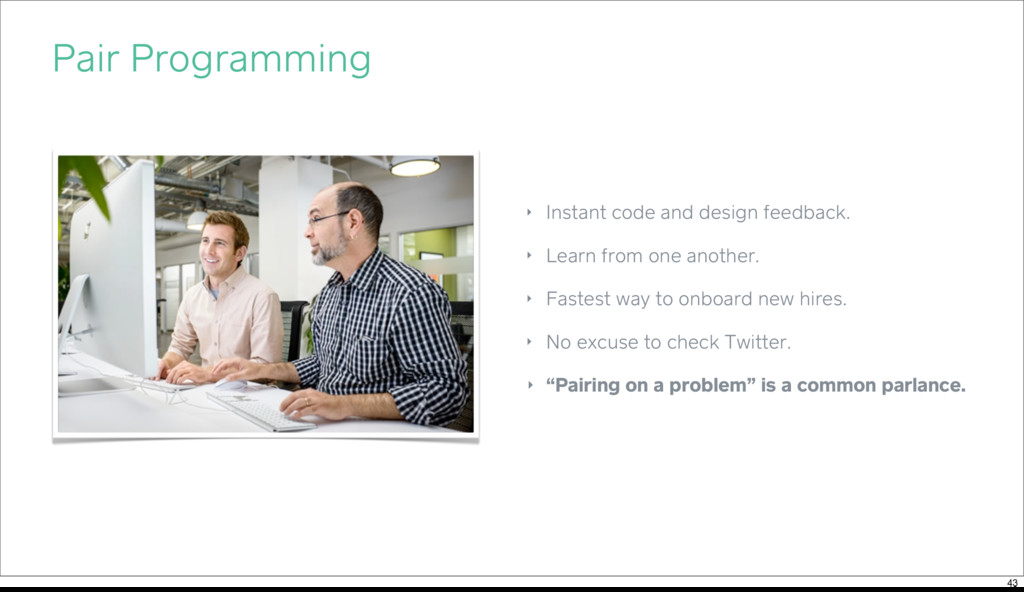
‣ Instant code and design feedback. ‣ Learn from one
another. ‣ Fastest way to onboard new hires. ‣ No excuse to check Twitter. ‣ “Pairing on a problem” is a common parlance. Pair Programming 43 -
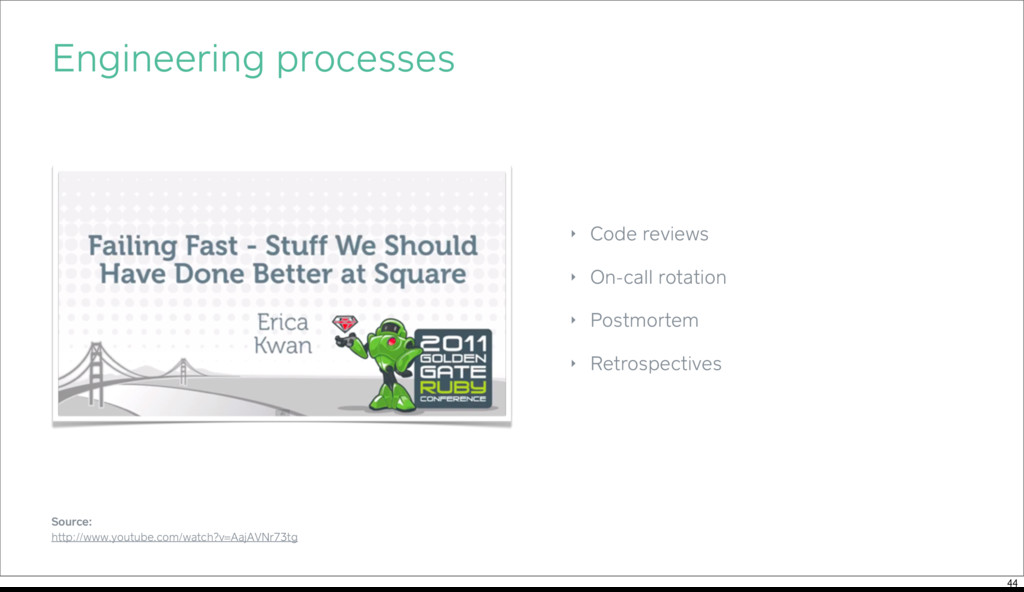
‣ Code reviews ‣ On-call rotation ‣ Postmo em ‣
Retrospectives Engineering processes Source: http://www.youtube.com/watch?v=AajAVNr73tg 44 -
Design for modularity Learn to test Use and contribute to
open source Foster an open, collaborative and responsible culture 45 -
What You Should Do Later Today ‣ Extract a service
class ‣ Write a test before you implement ‣ Pair program with your teammate 46