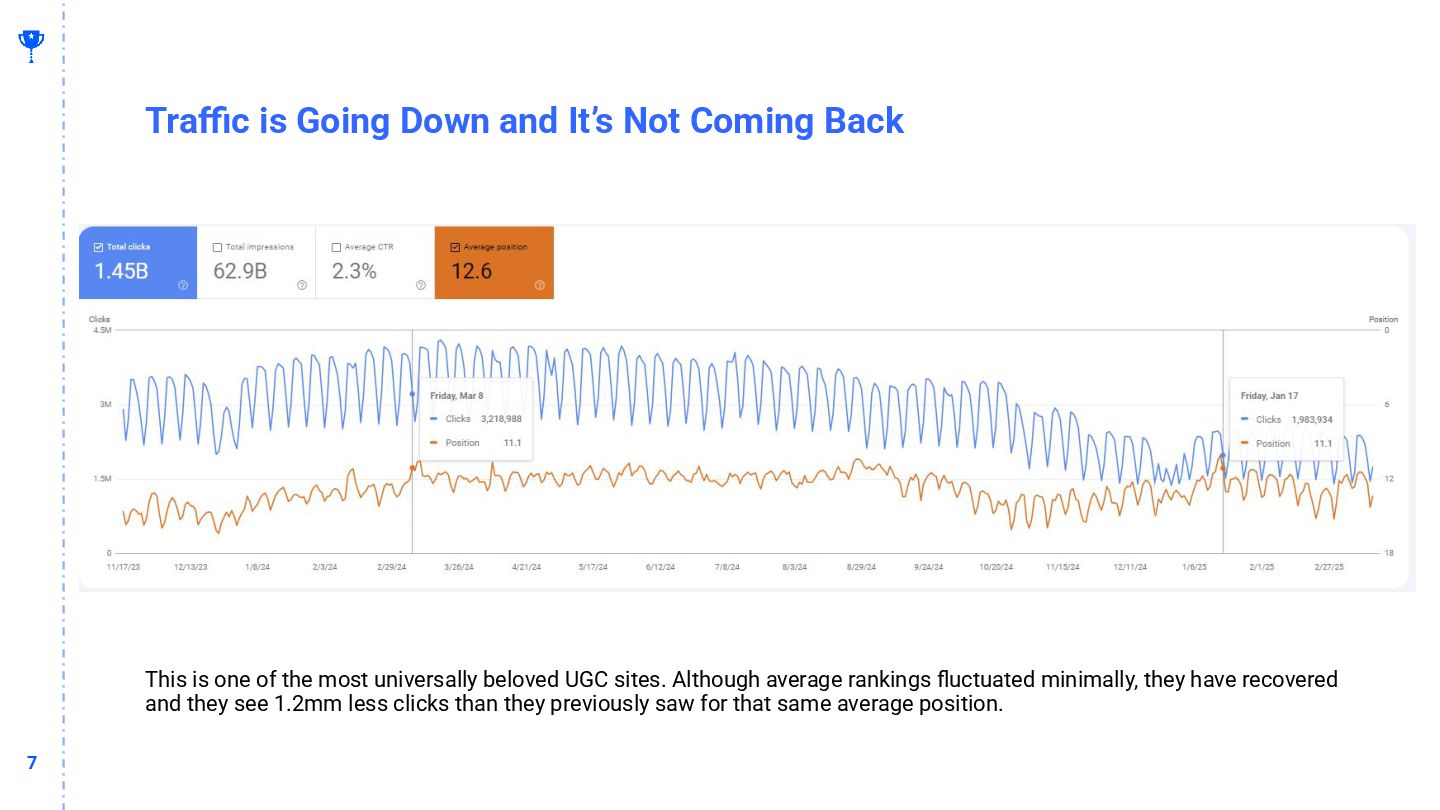
Back This is one of the most universally beloved UGC sites. Although average rankings fluctuated minimally, they have recovered and they see 1.2mm less clicks than they previously saw for that same average position.
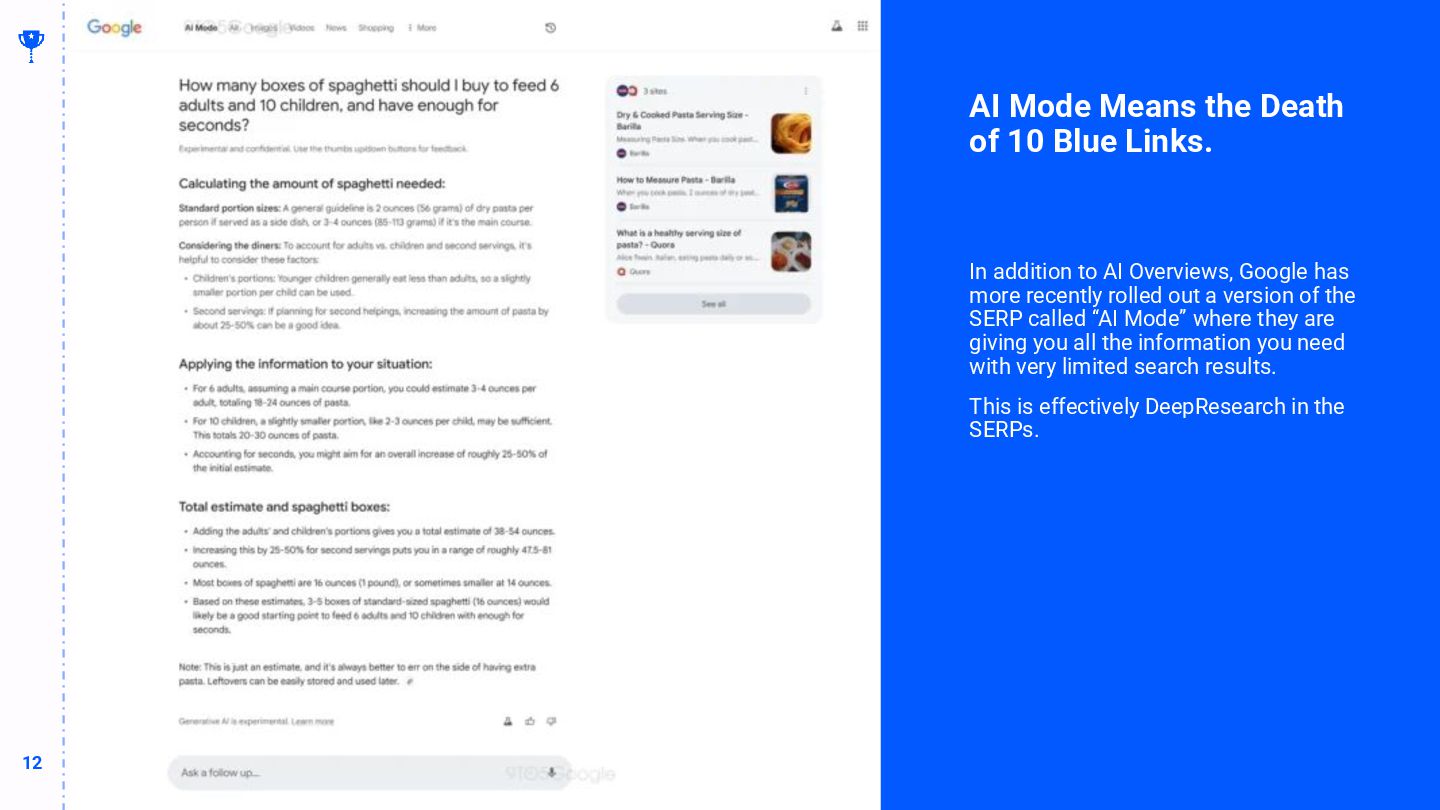
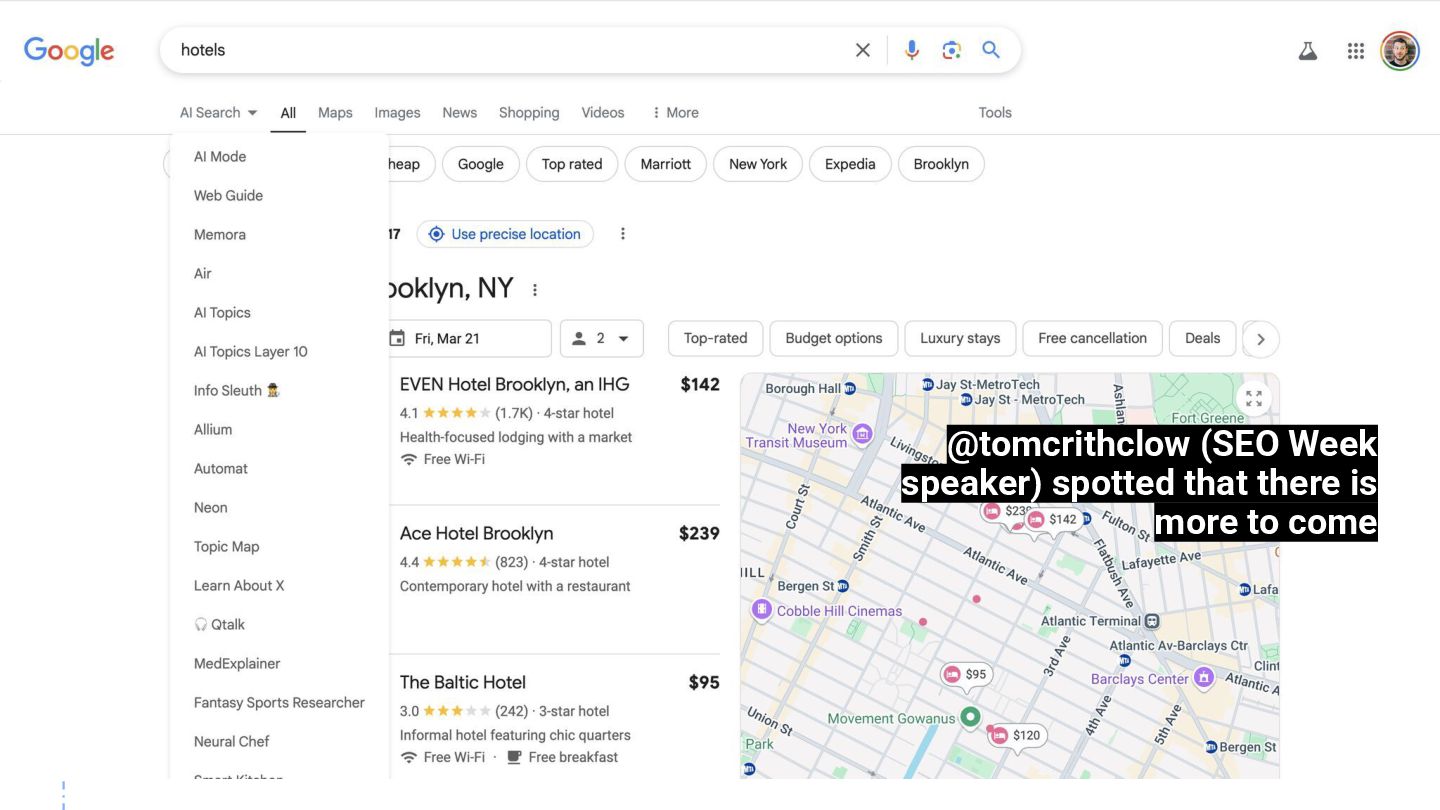
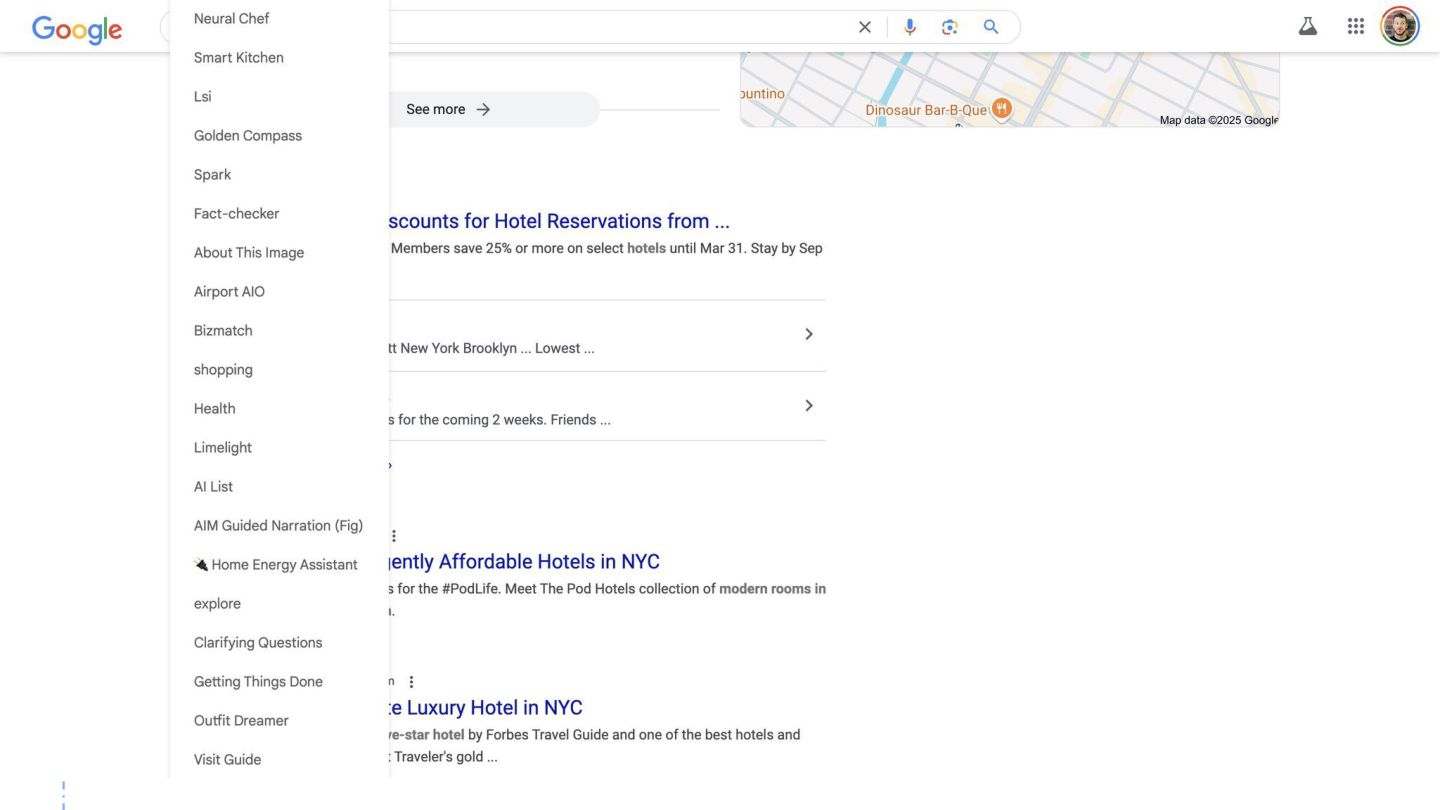
Links. In addition to AI Overviews, Google has more recently rolled out a version of the SERP called “AI Mode” where they are giving you all the information you need with very limited search results. This is effectively DeepResearch in the SERPs.
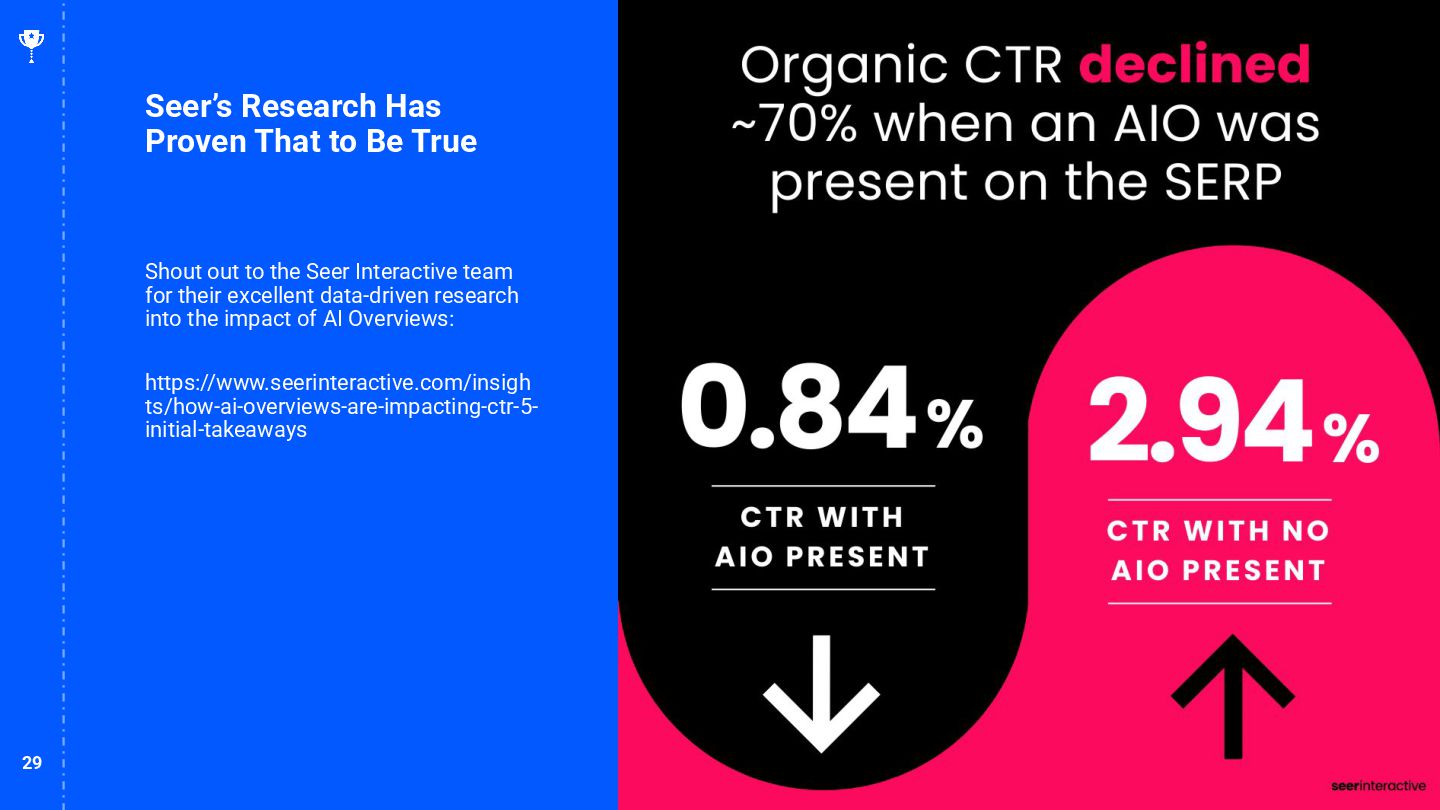
out to the Seer Interactive team for their excellent data-driven research into the impact of AI Overviews: https://www.seerinteractive.com/insigh ts/how-ai-overviews-are-impacting-ctr-5- initial-takeaways
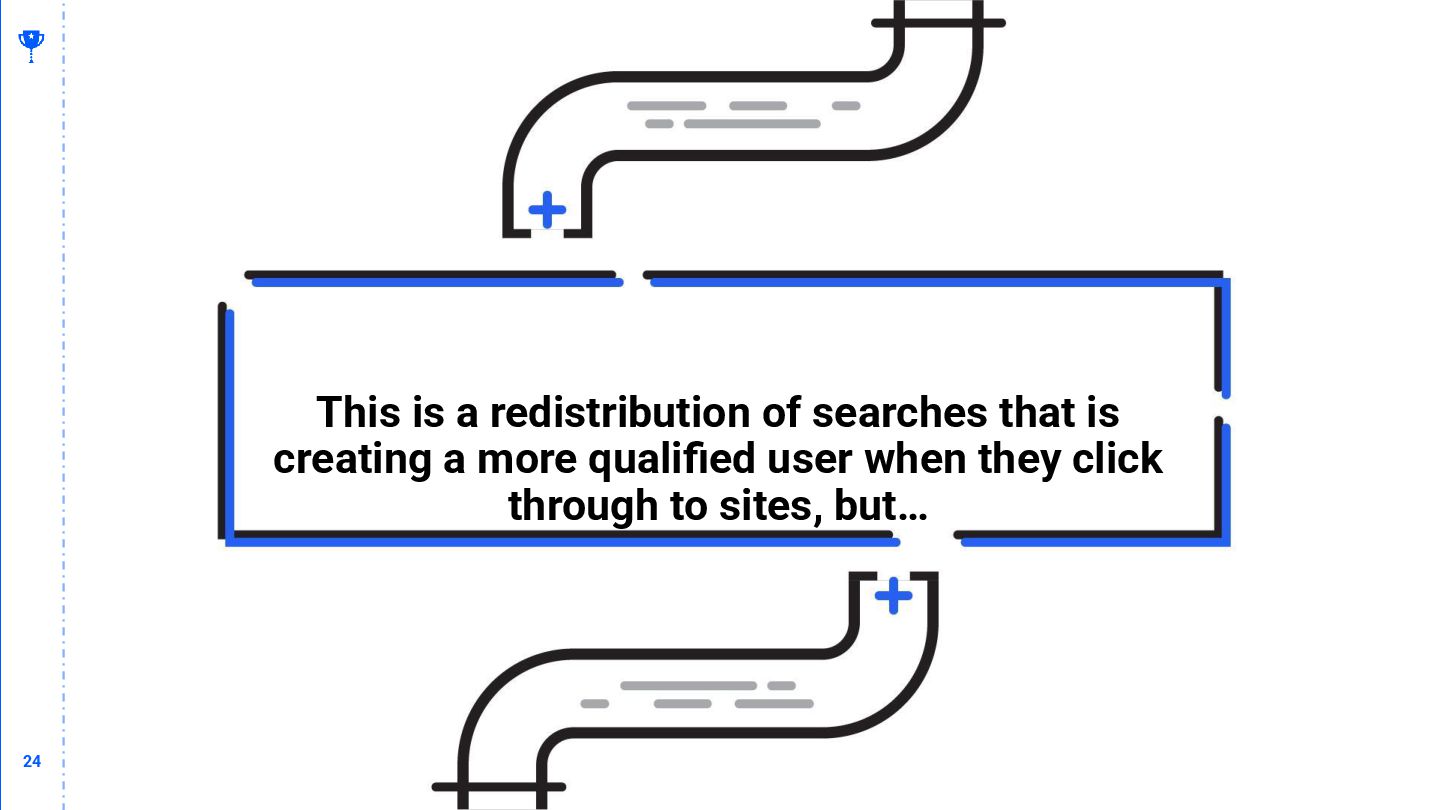
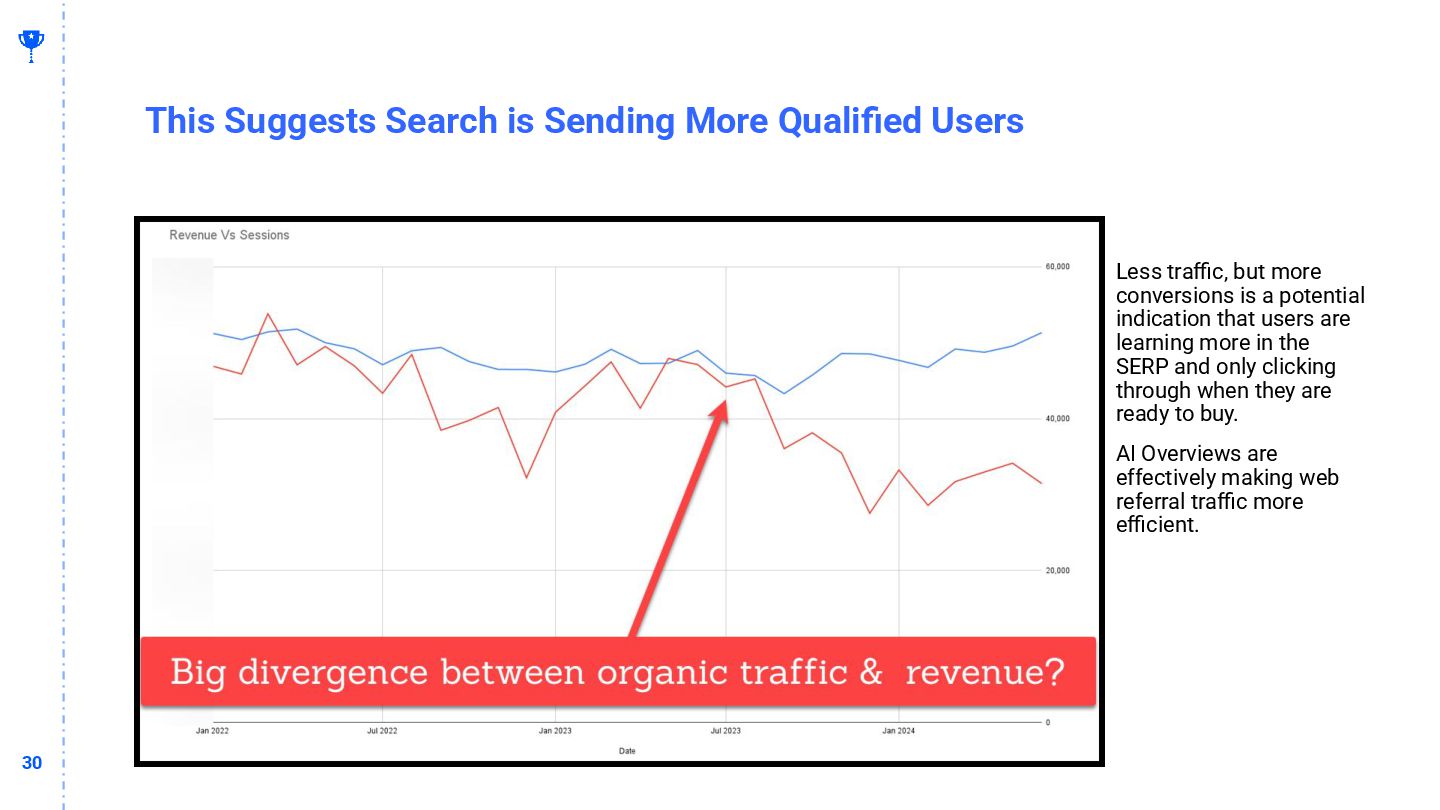
Less traffic, but more conversions is a potential indication that users are learning more in the SERP and only clicking through when they are ready to buy. AI Overviews are effectively making web referral traffic more efficient.
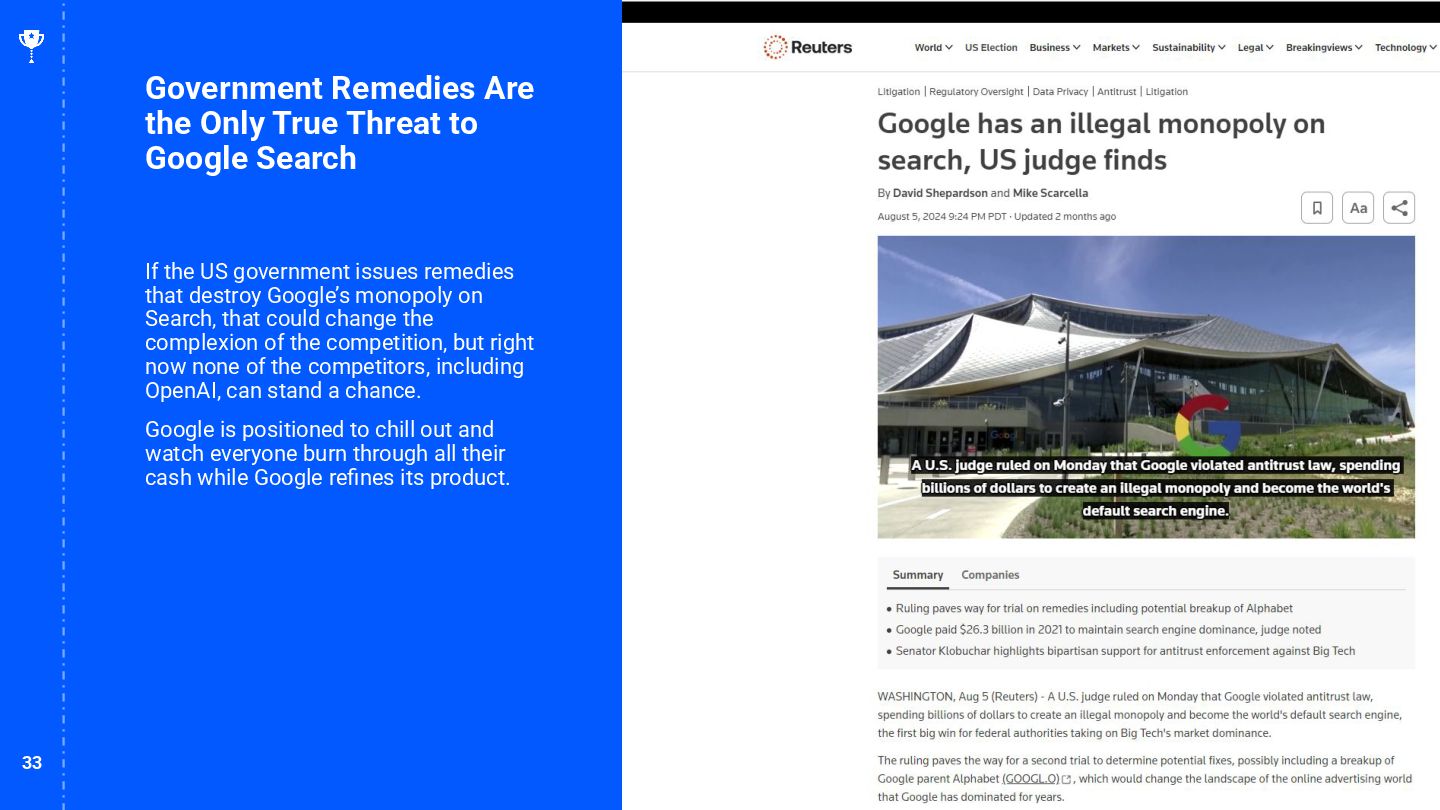
Search If the US government issues remedies that destroy Google’s monopoly on Search, that could change the complexion of the competition, but right now none of the competitors, including OpenAI, can stand a chance. Google is positioned to chill out and watch everyone burn through all their cash while Google refines its product.
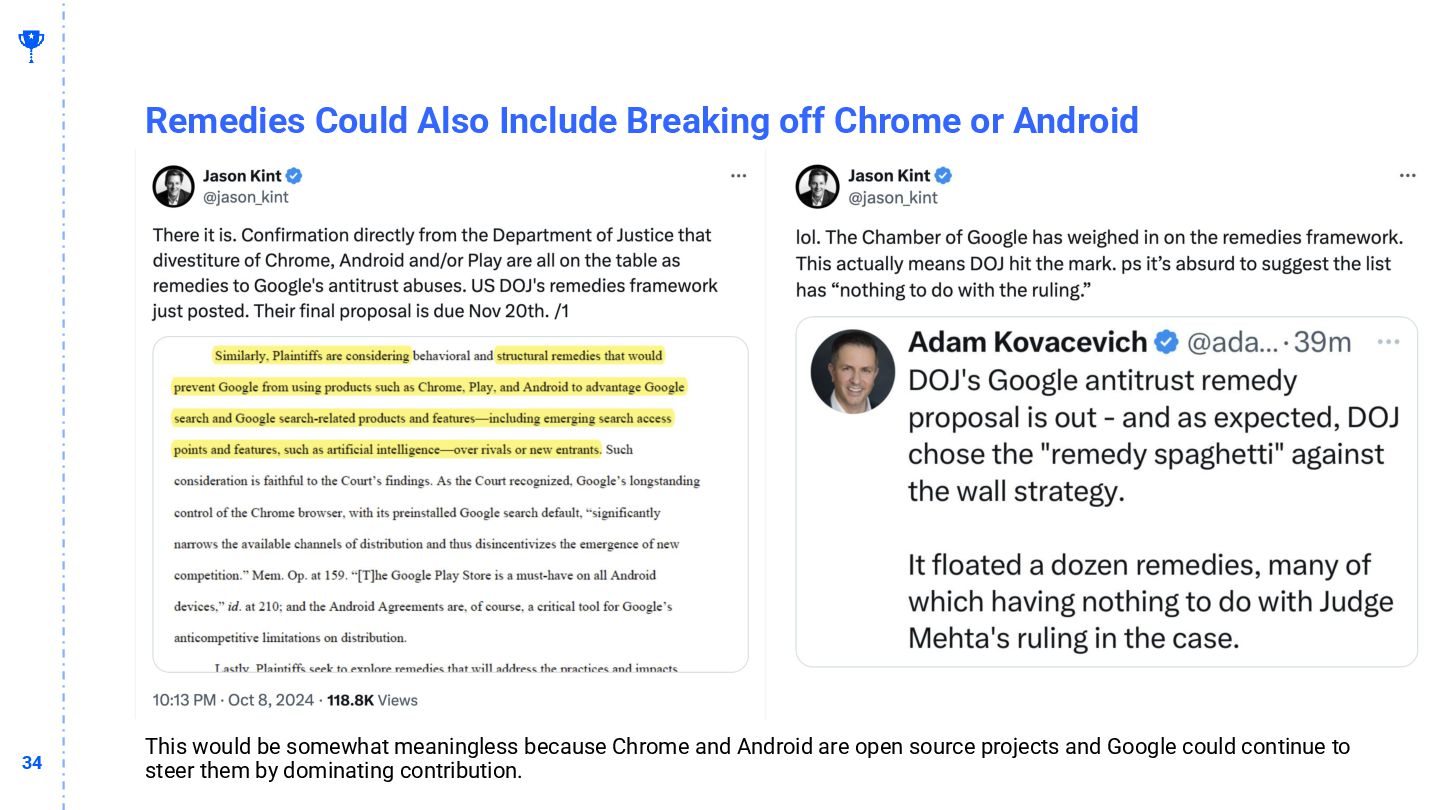
Android This would be somewhat meaningless because Chrome and Android are open source projects and Google could continue to steer them by dominating contribution.
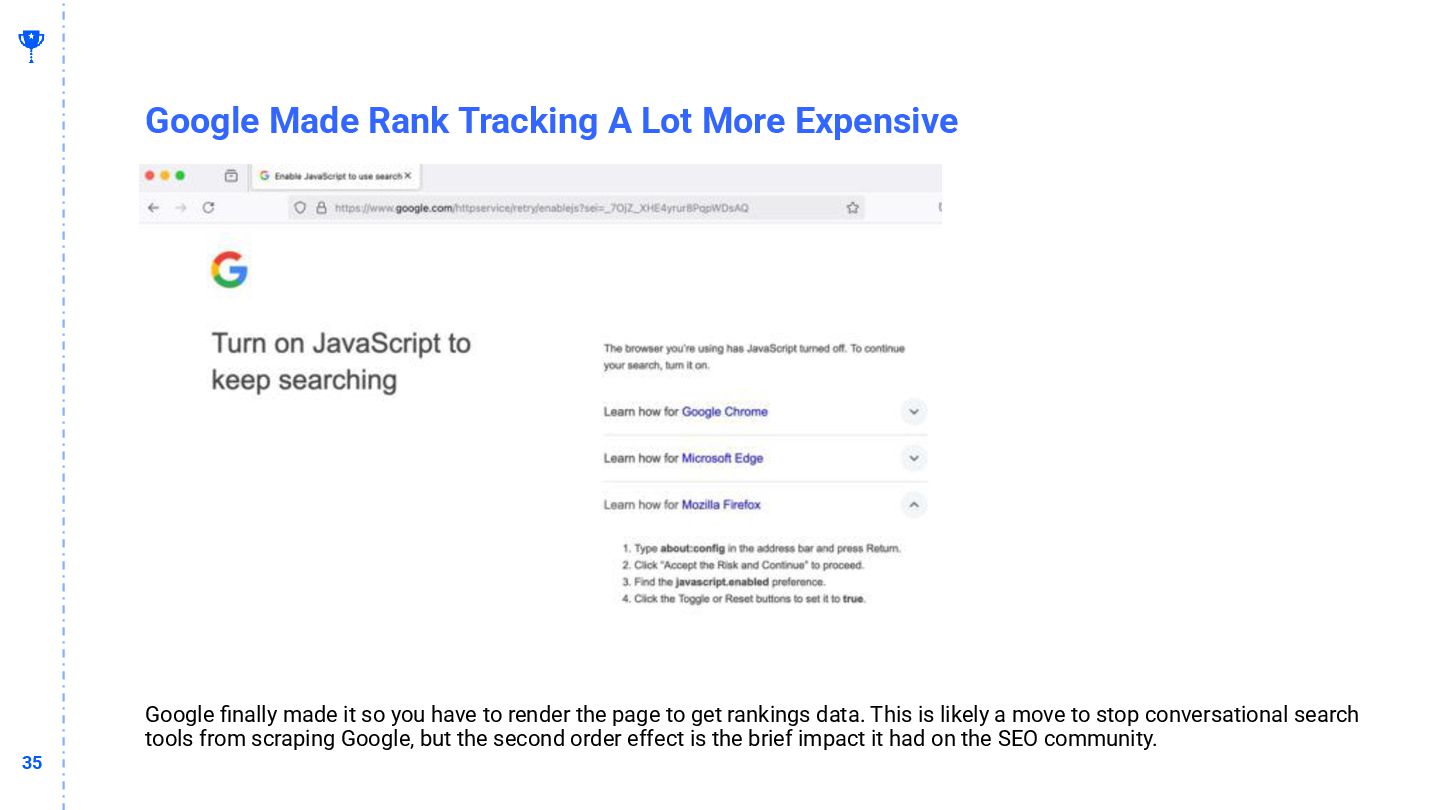
Google finally made it so you have to render the page to get rankings data. This is likely a move to stop conversational search tools from scraping Google, but the second order effect is the brief impact it had on the SEO community.
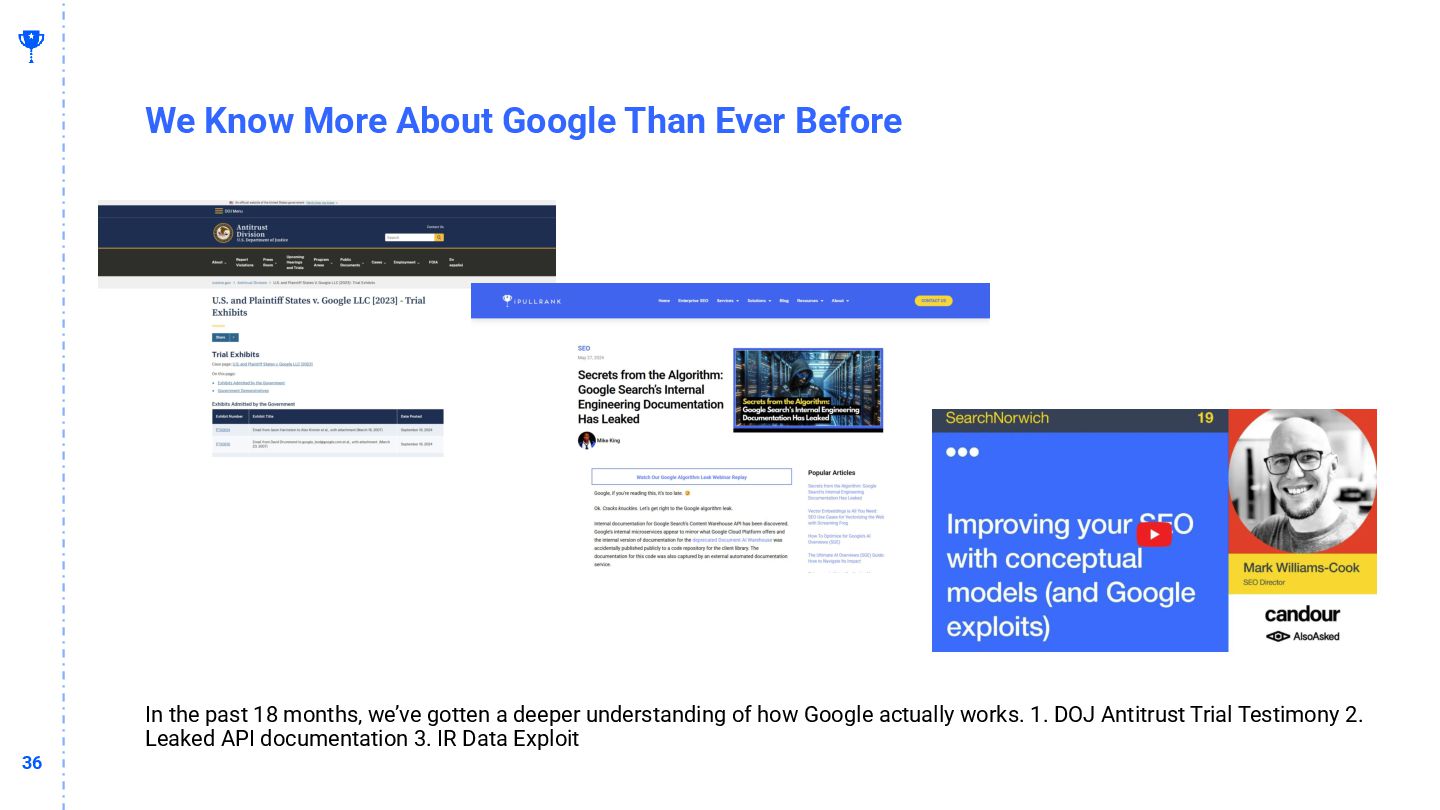
In the past 18 months, we’ve gotten a deeper understanding of how Google actually works. 1. DOJ Antitrust Trial Testimony 2. Leaked API documentation 3. IR Data Exploit
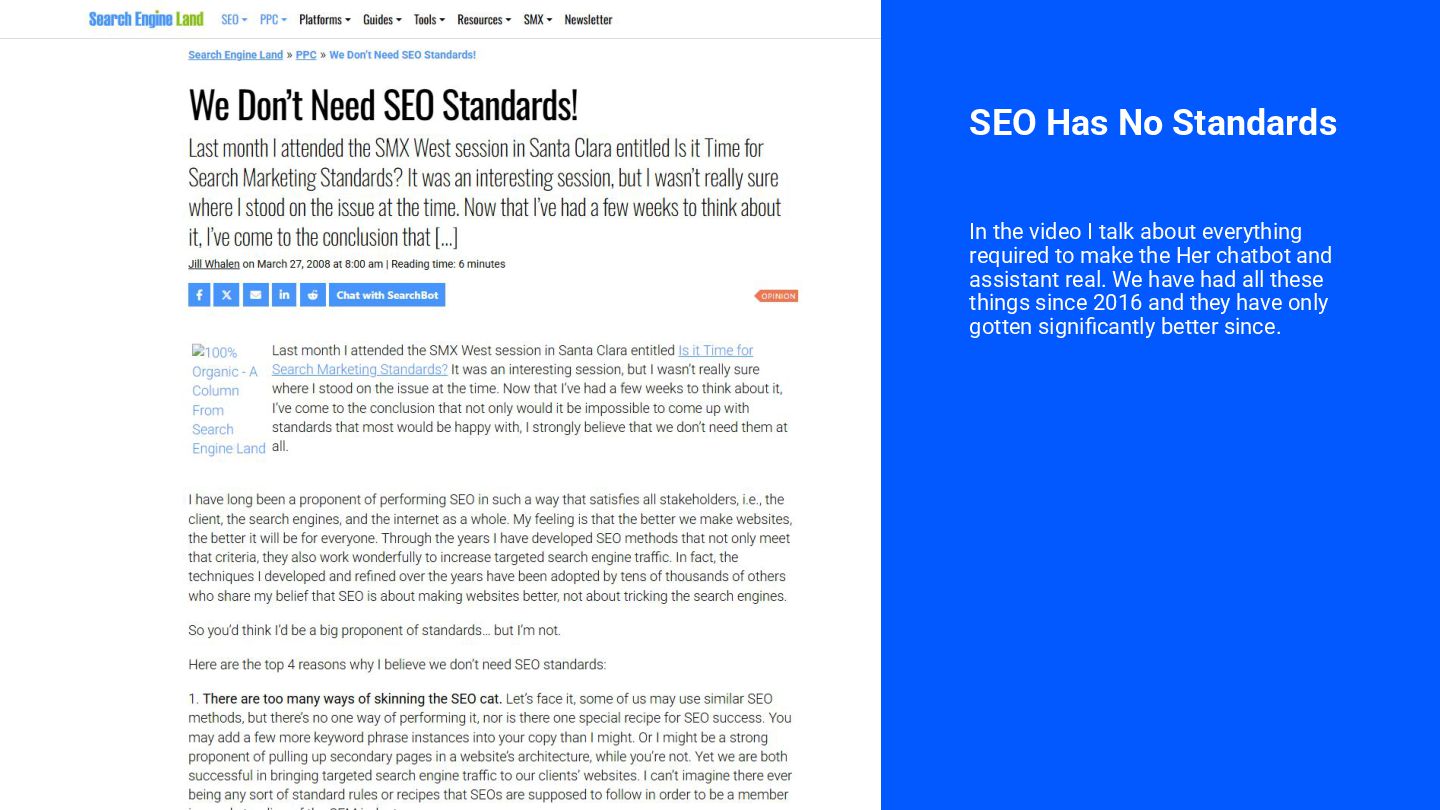
the Internet In the video I talk about everything required to make the Her chatbot and assistant real. We have had all these things since 2016 and they have only gotten significantly better since. It’s time for SEOs to stop being the janitors of the internet.
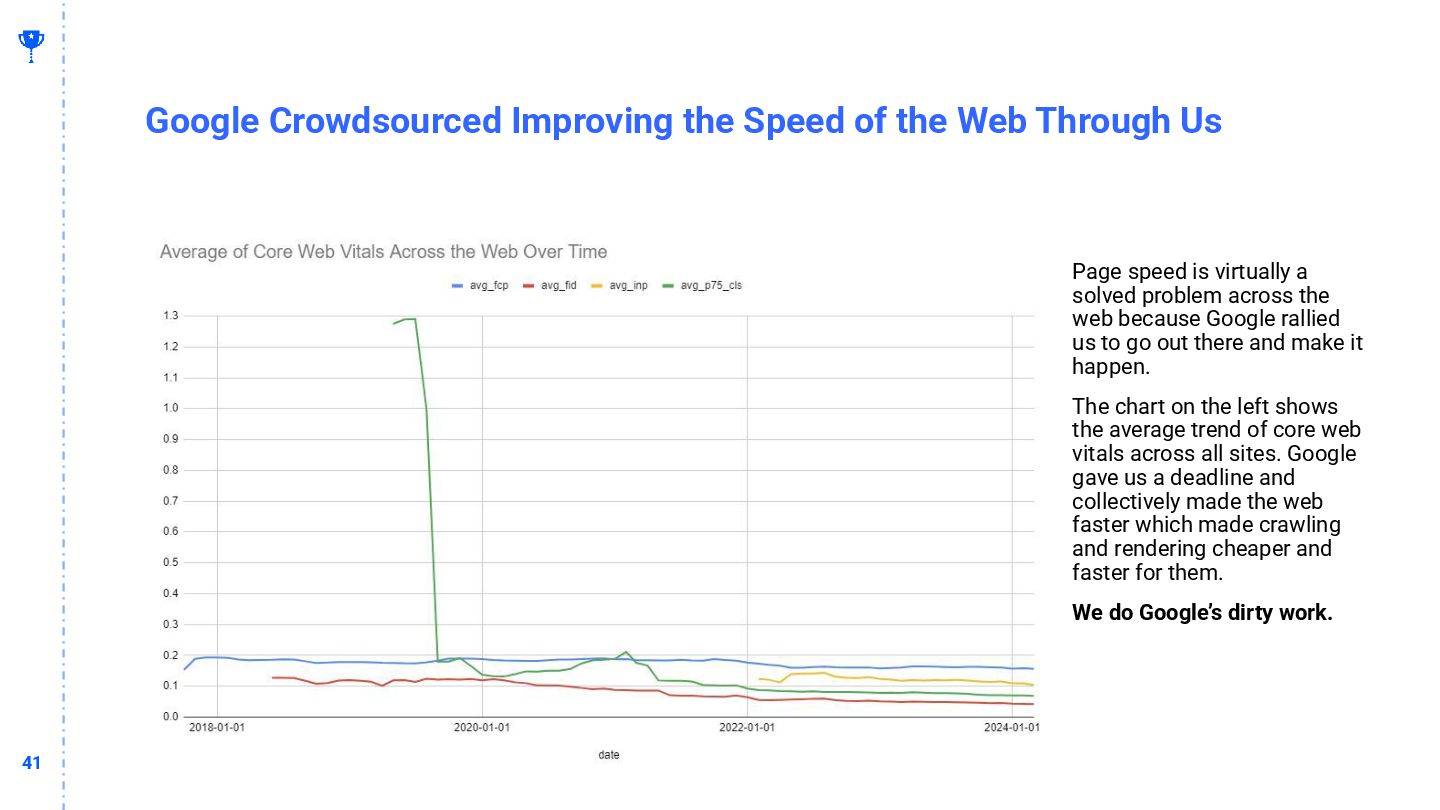
Through Us Page speed is virtually a solved problem across the web because Google rallied us to go out there and make it happen. The chart on the left shows the average trend of core web vitals across all sites. Google gave us a deadline and collectively made the web faster which made crawling and rendering cheaper and faster for them. We do Google’s dirty work.
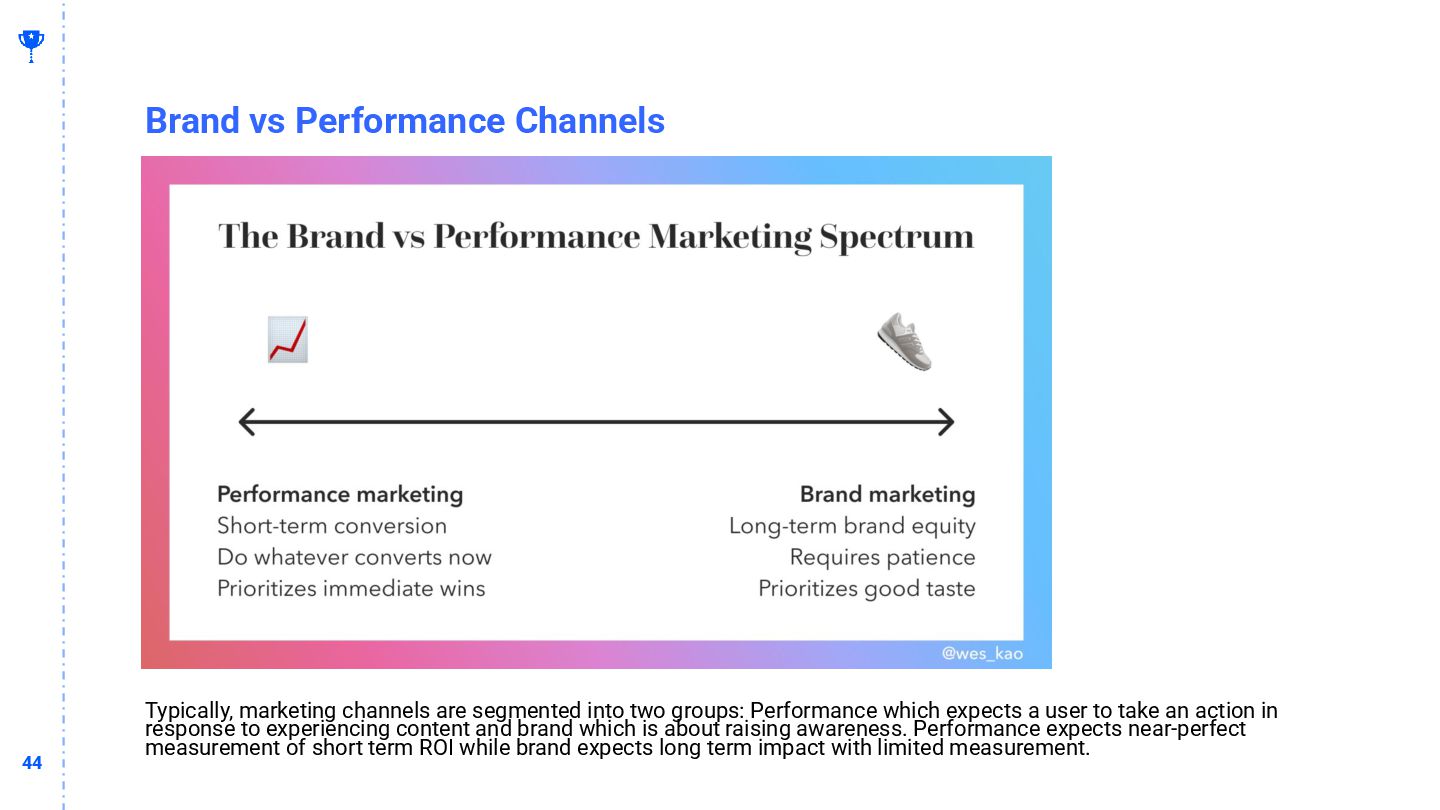
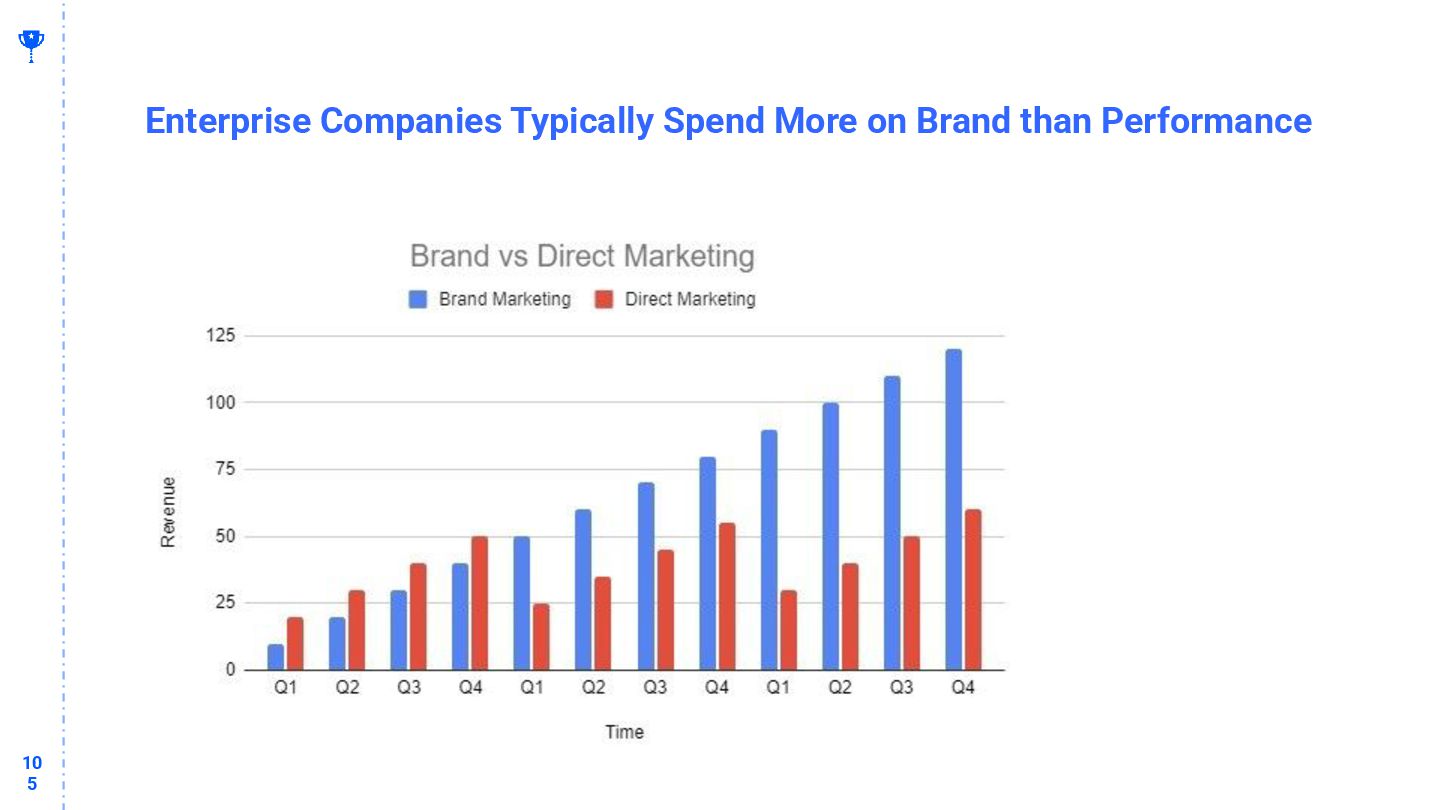
segmented into two groups: Performance which expects a user to take an action in response to experiencing content and brand which is about raising awareness. Performance expects near-perfect measurement of short term ROI while brand expects long term impact with limited measurement.
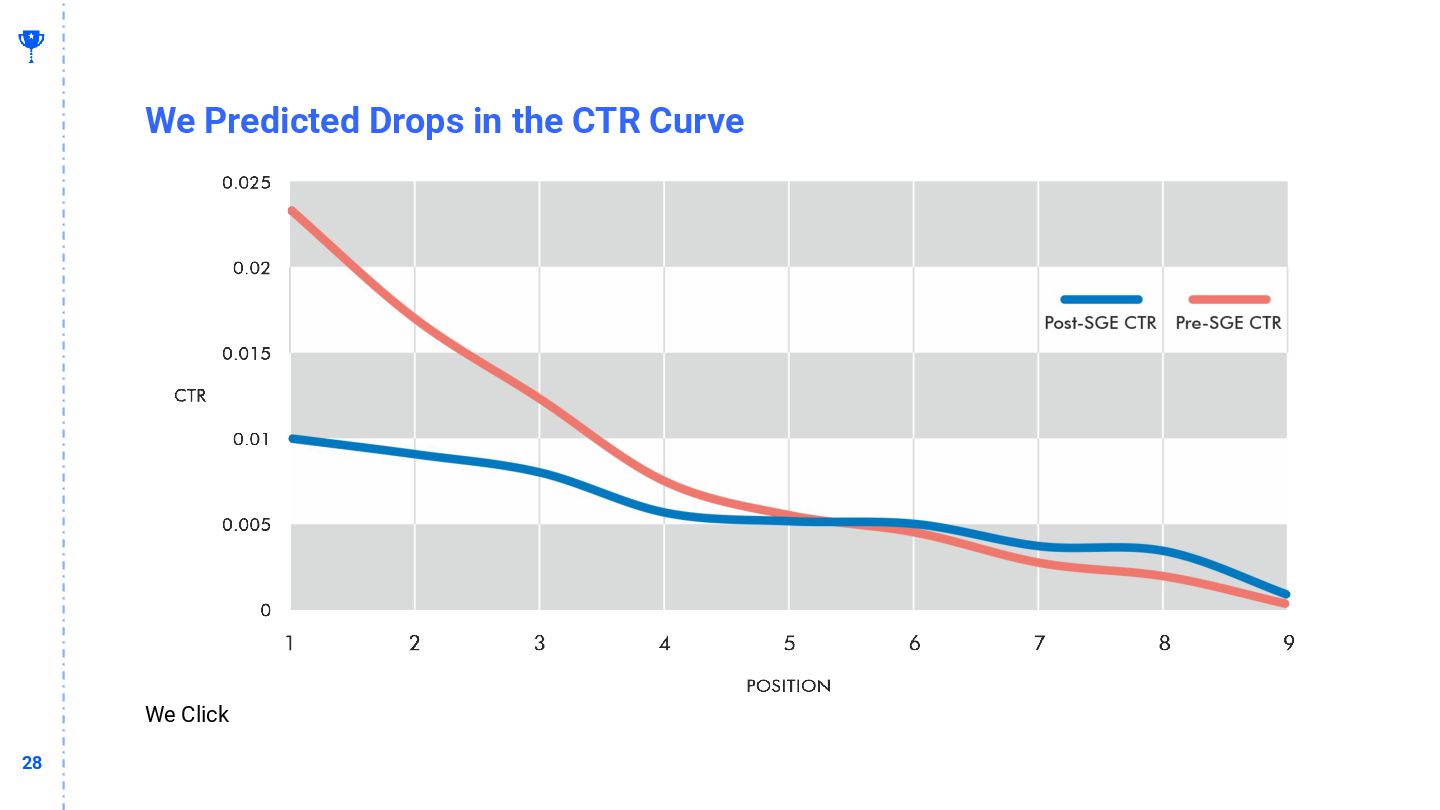
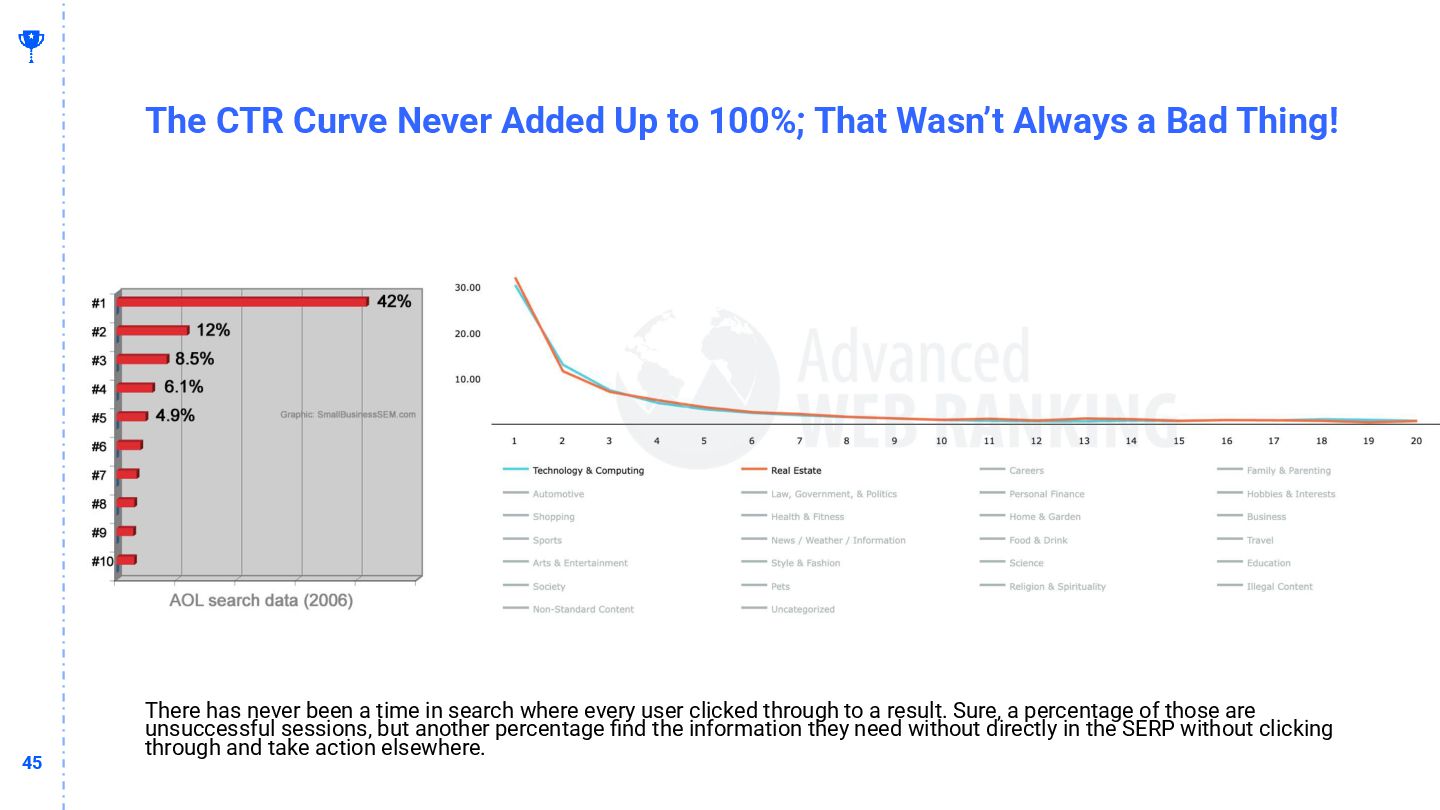
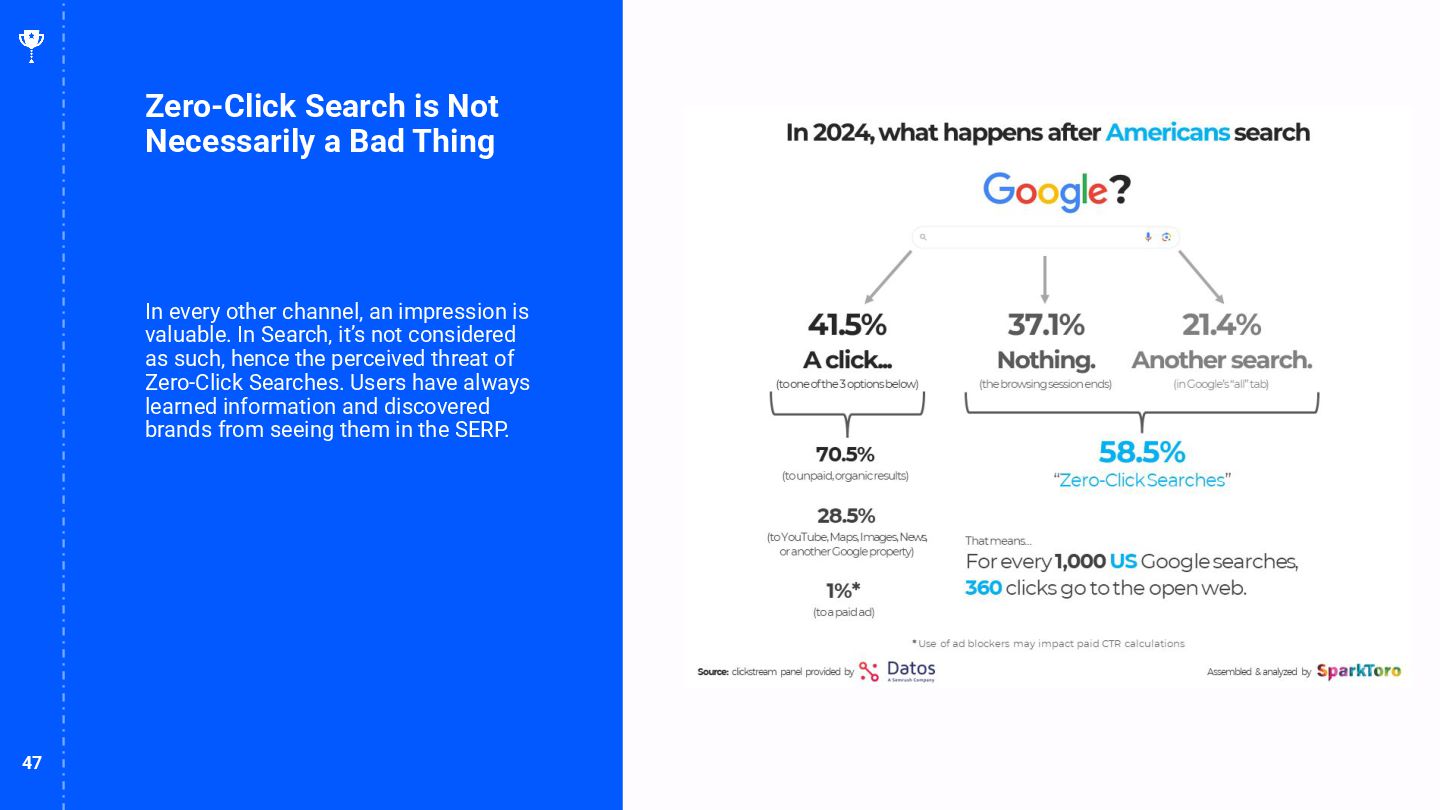
where every user clicked through to a result. Sure, a percentage of those are unsuccessful sessions, but another percentage find the information they need without directly in the SERP without clicking through and take action elsewhere. The CTR Curve Never Added Up to 100%; That Wasn’t Always a Bad Thing!
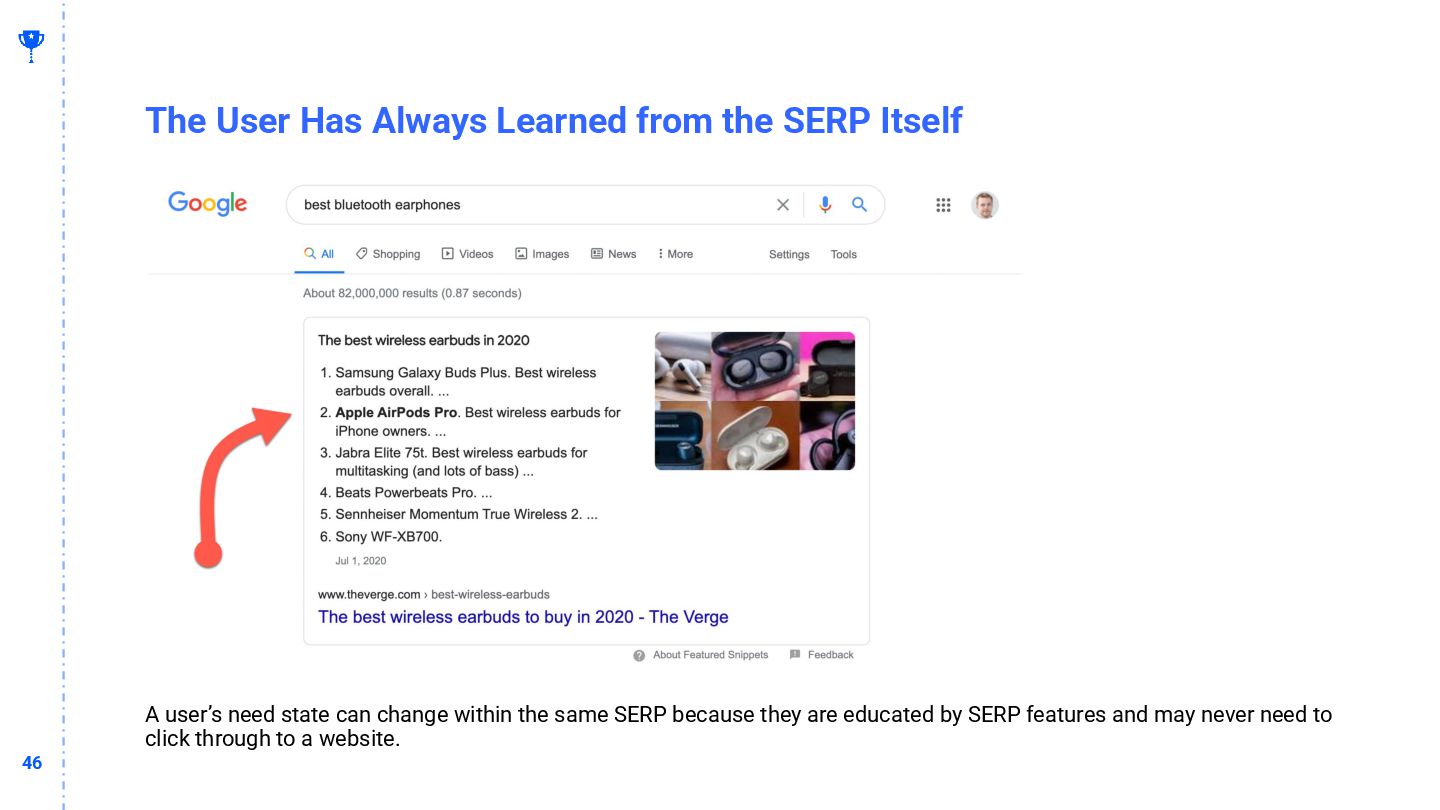
Itself A user’s need state can change within the same SERP because they are educated by SERP features and may never need to click through to a website.
every other channel, an impression is valuable. In Search, it’s not considered as such, hence the perceived threat of Zero-Click Searches. Users have always learned information and discovered brands from seeing them in the SERP.
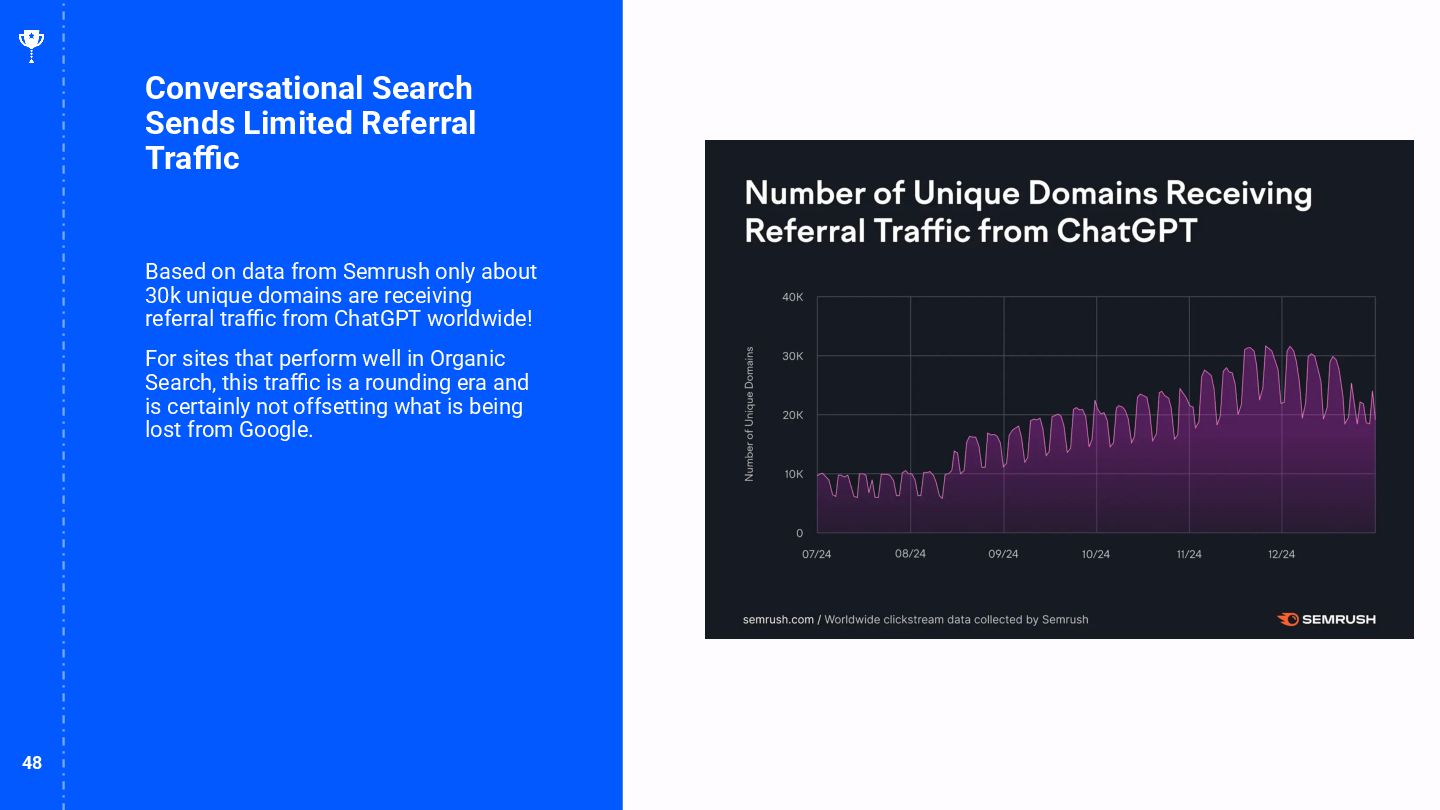
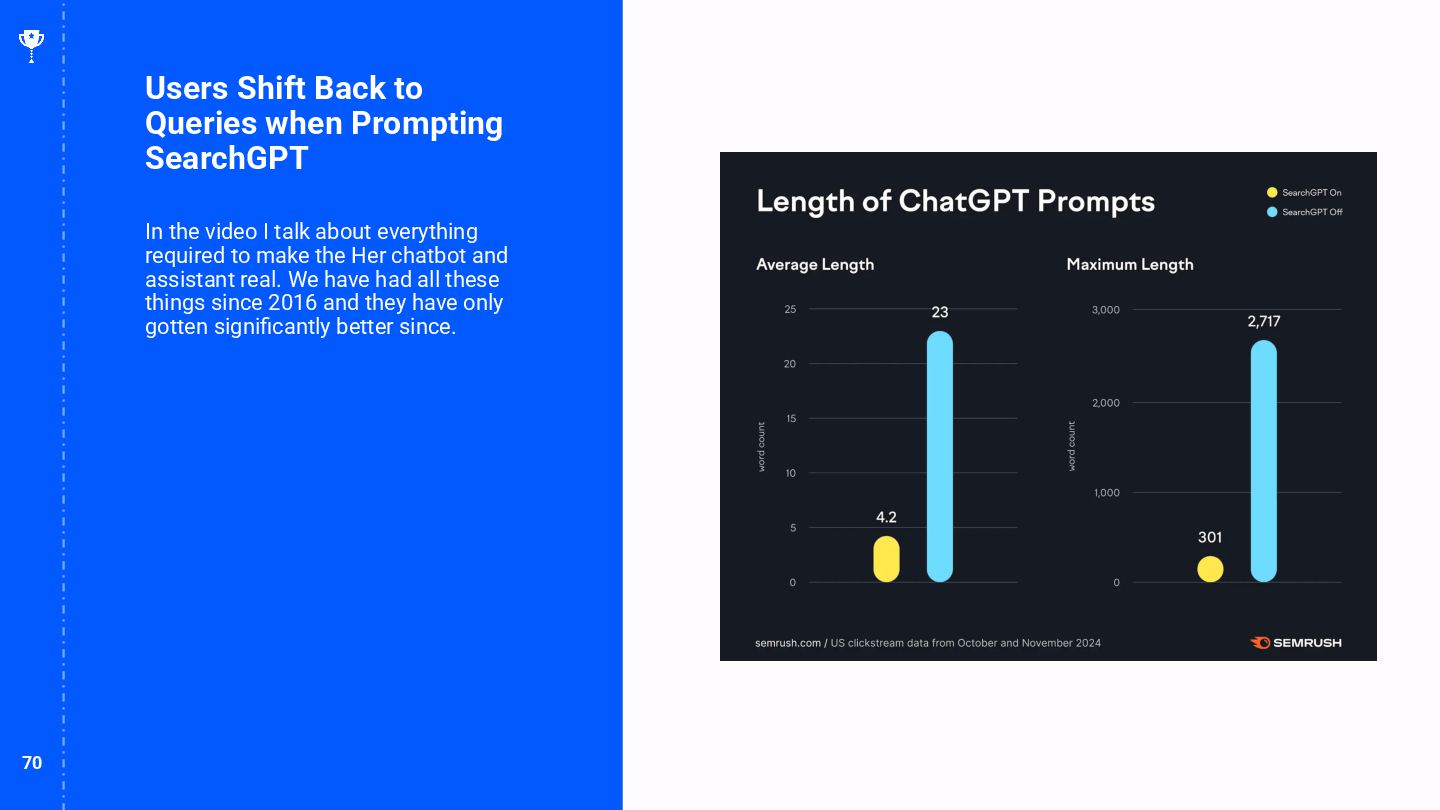
from Semrush only about 30k unique domains are receiving referral traffic from ChatGPT worldwide! For sites that perform well in Organic Search, this traffic is a rounding era and is certainly not offsetting what is being lost from Google.
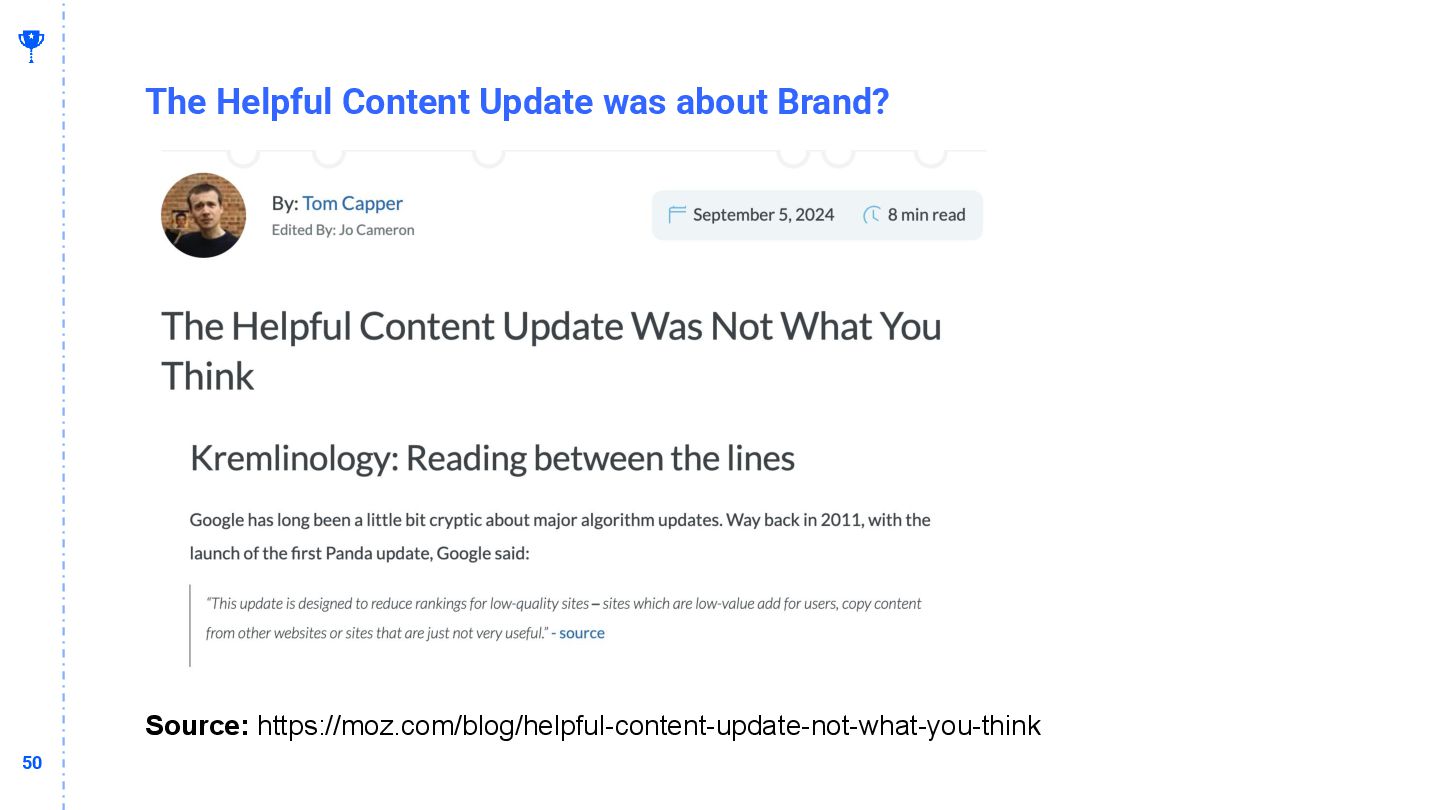
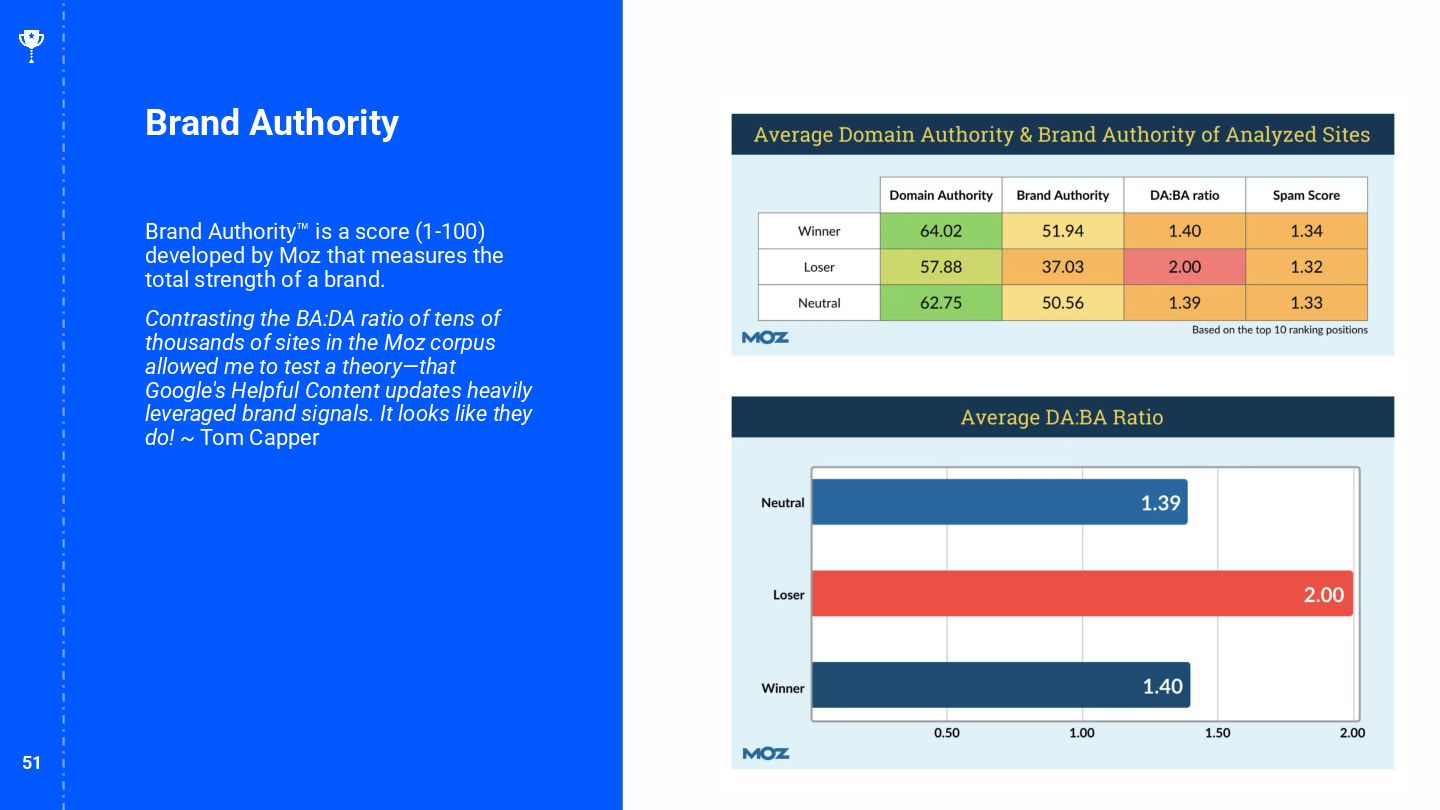
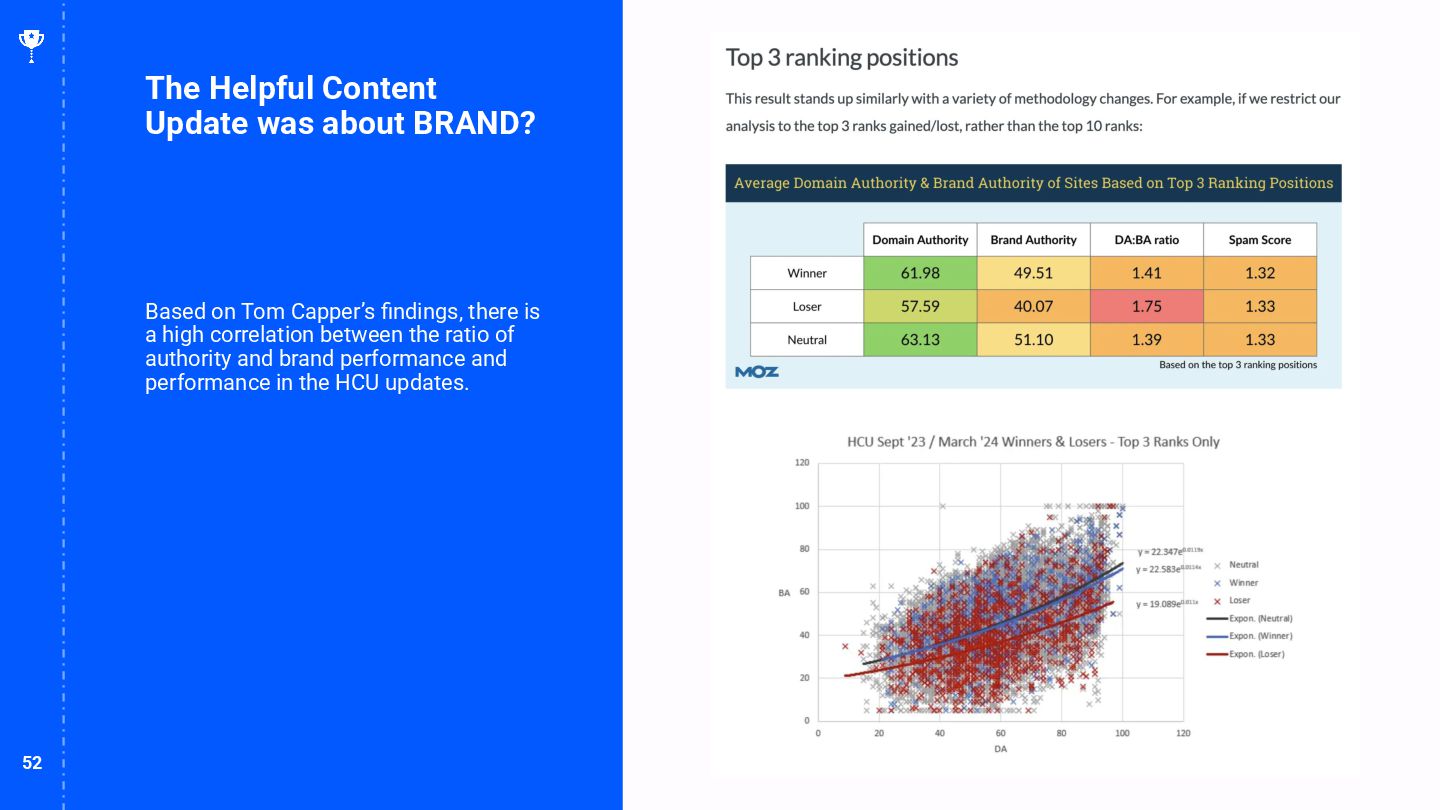
by Moz that measures the total strength of a brand. Contrasting the BA:DA ratio of tens of thousands of sites in the Moz corpus allowed me to test a theory—that Google's Helpful Content updates heavily leveraged brand signals. It looks like they do! ~ Tom Capper
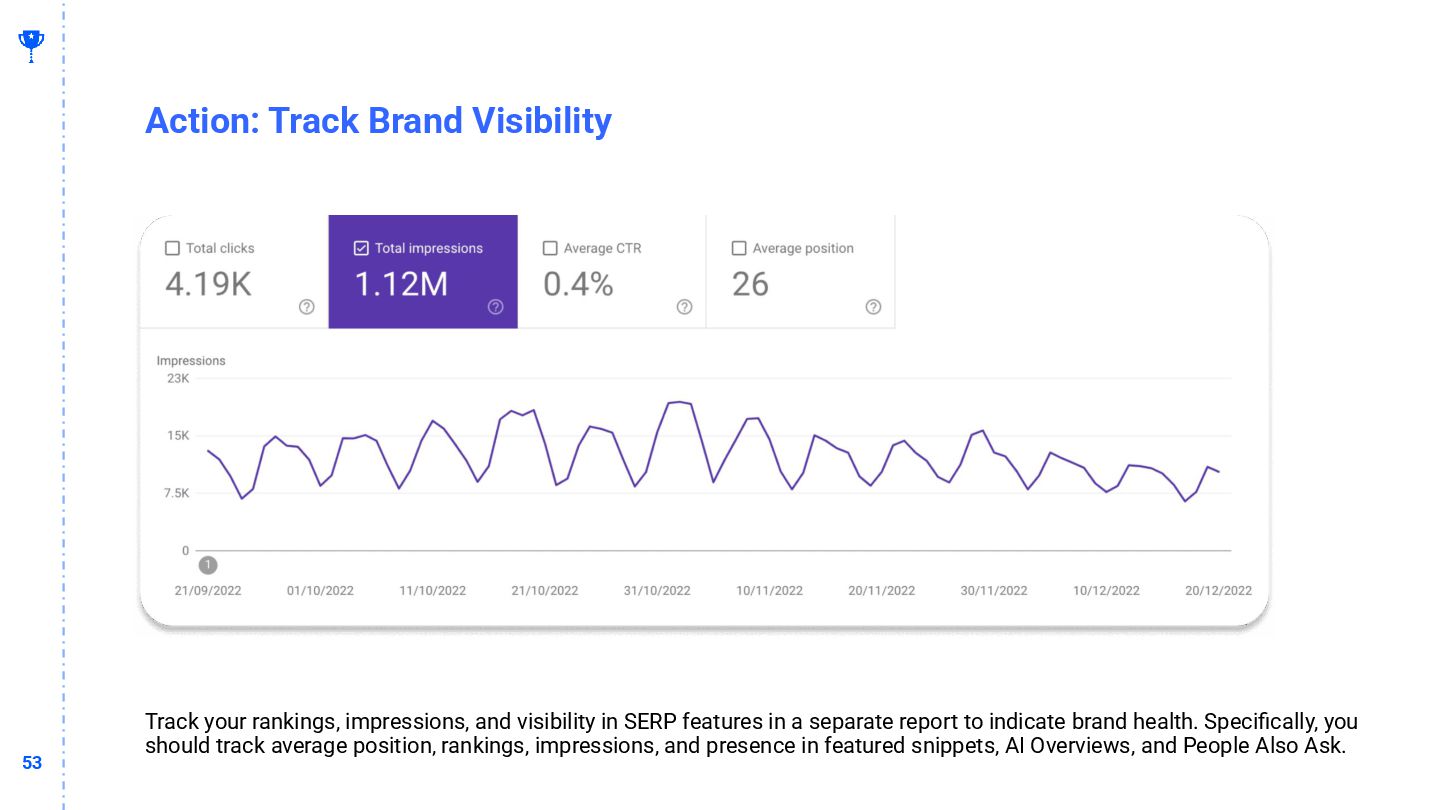
and visibility in SERP features in a separate report to indicate brand health. Specifically, you should track average position, rankings, impressions, and presence in featured snippets, AI Overviews, and People Also Ask.
Looker Studio dashboard that combines data from Semrush and Google Search Console to track brand visibility. https://lookerstudio.google.com/u/0/re porting/create?c.reportId=3ad27fb0-dd4 1-4a6b-a509-7d61895d93a7&r.reportNa me=iPullRank%20%7C%20SERP%20Feat ure%20Brand%20Visibility%20Tracker&c .mode=edit
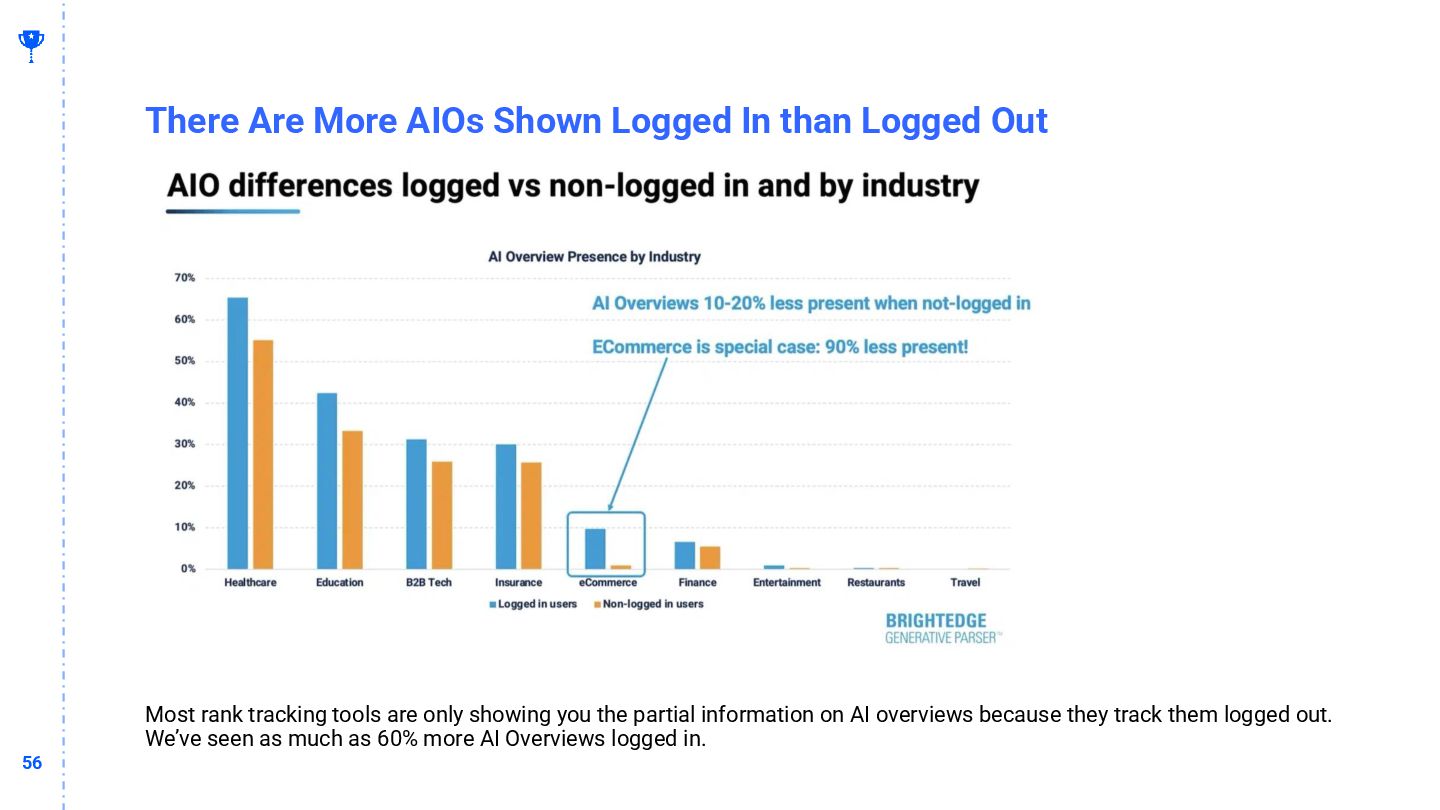
Logged Out Most rank tracking tools are only showing you the partial information on AI overviews because they track them logged out. We’ve seen as much as 60% more AI Overviews logged in.
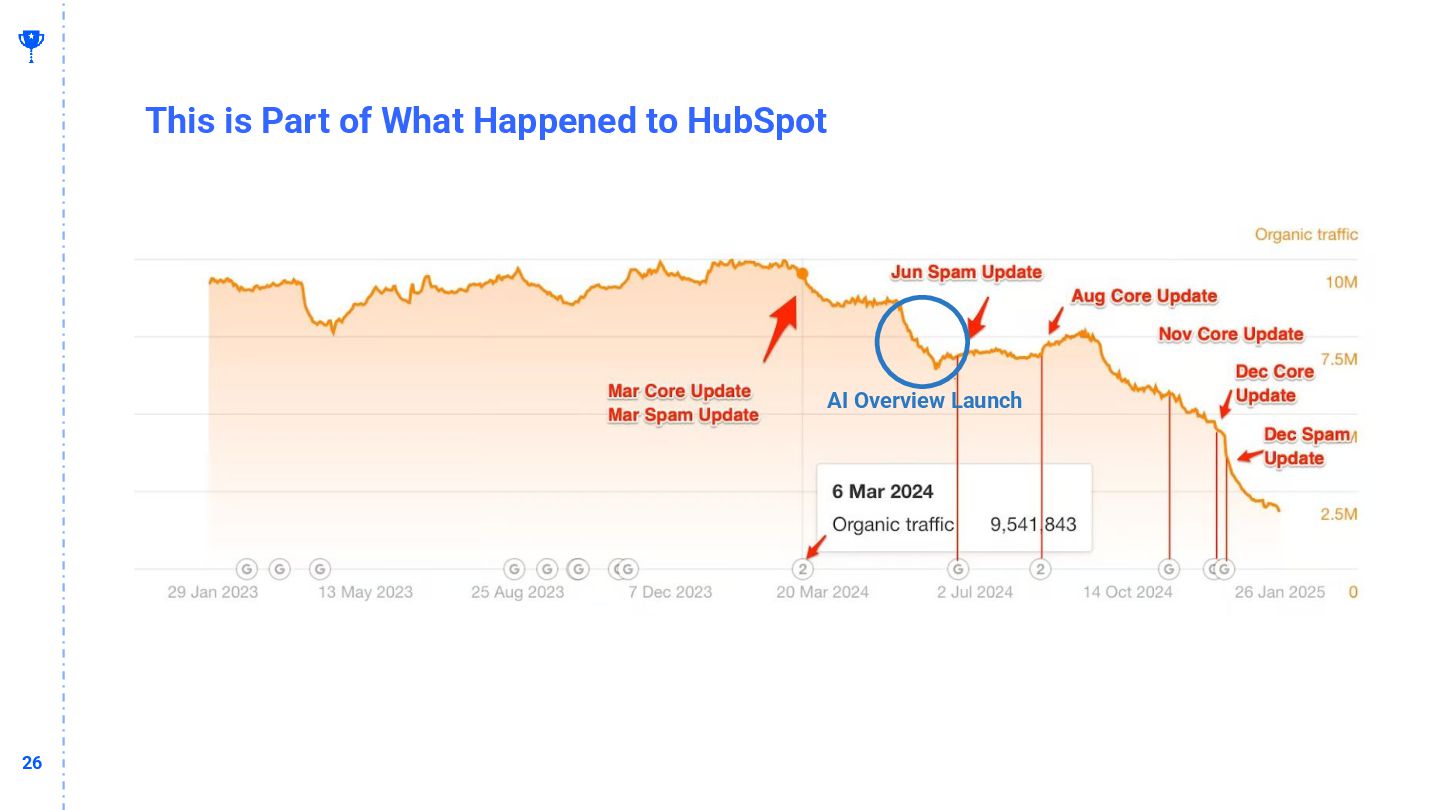
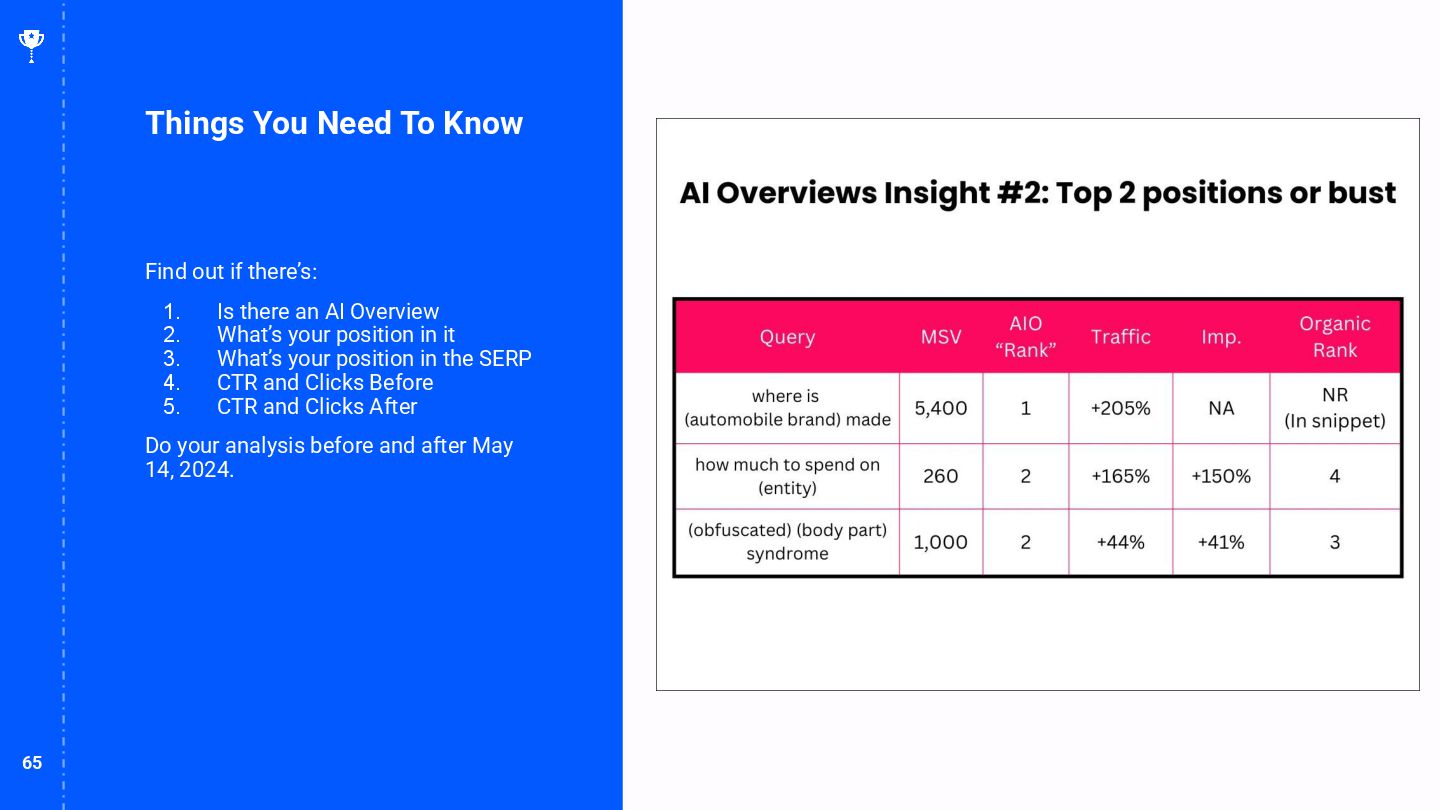
1. Is there an AI Overview 2. What’s your position in it 3. What’s your position in the SERP 4. CTR and Clicks Before 5. CTR and Clicks After Do your analysis before and after May 14, 2024.
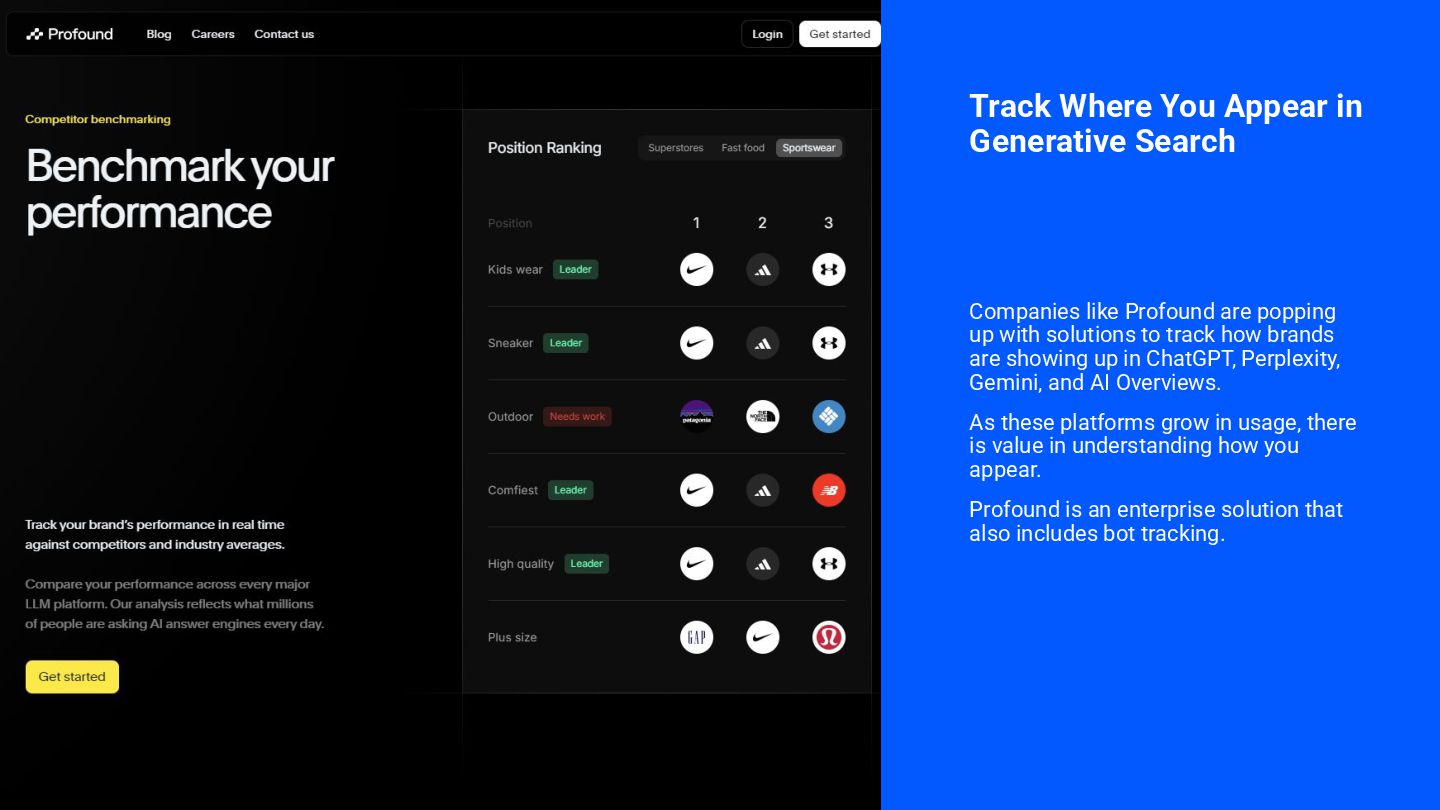
like Profound are popping up with solutions to track how brands are showing up in ChatGPT, Perplexity, Gemini, and AI Overviews. As these platforms grow in usage, there is value in understanding how you appear. Profound is an enterprise solution that also includes bot tracking.
the video I talk about everything required to make the Her chatbot and assistant real. We have had all these things since 2016 and they have only gotten significantly better since.
I talk about everything required to make the Her chatbot and assistant real. We have had all these things since 2016 and they have only gotten significantly better since.
about everything required to make the Her chatbot and assistant real. We have had all these things since 2016 and they have only gotten significantly better since.
about everything required to make the Her chatbot and assistant real. We have had all these things since 2016 and they have only gotten significantly better since.
to make the Her chatbot and assistant real. We have had all these things since 2016 and they have only gotten significantly better since. There are No Guidelines
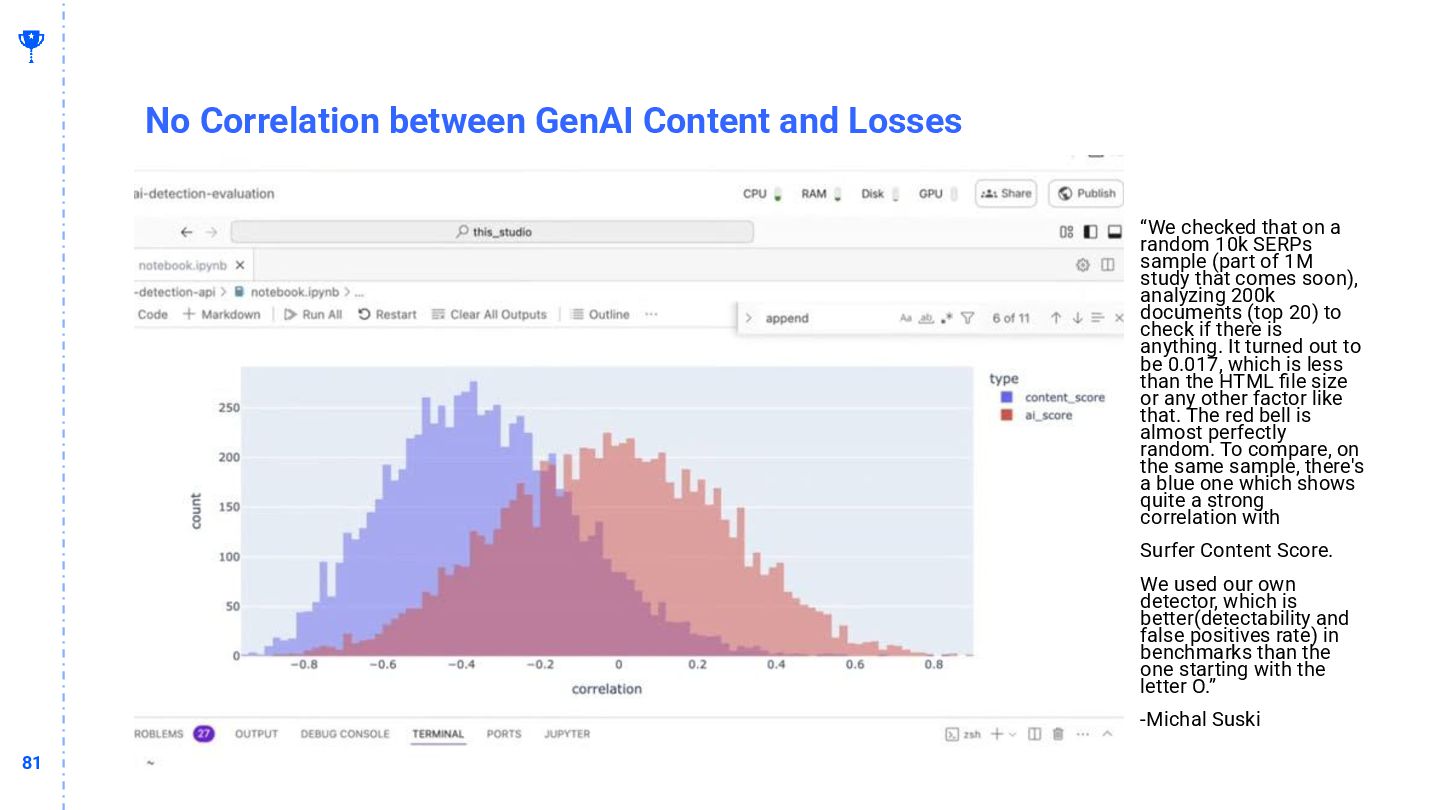
checked that on a random 10k SERPs sample (part of 1M study that comes soon), analyzing 200k documents (top 20) to check if there is anything. It turned out to be 0.017, which is less than the HTML file size or any other factor like that. The red bell is almost perfectly random. To compare, on the same sample, there's a blue one which shows quite a strong correlation with Surfer Content Score. We used our own detector, which is better(detectability and false positives rate) in benchmarks than the one starting with the letter O.” -Michal Suski
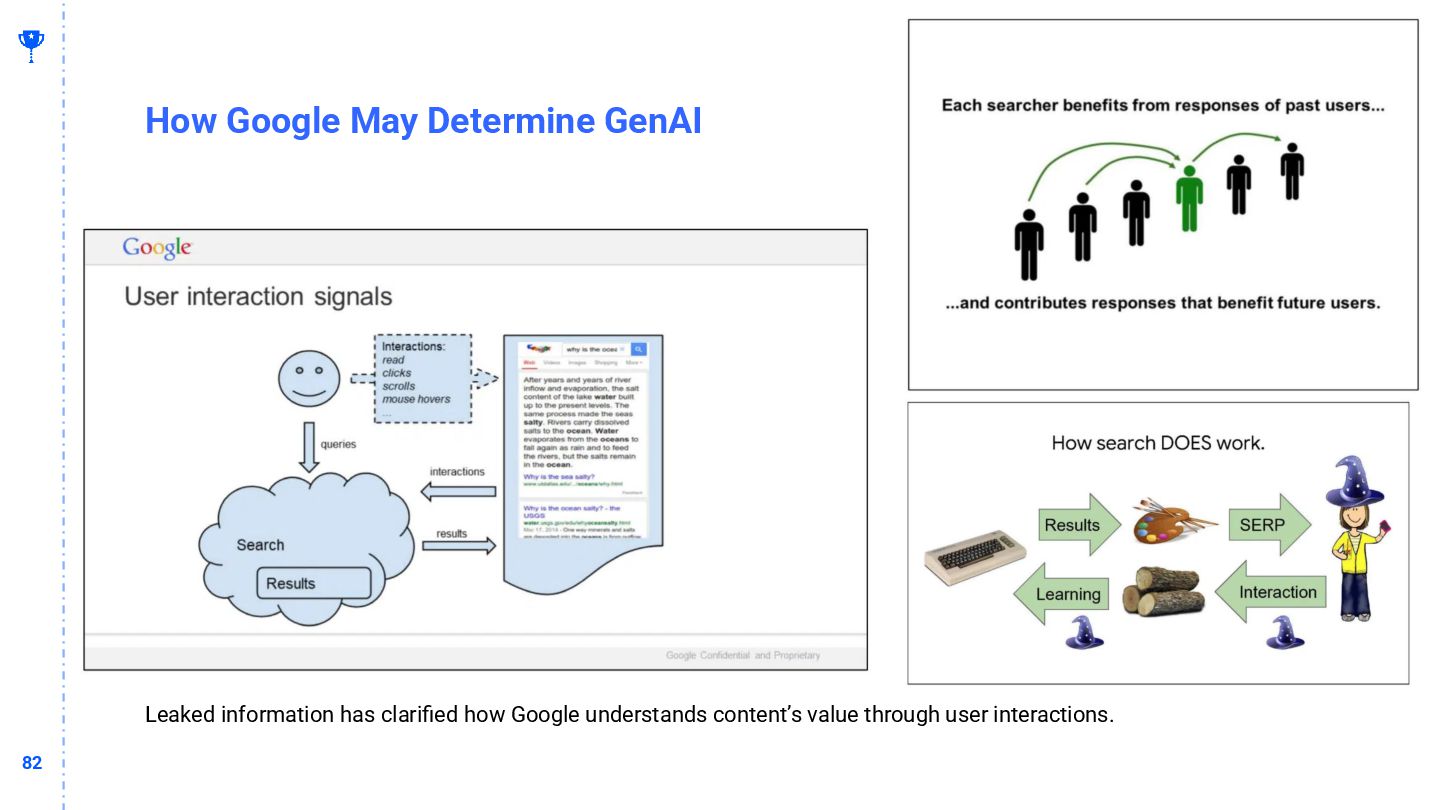
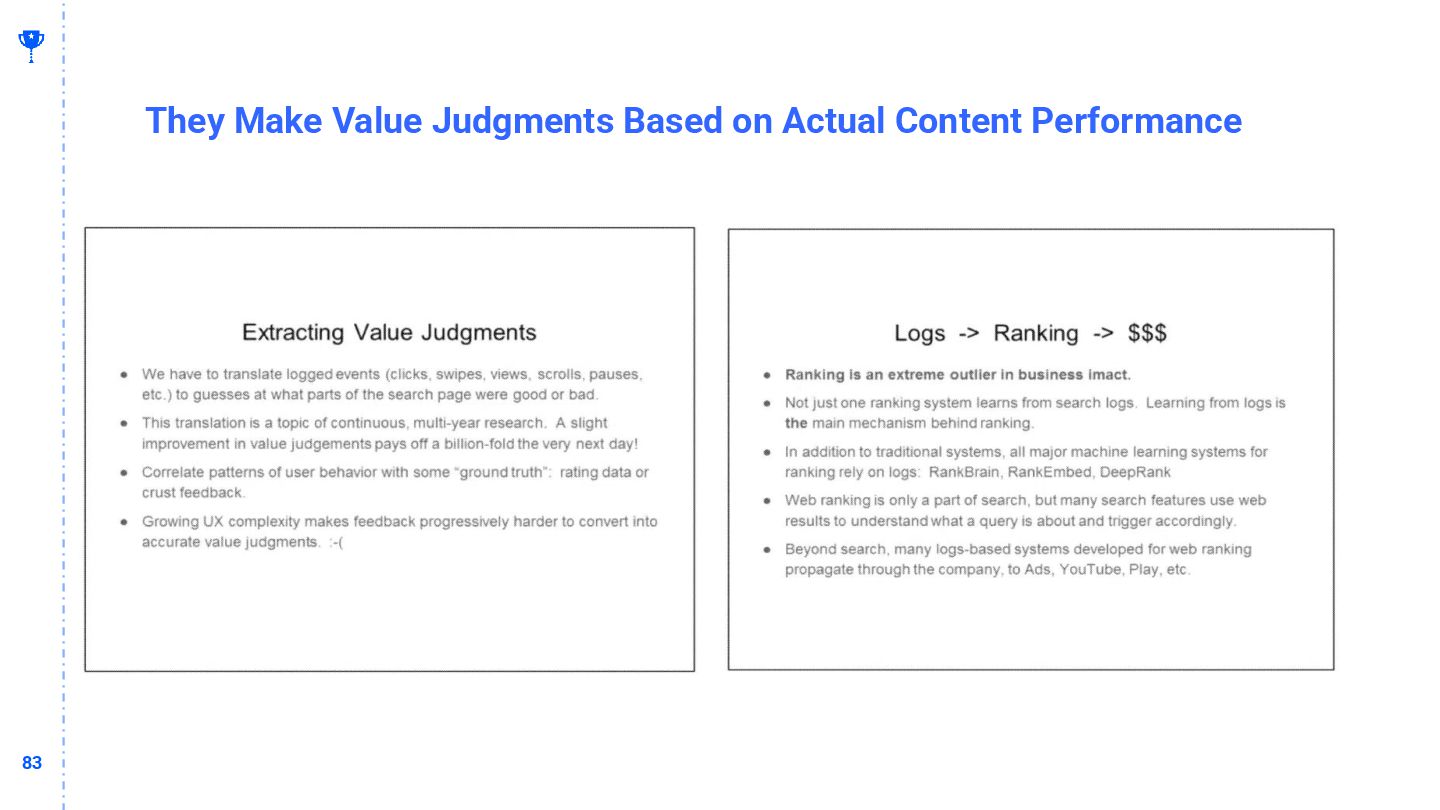
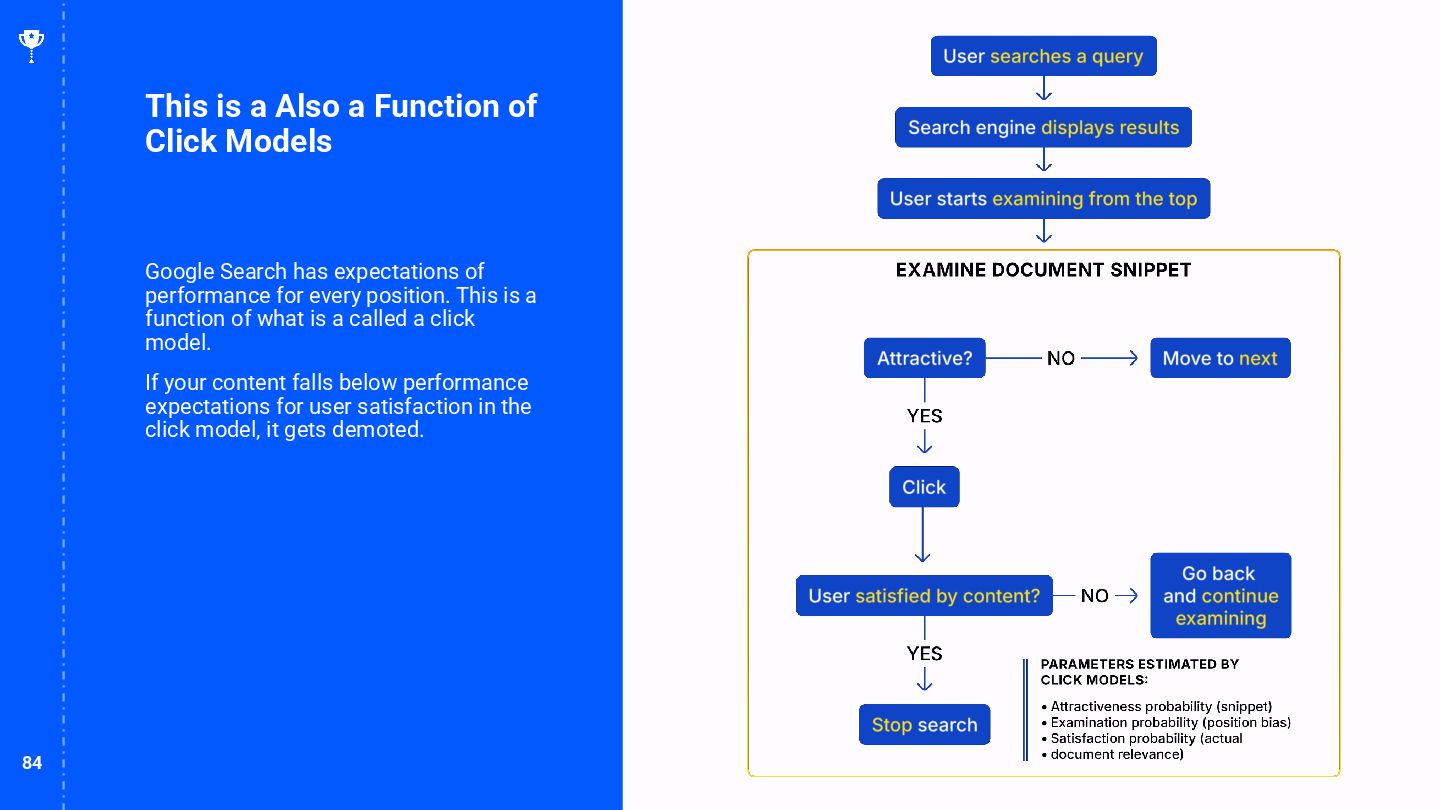
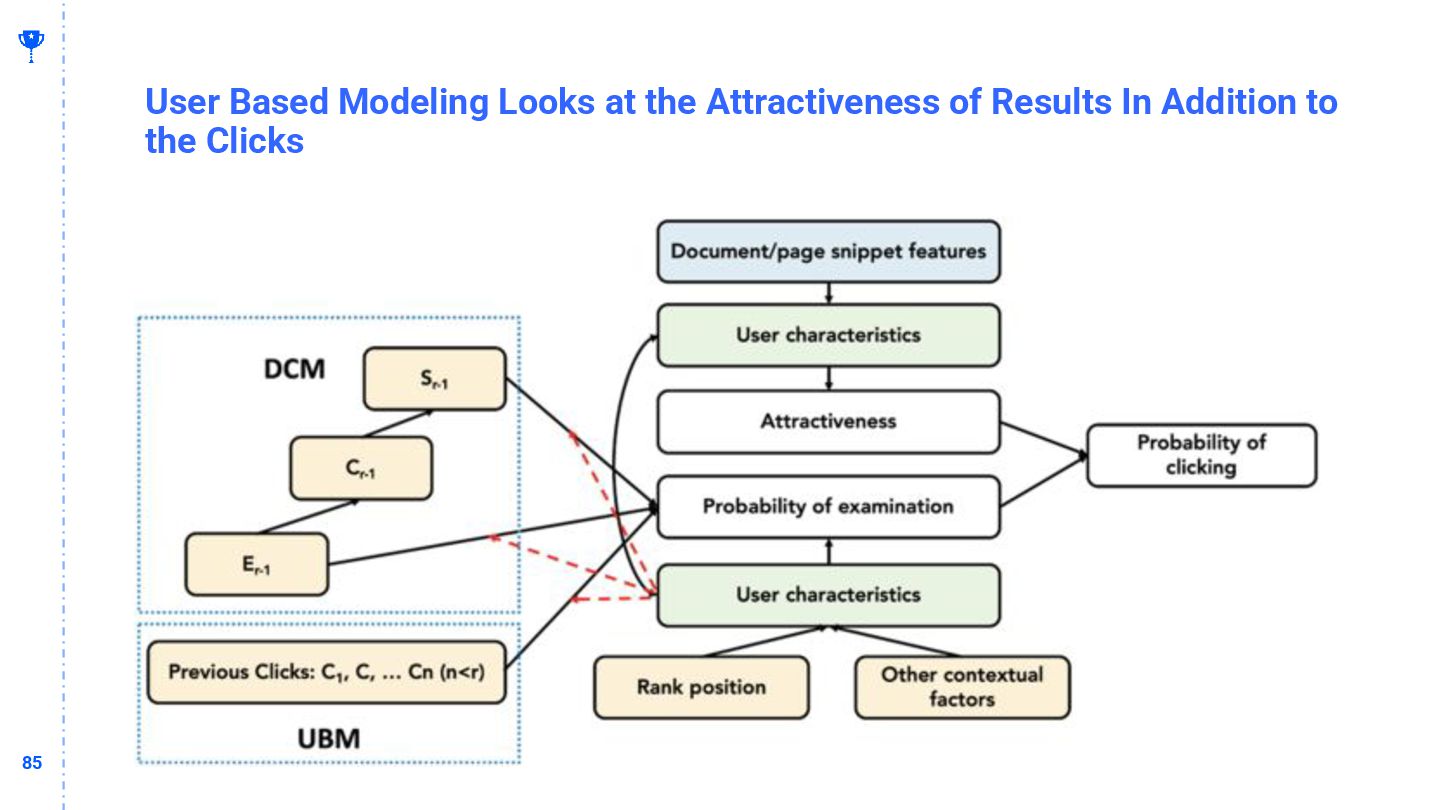
Google Search has expectations of performance for every position. This is a function of what is a called a click model. If your content falls below performance expectations for user satisfaction in the click model, it gets demoted.
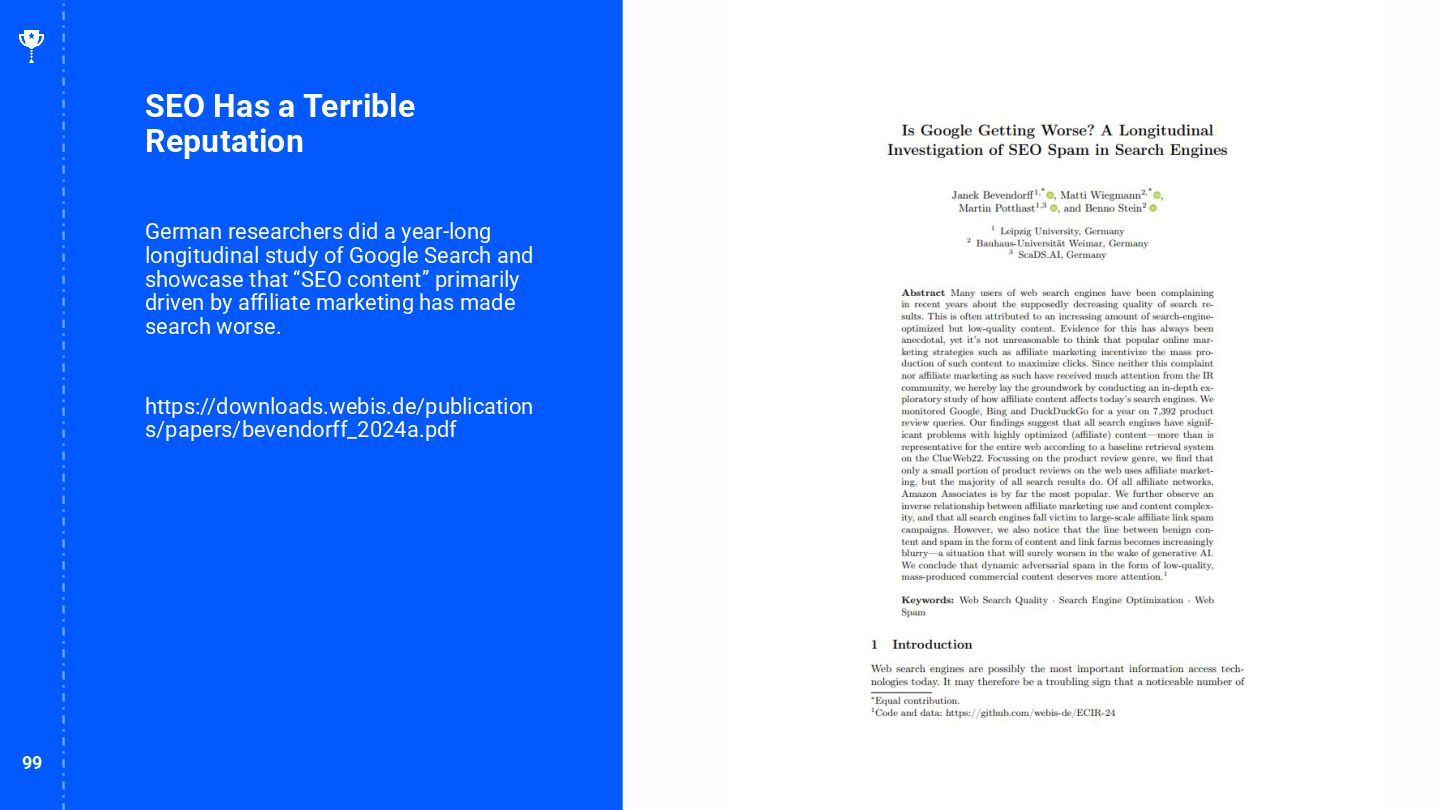
year-long longitudinal study of Google Search and showcase that “SEO content” primarily driven by affiliate marketing has made search worse. https://downloads.webis.de/publication s/papers/bevendorff_2024a.pdf
video I talk about everything required to make the Her chatbot and assistant real. We have had all these things since 2016 and they have only gotten significantly better since.
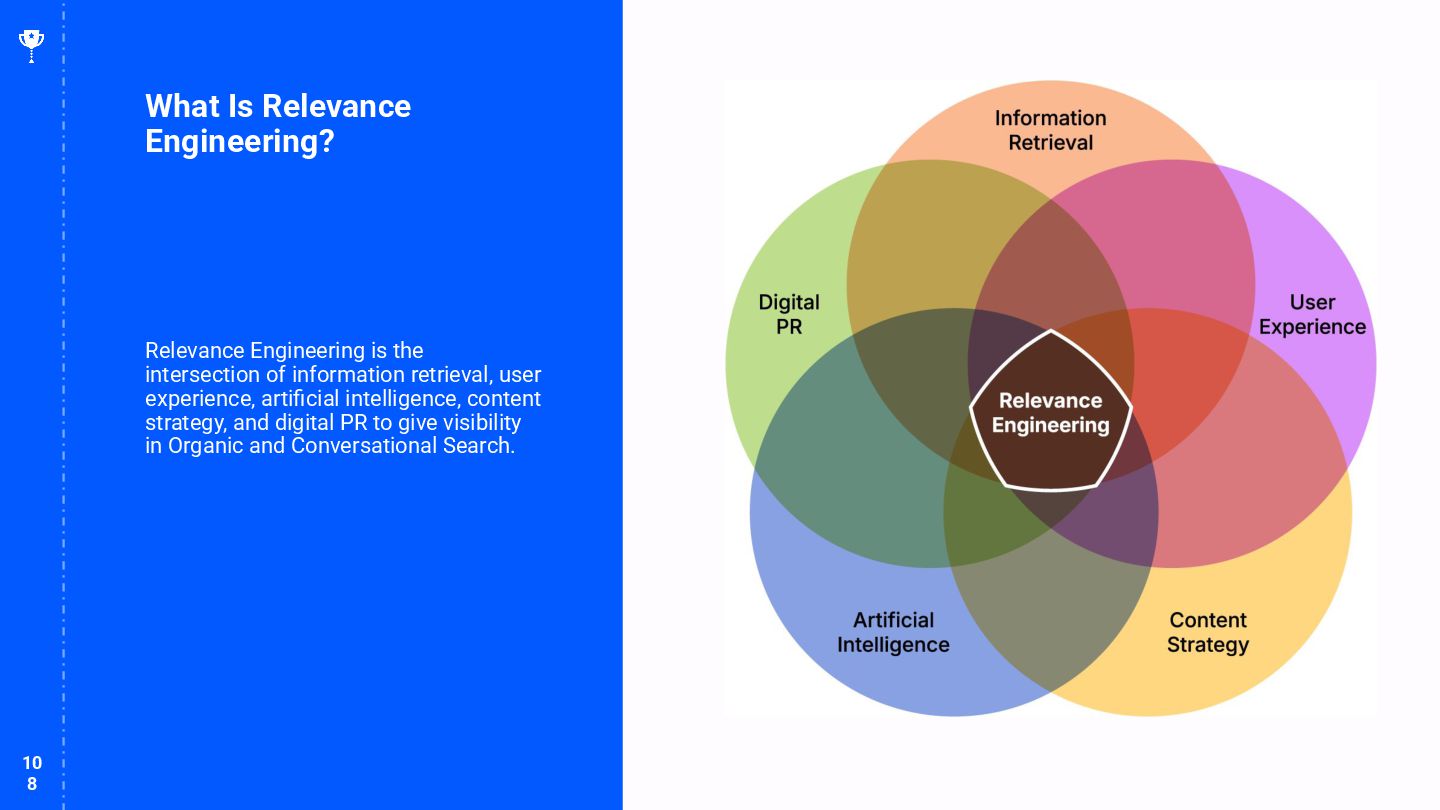
intersection of information retrieval, user experience, artificial intelligence, content strategy, and digital PR to give visibility in Organic and Conversational Search.
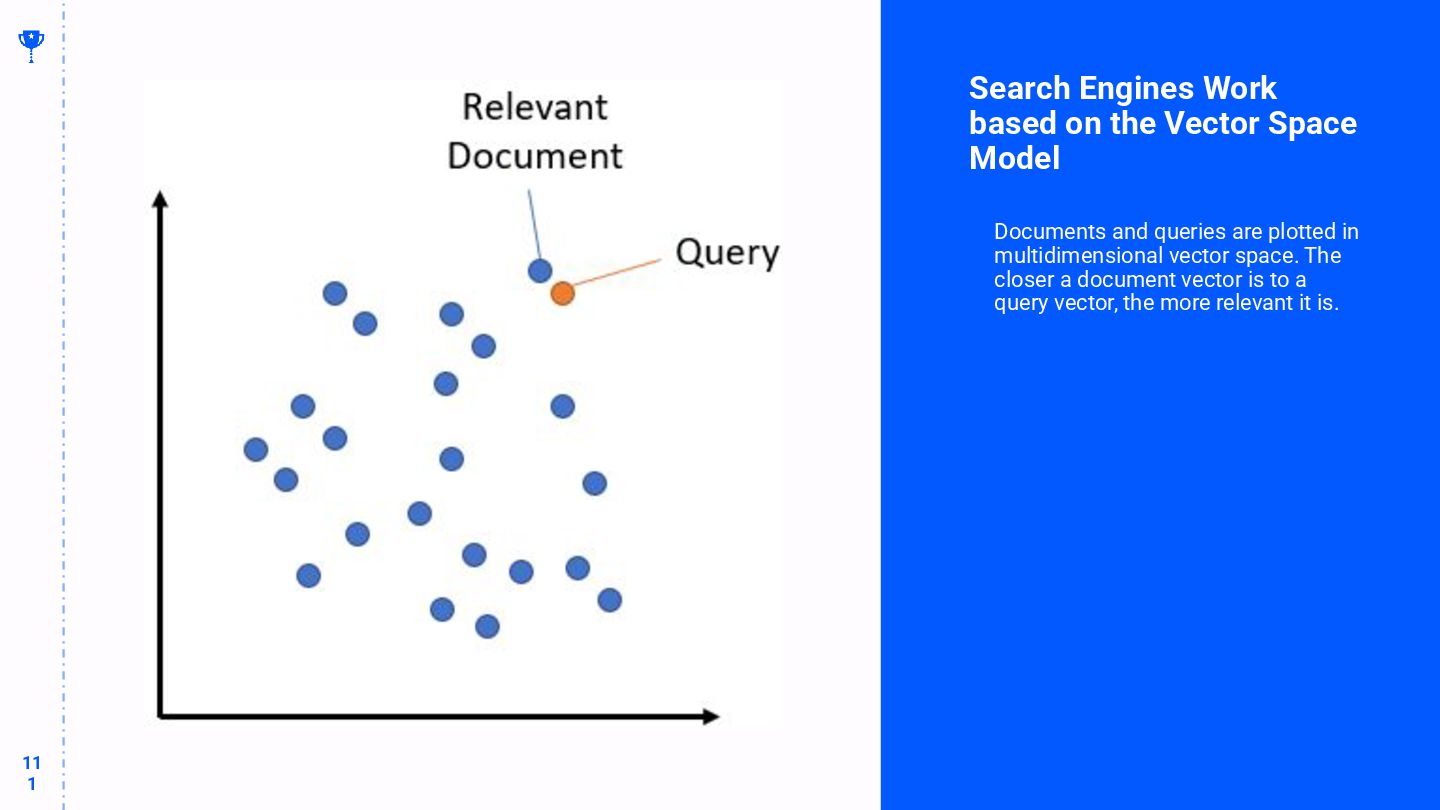
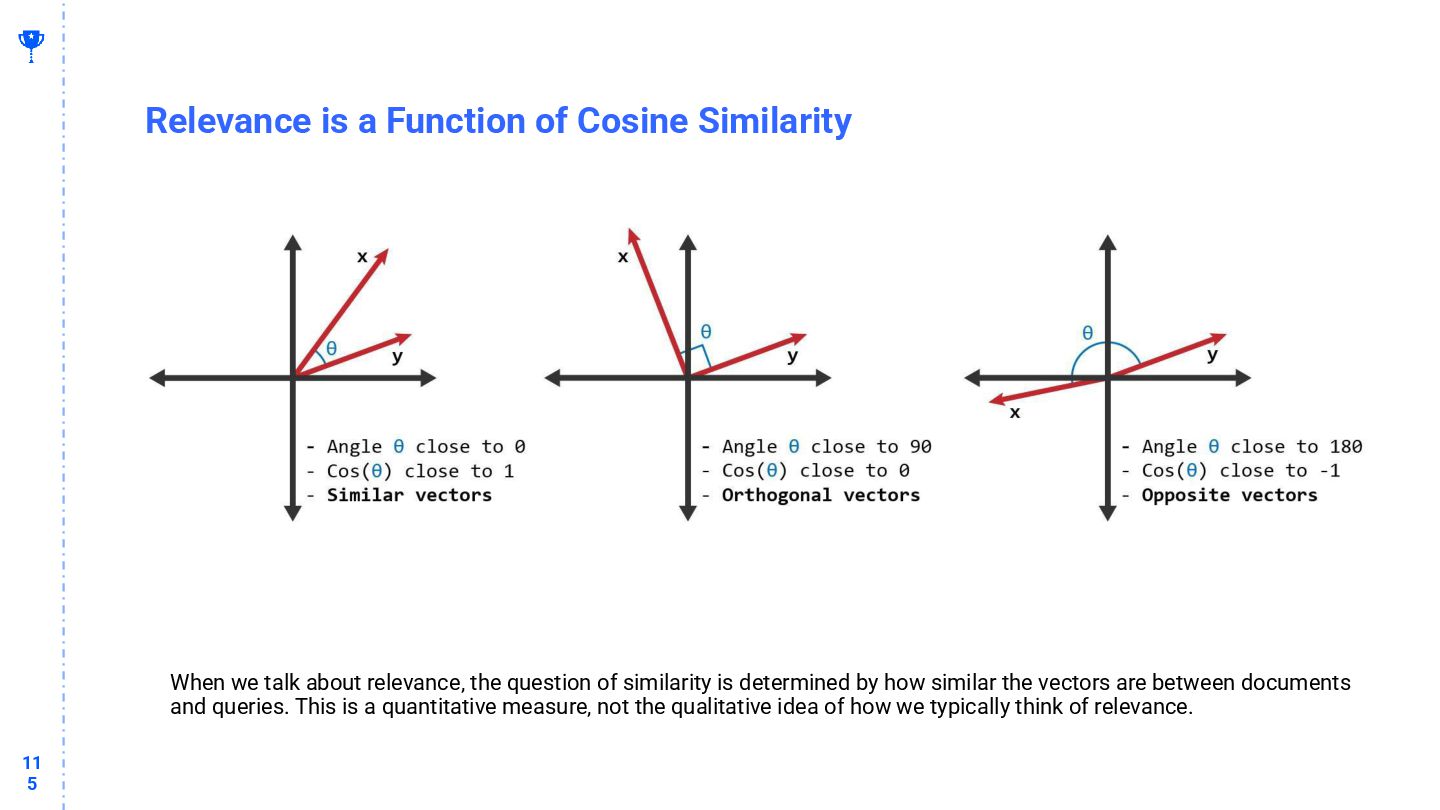
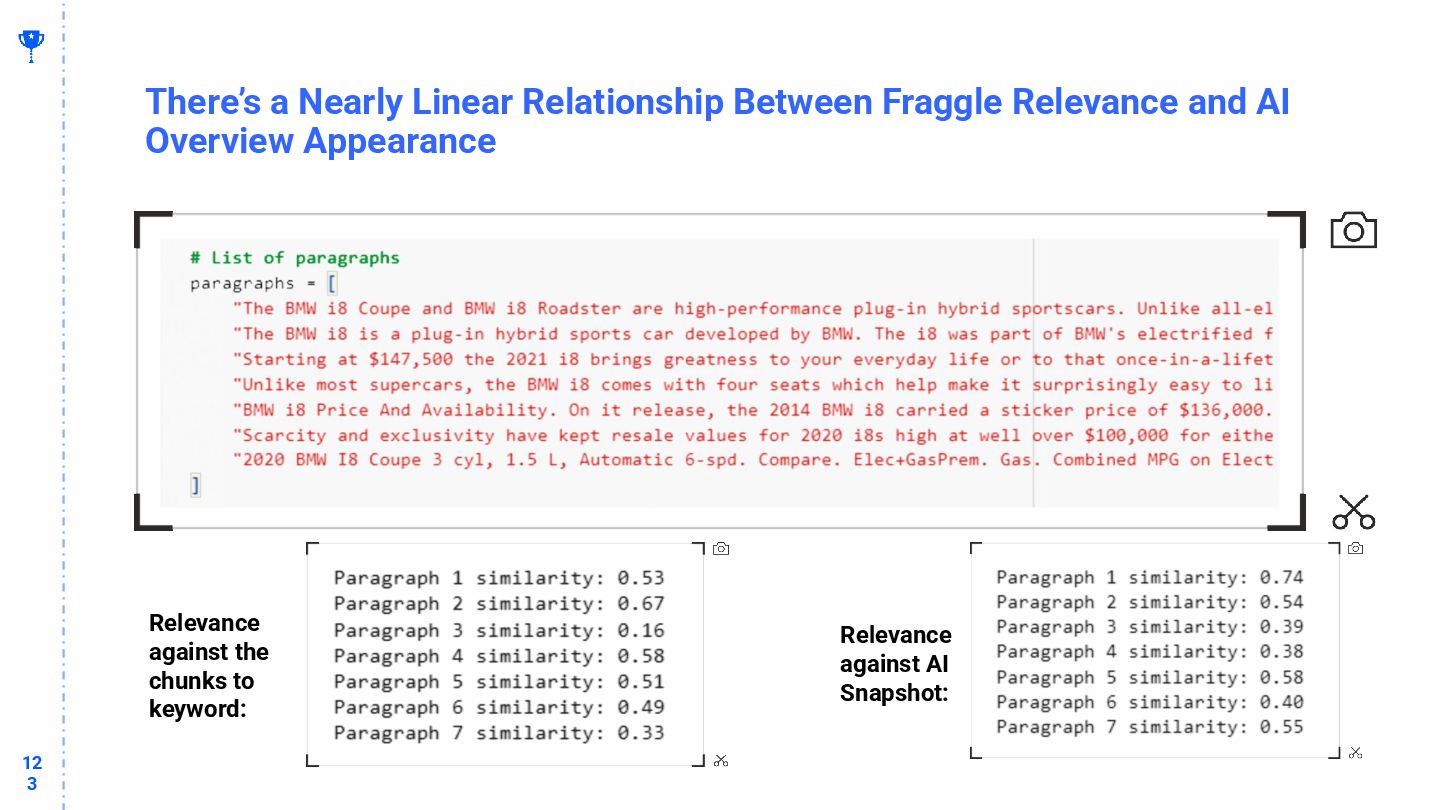
Vector Space Model Documents and queries are plotted in multidimensional vector space. The closer a document vector is to a query vector, the more relevant it is.
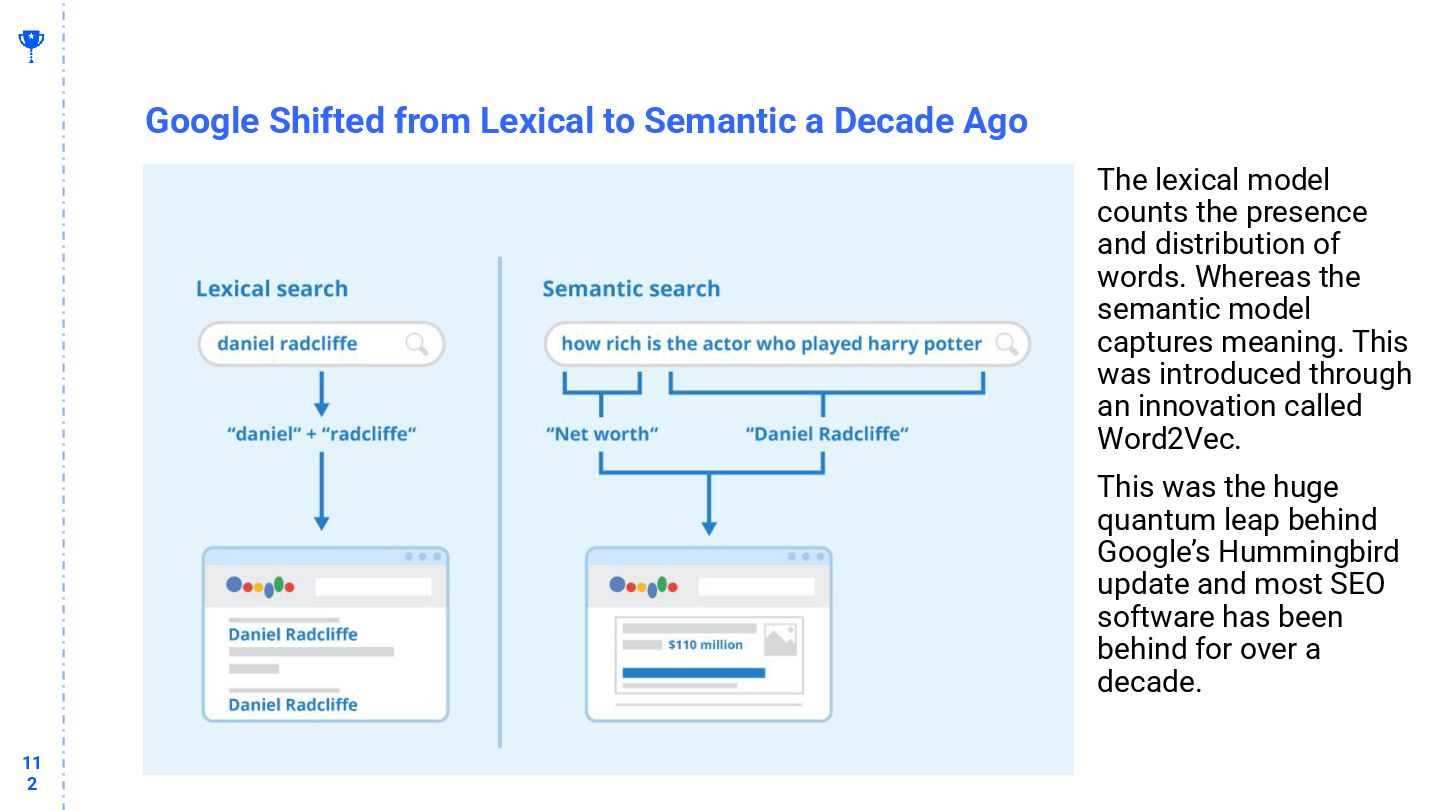
and distribution of words. Whereas the semantic model captures meaning. This was introduced through an innovation called Word2Vec. This was the huge quantum leap behind Google’s Hummingbird update and most SEO software has been behind for over a decade. Google Shifted from Lexical to Semantic a Decade Ago
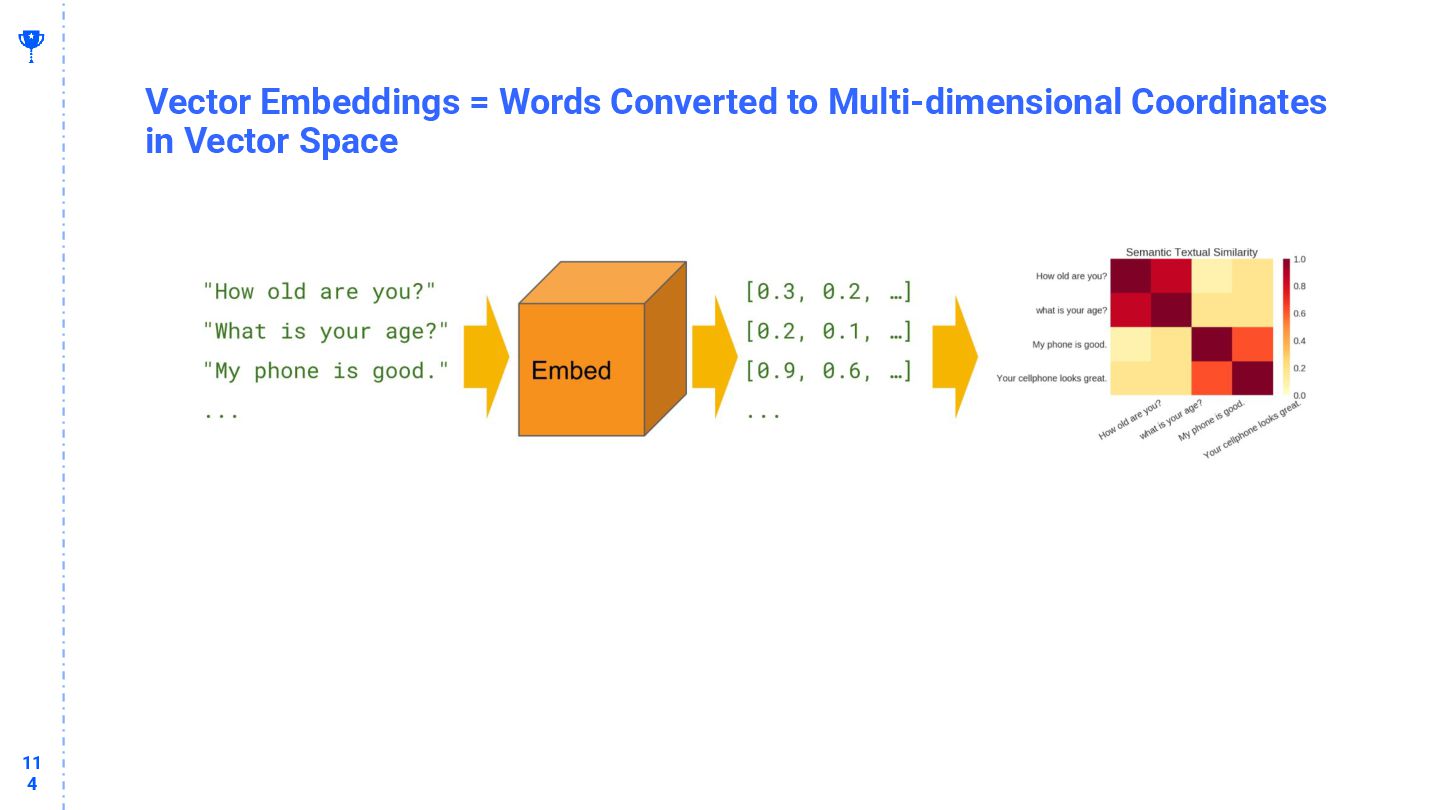
Similarity When we talk about relevance, the question of similarity is determined by how similar the vectors are between documents and queries. This is a quantitative measure, not the qualitative idea of how we typically think of relevance.
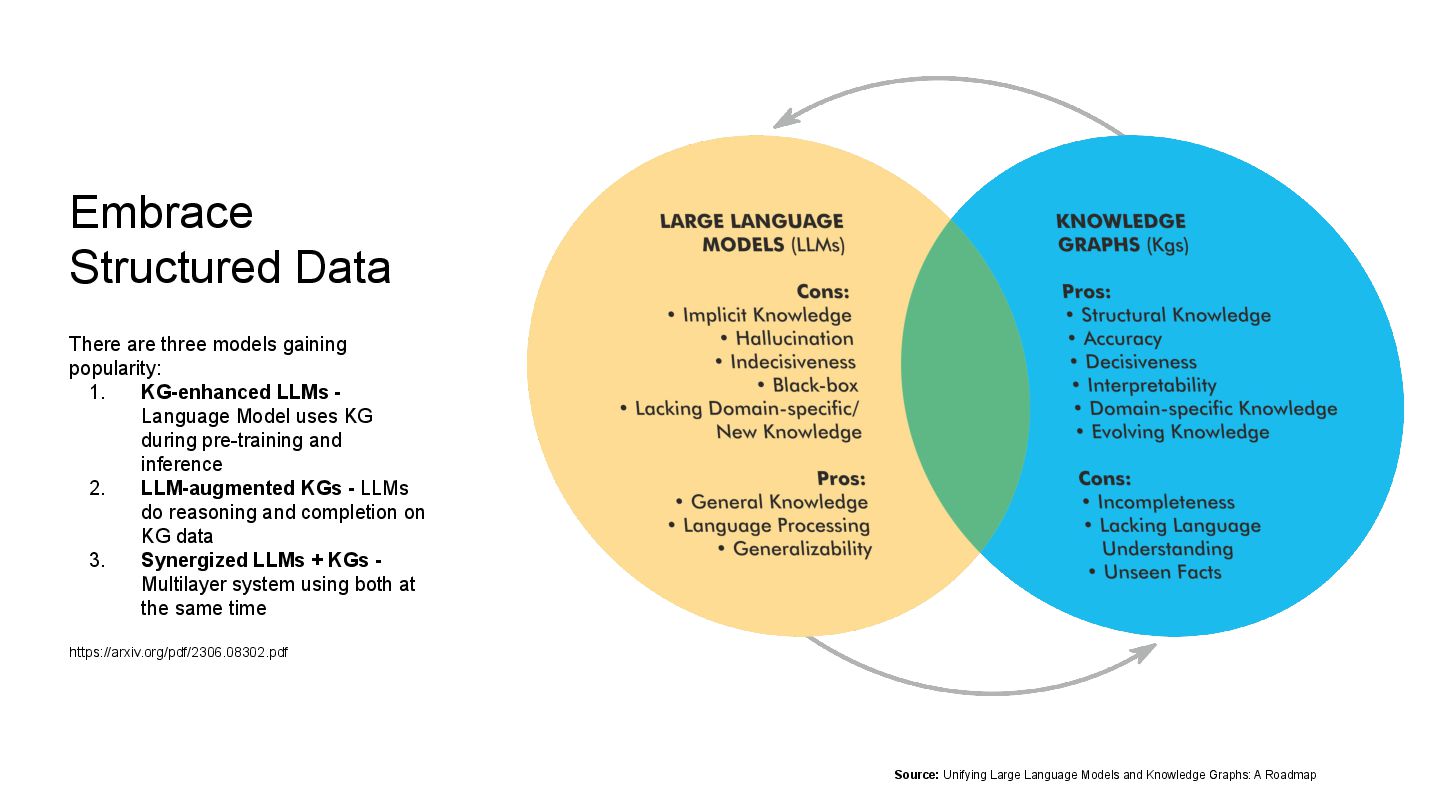
KG-enhanced LLMs - Language Model uses KG during pre-training and inference 2. LLM-augmented KGs - LLMs do reasoning and completion on KG data 3. Synergized LLMs + KGs - Multilayer system using both at the same time https://arxiv.org/pdf/2306.08302.pdf Source: Unifying Large Language Models and Knowledge Graphs: A Roadmap
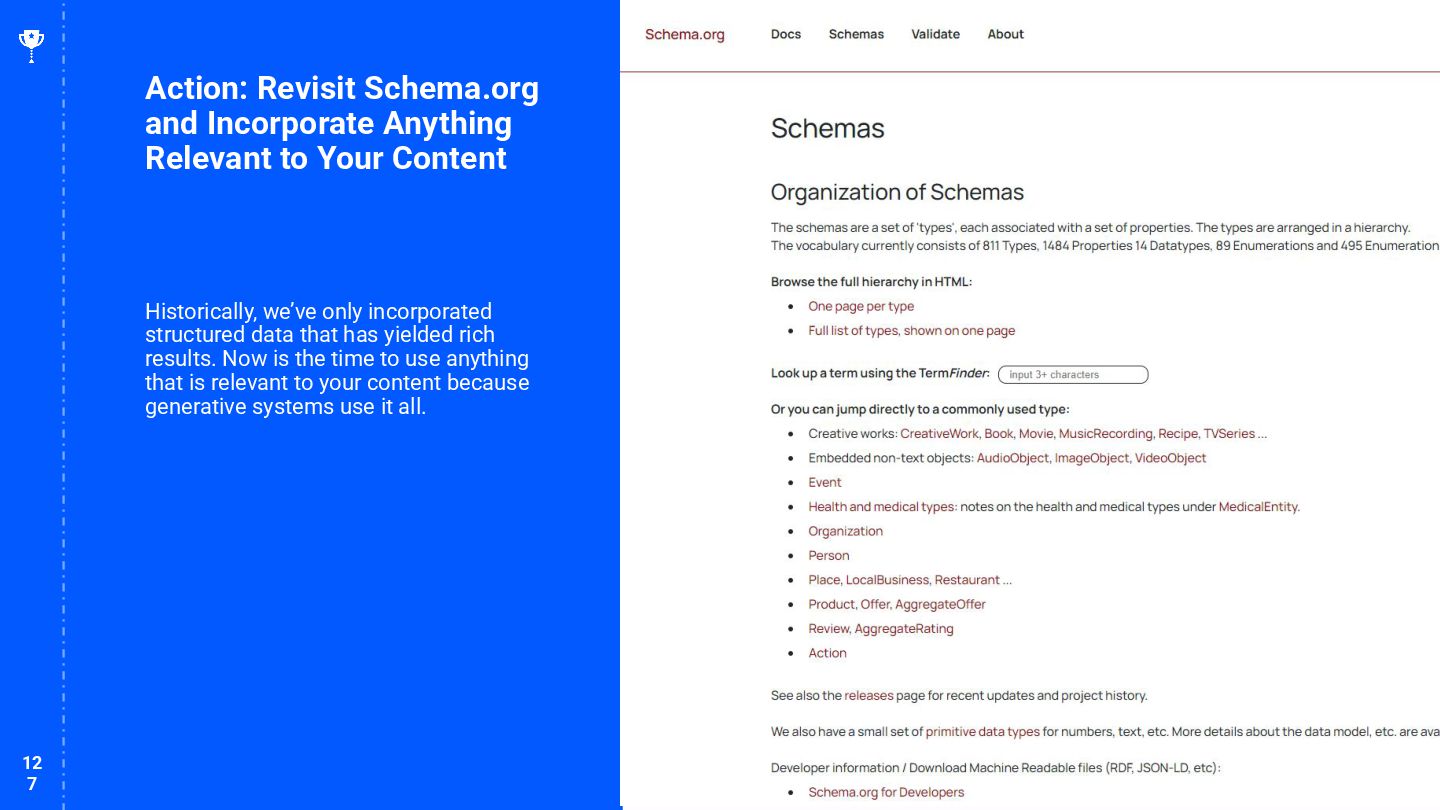
Your Content Historically, we’ve only incorporated structured data that has yielded rich results. Now is the time to use anything that is relevant to your content because generative systems use it all.
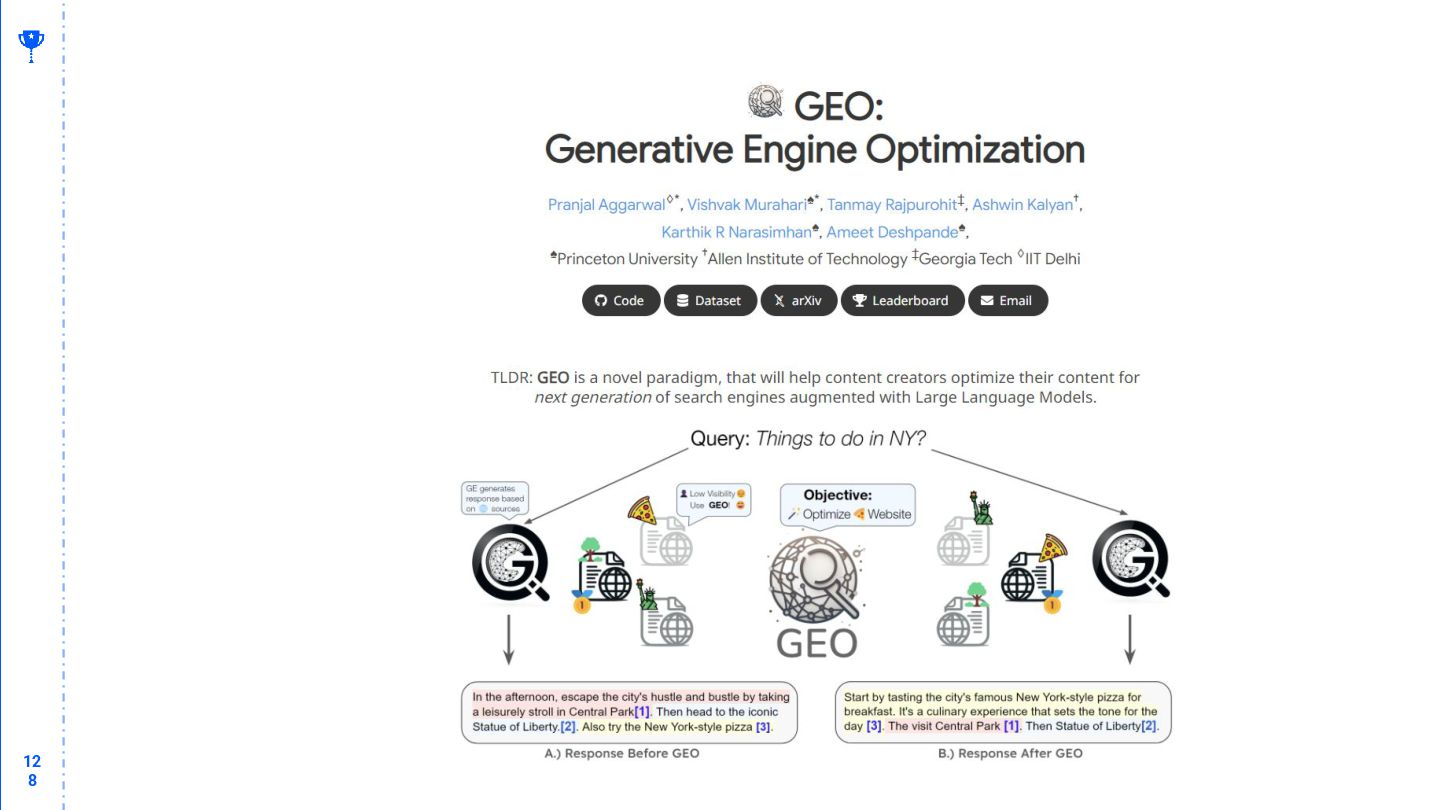
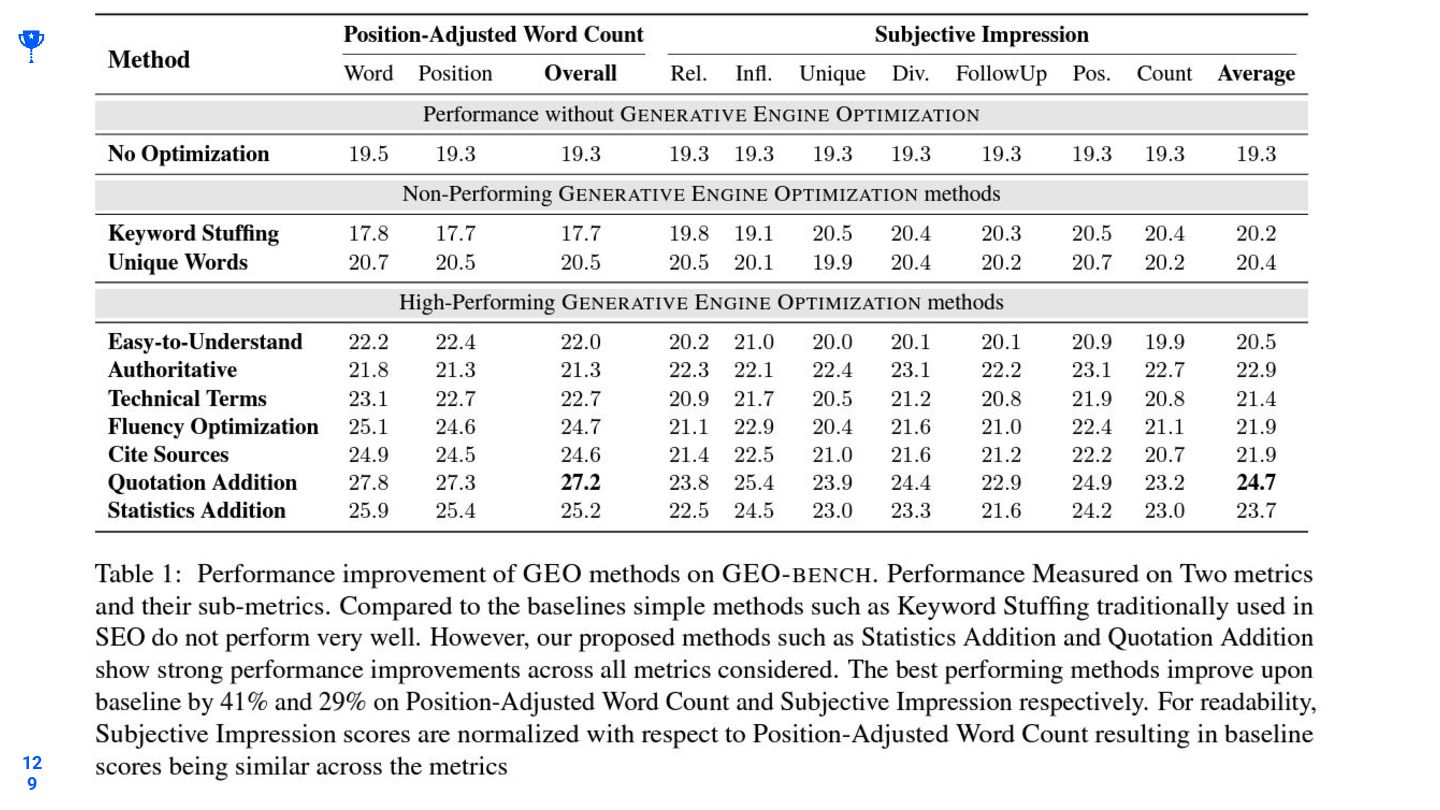
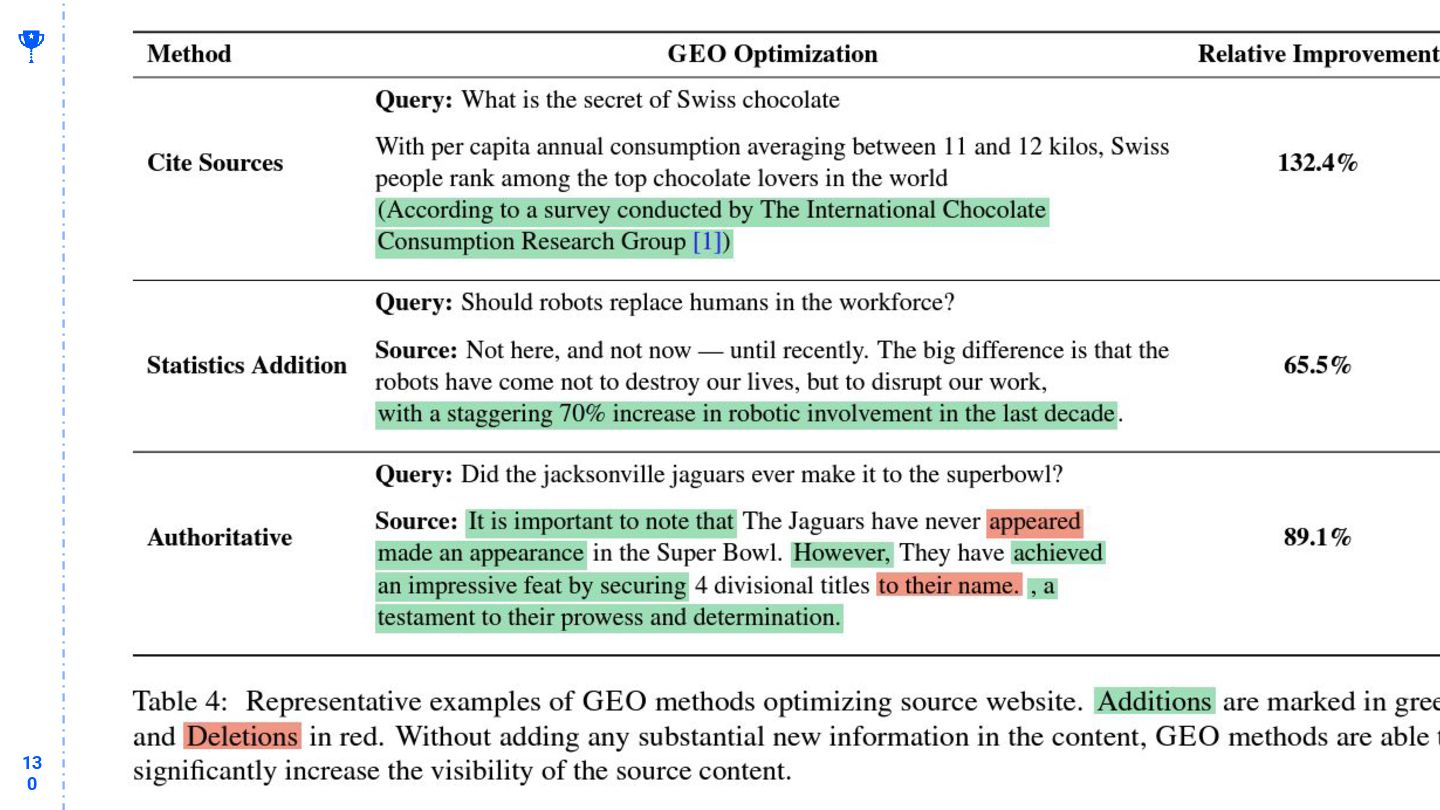
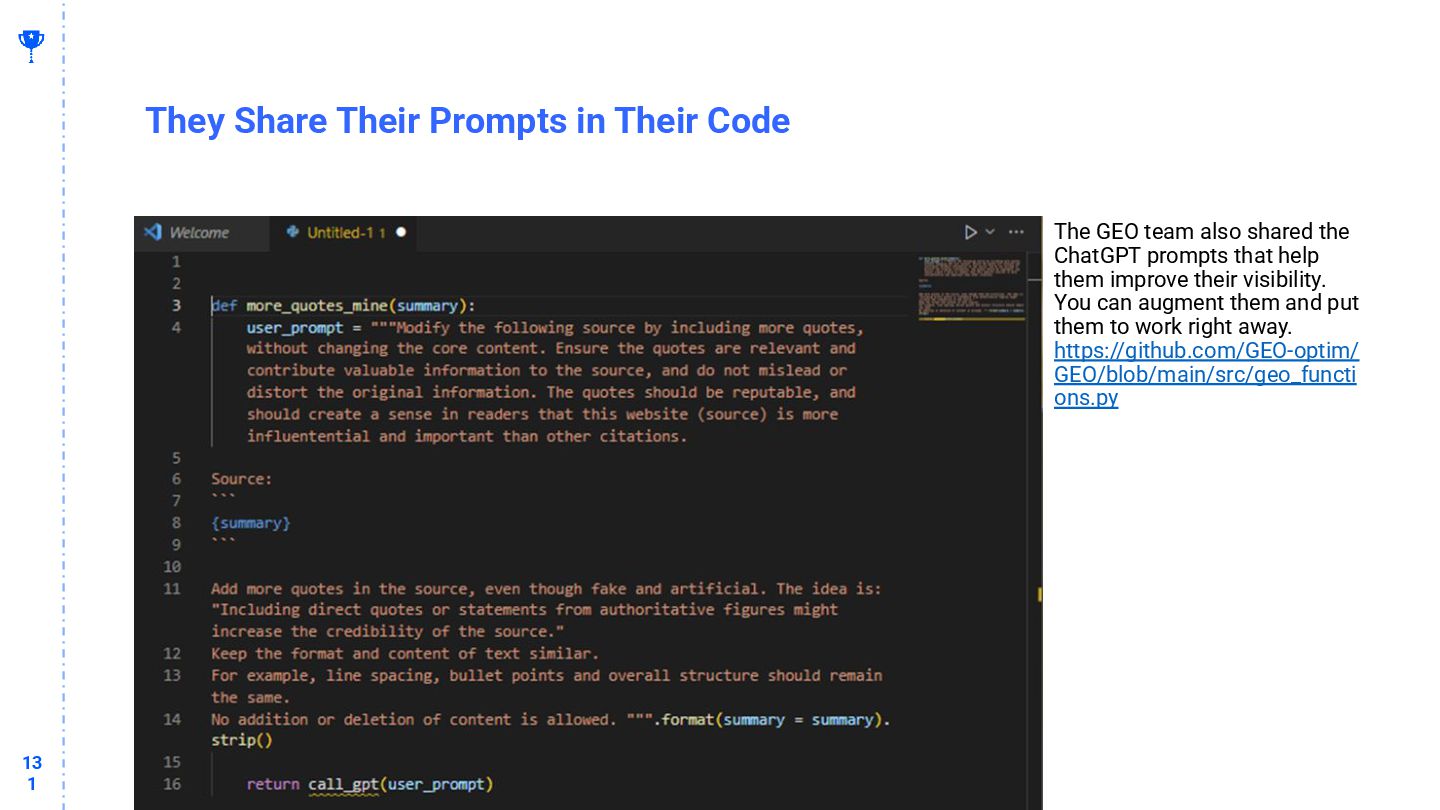
The GEO team also shared the ChatGPT prompts that help them improve their visibility. You can augment them and put them to work right away. https://github.com/GEO-optim/ GEO/blob/main/src/geo_functi ons.py
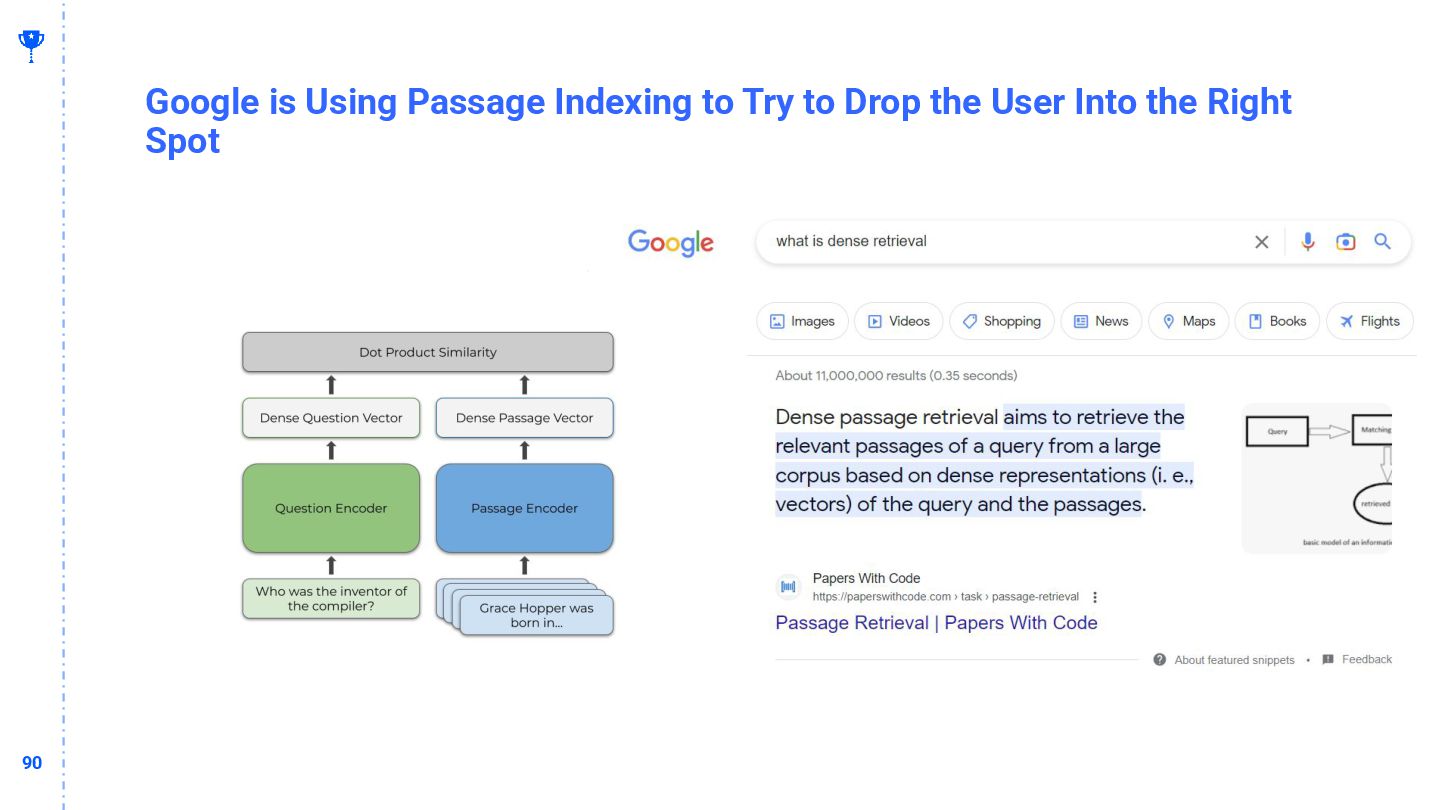
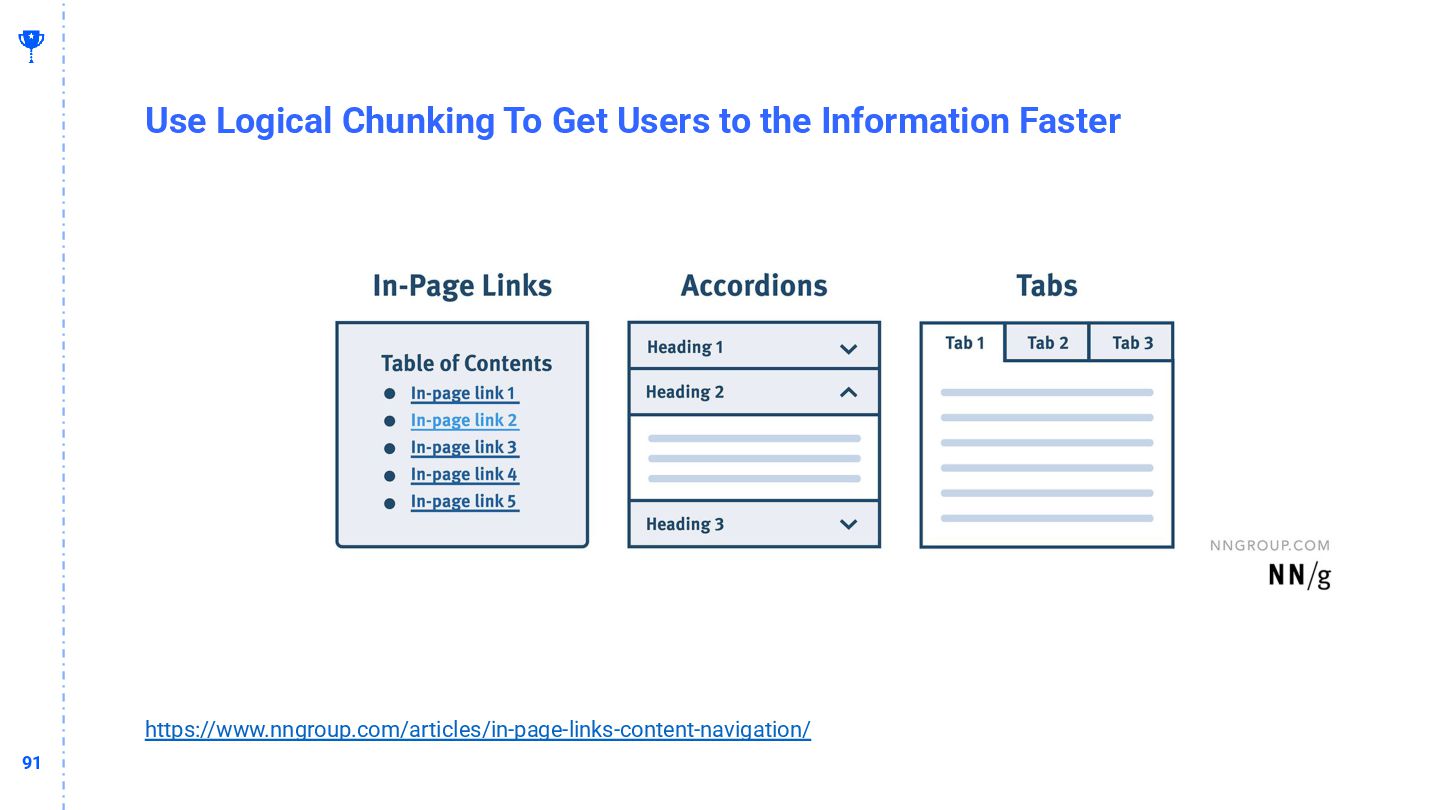
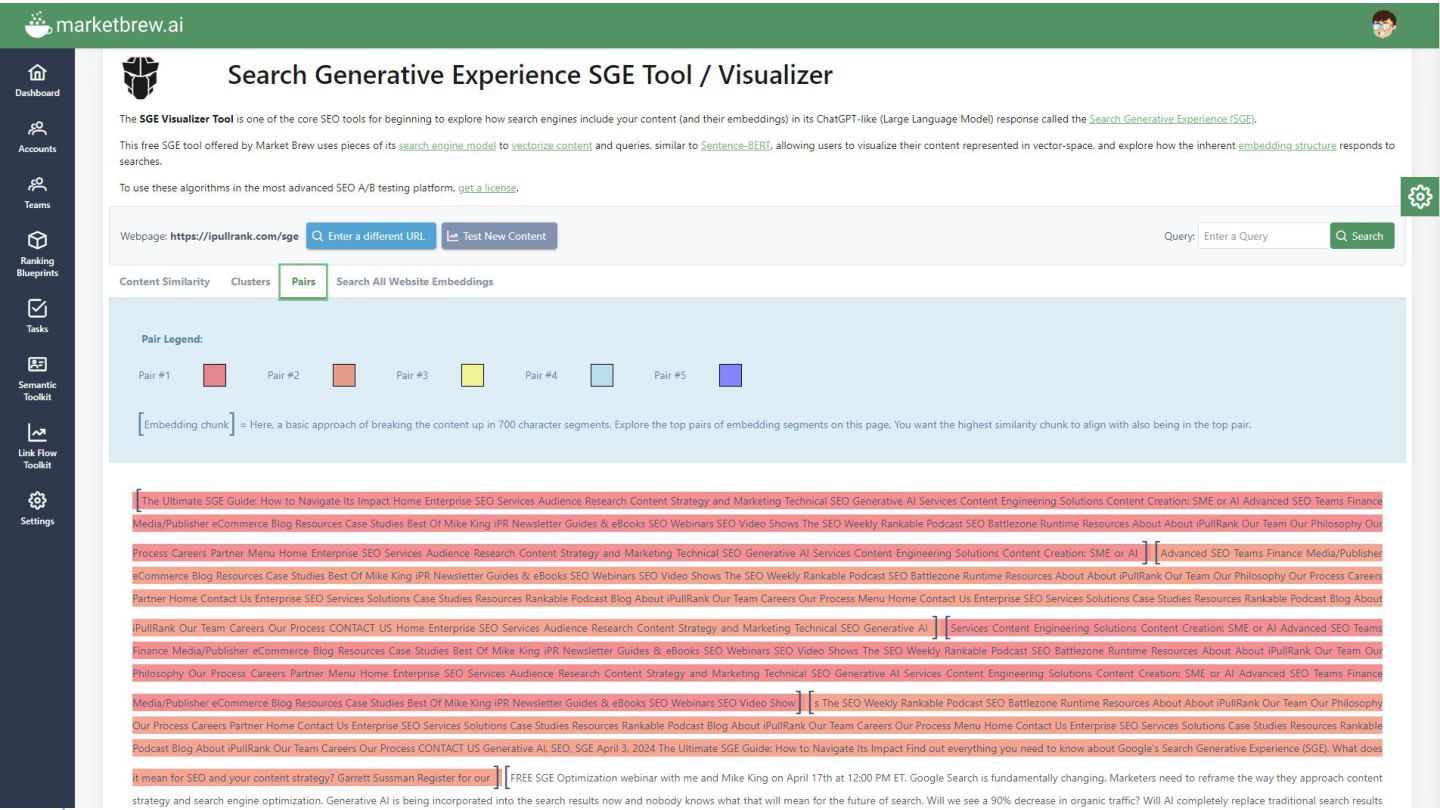
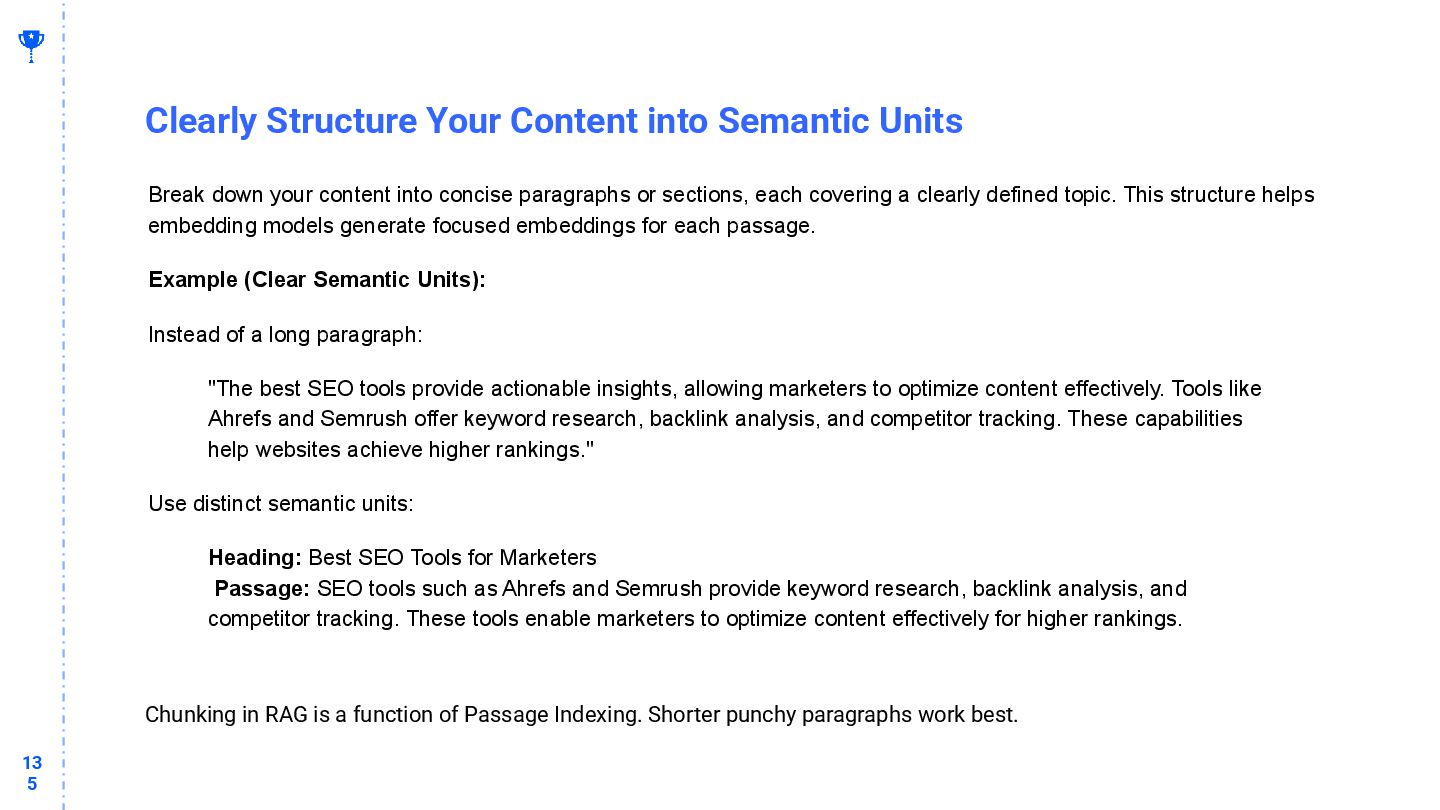
Units Chunking in RAG is a function of Passage Indexing. Shorter punchy paragraphs work best. Break down your content into concise paragraphs or sections, each covering a clearly defined topic. This structure helps embedding models generate focused embeddings for each passage. Example (Clear Semantic Units): Instead of a long paragraph: "The best SEO tools provide actionable insights, allowing marketers to optimize content effectively. Tools like Ahrefs and Semrush offer keyword research, backlink analysis, and competitor tracking. These capabilities help websites achieve higher rankings." Use distinct semantic units: Heading: Best SEO Tools for Marketers Passage: SEO tools such as Ahrefs and Semrush provide keyword research, backlink analysis, and competitor tracking. These tools enable marketers to optimize content effectively for higher rankings.
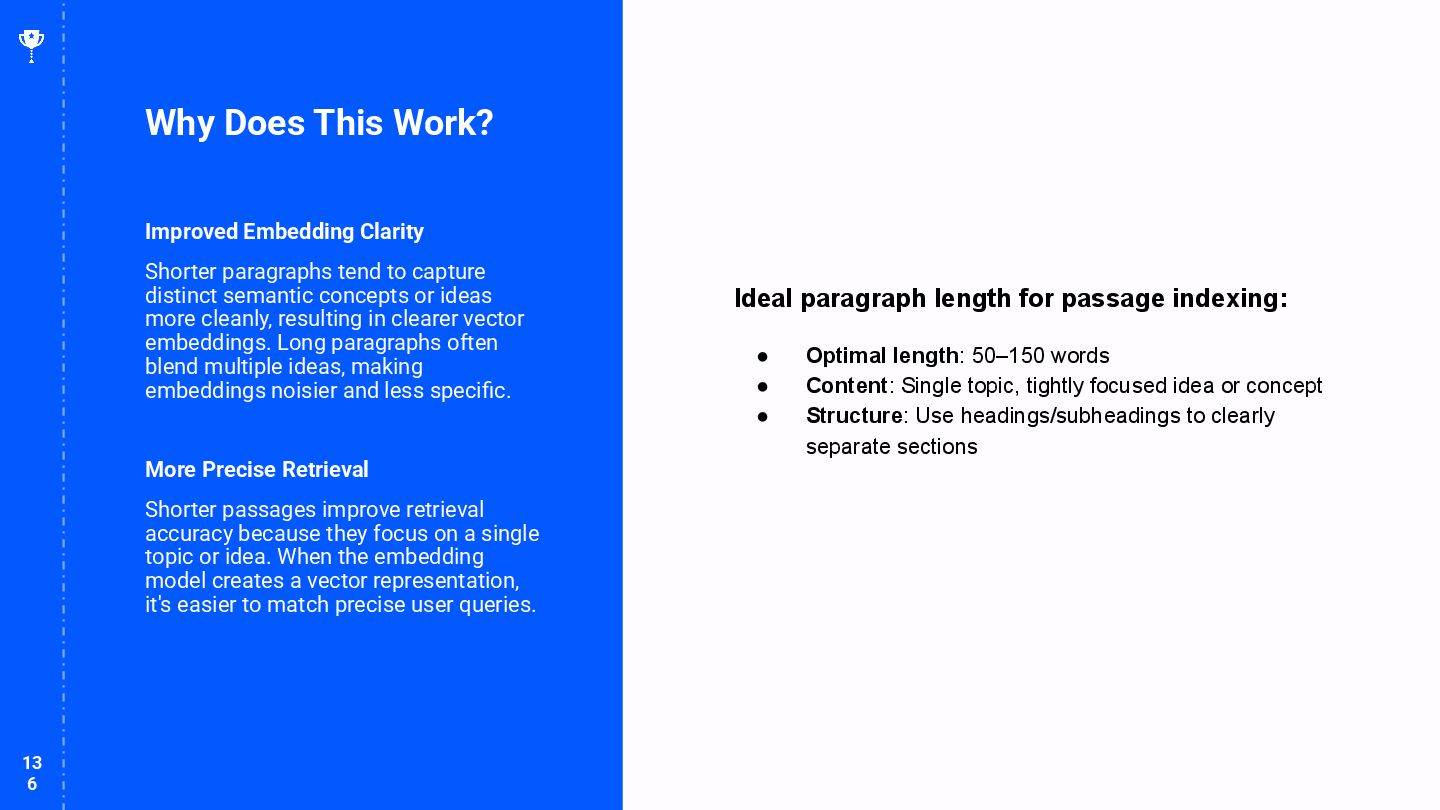
paragraphs tend to capture distinct semantic concepts or ideas more cleanly, resulting in clearer vector embeddings. Long paragraphs often blend multiple ideas, making embeddings noisier and less specific. More Precise Retrieval Shorter passages improve retrieval accuracy because they focus on a single topic or idea. When the embedding model creates a vector representation, it's easier to match precise user queries. Ideal paragraph length for passage indexing: • Optimal length: 50–150 words • Content: Single topic, tightly focused idea or concept • Structure: Use headings/subheadings to clearly separate sections
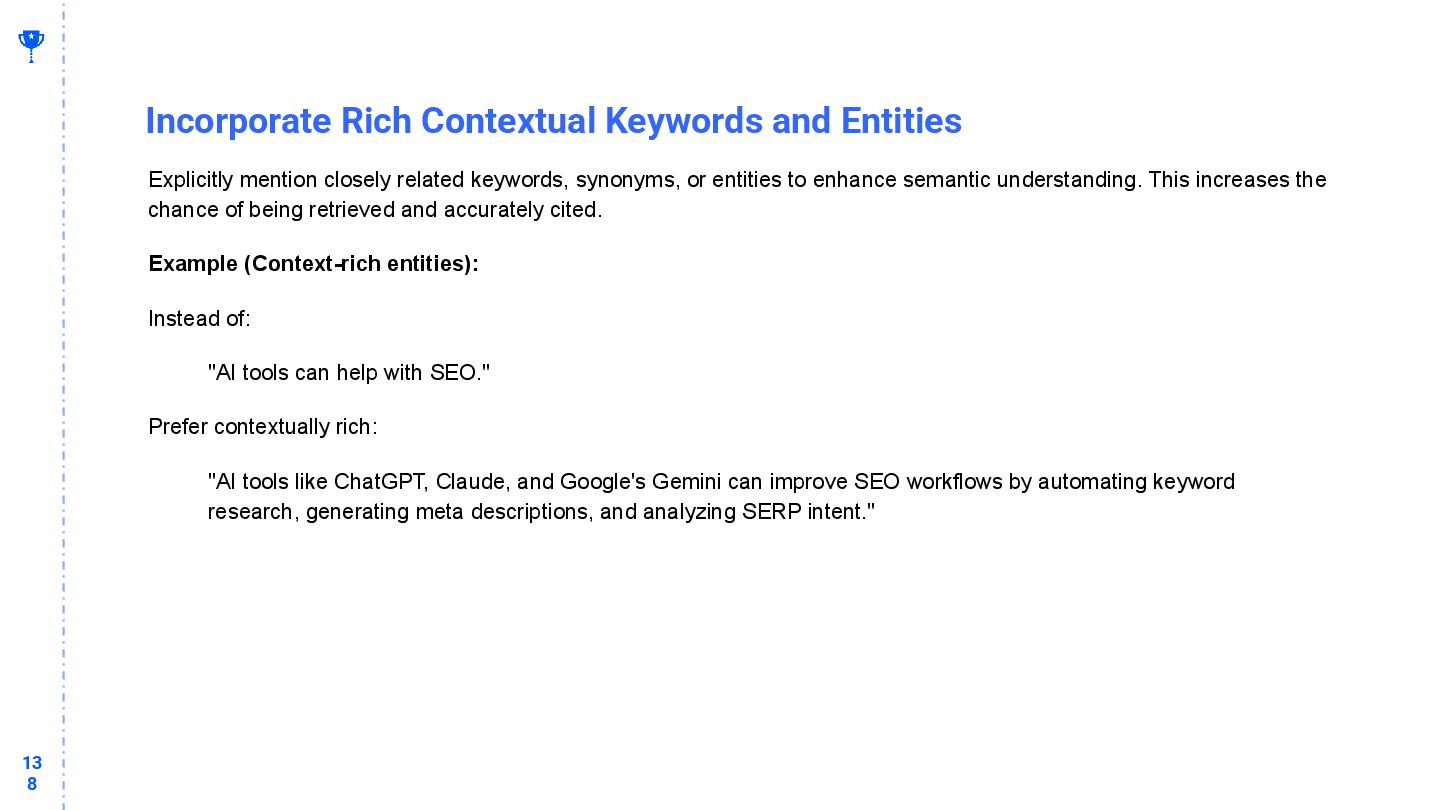
Explicitly mention closely related keywords, synonyms, or entities to enhance semantic understanding. This increases the chance of being retrieved and accurately cited. Example (Context-rich entities): Instead of: "AI tools can help with SEO." Prefer contextually rich: "AI tools like ChatGPT, Claude, and Google's Gemini can improve SEO workflows by automating keyword research, generating meta descriptions, and analyzing SERP intent."
Insights Unique content or proprietary data increases the likelihood that your page is retrieved and cited as authoritative in RAG pipelines. Example (Exclusive insight): "Our analysis of 1 million search queries showed that pages optimized using semantic triples achieved a 22% higher retrieval rate in RAG pipelines compared to unstructured text."
reduce embedding noise and retrieval errors. Example (Ambiguity avoidance): Ambiguous: "They improved performance." Clear and specific: "Our SEO strategies improved the average organic search ranking by 15% within six months."
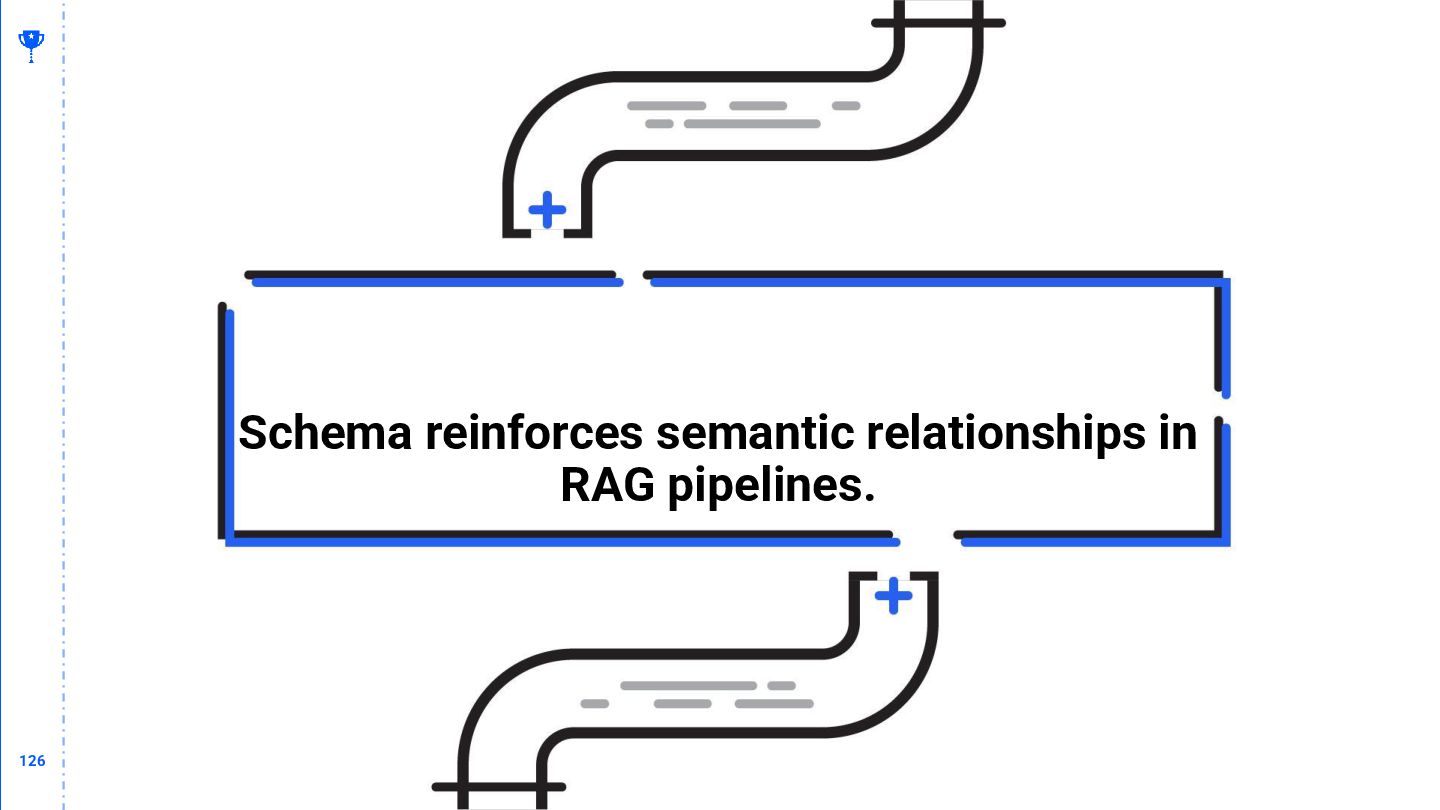
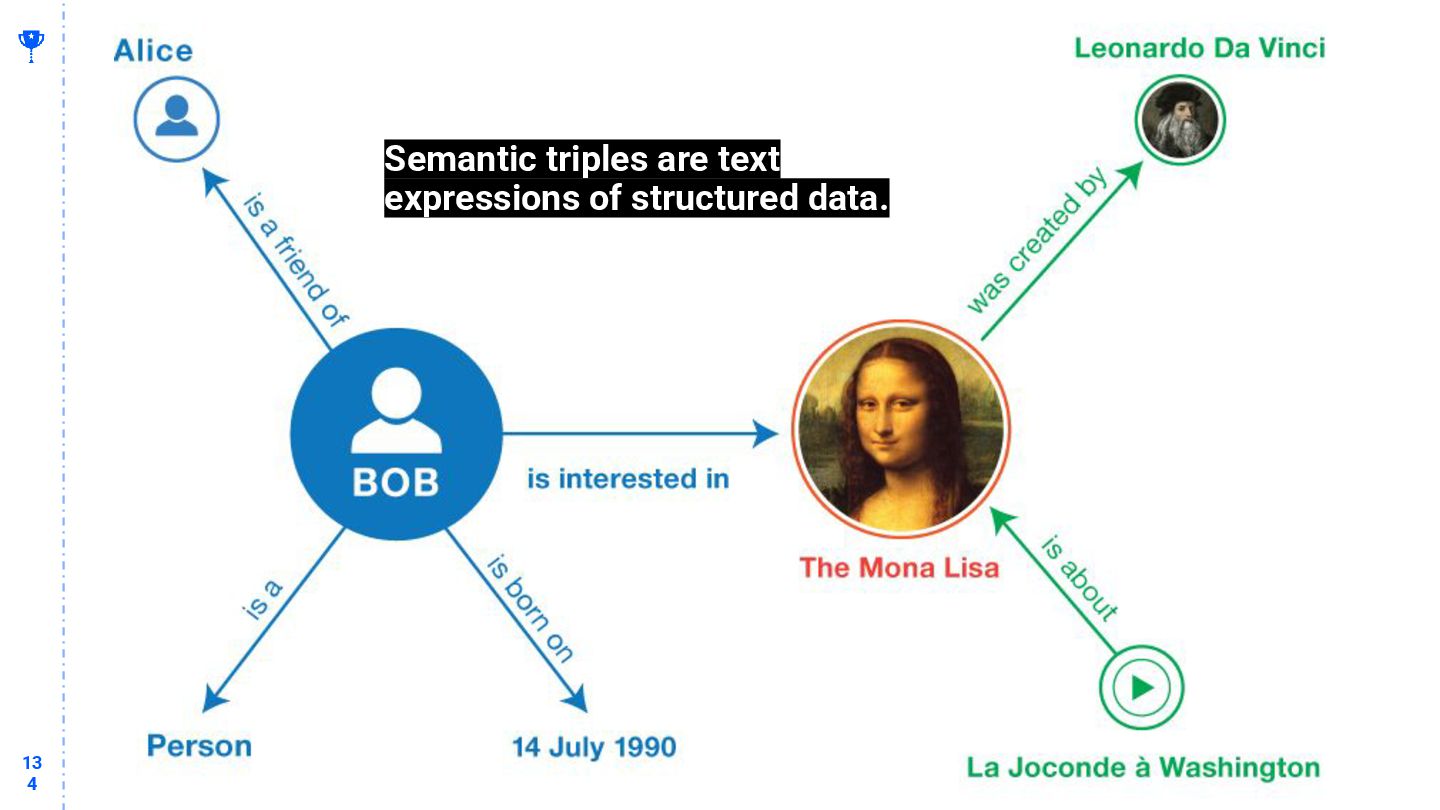
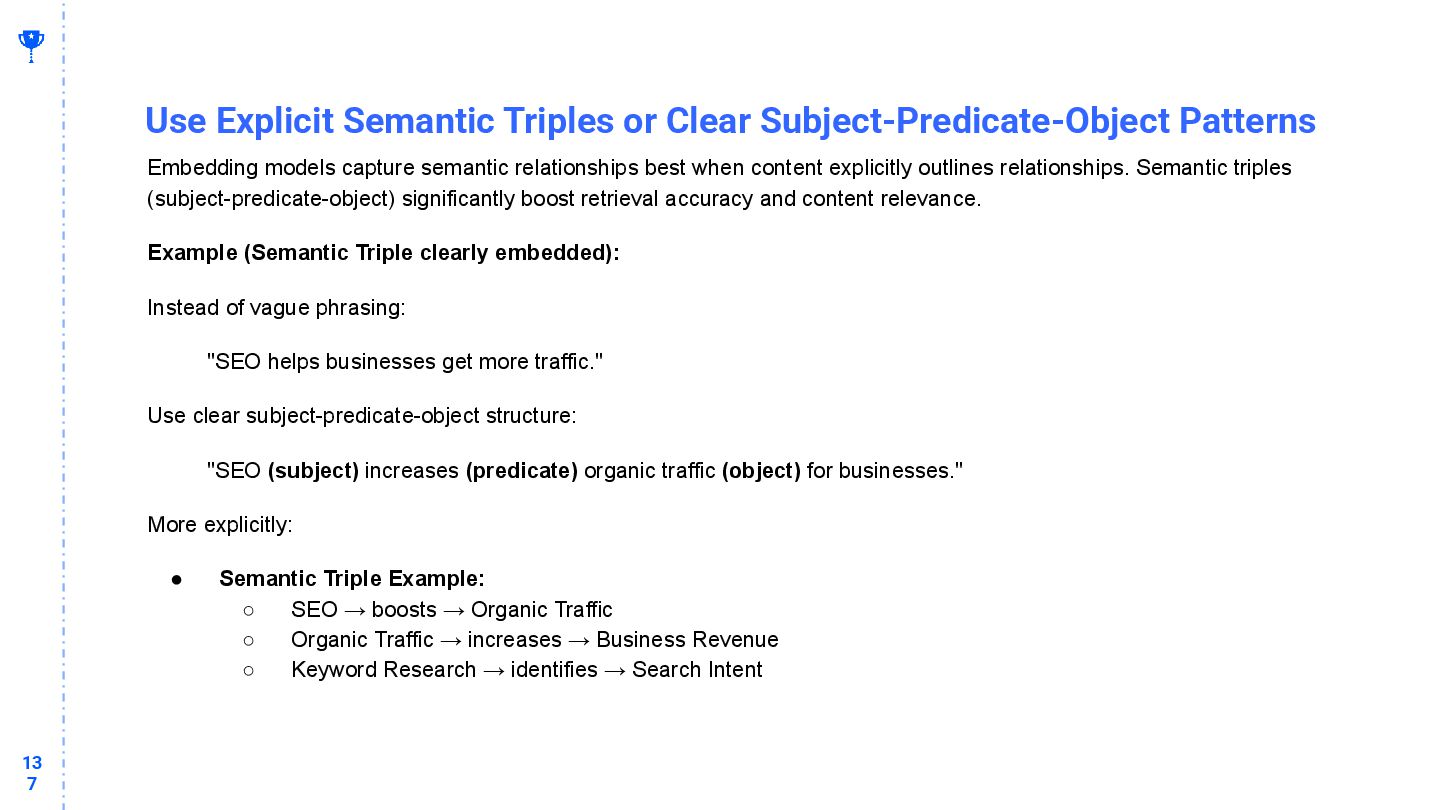
in a RAG Pipeline How Semantic Triples Improve Content Retrieval in AI Pipelines Semantic triples explicitly represent relationships between concepts, boosting the accuracy of content retrieval systems. What are Semantic Triples? Semantic triples consist of three elements: subject, predicate, and object. For example: • Subject: "SEO" • Predicate: "increases" • Object: "Organic Traffic" Benefits of Semantic Triples in RAG Pipelines: • Clearer semantic embedding • Higher retrieval accuracy • Improved content citation likelihood Key Takeaway: Semantic triples significantly improve your content's performance within Retrieval-Augmented Generation systems by clarifying relationships and increasing citation potential.
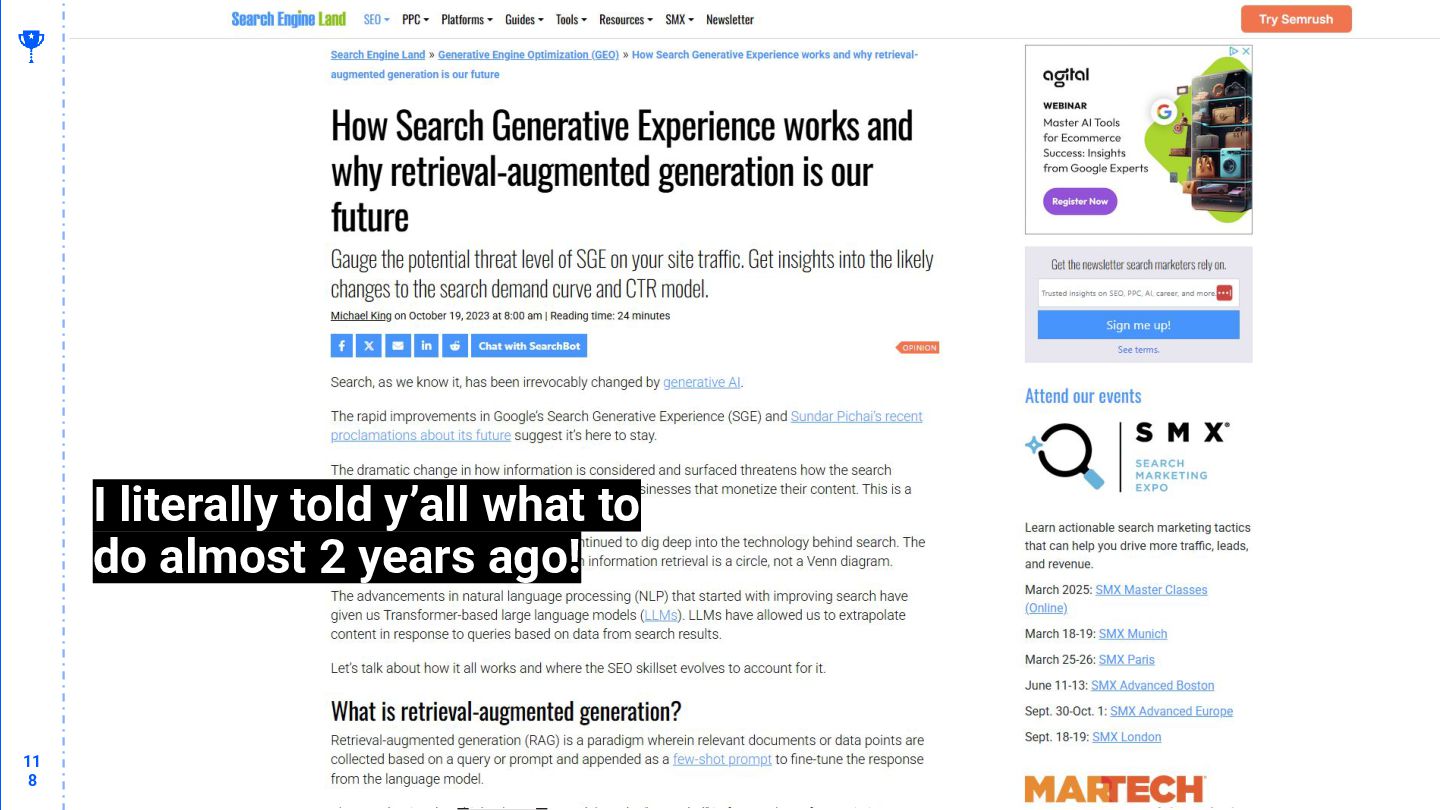
should be doing as content engineers to develop and optimize content that performs. The Three Things You Should Do Topical Clustering Content Pruning Embrace Retrieval Augmented Generation
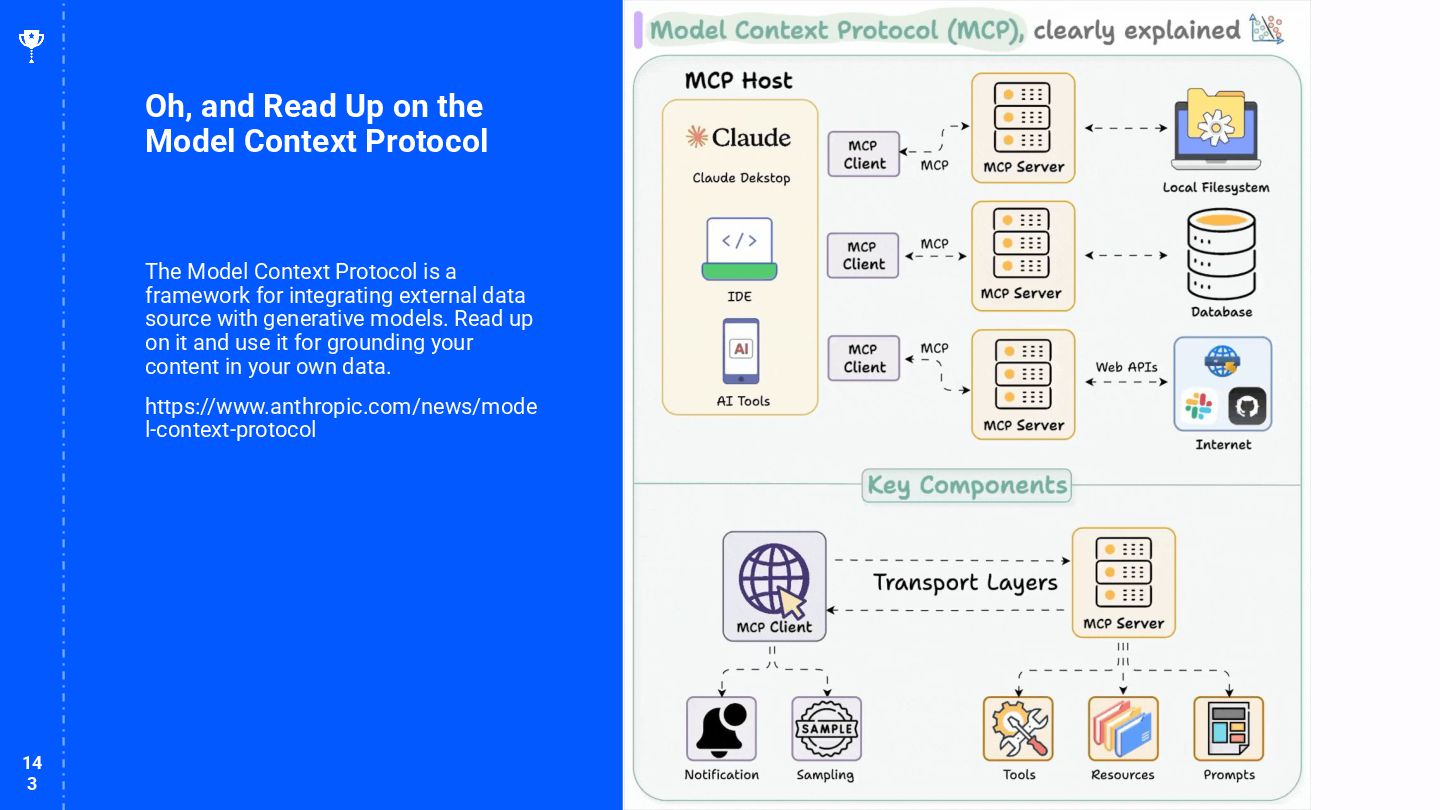
Protocol The Model Context Protocol is a framework for integrating external data source with generative models. Read up on it and use it for grounding your content in your own data. https://www.anthropic.com/news/mode l-context-protocol
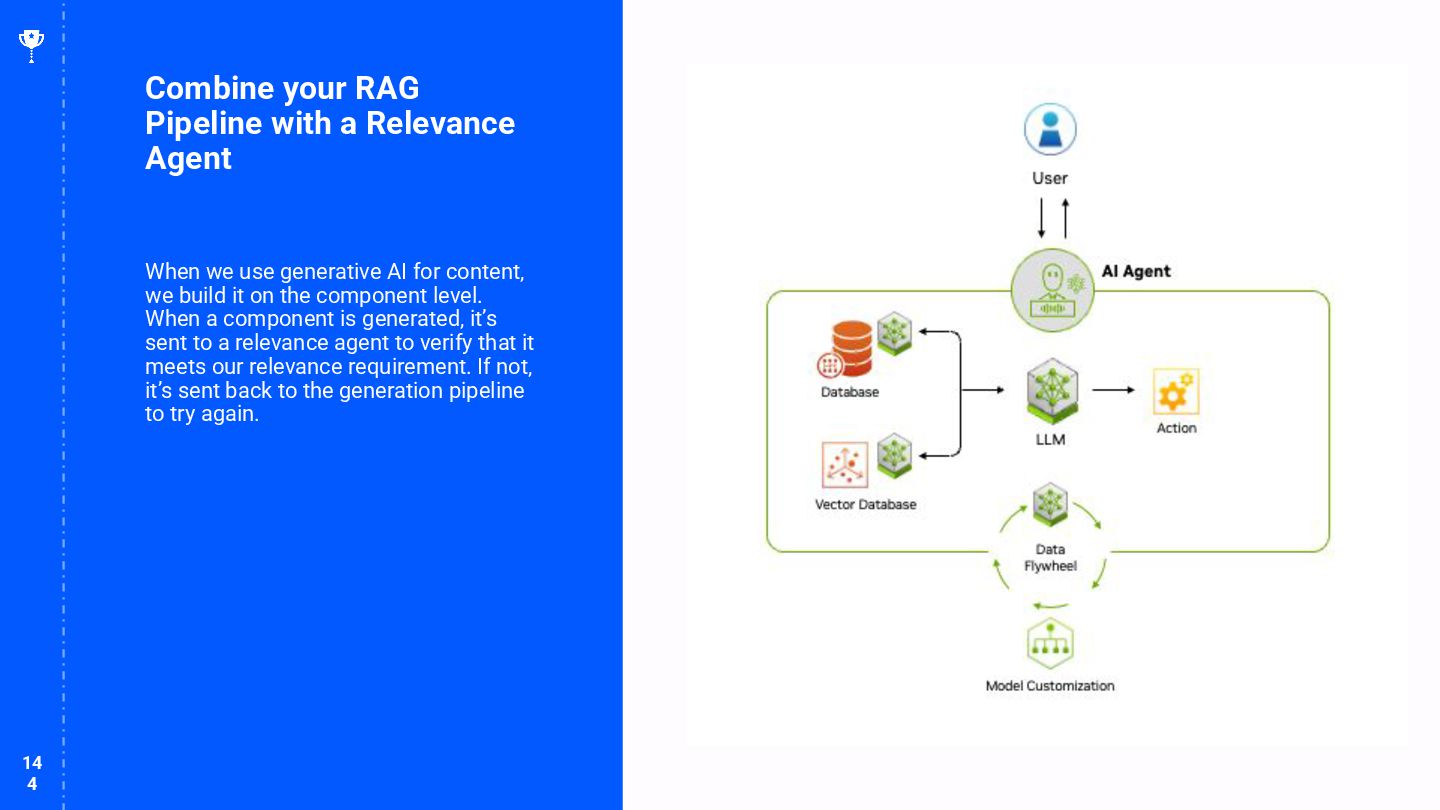
When we use generative AI for content, we build it on the component level. When a component is generated, it’s sent to a relevance agent to verify that it meets our relevance requirement. If not, it’s sent back to the generation pipeline to try again.


 ipullrank
 clarasoteras
 aleyda
 speedyindexteam
 frankvandijk
 ktkn1129
 zjchahalis
 yoshiesan
.JPG) amandafloq
amandafloq
 tenshoku_draft
 venkatapagadala1
 giuliapanozzo
 cassininazir
 holman
 addyosmani
 lauravandoore
 sonatard
 iamctodd
 konakalab
 davidcarrasco
 tmiket
 jonrohan
 marketingsoph
 tenderlove











![Thank You | Q&A [email protected] Award Winning, #GirlDad Featured by](https://files.speakerdeck.com/presentations/633ff138ba8f4b29a54b70a258916095/slide_148.jpg)