Upgrade to Pro — share decks privately, control downloads, hide ads and more …

Technology, Community, and Code: Building an In...

Avatar for ivana ivana
September 12, 2017

Technology, Community, and Code: Building an Inclusive UX

We need to be aware of our role as developers and designers in shaping identities as we build our products. It’s critical to understand how code creates communities, online and offline, and how those will be experienced by minorities and the underrepresented— does it marginalise them? Does it enable them to be successful? Let’s learn about those responsibilities, how to be aware of them, and how to build better tech in the process.

Avatar for ivana

ivana

September 12, 2017

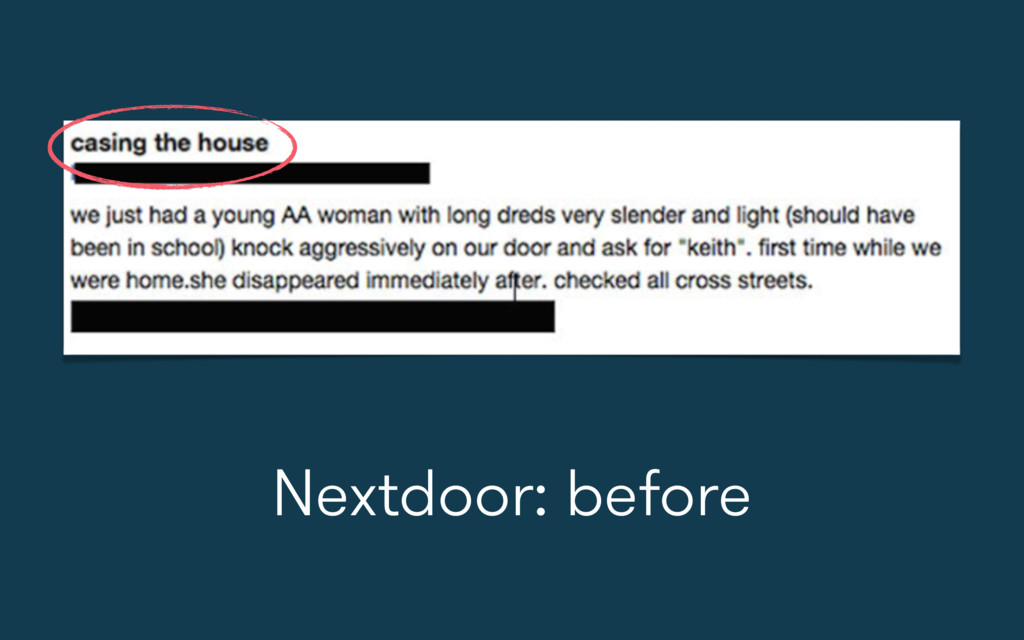
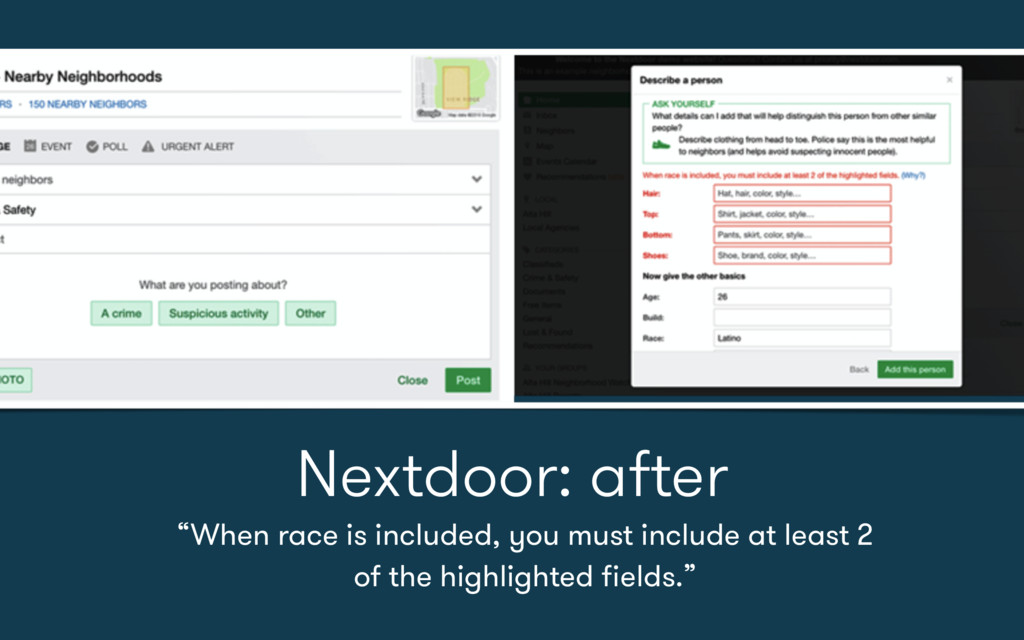
More Decks by ivana

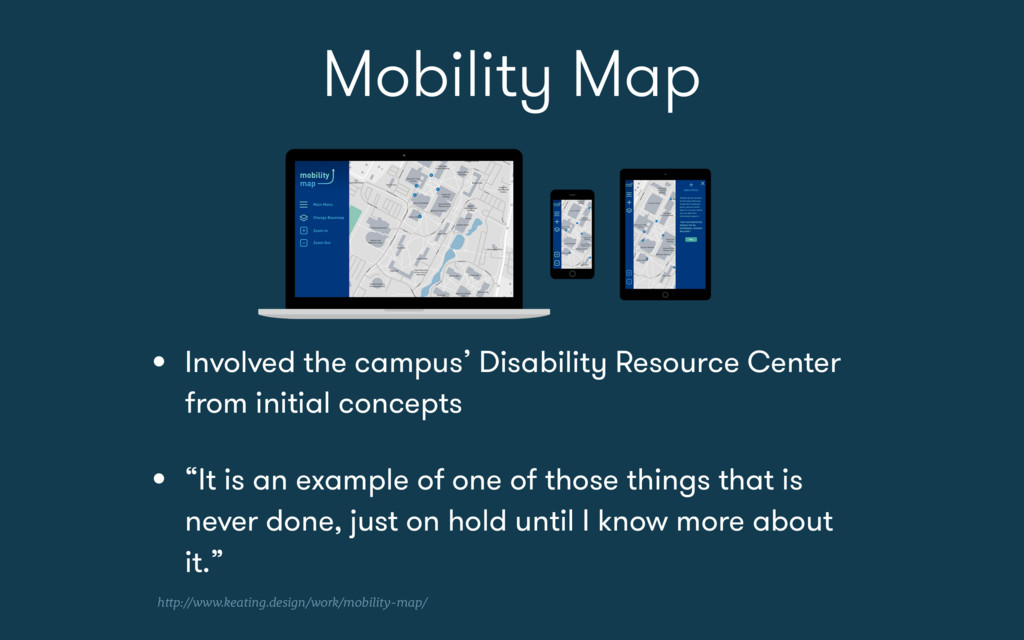
Other Decks in Technology

Transcript

  1. identity (n.) the answer to “who am I?" what communities

    do we belong to (and not belong to)?
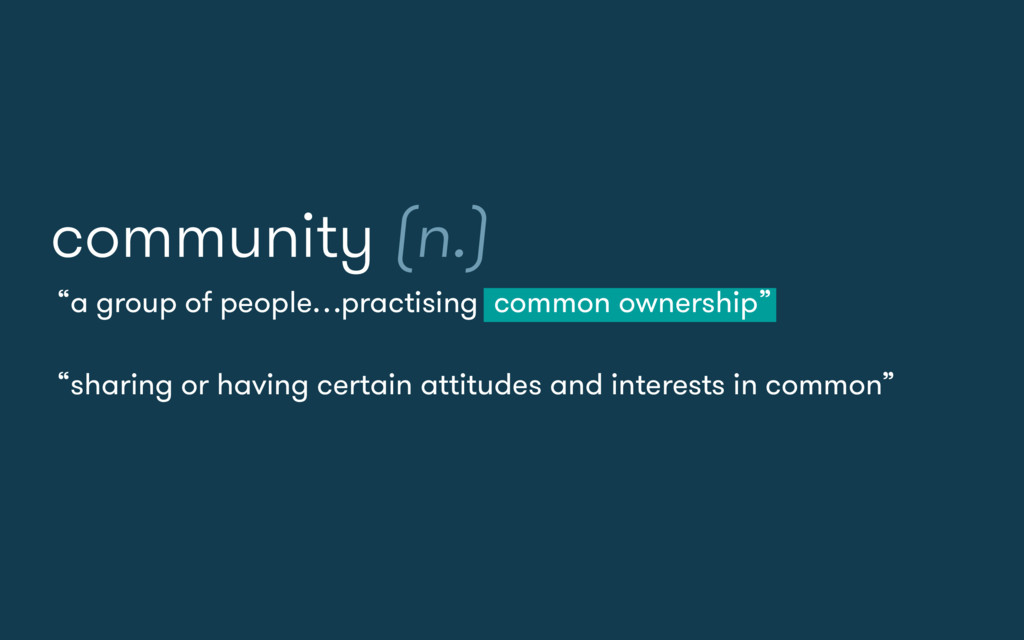
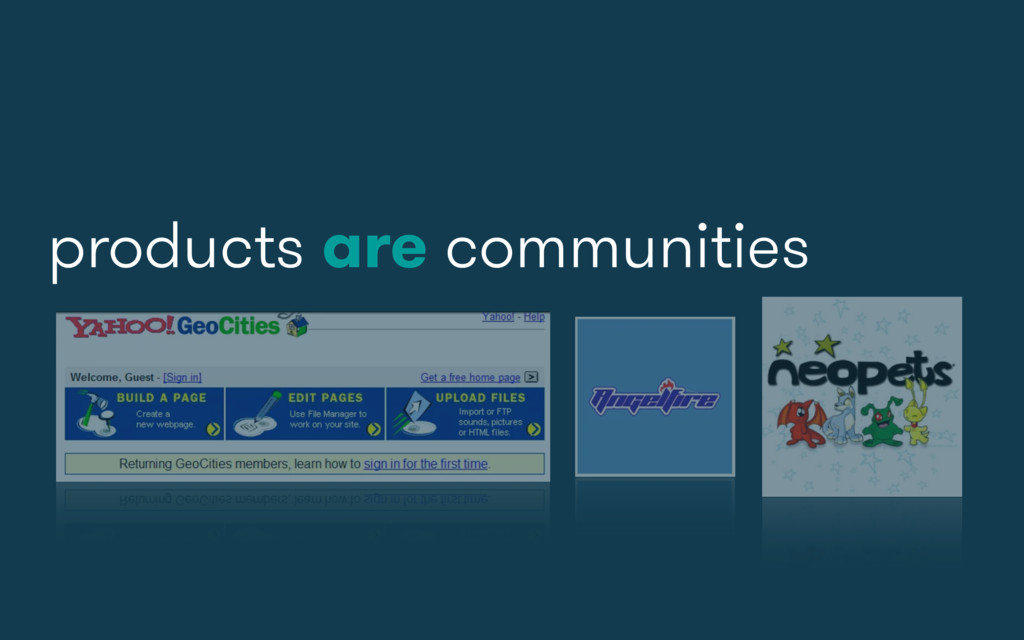
  2. The best ones foster a sense of togetherness Shared bonds:

    “I am a [product] user.” products are communities
  3. both govern experience— they enable interaction and task completion community

    = shared experience, built by code & design Code and design matter
  4. If each coding and design decision contributes to a community,

    we should be able to plan for inclusion at each step… ….right? Break it down
  5. Empathy has limits Can you really understand how your product

    will be experienced by a minority? … and if you can’t, should you really be making decisions?
  6. 2. Appoint the right decision- makers Coding and design decisions

    (“yes, we should build that feature”) must be made by those affected
  7. …involve them from the start… Asking folks to use a
    product assumes that a product should be built.
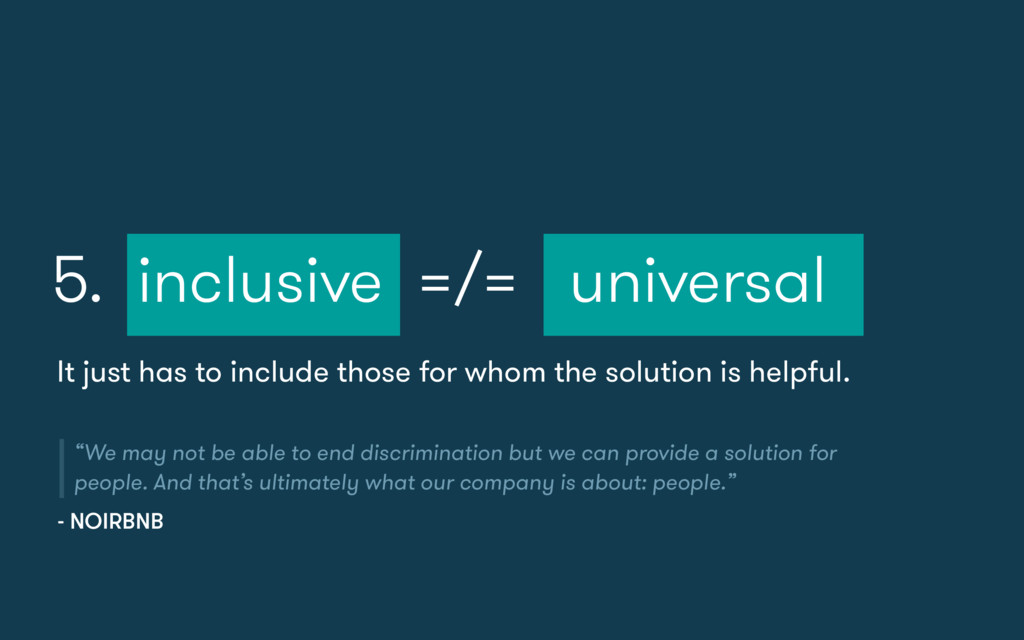
  8. It just has to include those for whom the solution
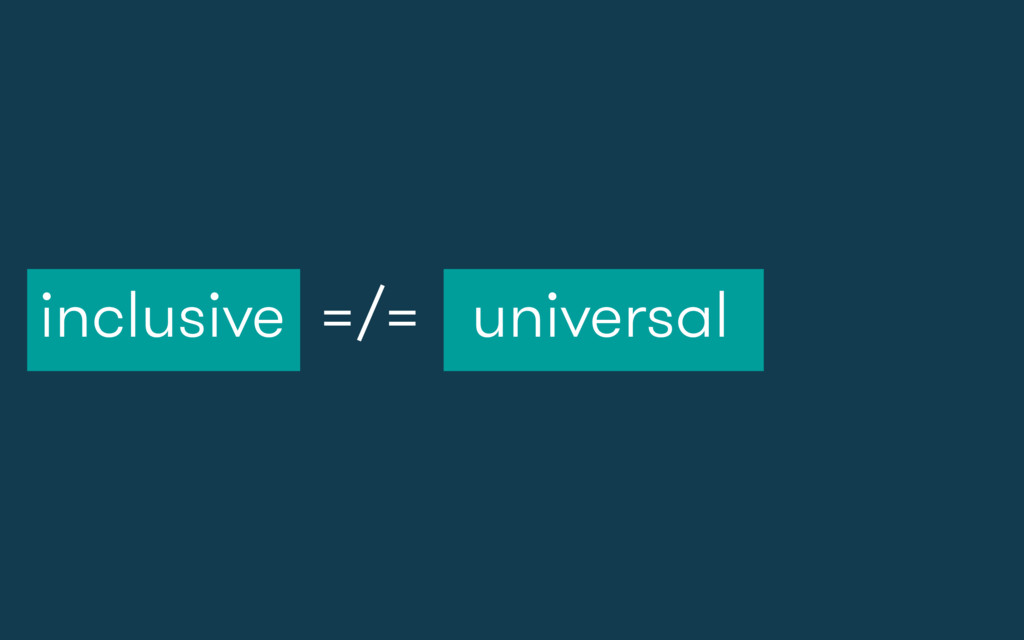
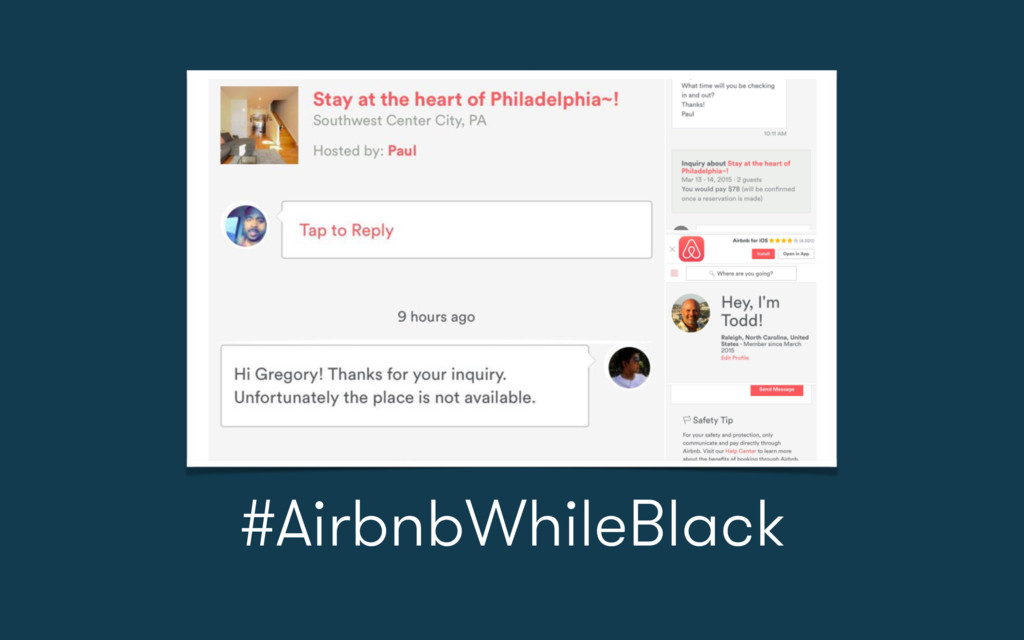
    is helpful. “We may not be able to end discrimination but we can provide a solution for people. And that’s ultimately what our company is about: people.” - NOIRBNB 5. inclusive =/= universal
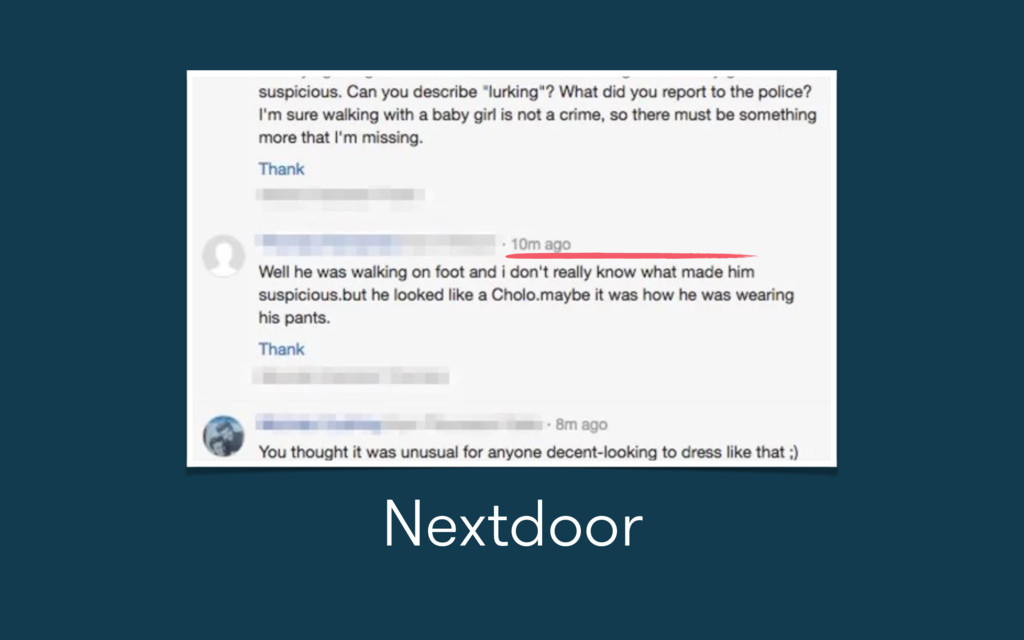
  9. Nextdoor: after “When race is included, you must include at

    least 2 of the highlighted fields.”
  10. Mobility Map • Involved the campus’ Disability Resource Center from

    initial concepts • “It is an example of one of those things that is never done, just on hold until I know more about it.” http://www.keating.design/work/mobility-map/
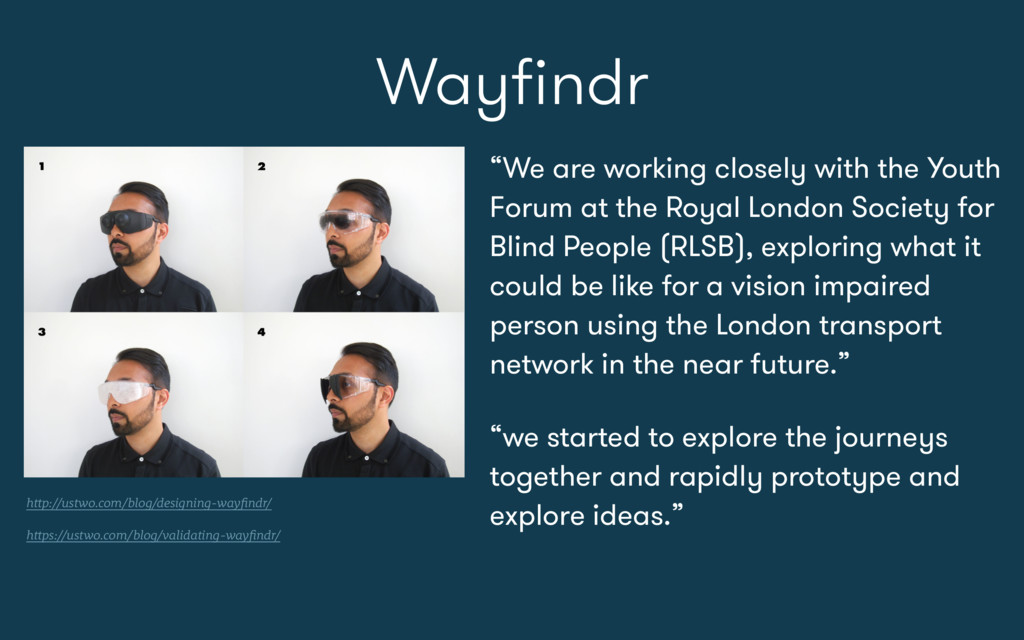
  11. Wayfindr “We are working closely with the Youth Forum at

    the Royal London Society for Blind People (RLSB), exploring what it could be like for a vision impaired person using the London transport network in the near future.” “we started to explore the journeys together and rapidly prototype and explore ideas.” http://ustwo.com/blog/designing-wayfindr/ https://ustwo.com/blog/validating-wayfindr/
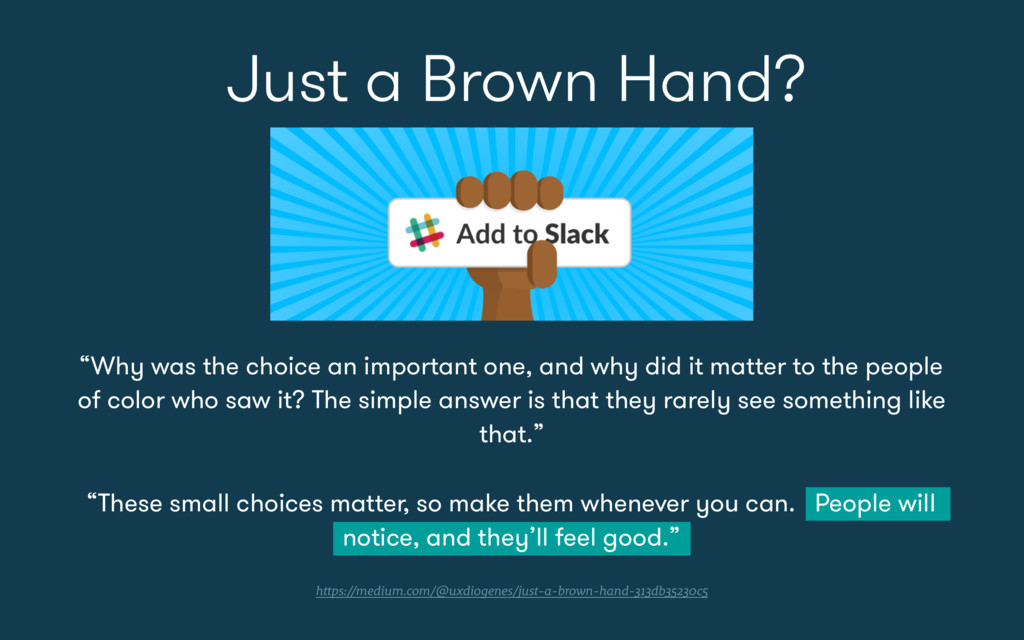
  12. “Why was the choice an important one, and why did

    it matter to the people of color who saw it? The simple answer is that they rarely see something like that.” “These small choices matter, so make them whenever you can. People will notice, and they’ll feel good.” Just a Brown Hand? https://medium.com/@uxdiogenes/just-a-brown-hand-313db35230c5
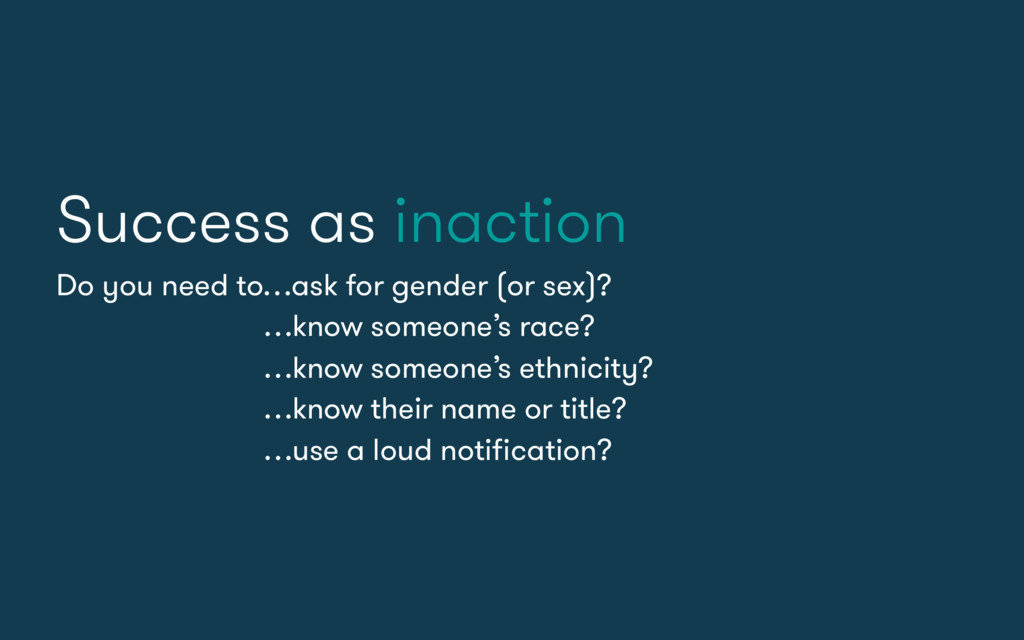
  13. Do you need to…ask for gender (or sex)?
 …know someone’s

    race?
 …know someone’s ethnicity?
 …know their name or title?
 …use a loud notification?
 Success as inaction
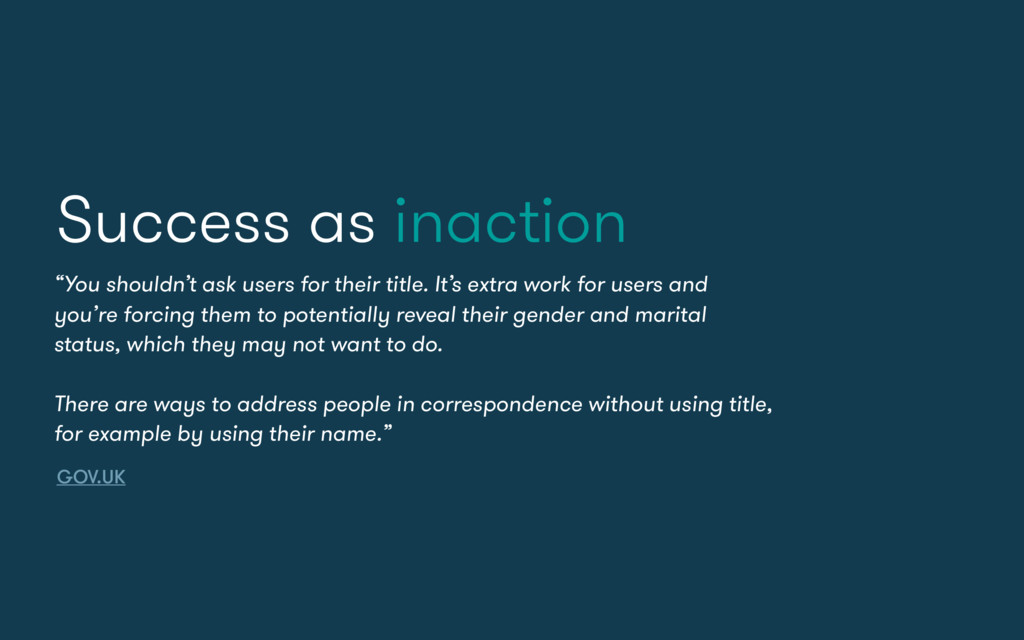
  14. “You shouldn’t ask users for their title. It’s extra work

    for users and you’re forcing them to potentially reveal their gender and marital status, which they may not want to do.
 There are ways to address people in correspondence without using title, for example by using their name.” GOV.UK Success as inaction
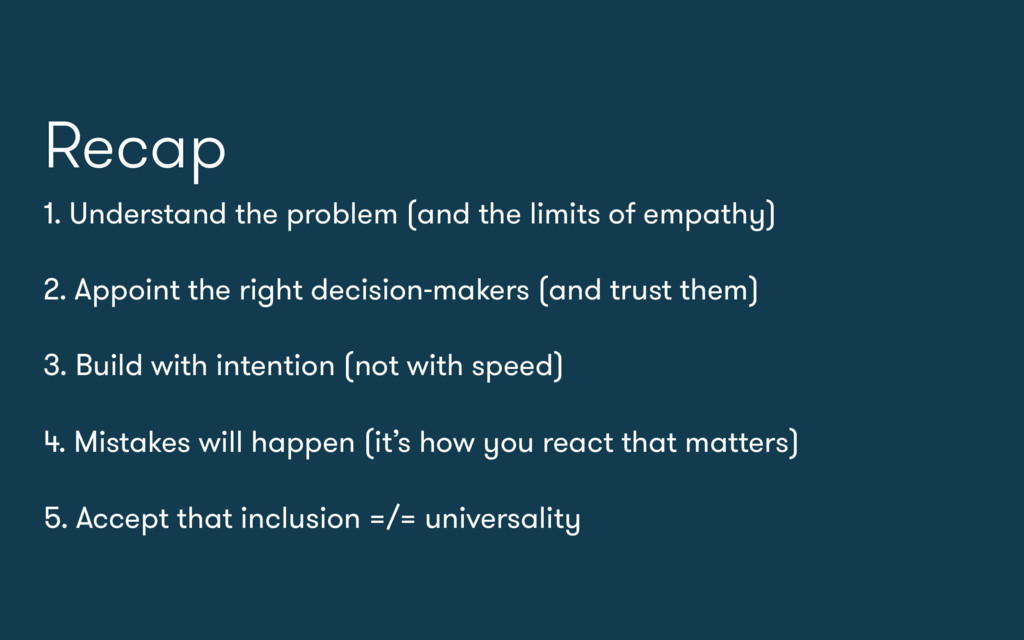
  15. 1. Understand the problem (and the limits of empathy) 2.

    Appoint the right decision-makers (and trust them) 3. Build with intention (not with speed) 4. Mistakes will happen (it’s how you react that matters) 5. Accept that inclusion =/= universality Recap
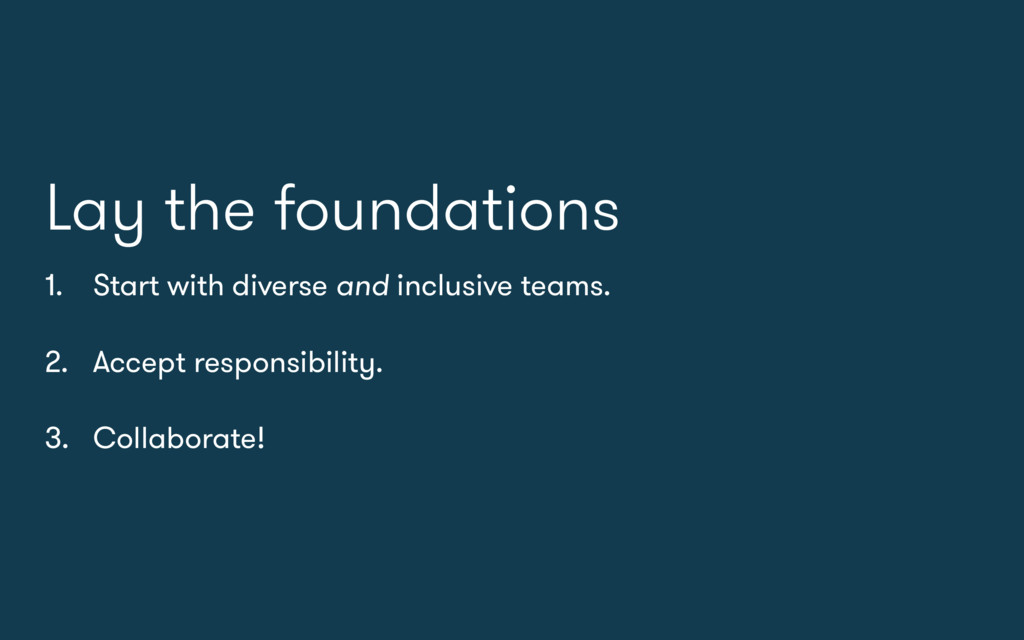
  16. Lay the foundations 1. Start with diverse and inclusive teams.

    2. Accept responsibility. 3. Collaborate!
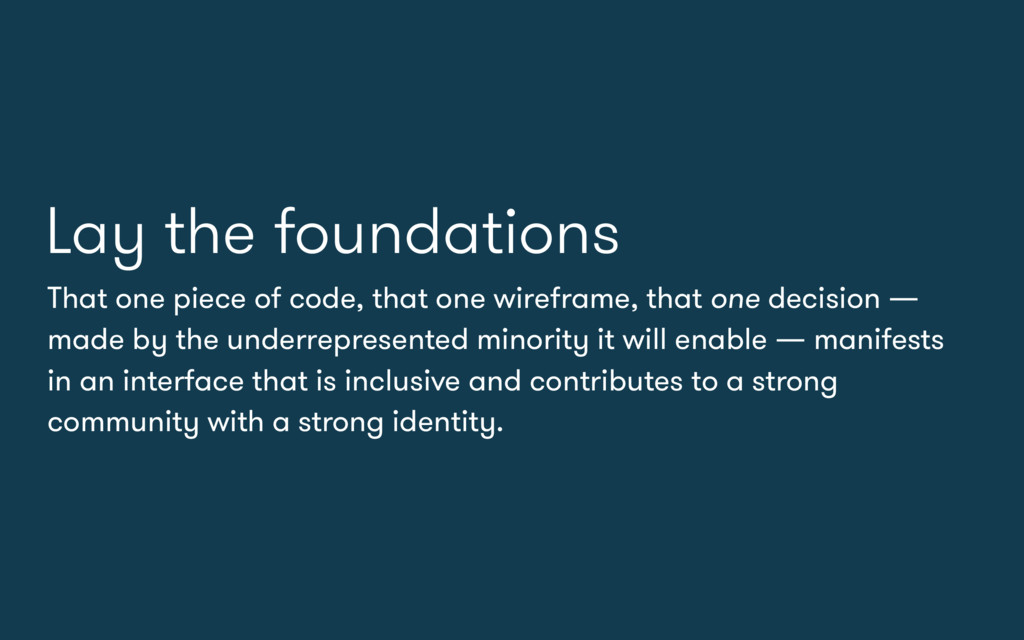
  17. That one piece of code, that one wireframe, that one

    decision — made by the underrepresented minority it will enable — manifests in an interface that is inclusive and contributes to a strong community with a strong identity. Lay the foundations
  18. Resources • Calm Technology • So, you want to build

    an algorithm… (ironically, the usability here leaves something to be desired!) • The Government Digital Service’s checklist for digital inclusion • User research that’s truly inclusive (even when the tools aren’t) • Design for Real Life • Airbnb’s Another Lens (I’m aware of the irony, yes)