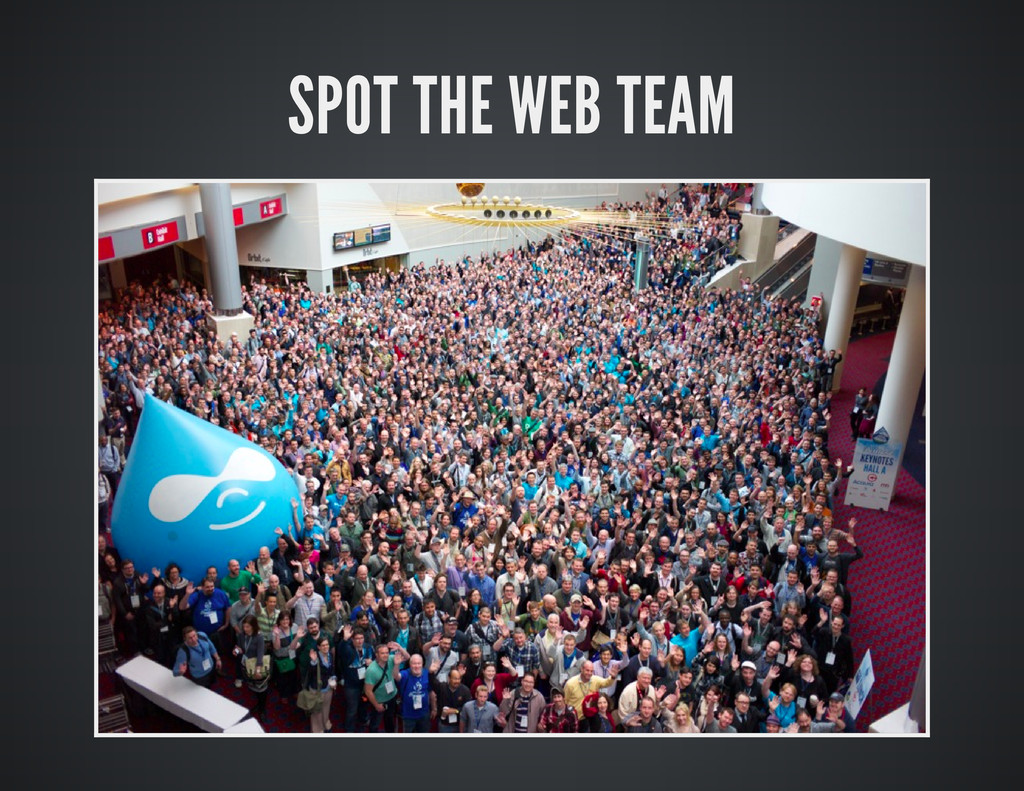
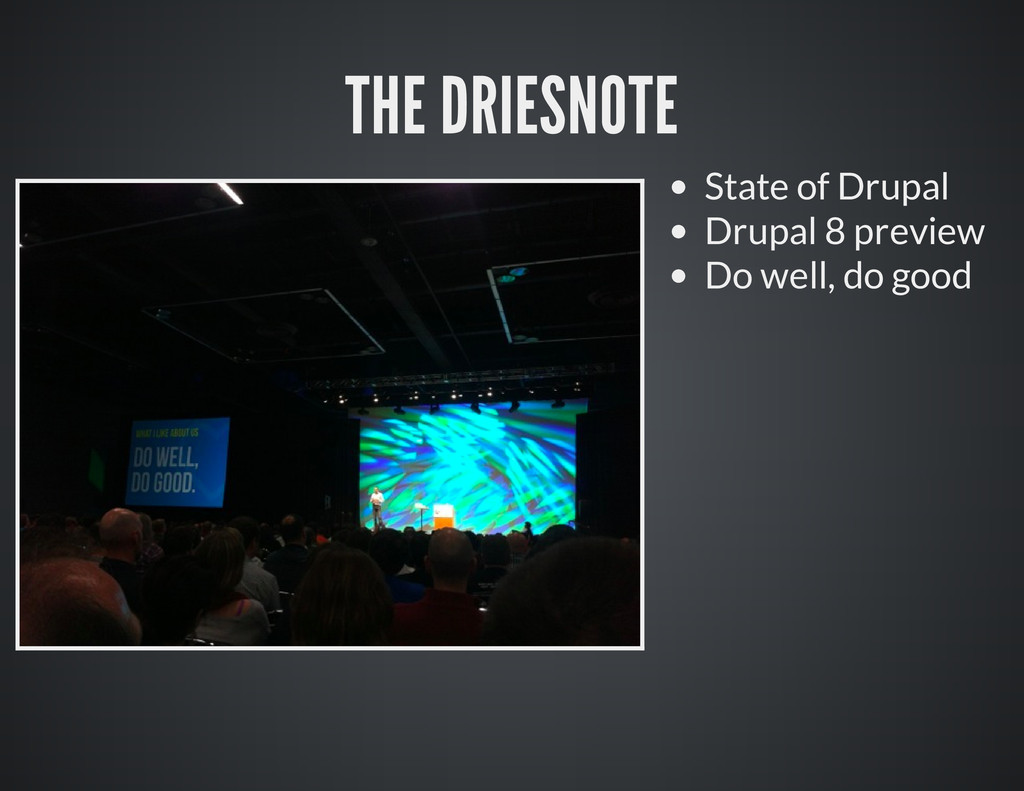
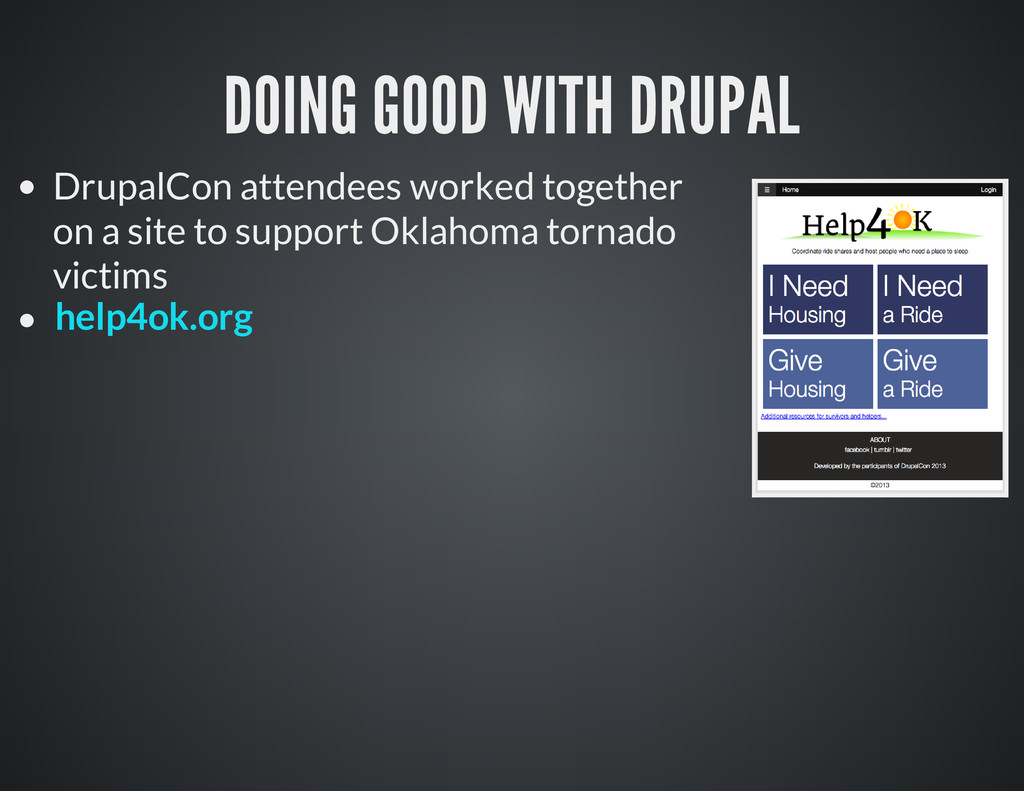
content management system Developers, designers, contributors, project managers Over 3,300 people in attendance We have previously attended Washington, DC; San Francisco; and Chicago
sites Supporting legacy sites is holding them back Have begun consolidating sites to simplify infrastructure Variety of scripts to handle deployments Move to dedicated infrastructure to optimize services
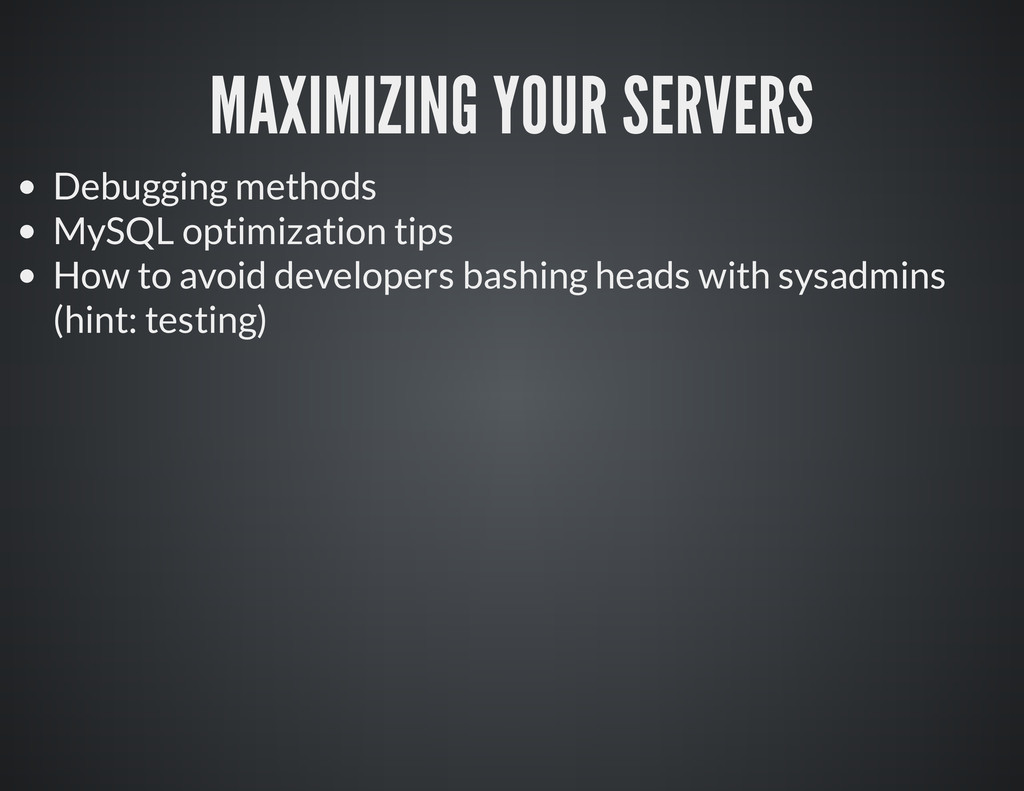
shell Machine-readable output Support for Drupal 8 configuration management Ability to manage user roles and permissions Quick Drupal for setting up test environments
feature we add. It's another place it has to work. Decouple content from presentation. Model the meaning, not how you want to display it. Tailor the editorial experience. Limit allowed tags, watch for abuse. Manage one pool of content. Structure content for remixing. Flexible chunks beat content blobs.
pain points of PHPTemplate in Drupal 7 Twig brings better separation of logic and presentation Post-conference sprints brought this much closer to reality
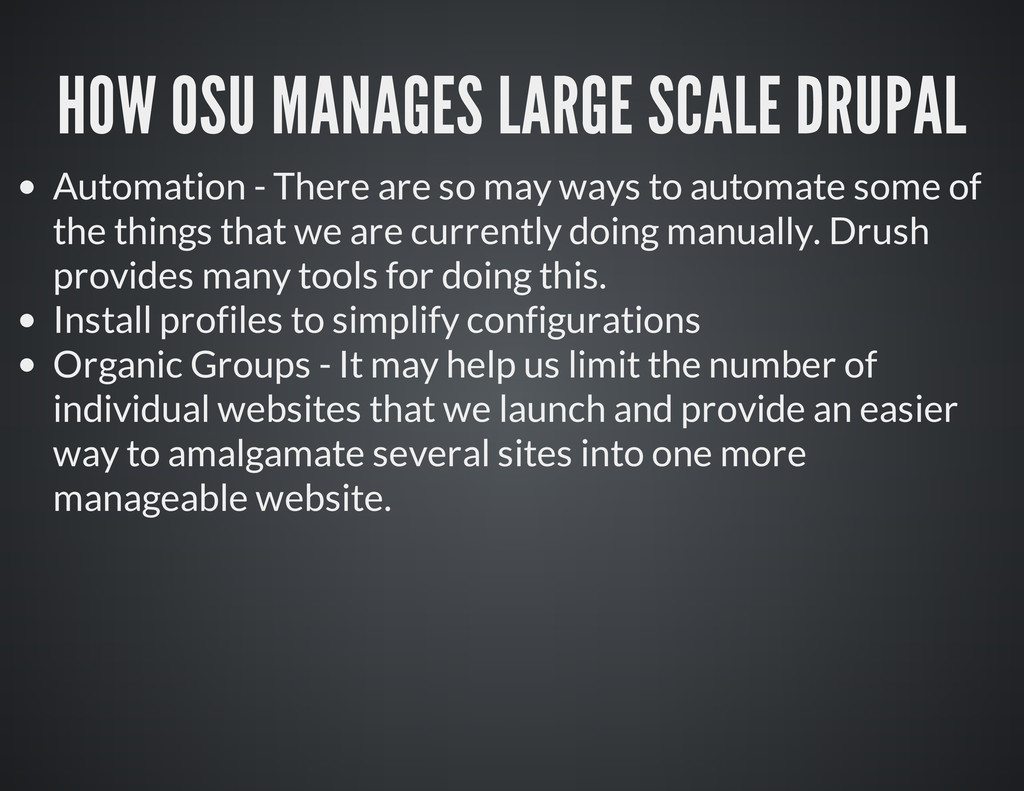
so may ways to automate some of the things that we are currently doing manually. Drush provides many tools for doing this. Install profiles to simplify configurations Organic Groups - It may help us limit the number of individual websites that we launch and provide an easier way to amalgamate several sites into one more manageable website.
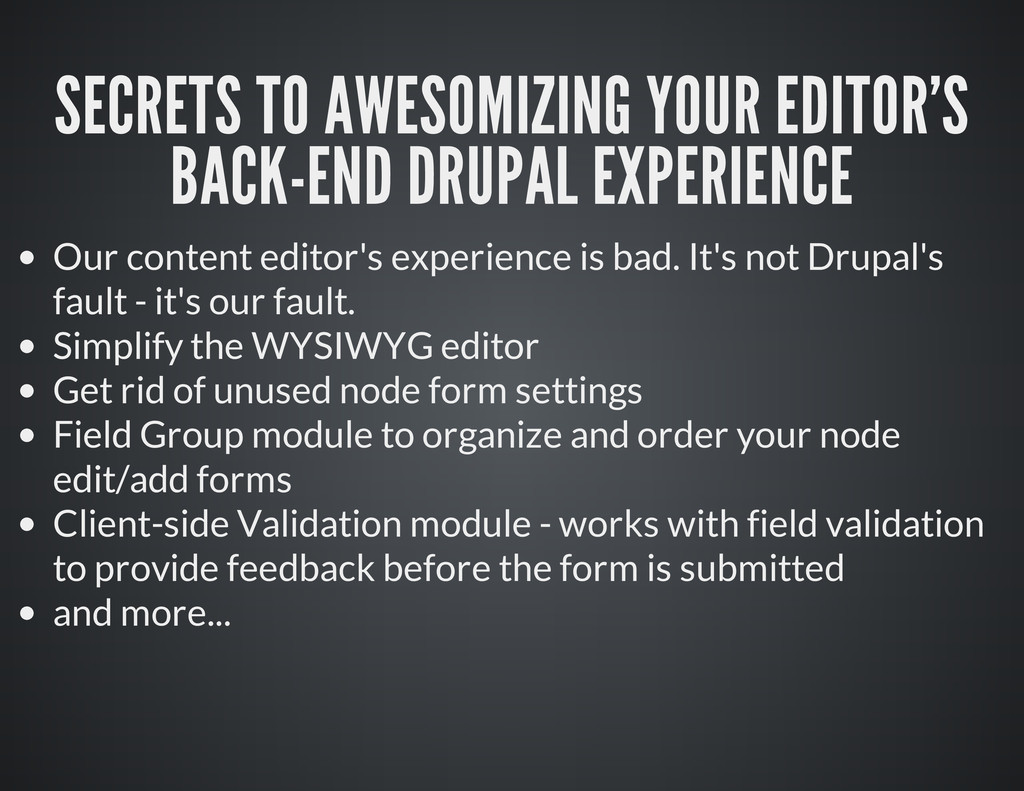
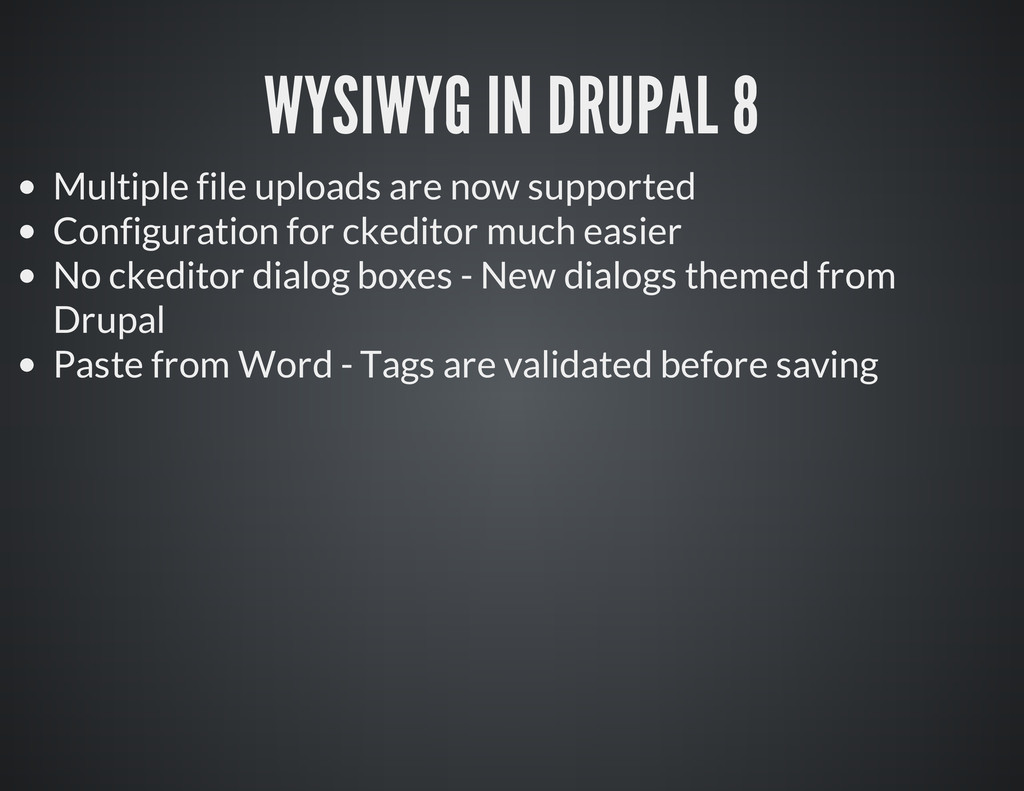
editor's experience is bad. It's not Drupal's fault - it's our fault. Simplify the WYSIWYG editor Get rid of unused node form settings Field Group module to organize and order your node edit/add forms Client-side Validation module - works with field validation to provide feedback before the form is submitted and more...
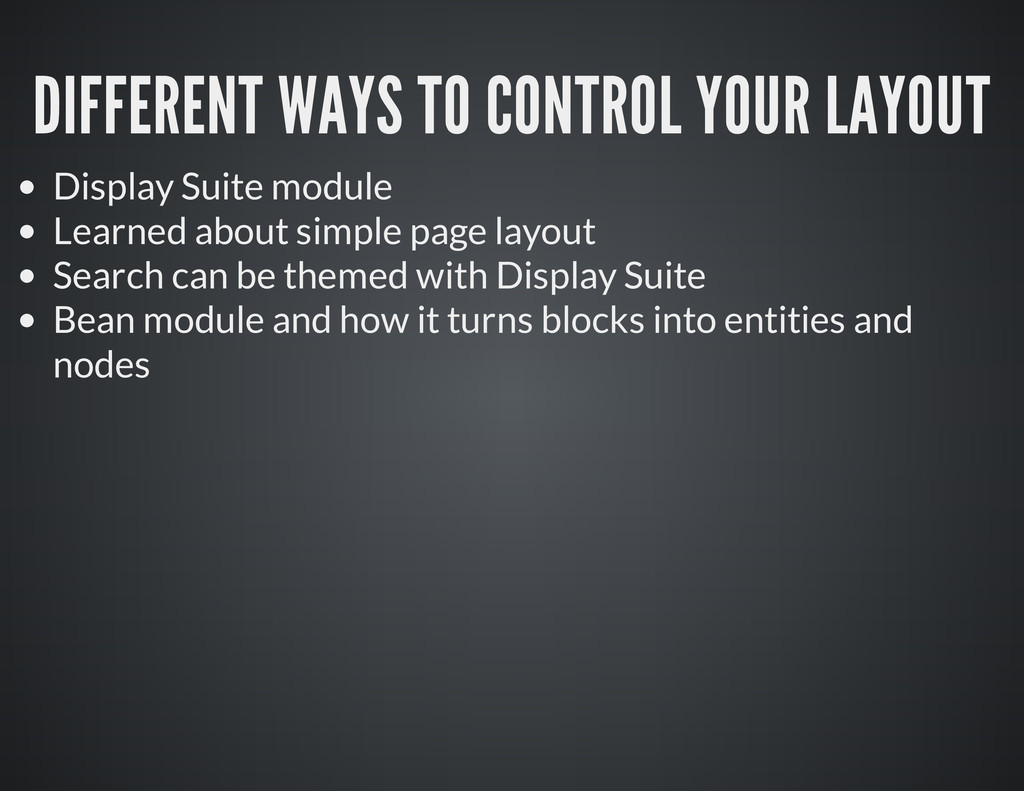
use of meta data with our content types. We need to change the Author Experience. We have to give them what they need, not what they want. & are two books that are indispensable. Content Everywhere Managing Enterprise Content
learning experience. Having the chance to network with so many people that form the Drupal community was amazing. I especially like the fact that we could talk with the presenters after the session if we had even more questions and found this to be very beneficial.”
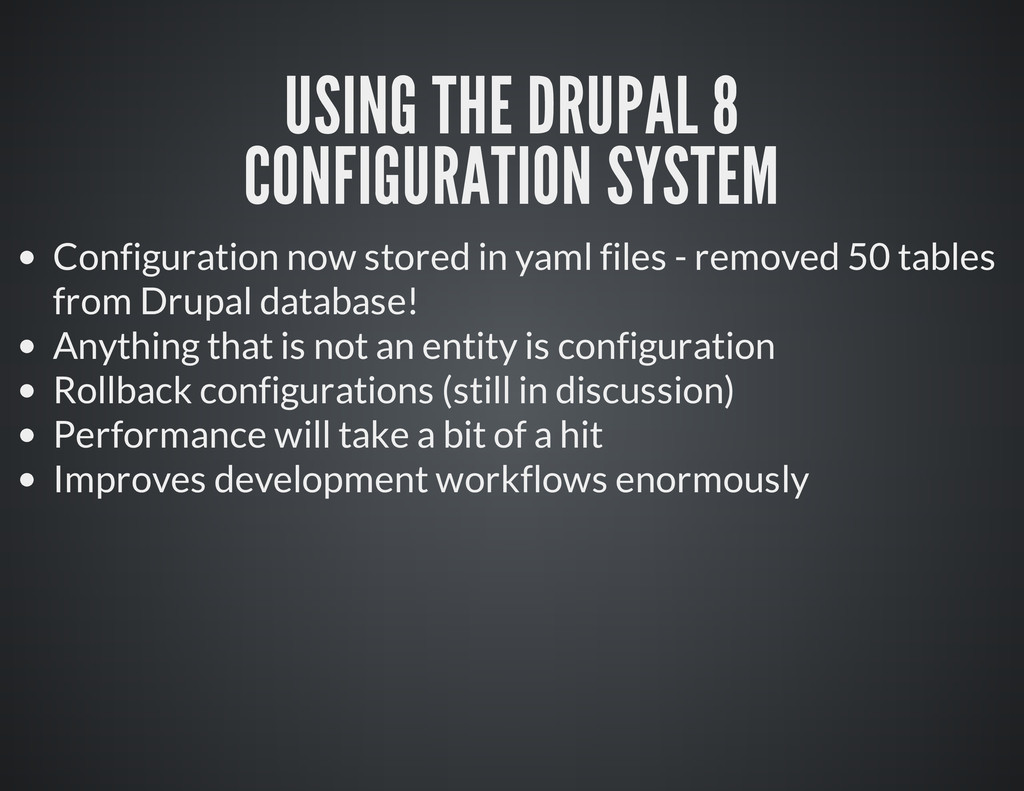
yaml files - removed 50 tables from Drupal database! Anything that is not an entity is configuration Rollback configurations (still in discussion) Performance will take a bit of a hit Improves development workflows enormously
code Vagrant VM recommended Create your own recipes and cookbooks After you build the vagrant file you can share this with your teammates learnchef.com
great exposure to the community that has developed this product and gained some good hands-on experience learning more about theming. I was particularly impressed with the content and user experience streams that are so integral to building usable, effective websites.”
first Keep focused on purpose and content; away from process/deliverables Focus on priority, NOT layout Content models an interesting idea. Use diagrams to clarify requirements, encourage collaboration
based on personal preferences, but user and business aligned goals Use a statement of design intent /purpose statement Instead of somebody telling you what and jumping into the how , ask rather WHY?
printer output. Why is it applied to web? People read differently on a variety of devices Move away from aesthetics and towards meaning We need to focus on the lost user experience: AUTHORS Semantic metadata: Not a tech problem, but a human problem Stop thinking about web pages and start managing content packages
created equal. Beware of self- reporting. Don’t try to prove things right or wrong. Focus on goals, are they being accomplished? Don’t gather research alone Continuous engagement - if you’re solving a problem for someone, users will be intrinsically motivated to help you make it better Continuous feedback cycles - touch on lifecycle of users (application, enrollment, study, graduation)


 kentarofujii
 shugo
 persolserverworks
 kairim0
 raspython3
 4o1sobblue
 yazm
 iktakahiro
 keeg
 tomokusaba
 techtekt
 sh_fk2
 jonrohan
 uxyall
 axbom
 sonatard
 eileencodes
 palkan
 dougneiner
 62gerente
 lcolladotor
 paigeccino
 katarinadahlin
 mza