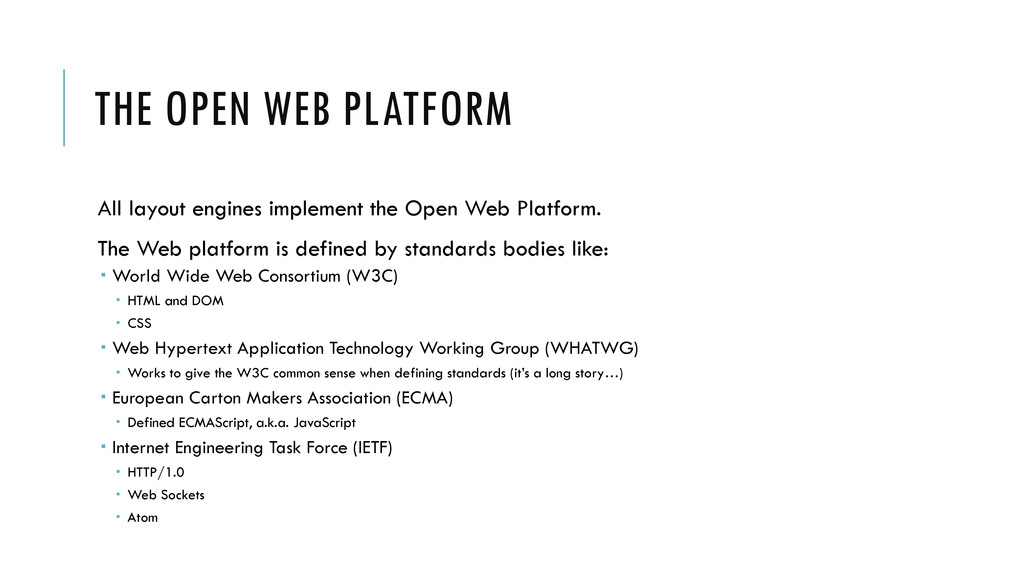
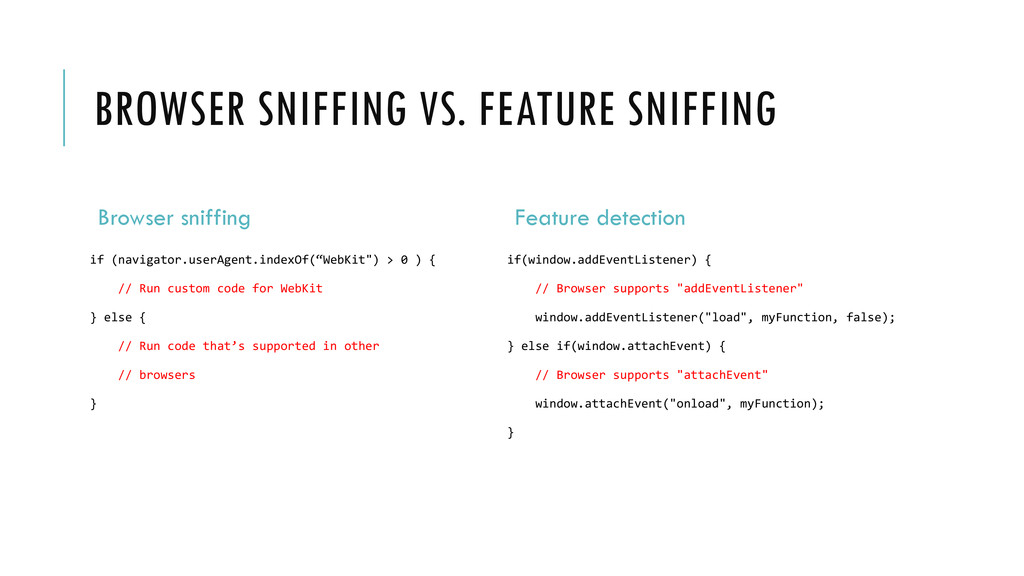
Web Platform. The Web platform is defined by standards bodies like: World Wide Web Consortium (W3C) HTML and DOM CSS Web Hypertext Application Technology Working Group (WHATWG) Works to give the W3C common sense when defining standards (it’s a long story…) European Carton Makers Association (ECMA) Defined ECMAScript, a.k.a. JavaScript Internet Engineering Task Force (IETF) HTTP/1.0 Web Sockets Atom
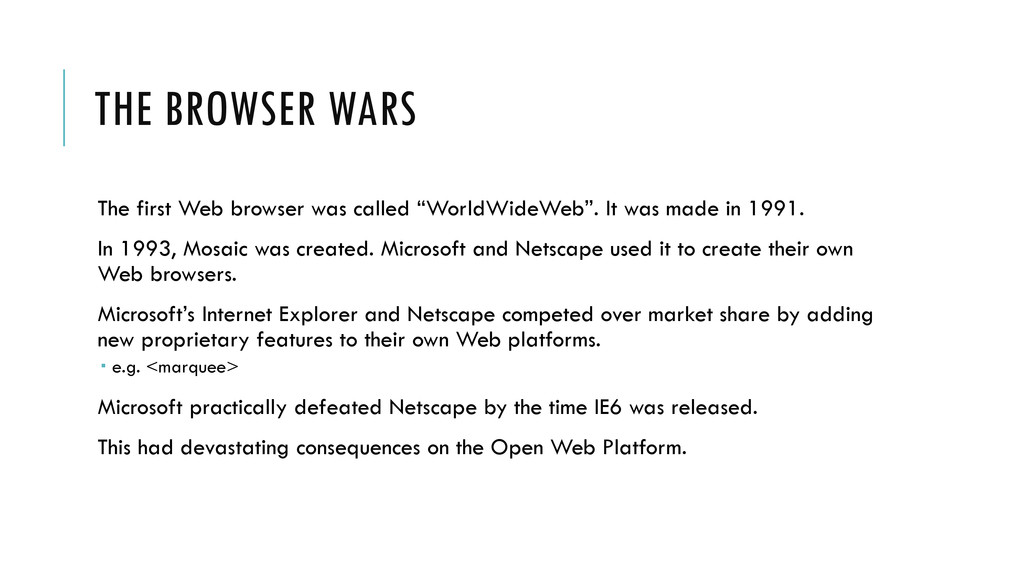
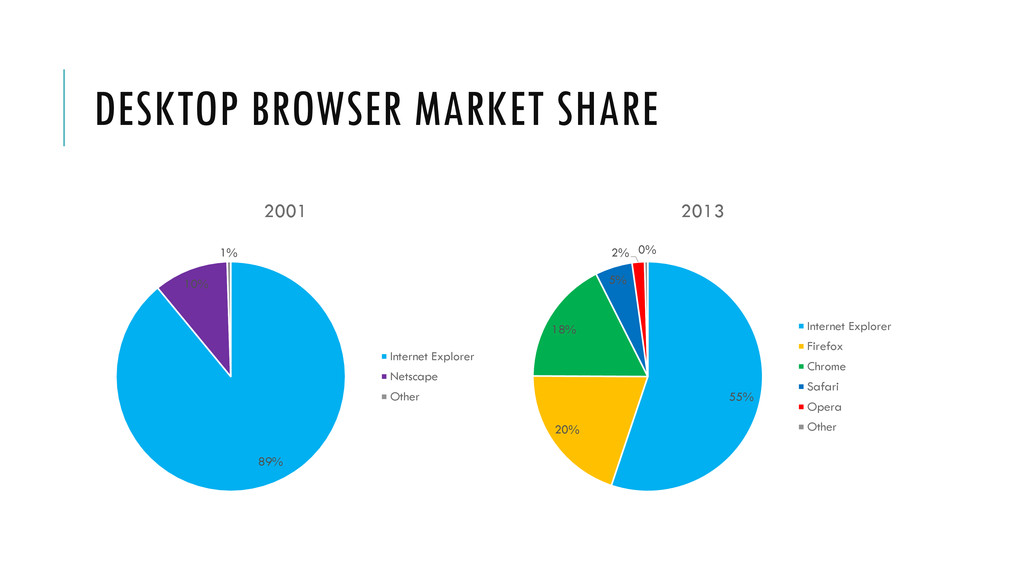
It was made in 1991. In 1993, Mosaic was created. Microsoft and Netscape used it to create their own Web browsers. Microsoft’s Internet Explorer and Netscape competed over market share by adding new proprietary features to their own Web platforms. e.g. <marquee> Microsoft practically defeated Netscape by the time IE6 was released. This had devastating consequences on the Open Web Platform.
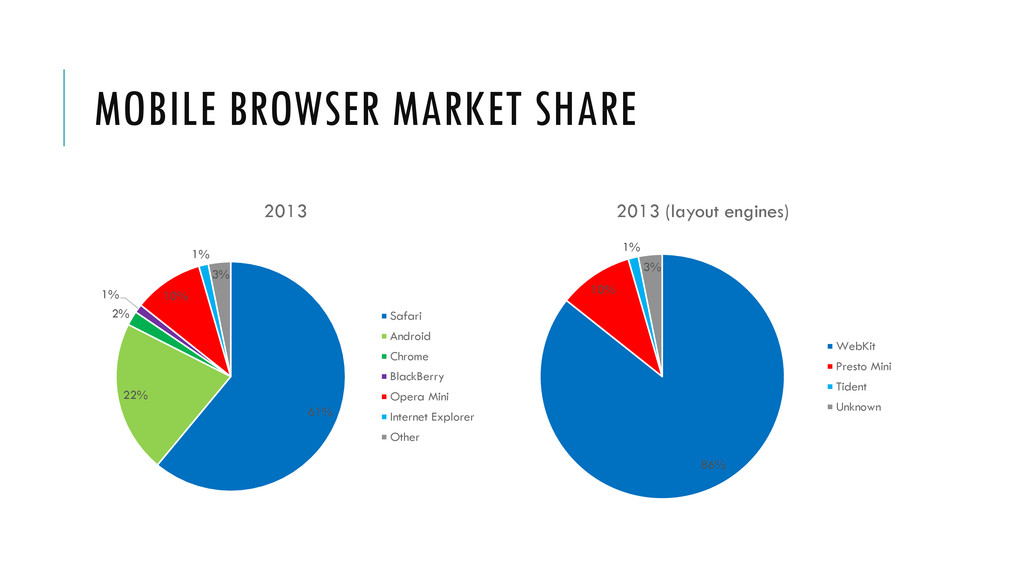
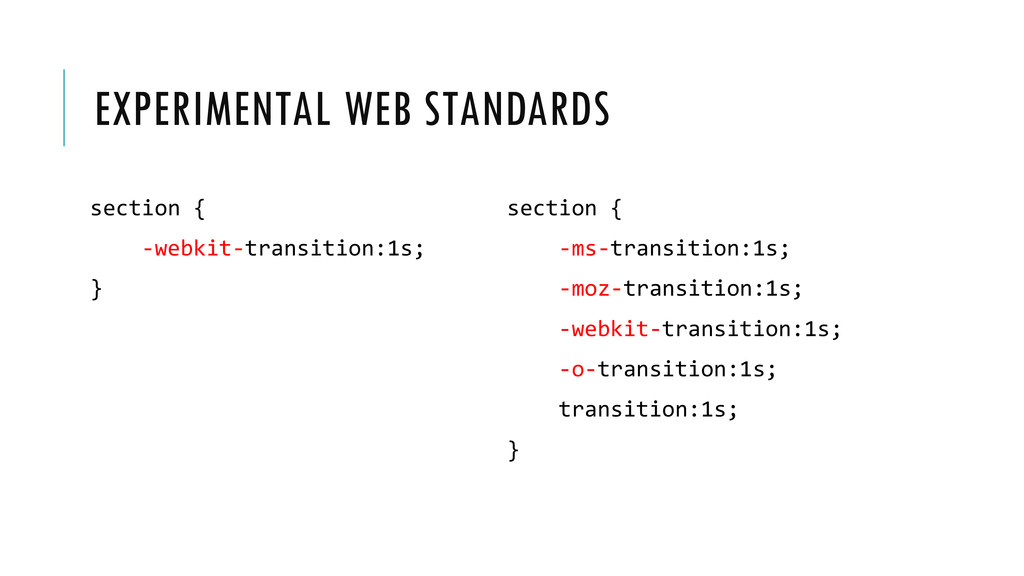
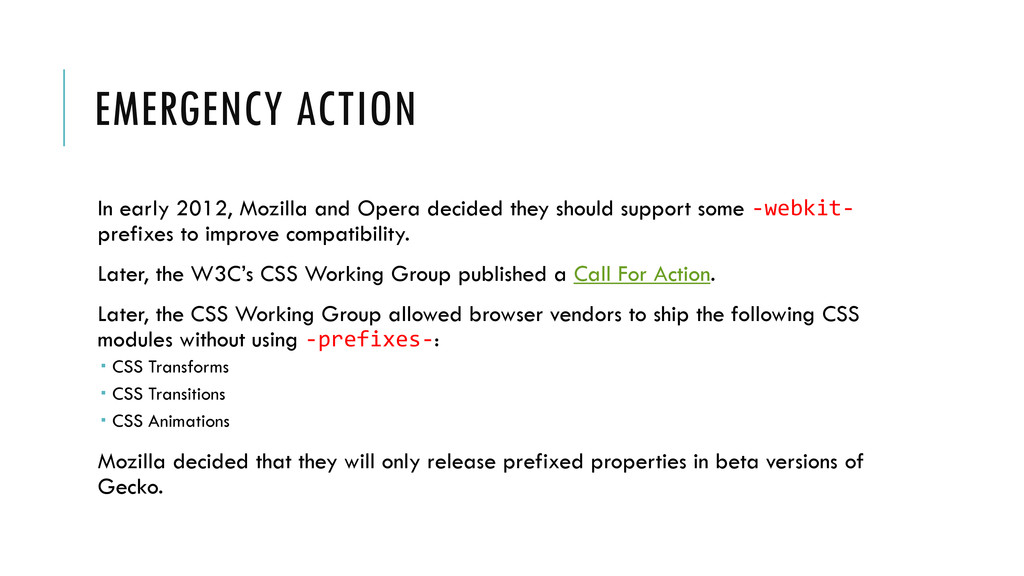
should support some -webkit- prefixes to improve compatibility. Later, the W3C’s CSS Working Group published a Call For Action. Later, the CSS Working Group allowed browser vendors to ship the following CSS modules without using -prefixes-: CSS Transforms CSS Transitions CSS Animations Mozilla decided that they will only release prefixed properties in beta versions of Gecko.
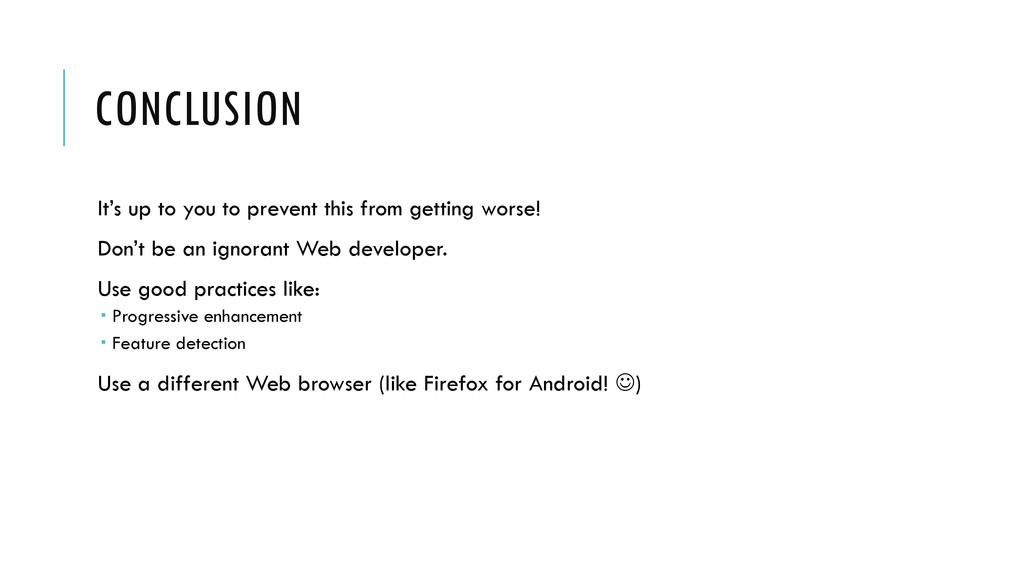
worse! Don’t be an ignorant Web developer. Use good practices like: Progressive enhancement Feature detection Use a different Web browser (like Firefox for Android! )


 joshtumath
 yuuuuuuu168
 grimoh
 glaforge
 kzkhykw1991
 occhi
occhi
 colopl
 ivry_presentationmaterials
 pfn
pfn
 gionn
gionn
 yahonda
 riyaamemiya
 akhino
 signer
 jonoalderson
 rasmusluckow
 sugarenia
 iamctodd
 garrettdimon
 holman
 davidcarrasco
 baasie
 tmiket
 akosma
 bkeepers